Generative AI: A Case Study of ChatGPT
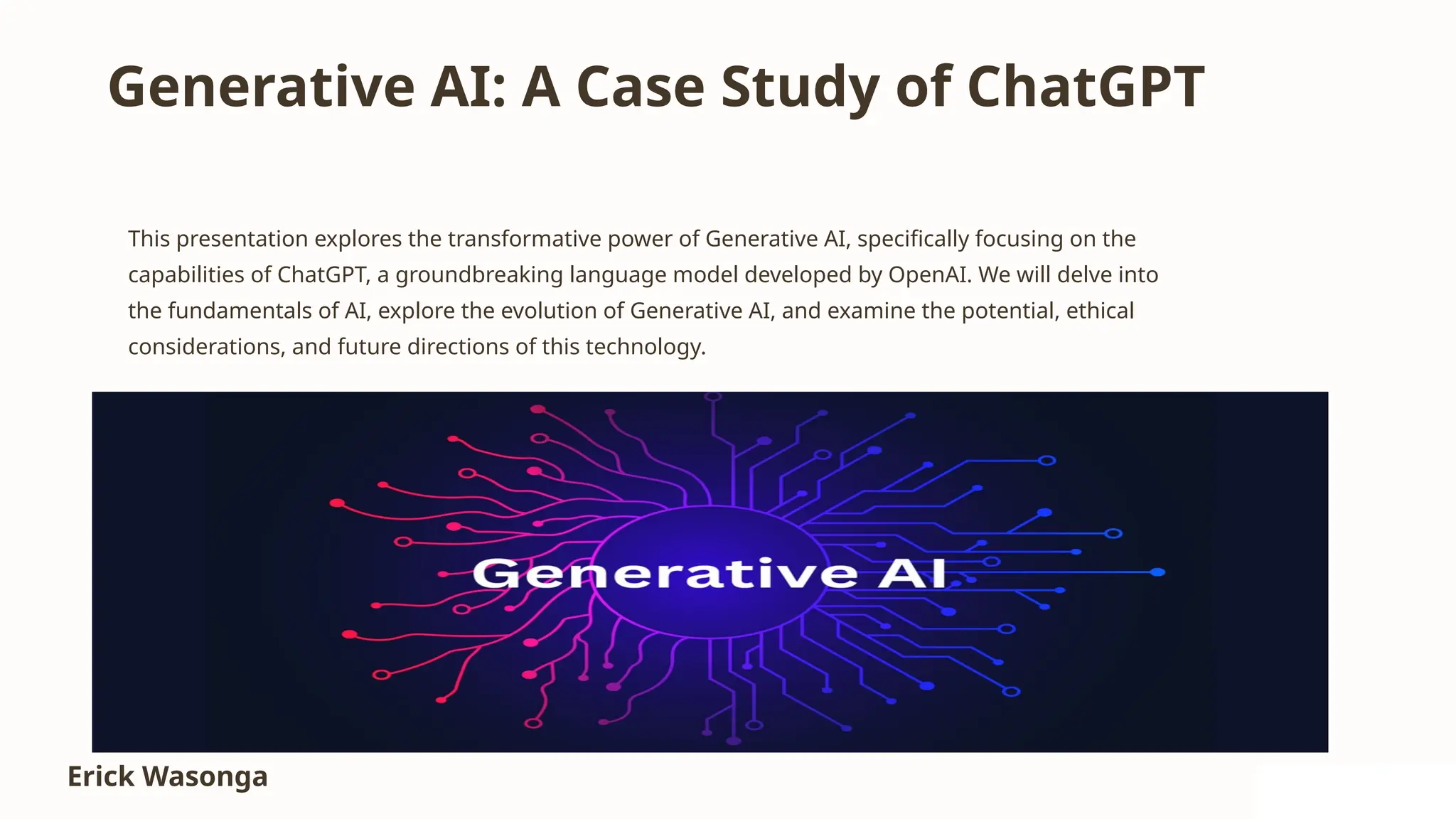
This presentation explores the transformative power of Generative AI, specifically focusing on the
capabilities of ChatGPT, a groundbreaking language model developed by OpenAI. We will delve into
the fundamentals of AI, explore the evolution of Generative AI, and examine the potential, ethical
considerations, and future directions of this technology.
Erick Wasonga
Understanding Generative AI
AI Fundamentals
AI aims to create machines that can perform tasks
requiring human intelligence. Machine learning enables
computers to learn from data, while deep learning utilizes
artificial neural networks for complex tasks.
Generative AI
Generative AI refers to AI technologies that can create new
content, ideas, or data, resembling human-generated
outputs. It finds applications in diverse domains such as
computer vision, natural language processing, and music
generation.
The Backbone of Generative A
Foundation models are the core engines of generative AI, trained on
vast datasets to process information and produce new and relevant
outputs. They power Generative AI's ability to create new content, ideas,
or data.
Generative AI: A Paradigm Shift
1 Evolution of AI
Generative AI represents a
significant evolution from
previous AI systems,
moving beyond analysis to
create new and original
content.
2 New Capabilities
Generative AI models can
now generate text, images,
videos, and other
multimedia content,
expanding the potential
applications of AI.
3 Impact on Industries
Generative AI is revolutionizing various industries, from content
creation to finance, by automating tasks and fostering creativity.
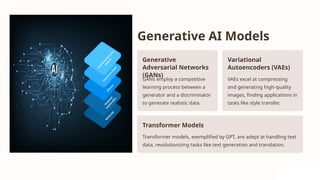
Generative AI Models
Generative
Adversarial Networks
(GANs)
GANs employ a competitive
learning process between a
generator and a discriminator
to generate realistic data.
Variational
Autoencoders (VAEs)
VAEs excel at compressing
and generating high-quality
images, finding applications in
tasks like style transfer.
Transformer Models
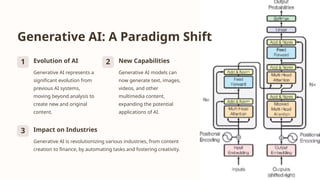
Transformer models, exemplified by GPT, are adept at handling text
data, revolutionizing tasks like text generation and translation.
Prompts: Guiding
Generative AI
Prompts are instructions, questions, or statements that guide
generative AI models in generating coherent and relevant responses.
They serve as the initial input that directs the model's interaction.
Crafting Effective Prompts
Clarity and Precision
Prompts should be clear and
unambiguous, avoiding
ambiguities that may lead to
confusing or incorrect answers.
Contextualization
Including context helps the model
understand the intent behind the
query, improving the relevance of
the response.
Examples
Providing examples within the
prompt can help the model
understand the intended task.
Iterative Experiments
Iterative experimentation and
adjustments can help fine-tune the
interaction and obtain optimal
responses.
ChatGPT: Potential and
Ethical Considerations
ChatGPT is a versatile language model with potential applications in
customer service, virtual assistants, and decision-making systems.
However, ethical and responsible use guidelines are crucial, especially in
applications with significant social or cultural implications.
The Future of Generative AI
Generative AI is poised to revolutionize industries and redefine
creativity, with emerging trends like improved model interpretability
and ethical AI principles shaping its development. Ensuring a balance
between innovation and responsibility will be key to its sustainable
growth.

Generative AI case study of ChaGpt pptx.

  • 1.
    Generative AI: ACase Study of ChatGPT This presentation explores the transformative power of Generative AI, specifically focusing on the capabilities of ChatGPT, a groundbreaking language model developed by OpenAI. We will delve into the fundamentals of AI, explore the evolution of Generative AI, and examine the potential, ethical considerations, and future directions of this technology. Erick Wasonga
  • 2.
    Understanding Generative AI AIFundamentals AI aims to create machines that can perform tasks requiring human intelligence. Machine learning enables computers to learn from data, while deep learning utilizes artificial neural networks for complex tasks. Generative AI Generative AI refers to AI technologies that can create new content, ideas, or data, resembling human-generated outputs. It finds applications in diverse domains such as computer vision, natural language processing, and music generation.
  • 3.
    The Backbone ofGenerative A Foundation models are the core engines of generative AI, trained on vast datasets to process information and produce new and relevant outputs. They power Generative AI's ability to create new content, ideas, or data.
  • 4.
    Generative AI: AParadigm Shift 1 Evolution of AI Generative AI represents a significant evolution from previous AI systems, moving beyond analysis to create new and original content. 2 New Capabilities Generative AI models can now generate text, images, videos, and other multimedia content, expanding the potential applications of AI. 3 Impact on Industries Generative AI is revolutionizing various industries, from content creation to finance, by automating tasks and fostering creativity.
  • 5.
    Generative AI Models Generative AdversarialNetworks (GANs) GANs employ a competitive learning process between a generator and a discriminator to generate realistic data. Variational Autoencoders (VAEs) VAEs excel at compressing and generating high-quality images, finding applications in tasks like style transfer. Transformer Models Transformer models, exemplified by GPT, are adept at handling text data, revolutionizing tasks like text generation and translation.
  • 6.
    Prompts: Guiding Generative AI Promptsare instructions, questions, or statements that guide generative AI models in generating coherent and relevant responses. They serve as the initial input that directs the model's interaction.
  • 7.
    Crafting Effective Prompts Clarityand Precision Prompts should be clear and unambiguous, avoiding ambiguities that may lead to confusing or incorrect answers. Contextualization Including context helps the model understand the intent behind the query, improving the relevance of the response. Examples Providing examples within the prompt can help the model understand the intended task. Iterative Experiments Iterative experimentation and adjustments can help fine-tune the interaction and obtain optimal responses.
  • 8.
    ChatGPT: Potential and EthicalConsiderations ChatGPT is a versatile language model with potential applications in customer service, virtual assistants, and decision-making systems. However, ethical and responsible use guidelines are crucial, especially in applications with significant social or cultural implications.
  • 9.
    The Future ofGenerative AI Generative AI is poised to revolutionize industries and redefine creativity, with emerging trends like improved model interpretability and ethical AI principles shaping its development. Ensuring a balance between innovation and responsibility will be key to its sustainable growth.