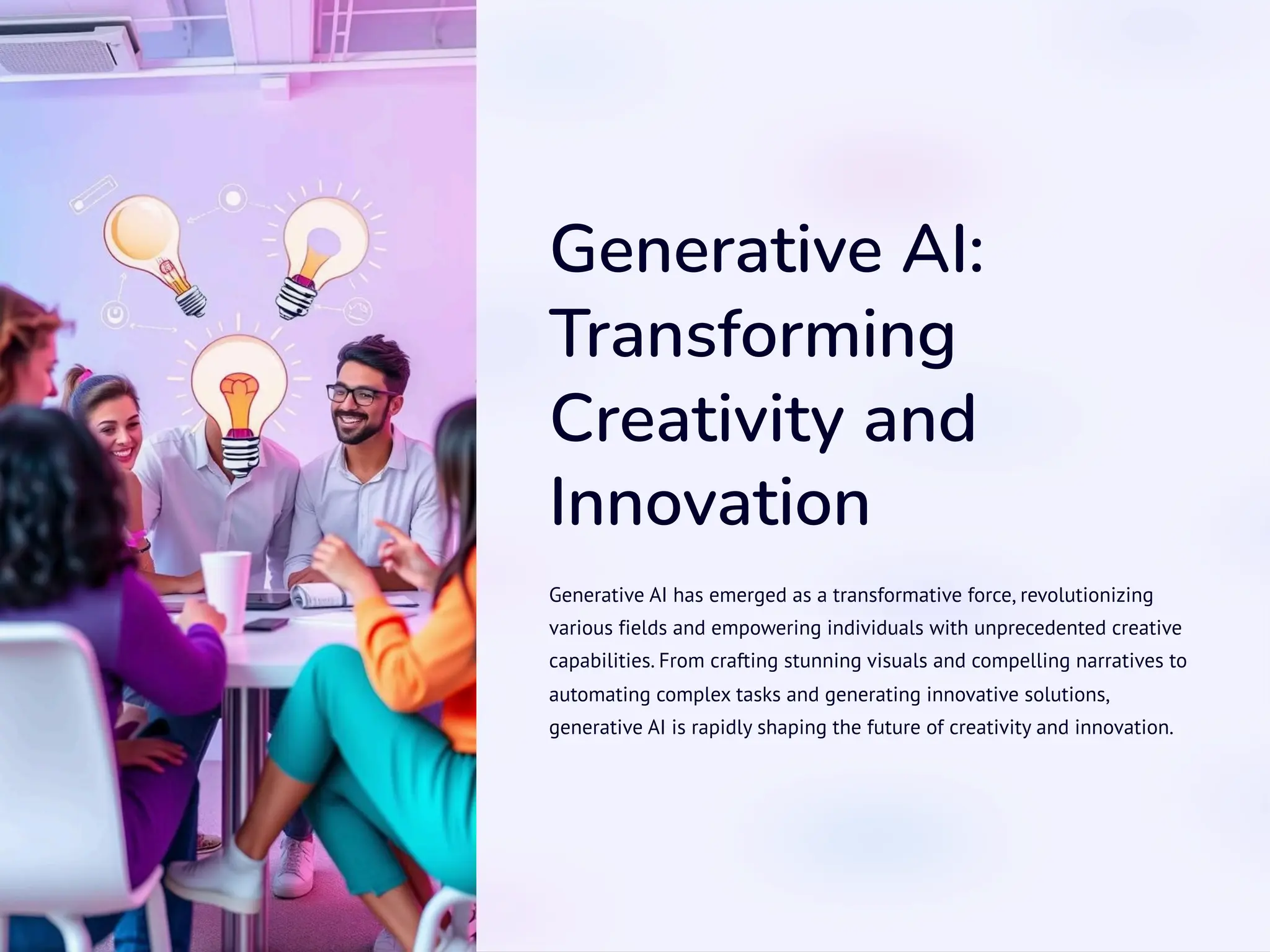
Generative AI:
Transforming
Creativity and
Innovation
Generative AI has emerged as a transformative force, revolutionizing
various fields and empowering individuals with unprecedented creative
capabilities. From crafting stunning visuals and compelling narratives to
automating complex tasks and generating innovative solutions,
generative AI is rapidly shaping the future of creativity and innovation.
Introduction: The Rise of
Generative AI
1 AI's Evolution
Generative AI represents a
significant advancement in
artificial intelligence,
building upon decades of
research in machine
learning, natural language
processing, and computer
vision.
2 Rise of Generative
Models
Generative models are
algorithms capable of
learning from data and
generating new data that
resembles the original
patterns and structures.
3 Transforming Industries
Generative AI is impacting various industries, including art,
design, marketing, healthcare, and finance, offering novel
solutions and enhancing creativity.
Key Concepts: Machine Learning, Natural
Language Processing, and Generative Modeling
Machine Learning
Generative AI relies on machine
learning algorithms that enable
systems to learn from data and make
predictions or decisions. This includes
techniques like deep learning and
neural networks.
Natural Language Processing
Natural language processing (NLP)
empowers machines to understand
and process human language,
allowing them to generate text,
translate languages, and perform
sentiment analysis.
Generative Modeling
Generative models are a core
component of generative AI, enabling
systems to generate new data that
mimics the characteristics of the
training data. Examples include GANs
(Generative Adversarial Networks) and
VAEs (Variational Autoencoders).
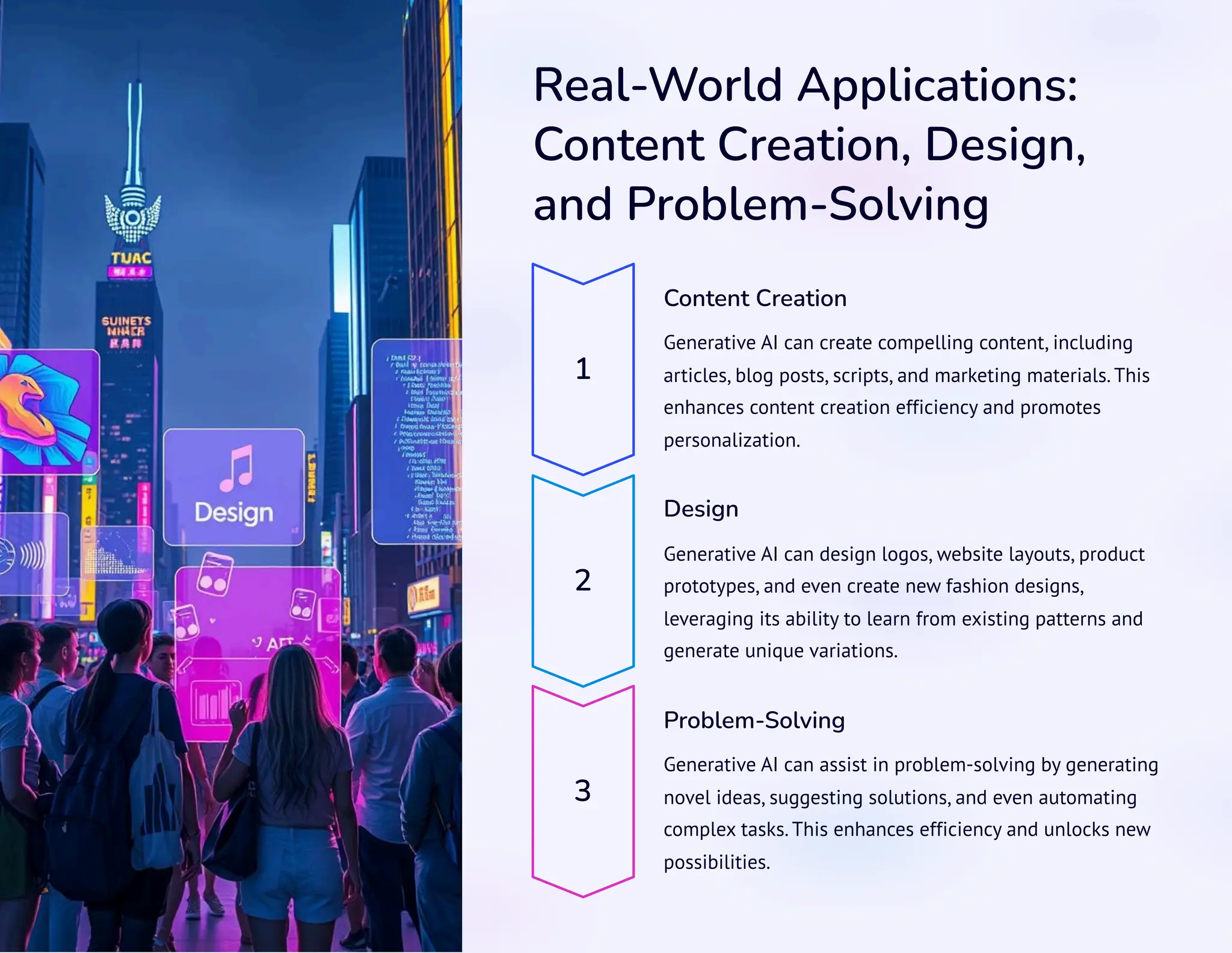
Real-World Applications:
Content Creation, Design,
and Problem-Solving
1
Content Creation
Generative AI can create compelling content, including
articles, blog posts, scripts, and marketing materials. This
enhances content creation efficiency and promotes
personalization.
2
Design
Generative AI can design logos, website layouts, product
prototypes, and even create new fashion designs,
leveraging its ability to learn from existing patterns and
generate unique variations.
3
Problem-Solving
Generative AI can assist in problem-solving by generating
novel ideas, suggesting solutions, and even automating
complex tasks. This enhances efficiency and unlocks new
possibilities.
Benefits of Generative AI: Increased Productivity,
Enhanced Creativity, and Personalization
Increased Productivity
Generative AI can automate
tedious tasks, freeing up time for
creative endeavors. It can generate
content, automate design tasks,
and streamline processes.
Enhanced Creativity
Generative AI can provide
inspiration and suggest new
possibilities, stimulating creativity
and pushing the boundaries of
innovation. It can generate unique
ideas and explore new artistic
directions.
Personalization
Generative AI can personalize
experiences by tailoring content,
products, and services to individual
preferences. This enhances
customer satisfaction and fosters
stronger connections.
Challenges of Generative AI:
Bias, Ethical Considerations,
and Technological
Limitations
Bias Generative AI can inherit biases
present in its training data,
leading to unfair or
discriminatory outputs.
Addressing bias requires
careful data selection and
algorithm design.
Ethical Considerations Generative AI raises ethical
concerns related to the
ownership and authenticity of
generated content, as well as
the potential for misuse, such
as creating deepfakes or
generating misinformation.
Technological Limitations Current generative AI models
are limited in their ability to
understand context and
produce truly creative and
original outputs. Further
advancements in algorithm
design and training data are
crucial.
Industry Case Studies: Successful
Implementations of Generative AI
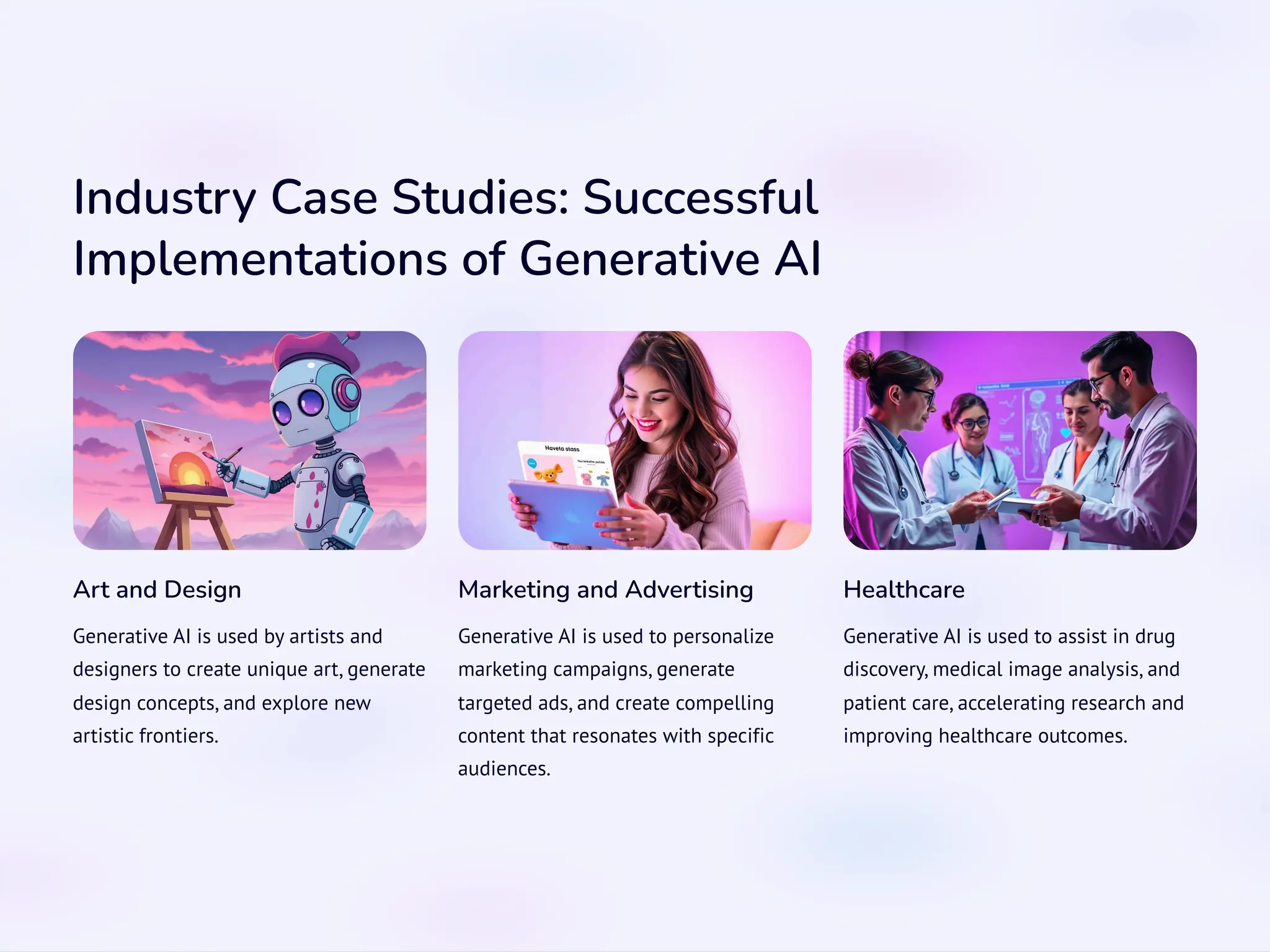
Art and Design
Generative AI is used by artists and
designers to create unique art, generate
design concepts, and explore new
artistic frontiers.
Marketing and Advertising
Generative AI is used to personalize
marketing campaigns, generate
targeted ads, and create compelling
content that resonates with specific
audiences.
Healthcare
Generative AI is used to assist in drug
discovery, medical image analysis, and
patient care, accelerating research and
improving healthcare outcomes.
The Future of Generative AI:
Emerging Trends and
Possibilities
1 Advanced Generative Models
Generative AI is evolving with the development of more
sophisticated models capable of generating more
complex and realistic outputs.
2 Multimodal AI
Generative AI is expanding beyond text and images to
encompass other modalities, such as video, audio, and
even physical objects, creating a more immersive and
integrated experience.
3 Ethical AI
Ethical considerations are becoming increasingly
important, leading to the development of responsible
and unbiased AI systems that promote fairness and
transparency.
4 AI for Good
Generative AI has the potential to address global
challenges, including climate change, poverty, and
disease, by generating innovative solutions and enabling
more efficient resource allocation.
Conclusion: Embracing
Generative AI for
Competitive Advantage
Growth and Innovation
Generative AI offers significant
opportunities for growth and
innovation across industries,
enabling businesses to unlock new
possibilities and stay ahead of the
curve.
Unleashing Creativity
By embracing generative AI,
individuals and businesses can
unleash their creative potential,
explore new ideas, and generate
groundbreaking solutions.
Enhanced Efficiency
Generative AI can automate tasks,
streamline processes, and improve
efficiency, allowing individuals
and businesses to focus on higher-
value activities.
Competitive Advantage
By leveraging generative AI,
businesses can gain a competitive
edge by creating innovative
products, services, and experiences
that meet the evolving needs of
customers.

Generative AI: Transforming Creativity and Innovation

  • 1.
    Generative AI: Transforming Creativity and Innovation GenerativeAI has emerged as a transformative force, revolutionizing various fields and empowering individuals with unprecedented creative capabilities. From crafting stunning visuals and compelling narratives to automating complex tasks and generating innovative solutions, generative AI is rapidly shaping the future of creativity and innovation.
  • 2.
    Introduction: The Riseof Generative AI 1 AI's Evolution Generative AI represents a significant advancement in artificial intelligence, building upon decades of research in machine learning, natural language processing, and computer vision. 2 Rise of Generative Models Generative models are algorithms capable of learning from data and generating new data that resembles the original patterns and structures. 3 Transforming Industries Generative AI is impacting various industries, including art, design, marketing, healthcare, and finance, offering novel solutions and enhancing creativity.
  • 3.
    Key Concepts: MachineLearning, Natural Language Processing, and Generative Modeling Machine Learning Generative AI relies on machine learning algorithms that enable systems to learn from data and make predictions or decisions. This includes techniques like deep learning and neural networks. Natural Language Processing Natural language processing (NLP) empowers machines to understand and process human language, allowing them to generate text, translate languages, and perform sentiment analysis. Generative Modeling Generative models are a core component of generative AI, enabling systems to generate new data that mimics the characteristics of the training data. Examples include GANs (Generative Adversarial Networks) and VAEs (Variational Autoencoders).
  • 4.
    Real-World Applications: Content Creation,Design, and Problem-Solving 1 Content Creation Generative AI can create compelling content, including articles, blog posts, scripts, and marketing materials. This enhances content creation efficiency and promotes personalization. 2 Design Generative AI can design logos, website layouts, product prototypes, and even create new fashion designs, leveraging its ability to learn from existing patterns and generate unique variations. 3 Problem-Solving Generative AI can assist in problem-solving by generating novel ideas, suggesting solutions, and even automating complex tasks. This enhances efficiency and unlocks new possibilities.
  • 5.
    Benefits of GenerativeAI: Increased Productivity, Enhanced Creativity, and Personalization Increased Productivity Generative AI can automate tedious tasks, freeing up time for creative endeavors. It can generate content, automate design tasks, and streamline processes. Enhanced Creativity Generative AI can provide inspiration and suggest new possibilities, stimulating creativity and pushing the boundaries of innovation. It can generate unique ideas and explore new artistic directions. Personalization Generative AI can personalize experiences by tailoring content, products, and services to individual preferences. This enhances customer satisfaction and fosters stronger connections.
  • 6.
    Challenges of GenerativeAI: Bias, Ethical Considerations, and Technological Limitations Bias Generative AI can inherit biases present in its training data, leading to unfair or discriminatory outputs. Addressing bias requires careful data selection and algorithm design. Ethical Considerations Generative AI raises ethical concerns related to the ownership and authenticity of generated content, as well as the potential for misuse, such as creating deepfakes or generating misinformation. Technological Limitations Current generative AI models are limited in their ability to understand context and produce truly creative and original outputs. Further advancements in algorithm design and training data are crucial.
  • 7.
    Industry Case Studies:Successful Implementations of Generative AI Art and Design Generative AI is used by artists and designers to create unique art, generate design concepts, and explore new artistic frontiers. Marketing and Advertising Generative AI is used to personalize marketing campaigns, generate targeted ads, and create compelling content that resonates with specific audiences. Healthcare Generative AI is used to assist in drug discovery, medical image analysis, and patient care, accelerating research and improving healthcare outcomes.
  • 8.
    The Future ofGenerative AI: Emerging Trends and Possibilities 1 Advanced Generative Models Generative AI is evolving with the development of more sophisticated models capable of generating more complex and realistic outputs. 2 Multimodal AI Generative AI is expanding beyond text and images to encompass other modalities, such as video, audio, and even physical objects, creating a more immersive and integrated experience. 3 Ethical AI Ethical considerations are becoming increasingly important, leading to the development of responsible and unbiased AI systems that promote fairness and transparency. 4 AI for Good Generative AI has the potential to address global challenges, including climate change, poverty, and disease, by generating innovative solutions and enabling more efficient resource allocation.
  • 9.
    Conclusion: Embracing Generative AIfor Competitive Advantage Growth and Innovation Generative AI offers significant opportunities for growth and innovation across industries, enabling businesses to unlock new possibilities and stay ahead of the curve. Unleashing Creativity By embracing generative AI, individuals and businesses can unleash their creative potential, explore new ideas, and generate groundbreaking solutions. Enhanced Efficiency Generative AI can automate tasks, streamline processes, and improve efficiency, allowing individuals and businesses to focus on higher- value activities. Competitive Advantage By leveraging generative AI, businesses can gain a competitive edge by creating innovative products, services, and experiences that meet the evolving needs of customers.