GENERATIONS OF
COMPUTERS
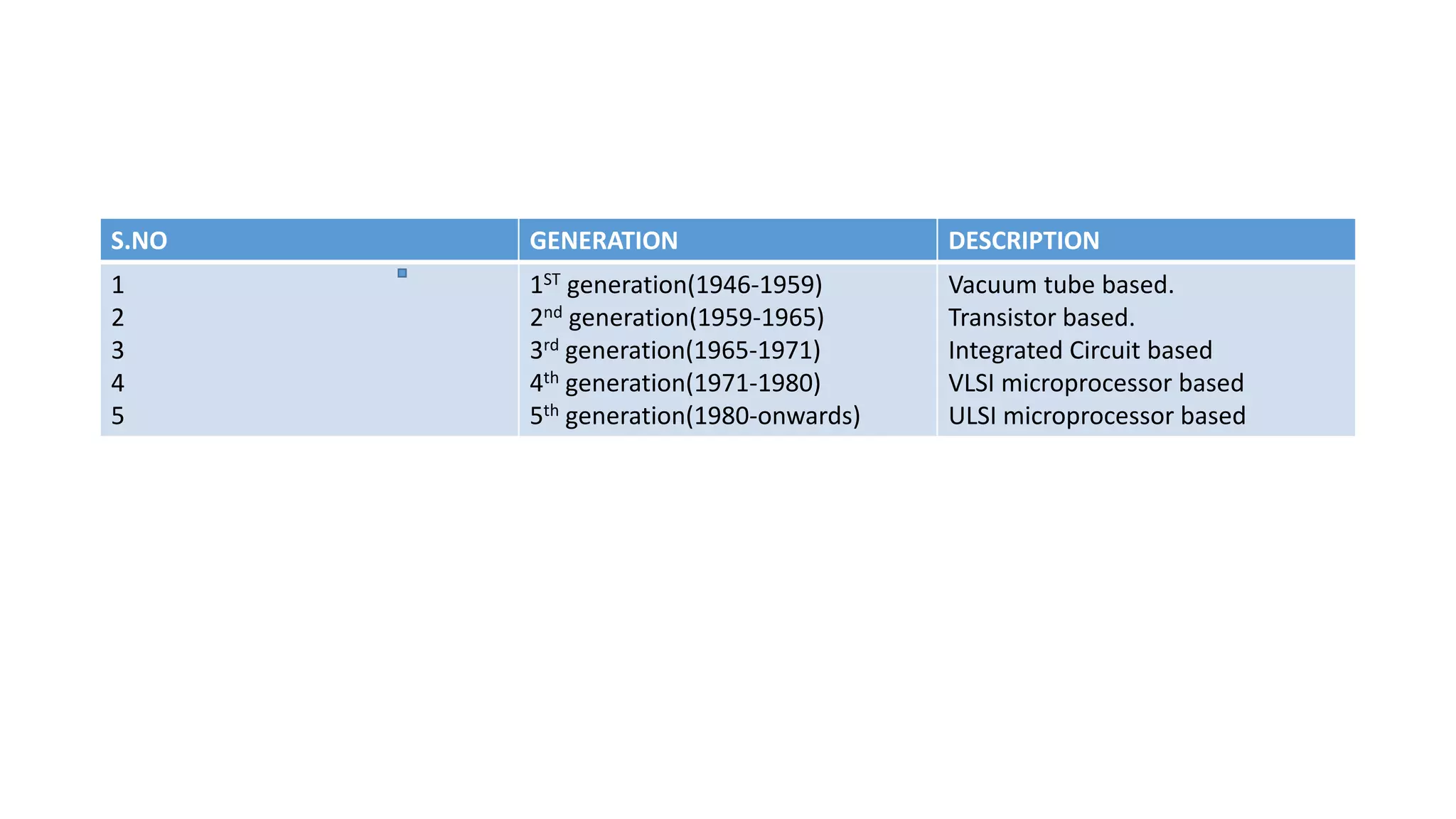
S.NO GENERATION DESCRIPTION
1
2
3
4
5
1ST generation(1946-1959)
2nd generation(1959-1965)
3rd generation(1965-1971)
4th generation(1971-1980)
5th generation(1980-onwards)
Vacuum tube based.
Transistor based.
Integrated Circuit based
VLSI microprocessor based
ULSI microprocessor based
1st GENERATION OF COMPUTER
• A vacuum-tube computer, now termed a first-generation computer, is a
computer that uses vacuum tubes for logic circuitry.
• The computers of first generation used vacuum tubes as the basic components
for memory and circuitry for CPU (Central Processing Unit).
FEATURES OF 1st GENERATION
• Vacuum tube technology
• Unreliable
• Supported machine language only
• Very costly
• Generated a lot of heat
• Slow input and output devices
• Huge size
• Need of AC
• Non-portable
• Consumed a lot of electricity
2nd GENERATION
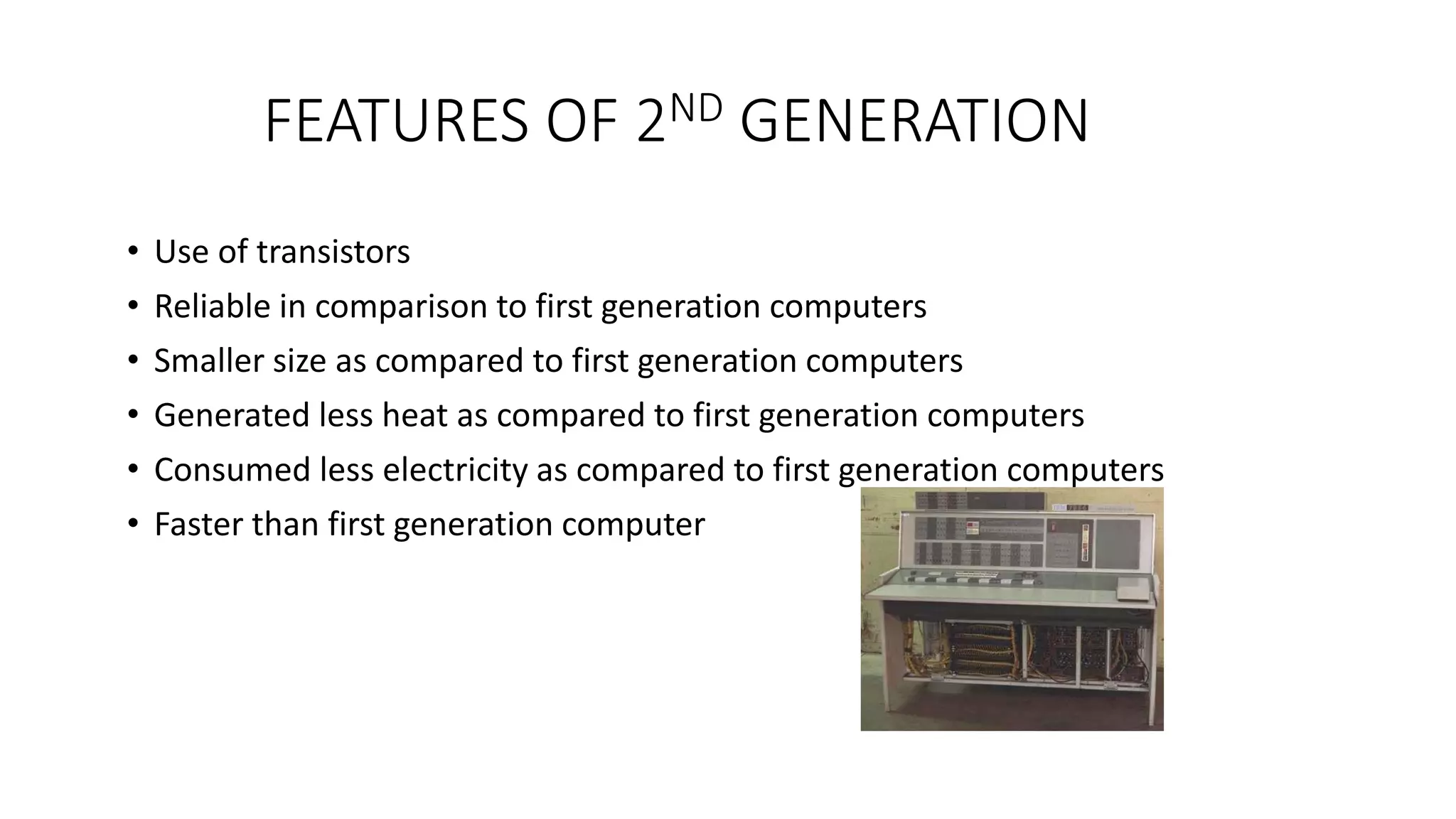
• A transistor computer, now often called a second-generation computer
• A second-generation computer, through the late 1950s and 1960s featured circuit
boards filled with individual transistors and magnetic core memory.
FEATURES OF 2ND GENERATION
• Use of transistors
• Reliable in comparison to first generation computers
• Smaller size as compared to first generation computers
• Generated less heat as compared to first generation computers
• Consumed less electricity as compared to first generation computers
• Faster than first generation computer
3RD GENERATION
• The computers of third generation used Integrated Circuits (ICs) in place of
transistors.
• In this generation remote processing, time-sharing, multiprogramming operating
system were used.
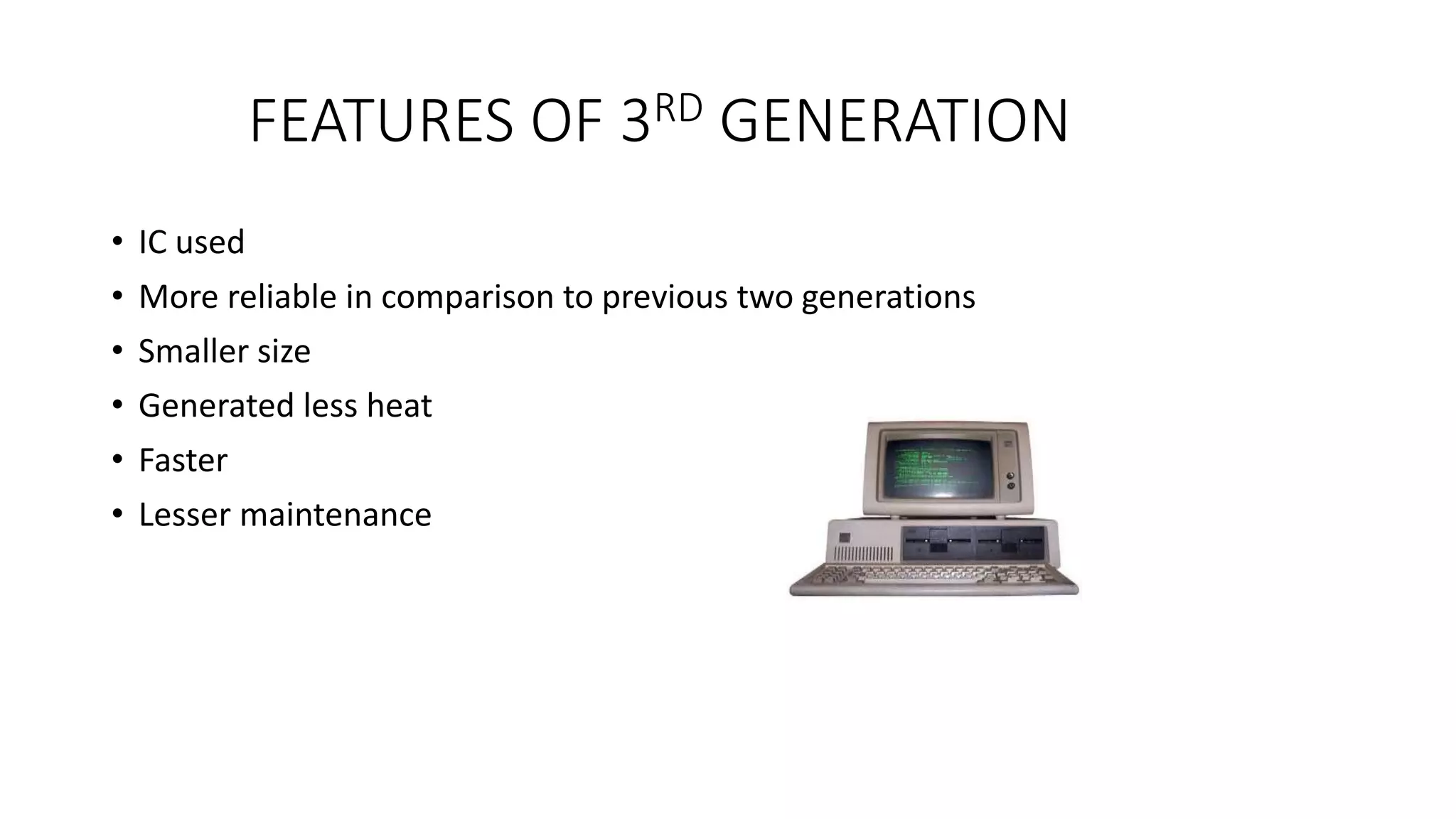
FEATURES OF 3RD GENERATION
• IC used
• More reliable in comparison to previous two generations
• Smaller size
• Generated less heat
• Faster
• Lesser maintenance
4th GENERATION OF COMPUTER
• Computers of fourth generation used Very Large Scale Integrated (VLSI) circuits
• VLSI circuits having about 5000 transistors and other circuit elements with their
associated circuits on a single chip made it possible to have microcomputers of
fourth generation.
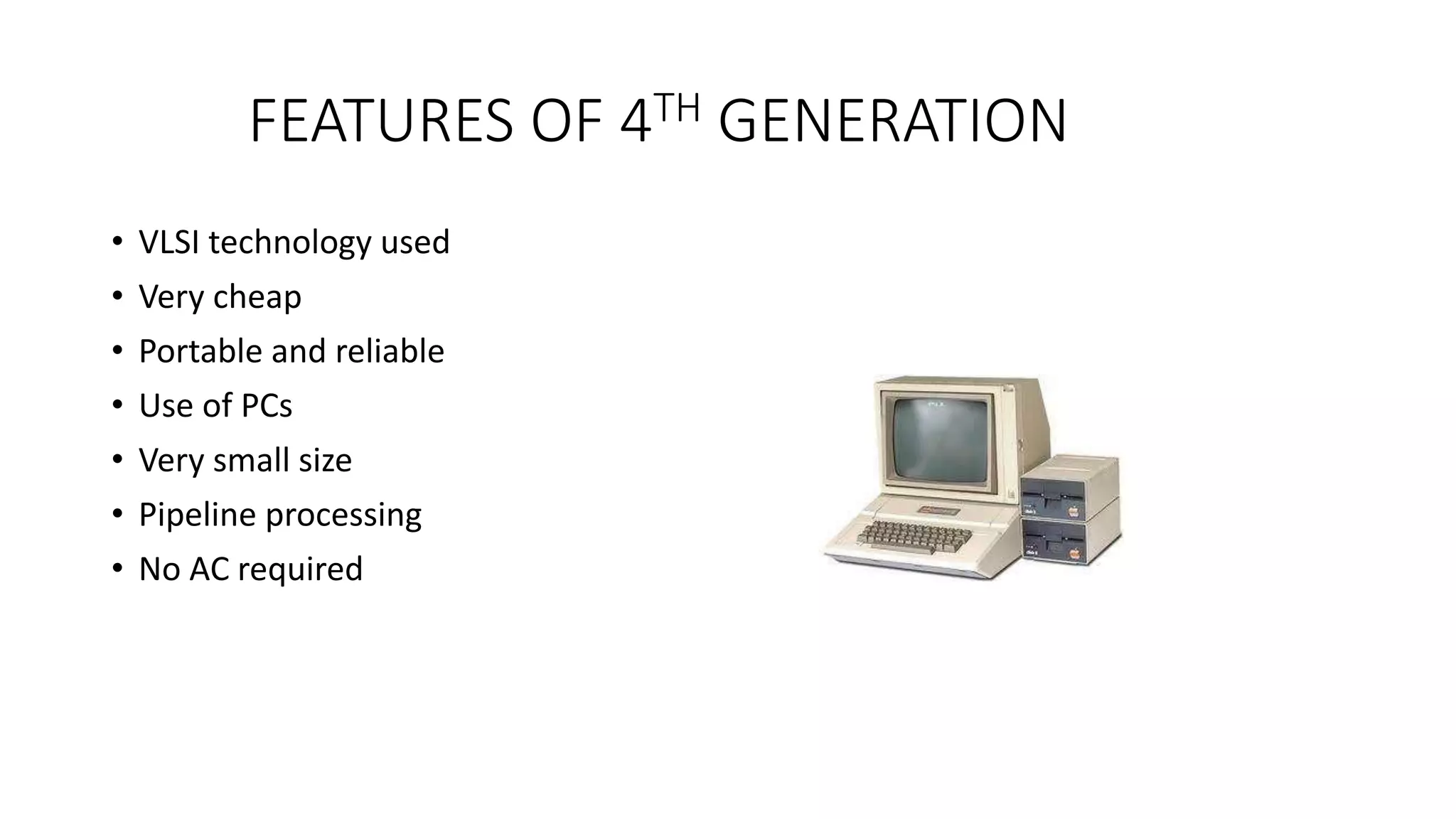
FEATURES OF 4TH GENERATION
• VLSI technology used
• Very cheap
• Portable and reliable
• Use of PCs
• Very small size
• Pipeline processing
• No AC required
5TH GENERATION
• In the fifth generation, VLSI technology became ULSI (Ultra Large Scale
Integration) technology, resulting in the production of microprocessor chips
having ten million electronic components.
• This generation is based on parallel processing hardware and AI (Artificial
Intelligence) software
• This is the most recent and technologically advanced computer generation.
Modern high-level languages such as Python, R, C#, Java, and others are used as
input methods
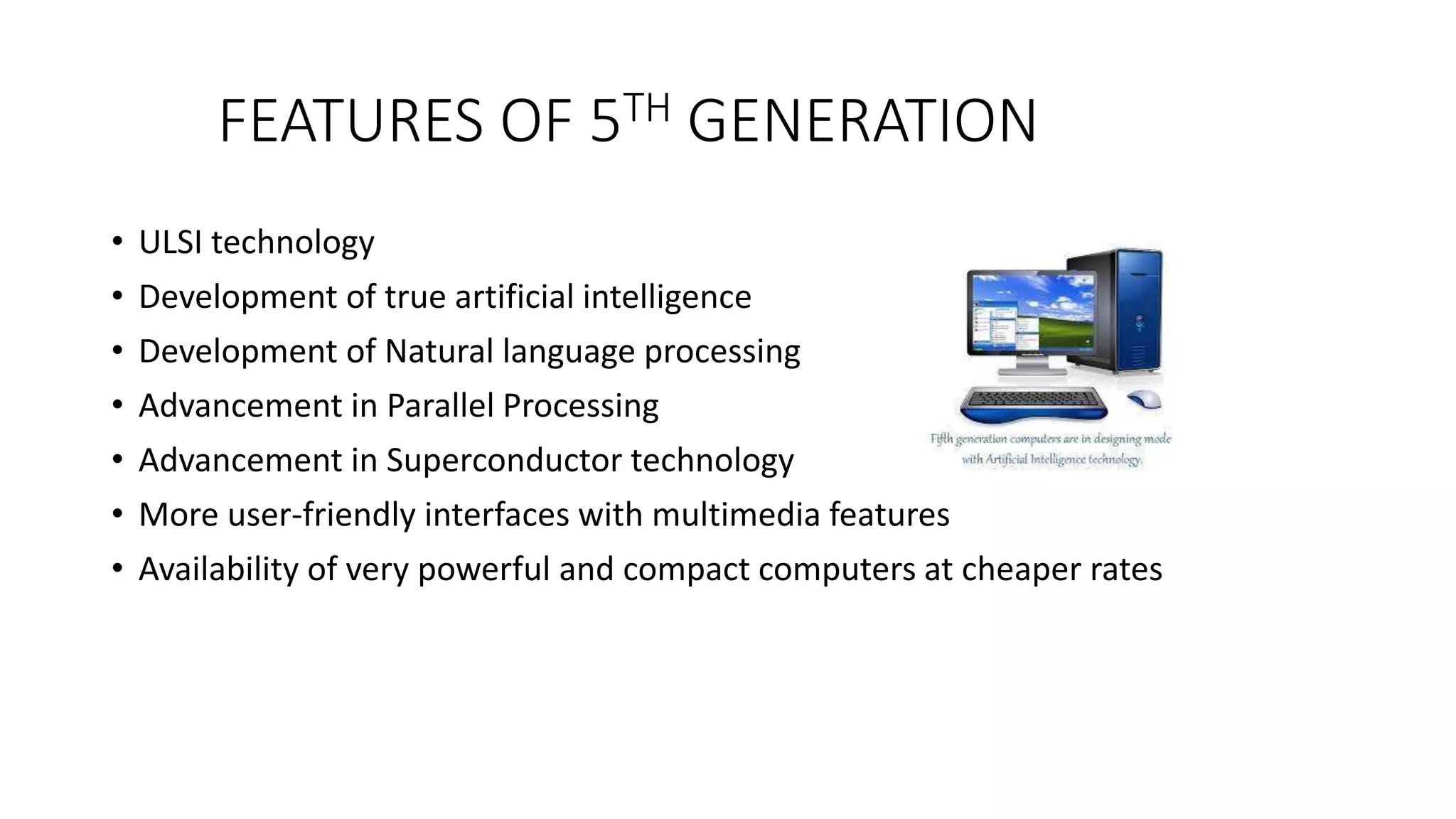
FEATURES OF 5TH GENERATION
• ULSI technology
• Development of true artificial intelligence
• Development of Natural language processing
• Advancement in Parallel Processing
• Advancement in Superconductor technology
• More user-friendly interfaces with multimedia features
• Availability of very powerful and compact computers at cheaper rates

GENERATIONS OF COMPUTERS 2.pptx

  • 1.
  • 2.
    S.NO GENERATION DESCRIPTION 1 2 3 4 5 1STgeneration(1946-1959) 2nd generation(1959-1965) 3rd generation(1965-1971) 4th generation(1971-1980) 5th generation(1980-onwards) Vacuum tube based. Transistor based. Integrated Circuit based VLSI microprocessor based ULSI microprocessor based
  • 3.
    1st GENERATION OFCOMPUTER • A vacuum-tube computer, now termed a first-generation computer, is a computer that uses vacuum tubes for logic circuitry. • The computers of first generation used vacuum tubes as the basic components for memory and circuitry for CPU (Central Processing Unit).
  • 4.
    FEATURES OF 1stGENERATION • Vacuum tube technology • Unreliable • Supported machine language only • Very costly • Generated a lot of heat • Slow input and output devices • Huge size • Need of AC • Non-portable • Consumed a lot of electricity
  • 5.
    2nd GENERATION • Atransistor computer, now often called a second-generation computer • A second-generation computer, through the late 1950s and 1960s featured circuit boards filled with individual transistors and magnetic core memory.
  • 6.
    FEATURES OF 2NDGENERATION • Use of transistors • Reliable in comparison to first generation computers • Smaller size as compared to first generation computers • Generated less heat as compared to first generation computers • Consumed less electricity as compared to first generation computers • Faster than first generation computer
  • 7.
    3RD GENERATION • Thecomputers of third generation used Integrated Circuits (ICs) in place of transistors. • In this generation remote processing, time-sharing, multiprogramming operating system were used.
  • 8.
    FEATURES OF 3RDGENERATION • IC used • More reliable in comparison to previous two generations • Smaller size • Generated less heat • Faster • Lesser maintenance
  • 9.
    4th GENERATION OFCOMPUTER • Computers of fourth generation used Very Large Scale Integrated (VLSI) circuits • VLSI circuits having about 5000 transistors and other circuit elements with their associated circuits on a single chip made it possible to have microcomputers of fourth generation.
  • 10.
    FEATURES OF 4THGENERATION • VLSI technology used • Very cheap • Portable and reliable • Use of PCs • Very small size • Pipeline processing • No AC required
  • 11.
    5TH GENERATION • Inthe fifth generation, VLSI technology became ULSI (Ultra Large Scale Integration) technology, resulting in the production of microprocessor chips having ten million electronic components. • This generation is based on parallel processing hardware and AI (Artificial Intelligence) software • This is the most recent and technologically advanced computer generation. Modern high-level languages such as Python, R, C#, Java, and others are used as input methods
  • 12.
    FEATURES OF 5THGENERATION • ULSI technology • Development of true artificial intelligence • Development of Natural language processing • Advancement in Parallel Processing • Advancement in Superconductor technology • More user-friendly interfaces with multimedia features • Availability of very powerful and compact computers at cheaper rates