Computer can classified in to five types according to
generations i.e time period
. First generation computer
. Second generation computer
. Third generation computer
. Fourth generation computer
. Fifth generation computer
. First generation computer
Period : 1945 – 1956
Inviter : Lee de Forest
Main processing device : Vacuum tubes
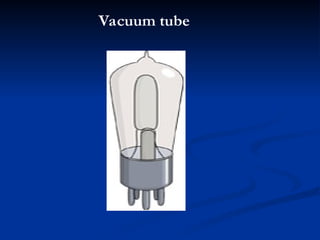
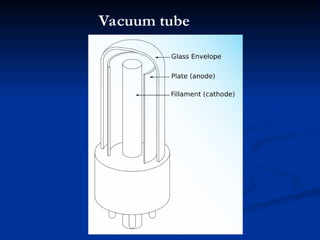
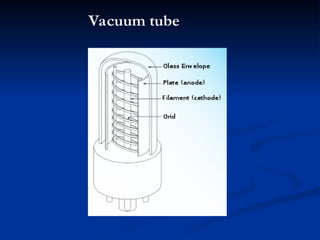
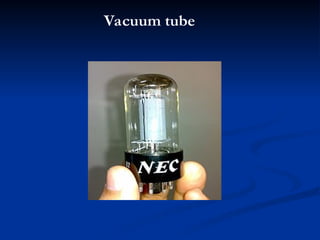
Vacuum tube
Vacuum tube
Vacuum tube
Vacuum tube
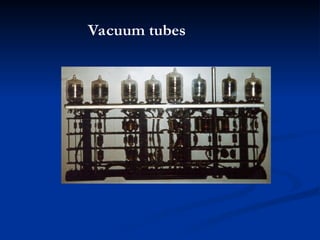
Vacuum tubes
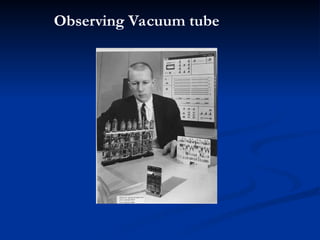
Observing Vacuum tube
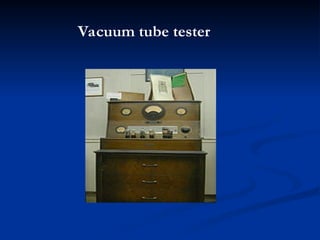
Vacuum tube tester
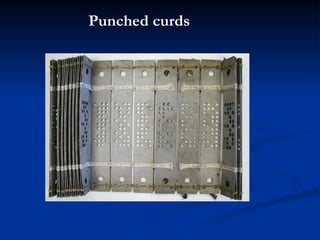
Punched curds
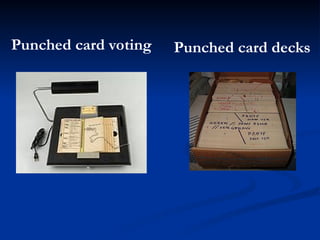
Punched card voting Punched card decks
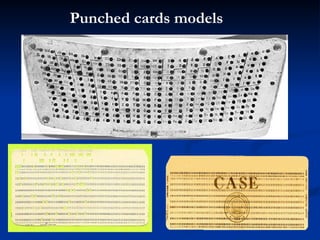
Punched cards models
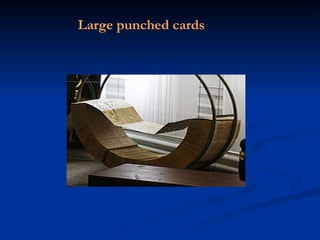
Large punched cards
. First generation computer
Advantages :
. It was only electronic device
. First device to hold memory
Disadvantages :
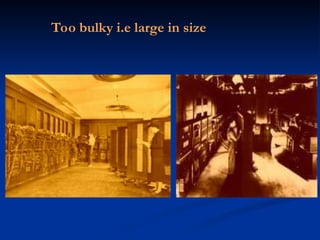
. Too bulky i.e large in size
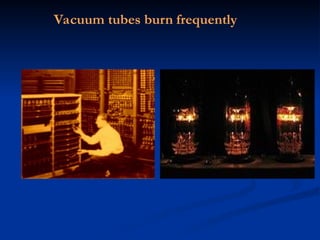
. Vacuum tubes burn frequently
. They were producing heat
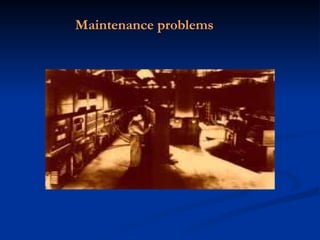
. Maintenance problems
Too bulky i.e large in size
Vacuum tubes burn frequently
Maintenance problems
. Second generation computer
Period : 1956 – 1963
Inviter : William Shockley
Main processing device : Transistor
Storage media : Magnetic disc
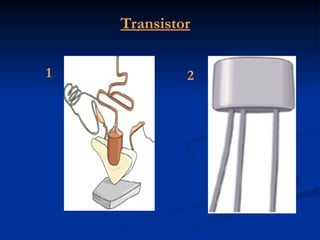
Transistor
1 2
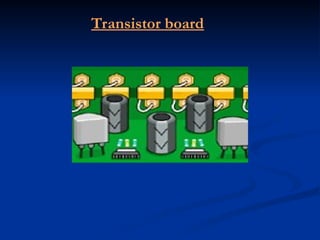
Transistor board
. Second generation computer
Advantages :
. Size reduced considerably
. The very fast
. Very much reliable
Disadvantages :
. They over heated quickly
. Maintenance problems
. Third generation computer
Period : 1964 – 1971
Inviter : Jack Kilby
Robert Noyce
Main processing device : IC (integrated circuit)
Storage media : Floppies
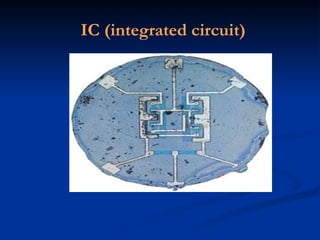
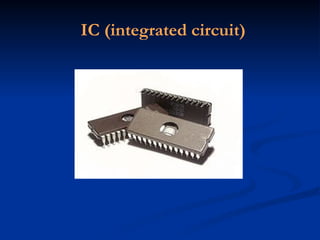
IC (integrated circuit)
ICs (integrated circuits)
IC (integrated circuit)
. Third generation computer
Advantages :
. ICs are very small in size
. Improved performance
. Production cost cheap
Disadvantages :
. ICs are sophisticated
. Fourth generation computer
Period : 1971– present
Inviter : Ted Hoff
Main processing device : ICs with VLSI
(Very Large Scale Integration)
Storage media : Floppies, CDs.
ICs with VLSI
(Very Large Scale Integration)
. Fourth generation computer
Advantages :
. It is a compact
. Less power consumption
. Production cost is cheap
Disadvantages :
. No artificial intelligent.
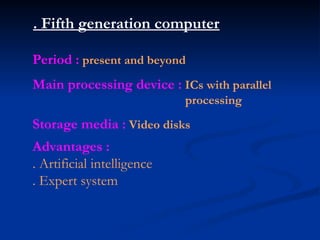
. Fifth generation computer
Period : present and beyond
Main processing device : ICs with parallel
processing
Storage media : Video disks
Advantages :
. Artificial intelligence
. Expert system
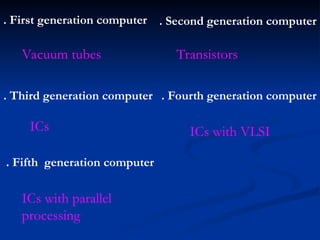
. First generation computer . Second generation computer
. Third generation computer . Fourth generation computer
. Fifth generation computer
Vacuum tubes Transistors
ICs ICs with VLSI
ICs with parallel
processing
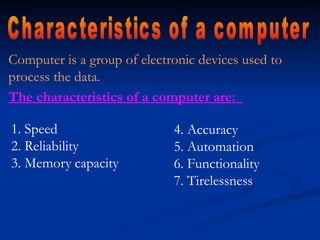
Computer is a group of electronic devices used to
process the data.
The characteristics of a computer are:
4. Accuracy
5. Automation
6. Functionality
7. Tirelessness
1. Speed
2. Reliability
3. Memory capacity
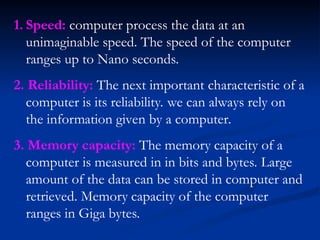
1. Speed: computer process the data at an
unimaginable speed. The speed of the computer
ranges up to Nano seconds.
2. Reliability: The next important characteristic of a
computer is its reliability. we can always rely on
the information given by a computer.

3. Memory capacity: The memory capacity of a
computer is measured in in bits and bytes. Large
amount of the data can be stored in computer and
retrieved. Memory capacity of the computer
ranges in Giga bytes.
4. Accuracy: Accuracy of the computer is very
high it performs calculation with greater accuracy
in less time.
5. Automation: a computer allows automation
for any process designed in the from of a
program. A program can be executed any
number of times to repeat the process.
6. functionality: computer can performs many kinds
of jobs. They not process the data but also can be
Used for plying music, movies, and printing jobs.
It finds its applications in all most all the fields.
7. Tirelessness: A computer never gate tired.
Generation of Computer first generation.ppt

Generation of Computer first generation.ppt

  • 3.
    Computer can classifiedin to five types according to generations i.e time period . First generation computer . Second generation computer . Third generation computer . Fourth generation computer . Fifth generation computer
  • 4.
    . First generationcomputer Period : 1945 – 1956 Inviter : Lee de Forest Main processing device : Vacuum tubes
  • 5.
  • 6.
  • 7.
  • 8.
  • 9.
  • 10.
  • 11.
  • 12.
  • 13.
  • 14.
    Punched card votingPunched card decks
  • 15.
  • 16.
  • 17.
    . First generationcomputer Advantages : . It was only electronic device . First device to hold memory Disadvantages : . Too bulky i.e large in size . Vacuum tubes burn frequently . They were producing heat . Maintenance problems
  • 18.
    Too bulky i.elarge in size
  • 19.
  • 20.
  • 21.
    . Second generationcomputer Period : 1956 – 1963 Inviter : William Shockley Main processing device : Transistor Storage media : Magnetic disc
  • 22.
  • 23.
  • 24.
    . Second generationcomputer Advantages : . Size reduced considerably . The very fast . Very much reliable Disadvantages : . They over heated quickly . Maintenance problems
  • 25.
    . Third generationcomputer Period : 1964 – 1971 Inviter : Jack Kilby Robert Noyce Main processing device : IC (integrated circuit) Storage media : Floppies
  • 26.
  • 27.
  • 28.
  • 29.
    . Third generationcomputer Advantages : . ICs are very small in size . Improved performance . Production cost cheap Disadvantages : . ICs are sophisticated
  • 30.
    . Fourth generationcomputer Period : 1971– present Inviter : Ted Hoff Main processing device : ICs with VLSI (Very Large Scale Integration) Storage media : Floppies, CDs.
  • 31.
    ICs with VLSI (VeryLarge Scale Integration)
  • 32.
    . Fourth generationcomputer Advantages : . It is a compact . Less power consumption . Production cost is cheap Disadvantages : . No artificial intelligent.
  • 33.
    . Fifth generationcomputer Period : present and beyond Main processing device : ICs with parallel processing Storage media : Video disks Advantages : . Artificial intelligence . Expert system
  • 34.
    . First generationcomputer . Second generation computer . Third generation computer . Fourth generation computer . Fifth generation computer Vacuum tubes Transistors ICs ICs with VLSI ICs with parallel processing
  • 35.
    Computer is agroup of electronic devices used to process the data. The characteristics of a computer are: 4. Accuracy 5. Automation 6. Functionality 7. Tirelessness 1. Speed 2. Reliability 3. Memory capacity
  • 36.
    1. Speed: computerprocess the data at an unimaginable speed. The speed of the computer ranges up to Nano seconds. 2. Reliability: The next important characteristic of a computer is its reliability. we can always rely on the information given by a computer. 3. Memory capacity: The memory capacity of a computer is measured in in bits and bytes. Large amount of the data can be stored in computer and retrieved. Memory capacity of the computer ranges in Giga bytes.
  • 37.
    4. Accuracy: Accuracyof the computer is very high it performs calculation with greater accuracy in less time. 5. Automation: a computer allows automation for any process designed in the from of a program. A program can be executed any number of times to repeat the process.
  • 38.
    6. functionality: computercan performs many kinds of jobs. They not process the data but also can be Used for plying music, movies, and printing jobs. It finds its applications in all most all the fields. 7. Tirelessness: A computer never gate tired.