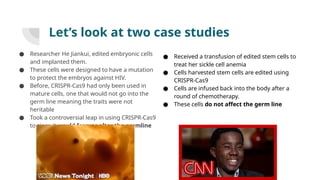
The document explains DNA as the genetic material composed of nucleotides responsible for phenotypes and details CRISPR-Cas9 as a genome editing technology used to alter genes. It discusses how viruses infect cells and the potential for CRISPR-Cas9 to combat viral infections, along with ethical considerations surrounding its application in genetic modification, including a controversial case of editing embryonic cells for HIV resistance. Important questions are raised regarding access, societal implications, and risks associated with gene editing technologies.