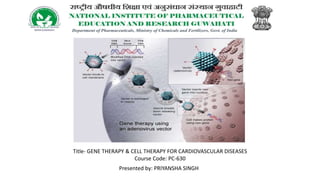
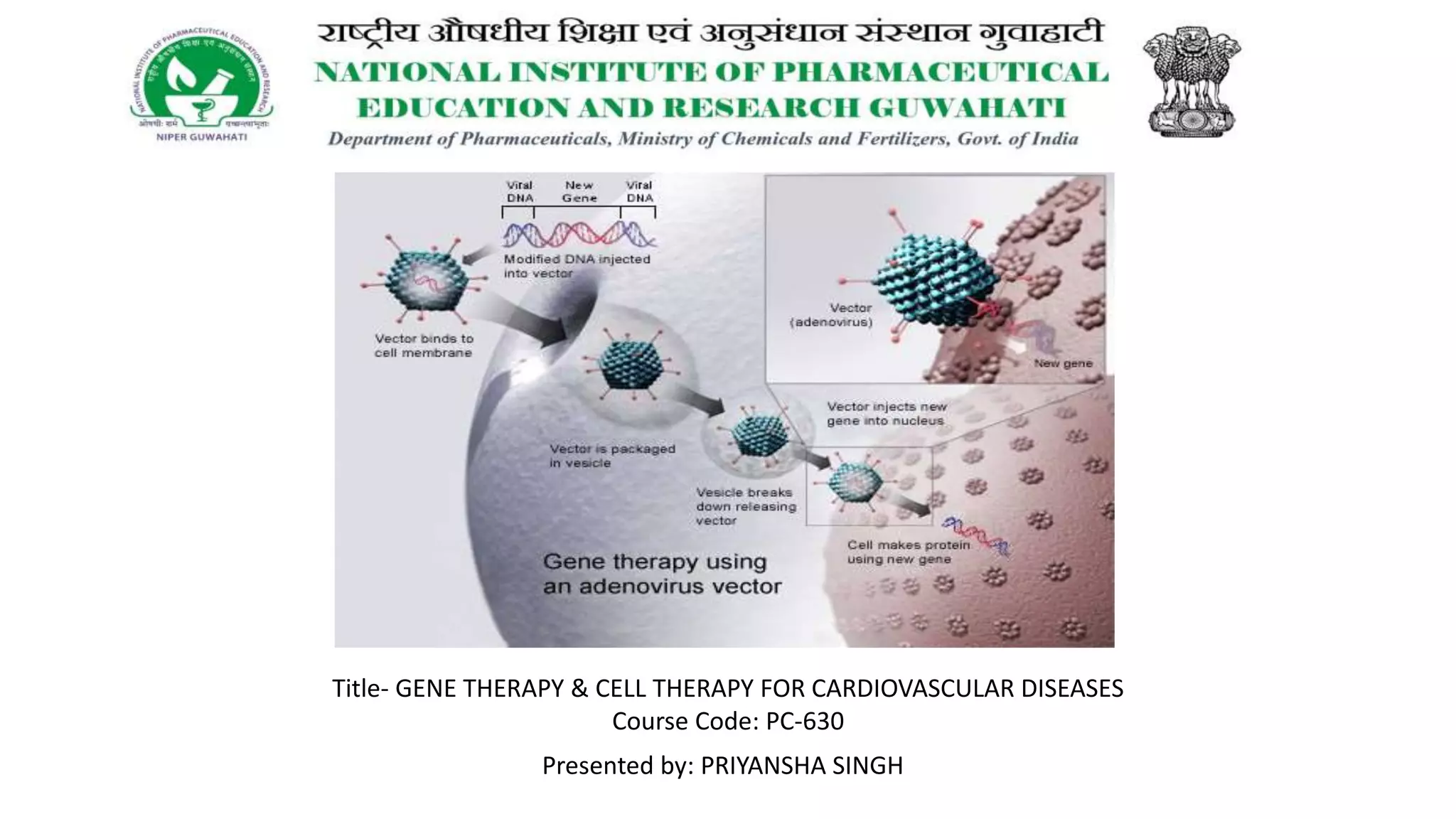
Title- GENE THERAPY & CELL THERAPY FOR CARDIOVASCULAR DISEASES
Course Code: PC-630
Presented by: PRIYANSHA SINGH
DEFINITION OF GENE THERAPY
Gene therapy is an experimental technique in which the focal point was
genetic modification of cells for desired therapeutic effect or treating
any genetic disorders by reconstructing the defective gene.
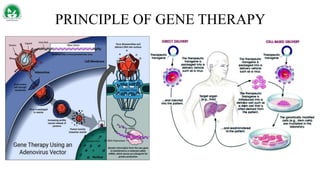
PRINCIPLE OF GENE THERAPY
A mutation in particular gene causes formation of dysfunctional protein,
further results in inherited disease. In this case gene therapy is
applicable, processed by insertion of normal functioning gene of human
which could be inserted into RNA of retrovirus vector for the
production of transgene, that is inserted in place of defective gene for
the desired therapeutic effect.
PRINCIPLE OF GENE THERAPY
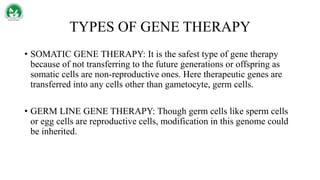
TYPES OF GENE THERAPY
• SOMATIC GENE THERAPY: It is the safest type of gene therapy
because of not transferring to the future generations or offspring as
somatic cells are non-reproductive ones. Here therapeutic genes are
transferred into any cells other than gametocyte, germ cells.
• GERM LINE GENE THERAPY: Though germ cells like sperm cells
or egg cells are reproductive cells, modification in this genome could
be inherited.
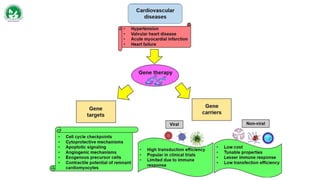
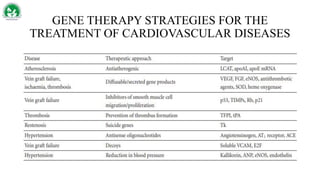
GENE THERAPY STRATEGIES FOR THE
TREATMENT OF CARDIOVASCULAR DISEASES
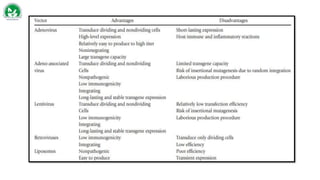
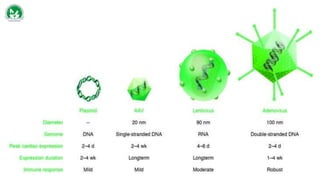
VIRAL VECTORS FOR GENE THERAPY
• Viral vectors are more commonly used for cardiovascular applications because they transfer genes to cardiac myocytes
much more efficiently than any of the non-viral methods. Commonly used viral vectors include retroviruses (including the
lentivirus family of which the human immunodeficiency viruses are members), adenoviruses (ADs) and adeno‐associated
viruses (AAVs).
• Retroviruses have been used for a number of non-cardiac applications, but they do not efficiently transduce cardiomyocytes
because they require active cell division for integration and function.
• Lentiviruses do not require active cell division, so they have been used extensively for cardiac applications. A limitation of
lentiviral vectors has been the inability to generate sufficient concentrations of virus for delivery by coronary perfusion.
Successful examples of lentiviral gene transfer to the heart predominately use intramyocardial injection.
VIRAL VECTORS FOR GENE THERAPY
• ADs and AAVs have the advantage of infecting non-dividing cells. Both have been shown to transduce the heart with reasonable
efficiency. A considerable limitation of AD vectors is that they trigger immune responses that ultimately limit AD‐mediated gene
expression to a period lasting days to weeks after gene transfer.
• AAVs have a much more limited immune response, allowing AAV‐mediated gene expression to last much longer than that of ADs. Some
preclinical studies have shown persistent AAV‐mediated gene expression years after vector delivery, and a hemophilia clinical trial
documented persistent expression in skeletal muscle 1 year after AAV injection. Disadvantages of AAVs include limited size of the gene
insert (4.5 to 5 kb total) and the requirement of a helper virus or other complex methods for amplification.
• AAV9 & S100A1 are the most efficient type serotype for cardiac gene delivery in mice. AAVM41 exhibits enhanced transduction to
cardiac muscle & diminished tropism to the liver after systemic administration.
• One of the limitations for widespread use of gene therapy is efficient delivery of the gene transfer vector to the target. Methods of
reported cardiovascular gene delivery include intramyocardial injection, coronary perfusion, and pericardial. All these techniques are
moderately successful, but each is hindered by efficacy, tolerability, or access.
• Recombinant vectors derived from the serotype 5 adenovirus (Ad5) have been predominantly used in preclinical and clinical trials in gene
therapy for CVD
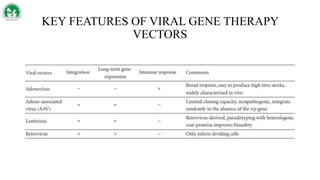
KEY FEATURES OF VIRAL GENE THERAPY
VECTORS
NON VIRAL VECTORS FOR GENE THERAPY
• Non viral methods include using naked DNA alone or complexed with liposomes, or UTM, Non viral vectors include
naked plasmid DNA, liposomal DNA complexes, polymer-carried DNA, and oligonucleotides. and modified mRNAs.
• Naked DNA vectors are simple closed circular DNA plasmids that at a minimum contain a promoter driving a gene of
interest and a polyadenylation site
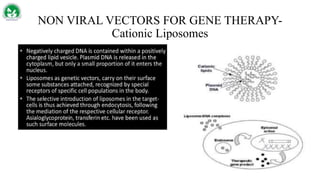
• Different strategies have been developed to improve its overall efficiency such as the use of liposome-DNA complexes
that increase plasmid stability, though the plasmid is rapidly cleared from the systemic circulation. Polymer-based DNA
complexes based on poly-L-lysine (PLL) and polyethyleneimine (PEI) products protect plasmids from nuclease digestion
and facilitate cellular uptake.
• Naked DNA vectors are inefficient, as only a small percentage of target cells express reporter genes after transfection.
They are easy to produce and are used extensively for applications that do not require high-density gene transfer
• Electroporation and the use of micro-bubbles as echo contrast agents have also been explored but with variable results.
NON VIRAL VECTORS FOR GENE
THERAPY- Plasmid Transfection
• Applied only in case of direct needle injection (puncture) in specific
muscular tissues.
• Inability to present a controlled & satisfactory expression of the genes
that they carry in special target tissues.
• May carry any volume of genetic material to the target cells without
any restriction.
NON VIRAL VECTORS FOR GENE THERAPY-
Cationic Liposomes
NON VIRAL VECTORS FOR GENE THERAPY-
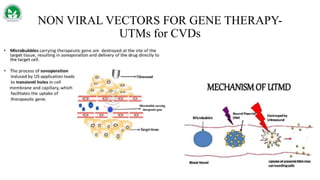
UTMs for CVDs
NON VIRAL VECTORS FOR GENE THERAPY
• The ultrasound-targeted micro-bubbles (UTM) strategy has gained interest as an alternative delivery strategy for CVD due to
its intrinsic low levels of toxicity and immunogenicity, which is compounded by the potential for re-administration and
organ-specific delivery of the genes of interest. Recent reports have shown benefits in MI and HF animal models, using
UTM for targeted delivery of DNA or microRNA. In particular, lipid micro-bubbles carrying VEGF and stem cell factor
(SCF) genes significantly improved myocardial perfusion and ventricular function after coronary artery ligation in rodent
models.
• Similarly, repeated UTM-based delivery of SCF and stromal cell-derived factor (SDF)-1α genes in a rat model of MI
resulted in an increased vascular density, improved myocardial function, and reduced infarct size. UTM was also well suited
to enhance delivery of microRNAs to cardiomyocytes without discernable toxicity. In particular, UTM-mediated delivery of
miR-133 in cardiomyocytes in vitro led to a reversal of hypertrophy.
NON VIRAL VECTORS FOR GENE THERAPY
• Non-viral gene transfer almost exclusively meant the use of naked plasmid DNA, with only a few trials using
lipofection. Among the major advantages of plasmid DNA as a gene delivery vehicle are (1) the ease of large scale
production, (2) the near absence of a DNA size limit, and (3) the limited innate, cellular, and humoral immune response.
The lack of a significant humoral immune response has the advantage of allowing repeated vector administration
without loss of gene transfer efficiency.
• Disadvantages of plasmid DNA as gene delivery vehicle remains the low transfection efficiencies achievable. Moreover,
for many applications, the transient expression (2-4 weeks) limits its utility for cardiac gene transfer because repeat
vector administration, even with percutaneous methods, carries an appreciable risk of serious adverse events.
• The use of modified mRNAs has two main advantages: (1) Modified RNAs, unlike unmodified nucleic acids, do not
bind to Toll-like receptors, which could trigger apoptosis of the transfected cells. As a result, modified mRNAs can be
administered repeatedly. (2) Because mRNAs are translated in the cytoplasm, they do not need to be imported into the
nucleus for transgene expression, which poses a formidable hurdle to transfection with DNA. Modified mRNAs trigger
high-level transgene expression but, unsurprisingly, transgene expression is relatively short-lived, 2-6 days
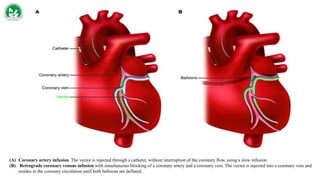
(A) Coronary artery infusion. The vector is injected through a catheter, without interruption of the coronary flow, using a slow infusion.
(B) Retrograde coronary venous infusion with simultaneous blocking of a coronary artery and a coronary vein. The vector is injected into a coronary vein and
resides in the coronary circulation until both balloons are deflated.
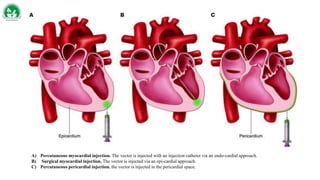
A) Percutaneous myocardial injection. The vector is injected with an injection catheter via an endo-cardial approach.
B) Surgical myocardial injection. The vector is injected via an epi-cardial approach.
C) Percutaneous pericardial injection. the vector is injected in the pericardial space.
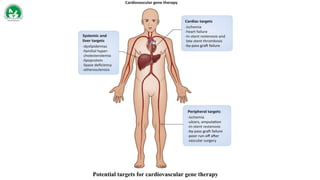
Potential targets for cardiovascular gene therapy
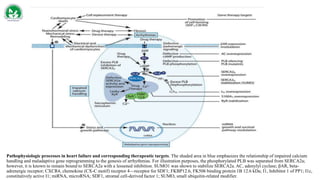
Pathophysiologic processes in heart failure and corresponding therapeutic targets. The shaded area in blue emphasizes the relationship of impaired calcium
handling and maladaptive gene reprogramming to the genesis of arrhythmias. For illustration purposes, the phosphorylated PLB was separated from SERCA2a;
however, it is known to remain bound to SERCA2a with a lessened inhibition. SUMO1 was shown to stabilize SERCA2a. AC, adenylyl cyclase; βAR, beta-
adrenergic receptor; CXCR4, chemokine (CX-C motif) receptor 4—receptor for SDF1; FKBP12.6, FK506 binding protein 1B 12.6 kDa; I1, Inhibitor 1 of PP1; I1c,
constitutively active I1; miRNA, microRNA; SDF1, stromal cell-derived factor 1; SUMO, small ubiquitin-related modifier.
PRECLINICAL FINDINGS
• Preclinical studies suggest that myocardial gene transfer can improve angiogenesis with vascular
endothelial growth factor (VEGF) or fibroblast growth factor (FGF).
• Increase myocardial contractility and reduced arrhythmia vulnerability with sarcoplasmic
reticulum Ca2+ adenosine triphosphatase, induce cardiac repair with stromal-derived factor-1
(SDF-1).
• Control heart rate in atrial fibrillation with an inhibitory G protein a subunit
• Reduce atrial fibrillation and ventricular tachycardia vulnerability with connexins 40 and 43.
• The skeletal muscle sodium channel SCN4a, or a dominant-negative mutation of the rapid
component of the delayed rectifier potassium channel, KCNH2-G628S
GENE THERAPY FOR HEART FAILURE
• Heart failure- when the heart is unable to pump sufficiently to maintain
blood flow to meet the body’s needs.
• Molecular targets for gene therapy-
1. Sarcoendoplasmic Reticulum Calcium- ATPase 2a (SERCA2a)
2. Stromal derived factor-1 (SDF-1)
3. Adenylyl cyclase 6 (ADCY6)
4. S100 Calcium binding protein A1 (S100A1)
5. A c- terminal fragment of the b- adrenergic receptor kinase (bARKct)
6. Parvalbumin (PVALB)
GENE THERAPY FOR HEART FAILURE
• One of the key proteins defective in HF is SERCA2a.
• SERCA2a expression & function are decreased in HF. This decrease
reduces calcium transient that is characteristic of systolic heart failure.
• The Calcium Up-regulation by Percutaneous administration of
gene therapy In cardiac Disease (CUPID) trial looked at the safety
& efficacy of SERCA2a gene therapy in HF.
• In this, infusion of recombinant AAV-1 encoding SERCA2a is done.
GENE THERAPY FOR ATHEROSCLEROSIS
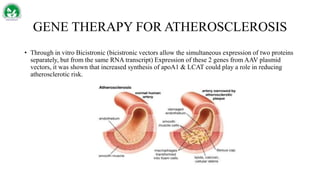
• Hardening & narrowing of the arteries- silently and slowly blocks arteries, putting
blood flow at risk.
• Atherosclerosis begins with damage to the endothelium. Its caused by high blood
pressure, smoking, or high cholesterol. That damage leads to the formation of plaque.
• A reduction in the level of atherogenic apolipoprotein (apo) B100 is possible after gene
of the apoB mRNA editing enzyme, whilst lipoprotein A could be lowered with synthesis
inhibiting ribozymes.
• Apolipoprotein A1 (apoA1) and lecithin cholesterol acyltransferase (LCAT) are
important factors in the removal of excess cholesterol and the subsequent reduction in the
incidence of atherosclerotic lesions.
GENE THERAPY FOR ATHEROSCLEROSIS
• Through in vitro Bicistronic (bicistronic vectors allow the simultaneous expression of two proteins
separately, but from the same RNA transcript) Expression of these 2 genes from AAV plasmid
vectors, it was shown that increased synthesis of apoA1 & LCAT could play a role in reducing
atherosclerotic risk.
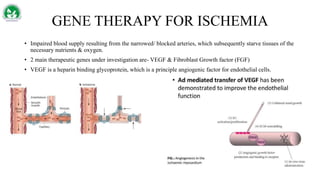
GENE THERAPY FOR ISCHEMIA
• Impaired blood supply resulting from the narrowed/ blocked arteries, which subsequently starve tissues of the
necessary nutrients & oxygen.
• 2 main therapeutic genes under investigation are- VEGF & Fibroblast Growth factor (FGF)
• VEGF is a heparin binding glycoprotein, which is a principle angiogenic factor for endothelial cells.
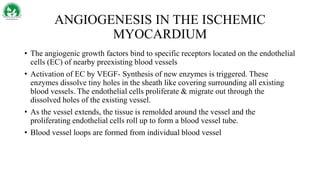
ANGIOGENESIS IN THE ISCHEMIC
MYOCARDIUM
• The angiogenic growth factors bind to specific receptors located on the endothelial
cells (EC) of nearby preexisting blood vessels
• Activation of EC by VEGF- Synthesis of new enzymes is triggered. These
enzymes dissolve tiny holes in the sheath like covering surrounding all existing
blood vessels. The endothelial cells proliferate & migrate out through the
dissolved holes of the existing vessel.
• As the vessel extends, the tissue is remolded around the vessel and the
proliferating endothelial cells roll up to form a blood vessel tube.
• Blood vessel loops are formed from individual blood vessel
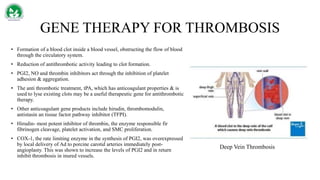
GENE THERAPY FOR THROMBOSIS
• Formation of a blood clot inside a blood vessel, obstructing the flow of blood
through the circulatory system.
• Reduction of antithrombotic activity leading to clot formation.
• PGI2, NO and thrombin inhibitors act through the inhibition of platelet
adhesion & aggregation.
• The anti thrombotic treatment, tPA, which has anticoagulant properties & is
used to lyse existing clots may be a useful therapeutic gene for antithrombotic
therapy.
• Other anticoagulant gene products include hirudin, thrombomodulin,
antistasin an tissue factor pathway inhibitor (TFPI).
• Hirudin- most potent inhibitor of thrombin, the enzyme responsible fir
fibrinogen cleavage, platelet activation, and SMC proliferation.
• COX-1, the rate limiting enzyme in the synthesis of PGI2, was overexpressed
by local delivery of Ad to porcine carotid arteries immediately post-
angioplasty. This was shown to increase the levels of PGI2 and in return
inhibit thrombosis in inured vessels.
Deep Vein Thrombosis
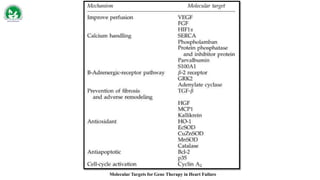
Molecular Targets for Gene Therapy in Heart Failure
MOLECULAR TARGETS FOR GENE THERAPY IN
CARDIOVASCULAR DISEASES
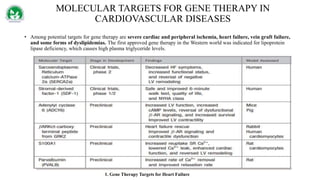
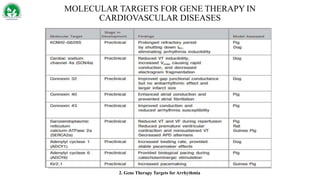
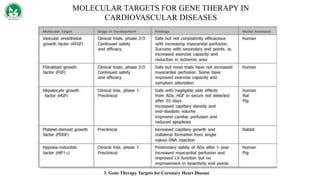
• Among potential targets for gene therapy are severe cardiac and peripheral ischemia, heart failure, vein graft failure,
and some forms of dyslipidemias. The first approved gene therapy in the Western world was indicated for lipoprotein
lipase deficiency, which causes high plasma triglyceride levels.
1. Gene Therapy Targets for Heart Failure
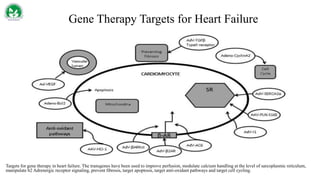
Gene Therapy Targets for Heart Failure
Targets for gene therapy in heart failure. The transgenes have been used to improve perfusion, modulate calcium handling at the level of sarcoplasmic reticulum,
manipulate b2 Adrenergic receptor signaling, prevent fibrosis, target apoptosis, target anti-oxidant pathways and target cell cycling.
MOLECULAR TARGETS FOR GENE THERAPY IN
CARDIOVASCULAR DISEASES
2. Gene Therapy Targets for Arrhythmia
3. Gene Therapy Targets for Coronary Heart Disease
MOLECULAR TARGETS FOR GENE THERAPY IN
CARDIOVASCULAR DISEASES
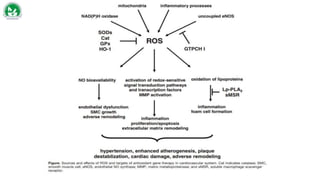
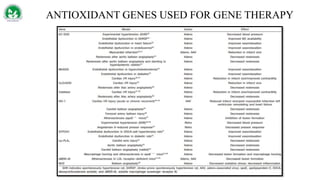
ANTIOXIDANT GENES USED FOR GENE THERAPY
MicroRNAAS A GENE THERAPY TOOL TO
TARGET HEART FAILURE
• MicroRNA are small noncoding RNA that modulate gene expression. Dysregulation of microRNA was
demonstrated in cardiovascular and other diseases; circulating microRNA levels can be measured as
diagnostic indicators; and soluble microRNA antagonists can be administered intravenously for therapeutic
use.
• Finally, in a recent study, microRNA-1 (mir1) was expressed using an AAV serotype 9 in a rodent model of
left ventricular hypertrophy and failure due to pressure overload; the treatment resulted in regression of
hypertrophy and improvements in ventricular function
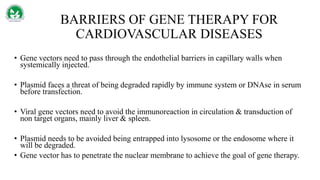
BARRIERS OF GENE THERAPY FOR
CARDIOVASCULAR DISEASES
• Gene vectors need to pass through the endothelial barriers in capillary walls when
systemically injected.
• Plasmid faces a threat of being degraded rapidly by immune system or DNAse in serum
before transfection.
• Viral gene vectors need to avoid the immunoreaction in circulation & transduction of
non target organs, mainly liver & spleen.
• Plasmid needs to be avoided being entrapped into lysosome or the endosome where it
will be degraded.
• Gene vector has to penetrate the nuclear membrane to achieve the goal of gene therapy.
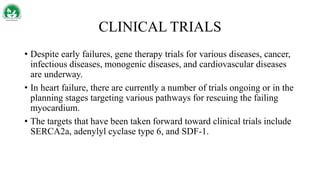
CLINICAL TRIALS
• Despite early failures, gene therapy trials for various diseases, cancer,
infectious diseases, monogenic diseases, and cardiovascular diseases
are underway.
• In heart failure, there are currently a number of trials ongoing or in the
planning stages targeting various pathways for rescuing the failing
myocardium.
• The targets that have been taken forward toward clinical trials include
SERCA2a, adenylyl cyclase type 6, and SDF-1.
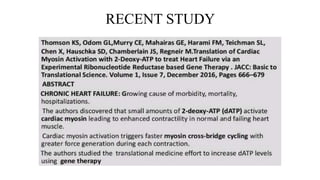
RECENT STUDY
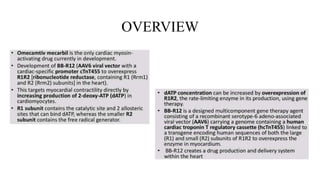
OVERVIEW
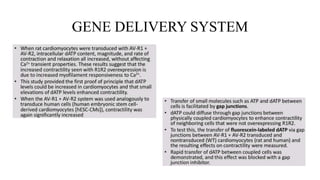
GENE DELIVERY SYSTEM
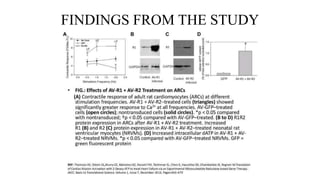
FINDINGS FROM THE STUDY
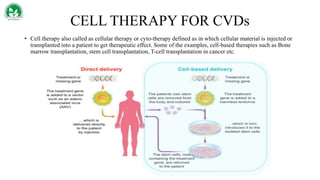
CELL THERAPY FOR CVDs
• Cell therapy also called as cellular therapy or cyto-therapy defined as in which cellular material is injected or
transplanted into a patient to get therapeutic effect. Some of the examples, cell-based therapies such as Bone
marrow transplantation, stem cell transplantation, T-cell transplantation in cancer etc.
CELL THERAPY STRATEGIES
• 1. ALLOGENIC: According to allogenic cell therapy, donor of cells is
different to recipient of cells.
• 2. AUTOLOGOUS: According to autologous cell therapy, cells which
are transplanted that are derived from patients own tissues.
• 3. XENOGENIC: According to xenogenic cell therapy, recipient
receives cells from another species.
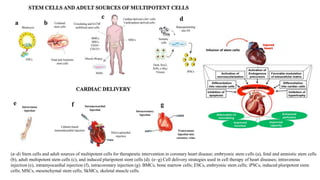
(a–d) Stem cells and adult sources of multipotent cells for therapeutic intervention in coronary heart disease; embryonic stem cells (a), fetal and amniotic stem cells
(b), adult multipotent stem cells (c), and induced pluripotent stem cells (d). (e–g) Cell delivery strategies used in cell therapy of heart diseases; intravenous
injection (e), intramyocardial injection (f), intracoronary injection (g). BMCs, bone marrow cells; ESCs, embryonic stem cells; iPSCs, induced pluripotent stem
cells; MSCs, mesenchymal stem cells; SkMCs, skeletal muscle cells.
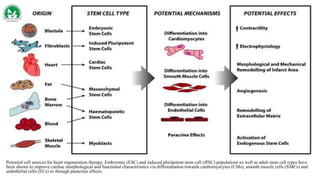
Potential cell sources for heart regeneration therapy. Embryonic (ESC) and induced pluripotent stem cell (iPSC) populations as well as adult stem cell types have
been shown to improve cardiac morphological and functional characteristics via differentiation towards cardiomyocytes (CMs), smooth muscle cells (SMCs) and
endothelial cells (ECs) or through paracrine effects.
CONCLUSION
• Gene therapy is an emerging suitable alternative, with substantial progress
in preclinical models of CVDs.
• The physiological & structural differences between animal models &
humans & the development of immune response against the transgene
products, the gene modifies cells, or the vectors themselves pose important
challenges for clinical translation.
• In order for gene therapy to become a reality in the cardiovascular clinic
effective therapeutic genes and suitable vectors must be identified and
developed.
REFERENCES
• Gene Therapy to Treat Cardiovascular Disease- Julie A. Wolfram, PhD; J. Kevin Donahue, MD
(https://www.ahajournals.org/doi/pdf/10.1161/JAHA.113.000119)
• Potential benefits of cell therapy in coronary heart disease- Vincenzo Grimaldi, BiotechD, Francesco Paolo
Mancini, MD, PhD, Amelia Casamassimi, BiolD, Alberto Zullo, PhD, Teresa Infante, BiolD, Claudio Napoli,
MD, PhD (https://doi.org/10.1016/j.jjcc.2013.05.017)
• Stem Cell Technology in Cardiac Regeneration: A Pluripotent Stem Cell Promise- Robin Duelen & Maurilio
Sampaolesi (http://dx.doi.org/10.1016/j.ebiom.2017.01.029)
• Cardiac gene therapy: Recent advances and future directions- Daniel Masona, Yu-Zhe Chena, Harini Venkata
Krishnana, ShilpaSant (https://doi.org/10.1016/j.jconrel.2015.08.001)
• Antioxidant Gene Therapy for Cardiovascular Disease: Current Status and Future Perspectives- Anna-Liisa
Levonen, Elisa Vähäkangas, Jonna K. Koponen and Seppo Ylä-Herttuala
(https://doi.org/10.1161/CIRCULATIONAHA.107.718585)
• Chapter 29 - Gene Therapy for Cardiovascular Diseases- Thomas Weber, Lior Zangi, Roger J. Hajjar
(https://doi.org/10.1016/B978-0-12-801888-0.00029-1)
• Molecular targets in heart failure gene therapy: current controversies and translational perspectives- Victor
Kairouz, Larissa Lipskaia, Roger J. Hajjar, Elie R. Chemaly (https://doi.org/10.1111/j.1749-6632.2012.06520.x)
• Gene Therapy for Cardiovascular Disease- Kate L. Dishart, Lorraine M. Work, Laura Denby, and Andrew H.
Baker- BHF Blood Pressure Group, Department of Medicine and Therapeutics, University of Glasgow, Western
Infirmary, Glasgow G11 6NT, UK (http://dx.doi.org/10.1155/S1110724303209086)
THANK YOU

GENE AND CELL THERAPY FOR CVDs

  • 1.
    Title- GENE THERAPY& CELL THERAPY FOR CARDIOVASCULAR DISEASES Course Code: PC-630 Presented by: PRIYANSHA SINGH
  • 2.
    DEFINITION OF GENETHERAPY Gene therapy is an experimental technique in which the focal point was genetic modification of cells for desired therapeutic effect or treating any genetic disorders by reconstructing the defective gene.
  • 3.
    PRINCIPLE OF GENETHERAPY A mutation in particular gene causes formation of dysfunctional protein, further results in inherited disease. In this case gene therapy is applicable, processed by insertion of normal functioning gene of human which could be inserted into RNA of retrovirus vector for the production of transgene, that is inserted in place of defective gene for the desired therapeutic effect.
  • 4.
  • 5.
    TYPES OF GENETHERAPY • SOMATIC GENE THERAPY: It is the safest type of gene therapy because of not transferring to the future generations or offspring as somatic cells are non-reproductive ones. Here therapeutic genes are transferred into any cells other than gametocyte, germ cells. • GERM LINE GENE THERAPY: Though germ cells like sperm cells or egg cells are reproductive cells, modification in this genome could be inherited.
  • 7.
    GENE THERAPY STRATEGIESFOR THE TREATMENT OF CARDIOVASCULAR DISEASES
  • 8.
    VIRAL VECTORS FORGENE THERAPY • Viral vectors are more commonly used for cardiovascular applications because they transfer genes to cardiac myocytes much more efficiently than any of the non-viral methods. Commonly used viral vectors include retroviruses (including the lentivirus family of which the human immunodeficiency viruses are members), adenoviruses (ADs) and adeno‐associated viruses (AAVs). • Retroviruses have been used for a number of non-cardiac applications, but they do not efficiently transduce cardiomyocytes because they require active cell division for integration and function. • Lentiviruses do not require active cell division, so they have been used extensively for cardiac applications. A limitation of lentiviral vectors has been the inability to generate sufficient concentrations of virus for delivery by coronary perfusion. Successful examples of lentiviral gene transfer to the heart predominately use intramyocardial injection.
  • 9.
    VIRAL VECTORS FORGENE THERAPY • ADs and AAVs have the advantage of infecting non-dividing cells. Both have been shown to transduce the heart with reasonable efficiency. A considerable limitation of AD vectors is that they trigger immune responses that ultimately limit AD‐mediated gene expression to a period lasting days to weeks after gene transfer. • AAVs have a much more limited immune response, allowing AAV‐mediated gene expression to last much longer than that of ADs. Some preclinical studies have shown persistent AAV‐mediated gene expression years after vector delivery, and a hemophilia clinical trial documented persistent expression in skeletal muscle 1 year after AAV injection. Disadvantages of AAVs include limited size of the gene insert (4.5 to 5 kb total) and the requirement of a helper virus or other complex methods for amplification. • AAV9 & S100A1 are the most efficient type serotype for cardiac gene delivery in mice. AAVM41 exhibits enhanced transduction to cardiac muscle & diminished tropism to the liver after systemic administration. • One of the limitations for widespread use of gene therapy is efficient delivery of the gene transfer vector to the target. Methods of reported cardiovascular gene delivery include intramyocardial injection, coronary perfusion, and pericardial. All these techniques are moderately successful, but each is hindered by efficacy, tolerability, or access. • Recombinant vectors derived from the serotype 5 adenovirus (Ad5) have been predominantly used in preclinical and clinical trials in gene therapy for CVD
  • 10.
    KEY FEATURES OFVIRAL GENE THERAPY VECTORS
  • 11.
    NON VIRAL VECTORSFOR GENE THERAPY • Non viral methods include using naked DNA alone or complexed with liposomes, or UTM, Non viral vectors include naked plasmid DNA, liposomal DNA complexes, polymer-carried DNA, and oligonucleotides. and modified mRNAs. • Naked DNA vectors are simple closed circular DNA plasmids that at a minimum contain a promoter driving a gene of interest and a polyadenylation site • Different strategies have been developed to improve its overall efficiency such as the use of liposome-DNA complexes that increase plasmid stability, though the plasmid is rapidly cleared from the systemic circulation. Polymer-based DNA complexes based on poly-L-lysine (PLL) and polyethyleneimine (PEI) products protect plasmids from nuclease digestion and facilitate cellular uptake. • Naked DNA vectors are inefficient, as only a small percentage of target cells express reporter genes after transfection. They are easy to produce and are used extensively for applications that do not require high-density gene transfer • Electroporation and the use of micro-bubbles as echo contrast agents have also been explored but with variable results.
  • 12.
    NON VIRAL VECTORSFOR GENE THERAPY- Plasmid Transfection • Applied only in case of direct needle injection (puncture) in specific muscular tissues. • Inability to present a controlled & satisfactory expression of the genes that they carry in special target tissues. • May carry any volume of genetic material to the target cells without any restriction.
  • 13.
    NON VIRAL VECTORSFOR GENE THERAPY- Cationic Liposomes
  • 14.
    NON VIRAL VECTORSFOR GENE THERAPY- UTMs for CVDs
  • 15.
    NON VIRAL VECTORSFOR GENE THERAPY • The ultrasound-targeted micro-bubbles (UTM) strategy has gained interest as an alternative delivery strategy for CVD due to its intrinsic low levels of toxicity and immunogenicity, which is compounded by the potential for re-administration and organ-specific delivery of the genes of interest. Recent reports have shown benefits in MI and HF animal models, using UTM for targeted delivery of DNA or microRNA. In particular, lipid micro-bubbles carrying VEGF and stem cell factor (SCF) genes significantly improved myocardial perfusion and ventricular function after coronary artery ligation in rodent models. • Similarly, repeated UTM-based delivery of SCF and stromal cell-derived factor (SDF)-1α genes in a rat model of MI resulted in an increased vascular density, improved myocardial function, and reduced infarct size. UTM was also well suited to enhance delivery of microRNAs to cardiomyocytes without discernable toxicity. In particular, UTM-mediated delivery of miR-133 in cardiomyocytes in vitro led to a reversal of hypertrophy.
  • 16.
    NON VIRAL VECTORSFOR GENE THERAPY • Non-viral gene transfer almost exclusively meant the use of naked plasmid DNA, with only a few trials using lipofection. Among the major advantages of plasmid DNA as a gene delivery vehicle are (1) the ease of large scale production, (2) the near absence of a DNA size limit, and (3) the limited innate, cellular, and humoral immune response. The lack of a significant humoral immune response has the advantage of allowing repeated vector administration without loss of gene transfer efficiency. • Disadvantages of plasmid DNA as gene delivery vehicle remains the low transfection efficiencies achievable. Moreover, for many applications, the transient expression (2-4 weeks) limits its utility for cardiac gene transfer because repeat vector administration, even with percutaneous methods, carries an appreciable risk of serious adverse events. • The use of modified mRNAs has two main advantages: (1) Modified RNAs, unlike unmodified nucleic acids, do not bind to Toll-like receptors, which could trigger apoptosis of the transfected cells. As a result, modified mRNAs can be administered repeatedly. (2) Because mRNAs are translated in the cytoplasm, they do not need to be imported into the nucleus for transgene expression, which poses a formidable hurdle to transfection with DNA. Modified mRNAs trigger high-level transgene expression but, unsurprisingly, transgene expression is relatively short-lived, 2-6 days
  • 19.
    (A) Coronary arteryinfusion. The vector is injected through a catheter, without interruption of the coronary flow, using a slow infusion. (B) Retrograde coronary venous infusion with simultaneous blocking of a coronary artery and a coronary vein. The vector is injected into a coronary vein and resides in the coronary circulation until both balloons are deflated.
  • 20.
    A) Percutaneous myocardialinjection. The vector is injected with an injection catheter via an endo-cardial approach. B) Surgical myocardial injection. The vector is injected via an epi-cardial approach. C) Percutaneous pericardial injection. the vector is injected in the pericardial space.
  • 21.
    Potential targets forcardiovascular gene therapy
  • 22.
    Pathophysiologic processes inheart failure and corresponding therapeutic targets. The shaded area in blue emphasizes the relationship of impaired calcium handling and maladaptive gene reprogramming to the genesis of arrhythmias. For illustration purposes, the phosphorylated PLB was separated from SERCA2a; however, it is known to remain bound to SERCA2a with a lessened inhibition. SUMO1 was shown to stabilize SERCA2a. AC, adenylyl cyclase; βAR, beta- adrenergic receptor; CXCR4, chemokine (CX-C motif) receptor 4—receptor for SDF1; FKBP12.6, FK506 binding protein 1B 12.6 kDa; I1, Inhibitor 1 of PP1; I1c, constitutively active I1; miRNA, microRNA; SDF1, stromal cell-derived factor 1; SUMO, small ubiquitin-related modifier.
  • 23.
    PRECLINICAL FINDINGS • Preclinicalstudies suggest that myocardial gene transfer can improve angiogenesis with vascular endothelial growth factor (VEGF) or fibroblast growth factor (FGF). • Increase myocardial contractility and reduced arrhythmia vulnerability with sarcoplasmic reticulum Ca2+ adenosine triphosphatase, induce cardiac repair with stromal-derived factor-1 (SDF-1). • Control heart rate in atrial fibrillation with an inhibitory G protein a subunit • Reduce atrial fibrillation and ventricular tachycardia vulnerability with connexins 40 and 43. • The skeletal muscle sodium channel SCN4a, or a dominant-negative mutation of the rapid component of the delayed rectifier potassium channel, KCNH2-G628S
  • 24.
    GENE THERAPY FORHEART FAILURE • Heart failure- when the heart is unable to pump sufficiently to maintain blood flow to meet the body’s needs. • Molecular targets for gene therapy- 1. Sarcoendoplasmic Reticulum Calcium- ATPase 2a (SERCA2a) 2. Stromal derived factor-1 (SDF-1) 3. Adenylyl cyclase 6 (ADCY6) 4. S100 Calcium binding protein A1 (S100A1) 5. A c- terminal fragment of the b- adrenergic receptor kinase (bARKct) 6. Parvalbumin (PVALB)
  • 25.
    GENE THERAPY FORHEART FAILURE • One of the key proteins defective in HF is SERCA2a. • SERCA2a expression & function are decreased in HF. This decrease reduces calcium transient that is characteristic of systolic heart failure. • The Calcium Up-regulation by Percutaneous administration of gene therapy In cardiac Disease (CUPID) trial looked at the safety & efficacy of SERCA2a gene therapy in HF. • In this, infusion of recombinant AAV-1 encoding SERCA2a is done.
  • 26.
    GENE THERAPY FORATHEROSCLEROSIS • Hardening & narrowing of the arteries- silently and slowly blocks arteries, putting blood flow at risk. • Atherosclerosis begins with damage to the endothelium. Its caused by high blood pressure, smoking, or high cholesterol. That damage leads to the formation of plaque. • A reduction in the level of atherogenic apolipoprotein (apo) B100 is possible after gene of the apoB mRNA editing enzyme, whilst lipoprotein A could be lowered with synthesis inhibiting ribozymes. • Apolipoprotein A1 (apoA1) and lecithin cholesterol acyltransferase (LCAT) are important factors in the removal of excess cholesterol and the subsequent reduction in the incidence of atherosclerotic lesions.
  • 27.
    GENE THERAPY FORATHEROSCLEROSIS • Through in vitro Bicistronic (bicistronic vectors allow the simultaneous expression of two proteins separately, but from the same RNA transcript) Expression of these 2 genes from AAV plasmid vectors, it was shown that increased synthesis of apoA1 & LCAT could play a role in reducing atherosclerotic risk.
  • 28.
    GENE THERAPY FORISCHEMIA • Impaired blood supply resulting from the narrowed/ blocked arteries, which subsequently starve tissues of the necessary nutrients & oxygen. • 2 main therapeutic genes under investigation are- VEGF & Fibroblast Growth factor (FGF) • VEGF is a heparin binding glycoprotein, which is a principle angiogenic factor for endothelial cells.
  • 29.
    ANGIOGENESIS IN THEISCHEMIC MYOCARDIUM • The angiogenic growth factors bind to specific receptors located on the endothelial cells (EC) of nearby preexisting blood vessels • Activation of EC by VEGF- Synthesis of new enzymes is triggered. These enzymes dissolve tiny holes in the sheath like covering surrounding all existing blood vessels. The endothelial cells proliferate & migrate out through the dissolved holes of the existing vessel. • As the vessel extends, the tissue is remolded around the vessel and the proliferating endothelial cells roll up to form a blood vessel tube. • Blood vessel loops are formed from individual blood vessel
  • 30.
    GENE THERAPY FORTHROMBOSIS • Formation of a blood clot inside a blood vessel, obstructing the flow of blood through the circulatory system. • Reduction of antithrombotic activity leading to clot formation. • PGI2, NO and thrombin inhibitors act through the inhibition of platelet adhesion & aggregation. • The anti thrombotic treatment, tPA, which has anticoagulant properties & is used to lyse existing clots may be a useful therapeutic gene for antithrombotic therapy. • Other anticoagulant gene products include hirudin, thrombomodulin, antistasin an tissue factor pathway inhibitor (TFPI). • Hirudin- most potent inhibitor of thrombin, the enzyme responsible fir fibrinogen cleavage, platelet activation, and SMC proliferation. • COX-1, the rate limiting enzyme in the synthesis of PGI2, was overexpressed by local delivery of Ad to porcine carotid arteries immediately post- angioplasty. This was shown to increase the levels of PGI2 and in return inhibit thrombosis in inured vessels. Deep Vein Thrombosis
  • 31.
    Molecular Targets forGene Therapy in Heart Failure
  • 32.
    MOLECULAR TARGETS FORGENE THERAPY IN CARDIOVASCULAR DISEASES • Among potential targets for gene therapy are severe cardiac and peripheral ischemia, heart failure, vein graft failure, and some forms of dyslipidemias. The first approved gene therapy in the Western world was indicated for lipoprotein lipase deficiency, which causes high plasma triglyceride levels. 1. Gene Therapy Targets for Heart Failure
  • 33.
    Gene Therapy Targetsfor Heart Failure Targets for gene therapy in heart failure. The transgenes have been used to improve perfusion, modulate calcium handling at the level of sarcoplasmic reticulum, manipulate b2 Adrenergic receptor signaling, prevent fibrosis, target apoptosis, target anti-oxidant pathways and target cell cycling.
  • 34.
    MOLECULAR TARGETS FORGENE THERAPY IN CARDIOVASCULAR DISEASES 2. Gene Therapy Targets for Arrhythmia
  • 35.
    3. Gene TherapyTargets for Coronary Heart Disease MOLECULAR TARGETS FOR GENE THERAPY IN CARDIOVASCULAR DISEASES
  • 37.
    ANTIOXIDANT GENES USEDFOR GENE THERAPY
  • 38.
    MicroRNAAS A GENETHERAPY TOOL TO TARGET HEART FAILURE • MicroRNA are small noncoding RNA that modulate gene expression. Dysregulation of microRNA was demonstrated in cardiovascular and other diseases; circulating microRNA levels can be measured as diagnostic indicators; and soluble microRNA antagonists can be administered intravenously for therapeutic use. • Finally, in a recent study, microRNA-1 (mir1) was expressed using an AAV serotype 9 in a rodent model of left ventricular hypertrophy and failure due to pressure overload; the treatment resulted in regression of hypertrophy and improvements in ventricular function
  • 39.
    BARRIERS OF GENETHERAPY FOR CARDIOVASCULAR DISEASES • Gene vectors need to pass through the endothelial barriers in capillary walls when systemically injected. • Plasmid faces a threat of being degraded rapidly by immune system or DNAse in serum before transfection. • Viral gene vectors need to avoid the immunoreaction in circulation & transduction of non target organs, mainly liver & spleen. • Plasmid needs to be avoided being entrapped into lysosome or the endosome where it will be degraded. • Gene vector has to penetrate the nuclear membrane to achieve the goal of gene therapy.
  • 40.
    CLINICAL TRIALS • Despiteearly failures, gene therapy trials for various diseases, cancer, infectious diseases, monogenic diseases, and cardiovascular diseases are underway. • In heart failure, there are currently a number of trials ongoing or in the planning stages targeting various pathways for rescuing the failing myocardium. • The targets that have been taken forward toward clinical trials include SERCA2a, adenylyl cyclase type 6, and SDF-1.
  • 41.
  • 42.
  • 43.
  • 44.
  • 45.
    CELL THERAPY FORCVDs • Cell therapy also called as cellular therapy or cyto-therapy defined as in which cellular material is injected or transplanted into a patient to get therapeutic effect. Some of the examples, cell-based therapies such as Bone marrow transplantation, stem cell transplantation, T-cell transplantation in cancer etc.
  • 46.
    CELL THERAPY STRATEGIES •1. ALLOGENIC: According to allogenic cell therapy, donor of cells is different to recipient of cells. • 2. AUTOLOGOUS: According to autologous cell therapy, cells which are transplanted that are derived from patients own tissues. • 3. XENOGENIC: According to xenogenic cell therapy, recipient receives cells from another species.
  • 47.
    (a–d) Stem cellsand adult sources of multipotent cells for therapeutic intervention in coronary heart disease; embryonic stem cells (a), fetal and amniotic stem cells (b), adult multipotent stem cells (c), and induced pluripotent stem cells (d). (e–g) Cell delivery strategies used in cell therapy of heart diseases; intravenous injection (e), intramyocardial injection (f), intracoronary injection (g). BMCs, bone marrow cells; ESCs, embryonic stem cells; iPSCs, induced pluripotent stem cells; MSCs, mesenchymal stem cells; SkMCs, skeletal muscle cells.
  • 48.
    Potential cell sourcesfor heart regeneration therapy. Embryonic (ESC) and induced pluripotent stem cell (iPSC) populations as well as adult stem cell types have been shown to improve cardiac morphological and functional characteristics via differentiation towards cardiomyocytes (CMs), smooth muscle cells (SMCs) and endothelial cells (ECs) or through paracrine effects.
  • 49.
    CONCLUSION • Gene therapyis an emerging suitable alternative, with substantial progress in preclinical models of CVDs. • The physiological & structural differences between animal models & humans & the development of immune response against the transgene products, the gene modifies cells, or the vectors themselves pose important challenges for clinical translation. • In order for gene therapy to become a reality in the cardiovascular clinic effective therapeutic genes and suitable vectors must be identified and developed.
  • 50.
    REFERENCES • Gene Therapyto Treat Cardiovascular Disease- Julie A. Wolfram, PhD; J. Kevin Donahue, MD (https://www.ahajournals.org/doi/pdf/10.1161/JAHA.113.000119) • Potential benefits of cell therapy in coronary heart disease- Vincenzo Grimaldi, BiotechD, Francesco Paolo Mancini, MD, PhD, Amelia Casamassimi, BiolD, Alberto Zullo, PhD, Teresa Infante, BiolD, Claudio Napoli, MD, PhD (https://doi.org/10.1016/j.jjcc.2013.05.017) • Stem Cell Technology in Cardiac Regeneration: A Pluripotent Stem Cell Promise- Robin Duelen & Maurilio Sampaolesi (http://dx.doi.org/10.1016/j.ebiom.2017.01.029) • Cardiac gene therapy: Recent advances and future directions- Daniel Masona, Yu-Zhe Chena, Harini Venkata Krishnana, ShilpaSant (https://doi.org/10.1016/j.jconrel.2015.08.001) • Antioxidant Gene Therapy for Cardiovascular Disease: Current Status and Future Perspectives- Anna-Liisa Levonen, Elisa Vähäkangas, Jonna K. Koponen and Seppo Ylä-Herttuala (https://doi.org/10.1161/CIRCULATIONAHA.107.718585) • Chapter 29 - Gene Therapy for Cardiovascular Diseases- Thomas Weber, Lior Zangi, Roger J. Hajjar (https://doi.org/10.1016/B978-0-12-801888-0.00029-1) • Molecular targets in heart failure gene therapy: current controversies and translational perspectives- Victor Kairouz, Larissa Lipskaia, Roger J. Hajjar, Elie R. Chemaly (https://doi.org/10.1111/j.1749-6632.2012.06520.x) • Gene Therapy for Cardiovascular Disease- Kate L. Dishart, Lorraine M. Work, Laura Denby, and Andrew H. Baker- BHF Blood Pressure Group, Department of Medicine and Therapeutics, University of Glasgow, Western Infirmary, Glasgow G11 6NT, UK (http://dx.doi.org/10.1155/S1110724303209086)
  • 51.