SAARC Journal of Tuberculosis, Lung Diseases & HIV/AIDS

GENDER DIFFERENCE ON CASE DETECTION OF PULMONARY
TUBERCULOSIS AMONG THE SUSPECTED CASES ATTENDING
IN JUTPANI PRIMARY HEALTH CENTRE OF CHITWAN, NEPAL
Amgain K1, Paudel DP2, Paneru DP3, Dhital M4, Amgain G5
Tribhuvan University, Central Department of Zoology, University Campus, Kirtipur, Kathmandu, Nepal
Department of Public Health, JN Medical College, KLE University, Nehru Nagar, Belgaum, Karnataka, India
3
Department of Public Health, Pokhara University, Kaski, Nepal
4
JN Medical College, KLE University, Nehru Nagar, Belgaum, Karnataka, India
5
Tribhuvan University, Central Department of Phychology, University Campus, Kirtipur, Kathmandu, Nepal
1
2

ABSTRACT
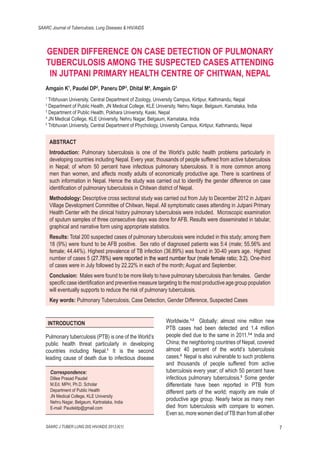
Introduction: Pulmonary tuberculosis is one of the World’s public health problems particularly in
developing countries including Nepal. Every year, thousands of people suffered from active tuberculosis
in Nepal; of whom 50 percent have infectious pulmonary tuberculosis. It is more common among
men than women, and affects mostly adults of economically productive age. There is scantiness of
such information in Nepal. Hence the study was carried out to identify the gender difference on case
identification of pulmonary tuberculosis in Chitwan district of Nepal.
Methodology: Descriptive cross sectional study was carried out from July to December 2012 in Jutpani
Village Development Committee of Chitwan, Nepal. All symptomatic cases attending in Jutpani Primary
Health Center with the clinical history pulmonary tuberculosis were included. Microscopic examination
of sputum samples of three consecutive days was done for AFB. Results were disseminated in tabular,
graphical and narrative form using appropriate statistics.
Results: Total 200 suspected cases of pulmonary tuberculosis were included in this study; among them
18 (9%) were found to be AFB positive. Sex ratio of diagnosed patients was 5:4 (male; 55.56% and
female; 44.44%). Highest prevalence of TB infection (36.89%) was found in 30-40 years age. Highest
number of cases 5 (27.78%) were reported in the ward number four (male female ratio; 3:2). One-third
of cases were in July followed by 22.22% in each of the month; August and September.
Conclusion: Males were found to be more likely to have pulmonary tuberculosis than females. Gender
specific case identification and preventive measure targeting to the most productive age group population
will eventually supports to reduce the risk of pulmonary tuberculosis.
Key words: Pulmonary Tuberculosis, Case Detection, Gender Difference, Suspected Cases

INTRODUCTION
Pulmonary tuberculosis (PTB) is one of the World’s
public health threat particularly in developing
countries including Nepal.1 It is the second
leading cause of death due to infectious disease
Correspondence:
Dillee Prasad Paudel
M.Ed. MPH, Ph.D. Scholar
Department of Public Health
JN Medical College, KLE University
Nehru Nagar, Belgaum, Kartnataka, India
E-mail: Paudeldp@gmail.com

SAARC J TUBER LUNG DIS HIV/AIDS 2013;X(1)

Worldwide.1-2 Globally; almost nine million new
PTB cases had been detected and 1.4 million
people died due to the same in 2011.3-4 India and
China; the neighboring countries of Nepal, covered
almost 40 percent of the world’s tuberculosis
cases.4 Nepal is also vulnerable to such problems
and thousands of people suffered from active
tuberculosis every year; of which 50 percent have
infectious pulmonary tuberculosis.5 Some gender
differentiate have been reported in PTB from
different parts of the world; majority are male of
productive age group. Nearly twice as many men
died from tuberculosis with compare to women.
Even so, more women died of TB than from all other
7
SAARC Journal of Tuberculosis, Lung Diseases & HIV/AIDS

maternal conditions.6 Gender inequality has long
been identified as a major determinant that can
lead to delay in diagnosis, poor access to health
care, lack of compliance and also poor treatment
outcomes. Health care seeking and treatment
behavior of men and women suffering from
tuberculosis (TB) is largely determined by how they
and those around them perceive the symptoms,
regard the diagnosis, accept the treatment, and
adhere with it.7 World Health Organization (WHO)
has encouraged gender specific comparisons in TB
rates to determine whether women with TB are less
likely than men with TB to be diagnosed, reported,
and treated.8 Moreover there is scantiness of such
information in Nepal. Hence the study has been
carried out to identify the gender difference of
pulmonary tuberculosis and its distribution pattern
and burden in the rural community of central Nepal.
METHODOLOGY
A descriptive cross sectional study was carried
out in Jutpani Primary Health care Centre (PHC)
of Chitwan district, Nepal during July to December
2012. The PHC covers six Village Development
Committees (VDC) including Jutpani VDC.
Furthermore the VDC has been divided in nine
wards as the peripheral level administrative unit
by the government of Nepal. All together 200
TB suspected patients from Jutpani VDC visited
to PHC during the period of July to December
2012 with the clinical history of two or more week’s
continuous cough, fever, and marked weight loss
were included as the study population. All the
potential participants (suspected cases) were
briefed about aim of study and oriented for proper
collection of the sputum sample. Sputum samples
of three consecutive days from all suspected
patients were examined microscopically using Z-N
staining for Acid Fast Bacilli (AFB) at the PHC.
Due to the inconvenient of sputum sample
collection, patients < 10 years of age were excluded
from this study. Verbal informed consent was
taken before the collection and testing of sample.
Ethical clearance was taken from the Institutional
Research Board of Central Department of zoology,
Tribhuvan University of Nepal. This study was
carried out to measure the distribution pattern
of pulmonary tuberculosis according to the sex,
place and time. Detection of other forms of TB was
technically and operationally not feasible in the
8

DOTS centre. Hence only pulmonary tuberculosis
was considered for this study. Brief demographic
and clinical history was taken by using the pre
designed format (proforma) before collection of
sputum sample.
Data accuracy and reliability was maintained by
double entry into the SPSS version 20. Percentage,
mean, standard deviation and proportion were
calculated as univarate analysis and chi-square
(χ2) tests, sensitivity, specificity, and predictive
(positive and negative) values were calculated
as bivarate analysis. The criterion for statistical
significance was set at the value of p <0.05. The
analyzed data were disseminated in tables, graphs/
charts and narrative form as per necessity.
RESULTS
All together 200 TB suspected patients (having
the age; Mean ± SD: 38.1±9.71 years) were
participated in this study. Of which; 18 (9%) were
found smear positive and diagnosed as PTB by
smear microscopy. Out of total smear positive
cases, 10 (55.56%) were male and 8 (44.44%)
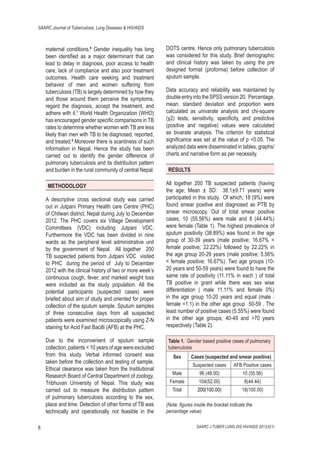
were female (Table 1). The highest prevalence of
sputum positivity (38.89%) was found in the age
group of 30-39 years (male positive; 16.67% <
female positive; 22.22%) followed by 22.22% in
the age group 20-29 years (male positive; 5.56%
< female positive; 16.67%). Two age groups (1020 years and 50-59 years) were found to have the
same rate of positivity (11.11% in each ) of total
TB positive in grant while there was sex wise
differentiation ( male 11.11% and female 0%)
in the age group 10-20 years and equal (male :
female =1:1) in the other age group 50-59 . The
least number of positive cases (5.55%) were found
in the other age groups; 40-49 and >70 years
respectively (Table 2).
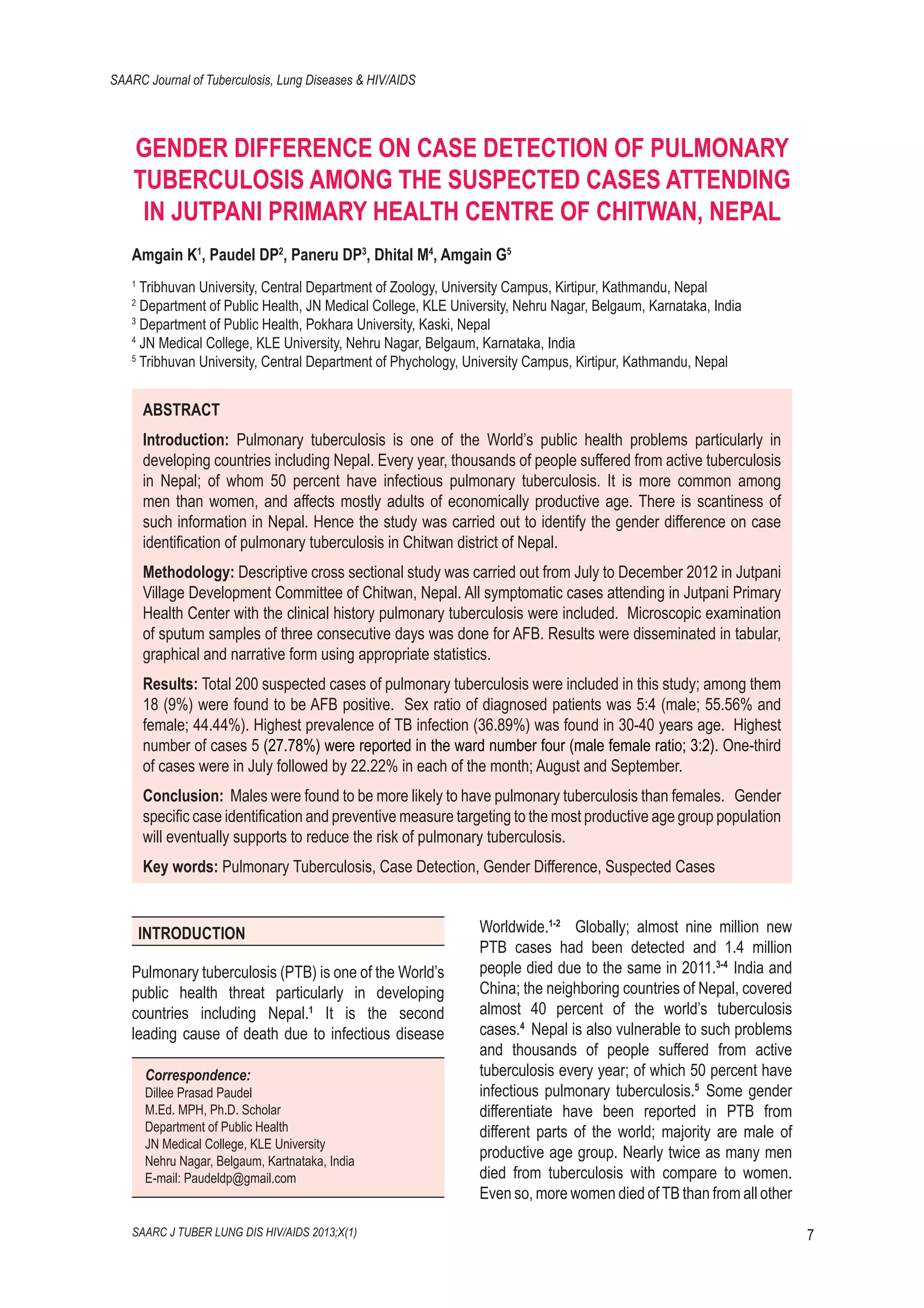
Table 1. Gender based positive cases of pulmonary
tuberculosis
Sex

Cases (suspected and smear positive)
Suspected cases

Male

AFB Positive cases

96 (48.00)

10 (55.56)

Female

104(52.00)

8(44.44)

Total

200(100.00)

18(100.00)

(Note: figures inside the bracket indicate the
percentage value)
SAARC J TUBER LUNG DIS HIV/AIDS 2013;X(1)
SAARC Journal of Tuberculosis, Lung Diseases & HIV/AIDS

Table 2. Age and sex wise distribution of suspected and smear positive cases
Age in
years

Male Patients

Female patients

Total suspected
cases

Total positive
cases

Suspected
cases

Positive
cases

Suspected
cases

Positive
cases

10- 19

21 (10.50)

2 (11.11)

19 (9.50)

0 (0.00)

40 (20.00)

2 (11.11)

20-29

13(6.50)

1 (5.56)

27 (13.50)

3 (16.67)

40 (20.00)

4 (22.22)

30-39

13(6.50)

3(16.67)

23 (11.50)

4 (22.22)

36 (18.00)

7 (38.89)

40-49

12(6.00)

1(5.56)

13 (6.50)

0 (0.00)

25 (12.50)

1 (5.56)

50-59

20(10.00)

1(5.56)

14 (7.00)

1 (5.56)

34 (17.00)

2 (11.11)

60-69

9(4.50)

1(5.56)

6 (3.00)

0 (0.00)

15 (7.50)

1 (5.56)

≥70

8(4.00)

1(5.56)

2 (1.00)

0 (0.00)

10 (5.00)

1 (5.56)

Total

96(48.00)

10 (55.56)

104 (52.00)

8 (44.44)

200 (100.00)

18 (100)

(Note: Figures inside the brackets indicate the percentage value)

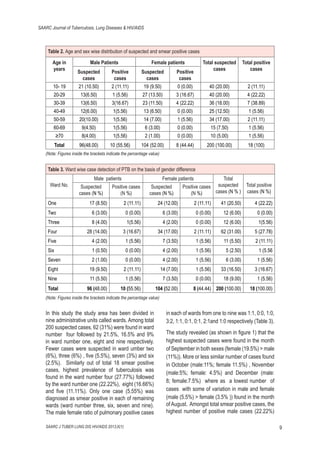
Table 3. Ward wise case detection of PTB on the basis of gender difference
Male patients
Ward No.

Suspected
cases (N %)

Female patients

Positive cases
(N %)

Suspected
cases (N %)

Total
suspected Total positive
Positive cases
cases (N % ) cases (N %)
(N %)

One

17 (8.50)

2 (11.11)

24 (12.00)

2 (11.11)

41 (20.50)

4 (22.22)

Two

6 (3.00)

0 (0.00)

6 (3.00)

0 (0.00)

12 (6.00)

0 (0.00)

Three

8 (4.00)

1(5.56)

4 (2.00)

0 (0.00)

12 (6.00)

1(5.56)

Four

28 (14.00)

3 (16.67)

34 (17.00)

2 (11.11)

62 (31.00)

5 (27.78)

Five

4 (2.00)

1 (5.56)

7 (3.50)

1 (5.56)

11 (5.50)

2 (11.11)

Six

1 (0.50)

0 (0.00)

4 (2.00)

1 (5.56)

5 (2.50)

1 (5.56

Seven

2 (1.00)

0 (0.00)

4 (2.00)

1 (5.56)

6 (3.00)

1 (5.56)

Eight

19 (9.50)

2 (11.11)

14 (7.00)

1 (5.56)

33 (16.50)

3 (16.67)

Nine

11 (5.50)

1 (5.56)

7 (3.50)

0 (0.00)

18 (9.00)

1 (5.56)

Total

96 (48.00)

10 (55.56)

104 (52.00)

8 (44.44) 200 (100.00)

18 (100.00)

(Note: Figures inside the brackets indicate the percentage value)

In this study the study area has been divided in
nine administrative units called wards. Among total
200 suspected cases, 62 (31%) were found in ward
number four followed by 21.5%, 16.5% and 9%
in ward number one, eight and nine respectively.
Fewer cases were suspected in ward umber two
(6%), three (6%) , five (5.5%), seven (3%) and six
(2.5%). Similarly out of total 18 smear positive
cases, highest prevalence of tuberculosis was
found in the ward number four (27.77%) followed
by the ward number one (22.22%), eight (16.66%)
and five (11.11%). Only one case (5.55%) was
diagnosed as smear positive in each of remaining
wards (ward number three, six, seven and nine).
The male female ratio of pulmonary positive cases
SAARC J TUBER LUNG DIS HIV/AIDS 2013;X(1)

in each of wards from one to nine was 1:1, 0:0, 1:0,
3:2, 1:1, 0:1, 0:1, 2:1and 1:0 respectively (Table 3).
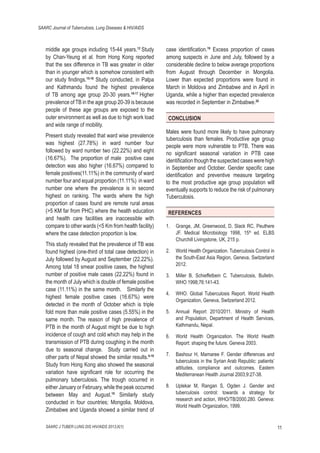
The study revealed (as shown in figure 1) that the
highest suspected cases were found in the month
of September in both sexes (female (19.5%) > male
(11%)). More or less similar number of cases found
in October (male:11%; female 11.5%) , November
(male:5%; female: 4.5%) and December (male:
8; female:7.5%) where as a lowest number of
cases with some of variation in male and female
(male (5.5%) > female (3.5% )) found in the month
of August. Amongst total smear positive cases, the
highest number of positive male cases (22.22%)
9
SAARC Journal of Tuberculosis, Lung Diseases & HIV/AIDS

found in the month of July measured as double
as female positive case (11.11%) in the same
month. Similarly the highest female positive cases
(16.67%) were detected in the month of October
which is three folds more than male positive cases
(5.55%) in the same month. Similarly 11.11% of
male positive cases were detected in the month
of September but no female positive cases were
detected in the same time. In the month of
August, October, November and December only
one (5.55%) positive male case was detected in
each month where as 2 (11.11%) and 3 (16.66%)
of positive female cases were detected in the same
months; August and October with no female

positive cases in
(Figure 1).

November and December

The study revealed that, there was more than
10% variation in suspected cases of male and
female however there was no significant difference
(X2=0.452 at df = 1, p>0.05) in gender difference
of positivity of pulmonary tuberculosis. The true
positive case detection rate (sensitivity) was only
55.55% while the true negative case detection
rate (specificity) was 52.74%. Similarly the positive
predictive value of pulmonary tuberculosis was
only 10.4% meanwhile the negative predictive
value was 92.3% as shown in table 4.

Figure 1. Month wise suspected cases and AFB positive male and female cases
Table 4. Association between different
epidemiological variables and gender wise case
detection

Sex
Male

PTB among suspected
cases
AFB
AFB
Total
Positive Negative
10

86

96

Female 8

96

104

Total

182

200

18

Test value
X2=0.452 at
df =1,
p>0.05
PPV= 10.4%

Note: Df = degree of freedom, PPV= Positive predictive value

DISCUSSION
The study revealed that one; out of every ten
suspected cases were AFB positive. Among all

10

smear positive cases, the male-female ratio was
5:4 which is in line with other similar study in
Nepal and Pakistan9-12 but somehow differ with a
study conducted in Tribhuvan University teaching
Hospital Kathmandu that showed male female ratio
of PTB as 47:53.13 Similarly our study is contrasts
with a study in Afghanistan which showed 31.5%
pulmonary tuberculosis occurred in males which
was significantly lesser than female cases (68.5).14
Age wise observation of the smear positivity in
this study revealed that the higher numbers of
positive cases were found in the age group 20 to
39 years. There is no significant difference in sex
wise positivity rate in this age group. This finding is
supported by other study reports from Afghanistan,
Hong Kong and Nepal.14-17 Study from Afghanistan
showed the sex difference was greater in the

SAARC J TUBER LUNG DIS HIV/AIDS 2013;X(1)
SAARC Journal of Tuberculosis, Lung Diseases & HIV/AIDS

middle age groups including 15-44 years.12 Study
by Chan-Yeung et al. from Hong Kong reported
that the sex difference in TB was greater in older
than in younger which is somehow consistent with
our study findings.15-16 Study conducted, in Palpa
and Kathmandu found the highest prevalence
of TB among age group 20-30 years.16-17 Higher
prevalence of TB in the age group 20-39 is because
people of these age groups are exposed to the
outer environment as well as due to high work load
and wide range of mobility.
Present study revealed that ward wise prevalence
was highest (27.78%) in ward number four
followed by ward number two (22.22%) and eight
(16.67%). The proportion of male positive case
detection was also higher (16.67%) compared to
female positives(11.11%) in the community of ward
number four and equal proportion (11.11%) in ward
number one where the prevalence is in second
highest on ranking. The wards where the high
proportion of cases found are remote rural areas
(>5 KM far from PHC) where the health education
and health care facilities are inaccessible with
compare to other wards (<5 Km from health facility)
where the case detection proportion is low.
This study revealed that the prevalence of TB was
found highest (one-third of total case detection) in
July followed by August and September (22.22%).
Among total 18 smear positive cases, the highest
number of positive male cases (22.22%) found in
the month of July which is double of female positive
case (11.11%) in the same month. Similarly the
highest female positive cases (16.67%) were
detected in the month of October which is triple
fold more than male positive cases (5.55%) in the
same month. The reason of high prevalence of
PTB in the month of August might be due to high
incidence of cough and cold which may help in the
transmission of PTB during coughing in the month
due to seasonal change. Study carried out in
other parts of Nepal showed the similar results.6-18
Study from Hong Kong also showed the seasonal
variation have significant role for occurring the
pulmonary tuberculosis. The trough occurred in
either January or February, while the peak occurred
between May and August.19 Similarly study
conducted in four countries; Mongolia, Moldova,
Zimbabwe and Uganda showed a similar trend of
SAARC J TUBER LUNG DIS HIV/AIDS 2013;X(1)

case identification.19 Excess proportion of cases
among suspects in June and July, followed by a
considerable decline to below average proportions
from August through December in Mongolia.
Lower than expected proportions were found in
March in Moldova and Zimbabwe and in April in
Uganda, while a higher than expected prevalence
was recorded in September in Zimbabwe.20
CONCLUSION
Males were found more likely to have pulmonary
tuberculosis than females. Productive age group
people were more vulnerable to PTB. There was
no significant seasonal variation in PTB case
identification though the suspected cases were high
in September and October. Gender specific case
identification and preventive measure targeting
to the most productive age group population will
eventually supports to reduce the risk of pulmonary
Tuberculosis.
REFERENCES
1.

Grange, JM, Greenwood, D, Slack RC, Peuthere
JF. Medical Microbiology 1998, 15th ed. ELBS
Churchill Livingstone, UK, 215 p.

2.

World Health Organization. Tuberculosis Control in
the South-East Asia Region, Geneva, Switzerland
2012.

3.

Miller B, Schieffelbein C. Tuberculosis, Bulletin.
WHO 1998;76:141-43.

4.

WHO. Global Tuberculosis Report. World Health
Organization, Geneva, Switzerland 2012.

5.

Annual Report 2010/2011. Ministry of Health
and Population, Department of Health Services,
Kathmandu, Nepal.

6.

World Health Organization. The World Health
Report: shaping the future. Geneva 2003.

7.

Bashour H, Mamaree F. Gender differences and
tuberculosis in the Syrian Arab Republic: patients’
attitudes, compliance and outcomes. Eastern
Mediterranean Health Journal 2003;9:27-38.

8.

Uplekar M, Rangan S, Ogden J. Gender and
tuberculosis control: towards a strategy for
research and action, WHO/TB/2000.280. Geneva:
World Health Organization, 1999.

11
SAARC Journal of Tuberculosis, Lung Diseases & HIV/AIDS

Smith I. Prevalence of Tuberculosis in Gorkha
district, Nepal. Journal of the Nepal Medical
Association; TB special 1994;18:14-19.

15. Kong Chan-Yeung M, Noertjojo K, Chan S L, Tam
C M Sex differences in tuberculosis in Hong Kong.
Int J Tuberc Lung Dis 2002;6:11-18.

10. Iqbal Tn, Raziq Md A, Hussain Z, Anjum N, Atiq S.
Gender differences among suspected pulmonary
tuberculosis patients. Ann. Pak. Inst. Med. Sci.
2011;7: 14-17.

16. Dhungana JR. Tuberculosis and HIV co-infection in
patients attending Tansen Hospital, Palpa. (M.Sc.
Thesis of microbiology). Central Department of
Microbiology, Tribhuvan University, Kathmandu,
Nepal 2002.

9.

11. Joshi R S. Prevalence of Pulmonary Tuberculosis
in relation to socio-behavioral aspects in patients
visiting in Patan Hospital (M.Sc. Thesis in
parasitology). Central Department of Zoology,
Tribhuvan University; 2004.
12. Sharma SK. A study on prevalence of Pulmonary
Tuberculosis among the suspected cases visiting in
Gorkha District Hospital, Nepal and TB awareness
among them (M.Sc. Thesis in parasitologiy).
Central Department of Zoology, Tribhuvan
University; 2008.
13. Shrestha HG. Extra-pulmonary tuberculosis in
Nepal. Journal of the Nepal Medical Association
1989;9:16-23.
14. Sabawoon W, Sato H. Sex Difference in
Tuberculosis in Afghanistan: A National Cohort
Study. Mycobacterial Diseases 2012;2:1-5.

12

17. Dhungana GP. Tuberculosis and HIV co-infection in
Kathmandu Valley (M.Sc. Thesis of microbiology).
Central Department of Microbiology, Tribhuvan
University, Kathmandu, Nepal; 2004.
18. NTC. Knowledge, Attitude and Practices Study on
Tuberculosis among community People, Report
of Sindhupalchok District. National Tuberculosis
Center, Kathmandu, Nepal; 2009.
19. Leung CC, Chan CK, Yew WW, Tang N, Thomas
YK Chiu Chang C et al. Seasonal pattern of
tuberculosis in Hong Kong. International Journal of
Epidemiology 2005;34:924-30.
20. Mabaera B, Nymadawa N, Katamba A, Dumitru
L, Jens ML, Hans L. Rieder. Seasonal variation
among tuberculosis suspects in four countries.
International Health 2009;1:53-60.

SAARC J TUBER LUNG DIS HIV/AIDS 2013;X(1)

GENDER DIFFERENCE ON CASE DETECTION OF PULMONARY - Dr. Kapil Amgain

  • 1.
    SAARC Journal ofTuberculosis, Lung Diseases & HIV/AIDS GENDER DIFFERENCE ON CASE DETECTION OF PULMONARY TUBERCULOSIS AMONG THE SUSPECTED CASES ATTENDING IN JUTPANI PRIMARY HEALTH CENTRE OF CHITWAN, NEPAL Amgain K1, Paudel DP2, Paneru DP3, Dhital M4, Amgain G5 Tribhuvan University, Central Department of Zoology, University Campus, Kirtipur, Kathmandu, Nepal Department of Public Health, JN Medical College, KLE University, Nehru Nagar, Belgaum, Karnataka, India 3 Department of Public Health, Pokhara University, Kaski, Nepal 4 JN Medical College, KLE University, Nehru Nagar, Belgaum, Karnataka, India 5 Tribhuvan University, Central Department of Phychology, University Campus, Kirtipur, Kathmandu, Nepal 1 2 ABSTRACT Introduction: Pulmonary tuberculosis is one of the World’s public health problems particularly in developing countries including Nepal. Every year, thousands of people suffered from active tuberculosis in Nepal; of whom 50 percent have infectious pulmonary tuberculosis. It is more common among men than women, and affects mostly adults of economically productive age. There is scantiness of such information in Nepal. Hence the study was carried out to identify the gender difference on case identification of pulmonary tuberculosis in Chitwan district of Nepal. Methodology: Descriptive cross sectional study was carried out from July to December 2012 in Jutpani Village Development Committee of Chitwan, Nepal. All symptomatic cases attending in Jutpani Primary Health Center with the clinical history pulmonary tuberculosis were included. Microscopic examination of sputum samples of three consecutive days was done for AFB. Results were disseminated in tabular, graphical and narrative form using appropriate statistics. Results: Total 200 suspected cases of pulmonary tuberculosis were included in this study; among them 18 (9%) were found to be AFB positive. Sex ratio of diagnosed patients was 5:4 (male; 55.56% and female; 44.44%). Highest prevalence of TB infection (36.89%) was found in 30-40 years age. Highest number of cases 5 (27.78%) were reported in the ward number four (male female ratio; 3:2). One-third of cases were in July followed by 22.22% in each of the month; August and September. Conclusion: Males were found to be more likely to have pulmonary tuberculosis than females. Gender specific case identification and preventive measure targeting to the most productive age group population will eventually supports to reduce the risk of pulmonary tuberculosis. Key words: Pulmonary Tuberculosis, Case Detection, Gender Difference, Suspected Cases INTRODUCTION Pulmonary tuberculosis (PTB) is one of the World’s public health threat particularly in developing countries including Nepal.1 It is the second leading cause of death due to infectious disease Correspondence: Dillee Prasad Paudel M.Ed. MPH, Ph.D. Scholar Department of Public Health JN Medical College, KLE University Nehru Nagar, Belgaum, Kartnataka, India E-mail: Paudeldp@gmail.com SAARC J TUBER LUNG DIS HIV/AIDS 2013;X(1) Worldwide.1-2 Globally; almost nine million new PTB cases had been detected and 1.4 million people died due to the same in 2011.3-4 India and China; the neighboring countries of Nepal, covered almost 40 percent of the world’s tuberculosis cases.4 Nepal is also vulnerable to such problems and thousands of people suffered from active tuberculosis every year; of which 50 percent have infectious pulmonary tuberculosis.5 Some gender differentiate have been reported in PTB from different parts of the world; majority are male of productive age group. Nearly twice as many men died from tuberculosis with compare to women. Even so, more women died of TB than from all other 7
  • 2.
    SAARC Journal ofTuberculosis, Lung Diseases & HIV/AIDS maternal conditions.6 Gender inequality has long been identified as a major determinant that can lead to delay in diagnosis, poor access to health care, lack of compliance and also poor treatment outcomes. Health care seeking and treatment behavior of men and women suffering from tuberculosis (TB) is largely determined by how they and those around them perceive the symptoms, regard the diagnosis, accept the treatment, and adhere with it.7 World Health Organization (WHO) has encouraged gender specific comparisons in TB rates to determine whether women with TB are less likely than men with TB to be diagnosed, reported, and treated.8 Moreover there is scantiness of such information in Nepal. Hence the study has been carried out to identify the gender difference of pulmonary tuberculosis and its distribution pattern and burden in the rural community of central Nepal. METHODOLOGY A descriptive cross sectional study was carried out in Jutpani Primary Health care Centre (PHC) of Chitwan district, Nepal during July to December 2012. The PHC covers six Village Development Committees (VDC) including Jutpani VDC. Furthermore the VDC has been divided in nine wards as the peripheral level administrative unit by the government of Nepal. All together 200 TB suspected patients from Jutpani VDC visited to PHC during the period of July to December 2012 with the clinical history of two or more week’s continuous cough, fever, and marked weight loss were included as the study population. All the potential participants (suspected cases) were briefed about aim of study and oriented for proper collection of the sputum sample. Sputum samples of three consecutive days from all suspected patients were examined microscopically using Z-N staining for Acid Fast Bacilli (AFB) at the PHC. Due to the inconvenient of sputum sample collection, patients < 10 years of age were excluded from this study. Verbal informed consent was taken before the collection and testing of sample. Ethical clearance was taken from the Institutional Research Board of Central Department of zoology, Tribhuvan University of Nepal. This study was carried out to measure the distribution pattern of pulmonary tuberculosis according to the sex, place and time. Detection of other forms of TB was technically and operationally not feasible in the 8 DOTS centre. Hence only pulmonary tuberculosis was considered for this study. Brief demographic and clinical history was taken by using the pre designed format (proforma) before collection of sputum sample. Data accuracy and reliability was maintained by double entry into the SPSS version 20. Percentage, mean, standard deviation and proportion were calculated as univarate analysis and chi-square (χ2) tests, sensitivity, specificity, and predictive (positive and negative) values were calculated as bivarate analysis. The criterion for statistical significance was set at the value of p <0.05. The analyzed data were disseminated in tables, graphs/ charts and narrative form as per necessity. RESULTS All together 200 TB suspected patients (having the age; Mean ± SD: 38.1±9.71 years) were participated in this study. Of which; 18 (9%) were found smear positive and diagnosed as PTB by smear microscopy. Out of total smear positive cases, 10 (55.56%) were male and 8 (44.44%) were female (Table 1). The highest prevalence of sputum positivity (38.89%) was found in the age group of 30-39 years (male positive; 16.67% < female positive; 22.22%) followed by 22.22% in the age group 20-29 years (male positive; 5.56% < female positive; 16.67%). Two age groups (1020 years and 50-59 years) were found to have the same rate of positivity (11.11% in each ) of total TB positive in grant while there was sex wise differentiation ( male 11.11% and female 0%) in the age group 10-20 years and equal (male : female =1:1) in the other age group 50-59 . The least number of positive cases (5.55%) were found in the other age groups; 40-49 and >70 years respectively (Table 2). Table 1. Gender based positive cases of pulmonary tuberculosis Sex Cases (suspected and smear positive) Suspected cases Male AFB Positive cases 96 (48.00) 10 (55.56) Female 104(52.00) 8(44.44) Total 200(100.00) 18(100.00) (Note: figures inside the bracket indicate the percentage value) SAARC J TUBER LUNG DIS HIV/AIDS 2013;X(1)
  • 3.
    SAARC Journal ofTuberculosis, Lung Diseases & HIV/AIDS Table 2. Age and sex wise distribution of suspected and smear positive cases Age in years Male Patients Female patients Total suspected cases Total positive cases Suspected cases Positive cases Suspected cases Positive cases 10- 19 21 (10.50) 2 (11.11) 19 (9.50) 0 (0.00) 40 (20.00) 2 (11.11) 20-29 13(6.50) 1 (5.56) 27 (13.50) 3 (16.67) 40 (20.00) 4 (22.22) 30-39 13(6.50) 3(16.67) 23 (11.50) 4 (22.22) 36 (18.00) 7 (38.89) 40-49 12(6.00) 1(5.56) 13 (6.50) 0 (0.00) 25 (12.50) 1 (5.56) 50-59 20(10.00) 1(5.56) 14 (7.00) 1 (5.56) 34 (17.00) 2 (11.11) 60-69 9(4.50) 1(5.56) 6 (3.00) 0 (0.00) 15 (7.50) 1 (5.56) ≥70 8(4.00) 1(5.56) 2 (1.00) 0 (0.00) 10 (5.00) 1 (5.56) Total 96(48.00) 10 (55.56) 104 (52.00) 8 (44.44) 200 (100.00) 18 (100) (Note: Figures inside the brackets indicate the percentage value) Table 3. Ward wise case detection of PTB on the basis of gender difference Male patients Ward No. Suspected cases (N %) Female patients Positive cases (N %) Suspected cases (N %) Total suspected Total positive Positive cases cases (N % ) cases (N %) (N %) One 17 (8.50) 2 (11.11) 24 (12.00) 2 (11.11) 41 (20.50) 4 (22.22) Two 6 (3.00) 0 (0.00) 6 (3.00) 0 (0.00) 12 (6.00) 0 (0.00) Three 8 (4.00) 1(5.56) 4 (2.00) 0 (0.00) 12 (6.00) 1(5.56) Four 28 (14.00) 3 (16.67) 34 (17.00) 2 (11.11) 62 (31.00) 5 (27.78) Five 4 (2.00) 1 (5.56) 7 (3.50) 1 (5.56) 11 (5.50) 2 (11.11) Six 1 (0.50) 0 (0.00) 4 (2.00) 1 (5.56) 5 (2.50) 1 (5.56 Seven 2 (1.00) 0 (0.00) 4 (2.00) 1 (5.56) 6 (3.00) 1 (5.56) Eight 19 (9.50) 2 (11.11) 14 (7.00) 1 (5.56) 33 (16.50) 3 (16.67) Nine 11 (5.50) 1 (5.56) 7 (3.50) 0 (0.00) 18 (9.00) 1 (5.56) Total 96 (48.00) 10 (55.56) 104 (52.00) 8 (44.44) 200 (100.00) 18 (100.00) (Note: Figures inside the brackets indicate the percentage value) In this study the study area has been divided in nine administrative units called wards. Among total 200 suspected cases, 62 (31%) were found in ward number four followed by 21.5%, 16.5% and 9% in ward number one, eight and nine respectively. Fewer cases were suspected in ward umber two (6%), three (6%) , five (5.5%), seven (3%) and six (2.5%). Similarly out of total 18 smear positive cases, highest prevalence of tuberculosis was found in the ward number four (27.77%) followed by the ward number one (22.22%), eight (16.66%) and five (11.11%). Only one case (5.55%) was diagnosed as smear positive in each of remaining wards (ward number three, six, seven and nine). The male female ratio of pulmonary positive cases SAARC J TUBER LUNG DIS HIV/AIDS 2013;X(1) in each of wards from one to nine was 1:1, 0:0, 1:0, 3:2, 1:1, 0:1, 0:1, 2:1and 1:0 respectively (Table 3). The study revealed (as shown in figure 1) that the highest suspected cases were found in the month of September in both sexes (female (19.5%) > male (11%)). More or less similar number of cases found in October (male:11%; female 11.5%) , November (male:5%; female: 4.5%) and December (male: 8; female:7.5%) where as a lowest number of cases with some of variation in male and female (male (5.5%) > female (3.5% )) found in the month of August. Amongst total smear positive cases, the highest number of positive male cases (22.22%) 9
  • 4.
    SAARC Journal ofTuberculosis, Lung Diseases & HIV/AIDS found in the month of July measured as double as female positive case (11.11%) in the same month. Similarly the highest female positive cases (16.67%) were detected in the month of October which is three folds more than male positive cases (5.55%) in the same month. Similarly 11.11% of male positive cases were detected in the month of September but no female positive cases were detected in the same time. In the month of August, October, November and December only one (5.55%) positive male case was detected in each month where as 2 (11.11%) and 3 (16.66%) of positive female cases were detected in the same months; August and October with no female positive cases in (Figure 1). November and December The study revealed that, there was more than 10% variation in suspected cases of male and female however there was no significant difference (X2=0.452 at df = 1, p>0.05) in gender difference of positivity of pulmonary tuberculosis. The true positive case detection rate (sensitivity) was only 55.55% while the true negative case detection rate (specificity) was 52.74%. Similarly the positive predictive value of pulmonary tuberculosis was only 10.4% meanwhile the negative predictive value was 92.3% as shown in table 4. Figure 1. Month wise suspected cases and AFB positive male and female cases Table 4. Association between different epidemiological variables and gender wise case detection Sex Male PTB among suspected cases AFB AFB Total Positive Negative 10 86 96 Female 8 96 104 Total 182 200 18 Test value X2=0.452 at df =1, p>0.05 PPV= 10.4% Note: Df = degree of freedom, PPV= Positive predictive value DISCUSSION The study revealed that one; out of every ten suspected cases were AFB positive. Among all 10 smear positive cases, the male-female ratio was 5:4 which is in line with other similar study in Nepal and Pakistan9-12 but somehow differ with a study conducted in Tribhuvan University teaching Hospital Kathmandu that showed male female ratio of PTB as 47:53.13 Similarly our study is contrasts with a study in Afghanistan which showed 31.5% pulmonary tuberculosis occurred in males which was significantly lesser than female cases (68.5).14 Age wise observation of the smear positivity in this study revealed that the higher numbers of positive cases were found in the age group 20 to 39 years. There is no significant difference in sex wise positivity rate in this age group. This finding is supported by other study reports from Afghanistan, Hong Kong and Nepal.14-17 Study from Afghanistan showed the sex difference was greater in the SAARC J TUBER LUNG DIS HIV/AIDS 2013;X(1)
  • 5.
    SAARC Journal ofTuberculosis, Lung Diseases & HIV/AIDS middle age groups including 15-44 years.12 Study by Chan-Yeung et al. from Hong Kong reported that the sex difference in TB was greater in older than in younger which is somehow consistent with our study findings.15-16 Study conducted, in Palpa and Kathmandu found the highest prevalence of TB among age group 20-30 years.16-17 Higher prevalence of TB in the age group 20-39 is because people of these age groups are exposed to the outer environment as well as due to high work load and wide range of mobility. Present study revealed that ward wise prevalence was highest (27.78%) in ward number four followed by ward number two (22.22%) and eight (16.67%). The proportion of male positive case detection was also higher (16.67%) compared to female positives(11.11%) in the community of ward number four and equal proportion (11.11%) in ward number one where the prevalence is in second highest on ranking. The wards where the high proportion of cases found are remote rural areas (>5 KM far from PHC) where the health education and health care facilities are inaccessible with compare to other wards (<5 Km from health facility) where the case detection proportion is low. This study revealed that the prevalence of TB was found highest (one-third of total case detection) in July followed by August and September (22.22%). Among total 18 smear positive cases, the highest number of positive male cases (22.22%) found in the month of July which is double of female positive case (11.11%) in the same month. Similarly the highest female positive cases (16.67%) were detected in the month of October which is triple fold more than male positive cases (5.55%) in the same month. The reason of high prevalence of PTB in the month of August might be due to high incidence of cough and cold which may help in the transmission of PTB during coughing in the month due to seasonal change. Study carried out in other parts of Nepal showed the similar results.6-18 Study from Hong Kong also showed the seasonal variation have significant role for occurring the pulmonary tuberculosis. The trough occurred in either January or February, while the peak occurred between May and August.19 Similarly study conducted in four countries; Mongolia, Moldova, Zimbabwe and Uganda showed a similar trend of SAARC J TUBER LUNG DIS HIV/AIDS 2013;X(1) case identification.19 Excess proportion of cases among suspects in June and July, followed by a considerable decline to below average proportions from August through December in Mongolia. Lower than expected proportions were found in March in Moldova and Zimbabwe and in April in Uganda, while a higher than expected prevalence was recorded in September in Zimbabwe.20 CONCLUSION Males were found more likely to have pulmonary tuberculosis than females. Productive age group people were more vulnerable to PTB. There was no significant seasonal variation in PTB case identification though the suspected cases were high in September and October. Gender specific case identification and preventive measure targeting to the most productive age group population will eventually supports to reduce the risk of pulmonary Tuberculosis. REFERENCES 1. Grange, JM, Greenwood, D, Slack RC, Peuthere JF. Medical Microbiology 1998, 15th ed. ELBS Churchill Livingstone, UK, 215 p. 2. World Health Organization. Tuberculosis Control in the South-East Asia Region, Geneva, Switzerland 2012. 3. Miller B, Schieffelbein C. Tuberculosis, Bulletin. WHO 1998;76:141-43. 4. WHO. Global Tuberculosis Report. World Health Organization, Geneva, Switzerland 2012. 5. Annual Report 2010/2011. Ministry of Health and Population, Department of Health Services, Kathmandu, Nepal. 6. World Health Organization. The World Health Report: shaping the future. Geneva 2003. 7. Bashour H, Mamaree F. Gender differences and tuberculosis in the Syrian Arab Republic: patients’ attitudes, compliance and outcomes. Eastern Mediterranean Health Journal 2003;9:27-38. 8. Uplekar M, Rangan S, Ogden J. Gender and tuberculosis control: towards a strategy for research and action, WHO/TB/2000.280. Geneva: World Health Organization, 1999. 11
  • 6.
    SAARC Journal ofTuberculosis, Lung Diseases & HIV/AIDS Smith I. Prevalence of Tuberculosis in Gorkha district, Nepal. Journal of the Nepal Medical Association; TB special 1994;18:14-19. 15. Kong Chan-Yeung M, Noertjojo K, Chan S L, Tam C M Sex differences in tuberculosis in Hong Kong. Int J Tuberc Lung Dis 2002;6:11-18. 10. Iqbal Tn, Raziq Md A, Hussain Z, Anjum N, Atiq S. Gender differences among suspected pulmonary tuberculosis patients. Ann. Pak. Inst. Med. Sci. 2011;7: 14-17. 16. Dhungana JR. Tuberculosis and HIV co-infection in patients attending Tansen Hospital, Palpa. (M.Sc. Thesis of microbiology). Central Department of Microbiology, Tribhuvan University, Kathmandu, Nepal 2002. 9. 11. Joshi R S. Prevalence of Pulmonary Tuberculosis in relation to socio-behavioral aspects in patients visiting in Patan Hospital (M.Sc. Thesis in parasitology). Central Department of Zoology, Tribhuvan University; 2004. 12. Sharma SK. A study on prevalence of Pulmonary Tuberculosis among the suspected cases visiting in Gorkha District Hospital, Nepal and TB awareness among them (M.Sc. Thesis in parasitologiy). Central Department of Zoology, Tribhuvan University; 2008. 13. Shrestha HG. Extra-pulmonary tuberculosis in Nepal. Journal of the Nepal Medical Association 1989;9:16-23. 14. Sabawoon W, Sato H. Sex Difference in Tuberculosis in Afghanistan: A National Cohort Study. Mycobacterial Diseases 2012;2:1-5. 12 17. Dhungana GP. Tuberculosis and HIV co-infection in Kathmandu Valley (M.Sc. Thesis of microbiology). Central Department of Microbiology, Tribhuvan University, Kathmandu, Nepal; 2004. 18. NTC. Knowledge, Attitude and Practices Study on Tuberculosis among community People, Report of Sindhupalchok District. National Tuberculosis Center, Kathmandu, Nepal; 2009. 19. Leung CC, Chan CK, Yew WW, Tang N, Thomas YK Chiu Chang C et al. Seasonal pattern of tuberculosis in Hong Kong. International Journal of Epidemiology 2005;34:924-30. 20. Mabaera B, Nymadawa N, Katamba A, Dumitru L, Jens ML, Hans L. Rieder. Seasonal variation among tuberculosis suspects in four countries. International Health 2009;1:53-60. SAARC J TUBER LUNG DIS HIV/AIDS 2013;X(1)