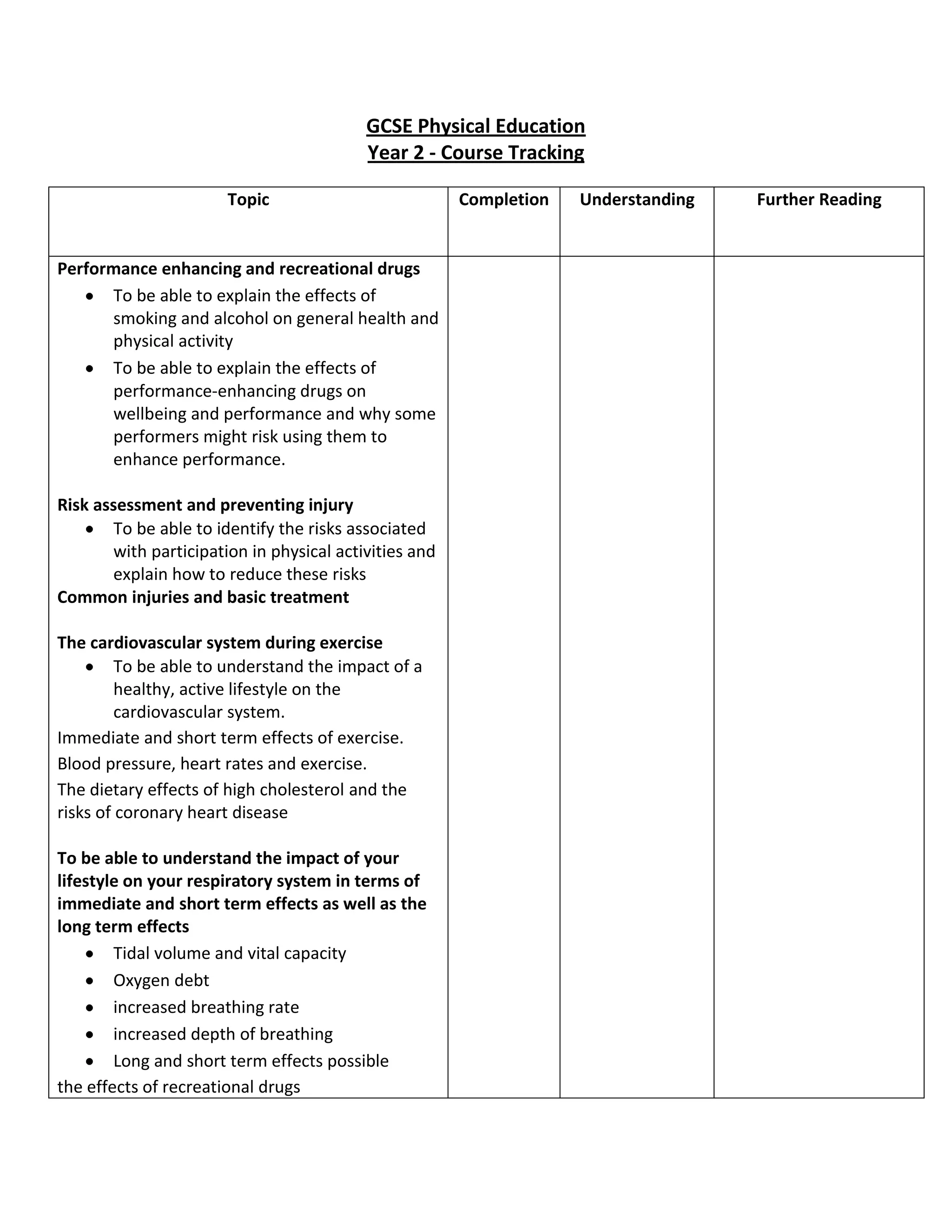
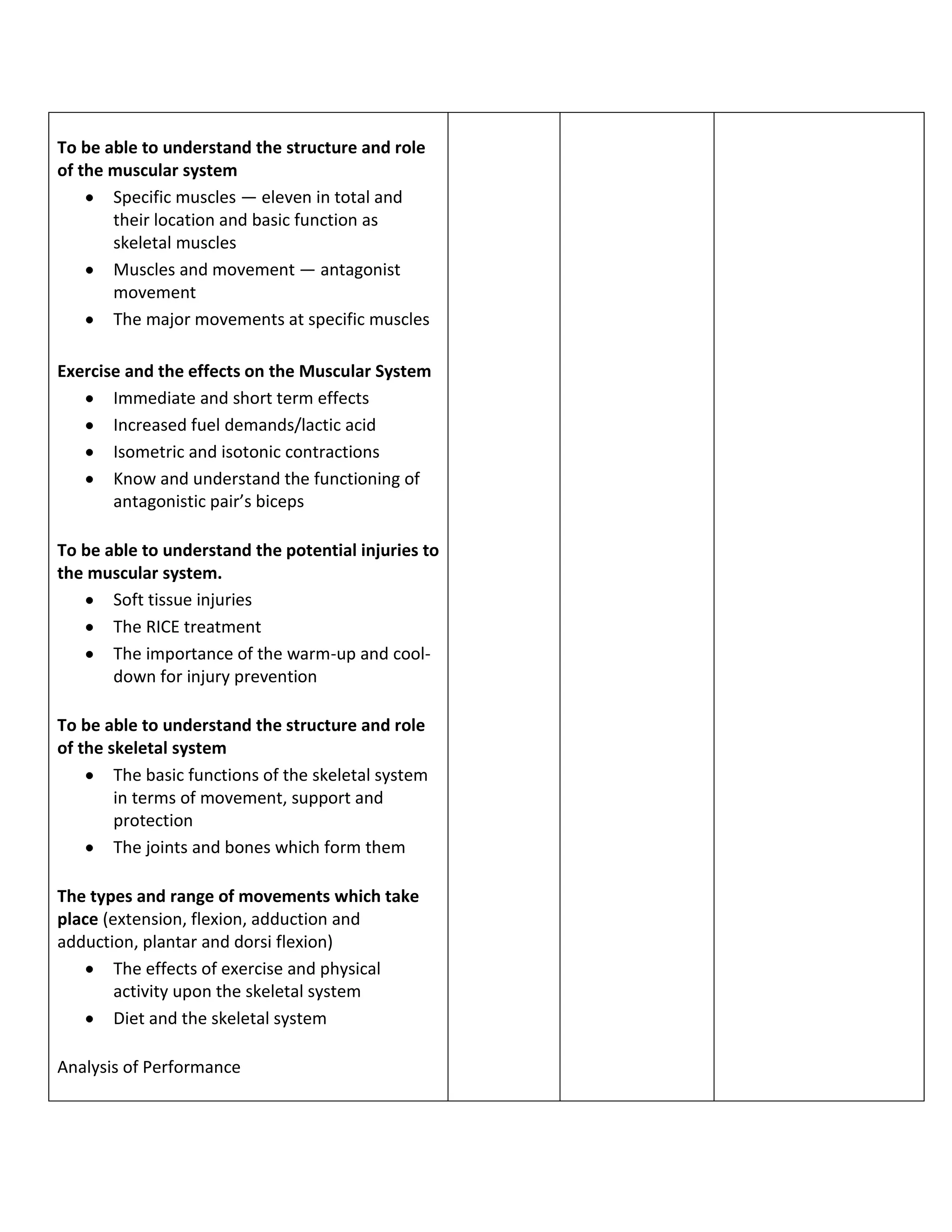
GCSE Physical Education <br />Year 2 - Course Tracking<br />TopicCompletion UnderstandingFurther ReadingPerformance enhancing and recreational drugsTo be able to explain the effects of smoking and alcohol on general health and physical activity To be able to explain the effects of performance-enhancing drugs on wellbeing and performance and why some performers might risk using them to enhance performance.Risk assessment and preventing injuryTo be able to identify the risks associated with participation in physical activities and explain how to reduce these risksCommon injuries and basic treatmentThe cardiovascular system during exerciseTo be able to understand the impact of a healthy, active lifestyle on the cardiovascular system.Immediate and short term effects of exercise.Blood pressure, heart rates and exercise. The dietary effects of high cholesterol and the risks of coronary heart diseaseTo be able to understand the impact of your lifestyle on your respiratory system in terms of immediate and short term effects as well as the long term effectsTidal volume and vital capacityOxygen debtincreased breathing rateincreased depth of breathingLong and short term effects possiblethe effects of recreational drugsTo be able to understand the structure and role of the muscular systemSpecific muscles — eleven in total and their location and basic function as skeletal musclesMuscles and movement — antagonist movementThe major movements at specific musclesExercise and the effects on the Muscular SystemImmediate and short term effectsIncreased fuel demands/lactic acidIsometric and isotonic contractionsKnow and understand the functioning of antagonistic pair’s bicepsTo be able to understand the potential injuries to the muscular system.Soft tissue injuriesThe RICE treatmentThe importance of the warm-up and cool-down for injury preventionTo be able to understand the structure and role of the skeletal systemThe basic functions of the skeletal system in terms of movement, support and protectionThe joints and bones which form themThe types and range of movements which take place (extension, flexion, adduction and adduction, plantar and dorsi flexion) The effects of exercise and physical activity upon the skeletal systemDiet and the skeletal systemAnalysis of Performance
GCSE Student Scheme Year 11

GCSE Student Scheme Year 11

  • 1.
    GCSE Physical Education<br />Year 2 - Course Tracking<br />TopicCompletion UnderstandingFurther ReadingPerformance enhancing and recreational drugsTo be able to explain the effects of smoking and alcohol on general health and physical activity To be able to explain the effects of performance-enhancing drugs on wellbeing and performance and why some performers might risk using them to enhance performance.Risk assessment and preventing injuryTo be able to identify the risks associated with participation in physical activities and explain how to reduce these risksCommon injuries and basic treatmentThe cardiovascular system during exerciseTo be able to understand the impact of a healthy, active lifestyle on the cardiovascular system.Immediate and short term effects of exercise.Blood pressure, heart rates and exercise. The dietary effects of high cholesterol and the risks of coronary heart diseaseTo be able to understand the impact of your lifestyle on your respiratory system in terms of immediate and short term effects as well as the long term effectsTidal volume and vital capacityOxygen debtincreased breathing rateincreased depth of breathingLong and short term effects possiblethe effects of recreational drugsTo be able to understand the structure and role of the muscular systemSpecific muscles — eleven in total and their location and basic function as skeletal musclesMuscles and movement — antagonist movementThe major movements at specific musclesExercise and the effects on the Muscular SystemImmediate and short term effectsIncreased fuel demands/lactic acidIsometric and isotonic contractionsKnow and understand the functioning of antagonistic pair’s bicepsTo be able to understand the potential injuries to the muscular system.Soft tissue injuriesThe RICE treatmentThe importance of the warm-up and cool-down for injury preventionTo be able to understand the structure and role of the skeletal systemThe basic functions of the skeletal system in terms of movement, support and protectionThe joints and bones which form themThe types and range of movements which take place (extension, flexion, adduction and adduction, plantar and dorsi flexion) The effects of exercise and physical activity upon the skeletal systemDiet and the skeletal systemAnalysis of Performance