Gastric ACIDITY
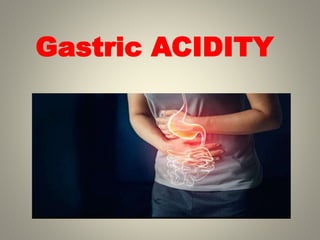
GASTRIC ACIDITY
• The stomach produces
hydrochloric acid to help
digest food. When there is an
overproduction of this acid, it
can lead to acidity-related
problems.
Acidity can be caused by
Spicy food
Acidity can be caused by
Unhealthy fatty food
Acidity can be caused by
Excessive consumption of caffeine
Acidity can be caused by
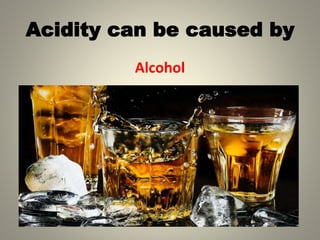
Alcohol
Acidity can be caused by
Smoking
Acidity can be caused by
Obesity
Acidity can be caused by
• Staying on empty stomach for a very long
time.
• Pregnancy,
• Medications
Common Symptoms
1. heartburn (a burning sensation in
the chest),
2. regurgitation (the backflow of
stomach acid into the throat),
3. bloating,
4. sour taste in the mouth.
Common Symptoms
• Heartburn
Common Symptoms
Regurgitation
Common Symptoms
Bloating
Common Symptoms
Sour taste in the mouth
Treatment
1. H2 receptor blockers, eg. Renitidine
2. and proton pump inhibitors to
reduce stomach acid production.
Eg. Pantoprazole
PREVENTION
• Eat healthy
• Change your eating pattern Eat slowly
• Avoid sleeping with a full stomach
• Stay fit
• Increase water intake
• Avoid tea, coffee
• Limit alcohol intake
• Quit smoking
• Change your sleeping posture
HOME REMEDIES
• Baking Soda: Baking soda (sodium bicarbonate) can act
as an antacid to neutralize stomach acid. Mix a
teaspoon of baking soda in a glass of water and drink it
slowly. Be cautious with this remedy, as excessive use
can lead to electrolyte imbalances.
• Ginger: Ginger has natural anti-inflammatory
properties and can help soothe the digestive tract. You
can chew a small piece of fresh ginger, make ginger tea,
or use ginger supplements.
• Chamomile Tea: Chamomile tea is known for its
calming and anti-inflammatory effects on the stomach.
Sip on a cup of chamomile tea before or after meals.
HOME REMEDIES
• Aloe Vera Juice: Aloe vera juice can help reduce
inflammation and irritation in the esophagus.
Drink a small amount of aloe vera juice (about
1/4 cup) before meals.
• Apple Cider Vinegar: Although it may seem
counterintuitive, some people find relief from
acidity by consuming diluted apple cider vinegar.
Mix a tablespoon of apple cider vinegar in a large
glass of water and drink it before meals. Ensure
it's well-diluted to avoid further irritation.
HOME REMEDIES
• Bananas: Bananas are low in acidity and can help
neutralize excess stomach acid. Eat a ripe banana when
you experience acidity.
• Fennel Seeds: Chewing on a teaspoon of fennel seeds
after meals can aid digestion and help reduce acidity.
• Milk: Cold milk can help temporarily relieve acidity
symptoms. However, it's important to note that milk
may provide only temporary relief and may not be
suitable for everyone. Some people may find dairy
products exacerbate their symptoms.
HOME REMEDIES
• Dietary Adjustments: Identify and avoid trigger
foods that worsen your symptoms, such as spicy,
fatty, and acidic foods, citrus fruits, tomatoes,
and caffeine.
• Smaller Meals: Instead of three large meals, eat
smaller, more frequent meals throughout the day
to reduce the pressure on your stomach.
• Chewing Gum: Chewing sugar-free gum after
meals may help stimulate saliva production,
which can help neutralize stomach acid and aid
digestion.

Gastric ACIDITY.pptx

  • 1.
  • 2.
    GASTRIC ACIDITY • Thestomach produces hydrochloric acid to help digest food. When there is an overproduction of this acid, it can lead to acidity-related problems.
  • 3.
    Acidity can becaused by Spicy food
  • 4.
    Acidity can becaused by Unhealthy fatty food
  • 5.
    Acidity can becaused by Excessive consumption of caffeine
  • 6.
    Acidity can becaused by Alcohol
  • 7.
    Acidity can becaused by Smoking
  • 8.
    Acidity can becaused by Obesity
  • 9.
    Acidity can becaused by • Staying on empty stomach for a very long time. • Pregnancy, • Medications
  • 10.
    Common Symptoms 1. heartburn(a burning sensation in the chest), 2. regurgitation (the backflow of stomach acid into the throat), 3. bloating, 4. sour taste in the mouth.
  • 11.
  • 12.
  • 13.
  • 14.
  • 15.
    Treatment 1. H2 receptorblockers, eg. Renitidine 2. and proton pump inhibitors to reduce stomach acid production. Eg. Pantoprazole
  • 16.
    PREVENTION • Eat healthy •Change your eating pattern Eat slowly • Avoid sleeping with a full stomach • Stay fit • Increase water intake • Avoid tea, coffee • Limit alcohol intake • Quit smoking • Change your sleeping posture
  • 17.
    HOME REMEDIES • BakingSoda: Baking soda (sodium bicarbonate) can act as an antacid to neutralize stomach acid. Mix a teaspoon of baking soda in a glass of water and drink it slowly. Be cautious with this remedy, as excessive use can lead to electrolyte imbalances. • Ginger: Ginger has natural anti-inflammatory properties and can help soothe the digestive tract. You can chew a small piece of fresh ginger, make ginger tea, or use ginger supplements. • Chamomile Tea: Chamomile tea is known for its calming and anti-inflammatory effects on the stomach. Sip on a cup of chamomile tea before or after meals.
  • 18.
    HOME REMEDIES • AloeVera Juice: Aloe vera juice can help reduce inflammation and irritation in the esophagus. Drink a small amount of aloe vera juice (about 1/4 cup) before meals. • Apple Cider Vinegar: Although it may seem counterintuitive, some people find relief from acidity by consuming diluted apple cider vinegar. Mix a tablespoon of apple cider vinegar in a large glass of water and drink it before meals. Ensure it's well-diluted to avoid further irritation.
  • 19.
    HOME REMEDIES • Bananas:Bananas are low in acidity and can help neutralize excess stomach acid. Eat a ripe banana when you experience acidity. • Fennel Seeds: Chewing on a teaspoon of fennel seeds after meals can aid digestion and help reduce acidity. • Milk: Cold milk can help temporarily relieve acidity symptoms. However, it's important to note that milk may provide only temporary relief and may not be suitable for everyone. Some people may find dairy products exacerbate their symptoms.
  • 20.
    HOME REMEDIES • DietaryAdjustments: Identify and avoid trigger foods that worsen your symptoms, such as spicy, fatty, and acidic foods, citrus fruits, tomatoes, and caffeine. • Smaller Meals: Instead of three large meals, eat smaller, more frequent meals throughout the day to reduce the pressure on your stomach. • Chewing Gum: Chewing sugar-free gum after meals may help stimulate saliva production, which can help neutralize stomach acid and aid digestion.