Gas-cooled reactors 
By- 
Dinesh Chandra Pant 
M140207ME
Why gas cooled reactor ? 
 Single phase behavior. 
 Optical transparency and electrically non-conducting. 
 Low power density.
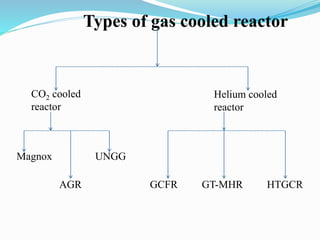
Types of gas cooled reactor 
CO2 cooled 
reactor 
Helium cooled 
reactor 
Magnox UNGG 
AGR GCFR GT-MHR HTGCR
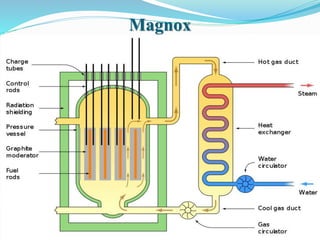
Magnox
Features 
 Pressurized, CO2 cooled 
 Graphite moderated 
 Using natural uranium 
 MAGNOX alloy for cladding 
 Boron-steel control rods
Magnox is short for Magnesium non-oxidizing – an alloy used to 
clad the fuel rods(covering to contain fission products) inside the 
reactor 
• This material has the advantage of a low neutron capture cross-section 
• Two major features of MAGNOX: 
1. Limits the maximum temperature, and hence the thermal efficiency 
2. Reacts with water, preventing long-term storage of spent fuel under 
water 
• MAGNOX Reactors used as 
1. Power plant 
2. Producer of Plutonium for nuclear weapons
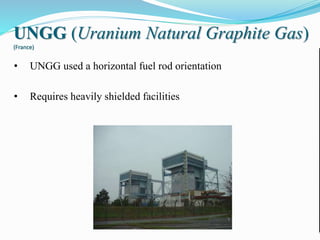
UNGG (Uranium Natural Graphite Gas) 
(France) 
• UNGG used a horizontal fuel rod orientation 
• Requires heavily shielded facilities
Features 
 Graphite moderated 
 Cooled by CO2 
 Fueled with natural uranium metal 
 Cladding material- Magnesium-zirconium alloy
Later, 
• Magnox was replaced by the Advanced Gas-Cooled reactor 
(AGR) (an improved Generation II gas cooled reactors) 
• And UNGG was replaced by the pressurized water reactor 
(PWR)
Thermal, Hydraulic, Neutronic and 
Material Considerations- 
 Mass flow rate of coolant gas. 
 Pumping power requirement of coolant. 
 Heat transfer performance of coolant. 
 Heat transfer area. 
 Neutronic considerations. 
 Material/chemical considerations.
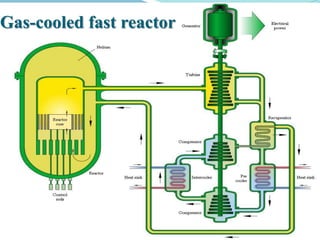
Gas-cooled fast reactor
Features 
• Helium-cooled system 
• Using a direct Brayton cycle gas turbine 
• Produce electricity, while at the same time; producing (breeding) 
new nuclear fuel. 
• Fast-neutron spectrum.
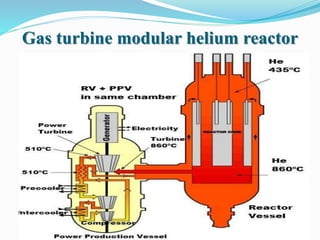
Gas turbine modular helium reactor
Features 
 Helium as a coolant. 
 Graphite is used as a moderator. 
 Cross vessel. 
 The reactor and power conversion systems are located in a 
below grade concrete silo. 
 It gives an efficiency up to 48% - higher than any other reactor.
Very high temperature reactor
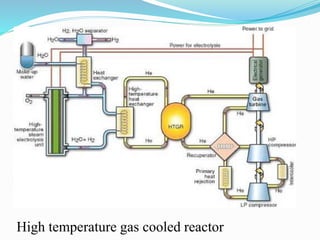
High temperature gas cooled reactor
There are two main types of HTGRs: 
1. Pebble bed reactors (PBR) 
2. Prismatic block reactors (PMR) 
• Uses a graphite-moderated nuclear reactor 
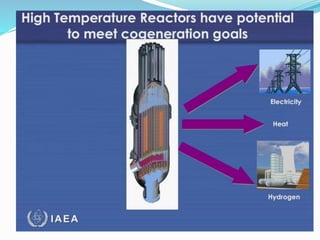
• The high temperatures enable applications such as process heat 
or hydrogen production via the thermo-chemical sulfur-iodine 
cycle. 
• The prismatic block reactor refers to a prismatic block core 
configuration, in which hexagonal graphite blocks are stacked to 
fit in a cylindrical pressure vessel
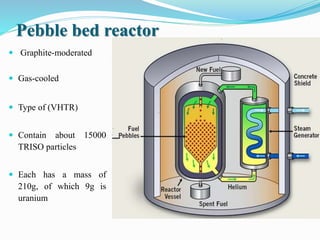
Pebble bed reactor 
 Graphite-moderated 
 Gas-cooled 
 Type of (VHTR) 
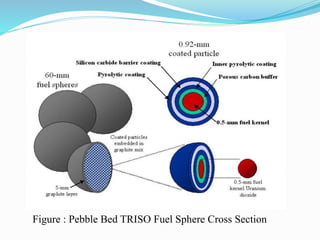
 Contain about 15000 
TRISO particles 
 Each has a mass of 
210g, of which 9g is 
uranium
Figure : Pebble Bed TRISO Fuel Sphere Cross Section
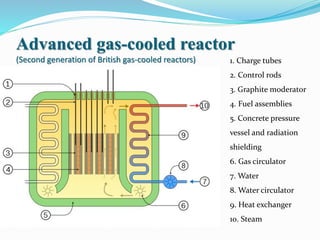
Advanced gas-cooled reactor 
(Second generation of British gas-cooled reactors) 1. Charge tubes 
2. Control rods 
3. Graphite moderator 
4. Fuel assemblies 
5. Concrete pressure 
vessel and radiation 
shielding 
6. Gas circulator 
7. Water 
8. Water circulator 
9. Heat exchanger 
10. Steam
 Developed from the MAGNOX reactor 
 Coolant outlet temperature 650 0C 
 High thermal efficiency – 42% 
 Requiring stainless steel fuel cladding 
 The fuel is uranium dioxide pellets, enriched to 2.5-3.5%, in 
stainless steel tubes. 
 Good quality superheated (and reheated) steam (comparable to 
quality from a highly optimised coal plant)
References 
 en.wikipedia.org/wiki/Gas-cooled reactor 
 Malcolm P. LaBar General Atomics3550 General 
Atomics Court San Diego, CA 92121-1122

Gas cooled reactors

  • 1.
    Gas-cooled reactors By- Dinesh Chandra Pant M140207ME
  • 2.
    Why gas cooledreactor ?  Single phase behavior.  Optical transparency and electrically non-conducting.  Low power density.
  • 3.
    Types of gascooled reactor CO2 cooled reactor Helium cooled reactor Magnox UNGG AGR GCFR GT-MHR HTGCR
  • 4.
  • 5.
    Features  Pressurized,CO2 cooled  Graphite moderated  Using natural uranium  MAGNOX alloy for cladding  Boron-steel control rods
  • 6.
    Magnox is shortfor Magnesium non-oxidizing – an alloy used to clad the fuel rods(covering to contain fission products) inside the reactor • This material has the advantage of a low neutron capture cross-section • Two major features of MAGNOX: 1. Limits the maximum temperature, and hence the thermal efficiency 2. Reacts with water, preventing long-term storage of spent fuel under water • MAGNOX Reactors used as 1. Power plant 2. Producer of Plutonium for nuclear weapons
  • 7.
    UNGG (Uranium NaturalGraphite Gas) (France) • UNGG used a horizontal fuel rod orientation • Requires heavily shielded facilities
  • 8.
    Features  Graphitemoderated  Cooled by CO2  Fueled with natural uranium metal  Cladding material- Magnesium-zirconium alloy
  • 9.
    Later, • Magnoxwas replaced by the Advanced Gas-Cooled reactor (AGR) (an improved Generation II gas cooled reactors) • And UNGG was replaced by the pressurized water reactor (PWR)
  • 10.
    Thermal, Hydraulic, Neutronicand Material Considerations-  Mass flow rate of coolant gas.  Pumping power requirement of coolant.  Heat transfer performance of coolant.  Heat transfer area.  Neutronic considerations.  Material/chemical considerations.
  • 11.
  • 12.
    Features • Helium-cooledsystem • Using a direct Brayton cycle gas turbine • Produce electricity, while at the same time; producing (breeding) new nuclear fuel. • Fast-neutron spectrum.
  • 13.
    Gas turbine modularhelium reactor
  • 14.
    Features  Heliumas a coolant.  Graphite is used as a moderator.  Cross vessel.  The reactor and power conversion systems are located in a below grade concrete silo.  It gives an efficiency up to 48% - higher than any other reactor.
  • 15.
  • 16.
    High temperature gascooled reactor
  • 17.
    There are twomain types of HTGRs: 1. Pebble bed reactors (PBR) 2. Prismatic block reactors (PMR) • Uses a graphite-moderated nuclear reactor • The high temperatures enable applications such as process heat or hydrogen production via the thermo-chemical sulfur-iodine cycle. • The prismatic block reactor refers to a prismatic block core configuration, in which hexagonal graphite blocks are stacked to fit in a cylindrical pressure vessel
  • 18.
    Pebble bed reactor  Graphite-moderated  Gas-cooled  Type of (VHTR)  Contain about 15000 TRISO particles  Each has a mass of 210g, of which 9g is uranium
  • 19.
    Figure : PebbleBed TRISO Fuel Sphere Cross Section
  • 20.
    Advanced gas-cooled reactor (Second generation of British gas-cooled reactors) 1. Charge tubes 2. Control rods 3. Graphite moderator 4. Fuel assemblies 5. Concrete pressure vessel and radiation shielding 6. Gas circulator 7. Water 8. Water circulator 9. Heat exchanger 10. Steam
  • 21.
     Developed fromthe MAGNOX reactor  Coolant outlet temperature 650 0C  High thermal efficiency – 42%  Requiring stainless steel fuel cladding  The fuel is uranium dioxide pellets, enriched to 2.5-3.5%, in stainless steel tubes.  Good quality superheated (and reheated) steam (comparable to quality from a highly optimised coal plant)
  • 22.
    References  en.wikipedia.org/wiki/Gas-cooledreactor  Malcolm P. LaBar General Atomics3550 General Atomics Court San Diego, CA 92121-1122