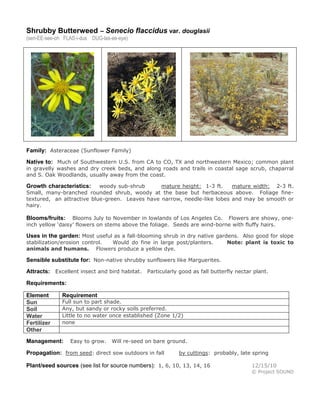
Shrubby Butterweed – Senecio flaccidus var. douglasii
(sen-EE-see-oh FLAS-i-dus DUG-las-ee-eye)

Family: Asteraceae (Sunflower Family)
Native to: Much of Southwestern U.S. from CA to CO, TX and northwestern Mexico; common plant
in gravelly washes and dry creek beds, and along roads and trails in coastal sage scrub, chaparral
and S. Oak Woodlands, usually away from the coast.
woody sub-shrub
mature height: 1-3 ft.
mature width: 2-3 ft.
Small, many-branched rounded shrub, woody at the base but herbaceous above. Foliage finetextured, an attractive blue-green. Leaves have narrow, needle-like lobes and may be smooth or
hairy.

Growth characteristics:

Blooms July to November in lowlands of Los Angeles Co. Flowers are showy, oneinch yellow ‘daisy’ flowers on stems above the foliage. Seeds are wind-borne with fluffy hairs.

Blooms/fruits:

Uses in the garden: Most useful as a fall-blooming shrub in dry native gardens. Also good for slope
stabilization/erosion control.
Would do fine in large post/planters.
animals and humans. Flowers produce a yellow dye.

Note: plant is toxic to

Sensible substitute for: Non-native shrubby sunflowers like Marguerites.
Attracts: Excellent insect and bird habitat. Particularly good as fall butterfly nectar plant.
Requirements:
Element
Sun
Soil
Water
Fertilizer
Other

Requirement

Full sun to part shade.
Any, but sandy or rocky soils preferred.
Little to no water once established (Zone 1/2)
none

Management:

Easy to grow.

Will re-seed on bare ground.

Propagation: from seed: direct sow outdoors in fall

by cuttings: probably, late spring

Plant/seed sources (see list for source numbers): 1, 6, 10, 13, 14, 16

12/15/10
© Project SOUND

Gardening sheet senecio flaccidus

  • 1.
    Shrubby Butterweed –Senecio flaccidus var. douglasii (sen-EE-see-oh FLAS-i-dus DUG-las-ee-eye) Family: Asteraceae (Sunflower Family) Native to: Much of Southwestern U.S. from CA to CO, TX and northwestern Mexico; common plant in gravelly washes and dry creek beds, and along roads and trails in coastal sage scrub, chaparral and S. Oak Woodlands, usually away from the coast. woody sub-shrub mature height: 1-3 ft. mature width: 2-3 ft. Small, many-branched rounded shrub, woody at the base but herbaceous above. Foliage finetextured, an attractive blue-green. Leaves have narrow, needle-like lobes and may be smooth or hairy. Growth characteristics: Blooms July to November in lowlands of Los Angeles Co. Flowers are showy, oneinch yellow ‘daisy’ flowers on stems above the foliage. Seeds are wind-borne with fluffy hairs. Blooms/fruits: Uses in the garden: Most useful as a fall-blooming shrub in dry native gardens. Also good for slope stabilization/erosion control. Would do fine in large post/planters. animals and humans. Flowers produce a yellow dye. Note: plant is toxic to Sensible substitute for: Non-native shrubby sunflowers like Marguerites. Attracts: Excellent insect and bird habitat. Particularly good as fall butterfly nectar plant. Requirements: Element Sun Soil Water Fertilizer Other Requirement Full sun to part shade. Any, but sandy or rocky soils preferred. Little to no water once established (Zone 1/2) none Management: Easy to grow. Will re-seed on bare ground. Propagation: from seed: direct sow outdoors in fall by cuttings: probably, late spring Plant/seed sources (see list for source numbers): 1, 6, 10, 13, 14, 16 12/15/10 © Project SOUND