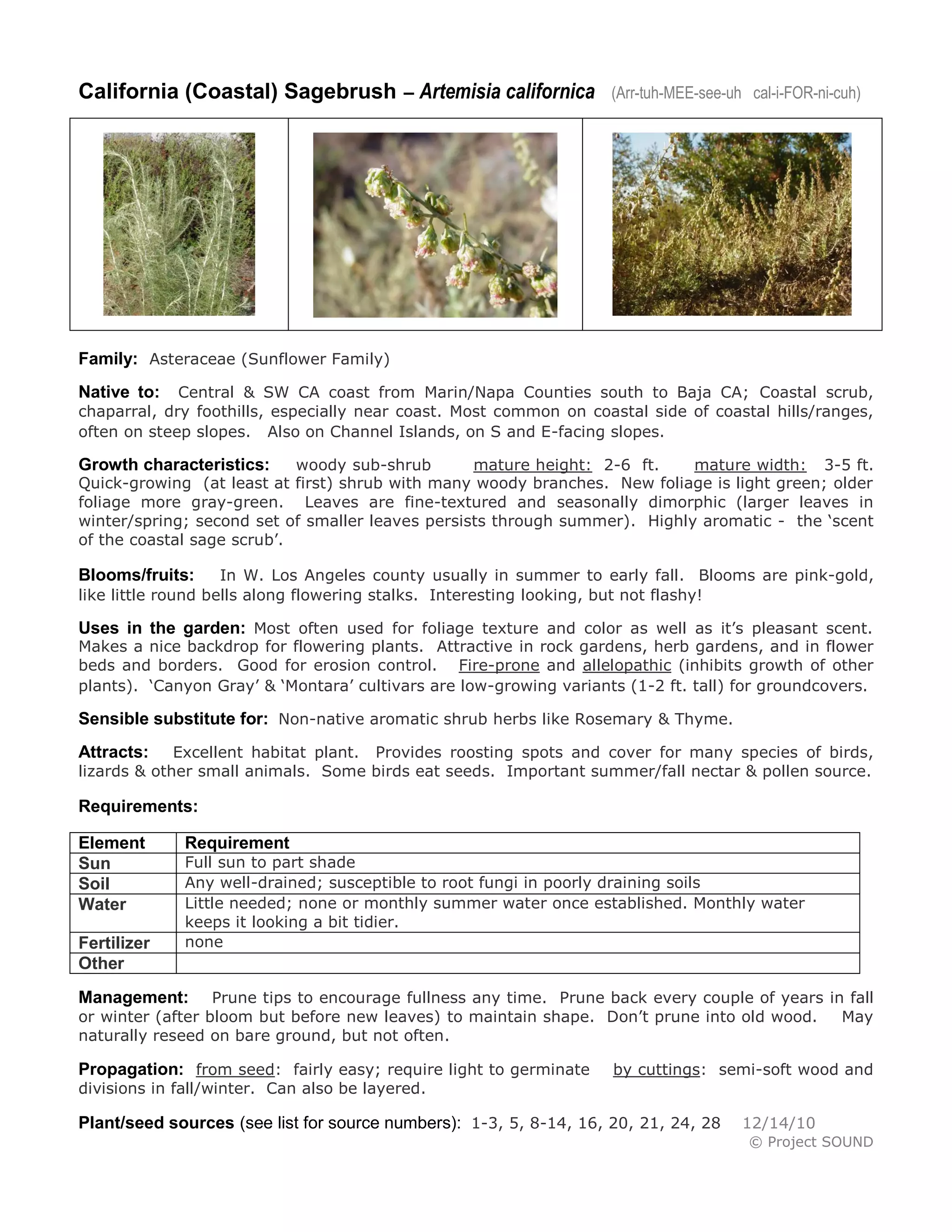
California (Coastal) Sagebrush – Artemisia californica

(Arr-tuh-MEE-see-uh cal-i-FOR-ni-cuh)

Family: Asteraceae (Sunflower Family)
Central & SW CA coast from Marin/Napa Counties south to Baja CA; Coastal scrub,
chaparral, dry foothills, especially near coast. Most common on coastal side of coastal hills/ranges,
often on steep slopes. Also on Channel Islands, on S and E-facing slopes.

Native to:

woody sub-shrub
mature height: 2-6 ft.
mature width: 3-5 ft.
Quick-growing (at least at first) shrub with many woody branches. New foliage is light green; older
foliage more gray-green. Leaves are fine-textured and seasonally dimorphic (larger leaves in
winter/spring; second set of smaller leaves persists through summer). Highly aromatic - the ‘scent
of the coastal sage scrub’.

Growth characteristics:

In W. Los Angeles county usually in summer to early fall. Blooms are pink-gold,
like little round bells along flowering stalks. Interesting looking, but not flashy!

Blooms/fruits:

Uses in the garden: Most often used for foliage texture and color as well as it’s pleasant scent.

Makes a nice backdrop for flowering plants. Attractive in rock gardens, herb gardens, and in flower
beds and borders. Good for erosion control. Fire-prone and allelopathic (inhibits growth of other
plants). ‘Canyon Gray’ & ‘Montara’ cultivars are low-growing variants (1-2 ft. tall) for groundcovers.

Sensible substitute for: Non-native aromatic shrub herbs like Rosemary & Thyme.
Excellent habitat plant. Provides roosting spots and cover for many species of birds,
lizards & other small animals. Some birds eat seeds. Important summer/fall nectar & pollen source.

Attracts:

Requirements:
Element
Sun
Soil
Water
Fertilizer
Other

Requirement

Full sun to part shade
Any well-drained; susceptible to root fungi in poorly draining soils
Little needed; none or monthly summer water once established. Monthly water
keeps it looking a bit tidier.
none

Prune tips to encourage fullness any time. Prune back every couple of years in fall
or winter (after bloom but before new leaves) to maintain shape. Don’t prune into old wood.
May
naturally reseed on bare ground, but not often.

Management:

Propagation: from seed: fairly easy; require light to germinate

by cuttings: semi-soft wood and

divisions in fall/winter. Can also be layered.

Plant/seed sources (see list for source numbers): 1-3, 5, 8-14, 16, 20, 21, 24, 28

12/14/10
© Project SOUND

Artemisia californica

  • 1.
    California (Coastal) Sagebrush– Artemisia californica (Arr-tuh-MEE-see-uh cal-i-FOR-ni-cuh) Family: Asteraceae (Sunflower Family) Central & SW CA coast from Marin/Napa Counties south to Baja CA; Coastal scrub, chaparral, dry foothills, especially near coast. Most common on coastal side of coastal hills/ranges, often on steep slopes. Also on Channel Islands, on S and E-facing slopes. Native to: woody sub-shrub mature height: 2-6 ft. mature width: 3-5 ft. Quick-growing (at least at first) shrub with many woody branches. New foliage is light green; older foliage more gray-green. Leaves are fine-textured and seasonally dimorphic (larger leaves in winter/spring; second set of smaller leaves persists through summer). Highly aromatic - the ‘scent of the coastal sage scrub’. Growth characteristics: In W. Los Angeles county usually in summer to early fall. Blooms are pink-gold, like little round bells along flowering stalks. Interesting looking, but not flashy! Blooms/fruits: Uses in the garden: Most often used for foliage texture and color as well as it’s pleasant scent. Makes a nice backdrop for flowering plants. Attractive in rock gardens, herb gardens, and in flower beds and borders. Good for erosion control. Fire-prone and allelopathic (inhibits growth of other plants). ‘Canyon Gray’ & ‘Montara’ cultivars are low-growing variants (1-2 ft. tall) for groundcovers. Sensible substitute for: Non-native aromatic shrub herbs like Rosemary & Thyme. Excellent habitat plant. Provides roosting spots and cover for many species of birds, lizards & other small animals. Some birds eat seeds. Important summer/fall nectar & pollen source. Attracts: Requirements: Element Sun Soil Water Fertilizer Other Requirement Full sun to part shade Any well-drained; susceptible to root fungi in poorly draining soils Little needed; none or monthly summer water once established. Monthly water keeps it looking a bit tidier. none Prune tips to encourage fullness any time. Prune back every couple of years in fall or winter (after bloom but before new leaves) to maintain shape. Don’t prune into old wood. May naturally reseed on bare ground, but not often. Management: Propagation: from seed: fairly easy; require light to germinate by cuttings: semi-soft wood and divisions in fall/winter. Can also be layered. Plant/seed sources (see list for source numbers): 1-3, 5, 8-14, 16, 20, 21, 24, 28 12/14/10 © Project SOUND