* Bolander’s Phacelia – Phacelia bolanderi

(fuh-SEE-lee-uh bow-lan-DAIR-ee)

Family: Hydrophyllaceae (Waterleaf Family)
Native to: N. CA coast and OR; dry to moist coastal woodland areas (Redwood and Douglas Fir
forests) and slopes below 1000 ft.
herbaceous perennial
mature height: 1-2 ft.
mature width: 1-2 ft.
Short-lived (3-4 years) annual wildflower. Stout, sprawling to mounded plant that dies back in
summer drought. Leaves are somewhat like grape leaves. Entire plant covered in stiff hairs that
may cause skin allergies.

Growth characteristics:

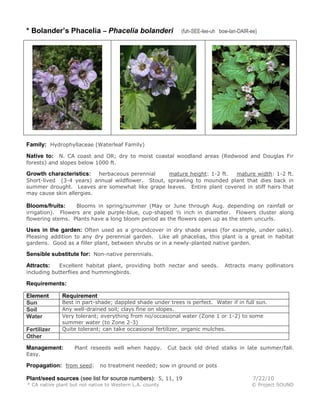
Blooms in spring/summer (May or June through Aug. depending on rainfall or
irrigation). Flowers are pale purple-blue, cup-shaped ½ inch in diameter. Flowers cluster along
flowering stems. Plants have a long bloom period as the flowers open up as the stem uncurls.

Blooms/fruits:

Uses in the garden: Often used as a groundcover in dry shade areas (for example, under oaks).
Pleasing addition to any dry perennial garden. Like all phacelias, this plant is a great in habitat
gardens. Good as a filler plant, between shrubs or in a newly-planted native garden.

Sensible substitute for: Non-native perennials.
Excellent habitat plant, providing both nectar and seeds.
including butterflies and hummingbirds.

Attracts:

Attracts many pollinators

Requirements:
Element
Sun
Soil
Water
Fertilizer
Other

Requirement

Best in part-shade; dappled shade under trees is perfect. Water if in full sun.
Any well-drained soil; clays fine on slopes.
Very tolerant; everything from no/occasional water (Zone 1 or 1-2) to some
summer water (to Zone 2-3)
Quite tolerant; can take occasional fertilizer, organic mulches.

Management:

Plant reseeds well when happy.

Cut back old dried stalks in late summer/fall.

Easy.

Propagation: from seed: no treatment needed; sow in ground or pots
Plant/seed sources (see list for source numbers): 5, 11, 19

7/22/10

* CA native plant but not native to Western L.A. county

© Project SOUND

Phacelia bolanderi

  • 1.
    * Bolander’s Phacelia– Phacelia bolanderi (fuh-SEE-lee-uh bow-lan-DAIR-ee) Family: Hydrophyllaceae (Waterleaf Family) Native to: N. CA coast and OR; dry to moist coastal woodland areas (Redwood and Douglas Fir forests) and slopes below 1000 ft. herbaceous perennial mature height: 1-2 ft. mature width: 1-2 ft. Short-lived (3-4 years) annual wildflower. Stout, sprawling to mounded plant that dies back in summer drought. Leaves are somewhat like grape leaves. Entire plant covered in stiff hairs that may cause skin allergies. Growth characteristics: Blooms in spring/summer (May or June through Aug. depending on rainfall or irrigation). Flowers are pale purple-blue, cup-shaped ½ inch in diameter. Flowers cluster along flowering stems. Plants have a long bloom period as the flowers open up as the stem uncurls. Blooms/fruits: Uses in the garden: Often used as a groundcover in dry shade areas (for example, under oaks). Pleasing addition to any dry perennial garden. Like all phacelias, this plant is a great in habitat gardens. Good as a filler plant, between shrubs or in a newly-planted native garden. Sensible substitute for: Non-native perennials. Excellent habitat plant, providing both nectar and seeds. including butterflies and hummingbirds. Attracts: Attracts many pollinators Requirements: Element Sun Soil Water Fertilizer Other Requirement Best in part-shade; dappled shade under trees is perfect. Water if in full sun. Any well-drained soil; clays fine on slopes. Very tolerant; everything from no/occasional water (Zone 1 or 1-2) to some summer water (to Zone 2-3) Quite tolerant; can take occasional fertilizer, organic mulches. Management: Plant reseeds well when happy. Cut back old dried stalks in late summer/fall. Easy. Propagation: from seed: no treatment needed; sow in ground or pots Plant/seed sources (see list for source numbers): 5, 11, 19 7/22/10 * CA native plant but not native to Western L.A. county © Project SOUND