Download as PDF, PPTX
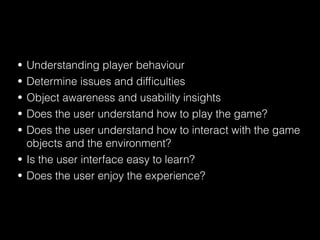
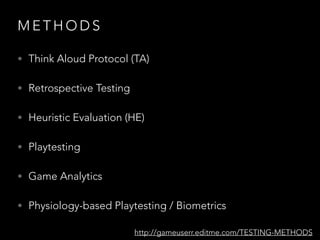
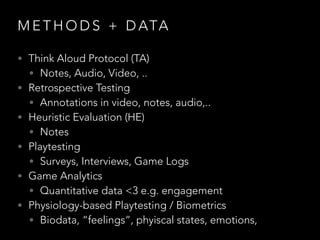
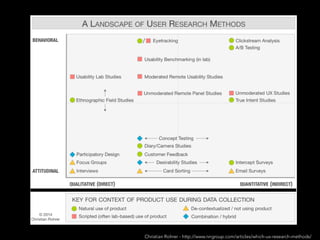
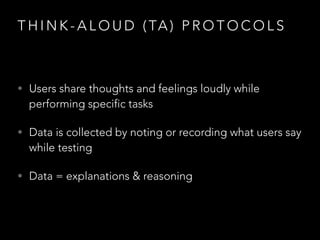
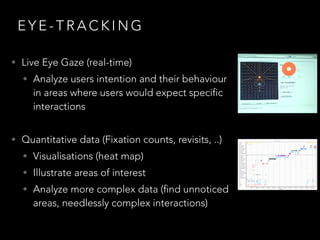
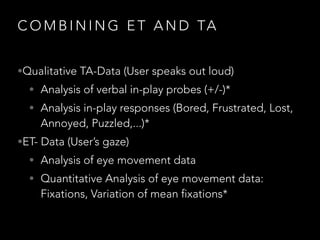
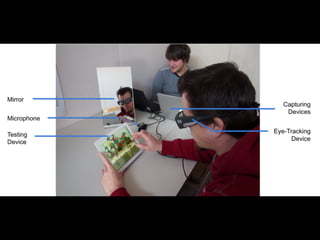
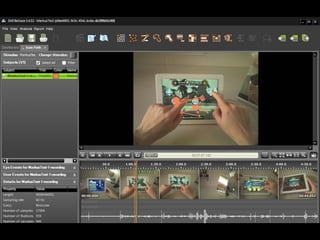
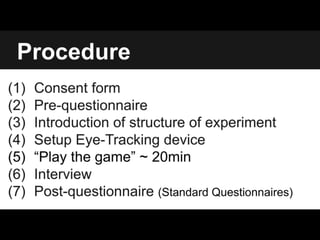
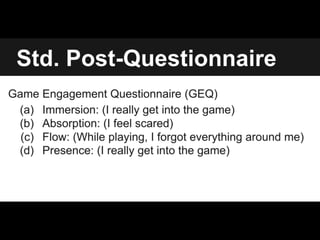
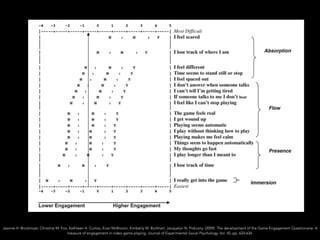
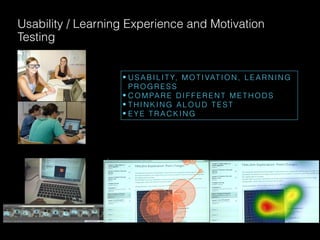
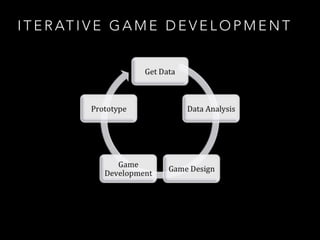
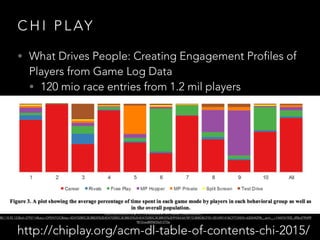


This document discusses using eye-tracking and think-aloud studies to advance game design. It describes various user research methods like think-aloud protocols, retrospective testing, heuristic evaluation, playtesting, and physiology-based testing that can provide insights into player behavior, understanding, enjoyment and issues. These methods are often combined with eye-tracking to gather both qualitative data from what players say and quantitative data on gaze. The document advocates an iterative development process using these techniques to improve the player experience.


