ellecor.com
We’re going
to explore
Why the history of typography can be used as a
jumping off point for designing the future of UI.
How to reconsider the nuances of phonetic letterforms
and adapt them to gestural, conversational, immersive
UI; in preparation for a future of modular, wearable,
and alternate reality devices.
yay!
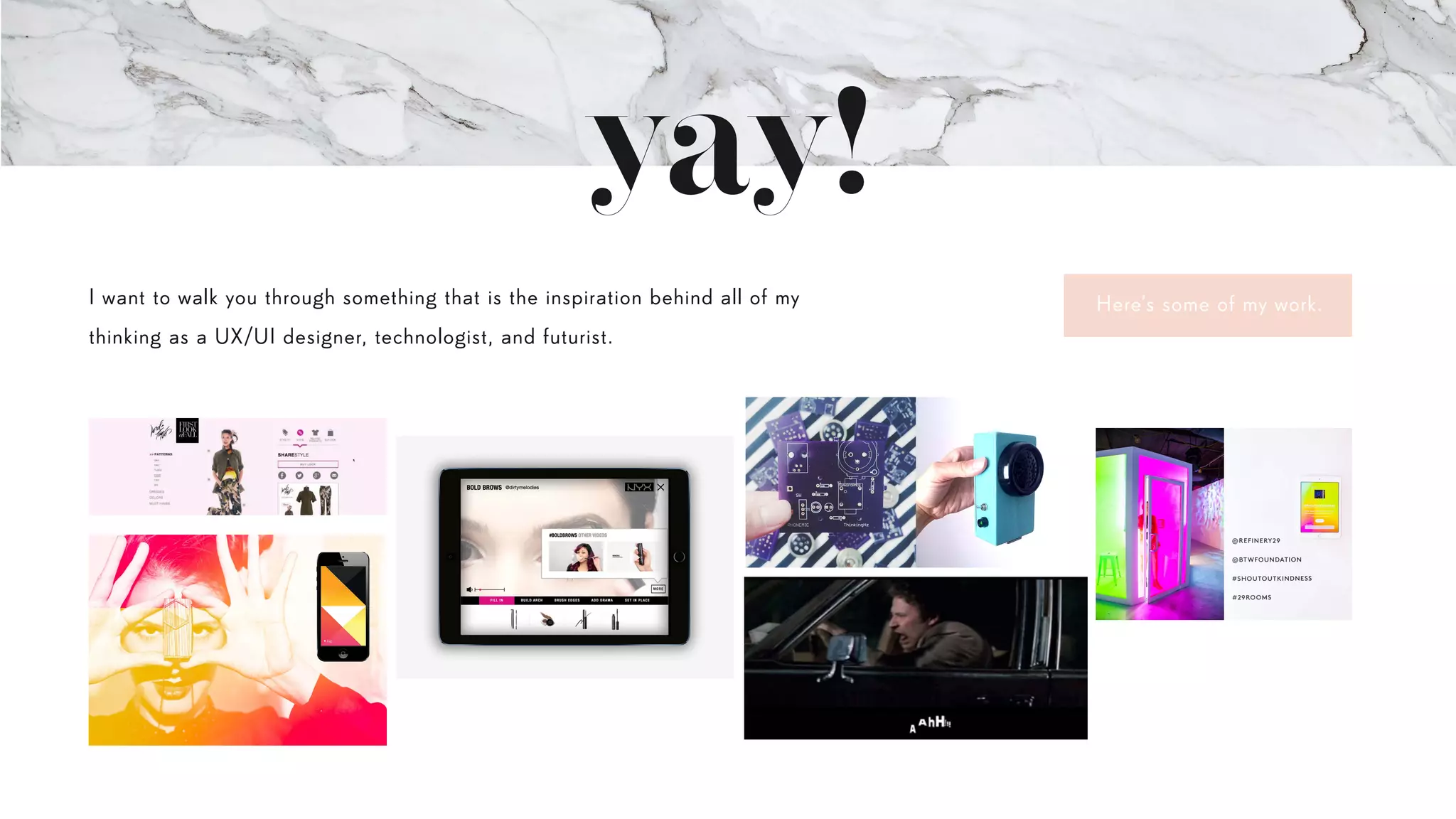
I want to walk you through something that is the inspiration behind all of my
thinking as a UX/UI designer, technologist, and futurist.
Here’s some of my work.
The history
of typography
as a thought
starter for the
future of UI.
PART
Today’s latin alphabet
is actually a 2000+ year
old invention of war.
Arguably, the best one we ever invented.
& That should change the way you look at your iphone.
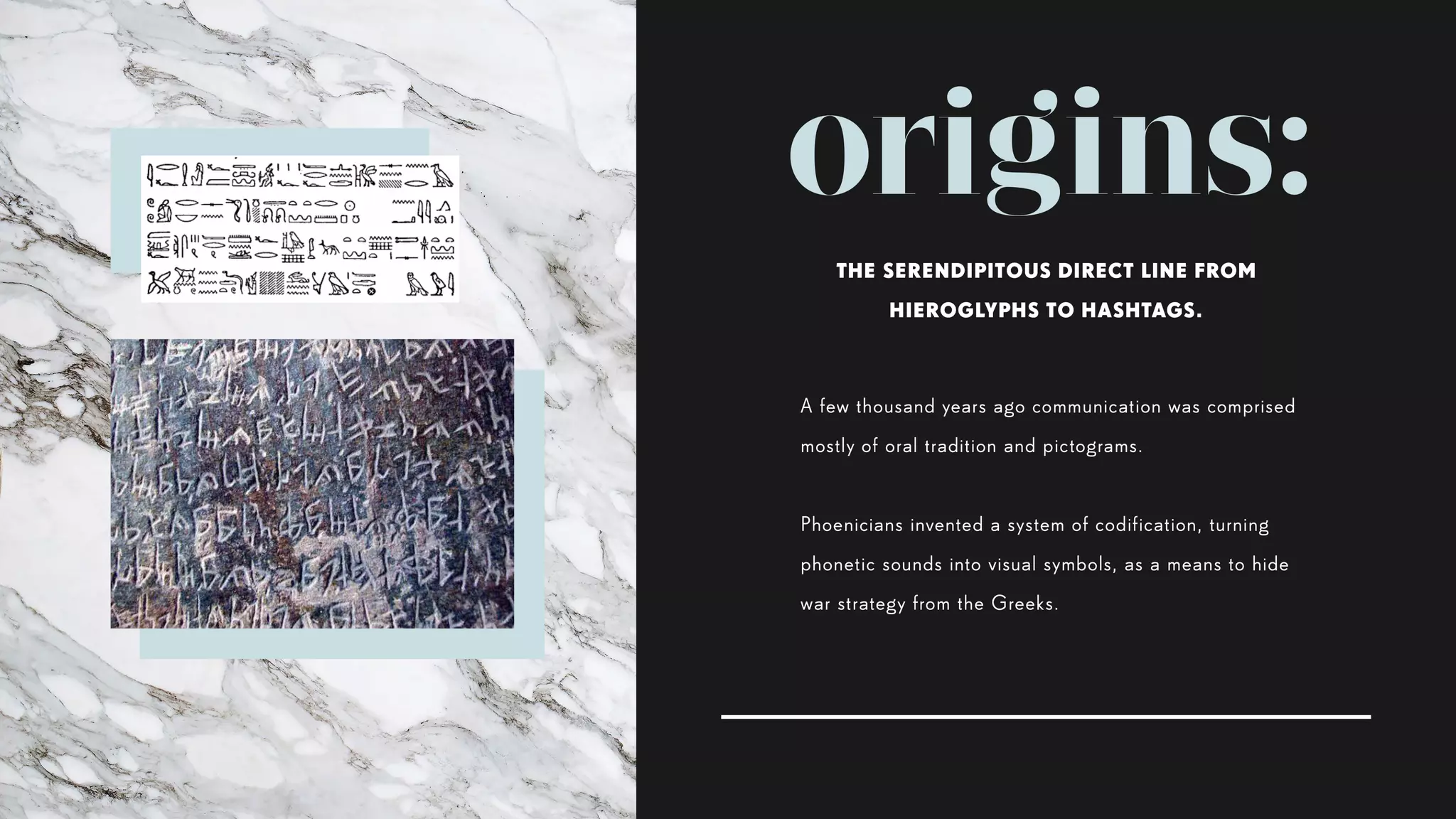
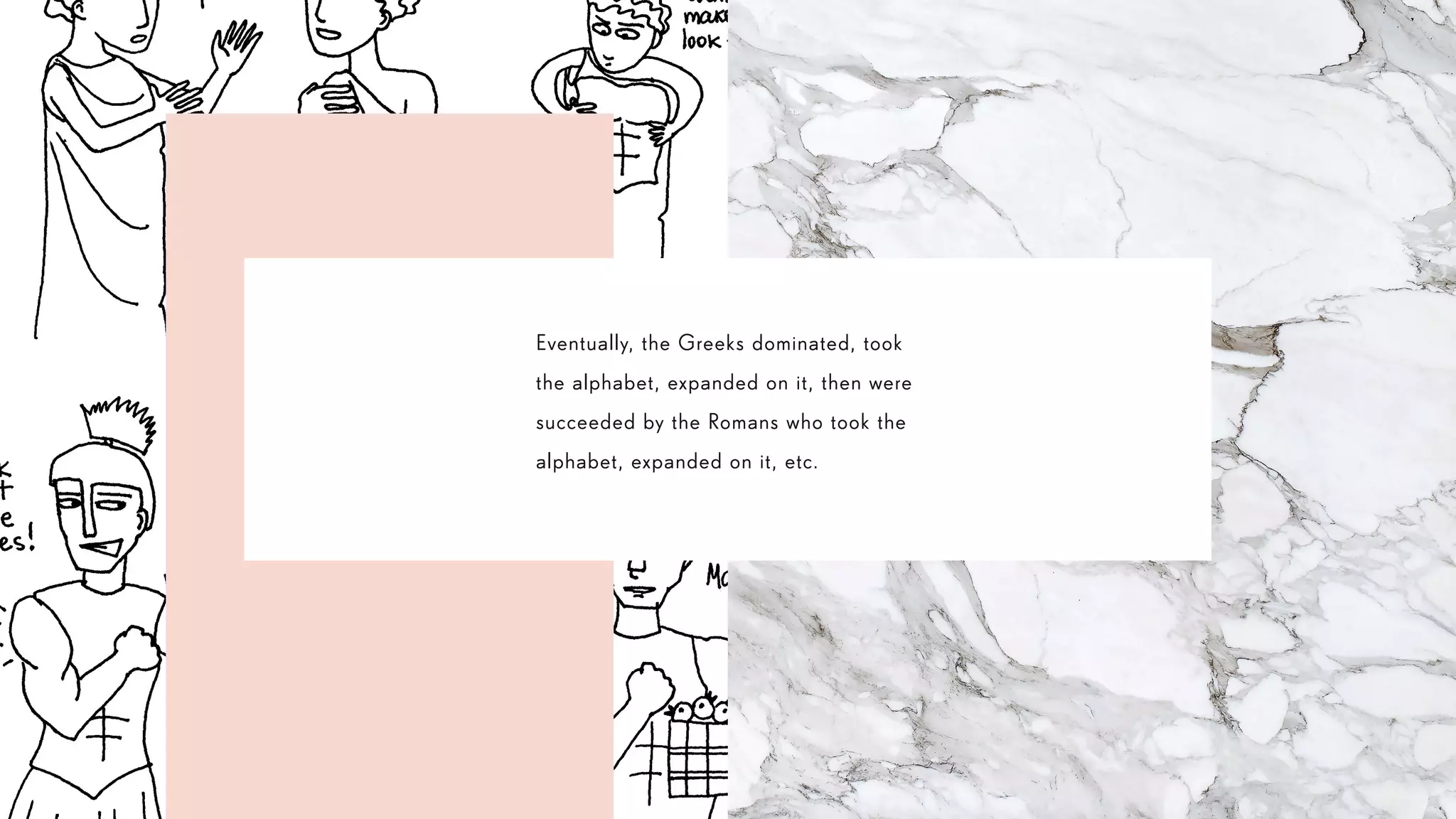
Eventually, the Greeks dominated, took
the alphabet, expanded on it, then were
succeeded by the Romans who took the
alphabet, expanded on it, etc.
BOOM.
You have the Latin
alphabet.
FUN FACT
Arabic, Hebrew, Latin, and Greek scripts all descended from Phoenician.
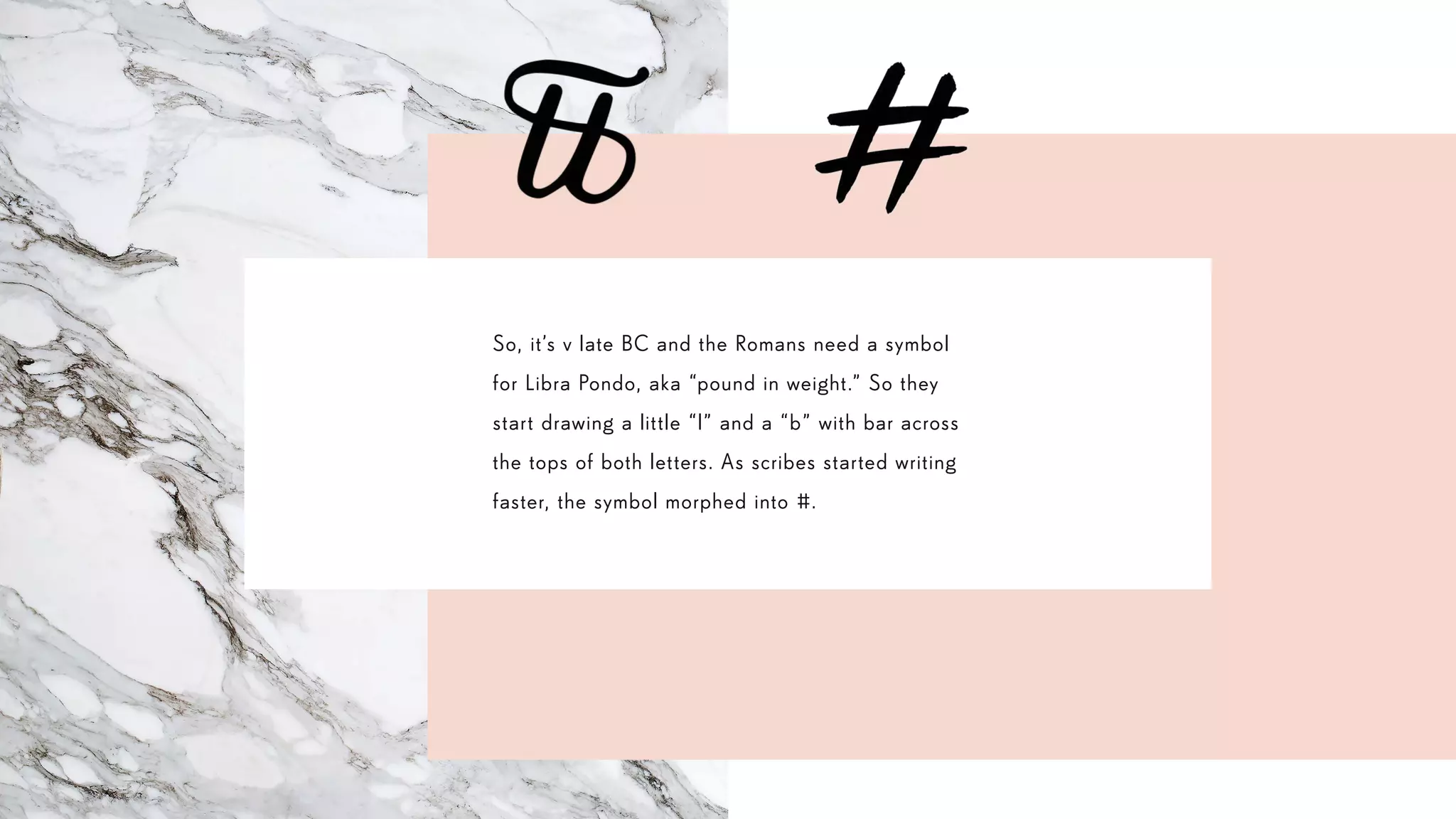
So, it’s v late BC and the Romans need a symbol
for Libra Pondo, aka “pound in weight.” So they
start drawing a little “l” and a “b” with bar across
the tops of both letters. As scribes started writing
faster, the symbol morphed into #.
pound
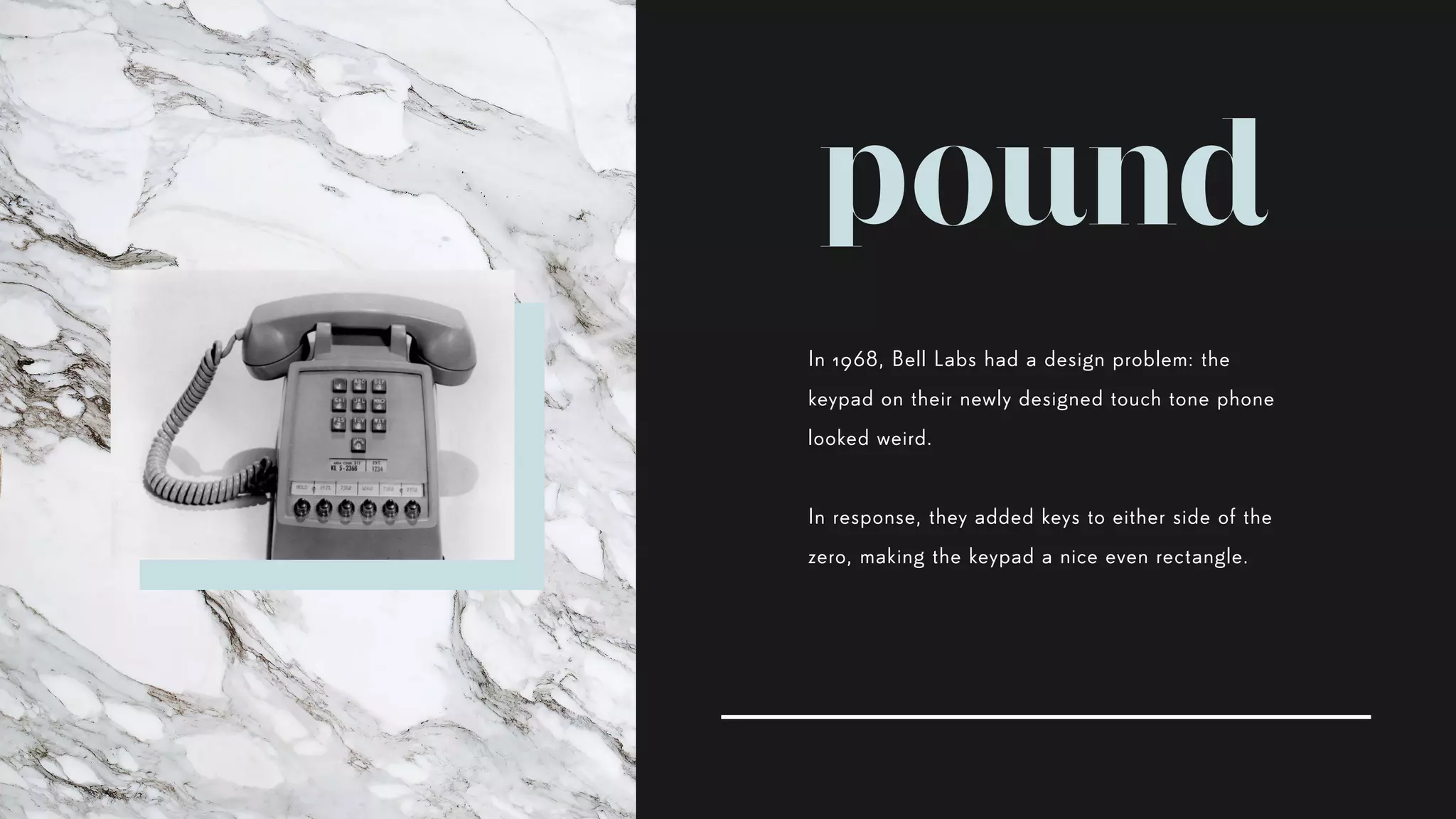
In 1968, Bell Labs had a design problem: the
keypad on their newly designed touch tone phone
looked weird.
In response, they added keys to either side of the
zero, making the keypad a nice even rectangle.
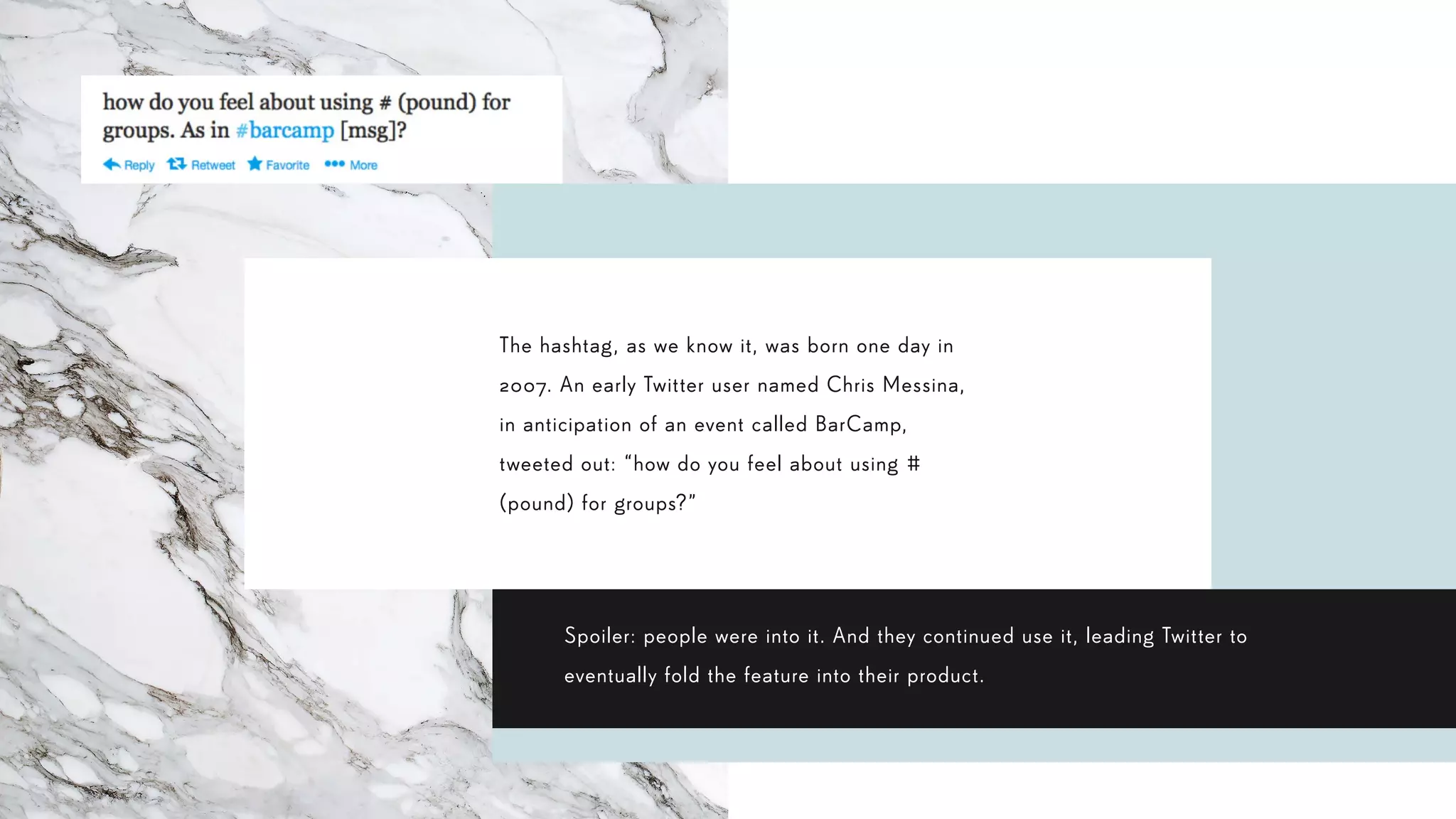
The hashtag, as we know it, was born one day in
2007. An early Twitter user named Chris Messina,
in anticipation of an event called BarCamp,
tweeted out: “how do you feel about using #
(pound) for groups?”
Spoiler: people were into it. And they continued use it, leading Twitter to
eventually fold the feature into their product.
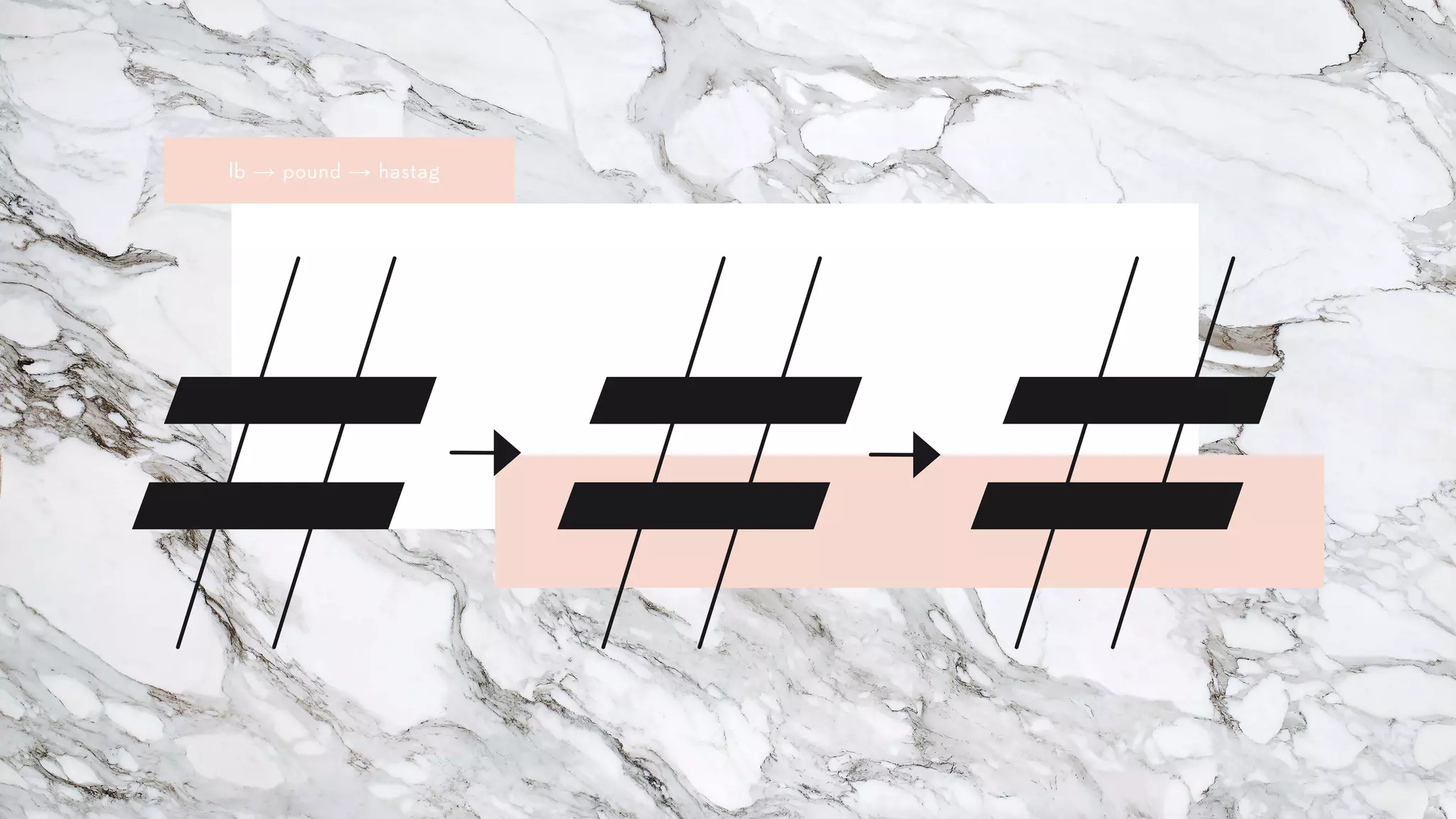
lb → pound → hastag
All those texts on
your phone—they’re
just representations
of sounds.
Knowing the lineage of Phoenician letterforms is important (to us practicers of Arabic, Hebrew, Greek,
and Latin-based languages) because it helps us remember what the purpose of UI text really is.
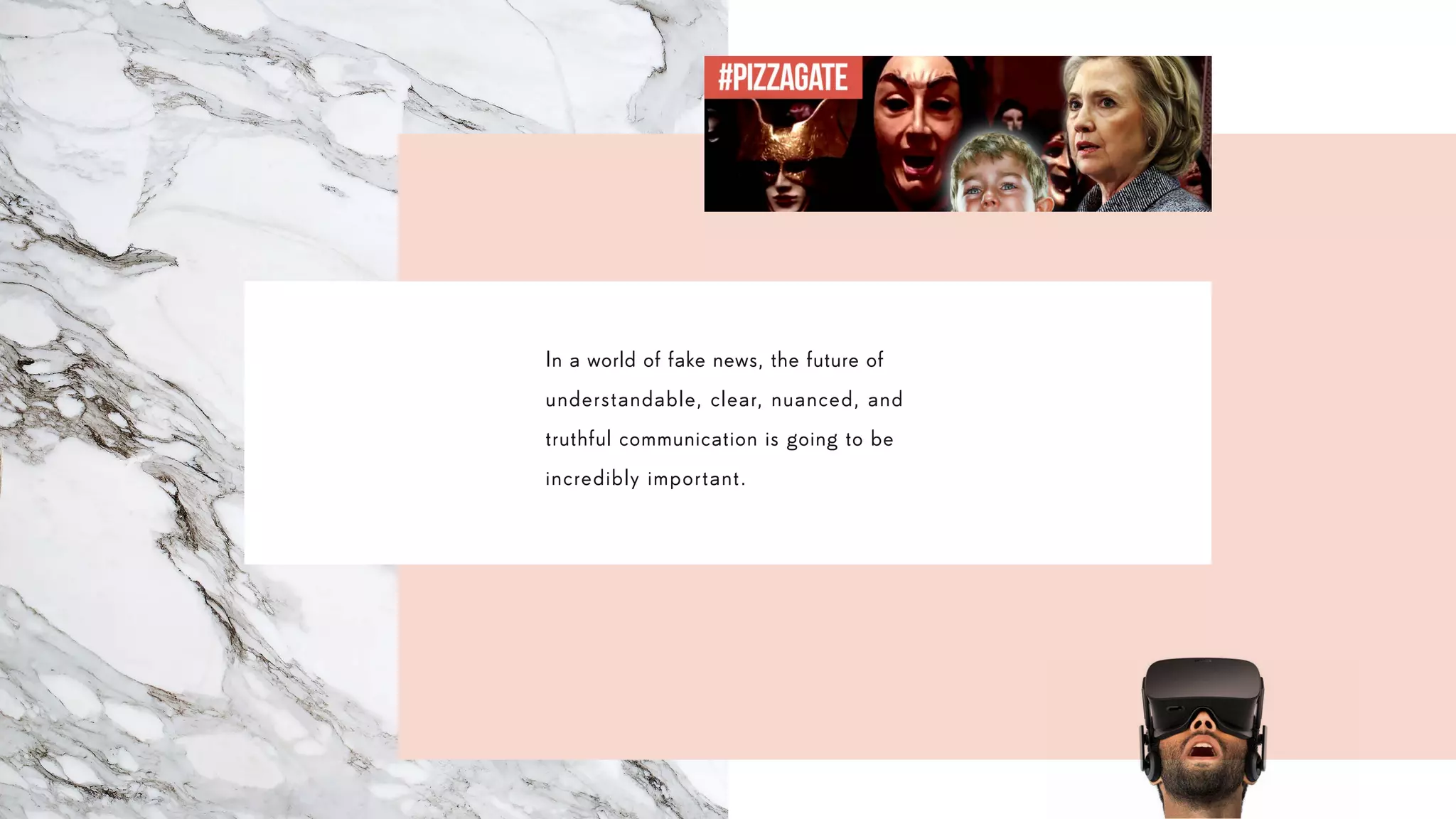
In a world of fake news, the future of
understandable, clear, nuanced, and
truthful communication is going to be
incredibly important.
How to reconsider
nuances of phonetic
letterforms for a
future of modular,
wearable, & alternate
reality devices.
PART
“As more and more products become
completely virtual—from chatbots to 3D
projections to immersive environments—
we’ll look to a new generation of virtual
interaction designers to create experiences
driven by conversation, gesture, and light”
— FA S T C O D E S I G N
sooo....
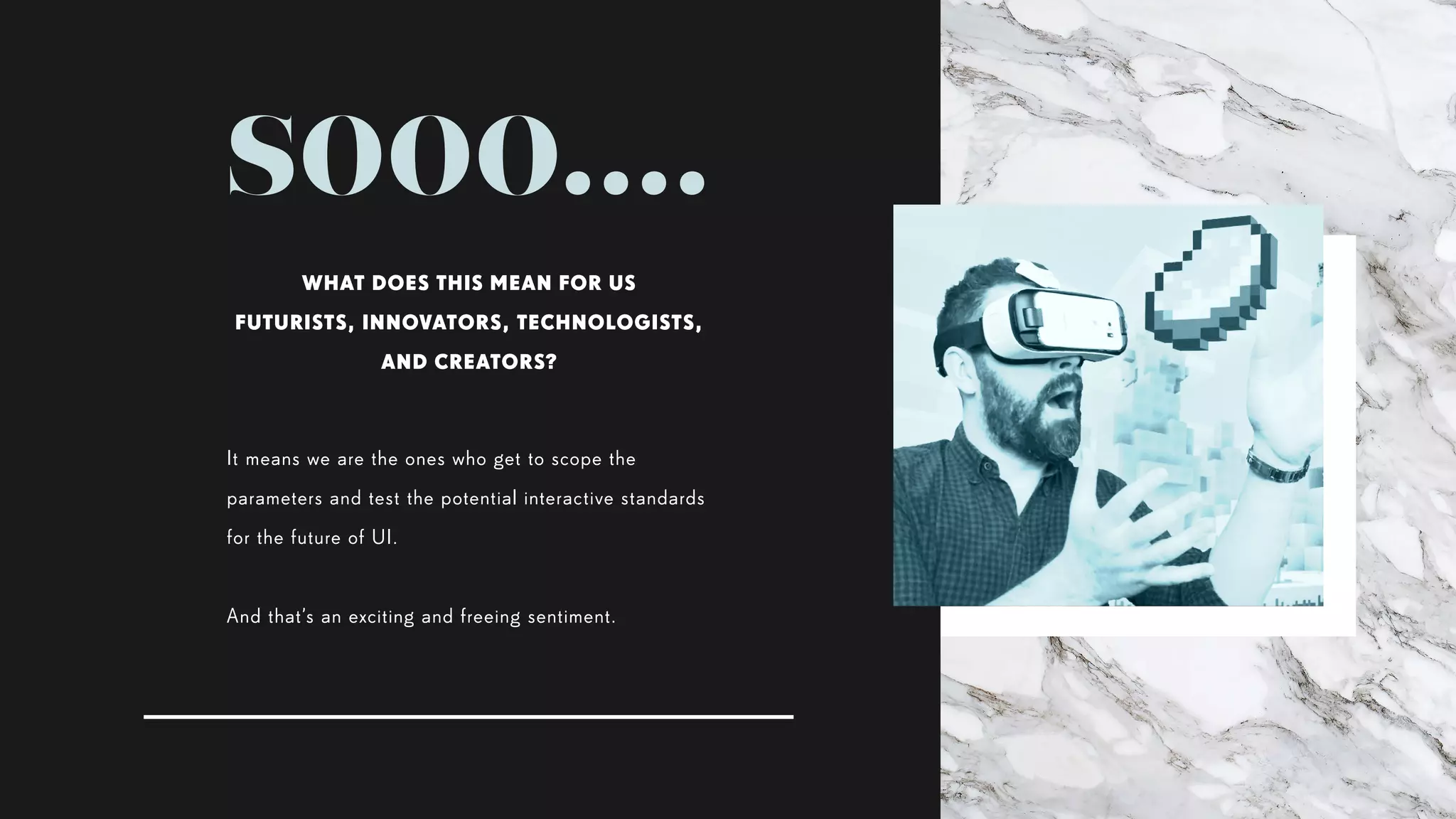
It means we are the ones who get to scope the
parameters and test the potential interactive standards
for the future of UI.
And that’s an exciting and freeing sentiment.
WHAT DOES THIS MEAN FOR US
FUTURISTS, INNOVATORS, TECHNOLOGISTS,
AND CREATORS?
And how do we use
this information?
It’s a codified communication visualization invented to subvert travel plans. It exists in its current
form factor because of a history of accidents and random decisions.
Imagine if Apple’s two-finger zoom was a button that just said “ZOOM” on it. It would suck.
And how do we use
this information?
By remembering that
text isn’t nature.
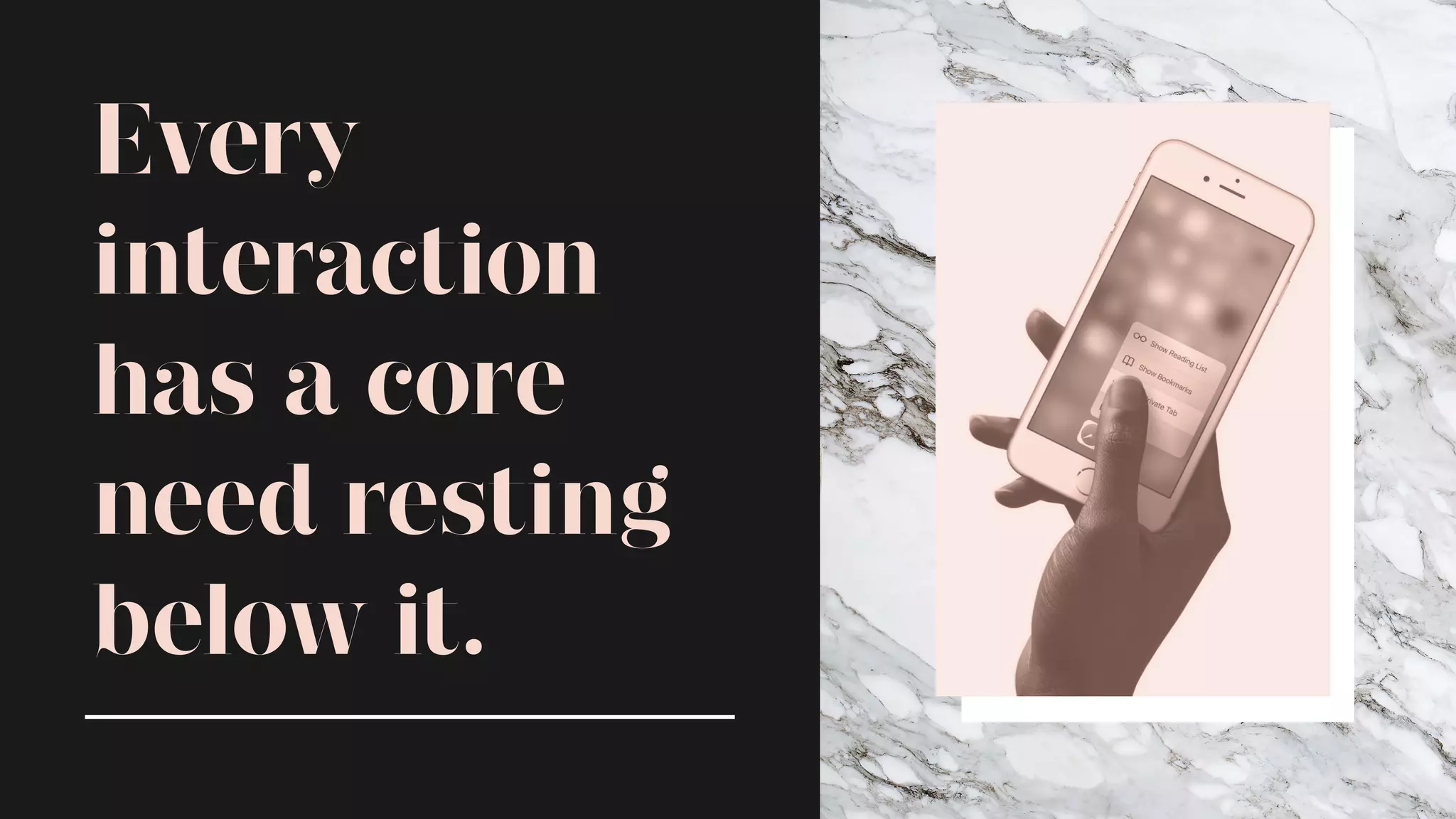
Every
interaction
has a core
need resting
below it.
but....
What is the present set of communication needs?
What new standards can we test?
How do we strategize converting the nuances of phonetic letterforms to immersive UI?
What complex methods and frameworks do we have today to experiment with?
???
strategy
So how do we strategize converting the nuances of
phonetic letterforms to immersive UI?
What complex methods and frameworks do we have
today to experiment with?
I’ve broken it down to framing this thinking into two
types of next-gen interfaces: OUI & NUI.
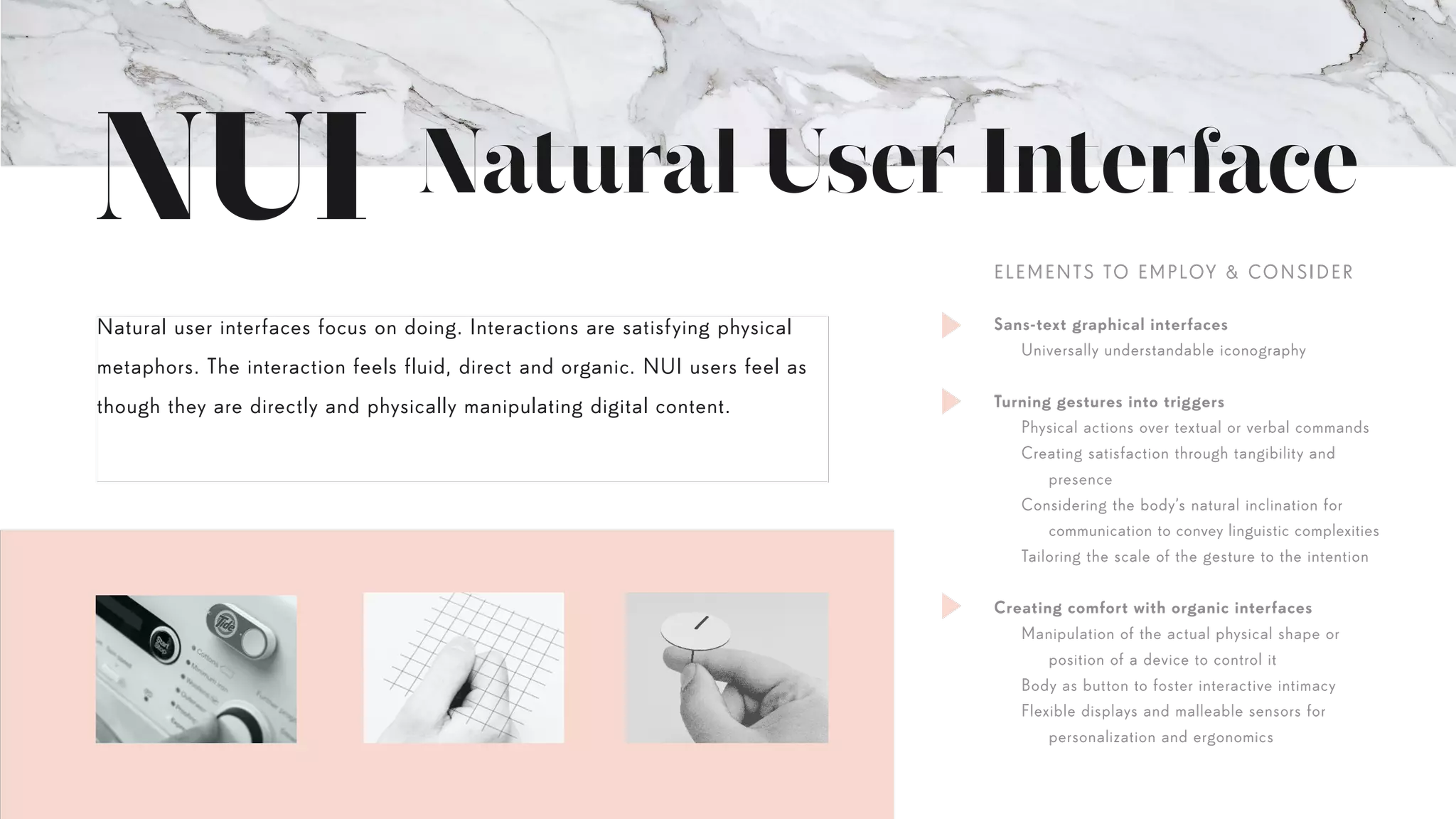
Natural User Interface
Natural user interfaces focus on doing. Interactions are satisfying physical
metaphors. The interaction feels fluid, direct and organic. NUI users feel as
though they are directly and physically manipulating digital content.
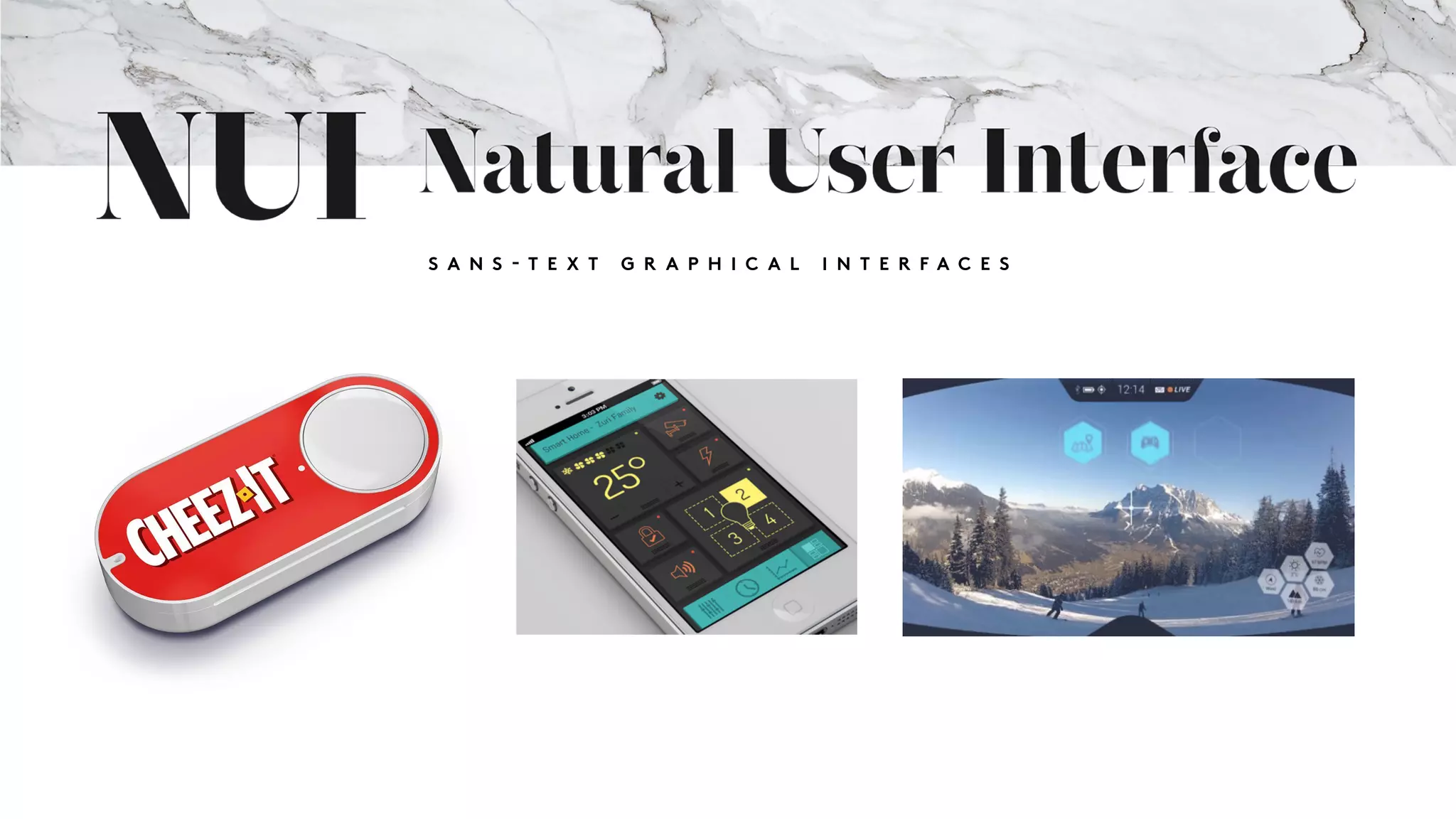
Sans-text graphical interfaces
	 Universally understandable iconography
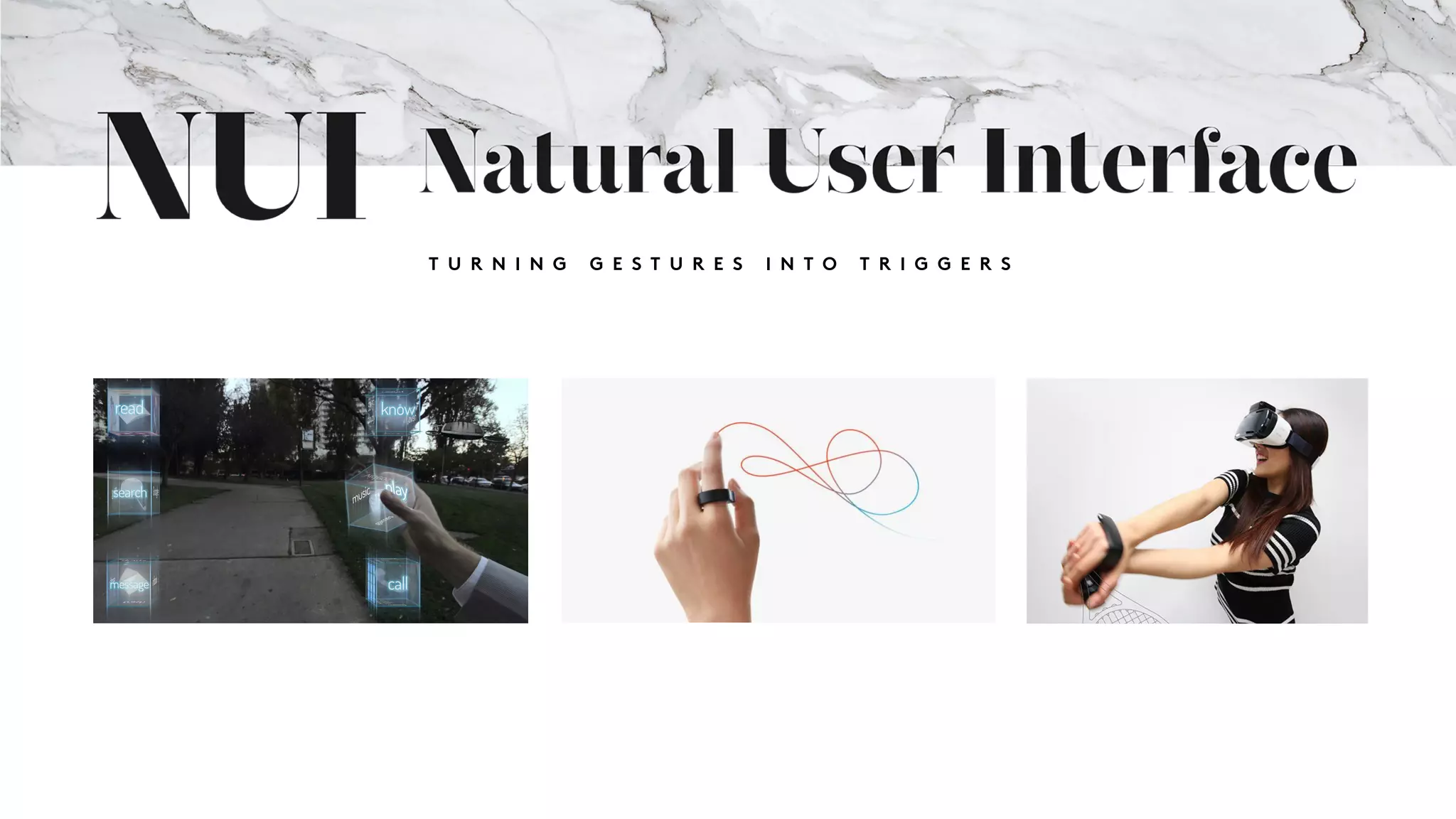
Turning gestures into triggers
	 Physical actions over textual or verbal commands
	 Creating satisfaction through tangibility and
		presence
	 Considering the body’s natural inclination for
		 communication to convey linguistic complexities
	 Tailoring the scale of the gesture to the intention
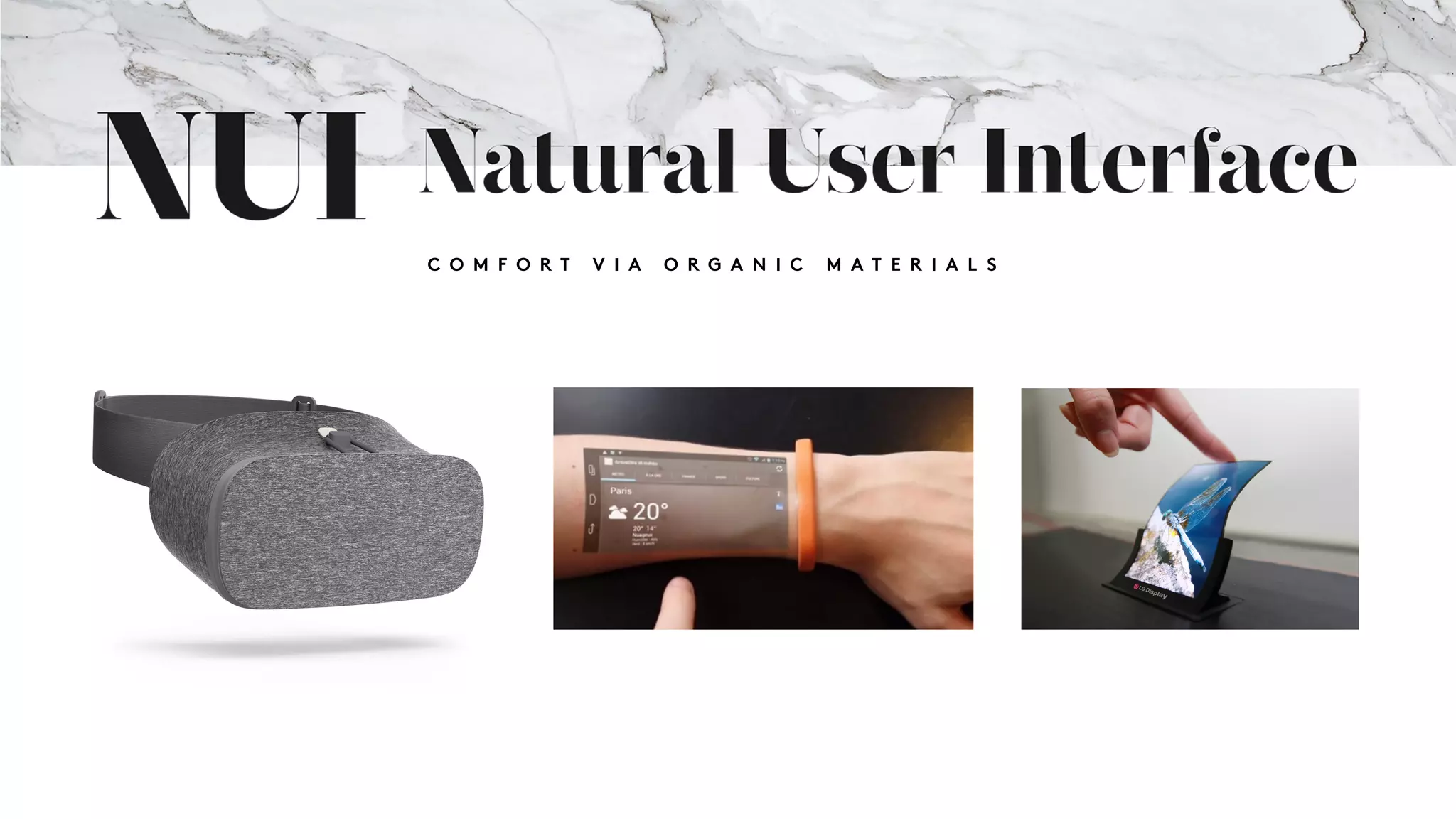
Creating comfort with organic interfaces
	 Manipulation of the actual physical shape or
		 position of a device to control it
	 Body as button to foster interactive intimacy
	 Flexible displays and malleable sensors for
		 personalization and ergonomics
ELEMENTS TO EMPLOY & CONSIDER
S A N S - T E X T G R A P H I C A L I N T E R F A C E S
T U R N I N G G E S T U R E S I N T O T R I G G E R S
C O M F O R T V I A O R G A N I C M A T E R I A L S
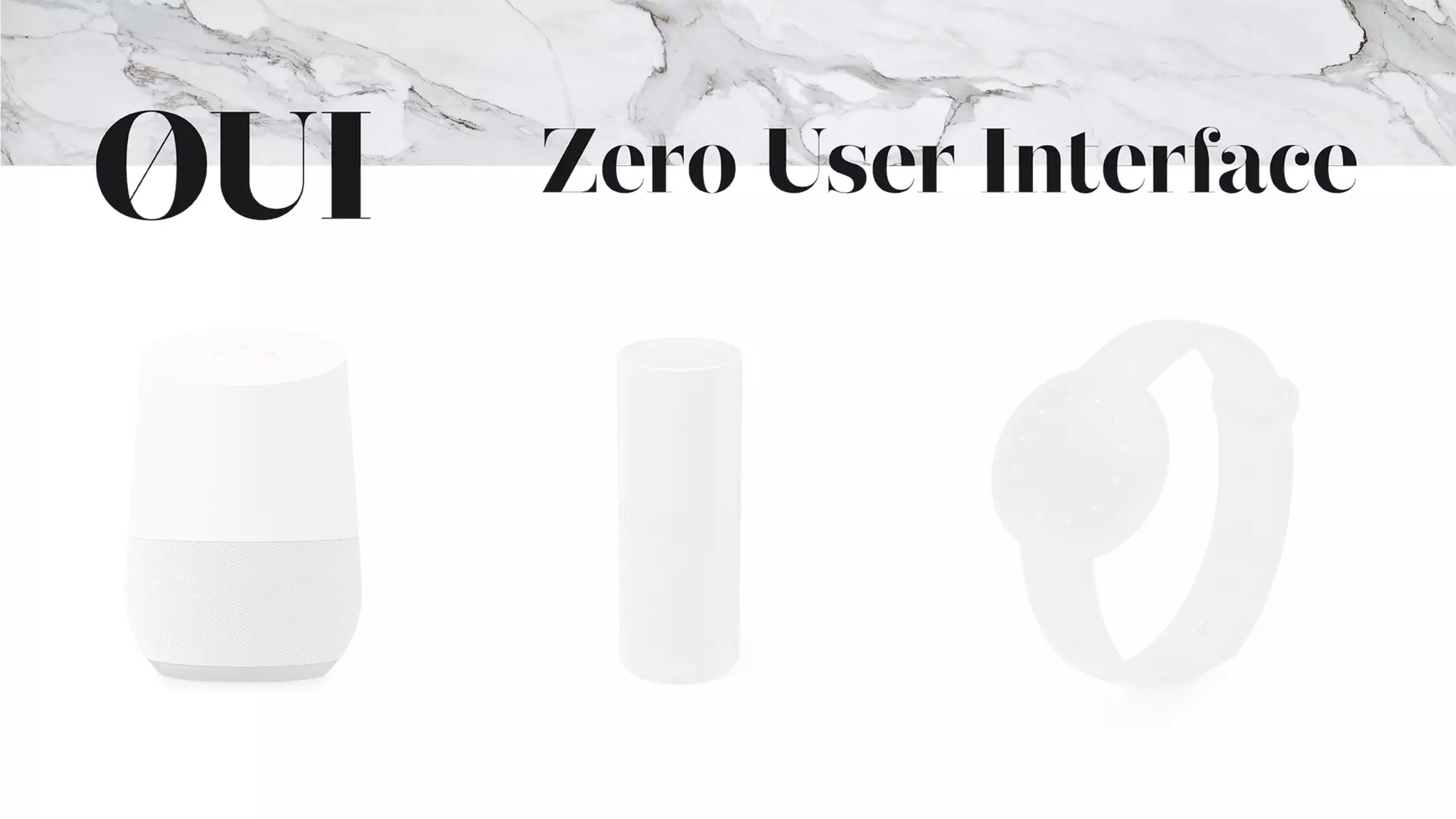
Zero User Interface
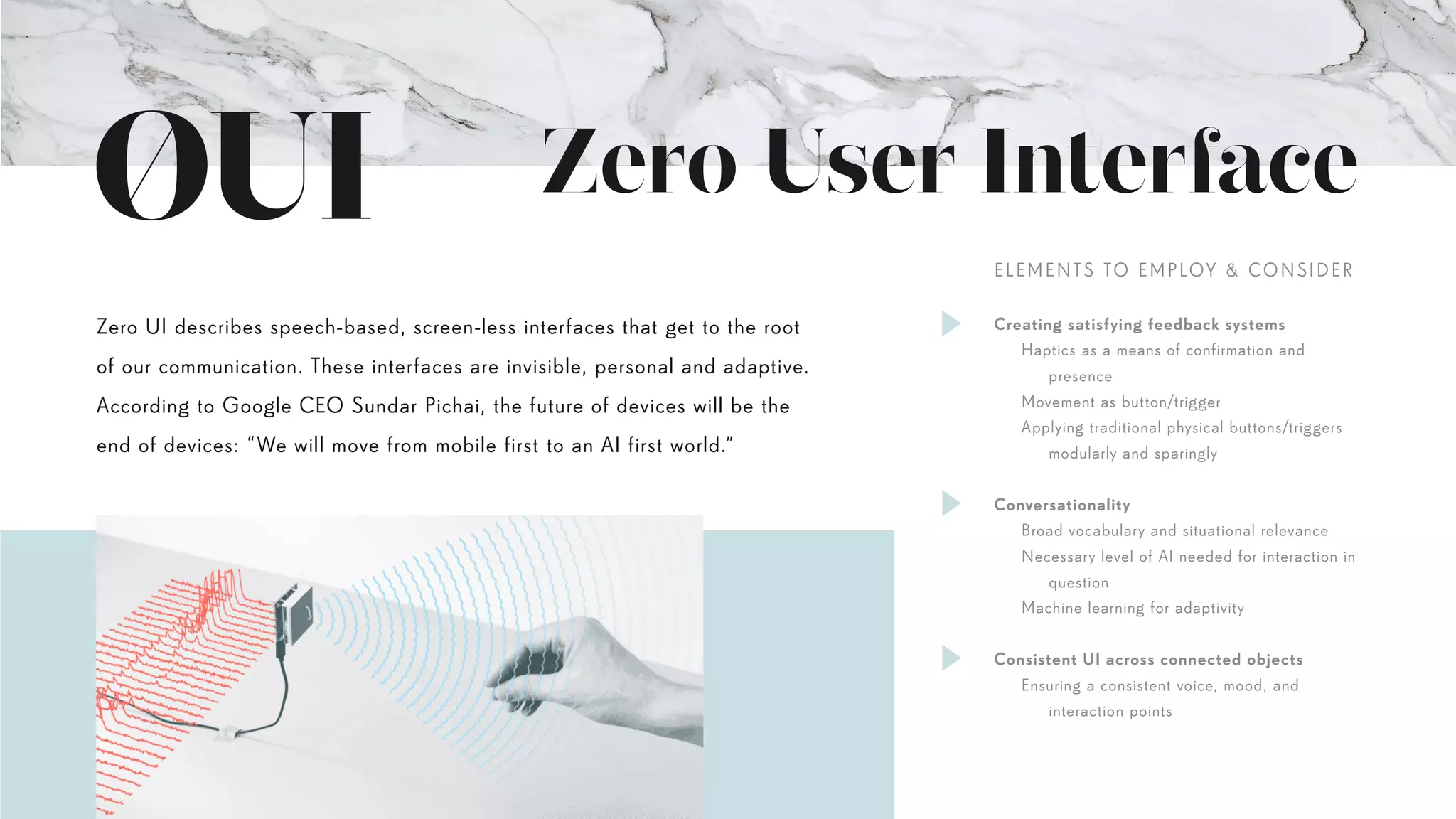
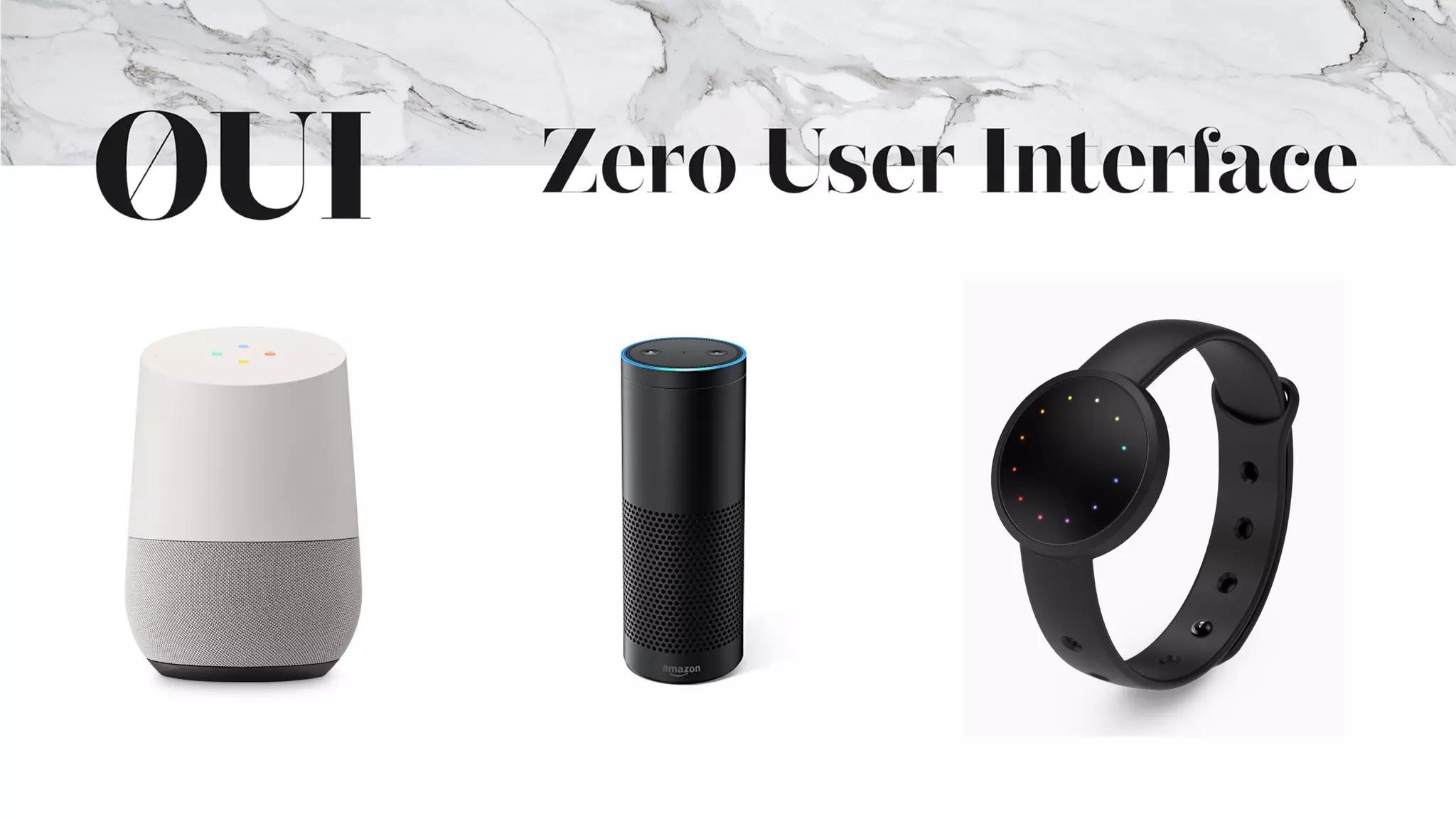
Zero UI describes speech-based, screen-less interfaces that get to the root
of our communication. These interfaces are invisible, personal and adaptive.
According to Google CEO Sundar Pichai, the future of devices will be the
end of devices: “We will move from mobile first to an AI first world.”
Creating satisfying feedback systems
	 Haptics as a means of confirmation and
		presence
	 Movement as button/trigger
	 Applying traditional physical buttons/triggers		
		 modularly and sparingly
Conversationality
	 Broad vocabulary and situational relevance
	 Necessary level of AI needed for interaction in
		question
	 Machine learning for adaptivity
Consistent UI across connected objects
	 Ensuring a consistent voice, mood, and
		interaction points
ELEMENTS TO EMPLOY & CONSIDER
questions ?

FUTURE TYPE: Using the History of Typography to Inform the Future of UI

  • 1.
  • 2.
    We’re going to explore Whythe history of typography can be used as a jumping off point for designing the future of UI. How to reconsider the nuances of phonetic letterforms and adapt them to gestural, conversational, immersive UI; in preparation for a future of modular, wearable, and alternate reality devices.
  • 3.
    yay! I want towalk you through something that is the inspiration behind all of my thinking as a UX/UI designer, technologist, and futurist. Here’s some of my work.
  • 4.
    The history of typography asa thought starter for the future of UI. PART
  • 5.
    Today’s latin alphabet isactually a 2000+ year old invention of war. Arguably, the best one we ever invented. & That should change the way you look at your iphone.
  • 7.
    Eventually, the Greeksdominated, took the alphabet, expanded on it, then were succeeded by the Romans who took the alphabet, expanded on it, etc.
  • 8.
    BOOM. You have theLatin alphabet. FUN FACT Arabic, Hebrew, Latin, and Greek scripts all descended from Phoenician.
  • 9.
    So, it’s vlate BC and the Romans need a symbol for Libra Pondo, aka “pound in weight.” So they start drawing a little “l” and a “b” with bar across the tops of both letters. As scribes started writing faster, the symbol morphed into #.
  • 10.
    pound In 1968, BellLabs had a design problem: the keypad on their newly designed touch tone phone looked weird. In response, they added keys to either side of the zero, making the keypad a nice even rectangle.
  • 11.
    The hashtag, aswe know it, was born one day in 2007. An early Twitter user named Chris Messina, in anticipation of an event called BarCamp, tweeted out: “how do you feel about using # (pound) for groups?” Spoiler: people were into it. And they continued use it, leading Twitter to eventually fold the feature into their product.
  • 12.
    lb → pound→ hastag
  • 13.
    All those textson your phone—they’re just representations of sounds. Knowing the lineage of Phoenician letterforms is important (to us practicers of Arabic, Hebrew, Greek, and Latin-based languages) because it helps us remember what the purpose of UI text really is.
  • 14.
    In a worldof fake news, the future of understandable, clear, nuanced, and truthful communication is going to be incredibly important.
  • 15.
    How to reconsider nuancesof phonetic letterforms for a future of modular, wearable, & alternate reality devices. PART
  • 16.
    “As more andmore products become completely virtual—from chatbots to 3D projections to immersive environments— we’ll look to a new generation of virtual interaction designers to create experiences driven by conversation, gesture, and light” — FA S T C O D E S I G N
  • 17.
    sooo.... It means weare the ones who get to scope the parameters and test the potential interactive standards for the future of UI. And that’s an exciting and freeing sentiment. WHAT DOES THIS MEAN FOR US FUTURISTS, INNOVATORS, TECHNOLOGISTS, AND CREATORS?
  • 18.
    And how dowe use this information?
  • 19.
    It’s a codifiedcommunication visualization invented to subvert travel plans. It exists in its current form factor because of a history of accidents and random decisions. Imagine if Apple’s two-finger zoom was a button that just said “ZOOM” on it. It would suck. And how do we use this information? By remembering that text isn’t nature.
  • 20.
  • 21.
    but.... What is thepresent set of communication needs? What new standards can we test? How do we strategize converting the nuances of phonetic letterforms to immersive UI? What complex methods and frameworks do we have today to experiment with? ???
  • 22.
    strategy So how dowe strategize converting the nuances of phonetic letterforms to immersive UI? What complex methods and frameworks do we have today to experiment with? I’ve broken it down to framing this thinking into two types of next-gen interfaces: OUI & NUI.
  • 23.
    Natural User Interface Naturaluser interfaces focus on doing. Interactions are satisfying physical metaphors. The interaction feels fluid, direct and organic. NUI users feel as though they are directly and physically manipulating digital content. Sans-text graphical interfaces Universally understandable iconography Turning gestures into triggers Physical actions over textual or verbal commands Creating satisfaction through tangibility and presence Considering the body’s natural inclination for communication to convey linguistic complexities Tailoring the scale of the gesture to the intention Creating comfort with organic interfaces Manipulation of the actual physical shape or position of a device to control it Body as button to foster interactive intimacy Flexible displays and malleable sensors for personalization and ergonomics ELEMENTS TO EMPLOY & CONSIDER
  • 24.
    S A NS - T E X T G R A P H I C A L I N T E R F A C E S
  • 25.
    T U RN I N G G E S T U R E S I N T O T R I G G E R S
  • 26.
    C O MF O R T V I A O R G A N I C M A T E R I A L S
  • 27.
    Zero User Interface ZeroUI describes speech-based, screen-less interfaces that get to the root of our communication. These interfaces are invisible, personal and adaptive. According to Google CEO Sundar Pichai, the future of devices will be the end of devices: “We will move from mobile first to an AI first world.” Creating satisfying feedback systems Haptics as a means of confirmation and presence Movement as button/trigger Applying traditional physical buttons/triggers modularly and sparingly Conversationality Broad vocabulary and situational relevance Necessary level of AI needed for interaction in question Machine learning for adaptivity Consistent UI across connected objects Ensuring a consistent voice, mood, and interaction points ELEMENTS TO EMPLOY & CONSIDER
  • 30.