[Connectivities built by people and groups]
Future Memory Making: Prototyping Post-Colonial
Imaginations with the Namibian Youth
Assist. Prof. Rachel C. Smith and PhD Asnath Paula Kambunga
/with
Prof. Ton Otto and Prof. Heike Winshiers-Theophilus
Knowledge Hub 1 | Hamburg, 14. Dec. 2018
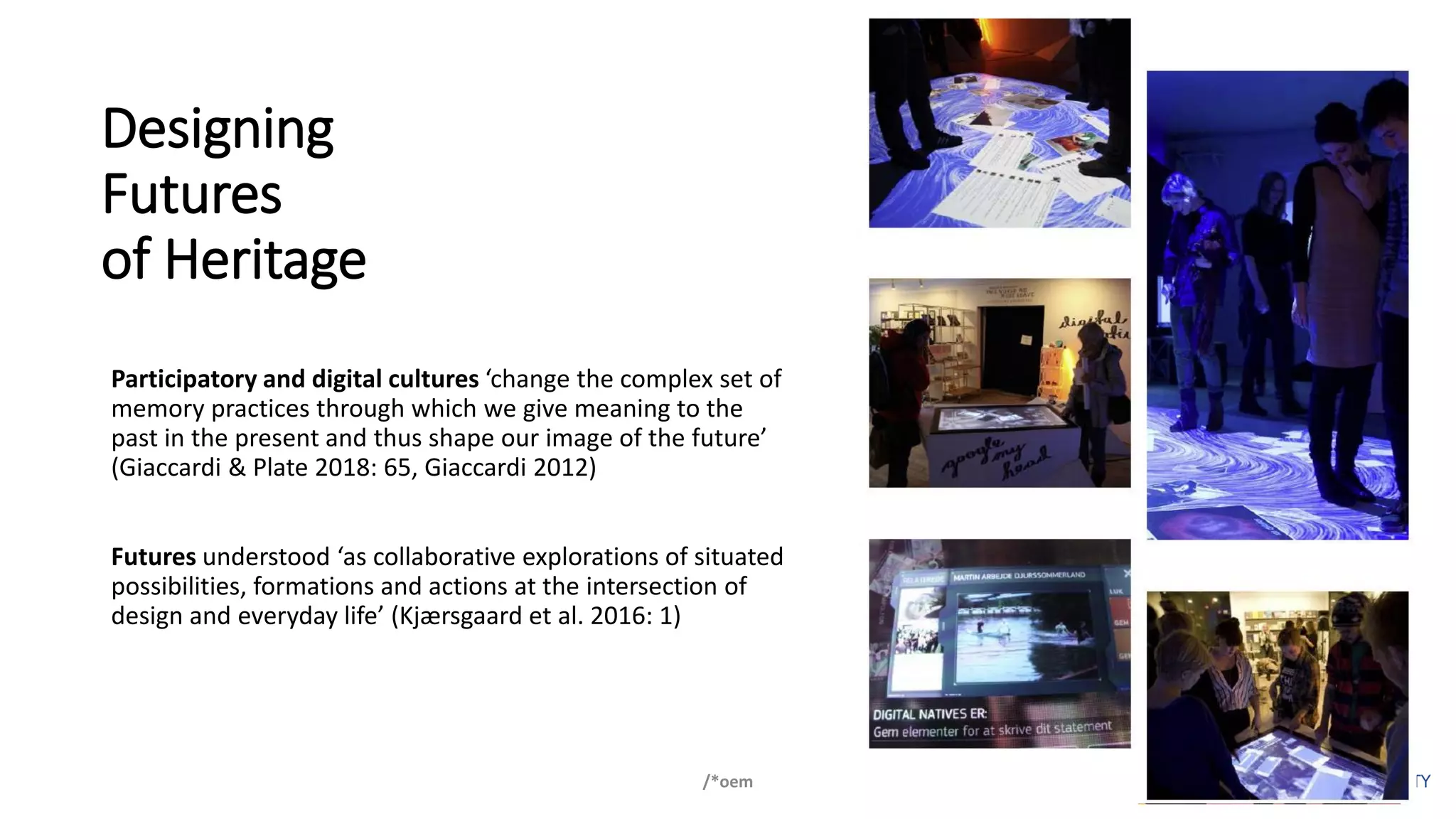
Designing
Futures
of Heritage
Participatory and digital cultures ‘change the complex set of
memory practices through which we give meaning to the
past in the present and thus shape our image of the future’
(Giaccardi & Plate 2018: 65, Giaccardi 2012)
Futures understood ‘as collaborative explorations of situated
possibilities, formations and actions at the intersection of
design and everyday life’ (Kjærsgaard et al. 2016: 1)
/*oem 2
“We call this toilet valley”
http://www.bbc.com/news/world-africa-38905195
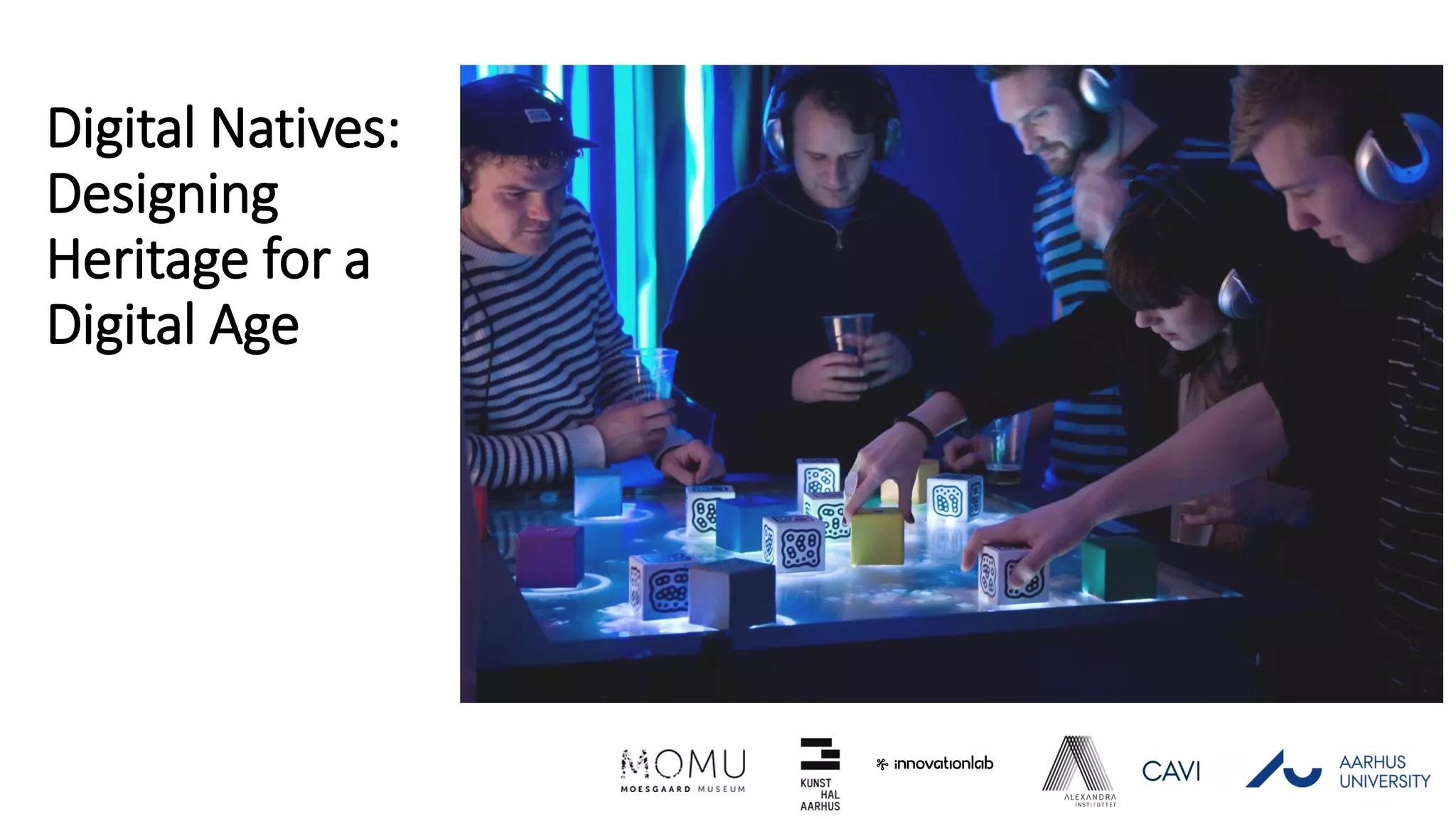
Digital Natives:
Designing
Heritage for a
Digital Age
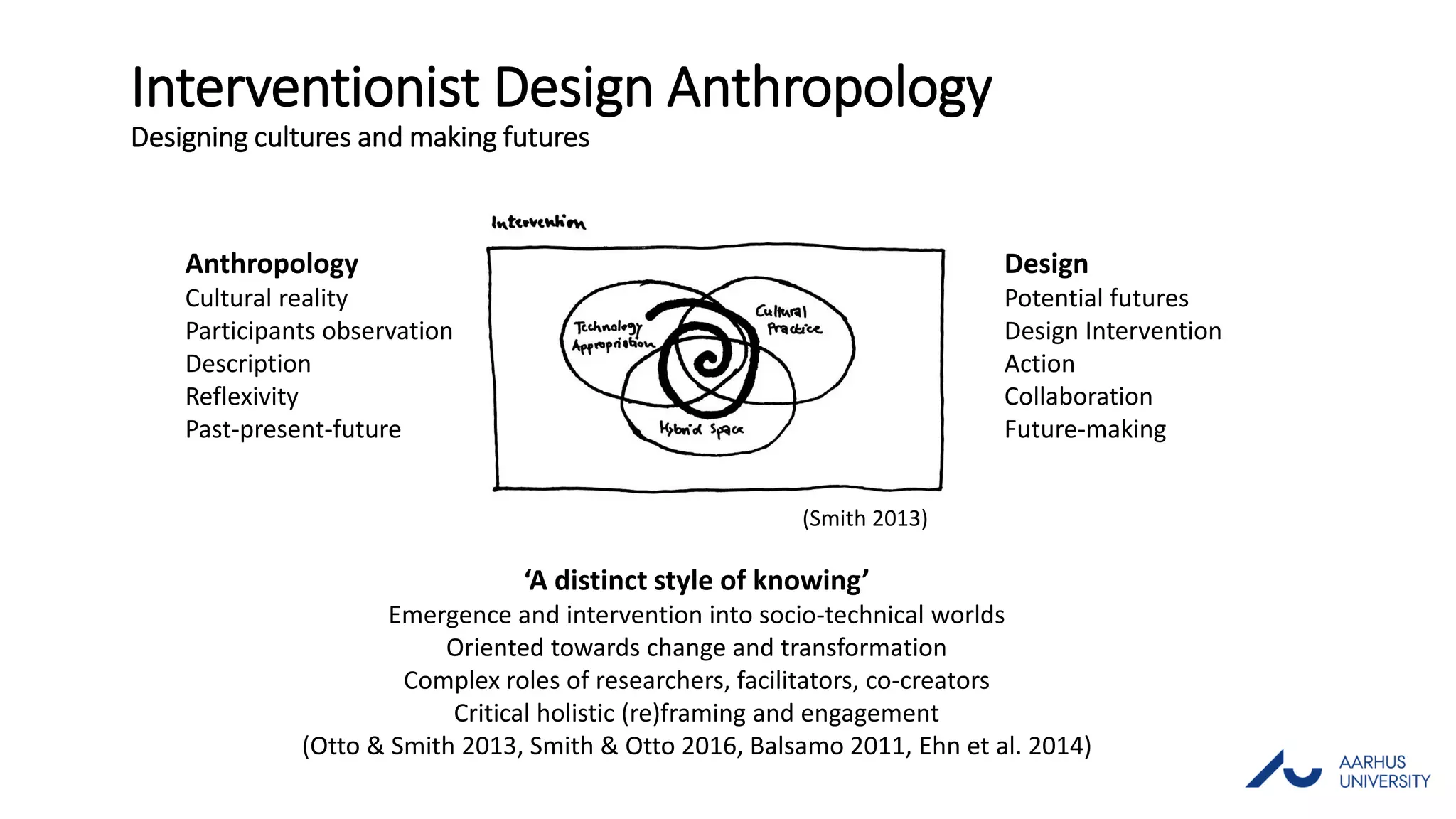
Anthropology Design
Cultural reality Potential futures
Participants observation Design Intervention
Description Action
Reflexivity Collaboration
Past-present-future Future-making
(Smith 2013)
‘A distinct style of knowing’
Emergence and intervention into socio-technical worlds
Oriented towards change and transformation
Complex roles of researchers, facilitators, co-creators
Critical holistic (re)framing and engagement
(Otto & Smith 2013, Smith & Otto 2016, Balsamo 2011, Ehn et al. 2014)
Interventionist Design Anthropology
Designing cultures and making futures
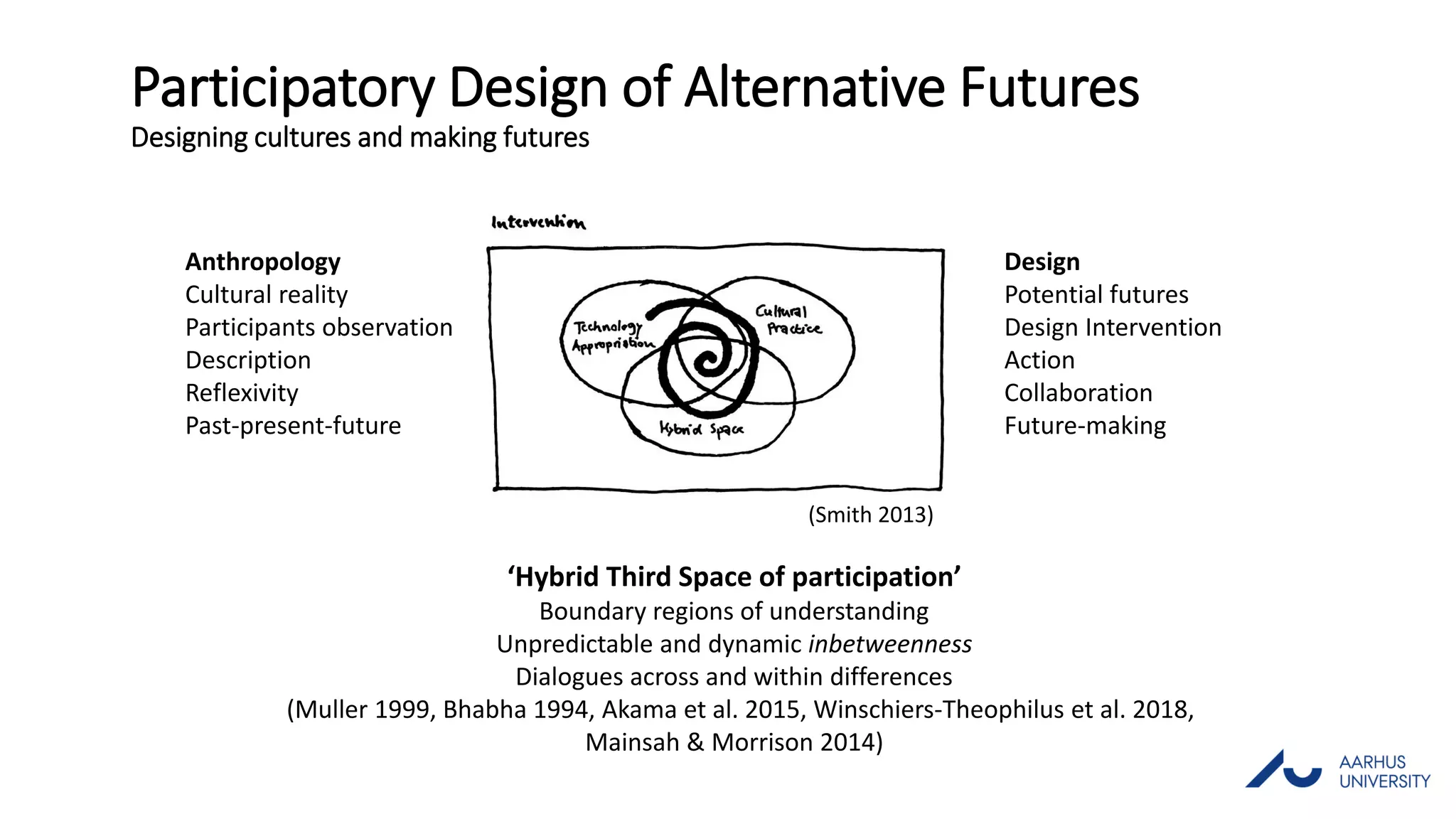
Anthropology Design
Cultural reality Potential futures
Participants observation Design Intervention
Description Action
Reflexivity Collaboration
Past-present-future Future-making
(Smith 2013)
‘Hybrid Third Space of participation’
Boundary regions of understanding
Unpredictable and dynamic inbetweenness
Dialogues across and within differences
(Muller 1999, Bhabha 1994, Akama et al. 2015, Winschiers-Theophilus et al. 2018,
Mainsah & Morrison 2014)
Participatory Design of Alternative Futures
Designing cultures and making futures
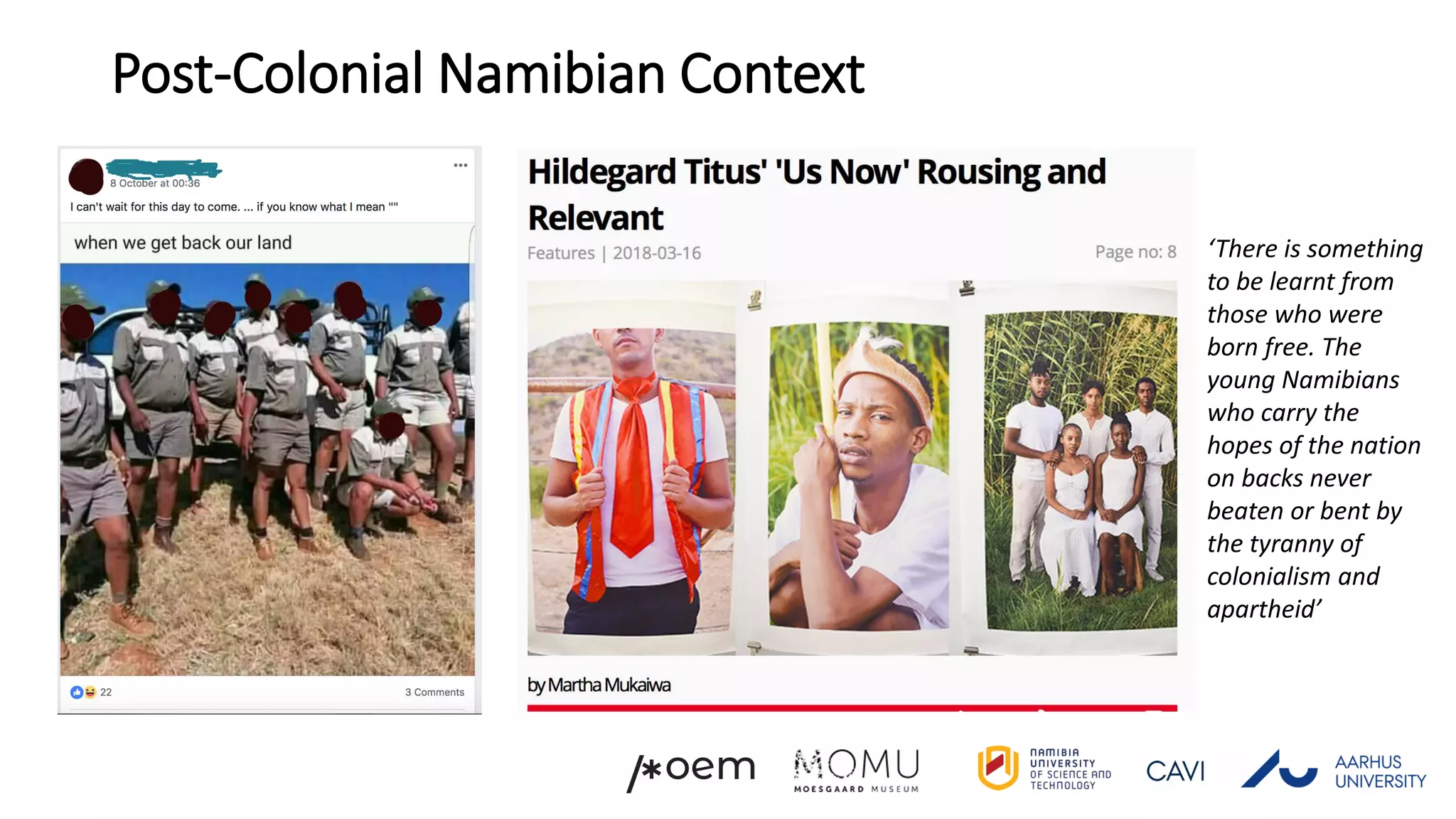
‘There is something
to be learnt from
those who were
born free. The
young Namibians
who carry the
hopes of the nation
on backs never
beaten or bent by
the tyranny of
colonialism and
apartheid’
Post-Colonial Namibian Context
“We call this toilet valley”
http://www.bbc.com/news/world-africa-38905195
Future Memory
Making:
Prototyping
Post-Colonial
Imaginations
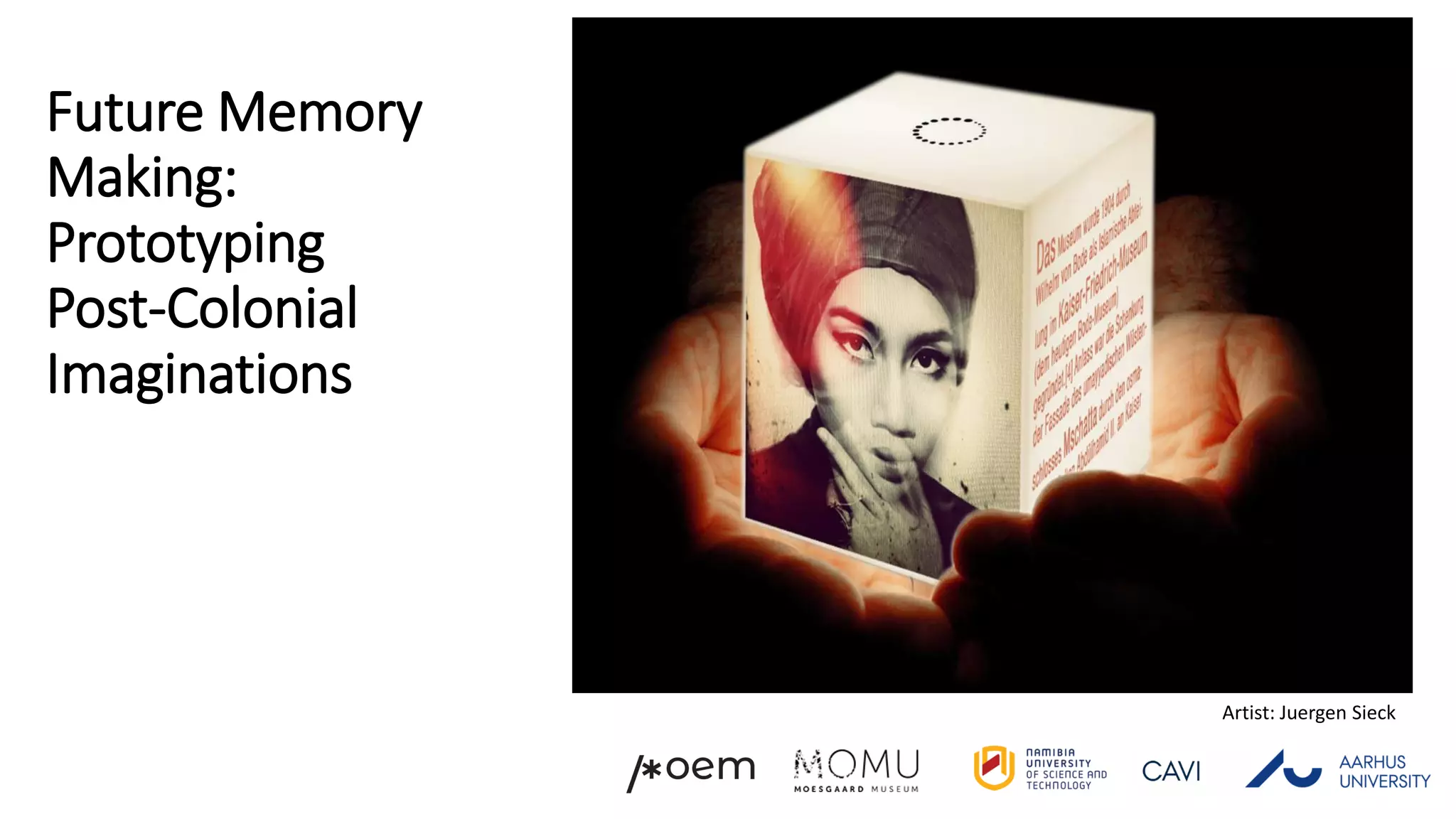
Artist: Juergen Sieck
Future Memory
Making:
Prototyping
Post-Colonial
Imaginations
Research questions?
• How does memories of everyday postcolonialism affect the youth present?
• How can alternative and future oriented narratives and representations be
created, prototyped and designed based on present resources, materials
and digital technologies
• What might participatory approaches to future memory making contribute
to new ways of making futures
Thank you!
/*oem 9

Future memory making: Prototyping (post-) colonial imaginations with Namibian youth.

  • 1.
    [Connectivities built bypeople and groups] Future Memory Making: Prototyping Post-Colonial Imaginations with the Namibian Youth Assist. Prof. Rachel C. Smith and PhD Asnath Paula Kambunga /with Prof. Ton Otto and Prof. Heike Winshiers-Theophilus Knowledge Hub 1 | Hamburg, 14. Dec. 2018
  • 2.
    Designing Futures of Heritage Participatory anddigital cultures ‘change the complex set of memory practices through which we give meaning to the past in the present and thus shape our image of the future’ (Giaccardi & Plate 2018: 65, Giaccardi 2012) Futures understood ‘as collaborative explorations of situated possibilities, formations and actions at the intersection of design and everyday life’ (Kjærsgaard et al. 2016: 1) /*oem 2
  • 3.
    “We call thistoilet valley” http://www.bbc.com/news/world-africa-38905195 Digital Natives: Designing Heritage for a Digital Age
  • 4.
    Anthropology Design Cultural realityPotential futures Participants observation Design Intervention Description Action Reflexivity Collaboration Past-present-future Future-making (Smith 2013) ‘A distinct style of knowing’ Emergence and intervention into socio-technical worlds Oriented towards change and transformation Complex roles of researchers, facilitators, co-creators Critical holistic (re)framing and engagement (Otto & Smith 2013, Smith & Otto 2016, Balsamo 2011, Ehn et al. 2014) Interventionist Design Anthropology Designing cultures and making futures
  • 5.
    Anthropology Design Cultural realityPotential futures Participants observation Design Intervention Description Action Reflexivity Collaboration Past-present-future Future-making (Smith 2013) ‘Hybrid Third Space of participation’ Boundary regions of understanding Unpredictable and dynamic inbetweenness Dialogues across and within differences (Muller 1999, Bhabha 1994, Akama et al. 2015, Winschiers-Theophilus et al. 2018, Mainsah & Morrison 2014) Participatory Design of Alternative Futures Designing cultures and making futures
  • 6.
    ‘There is something tobe learnt from those who were born free. The young Namibians who carry the hopes of the nation on backs never beaten or bent by the tyranny of colonialism and apartheid’ Post-Colonial Namibian Context
  • 7.
    “We call thistoilet valley” http://www.bbc.com/news/world-africa-38905195 Future Memory Making: Prototyping Post-Colonial Imaginations Artist: Juergen Sieck
  • 8.
    Future Memory Making: Prototyping Post-Colonial Imaginations Research questions? •How does memories of everyday postcolonialism affect the youth present? • How can alternative and future oriented narratives and representations be created, prototyped and designed based on present resources, materials and digital technologies • What might participatory approaches to future memory making contribute to new ways of making futures
  • 9.