Functional
Programming
@bruno_lui
Imperative
programming paradigm
is about . . .
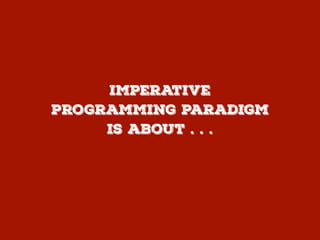
modifying mutable variables
using assignments
and control structures such
as if, then, else, lops, break,
continue, return
Functional
programming paradigm
means ...
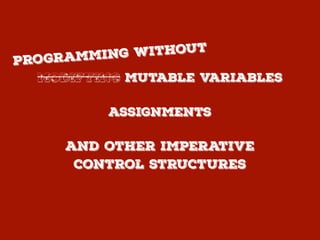
modifying mutable variables
assignments
programming without
and other imperative
control structures
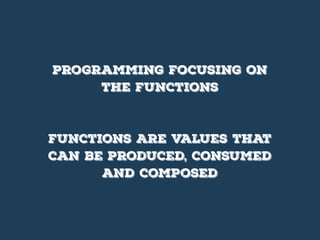
programming focusing on
the functions
functions ARE values that
can be produced, consumed
and composed
Principles
and
Concepts
Immutable Data
Functional programs should be immutable,
which means you would simply create new
data structures
instead of modifying ones that already exist.
Referential transparency
Functional programs should perform every task
as if for the first time, with no knowledge of what
may or may not have happened earlier in the
program’s execution and without side effects.
Function as first-class citizens
functions can be defined anywhere
they can be passed as parameters to functions and
returned as results
there exists a set of operators to compose functions
• A number can be stored in a variable and so can a function: 

var fortytwo = function() { return 42 };
• A number can be stored in an array slot and so can a function: 

var fortytwos = [42, function() { return 42 }];
• A number can be stored in an object field and so can a function: 

var fortytwos = {number: 42, fun: function() { return 42 }}; 

• A number can be created as needed and so can a function: 

42 + (function() { return 42 })(); //=> 84
• A number can be passed to a function and so can a function: 

function weirdAdd(n, f) { return n + f() } weirdAdd(42, function() { return 42 }); 

//=> 84 

• A number can be returned from a function and so can a function:


return 42;

return function() { return 42 }; 

Composing Functions
In functional programming, you’re always
looking for simple, repeatable actions to be
abstracted out into a function.
We can then build more complex features by
calling these functions in sequence
"Functional programming is the use of functions that
transform values into units of abstraction,
subsequently used to build software systems."
code examples
Give a 10% discount to all products of the chart above $30
Show the total value of products and discount
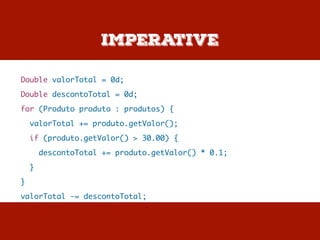
Imperative
Double valorTotal = 0d;
Double descontoTotal = 0d;
for (Produto produto : produtos) {
valorTotal += produto.getValor();
if (produto.getValor() > 30.00) {
descontoTotal += produto.getValor() * 0.1;
}
}
valorTotal -= descontoTotal;
functional
val valores = produtos map (_.valor)
val valorTotal = valores reduce
((total, valor) => total + valor)
val descontoTotal = valores filter
(_ > 30.00) map
(_ * 0.10) reduce
((total, desconto) => total + desconto)
val total = valorTotal - descontoTotal
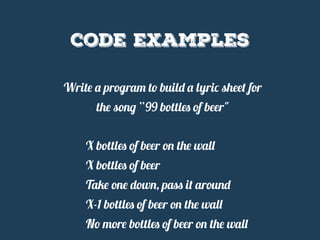
code examples
Write a program to build a lyric sheet for
the song “99 bottles of beer"
X bottles of beer on the wall
X bottles of beer
Take one down, pass it around
X-1 bottles of beer on the wall
No more bottles of beer on the wall
Imperative
var lyrics = []; 

for (var bottles = 99; bottles > 0; bottles--) {
lyrics.push(bottles + " bottles of beer on the wall”);
lyrics.push(bottles + " bottles of beer");
lyrics.push("Take one down, pass it around");
if (bottles > 1) {

lyrics.push((bottles - 1) + " bottles of beer on the wall.");
} else { 

lyrics.push("No more bottles of beer on the wall!”);
}
}
functional
function lyricSegment(n) {
return _.chain([])
.push(n + " bottles of beer on the wall")
.push(n + " bottles of beer”)
.push("Take one down, pass it around")
.tap(function(lyrics) {
if (n > 1)

lyrics.push((n - 1) + " bottles of beer on the wall.");
else
lyrics.push("No more bottles of beer on the wall!");
})
.value();
}


functional
lyricSegment(9);
//=> ["9 bottles of beer on the wall",
// "9 bottles of beer",
// "Take one down, pass it around",
// "8 bottles of beer on the wall."]
functional
function song(start, end, lyricGen) {
return _.reduce(_.range(start,end,-1),
function(acc,n) {

return acc.concat(lyricGen(n));
}, []);
}
And using it is as simple as:
song(99, 0, lyricSegment);
//=> ["99 bottles of beer on the wall",
// ...
// "No more bottles of beer on the wall!"]
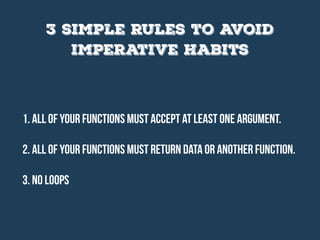
1. All of your functions must accept at least one argument.
2. All of your functions must return data or another function.
3. No loops
3 simple rules to avoid
imperative habits
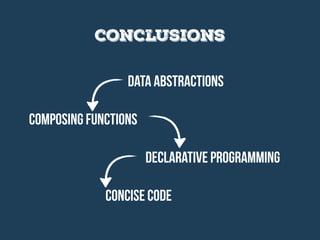
conclusions
data abstractions
composing functions
declarative programming
concise code
Coursera: Functional Programming Principles in Scala
Book: Functional Javascript, Michael Fogus
http://www.smashingmagazine.com/2014/07/02/dont-be-scared-of-functional-
programming/
References
Thank you
@bruno_lui

Functional Programming

  • 1.
  • 2.
  • 3.
    modifying mutable variables usingassignments and control structures such as if, then, else, lops, break, continue, return
  • 4.
  • 5.
    modifying mutable variables assignments programmingwithout and other imperative control structures
  • 6.
    programming focusing on thefunctions functions ARE values that can be produced, consumed and composed
  • 7.
  • 8.
    Immutable Data Functional programsshould be immutable, which means you would simply create new data structures instead of modifying ones that already exist.
  • 9.
    Referential transparency Functional programsshould perform every task as if for the first time, with no knowledge of what may or may not have happened earlier in the program’s execution and without side effects.
  • 10.
    Function as first-classcitizens functions can be defined anywhere they can be passed as parameters to functions and returned as results there exists a set of operators to compose functions
  • 11.
    • A numbercan be stored in a variable and so can a function: 
 var fortytwo = function() { return 42 }; • A number can be stored in an array slot and so can a function: 
 var fortytwos = [42, function() { return 42 }]; • A number can be stored in an object field and so can a function: 
 var fortytwos = {number: 42, fun: function() { return 42 }}; 
 • A number can be created as needed and so can a function: 
 42 + (function() { return 42 })(); //=> 84 • A number can be passed to a function and so can a function: 
 function weirdAdd(n, f) { return n + f() } weirdAdd(42, function() { return 42 }); 
 //=> 84 
 • A number can be returned from a function and so can a function: 
 return 42;
 return function() { return 42 }; 

  • 12.
    Composing Functions In functionalprogramming, you’re always looking for simple, repeatable actions to be abstracted out into a function. We can then build more complex features by calling these functions in sequence
  • 13.
    "Functional programming isthe use of functions that transform values into units of abstraction, subsequently used to build software systems."
  • 14.
    code examples Give a10% discount to all products of the chart above $30 Show the total value of products and discount
  • 15.
    Imperative Double valorTotal =0d; Double descontoTotal = 0d; for (Produto produto : produtos) { valorTotal += produto.getValor(); if (produto.getValor() > 30.00) { descontoTotal += produto.getValor() * 0.1; } } valorTotal -= descontoTotal;
  • 16.
    functional val valores =produtos map (_.valor) val valorTotal = valores reduce ((total, valor) => total + valor) val descontoTotal = valores filter (_ > 30.00) map (_ * 0.10) reduce ((total, desconto) => total + desconto) val total = valorTotal - descontoTotal
  • 17.
    code examples Write aprogram to build a lyric sheet for the song “99 bottles of beer" X bottles of beer on the wall X bottles of beer Take one down, pass it around X-1 bottles of beer on the wall No more bottles of beer on the wall
  • 18.
    Imperative var lyrics =[]; 
 for (var bottles = 99; bottles > 0; bottles--) { lyrics.push(bottles + " bottles of beer on the wall”); lyrics.push(bottles + " bottles of beer"); lyrics.push("Take one down, pass it around"); if (bottles > 1) {
 lyrics.push((bottles - 1) + " bottles of beer on the wall."); } else { 
 lyrics.push("No more bottles of beer on the wall!”); } }
  • 19.
    functional function lyricSegment(n) { return_.chain([]) .push(n + " bottles of beer on the wall") .push(n + " bottles of beer”) .push("Take one down, pass it around") .tap(function(lyrics) { if (n > 1)
 lyrics.push((n - 1) + " bottles of beer on the wall."); else lyrics.push("No more bottles of beer on the wall!"); }) .value(); } 

  • 20.
    functional lyricSegment(9); //=> ["9 bottlesof beer on the wall", // "9 bottles of beer", // "Take one down, pass it around", // "8 bottles of beer on the wall."]
  • 21.
    functional function song(start, end,lyricGen) { return _.reduce(_.range(start,end,-1), function(acc,n) {
 return acc.concat(lyricGen(n)); }, []); } And using it is as simple as: song(99, 0, lyricSegment); //=> ["99 bottles of beer on the wall", // ... // "No more bottles of beer on the wall!"]
  • 22.
    1. All ofyour functions must accept at least one argument. 2. All of your functions must return data or another function. 3. No loops 3 simple rules to avoid imperative habits
  • 23.
  • 24.
    Coursera: Functional ProgrammingPrinciples in Scala Book: Functional Javascript, Michael Fogus http://www.smashingmagazine.com/2014/07/02/dont-be-scared-of-functional- programming/ References
  • 25.