CALL BY VALUE
&
CALL BY REFERNCE
TOPIC:
PRESENTED BY
G.DHARANI
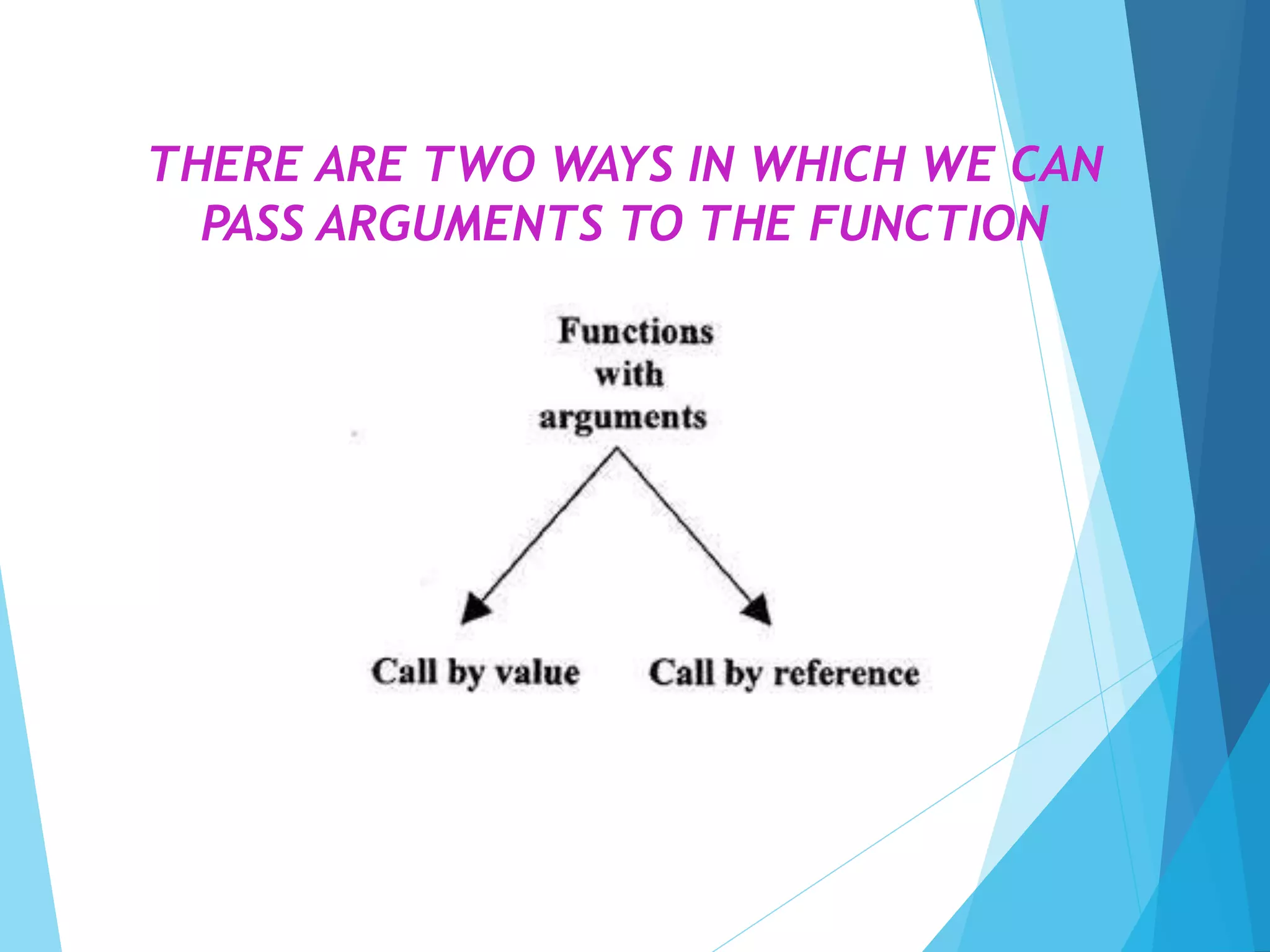
THERE ARE TWO WAYS IN WHICH WE CAN
PASS ARGUMENTS TO THE FUNCTION
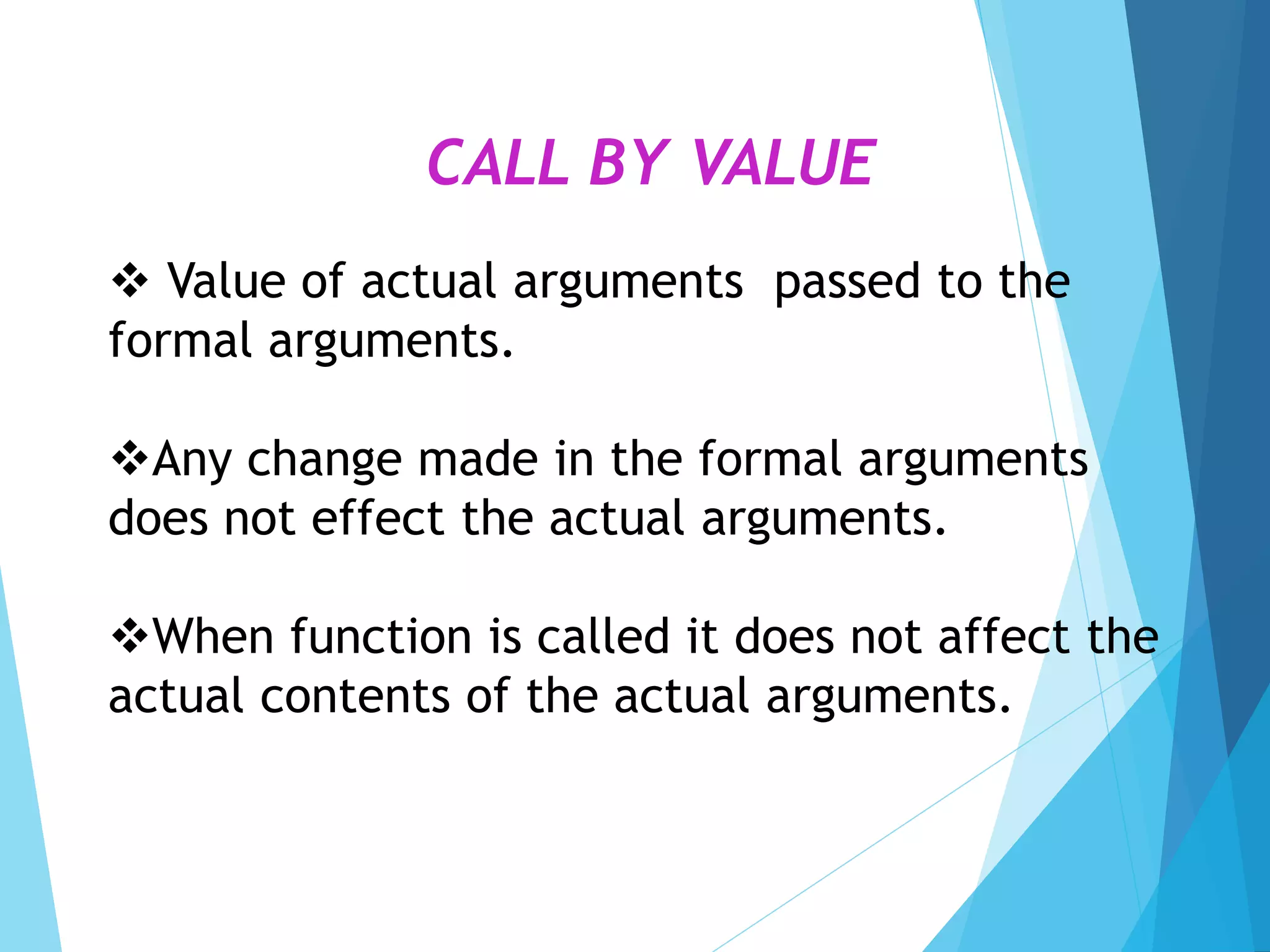
CALL BY VALUE
 Value of actual arguments passed to the
formal arguments.
Any change made in the formal arguments
does not effect the actual arguments.
When function is called it does not affect the
actual contents of the actual arguments.
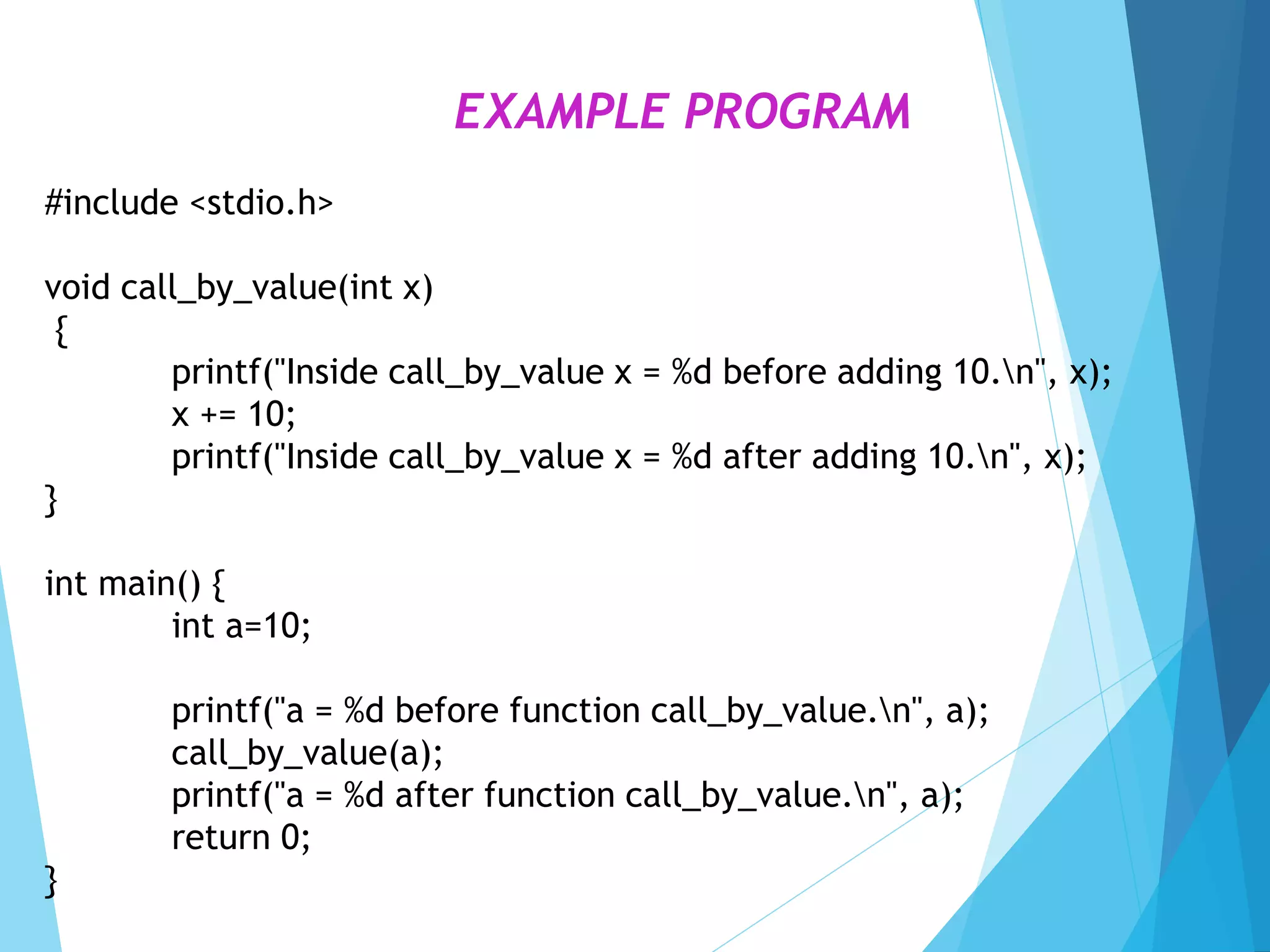
#include <stdio.h>
void call_by_value(int x)
{
printf("Inside call_by_value x = %d before adding 10.n", x);
x += 10;
printf("Inside call_by_value x = %d after adding 10.n", x);
}
int main() {
int a=10;
printf("a = %d before function call_by_value.n", a);
call_by_value(a);
printf("a = %d after function call_by_value.n", a);
return 0;
}
EXAMPLE PROGRAM
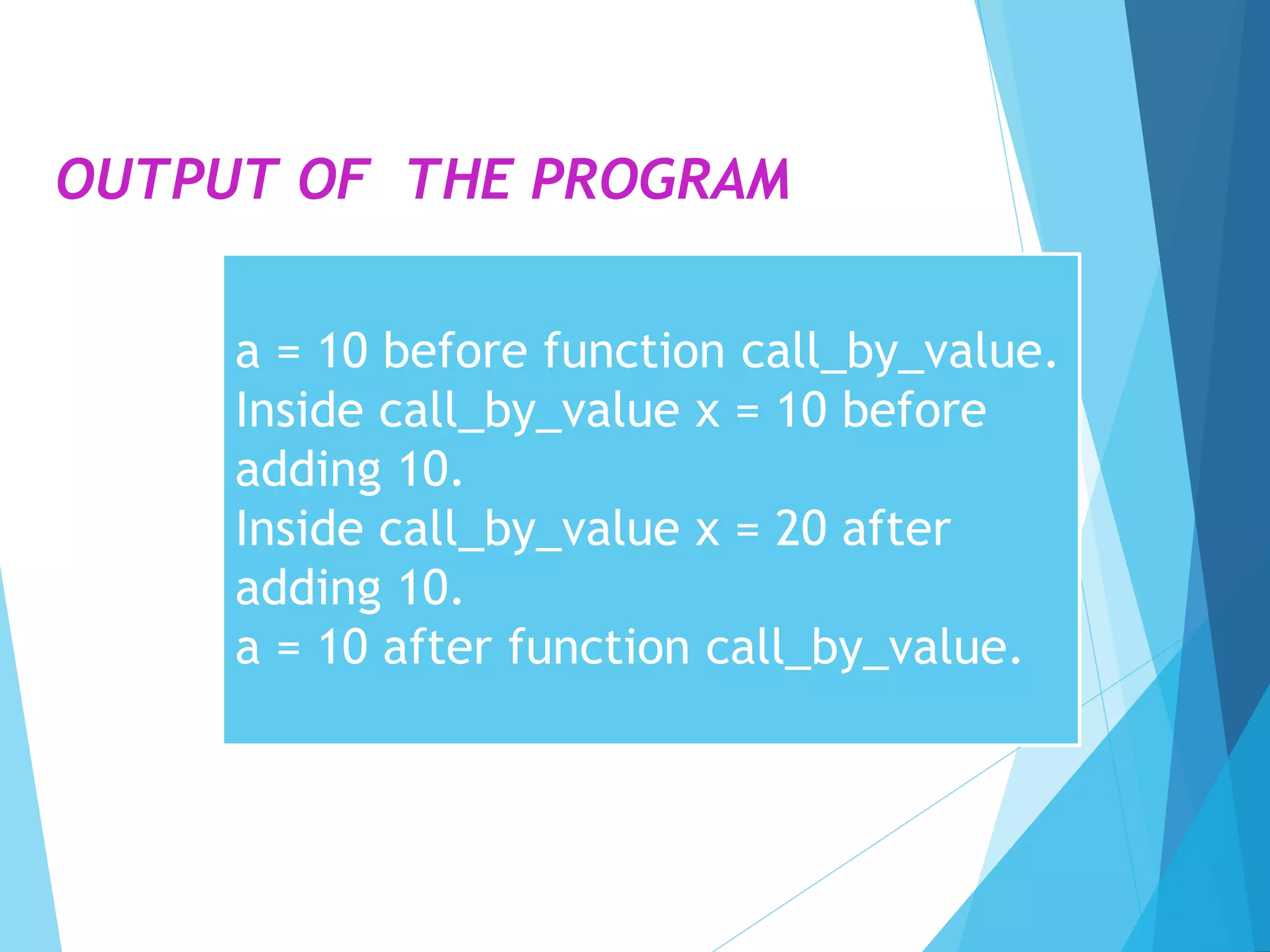
OUTPUT OF THE PROGRAM
a = 10 before function call_by_value.
Inside call_by_value x = 10 before
adding 10.
Inside call_by_value x = 20 after
adding 10.
a = 10 after function call_by_value.
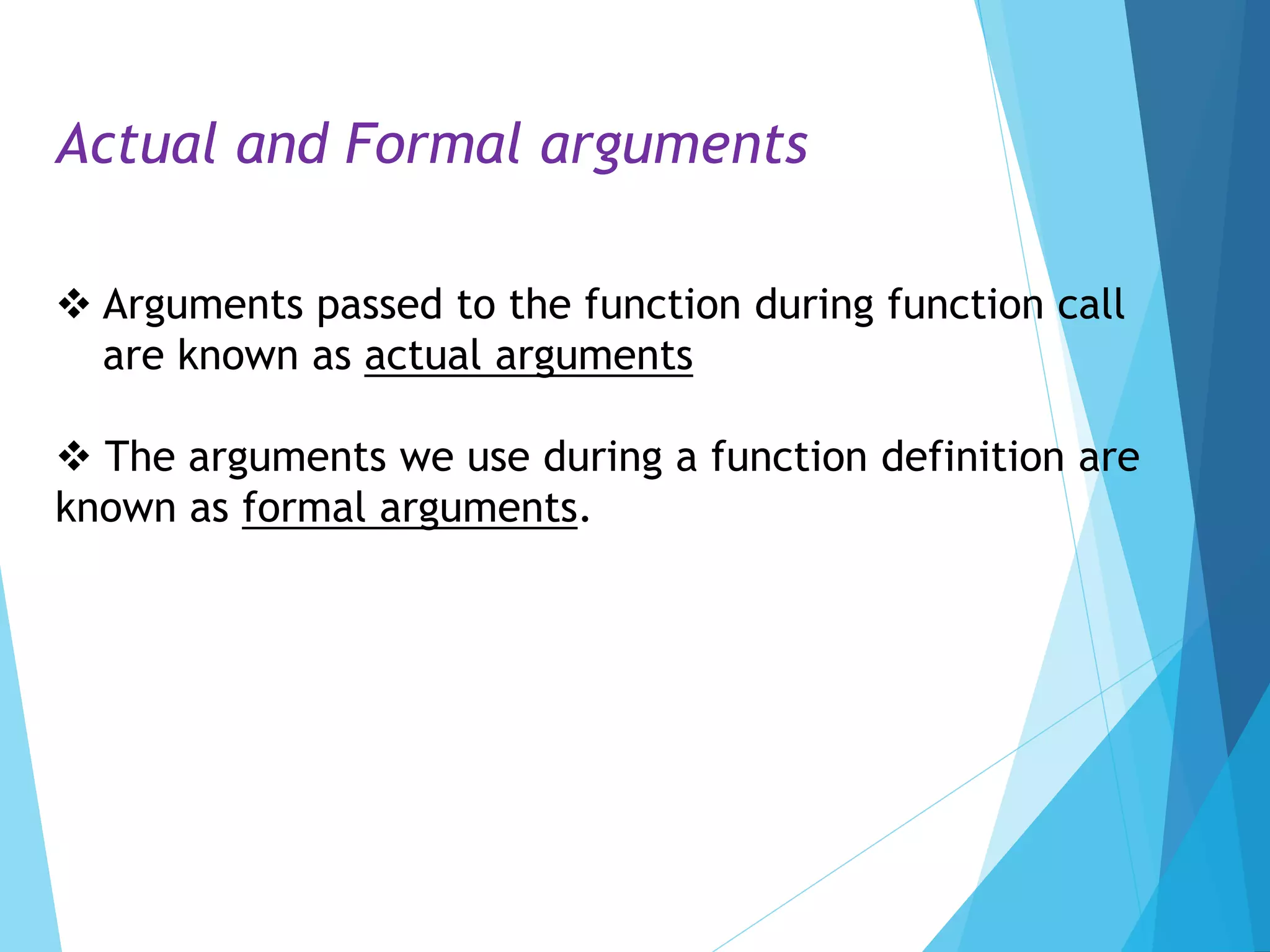
Actual and Formal arguments
 Arguments passed to the function during function call
are known as actual arguments
 The arguments we use during a function definition are
known as formal arguments.
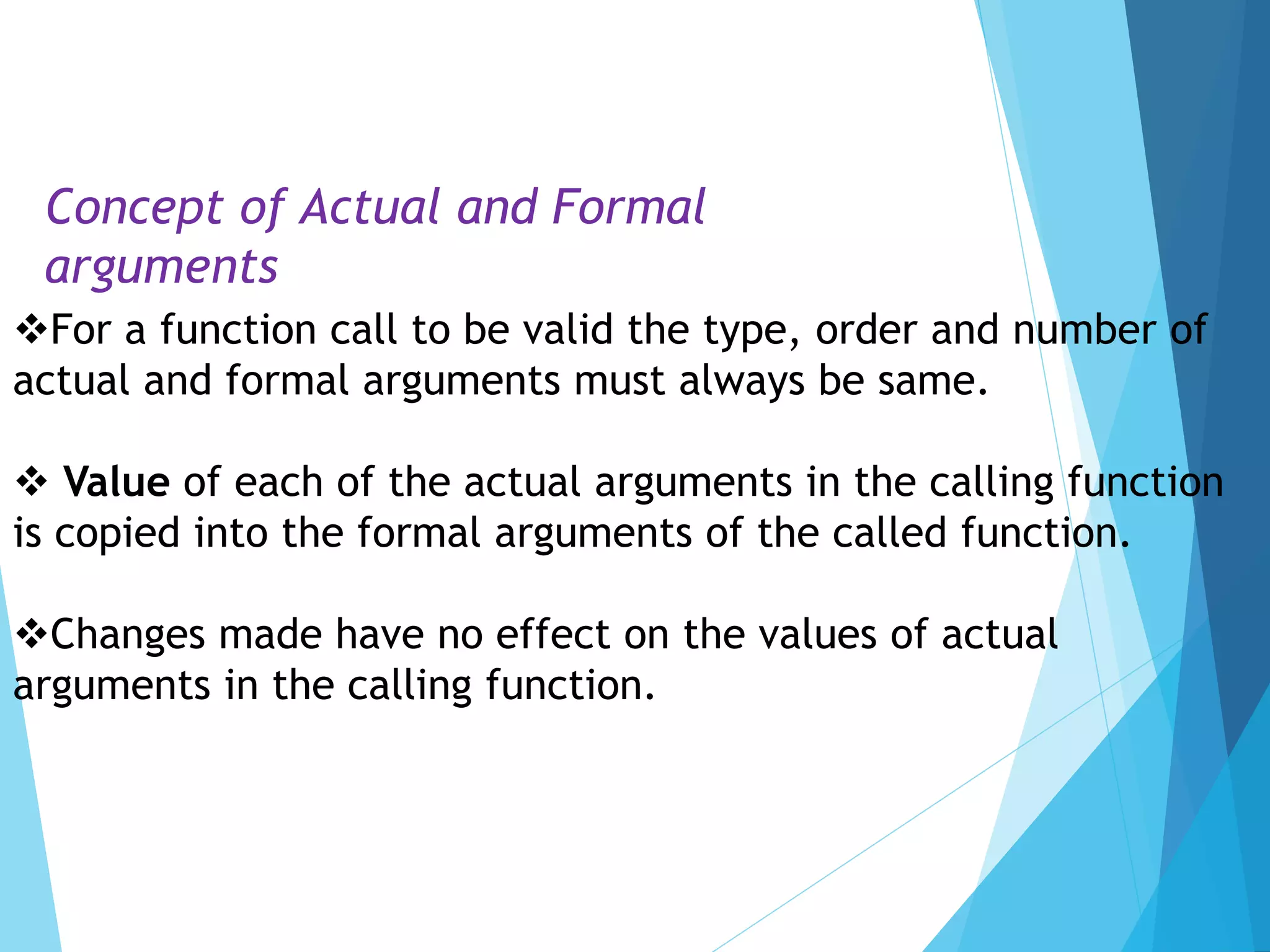
For a function call to be valid the type, order and number of
actual and formal arguments must always be same.
 Value of each of the actual arguments in the calling function
is copied into the formal arguments of the called function.
Changes made have no effect on the values of actual
arguments in the calling function.
Concept of Actual and Formal
arguments
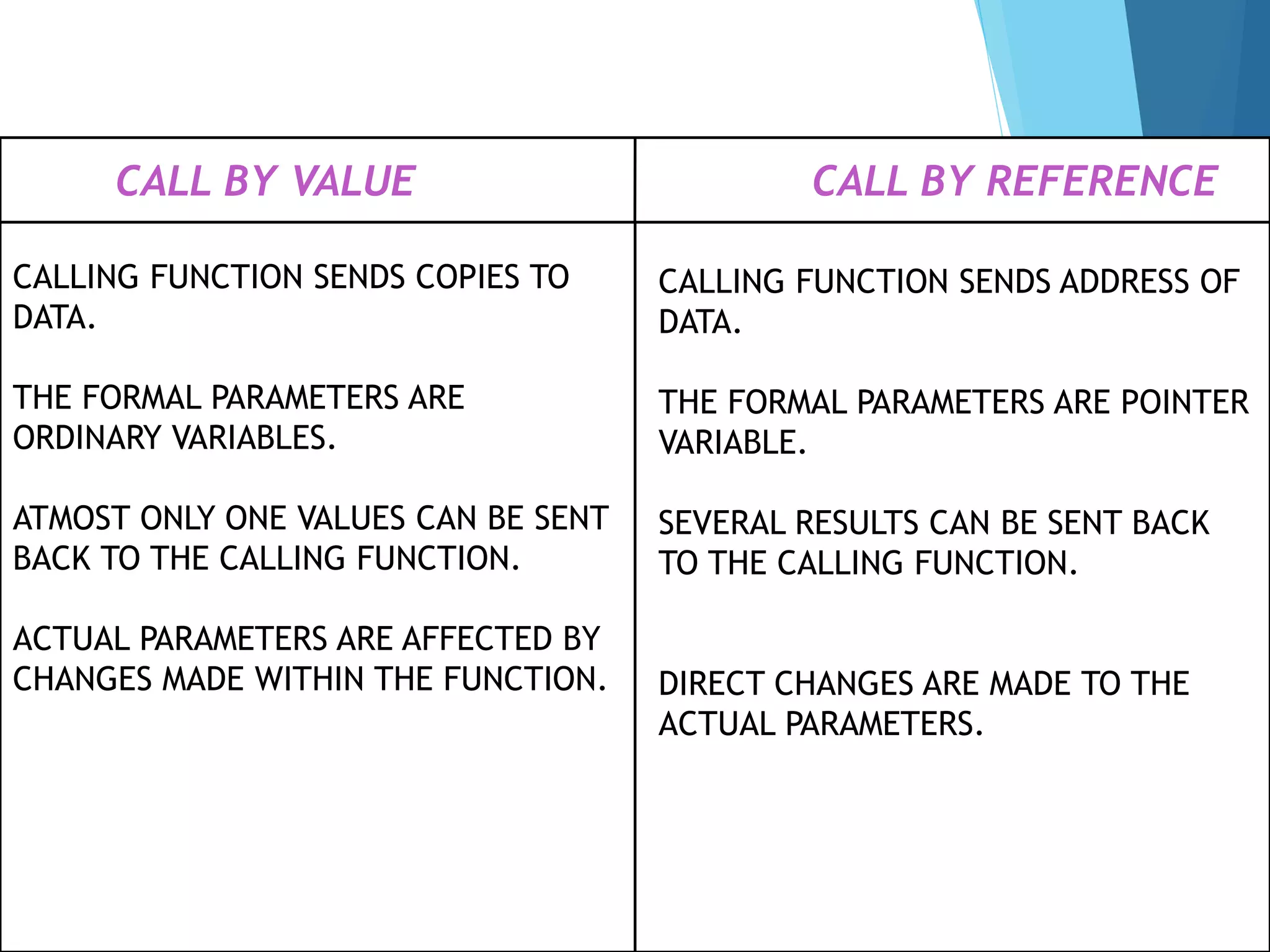
CALL BY VALUE CALL BY REFERENCE
CALLING FUNCTION SENDS COPIES TO
DATA.
THE FORMAL PARAMETERS ARE
ORDINARY VARIABLES.
ATMOST ONLY ONE VALUES CAN BE SENT
BACK TO THE CALLING FUNCTION.
ACTUAL PARAMETERS ARE AFFECTED BY
CHANGES MADE WITHIN THE FUNCTION.
CALLING FUNCTION SENDS ADDRESS OF
DATA.
THE FORMAL PARAMETERS ARE POINTER
VARIABLE.
SEVERAL RESULTS CAN BE SENT BACK
TO THE CALLING FUNCTION.
DIRECT CHANGES ARE MADE TO THE
ACTUAL PARAMETERS.
Call by value

Call by value

  • 1.
    CALL BY VALUE & CALLBY REFERNCE TOPIC: PRESENTED BY G.DHARANI
  • 2.
    THERE ARE TWOWAYS IN WHICH WE CAN PASS ARGUMENTS TO THE FUNCTION
  • 3.
    CALL BY VALUE Value of actual arguments passed to the formal arguments. Any change made in the formal arguments does not effect the actual arguments. When function is called it does not affect the actual contents of the actual arguments.
  • 4.
    #include <stdio.h> void call_by_value(intx) { printf("Inside call_by_value x = %d before adding 10.n", x); x += 10; printf("Inside call_by_value x = %d after adding 10.n", x); } int main() { int a=10; printf("a = %d before function call_by_value.n", a); call_by_value(a); printf("a = %d after function call_by_value.n", a); return 0; } EXAMPLE PROGRAM
  • 5.
    OUTPUT OF THEPROGRAM a = 10 before function call_by_value. Inside call_by_value x = 10 before adding 10. Inside call_by_value x = 20 after adding 10. a = 10 after function call_by_value.
  • 6.
    Actual and Formalarguments  Arguments passed to the function during function call are known as actual arguments  The arguments we use during a function definition are known as formal arguments.
  • 7.
    For a functioncall to be valid the type, order and number of actual and formal arguments must always be same.  Value of each of the actual arguments in the calling function is copied into the formal arguments of the called function. Changes made have no effect on the values of actual arguments in the calling function. Concept of Actual and Formal arguments
  • 8.
    CALL BY VALUECALL BY REFERENCE CALLING FUNCTION SENDS COPIES TO DATA. THE FORMAL PARAMETERS ARE ORDINARY VARIABLES. ATMOST ONLY ONE VALUES CAN BE SENT BACK TO THE CALLING FUNCTION. ACTUAL PARAMETERS ARE AFFECTED BY CHANGES MADE WITHIN THE FUNCTION. CALLING FUNCTION SENDS ADDRESS OF DATA. THE FORMAL PARAMETERS ARE POINTER VARIABLE. SEVERAL RESULTS CAN BE SENT BACK TO THE CALLING FUNCTION. DIRECT CHANGES ARE MADE TO THE ACTUAL PARAMETERS.