Future Earth and Health
Fumiko KASUGA
Future Earth Secretariat, Global Hub – Japan
Senior Fellow, National Institute for Environmental Studies
Visiting Professor, Integrated Research System for Sustainability
Science (IR3S), The University of Tokyo
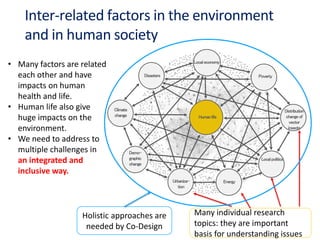
Inter-related factors in the environment
and in human society
• Many factors are related
each other and have
impacts on human
health and life.
• Human life also give
huge impacts on the
environment.
• We need to address to
multiple challenges in
an integrated and
inclusive way.
Localeconomy
Localpolitics
Urbaniza-
tion
Climate
change
Disasters
Energy
Distribution
changeof
vector
insects
Demo-
graphic
change
Humanlife
Poverty
Many individual research
topics: they are important
basis for understanding issues
Holistic approaches are
needed by Co-Design
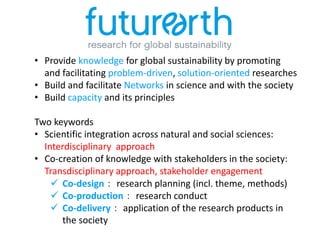
• Provide knowledge for global sustainability by promoting
and facilitating problem-driven, solution-oriented researches
• Build and facilitate Networks in science and with the society
• Build capacity and its principles
Two keywords
• Scientific integration across natural and social sciences:
Interdisciplinary approach
• Co-creation of knowledge with stakeholders in the society:
Transdisciplinary approach, stakeholder engagement
 Co-design: research planning (incl. theme, methods)
 Co-production: research conduct
 Co-delivery: application of the research products in
the society
4
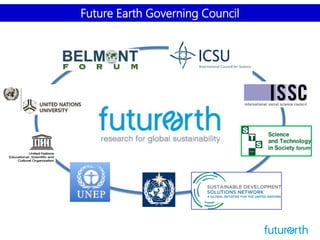
Future Earth Governing Council
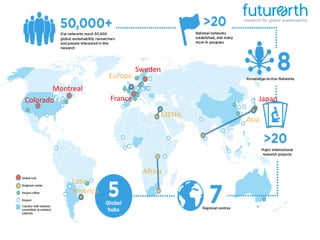
Colorado
Montreal
France
Sweden
Japan
Latin
America
Africa
MENA
Asia
Europe
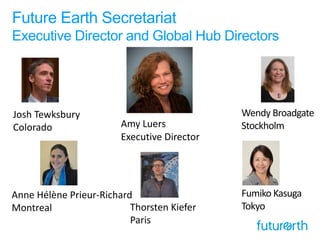
Future Earth Secretariat
Executive Director and Global Hub Directors
Amy Luers
Executive Director
Wendy Broadgate
Stockholm
Thorsten Kiefer
Paris
Anne Hélène Prieur-Richard
Montreal
Fumiko Kasuga
Tokyo
Josh Tewksbury
Colorado
oneHEALTH
Future Earth Global Research Projects
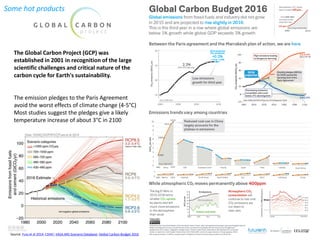
The Global Carbon Project (GCP) was
established in 2001 in recognition of the large
scientific challenges and critical nature of the
carbon cycle for Earth's sustainability.
The emission pledges to the Paris Agreement
avoid the worst effects of climate change (4-5°C)
Most studies suggest the pledges give a likely
temperature increase of about 3°C in 2100
Source: Fuss et al 2014; CDIAC; IIASA AR5 Scenario Database; Global Carbon Budget 2016
Some hot products
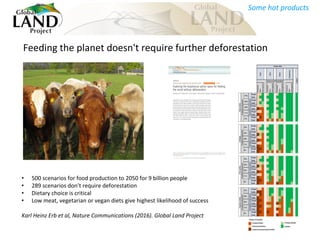
Feeding the planet doesn't require further deforestation
• 500 scenarios for food production to 2050 for 9 billion people
• 289 scenarios don’t require deforestation
• Dietary choice is critical
• Low meat, vegetarian or vegan diets give highest likelihood of success
Karl Heinz Erb et al, Nature Communications (2016). Global Land Project
Some hot products
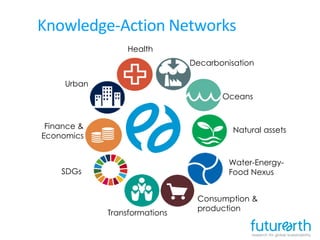
Knowledge-Action Networks
Urban
Health
Oceans
Water-Energy-
Food NexusSDGs
Natural assets
Transformations
Finance &
Economics
Decarbonisation
Consumption &
production
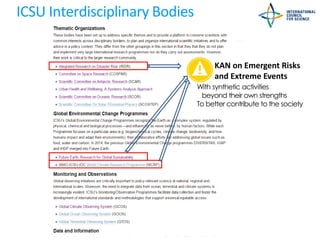
ICSU Interdisciplinary Bodies
KAN on Emergent Risks
and Extreme Events
With synthetic activities
beyond their own strengths
To better contribute to the society
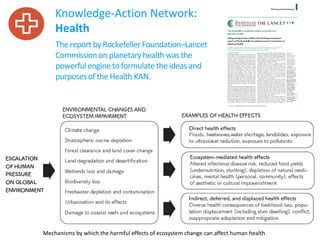
The report by Rockefeller Foundation–Lancet
Commission on planetaryhealth was the
powerfulengineto formulate the ideas and
purposesof the Health KAN.
Mechanisms by which the harmful effects of ecosystem change can affect human health
Knowledge-Action Network:
Health
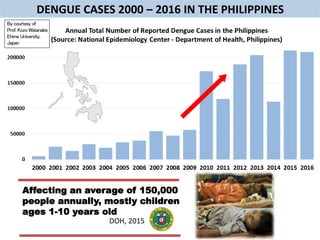
DENGUE CASES 2000 – 2016 IN THE PHILIPPINES
Affecting an average of 150,000
people annually, mostly children
ages 1-10 years old
DOH, 2015
By courtesy of
Prof. Kozo Watanabe,
Ehime University,
Japan
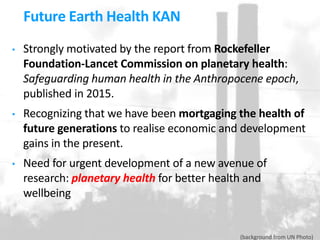
• Strongly motivated by the report from Rockefeller
Foundation-Lancet Commission on planetary health:
Safeguarding human health in the Anthropocene epoch,
published in 2015.
• Recognizing that we have been mortgaging the health of
future generations to realise economic and development
gains in the present.
• Need for urgent development of a new avenue of
research: planetary health for better health and
wellbeing
Future Earth Health KAN
(background from UN Photo)
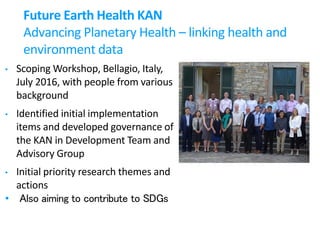
Future Earth Health KAN
Advancing Planetary Health – linking health and
environment data
• Scoping Workshop, Bellagio, Italy,
July 2016, with people from various
background
• Identified initial implementation
items and developed governance of
the KAN in Development Team and
Advisory Group
• Initial priority research themes and
actions
• Also aiming to contribute to SDGs
Future Earth Health KAN
Vision
• Support and enable solution-driven transdisciplinary research in
conjunction with key stakeholders to improve understanding of
the links between health and the environment and to lead to
holistic solutions of global challenges for human health and
environmental sustainability.
Mission
• Connect and engage with the global communities of health,
other research disciplines, policy-makers, educators, civil society,
media, industry, donors, and representatives of those who might
be affected, to advance research and build capacity for
generating, synthesizing and implementing research evidence on
health and the environment and evaluating the impacts of
potential solutions to global challenges.
(background from UN Photo)
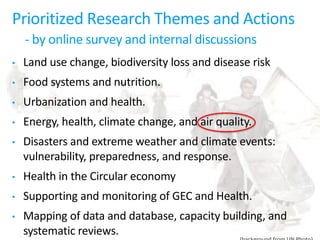
Prioritized Research Themes and Actions
- by online survey and internal discussions
• Land use change, biodiversity loss and disease risk
• Food systems and nutrition.
• Urbanization and health.
• Energy, health, climate change, and air quality.
• Disasters and extreme weather and climate events:
vulnerability, preparedness, and response.
• Health in the Circular economy
• Supporting and monitoring of GEC and Health.
• Mapping of data and database, capacity building, and
systematic reviews.
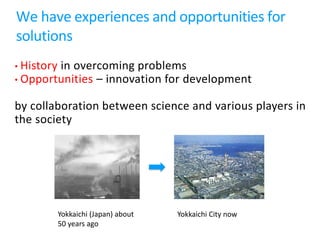
We have experiences and opportunities for
solutions
• History in overcoming problems
• Opportunities – innovation for development
by collaboration between science and various players in
the society
Yokkaichi (Japan) about
50 years ago
Yokkaichi City now
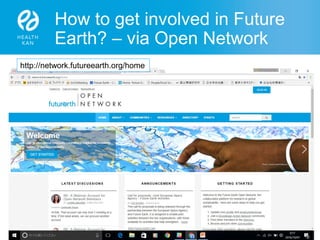
How to get involved in Future
Earth? – via Open Network
Open Network
http://network.futureearth.org/home
Website: www.futureearth.org
Blog: www.futureearth.org/blog
Facebook: www.facebook.com/futureearth.org
Twitter: @FutureEarth
Thank you,
we are looking forward to
closely working with SCA!

Fumiko kasuga

  • 1.
    Future Earth andHealth Fumiko KASUGA Future Earth Secretariat, Global Hub – Japan Senior Fellow, National Institute for Environmental Studies Visiting Professor, Integrated Research System for Sustainability Science (IR3S), The University of Tokyo
  • 2.
    Inter-related factors inthe environment and in human society • Many factors are related each other and have impacts on human health and life. • Human life also give huge impacts on the environment. • We need to address to multiple challenges in an integrated and inclusive way. Localeconomy Localpolitics Urbaniza- tion Climate change Disasters Energy Distribution changeof vector insects Demo- graphic change Humanlife Poverty Many individual research topics: they are important basis for understanding issues Holistic approaches are needed by Co-Design
  • 3.
    • Provide knowledgefor global sustainability by promoting and facilitating problem-driven, solution-oriented researches • Build and facilitate Networks in science and with the society • Build capacity and its principles Two keywords • Scientific integration across natural and social sciences: Interdisciplinary approach • Co-creation of knowledge with stakeholders in the society: Transdisciplinary approach, stakeholder engagement  Co-design: research planning (incl. theme, methods)  Co-production: research conduct  Co-delivery: application of the research products in the society
  • 4.
  • 5.
  • 6.
    Future Earth Secretariat ExecutiveDirector and Global Hub Directors Amy Luers Executive Director Wendy Broadgate Stockholm Thorsten Kiefer Paris Anne Hélène Prieur-Richard Montreal Fumiko Kasuga Tokyo Josh Tewksbury Colorado
  • 8.
  • 9.
    The Global CarbonProject (GCP) was established in 2001 in recognition of the large scientific challenges and critical nature of the carbon cycle for Earth's sustainability. The emission pledges to the Paris Agreement avoid the worst effects of climate change (4-5°C) Most studies suggest the pledges give a likely temperature increase of about 3°C in 2100 Source: Fuss et al 2014; CDIAC; IIASA AR5 Scenario Database; Global Carbon Budget 2016 Some hot products
  • 10.
    Feeding the planetdoesn't require further deforestation • 500 scenarios for food production to 2050 for 9 billion people • 289 scenarios don’t require deforestation • Dietary choice is critical • Low meat, vegetarian or vegan diets give highest likelihood of success Karl Heinz Erb et al, Nature Communications (2016). Global Land Project Some hot products
  • 12.
    Knowledge-Action Networks Urban Health Oceans Water-Energy- Food NexusSDGs Naturalassets Transformations Finance & Economics Decarbonisation Consumption & production
  • 13.
    ICSU Interdisciplinary Bodies KANon Emergent Risks and Extreme Events With synthetic activities beyond their own strengths To better contribute to the society
  • 14.
    The report byRockefeller Foundation–Lancet Commission on planetaryhealth was the powerfulengineto formulate the ideas and purposesof the Health KAN. Mechanisms by which the harmful effects of ecosystem change can affect human health Knowledge-Action Network: Health
  • 15.
    DENGUE CASES 2000– 2016 IN THE PHILIPPINES Affecting an average of 150,000 people annually, mostly children ages 1-10 years old DOH, 2015 By courtesy of Prof. Kozo Watanabe, Ehime University, Japan
  • 16.
    • Strongly motivatedby the report from Rockefeller Foundation-Lancet Commission on planetary health: Safeguarding human health in the Anthropocene epoch, published in 2015. • Recognizing that we have been mortgaging the health of future generations to realise economic and development gains in the present. • Need for urgent development of a new avenue of research: planetary health for better health and wellbeing Future Earth Health KAN (background from UN Photo)
  • 17.
    Future Earth HealthKAN Advancing Planetary Health – linking health and environment data • Scoping Workshop, Bellagio, Italy, July 2016, with people from various background • Identified initial implementation items and developed governance of the KAN in Development Team and Advisory Group • Initial priority research themes and actions • Also aiming to contribute to SDGs
  • 18.
    Future Earth HealthKAN Vision • Support and enable solution-driven transdisciplinary research in conjunction with key stakeholders to improve understanding of the links between health and the environment and to lead to holistic solutions of global challenges for human health and environmental sustainability. Mission • Connect and engage with the global communities of health, other research disciplines, policy-makers, educators, civil society, media, industry, donors, and representatives of those who might be affected, to advance research and build capacity for generating, synthesizing and implementing research evidence on health and the environment and evaluating the impacts of potential solutions to global challenges. (background from UN Photo)
  • 20.
    Prioritized Research Themesand Actions - by online survey and internal discussions • Land use change, biodiversity loss and disease risk • Food systems and nutrition. • Urbanization and health. • Energy, health, climate change, and air quality. • Disasters and extreme weather and climate events: vulnerability, preparedness, and response. • Health in the Circular economy • Supporting and monitoring of GEC and Health. • Mapping of data and database, capacity building, and systematic reviews.
  • 21.
    We have experiencesand opportunities for solutions • History in overcoming problems • Opportunities – innovation for development by collaboration between science and various players in the society Yokkaichi (Japan) about 50 years ago Yokkaichi City now
  • 22.
    How to getinvolved in Future Earth? – via Open Network Open Network http://network.futureearth.org/home
  • 23.
    Website: www.futureearth.org Blog: www.futureearth.org/blog Facebook:www.facebook.com/futureearth.org Twitter: @FutureEarth Thank you, we are looking forward to closely working with SCA!