Resuscitation 81 (2010) 1219–1276


                                                                 Contents lists available at ScienceDirect


                                                                           Resuscitation
                                            journal homepage: www.elsevier.com/locate/resuscitation


European Resuscitation Council Guidelines for Resuscitation 2010
Section 1. Executive summary
Jerry P. Nolan a,∗ , Jasmeet Soar b , David A. Zideman c , Dominique Biarent d , Leo L. Bossaert e ,
Charles Deakin f , Rudolph W. Koster g , Jonathan Wyllie h , Bernd Böttiger i ,
on behalf of the ERC Guidelines Writing Group1
a
  Anaesthesia and Intensive Care Medicine, Royal United Hospital, Bath, UK
b
  Anaesthesia and Intensive Care Medicine, Southmead Hospital, North Bristol NHS Trust, Bristol, UK
c
  Imperial College Healthcare NHS Trust, London, UK
d
  Paediatric Intensive Care and Emergency Medicine, Université Libre de Bruxelles, Queen Fabiola Children’s University Hospital, Brussels, Belgium
e
  Cardiology and Intensive Care, University of Antwerp, Antwerp, Belgium
f
  Cardiac Anaesthesia and Critical Care, Southampton University Hospital NHS Trust, Southampton, UK
g
  Department of Cardiology, Academic Medical Center, Amsterdam, The Netherlands
h
  Neonatology and Paediatrics, The James Cook University Hospital, Middlesbrough, UK
i
  Anästhesiologie und Operative Intensivmedizin, Universitätsklinikum Köln, Köln, Germany


Introduction                                                                                  5. Initial management of acute coronary syndromes;7
                                                                                              6. Paediatric life support;8
    The publication of these European Resuscitation Council (ERC)                             7. Resuscitation of babies at birth;9
Guidelines for cardiopulmonary resuscitation (CPR) updates those                              8. Cardiac arrest in special circumstances: electrolyte abnormali-
that were published in 2005 and maintains the established 5-yearly                               ties, poisoning, drowning, accidental hypothermia, hyperther-
cycle of guideline changes.1 Like the previous guidelines, these                                 mia, asthma, anaphylaxis, cardiac surgery, trauma, pregnancy,
2010 guidelines are based on the most recent International Consen-                               electrocution;10
sus on CPR Science with Treatment Recommendations (CoSTR),2                                   9. Principles of education in resuscitation;11
which incorporated the results of systematic reviews of a wide                               10. The ethics of resuscitation and end-of-life decisions.12
range of topics relating to CPR. Resuscitation science continues to
advance, and clinical guidelines must be updated regularly to reflect                             The guidelines that follow do not define the only way that resus-
these developments and advise healthcare providers on best prac-                             citation can be delivered; they merely represent a widely accepted
tice. In between the 5-yearly guideline updates, interim scientific                           view of how resuscitation should be undertaken both safely and
statements can inform the healthcare provider about new therapies                            effectively. The publication of new and revised treatment recom-
that might influence outcome significantly.3                                                   mendations does not imply that current clinical care is either unsafe
    This executive summary provides the essential treatment algo-                            or ineffective.
rithms for the resuscitation of children and adults and highlights
the main guideline changes since 2005. Detailed guidance is pro-                             Summary of main changes since 2005 Guidelines
vided in each of the remaining nine sections, which are published
as individual papers within this issue of Resuscitation. The sections
                                                                                             Basic life support
of the 2010 guidelines are:
                                                                                                Changes in basic life support (BLS) since the 2005 guidelines
    1. Executive summary;                                                                    include:4,13
    2. Adult basic life support and use of automated external
       defibrillators;4                                                                       • Dispatchers should be trained to interrogate callers with strict
    3. Electrical therapies: automated external defibrillators, defibril-                        protocols to elicit information. This information should focus on
       lation, cardioversion and pacing;5                                                      the recognition of unresponsiveness and the quality of breathing.
    4. Adult advanced life support;6                                                           In combination with unresponsiveness, absence of breathing or
                                                                                               any abnormality of breathing should start a dispatch protocol for
                                                                                               suspected cardiac arrest. The importance of gasping as sign of
    ∗ Corresponding author.                                                                    cardiac arrest is emphasised.
      E-mail address: jerry.nolan@btinternet.com (J.P. Nolan).                               • All rescuers, trained or not, should provide chest compressions
    1
      Appendix A (the list of the writing group members).                                      to victims of cardiac arrest. A strong emphasis on delivering

0300-9572/$ – see front matter © 2010 European Resuscitation Council. Published by Elsevier Ireland Ltd. All rights reserved.
doi:10.1016/j.resuscitation.2010.08.021
1220                                               J.P. Nolan et al. / Resuscitation 81 (2010) 1219–1276


  high quality chest compressions remains essential. The aim                    • Increased awareness of the warning signs associated with the
  should be to push to a depth of at least 5 cm at a rate of at                   potential risk of sudden cardiac death out of hospital.
  least 100 compressions min−1 , to allow full chest recoil, and to             • Removal of the recommendation for a specified period of
  minimise interruptions in chest compressions. Trained rescuers                  cardiopulmonary resuscitation (CPR) before out-of-hospital
  should also provide ventilations with a compression–ventilation                 defibrillation following cardiac arrest unwitnessed by EMS per-
  (CV) ratio of 30:2. Telephone-guided chest compression-only CPR                 sonnel.
  is encouraged for untrained rescuers.                                         • Continuation of chest compressions while a defibrillator is
• The use of prompt/feedback devices during CPR will enable                       charged – this will minimise the pre-shock pause.
  immediate feedback to rescuers and is encouraged. The data                    • The role of the precordial thump is de-emphasised.
  stored in rescue equipment can be used to monitor and improve                 • The use of up to three quick successive (stacked) shocks
  the quality of CPR performance and provide feedback to profes-                  for ventricular fibrillation/pulseless ventricular tachycardia
  sional rescuers during debriefing sessions.                                      (VF/VT) occurring in the cardiac catheterisation laboratory
                                                                                  or in the immediate post-operative period following cardiac
Electrical therapies: automated external defibrillators,                           surgery.
defibrillation, cardioversion and pacing5,14                                     • Delivery of drugs via a tracheal tube is no longer recommended –
                                                                                  if intravenous access cannot be achieved, drugs should be given
   The most important changes in the 2010 ERC Guidelines for                      by the intraosseous (IO) route.
electrical therapies include:                                                   • When treating VF/VT cardiac arrest, adrenaline 1 mg is given
                                                                                  after the third shock once chest compressions have restarted and
• The importance of early, uninterrupted chest compressions is                    then every 3–5 min (during alternate cycles of CPR). Amiodarone
  emphasised throughout these guidelines.                                         300 mg is also given after the third shock.
• Much greater emphasis on minimising the duration of the pre-                  • Atropine is no longer recommended for routine use in asystole or
  shock and post-shock pauses; the continuation of compressions                   pulseless electrical activity (PEA).
  during charging of the defibrillator is recommended.                           • Reduced emphasis on early tracheal intubation unless achieved
• Emphasis on resumption of chest compressions following defib-                    by highly skilled individuals with minimal interruption to chest
  rillation; in combination with continuation of compressions                     compressions.
  during defibrillator charging, the delivery of defibrillation should            • Increased emphasis on the use of capnography to confirm and
  be achievable with an interruption in chest compressions of no                  continually monitor tracheal tube placement, quality of CPR and
  more than 5 s.                                                                  to provide an early indication of return of spontaneous circulation
• The safety of the rescuer remains paramount, but there is recog-                (ROSC).
  nition in these guidelines that the risk of harm to a rescuer from            • The potential role of ultrasound imaging during ALS is recognised.
  a defibrillator is very small, particularly if the rescuer is wearing          • Recognition of the potential harm caused by hyperoxaemia after
  gloves. The focus is now on a rapid safety check to minimise the                ROSC is achieved: once ROSC has been established and the oxy-
  pre-shock pause.                                                                gen saturation of arterial blood (SaO2 ) can be monitored reliably
• When treating out-of-hospital cardiac arrest, emergency medical                 (by pulse oximetry and/or arterial blood gas analysis), inspired
  services (EMS) personnel should provide good-quality CPR while                  oxygen is titrated to achieve a SaO2 of 94–98%.
  a defibrillator is retrieved, applied and charged, but routine deliv-          • Much greater detail and emphasis on the treatment of the post-
  ery of a specified period of CPR (e.g., 2 or 3 min) before rhythm                cardiac arrest syndrome.
  analysis and a shock is delivered is no longer recommended.                   • Recognition that implementation of a comprehensive, structured
  For some emergency medical services that have already fully                     post-resuscitation treatment protocol may improve survival in
  implemented a specified period of chest compressions before                      cardiac arrest victims after ROSC.
  defibrillation, given the lack of convincing data either support-              • Increased emphasis on the use of primary percutaneous coronary
  ing or refuting this strategy, it is reasonable for them to continue            intervention in appropriate (including comatose) patients with
  this practice.                                                                  sustained ROSC after cardiac arrest.
• The use of up to three-stacked shocks may be considered if                    • Revision of the recommendation for glucose control: in adults
  VF/VT occurs during cardiac catheterisation or in the early post-               with sustained ROSC after cardiac arrest, blood glucose values
  operative period following cardiac surgery. This three-shock                    >10 mmol l−1 (>180 mg dl−1 ) should be treated but hypogly-
  strategy may also be considered for an initial, witnessed VF/VT                 caemia must be avoided.
  cardiac arrest when the patient is already connected to a manual              • Use of therapeutic hypothermia to include comatose survivors of
  defibrillator.                                                                   cardiac arrest associated initially with non-shockable rhythms as
• Encouragement of the further development of AED programmes                      well shockable rhythms. The lower level of evidence for use after
  – there is a need for further deployment of AEDs in both public                 cardiac arrest from non-shockable rhythms is acknowledged.
  and residential areas.                                                        • Recognition that many of the accepted predictors of poor out-
                                                                                  come in comatose survivors of cardiac arrest are unreliable,
Adult advanced life support                                                       especially if the patient has been treated with therapeutic
                                                                                  hypothermia.
   The most important changes in the 2010 ERC Advanced Life
Support (ALS) Guidelines include6,15 :                                          Initial management of acute coronary syndromes

• Increased emphasis on the importance of minimally interrupted                    Changes in the management of acute coronary syndrome since
  high-quality chest compressions throughout any ALS interven-                  the 2005 guidelines include7,16 :
  tion: chest compressions are paused briefly only to enable specific
  interventions.                                                                • The term non-ST elevation myocardial infarction-acute coronary
• Increased emphasis on the use of ‘track-and-trigger systems’ to                 syndrome (NSTEMI-ACS) has been introduced for both NSTEMI
  detect the deteriorating patient and enable treatment to prevent                and unstable angina pectoris because the differential diagnosis
  in-hospital cardiac arrest.                                                     is dependent on biomarkers that may be detectable only after
J.P. Nolan et al. / Resuscitation 81 (2010) 1219–1276                                           1221


    several hours, whereas decisions on treatment are dependent on                    they may add pulse palpation for diagnosing cardiac arrest
    the clinical signs at presentation.                                               and decide whether they should begin chest compressions or
•   History, clinical examinations, biomarkers, ECG criteria and risk                 not. The decision to begin CPR must be taken in less than
    scores are unreliable for the identification of patients who may                   10 s. According to the child’s age, carotid (children), brachial
    be safely discharged early.                                                       (infants) or femoral pulse (children and infants) checks may be
•   The role of chest pain observation units (CPUs) is to identify, by                used.
    using repeated clinical examinations, ECG and biomarker testing,              •   The CV ratio used for children should be based on whether
    those patients who require admission for invasive procedures.                     one, or more than one rescuer is present. Lay rescuers, who
    This may include provocative testing and, in selected patients,                   usually learn only single-rescuer techniques, should be taught
    imaging procedures such as cardiac computed tomography, mag-                      to use a ratio of 30 compressions to 2 ventilations, which is
    netic resonance imaging, etc.                                                     the same as the adult guidelines and enables anyone trained
•   Non-steroidal anti-inflammatory drugs (NSAIDs) should be                           in BLS to resuscitate children with minimal additional infor-
    avoided.                                                                          mation. Rescuers with a duty to respond should learn and use
•   Nitrates should not be used for diagnostic purposes.                              a 15:2 CV ratio; however, they can use the 30:2 ratio if they
•   Supplementary oxygen is to be given only to those patients with                   are alone, particularly if they are not achieving an adequate
    hypoxaemia, breathlessness or pulmonary congestion. Hyperox-                      number of compressions. Ventilation remains a very impor-
    aemia may be harmful in uncomplicated infarction.                                 tant component of CPR in asphyxial arrests. Rescuers who are
•   Guidelines for treatment with acetyl salicylic acid (ASA) have                    unable or unwilling to provide mouth-to-mouth ventilation
    been made more liberal: ASA may now be given by bystanders                        should be encouraged to perform at least compression-only
    with or without EMS dispatcher assistance.                                        CPR.
•   Revised guidance for new anti-platelet and anti-thrombin treat-               •   The emphasis is on achieving quality compressions of an ade-
    ment for patients with ST elevation myocardial infarction (STEMI)                 quate depth with minimal interruptions to minimise no-flow
    and non-STEMI-ACS based on therapeutic strategy.                                  time. Compress the chest to at least one third of the anterior-
•   Gp IIb/IIIa inhibitors before angiography/percutaneous coronary                   posterior chest diameter in all children (i.e., approximately 4 cm
    intervention (PCI) are discouraged.                                               in infants and approximately 5 cm in children). Subsequent
•   The reperfusion strategy in STEMI has been updated:                               complete release is emphasised. For both infants and children,
    ◦ Primary PCI (PPCI) is the preferred reperfusion strategy pro-                   the compression rate should be at least 100 but not greater
      vided it is performed in a timely manner by an experienced                      than 120 min−1 . The compression technique for infants includes
      team.                                                                           two-finger compression for single rescuers and the two-thumb
    ◦ A nearby hospital may be bypassed by the EMS provided PPCI                      encircling technique for two or more rescuers. For older children,
      can be achieved without too much delay.                                         a one- or two-hand technique can be used, according to rescuer
    ◦ The acceptable delay between start of fibrinolysis and first bal-                 preference.
      loon inflation varies widely between about 45 and 180 min                    •   Automated external defibrillators (AEDs) are safe and successful
      depending on infarct localisation, age of the patient, and dura-                when used in children older than 1 year of age. Purpose-
      tion of symptoms.                                                               made paediatric pads or software attenuate the output of the
    ◦ ‘Rescue PCI’ should be undertaken if fibrinolysis fails.                         machine to 50–75 J and these are recommended for children
    ◦ The strategy of routine PCI immediately after fibrinolysis (‘facil-              aged 1–8 years. If an attenuated shock or a manually adjustable
      itated PCI’) is discouraged.                                                    machine is not available, an unmodified adult AED may be used
    ◦ Patients with successful fibrinolysis but not in a PCI-capable                   in children older than 1 year. There are case reports of suc-
      hospital should be transferred for angiography and even-                        cessful use of AEDs in children aged less than 1 year; in the
      tual PCI, performed optimally 6–24 h after fibrinolysis (the                     rare case of a shockable rhythm occurring in a child less than
      ‘pharmaco-invasive’ approach).                                                  1 year, it is reasonable to use an AED (preferably with dose
    ◦ Angiography and, if necessary, PCI may be reasonable in                         attenuator).
      patients with ROSC after cardiac arrest and may be part of a                •   To reduce the no flow time, when using a manual defibrillator,
      standardised post-cardiac arrest protocol.                                      chest compressions are continued while applying and charg-
    ◦ To achieve these goals, the creation of networks including EMS,                 ing the paddles or self-adhesive pads (if the size of the child’s
      non PCI capable hospitals and PCI hospitals is useful.                          chest allows this). Chest compressions are paused briefly once
•   Recommendations for the use of beta-blockers are more                             the defibrillator is charged to deliver the shock. For simplicity and
    restricted: there is no evidence for routine intravenous beta-                    consistency with adult BLS and ALS guidance, a single-shock strat-
    blockers except in specific circumstances such as for the                          egy using a non-escalating dose of 4 J kg−1 (preferably biphasic,
    treatment of tachyarrhythmias. Otherwise, beta-blockers should                    but monophasic is acceptable) is recommended for defibrillation
    be started in low doses only after the patient is stabilised.                     in children.
•   Guidelines on the use of prophylactic anti-arrhythmics                        •   Cuffed tracheal tubes can be used safely in infants and young chil-
    angiotensin, converting enzyme (ACE) inhibitors/angiotensin                       dren. The size should be selected by applying a validated formula.
    receptor blockers (ARBs) and statins are unchanged.                           •   The safety and value of using cricoid pressure during tracheal
                                                                                      intubation is not clear. Therefore, the application of cricoid pres-
                                                                                      sure should be modified or discontinued if it impedes ventilation
Paediatric life support
                                                                                      or the speed or ease of intubation.
                                                                                  •   Monitoring exhaled carbon dioxide (CO2 ), ideally by capnog-
   Major changes in these new guidelines for paediatric life support
                                                                                      raphy, is helpful to confirm correct tracheal tube position and
include8,17 :
                                                                                      recommended during CPR to help assess and optimize its quality.
                                                                                  •   Once spontaneous circulation is restored, inspired oxygen should
• Recognition of cardiac arrest – Healthcare providers cannot reli-                   be titrated to limit the risk of hyperoxaemia.
  ably determine the presence or absence of a pulse in less than                  •   Implementation of a rapid response system in a paediatric in-
  10 s in infants or children. Healthcare providers should look                       patient setting may reduce rates of cardiac and respiratory arrest
  for signs of life and if they are confident in the technique,                        and in-hospital mortality.
1222                                               J.P. Nolan et al. / Resuscitation 81 (2010) 1219–1276


• New topics in the 2010 guidelines include channelopathies and                     enable them to act correctly in actual cardiac arrests and improve
  several new special circumstances: trauma, single ventricle pre-                  patient outcomes.
  and post-1st stage repair, post-Fontan circulation, and pulmonary             •   Short video/computer self-instruction courses, with minimal or
  hypertension.                                                                     no instructor coaching, combined with hands-on practice can be
                                                                                    considered as an effective alternative to instructor-led basic life
Resuscitation of babies at birth                                                    support (CPR and AED) courses.
                                                                                •   Ideally all citizens should be trained in standard CPR that includes
   The following are the main changes that have been made to the                    compressions and ventilations. There are circumstances how-
guidelines for resuscitation at birth in 20109,18 :                                 ever where training in compression-only CPR is appropriate (e.g.,
                                                                                    opportunistic training with very limited time). Those trained in
• For uncompromised babies, a delay in cord clamping of at least                    compression-only CPR should be encouraged to learn standard
  1 min from the complete delivery of the infant, is now recom-                     CPR.
  mended. As yet there is insufficient evidence to recommend an                  •   Basic and advanced life support knowledge and skills deteriorate
  appropriate time for clamping the cord in babies who are severely                 in as little as 3–6 months. The use of frequent assessments will
  compromised at birth.                                                             identify those individuals who require refresher training to help
• For term infants, air should be used for resuscitation at birth.                  maintain their knowledge and skills.
  If, despite effective ventilation, oxygenation (ideally guided by             •   CPR prompt or feedback devices improve CPR skill acquisition
  oximetry) remains unacceptable, use of a higher concentration                     and retention and should be considered during CPR training for
  of oxygen should be considered.                                                   laypeople and healthcare professionals.
• Preterm babies less than 32 weeks gestation may not reach the                 •   An increased emphasis on non-technical skills (NTS) such as
  same transcutaneous oxygen saturations in air as those achieved                   leadership, teamwork, task management and structured commu-
  by term babies. Therefore blended oxygen and air should be given                  nication will help improve the performance of CPR and patient
  judiciously and its use guided by pulse oximetry. If a blend of                   care.
  oxygen and air is not available use what is available.                        •   Team briefings to plan for resuscitation attempts, and debriefings
• Preterm babies of less than 28 weeks gestation should be com-                     based on performance during simulated or actual resuscitation
  pletely covered up to their necks in a food-grade plastic wrap or                 attempts should be used to help improve resuscitation team and
  bag, without drying, immediately after birth. They should then be                 individual performance.
  nursed under a radiant heater and stabilised. They should remain              •   Research about the impact of resuscitation training on actual
  wrapped until their temperature has been checked after admis-                     patient outcomes is limited. Although manikin studies are useful,
  sion. For these infants delivery room temperatures should be at                   researchers should be encouraged to study and report the impact
  least 26 ◦ C.                                                                     of educational interventions on actual patient outcomes.
• The recommended CV ratio for CPR remains at 3:1 for newborn
  resuscitation.
• Attempts to aspirate meconium from the nose and mouth of
  the unborn baby, while the head is still on the perineum, are                 Epidemiology and outcome of cardiac arrest
  not recommended. If presented with a floppy, apnoeic baby
  born through meconium it is reasonable to rapidly inspect the                     Ischaemic heart disease is the leading cause of death in the
  oropharynx to remove potential obstructions. If appropriate                   world.20 In Europe, cardiovascular disease accounts for around 40%
  expertise is available, tracheal intubation and suction may be                of all deaths under the age of 75 years.21 Sudden cardiac arrest
  useful. However, if attempted intubation is prolonged or unsuc-               is responsible for more than 60% of adult deaths from coronary
  cessful, start mask ventilation, particularly if there is persistent          heart disease.22 Summary data from 37 communities in Europe
  bradycardia.                                                                  indicate that the annual incidence of EMS-treated out-of-hospital
• If adrenaline is given then the intravenous route is recommended              cardiopulmonary arrests (OHCAs) for all rhythms is 38 per 100,000
  using a dose of 10–30 g kg−1 . If the tracheal route is used, it is           population.22a Based on these data, the annual incidence of EMS-
  likely that a dose of at least 50–100 g kg−1 will be needed to                treated ventricular fibrillation (VF) arrest is 17 per 100,000 and
  achieve a similar effect to 10 g kg−1 intravenously.                          survival to hospital discharge is 10.7% for all-rhythm and 21.2%
• Detection of exhaled carbon dioxide in addition to clinical assess-           for VF cardiac arrest. Recent data from 10 North American sites
  ment is recommended as the most reliable method to confirm                     are remarkably consistent with these figures: median rate of sur-
  placement of a tracheal tube in neonates with spontaneous cir-                vival to hospital discharge was 8.4% after EMS-treated cardiac arrest
  culation.                                                                     from any rhythm and 22.0% after VF.23 There is some evidence
• Newly born infants born at term or near-term with evolving                    that long-term survival rates after cardiac arrest are increasing.24,25
  moderate to severe hypoxic–ischaemic encephalopathy should,                   On initial heart rhythm analysis, about 25–30% of OHCA victims
  where possible, be treated with therapeutic hypothermia. This                 have VF, a percentage that has declined over the last 20 years.26–30
  does not affect immediate resuscitation but is important for post-            It is likely that many more victims have VF or rapid ventricular
  resuscitation care.                                                           tachycardia (VT) at the time of collapse but, by the time the first
                                                                                electrocardiogram (ECG) is recorded by EMS personnel, the rhythm
Principles of education in resuscitation                                        has deteriorated to asystole.31,32 When the rhythm is recorded soon
                                                                                after collapse, in particular by an on-site AED, the proportion of
   The key issues identified by the Education, Implementation and                patients in VF can be as high as 59%33 to 65%.34
Teams (EIT) task force of the International Liaison Committee on                    The reported incidence of in-hospital cardiac arrest is more vari-
Resuscitation (ILCOR) during the Guidelines 2010 evidence evalu-                able, but is in the range of 1–5 per 1000 admissions.35 Recent data
ation process are11,19 :                                                        from the American Heart Association’s National Registry of CPR
                                                                                indicate that survival to hospital discharge after in-hospital cardiac
• Educational interventions should be evaluated to ensure that they             arrest is 17.6% (all rhythms).36 The initial rhythm is VF or pulseless
  reliably achieve the learning objectives. The aim is to ensure that           VT in 25% of cases and, of these, 37% survive to leave hospital; after
  learners acquire and retain the skills and knowledge that will                PEA or asystole, 11.5% survive to hospital discharge.
J.P. Nolan et al. / Resuscitation 81 (2010) 1219–1276                                           1223


The International Consensus on Cardiopulmonary                                 with the science in the consensus document, but will also con-
Science                                                                        sider geographic, economic and system differences in practice,
                                                                               and the availability of medical devices and drugs. These 2010
   The International Liaison Committee on Resuscitation (ILCOR)                ERC Resuscitation Guidelines are derived from the 2010 CoSTR
includes representatives from the American Heart Association                   document but represent consensus among members of the ERC
(AHA), the European Resuscitation Council (ERC), the Heart and                 Executive Committee. The ERC Executive Committee considers
Stroke Foundation of Canada (HSFC), the Australian and New                     these new recommendations to be the most effective and easily
Zealand Committee on Resuscitation (ANZCOR), Resuscitation                     learned interventions that can be supported by current knowl-
Council of Southern Africa (RCSA), the Inter-American Heart Foun-              edge, research and experience. Inevitably, even within Europe,
dation (IAHF), and the Resuscitation Council of Asia (RCA). Since              differences in the availability of drugs, equipment, and person-
2000, researchers from the ILCOR member councils have evalu-                   nel will necessitate local, regional and national adaptation of these
ated resuscitation science in 5-yearly cycles. The conclusions and             guidelines. Many of the recommendations made in the ERC Guide-
recommendations of the 2005 International Consensus Conference                 lines 2005 remain unchanged in 2010, either because no new
on Cardiopulmonary Resuscitation and Emergency Cardiovascular                  studies have been published or because new evidence since 2005
Care With Treatment Recommendations were published at the end                  has merely strengthened the evidence that was already avail-
of 2005.37,38 The most recent International Consensus Conference               able.
was held in Dallas in February 2010 and the published conclusions
and recommendations from this process form the basis of these
2010 ERC Guidelines.2                                                          Conflict of interest policy for the 2010 ERC Guidelines
   Each of the six ILCOR task forces [basic life support (BLS);
advanced life support (ALS); acute coronary syndromes (ACS);                      All authors of these 2010 ERC Resuscitation Guidelines have
paediatric life support (PLS); neonatal life support (NLS); and edu-           signed COI declarations (Appendix B).
cation, implementation and teams (EIT)] identified topics requiring
evidence evaluation and invited international experts to review
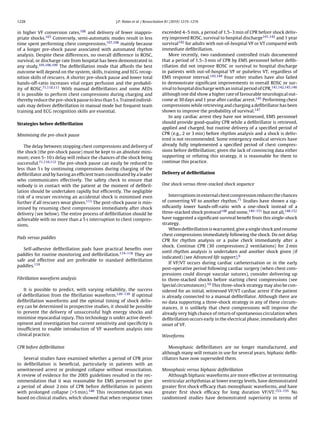
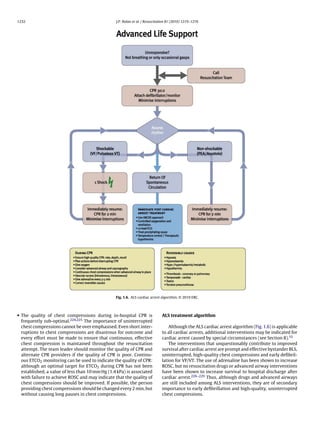
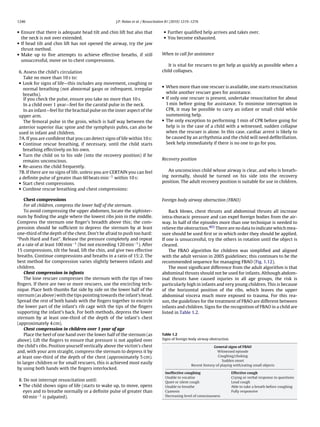
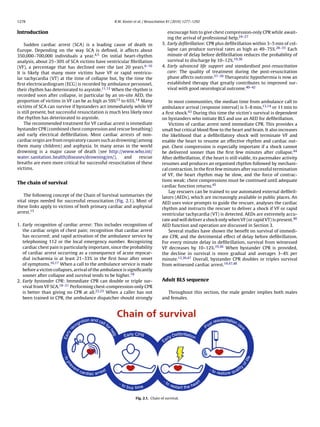
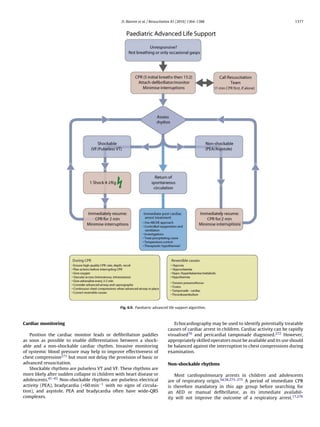
them. The literature reviews followed a standardised ‘worksheet’               The Chain of Survival
template including a specifically designed grading system to define
the level of evidence of each study.39 When possible, two expert                   The actions linking the victim of sudden cardiac arrest with sur-
reviewers were invited to undertake independent evaluations for                vival are called the Chain of Survival (Fig. 1.1). The first link of this
each topic. The 2010 International Consensus Conference involved               chain indicates the importance of recognising those at risk of car-
313 experts from 30 countries. During the 3 years leading up                   diac arrest and calling for help in the hope that early treatment
to this conference, 356 worksheet authors reviewed thousands                   can prevent arrest. The central links depict the integration of CPR
of relevant, peer-reviewed publications to address 277 specific                 and defibrillation as the fundamental components of early resus-
resuscitation questions, each in standard PICO (Population, Inter-             citation in an attempt to restore life. Immediate CPR can double or
vention, Comparison Outcome) format.2 Each science statement                   triple survival from VF OHCA.42–45 Performing chest-compression-
summarised the experts’ interpretation of all relevant data on a spe-          only CPR is better than giving no CPR at all.46,47 Following VF OHCA,
cific topic and consensus draft treatment recommendations were                  cardiopulmonary resuscitation plus defibrillation within 3–5 min
added by the relevant ILCOR task force. Final wording of science               of collapse can produce survival rates as high as 49–75%.48–55 Each
statements and treatment recommendations was completed after                   minute of delay before defibrillation reduces the probability of sur-
further review by ILCOR member organisations and the editorial                 vival to discharge by 10–12%.42,56 The final link in the Chain of
board.2                                                                        Survival, effective post-resuscitation care, is targeted at preserving
   The comprehensive conflict of interest (COI) policy that was                 function, particularly of the brain and heart. In hospital, the impor-
created for the 2005 International Consensus Conference40 was                  tance of early recognition of the critically ill patient and activation
revised for 2010.41 Representatives of manufacturers and industry              of a medical emergency or rapid response team, with treatment
did not participate in either of the 2005 and the 2010 conferences.            aimed at preventing cardiac arrest, is now well accepted.6 Over the
                                                                               last few years, the importance of the post-cardiac arrest phase of
From science to guidelines                                                     treatment, depicted in the fourth ring of the Chain of Survival, has
                                                                               been increasingly recognised.3 Differences in post-cardiac arrest
  As in 2005, the resuscitation organisations forming ILCOR will               treatment may account for some of the inter-hospital variability in
publish individual resuscitation guidelines that are consistent                outcome after cardiac arrest.57–63


                                                              Fig. 1.1. Chain of Survival.
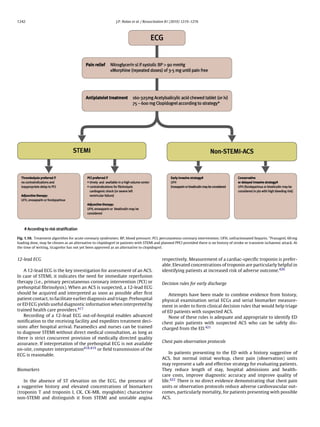
1224                                                       J.P. Nolan et al. / Resuscitation 81 (2010) 1219–1276


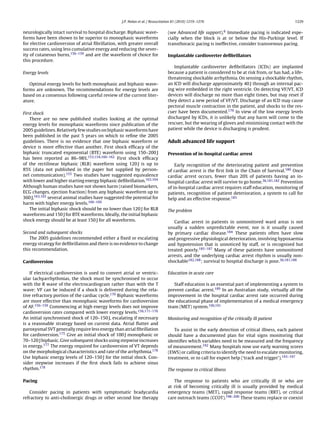
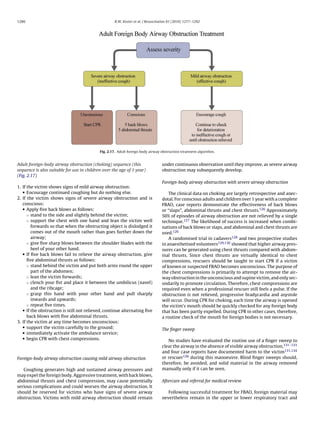
                                                                                         4. Keeping the airway open, look, listen and feel for breathing:
                                                                                         • look for chest movement;
                                                                                         • listen at the victim’s mouth for breath sounds;
                                                                                         • feel for air on your cheek;
                                                                                         • decide if breathing is normal, not normal or absent.
                                                                                            In the first few minutes after cardiac arrest, a victim may be
                                                                                         barely breathing, or taking infrequent, slow and noisy gasps. Do
                                                                                         not confuse this with normal breathing. Look, listen and feel for
                                                                                         no more than 10 s to determine whether the victim is breathing
                                                                                         normally. If you have any doubt whether breathing is normal, act
                                                                                         as if it is not normal.
                                                                                         5a. If he is breathing normally:
                                                                                         • turn him into the recovery position (see below);
                                                                                         • send or go for help – call 112 or local emergency number for an
                                                                                           ambulance;
                                                                                         • continue to assess that breathing remains normal.
                                                                                         5b. If the breathing is not normal or absent:
                                                                                         • send someone for help and to find and bring an AED if available;
                                                                                           or if you are on your own, use your mobile phone to alert the
                                                                                           ambulance service – leave the victim only when there is no other
                                                                                           option;
                                                                                         • start chest compression as follows:
                                                                                           ◦ kneel by the side of the victim;
                                                                                           ◦ place the heel of one hand in the centre of the victim’s chest;
                                                                                              (which is the lower half of the victim’s breastbone (sternum));
                                                                                           ◦ place the heel of your other hand on top of the first hand;
                                                                                           ◦ interlock the fingers of your hands and ensure that pressure is
                                                                                              not applied over the victim’s ribs. Keep your arms straight. Do
                                                                                              not apply any pressure over the upper abdomen or the bottom
                                                                                              end of the sternum.
                                                                                           ◦ position yourself vertically above the victim’s chest and press
                                                                                              down on the sternum at least 5 cm (but not exceeding 6 cm);
                                                                                           ◦ after each compression, release all the pressure on the chest
                                                                                              without losing contact between your hands and the ster-
                                                                                              num; repeat at a rate of at least 100 min−1 (but not exceeding
                                                                                              120 min−1 );
                                                                                           ◦ compression and release should take equal amounts of time.
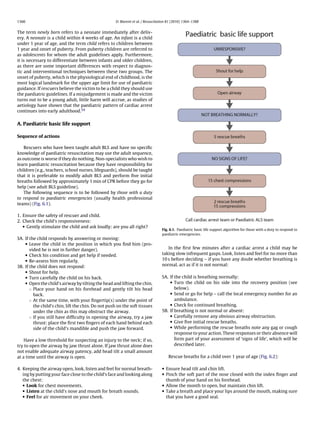
                                                                                         6a. Combine chest compression with rescue breaths.
                                                                                         • After 30 compressions open the airway again using head tilt and
                                                                                           chin lift.
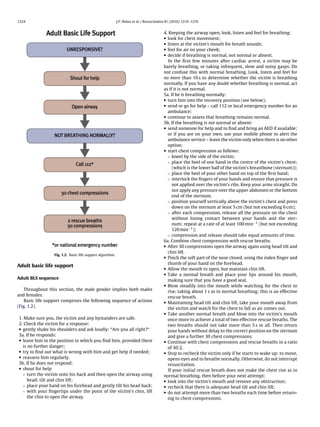
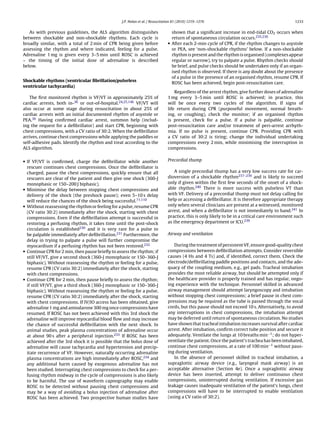
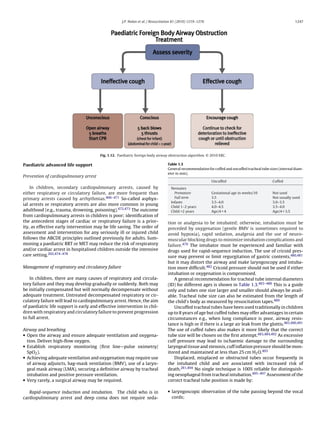
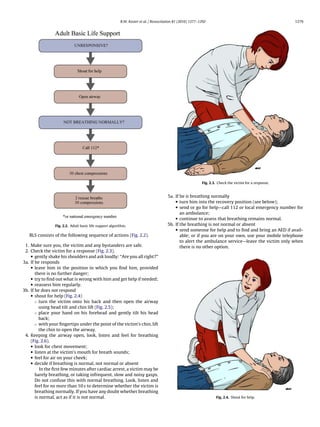
                 Fig. 1.2. Basic life support algorithm.
                                                                                         • Pinch the soft part of the nose closed, using the index finger and
                                                                                           thumb of your hand on the forehead.
Adult basic life support
                                                                                         • Allow the mouth to open, but maintain chin lift.
                                                                                         • Take a normal breath and place your lips around his mouth,
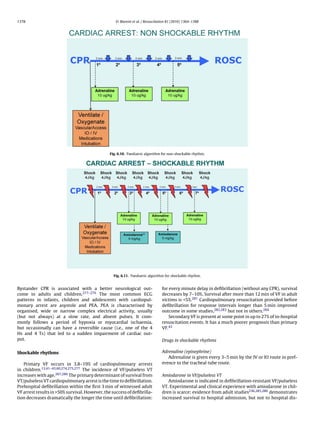
Adult BLS sequence                                                                         making sure that you have a good seal.
                                                                                         • Blow steadily into the mouth while watching for the chest to
   Throughout this section, the male gender implies both males                             rise, taking about 1 s as in normal breathing; this is an effective
and females.                                                                               rescue breath.
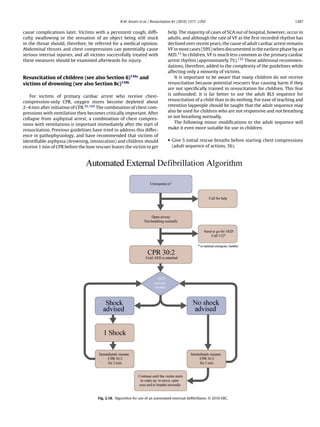
   Basic life support comprises the following sequence of actions                        • Maintaining head tilt and chin lift, take your mouth away from
(Fig. 1.2).                                                                                the victim and watch for the chest to fall as air comes out.
                                                                                         • Take another normal breath and blow into the victim’s mouth
1. Make sure you, the victim and any bystanders are safe.                                  once more to achieve a total of two effective rescue breaths. The
2. Check the victim for a response:                                                        two breaths should not take more than 5 s in all. Then return
• gently shake his shoulders and ask loudly: “Are you all right?“                          your hands without delay to the correct position on the sternum
3a. If he responds:                                                                        and give a further 30 chest compressions.
• leave him in the position in which you find him, provided there                         • Continue with chest compressions and rescue breaths in a ratio
  is no further danger;                                                                    of 30:2.
• try to find out what is wrong with him and get help if needed;                          • Stop to recheck the victim only if he starts to wake up: to move,
• reassess him regularly.                                                                  opens eyes and to breathe normally. Otherwise, do not interrupt
3b. If he does not respond:                                                                resuscitation.
• shout for help                                                                            If your initial rescue breath does not make the chest rise as in
  ◦ turn the victim onto his back and then open the airway using                         normal breathing, then before your next attempt:
     head; tilt and chin lift;                                                           • look into the victim’s mouth and remove any obstruction;
  ◦ place your hand on his forehead and gently tilt his head back;                       • recheck that there is adequate head tilt and chin lift;
  ◦ with your fingertips under the point of the victim’s chin, lift                       • do not attempt more than two breaths each time before return-
     the chin to open the airway.                                                          ing to chest compressions.
J.P. Nolan et al. / Resuscitation 81 (2010) 1219–1276                                          1225


   If there is more than one rescuer present, another rescuer should            to achieve the recommended compression rate and depth by
take over delivering CPR every 2 min to prevent fatigue. Ensure                 prompt/feedback devices that are either built into the AED or man-
that interruption of chest compressions is minimal during the                   ual defibrillator, or are stand-alone devices.
changeover of rescuers.
6b. Chest-compression-only CPR may be used as follows:                          Compression-only CPR
• if you are not trained, or are unwilling to give rescue breaths,
  give chest compressions only;                                                    Some healthcare professionals as well as lay rescuers indicate
• if only chest compressions are given, these should be continuous,             that they would be reluctant to perform mouth-to-mouth ventila-
  at a rate of at least 100 min−1 (but not exceeding 120 min−1 ).               tion, especially in unknown victims of cardiac arrest.74,75 Animal
7. Do not interrupt resuscitation until:                                        studies have shown that chest-compression-only CPR may be as
• professional help arrives and takes over; or                                  effective as combined ventilation and compression in the first
• the victim starts to wake up: to move, opens eyes and to breathe              few minutes after non-asphyxial arrest.76,77 If the airway is open,
  normally; or                                                                  occasional gasps and passive chest recoil may provide some air
• you become exhausted.                                                         exchange, but this may result in ventilation of the dead space
                                                                                only.69,78–80 Animal and mathematical model studies of chest-
Recognition of cardiorespiratory arrest                                         compression-only CPR have shown that arterial oxygen stores
                                                                                deplete in 2–4 min.81,82 In adults, the outcome of chest compres-
   Checking the carotid pulse (or any other pulse) is an inaccu-                sion without ventilation is significantly better than the outcome of
rate method of confirming the presence or absence of circulation,                giving no CPR at all in non-asphyxial arrest.46,47 Several studies of
both for lay rescuers and for professionals.64–66 Healthcare pro-               human cardiac arrest suggest equivalence of chest-compression-
fessionals, as well as lay rescuers, have difficulty determining the             only CPR and chest compressions combined with rescue breaths,
presence or absence of adequate or normal breathing in unre-                    but none of these studies exclude the possibility that chest-
sponsive victims.67,68 This may be because the victim is making                 compression-only is inferior to chest compressions combined with
occasional (agonal) gasps, which occur in the first minutes after                ventilations.47,83 Chest compression-only may be sufficient only
onset in up to 40% of cardiac arrests.69 Laypeople should be taught             in the first few minutes after collapse. Chest-compression-only
to begin CPR if the victim is unconscious (unresponsive) and not                CPR is not as effective as conventional CPR for cardiac arrests of
breathing normally. It should be emphasised during training that                non-cardiac origin (e.g., drowning or suffocation) in adults and
the presence of agonal gasps is an indication for starting CPR imme-            children.84,85 Chest compression combined with rescue breaths is,
diately.                                                                        therefore, the method of choice for CPR delivered by both trained
                                                                                lay rescuers and professionals. Laypeople should be encouraged to
Initial rescue breaths                                                          perform compression-only CPR if they are unable or unwilling to
                                                                                provide rescue breaths, or when instructed during an emergency
    In adults needing CPR, the cardiac arrest is likely to have a pri-          call to an ambulance dispatcher centre.
mary cardiac cause – CPR should start with chest compression
rather than initial ventilations. Time should not be spent checking             Risks to the rescuer
the mouth for foreign bodies unless attempted rescue breathing
fails to make the chest rise.                                                   Physical effects
                                                                                   The incidence of adverse effects (muscle strain, back symp-
Ventilation                                                                     toms, shortness of breath, hyperventilation) on the rescuer from
                                                                                CPR training and actual performance is very low.86 Several manikin
    During CPR, the optimal tidal volume, respiratory rate and                  studies have found that, as a result of rescuer fatigue, chest com-
inspired oxygen concentration to achieve adequate oxygenation                   pression depth can decrease as little as 2 min after starting chest
and CO2 removal is unknown. During CPR, blood flow to the lungs is               compressions.87 Rescuers should change about every 2 min to pre-
substantially reduced, so an adequate ventilation–perfusion ratio               vent a decrease in compression quality due to rescuer fatigue.
can be maintained with lower tidal volumes and respiratory rates                Changing rescuers should not interrupt chest compressions.
than normal.70 Hyperventilation is harmful because it increases
intrathoracic pressure, which decreases venous return to the heart              Risks during defibrillation
and reduces cardiac output. Interruptions in chest compression                     A large randomised trial of public access defibrillation showed
reduce survival.71                                                              that AEDs can be used safely by laypeople and first responders.88 A
    Rescuers should give each rescue breath over about 1 s, with                systematic review identified only eight papers that reported a total
enough volume to make the victim’s chest rise, but to avoid rapid               of 29 adverse events associated with defibrillation.89 Only one of
or forceful breaths. The time taken to give two breaths should not              these adverse events was published after 1997.90
exceed 5 s. These recommendations apply to all forms of ventilation
during CPR, including mouth-to-mouth and bag-mask ventilation                   Disease transmission
with and without supplementary oxygen.                                              There are only very few cases reported where performing CPR
                                                                                has been linked to disease transmission. Three studies showed that
Chest compression                                                               barrier devices decreased transmission of bacteria in controlled
                                                                                laboratory settings.91,92 Because the risk of disease transmission
   Chest compressions generate a small but critical amount of                   is very low, initiating rescue breathing without a barrier device
blood flow to the brain and myocardium and increase the likelihood               is reasonable. If the victim is known to have a serious infection
that defibrillation will be successful. Optimal chest compression                appropriate precautions are recommended.
technique comprises: compressing the chest at a rate of at least
100 min−1 and to a depth of at least 5 cm (for an adult), but                   Recovery position
not exceeding 6 cm; allowing the chest to recoil completely after                   There are several variations of the recovery position, each with
each compression72,73 ; taking approximately the same amount                    its own advantages. No single position is perfect for all victims.93,94
of time for compression as relaxation. Rescuers can be assisted                 The position should be stable, near to a true lateral position with
1226                                                          J.P. Nolan et al. / Resuscitation 81 (2010) 1219–1276


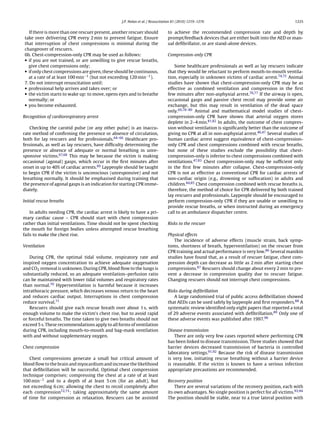
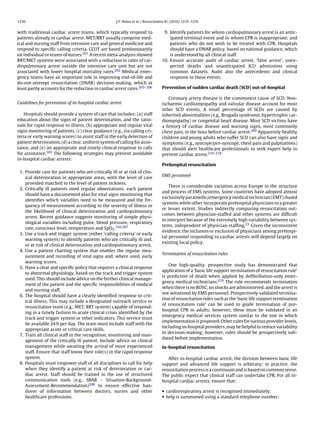
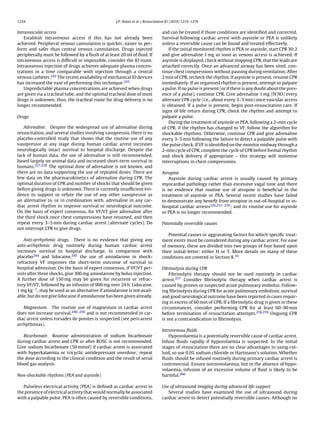
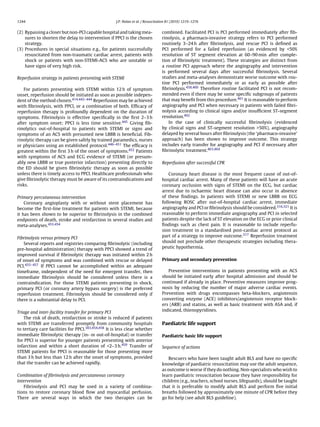
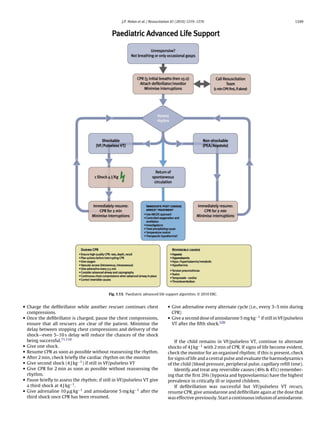
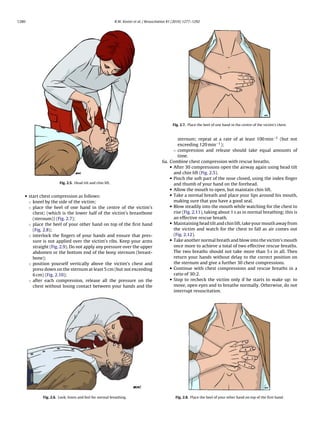
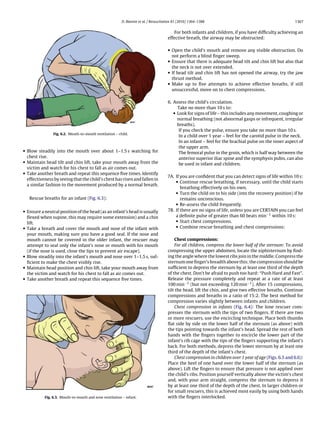
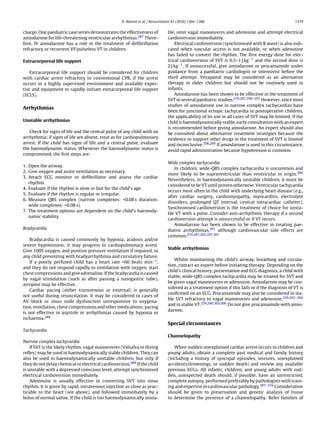
                                               Fig. 1.3. Adult foreign-body airway obstruction (choking) sequence. © 2010 ERC.


Table 1.1                                                                                   • if the victim is unresponsive and not breathing normally, send
Differentiation between mild and severe foreign body airway obstruction (FBAO)a
                                                                                              someone for help and to find and bring an AED if available;
 Sign                       Mild obstruction                Severe obstruction              • if you are on your own, use your mobile phone to alert the ambu-
 “Are you choking?”         “Yes”                           Unable to speak,                  lance service – leave the victim only when there is no other
                                                            may nod                           option.
 Other signs                Can speak, cough, breathe       Cannot                          3. Start CPR according to the adult BLS sequence. If you are on your
                                                            breathe/wheezy                  own and the AED is in your immediate vicinity, start with applying
                                                            breathing/silent
                                                                                            the AED.
                                                            attempts to
                                                            cough/unconsciousness           4. As soon as the AED arrives:
 a
                                                                                            • switch on the AED and attach the electrode pads on the victim’s
     General signs of FBAO: attack occurs while eating; victim may clutch his neck.
                                                                                              bare chest;
                                                                                            • if more than one rescuer is present, CPR should be continued
the head dependent, and with no pressure on the chest to impair                               while electrode pads are being attached to the chest;
breathing.95                                                                                • follow the spoken/visual directions immediately;
                                                                                            • ensure that nobody is touching the victim while the AED is
                                                                                              analysing the rhythm.
Foreign-body airway obstruction (choking)
                                                                                            5a. If a shock is indicated:
                                                                                            • ensure that nobody is touching the victim;
   Foreign-body airway obstruction (FBAO) is an uncommon
                                                                                            • push shock button as directed;
but potentially treatable cause of accidental death.96 The signs
                                                                                            • immediately restart CPR 30:2;
and symptoms enabling differentiation between mild and severe
                                                                                            • continue as directed by the voice/visual prompts.
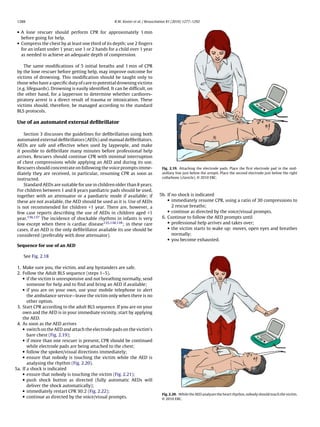
airway obstruction are summarised in Table 1.1. The adult foreign-
                                                                                            5b. If no shock is indicated:
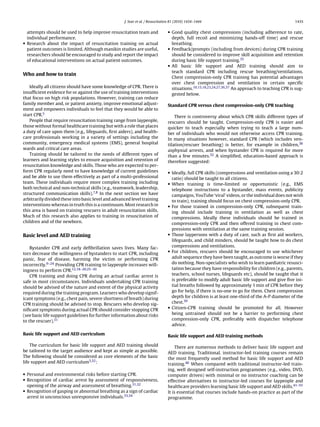
body airway obstruction (choking) sequence is shown in Fig. 1.3.
                                                                                            • immediately resume CPR, using a ratio of 30 compressions to 2
                                                                                              rescue breaths;
Electrical therapies: automated external                                                    • continue as directed by the voice/visual prompts.
defibrillators, defibrillation, cardioversion and                                             6. Continue to follow the AED prompts until:
pacing                                                                                      • professional help arrives and takes over;
                                                                                            • the victim starts to wake up: moves, opens eyes and breathes
Automated external defibrillators                                                              normally;
                                                                                            • you become exhausted.
   Automated external defibrillators (AEDs) are safe and effective
when used by either laypeople or healthcare professionals (in- or
out-of-hospital). Use of an AED by a layperson makes it possible to                        Public access defibrillation programmes
defibrillate many minutes before professional help arrives.
                                                                                              Automated external defibrillator programmes should be
                                                                                           actively considered for implementation in public places such as
Sequence for use of an AED                                                                 airports,52 sport facilities, offices, in casinos55 and on aircraft,53
                                                                                           where cardiac arrests are usually witnessed and trained rescuers
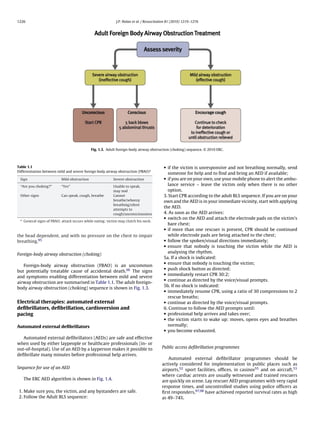
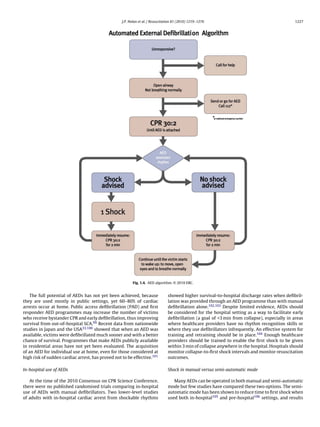
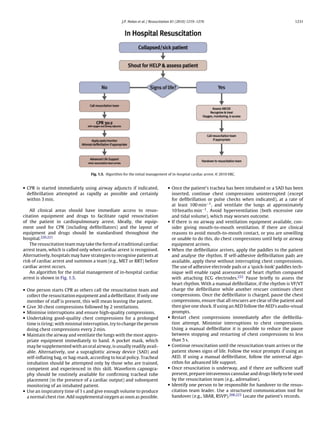
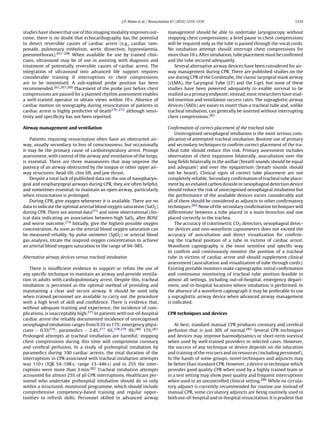
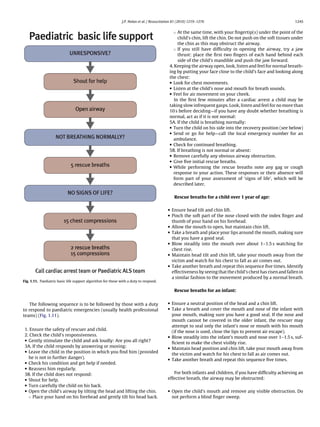
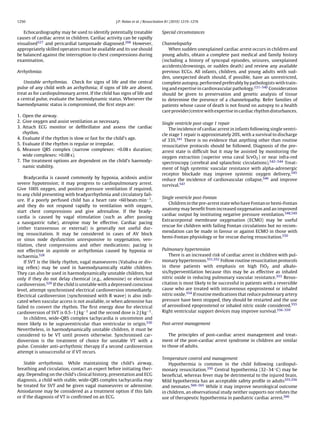
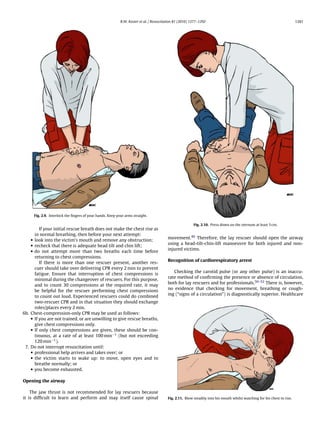
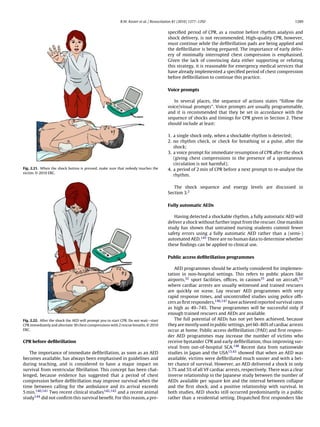
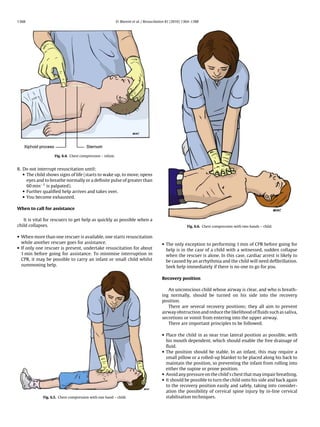
     The ERC AED algorithm is shown in Fig. 1.4.                                           are quickly on scene. Lay rescuer AED programmes with very rapid
                                                                                           response times, and uncontrolled studies using police officers as
 1. Make sure you, the victim, and any bystanders are safe.                                first responders,97,98 have achieved reported survival rates as high
 2. Follow the Adult BLS sequence:                                                         as 49–74%.
J.P. Nolan et al. / Resuscitation 81 (2010) 1219–1276                                       1227


                                                         Fig. 1.4. AED algorithm. © 2010 ERC.


    The full potential of AEDs has not yet been achieved, because               showed higher survival-to-hospital discharge rates when defibril-
they are used mostly in public settings, yet 60–80% of cardiac                  lation was provided through an AED programme than with manual
arrests occur at home. Public access defibrillation (PAD) and first               defibrillation alone.102,103 Despite limited evidence, AEDs should
responder AED programmes may increase the number of victims                     be considered for the hospital setting as a way to facilitate early
who receive bystander CPR and early defibrillation, thus improving               defibrillation (a goal of <3 min from collapse), especially in areas
survival from out-of-hospital SCA.99 Recent data from nationwide                where healthcare providers have no rhythm recognition skills or
studies in Japan and the USA33,100 showed that when an AED was                  where they use defibrillators infrequently. An effective system for
available, victims were defibrillated much sooner and with a better              training and retraining should be in place.104 Enough healthcare
chance of survival. Programmes that make AEDs publicly available                providers should be trained to enable the first shock to be given
in residential areas have not yet been evaluated. The acquisition               within 3 min of collapse anywhere in the hospital. Hospitals should
of an AED for individual use at home, even for those considered at              monitor collapse-to-first shock intervals and monitor resuscitation
high risk of sudden cardiac arrest, has proved not to be effective.101          outcomes.

In-hospital use of AEDs                                                         Shock in manual versus semi-automatic mode

   At the time of the 2010 Consensus on CPR Science Conference,                    Many AEDs can be operated in both manual and semi-automatic
there were no published randomised trials comparing in-hospital                 mode but few studies have compared these two options. The semi-
use of AEDs with manual defibrillators. Two lower-level studies                  automatic mode has been shown to reduce time to first shock when
of adults with in-hospital cardiac arrest from shockable rhythms                used both in-hospital105 and pre-hospital106 settings, and results
1228                                              J.P. Nolan et al. / Resuscitation 81 (2010) 1219–1276


in higher VF conversion rates,106 and delivery of fewer inappro-               exceeded 4–5 min, a period of 1.5–3 min of CPR before shock deliv-
priate shocks.107 Conversely, semi-automatic modes result in less              ery improved ROSC, survival to hospital discharge141,142 and 1 year
time spent performing chest compressions,107,108 mainly because                survival142 for adults with out-of-hospital VF or VT compared with
of a longer pre-shock pause associated with automated rhythm                   immediate defibrillation.
analysis. Despite these differences, no overall difference in ROSC,                More recently, two randomised controlled trials documented
survival, or discharge rate from hospital has been demonstrated in             that a period of 1.5–3 min of CPR by EMS personnel before defib-
any study.105,106,109 The defibrillation mode that affords the best             rillation did not improve ROSC or survival to hospital discharge
outcome will depend on the system, skills, training and ECG recog-             in patients with out-of-hospital VF or pulseless VT, regardless of
nition skills of rescuers. A shorter pre-shock pause and lower total           EMS response interval.143,144 Four other studies have also failed
hands-off-ratio increases vital organ perfusion and the probabil-              to demonstrate significant improvements in overall ROSC or sur-
ity of ROSC.71,110,111 With manual defibrillators and some AEDs                 vival to hospital discharge with an initial period of CPR,141,142,145,146
it is possible to perform chest compressions during charging and               although one did show a higher rate of favourable neurological out-
thereby reduce the pre-shock pause to less than 5 s. Trained individ-          come at 30 days and 1 year after cardiac arrest.145 Performing chest
uals may deliver defibrillation in manual mode but frequent team                compressions while retrieving and charging a defibrillator has been
training and ECG recognition skills are essential.                             shown to improve the probability of survival.147
                                                                                   In any cardiac arrest they have not witnessed, EMS personnel
Strategies before defibrillation                                                should provide good-quality CPR while a defibrillator is retrieved,
                                                                               applied and charged, but routine delivery of a specified period of
Minimising the pre-shock pause                                                 CPR (e.g., 2 or 3 min) before rhythm analysis and a shock is deliv-
                                                                               ered is not recommended. Some emergency medical services have
    The delay between stopping chest compressions and delivery of              already fully implemented a specified period of chest compres-
the shock (the pre-shock pause) must be kept to an absolute mini-              sions before defibrillation; given the lack of convincing data either
mum; even 5–10 s delay will reduce the chances of the shock being              supporting or refuting this strategy, it is reasonable for them to
successful.71,110,112 The pre-shock pause can easily be reduced to             continue this practice.
less than 5 s by continuing compressions during charging of the
defibrillator and by having an efficient team coordinated by a leader            Delivery of defibrillation
who communicates effectively. The safety check to ensure that
nobody is in contact with the patient at the moment of defibril-                One shock versus three-stacked shock sequence
lation should be undertaken rapidly but efficiently. The negligible
risk of a rescuer receiving an accidental shock is minimised even                  Interruptions in external chest compression reduces the chances
further if all rescuers wear gloves.113 The post-shock pause is min-           of converting VF to another rhythm.71 Studies have shown a sig-
imised by resuming chest compressions immediately after shock                  nificantly lower hands-off-ratio with a one-shock instead of a
delivery (see below). The entire process of defibrillation should be            three-stacked shock protocol148 and some,149–151 but not all,148,152
achievable with no more than a 5 s interruption to chest compres-              have suggested a significant survival benefit from this single-shock
sions.                                                                         strategy.
                                                                                   When defibrillation is warranted, give a single shock and resume
                                                                               chest compressions immediately following the shock. Do not delay
Pads versus paddles
                                                                               CPR for rhythm analysis or a pulse check immediately after a
                                                                               shock. Continue CPR (30 compressions:2 ventilations) for 2 min
   Self-adhesive defibrillation pads have practical benefits over
                                                                               until rhythm analysis is undertaken and another shock given (if
paddles for routine monitoring and defibrillation.114–118 They are
                                                                               indicated) (see Advanced life support).6
safe and effective and are preferable to standard defibrillation
                                                                                   If VF/VT occurs during cardiac catheterisation or in the early
paddles.119
                                                                               post-operative period following cardiac surgery (when chest com-
                                                                               pressions could disrupt vascular sutures), consider delivering up
Fibrillation waveform analysis                                                 to three-stacked shocks before starting chest compressions (see
                                                                               Special circumstances).10 This three-shock strategy may also be con-
    It is possible to predict, with varying reliability, the success           sidered for an initial, witnessed VF/VT cardiac arrest if the patient
of defibrillation from the fibrillation waveform.120–139 If optimal              is already connected to a manual defibrillator. Although there are
defibrillation waveforms and the optimal timing of shock deliv-                 no data supporting a three-shock strategy in any of these circum-
ery can be determined in prospective studies, it should be possible            stances, it is unlikely that chest compressions will improve the
to prevent the delivery of unsuccessful high energy shocks and                 already very high chance of return of spontaneous circulation when
minimise myocardial injury. This technology is under active devel-             defibrillation occurs early in the electrical phase, immediately after
opment and investigation but current sensitivity and specificity is             onset of VF.
insufficient to enable introduction of VF waveform analysis into
clinical practice.                                                             Waveforms

CPR before defibrillation                                                           Monophasic defibrillators are no longer manufactured, and
                                                                               although many will remain in use for several years, biphasic defib-
   Several studies have examined whether a period of CPR prior                 rillators have now superseded them.
to defibrillation is beneficial, particularly in patients with an
unwitnessed arrest or prolonged collapse without resuscitation.                Monophasic versus biphasic defibrillation
A review of evidence for the 2005 guidelines resulted in the rec-                 Although biphasic waveforms are more effective at terminating
ommendation that it was reasonable for EMS personnel to give                   ventricular arrhythmias at lower energy levels, have demonstrated
a period of about 2 min of CPR before defibrillation in patients                greater first shock efficacy than monophasic waveforms, and have
with prolonged collapse (>5 min).140 This recommendation was                   greater first shock efficacy for long duration VF/VT.153–155 No
based on clinical studies, which showed that when response times               randomised studies have demonstrated superiority in terms of
J.P. Nolan et al. / Resuscitation 81 (2010) 1219–1276                                          1229


neurologically intact survival to hospital discharge. Biphasic wave-            (see Advanced life support).6 Immediate pacing is indicated espe-
forms have been shown to be superior to monophasic waveforms                    cially when the block is at or below the His-Purkinje level. If
for elective cardioversion of atrial fibrillation, with greater overall          transthoracic pacing is ineffective, consider transvenous pacing.
success rates, using less cumulative energy and reducing the sever-
ity of cutaneous burns,156–159 and are the waveform of choice for               Implantable cardioverter defibrillators
this procedure.
                                                                                   Implantable cardioverter defibrillators (ICDs) are implanted
Energy levels                                                                   because a patient is considered to be at risk from, or has had, a life-
                                                                                threatening shockable arrhythmia. On sensing a shockable rhythm,
   Optimal energy levels for both monophasic and biphasic wave-                 an ICD will discharge approximately 40 J through an internal pac-
forms are unknown. The recommendations for energy levels are                    ing wire embedded in the right ventricle. On detecting VF/VT, ICD
based on a consensus following careful review of the current liter-             devices will discharge no more than eight times, but may reset if
ature.                                                                          they detect a new period of VF/VT. Discharge of an ICD may cause
                                                                                pectoral muscle contraction in the patient, and shocks to the res-
First shock                                                                     cuer have been documented.179 In view of the low energy levels
    There are no new published studies looking at the optimal                   discharged by ICDs, it is unlikely that any harm will come to the
energy levels for monophasic waveforms since publication of the                 rescuer, but the wearing of gloves and minimising contact with the
2005 guidelines. Relatively few studies on biphasic waveforms have              patient while the device is discharging is prudent.
been published in the past 5 years on which to refine the 2005
guidelines. There is no evidence that one biphasic waveform or                  Adult advanced life support
device is more effective than another. First shock efficacy of the
biphasic truncated exponential (BTE) waveform using 150–200 J                   Prevention of in-hospital cardiac arrest
has been reported as 86–98%.153,154,160–162 First shock efficacy
of the rectilinear biphasic (RLB) waveform using 120 J is up to                     Early recognition of the deteriorating patient and prevention
85% (data not published in the paper but supplied by person-                    of cardiac arrest is the first link in the Chain of Survival.180 Once
nel communication).155 Two studies have suggested equivalence                   cardiac arrest occurs, fewer than 20% of patients having an in-
with lower and higher starting energy biphasic defibrillation.163,164            hospital cardiac arrest will survive to go home.36,181,182 Prevention
Although human studies have not shown harm (raised biomarkers,                  of in-hospital cardiac arrest requires staff education, monitoring of
ECG changes, ejection fraction) from any biphasic waveform up to                patients, recognition of patient deterioration, a system to call for
360 J,163,165 several animal studies have suggested the potential for           help and an effective response.183
harm with higher energy levels.166–169
    The initial biphasic shock should be no lower than 120 J for RLB            The problem
waveforms and 150 J for BTE waveforms. Ideally, the initial biphasic
shock energy should be at least 150 J for all waveforms.                           Cardiac arrest in patients in unmonitored ward areas is not
                                                                                usually a sudden unpredictable event, nor is it usually caused
Second and subsequent shocks                                                    by primary cardiac disease.184 These patients often have slow
   The 2005 guidelines recommended either a fixed or escalating                  and progressive physiological deterioration, involving hypoxaemia
energy strategy for defibrillation and there is no evidence to change            and hypotension that is unnoticed by staff, or is recognised but
this recommendation.                                                            treated poorly.185–187 Many of these patients have unmonitored
                                                                                arrests, and the underlying cardiac arrest rhythm is usually non-
Cardioversion                                                                   shockable182,188 ; survival to hospital discharge is poor.36,181,188

    If electrical cardioversion is used to convert atrial or ventric-           Education in acute care
ular tachyarrhythmias, the shock must be synchronised to occur
with the R wave of the electrocardiogram rather than with the T                    Staff education is an essential part of implementing a system to
wave: VF can be induced if a shock is delivered during the rela-                prevent cardiac arrest.189 In an Australian study, virtually all the
tive refractory portion of the cardiac cycle.170 Biphasic waveforms             improvement in the hospital cardiac arrest rate occurred during
are more effective than monophasic waveforms for cardioversion                  the educational phase of implementation of a medical emergency
of AF.156–159 Commencing at high energy levels does not improve                 team (MET) system.190,191
cardioversion rates compared with lower energy levels.156,171–176
An initial synchronised shock of 120–150 J, escalating if necessary             Monitoring and recognition of the critically ill patient
is a reasonable strategy based on current data. Atrial flutter and
paroxysmal SVT generally require less energy than atrial fibrillation               To assist in the early detection of critical illness, each patient
for cardioversion.175 Give an initial shock of 100 J monophasic or              should have a documented plan for vital signs monitoring that
70–120 J biphasic. Give subsequent shocks using stepwise increases              identifies which variables need to be measured and the frequency
in energy.177 The energy required for cardioversion of VT depends               of measurement.192 Many hospitals now use early warning scores
on the morphological characteristics and rate of the arrhythmia.178             (EWS) or calling criteria to identify the need to escalate monitoring,
Use biphasic energy levels of 120–150 J for the initial shock. Con-             treatment, or to call for expert help (‘track and trigger’).193–197
sider stepwise increases if the first shock fails to achieve sinus
rhythm.178                                                                      The response to critical illness

Pacing                                                                             The response to patients who are critically ill or who are
                                                                                at risk of becoming critically ill is usually provided by medical
   Consider pacing in patients with symptomatic bradycardia                     emergency teams (MET), rapid response teams (RRT), or critical
refractory to anti-cholinergic drugs or other second line therapy               care outreach teams (CCOT).198–200 These teams replace or coexist
1230                                                J.P. Nolan et al. / Resuscitation 81 (2010) 1219–1276


with traditional cardiac arrest teams, which typically respond to                 9. Identify patients for whom cardiopulmonary arrest is an antic-
patients already in cardiac arrest. MET/RRT usually comprise med-                    ipated terminal event and in whom CPR is inappropriate, and
ical and nursing staff from intensive care and general medicine and                  patients who do not wish to be treated with CPR. Hospitals
respond to specific calling criteria. CCOT are based predominantly                    should have a DNAR policy, based on national guidance, which
on individual or teams of nurses.201 A recent meta-analysis showed                   is understood by all clinical staff.
RRT/MET systems were associated with a reduction in rates of car-                10. Ensure accurate audit of cardiac arrest, ‘false arrest’, unex-
diopulmonary arrest outside the intensive care unit but are not                      pected deaths and unanticipated ICU admissions using
associated with lower hospital mortality rates.202 Medical emer-                     common datasets. Audit also the antecedents and clinical
gency teams have an important role in improving end-of-life and                      response to these events.
do-not-attempt resuscitation (DNAR) decision-making, which at
least partly accounts for the reduction in cardiac arrest rates.203–206          Prevention of sudden cardiac death (SCD) out-of-hospital

                                                                                    Coronary artery disease is the commonest cause of SCD. Non-
Guidelines for prevention of in-hospital cardiac arrest                          ischaemic cardiomyopathy and valvular disease account for most
                                                                                 other SCD events. A small percentage of SCDs are caused by
   Hospitals should provide a system of care that includes: (a) staff            inherited abnormalities (e.g., Brugada syndrome, hypertrophic car-
education about the signs of patient deterioration, and the ratio-               diomyopathy) or congenital heart disease. Most SCD victims have
nale for rapid response to illness, (b) appropriate and regular vital            a history of cardiac disease and warning signs, most commonly
signs monitoring of patients, (c) clear guidance (e.g., via calling cri-         chest pain, in the hour before cardiac arrest.209 Apparently healthy
teria or early warning scores) to assist staff in the early detection of         children and young adults who suffer SCD can also have signs and
patient deterioration, (d) a clear, uniform system of calling for assis-         symptoms (e.g., syncope/pre-syncope, chest pain and palpitations)
tance, and (e) an appropriate and timely clinical response to calls              that should alert healthcare professionals to seek expert help to
for assistance.183 The following strategies may prevent avoidable                prevent cardiac arrest.210–218
in-hospital cardiac arrests:
                                                                                 Prehospital resuscitation
 1. Provide care for patients who are critically ill or at risk of clin-
    ical deterioration in appropriate areas, with the level of care              EMS personnel
    provided matched to the level of patient sickness.
                                                                                     There is considerable variation across Europe in the structure
 2. Critically ill patients need regular observations: each patient
                                                                                 and process of EMS systems. Some countries have adopted almost
    should have a documented plan for vital signs monitoring that
                                                                                 exclusively paramedic/emergency medical technician (EMT)-based
    identifies which variables need to be measured and the fre-
                                                                                 systems while other incorporate prehospital physicians to a greater
    quency of measurement according to the severity of illness or
                                                                                 or lesser extent. Studies indirectly comparing resuscitation out-
    the likelihood of clinical deterioration and cardiopulmonary
                                                                                 comes between physician-staffed and other systems are difficult
    arrest. Recent guidance suggests monitoring of simple physi-
                                                                                 to interpret because of the extremely high variability between sys-
    ological variables including pulse, blood pressure, respiratory
                                                                                 tems, independent of physician-staffing.23 Given the inconsistent
    rate, conscious level, temperature and SpO2 .192,207
                                                                                 evidence, the inclusion or exclusion of physicians among prehospi-
 3. Use a track and trigger system (either ‘calling criteria’ or early
                                                                                 tal personnel responding to cardiac arrests will depend largely on
    warning system) to identify patients who are critically ill and,
                                                                                 existing local policy.
    or at risk of clinical deterioration and cardiopulmonary arrest.
 4. Use a patient charting system that enables the regular mea-
                                                                                 Termination of resuscitation rules
    surement and recording of vital signs and, where used, early
    warning scores.
                                                                                     One high-quality, prospective study has demonstrated that
 5. Have a clear and specific policy that requires a clinical response
                                                                                 application of a ‘basic life support termination of resuscitation rule’
    to abnormal physiology, based on the track and trigger system
                                                                                 is predictive of death when applied by defibrillation-only emer-
    used. This should include advice on the further clinical manage-
                                                                                 gency medical technicians.219 The rule recommends termination
    ment of the patient and the specific responsibilities of medical
                                                                                 when there is no ROSC, no shocks are administered, and the arrest is
    and nursing staff.
                                                                                 not witnessed by EMS personnel. Prospectively validated termina-
 6. The hospital should have a clearly identified response to crit-
                                                                                 tion of resuscitation rules such as the ‘basic life support termination
    ical illness. This may include a designated outreach service or
                                                                                 of resuscitation rule’ can be used to guide termination of pre-
    resuscitation team (e.g., MET, RRT system) capable of respond-
                                                                                 hospital CPR in adults; however, these must be validated in an
    ing in a timely fashion to acute clinical crises identified by the
                                                                                 emergency medical services system similar to the one in which
    track and trigger system or other indicators. This service must
                                                                                 implementation is proposed. Other rules for various provider levels,
    be available 24 h per day. The team must include staff with the
                                                                                 including in-hospital providers, may be helpful to reduce variability
    appropriate acute or critical care skills.
                                                                                 in decision-making; however, rules should be prospectively vali-
 7. Train all clinical staff in the recognition, monitoring and man-
                                                                                 dated before implementation.
    agement of the critically ill patient. Include advice on clinical
    management while awaiting the arrival of more experienced                    In-hospital resuscitation
    staff. Ensure that staff know their role(s) in the rapid response
    system.                                                                         After in-hospital cardiac arrest, the division between basic life
 8. Hospitals must empower staff of all disciplines to call for help             support and advanced life support is arbitrary; in practice, the
    when they identify a patient at risk of deterioration or car-                resuscitation process is a continuum and is based on common sense.
    diac arrest. Staff should be trained in the use of structured                The public expect that clinical staff can undertake CPR. For all in-
    communication tools (e.g., SBAR – Situation-Background-                      hospital cardiac arrests, ensure that:
    Assessment-Recommendation)208 to ensure effective han-
    dover of information between doctors, nurses and other                       • cardiorespiratory arrest is recognised immediately;
    healthcare professions.                                                      • help is summoned using a standard telephone number;
J.P. Nolan et al. / Resuscitation 81 (2010) 1219–1276                                        1231


                                  Fig. 1.5. Algorithm for the initial management of in-hospital cardiac arrest. © 2010 ERC.


• CPR is started immediately using airway adjuncts if indicated,                  • Once the patient’s trachea has been intubated or a SAD has been
  defibrillation attempted as rapidly as possible and certainly                      inserted, continue chest compressions uninterrupted (except
  within 3 min.                                                                     for defibrillation or pulse checks when indicated), at a rate of
                                                                                    at least 100 min−1 , and ventilate the lungs at approximately
    All clinical areas should have immediate access to resus-                       10 breaths min−1 . Avoid hyperventilation (both excessive rate
citation equipment and drugs to facilitate rapid resuscitation                      and tidal volume), which may worsen outcome.
of the patient in cardiopulmonary arrest. Ideally, the equip-                     • If there is no airway and ventilation equipment available, con-
ment used for CPR (including defibrillators) and the layout of                       sider giving mouth-to-mouth ventilation. If there are clinical
equipment and drugs should be standardised throughout the                           reasons to avoid mouth-to-mouth contact, or you are unwilling
hospital.220,221                                                                    or unable to do this, do chest compressions until help or airway
    The resuscitation team may take the form of a traditional cardiac               equipment arrives.
arrest team, which is called only when cardiac arrest is recognised.              • When the defibrillator arrives, apply the paddles to the patient
Alternatively, hospitals may have strategies to recognise patients at               and analyse the rhythm. If self-adhesive defibrillation pads are
risk of cardiac arrest and summon a team (e.g., MET or RRT) before                  available, apply these without interrupting chest compressions.
cardiac arrest occurs.                                                              The use of adhesive electrode pads or a ‘quick-look’ paddles tech-
    An algorithm for the initial management of in-hospital cardiac                  nique will enable rapid assessment of heart rhythm compared
arrest is shown in Fig. 1.5.                                                        with attaching ECG electrodes.222 Pause briefly to assess the
                                                                                    heart rhythm. With a manual defibrillator, if the rhythm is VF/VT
• One person starts CPR as others call the resuscitation team and                   charge the defibrillator while another rescuer continues chest
  collect the resuscitation equipment and a defibrillator. If only one               compressions. Once the defibrillator is charged, pause the chest
  member of staff is present, this will mean leaving the patient.                   compressions, ensure that all rescuers are clear of the patient and
• Give 30 chest compressions followed by 2 ventilations.                            then give one shock. If using an AED follow the AED’s audio-visual
• Minimise interruptions and ensure high-quality compressions.                      prompts.
• Undertaking good-quality chest compressions for a prolonged                     • Restart chest compressions immediately after the defibrilla-
  time is tiring; with minimal interruption, try to change the person               tion attempt. Minimise interruptions to chest compressions.
  doing chest compressions every 2 min.                                             Using a manual defibrillator it is possible to reduce the pause
• Maintain the airway and ventilate the lungs with the most appro-                  between stopping and restarting of chest compressions to less
  priate equipment immediately to hand. A pocket mask, which                        than 5 s.
  may be supplemented with an oral airway, is usually readily avail-              • Continue resuscitation until the resuscitation team arrives or the
  able. Alternatively, use a supraglottic airway device (SAD) and                   patient shows signs of life. Follow the voice prompts if using an
  self-inflating bag, or bag-mask, according to local policy. Tracheal               AED. If using a manual defibrillator, follow the universal algo-
  intubation should be attempted only by those who are trained,                     rithm for advanced life support.
  competent and experienced in this skill. Waveform capnogra-                     • Once resuscitation is underway, and if there are sufficient staff
  phy should be routinely available for confirming tracheal tube                     present, prepare intravenous cannulae and drugs likely to be used
  placement (in the presence of a cardiac output) and subsequent                    by the resuscitation team (e.g., adrenaline).
  monitoring of an intubated patient.                                             • Identify one person to be responsible for handover to the resus-
• Use an inspiratory time of 1 s and give enough volume to produce                  citation team leader. Use a structured communication tool for
  a normal chest rise. Add supplemental oxygen as soon as possible.                 handover (e.g., SBAR, RSVP).208,223 Locate the patient’s records.
1232                                             J.P. Nolan et al. / Resuscitation 81 (2010) 1219–1276


                                                 Fig. 1.6. ALS cardiac arrest algorithm. © 2010 ERC.


• The quality of chest compressions during in-hospital CPR is                 ALS treatment algorithm
  frequently sub-optimal.224,225 The importance of uninterrupted
  chest compressions cannot be over emphasised. Even short inter-                 Although the ALS cardiac arrest algorithm (Fig. 1.6) is applicable
  ruptions to chest compressions are disastrous for outcome and               to all cardiac arrests, additional interventions may be indicated for
  every effort must be made to ensure that continuous, effective              cardiac arrest caused by special circumstances (see Section 8).10
  chest compression is maintained throughout the resuscitation                    The interventions that unquestionably contribute to improved
  attempt. The team leader should monitor the quality of CPR and              survival after cardiac arrest are prompt and effective bystander BLS,
  alternate CPR providers if the quality of CPR is poor. Continu-             uninterrupted, high-quality chest compressions and early defibril-
  ous ETCO2 monitoring can be used to indicate the quality of CPR:            lation for VF/VT. The use of adrenaline has been shown to increase
  although an optimal target for ETCO2 during CPR has not been                ROSC, but no resuscitation drugs or advanced airway interventions
  established, a value of less than 10 mm Hg (1.4 kPa) is associated          have been shown to increase survival to hospital discharge after
  with failure to achieve ROSC and may indicate that the quality of           cardiac arrest.226–229 Thus, although drugs and advanced airways
  chest compressions should be improved. If possible, the person              are still included among ALS interventions, they are of secondary
  providing chest compressions should be changed every 2 min, but             importance to early defibrillation and high-quality, uninterrupted
  without causing long pauses in chest compressions.                          chest compressions.
J.P. Nolan et al. / Resuscitation 81 (2010) 1219–1276                                          1233


   As with previous guidelines, the ALS algorithm distinguishes                 shown that a significant increase in end-tidal CO2 occurs when
between shockable and non-shockable rhythms. Each cycle is                      return of spontaneous circulation occurs.235,236
broadly similar, with a total of 2 min of CPR being given before              • After each 2-min cycle of CPR, if the rhythm changes to asystole
assessing the rhythm and where indicated, feeling for a pulse.                  or PEA, see ‘non-shockable rhythms’ below. If a non-shockable
Adrenaline 1 mg is given every 3–5 min until ROSC is achieved                   rhythm is present and the rhythm is organised (complexes appear
– the timing of the initial dose of adrenaline is described                     regular or narrow), try to palpate a pulse. Rhythm checks should
below.                                                                          be brief, and pulse checks should be undertaken only if an organ-
                                                                                ised rhythm is observed. If there is any doubt about the presence
                                                                                of a pulse in the presence of an organised rhythm, resume CPR. If
Shockable rhythms (ventricular fibrillation/pulseless
                                                                                ROSC has been achieved, begin post-resuscitation care.
ventricular tachycardia)
                                                                                  Regardless of the arrest rhythm, give further doses of adrenaline
    The first monitored rhythm is VF/VT in approximately 25% of                1 mg every 3–5 min until ROSC is achieved; in practice, this
cardiac arrests, both in-36 or out-of-hospital.24,25,146 VF/VT will           will be once every two cycles of the algorithm. If signs of
also occur at some stage during resuscitation in about 25% of                 life return during CPR (purposeful movement, normal breath-
cardiac arrests with an initial documented rhythm of asystole or              ing, or coughing), check the monitor; if an organised rhythm
PEA.36 Having confirmed cardiac arrest, summon help (includ-                   is present, check for a pulse. If a pulse is palpable, continue
ing the request for a defibrillator) and start CPR, beginning with             post-resuscitation care and/or treatment of peri-arrest arrhyth-
chest compressions, with a CV ratio of 30:2. When the defibrillator            mia. If no pulse is present, continue CPR. Providing CPR with
arrives, continue chest compressions while applying the paddles or            a CV ratio of 30:2 is tiring; change the individual undertaking
self-adhesive pads. Identify the rhythm and treat according to the            compressions every 2 min, while minimising the interruption in
ALS algorithm.                                                                compressions.


• If VF/VT is confirmed, charge the defibrillator while another                 Precordial thump
  rescuer continues chest compressions. Once the defibrillator is
  charged, pause the chest compressions, quickly ensure that all                  A single precordial thump has a very low success rate for car-
  rescuers are clear of the patient and then give one shock (360-J            dioversion of a shockable rhythm237–239 and is likely to succeed
  monophasic or 150–200 J biphasic).                                          only if given within the first few seconds of the onset of a shock-
• Minimise the delay between stopping chest compressions and                  able rhythm.240 There is more success with pulseless VT than
  delivery of the shock (the preshock pause); even 5–10 s delay               with VF. Delivery of a precordial thump must not delay calling for
  will reduce the chances of the shock being successful.71,110                help or accessing a defibrillator. It is therefore appropriate therapy
• Without reassessing the rhythm or feeling for a pulse, resume CPR           only when several clinicians are present at a witnessed, monitored
  (CV ratio 30:2) immediately after the shock, starting with chest            arrest, and when a defibrillator is not immediately to hand.241 In
  compressions. Even if the defibrillation attempt is successful in            practice, this is only likely to be in a critical care environment such
  restoring a perfusing rhythm, it takes time until the post-shock            as the emergency department or ICU.239
  circulation is established230 and it is very rare for a pulse to
  be palpable immediately after defibrillation.231 Furthermore, the            Airway and ventilation
  delay in trying to palpate a pulse will further compromise the
  myocardium if a perfusing rhythm has not been restored.232                     During the treatment of persistent VF, ensure good-quality chest
• Continue CPR for 2 min, then pause briefly to assess the rhythm; if          compressions between defibrillation attempts. Consider reversible
  still VF/VT, give a second shock (360-J monophasic or 150–360-J             causes (4 Hs and 4 Ts) and, if identified, correct them. Check the
  biphasic). Without reassessing the rhythm or feeling for a pulse,           electrode/defibrillating paddle positions and contacts, and the ade-
  resume CPR (CV ratio 30:2) immediately after the shock, starting            quacy of the coupling medium, e.g., gel pads. Tracheal intubation
  with chest compressions.                                                    provides the most reliable airway, but should be attempted only if
• Continue CPR for 2 min, then pause briefly to assess the rhythm;             the healthcare provider is properly trained and has regular, ongo-
  if still VF/VT, give a third shock (360-J monophasic or 150–360-J           ing experience with the technique. Personnel skilled in advanced
  biphasic). Without reassessing the rhythm or feeling for a pulse,           airway management should attempt laryngoscopy and intubation
  resume CPR (CV ratio 30:2) immediately after the shock, starting            without stopping chest compressions; a brief pause in chest com-
  with chest compressions. If IV/IO access has been obtained, give            pressions may be required as the tube is passed through the vocal
  adrenaline 1 mg and amiodarone 300 mg once compressions have                cords, but this pause should not exceed 10 s. Alternatively, to avoid
  resumed. If ROSC has not been achieved with this 3rd shock the              any interruptions in chest compressions, the intubation attempt
  adrenaline will improve myocardial blood flow and may increase               may be deferred until return of spontaneous circulation. No studies
  the chance of successful defibrillation with the next shock. In              have shown that tracheal intubation increases survival after cardiac
  animal studies, peak plasma concentrations of adrenaline occur              arrest. After intubation, confirm correct tube position and secure it
  at about 90 s after a peripheral injection.233 If ROSC has been             adequately. Ventilate the lungs at 10 breaths min−1 ; do not hyper-
  achieved after the 3rd shock it is possible that the bolus dose of          ventilate the patient. Once the patient’s trachea has been intubated,
  adrenaline will cause tachycardia and hypertension and precip-              continue chest compressions, at a rate of 100 min−1 without paus-
  itate recurrence of VF. However, naturally occurring adrenaline             ing during ventilation.
  plasma concentrations are high immediately after ROSC,234 and                  In the absence of personnel skilled in tracheal intubation, a
  any additional harm caused by exogenous adrenaline has not                  supraglottic airway device (e.g., laryngeal mask airway) is an
  been studied. Interrupting chest compressions to check for a per-           acceptable alternative (Section 4e). Once a supraglottic airway
  fusing rhythm midway in the cycle of compressions is also likely            device has been inserted, attempt to deliver continuous chest
  to be harmful. The use of waveform capnography may enable                   compressions, uninterrupted during ventilation. If excessive gas
  ROSC to be detected without pausing chest compressions and                  leakage causes inadequate ventilation of the patient’s lungs, chest
  may be a way of avoiding a bolus injection of adrenaline after              compressions will have to be interrupted to enable ventilation
  ROSC has been achieved. Two prospective human studies have                  (using a CV ratio of 30:2).
1234                                              J.P. Nolan et al. / Resuscitation 81 (2010) 1219–1276


Intravascular access                                                           and can be treated if those conditions are identified and corrected.
    Establish intravenous access if this has not already been                  Survival following cardiac arrest with asystole or PEA is unlikely
achieved. Peripheral venous cannulation is quicker, easier to per-             unless a reversible cause can be found and treated effectively.
form and safer than central venous cannulation. Drugs injected                     If the initial monitored rhythm is PEA or asystole, start CPR 30:2
peripherally must be followed by a flush of at least 20 ml of fluid. If          and give adrenaline 1 mg as soon as venous access is achieved. If
intravenous access is difficult or impossible, consider the IO route.           asystole is displayed, check without stopping CPR, that the leads are
Intraosseous injection of drugs achieves adequate plasma concen-               attached correctly. Once an advanced airway has been sited, con-
trations in a time comparable with injection through a central                 tinue chest compressions without pausing during ventilation. After
venous catheter.242 The recent availability of mechanical IO devices           2 min of CPR, recheck the rhythm. If asystole is present, resume CPR
has increased the ease of performing this technique.243                        immediately. If an organised rhythm is present, attempt to palpate
    Unpredictable plasma concentrations are achieved when drugs                a pulse. If no pulse is present (or if there is any doubt about the pres-
are given via a tracheal tube, and the optimal tracheal dose of most           ence of a pulse), continue CPR. Give adrenaline 1 mg (IV/IO) every
drugs is unknown, thus, the tracheal route for drug delivery is no             alternate CPR cycle (i.e., about every 3–5 min) once vascular access
longer recommended.                                                            is obtained. If a pulse is present, begin post-resuscitation care. If
                                                                               signs of life return during CPR, check the rhythm and attempt to
Drugs                                                                          palpate a pulse.
                                                                                   During the treatment of asystole or PEA, following a 2-min cycle
   Adrenaline. Despite the widespread use of adrenaline during                 of CPR, if the rhythm has changed to VF, follow the algorithm for
resuscitation, and several studies involving vasopressin, there is no          shockable rhythms. Otherwise, continue CPR and give adrenaline
placebo-controlled study that shows that the routine use of any                every 3–5 min following the failure to detect a palpable pulse with
vasopressor at any stage during human cardiac arrest increases                 the pulse check. If VF is identified on the monitor midway through a
neurologically intact survival to hospital discharge. Despite the              2-min cycle of CPR, complete the cycle of CPR before formal rhythm
lack of human data, the use of adrenaline is still recommended,                and shock delivery if appropriate – this strategy will minimise
based largely on animal data and increased short-term survival in              interruptions in chest compressions.
humans.227,228 The optimal dose of adrenaline is not known, and
there are no data supporting the use of repeated doses. There are              Atropine
few data on the pharmacokinetics of adrenaline during CPR. The                    Asystole during cardiac arrest is usually caused by primary
optimal duration of CPR and number of shocks that should be given              myocardial pathology rather than excessive vagal tone and there
before giving drugs is unknown. There is currently insufficient evi-            is no evidence that routine use of atropine is beneficial in the
dence to support or refute the use of any other vasopressor as                 treatment of asystole or PEA. Several recent studies have failed
an alternative to, or in combination with, adrenaline in any car-              to demonstrate any benefit from atropine in out-of-hospital or in-
diac arrest rhythm to improve survival or neurological outcome.                hospital cardiac arrests226,251–256 ; and its routine use for asystole
On the basis of expert consensus, for VF/VT give adrenaline after              or PEA is no longer recommended.
the third shock once chest compressions have resumed, and then
repeat every 3–5 min during cardiac arrest (alternate cycles). Do              Potentially reversible causes
not interrupt CPR to give drugs.
                                                                                  Potential causes or aggravating factors for which specific treat-
    Anti-arrhythmic drugs. There is no evidence that giving any                ment exists must be considered during any cardiac arrest. For ease
anti-arrhythmic drug routinely during human cardiac arrest                     of memory, these are divided into two groups of four based upon
increases survival to hospital discharge. In comparison with                   their initial letter: either H or T. More details on many of these
placebo244 and lidocaine,245 the use of amiodarone in shock-                   conditions are covered in Section 8.10
refractory VF improves the short-term outcome of survival to
hospital admission. On the basis of expert consensus, if VF/VT per-            Fibrinolysis during CPR
sists after three shocks, give 300 mg amiodarone by bolus injection.               Fibrinolytic therapy should not be used routinely in cardiac
A further dose of 150 mg may be given for recurrent or refrac-                 arrest.257 Consider fibrinolytic therapy when cardiac arrest is
tory VF/VT, followed by an infusion of 900 mg over 24 h. Lidocaine,            caused by proven or suspected acute pulmonary embolus. Follow-
1 mg kg−1 , may be used as an alternative if amiodarone is not avail-          ing fibrinolysis during CPR for acute pulmonary embolism, survival
able, but do not give lidocaine if amiodarone has been given already.          and good neurological outcome have been reported in cases requir-
                                                                               ing in excess of 60 min of CPR. If a fibrinolytic drug is given in these
   Magnesium. The routine use of magnesium in cardiac arrest                   circumstances, consider performing CPR for at least 60–90 min
does not increase survival.246–250 and is not recommended in car-              before termination of resuscitation attempts.258,259 Ongoing CPR
diac arrest unless torsades de pointes is suspected (see peri-arrest           is not a contraindication to fibrinolysis.
arrhythmias).
                                                                               Intravenous fluids
   Bicarbonate. Routine administration of sodium bicarbonate                       Hypovolaemia is a potentially reversible cause of cardiac arrest.
during cardiac arrest and CPR or after ROSC is not recommended.                Infuse fluids rapidly if hypovolaemia is suspected. In the initial
Give sodium bicarbonate (50 mmol) if cardiac arrest is associated              stages of resuscitation there are no clear advantages to using col-
with hyperkalaemia or tricyclic antidepressant overdose; repeat                loid, so use 0.9% sodium chloride or Hartmann’s solution. Whether
the dose according to the clinical condition and the result of serial          fluids should be infused routinely during primary cardiac arrest is
blood gas analysis.                                                            controversial. Ensure normovolaemia, but in the absence of hypo-
                                                                               volaemia, infusion of an excessive volume of fluid is likely to be
Non-shockable rhythms (PEA and asystole)                                       harmful.260

   Pulseless electrical activity (PEA) is defined as cardiac arrest in          Use of ultrasound imaging during advanced life support
the presence of electrical activity that would normally be associated             Several studies have examined the use of ultrasound during
with a palpable pulse. PEA is often caused by reversible conditions,           cardiac arrest to detect potentially reversible causes. Although no
J.P. Nolan et al. / Resuscitation 81 (2010) 1219–1276                                         1235


studies have shown that use of this imaging modality improves out-             management should be able to undertake laryngoscopy without
come, there is no doubt that echocardiography has the potential                stopping chest compressions; a brief pause in chest compressions
to detect reversible causes of cardiac arrest (e.g., cardiac tam-              will be required only as the tube is passed through the vocal cords.
ponade, pulmonary embolism, aortic dissection, hypovolaemia,                   No intubation attempt should interrupt chest compressions for
pneumothorax).261–268 When available for use by trained clini-                 more than 10 s. After intubation, tube placement must be confirmed
cians, ultrasound may be of use in assisting with diagnosis and                and the tube secured adequately.
treatment of potentially reversible causes of cardiac arrest. The                 Several alternative airway devices have been considered for air-
integration of ultrasound into advanced life support requires                  way management during CPR. There are published studies on the
considerable training if interruptions to chest compressions                   use during CPR of the Combitube, the classic laryngeal mask airway
are to be minimised. A sub-xiphoid probe position has been                     (cLMA), the Laryngeal Tube (LT) and the I-gel, but none of these
recommended.261,267,269 Placement of the probe just before chest               studies have been powered adequately to enable survival to be
compressions are paused for a planned rhythm assessment enables                studied as a primary endpoint; instead, most researchers have stud-
a well-trained operator to obtain views within 10 s. Absence of                ied insertion and ventilation success rates. The supraglottic airway
cardiac motion on sonography during resuscitation of patients in               devices (SADs) are easier to insert than a tracheal tube and, unlike
cardiac arrest is highly predictive of death270–272 although sensi-            tracheal intubation, can generally be inserted without interrupting
tivity and specificity has not been reported.                                   chest compressions.283

Airway management and ventilation                                              Confirmation of correct placement of the tracheal tube
                                                                                   Unrecognised oesophageal intubation is the most serious com-
   Patients requiring resuscitation often have an obstructed air-              plication of attempted tracheal intubation. Routine use of primary
way, usually secondary to loss of consciousness, but occasionally              and secondary techniques to confirm correct placement of the tra-
it may be the primary cause of cardiorespiratory arrest. Prompt                cheal tube should reduce this risk. Primary assessment includes
assessment, with control of the airway and ventilation of the lungs,           observation of chest expansion bilaterally, auscultation over the
is essential. There are three manoeuvres that may improve the                  lung fields bilaterally in the axillae (breath sounds should be equal
patency of an airway obstructed by the tongue or other upper air-              and adequate) and over the epigastrium (breath sounds should
way structures: head tilt, chin lift, and jaw thrust.                          not be heard). Clinical signs of correct tube placement are not
   Despite a total lack of published data on the use of nasopharyn-            completely reliable. Secondary confirmation of tracheal tube place-
geal and oropharyngeal airways during CPR, they are often helpful,             ment by an exhaled carbon dioxide or oesophageal detection device
and sometimes essential, to maintain an open airway, particularly              should reduce the risk of unrecognised oesophageal intubation but
when resuscitation is prolonged.                                               the performance of the available devices varies considerably and
   During CPR, give oxygen whenever it is available. There are no              all of them should be considered as adjuncts to other confirmatory
data to indicate the optimal arterial blood oxygen saturation (SaO2 )          techniques.284 None of the secondary confirmation techniques will
during CPR. There are animal data273 and some observational clin-              differentiate between a tube placed in a main bronchus and one
ical data indicating an association between high SaO2 after ROSC               placed correctly in the trachea.
and worse outcome.274 Initially, give the highest possible oxygen                  The accuracy of colorimetric CO2 detectors, oesophageal detec-
concentration. As soon as the arterial blood oxygen saturation can             tor devices and non-waveform capnometers does not exceed the
be measured reliably, by pulse oximeter (SpO2 ) or arterial blood              accuracy of auscultation and direct visualization for confirm-
gas analysis, titrate the inspired oxygen concentration to achieve             ing the tracheal position of a tube in victims of cardiac arrest.
an arterial blood oxygen saturation in the range of 94–98%.                    Waveform capnography is the most sensitive and specific way
                                                                               to confirm and continuously monitor the position of a tracheal
Alternative airway devices versus tracheal intubation                          tube in victims of cardiac arrest and should supplement clinical
                                                                               assessment (auscultation and visualization of tube through cords).
    There is insufficient evidence to support or refute the use of              Existing portable monitors make capnographic initial confirmation
any specific technique to maintain an airway and provide ventila-               and continuous monitoring of tracheal tube position feasible in
tion in adults with cardiopulmonary arrest. Despite this, tracheal             almost all settings, including out-of-hospital, emergency depart-
intubation is perceived as the optimal method of providing and                 ment, and in-hospital locations where intubation is performed. In
maintaining a clear and secure airway. It should be used only                  the absence of a waveform capnograph it may be preferable to use
when trained personnel are available to carry out the procedure                a supraglottic airway device when advanced airway management
with a high level of skill and confidence. There is evidence that,              is indicated.
without adequate training and experience, the incidence of com-
plications, is unacceptably high.275 In patients with out-of-hospital          CPR techniques and devices
cardiac arrest the reliably documented incidence of unrecognised
oesophageal intubation ranges from 0.5% to 17%: emergency physi-                   At best, standard manual CPR produces coronary and cerebral
cians – 0.5%276 ; paramedics – 2.4%,277 6%,278,279 9%,280 17%.281              perfusion that is just 30% of normal.285 Several CPR techniques
Prolonged attempts at tracheal intubation are harmful; stopping                and devices may improve haemodynamics or short-term survival
chest compressions during this time will compromise coronary                   when used by well-trained providers in selected cases. However,
and cerebral perfusion. In a study of prehospital intubation by                the success of any technique or device depends on the education
paramedics during 100 cardiac arrests, the total duration of the               and training of the rescuers and on resources (including personnel).
interruptions in CPR associated with tracheal intubation attempts              In the hands of some groups, novel techniques and adjuncts may
was 110 s (IQR 54–198 s; range 13–446 s) and in 25% the inter-                 be better than standard CPR. However, a device or technique which
ruptions were more than 3 min.282 Tracheal intubation attempts                 provides good quality CPR when used by a highly trained team or
accounted for almost 25% of all CPR interruptions. Healthcare per-             in a test setting may show poor quality and frequent interruptions
sonnel who undertake prehospital intubation should do so only                  when used in an uncontrolled clinical setting.286 While no circula-
within a structured, monitored programme, which should include                 tory adjunct is currently recommended for routine use instead of
comprehensive competency-based training and regular oppor-                     manual CPR, some circulatory adjuncts are being routinely used in
tunities to refresh skills. Personnel skilled in advanced airway               both out-of-hospital and in-hospital resuscitation. It is prudent that
1236                                               J.P. Nolan et al. / Resuscitation 81 (2010) 1219–1276


rescuers are well-trained and that if a circulatory adjunct is used, a          Peri-arrest arrhythmias
program of continuous surveillance be in place to ensure that use
of the adjunct does not adversely affect survival. Although man-                    The correct identification and treatment of arrhythmias in the
ual chest compressions are often performed very poorly,287–289 no               critically ill patient may prevent cardiac arrest from occurring or
adjunct has consistently been shown to be superior to conventional              from reoccurring after successful initial resuscitation. These treat-
manual CPR.                                                                     ment algorithms should enable the non-specialist ALS provider to
                                                                                treat the patient effectively and safely in an emergency. If patients
                                                                                are not acutely ill there may be several other treatment options,
Impedance threshold device (ITD)                                                including the use of drugs (oral or parenteral) that will be less
                                                                                familiar to the non-expert. In this situation there will be time to
   The impedance threshold device (ITD) is a valve that limits air              seek advice from cardiologists or other senior doctors with the
entry into the lungs during chest recoil between chest compres-                 appropriate expertise.
sions; this decreases intrathoracic pressure and increases venous                   The initial assessment and treatment of a patient with an
return to the heart. A recent meta-analysis demonstrated improved               arrhythmia should follow the ABCDE approach. Key elements in
ROSC and short-term survival but no significant improvement in                   this process include assessing for adverse signs; administration of
either survival to discharge or neurologically intact survival to dis-          high flow oxygen; obtaining intravenous access, and establishing
charge associated with the use of an ITD in the management of                   monitoring (ECG, blood pressure, SpO2 ). Whenever possible, record
adult OHCA patients.290 In the absence of data showing that the ITD             a 12-lead ECG; this will help determine the precise rhythm, either
increases survival to hospital discharge, its routine use in cardiac            before treatment or retrospectively. Correct any electrolyte abnor-
arrest is not recommended.                                                      malities (e.g., K+ , Mg2+ , Ca2+ ). Consider the cause and context of
                                                                                arrhythmias when planning treatment.
                                                                                    The assessment and treatment of all arrhythmias addresses two
Lund University cardiac arrest system (LUCAS) CPR
                                                                                factors: the condition of the patient (stable versus unstable), and
                                                                                the nature of the arrhythmia. Anti-arrhythmic drugs are slower in
   The Lund University cardiac arrest system (LUCAS) is a gas-
                                                                                onset and less reliable than electrical cardioversion in converting a
driven sternal compression device that incorporates a suction cup
                                                                                tachycardia to sinus rhythm; thus, drugs tend to be reserved for sta-
for active decompression. Although animal studies showed that
                                                                                ble patients without adverse signs, and electrical cardioversion is
LUCAS-CPR improves haemodynamic and short-term survival com-
                                                                                usually the preferred treatment for the unstable patient displaying
pared with standard CPR.291,292 there are no published randomised
                                                                                adverse signs.
human studies comparing LUCAS-CPR with standard CPR.

                                                                                Adverse signs
Load-distributing band CPR (AutoPulse)
                                                                                   The presence or absence of adverse signs or symptoms will dic-
   The load-distributing band (LDB) is a circumferential chest com-             tate the appropriate treatment for most arrhythmias. The following
pression device comprising a pneumatically actuated constricting                adverse factors indicate a patient who is unstable because of the
band and backboard. Although the use of LDB-CPR improves                        arrhythmia.
haemodynamics,293–295 results of clinical trials have been con-
flicting. Evidence from one multicentre randomised control trial                 1. Shock – this is seen as pallor, sweating, cold and clammy extrem-
in over 1000 adults documented no improvement in 4-h sur-                          ities (increased sympathetic activity), impaired consciousness
vival and worse neurological outcome when LDB-CPR was used                         (reduced cerebral blood flow), and hypotension (e.g., systolic
by EMS providers for patients with primary out-of-hospital car-                    blood pressure <90 mm Hg).
diac arrest.296 A non-randomised human study reported increased                 2. Syncope – loss of consciousness, which occurs as a consequence
survival to discharge following OHCA.297                                           of reduced cerebral blood flow.
                                                                                3. Heart failure – arrhythmias compromise myocardial perfor-
                                                                                   mance by reducing coronary artery blood flow. In acute
The current status of LUCAS and AutoPulse
                                                                                   situations this is manifested by pulmonary oedema (failure of the
                                                                                   left ventricle) and/or raised jugular venous pressure, and hepatic
    Two large prospective randomised multicentre studies are cur-
                                                                                   engorgement (failure of the right ventricle).
rently underway to evaluate the LDB (AutoPulse) and the Lund
                                                                                4. Myocardial ischaemia – this occurs when myocardial oxy-
University Cardiac Arrest System (LUCAS). The results of these
                                                                                   gen consumption exceeds delivery. Myocardial ischaemia may
studies are awaited with interest. In hospital, mechanical devices
                                                                                   present with chest pain (angina) or may occur without pain as
have been used effectively to support patients undergoing pri-
                                                                                   an isolated finding on the 12 lead ECG (silent ischaemia). The
mary coronary intervention (PCI)298,299 and CT scans300 and also for
                                                                                   presence of myocardial ischaemia is especially important if there
prolonged resuscitation attempts (e.g., hypothermia,301,302 poison-
                                                                                   is underlying coronary artery disease or structural heart dis-
ing, thrombolysis for pulmonary embolism, prolonged transport
                                                                                   ease because it may cause further life-threatening complications
etc) where rescuer fatigue may impair the effectiveness of manual
                                                                                   including cardiac arrest.
chest compression. In the prehospital environment where extrica-
tion of patients, resuscitation in confined spaces and movement of
patients on a trolley often preclude effective manual chest com-                Treatment options
pressions, mechanical devices may also have an important role.
During transport to hospital, manual CPR is often performed poorly;                 Having determined the rhythm and the presence or absence of
mechanical CPR can maintain good quality CPR during an ambu-                    adverse signs, the options for immediate treatment are categorised
lance transfer.303,304 Mechanical devices also have the advantage of            as:
allowing defibrillation without interruption in external chest com-
pression. The role of mechanical devices in all situations requires             1. Electrical (cardioversion, pacing).
further evaluation.                                                             2. Pharmacological (anti-arrhythmic (and other) drugs).
J.P. Nolan et al. / Resuscitation 81 (2010) 1219–1276                                                  1237


                                                        Fig. 1.7. Tachycardia algorithm. © 2010 ERC.
1238                                             J.P. Nolan et al. / Resuscitation 81 (2010) 1219–1276


Tachycardias                                                                  If the patient is stable
                                                                                  If the patient with tachycardia is stable (no adverse signs or
If the patient is unstable                                                    symptoms) and is not deteriorating, drug treatment is likely to be
    If the patient is unstable and deteriorating, with any of the             appropriate (Fig. 1.7). Vagal manoeuvres may be appropriate initial
adverse signs and symptoms described above being caused by                    treatment for a supraventricular tachycardia.
the tachycardia, attempt synchronised cardioversion immedi-
ately (Fig. 1.7). In patients with otherwise normal hearts, serious           Bradycardia
signs and symptoms are uncommon if the ventricular rate is
<150 beats min−1 . Patients with impaired cardiac function or sig-               A bradycardia is defined as a heart rate of <60 beats min−1 .
nificant comorbidity may be symptomatic and unstable at lower                  Assess the patient with bradycardia using the ABCDE approach.
heart rates. If cardioversion fails to restore sinus rhythm and the           Consider the potential cause of the bradycardia and look for
patient remains unstable, give amiodarone 300 mg intravenously                the adverse signs. Treat any reversible causes of bradycardia
over 10–20 min and re-attempt electrical cardioversion. The load-             identified in the initial assessment. If adverse signs are present
ing dose of amiodarone can be followed by an infusion of 900 mg               start to treat the bradycardia. Initial treatments are pharma-
over 24 h.                                                                    cological, with pacing being reserved for patients unresponsive


                                                   Fig. 1.8. Bradycardia algorithm. © 2010 ERC.
J.P. Nolan et al. / Resuscitation 81 (2010) 1219–1276                                         1239


to pharmacological treatments or with risks factors for asystole                 definitive data, target the mean arterial blood pressure to achieve
(Fig. 1.8).                                                                      an adequate urine output (1 ml kg−1 h−1 ) and normal or decreasing
                                                                                 plasma lactate values, taking into consideration the patient’s nor-
Post-resuscitation care                                                          mal blood pressure, the cause of the arrest and the severity of any
                                                                                 myocardial dysfunction.3
    Successful ROSC is the just the first step toward the goal
of complete recovery from cardiac arrest. The post-cardiac                       Disability (optimizing neurological recovery)
arrest syndrome, which comprises post-cardiac arrest brain
injury, post-cardiac arrest myocardial dysfunction, the systemic                 Control of seizures
ischaemia/reperfusion response, and the persistent precipitat-                      Seizures or myoclonus or both occur in 5–15% of adult
ing pathology, often complicates the post-resuscitation phase.3                  patients who achieve ROSC and 10–40% of those who remain
The severity of this syndrome will vary with the duration and                    comatose.58,327–330 Seizures increase cerebral metabolism by up
cause of cardiac arrest. It may not occur at all if the car-                     to 3-fold331 and may cause cerebral injury: treat promptly and
diac arrest is brief. Post-cardiac arrest brain injury manifests                 effectively with benzodiazepines, phenytoin, sodium valproate,
as coma, seizures, myoclonus, varying degrees of neurocogni-                     propofol, or a barbiturate. No studies directly address the use of
tive dysfunction and brain death. Among patients surviving to                    prophylactic anticonvulsant drugs after cardiac arrest in adults.
ICU admission but subsequently dying in-hospital, brain injury
is the cause of death in 68% after out-of-hospital cardiac arrest                Glucose control
and in 23% after in-hospital cardiac arrest.227,305 Post-cardiac                     There is a strong association between high blood glucose
arrest brain injury may be exacerbated by microcirculatory fail-                 after resuscitation from cardiac arrest and poor neurological
ure, impaired autoregulation, hypercarbia, hyperoxia, pyrexia,                   outcome.58,332–338 A large randomised trial of intensive glucose
hyperglycaemia and seizures. Significant myocardial dysfunction                   control (4.5–6.0 mmol l−1 ) versus conventional glucose control
is common after cardiac arrest but typically recovers by 2–3                     (10 mmol l−1 or less) in general ICU patients reported increased 90-
days.306,307 The whole body ischaemia/reperfusion of cardiac arrest              day mortality in patients treated with intensive glucose control.339
activates immunological and coagulation pathways contributing to                 Another recent study and two meta-analyses of studies of tight
multiple organ failure and increasing the risk of infection.308,309              glucose control versus conventional glucose control in critically ill
Thus, the post-cardiac arrest syndrome has many features in com-                 patients showed no significant difference in mortality but found
mon with sepsis, including intravascular volume depletion and                    tight glucose control was associated with a significantly increased
vasodilation.310,311                                                             risk of hypoglycaemia.340–342 Severe hypoglycaemia is associated
                                                                                 with increased mortality in critically ill patients,343 and comatose
Airway and breathing                                                             patients are at particular risk from unrecognised hypoglycaemia.
                                                                                 There is some evidence that, irrespective of the target range, vari-
    Hypoxaemia and hypercarbia both increase the likelihood of a                 ability in glucose values is associated with mortality.344 Based on
further cardiac arrest and may contribute to secondary brain injury.             the available data, following ROSC blood glucose should be main-
Several animal studies indicate that hyperoxaemia causes oxida-                  tained at ≤10 mmol l−1 (180 mg dl−1 ).345 Hypoglycaemia should be
tive stress and harms post-ischaemic neurones.273,312–315 A clinical             avoided. Strict glucose control should not be implemented in adult
registry study documented that post-resuscitation hyperoxaemia                   patients with ROSC after cardiac arrest because of the increased risk
was associated with worse outcome, compared with both normox-                    of hypoglycaemia.
aemia and hypoxaemia.274 In clinical practice, as soon as arterial
blood oxygen saturation can be monitored reliably (by blood gas                  Temperature control
analysis and/or pulse oximetry), it may be more practicable to
titrate the inspired oxygen concentration to maintain the arterial                  Treatment of hyperpyrexia. A period of hyperthermia (hyper-
blood oxygen saturation in the range of 94–98%. Consider tracheal                pyrexia) is common in the first 48 h after cardiac arrest.346–348
intubation, sedation and controlled ventilation in any patient with              Several studies document an association between post-cardiac
obtunded cerebral function. There are no data to support the target-             arrest pyrexia and poor outcomes.58,346,348–351 There are no ran-
ing of a specific arterial PCO2 after resuscitation from cardiac arrest,          domised controlled trials evaluating the effect of treatment of
but it is reasonable to adjust ventilation to achieve normocarbia                pyrexia (defined as ≥37.6 ◦ C) compared to no temperature con-
and to monitor this using the end-tidal PCO2 and arterial blood gas              trol in patients after cardiac arrest. Although the effect of elevated
values.                                                                          temperature on outcome is not proved, it seems prudent to treat
                                                                                 any hyperthermia occurring after cardiac arrest with antipyretics
Circulation                                                                      or active cooling.

    It is well recognised that post-cardiac arrest patients with                    Therapeutic hypothermia. Animal and human data indicate
STEMI should undergo early coronary angiography and percuta-                     that mild hypothermia is neuroprotective and improves outcome
neous coronary intervention (PCI) but, because chest pain and/or                 after a period of global cerebral hypoxia-ischaemia.352,353 Cool-
ST elevation are poor predictors of acute coronary occlusion in                  ing suppresses many of the pathways leading to delayed cell
these patients,316 this intervention should be considered in all                 death, including apoptosis (programmed cell death). Hypother-
post-cardiac arrest patients who are suspected of having coronary                mia decreases the cerebral metabolic rate for oxygen (CMRO2 ) by
artery disease.316–324 Several studies indicate that the combination             about 6% for each 1 ◦ C reduction in temperature354 and this may
of therapeutic hypothermia and PCI is feasible and safe after cardiac            reduce the release of excitatory amino acids and free radicals.352
arrest caused by acute myocardial infarction.317,323–326                         Hypothermia blocks the intracellular consequences of excitotoxin
    Post-cardiac arrest myocardial dysfunction causes haemody-                   exposure (high calcium and glutamate concentrations) and reduces
namic instability, which manifests as hypotension, low cardiac                   the inflammatory response associated with the post-cardiac arrest
index and arrhythmias.306 If treatment with fluid resuscitation and               syndrome.
vasoactive drugs is insufficient to support the circulation, consider                All studies of post-cardiac arrest therapeutic hypothermia have
insertion of an intra-aortic balloon pump.317,325 In the absence of              included only patients in coma. There is good evidence supporting
1240                                                J.P. Nolan et al. / Resuscitation 81 (2010) 1219–1276


the use of induced hypothermia in comatose survivors of out-of-                  Biochemical markers
hospital cardiac arrest caused by VF. One randomised trial355 and a                 Evidence does not support the use of serum (e.g., neuronal spe-
pseudo-randomised trial356 demonstrated improved neurological                    cific enolase, S100 protein) or CSF biomarkers alone as predictors
outcome at hospital discharge or at 6 months in comatose patients                of poor outcomes in comatose patients after cardiac arrest with or
after out-of-hospital VF cardiac arrest. Cooling was initiated within            without treatment with therapeutic hypothermia (TH). Limitations
minutes to hours after ROSC and a temperature range of 32–34 ◦ C                 included small numbers of patients studied and/or inconsistency in
was maintained for 12–24 h. Extrapolation of these data to other                 cut-off values for predicting poor outcome.
cardiac arrests (e.g., other initial rhythms, in-hospital arrests, pae-
diatric patients) seems reasonable but is supported by only lower                Electrophysiological studies
level data.317,357–363                                                               No electrophysiological study reliably predicts outcome of a
    The practical application of therapeutic hypothermia is divided              comatose patient within the first 24 h after cardiac arrest. If
into three phases: induction, maintenance, and rewarming.364 Ani-                somatosensory evoked potentials (SSEP) are measured after 24 h
mal data indicate that earlier cooling after ROSC produces better                in comatose cardiac arrest survivors not treated with therapeu-
outcomes.365 External and/or internal cooling techniques can be                  tic hypothermia, bilateral absence of the N20 cortical response to
used to initiate cooling. An infusion of 30 ml kg−1 of 4 ◦ C saline or           median nerve stimulation predicts poor outcome (death or CPC 3
Hartmann’s solution decreases core temperature by approximately                  or 4) with a FPR of 0.7% (95% CI: 0.1–3.7%).376
1.5 ◦ C. Other methods of inducing and/or maintaining hypothermia
include: simple ice packs and/or wet towels; cooling blankets or                 Imaging studies
pads; water or air circulating blankets; water circulating gel-coated               Many imaging modalities (magnetic resonance imaging [MRI],
pads; intravascular heat exchanger; and cardiopulmonary bypass.                  computed tomography [CT], single photon emission com-
    In the maintenance phase, a cooling method with effective                    puted tomography [SPECT], cerebral angiography, transcranial
temperature monitoring that avoids temperature fluctuations is                    Doppler, nuclear medicine, near infra-red spectroscopy [NIRS])
preferred. This is best achieved with external or internal cooling               have been studied to determine their utility for prediction
devices that include continuous temperature feedback to achieve a                of outcome in adult cardiac arrest survivors.15 There are
set target temperature. Plasma electrolyte concentrations, effective             no high-level studies that support the use of any imaging
intravascular volume and metabolic rate can change rapidly dur-                  modality to predict outcome of comatose cardiac arrest sur-
ing rewarming, as they do during cooling. Thus, rewarming must be                vivors.
achieved slowly: the optimal rate is not known, but the consensus
is currently about 0.25–0.5 ◦ C of warming per hour.362                          Impact of therapeutic hypothermia on prognostication
    The well-recognised physiological effects of hypothermia need                    There is inadequate evidence to recommend a specific approach
to be managed carefully.364                                                      to prognosticating poor outcome in post-cardiac arrest patients
                                                                                 treated with therapeutic hypothermia. There are no clinical neuro-
                                                                                 logical signs, electrophysiological studies, biomarkers, or imaging
Prognostication
                                                                                 modalities that can reliably predict neurological outcome in the
                                                                                 first 24 h after cardiac arrest. Based on limited available evidence,
   Two-thirds of those dying after admission to ICU following out-
                                                                                 potentially reliable prognosticators of poor outcome in patients
of-hospital cardiac arrest die from neurological injury; this has been
                                                                                 treated with therapeutic hypothermia after cardiac arrest include
shown both with227 and without305 therapeutic hypothermia. A
                                                                                 bilateral absence of N20 peak on SSEP ≥24 h after cardiac arrest
quarter of those dying after admission to ICU following in-hospital
                                                                                 (FPR 0%, 95% CI 0–69%) and the absence of both corneal and pupil-
cardiac arrest die from neurological injury. A means of predicting
                                                                                 lary reflexes 3 or more days after cardiac arrest (FPR 0%, 95% CI
neurological outcome that can be applied to individual patients
                                                                                 0–48%).368,377 Limited available evidence also suggests that a Glas-
immediately after ROSC is required. Many studies have focused on
                                                                                 gow Motor Score of 2 or less at 3 days post-ROSC (FPR 14% [95% CI
prediction of poor long-term outcome (vegetative state or death),
                                                                                 3–44%])368 and the presence of status epilepticus (FPR of 7% [95%
based on clinical or test findings that indicate irreversible brain
                                                                                 CI 1–25%] to 11.5% [95% CI 3–31%])378,379 are potentially unreliable
injury, to enable clinicians to limit care or withdraw organ sup-
                                                                                 prognosticators of poor outcome in post-cardiac arrest patients
port. The implications of these prognostic tests are such that they
                                                                                 treated with therapeutic hypothermia. Given the limited available
should have 100% specificity or zero false positive rate (FPR), i.e.,
                                                                                 evidence, decisions to limit care should not be made based on the
proportion of individuals who eventually have a ‘good’ long-term
                                                                                 results of a single prognostication tool.
outcome despite the prediction of a poor outcome.

                                                                                 Organ donation
Clinical examination
    There are no clinical neurological signs that predict poor out-                  Solid organs have been successfully transplanted after cardiac
come (Cerebral Performance Category [CPC] 3 or 4, or death)                      death.380 This group of patients offers an untapped opportunity
reliably less than 24 h after cardiac arrest. In adult patients who              to increase the organ donor pool. Organ retrieval from non-heart
are comatose after cardiac arrest, and who have not been treated                 beating donors is classified as controlled or uncontrolled.381 Con-
with hypothermia and who do not have confounding factors (such                   trolled donation occurs after planned withdrawal of treatment
as hypotension, sedatives or muscle relaxants), the absence of both              following non-survivable injuries/illnesses. Uncontrolled dona-
pupillary light and corneal reflex at ≥72 h reliably predicts poor                tion describes donation after a patient is brought in dead or
outcome (FPR 0%; 95% CI 0–9%).330 Absence of vestibulo-ocular                    with on-going CPR that fails to restore a spontaneous circula-
reflexes at ≥24 h (FPR 0%; 95% CI 0–14%)366,367 and a GCS motor                   tion.
score of 2 or less at ≥72 h (FPR 5%; 95% CI 2–9%)330 are less reliable.
Other clinical signs, including myoclonus, are not recommended                   Cardiac arrest centres
for predicting poor outcome. The presence of myoclonus status in
adults is strongly associated with poor outcome,329,330,368–370 but                 There is wide variability in survival among hospitals caring
rare cases of good neurological recovery have been described and                 for patients after resuscitation from cardiac arrest.57–63 There
accurate diagnosis is problematic.371–375                                        is some low-level evidence that ICUs admitting more than 50
J.P. Nolan et al. / Resuscitation 81 (2010) 1219–1276                                                  1241


post-cardiac arrest patients per year produce better survival                               Acute coronary syndromes are the commonest cause of malig-
rates than those admitting less than 20 cases per year.61 There                         nant arrhythmias leading to sudden cardiac death. The therapeutic
is indirect evidence that regional cardiac resuscitation systems                        goals are to treat acute life-threatening conditions, such as VF or
of care improve outcome ST elevation myocardial infarction                              extreme bradycardia, and to preserve left ventricular function and
(STEMI).382–404                                                                         prevent heart failure by minimising the extent of myocardial dam-
    The implication from all these data is that specialist cardiac                      age. The current guidelines address the first hours after onset of
arrest centres and systems of care may be effective but, as yet, there                  symptoms. Out-of-hospital treatment and initial therapy in the
is no direct evidence to support this hypothesis.405–407                                emergency department (ED) may vary according to local capabili-
                                                                                        ties, resources and regulations. The data supporting out-of-hospital
                                                                                        treatment are often extrapolated from studies of initial treatment
                                                                                        after hospital admission; there are few high-quality out-of-hospital
Initial management of acute coronary syndromes                                          studies. Comprehensive guidelines for the diagnosis and treatment
                                                                                        of ACS with and without ST elevation have been published by the
Introduction                                                                            European Society of Cardiology and the American College of Cardi-
                                                                                        ology/American Heart Association. The current recommendations
    The incidence of acute STEMI is decreasing in many Euro-                            are in line with these guidelines (Figs. 1.9 and 1.10).413,414
pean countries408 ; however, the incidence of non-STEMI acute
coronary syndrome (non-STEMI-ACS) is increasing.409,410 Although                        Diagnosis and risk stratification in acute coronary
in-hospital mortality from STEMI has been reduced significantly by                       syndromes
modern reperfusion therapy and improved secondary prophylaxis,
the overall 28-day mortality is virtually unchanged because about                          Patients at risk, and their families, should be able to recognize
two-thirds of those who die do so before hospital arrival, mostly                       characteristic symptoms such as chest pain, which may radiate
from lethal arrhythmias triggered by ischaemia.411 Thus, the best                       into other areas of the upper body, often accompanied by other
chance of improving survival from an ischaemic attack is reducing                       symptoms including dyspnoea, sweating, nausea or vomiting and
the delay from symptom onset to first medical contact and targeted                       syncope. They should understand the importance of early activa-
treatment started in the early out-of-hospital phase.                                   tion of the EMS system and, ideally, should be trained in basic life
    The term acute coronary syndrome (ACS) encompasses three                            support (BLS). Optimal strategies for increasing layperson aware-
different entities of the acute manifestation of coronary heart dis-                    ness of the various ACS presentations and improvement of ACS
ease: STEMI, NSTEMI and unstable angina pectoris (UAP). Non-ST                          recognition in vulnerable populations remain to be determined.
elevation myocardial infarction and UAP are usually combined in                         Moreover, EMS dispatchers must be trained to recognize ACS symp-
the term non-STEMI-ACS. The common pathophysiology of ACS is a                          toms and to ask targeted questions.
ruptured or eroded atherosclerotic plaque.412 Electrocardiographic
(ECG) characteristics (absence or presence of ST elevation) differ-                     Signs and symptoms of ACS
entiate STEMI from NSTEMI-ACS. The latter may present with ST
segment depression, nonspecific ST segment wave abnormalities,                              Typically ACS appears with symptoms such as radiating chest
or even a normal ECG. In the absence of ST elevation, an increase                       pain, shortness of breath and sweating; however, atypical symp-
in the plasma concentration of cardiac biomarkers, particularly tro-                    toms or unusual presentations may occur in the elderly, in females,
ponin T or I as the most specific markers of myocardial cell necrosis,                   and in diabetics.415,416 None of these signs and symptoms of ACS
indicates NSTEMI.                                                                       can be used alone for the diagnosis of ACS.


Fig. 1.9. Definitions of acute coronary syndromes (ACS); STEMI, ST elevation myocardial infarction; NSTEMI, non-ST elevation myocardial infarction; UAP, unstable angina
pectoris.
1242                                                         J.P. Nolan et al. / Resuscitation 81 (2010) 1219–1276


Fig. 1.10. Treatment algorithm for acute coronary syndromes; BP, blood pressure; PCI, percutaneous coronary intervention; UFH, unfractionated heparin. *Prasugrel, 60 mg
loading dose, may be chosen as an alternative to clopidogrel in patients with STEMI and planned PPCI provided there is no history of stroke or transient ischaemic attack. At
the time of writing, ticagrelor has not yet been approved as an alternative to clopidogrel.


12-lead ECG                                                                               respectively. Measurement of a cardiac-specific troponin is prefer-
                                                                                          able. Elevated concentrations of troponin are particularly helpful in
    A 12-lead ECG is the key investigation for assessment of an ACS.                      identifying patients at increased risk of adverse outcome.420
In case of STEMI, it indicates the need for immediate reperfusion
therapy (i.e., primary percutaneous coronary intervention (PCI) or                        Decision rules for early discharge
prehospital fibrinolysis). When an ACS is suspected, a 12-lead ECG
should be acquired and interpreted as soon as possible after first                             Attempts have been made to combine evidence from history,
patient contact, to facilitate earlier diagnosis and triage. Prehospital                  physical examination serial ECGs and serial biomarker measure-
or ED ECG yields useful diagnostic information when interpreted by                        ment in order to form clinical decision rules that would help triage
trained health care providers.417                                                         of ED patients with suspected ACS.
    Recording of a 12-lead ECG out-of-hospital enables advanced                               None of these rules is adequate and appropriate to identify ED
notification to the receiving facility and expedites treatment deci-                       chest pain patients with suspected ACS who can be safely dis-
sions after hospital arrival. Paramedics and nurses can be trained                        charged from the ED.421
to diagnose STEMI without direct medical consultation, as long as
there is strict concurrent provision of medically directed quality
                                                                                          Chest pain observation protocols
assurance. If interpretation of the prehospital ECG is not available
on-site, computer interpretation418,419 or field transmission of the
                                                                                              In patients presenting to the ED with a history suggestive of
ECG is reasonable.
                                                                                          ACS, but normal initial workup, chest pain (observation) units
                                                                                          may represent a safe and effective strategy for evaluating patients.
Biomarkers                                                                                They reduce length of stay, hospital admissions and health-
                                                                                          care costs, improve diagnostic accuracy and improve quality of
    In the absence of ST elevation on the ECG, the presence of                            life.422 There is no direct evidence demonstrating that chest pain
a suggestive history and elevated concentrations of biomarkers                            units or observation protocols reduce adverse cardiovascular out-
(troponin T and troponin I, CK, CK-MB, myoglobin) characterise                            comes, particularly mortality, for patients presenting with possible
non-STEMI and distinguish it from STEMI and unstable angina                               ACS.
J.P. Nolan et al. / Resuscitation 81 (2010) 1219–1276                                        1243


Treatment of acute coronary syndromes—symptoms                                   as soon as possible is recommended for patients presenting with
                                                                                 STEMI and planned PCI. Prasugrel or ticagrelor can be used instead
    Glyceryl trinitrate is an effective treatment for ischaemic chest            of clopidogrel before planned PCI. Patients with STEMI treated with
pain and has beneficial haemodynamic effects, such as dilation of                 fibrinolysis should be treated with clopidogrel (300 mg loading
the venous capacitance vessels, dilation of the coronary arteries                dose up to an age of 75 years and 75 mg without loading dose if
and, to a minor extent, the peripheral arteries. Glyceryl trinitrate             >75 years of age) in addition to ASA and an antithrombin.
may be considered if the systolic blood pressure is above 90 mm Hg
and the patient has ongoing ischaemic chest pain. Glyceryl trini-                Glycoprotein (Gp) IIB/IIIA inhibitors
trate can also be useful in the treatment of acute pulmonary                        Gp IIB/IIIA receptor is the common final link of platelet aggre-
congestion. Nitrates should not be used in patients with hypoten-                gation. Eptifibatide and tirofiban lead to reversible inhibition,
sion (systolic blood pressure ≤90 mm Hg), particularly if combined               while abciximab leads to irreversible inhibition of the Gp IIB/IIIA
with bradycardia, and in patients with inferior infarction and sus-              receptor. There are insufficient data to support routine pre-
pected right ventricular involvement. Use of nitrates under these                treatment with Gp IIB/IIIA inhibitors in patients with STEMI or
circumstances can decrease the blood pressure and cardiac output.                non-STEMI-ACS.
    Morphine is the analgesic of choice for nitrate-refractory pain
and also has calming effects on the patient making sedatives
                                                                                 Antithrombins
unnecessary in most cases. Since morphine is a dilator of venous
capacitance vessels, it may have additional benefit in patients with
                                                                                     Unfractionated heparin (UFH) is an indirect inhibitor of throm-
pulmonary congestion. Give morphine in initial doses of 3–5 mg
                                                                                 bin, which in combination with ASA is used as an adjunct with
intravenously and repeat every few minutes until the patient is
                                                                                 fibrinolytic therapy or primary PCI (PPCI) and is an important part
pain-free. Non-steroidal anti-inflammatory drugs (NSAIDs) should
                                                                                 of treatment of unstable angina and STEMI. There are now several
be avoided for analgesia because of their pro-thrombotic effects.423
                                                                                 alternative antithrombins for the treatment of patients with ACS.
    Monitoring of the arterial oxygen saturation (SaO2 ) with pulse
                                                                                 In comparison with UFH, these alternatives have a more specific
oximetry will help to determine the need for supplemental oxy-
                                                                                 factor Xa activity (low molecular weight heparins [LMWH], fonda-
gen. These patients do not need supplemental oxygen unless
                                                                                 parinux) or are direct thrombin inhibitors (bivalirudin). With these
they are hypoxaemic. Limited data suggest that high-flow oxy-
                                                                                 newer antithrombins, in general, there is no need to monitor the
gen may be harmful in patients with uncomplicated myocardial
                                                                                 coagulation system and there is a reduced risk of thrombocytope-
infarction.424–426 Aim to achieve an oxygen saturation of 94–98%, or
                                                                                 nia.
88–92% if the patient is at risk of hypercapnic respiratory failure.427
                                                                                     In comparison with UFH, enoxaparin reduces the combined end-
                                                                                 point of mortality, myocardial infarction and the need for urgent
Treatment of acute coronary syndromes—cause
                                                                                 revascularisation, if given within the first 24–36 h of onset of symp-
                                                                                 toms of non-STEMI-ACS.432,433 For patients with a planned initial
Inhibitors of platelet aggregation
                                                                                 conservative approach, fondaparinux and enoxaparin are reason-
                                                                                 able alternatives to UFH. For patients with an increased bleeding
    Inhibition of platelet aggregation is of primary importance for
                                                                                 risk consider giving fondaparinux or bivalirudin, which cause less
initial treatment of coronary syndromes as well as for secondary
                                                                                 bleeding than UFH.434–436 For patients with a planned invasive
prevention, since platelet activation and aggregation is the key
                                                                                 approach, enoxaparin or bivalirudin are reasonable alternatives to
process initiating an ACS.
                                                                                 UFH.
                                                                                     Several randomised studies of patients with STEMI under-
Acetylsalicylic acid (ASA)
                                                                                 going fibrinolysis have shown that additional treatment with
    Large randomised controlled trials indicate decreased mortal-
                                                                                 enoxaparin instead of UFH produced better clinical outcomes
ity when ASA (75–325 mg) is given to hospitalised patients with
                                                                                 (irrespective of the fibrinolytic used) but a slightly increased
ACS. A few studies have suggested reduced mortality if ASA is given
                                                                                 bleeding rate in elderly (≥75 years) and low weight patients
earlier.428,429 Therefore, give ASA as soon as possible to all patients
                                                                                 (BW < 60 kg).437–439
with suspected ACS unless the patient has a known true allergy to
                                                                                     Enoxaparin is a safe and effective alternative to UFH for con-
ASA. ASA may be given by the first healthcare provider, bystander
                                                                                 temporary PPCI (i.e., broad use of thienopyridines and/or Gp IIB/IIIA
or by dispatcher assistance according to local protocols. The initial
                                                                                 receptor blockers).440,441 There are insufficient data to recommend
dose of chewable ASA is 160–325 mg. Other forms of ASA (soluble,
                                                                                 any LMWH other than enoxaparin for PPCI in STEMI. Bivalirudin is
IV) may be as effective as chewed tablets.
                                                                                 also a safe alternative to UFH for STEMI and planned PCI.

ADP receptor inhibitors
    Thienopyridines (clopidogrel, prasugrel) and the cyclo-pentyl-               Strategies and systems of care
triazolo-pyrimidine, ticagrelor, inhibit the ADP receptor irre-
versibly, which further reduces platelet aggregation in addition to                 Several systematic strategies to improve quality of out-of-
that produced by ASA.                                                            hospital care for patients with ACS have been investigated. These
    If given in addition to heparin and ASA in high-risk non-STEMI-              strategies are principally intended to promptly identify patients
ACS patients, clopidogrel improves outcome.430,431 Clopidogrel                   with STEMI in order to shorten the delay to reperfusion treatment.
should be given as early as possible in addition to ASA and an                   Also triage criteria have been developed to select high-risk patients
antithrombin to all patients presenting with non-STEMI-ACS. If a                 with non-STEMI-ACS for transport to tertiary care centres offering
conservative approach is selected, give a loading dose of 300 mg;                24/7 PCI services. In this context, several specific decisions have to
with a planned PCI strategy, an initial dose of 600 mg may be pre-               be made during initial care beyond the basic diagnostic steps nec-
ferred. Prasugrel or ticagrelor can be given instead of clopidogrel.             essary for clinical evaluation of the patient and interpretation of a
    Although there is no large study on the use of clopidogrel for               12-lead ECG. These decisions relate to:
pre-treatment of patients presenting with STEMI and planned PCI,
it is likely that this strategy is beneficial. Since platelet inhibition          (1) Reperfusion strategy in patients with STEMI i.e., PPCI vs. pre-
is more profound with a higher dose, a 600 mg loading dose given                     hospital fibrinolysis.
1244                                                 J.P. Nolan et al. / Resuscitation 81 (2010) 1219–1276


(2) Bypassing a closer but non-PCI capable hospital and taking mea-               combined. Facilitated PCI is PCI performed immediately after fib-
    sures to shorten the delay to intervention if PPCI is the chosen              rinolysis, a pharmaco-invasive strategy refers to PCI performed
    strategy.                                                                     routinely 3–24 h after fibrinolysis, and rescue PCI is defined as
(3) Procedures in special situations e.g., for patients successfully              PCI performed for a failed reperfusion (as evidenced by <50%
    resuscitated from non-traumatic cardiac arrest, patients with                 resolution of ST segment elevation at 60–90 min after comple-
    shock or patients with non-STEMI-ACS who are unstable or                      tion of fibrinolytic treatment). These strategies are distinct from
    have signs of very high risk.                                                 a routine PCI approach where the angiography and intervention
                                                                                  is performed several days after successful fibrinolysis. Several
Reperfusion strategy in patients presenting with STEMI                            studies and meta-analyses demonstrate worse outcome with rou-
                                                                                  tine PCI performed immediately or as early as possible after
    For patients presenting with STEMI within 12 h of symptom                     fibrinolysis.458,460 Therefore routine facilitated PCI is not recom-
onset, reperfusion should be initiated as soon as possible indepen-               mended even if there may be some specific subgroups of patients
dent of the method chosen.414,442–444 Reperfusion may be achieved                 that may benefit from this procedure.461 It is reasonable to perform
with fibrinolysis, with PPCI, or a combination of both. Efficacy of                 angiography and PCI when necessary in patients with failed fibri-
reperfusion therapy is profoundly dependent on the duration of                    nolysis according to clinical signs and/or insufficient ST-segment
symptoms. Fibrinolysis is effective specifically in the first 2–3 h                 resolution.462
after symptom onset; PPCI is less time sensitive.445 Giving fib-                      In the case of clinically successful fibrinolysis (evidenced
rinolytics out-of-hospital to patients with STEMI or signs and                    by clinical signs and ST-segment resolution >50%), angiography
symptoms of an ACS with presumed new LBBB is beneficial. Fib-                      delayed by several hours after fibrinolysis (the ‘pharmaco-invasive’
rinolytic therapy can be given safely by trained paramedics, nurses               approach) has been shown to improve outcome. This strategy
or physicians using an established protocol.446–451 The efficacy is                includes early transfer for angiography and PCI if necessary after
greatest within the first 3 h of the onset of symptoms.452 Patients                fibrinolytic treatment.463,464
with symptoms of ACS and ECG evidence of STEMI (or presum-
ably new LBBB or true posterior infarction) presenting directly to                Reperfusion after successful CPR
the ED should be given fibrinolytic therapy as soon as possible
unless there is timely access to PPCI. Healthcare professionals who                   Coronary heart disease is the most frequent cause of out-of-
give fibrinolytic therapy must be aware of its contraindications and               hospital cardiac arrest. Many of these patients will have an acute
risks.                                                                            coronary occlusion with signs of STEMI on the ECG, but cardiac
                                                                                  arrest due to ischaemic heart disease can also occur in absence
Primary percutaneous intervention                                                 of these findings. In patients with STEMI or new LBBB on ECG
    Coronary angioplasty with or without stent placement has                      following ROSC after out-of-hospital cardiac arrest, immediate
become the first-line treatment for patients with STEMI, because                   angiography and PCI or fibrinolysis should be considered.316,321 It is
it has been shown to be superior to fibrinolysis in the combined                   reasonable to perform immediate angiography and PCI in selected
endpoints of death, stroke and reinfarction in several studies and                patients despite the lack of ST elevation on the ECG or prior clinical
meta-analyses.453,454                                                             findings such as chest pain. It is reasonable to include reperfu-
                                                                                  sion treatment in a standardised post-cardiac arrest protocol as
Fibrinolysis versus primary PCI                                                   part of a strategy to improve outcome.317 Reperfusion treatment
   Several reports and registries comparing fibrinolytic (including                should not preclude other therapeutic strategies including thera-
pre-hospital administration) therapy with PPCI showed a trend of                  peutic hypothermia.
improved survival if fibrinolytic therapy was initiated within 2 h
of onset of symptoms and was combined with rescue or delayed                      Primary and secondary prevention
PCI.455–457 If PPCI cannot be accomplished within an adequate
timeframe, independent of the need for emergent transfer, then                       Preventive interventions in patients presenting with an ACS
immediate fibrinolysis should be considered unless there is a                      should be initiated early after hospital admission and should be
contraindication. For those STEMI patients presenting in shock,                   continued if already in place. Preventive measures improve prog-
primary PCI (or coronary artery bypass surgery) is the preferred                  nosis by reducing the number of major adverse cardiac events.
reperfusion treatment. Fibrinolysis should be considered only if                  Prevention with drugs encompasses beta-blockers, angiotensin
there is a substantial delay to PCI.                                              converting enzyme (ACE) inhibitors/angiotensin receptor block-
                                                                                  ers (ARB) and statins, as well as basic treatment with ASA and, if
Triage and inter-facility transfer for primary PCI                                indicated, thienopyridines.
    The risk of death, reinfarction or stroke is reduced if patients
with STEMI are transferred promptly from community hospitals                      Paediatric life support
to tertiary care facilities for PPCI.383,454,458 It is less clear whether
immediate fibrinolytic therapy (in- or out-of-hospital) or transfer                Paediatric basic life support
for PPCI is superior for younger patients presenting with anterior
infarction and within a short duration of <2–3 h.459 Transfer of                  Sequence of actions
STEMI patients for PPCI is reasonable for those presenting more
than 3 h but less than 12 h after the onset of symptoms, provided                     Rescuers who have been taught adult BLS and have no specific
that the transfer can be achieved rapidly.                                        knowledge of paediatric resuscitation may use the adult sequence,
                                                                                  as outcome is worse if they do nothing. Non-specialists who wish to
Combination of fibrinolysis and percutaneous coronary                              learn paediatric resuscitation because they have responsibility for
intervention                                                                      children (e.g., teachers, school nurses, lifeguards), should be taught
   Fibrinolysis and PCI may be used in a variety of combina-                      that it is preferable to modify adult BLS and perform five initial
tions to restore coronary blood flow and myocardial perfusion.                     breaths followed by approximately one minute of CPR before they
There are several ways in which the two therapies can be                          go for help (see adult BLS guideline).
J.P. Nolan et al. / Resuscitation 81 (2010) 1219–1276                                           1245


                                                                                              ◦ At the same time, with your fingertip(s) under the point of the
                                                                                                 child’s chin, lift the chin. Do not push on the soft tissues under
                                                                                                 the chin as this may obstruct the airway.
                                                                                              ◦ If you still have difficulty in opening the airway, try a jaw
                                                                                                 thrust: place the first two fingers of each hand behind each
                                                                                                 side of the child’s mandible and push the jaw forward.
                                                                                            4. Keeping the airway open, look, listen and feel for normal breath-
                                                                                            ing by putting your face close to the child’s face and looking along
                                                                                            the chest:
                                                                                            • Look for chest movements.
                                                                                            • Listen at the child’s nose and mouth for breath sounds.
                                                                                            • Feel for air movement on your cheek.
                                                                                               In the first few minutes after a cardiac arrest a child may be
                                                                                            taking slow infrequent gasps. Look, listen and feel for no more than
                                                                                            10 s before deciding—if you have any doubt whether breathing is
                                                                                            normal, act as if it is not normal:
                                                                                            5A. If the child is breathing normally:
                                                                                            • Turn the child on his side into the recovery position (see below)
                                                                                            • Send or go for help—call the local emergency number for an
                                                                                              ambulance.
                                                                                            • Check for continued breathing.
                                                                                            5B. If breathing is not normal or absent:
                                                                                            • Remove carefully any obvious airway obstruction.
                                                                                            • Give five initial rescue breaths.
                                                                                            • While performing the rescue breaths note any gag or cough
                                                                                              response to your action. These responses or their absence will
                                                                                              form part of your assessment of ‘signs of life’, which will be
                                                                                              described later.


                                                                                               Rescue breaths for a child over 1 year of age:

                                                                                           • Ensure head tilt and chin lift.
                                                                                           • Pinch the soft part of the nose closed with the index finger and
                                                                                             thumb of your hand on his forehead.
                                                                                           • Allow the mouth to open, but maintain chin lift.
                                                                                           • Take a breath and place your lips around the mouth, making sure
                                                                                             that you have a good seal.
                                                                                           • Blow steadily into the mouth over about 1–1.5 s watching for
                                                                                             chest rise.
                                                                                           • Maintain head tilt and chin lift, take your mouth away from the
                                                                                             victim and watch for his chest to fall as air comes out.
                                                                                           • Take another breath and repeat this sequence five times. Identify
                                                                                             effectiveness by seeing that the child’s chest has risen and fallen in
                                                                                             a similar fashion to the movement produced by a normal breath.
Fig. 1.11. Paediatric basic life support algorithm for those with a duty to respond.

                                                                                               Rescue breaths for an infant:


    The following sequence is to be followed by those with a duty                          • Ensure a neutral position of the head and a chin lift.
to respond to paediatric emergencies (usually health professional                          • Take a breath and cover the mouth and nose of the infant with
teams) (Fig. 1.11).                                                                          your mouth, making sure you have a good seal. If the nose and
                                                                                             mouth cannot be covered in the older infant, the rescuer may
                                                                                             attempt to seal only the infant’s nose or mouth with his mouth
 1. Ensure the safety of rescuer and child.
                                                                                             (if the nose is used, close the lips to prevent air escape).
 2. Check the child’s responsiveness.                                                      • Blow steadily into the infant’s mouth and nose over 1–1.5 s, suf-
 • Gently stimulate the child and ask loudly: Are you all right?
                                                                                             ficient to make the chest visibly rise.
 3A. If the child responds by answering or moving:                                         • Maintain head position and chin lift, take your mouth away from
 • Leave the child in the position in which you find him (provided
                                                                                             the victim and watch for his chest to fall as air comes out.
   he is not in further danger).                                                           • Take another breath and repeat this sequence five times.
 • Check his condition and get help if needed.
 • Reassess him regularly.
 3B. If the child does not respond:                                                           For both infants and children, if you have difficulty achieving an
 • Shout for help.                                                                         effective breath, the airway may be obstructed:
 • Turn carefully the child on his back.
 • Open the child’s airway by tilting the head and lifting the chin.                       • Open the child’s mouth and remove any visible obstruction. Do
   ◦ Place your hand on his forehead and gently tilt his head back.                          not perform a blind finger sweep.
1246                                                J.P. Nolan et al. / Resuscitation 81 (2010) 1219–1276


• Ensure that there is adequate head tilt and chin lift but also that             • Further qualified help arrives and takes over.
  the neck is not over extended.                                                  • You become exhausted.
• If head tilt and chin lift has not opened the airway, try the jaw
  thrust method.
• Make up to five attempts to achieve effective breaths, if still                 When to call for assistance
  unsuccessful, move on to chest compressions.
                                                                                    It is vital for rescuers to get help as quickly as possible when a
6. Assess the child’s circulation                                                child collapses.
   Take no more than 10 s to:
• Look for signs of life—this includes any movement, coughing or
                                                                                 • When more than one rescuer is available, one starts resuscitation
  normal breathing (not abnormal gasps or infrequent, irregular
  breaths).                                                                        while another rescuer goes for assistance.
   If you check the pulse, ensure you take no more than 10 s.                    • If only one rescuer is present, undertake resuscitation for about
   In a child over 1 year—feel for the carotid pulse in the neck.                  1 min before going for assistance. To minimise interruption in
   In an infant—feel for the brachial pulse on the inner aspect of the             CPR, it may be possible to carry an infant or small child while
upper arm.                                                                         summoning help.
   The femoral pulse in the groin, which is half way between the                 • The only exception to performing 1 min of CPR before going for
anterior superior iliac spine and the symphysis pubis, can also be                 help is in the case of a child with a witnessed, sudden collapse
used in infant and children.                                                       when the rescuer is alone. In this case, cardiac arrest is likely to
7A. If you are confident that you can detect signs of life within 10 s:             be caused by an arrhythmia and the child will need defibrillation.
• Continue rescue breathing, if necessary, until the child starts                  Seek help immediately if there is no one to go for you.
  breathing effectively on his own.
• Turn the child on to his side (into the recovery position) if he
  remains unconscious.                                                           Recovery position
• Re-assess the child frequently.
7B. If there are no signs of life, unless you are CERTAIN you can feel              An unconscious child whose airway is clear, and who is breath-
a definite pulse of greater than 60 beats min−1 within 10 s:                      ing normally, should be turned on his side into the recovery
• Start chest compressions.                                                      position. The adult recovery position is suitable for use in children.
• Combine rescue breathing and chest compressions:

    Chest compressions                                                           Foreign body airway obstruction (FBAO)
    For all children, compress the lower half of the sternum.
    To avoid compressing the upper abdomen, locate the xiphister-                    Back blows, chest thrusts and abdominal thrusts all increase
num by finding the angle where the lowest ribs join in the middle.                intra-thoracic pressure and can expel foreign bodies from the air-
Compress the sternum one finger’s breadth above this; the com-                    way. In half of the episodes more than one technique is needed to
pression should be sufficient to depress the sternum by at least                  relieve the obstruction.465 There are no data to indicate which mea-
one-third of the depth of the chest. Don’t be afraid to push too hard:           sure should be used first or in which order they should be applied.
“Push Hard and Fast”. Release the pressure completely and repeat                 If one is unsuccessful, try the others in rotation until the object is
at a rate of at least 100 min−1 (but not exceeding 120 min−1 ). After            cleared.
15 compressions, tilt the head, lift the chin, and give two effective                The FBAO algorithm for children was simplified and aligned
breaths. Continue compressions and breaths in a ratio of 15:2. The               with the adult version in 2005 guidelines; this continues to be the
best method for compression varies slightly between infants and                  recommended sequence for managing FBAO (Fig. 1.12).
children.                                                                            The most significant difference from the adult algorithm is that
    Chest compression in infants                                                 abdominal thrusts should not be used for infants. Although abdom-
    The lone rescuer compresses the sternum with the tips of two                 inal thrusts have caused injuries in all age groups, the risk is
fingers. If there are two or more rescuers, use the encircling tech-              particularly high in infants and very young children. This is because
nique. Place both thumbs flat side by side on the lower half of the               of the horizontal position of the ribs, which leaves the upper
sternum (as above) with the tips pointing towards the infant’s head.             abdominal viscera much more exposed to trauma. For this rea-
Spread the rest of both hands with the fingers together to encircle               son, the guidelines for the treatment of FBAO are different between
the lower part of the infant’s rib cage with the tips of the fingers              infants and children. Signs for the recognition of FBAO in a child are
supporting the infant’s back. For both methods, depress the lower                listed in Table 1.2.
sternum by at least one-third of the depth of the infant’s chest
(approximately 4 cm).
    Chest compression in children over 1 year of age
    Place the heel of one hand over the lower half of the sternum (as            Table 1.2
above). Lift the fingers to ensure that pressure is not applied over              Signs of foreign body airway obstruction.

the child’s ribs. Position yourself vertically above the victim’s chest                                           General signs of FBAO
and, with your arm straight, compress the sternum to depress it by                                                  Witnessed episode
at least one-third of the depth of the chest (approximately 5 cm).                                                  Coughing/choking
                                                                                                                       Sudden onset
In larger children or for small rescuers, this is achieved most easily
                                                                                                    Recent history of playing with/eating small objects
by using both hands with the fingers interlocked.
                                                                                   Ineffective coughing                      Effective cough
                                                                                   Unable to vocalise                        Crying or verbal response to questions
8. Do not interrupt resuscitation until:                                           Quiet or silent cough                     Loud cough
• The child shows signs of life (starts to wake up, to move, opens                 Unable to breathe                         Able to take a breath before coughing
  eyes and to breathe normally or a definite pulse of greater than                  Cyanosis                                  Fully responsive
  60 min−1 is palpated).                                                           Decreasing level of consciousness
J.P. Nolan et al. / Resuscitation 81 (2010) 1219–1276                                                     1247


                                        Fig. 1.12. Paediatric foreign body airway obstruction algorithm. © 2010 ERC.

Paediatric advanced life support                                                  Table 1.3
                                                                                  General recommendation for cuffed and uncuffed tracheal tube sizes (internal diam-
                                                                                  eter in mm).
Prevention of cardiopulmonary arrest
                                                                                                             Uncuffed                            Cuffed
    In children, secondary cardiopulmonary arrests, caused by                       Neonates
either respiratory or circulatory failure, are more frequent than                     Premature              Gestational age in weeks/10         Not used
primary arrests caused by arrhythmias.466–471 So-called asphyx-                       Full term              3.5                                 Not usually used
                                                                                    Infants                  3.5–4.0                             3.0–3.5
ial arrests or respiratory arrests are also more common in young
                                                                                    Child 1–2 years          4.0–4.5                             3.5–4.0
adulthood (e.g., trauma, drowning, poisoning).472,473 The outcome                   Child >2 years           Age/4 + 4                           Age/4 + 3.5
from cardiopulmonary arrests in children is poor; identification of
the antecedent stages of cardiac or respiratory failure is a prior-               tion or analgesia to be intubated; otherwise, intubation must be
ity, as effective early intervention may be life saving. The order of             preceded by oxygenation (gentle BMV is sometimes required to
assessment and intervention for any seriously ill or injured child                avoid hypoxia), rapid sedation, analgesia and the use of neuro-
follows the ABCDE principles outlined previously for adults. Sum-                 muscular blocking drugs to minimize intubation complications and
moning a paediatric RRT or MET may reduce the risk of respiratory                 failure.479 The intubator must be experienced and familiar with
and/or cardiac arrest in hospitalised children outside the intensive              drugs used for rapid-sequence induction. The use of cricoid pres-
care setting.202,474–478                                                          sure may prevent or limit regurgitation of gastric contents,480,481
                                                                                  but it may distort the airway and make laryngoscopy and intuba-
Management of respiratory and circulatory failure                                 tion more difficult.482 Cricoid pressure should not be used if either
                                                                                  intubation or oxygenation is compromised.
    In children, there are many causes of respiratory and circula-                    A general recommendation for tracheal tube internal diameters
tory failure and they may develop gradually or suddenly. Both may                 (ID) for different ages is shown in Table 1.3.483–488 This is a guide
be initially compensated but will normally decompensate without                   only and tubes one size larger and smaller should always be avail-
adequate treatment. Untreated decompensated respiratory or cir-                   able. Tracheal tube size can also be estimated from the length of
culatory failure will lead to cardiopulmonary arrest. Hence, the aim              the child’s body as measured by resuscitation tapes.489
of paediatric life support is early and effective intervention in chil-               Uncuffed tracheal tubes have been used traditionally in children
dren with respiratory and circulatory failure to prevent progression              up to 8 years of age but cuffed tubes may offer advantages in certain
to full arrest.                                                                   circumstances e.g., when lung compliance is poor, airway resis-
                                                                                  tance is high or if there is a large air leak from the glottis.483,490,491
Airway and breathing                                                              The use of cuffed tubes also makes it more likely that the correct
• Open the airway and ensure adequate ventilation and oxygena-                    tube size will be chosen on the first attempt.483,484,492 As excessive
  tion. Deliver high-flow oxygen.                                                  cuff pressure may lead to ischaemic damage to the surrounding
• Establish respiratory monitoring (first line—pulse oximetry/                     laryngeal tissue and stenosis, cuff inflation pressure should be mon-
  SpO2 ).                                                                         itored and maintained at less than 25 cm H2 O.493
• Achieving adequate ventilation and oxygenation may require use                      Displaced, misplaced or obstructed tubes occur frequently in
  of airway adjuncts, bag-mask ventilation (BMV), use of a laryn-                 the intubated child and are associated with increased risk of
  geal mask airway (LMA), securing a definitive airway by tracheal                 death.281,494 No single technique is 100% reliable for distinguish-
  intubation and positive pressure ventilation.                                   ing oesophageal from tracheal intubation.495–497 Assessment of the
• Very rarely, a surgical airway may be required.                                 correct tracheal tube position is made by:

   Rapid-sequence induction and intubation. The child who is in                   • laryngoscopic observation of the tube passing beyond the vocal
cardiopulmonary arrest and deep coma does not require seda-                         cords;
1248                                               J.P. Nolan et al. / Resuscitation 81 (2010) 1219–1276


• detection of end-tidal CO2 if the child has a perfusing rhythm                Circulation
  (this may also be seen with effective CPR, but it is not completely           • Establish cardiac monitoring [first line—pulse oximetry (SpO2 ),
  reliable);                                                                      ECG and non-invasive blood pressure (NIBP)].
• observation of symmetrical chest wall movement during positive                • Secure vascular access. This may be by peripheral IV or IO cannu-
  pressure ventilation;                                                           lation. If already in situ, a central intravenous catheter should be
• observation of mist in the tube during the expiratory phase of                  used.
  ventilation;                                                                  • Give a fluid bolus (20 ml kg−1 ) and/or drugs (e.g., inotropes, vaso-
• absence of gastric distension;                                                  pressors, anti-arrhythmics) as required.
• equal air entry heard on bilateral auscultation in the axillae and            • Isotonic crystalloids are recommended as initial resuscitation
  apices of the chest;                                                            fluid in infants and children with any type of shock, including
• absence of air entry into the stomach on auscultation;                          septic shock.515–518
• improvement or stabilisation of SpO2 in the expected range                    • Assess and re-assess the child continuously, commencing each
  (delayed sign!);                                                                time with the airway before proceeding to breathing and then
• heart rate moving closer to the age-expected value (or remaining                the circulation.
  within the normal range) (delayed sign!).                                     • During treatment, capnography, invasive monitoring of arterial
                                                                                  blood pressure, blood gas analysis, cardiac output monitoring,
                                                                                  echocardiography and central venous oxygen saturation (ScvO2 )
   If the child is in cardiopulmonary arrest and exhaled CO2 is not               may be useful to guide the management of respiratory and/or
detected despite adequate chest compressions, or if there is any                  circulatory failure.
doubt, confirm tracheal tube position by direct laryngoscopy.
                                                                                   Vascular access. Venous access can be difficult to establish dur-
                                                                                ing resuscitation of an infant or child: if attempts at establishing
                                                                                IV access are unsuccessful after one minute, insert an IO needle
   Breathing. Give oxygen at the highest concentration (i.e., 100%)             instead.519,520 Intraosseous or IV access is much preferred to the
during initial resuscitation. Once circulation is restored, give suffi-          tracheal route for giving drugs.521
cient oxygen to maintain an arterial oxygen saturation (SaO2 ) in
the range of 94–98%.498,499
   Healthcare providers commonly provide excessive ventila-                        Adrenaline. The recommended IV/IO dose of adrenaline in chil-
tion during CPR and this may be harmful. Hyperventilation                       dren for the first and for subsequent doses is 10 g kg−1 . The
causes increased intra-thoracic pressure, decreased cerebral and                maximum single dose is 1 mg. If needed, give further doses of
coronary perfusion, and poorer survival rates in animals and                    adrenaline every 3–5 min. Intratracheal adrenaline is no longer
adults.224,225,286,500–503 Although normoventilation is the objec-              recommended,522–525 but if this route is ever used, the dose is ten
tive during resuscitation, it is difficult to know the precise minute            times this (100 g kg−1 ).
volume that is being delivered. A simple guide to deliver an accept-
able tidal volume is to achieve modest chest wall rise. Once the                Advanced management of cardiopulmonary arrest
airway is protected by tracheal intubation, continue positive pres-
sure ventilation at 10–12 breaths min−1 without interrupting chest              1. When a child becomes unresponsive, without signs of life (no
compressions. When circulation is restored, or if the child still has              breathing, cough or any detectable movement), start CPR imme-
a perfusing rhythm, ventilate at 12–20 breaths min−1 to achieve a                  diately.
normal arterial carbon dioxide tension (PaCO2 ).                                2. Provide BMV with 100% oxygen.
   Monitoring end-tidal CO2 (ETCO2 ) with a colorimetric detec-                 3. Commence monitoring. Send for a manual defibrillator or an AED
tor or capnometer confirms tracheal tube placement in the child                     to identify and treat shockable rhythms as quickly as possible
weighing more than 2 kg, and may be used in pre- and in-hospital                   (Fig. 1.13).
settings, as well as during any transportation of the child.504–507
A colour change or the presence of a capnographic waveform for                      ABC
more than four ventilated breaths indicates that the tube is in the
tracheobronchial tree both in the presence of a perfusing rhythm
                                                                                 Commence and continue with basic life support
and during cardiopulmonary arrest. Capnography does not rule
                                                                                 Oxygenate and ventilate with BMV
out intubation of a bronchus. The absence of exhaled CO2 dur-
                                                                                   Provide positive pressure ventilation with a high inspired oxy-
ing cardiopulmonary arrest does not guarantee tube misplacement
                                                                                 gen concentration
since a low or absent end tidal CO2 may reflect low or absent
                                                                                   Give five rescue breaths followed by external chest compression
pulmonary blood flow.235,508–510 Capnography may also provide
                                                                                 and positive pressure ventilation in the ratio of 15:2
information on the efficiency of chest compressions and can give an
                                                                                   Avoid rescuer fatigue by frequently changing the rescuer per-
early indication of ROSC.511,512 Efforts should be made to improve
                                                                                 forming chest compressions
chest compression quality if the ETCO2 remains below 15 mm Hg
                                                                                   Establish cardiac monitoring
(2 kPa). Current evidence does not support the use of a threshold
                                                                                 Assess cardiac rhythm and signs of life
ETCO2 value as an indicator for the discontinuation of resuscitation
                                                                                 (±Check for a central pulse for no more than 10 s)
efforts.
   The self-inflating bulb or aspirating syringe (oesophageal detec-
                                                                                    Non-shockable—asystole, PEA
tor device, ODD) may be used for the secondary confirmation of
tracheal tube placement in children with a perfusing rhythm.513,514
There are no studies on the use of the ODD in children who are in               • Give adrenaline IV or IO (10 g kg−1 ) and repeat every 3–5 min.
cardiopulmonary arrest.                                                         • Identify and treat any reversible causes (4Hs & 4Ts).
   Clinical evaluation of the oxygen saturation of arterial blood
(SaO2 ) is unreliable; therefore, monitor the child’s peripheral oxy-               Shockable—VF/pulseless VT
gen saturation continuously by pulse oximetry (SpO2 ).                              Attempt defibrillation immediately (4 J kg−1 ):
J.P. Nolan et al. / Resuscitation 81 (2010) 1219–1276                                         1249


                                           Fig. 1.13. Paediatric advanced life support algorithm. © 2010 ERC.


• Charge the defibrillator while another rescuer continues chest                 • Give adrenaline every alternate cycle (i.e., every 3–5 min during
  compressions.                                                                   CPR)
• Once the defibrillator is charged, pause the chest compressions,               • Give a second dose of amiodarone 5 mg kg−1 if still in VF/pulseless
  ensure that all rescuers are clear of the patient. Minimise the                 VT after the fifth shock.526
  delay between stopping chest compressions and delivery of the
  shock—even 5–10 s delay will reduce the chances of the shock
  being successful.71,110                                                           If the child remains in VF/pulseless VT, continue to alternate
• Give one shock.                                                               shocks of 4 J kg−1 with 2 min of CPR. If signs of life become evident,
• Resume CPR as soon as possible without reassessing the rhythm.                check the monitor for an organised rhythm; if this is present, check
• After 2 min, check briefly the cardiac rhythm on the monitor                   for signs of life and a central pulse and evaluate the haemodynamics
• Give second shock (4 J kg−1 ) if still in VF/pulseless VT                     of the child (blood pressure, peripheral pulse, capillary refill time).
• Give CPR for 2 min as soon as possible without reassessing the                    Identify and treat any reversible causes (4Hs & 4Ts) remember-
  rhythm.                                                                       ing that the first 2Hs (hypoxia and hypovolaemia) have the highest
• Pause briefly to assess the rhythm; if still in VF/pulseless VT give           prevalence in critically ill or injured children.
  a third shock at 4 J kg−1 .                                                       If defibrillation was successful but VF/pulseless VT recurs,
• Give adrenaline 10 g kg−1 and amiodarone 5 mg kg−1 after the                  resume CPR, give amiodarone and defibrillate again at the dose that
  third shock once CPR has been resumed.                                        was effective previously. Start a continuous infusion of amiodarone.
1250                                                J.P. Nolan et al. / Resuscitation 81 (2010) 1219–1276


   Echocardiography may be used to identify potentially treatable                Special circumstances
causes of cardiac arrest in children. Cardiac activity can be rapidly
visualised527 and pericardial tamponade diagnosed.268 However,                   Channelopathy
appropriately skilled operators must be available and its use should                When sudden unexplained cardiac arrest occurs in children and
be balanced against the interruption to chest compressions during                young adults, obtain a complete past medical and family history
examination.                                                                     (including a history of syncopal episodes, seizures, unexplained
                                                                                 accidents/drownings, or sudden death) and review any available
Arrhythmias                                                                      previous ECGs. All infants, children, and young adults with sud-
                                                                                 den, unexpected death should, if possible, have an unrestricted,
   Unstable arrhythmias. Check for signs of life and the central                 complete autopsy, performed preferably by pathologists with train-
pulse of any child with an arrhythmia; if signs of life are absent,              ing and expertise in cardiovascular pathology.531–540 Consideration
treat as for cardiopulmonary arrest. If the child has signs of life and          should be given to preservation and genetic analysis of tissue
a central pulse, evaluate the haemodynamic status. Whenever the                  to determine the presence of a channelopathy. Refer families of
haemodynamic status is compromised, the first steps are:                          patients whose cause of death is not found on autopsy to a health
                                                                                 care provider/centre with expertise in cardiac rhythm disturbances.
1. Open the airway.
2. Give oxygen and assist ventilation as necessary.                              Single ventricle post-stage 1 repair
3. Attach ECG monitor or defibrillator and assess the cardiac                         The incidence of cardiac arrest in infants following single ventri-
   rhythm.                                                                       cle stage 1 repair is approximately 20%, with a survival to discharge
4. Evaluate if the rhythm is slow or fast for the child’s age.                   of 33%.541 There is no evidence that anything other than routine
5. Evaluate if the rhythm is regular or irregular.                               resuscitative protocols should be followed. Diagnosis of the pre-
6. Measure QRS complex (narrow complexes: <0.08 s duration;                      arrest state is difficult but it may be assisted by monitoring the
   wide complexes: >0.08 s).                                                     oxygen extraction (superior vena caval ScvO2 ) or near infra-red
7. The treatment options are dependent on the child’s haemody-                   spectroscopy (cerebral and splanchnic circulations).542–544 Treat-
   namic stability.                                                              ment of high systemic vascular resistance with alpha-adrenergic
                                                                                 receptor blockade may improve systemic oxygen delivery,545
    Bradycardia is caused commonly by hypoxia, acidosis and/or                   reduce the incidence of cardiovascular collapse,546 and improve
severe hypotension; it may progress to cardiopulmonary arrest.                   survival.547
Give 100% oxygen, and positive pressure ventilation if required,
to any child presenting with bradyarrhythmia and circulatory fail-
                                                                                 Single ventricle post-Fontan
ure. If a poorly perfused child has a heart rate <60 beats min−1 ,
                                                                                    Children in the pre-arrest state who have Fontan or hemi-Fontan
and they do not respond rapidly to ventilation with oxygen,
                                                                                 anatomy may benefit from increased oxygenation and an improved
start chest compressions and give adrenaline. If the brady-
                                                                                 cardiac output by instituting negative pressure ventilation.548,549
cardia is caused by vagal stimulation (such as after passing
                                                                                 Extracorporeal membrane oxygenation (ECMO) may be useful
a nasogastric tube), atropine may be effective. Cardiac pacing
                                                                                 rescue for children with failing Fontan circulations but no recom-
(either transvenous or external) is generally not useful dur-
                                                                                 mendation can be made in favour or against ECMO in those with
ing resuscitation. It may be considered in cases of AV block
                                                                                 hemi-Fontan physiology or for rescue during resuscitation.550
or sinus node dysfunction unresponsive to oxygenation, ven-
tilation, chest compressions and other medications; pacing is
not effective in asystole or arrhythmias caused by hypoxia or                    Pulmonary hypertension
ischaemia.528                                                                        There is an increased risk of cardiac arrest in children with pul-
    If SVT is the likely rhythm, vagal manoeuvres (Valsalva or div-              monary hypertension.551,552 Follow routine resuscitation protocols
ing reflex) may be used in haemodynamically stable children.                      in these patients with emphasis on high FiO2 and alkalo-
They can also be used in haemodynamically unstable children, but                 sis/hyperventilation because this may be as effective as inhaled
only if they do not delay chemical (e.g., adenosine) or electrical               nitric oxide in reducing pulmonary vascular resistance.553 Resus-
cardioversion.529 If the child is unstable with a depressed conscious            citation is most likely to be successful in patients with a reversible
level, attempt synchronised electrical cardioversion immediately.                cause who are treated with intravenous epoprostenol or inhaled
Electrical cardioversion (synchronised with R wave) is also indi-                nitric oxide.554 If routine medications that reduce pulmonary artery
cated when vascular access is not available, or when adenosine has               pressure have been stopped, they should be restarted and the use
failed to convert the rhythm. The first energy dose for electrical                of aerosolised epoprostenol or inhaled nitric oxide considered.555
cardioversion of SVT is 0.5–1 J kg−1 and the second dose is 2 J kg−1 .           Right ventricular support devices may improve survival.556–559
    In children, wide-QRS complex tachycardia is uncommon and
more likely to be supraventricular than ventricular in origin.530                Post-arrest management
Nevertheless, in haemodynamically unstable children, it must be
considered to be VT until proven otherwise. Synchronised car-                        The principles of post-cardiac arrest management and treat-
dioversion is the treatment of choice for unstable VT with a                     ment of the post-cardiac arrest syndrome in children are similar
pulse. Consider anti-arrhythmic therapy if a second cardioversion                to those of adults.
attempt is unsuccessful or if VT recurs.
                                                                                 Temperature control and management
    Stable arrhythmias. While maintaining the child’s airway,                        Hypothermia is common in the child following cardiopul-
breathing and circulation, contact an expert before initiating ther-             monary resuscitation.350 Central hypothermia (32–34 ◦ C) may be
apy. Depending on the child’s clinical history, presentation and ECG             beneficial, whereas fever may be detrimental to the injured brain.
diagnosis, a child with stable, wide-QRS complex tachycardia may                 Mild hypothermia has an acceptable safety profile in adults355,356
be treated for SVT and be given vagal manoeuvres or adenosine.                   and neonates.560–565 While it may improve neurological outcome
Amiodarone may be considered as a treatment option if this fails                 in children, an observational study neither supports nor refutes the
or if the diagnosis of VT is confirmed on an ECG.                                 use of therapeutic hypothermia in paediatric cardiac arrest.566
J.P. Nolan et al. / Resuscitation 81 (2010) 1219–1276                                          1251


    A child who regains a spontaneous circulation, but remains                  Planned home deliveries
comatose after cardiopulmonary arrest, may benefit from being
cooled to a core temperature of 32–34 ◦ C for at least 24 h. The suc-               Recommendations as to who should attend a planned home
cessfully resuscitated child with hypothermia and ROSC should not               delivery vary from country to country, but the decision to undergo
be actively rewarmed unless the core temperature is below 32 ◦ C.               a planned home delivery, once agreed with medical and midwifery
Following a period of mild hypothermia, rewarm the child slowly                 staff, should not compromise the standard of initial resuscitation
at 0.25–0.5 ◦ C h−1 .                                                           at birth. There will inevitably be some limitations to resuscitation
    These guidelines are based on evidence from the use of thera-               of a newborn baby in the home, because of the distance from fur-
peutic hypothermia in neonates and adults. At the time of writing,              ther assistance, and this must be made clear to the mother at the
there are ongoing, prospective, multicentre trials of therapeutic               time plans for home delivery are made. Ideally, two trained profes-
hypothermia in children following in- and out-of-hospital cardiac               sionals should be present at all home deliveries; one of these must
arrest. (www.clinicaltrials.gov; NCT00880087 and NCT00878644)                   be fully trained and experienced in providing mask ventilation and
    Fever is common following cardiopulmonary resuscitation and                 chest compressions in the newborn.
is associated with a poor neurological outcome,346,348,349 the risk
increasing for each degree of body temperature greater than                     Equipment and environment
37 ◦ C.349 There are limited experimental data suggesting that
the treatment of fever with antipyretics and/or physical cooling                    Unlike adult cardiopulmonary resuscitation (CPR), resuscitation
reduces neuronal damage.567,568 Antipyretics and accepted drugs                 at birth is often a predictable event. It is therefore possible to pre-
to treat fever are safe; therefore, use them to treat fever aggres-             pare the environment and the equipment before delivery of the
sively.                                                                         baby. Resuscitation should ideally take place in a warm, well-lit,
                                                                                draught free area with a flat resuscitation surface placed below a
Glucose control                                                                 radiant heater, with other resuscitation equipment immediately
   Both hyper- and hypo-glycaemia may impair outcome of criti-                  available. All equipment must be checked frequently.
cally ill adults and children and should be avoided, but tight glucose              When a birth takes place in a non-designated delivery area, the
control may also be harmful. Although there is insufficient evi-                 recommended minimum set of equipment includes a device for
dence to support or refute a specific glucose management strategy                safe assisted lung aeration of an appropriate size for the newborn,
in children with ROSC after cardiac arrest,3,569,570 it is appropri-            warm dry towels and blankets, a sterile instrument for cutting the
ate to monitor blood glucose and avoid hypoglycaemia as well as                 umbilical cord and clean gloves for the attendant and assistants. It
sustained hyperglycaemia.                                                       may also be helpful to have a suction device with a suitably sized
                                                                                suction catheter and a tongue depressor (or laryngoscope) to enable
Resuscitation of babies at birth                                                the oropharynx to be examined. Unexpected deliveries outside hos-
                                                                                pital are most likely to involve emergency services who should plan
Preparation                                                                     for such events.

    Relatively few babies need any resuscitation at birth. Of those             Temperature control
that do need help, the overwhelming majority will require only
assisted lung aeration. A small minority may need a brief period                   Naked, wet, newborn babies cannot maintain their body tem-
of chest compressions in addition to lung aeration. Of 100,000                  perature in a room that feels comfortably warm for adults.
babies born in Sweden in one year, only 10 per 1000 (1%) babies                 Compromised babies are particularly vulnerable.572 Exposure of
of 2.5 kg or more appeared to need resuscitation at delivery.571 Of             the newborn to cold stress will lower arterial oxygen tension573
those babies receiving resuscitation, 8 per 1000 responded to mask              and increase metabolic acidosis.574 Prevent heat loss:
inflation and only 2 per 1000 appeared to need intubation. The
                                                                                • Protect the baby from draughts.
same study tried to assess the unexpected need for resuscitation
                                                                                • Keep the delivery room warm. For babies less than 28 weeks
at birth and found that for low risk babies, i.e., those born after 32
weeks gestation and following an apparently normal labour, about                  gestation the delivery room temperature should be 26 ◦ C.575,576
                                                                                • Dry the term baby immediately after delivery. Cover the head
2 per 1000 (0.2%) appeared to need resuscitation at delivery. Of
these, 90% responded to mask inflation alone while the remaining                   and body of the baby, apart from the face, with a warm towel
10% appeared not to respond to mask inflation and therefore were                   to prevent further heat loss. Alternatively, place the baby skin to
intubated at birth (Fig. 1.14).                                                   skin with mother and cover both with a towel.
                                                                                • If the baby needs resuscitation then place the baby on a warm
    Resuscitation or specialist help at birth is more likely to be
needed by babies with intrapartum evidence of significant fetal                    surface under a preheated radiant warmer.
                                                                                • In very preterm babies (especially below 28 weeks) drying and
compromise, babies delivering before 35 weeks gestation, babies
delivering vaginally by the breech, and multiple pregnancies.                     wrapping may not be sufficient. A more effective method of keep-
Although it is often possible to predict the need for resuscitation               ing these babies warm is to cover the head and body of the baby
or stabilisation before a baby is born, this is not always the case.              (apart from the face) with plastic wrapping, without drying the
Therefore, personnel trained in newborn life support should be eas-               baby beforehand, and then to place the baby so covered under
ily available at every delivery and, should there be any need for                 radiant heat.
intervention, the care of the baby should be their sole responsibil-            Initial assessment
ity. One person experienced in tracheal intubation of the newborn
should ideally be in attendance for deliveries associated with a high               The Apgar score was proposed as a “simple, common, clear clas-
risk of requiring neonatal resuscitation. Local guidelines indicat-             sification or grading of newborn infants” to be used “as a basis
ing who should attend deliveries should be developed, based on                  for discussion and comparison of the results of obstetric practices,
current practice and clinical audit.                                            types of maternal pain relief and the effects of resuscitation” (our
    An organised educational programme in the standards and skills              emphasis).577 It was not designed to be assembled and ascribed
required for resuscitation of the newborn is therefore essential for            in order to then identify babies in need of resuscitation.578 How-
any institution in which deliveries occur.                                      ever, individual components of the score, namely respiratory rate,
1252                                              J.P. Nolan et al. / Resuscitation 81 (2010) 1219–1276


                                                Fig. 1.14. Newborn life support algorithm. © 2010 ERC.

heart rate and tone, if assessed rapidly, can identify babies needing          effective but can be misleading, cord pulsation is only reliable if
resuscitation.577 Furthermore, repeated assessment particularly of             found to be more than 100 beats min−1 .579 For babies requiring
heart rate and, to a lesser extent breathing, can indicate whether             resuscitation and/or continued respiratory support, a modern pulse
the baby is responding or whether further efforts are needed.                  oximeter can give an accurate heart rate.580

Breathing                                                                      Colour

   Check whether the baby is breathing. If so, evaluate the rate,                  Colour is a poor means of judging oxygenation,581 which is bet-
depth and symmetry of breathing together with any evidence of an               ter assessed using pulse oximetry if possible. A healthy baby is born
abnormal breathing pattern such as gasping or grunting.                        blue but starts to become pink within 30 s of the onset of effective
                                                                               breathing. Peripheral cyanosis is common and does not, by itself,
Heart rate                                                                     indicate hypoxemia. Persistent pallor despite ventilation may indi-
                                                                               cate significant acidosis or rarely hypovolaemia. Although colour is
   This is assessed best by listening to the apex beat with a stetho-          a poor method of judging oxygenation, it should not be ignored: if
scope. Feeling the pulse in the base of the umbilical cord is often            a baby appears blue check oxygenation with a pulse oximeter.
J.P. Nolan et al. / Resuscitation 81 (2010) 1219–1276                                            1253


Tone                                                                            Breathing

   A very floppy baby is likely to be unconscious and will need                      After initial steps at birth, if breathing efforts are absent or
ventilatory support.                                                            inadequate, lung aeration is the priority. In term babies, begin
                                                                                resuscitation with air. The primary measure of adequate initial lung
Tactile stimulation                                                             inflation is a prompt improvement in heart rate; assess chest wall
                                                                                movement if heart rate does not improve.
   Drying the baby usually produces enough stimulation to induce                    For the first few breaths maintain the initial inflation pres-
effective breathing. Avoid more vigorous methods of stimulation. If             sure for 2–3 s. This will help lung expansion. Most babies needing
the baby fails to establish spontaneous and effective breaths follow-           resuscitation at birth will respond with a rapid increase in heart
ing a brief period of stimulation, further support will be required.            rate within 30 s of lung inflation. If the heart rate increases but
                                                                                the baby is not breathing adequately, ventilate at a rate of about
Classification according to initial assessment                                   30 breaths min−1 allowing approximately one second for each
                                                                                inflation, until there is adequate spontaneous breathing.
   On the basis of the initial assessment, the baby can be placed                   Adequate passive ventilation is usually indicated by either a
into one of three groups:                                                       rapidly increasing heart rate or a heart rate that is maintained faster
1.       Vigorous breathing or crying                                           than 100 beats min−1 . If the baby does not respond in this way the
         Good tone
         Heart rate higher than 100 min−1
                                                                                most likely cause is inadequate airway control or inadequate venti-
   This baby requires no intervention other than drying, wrapping               lation. Without adequate lung aeration, chest compressions will be
in a warm towel and, where appropriate, handing to the mother.                  ineffective; therefore, confirm lung aeration before progressing to
The baby will remain warm through skin-to-skin contact with                     circulatory support. Some practitioners will ensure airway control
mother under a cover, and may be put to the breast at this stage.               by tracheal intubation, but this requires training and experience. If
2.     Breathing inadequately or apnoeic                                        this skill is not available and the heart rate is decreasing, re-evaluate
       Normal or reduced tone                                                   the airway position and deliver inflation breaths while summon-
       Heart rate less than 100 min−1                                           ing a colleague with intubation skills. Continue ventilatory support
   Dry and wrap. This baby may improve with mask inflation but if                until the baby has established normal regular breathing.
this does not increase the heart rate adequately, may also require
chest compressions.                                                             Circulatory support
3.     Breathing inadequately or apnoeic
       Floppy
       Low or undetectable heart rate                                              Circulatory support with chest compressions is effective only if
       Often pale suggesting poor perfusion                                     the lungs have first been successfully inflated. Give chest compres-
    Dry and wrap. This baby will then require immediate airway                  sions if the heart rate is less than 60 beats min−1 despite adequate
control, lung inflation and ventilation. Once this has been success-             ventilation. The most effective technique for providing chest com-
fully accomplished the baby may also need chest compressions, and               pressions is to place the two thumbs side by side over the lower
perhaps drugs.                                                                  third of the sternum just below an imaginary line joining the
    There remains a very rare group of babies who, though breath-               nipples, with the fingers encircling the torso and supporting the
ing adequately and with a good heart rate, remain hypoxaemic. This              back.583–586 An alternative way to find the correct position of
group includes a range of possible diagnoses such as diaphragmatic              the thumbs is to identify the xiphisternum and then to place the
hernia, surfactant deficiency, congenital pneumonia, pneumotho-                  thumbs on the sternum one finger’s breadth above this point. The
rax, or cyanotic congenital heart disease.                                      sternum is compressed to a depth of approximately one-third of the
                                                                                anterior–posterior diameter of the chest allowing the chest wall to
Newborn life support                                                            return to its relaxed position between compressions.587
                                                                                   Use a CV ratio of 3:1, aiming to achieve approximately
   Commence newborn life support if assessment shows that the                   120 events min−1 , i.e., approximately 90 compressions and 30
baby has failed to establish adequate regular normal breathing, or              breaths. Check the heart rate after about 30 s and periodically there-
has a heart rate of less than 100 min−1 . Opening the airway and                after. Discontinue chest compressions when the spontaneous heart
aerating the lungs is usually all that is necessary. Furthermore, more          rate is faster than 60 beats min−1 .
complex interventions will be futile unless these two first steps
have been successfully completed.                                               Drugs

Airway                                                                             Drugs are rarely indicated in resuscitation of the newly born
                                                                                infant. Bradycardia in the newborn infant is usually caused by
   Place the baby on his back with the head in a neutral position.              inadequate lung inflation or profound hypoxia, and establishing
A 2 cm thickness of the blanket or towel placed under the baby’s                adequate ventilation is the most important step to correct it. How-
shoulders may be helpful in maintaining proper head position. In                ever, if the heart rate remains less than 60 beats min−1 despite
floppy babies application of jaw thrust or the use of an appropri-               adequate ventilation and chest compressions, it is reasonable to
ately sized oropharyngeal airway may be helpful in opening the                  consider the use of drugs. These are best given via an umbilical
airway.                                                                         venous catheter.
   Suction is needed only if the airway is obstructed and is best
done under direct vision. Aggressive pharyngeal suction can delay               Adrenaline
the onset of spontaneous breathing and cause laryngeal spasm and                   Despite the lack of human data it is reasonable to use adrenaline
vagal bradycardia.582 The presence of thick meconium in a non-                  when adequate ventilation and chest compressions have failed to
vigorous baby is the only indication for considering immediate                  increase the heart rate above 60 beats min−1 . If adrenaline is used,
suction of the oropharynx. Connect a 12–14 FG suction catheter,                 give 10–30 g kg−1 intravenously as soon as possible. The tracheal
or a Yankauer sucker, to a suction source not exceeding minus                   route is not recommended but if it is used, it is highly likely that
100 mm Hg.                                                                      doses of 50–100 g kg−1 will be required. Neither the safety nor
1254                                                 J.P. Nolan et al. / Resuscitation 81 (2010) 1219–1276


the efficacy of these higher tracheal doses has been studied. Do not               Poisoning
give these high doses intravenously.
                                                                                     Poisoning rarely causes cardiac arrest, but is a leading cause of
                                                                                  death in victims younger than 40 years of age.590 Poisoning by
Bicarbonate                                                                       therapeutic or recreational drugs and by household products are
    There are insufficient data to recommend routine use of bicar-                 the main reasons for hospital admission and poison centre calls.
bonate in resuscitation of the newly born. The hyperosmolarity and                Inappropriate drug dosing, drug interactions and other medication
carbon dioxide-generating properties of sodium bicarbonate may                    errors can also cause harm. Accidental poisoning is commonest in
impair myocardial and cerebral function. Use of sodium bicarbon-                  children. Homicidal poisoning is uncommon. Industrial accidents,
ate is discouraged during brief CPR. If it is used during prolonged               warfare or terrorism can also cause exposure to harmful substances.
arrests unresponsive to other therapy, it should be given only after
adequate ventilation and circulation is established with CPR. A dose
                                                                                  Prevention of cardiac arrest
of 1–2 mmol kg−1 may be given by slow intravenous injection after
adequate ventilation and perfusion have been established.
                                                                                     Assess and treat the victim using the ABCDE (Airway, Breath-
                                                                                  ing, Circulation, Disability, Exposure) approach. Airway obstruction
Fluids                                                                            and respiratory arrest secondary to a decreased conscious level is
                                                                                  a common cause of death after self-poisoning.591 Pulmonary aspi-
    If there has been suspected blood loss or the infant appears to be            ration of gastric contents can occur after poisoning with central
in shock (pale, poor perfusion, weak pulse) and has not responded                 nervous system depressants. Early tracheal intubation of uncon-
adequately to other resuscitative measures then consider giving                   scious patients by a trained person decreases the risk of aspiration.
fluid.588 This is a rare event. In the absence of suitable blood (i.e.,            Drug-induced hypotension usually responds to fluid infusion, but
irradiated and leucocyte-depleted group O Rh-negative blood),                     occasionally vasopressor support (e.g., noradrenaline infusion) is
isotonic crystalloid rather than albumin is the solution of choice                required. A long period of coma in a single position can cause pres-
for restoring intravascular volume. Give a bolus of 10 ml kg−1                    sure sores and rhabdomyolysis. Measure electrolytes (particularly
initially. If successful it may need to be repeated to maintain an                potassium), blood glucose and arterial blood gases. Monitor tem-
improvement.                                                                      perature because thermoregulation is impaired. Both hypothermia
                                                                                  and hyperthermia (hyperpyrexia) can occur after overdose of some
                                                                                  drugs. Retain samples of blood and urine for analysis. Patients
Stopping resuscitation                                                            with severe poisoning should be cared for in a critical care
                                                                                  setting. Interventions such as decontamination, enhanced elim-
    Local and national committees will determine the indications                  ination and antidotes may be indicated and are usually second
for stopping resuscitation. If the heart rate of a newly born baby                line interventions.592 Alcohol excess is often associated with self-
is not detectable and remains undetectable for 10 min, it is then                 poisoning.
appropriate to consider stopping resuscitation. In cases where the
heart rate is less than 60 min−1 at birth and does not improve after
                                                                                  Modifications to basic and advanced life support
10 or 15 min of continuous and apparently adequate resuscitative
efforts, the choice is much less clear. In this situation there is insuf-
                                                                                  • Have a high index of personal safety where there is a suspicious
ficient evidence about outcome to enable firm guidance on whether
                                                                                    cause or unexpected cardiac arrest. This is especially so when
to withhold or to continue resuscitation.
                                                                                    more than one casualty collapses simultaneously.
                                                                                  • Avoid mouth-to-mouth ventilation in the presence of chemicals
Communication with the parents                                                      such as cyanide, hydrogen sulphide, corrosives and organophos-
                                                                                    phates.
   It is important that the team caring for the newborn baby                      • Treat life-threatening tachyarrhythmias with cardioversion
informs the parents of the baby’s progress. At delivery, adhere                     according to the peri-arrest arrhythmia guidelines (see Advanced
to local plans for routine care and, if possible, hand the baby to                  life support).6 This includes correction of electrolyte and acid-base
the mother at the earliest opportunity. If resuscitation is required                abnormalities.
inform the parents of the procedures undertaken and why they                      • Try to identify the poison(s). Relatives, friends and ambu-
were required. Record carefully all discussions and decisions in the                lance crews can provide useful information. Examination of
mother’s notes prior to delivery and in the baby’s records after birth.             the patient may reveal diagnostic clues such as odours, nee-
                                                                                    dle marks, pupil abnormalities, and signs of corrosion in the
                                                                                    mouth.
Cardiac arrest in special circumstances                                           • Measure the patient’s temperature because hypo- or hyperther-
                                                                                    mia may occur after drug overdose (see Sections 8d and 8e).
Electrolyte abnormalities                                                         • Be prepared to continue resuscitation for a prolonged period, par-
                                                                                    ticularly in young patients, as the poison may be metabolized or
    Life-threatening arrhythmias are associated most commonly                       excreted during extended life support measures.
with potassium disorders, particularly hyperkalaemia, and less                    • Alternative approaches that may be effective in severely poisoned
commonly with disorders of serum calcium and magnesium.                             patients include: higher doses of medication than in standard
In some cases therapy for life-threatening electrolyte disorders                    protocols; non-standard drug therapies; prolonged CPR.
should start before laboratory results become available. There is                 • Consult regional or national poisons centres for information on
little or no evidence for the treatment of electrolyte abnormalities                treatment of the poisoned patient. The International Programme
during cardiac arrest. Guidance during cardiac arrest is based on                   on Chemical Safety (IPCS) lists poison centres on its website:
the strategies used in the non-arrest patient. There are no major                   http://www.who.int/ipcs/poisons/centre/en/
changes in the treatment of these disorders since the International               • On-line databases for information on toxicology and hazardous
Guidelines 2005.589                                                                 chemicals: (http://toxnet.nlm.nih.gov/)
J.P. Nolan et al. / Resuscitation 81 (2010) 1219–1276                                          1255


Drowning                                                                          with apnoea and cardiac arrest, extracorporeal rewarming is the
                                                                                  preferred method of active internal rewarming because it provides
    The World Health Organisation (WHO) estimates that, world-                    sufficient circulation and oxygenation while the core body temper-
wide, drowning accounts for approximately 450,000 deaths each                     ature is increased by 8–12 ◦ C h−1 .598
year and drowning is a common cause of accidental death in Europe.                    During rewarming, patients will require large volumes of fluids
After drowning the duration of hypoxia is the most critical factor                as vasodilation causes expansion of the intravascular space. Contin-
in determining the victim’s outcome; therefore, oxygenation, ven-                 uous haemodynamic monitoring and warm IV fluids are essential.
tilation, and perfusion should be restored as rapidly as possible.                Avoid hyperthermia during and after re-warming. Although there
Immediate resuscitation at the scene is essential for survival and                are no formal studies, once ROSC has been achieved use standard
neurological recovery after a drowning incident. This will require                strategies for post-resuscitation care, including mild hypothermia
provision of CPR by a bystander and immediate activation of the                   if appropriate.
EMS system. Victims who have spontaneous circulation and breath-
ing when they reach hospital usually recover with good outcomes.                  Hyperthermia
Research into drowning is limited in comparison with primary car-
diac arrest and there is a need for further research in this area.593                 Hyperthermia occurs when the body’s ability to thermoregu-
The guidelines described in detail in Section 8 of the ERC Guidelines             late fails and core temperature exceeds that normally maintained
are intended for healthcare professionals and certain groups of lay               by homeostatic mechanisms. Hyperthermia may be exogenous,
responders that have a special interest in the care of the drowning               caused by environmental conditions, or secondary to endogenous
victim e.g., lifeguards.10                                                        heat production.
                                                                                      Environment-related hyperthermia occurs where heat, usually
Accidental hypothermia                                                            in the form of radiant energy, is absorbed by the body at a rate faster
                                                                                  than can be lost by thermoregulatory mechanisms. Hyperther-
    Accidental hypothermia exists when the body core temperature                  mia occurs along a continuum of heat-related conditions, starting
unintentionally drops below 35 ◦ C. Hypothermia can be classified                  with heat stress, progressing to heat exhaustion, to heat stroke
arbitrarily as mild (35–32 ◦ C), moderate (32–28 ◦ C) or severe (less             (HS) and finally multiorgan dysfunction and cardiac arrest in some
than 28 ◦ C).594 In a hypothermic patient, no signs of life alone is              instances.599
unreliable for declaring death. In the pre-hospital setting, resuscita-               Heat stroke is a systemic inflammatory response with a core
tion should be withheld only if the cause of a cardiac arrest is clearly          temperature above 40.6 ◦ C, accompanied by mental state change
attributable to a lethal injury, fatal illness, prolonged asphyxia, or if         and varying levels of organ dysfunction. There are two forms of
the chest is incompressible. All the principles of prevention, basic              HS: classic non-exertional heat stroke (CHS) occurs during high
and advanced life support apply to the hypothermic patient. Use the               environmental temperatures and often effects the elderly during
same ventilation and chest compression rates as for a normoth-                    heat waves600 ; Exertional heat stroke (EHS) occurs during strenu-
ermic patient. Hypothermia can cause stiffness of the chest wall,                 ous physical exercise in high environmental temperatures and/or
making ventilation and chest compressions more difficult.                          high humidity usually effects healthy young adults.601 Mortality
    The hypothermic heart may be unresponsive to cardio-                          from heat stroke ranges between 10% and 50%.602
active drugs, attempted electrical pacing and defibrillation. Drug                     The mainstay of treatment is supportive therapy based on opti-
metabolism is slowed, leading to potentially toxic plasma concen-                 mizing the ABCDEs and rapidly cooling the patient.603–605 Start
trations of any drugs given repeatedly.595 Withold adrenaline and                 cooling before the patient reaches hospital. Aim to reduce the core
other CPR drugs until the patient has been warmed to a temperature                temperature rapidly to approximately 39 ◦ C. Patients with severe
higher than approximately 30 ◦ C. Once 30 ◦ C has been reached, the               heat stroke need to be managed in a critical-care setting.
intervals between drug doses should be doubled when compared                          There are no specific studies on cardiac arrest in hyperthermia.
with normothermia intervals. As normothermia is approached                        If cardiac arrest occurs, follow standard procedures for basic and
(over 35 ◦ C), standard drug protocols should be used.                            advanced life support and cool the patient. Cooling techniques sim-
    As the body core temperature decreases, sinus bradycardia                     ilar to those used to induce therapeutic hypothermia should be
tends to give way to atrial fibrillation followed by VF and finally                 used. There are no data on the effects of hyperthermia on defib-
asystole.596 Once in hospital, severely hypothermic victims in car-               rillation threshold; therefore, attempt defibrillation according to
diac arrest should be rewarmed with active internal methods.                      current guidelines, while continuing to cool the patient. Animal
Arrhythmias other than VF tend to revert spontaneously as the core                studies suggest the prognosis is poor compared with normothermic
temperature increases, and usually do not require immediate treat-                cardiac arrest.606,607 The risk of unfavourable neurological outcome
ment. Bradycardia may be physiological in severe hypothermia, and                 increases for each degree of body temperature >37 ◦ C.349
cardiac pacing is not indicated unless bradycardia associated with
haemodynamic compromise persists after re-warming. The tem-                       Asthma
perature at which defibrillation should first be attempted and how
often it should be tried in the severely hypothermic patient has                     The worldwide prevalence of asthma symptoms ranges from 1%
not been established. AEDs may be used on these patients. If VF is                to 18% of the population with a high prevalence in some European
detected, give a shock at the maximum energy setting; if VF/VT per-               countries (United Kingdom, Ireland and Scandinavia).608 Annual
sists after three shocks, delay further defibrillation attempts until              worldwide deaths from asthma have been estimated at 250,000.
the core temperature is above 30 ◦ C.597 If an AED is used, follow the            National and international guidance for the management of asthma
AED prompts while rewarming the patient. CPR and rewarming                        already exists.608,609 This guidance focuses on the treatment of
may have to be continued for several hours to facilitate successful               patients with near-fatal asthma and cardiac arrest.
defibrillation.597
    Rewarming may be passive, active external, or active internal.                Causes of asthma-related cardiac arrest
Passive rewarming is appropriate in conscious victims with mild
hypothermia who are still able to shiver. Hypothermic victims with                   Cardiac arrest in a person with asthma is often a terminal event
an altered consciousness should be taken to a hospital capable of                 after a period of hypoxaemia; occasionally, it may be sudden. Car-
active external and internal rewarming. In a hypothermic patient                  diac arrest in those with asthma has been linked to:
1256                                              J.P. Nolan et al. / Resuscitation 81 (2010) 1219–1276


• severe bronchospasm and mucous plugging leading to asphyxia                     Extracorporeal life support (ECLS) can ensure both organ
  (this condition causes the vast majority of asthma-related                   perfusion and gas exchange in case of otherwise untreatable res-
  deaths);                                                                     piratory and circulatory failure. Cases of successful treatment of
• cardiac arrhythmias caused by hypoxia, which is the commonest                asthma-related cardiac arrest in adults using ECLS have been
  cause of asthma-related arrhythmia.610 Arrhythmias can also be               reported620,621 ; however, the role of ECLS in cardiac arrest caused
  caused by stimulant drugs (e.g., beta-adrenergic agonists, amino-            by asthma has never been investigated in controlled studies.
  phylline) or electrolyte abnormalities;
• dynamic hyperinflation, i.e., auto-positive end-expiratory pres-              Anaphylaxis
  sure (auto-PEEP), can occur in mechanically ventilated asthmat-
  ics. Auto-PEEP is caused by air trapping and ‘breath stacking’ (air             Anaphylaxis is a severe, life-threatening, generalised or sys-
  entering the lungs and being unable to escape). Gradual build-up             temic hypersensitivity reaction. This is characterised by rapidly
  of pressure occurs and reduces venous return and blood pressure;             developing life-threatening airway and/or breathing and/or cir-
• tension pneumothorax (often bilateral).                                      culation problems usually associated with skin and mucosal
                                                                               changes.622,623 Anaphylaxis usually involves the release of inflam-
Key interventions to prevent arrest                                            matory mediators from mast cells and, or basophils triggered by
                                                                               an allergen interacting with cell-bound immunoglobulin E (IgE).
    The patient with severe asthma requires aggressive medical                 Non-IgE-mediated or non-immune release of mediators can also
management to prevent deterioration. Base assessment and treat-                occur. Histamine and other inflammatory mediator release are
ment on an ABCDE approach. Patients with SaO2 < 92% or with                    responsible for the vasodilatation, oedema and increased capillary
features of life-threatening asthma are at risk of hypercapnic                 permeability.
respiratory failure and require arterial blood gas measurement.                   Anaphylaxis is the likely diagnosis if a patient who is exposed
Experienced clinicians should treat these high-risk patients in a              to a trigger (allergen) develops a sudden illness (usually within
critical-care area. The specific drugs and the treatment sequence               minutes) with rapidly developing life-threatening airway and/or
will vary according to local practice but are described in detail in           breathing and/or circulation problems usually associated with skin
Section 8f of the ERC Guidelines.10                                            and mucosal changes.
                                                                                  Use an ABCDE approach to recognise and treat anaphylaxis.
Treatment of cardiac arrest caused by asthma                                   Adrenaline should be given to all patients with life-threatening
                                                                               features. The intramuscular (IM) route is the best for most rescuers
    Give basic life support according to standard guidelines. Venti-           who have to give adrenaline to treat anaphylaxis. Use the following
lation will be difficult because of increased airway resistance; try            doses:
to avoid gastric inflation. Modifications to standard ALS guidelines
include considering the need for early tracheal intubation. The very           >12 years and adults       500   g IM
high airways resistance means that there is a significant risk of gas-          >6–12 years                300   g IM
tric inflation and hypoventilation of the lungs when attempting to              >6 months–6 years          150   g IM
                                                                               <6 months                  150   g IM
ventilate a severe asthmatic without a tracheal tube. During car-
diac arrest this risk is even higher, because the lower oesophageal                Intravenous adrenaline should be used only by those experi-
sphincter pressure is substantially less than normal.611                       enced in the use and titration of vasopressors in their normal clin-
    Respiratory rates of 8–10 breaths min−1 and tidal volume                   ical practice (e.g., anaesthetists, emergency physicians, intensive
required for a normal chest rise during CPR should not cause                   care doctors). In adults, titrate IV adrenaline using 50 g boluses
dynamic hyperinflation of the lungs (gas trapping). Tidal volume                according to response. Initially, give the highest concentration of
depends on inspiratory time and inspiratory flow. Lung emptying                 oxygen possible using a mask with an oxygen reservoir.427 Give a
depends on expiratory time and expiratory flow. In mechani-                     rapid IV fluid challenge (20 ml kg−1 ) in a child or 500–1000 ml in an
cally ventilated severe asthmatics, increasing the expiratory time             adult) and monitor the response; give further doses as necessary.
(achieved by reducing the respiratory rate) provides only moderate             Other therapy (steroids, antihistamines, etc) for the treatment of
gains in terms of reduced gas trapping when a minute volume of                 life-threatening asthma is detailed in Section 8g. If cardiac arrest
less than 10 l min−1 is used.612                                               occurs, start CPR immediately and follow current guidelines. Pro-
    There is limited evidence from case reports of unexpected ROSC             longed CPR may be necessary. Rescuers should ensure that help is
in patients with suspected gas trapping when the tracheal tube is              on its way as early advanced life support (ALS) is essential.
disconnected.613–617 If dynamic hyperinflation of the lungs is sus-                 Measurement of mast cell tryptase will to help confirm a diag-
pected during CPR, compression of the chest wall and/or a period               nosis of anaphylaxis. Ideally, take three samples: initial sample as
of apnoea (disconnection from the tracheal tube) may relieve gas               soon as feasible after resuscitation has started; second sample at
trapping if dynamic hyperinflation occurs. Although this procedure              1–2 h after the start of symptoms, third sample either at 24 h or in
is supported by limited evidence, it is unlikely to be harmful in an           convalescence. All patients presenting with anaphylaxis should be
otherwise desperate situation.15 Dynamic hyperinflation increases               referred to an allergy clinic to identify the cause, and thereby reduce
transthoracic impedance.618 Consider higher shock energies for                 the risk of future reactions and prepare the patient to manage future
defibrillation if initial defibrillation attempts fail.14                        episodes themselves.
    There is no good evidence for the use of open-chest cardiac
compressions in patients with asthma-associated cardiac arrest.                Cardiac arrest following cardiac surgery
Working through the four Hs and four Ts will identify potentially
reversible causes of asthma-related cardiac arrest. Tension pneu-                  Cardiac arrest following major cardiac surgery is relatively
mothorax can be difficult to diagnose in cardiac arrest; it may                 common in the immediate post-operative phase, with a reported
be indicated by unilateral expansion of the chest wall, shifting               incidence of 0.7–2.9%.624–632 It is usually preceded by physio-
of the trachea and subcutaneous emphysema. Pleural ultrasound                  logical deterioration,633 although it can occur suddenly in stable
in skilled hands is faster and more sensitive than chest X-ray for             patients.630 There are usually specific causes of cardiac arrest, such
the detection of pneumothorax.619 Always consider bilateral pneu-              as tamponade, hypovolaemia, myocardial ischaemia, tension pneu-
mothoraces in asthma-related cardiac arrest.                                   mothorax, or pacing failure. These are all potentially reversible and
J.P. Nolan et al. / Resuscitation 81 (2010) 1219–1276                                         1257


if treated promptly cardiac arrest after cardiac surgery has a rel-               data are available) neurological outcome is good in only 1.6% of
atively high survival rate. Key to the successful resuscitation of                those sustaining traumatic cardiorespiratory arrest (TCRA).
cardiac arrest in these patients is recognition of the need the need
to perform emergency resternotomy early, especially in the context                Commotio cordis
of tamponade or haemorrhage, where external chest compressions
may be ineffective.                                                                  Commotio cordis is actual or near cardiac arrest caused by a
                                                                                  blunt impact to the chest wall over the heart.647–651 A blow to the
Starting CPR                                                                      chest during the vulnerable phase of the cardiac cycle may cause
                                                                                  malignant arrhythmias (usually ventricular fibrillation). Commotio
   Start external chest compressions immediately in all patients                  cordis occurs mostly during sports (most commonly baseball) and
who collapse without an output. Consider reversible causes:                       recreational activities and victims are usually young males (mean
hypoxia – check tube position, ventilate with 100% oxygen; ten-                   age 14 years). The overall survival rate from commotio cordis is
sion pneumothorax – clinical examination, thoracic ultrasound;                    15%, but 25% if resuscitation is started within 3 min.651
hypovolaemia, pacing failure. In asystole, secondary to a loss of
cardiac pacing, chest compressions may be delayed momentarily                     Signs of life and initial ECG activity
as long as the surgically inserted temporary pacing wires can be
connected rapidly and pacing re-established (DDD at 100 min−1 at                     There are no reliable predictors of survival for TCRA. One study
maximum amplitude). The effectiveness of compressions may be                      reported that the presence of reactive pupils and sinus rhythm
verified by looking at the arterial trace, aiming to achieve a systolic            correlate significantly with survival.652 In a study of penetrat-
blood pressure of at least 80 mm Hg at a rate of 100 min−1 .                      ing trauma, pupil reactivity, respiratory activity and sinus rhythm
                                                                                  were correlated with survival but were unreliable.646 Three stud-
                                                                                  ies reported no survivors in patients presenting with asystole or
Defibrillation                                                                     agonal rhythms.642,646,653 Another reported no survivors among
                                                                                  those with PEA after blunt trauma.654 Based on these studies,
    There is concern that external chest compressions can cause                   the American College of Surgeons and the National Association of
sternal disruption or cardiac damage.634–637 In the post-cardiac                  EMS physicians produced pre-hospital guidelines on withholding
surgery ICU, a witnessed and monitored VF/VT cardiac arrest should                resuscitation.655
be treated immediately with up to three quick successive (stacked)
defibrillation attempts. Three failed shocks in the post-cardiac                   Treatment
surgery setting should trigger the need for emergency rester-
notomy. Further defibrillation is attempted as indicated in the                       Survival from TCRA is correlated with duration of CPR and
universal algorithm and should be performed with internal paddles                 pre-hospital time.644,656–660 Undertake only essential lifesaving
at 20 J if resternotomy has been performed.                                       interventions on scene and, if the patient has signs of life,
                                                                                  transfer rapidly to the nearest appropriate hospital. Consider on
Emergency drugs                                                                   scene thoracotomy for appropriate patients.661,662 Do not delay
                                                                                  for unproven interventions such as spinal immobilization.663
   Use adrenaline very cautiously and titrate to effect (intravenous              Treat reversible causes: hypoxaemia (oxygenation, ventilation);
doses of up to 100 g in adults). Give amiodarone 300 mg after the                 compressible haemorrhage (pressure, pressure dressings, tourni-
3rd failed defibrillation attempt but do not delay resternotomy.                   quets, novel haemostatic agents); non-compressible haemorrhage
                                                                                  (splints, intravenous fluid); tension pneumothorax (chest decom-
Emergency resternotomy                                                            pression); cardiac tamponade (immediate thoracotomy). Chest
                                                                                  compressions may not be effective in hypovolaemic cardiac arrest,
    This is an integral part of resuscitation after cardiac surgery, once         but most survivors do not have hypovolaemia and in this subgroup
all other reversible causes have been excluded. Once adequate air-                standard advanced life support may be lifesaving. Standard CPR
way and ventilation has been established, and if three attempts at                should not delay the treatment of reversible causes (e.g., thoraco-
defibrillation have failed in VF/VT, undertake resternotomy with-                  tomy for cardiac tamponade).
out delay. Emergency resternotomy is also indicated in asystole or
                                                                                  Resuscitative thoracotomy
PEA, when other treatments have failed.

                                                                                     If physicians with appropriate skills are on scene, prehospital
Internal defibrillation                                                            resuscitative thoracotomy may be indicated for selected patients
                                                                                  with cardiac arrest associated with penetrating chest injury.
   Internal defibrillation using paddles applied directly across                      Emergency department thoracotomy (EDT) is best applied to
the ventricles requires considerably less energy than that used                   patients with penetrating cardiac injuries who arrive at a trauma
for external defibrillation. Use 20 J in cardiac arrest, but 5 J if the            centre after a short on scene and transport time with witnessed
patient has been placed on cardiopulmonary bypass. Continuing                     signs of life or ECG activity (estimated survival rate 31%).664 After
cardiac compressions using the internal paddles while charging the                blunt trauma, EDT should be limited to those with vital signs on
defibrillator and delivering the shock during the decompression                    arrival and a witnessed cardiac arrest (estimated survival rate 1.6%).
phase of compressions may improve shock success.638,639
                                                                                  Ultrasound
Traumatic cardiorespiratory arrest
                                                                                      Ultrasound is a valuable tool for the evaluation of the
   Cardiac arrest caused by trauma has a very high mortality, with                compromised trauma patient. Haemoperitoneum, haemo-or pneu-
an overall survival of just 5.6% (range 0–17%).640–646 For reasons                mothorax and cardiac tamponade can be diagnosed reliably in
that are unclear, reported survival rates in the last 5 years are                 minutes even in the pre-hospital phase.665 Pre-hospital ultrasound
better than reported previously. In those who survive (and where                  is now available, although its benefits are yet to be proven.666
1258                                                J.P. Nolan et al. / Resuscitation 81 (2010) 1219–1276


Cardiac arrest associated with pregnancy                                         If immediate resuscitation attempts fail

   Mortality related to pregnancy in developed countries is rare,                    Consider the need for an emergency hysterotomy or caesarean
occurring in an estimated 1:30,000 deliveries.667 The fetus must                 section as soon as a pregnant woman goes into cardiac arrest. In
always be considered when an adverse cardiovascular event occurs                 some circumstances immediate resuscitation attempts will restore
in a pregnant woman. Resuscitation guidelines for pregnancy are                  a perfusing rhythm; in early pregnancy this may enable the preg-
based largely on case series, extrapolation from non-pregnant                    nancy to proceed to term. When initial resuscitation attempts fail,
arrests, manikin studies and expert opinion based on the phys-                   delivery of the fetus may improve the chances of successful resus-
iology of pregnancy and changes that occur in normal labour.                     citation of the mother and fetus.674–676
Studies tend to address causes in developed countries, whereas
the most pregnancy-related deaths occur in developing countries.                 • At gestational age <20 weeks, urgent caesarean delivery need not
There were an estimated 342,900 maternal deaths (death during                      be considered, because a gravid uterus of this size is unlikely to
pregnancy, childbirth, or in the 42 days after delivery) worldwide                 significantly compromise maternal cardiac output.
in 2008.668                                                                      • At gestational age approximately 20–23 weeks, initiate emer-
   Causes of cardiac arrest in pregnant women include: cardiac                     gency hysterotomy to enable successful resuscitation of the
disease; pulmonary embolism; psychiatric disorders; hyperten-                      mother, not survival of the delivered infant, which is unlikely at
sive disorders of pregnancy; sepsis; haemorrhage; amniotic fluid                    this gestational age.
embolism; and ectopic pregancy.669 Pregnant women can also sus-                  • At gestational age approximately ≥24–25 weeks, initiate emer-
tain cardiac arrest from the same causes as women of the same age                  gency hysterotomy to save the life of both the mother and the
group.                                                                             infant.

Modifications to BLS guidelines for cardiac arrest during                            The best survival rate for infants over 24–25 weeks’ gestation
pregnancy                                                                        occurs when delivery of the infant is achieved within 5 min after
                                                                                 the mother’s cardiac arrest. This requires that rescuers commence
   After 20 weeks’ gestation, the pregnant woman’s uterus can                    the hysterotomy at about 4 min after cardiac arrest.
press down against the inferior vena cava and the aorta, impeding
venous return and cardiac output. Uterine obstruction of venous
                                                                                 Electrocution
return can cause pre-arrest hypotension or shock and, in the crit-
ically ill patient, may precipitate arrest.670,671 After cardiac arrest,
                                                                                     Electrical injury is a relatively infrequent but potentially dev-
the compromise in venous return and cardiac output by the gravid
                                                                                 astating multisystem injury with high morbidity and mortality,
uterus limits the effectiveness of chest compressions.
                                                                                 causing 0.54 deaths per 100,000 people each year. Most electrical
   The key steps for BLS in a pregnant patient are:
                                                                                 injuries in adults occur in the workplace and are associated gen-
• Call for expert help early (including an obstetrician and neona-               erally with high voltage, whereas children are at risk primarily at
                                                                                 home, where the voltage is lower (220 V in Europe, Australia and
  tologist).
• Start basic life support according to standard guidelines. Ensure              Asia; 110 V in the USA and Canada).677 Electrocution from lightning
                                                                                 strikes is rare, but worldwide it causes 1000 deaths each year.678
  good quality chest compressions with minimal interruptions.
• Manually displace the uterus to the left to remove caval compres-                  Electric shock injuries are caused by the direct effects of
                                                                                 current on cell membranes and vascular smooth muscle.
  sion.
• Add left lateral tilt if this is feasible—the optimal angle of tilt is         Respiratory arrest may be caused by paralysis of the cen-
                                                                                 tral respiratory control system or the respiratory muscles.
  unknown. Aim for between 15 and 30◦ . The angle of tilt needs
                                                                                 Current may precipitate VF if it traverses the myocardium
  to allow good quality chest compressions and if needed allow
                                                                                 during the vulnerable period (analogous to an R-on-T
  caesarean delivery of the fetus (see below).
                                                                                 phenomenon).679 Electrical current may also cause myocar-
                                                                                 dial ischaemia because of coronary artery spasm. Asystole may
Modifications to advanced life support
                                                                                 be primary, or secondary to asphyxia following respiratory
                                                                                 arrest.
   There is a greater potential for gastro-oesophageal sphincter
                                                                                     Lightning strikes deliver as much as 300 kV over a few mil-
insufficiency and risk of pulmonary aspiration of gastric contents.
                                                                                 liseconds. In those who survive the initial shock, extensive
Early tracheal intubation with correctly applied cricoid pressure
                                                                                 catecholamine release or autonomic stimulation may occur, caus-
decreases this risk. Tracheal intubation will make ventilation of
                                                                                 ing hypertension, tachycardia, non-specific ECG changes (including
the lungs easier in the presence of increased intra-abdominal
                                                                                 prolongation of the QT interval and transient T-wave inversion),
pressure. A tracheal tube 0.5–1 mm internal diameter (ID) smaller
                                                                                 and myocardial necrosis. Mortality from lightning injuries is as
than that used for a non-pregnant woman of similar size may be
                                                                                 high as 30%, with up to 70% of survivors sustaining significant
necessary because of maternal airway narrowing from oedema
                                                                                 morbidity.680–682
and swelling.672 There is no change in transthoracic impedance
during pregnancy, suggesting that standard shock energies for
defibrillation attempts should be used in pregnant patients.673                   Resuscitation
   Rescuers should attempt to identify common and reversible
causes of cardiac arrest in pregnancy during resuscitation attempts.                Ensure that any power source is switched off and do not
The 4Hs and 4Ts approach helps identify all the common causes                    approach the casualty until it is safe. Start standard basic and
of cardiac arrest in pregnancy. Pregnant patients are at risk of all             advanced life support without delay.
the other causes of cardiac arrest for their age group (e.g., ana-
phylaxis, drug overdose, trauma). Consider the use of abdominal                  • Airway management may be difficult if there are electrical burns
ultrasound by a skilled operator to detect pregnancy and possible                  around the face and neck. Early tracheal intubation is needed in
causes during cardiac arrest in pregnancy; however, do not delay                   these cases, as extensive soft-tissue oedema may develop caus-
other treatments.                                                                  ing airway obstruction. Head and spine trauma can occur after
J.P. Nolan et al. / Resuscitation 81 (2010) 1219–1276                                         1259


    electrocution. Immobilize the spine until evaluation can be per-            • CPR prompt or feedback devices improve CPR skill acquisition
    formed.                                                                       and retention and should be considered during CPR training for
•   Muscular paralysis, especially after high voltage, may persist                laypeople and healthcare professionals.
    for several hours681 ; ventilatory support is required during this          • An increased emphasis on non-technical skills (NTS) such as
    period.                                                                       leadership, teamwork, task management and structured commu-
•   VF is the commonest initial arrhythmia after high-voltage AC                  nication will help improve the performance of CPR and patient
    shock; treat with prompt attempted defibrillation. Asystole is                 care.
    more common after DC shock; use standard protocols for this                 • Team briefings to plan for resuscitation attempts, and debriefings
    and other arrhythmias.                                                        based on performance during simulated or actual resuscitation
•   Remove smouldering clothing and shoes to prevent further ther-                attempts should be used to help improve resuscitation team and
    mal injury.                                                                   individual performance.
•   Vigorous fluid therapy is required if there is significant tis-               • Research about the impact of resuscitation training on actual
    sue destruction. Maintain a good urine output to enhance the                  patient outcomes is limited. Although manikin studies are useful,
    excretion of myoglobin, potassium and other products of tissue                researchers should be encouraged to study and report the impact
    damage.683                                                                    of educational interventions on actual patient outcomes.
•   Consider early surgical intervention in patients with severe ther-
    mal injuries.
                                                                                Who and how to train
•   Maintain spinal immobilization if there is a likelihood of head or
    neck trauma.684,685
                                                                                   Ideally all citizens should have some knowledge of CPR. There is
•   Conduct a thorough secondary survey to exclude traumatic
                                                                                insufficient evidence for or against the use of training interventions
    injuries caused by tetanic muscular contraction or by the person
                                                                                that focus on high-risk populations. However, training can reduce
    being thrown.685,686
                                                                                family member and, or patient anxiety, improve emotional adjust-
•   Electrocution can cause severe, deep soft-tissue injury with rel-
                                                                                ment and empowers individuals to feel that they would be able to
    atively minor skin wounds, because current tends to follow
                                                                                start CPR.19
    neurovascular bundles; look carefully for features of compart-
                                                                                   People who require resuscitation training range from laypeople,
    ment syndrome, which will necessitate fasciotomy.
                                                                                those without formal healthcare training but with a role that places
                                                                                a duty of care upon them (e.g., lifeguards, first aiders), and health-
Principles of education in resuscitation                                        care professionals working in a variety of settings including the
                                                                                community, emergency medical systems (EMS), general hospital
    Survival from cardiac arrest is determined by the quality of the            wards and critical care areas.
scientific evidence behind the guidelines, the effectiveness of edu-                Training should be tailored to the needs of different types of
cation and the resources for implementation of the guidelines.687               learners and learning styles to ensure acquisition and retention of
An additional factor is how readily guidelines can be applied in                resuscitation knowledge and skills. Those who are expected to per-
clinical practice and the effect of human factors on putting the the-           form CPR regularly need to have knowledge of current guidelines
ory into practice.688 Implementation of Guidelines 2010 is likely to            and be able to use them effectively as part of a multi-professional
be more successful with a carefully planned, comprehensive imple-               team. These individuals require more complex training including
mentation strategy that includes education. Delays in providing                 both technical and non-technical skills (e.g., teamwork, leadership,
training materials and freeing staff for training were cited as rea-            structured communication skills).691,692 They are divided arbi-
sons for delays in the implementation of the 2005 guidelines.689,690            trarily into basic level and advanced level training interventions
                                                                                whereas in truth this is a continuum.

Key educational recommendations
                                                                                Basic level and AED training
   The key issues identified by the Education, Implementation and
Teams (EIT) task force of ILCOR during the Guidelines 2010 evidence                 Bystander CPR and early defibrillation saves lives. Many fac-
evaluation process are19 :                                                      tors decrease the willingness of bystanders to start CPR, including
                                                                                panic, fear of disease, harming the victim or performing CPR
• Educational interventions should be evaluated to ensure that they
                                                                                incorrectly.693–708 Providing CPR training to laypeople increases
  reliably achieve the learning objectives. The aim is to ensure that           willingness to perform CPR.696,702–704,709–714
  learners acquire and retain the skills and knowledge that will                    CPR training and performing CPR during an actual cardiac arrest
  enable them to act correctly in actual cardiac arrests and improve            is safe in most circumstances. Individuals undertaking CPR training
  patient outcomes.                                                             should be advised of the nature and extent of the physical activity
• Short video/computer self-instruction courses, with minimal or
                                                                                required during the training program. Learners who develop signif-
  no instructor coaching, combined with hands-on practice can be                icant symptoms (e.g., chest pain, severe shortness of breath) during
  considered as an effective alternative to instructor-led basic life           CPR training should be advised to stop. Rescuers who develop sig-
  support (CPR and AED) courses.                                                nificant symptoms during actual CPR should consider stopping CPR
• Ideally all citizens should be trained in standard CPR that includes
                                                                                (see Basic life support guidelines for further information about risks
  compressions and ventilations. There are circumstances how-                   to the rescuer).4
  ever where training in compression-only CPR is appropriate (e.g.,
  opportunistic training with very limited time). Those trained in
  compression-only CPR should be encouraged to learn standard                   Basic life support and AED curriculum
  CPR.
• Basic and advanced life support knowledge and skills deteriorate                  The curriculum for basic life support and AED training should
  in as little as three to 6 months. The use of frequent assessments            be tailored to the target audience and kept as simple as possible.
  will identify those individuals who require refresher training to             The following should be considered as core elements of the basic
  help maintain their knowledge and skills.                                     life support and AED curriculum13,19 :
1260                                                J.P. Nolan et al. / Resuscitation 81 (2010) 1219–1276


• Personal and environmental risks before starting CPR.                          computer driven) with minimal or no instructor coaching can
• Recognition of cardiac arrest by assessment of responsiveness,                 be effective alternatives to instructor-led courses for laypeople
  opening of the airway and assessment of breathing.4,13                         and healthcare providers learning basic life support and AED
• Recognition of gasping or abnormal breathing as a sign of cardiac              skills.720–734 It is essential that courses include hands-on practice
  arrest in unconscious unresponsive individuals.69,715                          as part of the programme. The use of CPR prompt/feedback devices
• Good quality chest compressions (including adherence to rate,                  may be considered during CPR training for laypeople and healthcare
  depth, full recoil and minimizing hands-off time) and rescue                   professionals.716
  breathing.
• Feedback/prompts (including from devices) during CPR training                  Duration and frequency of instructor-led basic life support and
  should be considered to improve skill acquisition and retention                AED training courses
  during basic life support training.716
• All basic life support and AED training should aim to                              The optimal duration of instructor-led basic life support and
  teach standard CPR including rescue breathing/ventilations.                    AED training courses has not been determined and is likely to
  Chest compression-only CPR training has potential advantages                   vary according to the characteristics of the participants (e.g., lay
  over chest compression and ventilation in certain specific                      or healthcare; previous training; age), the curriculum, the ratio of
  situations.694,699,702,707,708,711,717,718 An approach to teaching CPR         instructors to participants, the amount of hands-on training and
  is suggested below.                                                            the use of end of course assessments.
                                                                                     Most studies show that CPR skills such as calling for help, chest
Standard CPR versus chest compression-only CPR teaching                          compressions and ventilations decay within 3–6 months after ini-
                                                                                 tial training.722,725,735–740 AED skills are retained for longer than
    There is controversy about which CPR skills different types of               basic life support skills alone.736,741,742
rescuers should be taught. Compression-only CPR is easier and
quicker to teach especially when trying to teach a large num-                    Advanced level training
ber of individuals who would not otherwise access CPR training.
In many situations however, standard CPR (which includes ven-                    Advanced level training curriculum
tilation/rescuer breathing) is better, for example in children,84
asphyxial arrests, and when bystander CPR is required for more                      Advanced level training is usually for healthcare providers. Cur-
than a few minutes.13 A simplified, education-based approach is                   ricula should be tailored to match individual learning needs, patient
therefore suggested:                                                             case mix and the individual’s role within the healthcare system’s
                                                                                 response to cardiac arrest. Team training and rhythm recognition
• Ideally, full CPR skills (compressions and ventilation using a 30:2            skills will be essential to minimize hands-off time when using the
  ratio) should be taught to all citizens.                                       2010 manual defibrillation strategy that includes charging during
• When training is time-limited or opportunistic (e.g., EMS                      chest compressions.117,743
  telephone instructions to a bystander, mass events, publicity                     Core elements for advanced life support curricula should
  campaigns, YouTube ‘viral’ videos, or the individual does not wish             include:
  to train), training should focus on chest compression-only CPR.
• For those trained in compression-only CPR, subsequent train-                   • Cardiac arrest prevention.192,744
  ing should include training in ventilation as well as chest                    • Good quality chest compressions including adherence to rate,
  compressions. Ideally these individuals should be trained in                     depth, full recoil and minimising hands-off time, and ventilation
  compression-only CPR and then offered training in chest com-                     using basic skills (e.g., pocket mask, bag mask).
  pressions with ventilation at the same training session.                       • Defibrillation including charging during compressions for manual
• Those laypersons with a duty of care, such as first aid workers,                  defibrillation.
  lifeguards, and child minders, should be taught how to do chest                • Advanced life support algorithms.
  compressions and ventilations.                                                 • Non-technical skills (e.g., leadership and team training, commu-
• For children, rescuers should be encouraged to use whichever                     nication).
  adult sequence they have been taught, as outcome is worse if
  they do nothing. Non-specialists who wish to learn paediatric                  Advanced level training methods
  resuscitation because they have responsibility for children (e.g.,
  parents, teachers, school nurses, lifeguards etc), should be taught               A variety of methods (such as reading manuals, pretests and e-
  that it is preferable to modify adult basic life support and give              learning can be used to prepare candidates before attending a life
  five initial breaths followed by approximately one minute of CPR                support course 745–753
  before they go for help, if there is no-one to go for them. Chest
  compression depth for children is at least 1/3 of the A-P diameter             Simulation and realistic training techniques
  of the chest.8
                                                                                     Simulation training is an essential part of resuscitation training.
   Citizen-CPR training should be promoted for all. However being                There is large variation in how simulation can be and is used for
untrained should not be a barrier to performing chest compression-               resuscitation training.754 The lack of consistent definitions (e.g.,
only CPR, preferably with dispatcher telephone advice.                           high vs. low fidelity simulation) makes comparisons of studies of
                                                                                 different types of simulation training difficult.
Basic life support and AED training methods
                                                                                 Advanced life support training intervals
   There are numerous methods to deliver basic life support and
AED training. Traditional, instructor-led training courses remain                   Knowledge and skill retention declines rapidly after initial
the most frequently used method for basic life support and AED                   resuscitation training. Refresher training is invariably required
training.719 When compared with traditional instructor-led train-                to maintain knowledge and skills; however, the optimal fre-
ing, well designed self-instruction programmes (e.g., video, DVD,                quency for refresher training is unclear. Most studies show
J.P. Nolan et al. / Resuscitation 81 (2010) 1219–1276                                                     1261


that advanced life support skills and knowledge decayed when                      Acknowledgements
tested at three to 6 months after training, 737,755–762 two stud-
ies suggested seven to 12 months,763,764 and one study 18                            Many individuals have supported the authors in the prepa-
months.765                                                                        ration of these guidelines. We would particularly like to thank
                                                                                  Annelies Pické and Christophe Bostyn for their administrative sup-
The ethics of resuscitation and end-of-life decisions                             port and for co-ordinating much of the work on the algorithms,
                                                                                  and Bart Vissers for his role as administrative lead and member
    Several considerations are required to ensure that the decisions              of the ERC Guidelines Steering Group. The algorithms were cre-
to attempt or withhold resuscitation attempts are appropriate, and                ated by Het Geel Punt bvba, Melkouwen 42a, 2590 Berlaar, Belgium
that patients are treated with dignity. These decisions are com-                  (hgp@hetgeelpunt.be).
plex and may be influenced by individual, international and local
cultural, legal, traditional, religious, social and economic factors.766          Appendix A. ERC Guidelines Writing Group
    The 2010 ERC Guidelines include the following topics relating
to ethics and end-of-life decisions.                                                 Gamal Abbas, Annette Alfonzo, Hans-Richard Arntz, John Bal-
                                                                                  lance, Alessandro Barelli, Michael A. Baubin, Dominique Biarent,
•   Key principles of ethics.                                                     Joost Bierens, Robert Bingham, Leo L. Bossaert, Hermann Brugger,
•   Sudden cardiac arrest in a global perspective.                                Antonio Caballero, Pascal Cassan, Maaret Castrén, Cristina Granja,
•   Outcome and prognostication.                                                  Nicolas Danchin, Charles D. Deakin, Joel Dunning, Christoph Eich,
•   When to start and when to stop resuscitation attempts.                        Marios Georgiou, Robert Greif, Anthony J. Handley, Rudolph W.
•   Advance directives and do-not-attempt-resuscitation orders.                   Koster, Freddy K. Lippert, Andrew S. Lockey, David Lockey, Jesús
•   Family presence during resuscitation.                                         López-Herce, Ian Maconochie, Koenraad G. Monsieurs, Nikolaos
•   Organ procurement                                                             I Nikolaou, Jerry P. Nolan, Peter Paal, Gavin D. Perkins, Violetta
•   Research in resuscitation and informed content.                               Raffay, Thomas Rajka, Sam Richmond, Charlotte Ringsted, Antonio
•   Research and training on the recently dead.                                                  ˜
                                                                                  Rodríguez-Núnez, Claudio Sandroni, Gary B. Smith, Jasmeet Soar,
                                                                                  Petter A. Steen, Kjetil Sunde, Karl Thies, Jonathan Wyllie, David
                                                                                  Zideman.


Appendix B. Author conflicts of interest

    Author                                 Conflict of interest

    Gamal Abbas Khalifa                    None
    Anette Alfonzo                         Full time NHS Consultant
    Janusz Andres                          None
    Hans-Richard Arntz                     Employer: Charite – Universitätsmedizin –Berlin (paid)
                                           Paid lecturer for Boehringer Ingelheim, Sanofi Aventis, Daiichi-Sankyo (all lectures on acute coronary care)
                                           Merck Sharp & Dohme on lipid disorders (total <7000Euros)
                                           Vice chairman of the German Resuscitation Council
                                           Boehringer Ingelheim, Sanofi Aventis: support of blinded randomised multicenter clinical studies, no salary support,
                                           external control of data, no restriction on pending publication
    John Ballance                          Medical Advisor to AKE Ltd., a risk mitigation company, and also to A4, a private ambulance company.
                                           International Course Co-ordinator for Advanced Life Support and Generic Instructor Courses for the European
                                           Resuscitation Council. Full Member of the Resuscitation Council (UK).
                                           Occasional advice to Intersurgical Ltd., Wokingham, Berkshire.
    Alessandro Barelli                     None
    Michael Baubin                         Associate Professor, Anaesthesiology and Critical Care, Innsbruck Medical University, Austria.
                                           Chairman Austrian Resuscitation Council.
                                           Sometimes paid lectures on CPR or on quality management in EM.
                                           Research grant: Österreichische Nationalbank: Satisfaction in Emergency medicine, no personal salary.
    Dominique Biarent                      Prize Gert Noel 2008 (research grant). No salary received.
    Joost Bierens                          Medical advisor to the Royal Dutch Life Boat Institution (KNRM), paid and volunteer.
                                           Consultant to the board of governors of the Society of Prevent people from drowning (MRD), volunteer.
                                           Member medical commission International Life Saving Federation (ILSF), volunteer.
    Bob Bingham                            Paediatric anaesthetist, Great Ormond Street Hospital, London.
                                           Chair: Paediatric Sub-committee Resuscitation Council (UK).
    Leo Bossaert                           ERC – not paid.
    Bernd Böttiger                         Chairman ERC – not paid.
    Hermann Brugger                        Head of Eurac Instute of Mountain Emergency Medicine – paid.
                                           2001–2009: president of the international commission for Mountain Emergency Medicine – voluntary.
                                           Studies on avalanche resuscitation examining survival and prognostic factors time of burial and patent airway.
    Antonio Caballero                      Emergency Physician: Hospital Universiatrio Virgen del Rocío, Sevilla, Spain.
                                           Chairman Spanish Resuscitation Council.
    Pascal Cassan                          National Medical Advisor – French Red Cross.
                                           Coordinator of the European Reference Centre for first aid education – International Federation of Red Cross & Red
                                           Crescent.
                                           Member of the board of the French Resuscitation Council (Volunteer unpaid).
    Maaret Castrén                         Resuscitaiton Council Finland.
                                           TEL-CPR Task Force, Resuscitation Council Sweden.
                                           Research nurse, Benechill, 1 year, data controlled by investigator Laerdal Foundation, triage in trauma, 95.000 NOK +
                                           75.000 NOK, tel-CPR: 150.000 NOK.
1262                                  J.P. Nolan et al. / Resuscitation 81 (2010) 1219–1276


Appendix B (Continued )
 Author                   Conflict of interest

 Nicolas Danchin          Board: AstraZeneca, BMS, Eli Lilly, Boehringer-Ingelheim, Merck, Novartis, Sanofi-aventis, Servier, Pfizer.
                          Chair of the Scientific Committee of the French National Health Insurance System.
                          Funding of research grants received: AstraZeneca Eli Lilly, Pfizer, Servier, Merck, Novartis.
 Charles Deakin           Executive Committee, Resuscitation Council (UK).
                          Board, European Resuscitation Council.
                          ALS Co-Chair, ILCOR.
                          Various grants from the Resuscitation Council (UK) and the government National Institute for Health Research (UK).
 Joel Dunning             I run a not for profit Training course called the Cardiac Surgery Advanced Life Support course.
 Christoph Eich           Department of Anaesthesiology, Emergency and Intensive Care Medicine, University Medical Centre, Göttingen,
                          Germany.
                          Member of Executive Committee of the German Resuscitation Council (GRC);
                          Member of the PLS Working Groups of ILCOR and ERC;
                          German Board Member of the European Society of Paediatric Anaesthesia.
                          No payments by any of the above or any other related subjects or organisations.
 Marios Georgiou          Chairman Cyprus Resuscitation Council
 Christina Granja         None
 Robert Greif             Paid: Professor, Department of Anesthesiology and Pain Therapy, University Hospital Bern.
                          Not paid: Advisory Board Medical University Vienna, Editorial Board Current Anaesthesia and Critical Care.
                          Paid: Member of the Cantonal Ethic Committee Bern, CH.
                          Unpaid: ERC Education Advisory Group, National Visiting Committee of Anesthesia Resident Programmes Swiss
                          Anesthesia Society, Swiss Council Member European Airway Management Society, Research Committee Swiss Soc.
                          Emergency Medicine, ESA Subcommittee Emergency Medicine and Resuscitation.
                          Departmental grants, no salary.
 Anthony Handley          Medical Consultant, Virgin Atlantic Airways – Paid
                          Medical Consultant, British Airways – Paid
                          Medical Consultant, DC Leisure – Paid
                          Lecturer, Infomed – Paid
                          Company Secretary, Resuscitation Council Trading Co. Ltd. – Voluntary
                          Executive Member, Resuscitation Council (UK) – Voluntary
                          Chairman, BLS/AED Subcommittee, Resuscitation Council (UK) – Voluntary
                          Chief Medical Adviser, Royal Life Saving Society UK – Voluntary
                          Chairman, Medical Committee, International Lifesaving (ILS) – Voluntary
                          Honorary Medical Officer, Irish Water Safety – Voluntary
 Rudy W. Koster           Academic Medical Center Amsterdam
                          Member scientific board Netherlands Resuscitation Council
                          Beard member ERC
                          Co-chair BLS/AED ILCOR Guidelines process 2010
                          Physio Control: restricted research grants – industry has no data control – no publication restriction
                          Zoll Medical: restricted research grants – industry has no data control – no publication restriction. Equipment on Loan
                          (Autopulse)
                          Jolife: restricted research grants – industry has no data control – no publication restriction. Equipent on loan (Lucas)
                          Philips: equipment on loan (Philips MRX defibrillator)
                          Research grant netherlands heart Foundation
                          Research Grant Zon-MW (dutch public national research foundation)
 Freddy Lippert           CEO, Medical Director of Emergency Medicine and Emergency Medical Services, Head Office, Capital Region of
                          Denmark
                          European Resuscitation Council, Board Member
                          Danish Resuscitation Council, Board Member
                          Research grant and funding of Ph.D. studies by Laerdal Foundation for Acute Medicine and TrygFonden (Danish
                          foundation) (no restriction on publication)
                          Member of Scientific Advisory Board of TrygFonden (Danish foundation)
 Andy Lockey              Consultant in Emergency Medicine – Calderdale Royal Hospital.
                          Medical Advisor – First on scene training LTD.
                          Honorary Secretary – Resuscitation Council (UK)
 David Lockey             None
 Jesús López-Herce        None
 Ian Maconochie           Consultant in Paediatric – St Mary’s Hospital London.
                          Officer for Clinical Standards: Royal College of Paediatrics + Child Health.
                          Advisor to TSG Associates – company dealing with major incident management.
 Koen Monsieurs           My employer has received compensation from Weinmann for an invited lecture.
                          I have received a research Grant from the Laerdal Foundation.
                          I have academic research agreements with Zoll, Bio-Detek, O-Two systems and Laerdal. These agreements do not
                          include salary or financial support.
                          I am holder of a patent related to thoracic pressures during CPR.
 Nikolas Nikolaou         Konstatopouleio General Hospital, Athens Greece.
                          Chairman, Working Group on CPR of the Hellenic Cardiological Society.
                          Member, Working Group on Acute Cardiac Care.
 Jerry Nolan              Royal United Hospital NHS Trust, Bath (Employer)
                          Co-Chair, International Liaison Committee on Resuscitation
                          Editor-in-Chief, Resuscitation
                          Board Member, European Resuscitation Council
                          Member, Executive Committee, Resuscitation Council (UK)
 Peter Paal               ERC ALS + EPLS Instructor.
                          Funding with material, no money, provided from Laerdal, LMA Company, Intersurgical , VBM
                          No salary support.
J.P. Nolan et al. / Resuscitation 81 (2010) 1219–1276                                                   1263


Appendix B (Continued )
 Author                    Conflict of interest

 Gavin Perkins             University of Warwick, UK (Employer)
                           Heart of England NHS Foundation Trust (Honorary contract)
                           Medical review panel of first aid books produced by Qualsafe (paid)
                           Vice Chairman Resuscitation Council (UK) ALS Subcommittee
                           Chairman e-learning working group, Resuscitation Council (UK)
                           Co-Director of Research Intensive Care Society (UK)
                           Active grants:
                           Department of Health National Institute for Health Research Clinician Scientist Award
                           Department of Health National Institute for Health Research for Patient Benefit (quality of CPR trial)
                           Department of Health National Institute for Health Research Health Technology Assessment (LUCAS trial)
                           Resuscitation Council (UK) PhD Fellowships (×2)
                           I do not receive any direct personal payment in relation to these grants. My employer (University of Warwick) charge
                           the government funding organisations for my time. There are no restrictions on decision to publish the findings from
                           the research identified above.
                           Editor, Resuscitation Journal
 Violetta Raffay           Emergency medicine specialist in Institute for Emergency Medical Care in Novi Sad, Serbia (paid employment)
                           Head coordinator of Mentor‘s of Emergency Medicine postgraduate students (paid employment)
                           Part-time work in Medical University in Kragujevac with high school and college students (paid)
                           Founder of the Serbian and Montenegrian Resuscitation Council, and Serbian Resuscitation Council, Board member –
                           volountary
                           Chairman of the Serbian Resuscitation Council – volountary
                           ERC Executive Committee and Board member (EC representative) –volountary
                           Founder and member of the South Eastern European Trauma Working Group –volountary
 Sam Richmond              None (Full-time NHS consultant in neonatology. No other relevant paid or unpaid employment)
                           Co-chair of the neonatal section of ILCOR – unpaid
                           Chair of the Newborn Life Support sub-committee of the Resuscitation Council (UK) – unpaid
 Charlotte Ringsted        The Utstein Type Meeting on research in simulation-based education, member of organizing committee, Copenhagen
                           June 2010 (Supported by the Laerdal Foundation); Unpaid member of committee.
                           Funding – no salary support, data controlled by investigator, no restrictions on publication:
                           Tryg Fonden
                           Laerdals Fond for Akutmedicin
                           Laerdal Medical A/S
                           Toyota Fonden
                           Bdr. Hartmanns Fond
                           Lippmann Fonden
                           Frimodt-Heineke Fonden
                           Else og Mogens Wedell-Wedellsborgs Fond
                           Oticon Fonden
 Antonio Rodriguez-Nunez   Representative of the Spanish Pediatric Resuscitation Working Group (of the Spanish Resuscitation Council)
                           Collaborator investigator (no personal funding) in studies supported by the Instituto de Salud Carlos III (principal
                           investigators: Angel Carrillo and Jesús López-Herce).
                           Collaborator and co-author of studies on pediatric resuscitation.
 Claudio Sandroni          Assistant Professor, Catholic University School of Medicine.
                           Member (unpaid) Editorial Board, Resuscitation Journal.
                           Member (unpaid) Scientific Committee, Italian Resuscitation Council.
 Jas Soar                  Chair, Resuscitation Council (UK)
                           TF Chair, ILCOR
                           Editor, Resuscitation
 Peter Andreas Steen       Board of Governors, Laerdal Medical
                           Board of Governors, Laerdal Foundation for Acute Medicine
                           Laerdal Foundation for Acute Medicine (charitable, no restrictions on publications)
                           Health Region South-East, Norway (Norwegian Government, no restrictions on publications)
                           Anders Jahres Foundation (charitable, no restrictions on publications)
 Kjetil Sunde              None
 Karl-Christian Thies      Interim Chairman of the ETCO,
                           Past Chairman of the Course Management of the ETC,
                           Representative of the European Society of Anaesthesiology in the ETCO.
 Jonathan Wyllie           Paid:
                           Consultant Neonatologist
                           The James Cook University Hospital, Middlesbrough. UK
                           Un-Paid:
                           North East Ambulance Service clinical governance committee
                           HEMS Clinical governance committee
                           Member or ERC
                           ICC Co-chair ERC NLS
                           Invited Board Member of ERC Board
                           Member of the Northern Deanery Neonatal Network Executive Board
                           All unpaid
                           Board Member of RC(UK)
                           Member of Newborn Life Support Working Group RC(UK)
                           Member of International Advanced Paediatric Life Support working group. ALSG Manchester UK
                           Co-Chair of the Neonatal ILCOR group
                           Co-author Neonatal CoSTR document
                           Co-author NLS manual, RC(UK) Neonatal guidelines, APLS neonatal chapter
                           Co-author ERC Newborn Life Support guidelines
                           All unpaid
                           Unfunded research into neonatal resuscitation including heart rate monitoring and face mask ventilation.
1264                                                         J.P. Nolan et al. / Resuscitation 81 (2010) 1219–1276


Appendix B (Continued )
 Author                                      Conflict of interest

 David Zideman                               Lead Clinician – Emergency Medical Services – London Organising Committee for the Olympic Games, London 2012
                                             (paid).
                                             Locum – consultant anaesthetist – Imperial College Healthcare NHS Trust (paid).
                                             Honorary consultant – HEMS in London, Kent, Surrey/Sussex (voluntary).
                                             District Medical Officer – St John Ambulance (London District) (voluntary).
                                             BASICS response doctor (voluntary).
                                             ERC – Board & Exec – Immediate Past Chair (unpaid).
                                             BASICS – Exec – Immediate Past Chair (unpaid).
                                             ILCOR – Honorary Treasurer & Member of Exec (ERC representative).
                                             External Examiner – Brighton Medical School (unpaid).
                                             External Examiner – HEMS Course – Teeside University (unpaid).


References
                                                                                           18. Wyllie J, Perlman JM, Kattwinkel J, et al. International Consensus on Car-
 1. Nolan J. European Resuscitation Council Guidelines for resuscitation 2005. Sec-            diopulmonary Resuscitation and Emergency Cardiovascular Care Science with
    tion 1. Introduction. Resuscitation 2005;67(Suppl. 1):S3–6.                                Treatment Recommendations. Part 11. Neonatal resuscitation. Resuscitation;
 2. Nolan JP, Hazinski MF, Billi JE, et al. International Consensus on Cardiopul-              doi:10.1016/j.resuscitation.2010.08.029, in press.
    monary Resuscitation and Emergency Cardiovascular Care Science with                    19. Soar J, Mancini ME, Bhanji F, et al. International Consensus on Cardiopulmonary
    Treatment Recommendations. Part 1. Executive Summary. Resuscitation;                       Resuscitation and Emergency Cardiovascular Care Science with Treatment Rec-
    doi:10.1016/j.resuscitation.2010.08.002, in press.                                         ommendations. Part 12. Education, implementation, and teams. Resuscitation;
 3. Nolan JP, Neumar RW, Adrie C, et al. Post-cardiac arrest syndrome: epidemiol-              doi:10.1016/j.resuscitation.2010.08.030, in press.
    ogy, pathophysiology, treatment, and prognostication. A Scientific Statement            20. Murray CJ, Lopez AD. Mortality by cause for eight regions of the world: global
    from the International Liaison Committee on Resuscitation; the American                    burden of disease study. Lancet 1997;349:1269–76.
    Heart Association Emergency Cardiovascular Care Committee; the Council on              21. Sans S, Kesteloot H, Kromhout D. The burden of cardiovascular diseases
    Cardiovascular Surgery and Anesthesia; the Council on Cardiopulmonary, Peri-               mortality in Europe. Task force of the European Society of Cardiology on
    operative, and Critical Care; the Council on Clinical Cardiology; the Council on           cardiovascular mortality and morbidity statistics in Europe. Eur Heart J
    Stroke. Resuscitation 2008;79:350–79.                                                      1997;18:1231–48.
 4. Koster RW, Baubin MA, Caballero A, et al. European Resuscitation Council               22. Zheng ZJ, Croft JB, Giles WH, Mensah GA. Sudden cardiac death in the United
    Guidelines for Resuscitation 2010. Section 2. Adult basic life support and use             States, 1989 to 1998. Circulation 2001;104:2158–63.
    of automated external defibrillators. Resuscitation 2010;81:1277–92.                   22a. Atwood C, Eisenberg MS, Herlitz J, Rea TD. Incidence of EMS-treated out-of-
 5. Deakin CD, Nolan JP, Sunde K, Koster RW. European Resuscitation Council                    hospital cardiac arrest in Europe. Resuscitation 2005;67:75–80.
    Guidelines for Resuscitation 2010. Section 3. Electrical therapies: automated          23. Nichol G, Thomas E, Callaway CW, et al. Regional variation in out-of-hospital
    external defibrillators, defibrillation, cardioversion and pacing. Resuscitation             cardiac arrest incidence and outcome. JAMA 2008;300:1423–31.
    2010;81:1293–304.                                                                      24. Hollenberg J, Herlitz J, Lindqvist J, et al. Improved survival after out-of-hospital
 6. Deakin CD, Nolan JP, Soar J, et al. European Resuscitation Council Guidelines              cardiac arrest is associated with an increase in proportion of emergency
    for Resuscitation 2010. Section 4. Adult advanced life support. Resuscitation              crew—witnessed cases and bystander cardiopulmonary resuscitation. Circu-
    2010;81:1305–52.                                                                           lation 2008;118:389–96.
 7. Arntz HR, Bossaert L, Danchin N, Nikolaou N. European Resuscitation Coun-              25. Iwami T, Nichol G, Hiraide A, et al. Continuous improvements in “chain of
    cil Guidelines for Resuscitation 2010. Section 5. Initial management of acute              survival” increased survival after out-of-hospital cardiac arrests: a large-scale
    coronary syndromes. Resuscitation 2010;81:1353–63.                                         population-based study. Circulation 2009;119:728–34.
 8. Biarent D, Bingham R, Eich C, et al. European Resuscitation Council Guide-             26. Cobb LA, Fahrenbruch CE, Olsufka M, Copass MK. Changing incidence of out-
    lines for Resuscitation 2010. Section 6. Paediatric life support. Resuscitation            of-hospital ventricular fibrillation, 1980–2000. JAMA 2002;288:3008–13.
    2010;81:1364–87.                                                                       27. Rea TD, Pearce RM, Raghunathan TE, et al. Incidence of out-of-hospital cardiac
 9. Wyllie J, Richmond S. European Resuscitation Council Guidelines for Resus-                 arrest. Am J Cardiol 2004;93:1455–60.
    citation 2010. Section 7. Resuscitation of babies at birth. Resuscitation              28. Vaillancourt C, Verma A, Trickett J, et al. Evaluating the effectiveness of
    2010;81:1388–98.                                                                           dispatch-assisted cardiopulmonary resuscitation instructions. Acad Emerg
10. Soar J, Perkins GD, Abbas G, et al. European Resuscitation Council Guidelines              Med 2007;14:877–83.
    for Resuscitation 2010. Section 8. Cardiac arrest in special circumstances:            29. Agarwal DA, Hess EP, Atkinson EJ, White RD. Ventricular fibrilla-
    electrolyte abnormalities, poisoning, drowning, accidental hypothermia,                    tion in Rochester, Minnesota: experience over 18 years. Resuscitation
    hyperthermia, asthma, anaphylaxis, cardiac surgery, trauma, pregnancy, elec-               2009;80:1253–8.
    trocution. Resuscitation 2010;81:1399–431.                                             30. Ringh M, Herlitz J, Hollenberg J, Rosenqvist M, Svensson L. Out of hospital car-
11. Soar J, Monsieurs KG, Ballance J, et al. European Resuscitation Council Guide-             diac arrest outside home in Sweden, change in characteristics, outcome and
    lines for Resuscitation. Section 9. Principles of education in resuscitation.              availability for public access defibrillation. Scand J Trauma Resusc Emerg Med
    Resuscitation 2010;81:1432–42.                                                             2009;17:18.
12. Lippert FK, Raffay V, Georgiou M, Steen PA, Bossaert L. European Resuscitation         31. Cummins R, Thies W. Automated external defibrillators and the Advanced
    Council Guidelines for Resuscitation 2010. Section 10. The ethics of resuscita-            Cardiac Life Support Program: a new initiative from the American Heart Asso-
    tion and end-of-life decisions. Resuscitation 2010;81:1443–9.                              ciation. Am J Emerg Med 1991;9:91–3.
13. Koster RW, Sayre MR, Botha M, et al. International Consensus on Car-                   32. Waalewijn RA, Nijpels MA, Tijssen JG, Koster RW. Prevention of deterioration
    diopulmonary Resuscitation and Emergency Cardiovascular Care Science with                  of ventricular fibrillation by basic life support during out-of-hospital cardiac
    Treatment Recommendations. Part 5. Adult basic life support. Resuscitation;                arrest. Resuscitation 2002;54:31–6.
    doi:10.1016/j.resuscitation.2010.08.005, in press.                                     33. Weisfeldt ML, Sitlani CM, Ornato JP, et al. Survival after application of auto-
14. Sunde K, Jacobs I, Deakin CD, et al. International Consensus on Car-                       matic external defibrillators before arrival of the emergency medical system:
    diopulmonary Resuscitation and Emergency Cardiovascular Care Science                       evaluation in the resuscitation outcomes consortium population of 21 million.
    with Treatment Recommendations. Part 6. Defibrillation. Resuscitation;                      J Am Coll Cardiol 2010;55:1713–20.
    doi:10.1016/j.resuscitation.2010.08.025, in press.                                     34. van Alem AP, Vrenken RH, de Vos R, Tijssen JG, Koster RW. Use of auto-
                                                                                               mated external defibrillator by first responders in out of hospital cardiac arrest:
15. Deakin CD, Morrison LJ, Morley PT, et al. International Consensus on Car-
                                                                                               prospective controlled trial. BMJ 2003;327:1312.
    diopulmonary Resuscitation and Emergency Cardiovascular Care Science with
                                                                                           35. Sandroni C, Nolan J, Cavallaro F, Antonelli M. In-hospital cardiac arrest: inci-
    Treatment Recommendations. Part 8. Advanced life support. Resuscitation;
                                                                                               dence, prognosis and possible measures to improve survival. Intensive Care
    doi:10.1016/j.resuscitation.2010.08.027, in press.
                                                                                               Med 2007;33:237–45.
16. Bossaert L, O’Connor RE, Arntz H-R, et al. International Consensus on Car-             36. Meaney PA, Nadkarni VM, Kern KB, Indik JH, Halperin HR, Berg RA. Rhythms
    diopulmonary Resuscitation and Emergency Cardiovascular Care Science with                  and outcomes of adult in-hospital cardiac arrest. Crit Care Med 2010;38:101–8.
    Treatment Recommendations. Part 9. Acute coronary syndromes. Resuscita-                37. Proceedings of the 2005 International Consensus on Cardiopulmonary
    tion; doi:10.1016/j.resuscitation.2010.09.001, in press.                                   Resuscitation and Emergency Cardiovascular Care science with Treatment Rec-
17. de Caen AR, Kleinman ME, Chameides L, et al. International Consensus on                    ommendations. Resuscitation 2005;67:157–341.
    Cardiopulmonary Resuscitation and Emergency Cardiovascular Care Science                38. International Liaison Committee on Resuscitation. International Consensus on
    with Treatment Recommendations. Part 10. Pediatric basic and advanced life                 Cardiopulmonary Resuscitation and Emergency Cardiovascular Care Science
    support. Resuscitation; doi:10.1016/j.resuscitation.2010.08.028, in press.                 with Treatment Recommendations. Circulation 2005;112(Suppl. III):III-1–136.
J.P. Nolan et al. / Resuscitation 81 (2010) 1219–1276                                                         1265


39. Morley PT, Atkins DL, Billi JE, et al. International Consensus on Cardiopul-            66. Tibballs J, Russell P. Reliability of pulse palpation by healthcare personnel to
    monary Resuscitation and Emergency Cardiovascular Care Science with                         diagnose paediatric cardiac arrest. Resuscitation 2009;80:61–4.
    Treatment Recommendations. Part 3. Evidence evaluation process. Resusci-                67. Ruppert M, Reith MW, Widmann JH, et al. Checking for breathing: evaluation
    tation; doi:10.1016/j.resuscitation.2010.08.023, in press.                                  of the diagnostic capability of emergency medical services personnel, physi-
40. Billi JE, Zideman DA, Eigel B, Nolan JP, Montgomery WH, Nadkarni VM. Con-                   cians, medical students, and medical laypersons. Ann Emerg Med 1999;34:
    flict of interest management before, during, and after the 2005 International                720–9.
    Consensus Conference on Cardiopulmonary Resuscitation and Emergency Car-                68. Perkins GD, Stephenson B, Hulme J, Monsieurs KG. Birmingham assessment of
    diovascular Care Science with Treatment Recommendations. Resuscitation                      breathing study (BABS). Resuscitation 2005;64:109–13.
    2005;67:171–3.                                                                          69. Bobrow BJ, Zuercher M, Ewy GA, et al. Gasping during cardiac arrest in
41. Shuster M, Billi JE, Bossaert L, et al. International Consensus on Car-                     humans is frequent and associated with improved survival. Circulation
    diopulmonary Resuscitation and Emergency Cardiovascular Care Science                        2008;118:2550–4.
    with Treatment Recommendations. Part 4. Conflict of interest man-                        70. Taylor RB, Brown CG, Bridges T, Werman HA, Ashton J, Hamlin RL. A model for
    agement before, during, and after the 2010 International Consensus                          regional blood flow measurements during cardiopulmonary resuscitation in a
    Conference on Cardiopulmonary Resuscitation and Emergency Cardio-                           swine model. Resuscitation 1988;16:107–18.
    vascular Care Science with Treatment Recommendations. Resuscitation;                    71. Eftestol T, Sunde K, Steen PA. Effects of interrupting precordial compressions
    doi:10.1016/j.resuscitation.2010.08.024, in press.                                          on the calculated probability of defibrillation success during out-of-hospital
42. Valenzuela TD, Roe DJ, Cretin S, Spaite DW, Larsen MP. Estimating effectiveness             cardiac arrest. Circulation 2002;105:2270–3.
    of cardiac arrest interventions: a logistic regression survival model. Circulation      72. Aufderheide TP, Pirrallo RG, Yannopoulos D, et al. Incomplete chest wall
    1997;96:3308–13.                                                                            decompression: a clinical evaluation of CPR performance by EMS person-
43. Holmberg M, Holmberg S, Herlitz J. Factors modifying the effect of bystander                nel and assessment of alternative manual chest compression–decompression
    cardiopulmonary resuscitation on survival in out-of-hospital cardiac arrest                 techniques. Resuscitation 2005;64:353–62.
    patients in Sweden. Eur Heart J 2001;22:511–9.                                          73. Yannopoulos D, McKnite S, Aufderheide TP, et al. Effects of incomplete chest
44. Holmberg M, Holmberg S, Herlitz J, Gardelov B. Survival after cardiac arrest                wall decompression during cardiopulmonary resuscitation on coronary and
    outside hospital in Sweden. Swedish Cardiac Arrest Registry. Resuscitation                  cerebral perfusion pressures in a porcine model of cardiac arrest. Resuscitation
    1998;36:29–36.                                                                              2005;64:363–72.
45. Waalewijn RA, Tijssen JG, Koster RW. Bystander initiated actions in out-                74. Ornato JP, Hallagan LF, McMahan SB, Peeples EH, Rostafinski AG. Attitudes of
    of-hospital cardiopulmonary resuscitation: results from the Amsterdam                       BCLS instructors about mouth-to-mouth resuscitation during the AIDS epi-
    Resuscitation Study (ARREST). Resuscitation 2001;50:273–9.                                  demic. Ann Emerg Med 1990;19:151–6.
46. SOS-KANTO Study Group. Cardiopulmonary resuscitation by bystanders                      75. Hew P, Brenner B, Kaufman J. Reluctance of paramedics and emergency
    with chest compression only (SOS-KANTO): an observational study. Lancet                     medical technicians to perform mouth-to-mouth resuscitation. J Emerg Med
    2007;369:920–6.                                                                             1997;15:279–84.
47. Iwami T, Kawamura T, Hiraide A, et al. Effectiveness of bystander-initiated             76. Chandra NC, Gruben KG, Tsitlik JE, et al. Observations of ventilation during
    cardiac-only resuscitation for patients with out-of-hospital cardiac arrest. Cir-           resuscitation in a canine model. Circulation 1994;90:3070–5.
    culation 2007;116:2900–7.                                                               77. Kern KB, Hilwig RW, Berg RA, Sanders AB, Ewy GA. Importance of contin-
48. Weaver WD, Hill D, Fahrenbruch CE, et al. Use of the automatic external defib-               uous chest compressions during cardiopulmonary resuscitation: improved
    rillator in the management of out-of-hospital cardiac arrest. N Engl J Med                  outcome during a simulated single lay-rescuer scenario. Circulation 2002;105:
    1988;319:661–6.                                                                             645–9.
49. Auble TE, Menegazzi JJ, Paris PM. Effect of out-of-hospital defibrillation by basic      78. Geddes LA, Rundell A, Otlewski M, Pargett M. How much lung ventilation is
    life support providers on cardiac arrest mortality: a metaanalysis. Ann Emerg               obtained with only chest-compression CPR? Cardiovasc Eng 2008;8:145–8.
    Med 1995;25:642–58.                                                                     79. Berg RA, Kern KB, Hilwig RW, et al. Assisted ventilation does not improve
50. Stiell IG, Wells GA, Field BJ, et al. Improved out-of-hospital cardiac arrest               outcome in a porcine model of single-rescuer bystander cardiopulmonary
    survival through the inexpensive optimization of an existing defibrillation pro-             resuscitation. Circulation 1997;95:1635–41.
    gram: OPALS study phase II. Ontario Prehospital Advanced Life Support. JAMA             80. Berg RA, Kern KB, Hilwig RW, Ewy GA. Assisted ventilation during ‘bystander’
    1999;281:1175–81.                                                                           CPR in a swine acute myocardial infarction model does not improve outcome.
51. Stiell IG, Wells GA, DeMaio VJ, et al. Modifiable factors associated                         Circulation 1997;96:4364–71.
    with improved cardiac arrest survival in a multicenter basic life sup-                  81. Turner I, Turner S, Armstrong V. Does the compression to ventilation ratio affect
    port/defibrillation system: OPALS Study Phase I results. Ontario Prehospital                 the quality of CPR: a simulation study. Resuscitation 2002;52:55–62.
    Advanced Life Support. Ann Emerg Med 1999;33:44–50.                                     82. Dorph E, Wik L, Stromme TA, Eriksen M, Steen PA. Oxygen delivery and return of
52. Caffrey S. Feasibility of public access to defibrillation. Curr Opin Crit Care               spontaneous circulation with ventilation:compression ratio 2:30 versus chest
    2002;8:195–8.                                                                               compressions only CPR in pigs. Resuscitation 2004;60:309–18.
53. O’Rourke MF, Donaldson E, Geddes JS. An airline cardiac arrest program. Cir-            83. Bohm K, Rosenqvist M, Herlitz J, Hollenberg J, Svensson L. Survival is simi-
    culation 1997;96:2849–53.                                                                   lar after standard treatment and chest compression only in out-of-hospital
54. Page RL, Hamdan MH, McKenas DK. Defibrillation aboard a commercial aircraft.                 bystander cardiopulmonary resuscitation. Circulation 2007;116:2908–12.
    Circulation 1998;97:1429–30.                                                            84. Kitamura T, Iwami T, Kawamura T, et al. Conventional and chest-compression-
55. Valenzuela TD, Roe DJ, Nichol G, Clark LL, Spaite DW, Hardman RG. Outcomes                  only cardiopulmonary resuscitation by bystanders for children who have out-
    of rapid defibrillation by security officers after cardiac arrest in casinos. N Engl          of-hospital cardiac arrests: a prospective, nationwide, population-based cohort
    J Med 2000;343:1206–9.                                                                      study. Lancet 2010.
56. Waalewijn RA, de Vos R, Tijssen JG, Koster RW. Survival models for out-of-              85. Kitamura T, Iwami T, Kawamura T, Nagao K, Tanaka H, Hiraide A. Bystander-
    hospital cardiopulmonary resuscitation from the perspectives of the bystander,              initiated rescue breathing for out-of-hospital cardiac arrests of noncardiac
    the first responder, and the paramedic. Resuscitation 2001;51:113–22.                        origin. Circulation 2010;122:293–9.
57. Engdahl J, Abrahamsson P, Bang A, Lindqvist J, Karlsson T, Herlitz J. Is hospi-         86. Peberdy MA, Ottingham LV, Groh WJ, et al. Adverse events associated with
    tal care of major importance for outcome after out-of-hospital cardiac arrest?              lay emergency response programs: the public access defibrillation trial expe-
    Experience acquired from patients with out-of-hospital cardiac arrest resus-                rience. Resuscitation 2006;70:59–65.
    citated by the same Emergency Medical Service and admitted to one of two                87. Sugerman NT, Edelson DP, Leary M, et al. Rescuer fatigue during actual
    hospitals over a 16-year period in the municipality of Goteborg. Resuscitation              in-hospital cardiopulmonary resuscitation with audiovisual feedback: a
    2000;43:201–11.                                                                             prospective multicenter study. Resuscitation 2009;80:981–4.
58. Langhelle A, Tyvold SS, Lexow K, Hapnes SA, Sunde K, Steen PA. In-hospital              88. Hallstrom AP, Ornato JP, Weisfeldt M, et al. Public-access defibrillation and
    factors associated with improved outcome after out-of-hospital cardiac arrest.              survival after out-of-hospital cardiac arrest. N Engl J Med 2004;351:637–46.
    A comparison between four regions in Norway. Resuscitation 2003;56:247–63.              89. Hoke RS, Heinroth K, Trappe HJ, Werdan K. Is external defibrillation an electric
59. Carr BG, Goyal M, Band RA, et al. A national analysis of the relationship                   threat for bystanders? Resuscitation 2009;80:395–401.
    between hospital factors and post-cardiac arrest mortality. Intensive Care Med          90. Dickinson CL, Hall CR, Soar J. Accidental shock to rescuer during successful
    2009;35:505–11.                                                                             defibrillation of ventricular fibrillation—a case of human involuntary auto-
60. Liu JM, Yang Q, Pirrallo RG, Klein JP, Aufderheide TP. Hospital variability of              maticity. Resuscitation 2008;76:489.
    out-of-hospital cardiac arrest survival. Prehosp Emerg Care 2008;12:339–46.             91. Cydulka RK, Connor PJ, Myers TF, Pavza G, Parker M. Prevention of oral bacterial
61. Carr BG, Kahn JM, Merchant RM, Kramer AA, Neumar RW. Inter-hospital vari-                   flora transmission by using mouth-to-mask ventilation during CPR. J Emerg
    ability in post-cardiac arrest mortality. Resuscitation 2009;80:30–4.                       Med 1991;9:317–21.
62. Herlitz J, Engdahl J, Svensson L, Angquist KA, Silfverstolpe J, Holmberg S. Major       92. Blenkharn JI, Buckingham SE, Zideman DA. Prevention of transmission of infec-
    differences in 1-month survival between hospitals in Sweden among initial                   tion during mouth-to-mouth resuscitation. Resuscitation 1990;19:151–7.
    survivors of out-of-hospital cardiac arrest. Resuscitation 2006;70:404–9.               93. Turner S, Turner I, Chapman D, et al. A comparative study of the 1992 and 1997
63. Keenan SP, Dodek P, Martin C, Priestap F, Norena M, Wong H. Variation in length             recovery positions for use in the UK. Resuscitation 1998;39:153–60.
    of intensive care unit stay after cardiac arrest: where you are is as important         94. Handley AJ. Recovery position. Resuscitation 1993;26:93–5.
    as who you are. Crit Care Med 2007;35:836–41.                                           95. Anon. Guidelines 2000 for cardiopulmonary resuscitation and emergency
64. Bahr J, Klingler H, Panzer W, Rode H, Kettler D. Skills of lay people in checking           cardiovascular care—an international consensus on science. Resuscitation
    the carotid pulse. Resuscitation 1997;35:23–6.                                              2000;46:1–447.
65. Nyman J, Sihvonen M. Cardiopulmonary resuscitation skills in nurses and nurs-           96. Fingerhut LA, Cox CS, Warner M. International comparative analysis of injury
    ing students. Resuscitation 2000;47:179–84.                                                 mortality. Findings from the ICE on injury statistics. International Collaborative
                                                                                                Effort on Injury Statistics. Adv Data 1998:1–20.
1266                                                           J.P. Nolan et al. / Resuscitation 81 (2010) 1219–1276


 97. White RD, Bunch TJ, Hankins DG. Evolution of a community-wide early defib-              126. Strohmenger HU, Lindner KH, Brown CG. Analysis of the ventricular fibrillation
     rillation programme experience over 13 years using police/fire personnel and                 ECG signal amplitude and frequency parameters as predictors of countershock
     paramedics as responders. Resuscitation 2005;65:279–83.                                     success in humans. Chest 1997;111:584–9.
 98. Mosesso Jr VN, Davis EA, Auble TE, Paris PM, Yealy DM. Use of automated                127. Strohmenger HU, Eftestol T, Sunde K, et al. The predictive value of ventricu-
     external defibrillators by police officers for treatment of out-of-hospital cardiac           lar fibrillation electrocardiogram signal frequency and amplitude variables in
     arrest. Ann Emerg Med 1998;32:200–7.                                                        patients with out-of-hospital cardiac arrest. Anesth Analg 2001;93:1428–33.
 99. The Public Access Defibrillation Trial Investigators. Public-access defib-               128. Podbregar M, Kovacic M, Podbregar-Mars A, Brezocnik M. Predicting defibrilla-
     rillation and survival after out-of-hospital cardiac arrest. N Engl J Med                   tion success by ‘genetic’ programming in patients with out-of-hospital cardiac
     2004;351:637–46.                                                                            arrest. Resuscitation 2003;57:153–9.
100. Kitamura T, Iwami T, Kawamura T, Nagao K, Tanaka H, Hiraide A. Nationwide              129. Menegazzi JJ, Callaway CW, Sherman LD, et al. Ventricular fibrillation scaling
     public-access defibrillation in Japan. N Engl J Med 2010;362:994–1004.                       exponent can guide timing of defibrillation and other therapies. Circulation
101. Bardy GH, Lee KL, Mark DB, et al. Home use of automated external defibrillators              2004;109:926–31.
     for sudden cardiac arrest. N Engl J Med 2008;358:1793–804.                             130. Povoas HP, Weil MH, Tang W, Bisera J, Klouche K, Barbatsis A. Predicting
102. Zafari AM, Zarter SK, Heggen V, et al. A program encouraging early defibril-                 the success of defibrillation by electrocardiographic analysis. Resuscitation
     lation results in improved in-hospital resuscitation efficacy. J Am Coll Cardiol             2002;53:77–82.
     2004;44:846–52.                                                                        131. Noc M, Weil MH, Tang W, Sun S, Pernat A, Bisera J. Electrocardiographic pre-
103. Destro A, Marzaloni M, Sermasi S, Rossi F. Automatic external defibrillators in              diction of the success of cardiac resuscitation. Crit Care Med 1999;27:708–14.
     the hospital as well? Resuscitation 1996;31:39–43.                                     132. Strohmenger HU, Lindner KH, Keller A, Lindner IM, Pfenninger EG. Spectral
104. Spearpoint KG, Gruber PC, Brett SJ. Impact of the Immediate Life Support course             analysis of ventricular fibrillation and closed-chest cardiopulmonary resusci-
     on the incidence and outcome of in-hospital cardiac arrest calls: an observa-               tation. Resuscitation 1996;33:155–61.
     tional study over 6 years. Resuscitation 2009;80:638–43.                               133. Noc M, Weil MH, Gazmuri RJ, Sun S, Biscera J, Tang W. Ventricular fibrillation
105. Cummins RO, Eisenberg MS, Litwin PE, Graves JR, Hearne TR, Hallstrom AP.                    voltage as a monitor of the effectiveness of cardiopulmonary resuscitation. J
     Automatic external defibrillators used by emergency medical technicians: a                   Lab Clin Med 1994;124:421–6.
     controlled clinical trial. JAMA 1987;257:1605–10.                                      134. Lightfoot CB, Nremt P, Callaway CW, et al. Dynamic nature of electrocar-
106. Stults KR, Brown DD, Kerber RE. Efficacy of an automated external defibrillator               diographic waveform predicts rescue shock outcome in porcine ventricular
     in the management of out-of-hospital cardiac arrest: validation of the diagnos-             fibrillation. Ann Emerg Med 2003;42:230–41.
     tic algorithm and initial clinical experience in a rural environment. Circulation      135. Marn-Pernat A, Weil MH, Tang W, Pernat A, Bisera J. Optimizing timing of
     1986;73:701–9.                                                                              ventricular defibrillation. Crit Care Med 2001;29:2360–5.
107. Kramer-Johansen J, Edelson DP, Abella BS, Becker LB, Wik L, Steen PA. Pauses           136. Hamprecht FA, Achleitner U, Krismer AC, et al. Fibrillation power, an alternative
     in chest compression and inappropriate shocks: a comparison of manual and                   method of ECG spectral analysis for prediction of countershock success in a
     semi-automatic defibrillation attempts. Resuscitation 2007;73:212–20.                        porcine model of ventricular fibrillation. Resuscitation 2001;50:287–96.
108. Pytte M, Pedersen TE, Ottem J, Rokvam AS, Sunde K. Comparison of hands-off             137. Amann A, Achleitner U, Antretter H, et al. Analysing ventricular fibrilla-
     time during CPR with manual and semi-automatic defibrillation in a manikin                   tion ECG-signals and predicting defibrillation success during cardiopulmonary
     model. Resuscitation 2007;73:131–6.                                                         resuscitation employing N(alpha)-histograms. Resuscitation 2001;50:77–85.
109. Forcina MS, Farhat AY, O’Neil WW, Haines DE. Cardiac arrest survival after             138. Brown CG, Griffith RF, Van Ligten P, et al. Median frequency—a new parameter
     implementation of automated external defibrillator technology in the in-                     for predicting defibrillation success rate. Ann Emerg Med 1991;20:787–9.
     hospital setting. Crit Care Med 2009;37:1229–36.                                       139. Amann A, Rheinberger K, Achleitner U, et al. The prediction of defibrillation
110. Edelson DP, Abella BS, Kramer-Johansen J, et al. Effects of compression depth               outcome using a new combination of mean frequency and amplitude in porcine
     and pre-shock pauses predict defibrillation failure during cardiac arrest. Resus-            models of cardiac arrest. Anesth Analg 2002;95:716–22 [table of contents].
     citation 2006;71:137–45.                                                               140. Deakin CD, Nolan JP. European Resuscitation Council guidelines for
111. Yu T, Weil MH, Tang W, et al. Adverse outcomes of interrupted precordial                    resuscitation 2005. Section 3. Electrical therapies: automated external defib-
     compression during automated defibrillation. Circulation 2002;106:368–72.                    rillators, defibrillation, cardioversion and pacing. Resuscitation 2005;67(Suppl.
112. Gundersen K, Kvaloy JT, Kramer-Johansen J, Steen PA, Eftestol T. Development                1):S25–37.
     of the probability of return of spontaneous circulation in intervals without           141. Cobb LA, Fahrenbruch CE, Walsh TR, et al. Influence of cardiopulmonary resus-
     chest compressions during out-of-hospital cardiac arrest: an observational                  citation prior to defibrillation in patients with out-of-hospital ventricular
     study. BMC Med 2009;7:6.                                                                    fibrillation. JAMA 1999;281:1182–8.
113. Lloyd MS, Heeke B, Walter PF, Langberg JJ. Hands-on defibrillation: an analy-           142. Wik L, Hansen TB, Fylling F, et al. Delaying defibrillation to give basic cardiopul-
     sis of electrical current flow through rescuers in direct contact with patients              monary resuscitation to patients with out-of-hospital ventricular fibrillation:
     during biphasic external defibrillation. Circulation 2008;117:2510–4.                        a randomized trial. JAMA 2003;289:1389–95.
114. Bojar RM, Payne DD, Rastegar H, Diehl JT, Cleveland RJ. Use of self-adhesive           143. Baker PW, Conway J, Cotton C, et al. Defibrillation or cardiopulmonary
     external defibrillator pads for complex cardiac surgical procedures. Ann Thorac              resuscitation first for patients with out-of-hospital cardiac arrests found by
     Surg 1988;46:587–8.                                                                         paramedics to be in ventricular fibrillation? A randomised control trial. Resus-
115. Bradbury N, Hyde D, Nolan J. Reliability of ECG monitoring with a gel                       citation 2008;79:424–31.
     pad/paddle combination after defibrillation. Resuscitation 2000;44:203–6.               144. Jacobs IG, Finn JC, Oxer HF, Jelinek GA. CPR before defibrillation in
116. Brown J, Rogers J, Soar J. Cardiac arrest during surgery and ventilation                    out-of-hospital cardiac arrest: a randomized trial. Emerg Med Australas
     in the prone position: a case report and systematic review. Resuscitation                   2005;17:39–45.
     2001;50:233–8.                                                                         145. Hayakawa M, Gando S, Okamoto H, Asai Y, Uegaki S, Makise H. Shortening
117. Perkins GD, Davies RP, Soar J, Thickett DR. The impact of manual defibrillation              of cardiopulmonary resuscitation time before the defibrillation worsens the
     technique on no-flow time during simulated cardiopulmonary resuscitation.                    outcome in out-of-hospital VF patients. Am J Emerg Med 2009;27:470–4.
     Resuscitation 2007;73:109–14.                                                          146. Bradley SM, Gabriel EE, Aufderheide TP, et al. Survival Increases with CPR by
118. Wilson RF, Sirna S, White CW, Kerber RE. Defibrillation of high-risk patients                Emergency Medical Services before defibrillation of out-of-hospital ventricu-
     during coronary angiography using self-adhesive, preapplied electrode pads.                 lar fibrillation or ventricular tachycardia: observations from the resuscitation
     Am J Cardiol 1987;60:380–2.                                                                 outcomes consortium. Resuscitation 2010;81:155–62.
119. Stults KR, Brown DD, Cooley F, Kerber RE. Self-adhesive monitor/defibrillation          147. Christenson J, Andrusiek D, Everson-Stewart S, et al. Chest compression fraction
     pads improve prehospital defibrillation success. Ann Emerg Med                               determines survival in patients with out-of-hospital ventricular fibrillation.
     1987;16:872–7.                                                                              Circulation 2009;120:1241–7.
120. Callaway CW, Sherman LD, Mosesso Jr VN, Dietrich TJ, Holt E, Clarkson MC.              148. Olasveengen TM, Vik E, Kuzovlev A, Sunde K. Effect of implementation of new
     Scaling exponent predicts defibrillation success for out-of-hospital ventricular             resuscitation guidelines on quality of cardiopulmonary resuscitation and sur-
     fibrillation cardiac arrest. Circulation 2001;103:1656–61.                                   vival. Resuscitation 2009;80:407–11.
121. Eftestol T, Sunde K, Aase SO, Husoy JH, Steen PA. Predicting outcome of                149. Bobrow BJ, Clark LL, Ewy GA, et al. Minimally interrupted cardiac resuscita-
     defibrillation by spectral characterization and nonparametric classification of               tion by emergency medical services for out-of-hospital cardiac arrest. JAMA
     ventricular fibrillation in patients with out-of-hospital cardiac arrest. Circula-           2008;299:1158–65.
     tion 2000;102:1523–9.                                                                  150. Rea TD, Helbock M, Perry S, et al. Increasing use of cardiopulmonary resuscita-
122. Eftestol T, Wik L, Sunde K, Steen PA. Effects of cardiopulmonary resuscitation              tion during out-of-hospital ventricular fibrillation arrest: survival implications
     on predictors of ventricular fibrillation defibrillation success during out-of-               of guideline changes. Circulation 2006;114:2760–5.
     hospital cardiac arrest. Circulation 2004;110:10–5.                                    151. Steinmetz J, Barnung S, Nielsen SL, Risom M, Rasmussen LS. Improved survival
123. Weaver WD, Cobb LA, Dennis D, Ray R, Hallstrom AP, Copass MK. Amplitude of                  after an out-of-hospital cardiac arrest using new guidelines. Acta Anaesthesiol
     ventricular fibrillation waveform and outcome after cardiac arrest. Ann Intern               Scand 2008;52:908–13.
     Med 1985;102:53–5.                                                                     152. Jost D, Degrange H, Verret C, et al. DEFI 2005: a randomized controlled trial
124. Brown CG, Dzwonczyk R. Signal analysis of the human electrocardiogram dur-                  of the effect of automated external defibrillator cardiopulmonary resusci-
     ing ventricular fibrillation: frequency and amplitude parameters as predictors               tation protocol on outcome from out-of-hospital cardiac arrest. Circulation
     of successful countershock. Ann Emerg Med 1996;27:184–8.                                    2010;121:1614–22.
125. Callaham M, Braun O, Valentine W, Clark DM, Zegans C. Prehospital car-                 153. van Alem AP, Chapman FW, Lank P, Hart AA, Koster RW. A prospective,
     diac arrest treated by urban first-responders: profile of patient response and                randomised and blinded comparison of first shock success of monopha-
     prediction of outcome by ventricular fibrillation waveform. Ann Emerg Med                    sic and biphasic waveforms in out-of-hospital cardiac arrest. Resuscitation
     1993;22:1664–77.                                                                            2003;58:17–24.
J.P. Nolan et al. / Resuscitation 81 (2010) 1219–1276                                                           1267


154. Carpenter J, Rea TD, Murray JA, Kudenchuk PJ, Eisenberg MS. Defibrillation              183. Smith GB. In-hospital cardiac arrest: is it time for an in-hospital ‘chain of pre-
     waveform and post-shock rhythm in out-of-hospital ventricular fibrillation                   vention’? Resuscitation 2010.
     cardiac arrest. Resuscitation 2003;59:189–96.                                          184. National Confidential Enquiry into Patient Outcome and Death. An acute prob-
155. Morrison LJ, Dorian P, Long J, et al. Out-of-hospital cardiac arrest rectilinear            lem? London: NCEPOD; 2005.
     biphasic to monophasic damped sine defibrillation waveforms with advanced               185. Hodgetts TJ, Kenward G, Vlackonikolis I, et al. Incidence, location and reasons
     life support intervention trial (ORBIT). Resuscitation 2005;66:149–57.                      for avoidable in-hospital cardiac arrest in a district general hospital. Resusci-
156. Mittal S, Ayati S, Stein KM, et al. Transthoracic cardioversion of atrial fibrilla-          tation 2002;54:115–23.
     tion: comparison of rectilinear biphasic versus damped sine wave monophasic            186. Kause J, Smith G, Prytherch D, Parr M, Flabouris A, Hillman K. A comparison
     shocks. Circulation 2000;101:1282–7.                                                        of antecedents to cardiac arrests, deaths and emergency intensive care admis-
157. Page RL, Kerber RE, Russell JK, et al. Biphasic versus monophasic shock                     sions in Australia and New Zealand, and the United Kingdom—the ACADEMIA
     waveform for conversion of atrial fibrillation: the results of an inter-                     study. Resuscitation 2004;62:275–82.
     national randomized, double-blind multicenter trial. J Am Coll Cardiol                 187. Castagna J, Weil MH, Shubin H. Factors determining survival in patients with
     2002;39:1956–63.                                                                            cardiac arrest. Chest 1974;65:527–9.
158. Koster RW, Dorian P, Chapman FW, Schmitt PW, O’Grady SG, Walker RG. A                  188. Herlitz J, Bang A, Aune S, Ekstrom L, Lundstrom G, Holmberg S. Characteristics
     randomized trial comparing monophasic and biphasic waveform shocks for                      and outcome among patients suffering in-hospital cardiac arrest in monitored
     external cardioversion of atrial fibrillation. Am Heart J 2004;147:e20.                      and non-monitored areas. Resuscitation 2001;48:125–35.
159. Ambler JJ, Deakin CD. A randomized controlled trial of efficacy and ST                  189. Campello G, Granja C, Carvalho F, Dias C, Azevedo LF, Costa-Pereira A. Imme-
     change following use of the Welch-Allyn MRL PIC biphasic waveform versus                    diate and long-term impact of medical emergency teams on cardiac arrest
     damped sine monophasic waveform for external DC cardioversion. Resuscita-                   prevalence and mortality: a plea for periodic basic life-support training pro-
     tion 2006;71:146–51.                                                                        grams. Crit Care Med 2009;37:3054–61.
160. Martens PR, Russell JK, Wolcke B, et al. Optimal response to cardiac arrest study:     190. Bellomo R, Goldsmith D, Uchino S, et al. A prospective before-and-after trial of
     defibrillation waveform effects. Resuscitation 2001;49:233–43.                               a medical emergency team. Med J Aust 2003;179:283–7.
161. Gliner BE, Jorgenson DB, Poole JE, et al. Treatment of out-of-hospital cardiac         191. Bellomo R, Goldsmith D, Uchino S, et al. Prospective controlled trial of effect of
     arrest with a low-energy impedance-compensating biphasic waveform auto-                     medical emergency team on postoperative morbidity and mortality rates. Crit
     matic external defibrillator. The LIFE Investigators. Biomed Instrum Technol                 Care Med 2004;32:916–21.
     1998;32:631–44.                                                                        192. DeVita MA, Smith GB, Adam SK, et al. “Identifying the hospitalised patient in
162. White RD, Blackwell TH, Russell JK, Snyder DE, Jorgenson DB. Transthoracic                  crisis”—a consensus conference on the afferent limb of rapid response systems.
     impedance does not affect defibrillation, resuscitation or survival in patients              Resuscitation 2010;81:375–82.
     with out-of-hospital cardiac arrest treated with a non-escalating biphasic             193. Goldhill DR, Worthington L, Mulcahy A, Tarling M, Sumner A. The patient-at-
     waveform defibrillator. Resuscitation 2005;64:63–9.                                          risk team: identifying and managing seriously ill ward patients. Anaesthesia
163. Stiell IG, Walker RG, Nesbitt LP, et al. BIPHASIC trial: a randomized comparison            1999;54:853–60.
     of fixed lower versus escalating higher energy levels for defibrillation in out-         194. Hodgetts TJ, Kenward G, Vlachonikolis IG, Payne S, Castle N. The identification
     of-hospital cardiac arrest. Circulation 2007;115:1511–7.                                    of risk factors for cardiac arrest and formulation of activation criteria to alert a
164. Walsh SJ, McClelland AJ, Owens CG, et al. Efficacy of distinct energy delivery               medical emergency team. Resuscitation 2002;54:125–31.
     protocols comparing two biphasic defibrillators for cardiac arrest. Am J Cardiol        195. Subbe CP, Davies RG, Williams E, Rutherford P, Gemmell L. Effect of introduc-
     2004;94:378–80.                                                                             ing the modified early warning score on clinical outcomes, cardio-pulmonary
165. Higgins SL, Herre JM, Epstein AE, et al. A comparison of biphasic and monopha-              arrests and intensive care utilisation in acute medical admissions. Anaesthesia
     sic shocks for external defibrillation. Physio-control biphasic investigators.               2003;58:797–802.
     Prehosp Emerg Care 2000;4:305–13.                                                      196. Armitage M, Eddleston J, Stokes T. Recognising and responding to acute illness
166. Berg RA, Samson RA, Berg MD, et al. Better outcome after pediatric defibrillation            in adults in hospital: summary of NICE guidance. BMJ 2007;335:258–9.
     dosage than adult dosage in a swine model of pediatric ventricular fibrillation.        197. Hillman K, Chen J, Cretikos M, et al. Introduction of the medical emergency team
     J Am Coll Cardiol 2005;45:786–9.                                                            (MET) system: a cluster-randomised controlled trial. Lancet 2005;365:2091–7.
167. Killingsworth CR, Melnick SB, Chapman FW, et al. Defibrillation threshold               198. Lee A, Bishop G, Hillman KM, Daffurn K. The Medical Emergency Team. Anaesth
     and cardiac responses using an external biphasic defibrillator with pedi-                    Intensive Care 1995;23:183–6.
     atric and adult adhesive patches in pediatric-sized piglets. Resuscitation             199. Devita MA, Bellomo R, Hillman K, et al. Findings of the first consensus confer-
     2002;55:177–85.                                                                             ence on medical emergency teams. Crit Care Med 2006;34:2463–78.
168. Tang W, Weil MH, Sun S, et al. The effects of biphasic waveform design on              200. Ball C, Kirkby M, Williams S. Effect of the critical care outreach team on
     post-resuscitation myocardial function. J Am Coll Cardiol 2004;43:1228–35.                  patient survival to discharge from hospital and readmission to critical care:
169. Xie J, Weil MH, Sun S, et al. High-energy defibrillation increases the severity of           non-randomised population based study. BMJ 2003;327:1014.
     postresuscitation myocardial dysfunction. Circulation 1997;96:683–8.                   201. Critical care outreach 2003: progress in developing services. The National Out-
170. Lown B. Electrical reversion of cardiac arrhythmias. Br Heart J 1967;29:469–89.             reach Report. London, UK: Department of Health and National Health Service
171. Boodhoo L, Mitchell AR, Bordoli G, Lloyd G, Patel N, Sulke N. DC cardioversion              Modernisation Agency; 2003.
     of persistent atrial fibrillation: a comparison of two protocols. Int J Cardiol         202. Chan PS, Jain R, Nallmothu BK, Berg RA, Sasson C. Rapid response teams: a
     2007;114:16–21.                                                                             systematic review and meta-analysis. Arch Intern Med 2010;170:18–26.
172. Boos C, Thomas MD, Jones A, Clarke E, Wilbourne G, More RS. Higher energy              203. Parr MJ, Hadfield JH, Flabouris A, Bishop G, Hillman K. The Medical Emergency
     monophasic DC cardioversion for persistent atrial fibrillation: is it time to start          Team: 12 month analysis of reasons for activation, immediate outcome and
     at 360 joules? Ann Noninvasive Electrocardiol 2003;8:121–6.                                 not-for-resuscitation orders. Resuscitation 2001;50:39–44.
173. Glover BM, Walsh SJ, McCann CJ, et al. Biphasic energy selection for                   204. Smith GB. Increased do not attempt resuscitation decision making in hospi-
     transthoracic cardioversion of atrial fibrillation. The BEST AF Trial. Heart                 tals with a medical emergency teams system—cause and effect? Resuscitation
     2008;94:884–7.                                                                              2008;79:346–7.
174. Rashba EJ, Gold MR, Crawford FA, Leman RB, Peters RW, Shorofsky SR. Efficacy            205. Chen J, Flabouris A, Bellomo R, Hillman K, Finfer S. The Medical Emergency
     of transthoracic cardioversion of atrial fibrillation using a biphasic, truncated            Team System and not-for-resuscitation orders: results from the MERIT study.
     exponential shock waveform at variable initial shock energies. Am J Cardiol                 Resuscitation 2008;79:391–7.
     2004;94:1572–4.                                                                        206. Jones DA, McIntyre T, Baldwin I, Mercer I, Kattula A, Bellomo R. The med-
175. Pinski SL, Sgarbossa EB, Ching E, Trohman RG. A comparison of 50-J ver-                     ical emergency team and end-of-life care: a pilot study. Crit Care Resusc
     sus 100-J shocks for direct-current cardioversion of atrial flutter. Am Heart                2007;9:151–6.
     J 1999;137:439–42.                                                                     207. Excellence NIfHaC. NICE clinical guideline 50 acutely ill patients in hospital:
176. Alatawi F, Gurevitz O, White R. Prospective, randomized comparison of two                   recognition of and response to acute illness in adults in hospital. London:
     biphasic waveforms for the efficacy and safety of transthoracic biphasic car-                National Institute for Health and Clinical Excellence; 2007.
     dioversion of atrial fibrillation. Heart Rhythm 2005;2:382–7.                           208. Marshall S, Harrison J, Flanagan B. The teaching of a structured tool improves
177. Kerber RE, Martins JB, Kienzle MG, et al. Energy, current, and success in defibril-          the clarity and content of interprofessional clinical communication. Qual Saf
     lation and cardioversion: clinical studies using an automated impedance-based               Health Care 2009;18:137–40.
     method of energy adjustment. Circulation 1988;77:1038–46.                              209. Muller D, Agrawal R, Arntz HR. How sudden is sudden cardiac death? Circula-
178. Kerber RE, Kienzle MG, Olshansky B, et al. Ventricular tachycardia rate and                 tion 2006;114:1146–50.
     morphology determine energy and current requirements for transthoracic car-            210. Amital H, Glikson M, Burstein M, et al. Clinical characteristics of unexpected
     dioversion. Circulation 1992;85:158–63.                                                     death among young enlisted military personnel: results of a three-decade ret-
179. Stockwell B, Bellis G, Morton G, et al. Electrical injury during “hands on”                 rospective surveillance. Chest 2004;126:528–33.
     defibrillation—a potential risk of internal cardioverter defibrillators? Resus-          211. Basso C, Maron BJ, Corrado D, Thiene G. Clinical profile of congenital coronary
     citation 2009;80:832–4.                                                                     artery anomalies with origin from the wrong aortic sinus leading to sudden
180. Nolan J, Soar J, Eikeland H. The chain of survival. Resuscitation 2006;71:                  death in young competitive athletes. J Am Coll Cardiol 2000;35:1493–501.
     270–1.                                                                                 212. Corrado D, Basso C, Thiene G. Sudden cardiac death in young people with
181. Gwinnutt CL, Columb M, Harris R. Outcome after cardiac arrest in adults in UK               apparently normal heart. Cardiovasc Res 2001;50:399–408.
     hospitals: effect of the 1997 guidelines. Resuscitation 2000;47:125–35.                213. Drory Y, Turetz Y, Hiss Y, et al. Sudden unexpected death in persons less than
182. Peberdy MA, Kaye W, Ornato JP, et al. Cardiopulmonary resuscitation of adults               40 years of age. Am J Cardiol 1991;68:1388–92.
     in the hospital: a report of 14720 cardiac arrests from the National Registry of       214. Kramer MR, Drori Y, Lev B. Sudden death in young soldiers. High incidence of
     Cardiopulmonary Resuscitation. Resuscitation 2003;58:297–308.                               syncope prior to death. Chest 1988;93:345–7.
1268                                                             J.P. Nolan et al. / Resuscitation 81 (2010) 1219–1276


215. Quigley F, Greene M, O’Connor D, Kelly F. A survey of the causes of sudden               247. Allegra J, Lavery R, Cody R, et al. Magnesium sulfate in the treatment of
     cardiac death in the under 35-year-age group. Ir Med J 2005;98:232–5.                         refractory ventricular fibrillation in the prehospital setting. Resuscitation
216. Wisten A, Forsberg H, Krantz P, Messner T. Sudden cardiac death in 15–35-year                 2001;49:245–9.
     olds in Sweden during 1992–99. J Intern Med 2002;252:529–36.                             248. Fatovich D, Prentice D, Dobb G. Magnesium in in-hospital cardiac arrest. Lancet
217. Wisten A, Messner T. Young Swedish patients with sudden cardiac death                         1998;351:446.
     have a lifestyle very similar to a control population. Scand Cardiovasc J                249. Hassan TB, Jagger C, Barnett DB. A randomised trial to investigate the effi-
     2005;39:137–42.                                                                               cacy of magnesium sulphate for refractory ventricular fibrillation. Emerg Med
218. Wisten A, Messner T. Symptoms preceding sudden cardiac death in the                           J 2002;19:57–62.
     young are common but often misinterpreted. Scand Cardiovasc J 2005;39:                   250. Miller B, Craddock L, Hoffenberg S, et al. Pilot study of intravenous magnesium
     143–9.                                                                                        sulfate in refractory cardiac arrest: safety data and recommendations for future
219. Morrison LJ, Visentin LM, Kiss A, et al. Validation of a rule for termination                 studies. Resuscitation 1995;30:3–14.
     of resuscitation in out-of-hospital cardiac arrest. N Engl J Med 2006;355:               251. Stiell IG, Wells GA, Hebert PC, Laupacis A, Weitzman BN. Association of drug
     478–87.                                                                                       therapy with survival in cardiac arrest: limited role of advanced cardiac life
220. Gabbott D, Smith G, Mitchell S, et al. Cardiopulmonary resuscitation standards                support drugs. Acad Emerg Med 1995;2:264–73.
     for clinical practice and training in the UK. Resuscitation 2005;64:13–9.                252. Engdahl J, Bang A, Lindqvist J, Herlitz J. Can we define patients with no and
221. Dyson E, Smith GB. Common faults in resuscitation equipment—guidelines for                    those with some chance of survival when found in asystole out of hospital?
     checking equipment and drugs used in adult cardiopulmonary resuscitation.                     Am J Cardiol 2000;86:610–4.
     Resuscitation 2002;55:137–49.                                                            253. Engdahl J, Bang A, Lindqvist J, Herlitz J. Factors affecting short- and long-term
222. Perkins GD, Roberts C, Gao F. Delays in defibrillation: influence of different                  prognosis among 1069 patients with out-of-hospital cardiac arrest and pulse-
     monitoring techniques. Br J Anaesth 2002;89:405–8.                                            less electrical activity. Resuscitation 2001;51:17–25.
223. Featherstone P, Chalmers T, Smith GB. RSVP: a system for communication of                254. Dumot JA, Burval DJ, Sprung J, et al. Outcome of adult cardiopulmonary resusci-
     deterioration in hospital patients. Br J Nurs 2008;17:860–4.                                  tations at a tertiary referral center including results of “limited” resuscitations.
224. Abella BS, Alvarado JP, Myklebust H, et al. Quality of cardiopulmonary resusci-               Arch Intern Med 2001;161:1751–8.
     tation during in-hospital cardiac arrest. JAMA 2005;293:305–10.                          255. Tortolani AJ, Risucci DA, Powell SR, Dixon R. In-hospital cardiopulmonary
225. Abella BS, Sandbo N, Vassilatos P, et al. Chest compression rates during                      resuscitation during asystole. Therapeutic factors associated with 24-hour sur-
     cardiopulmonary resuscitation are suboptimal: a prospective study during                      vival. Chest 1989;96:622–6.
     in-hospital cardiac arrest. Circulation 2005;111:428–34.                                 256. Coon GA, Clinton JE, Ruiz E. Use of atropine for brady-asystolic prehospital
226. Stiell IG, Wells GA, Field B, et al. Advanced cardiac life support in out-of-hospital         cardiac arrest. Ann Emerg Med 1981;10:462–7.
     cardiac arrest. N Engl J Med 2004;351:647–56.                                            257. Bottiger BW, Arntz HR, Chamberlain DA, et al. Thrombolysis during resuscita-
227. Olasveengen TM, Sunde K, Brunborg C, Thowsen J, Steen PA, Wik L. Intravenous                  tion for out-of-hospital cardiac arrest. N Engl J Med 2008;359:2651–62.
     drug administration during out-of-hospital cardiac arrest: a randomized trial.           258. Böttiger BW, Martin E. Thrombolytic therapy during cardiopulmonary resusci-
     JAMA 2009;302:2222–9.                                                                         tation and the role of coagulation activation after cardiac arrest. Curr Opin Crit
228. Herlitz J, Ekstrom L, Wennerblom B, Axelsson A, Bang A, Holmberg S. Adrenaline                Care 2001;7:176–83.
     in out-of-hospital ventricular fibrillation. Does it make any difference? Resus-          259. Spöhr F, Böttiger BW. Safety of thrombolysis during cardiopulmonary resusci-
     citation 1995;29:195–201.                                                                     tation. Drug Saf 2003;26:367–79.
229. Holmberg M, Holmberg S, Herlitz J. Low chance of survival among patients                 260. Soar J, Foster J, Breitkreutz R. Fluid infusion during CPR and after ROSC—is it
     requiring adrenaline (epinephrine) or intubation after out-of-hospital cardiac                safe? Resuscitation 2009;80:1221–2.
     arrest in Sweden. Resuscitation 2002;54:37–45.                                           261. Price S, Uddin S, Quinn T. Echocardiography in cardiac arrest. Curr Opin Crit
230. Sunde K, Eftestol T, Askenberg C, Steen PA. Quality assessment of defibrillation               Care 2010;16:211–5.
     and advanced life support using data from the medical control module of the              262. Memtsoudis SG, Rosenberger P, Loffler M, et al. The usefulness of
     defibrillator. Resuscitation 1999;41:237–47.                                                   transesophageal echocardiography during intraoperative cardiac arrest in non-
231. Rea TD, Shah S, Kudenchuk PJ, Copass MK, Cobb LA. Automated external                          cardiac surgery. Anesth Analg 2006;102:1653–7.
     defibrillators: to what extent does the algorithm delay CPR? Ann Emerg Med                263. Comess KA, DeRook FA, Russell ML, Tognazzi-Evans TA, Beach KW. The inci-
     2005;46:132–41.                                                                               dence of pulmonary embolism in unexplained sudden cardiac arrest with
232. van Alem AP, Sanou BT, Koster RW. Interruption of cardiopulmonary resusci-                    pulseless electrical activity. Am J Med 2000;109:351–6.
     tation with the use of the automated external defibrillator in out-of-hospital            264. Niendorff DF, Rassias AJ, Palac R, Beach ML, Costa S, Greenberg M. Rapid car-
     cardiac arrest. Ann Emerg Med 2003;42:449–57.                                                 diac ultrasound of inpatients suffering PEA arrest performed by nonexpert
233. Pytte M, Kramer-Johansen J, Eilevstjonn J, et al. Haemodynamic effects of                     sonographers. Resuscitation 2005;67:81–7.
     adrenaline (epinephrine) depend on chest compression quality during car-                 265. Tayal VS, Kline JA. Emergency echocardiography to detect pericardial effusion
     diopulmonary resuscitation in pigs. Resuscitation 2006;71:369–78.                             in patients in PEA and near-PEA states. Resuscitation 2003;59:315–8.
234. Prengel AW, Lindner KH, Ensinger H, Grunert A. Plasma catecholamine                      266. van der Wouw PA, Koster RW, Delemarre BJ, de Vos R, Lampe-Schoenmaeckers
     concentrations after successful resuscitation in patients. Crit Care Med                      AJ, Lie KI. Diagnostic accuracy of transesophageal echocardiography during
     1992;20:609–14.                                                                               cardiopulmonary resuscitation. J Am Coll Cardiol 1997;30:780–3.
235. Bhende MS, Thompson AE. Evaluation of an end-tidal CO2 detector during                   267. Hernandez C, Shuler K, Hannan H, Sonyika C, Likourezos A, Marshall J.
     pediatric cardiopulmonary resuscitation. Pediatrics 1995;95:395–9.                            C.A.U.S.E.: cardiac arrest ultra-sound exam—a better approach to managing
236. Sehra R, Underwood K, Checchia P. End tidal CO2 is a quantitative measure of                  patients in primary non-arrhythmogenic cardiac arrest. Resuscitation 2008;76:
     cardiac arrest. Pacing Clin Electrophysiol 2003;26:515–7.                                     198–206.
237. Amir O, Schliamser JE, Nemer S, Arie M. Ineffectiveness of precordial thump              268. Steiger HV, Rimbach K, Muller E, Breitkreutz R. Focused emergency echocardio-
     for cardioversion of malignant ventricular tachyarrhythmias. Pacing Clin Elec-                graphy: lifesaving tool for a 14-year-old girl suffering out-of-hospital pulseless
     trophysiol 2007;30:153–6.                                                                     electrical activity arrest because of cardiac tamponade. Eur J Emerg Med
238. Haman L, Parizek P, Vojacek J. Precordial thump efficacy in termination of                     2009;16:103–5.
     induced ventricular arrhythmias. Resuscitation 2009;80:14–6.                             269. Breitkreutz R, Walcher F, Seeger FH. Focused echocardiographic evaluation in
239. Pellis T, Kette F, Lovisa D, et al. Utility of pre-cordial thump for treatment of out         resuscitation management: concept of an advanced life support-conformed
     of hospital cardiac arrest: a prospective study. Resuscitation 2009;80:17–23.                 algorithm. Crit Care Med 2007;35:S150–61.
240. Kohl P, King AM, Boulin C. Antiarrhythmic effects of acute mechanical stimula-           270. Blaivas M, Fox JC. Outcome in cardiac arrest patients found to have cardiac
     tion. In: Kohl P, Sachs F, Franz MR, editors. Cardiac mechano-electric feedback               standstill on the bedside emergency department echocardiogram. Acad Emerg
     and arrhythmias: form pipette to patient. Philadelphia: Elsevier Saunders;                    Med 2001;8:616–21.
     2005. p. 304–14.                                                                         271. Salen P, O’Connor R, Sierzenski P, et al. Can cardiac sonography and capnog-
241. Caldwell G, Millar G, Quinn E, Vincent R, Chamberlain DA. Simple mechanical                   raphy be used independently and in combination to predict resuscitation
     methods for cardioversion: defence of the precordial thump and cough version.                 outcomes? Acad Emerg Med 2001;8:610–5.
     BMJ (Clin Res Ed) 1985;291:627–30.                                                       272. Salen P, Melniker L, Chooljian C, et al. Does the presence or absence of sono-
242. Wenzel V, Lindner KH, Augenstein S, et al. Intraosseous vasopressin improves                  graphically identified cardiac activity predict resuscitation outcomes of cardiac
     coronary perfusion pressure rapidly during cardiopulmonary resuscitation in                   arrest patients? Am J Emerg Med 2005;23:459–62.
     pigs. Crit Care Med 1999;27:1565–9.                                                      273. Balan IS, Fiskum G, Hazelton J, Cotto-Cumba C, Rosenthal RE. Oximetry-guided
243. Shavit I, Hoffmann Y, Galbraith R, Waisman Y. Comparison of two mechanical                    reoxygenation improves neurological outcome after experimental cardiac
     intraosseous infusion devices: a pilot, randomized crossover trial. Resuscita-                arrest. Stroke 2006;37:3008–13.
     tion 2009;80:1029–33.                                                                    274. Kilgannon JH, Jones AE, Shapiro NI, et al. Association between arterial hyperoxia
244. Kudenchuk PJ, Cobb LA, Copass MK, et al. Amiodarone for resuscitation after                   following resuscitation from cardiac arrest and in-hospital mortality. JAMA
     out-of-hospital cardiac arrest due to ventricular fibrillation. N Engl J Med                   2010;303:2165–71.
     1999;341:871–8.                                                                          275. Nolan JP, Soar J. Airway techniques and ventilation strategies. Curr Opin Crit
245. Dorian P, Cass D, Schwartz B, Cooper R, Gelaznikas R, Barr A. Amiodarone as                   Care 2008;14:279–86.
     compared with lidocaine for shock-resistant ventricular fibrillation. N Engl J            276. Grmec S. Comparison of three different methods to confirm tracheal tube place-
     Med 2002;346:884–90.                                                                          ment in emergency intubation. Intensive Care Med 2002;28:701–4.
246. Thel MC, Armstrong AL, McNulty SE, Califf RM, O’Connor CM. Randomised trial              277. Lyon RM, Ferris JD, Young DM, McKeown DW, Oglesby AJ, Robertson C. Field
     of magnesium in in-hospital cardiac arrest. Duke Internal Medicine Housestaff.                intubation of cardiac arrest patients: a dying art? Emerg Med J 2010;27:
     Lancet 1997;350:1272–6.                                                                       321–3.
J.P. Nolan et al. / Resuscitation 81 (2010) 1219–1276                                                        1269


278. Jones JH, Murphy MP, Dickson RL, Somerville GG, Brizendine EJ. Emergency              308. Cerchiari EL, Safar P, Klein E, Diven W. Visceral, hematologic and bacteriologic
     physician-verified out-of-hospital intubation: miss rates by paramedics. Acad               changes and neurologic outcome after cardiac arrest in dogs. The visceral post-
     Emerg Med 2004;11:707–9.                                                                   resuscitation syndrome. Resuscitation 1993;25:119–36.
279. Pelucio M, Halligan L, Dhindsa H. Out-of-hospital experience with the syringe         309. Adrie C, Monchi M, Laurent I, et al. Coagulopathy after successful cardiopul-
     esophageal detector device. Acad Emerg Med 1997;4:563–8.                                   monary resuscitation following cardiac arrest: implication of the protein C
280. Jemmett ME, Kendal KM, Fourre MW, Burton JH. Unrecognized misplacement                     anticoagulant pathway. J Am Coll Cardiol 2005;46:21–8.
     of endotracheal tubes in a mixed urban to rural emergency medical services            310. Adrie C, Adib-Conquy M, Laurent I, et al. Successful cardiopulmonary
     setting. Acad Emerg Med 2003;10:961–5.                                                     resuscitation after cardiac arrest as a “sepsis-like” syndrome. Circulation
281. Katz SH, Falk JL. Misplaced endotracheal tubes by paramedics in an urban                   2002;106:562–8.
     emergency medical services system. Ann Emerg Med 2001;37:32–7.                        311. Adrie C, Laurent I, Monchi M, Cariou A, Dhainaou JF, Spaulding C. Postresusci-
282. Wang HE, Simeone SJ, Weaver MD, Callaway CW. Interruptions in cardiopul-                   tation disease after cardiac arrest: a sepsis-like syndrome? Curr Opin Crit Care
     monary resuscitation from paramedic endotracheal intubation. Ann Emerg                     2004;10:208–12.
     Med 2009;54:645–52, e1.                                                               312. Zwemer CF, Whitesall SE, D’Alecy LG. Cardiopulmonary-cerebral resuscitation
283. Gatward JJ, Thomas MJ, Nolan JP, Cook TM. Effect of chest compressions on                  with 100% oxygen exacerbates neurological dysfunction following nine min-
     the time taken to insert airway devices in a manikin. Br J Anaesth 2008;100:               utes of normothermic cardiac arrest in dogs. Resuscitation 1994;27:159–70.
     351–6.                                                                                313. Richards EM, Fiskum G, Rosenthal RE, Hopkins I, McKenna MC. Hyperoxic
284. Li J. Capnography alone is imperfect for endotracheal tube placement confir-                reperfusion after global ischemia decreases hippocampal energy metabolism.
     mation during emergency intubation. J Emerg Med 2001;20:223–9.                             Stroke 2007;38:1578–84.
285. Delguercio LR, Feins NR, Cohn JD, Coomaraswamy RP, Wollman SB, State D.               314. Vereczki V, Martin E, Rosenthal RE, Hof PR, Hoffman GE, Fiskum G. Nor-
     Comparison of blood flow during external and internal cardiac massage in man.               moxic resuscitation after cardiac arrest protects against hippocampal oxidative
     Circulation 1965;31(Suppl. 1):171–80.                                                      stress, metabolic dysfunction, and neuronal death. J Cereb Blood Flow Metab
286. Wik L, Kramer-Johansen J, Myklebust H, et al. Quality of cardiopulmonary                   2006;26:821–35.
     resuscitation during out-of-hospital cardiac arrest. JAMA 2005;293:299–304.           315. Liu Y, Rosenthal RE, Haywood Y, Miljkovic-Lolic M, Vanderhoek JY, Fiskum G.
287. Kramer-Johansen J, Myklebust H, Wik L, et al. Quality of out-of-hospital car-              Normoxic ventilation after cardiac arrest reduces oxidation of brain lipids and
     diopulmonary resuscitation with real time automated feedback: a prospective                improves neurological outcome. Stroke 1998;29:1679–86.
     interventional study. Resuscitation 2006;71:283–92.                                   316. Spaulding CM, Joly LM, Rosenberg A, et al. Immediate coronary angiography in
288. Sutton RM, Maltese MR, Niles D, et al. Quantitative analysis of chest com-                 survivors of out-of-hospital cardiac arrest. N Engl J Med 1997;336:1629–33.
     pression interruptions during in-hospital resuscitation of older children and         317. Sunde K, Pytte M, Jacobsen D, et al. Implementation of a standardised treat-
     adolescents. Resuscitation 2009;80:1259–63.                                                ment protocol for post resuscitation care after out-of-hospital cardiac arrest.
289. Sutton RM, Niles D, Nysaether J, et al. Quantitative analysis of CPR quality               Resuscitation 2007;73:29–39.
     during in-hospital resuscitation of older children and adolescents. Pediatrics        318. Bendz B, Eritsland J, Nakstad AR, et al. Long-term prognosis after out-of-
     2009;124:494–9.                                                                            hospital cardiac arrest and primary percutaneous coronary intervention.
290. Cabrini L, Beccaria P, Landoni G, et al. Impact of impedance threshold devices             Resuscitation 2004;63:49–53.
     on cardiopulmonary resuscitation: a systematic review and meta-analysis of            319. Keelan PC, Bunch TJ, White RD, Packer DL, Holmes Jr DR. Early direct coro-
     randomized controlled studies. Crit Care Med 2008;36:1625–32.                              nary angioplasty in survivors of out-of-hospital cardiac arrest. Am J Cardiol
291. Steen S, Liao Q, Pierre L, Paskevicius A, Sjoberg T. Evaluation of LUCAS, a new            2003;91:1461–3. A6.
     device for automatic mechanical compression and active decompression resus-           320. Quintero-Moran B, Moreno R, Villarreal S, et al. Percutaneous coronary
     citation. Resuscitation 2002;55:285–99.                                                    intervention for cardiac arrest secondary to ST-elevation acute myocardial
292. Rubertsson S, Karlsten R. Increased cortical cerebral blood flow with LUCAS; a              infarction. Influence of immediate paramedical/medical assistance on clinical
     new device for mechanical chest compressions compared to standard external                 outcome. J Invasive Cardiol 2006;18:269–72.
     compressions during experimental cardiopulmonary resuscitation. Resuscita-            321. Garot P, Lefevre T, Eltchaninoff H, et al. Six-month outcome of emer-
     tion 2005;65:357–63.                                                                       gency percutaneous coronary intervention in resuscitated patients after
293. Timerman S, Cardoso LF, Ramires JA, Halperin H. Improved hemodynamic                       cardiac arrest complicating ST-elevation myocardial infarction. Circulation
     performance with a novel chest compression device during treatment of in-                  2007;115:1354–62.
     hospital cardiac arrest. Resuscitation 2004;61:273–80.                                322. Nagao K, Hayashi N, Kanmatsuse K, et al. Cardiopulmonary cerebral resuscita-
294. Halperin H, Berger R, Chandra N, et al. Cardiopulmonary resuscitation with a               tion using emergency cardiopulmonary bypass, coronary reperfusion therapy
     hydraulic-pneumatic band. Crit Care Med 2000;28:N203–6.                                    and mild hypothermia in patients with cardiac arrest outside the hospital. J
295. Halperin HR, Paradis N, Ornato JP, et al. Cardiopulmonary resuscitation with a             Am Coll Cardiol 2000;36:776–83.
     novel chest compression device in a porcine model of cardiac arrest: improved         323. Knafelj R, Radsel P, Ploj T, Noc M. Primary percutaneous coronary intervention
     hemodynamics and mechanisms. J Am Coll Cardiol 2004;44:2214–20.                            and mild induced hypothermia in comatose survivors of ventricular fibril-
296. Hallstrom A, Rea TD, Sayre MR, et al. Manual chest compression vs use of an                lation with ST-elevation acute myocardial infarction. Resuscitation 2007;74:
     automated chest compression device during resuscitation following out-of-                  227–34.
     hospital cardiac arrest: a randomized trial. JAMA 2006;295:2620–8.                    324. Nielsen N, Hovdenes J, Nilsson F, et al. Outcome, timing and adverse events in
297. Ong ME, Ornato JP, Edwards DP, et al. Use of an automated, load-distributing               therapeutic hypothermia after out-of-hospital cardiac arrest. Acta Anaesthe-
     band chest compression device for out-of-hospital cardiac arrest resuscitation.            siol Scand 2009;53:926–34.
     JAMA 2006;295:2629–37.                                                                325. Hovdenes J, Laake JH, Aaberge L, Haugaa H, Bugge JF. Therapeutic hypother-
298. Larsen AI, Hjornevik AS, Ellingsen CL, Nilsen DW. Cardiac arrest with                      mia after out-of-hospital cardiac arrest: experiences with patients treated with
     continuous mechanical chest compression during percutaneous coronary                       percutaneous coronary intervention and cardiogenic shock. Acta Anaesthesiol
     intervention. A report on the use of the LUCAS device. Resuscitation                       Scand 2007;51:137–42.
     2007;75:454–9.                                                                        326. Wolfrum S, Pierau C, Radke PW, Schunkert H, Kurowski V. Mild therapeutic
299. Wagner H, Terkelsen CJ, Friberg H, et al. Cardiac arrest in the catheterisation            hypothermia in patients after out-of-hospital cardiac arrest due to acute ST-
     laboratory: a 5-year experience of using mechanical chest compres-                         segment elevation myocardial infarction undergoing immediate percutaneous
     sions to facilitate PCI during prolonged resuscitation efforts. Resuscitation              coronary intervention. Crit Care Med 2008;36:1780–6.
     2010;81:383–7.                                                                        327. Snyder BD, Hauser WA, Loewenson RB, Leppik IE, Ramirez-Lassepas M, Gum-
300. Wirth S, Korner M, Treitl M, et al. Computed tomography during cardiopul-                  nit RJ. Neurologic prognosis after cardiopulmonary arrest. III. Seizure activity.
     monary resuscitation using automated chest compression devices—an initial                  Neurology 1980;30:1292–7.
     study. Eur Radiol 2009;19:1857–66.                                                    328. Levy DE, Caronna JJ, Singer BH, Lapinski RH, Frydman H, Plum F. Predicting
301. Holmstrom P, Boyd J, Sorsa M, Kuisma M. A case of hypothermic cardiac arrest               outcome from hypoxic-ischemic coma. JAMA 1985;253:1420–6.
     treated with an external chest compression device (LUCAS) during transport            329. Krumholz A, Stern BJ, Weiss HD. Outcome from coma after cardiopulmonary
     to re-warming. Resuscitation 2005;67:139–41.                                               resuscitation: relation to seizures and myoclonus. Neurology 1988;38:401–5.
302. Wik L, Kiil S. Use of an automatic mechanical chest compression device (LUCAS)        330. Zandbergen EG, Hijdra A, Koelman JH, et al. Prediction of poor outcome within
     as a bridge to establishing cardiopulmonary bypass for a patient with hypother-            the first 3 days of postanoxic coma. Neurology 2006;66:62–8.
     mic cardiac arrest. Resuscitation 2005;66:391–4.                                      331. Ingvar M. Cerebral blood flow and metabolic rate during seizures. Relationship
303. Olasveengen TM, Wik L, Steen PA. Quality of cardiopulmonary resuscitation                  to epileptic brain damage. Ann N Y Acad Sci 1986;462:194–206.
     before and during transport in out-of-hospital cardiac arrest. Resuscitation          332. Nolan JP, Laver SR, Welch CA, Harrison DA, Gupta V, Rowan K. Outcome
     2008;76:185–90.                                                                            following admission to UK intensive care units after cardiac arrest: a sec-
304. Sunde K, Wik L, Steen PA. Quality of mechanical, manual standard and active                ondary analysis of the ICNARC Case Mix Programme Database. Anaesthesia
     compression–decompression CPR on the arrest site and during transport in a                 2007;62:1207–16.
     manikin model. Resuscitation 1997;34:235–42.                                          333. Losert H, Sterz F, Roine RO, et al. Strict normoglycaemic blood glucose levels in
305. Laver S, Farrow C, Turner D, Nolan J. Mode of death after admission to an inten-           the therapeutic management of patients within 12 h after cardiac arrest might
     sive care unit following cardiac arrest. Intensive Care Med 2004;30:2126–8.                not be necessary. Resuscitation 2007.
306. Laurent I, Monchi M, Chiche JD, et al. Reversible myocardial dysfunction in           334. Skrifvars MB, Saarinen K, Ikola K, Kuisma M. Improved survival after in-
     survivors of out-of-hospital cardiac arrest. J Am Coll Cardiol 2002;40:2110–6.             hospital cardiac arrest outside critical care areas. Acta Anaesthesiol Scand
307. Ruiz-Bailen M, Aguayo de Hoyos E, Ruiz-Navarro S, et al. Reversible                        2005;49:1534–9.
     myocardial dysfunction after cardiopulmonary resuscitation. Resuscitation             335. Mullner M, Sterz F, Binder M, Schreiber W, Deimel A, Laggner AN. Blood glu-
     2005;66:175–81.                                                                            cose concentration after cardiopulmonary resuscitation influences functional
1270                                                               J.P. Nolan et al. / Resuscitation 81 (2010) 1219–1276


       neurological recovery in human cardiac arrest survivors. J Cereb Blood Flow              368. Al Thenayan E, Savard M, Sharpe M, Norton L, Young B. Predictors of poor
       Metab 1997;17:430–6.                                                                          neurologic outcome after induced mild hypothermia following cardiac arrest.
336.   Calle PA, Buylaert WA, Vanhaute OA. Glycemia in the post-resuscitation                        Neurology 2008;71:1535–7.
       period.      The     Cerebral    Resuscitation     Study    Group.     Resuscitation     369. Wijdicks EF, Parisi JE, Sharbrough FW. Prognostic value of myoclonus status in
       1989;17(Suppl.):S181–8 [discussion S99–S206].                                                 comatose survivors of cardiac arrest. Ann Neurol 1994;35:239–43.
337.   Longstreth Jr WT, Diehr P, Inui TS. Prediction of awakening after out-of-hospital        370. Thomke F, Marx JJ, Sauer O, et al. Observations on comatose survivors
       cardiac arrest. N Engl J Med 1983;308:1378–82.                                                of cardiopulmonary resuscitation with generalized myoclonus. BMC Neurol
338.   Longstreth Jr WT, Inui TS. High blood glucose level on hospital admission and                 2005;5:14.
       poor neurological recovery after cardiac arrest. Ann Neurol 1984;15:59–63.               371. Arnoldus EP, Lammers GJ. Postanoxic coma: good recovery despite myoclonus
339.   Finfer S, Chittock DR, Su SY, et al. Intensive versus conventional glucose control            status. Ann Neurol 1995;38:697–8.
       in critically ill patients. N Engl J Med 2009;360:1283–97.                               372. Celesia GG, Grigg MM, Ross E. Generalized status myoclonicus in acute anoxic
340.   Preiser JC, Devos P, Ruiz-Santana S, et al. A prospective randomised multi-                   and toxic-metabolic encephalopathies. Arch Neurol 1988;45:781–4.
       centre controlled trial on tight glucose control by intensive insulin therapy            373. Morris HR, Howard RS, Brown P. Early myoclonic status and outcome
       in adult intensive care units: the Glucontrol study. Intensive Care Med                       after cardiorespiratory arrest. J Neurol Neurosurg Psychiatry 1998;64:
       2009;35:1738–48.                                                                              267–8.
341.   Griesdale DE, de Souza RJ, van Dam RM, et al. Intensive insulin therapy and              374. Datta S, Hart GK, Opdam H, Gutteridge G, Archer J. Post-hypoxic myoclonic
       mortality among critically ill patients: a meta-analysis including NICE-SUGAR                 status: the prognosis is not always hopeless. Crit Care Resusc 2009;11:39–41.
       study data. CMAJ 2009;180:821–7.                                                         375. English WA, Giffin NJ, Nolan JP. Myoclonus after cardiac arrest: pitfalls in diag-
342.   Wiener RS, Wiener DC, Larson RJ. Benefits and risks of tight glucose control in                nosis and prognosis. Anaesthesia 2009;64:908–11.
       critically ill adults: a meta-analysis. JAMA 2008;300:933–44.                            376. Wijdicks EF, Hijdra A, Young GB, Bassetti CL, Wiebe S. Practice parameter: pre-
343.   Krinsley JS, Grover A. Severe hypoglycemia in critically ill patients: risk factors           diction of outcome in comatose survivors after cardiopulmonary resuscitation
       and outcomes. Crit Care Med 2007;35:2262–7.                                                   (an evidence-based review): report of the Quality Standards Subcommittee of
344.   Meyfroidt G, Keenan DM, Wang X, Wouters PJ, Veldhuis JD, Van den Berghe                       the American Academy of Neurology. Neurology 2006;67:203–10.
       G. Dynamic characteristics of blood glucose time series during the course of             377. Tiainen M, Kovala TT, Takkunen OS, Roine RO. Somatosensory and brainstem
       critical illness: effects of intensive insulin therapy and relative association with          auditory evoked potentials in cardiac arrest patients treated with hypothermia.
       mortality. Crit Care Med 2010;38:1021–9.                                                      Crit Care Med 2005;33:1736–40.
345.   Padkin A. Glucose control after cardiac arrest. Resuscitation 2009;80:611–2.             378. Rossetti AO, Oddo M, Liaudet L, Kaplan PW. Predictors of awakening
346.   Takino M, Okada Y. Hyperthermia following cardiopulmonary resuscitation.                      from postanoxic status epilepticus after therapeutic hypothermia. Neurology
       Intensive Care Med 1991;17:419–20.                                                            2009;72:744–9.
347.   Hickey RW, Kochanek PM, Ferimer H, Alexander HL, Garman RH, Graham                       379. Rossetti AO, Logroscino G, Liaudet L, et al. Status epilepticus: an independent
       SH. Induced hyperthermia exacerbates neurologic neuronal histologic damage                    outcome predictor after cerebral anoxia. Neurology 2007;69:255–60.
       after asphyxial cardiac arrest in rats. Crit Care Med 2003;31:531–5.                     380. Fieux F, Losser MR, Bourgeois E, et al. Kidney retrieval after sudden out of
348.   Takasu A, Saitoh D, Kaneko N, Sakamoto T, Okada Y. Hyperthermia: is it an                     hospital refractory cardiac arrest: a cohort of uncontrolled non heart beating
       ominous sign after cardiac arrest? Resuscitation 2001;49:273–7.                               donors. Crit Care 2009;13:R141.
349.   Zeiner A, Holzer M, Sterz F, et al. Hyperthermia after cardiac arrest is associated      381. Kootstra G. Statement on non-heart-beating donor programs. Transplant Proc
       with an unfavorable neurologic outcome. Arch Intern Med 2001;161:2007–12.                     1995;27:2965.
350.   Hickey RW, Kochanek PM, Ferimer H, Graham SH, Safar P. Hypothermia and                   382. Vermeer F, Oude Ophuis AJ, vd Berg EJ, et al. Prospective randomised compar-
       hyperthermia in children after resuscitation from cardiac arrest. Pediatrics                  ison between thrombolysis, rescue PTCA, and primary PTCA in patients with
       2000;106:118–22.                                                                              extensive myocardial infarction admitted to a hospital without PTCA facilities:
351.   Diringer MN, Reaven NL, Funk SE, Uman GC. Elevated body temperature inde-                     a safety and feasibility study. Heart 1999;82:426–31.
       pendently contributes to increased length of stay in neurologic intensive care           383. Widimsky P, Groch L, Zelizko M, Aschermann M, Bednar F, Suryapranata H.
       unit patients. Crit Care Med 2004;32:1489–95.                                                 Multicentre randomized trial comparing transport to primary angioplasty vs
352.   Gunn AJ, Thoresen M. Hypothermic neuroprotection. NeuroRx 2006;3:154–69.                      immediate thrombolysis vs combined strategy for patients with acute myocar-
353.   Froehler MT, Geocadin RG. Hypothermia for neuroprotection after car-                          dial infarction presenting to a community hospital without a catheterization
       diac arrest: mechanisms, clinical trials and patient care. J Neurol Sci                       laboratory. The PRAGUE study. Eur Heart J 2000;21:823–31.
       2007;261:118–26.                                                                         384. Widimsky P, Budesinsky T, Vorac D, et al. Long distance transport for primary
354.   McCullough JN, Zhang N, Reich DL, et al. Cerebral metabolic suppression during                angioplasty vs immediate thrombolysis in acute myocardial infarction. Final
       hypothermic circulatory arrest in humans. Ann Thorac Surg 1999;67:1895–9                      results of the randomized national multicentre trial—PRAGUE-2. Eur Heart J
       [discussion 919–21].                                                                          2003;24:94–104.
355.   Mild therapeutic hypothermia to improve the neurologic outcome after cardiac             385. Le May MR, So DY, Dionne R, et al. A citywide protocol for primary PCI in
       arrest. N Engl J Med 2002;346:549–56.                                                         ST-segment elevation myocardial infarction. N Engl J Med 2008;358:231–40.
356.   Bernard SA, Gray TW, Buist MD, et al. Treatment of comatose survivors                    386. Abernathy 3rd JH, McGwin Jr G, Acker 3rd JE, Rue 3rd LW. Impact of a voluntary
       of out-of-hospital cardiac arrest with induced hypothermia. N Engl J Med                      trauma system on mortality, length of stay, and cost at a level I trauma center.
       2002;346:557–63.                                                                              Am Surg 2002;68:182–92.
357.   Bernard SA, Jones BM, Horne MK. Clinical trial of induced hypothermia                    387. Clemmer TP, Orme Jr JF, Thomas FO, Brooks KA. Outcome of critically injured
       in comatose survivors of out-of-hospital cardiac arrest. Ann Emerg Med                        patients treated at Level I trauma centers versus full-service community hos-
       1997;30:146–53.                                                                               pitals. Crit Care Med 1985;13:861–3.
358.   Oddo M, Schaller MD, Feihl F, Ribordy V, Liaudet L. From evidence to clini-              388. Culica D, Aday LA, Rohrer JE. Regionalized trauma care system in Texas: impli-
       cal practice: effective implementation of therapeutic hypothermia to improve                  cations for redesigning trauma systems. Med Sci Monit 2007;13:SR9–18.
       patient outcome after cardiac arrest. Crit Care Med 2006;34:1865–73.                     389. Hannan EL, Farrell LS, Cooper A, Henry M, Simon B, Simon R. Physiologic trauma
359.   Busch M, Soreide E, Lossius HM, Lexow K, Dickstein K. Rapid implementation of                 triage criteria in adult trauma patients: are they effective in saving lives by
       therapeutic hypothermia in comatose out-of-hospital cardiac arrest survivors.                 transporting patients to trauma centers? J Am Coll Surg 2005;200:584–92.
       Acta Anaesthesiol Scand 2006;50:1277–83.                                                 390. Harrington DT, Connolly M, Biffl WL, Majercik SD, Cioffi WG. Transfer times to
360.   Storm C, Steffen I, Schefold JC, et al. Mild therapeutic hypothermia shortens                 definitive care facilities are too long: a consequence of an immature trauma
       intensive care unit stay of survivors after out-of-hospital cardiac arrest com-               system. Ann Surg 2005;241:961–6 [discussion 6–8].
       pared to historical controls. Crit Care 2008;12:R78.                                     391. Liberman M, Mulder DS, Lavoie A, Sampalis JS. Implementation of a trauma
361.   Don CW, Longstreth Jr WT, Maynard C, et al. Active surface cooling protocol                   care system: evolution through evaluation. J Trauma 2004;56:1330–5.
       to induce mild therapeutic hypothermia after out-of-hospital cardiac arrest: a           392. MacKenzie EJ, Rivara FP, Jurkovich GJ, et al. A national evaluation of the effect
       retrospective before-and-after comparison in a single hospital. Crit Care Med                 of trauma-center care on mortality. N Engl J Med 2006;354:366–78.
       2009;37:3062–9.                                                                          393. Mann NC, Cahn RM, Mullins RJ, Brand DM, Jurkovich GJ. Survival among injured
362.   Arrich J. Clinical application of mild therapeutic hypothermia after cardiac                  geriatric patients during construction of a statewide trauma system. J Trauma
       arrest. Crit Care Med 2007;35:1041–7.                                                         2001;50:1111–6.
363.   Holzer M, Mullner M, Sterz F, et al. Efficacy and safety of endovascular                  394. Mullins RJ, Veum-Stone J, Hedges JR, et al. Influence of a statewide trauma
       cooling after cardiac arrest: cohort study and Bayesian approach. Stroke                      system on location of hospitalization and outcome of injured patients. J Trauma
       2006;37:1792–7.                                                                               1996;40:536–45 [discussion 45–46].
364.   Polderman KH, Herold I. Therapeutic hypothermia and controlled normother-                395. Mullins RJ, Mann NC, Hedges JR, Worrall W, Jurkovich GJ. Preferential benefit
       mia in the intensive care unit: practical considerations, side effects, and cooling           of implementation of a statewide trauma system in one of two adjacent states.
       methods. Crit Care Med 2009;37:1101–20.                                                       J Trauma 1998;44:609–16 [discussion 17].
365.   Kuboyama K, Safar P, Radovsky A, et al. Delay in cooling negates the beneficial           396. Mullins RJ, Veum-Stone J, Helfand M, et al. Outcome of hospitalized injured
       effect of mild resuscitative cerebral hypothermia after cardia arrest in dogs: a              patients after institution of a trauma system in an urban area. JAMA
       prospective, randomized study. Crit Care Med 1993;21:1348–58.                                 1994;271:1919–24.
366.   Edgren E, Hedstrand U, Nordin M, Rydin E, Ronquist G. Prediction of outcome              397. Mullner R, Goldberg J. An evaluation of the Illinois trauma system. Med Care
       after cardiac arrest. Crit Care Med 1987;15:820–5.                                            1978;16:140–51.
367.   Young GB, Doig G, Ragazzoni A. Anoxic-ischemic encephalopathy: clin-                     398. Mullner R, Goldberg J. Toward an outcome-oriented medical geography: an
       ical and electrophysiological associations with outcome. Neurocrit Care                       evaluation of the Illinois trauma/emergency medical services system. Soc Sci
       2005;2:159–64.                                                                                Med 1978;12:103–10.
J.P. Nolan et al. / Resuscitation 81 (2010) 1219–1276                                                         1271


399. Nathens AB, Jurkovich GJ, Rivara FP, Maier RV. Effectiveness of state trauma           427. O’Driscoll BR, Howard LS, Davison AG. BTS guideline for emergency oxygen use
     systems in reducing injury-related mortality: a national evaluation. J Trauma               in adult patients. Thorax 2008;63(Suppl. 6):vi1–68.
     2000;48:25–30 [discussion 1].                                                          428. Freimark D, Matetzky S, Leor J, et al. Timing of aspirin administration as a
400. Nathens AB, Maier RV, Brundage SI, Jurkovich GJ, Grossman DC. The effect                    determinant of survival of patients with acute myocardial infarction treated
     of interfacility transfer on outcome in an urban trauma system. J Trauma                    with thrombolysis. Am J Cardiol 2002;89:381–5.
     2003;55:444–9.                                                                         429. Barbash IM, Freimark D, Gottlieb S, et al. Outcome of myocardial infarction
401. Nicholl J, Turner J. Effectiveness of a regional trauma system in reducing mor-             in patients treated with aspirin is enhanced by pre-hospital administration.
     tality from major trauma: before and after study. BMJ 1997;315:1349–54.                     Cardiology 2002;98:141–7.
402. Potoka DA, Schall LC, Gardner MJ, Stafford PW, Peitzman AB, Ford HR. Impact            430. Yusuf S, Zhao F, Mehta SR, Chrolavicius S, Tognoni G, Fox KK. Effects of clopido-
     of pediatric trauma centers on mortality in a statewide system. J Trauma                    grel in addition to aspirin in patients with acute coronary syndromes without
     2000;49:237–45.                                                                             ST-segment elevation. N Engl J Med 2001;345:494–502.
403. Sampalis JS, Lavoie A, Boukas S, et al. Trauma center designation: initial impact      431. Mehta SR, Yusuf S, Peters RJ, et al. Effects of pretreatment with clopi-
     on trauma-related mortality. J Trauma 1995;39:232–7 [discussion 7–9].                       dogrel and aspirin followed by long-term therapy in patients undergoing
404. Sampalis JS, Denis R, Frechette P, Brown R, Fleiszer D, Mulder D. Direct transport          percutaneous coronary intervention: the PCI-CURE study. Lancet 2001;358:
     to tertiary trauma centers versus transfer from lower level facilities: impact              527–33.
     on mortality and morbidity among patients with major trauma. J Trauma                  432. TIMI-11B Investigators, Antman EM, McCabe CH, et al. Enoxaparin prevents
     1997;43:288–95 [discussion 95–96].                                                          death and cardiac ischemic events in unstable angina/non-Q-wave myocardial
405. Nichol G, Aufderheide TP, Eigel B, et al. Regional systems of care for out-                 infarction. Results of the thrombolysis in myocardial infarction (TIMI) 11B trial.
     of-hospital cardiac arrest: a policy statement from the American Heart                      Circulation 1999;100:1593–601.
     Association. Circulation 2010;121:709–29.                                              433. Cohen M, Demers C, Gurfinkel EP, et al. A comparison of low-molecular-weight
406. Nichol G, Soar J. Regional cardiac resuscitation systems of care. Curr Opin Crit            heparin with unfractionated heparin for unstable coronary artery disease. Effi-
     Care 2010;16:223–30.                                                                        cacy and safety of subcutaneous enoxaparin in non-Q-wave coronary events
407. Soar J, Packham S. Cardiac arrest centres make sense. Resuscitation                         study group. N Engl J Med 1997;337:447–52.
     2010;81:507–8.                                                                         434. Yusuf S, Mehta SR, Chrolavicius S, et al. Comparison of fondaparinux and enoxa-
408. Tunstall-Pedoe H, Vanuzzo D, Hobbs M, et al. Estimation of contribution of                  parin in acute coronary syndromes. N Engl J Med 2006;354:1464–76.
     changes in coronary care to improving survival, event rates, and coronary              435. Mehta SR, Boden WE, Eikelboom JW, et al. Antithrombotic therapy with fon-
     heart disease mortality across the WHO MONICA Project populations. Lancet                   daparinux in relation to interventional management strategy in patients with
     2000;355:688–700.                                                                           ST- and non-ST-segment elevation acute coronary syndromes: an individual
409. Fox KA, Cokkinos DV, Deckers J, Keil U, Maggioni A, Steg G. The ENACT study:                patient-level combined analysis of the Fifth and Sixth Organization to Assess
     a pan-European survey of acute coronary syndromes. European Network for                     Strategies in Ischemic Syndromes (OASIS 5 and 6) randomized trials. Circula-
     Acute Coronary Treatment. Eur Heart J 2000;21:1440–9.                                       tion 2008;118:2038–46.
410. Goodman SG, Huang W, Yan AT, et al. The expanded global registry of                    436. Lincoff AM, Bittl JA, Harrington RA, et al. Bivalirudin and provisional glycopro-
     acute coronary events: baseline characteristics, management practices, and                  tein IIb/IIIa blockade compared with heparin and planned glycoprotein IIb/IIIa
     hospital outcomes of patients with acute coronary syndromes. Am Heart J                     blockade during percutaneous coronary intervention: REPLACE-2 randomized
     2009;158:193–201, e1–e5.                                                                    trial. JAMA 2003;289:853–63.
411. Lowel H, Meisinger C, Heier M, et al. Sex specific trends of sudden car-                437. Efficacy and safety of tenecteplase in combination with enoxaparin, abciximab,
     diac death and acute myocardial infarction: results of the population-based                 or unfractionated heparin: the ASSENT-3 randomised trial in acute myocardial
     KORA/MONICA-Augsburg register 1985 to 1998. Dtsch Med Wochenschr                            infarction. Lancet 2001;358:605–13.
     2002;127:2311–6.                                                                       438. Eikelboom JW, Quinlan DJ, Mehta SR, Turpie AG, Menown IB, Yusuf S. Unfrac-
412. Thygesen K, Alpert JS, White HD. Universal definition of myocardial infarction.              tionated and low-molecular-weight heparin as adjuncts to thrombolysis in
     Eur Heart J 2007;28:2525–38.                                                                aspirin-treated patients with ST-elevation acute myocardial infarction: a meta-
413. Van de Werf F, Bax J, Betriu A, et al. Management of acute myocardial infarction            analysis of the randomized trials. Circulation 2005;112:3855–67.
     in patients presenting with persistent ST-segment elevation: the Task Force on         439. Wallentin L, Goldstein P, Armstrong PW, et al. Efficacy and safety of
     the Management of ST-Segment Elevation Acute Myocardial Infarction of the                   tenecteplase in combination with the low-molecular-weight heparin enoxa-
     European Society of Cardiology. Eur Heart J 2008;29:2909–45.                                parin or unfractionated heparin in the prehospital setting: the Assessment
414. Antman EM, Anbe DT, Armstrong PW, et al. ACC/AHA guidelines for the                         of the Safety and Efficacy of a New Thrombolytic Regimen (ASSENT)-3
     management of patients with ST-elevation myocardial infarction—executive                    PLUS randomized trial in acute myocardial infarction. Circulation 2003;108:
     summary: a report of the American College of Cardiology/American Heart                      135–42.
     Association Task Force on Practice Guidelines (Writing Committee to Revise             440. Zeymer U, Gitt A, Junger C, et al. Efficacy and safety of enoxaparin in unselected
     the 1999 Guidelines for the Management of Patients With Acute Myocardial                    patients with ST-segment elevation myocardial infarction. Thromb Haemost
     Infarction). Circulation 2004;110:588–636.                                                  2008;99:150–4.
415. Douglas PS, Ginsburg GS. The evaluation of chest pain in women. N Engl J Med           441. Zeymer U, Gitt A, Zahn R, et al. Efficacy and safety of enoxaparin in combination
     1996;334:1311–5.                                                                            with and without GP IIb/IIIa inhibitors in unselected patients with ST segment
416. Solomon CG, Lee TH, Cook EF, et al. Comparison of clinical presentation of                  elevation myocardial infarction treated with primary percutaneous coronary
     acute myocardial infarction in patients older than 65 years of age to younger               intervention. EuroIntervention 2009;4:524–8.
     patients: the Multicenter Chest Pain Study experience. Am J Cardiol 1989;63:           442. Bassand JP, Hamm CW, Ardissino D, et al. Guidelines for the diagnosis and
     772–6.                                                                                      treatment of non-ST-segment elevation acute coronary syndromes. Eur Heart
417. Ioannidis JP, Salem D, Chew PW, Lau J. Accuracy and clinical effect of out-                 J 2007;28:1598–660.
     of-hospital electrocardiography in the diagnosis of acute cardiac ischemia: a          443. Anderson JL, Adams CD, Antman EM, et al. ACC/AHA 2007 guidelines for
     meta-analysis. Ann Emerg Med 2001;37:461–70.                                                the management of patients with unstable angina/non ST-elevation myocar-
418. Kudenchuk PJ, Ho MT, Weaver WD, et al. Accuracy of computer-interpreted                     dial infarction: a report of the American College of Cardiology/American
     electrocardiography in selecting patients for thrombolytic therapy. MITI                    Heart Association Task Force on Practice Guidelines (Writing Committee to
     Project Investigators. J Am Coll Cardiol 1991;17:1486–91.                                   Revise the 2002 Guidelines for the Management of Patients With Unstable
419. Dhruva VN, Abdelhadi SI, Anis A, et al. ST-Segment Analysis Using Wireless                  Angina/Non ST-Elevation Myocardial Infarction): developed in collaboration
     Technology in Acute Myocardial Infarction (STAT-MI) trial. J Am Coll Cardiol                with the American College of Emergency Physicians, the Society for Cardiovas-
     2007;50:509–13.                                                                             cular Angiography and Interventions, and the Society of Thoracic Surgeons:
420. Antman EM, Tanasijevic MJ, Thompson B, et al. Cardiac-specific troponin I levels             endorsed by the American Association of Cardiovascular and Pulmonary Reha-
     to predict the risk of mortality in patients with acute coronary syndromes. N               bilitation and the Society for Academic Emergency Medicine. Circulation
     Engl J Med 1996;335:1342–9.                                                                 2007;116:e148–304.
421. Hess EP, Thiruganasambandamoorthy V, Wells GA, et al. Diagnostic accuracy of           444. Kushner FG, Hand M, Smith SCJJr, et al. 2009 Focused Updates: ACC/AHA
     clinical prediction rules to exclude acute coronary syndrome in the emergency               guidelines for the management of patients with ST-elevation myocardial
     department setting: a systematic review. CJEM 2008;10:373–82.                               infarction (updating the 2004 Guideline and 2007 Focused Update) and
422. Ramakrishna G, Milavetz JJ, Zinsmeister AR, et al. Effect of exercise treadmill             ACC/AHA/SCAI Guidelines on Percutaneous Coronary Intervention (updating
     testing and stress imaging on the triage of patients with chest pain: CHEER                 the 2005 Guideline and 2007 Focused Update): a report of the American
     substudy. Mayo Clin Proc 2005;80:322–9.                                                     College of Cardiology Foundation/American Heart Association Task Force on
423. Kearney PM, Baigent C, Godwin J, Halls H, Emberson JR, Patrono C. Do selective              Practice Guidelines. Circulation 2009;120:2271–306. Erratum in: Circulation.
     cyclo-oxygenase-2 inhibitors and traditional non-steroidal anti-inflammatory                 010 March 30;121(12):e257. Dosage error in article text.
     drugs increase the risk of atherothrombosis? Meta-analysis of randomised               445. Boersma E, Maas AC, Deckers JW, Simoons ML. Early thrombolytic treat-
     trials. BMJ 2006;332:1302–8.                                                                ment in acute myocardial infarction: reappraisal of the golden hour. Lancet
424. Rawles JM, Kenmure AC. Controlled trial of oxygen in uncomplicated myocar-                  1996;348:771–5.
     dial infarction. BMJ 1976;1:1121–3.                                                    446. Prehospital thrombolytic therapy in patients with suspected acute myocardial
425. Wijesinghe M, Perrin K, Ranchord A, Simmonds M, Weatherall M, Beasley R.                    infarction. The European Myocardial Infarction Project Group. N Engl J Med
     Routine use of oxygen in the treatment of myocardial infarction: systematic                 1993;329:383–9.
     review. Heart 2009;95:198–202.                                                         447. Weaver WD, Cerqueira M, Hallstrom AP, et al. Prehospital-initiated vs
426. Cabello JB, Burls A, Emparanza JI, Bayliss S, Quinn T. Oxygen therapy for acute             hospital-initiated thrombolytic therapy. The Myocardial Infarction Triage and
     myocardial infarction. Cochrane Database Syst Rev 2010;6:CD007160.                          Intervention Trial. JAMA 1993;270:1211–6.
1272                                                           J.P. Nolan et al. / Resuscitation 81 (2010) 1219–1276


448. Feasibility, safety, and efficacy of domiciliary thrombolysis by general                477. Brilli RJ, Gibson R, Luria JW, et al. Implementation of a medical emergency
     practitioners: Grampian region early anistreplase trial. GREAT Group. BMJ                   team in a large pediatric teaching hospital prevents respiratory and car-
     1992;305:548–53.                                                                            diopulmonary arrests outside the intensive care unit. Pediatr Crit Care Med
449. Welsh RC, Travers A, Senaratne M, Williams R, Armstrong PW. Feasibility                     2007;8:236–46 [quiz 47].
     and applicability of paramedic-based prehospital fibrinolysis in a large North          478. Tibballs J, Kinney S, Duke T, Oakley E, Hennessy M. Reduction of paediatric in-
     American center. Am Heart J 2006;152:1007–14.                                               patient cardiac arrest and death with a medical emergency team: preliminary
450. Pedley DK, Bissett K, Connolly EM, et al. Prospective observational cohort study            results. Arch Dis Child 2005;90:1148–52.
     of time saved by prehospital thrombolysis for ST elevation myocardial infarc-          479. Sagarin MJ, Chiang V, Sakles JC, et al. Rapid sequence intubation for pediatric
     tion delivered by paramedics. BMJ 2003;327:22–6.                                            emergency airway management. Pediatr Emerg Care 2002;18:417–23.
451. Grijseels EW, Bouten MJ, Lenderink T, et al. Pre-hospital thrombolytic ther-           480. Moynihan RJ, Brock-Utne JG, Archer JH, Feld LH, Kreitzman TR. The effect of
     apy with either alteplase or streptokinase. Practical applications, complications           cricoid pressure on preventing gastric insufflation in infants and children.
     and long-term results in 529 patients. Eur Heart J 1995;16:1833–8.                          Anesthesiology 1993;78:652–6.
452. Morrison LJ, Verbeek PR, McDonald AC, Sawadsky BV, Cook DJ. Mortality and              481. Salem MR, Joseph NJ, Heyman HJ, Belani B, Paulissian R, Ferrara TP. Cricoid
     prehospital thrombolysis for acute myocardial infarction: a meta-analysis.                  compression is effective in obliterating the esophageal lumen in the presence
     JAMA 2000;283:2686–92.                                                                      of a nasogastric tube. Anesthesiology 1985;63:443–6.
453. Keeley EC, Boura JA, Grines CL. Primary angioplasty versus intravenous throm-          482. Walker RW, Ravi R, Haylett K. Effect of cricoid force on airway calibre in chil-
     bolytic therapy for acute myocardial infarction: a quantitative review of 23                dren: a bronchoscopic assessment. Br J Anaesth 2010;104:71–4.
     randomised trials. Lancet 2003;361:13–20.                                              483. Khine HH, Corddry DH, Kettrick RG, et al. Comparison of cuffed and uncuffed
454. Dalby M, Bouzamondo A, Lechat P, Montalescot G. Transfer for primary                        endotracheal tubes in young children during general anesthesia. Anesthesiol-
     angioplasty versus immediate thrombolysis in acute myocardial infarction:                   ogy 1997;86:627–31 [discussion 27A].
     a meta-analysis. Circulation 2003;108:1809–14.                                         484. Weiss M, Dullenkopf A, Fischer JE, Keller C, Gerber AC. Prospective randomized
455. Steg PG, Bonnefoy E, Chabaud S, et al. Impact of time to treatment on mortality             controlled multi-centre trial of cuffed or uncuffed endotracheal tubes in small
     after prehospital fibrinolysis or primary angioplasty: data from the CAPTIM                  children. Br J Anaesth 2009;103:867–73.
     randomized clinical trial. Circulation 2003;108:2851–6.                                485. Duracher C, Schmautz E, Martinon C, Faivre J, Carli P, Orliaguet G. Evaluation of
456. Bonnefoy E, Steg PG, Boutitie F, et al. Comparison of primary angioplasty and               cuffed tracheal tube size predicted using the Khine formula in children. Paediatr
     pre-hospital fibrinolysis in acute myocardial infarction (CAPTIM) trial: a 5-year            Anaesth 2008;18:113–8.
     follow-up. Eur Heart J 2009;30:1598–606.                                               486. Dullenkopf A, Kretschmar O, Knirsch W, et al. Comparison of tracheal tube cuff
457. Kalla K, Christ G, Karnik R, et al. Implementation of guidelines improves                   diameters with internal transverse diameters of the trachea in children. Acta
     the standard of care: the Viennese registry on reperfusion strategies                       Anaesthesiol Scand 2006;50:201–5.
     in ST-elevation myocardial infarction (Vienna STEMI registry). Circulation             487. Dullenkopf A, Gerber AC, Weiss M. Fit and seal characteristics of a new pae-
     2006;113:2398–405.                                                                          diatric tracheal tube with high volume-low pressure polyurethane cuff. Acta
458. Primary versus tenecteplase-facilitated percutaneous coronary intervention                  Anaesthesiol Scand 2005;49:232–7.
     in patients with ST-segment elevation acute myocardial infarction (ASSENT-4            488. Salgo B, Schmitz A, Henze G, et al. Evaluation of a new recommendation for
     PCI): randomised trial. Lancet 2006;367:569–78.                                             improved cuffed tracheal tube size selection in infants and small children. Acta
459. Pinto DS, Kirtane AJ, Nallamothu BK, et al. Hospital delays in reperfusion for              Anaesthesiol Scand 2006;50:557–61.
     ST-elevation myocardial infarction: implications when selecting a reperfusion          489. Luten RC, Wears RL, Broselow J, et al. Length-based endotracheal tube and
     strategy. Circulation 2006;114:2019–25.                                                     emergency equipment in pediatrics. Ann Emerg Med 1992;21:900–4.
460. Keeley EC, Boura JA, Grines CL. Comparison of primary and facilitated per-             490. Deakers TW, Reynolds G, Stretton M, Newth CJ. Cuffed endotracheal tubes in
     cutaneous coronary interventions for ST-elevation myocardial infarction:                    pediatric intensive care. J Pediatr 1994;125:57–62.
     quantitative review of randomised trials. Lancet 2006;367:579–88.                      491. Newth CJ, Rachman B, Patel N, Hammer J. The use of cuffed versus
461. Herrmann HC, Lu J, Brodie BR, et al. Benefit of facilitated percutaneous coronary            uncuffed endotracheal tubes in pediatric intensive care. J Pediatr 2004;144:
     intervention in high-risk ST-segment elevation myocardial infarction patients               333–7.
     presenting to nonpercutaneous coronary intervention hospitals. JACC Cardio-            492. Dorsey DP, Bowman SM, Klein MB, Archer D, Sharar SR. Perioperative use of
     vasc Interv 2009;2:917–24.                                                                  cuffed endotracheal tubes is advantageous in young pediatric burn patients.
462. Gershlick AH, Stephens-Lloyd A, Hughes S, et al. Rescue angioplasty after                   Burns 2010.
     failed thrombolytic therapy for acute myocardial infarction. N Engl J Med              493. Mhanna MJ, Zamel YB, Tichy CM, Super DM. The “air leak” test around the
     2005;353:2758–68.                                                                           endotracheal tube, as a predictor of postextubation stridor, is age dependent
463. Danchin N, Coste P, Ferrieres J, et al. Comparison of thrombolysis followed by              in children. Crit Care Med 2002;30:2639–43.
     broad use of percutaneous coronary intervention with primary percutaneous              494. Gausche M, Lewis RJ, Stratton SJ, et al. Effect of out-of-hospital pediatric endo-
     coronary intervention for ST-segment-elevation acute myocardial infarction:                 tracheal intubation on survival and neurological outcome: a controlled clinical
     data from the french registry on acute ST-elevation myocardial infarction                   trial. JAMA 2000;283:783–90.
     (FAST-MI). Circulation 2008;118:268–76.                                                495. Kelly JJ, Eynon CA, Kaplan JL, de Garavilla L, Dalsey WC. Use of tube con-
464. Cantor WJ, Fitchett D, Borgundvaag B, et al. Routine early angioplasty after                densation as an indicator of endotracheal tube placement. Ann Emerg Med
     fibrinolysis for acute myocardial infarction. N Engl J Med 2009;360:2705–18.                 1998;31:575–8.
465. Redding JS. The choking controversy: critique of evidence on the Heimlich              496. Andersen KH, Hald A. Assessing the position of the tracheal tube: the reliability
     maneuver. Crit Care Med 1979;7:475–9.                                                       of different methods. Anaesthesia 1989;44:984–5.
466. Kuisma M, Suominen P, Korpela R. Paediatric out-of-hospital cardiac                    497. Andersen KH, Schultz-Lebahn T. Oesophageal intubation can be undetected by
     arrests—epidemiology and outcome. Resuscitation 1995;30:141–50.                             auscultation of the chest. Acta Anaesthesiol Scand 1994;38:580–2.
467. Sirbaugh PE, Pepe PE, Shook JE, et al. A prospective, population-based study           498. Van de Louw A, Cracco C, Cerf C, et al. Accuracy of pulse oximetry in the inten-
     of the demographics, epidemiology, management, and outcome of out-of-                       sive care unit. Intensive Care Med 2001;27:1606–13.
     hospital pediatric cardiopulmonary arrest. Ann Emerg Med 1999;33:174–84.               499. Seguin P, Le Rouzo A, Tanguy M, Guillou YM, Feuillu A, Malledant Y. Evidence
468. Hickey RW, Cohen DM, Strausbaugh S, Dietrich AM. Pediatric patients requiring               for the need of bedside accuracy of pulse oximetry in an intensive care unit.
     CPR in the prehospital setting. Ann Emerg Med 1995;25:495–501.                              Crit Care Med 2000;28:703–6.
469. Young KD, Seidel JS. Pediatric cardiopulmonary resuscitation: a collective             500. Aufderheide TP, Sigurdsson G, Pirrallo RG, et al. Hyperventilation-
     review. Ann Emerg Med 1999;33:195–205.                                                      induced hypotension during cardiopulmonary resuscitation. Circulation
470. Reis AG, Nadkarni V, Perondi MB, Grisi S, Berg RA. A prospective investigation              2004;109:1960–5.
     into the epidemiology of in-hospital pediatric cardiopulmonary resuscitation           501. Aufderheide TP, Lurie KG. Death by hyperventilation: a common and life-
     using the international Utstein reporting style. Pediatrics 2002;109:200–9.                 threatening problem during cardiopulmonary resuscitation. Crit Care Med
471. Young KD, Gausche-Hill M, McClung CD, Lewis RJ. A prospective, population-                  2004;32:S345–51.
     based study of the epidemiology and outcome of out-of-hospital pediatric               502. Borke WB, Munkeby BH, Morkrid L, Thaulow E, Saugstad OD. Resuscitation
     cardiopulmonary arrest. Pediatrics 2004;114:157–64.                                         with 100% O(2) does not protect the myocardium in hypoxic newborn piglets.
472. Richman PB, Nashed AH. The etiology of cardiac arrest in children and                       Arch Dis Child Fetal Neonatal Ed 2004;89:F156–60.
     young adults: special considerations for ED management. Am J Emerg Med                 503. O’Neill JF, Deakin CD. Do we hyperventilate cardiac arrest patients? Resuscita-
     1999;17:264–70.                                                                             tion 2007;73:82–5.
473. Engdahl J, Bang A, Karlson BW, Lindqvist J, Herlitz J. Characteristics and             504. Bhende MS, Thompson AE, Orr RA. Utility of an end-tidal carbon dioxide
     outcome among patients suffering from out of hospital cardiac arrest of non-                detector during stabilization and transport of critically ill children. Pediatrics
     cardiac aetiology. Resuscitation 2003;57:33–41.                                             1992;89:1042–4.
474. Tibballs J, Kinney S. Reduction of hospital mortality and of preventable car-          505. Bhende MS, LaCovey DC. End-tidal carbon dioxide monitoring in the prehos-
     diac arrest and death on introduction of a pediatric medical emergency team.                pital setting. Prehosp Emerg Care 2001;5:208–13.
     Pediatr Crit Care Med 2009;10:306–12.                                                  506. Ornato JP, Shipley JB, Racht EM, et al. Multicenter study of a portable, hand-
475. Hunt EA, Zimmer KP, Rinke ML, et al. Transition from a traditional code team                size, colorimetric end-tidal carbon dioxide detection device. Ann Emerg Med
     to a medical emergency team and categorization of cardiopulmonary arrests                   1992;21:518–23.
     in a children’s center. Arch Pediatr Adolesc Med 2008;162:117–22.                      507. Gonzalez del Rey JA, Poirier MP, Digiulio GA. Evaluation of an ambu-
476. Sharek PJ, Parast LM, Leong K, et al. Effect of a rapid response team on hospital-          bag valve with a self-contained, colorimetric end-tidal CO2 system in the
     wide mortality and code rates outside the ICU in a Children’s Hospital. JAMA                detection of airway mishaps: an animal trial. Pediatr Emerg Care 2000;16:
     2007;298:2267–74.                                                                           121–3.
J.P. Nolan et al. / Resuscitation 81 (2010) 1219–1276                                                         1273


508. Bhende MS, Karasic DG, Karasic RB. End-tidal carbon dioxide changes during                    unexplained death: a molecular autopsy of 49 medical examiner/coroner’s
     cardiopulmonary resuscitation after experimental asphyxial cardiac arrest. Am                 cases. Mayo Clin Proc 2004;79:1380–4.
     J Emerg Med 1996;14:349–50.                                                            541.   Graham EM, Forbus GA, Bradley SM, Shirali GS, Atz AM. Incidence and outcome
509. DeBehnke DJ, Hilander SJ, Dobler DW, Wickman LL, Swart GL. The hemody-                        of cardiopulmonary resuscitation in patients with shunted single ventricle:
     namic and arterial blood gas response to asphyxiation: a canine model of                      advantage of right ventricle to pulmonary artery shunt. J Thorac Cardiovasc
     pulseless electrical activity. Resuscitation 1995;30:169–75.                                  Surg 2006;131:e7–8.
510. Ornato JP, Garnett AR, Glauser FL. Relationship between cardiac output and the         542.   Charpie JR, Dekeon MK, Goldberg CS, Mosca RS, Bove EL, Kulik TJ. Postoperative
     end-tidal carbon dioxide tension. Ann Emerg Med 1990;19:1104–6.                               hemodynamics after Norwood palliation for hypoplastic left heart syndrome.
511. Mauer D, Schneider T, Elich D, Dick W. Carbon dioxide levels during                           Am J Cardiol 2001;87:198–202.
     pre-hospital active compression–decompression versus standard cardiopul-               543.   Hoffman GM, Mussatto KA, Brosig CL, et al. Systemic venous oxygen saturation
     monary resuscitation. Resuscitation 1998;39:67–74.                                            after the Norwood procedure and childhood neurodevelopmental outcome. J
512. Kolar M, Krizmaric M, Klemen P, Grmec S. Partial pressure of end-tidal car-                   Thorac Cardiovasc Surg 2005;130:1094–100.
     bon dioxide successful predicts cardiopulmonary resuscitation in the field: a           544.   Johnson BA, Hoffman GM, Tweddell JS, et al. Near-infrared spectroscopy in
     prospective observational study. Crit Care 2008;12:R115.                                      neonates before palliation of hypoplastic left heart syndrome. Ann Thorac Surg
513. Sharieff GQ, Rodarte A, Wilton N, Bleyle D. The self-inflating bulb as an airway               2009;87:571–7 [discussion 7–9].
     adjunct: is it reliable in children weighing less than 20 kilograms? Acad Emerg        545.   Hoffman GM, Tweddell JS, Ghanayem NS, et al. Alteration of the critical arteri-
     Med 2003;10:303–8.                                                                            ovenous oxygen saturation relationship by sustained afterload reduction after
514. Sharieff GQ, Rodarte A, Wilton N, Silva PD, Bleyle D. The self-inflating bulb as an            the Norwood procedure. J Thorac Cardiovasc Surg 2004;127:738–45.
     esophageal detector device in children weighing more than twenty kilograms:            546.   De Oliveira NC, Van Arsdell GS. Practical use of alpha blockade strategy in the
     a comparison of two techniques. Ann Emerg Med 2003;41:623–9.                                  management of hypoplastic left heart syndrome following stage one palliation
515. Dung NM, Day NPJ, Tam DTH, et al. Fluid replacement in dengue shock syn-                      with a Blalock-Taussig shunt. Semin Thorac Cardiovasc Surg Pediatr Card Surg
     drome: a randomized, double-blind comparison of four intravenous-fluid                         Annu 2004;7:11–5.
     regimens. Clin Infect Dis 1999;29:787–94.                                              547.   Tweddell JS, Hoffman GM, Mussatto KA, et al. Improved survival of patients
516. Ngo NT, Cao XT, Kneen R, et al. Acute management of dengue shock syndrome:                    undergoing palliation of hypoplastic left heart syndrome: lessons learned from
     a randomized double-blind comparison of 4 intravenous fluid regimens in the                    115 consecutive patients. Circulation 2002;106:I82–9.
     first hour. Clin Infect Dis 2001;32:204–13.                                             548.   Shekerdemian LS, Shore DF, Lincoln C, Bush A, Redington AN. Negative-
517. Wills BA, Nguyen MD, Ha TL, et al. Comparison of three fluid solutions for                     pressure ventilation improves cardiac output after right heart surgery.
     resuscitation in dengue shock syndrome. N Engl J Med 2005;353:877–89.                         Circulation 1996;94:II49–55.
518. Upadhyay M, Singhi S, Murlidharan J, Kaur N, Majumdar S. Randomized eval-              549.   Shekerdemian LS, Bush A, Shore DF, Lincoln C, Redington AN. Cardiopulmonary
     uation of fluid resuscitation with crystalloid (saline) and colloid (polymer                   interactions after Fontan operations: augmentation of cardiac output using
     from degraded gelatin in saline) in pediatric septic shock. Indian Pediatr                    negative pressure ventilation. Circulation 1997;96:3934–42.
     2005;42:223–31.                                                                        550.   Booth KL, Roth SJ, Thiagarajan RR, Almodovar MC, del Nido PJ, Laussen PC.
519. Lillis KA, Jaffe DM. Prehospital intravenous access in children. Ann Emerg Med                Extracorporeal membrane oxygenation support of the Fontan and bidirectional
     1992;21:1430–4.                                                                               Glenn circulations. Ann Thorac Surg 2004;77:1341–8.
520. Kanter RK, Zimmerman JJ, Strauss RH, Stoeckel KA. Pediatric emergency intra-           551.   Polderman FN, Cohen J, Blom NA, et al. Sudden unexpected death in chil-
     venous access. Evaluation of a protocol. Am J Dis Child 1986;140:132–4.                       dren with a previously diagnosed cardiovascular disorder. Int J Cardiol
521. Kleinman ME, Oh W, Stonestreet BS. Comparison of intravenous and endotra-                     2004;95:171–6.
     cheal epinephrine during cardiopulmonary resuscitation in newborn piglets.             552.   Sanatani S, Wilson G, Smith CR, Hamilton RM, Williams WG, Adatia I. Sud-
     Crit Care Med 1999;27:2748–54.                                                                den unexpected death in children with heart disease. Congenit Heart Dis
522. Roberts JR, Greenburg MI, Knaub M, Baskin SI. Comparison of the pharmacolog-                  2006;1:89–97.
     ical effects of epinephrine administered by the intravenous and endotracheal           553.   Morris K, Beghetti M, Petros A, Adatia I, Bohn D. Comparison of hyperventilation
     routes. JACEP 1978;7:260–4.                                                                   and inhaled nitric oxide for pulmonary hypertension after repair of congenital
523. Zaritsky A. Pediatric resuscitation pharmacology. Members of the medications                  heart disease. Crit Care Med 2000;28:2974–8.
     in pediatric resuscitation panel. Ann Emerg Med 1993;22:445–55.                        554.   Hoeper MM, Galie N, Murali S, et al. Outcome after cardiopulmonary resusci-
524. Manisterski Y, Vaknin Z, Ben-Abraham R, et al. Endotracheal epinephrine: a                    tation in patients with pulmonary arterial hypertension. Am J Respir Crit Care
     call for larger doses. Anesth Analg 2002;95:1037–41 [table of contents].                      Med 2002;165:341–4.
525. Efrati O, Ben-Abraham R, Barak A, et al. Endobronchial adrenaline: should it be        555.   Rimensberger PC, Spahr-Schopfer I, Berner M, et al. Inhaled nitric oxide ver-
     reconsidered? Dose response and haemodynamic effect in dogs. Resuscitation                    sus aerosolized iloprost in secondary pulmonary hypertension in children with
     2003;59:117–22.                                                                               congenital heart disease: vasodilator capacity and cellular mechanisms. Circu-
526. Saul JP, Scott WA, Brown S, et al. Intravenous amiodarone for incessant tach-                 lation 2001;103:544–8.
     yarrhythmias in children: a randomized, double-blind, antiarrhythmic drug              556.   Liu KS, Tsai FC, Huang YK, et al. Extracorporeal life support: a simple and
     trial. Circulation 2005;112:3470–7.                                                           effective weapon for postcardiotomy right ventricular failure. Artif Organs
527. Tsung JW, Blaivas M. Feasibility of correlating the pulse check with focused                  2009;33:504–8.
     point-of-care echocardiography during pediatric cardiac arrest: a case series.         557.   Dhillon R, Pearson GA, Firmin RK, Chan KC, Leanage R. Extracorporeal mem-
     Resuscitation 2008;77:264–9.                                                                  brane oxygenation and the treatment of critical pulmonary hypertension in
528. Cummins RO, Graves JR, Larsen MP, et al. Out-of-hospital transcutaneous pac-                  congenital heart disease. Eur J Cardiothorac Surg 1995;9:553–6.
     ing by emergency medical technicians in patients with asystolic cardiac arrest.        558.   Arpesella G, Loforte A, Mikus E, Mikus PM. Extracorporeal membrane oxygena-
     N Engl J Med 1993;328:1377–82.                                                                tion for primary allograft failure. Transplant Proc 2008;40:3596–7.
529. Sreeram N, Wren C. Supraventricular tachycardia in infants: response to initial        559.   Strueber M, Hoeper MM, Fischer S, et al. Bridge to thoracic organ transplanta-
     treatment. Arch Dis Child 1990;65:127–9.                                                      tion in patients with pulmonary arterial hypertension using a pumpless lung
530. Benson Jr D, Smith W, Dunnigan A, Sterba R, Gallagher J. Mechanisms of regular                assist device. Am J Transplant 2009;9:853–7.
     wide QRS tachycardia in infants and children. Am J Cardiol 1982;49:1778–88.            560.   Gluckman PD, Wyatt JS, Azzopardi D, et al. Selective head cooling with mild sys-
531. Ackerman MJ, Siu BL, Sturner WQ, et al. Postmortem molecular analysis of                      temic hypothermia after neonatal encephalopathy: multicentre randomised
     SCN5A defects in sudden infant death syndrome. JAMA 2001;286:2264–9.                          trial. Lancet 2005;365:663–70.
532. Arnestad M, Crotti L, Rognum TO, et al. Prevalence of long-QT syndrome gene            561.   Battin MR, Penrice J, Gunn TR, Gunn AJ. Treatment of term infants with head
     variants in sudden infant death syndrome. Circulation 2007;115:361–7.                         cooling and mild systemic hypothermia (35.0 degrees C and 34.5 degrees C)
533. Cronk LB, Ye B, Kaku T, et al. Novel mechanism for sudden infant death syn-                   after perinatal asphyxia. Pediatrics 2003;111:244–51.
     drome: persistent late sodium current secondary to mutations in caveolin-3.            562.   Compagnoni G, Pogliani L, Lista G, Castoldi F, Fontana P, Mosca F. Hypothermia
     Heart Rhythm 2007;4:161–6.                                                                    reduces neurological damage in asphyxiated newborn infants. Biol Neonate
534. Millat G, Kugener B, Chevalier P, et al. Contribution of long-QT syn-                         2002;82:222–7.
     drome genetic variants in sudden infant death syndrome. Pediatr Cardiol                563.   Gunn AJ, Gunn TR, Gunning MI, Williams CE, Gluckman PD. Neuroprotec-
     2009;30:502–9.                                                                                tion with prolonged head cooling started before postischemic seizures in fetal
535. Otagiri T, Kijima K, Osawa M, et al. Cardiac ion channel gene mutations in                    sheep. Pediatrics 1998;102:1098–106.
     sudden infant death syndrome. Pediatr Res 2008;64:482–7.                               564.   Debillon T, Daoud P, Durand P, et al. Whole-body cooling after perinatal
536. Plant LD, Bowers PN, Liu Q, et al. A common cardiac sodium channel variant                    asphyxia: a pilot study in term neonates. Dev Med Child Neurol 2003;45:
     associated with sudden infant death in African Americans. SCN5A S1103Y. J                     17–23.
     Clin Invest 2006;116:430–5.                                                            565.   Shankaran S, Laptook AR, Ehrenkranz RA, et al. Whole-body hypother-
537. Tester DJ, Dura M, Carturan E, et al. A mechanism for sudden infant death                     mia for neonates with hypoxic-ischemic encephalopathy. N Engl J Med
     syndrome (SIDS): stress-induced leak via ryanodine receptors. Heart Rhythm                    2005;353:1574–84.
     2007;4:733–9.                                                                          566.   Doherty DR, Parshuram CS, Gaboury I, et al. Hypothermia therapy after pedi-
538. Albert CM, Nam EG, Rimm EB, et al. Cardiac sodium channel gene variants and                   atric cardiac arrest. Circulation 2009;119:1492–500.
     sudden cardiac death in women. Circulation 2008;117:16–23.                             567.   Coimbra C, Boris-Moller F, Drake M, Wieloch T. Diminished neuronal damage
539. Chugh SS, Senashova O, Watts A, et al. Postmortem molecular screening in                      in the rat brain by late treatment with the antipyretic drug dipyrone or cooling
     unexplained sudden death. J Am Coll Cardiol 2004;43:1625–9.                                   following cerebral ischemia. Acta Neuropathol 1996;92:447–53.
540. Tester DJ, Spoon DB, Valdivia HH, Makielski JC, Ackerman MJ. Targeted muta-            568.   Coimbra C, Drake M, Boris-Moller F, Wieloch T. Long-lasting neuro-
     tional analysis of the RyR2-encoded cardiac ryanodine receptor in sudden                      protective effect of postischemic hypothermia and treatment with an
1274                                                            J.P. Nolan et al. / Resuscitation 81 (2010) 1219–1276


       anti-inflammatory/antipyretic drug. Evidence for chronic encephalopathic               605. Bouchama A, Dehbi M, Chaves-Carballo E. Cooling and hemodynamic manage-
       processes following ischemia. Stroke 1996;27:1578–85.                                      ment in heatstroke: practical recommendations. Crit Care 2007;11:R54.
569.   Losert H, Sterz F, Roine RO, et al. Strict normoglycaemic blood glucose levels in     606. Eshel G, Safar P, Sassano J, Stezoski W. Hyperthermia-induced cardiac arrest in
       the therapeutic management of patients within 12 h after cardiac arrest might              dogs and monkeys. Resuscitation 1990;20:129–43.
       not be necessary. Resuscitation 2008;76:214–20.                                       607. Eshel G, Safar P, Radovsky A, Stezoski SW. Hyperthermia-induced cardiac
570.   Oksanen T, Skrifvars MB, Varpula T, et al. Strict versus moderate glucose                  arrest in monkeys: limited efficacy of standard CPR. Aviat Space Environ Med
       control after resuscitation from ventricular fibrillation. Intensive Care Med               1997;68:415–20.
       2007;33:2093–100.                                                                     608. Masoli M, Fabian D, Holt S, Beasley R. The global burden of asthma:
571.   Palme-Kilander C. Methods of resuscitation in low-Apgar-score newborn                      executive summary of the GINA Dissemination Committee report. Allergy
       infants—a national survey. Acta Paediatr 1992;81:739–44.                                   2004;59:469–78.
572.   Dahm LS, James LS. Newborn temperature and calculated heat loss in the deliv-         609. Global Strategy for Asthma Management and Prevention 2009 [accessed
       ery room. Pediatrics 1972;49:504–13.                                                       24.06.10].
573.   Stephenson J, Du J, Oliver TK. The effect of cooling on blood gas tensions in         610. Williams TJ, Tuxen DV, Scheinkestel CD, Czarny D, Bowes G. Risk factors for
       newborn infants. J Pediatr 1970;76:848–52.                                                 morbidity in mechanically ventilated patients with acute severe asthma. Am
574.   Gandy GM, Adamsons Jr K, Cunningham N, Silverman WA, James LS. Thermal                     Rev Respir Dis 1992;146:607–15.
       environment and acid–base homeostasis in human infants during the first few            611. Bowman FP, Menegazzi JJ, Check BD, Duckett TM. Lower esophageal sphincter
       hours of life. J Clin Invest 1964;43:751–8.                                                pressure during prolonged cardiac arrest and resuscitation. Ann Emerg Med
575.   Kent AL, Williams J. Increasing ambient operating theatre temperature and                  1995;26:216–9.
       wrapping in polyethylene improves admission temperature in premature                  612. Leatherman JW, McArthur C, Shapiro RS. Effect of prolongation of expira-
       infants. J Paediatr Child Health 2008;44:325–31.                                           tory time on dynamic hyperinflation in mechanically ventilated patients with
576.   Knobel RB, Wimmer Jr JE, Holbert D. Heat loss prevention for preterm infants               severe asthma. Crit Care Med 2004;32:1542–5.
       in the delivery room. J Perinatol 2005;25:304–8.                                      613. Lapinsky SE, Leung RS. Auto-PEEP and electromechanical dissociation. N Engl
577.   Apgar V. A proposal for a new method of evaluation of the newborn infant. Curr             J Med 1996;335:674.
       Res Anesth Analg 1953:32.                                                             614. Rogers PL, Schlichtig R, Miro A, Pinsky M. Auto-PEEP during CPR. An “occult”
578.   Chamberlain G, Banks J. Assessment of the Apgar score. Lancet 1974;2:1225–8.               cause of electromechanical dissociation? Chest 1991;99:492–3.
579.   Owen CJ, Wyllie JP. Determination of heart rate in the baby at birth. Resuscita-      615. Rosengarten PL, Tuxen DV, Dziukas L, Scheinkestel C, Merrett K, Bowes G. Circu-
       tion 2004;60:213–7.                                                                        latory arrest induced by intermittent positive pressure ventilation in a patient
580.   Kamlin CO, Dawson JA, O’Donnell CP, et al. Accuracy of pulse oximetry mea-                 with severe asthma. Anaesth Intensive Care 1991;19:118–21.
       surement of heart rate of newborn infants in the delivery room. J Pediatr             616. Sprung J, Hunter K, Barnas GM, Bourke DL. Abdominal distention is not always a
       2008;152:756–60.                                                                           sign of esophageal intubation: cardiac arrest due to “auto-PEEP”. Anesth Analg
581.   O’Donnell CP, Kamlin CO, Davis PG, Carlin JB, Morley CJ. Clinical assessment of            1994;78:801–4.
       infant colour at delivery. Arch Dis Child Fetal Neonatal Ed 2007;92:F465–7.           617. Harrison R. Chest compression first aid for respiratory arrest due to acute
582.   Cordero Jr L, Hon EH. Neonatal bradycardia following nasopharyngeal stimu-                 asphyxic asthma. Emerg Med J 2010;27:59–61.
       lation. J Pediatr 1971;78:441–7.                                                      618. Deakin CD, McLaren RM, Petley GW, Clewlow F, Dalrymple-Hay MJ. Effects
583.   Houri PK, Frank LR, Menegazzi JJ, Taylor R. A randomized, controlled trial of              of positive end-expiratory pressure on transthoracic impedance—implications
       two-thumb vs two-finger chest compression in a swine infant model of cardiac                for defibrillation. Resuscitation 1998;37:9–12.
       arrest [see comment]. Prehosp Emerg Care 1997;1:65–7.                                 619. Galbois A, Ait-Oufella H, Baudel JL, et al. Pleural ultrasound compared to chest
584.   David R. Closed chest cardiac massage in the newborn infant. Pediatrics                    radiographic detection of pneumothorax resolution after drainage. Chest 2010.
       1988;81:552–4.                                                                        620. Mabuchi N, Takasu H, Ito S, et al. Successful extracorporeal lung assist (ECLA)
585.   Menegazzi JJ, Auble TE, Nicklas KA, Hosack GM, Rack L, Goode JS. Two-thumb                 for a patient with severe asthma and cardiac arrest. Clin Intensive Care
       versus two-finger chest compression during CRP in a swine infant model of                   1991;2:292–4.
       cardiac arrest. Ann Emerg Med 1993;22:240–3.                                          621. Martin GB, Rivers EP, Paradis NA, Goetting MG, Morris DC, Nowak RM. Emer-
586.   Thaler MM, Stobie GH. An improved technique of external caridac compression                gency department cardiopulmonary bypass in the treatment of human cardiac
       in infants and young children. N Engl J Med 1963;269:606–10.                               arrest. Chest 1998;113:743–51.
587.   Meyer A, Nadkarni V, Pollock A, et al. Evaluation of the Neonatal Resuscita-          622. Soar J, Pumphrey R, Cant A, et al. Emergency treatment of anaphylac-
       tion Program’s recommended chest compression depth using computerized                      tic reactions—guidelines for healthcare providers. Resuscitation 2008;77:
       tomography imaging. Resuscitation 2010;81:544–8.                                           157–69.
588.   Wyckoff MH, Perlman JM, Laptook AR. Use of volume expansion during delivery           623. Soar J. Emergency treatment of anaphylaxis in adults: concise guidance. Clin
       room resuscitation in near-term and term infants. Pediatrics 2005;115:950–5.               Med 2009;9:181–5.
589.   Soar J, Deakin CD, Nolan JP, et al. European Resuscitation Council guidelines for     624. Charalambous CP, Zipitis CS, Keenan DJ. Chest reexploration in the intensive
       resuscitation 2005. Section 7. Cardiac arrest in special circumstances. Resusci-           care unit after cardiac surgery: a safe alternative to returning to the operating
       tation 2005;67(Suppl. 1):S135–70.                                                          theater. Ann Thorac Surg 2006;81:191–4.
590.   Bronstein AC, Spyker DA, Cantilena Jr LR, Green JL, Rumack BH, Giffin SL.              625. McKowen RL, Magovern GJ, Liebler GA, Park SB, Burkholder JA, Maher TD. Infec-
       2008 Annual Report of the American Association of Poison Control Centers’                  tious complications and cost-effectiveness of open resuscitation in the surgical
       National Poison Data System (NPDS): 26th Annual Report. Clin Toxicol (Phila)               intensive care unit after cardiac surgery. Ann Thorac Surg 1985;40:388–92.
       2009;47:911–1084.                                                                     626. Pottle A, Bullock I, Thomas J, Scott L. Survival to discharge following Open Chest
591.   Yanagawa Y, Sakamoto T, Okada Y. Recovery from a psychotropic drug over-                   Cardiac Compression (OCCC). A 4-year retrospective audit in a cardiothoracic
       dose tends to depend on the time from ingestion to arrival, the Glasgow                    specialist centre – Royal Brompton and Harefield NHS Trust, United Kingdom.
       Coma Scale, and a sign of circulatory insufficiency on arrival. Am J Emerg Med              Resuscitation 2002;52:269–72.
       2007;25:757–61.                                                                       627. Mackay JH, Powell SJ, Osgathorp J, Rozario CJ. Six-year prospective audit of
592.   Zimmerman JL. Poisonings and overdoses in the intensive care unit: general                 chest reopening after cardiac arrest. Eur J Cardiothorac Surg 2002;22:421–5.
       and specific management issues. Crit Care Med 2003;31:2794–801.                        628. Birdi I, Chaudhuri N, Lenthall K, Reddy S, Nashef SA. Emergency reinstitution of
593.   Warner DS, Bierens JJ, Beerman SB, Katz LM. Drowning: a cry for help. Anes-                cardiopulmonary bypass following cardiac surgery: outcome justifies the cost.
       thesiology 2009;110:1211–3.                                                                Eur J Cardiothorac Surg 2000;17:743–6.
594.   Danzl D. Accidental hypothermia. In: Auerbach P, editor. Wilderness medicine.         629. el-Banayosy A, Brehm C, Kizner L, et al. Cardiopulmonary resuscitation after
       St. Louis: Mosby; 2007. p. 125–60.                                                         cardiac surgery: a two-year study. J Cardiothorac Vasc Anesth 1998;12:390–2.
595.   Paal P, Beikircher W, Brugger H. Avalanche emergencies. Review of the current         630. Anthi A, Tzelepis GE, Alivizatos P, Michalis A, Palatianos GM, Geroulanos
       situation. Anaesthesist 2006;55:314–24.                                                    S. Unexpected cardiac arrest after cardiac surgery: incidence, predisposing
596.   Mattu A, Brady WJ, Perron AD. Electrocardiographic manifestations of                       causes, and outcome of open chest cardiopulmonary resuscitation. Chest
       hypothermia. Am J Emerg Med 2002;20:314–26.                                                1998;113:15–9.
597.   Ujhelyi MR, Sims JJ, Dubin SA, Vender J, Miller AW. Defibrillation energy              631. Wahba A, Gotz W, Birnbaum DE. Outcome of cardiopulmonary resuscitation
       requirements and electrical heterogeneity during total body hypothermia. Crit              following open heart surgery. Scand Cardiovasc J 1997;31:147–9.
       Care Med 2001;29:1006–11.                                                             632. Kaiser GC, Naunheim KS, Fiore AC, et al. Reoperation in the intensive care unit.
598.   Walpoth BH, Walpoth-Aslan BN, Mattle HP, et al. Outcome of survivors of acci-              Ann Thorac Surg 1990;49:903–7 [discussion 8].
       dental deep hypothermia and circulatory arrest treated with extracorporeal            633. Rhodes JF, Blaufox AD, Seiden HS, et al. Cardiac arrest in infants after congenital
       blood warming. N Engl J Med 1997;337:1500–5.                                               heart surgery. Circulation 1999;100:II194–9.
599.   Bouchama A, Knochel JP. Heat stroke. N Engl J Med 2002;346:1978–88.                   634. Kempen PM, Allgood R. Right ventricular rupture during closed-chest car-
600.   Bouchama A. The 2003 European heat wave. Intensive Care Med 2004;30:1–3.                   diopulmonary resuscitation after pneumonectomy with pericardiotomy: a
601.   Coris EE, Ramirez AM, Van Durme DJ. Heat illness in athletes: the dangerous                case report. Crit Care Med 1999;27:1378–9.
       combination of heat, humidity and exercise. Sports Med 2004;34:9–16.                  635. Bohrer H, Gust R, Bottiger BW. Cardiopulmonary resuscitation after cardiac
602.   Grogan H, Hopkins PM. Heat stroke: implications for critical care and anaes-               surgery. J Cardiothorac Vasc Anesth 1995;9:352.
       thesia. Br J Anaesth 2002;88:700–7.                                                   636. Klintschar M, Darok M, Radner H. Massive injury to the heart after attempted
603.   Hadad E, Weinbroum AA, Ben-Abraham R. Drug-induced hyperthermia and                        active compression–decompression cardiopulmonary resuscitation. Int J Legal
       muscle rigidity: a practical approach. Eur J Emerg Med 2003;10:149–54.                     Med 1998;111:93–6.
604.   Halloran LL, Bernard DW. Management of drug-induced hyperthermia. Curr                637. Fosse E, Lindberg H. Left ventricular rupture following external chest compres-
       Opin Pediatr 2004;16:211–5.                                                                sion. Acta Anaesthesiol Scand 1996;40:502–4.
J.P. Nolan et al. / Resuscitation 81 (2010) 1219–1276                                                          1275


638. Li Y, Wang H, Cho JH, et al. Defibrillation delivered during the upstroke              671. Cardosi RJ, Porter KB. Cesarean delivery of twins during maternal cardiopul-
     phase of manual chest compression improves shock success. Crit Care Med                    monary arrest. Obstet Gynecol 1998;92:695–7.
     2010;38:910–5.                                                                        672. Johnson MD, Luppi CJ, Over DC. Cardiopulmonary resuscitation. In: Gam-
639. Li Y, Yu T, Ristagno G, et al. The optimal phasic relationship between                     bling DR, Douglas MJ, editors. Obstetric anesthesia and uncommon disorders.
     synchronized shock and mechanical chest compressions. Resuscitation                        Philadelphia: W.B. Saunders; 1998. p. 51–74.
     2010;81:724–9.                                                                        673. Nanson J, Elcock D, Williams M, Deakin CD. Do physiological changes in preg-
640. Rosemurgy AS, Norris PA, Olson SM, Hurst JM, Albrink MH. Prehospital trau-                 nancy change defibrillation energy requirements? Br J Anaesth 2001;87:237–9.
     matic cardiac arrest: the cost of futility. J Trauma 1993;35:468–73.                  674. Katz VL, Dotters DJ, Droegemueller W. Perimortem cesarean delivery. Obstet
641. Shimazu S, Shatney CH. Outcomes of trauma patients with no vital signs on                  Gynecol 1986;68:571–6.
     hospital admission. J Trauma 1983;23:213–6.                                           675. American Heart Association in collaboration with International Liaison Com-
642. Battistella FD, Nugent W, Owings JT, Anderson JT. Field triage of the pulseless            mittee on Resuscitation. Guidelines 2000 for Cardiopulmonary Resuscitation
     trauma patient. Arch Surg 1999;134:742–5.                                                  and Emergency Cardiovascular Care. Circulation 2000;102(Suppl.):I1–384.
643. Stockinger ZT, McSwain Jr NE. Additional evidence in support of withholding           676. Chapter 4; Part 6: cardiac arrest associated with pregnancy.Cummins R, Hazin-
     or terminating cardiopulmonary resuscitation for trauma patients in the field.              ski M, Field J, editors. ACLS—the reference textbook. Dallas: American Heart
     J Am Coll Surg 2004;198:227–31.                                                            Association; 2003. p. 143–58.
644. Fulton RL, Voigt WJ, Hilakos AS. Confusion surrounding the treatment of trau-         677. Budnick LD. Bathtub-related electrocutions in the United States, 1979 to 1982.
     matic cardiac arrest. J Am Coll Surg 1995;181:209–14.                                      JAMA 1984;252:918–20.
645. Pasquale MD, Rhodes M, Cipolle MD, Hanley T, Wasser T. Defining “dead on               678. Lightning-associated deaths—United States, 1980–1995. MMWR Morb Mortal
     arrival”: impact on a level I trauma center. J Trauma 1996;41:726–30.                      Wkly Rep 1998;47:391–4.
646. Stratton SJ, Brickett K, Crammer T. Prehospital pulseless, unconscious pene-          679. Geddes LA, Bourland JD, Ford G. The mechanism underlying sudden death from
     trating trauma victims: field assessments associated with survival. J Trauma                electric shock. Med Instrum 1986;20:303–15.
     1998;45:96–100.                                                                       680. Cooper MA. Lightning injuries: prognostic signs for death. Ann Emerg Med
647. Maron BJ, Estes 3rd NA. Commotio cordis. N Engl J Med 2010;362:917–27.                     1980;9:134–8.
648. Maron BJ, Gohman TE, Kyle SB, Estes 3rd NA, Link MS. Clinical profile and              681. Kleinschmidt-DeMasters BK. Neuropathology of lightning-strike injuries.
     spectrum of commotio cordis. JAMA 2002;287:1142–6.                                         Semin Neurol 1995;15:323–8.
649. Maron BJ, Estes 3rd NA, Link MS. Task Force 11: commotio cordis. J Am Coll            682. Stewart CE. When lightning strikes. Emerg Med Serv 2000;29:57–67 [quiz 103].
     Cardiol 2005;45:1371–3.                                                               683. Cooper MA. Emergent care of lightning and electrical injuries. Semin Neurol
650. Nesbitt AD, Cooper PJ, Kohl P. Rediscovering commotio cordis. Lancet                       1995;15:268–78.
     2001;357:1195–7.                                                                      684. Duclos PJ, Sanderson LM. An epidemiological description of lightning-related
651. Link MS, Estes M, Maron BJ. Sudden death caused by chest wall trauma (com-                 deaths in the United States. Int J Epidemiol 1990;19:673–9.
     motio cordis). In: Kohl P, Sachs F, Franz MR, editors. Cardiac mechano-electric       685. Epperly TD, Stewart JR. The physical effects of lightning injury. J Fam Pract
     feedback and arrhythmias: from pipette to patient. Philadelphia: Elsevier Saun-            1989;29:267–72.
     ders; 2005. p. 270–6.                                                                 686. Whitcomb D, Martinez JA, Daberkow D. Lightning injuries. South Med J
652. Cera SM, Mostafa G, Sing RF, Sarafin JL, Matthews BD, Heniford BT. Physiologic              2002;95:1331–4.
     predictors of survival in post-traumatic arrest. Am Surg 2003;69:140–4.               687. Chamberlain DA, Hazinski MF. Education in resuscitation. Resuscitation
653. Esposito TJ, Jurkovich GJ, Rice CL, Maier RV, Copass MK, Ashbaugh DG. Reap-                2003;59:11–43.
     praisal of emergency room thoracotomy in a changing environment. J Trauma             688. Yeung J, Perkins GD. Timing of drug administration during CPR and the role of
     1991;31:881–5 [discussion 5–7].                                                            simulation. Resuscitation 2010;81:265–6.
654. Martin SK, Shatney CH, Sherck JP, et al. Blunt trauma patients with pre-              689. Berdowski J, Schmohl A, Tijssen JG, Koster RW. Time needed for a regional
     hospital pulseless electrical activity (PEA): poor ending assured. J Trauma                emergency medical system to implement resuscitation Guidelines 2005—The
     2002;53:876–80 [discussion 80–81].                                                         Netherlands experience. Resuscitation 2009;80:1336–41.
655. Domeier RM, McSwain Jr NE, Hopson LR, et al. Guidelines for withholding or            690. Bigham BL, Koprowicz K, Aufderheide TP, et al. Delayed Prehospital Implemen-
     termination of resuscitation in prehospital traumatic cardiopulmonary arrest.              tation of the 2005 American Heart Association Guidelines for Cardiopulmonary
     J Am Coll Surg 2003;196:475–81.                                                            Resuscitation and Emergency Cardiac Care. Prehosp Emerg Care 2010.
656. Gervin AS, Fischer RP. The importance of prompt transport of salvage of patients      691. Andersen PO, Jensen MK, Lippert A, Ostergaard D. Identifying non-technical
     with penetrating heart wounds. J Trauma 1982;22:443–8.                                     skills and barriers for improvement of teamwork in cardiac arrest teams. Resus-
657. Branney SW, Moore EE, Feldhaus KM, Wolfe RE. Critical analysis of two                      citation 2010;81:695–702.
     decades of experience with postinjury emergency department thoracotomy                692. Flin R, Patey R, Glavin R, Maran N. Anaesthetists’ non-technical skills. Br J
     in a regional trauma center. J Trauma 1998;45:87–94 [discussion 5].                        Anaesth 2010.
658. Durham III LA, Richardson RJ, Wall Jr MJ, Pepe PE, Mattox KL. Emergency center        693. Axelsson A, Thoren A, Holmberg S, Herlitz J. Attitudes of trained Swedish lay
     thoracotomy: impact of prehospital resuscitation. J Trauma 1992;32:775–9.                  rescuers toward CPR performance in an emergency: a survey of 1012 recently
659. Frezza EE, Mezghebe H. Is 30 minutes the golden period to perform emergency                trained CPR rescuers. Resuscitation 2000;44:27–36.
     room thoratomy (ERT) in penetrating chest injuries? J Cardiovasc Surg (Torino)        694. Hubble MW, Bachman M, Price R, Martin N, Huie D. Willingness of high school
     1999;40:147–51.                                                                            students to perform cardiopulmonary resuscitation and automated external
660. Powell DW, Moore EE, Cothren CC, et al. Is emergency department resuscitative              defibrillation. Prehosp Emerg Care 2003;7:219–24.
     thoracotomy futile care for the critically injured patient requiring prehospital      695. Swor RA, Jackson RE, Compton S, et al. Cardiac arrest in private locations: differ-
     cardiopulmonary resuscitation? J Am Coll Surg 2004;199:211–5.                              ent strategies are needed to improve outcome. Resuscitation 2003;58:171–6.
661. Coats TJ, Keogh S, Clark H, Neal M. Prehospital resuscitative thoracotomy for         696. Swor R, Khan I, Domeier R, Honeycutt L, Chu K, Compton S. CPR training and
     cardiac arrest after penetrating trauma: rationale and case series. J Trauma               CPR performance: do CPR-trained bystanders perform CPR? Acad Emerg Med
     2001;50:670–3.                                                                             2006;13:596–601.
662. Wise D, Davies G, Coats T, Lockey D, Hyde J, Good A. Emergency thoracotomy:           697. Vaillancourt C, Stiell IG, Wells GA. Understanding and improving low bystander
     “how to do it”. Emerg Med J 2005;22:22–4.                                                  CPR rates: a systematic review of the literature. CJEM 2008;10:51–65.
663. Kwan I, Bunn F, Roberts I. Spinal immobilisation for trauma patients. Cochrane        698. Boucek CD, Phrampus P, Lutz J, Dongilli T, Bircher NG. Willingness to perform
     Database Syst Rev 2001:CD002803.                                                           mouth-to-mouth ventilation by health care providers: a survey. Resuscitation
664. Practice management guidelines for emergency department thoracotomy.                       2009;80:849–53.
     Working Group, Ad Hoc Subcommittee on Outcomes, American College of                   699. Caves ND, Irwin MG. Attitudes to basic life support among medical students fol-
     Surgeons-Committee on Trauma. J Am Coll Surg 2001;193:303–9.                               lowing the 2003 SARS outbreak in Hong Kong. Resuscitation 2006;68:93–100.
665. Walcher F, Kortum S, Kirschning T, Weihgold N, Marzi I. Optimized manage-             700. Coons SJ, Guy MC. Performing bystander CPR for sudden cardiac arrest: behav-
     ment of polytraumatized patients by prehospital ultrasound. Unfallchirurg                  ioral intentions among the general adult population in Arizona. Resuscitation
     2002;105:986–94.                                                                           2009;80:334–40.
666. Kirschning T, Brenner F, Stier M, Weber CF, Walcher F. Pre-hospital emergency         701. Dwyer T. Psychological factors inhibit family members’ confidence to initiate
     sonography of trauma patients. Anaesthesist 2009;58:51–60.                                 CPR. Prehosp Emerg Care 2008;12:157–61.
667. Department of Health, Welsh Office, Scottish Office Department of Health,               702. Jelinek GA, Gennat H, Celenza T, O’Brien D, Jacobs I, Lynch D. Community
     Department of Health and Social Services, Northern Ireland. Why mothers die.               attitudes towards performing cardiopulmonary resuscitation in Western Aus-
     Report on confidential enquiries into maternal deaths in the United Kingdom,                tralia. Resuscitation 2001;51:239–46.
     2000–2002. London: The Stationery Office; 2004.                                        703. Johnston TC, Clark MJ, Dingle GA, FitzGerald G. Factors influencing Queens-
668. Hogan MC, Foreman KJ, Naghavi M, et al. Maternal mortality for 181 countries,              landers’ willingness to perform bystander cardiopulmonary resuscitation.
     1980–2008: a systematic analysis of progress towards Millennium Develop-                   Resuscitation 2003;56:67–75.
     ment Goal 5. Lancet 2010;375:1609–23.                                                 704. Kuramoto N, Morimoto T, Kubota Y, et al. Public perception of and willingness
669. Lewis G. The Confidential Enquiry into Maternal and Child Health (CEMACH).                  to perform bystander CPR in Japan. Resuscitation 2008;79:475–81.
     Saving Mothers’ Lives: reviewing maternal deaths to make motherhood safer             705. Omi W, Taniguchi T, Kaburaki T, et al. The attitudes of Japanese high school stu-
     – 2003–2005. The Seventh Report of the Confidential Enquiries into Maternal                 dents toward cardiopulmonary resuscitation. Resuscitation 2008;78:340–5.
     Deaths in the United Kingdom. London: CEMACH; 2007.                                   706. Riegel B, Mosesso VN, Birnbaum A, et al. Stress reactions and perceived difficul-
670. Page-Rodriguez A, Gonzalez-Sanchez JA. Perimortem cesarean section of                      ties of lay responders to a medical emergency. Resuscitation 2006;70:98–106.
     twin pregnancy: case report and review of the literature. Acad Emerg Med              707. Shibata K, Taniguchi T, Yoshida M, Yamamoto K. Obstacles to bystander car-
     1999;6:1072–4.                                                                             diopulmonary resuscitation in Japan. Resuscitation 2000;44:187–93.
1276                                                           J.P. Nolan et al. / Resuscitation 81 (2010) 1219–1276


708. Taniguchi T, Omi W, Inaba H. Attitudes toward the performance of bystander             736. Andresen D, Arntz HR, Grafling W, et al. Public access resuscitation program
     cardiopulmonary resuscitation in Japan. Resuscitation 2007;75:82–7.                         including defibrillator training for laypersons: a randomized trial to evaluate
709. Moser DK, Dracup K, Doering LV. Effect of cardiopulmonary resuscitation train-              the impact of training course duration. Resuscitation 2008;76:419–24.
     ing for parents of high-risk neonates on perceived anxiety, control, and burden.       737. Smith KK, Gilcreast D, Pierce K. Evaluation of staff’s retention of ACLS and BLS
     Heart Lung 1999;28:326–33.                                                                  skills. Resuscitation 2008;78:59–65.
710. Axelsson A, Herlitz J, Ekstrom L, Holmberg S. Bystander-initiated cardiopul-           738. Woollard M, Whitfeild R, Smith A, et al. Skill acquisition and retention in auto-
     monary resuscitation out-of-hospital. A first description of the bystanders and              mated external defibrillator (AED) use and CPR by lay responders: a prospective
     their experiences. Resuscitation 1996;33:3–11.                                              study. Resuscitation 2004;60:17–28.
711. Donohoe RT, Haefeli K, Moore F. Public perceptions and experiences of myocar-          739. Berden HJ, Willems FF, Hendrick JM, Pijls NH, Knape JT. How frequently should
     dial infarction, cardiac arrest and CPR in London. Resuscitation 2006;71:70–9.              basic cardiopulmonary resuscitation training be repeated to maintain adequate
712. Hamasu S, Morimoto T, Kuramoto N, et al. Effects of BLS training on fac-                    skills? BMJ 1993;306:1576–7.
     tors associated with attitude toward CPR in college students. Resuscitation            740. Woollard M, Whitfield R, Newcombe RG, Colquhoun M, Vetter N, Chamberlain
     2009;80:359–64.                                                                             D. Optimal refresher training intervals for AED and CPR skills: a randomised
713. Parnell MM, Pearson J, Galletly DC, Larsen PD. Knowledge of and attitudes                   controlled trial. Resuscitation 2006;71:237–47.
     towards resuscitation in New Zealand high-school students. Emerg Med J                 741. Riegel B, Nafziger SD, McBurnie MA, et al. How well are cardiopulmonary
     2006;23:899–902.                                                                            resuscitation and automated external defibrillator skills retained over time?
714. Swor R, Compton S, Farr L, et al. Perceived self-efficacy in performing and will-            Results from the Public Access Defibrillation (PAD) trial. Acad Emerg Med
     ingness to learn cardiopulmonary resuscitation in an elderly population in a                2006;13:254–63.
     suburban community. Am J Crit Care 2003;12:65–70.                                      742. Beckers SK, Fries M, Bickenbach J, et al. Retention of skills in medical stu-
715. Perkins GD, Walker G, Christensen K, Hulme J, Monsieurs KG. Teaching recog-                 dents following minimal theoretical instructions on semi and fully automated
     nition of agonal breathing improves accuracy of diagnosing cardiac arrest.                  external defibrillators. Resuscitation 2007;72:444–50.
     Resuscitation 2006;70:432–7.                                                           743. Perkins GD, Lockey AS. Defibrillation-safety versus efficacy. Resuscitation
716. Yeung J, Meeks R, Edelson D, Gao F, Soar J, Perkins GD. The use of CPR                      2008;79:1–3.
     feedback/prompt devices during training and CPR performance: a systematic              744. Perkins GD, Barrett H, Bullock I, et al. The Acute Care Undergraduate TEach-
     review. Resuscitation 2009;80:743–51.                                                       ing (ACUTE) Initiative: consensus development of core competencies in
717. Lam KK, Lau FL, Chan WK, Wong WN. Effect of severe acute respiratory syn-                   acute care for undergraduates in the United Kingdom. Intensive Care Med
     drome on bystander willingness to perform cardiopulmonary resuscitation                     2005;31:1627–33.
     (CPR)—is compression-only preferred to standard CPR? Prehosp Disaster Med              745. Schwid HA, Rooke GA, Ross BK, Sivarajan M. Use of a computerized advanced
     2007;22:325–9.                                                                              cardiac life support simulator improves retention of advanced cardiac life sup-
718. Locke CJ, Berg RA, Sanders AB, et al. Bystander cardiopulmonary resuscitation.              port guidelines better than a textbook review. Crit Care Med 1999;27:821–4.
     Concerns about mouth-to-mouth contact. Arch Intern Med 1995;155:938–43.                746. Polglase RF, Parish DC, Buckley RL, Smith RW, Joiner TA. Problem-based ACLS
719. Hoke RS, Chamberlain DA, Handley AJ. A reference automated external defib-                   instruction: a model approach for undergraduate emergency medical educa-
     rillator provider course for Europe. Resuscitation 2006;69:421–33.                          tion. Ann Emerg Med 1989;18:997–1000.
720. Lynch B, Einspruch EL, Nichol G, Becker LB, Aufderheide TP, Idris A. Effective-        747. Clark LJ, Watson J, Cobbe SM, Reeve W, Swann IJ, Macfarlane PW. CPR ‘98: a
     ness of a 30-min CPR self-instruction program for lay responders: a controlled              practical multimedia computer-based guide to cardiopulmonary resuscitation
     randomized study. Resuscitation 2005;67:31–43.                                              for medical students. Resuscitation 2000;44:109–17.
721. Todd KH, Braslow A, Brennan RT, et al. Randomized, controlled trial of                 748. Hudson JN. Computer-aided learning in the real world of medical education:
     video self-instruction versus traditional CPR training. Ann Emerg Med                       does the quality of interaction with the computer affect student learning? Med
     1998;31:364–9.                                                                              Educ 2004;38:887–95.
722. Einspruch EL, Lynch B, Aufderheide TP, Nichol G, Becker L. Retention of CPR            749. Jang KS, Hwang SY, Park SJ, Kim YM, Kim MJ. Effects of a web-based teaching
     skills learned in a traditional AHA Heartsaver course versus 30-min video self-             method on undergraduate nursing students’ learning of electrocardiography.
     training: a controlled randomized study. Resuscitation 2007;74:476–86.                      J Nurs Educ 2005;44:35–9.
723. Todd KH, Heron SL, Thompson M, Dennis R, O’Connor J, Kellermann AL. Simple             750. Kim JH, Kim WO, Min KT, Yang JY, Nam YT. Learning by computer simulation
     CPR: a randomized, controlled trial of video self-instructional cardiopulmonary             does not lead to better test performance than textbook study in the diagnosis
     resuscitation training in an African American church congregation. Ann Emerg                and treatment of dysrhythmias. J Clin Anesth 2002;14:395–400.
     Med 1999;34:730–7.                                                                     751. Leong SL, Baldwin CD, Adelman AM. Integrating web-based computer
724. Reder S, Cummings P, Quan L. Comparison of three instructional methods                      cases into a required clerkship: development and evaluation. Acad Med
     for teaching cardiopulmonary resuscitation and use of an automatic external                 2003;78:295–301.
     defibrillator to high school students. Resuscitation 2006;69:443–53.                    752. Rosser JC, Herman B, Risucci DA, Murayama M, Rosser LE, Merrell RC. Effec-
725. Roppolo LP, Pepe PE, Campbell L, et al. Prospective, randomized trial of the                tiveness of a CD-ROM multimedia tutorial in transferring cognitive knowledge
     effectiveness and retention of 30-min layperson training for cardiopulmonary                essential for laparoscopic skill training. Am J Surg 2000;179:320–4.
     resuscitation and automated external defibrillators: The American Airlines              753. Papadimitriou L, Xanthos T, Bassiakou E, Stroumpoulis K, Barouxis D, Iacovi-
     Study. Resuscitation 2007;74:276–85.                                                        dou N. Distribution of pre-course BLS/AED manuals does not influence skill
726. Batcheller AM, Brennan RT, Braslow A, Urrutia A, Kaye W. Cardiopulmonary                    acquisition and retention in lay rescuers: a randomised study. Resuscitation
     resuscitation performance of subjects over forty is better following half-hour              2010;81:348–52.
     video self-instruction compared to traditional four-hour classroom training.           754. Perkins GD. Simulation in resuscitation training. Resuscitation
     Resuscitation 2000;43:101–10.                                                               2007;73:202–11.
727. Braslow A, Brennan RT, Newman MM, Bircher NG, Batcheller AM, Kaye W.                   755. Duran R, Aladag N, Vatansever U, Kucukugurluoglu Y, Sut N, Acunas B. Profi-
     CPR training without an instructor: development and evaluation of a video                   ciency and knowledge gained and retained by pediatric residents after neonatal
     self-instructional system for effective performance of cardiopulmonary resus-               resuscitation course. Pediatr Int 2008;50:644–7.
     citation. Resuscitation 1997;34:207–20.                                                756. Anthonypillai F. Retention of advanced cardiopulmonary resuscitation knowl-
728. Isbye DL, Rasmussen LS, Lippert FK, Rudolph SF, Ringsted CV. Laypersons may                 edge by intensive care trained nurses. Intensive Crit Care Nurs 1992;8:180–4.
     learn basic life support in 24 min using a personal resuscitation manikin. Resus-      757. Boonmak P, Boonmak S, Srichaipanha S, Poomsawat S. Knowledge and skill
     citation 2006;69:435–42.                                                                    after brief ACLS training. J Med Assoc Thai 2004;87:1311–4.
729. Moule P, Albarran JW, Bessant E, Brownfield C, Pollock J. A non-randomized              758. Kaye W, Wynne G, Marteau T, et al. An advanced resuscitation training course
     comparison of e-learning and classroom delivery of basic life support                       for preregistration house officers. J R Coll Physicians Lond 1990;24:51–4.
     with automated external defibrillator use: a pilot study. Int J Nurs Pract              759. Semeraro F, Signore L, Cerchiari EL. Retention of CPR performance in anaes-
     2008;14:427–34.                                                                             thetists. Resuscitation 2006;68:101–8.
730. Liberman M, Golberg N, Mulder D, Sampalis J. Teaching cardiopulmonary                  760. Skidmore MB, Urquhart H. Retention of skills in neonatal resuscitation. Paediatr
     resuscitation to CEGEP students in Quebec—a pilot project. Resuscitation                    Child Health 2001;6:31–5.
     2000;47:249–57.                                                                        761. Trevisanuto D, Ferrarese P, Cavicchioli P, Fasson A, Zanardo V, Zacchello F.
731. Jones I, Handley AJ, Whitfield R, Newcombe R, Chamberlain D. A preliminary                   Knowledge gained by pediatric residents after neonatal resuscitation program
     feasibility study of a short DVD-based distance-learning package for basic life             courses. Paediatr Anaesth 2005;15:944–7.
     support. Resuscitation 2007;75:350–6.                                                  762. Young R, King L. An evaluation of knowledge and skill retention following an
732. Brannon TS, White LA, Kilcrease JN, Richard LD, Spillers JG, Phelps CL. Use                 in-house advanced life support course. Nurs Crit Care 2000;5:7–14.
     of instructional video to prepare parents for learning infant cardiopulmonary          763. Grant EC, Marczinski CA, Menon K. Using pediatric advanced life support in
     resuscitation. Proc (Bayl Univ Med Cent) 2009;22:133–7.                                     pediatric residency training: does the curriculum need resuscitation? Pediatr
733. de Vries W, Turner N, Monsieurs K, Bierens J, Koster R. Comparison of                       Crit Care Med 2007;8:433–9.
     instructor-led automated external defibrillation training and three alternative         764. O’Steen DS, Kee CC, Minick MP. The retention of advanced cardiac life support
     DVD-based training methods. Resuscitation 2010;81:1004–9.                                   knowledge among registered nurses. J Nurs Staff Dev 1996;12:66–72.
734. Perkins GD, Mancini ME. Resuscitation training for healthcare workers. Resus-          765. Hammond F, Saba M, Simes T, Cross R. Advanced life support: retention of
     citation 2009;80:841–2.                                                                     registered nurses’ knowledge 18 months after initial training. Aust Crit Care
735. Spooner BB, Fallaha JF, Kocierz L, Smith CM, Smith SC, Perkins GD. An evalu-                2000;13:99–104.
     ation of objective feedback in basic life support (BLS) training. Resuscitation        766. Baskett PJ, Lim A. The varying ethical attitudes towards resuscitation in Europe.
     2007;73:417–24.                                                                             Resuscitation 2004;62:267–73.
Resuscitation 81 (2010) 1277–1292


                                                                 Contents lists available at ScienceDirect


                                                                            Resuscitation
                                            journal homepage: www.elsevier.com/locate/resuscitation


European Resuscitation Council Guidelines for Resuscitation 2010
Section 2. Adult basic life support and use of automated external defibrillators
Rudolph W. Koster a,∗ , Michael A. Baubin b , Leo L. Bossaert c , Antonio Caballero d , Pascal Cassan e ,
Maaret Castrén f , Cristina Granja g , Anthony J. Handley h , Koenraad G. Monsieurs i ,
Gavin D. Perkins j , Violetta Raffay k , Claudio Sandroni l
a
  Department of Cardiology, Academic Medical Center, Amsterdam, The Netherlands
b
  Department of Anaesthesiology and Critical Care Medicine, University Hospital Innsbruck, Innsbruck, Austria
c
  Department of Critical Care, University of Antwerp, Antwerp, Belgium
d
  Department of Emergency Medicine, Hospital Universitario Virgen del Rocío, Sevilla, Spain
e
  European Reference Centre for First Aid Education, French Red Cross, Paris, France
f
  Department of Clinical Science and Education, Karolinska Institute, Stockholm, Sweden
g
  Department of Emergency and Intensive Medicine, Hospital Pedro Hispano, Matosinhos, Portugal
h
  Colchester Hospital University NHS Foundation Trust, Colchester, UK
i
  Emergency Medicine, Ghent University Hospital, Ghent, Belgium
j
  Department of Critical Care and Resuscitation, University of Warwick, Warwick Medical School, Warwick, UK
k
  Emergency Medicine, Municipal Institute for Emergency Medicine Novi Sad, Novi Sad, AP Vojvodina, Serbia
l
  Department of Anaesthesiology and Intensive Care, Catholic University School of Medicine, Policlinico Universitario Agostino Gemelli, Rome, Italy


   Basic life support (BLS) refers to maintaining airway patency                             • Dispatchers should be trained to interrogate callers with strict
and supporting breathing and the circulation, without the use                                  protocols to elicit information. This information should focus on
of equipment other than a protective device.1 This section con-                                the recognition of unresponsiveness and the quality of breathing.
tains the guidelines for adult BLS and for the use of an automated                             In combination with unresponsiveness, absence of breathing or
external defibrillator (AED). It also includes recognition of sudden                            any abnormality of breathing should start a dispatch protocol of
cardiac arrest, the recovery position and management of choking                                suspected cardiac arrest. The importance of gasping as sign of car-
(foreign-body airway obstruction). Guidelines for the use of man-                              diac arrest should result in increased emphasis on its recognition
ual defibrillators and starting in-hospital resuscitation are found in                          during training and dispatch interrogation.
Sections 3 and 4.2,3                                                                         • All rescuers, trained or not, should provide chest compressions
                                                                                               to victims of cardiac arrest. A strong emphasis on delivering high
                                                                                               quality chest compressions remains essential. The aim should be
Summary of changes since 2005 Guidelines                                                       to push to a depth of at least 5 cm at a rate of at least 100 com-
                                                                                               pressions per minute, to allow full chest recoil, and to minimise
                                                                                               interruptions in chest compressions. Trained rescuers should
   Many of the recommendations made in the ERC Guide-
                                                                                               also provide ventilations with a compression–ventilation ratio of
lines 2005 remain unchanged, either because no new studies
                                                                                               30:2. Telephone-guided CPR is encouraged for untrained rescuers
have been published or because new evidence since 2005 has
                                                                                               who should be told to deliver uninterrupted chest compressions
merely strengthened the evidence that was already available.
                                                                                               only.
Examples of this are the general design of the BLS and AED                                   • In order to maintain high-quality CPR, feedback to rescuers is
algorithms, the way the need for cardiopulmonary resuscitation
                                                                                               important. The use of prompt/feedback devices during CPR will
(CPR) is recognised, the use of AEDs (including the shock pro-
                                                                                               enable immediate feedback to rescuers, and the data stored in
tocols), the 30:2 ratio of compressions and ventilations, and the
                                                                                               rescue equipment can be used to monitor the quality of CPR per-
recognition and management of a choking victim. In contrast,
                                                                                               formance and provide feedback to professional rescuers during
new evidence has been published since 2005 that necessitates
                                                                                               debriefing sessions.
changes to some components of the 2010 Guidelines. The 2010                                  • When rescuers apply an AED, the analysis of the heart rhythm
changes in comparison with the 2005 Guidelines are summarised
                                                                                               and delivery of a shock should not be delayed for a period of CPR;
here:
                                                                                               however, CPR should be given with minimal interruptions before
                                                                                               application of the AED and during its use.
                                                                                             • Further development of AED programmes is encouraged—there
    ∗ Corresponding author.                                                                    is a need for further deployment of AEDs in both public and resi-
      E-mail address: r.w.koster@amc.nl (R.W. Koster).                                         dential areas.

0300-9572/$ – see front matter © 2010 European Resuscitation Council. Published by Elsevier Ireland Ltd. All rights reserved.
doi:10.1016/j.resuscitation.2010.08.009
1278                                               R.W. Koster et al. / Resuscitation 81 (2010) 1277–1292


Introduction                                                                        encourage him to give chest compression-only CPR while await-
                                                                                    ing the arrival of professional help.24–27
    Sudden cardiac arrest (SCA) is a leading cause of death in                   3. Early defibrillation: CPR plus defibrillation within 3–5 min of col-
Europe. Depending on the way SCA is defined, it affects about                        lapse can produce survival rates as high as 49–75%.28–35 Each
350,000–700,000 individuals a year.4,5 On initial heart-rhythm                      minute of delay before defibrillation reduces the probability of
analysis, about 25–30% of SCA victims have ventricular fibrillation                  survival to discharge by 10–12%.19,36
(VF), a percentage that has declined over the last 20 years.6–10                 4. Early advanced life support and standardised post-resuscitation
It is likely that many more victims have VF or rapid ventricu-                      care: The quality of treatment during the post-resuscitation
lar tachycardia (VT) at the time of collapse but, by the time the                   phase affects outcome.37–39 Therapeutic hypothermia is now an
first electrocardiogram (ECG) is recorded by ambulance personnel,                    established therapy that greatly contributes to improved sur-
their rhythm has deteriorated to asystole.11,12 When the rhythm is                  vival with good neurological outcome.40–42
recorded soon after collapse, in particular by an on-site AED, the
proportion of victims in VF can be as high as 59%13 to 65%.14 Many                   In most communities, the median time from ambulance call to
victims of SCA can survive if bystanders act immediately while VF                ambulance arrival (response interval) is 5–8 min,13,14 or 11 min to
is still present, but successful resuscitation is much less likely once          a first shock.43 During this time the victim’s survival is dependent
the rhythm has deteriorated to asystole.                                         on bystanders who initiate BLS and use an AED for defibrillation.
    The recommended treatment for VF cardiac arrest is immediate                     Victims of cardiac arrest need immediate CPR. This provides a
bystander CPR (combined chest compression and rescue breathing)                  small but critical blood flow to the heart and brain. It also increases
and early electrical defibrillation. Most cardiac arrests of non-                 the likelihood that a defibrillatory shock will terminate VF and
cardiac origin are from respiratory causes such as drowning (among               enable the heart to resume an effective rhythm and cardiac out-
them many children) and asphyxia. In many areas in the world                     put. Chest compression is especially important if a shock cannot
drowning is a major cause of death (see http://www.who.int/                      be delivered sooner than the first few minutes after collapse.44
water sanitation health/diseases/drowning/en/),         and      rescue          After defibrillation, if the heart is still viable, its pacemaker activity
breaths are even more critical for successful resuscitation of these             resumes and produces an organised rhythm followed by mechani-
victims.                                                                         cal contraction. In the first few minutes after successful termination
                                                                                 of VF, the heart rhythm may be slow, and the force of contrac-
                                                                                 tions weak; chest compressions must be continued until adequate
The chain of survival
                                                                                 cardiac function returns.45
                                                                                     Lay rescuers can be trained to use automated external defibril-
   The following concept of the Chain of Survival summarises the                 lators (AEDs), which are increasingly available in public places. An
vital steps needed for successful resuscitation (Fig. 2.1). Most of              AED uses voice prompts to guide the rescuer, analyses the cardiac
these links apply to victims of both primary cardiac and asphyxial               rhythm and instructs the rescuer to deliver a shock if VF or rapid
arrest.15                                                                        ventricular tachycardia (VT) is detected. AEDs are extremely accu-
                                                                                 rate and will deliver a shock only when VF (or rapid VT) is present.46
1. Early recognition of cardiac arrest: This includes recognition of             AED function and operation are discussed in Section 3.
   the cardiac origin of chest pain; recognition that cardiac arrest                 Several studies have shown the benefit on survival of immedi-
   has occurred; and rapid activation of the ambulance service by                ate CPR, and the detrimental effect of delay before defibrillation.
   telephoning 112 or the local emergency number. Recognizing                    For every minute delay in defibrillation, survival from witnessed
   cardiac chest pain is particularly important, since the probability           VF decreases by 10–12%.19,36 When bystander CPR is provided,
   of cardiac arrest occurring as a consequence of acute myocar-                 the decline in survival is more gradual and averages 3–4% per
   dial ischaemia is at least 21–33% in the first hour after onset                minute.12,36,47 Overall, bystander CPR doubles or triples survival
   of symptoms.16,17 When a call to the ambulance service is made                from witnessed cardiac arrest.19,47,48
   before a victim collapses, arrival of the ambulance is significantly
   sooner after collapse and survival tends to be higher.18
2. Early bystander CPR: Immediate CPR can double or triple sur-                  Adult BLS sequence
   vival from VF SCA.18–21 Performing chest-compression-only CPR
   is better than giving no CPR at all.22,23 When a caller has not                  Throughout this section, the male gender implies both males
   been trained in CPR, the ambulance dispatcher should strongly                 and females.


                                                                Fig. 2.1. Chain of survival.
R.W. Koster et al. / Resuscitation 81 (2010) 1277–1292                                          1279


                                                                                                             Fig. 2.3. Check the victim for a response.


                                                                                       5a. If he is breathing normally
                                                                                           • turn him into the recovery position (see below);
                                                                                           • send or go for help—call 112 or local emergency number for
                                                                                              an ambulance;
                                                                                           • continue to assess that breathing remains normal.
                 Fig. 2.2. Adult basic life support algorithm.                         5b. If the breathing is not normal or absent
                                                                                           • send someone for help and to find and bring an AED if avail-
   BLS consists of the following sequence of actions (Fig. 2.2).                              able; or if you are on your own, use your mobile telephone
                                                                                              to alert the ambulance service—leave the victim only when
 1. Make sure you, the victim and any bystanders are safe.                                    there is no other option.
 2. Check the victim for a response (Fig. 2.3).
    • gently shake his shoulders and ask loudly: “Are you all right?”
3a. If he responds
    • leave him in the position in which you find him, provided
       there is no further danger;
    • try to find out what is wrong with him and get help if needed;
    • reassess him regularly.
3b. If he does not respond
    • shout for help (Fig. 2.4)
       ◦ turn the victim onto his back and then open the airway
          using head tilt and chin lift (Fig. 2.5);
       ◦ place your hand on his forehead and gently tilt his head
          back;
       ◦ with your fingertips under the point of the victim’s chin, lift
          the chin to open the airway.
 4. Keeping the airway open, look, listen and feel for breathing
    (Fig. 2.6).
    • look for chest movement;
    • listen at the victim’s mouth for breath sounds;
    • feel for air on your cheek;
    • decide if breathing is normal, not normal or absent
          In the first few minutes after cardiac arrest, a victim may be
       barely breathing, or taking infrequent, slow and noisy gasps.
       Do not confuse this with normal breathing. Look, listen and
       feel for no more than 10 s to determine whether the victim is
       breathing normally. If you have any doubt whether breathing
       is normal, act as if it is not normal.                                                                        Fig. 2.4. Shout for help.
1280                                                       R.W. Koster et al. / Resuscitation 81 (2010) 1277–1292


                                                                                               Fig. 2.7. Place the heel of one hand in the centre of the victim’s chest.


                                                                                                 sternum; repeat at a rate of at least 100 min−1 (but not
                                                                                                 exceeding 120 min−1 );
                                                                                               ◦ compression and release should take equal amounts of
                                                                                                 time.
                                                                                         6a. Combine chest compression with rescue breaths.
                                                                                             • After 30 compressions open the airway again using head tilt
                                                                                               and chin lift (Fig. 2.5).
                                                                                             • Pinch the soft part of the nose closed, using the index finger
                      Fig. 2.5. Head tilt and chin lift.                                       and thumb of your hand on the forehead.
                                                                                             • Allow the mouth to open, but maintain chin lift.
   • start chest compression as follows:                                                     • Take a normal breath and place your lips around his mouth,
     ◦ kneel by the side of the victim;                                                        making sure that you have a good seal.
     ◦ place the heel of one hand in the centre of the victim’s                              • Blow steadily into the mouth while watching for the chest to
       chest; (which is the lower half of the victim’s breastbone                              rise (Fig. 2.11), taking about 1 s as in normal breathing; this is
       (sternum)) (Fig. 2.7);                                                                  an effective rescue breath.
     ◦ place the heel of your other hand on top of the first hand                             • Maintaining head tilt and chin lift, take your mouth away from
       (Fig. 2.8);                                                                             the victim and watch for the chest to fall as air comes out
     ◦ interlock the fingers of your hands and ensure that pres-                                (Fig. 2.12).
       sure is not applied over the victim’s ribs. Keep your arms                            • Take another normal breath and blow into the victim’s mouth
       straight (Fig. 2.9). Do not apply any pressure over the upper                           once more to achieve a total of two effective rescue breaths.
       abdomen or the bottom end of the bony sternum (breast-                                  The two breaths should not take more than 5 s in all. Then
       bone);                                                                                  return your hands without delay to the correct position on
     ◦ position yourself vertically above the victim’s chest and                               the sternum and give a further 30 chest compressions.
       press down on the sternum at least 5 cm (but not exceeding                            • Continue with chest compressions and rescue breaths in a
       6 cm) (Fig. 2.10);                                                                      ratio of 30:2.
     ◦ after each compression, release all the pressure on the                               • Stop to recheck the victim only if he starts to wake up: to
       chest without losing contact between your hands and the                                 move, open eyes and to breathe normally. Otherwise, do not
                                                                                               interrupt resuscitation.


            Fig. 2.6. Look, listen and feel for normal breathing.                                Fig. 2.8. Place the heel of your other hand on top of the first hand.
R.W. Koster et al. / Resuscitation 81 (2010) 1277–1292                                                         1281


     Fig. 2.9. Interlock the fingers of your hands. Keep your arms straight.

                                                                                                        Fig. 2.10. Press down on the sternum at least 5 cm.
         If your initial rescue breath does not make the chest rise as
      in normal breathing, then before your next attempt:
    • look into the victim’s mouth and remove any obstruction;                          movement.49 Therefore, the lay rescuer should open the airway
    • recheck that there is adequate head tilt and chin lift;                           using a head-tilt-chin-lift manoeuvre for both injured and non-
    • do not attempt more than two breaths each time before                             injured victims.
      returning to chest compressions.
                                                                                        Recognition of cardiorespiratory arrest
         If there is more than one rescuer present, another res-
      cuer should take over delivering CPR every 2 min to prevent
                                                                                           Checking the carotid pulse (or any other pulse) is an inaccu-
      fatigue. Ensure that interruption of chest compressions is
                                                                                        rate method of confirming the presence or absence of circulation,
      minimal during the changeover of rescuers. For this purpose,
                                                                                        both for lay rescuers and for professionals.50–52 There is, however,
      and to count 30 compressions at the required rate, it may
                                                                                        no evidence that checking for movement, breathing or cough-
      be helpful for the rescuer performing chest compressions
                                                                                        ing (“signs of a circulation”) is diagnostically superior. Healthcare
      to count out loud. Experienced rescuers could do combined
      two-rescuer CPR and in that situation they should exchange
      roles/places every 2 min.
6b. Chest-compression-only CPR may be used as follows:
    • If you are not trained, or are unwilling to give rescue breaths,
      give chest compressions only.
    • If only chest compressions are given, these should be con-
      tinuous, at a rate of at least 100 min−1 (but not exceeding
      120 min−1 ).
 7. Do not interrupt resuscitation until:
    • professional help arrives and takes over; or
    • the victim starts to wake up: to move, open eyes and to
      breathe normally; or
    • you become exhausted.

Opening the airway

    The jaw thrust is not recommended for lay rescuers because
it is difficult to learn and perform and may itself cause spinal                         Fig. 2.11. Blow steadily into his mouth whilst watching for his chest to rise.
1282                                                       R.W. Koster et al. / Resuscitation 81 (2010) 1277–1292


                                                                                         Initial rescue breaths

                                                                                            In primary (non-asphyxial) cardiac arrest the arterial blood
                                                                                         is not moving and remains saturated with oxygen for several
                                                                                         minutes.62 If CPR is initiated within a few minutes, the blood oxy-
                                                                                         gen content remains adequate, and myocardial and cerebral oxygen
                                                                                         delivery is limited more by the reduced cardiac output than by a
                                                                                         lack of oxygen in the lungs and arterial blood. Initially, therefore,
                                                                                         ventilation is less important than chest compressions.63,64
                                                                                            In adults needing CPR, there is a high a-priori probability of a
                                                                                         primary cardiac cause. To emphasise the priority of chest com-
                                                                                         pressions, it is recommended that CPR should start with chest
                                                                                         compression rather than initial ventilations. Time should not be
                                                                                         spent checking the mouth for foreign bodies unless attempted res-
                                                                                         cue breathing fails to make the chest rise.

                                                                                         Ventilation
Fig. 2.12. Take your mouth away from the victim and watch for his chest to fall as
air comes out.                                                                              During CPR, the purpose of ventilation is to maintain adequate
                                                                                         oxygenation and to remove CO2 . The optimal tidal volume, res-
                                                                                         piratory rate and inspired oxygen concentration to achieve this,
professionals, as well as lay rescuers, have difficulty determin-                         however, are not fully known. The current recommendations are
ing the presence or absence of adequate or normal breathing in                           based on the following evidence:
unresponsive victims.53,54 This may be because the airway is not
open or because the victim is making occasional (agonal) gasps.                          1. During CPR, blood flow to the lungs is substantially reduced, so
When bystanders are asked by ambulance dispatchers over the                                 an adequate ventilation–perfusion ratio can be maintained with
telephone if breathing is present, they often misinterpret agonal                           lower tidal volumes and respiratory rates than normal.65
gasps as normal breathing. This incorrect information can result                         2. Hyperventilation is harmful because it increases intrathoracic
in the bystander withholding CPR from a cardiac arrest victim.55                            pressure, which decreases venous return to the heart and
Agonal gasps are present in up to 40% of cardiac arrest victims                             reduces cardiac output. Survival is consequently reduced.66
in the first minutes after onset, and are associated with higher                          3. Interruptions in chest compression (for example, to check the
survival if recognised as a sign of cardiac arrest.56 Bystanders                            heart rhythm or for a pulse check) have a detrimental effect on
describe agonal gasps as barely breathing, heavy or laboured                                survival.67
breathing, or noisy or gasping breathing.57 Laypeople should,                            4. When the airway is unprotected, a tidal volume of 1 l pro-
therefore, be taught to begin CPR if the victim is unconscious                              duces significantly more gastric distension than a tidal volume
(unresponsive) and not breathing normally. It should be empha-                              of 500 ml.68
sised during training that agonal gasps occur commonly in the                            5. Low minute-ventilation (lower than normal tidal volume and
first few minutes after SCA, and that they are an indication to                              respiratory rate) can maintain effective oxygenation and ven-
start CPR immediately; they should not be confused with normal                              tilation during CPR.69–72 During adult CPR, tidal volumes of
breathing.                                                                                  approximately 500–600 ml (6–7 ml kg−1 ) are recommended.
    Adequate description of the victim is also of critical importance
during communication with the ambulance dispatch centre. It is                              The current recommendations are, therefore, for rescuers to give
important for the dispatcher that the caller can see the victim,                         each rescue breath over about 1 s, with enough volume to make
but in a small minority of cases the caller is not at the scene.58                       the victim’s chest rise, but to avoid rapid or forceful breaths. The
Information about a victim’s breathing is most important, but the                        time taken to give two breaths should not exceed 5 s. These recom-
description of breathing by callers varies considerably. If the nature                   mendations apply to all forms of ventilation during CPR, including
of the victim’s breathing is not described or actively asked for                         mouth-to-mouth and bag-mask ventilation with and without sup-
by the dispatcher, recognition that the victim has had a cardiac                         plementary oxygen.
arrest is much less likely than if the breathing is described as                            Mouth-to-nose ventilation is an acceptable alternative to
abnormal or absent.59 If, when a caller describes an unconscious                         mouth-to-mouth ventilation.73 It may be considered if the vic-
victim with absent or abnormal breathing, the dispatcher always                          tim’s mouth is seriously injured or cannot be opened, the rescuer is
responded as for cardiac arrest, cases of cardiac arrest would not be                    assisting a victim in the water, or a mouth-to-mouth seal is difficult
missed.60                                                                                to achieve.
    Confirming the absence of a past medical history of seizures                             There is no published evidence on the safety, effectiveness or
can increase the likelihood of recognizing cardiac arrest among vic-                     feasibility of mouth-to-tracheostomy ventilation, but it may be
tims presenting with seizure activity.59,61 Asking about regularity                      used for a victim with a tracheostomy tube or tracheal stoma who
of breathing can also help to recognise cardiac arrest among callers                     requires rescue breathing.
reporting seizure activity.                                                                 To use bag-mask ventilation requires considerable practice and
    An experienced dispatcher can improve the survival rate sig-                         skill.74,75 It can be used by properly trained and experienced res-
nificantly: if the dispatcher takes very few cardiac arrest calls per                     cuers who perform two-rescuer CPR.
year, the survival rate is much lower than if he takes more than nine
calls a year (22% versus 39%).58 The accuracy of identification of car-                   Chest compression
diac arrest by dispatchers varies from approximately 50% to over
80%. If the dispatcher recognises cardiac arrest, survival is more                          Chest compressions produce blood flow by increasing the
likely because appropriate measures can be taken (e.g. telephone-                        intrathoracic pressure and by directly compressing the heart.
instructed CPR or appropriate ambulance response).25,60                                  Although chest compressions, performed properly, can produce
R.W. Koster et al. / Resuscitation 81 (2010) 1277–1292                                        1283


systolic arterial pressure peaks of 60–80 mm Hg, diastolic pressure            is used, care should be taken to avoid interruption in CPR and dis-
remains low and mean arterial pressure in the carotid artery sel-              lodging intravenous lines or other tubes during board placement.
dom exceeds 40 mm Hg.76 Chest compressions generate a small but
critical amount of blood flow to the brain and myocardium and                   Chest decompression
increase the likelihood that defibrillation will be successful.
    Since the 2005 Guidelines were published, chest compression                   Allowing complete recoil of the chest after each compression
prompt/feedback devices have generated new data from victims in                results in better venous return to the chest and may improve
cardiac arrest that supplement animal and manikin studies.77–81                the effectiveness of CPR.88,89 The optimal method of achieving
Recommendations based on this evidence are:                                    this goal, without compromising other aspects of chest compres-
                                                                               sion technique such as compression depth, has not, however, been
1. Each time compressions are resumed, place your hands without                established.
   delay ‘in the centre of the chest’.
2. Compress the chest at a rate of at least 100 min−1 .
                                                                               Feedback on compression technique
3. Ensure that the full compression depth of at least 5 cm (for an
   adult) is achieved.
                                                                                   Rescuers can be assisted to achieve the recommended compres-
4. Allow the chest to recoil completely after each compression, i.e.
                                                                               sion rate and depth by prompt/feedback devices that are either built
   do not lean on the chest during the relaxation phase of the chest
                                                                               into the AED or manual defibrillator, or are stand-alone devices. The
   compression.
                                                                               use of such prompt/feedback devices, as part of an overall strategy
5. Take approximately the same amount of time for compression
                                                                               to improve the quality of CPR, may be beneficial. Rescuers should be
   as relaxation.
                                                                               aware that the accuracy of devices that measure compression depth
6. Minimise interruptions in chest compression in order to ensure
                                                                               varies according to the stiffness of the support surface upon which
   the victim receives at least 60 compressions in each minute.
                                                                               CPR is being performed (e.g. floor/mattress), and may overestimate
7. Do not rely on feeling the carotid or other pulse as a gauge of
                                                                               compression depth.87 Further studies are needed to determine if
   effective arterial flow during chest compressions.50,82
                                                                               these devices improve victim outcomes.
Hand position
                                                                               Compression–ventilation ratio
    For adults receiving chest compressions, rescuers should place
their hands on the lower half of the sternum. It is recommended                    Animal data supported an increase in the ratio of compression
that this location be taught in a simplified way, such as, “place the           to ventilation to >15:2.90–92 A mathematical model suggests that
heel of your hand in the centre of the chest with the other hand               a ratio of 30:2 provides the best compromise between blood flow
on top.” This instruction should be accompanied by demonstrating               and oxygen delivery.93,94 A ratio of 30 compressions to 2 venti-
placing the hands on the lower half of the sternum on a manikin.               lations was recommended in the Guidelines 2005 for the single
Use of the internipple line as a landmark for hand placement is not            rescuer attempting resuscitation of an adult or child out of hospi-
reliable.83,84                                                                 tal, an exception being that a trained healthcare professional should
                                                                               use a ratio of 15:2 for a child. This decreased the number of inter-
Compression rate                                                               ruptions in compression and the no-flow fraction,95,96 and reduced
                                                                               the likelihood of hyperventilation.66,97 Direct evidence that sur-
   There is a positive relationship between the number of compres-             vival rates have increased from this change, however, is lacking.
sions actually delivered per minute and the chance of successful               Likewise, there is no new evidence that would suggest a change in
resuscitation.81 While the compression rate (the speed at which                the recommended compression to ventilation ratio of 30:2.
the 30 consecutive compressions are given) should be at least
100 min−1 , the actual number of compressions delivered during                 Compression-only CPR
each minute of CPR will be lower due to interruptions to deliver
rescue breaths and allow AED analysis, etc. In one out-of-hospital                 Some healthcare professionals as well as lay rescuers indicate
study, rescuers recorded compression rates of 100–120 min−1 but                that they would be reluctant to perform mouth-to-mouth ventila-
the mean number of compressions was reduced to 64 min−1 by fre-                tion, especially in unknown victims of cardiac arrest.98,99 Animal
quent interruptions.79 At least 60 compressions should be delivered            studies have shown that chest-compression-only CPR may be as
each minute.                                                                   effective as combined ventilation and compression in the first few
                                                                               minutes after non-asphyxial arrest.63,100 If the airway is open,
Compression depth                                                              occasional gasps and passive chest recoil may provide some air
                                                                               exchange, but this may result in ventilation of the dead space
    Fear of doing harm, fatigue and limited muscle strength fre-               only.56,101–103 Animal and mathematical model studies of chest-
quently result in rescuers compressing the chest less deeply than              compression-only CPR have shown that arterial oxygen stores
recommended. There is evidence that a compression depth of 5 cm                deplete in 2–4 min.92,104
and over results in a higher rate of return of spontaneous circula-                In adults, the outcome of chest compression without venti-
tion (ROSC), and a higher percentage of victims admitted alive to              lation is significantly better than the outcome of giving no CPR
hospital, than a compression depth of 4 cm or below.77,78 There is             at all in non-asphyxial arrest.22,23 Several studies of human car-
no direct evidence that damage from chest compression is related               diac arrest have suggested equivalence of chest-compression-only
to compression depth, nor has an upper limit of compression depth              CPR and chest compressions combined with rescue breaths, but
been established in studies. Nevertheless, it is recommended that,             none excluded the possibility that chest-compression-only is infe-
even in large adults, chest compression depth should not exceed                rior to chest compressions combined with ventilations.23,105 One
6 cm.                                                                          study suggested superiority of chest-compression-only CPR.22 All
    CPR should be performed on a firm surface when possible. Air-               these studies have significant limitations because they were based
filled mattresses should be routinely deflated during CPR.85 There               on retrospective database analyses, where the type of BLS was
is no evidence for or against the use of backboards,86,87 but if one           not controlled and did not include CPR according to Guidelines
1284                                             R.W. Koster et al. / Resuscitation 81 (2010) 1277–1292


2005 (30:2 compressions to ventilation ratio). Chest compres-                  of 29 adverse events associated with defibrillation.116 The causes
sion alone may be sufficient only in the first few minutes after                 included accidental or intentional defibrillator misuse, device mal-
collapse. Professional help can be expected on average 8 min or                function and accidental discharge during training or maintenance
later after a call for help, and chest compression only will result            procedures. Four single-case reports described shocks to rescuers
in insufficient CPR in many cases. Chest-compression-only CPR                   from discharging implantable cardioverter defibrillators (ICDs), in
is not as effective as conventional CPR for cardiac arrests of                 one case resulting in a peripheral nerve injury. There are no reports
non-cardiac origin (e.g., drowning or suffocation) in adults and               of harm to rescuers from attempting defibrillation in wet environ-
children.106,107                                                               ments.
   Chest compression combined with rescue breaths is, therefore,                  Injury to the rescuer from defibrillation is extremely rare. Never-
the method of choice for CPR delivered by both trained lay rescuers            theless, rescuers should not continue manual chest compressions
and professionals. Laypeople should be encouraged to perform                   during shock delivery. Victims should not be touched during ICD
compression-only CPR if they are unable or unwilling to provide                discharge. Direct contact between the rescuer and the victim should
rescue breaths, or when instructed during an emergency call to an              be avoided when defibrillation is carried out in wet environments.
ambulance dispatcher centre.26,27
                                                                               Psychological effects
CPR in confined spaces
                                                                                  One large, prospective trial of public access defibrillation
   Over-the-head CPR for single rescuers and straddle-CPR for
                                                                               reported a few adverse psychological effects associated with CPR
two rescuers may be considered for resuscitation in confined
                                                                               or AED use that required intervention.113 Two large, retrospec-
spaces.108,109
                                                                               tive, questionnaire-based reports relating to performance of CPR
                                                                               by a bystander reported that nearly all respondents regarded their
Risks to the victim during CPR
                                                                               intervention as a positive experience.117,118 The rare occurrences
                                                                               of adverse psychological effects in rescuers after CPR should be
    Many rescuers, concerned that delivering chest compressions
                                                                               recognised and managed appropriately.
to a victim who is not in cardiac arrest will cause serious com-
plications, do not initiate CPR. In a study of dispatch-assisted
bystander CPR, however, where non-arrest victims received chest                Disease transmission
compressions, 12% experienced discomfort but only 2% suffered a
fracture: no victims suffered visceral organ injury.110 Bystander                  There are only very few cases reported where performing CPR
CPR extremely rarely leads to serious harm in victims who are                  has been linked to disease transmission, implicating Salmonella
eventually found not to be in cardiac arrest. Rescuers should not,             infantis, Staphylococcus aureus, severe acute respiratory syn-
therefore, be reluctant to initiate CPR because of concern of causing          drome (SARS), meningococcal meningitis, Helicobacter pylori,
harm.                                                                          Herpes simplex virus, cutaneous tuberculosis, stomatitis, tracheitis,
                                                                               Shigella and Streptococcus pyogenes. One report described her-
Risks to the rescuer during training and during real-life CPR                  pes simplex virus infection as a result of training in CPR. One
                                                                               systematic review found that in the absence of high-risk activ-
Physical effects                                                               ities, such as intravenous cannulation, there were no reports of
                                                                               transmission of hepatitis B, hepatitis C, human immunodeficiency
    Observational studies of training or actual CPR performance                virus (HIV) or cytomegalovirus during either training or actual
have described rare occurrences of muscle strain, back symptoms,               CPR.119
shortness of breath, hyperventilation, and case reports of pneu-                   The risk of disease transmission during training and actual CPR
mothorax, chest pain, myocardial infarction and nerve injury.111,112           performance is extremely low. Wearing gloves during CPR is rea-
The incidence of these events is very low, and CPR training and                sonable, but CPR should not be delayed or withheld if gloves are not
actual performance is safe in most circumstances.113 Individuals               available. Rescuers should take appropriate safety precautions if a
undertaking CPR training should be advised of the nature and                   victim is known to have a serious infection (e.g. HIV, tuberculosis,
extent of the physical activity required during the training pro-              hepatitis B virus or SARS).
gramme. Learners and rescuers who develop significant symptoms
(e.g. chest pain or severe shortness of breath) during CPR training            Barrier devices
should be advised to stop.
                                                                                  No human studies have addressed the safety, effectiveness or
Rescuer fatigue                                                                feasibility of using barrier devices (such as a face shield or face
                                                                               mask) to prevent victim contact during rescuer breathing. Two
   Several manikin studies have found that chest compression                   studies showed that barrier devices decreased transmission of bac-
depth can decrease as little as 2 min after starting chest compres-            teria in controlled laboratory settings.120,121 Because the risk of
sions. An in-hospital patient study showed that, even while using              disease transmission is very low, initiating rescue breathing with-
real-time feedback, the mean depth of compression deteriorated                 out a barrier device is reasonable. If the victim is known to have a
between 1.5 and 3 min after starting CPR.114 It is therefore rec-              serious infection (e.g. HIV, tuberculosis, hepatitis B virus, or SARS)
ommended that rescuers change about every 2 min to prevent a                   a barrier device is recommended.
decrease in compression quality due to rescuer fatigue. Changing
rescuers should not interrupt chest compressions.
                                                                               Recovery position
Risks during defibrillation
                                                                                  There are several variations of the recovery position, each
   A large randomised trial of public access defibrillation showed              with its own advantages. No single position is perfect for all
that AEDs can be used safely by laypeople and first responders.115              victims.122,123 The position should be stable, near to a true lateral
A systematic review identified eight papers that reported a total               position with the head dependent, and with no pressure on the
R.W. Koster et al. / Resuscitation 81 (2010) 1277–1292                                                        1285


Fig. 2.13. Place the arm nearest to you out at right angles to his body, elbow bent
with the hand palm uppermost.
                                                                                          Fig. 2.15. With your other hand, grasp the far leg just above the knee and pull it up,
                                                                                          keeping the foot on the ground.


                                                                                          Fig. 2.16. The recovery position completed. Keep the head tilted to keep the airway
                                                                                          open. Keep the face downward to allow fluids to go out.


                                                                                          Foreign-body airway obstruction (choking)

                                                                                             Foreign-body airway obstruction (FBAO) is an uncommon but
                                                                                          potentially treatable cause of accidental death.125 As most choking
Fig. 2.14. Bring the far arm across the chest, and hold the back of the hand against
the victim’s cheek nearest to you.
                                                                                          events are associated with eating, they are commonly witnessed.
                                                                                          Thus, there is often the opportunity for early intervention while the
                                                                                          victim is still responsive.
chest to impair breathing.124 The ERC recommends the following
sequence of actions to place a victim in the recovery position:
                                                                                          Recognition
• Kneel beside the victim and make sure that both legs are straight.
• Place the arm nearest to you out at right angles to the body, elbow                         Because recognition of airway obstruction is the key to success-
  bent with the hand palm uppermost (Fig. 2.13).                                          ful outcome, it is important not to confuse this emergency with
• Bring the far arm across the chest, and hold the back of the hand                       fainting, myocardial infarction, seizure or other conditions that may
  against the victim’s cheek nearest to you (Fig. 2.14).                                  cause sudden respiratory distress, cyanosis or loss of consciousness.
• With your other hand, grasp the far leg just above the knee and                         Foreign bodies may cause either mild or severe airway obstruction.
  pull it up, keeping the foot on the ground (Fig. 2.15).                                 The signs and symptoms enabling differentiation between mild
• Keeping the hand pressed against the cheek, pull on the far leg to                      and severe airway obstruction are summarised in Table 2.1. It is
  roll the victim towards you onto his side.                                              important to ask the conscious victim “Are you choking?”
• Adjust the upper leg so that both hip and knee are bent at right
  angles.
• Tilt the head back to make sure the airway remains open.
• Adjust the hand under the cheek, if necessary, to keep the head                         Table 2.1
  tilted and facing downwards to allow liquid material to drain                           Differentiation between mild and severe foreign body airway obstruction (FBAO).a

  from the mouth (Fig. 2.16).                                                               Sign                       Mild obstruction        Severe obstruction
• Check breathing regularly.
                                                                                            “Are you choking?”         “Yes”                   Unable to speak, may nod
                                                                                            Other signs                Can speak, cough,       Cannot breathe/wheezy
   If the victim has to be kept in the recovery position for more                                                      breathe                 breathing/silent attempts to
                                                                                                                                               cough/unconsciousness
than 30 min, turn him to the opposite side to relieve the pressure
on the lower arm.                                                                           a
                                                                                                General signs of FBAO: attack occurs while eating; victim may clutch his neck.
1286                                                R.W. Koster et al. / Resuscitation 81 (2010) 1277–1292


                                            Fig. 2.17. Adult foreign body airway obstruction treatment algorithm.


Adult foreign-body airway obstruction (choking) sequence (this                    under continuous observation until they improve, as severe airway
sequence is also suitable for use in children over the age of 1 year)             obstruction may subsequently develop.
(Fig. 2.17)
                                                                                  Foreign-body airway obstruction with severe airway obstruction
1. If the victim shows signs of mild airway obstruction:
   • Encourage continued coughing but do nothing else.                                The clinical data on choking are largely retrospective and anec-
2. If the victim shows signs of severe airway obstruction and is                  dotal. For conscious adults and children over 1 year with a complete
   conscious:                                                                     FBAO, case reports demonstrate the effectiveness of back blows
   • Apply five back blows as follows:                                             or “slaps”, abdominal thrusts and chest thrusts.126 Approximately
      ◦ stand to the side and slightly behind the victim;                         50% of episodes of airway obstruction are not relieved by a single
      ◦ support the chest with one hand and lean the victim well                  technique.127 The likelihood of success is increased when combi-
        forwards so that when the obstructing object is dislodged it              nations of back blows or slaps, and abdominal and chest thrusts are
        comes out of the mouth rather than goes further down the                  used.126
        airway;                                                                       A randomised trial in cadavers128 and two prospective studies
      ◦ give five sharp blows between the shoulder blades with the                 in anaesthetised volunteers129,130 showed that higher airway pres-
        heel of your other hand.                                                  sures can be generated using chest thrusts compared with abdom-
   • If five back blows fail to relieve the airway obstruction, give               inal thrusts. Since chest thrusts are virtually identical to chest
      five abdominal thrusts as follows:                                           compressions, rescuers should be taught to start CPR if a victim
      ◦ stand behind the victim and put both arms round the upper                 of known or suspected FBAO becomes unconscious. The purpose of
        part of the abdomen;                                                      the chest compressions is primarily to attempt to remove the air-
      ◦ lean the victim forwards;                                                 way obstruction in the unconscious and supine victim, and only sec-
      ◦ clench your fist and place it between the umbilicus (navel)                ondarily to promote circulation. Therefore, chest compressions are
        and the ribcage;                                                          required even when a professional rescuer still feels a pulse. If the
      ◦ grasp this hand with your other hand and pull sharply                     obstruction is not relieved, progressive bradycardia and asystole
        inwards and upwards;                                                      will occur. During CPR for choking, each time the airway is opened
      ◦ repeat five times.                                                         the victim’s mouth should be quickly checked for any foreign body
   • If the obstruction is still not relieved, continue alternating five           that has been partly expelled. During CPR in other cases, therefore,
      back blows with five abdominal thrusts.                                      a routine check of the mouth for foreign bodies is not necessary.
3. If the victim at any time becomes unconscious:
   • support the victim carefully to the ground;
                                                                                  The finger sweep
   • immediately activate the ambulance service;
   • begin CPR with chest compressions.
                                                                                     No studies have evaluated the routine use of a finger sweep to
                                                                                  clear the airway in the absence of visible airway obstruction,131–133
                                                                                  and four case reports have documented harm to the victim131,134
Foreign-body airway obstruction causing mild airway obstruction                   or rescuer126 during this manoeuvre. Blind finger sweeps should,
                                                                                  therefore, be avoided, and solid material in the airway removed
   Coughing generates high and sustained airway pressures and                     manually only if it can be seen.
may expel the foreign body. Aggressive treatment, with back blows,
abdominal thrusts and chest compression, may cause potentially                    Aftercare and referral for medical review
serious complications and could worsen the airway obstruction. It
should be reserved for victims who have signs of severe airway                       Following successful treatment for FBAO, foreign material may
obstruction. Victims with mild airway obstruction should remain                   nevertheless remain in the upper or lower respiratory tract and
R.W. Koster et al. / Resuscitation 81 (2010) 1277–1292                                        1287


cause complications later. Victims with a persistent cough, diffi-                help. The majority of cases of SCA out of hospital, however, occur in
culty swallowing or the sensation of an object being still stuck                 adults, and although the rate of VF as the first recorded rhythm has
in the throat should, therefore, be referred for a medical opinion.              declined over recent years, the cause of adult cardiac arrest remains
Abdominal thrusts and chest compressions can potentially cause                   VF in most cases (59%) when documented in the earliest phase by an
serious internal injuries, and all victims successfully treated with             AED.13 In children, VF is much less common as the primary cardiac
these measures should be examined afterwards for injury.                         arrest rhythm (approximately 7%).135 These additional recommen-
                                                                                 dations, therefore, added to the complexity of the guidelines while
                                                                                 affecting only a minority of victims.
Resuscitation of children (see also Section 6)134a and                              It is important to be aware that many children do not receive
victims of drowning (see also Section 8c)134b                                    resuscitation because potential rescuers fear causing harm if they
                                                                                 are not specifically trained in resuscitation for children. This fear
   For victims of primary cardiac arrest who receive chest-                      is unfounded; it is far better to use the adult BLS sequence for
compression-only CPR, oxygen stores become depleted about                        resuscitation of a child than to do nothing. For ease of teaching and
2–4 min after initiation of CPR.92,104 The combination of chest com-             retention laypeople should be taught that the adult sequence may
pressions with ventilation then becomes critically important. After              also be used for children who are not responsive and not breathing
collapse from asphyxial arrest, a combination of chest compres-                  or not breathing normally.
sions with ventilations is important immediately after the start of                 The following minor modifications to the adult sequence will
resuscitation. Previous guidelines have tried to address this differ-            make it even more suitable for use in children.
ence in pathophysiology, and have recommended that victims of
identifiable asphyxia (drowning, intoxication) and children should                • Give 5 initial rescue breaths before starting chest compressions
receive 1 min of CPR before the lone rescuer leaves the victim to get              (adult sequence of actions, 5b).


                                      Fig. 2.18. Algorithm for use of an automated external defibrillator. © 2010 ERC.
1288                                               R.W. Koster et al. / Resuscitation 81 (2010) 1277–1292


 • A lone rescuer should perform CPR for approximately 1 min
   before going for help.
 • Compress the chest by at least one third of its depth; use 2 fingers
   for an infant under 1 year; use 1 or 2 hands for a child over 1 year
   as needed to achieve an adequate depth of compression.

     The same modifications of 5 initial breaths and 1 min of CPR
 by the lone rescuer before getting help, may improve outcome for
 victims of drowning. This modification should be taught only to
 those who have a specific duty of care to potential drowning victims
 (e.g. lifeguards). Drowning is easily identified. It can be difficult, on
 the other hand, for a layperson to determine whether cardiores-
 piratory arrest is a direct result of trauma or intoxication. These
 victims should, therefore, be managed according to the standard
 BLS protocols.

 Use of an automated external defibrillator

     Section 3 discusses the guidelines for defibrillation using both
 automated external defibrillators (AEDs) and manual defibrillators.
 AEDs are safe and effective when used by laypeople, and make
 it possible to defibrillate many minutes before professional help
 arrives. Rescuers should continue CPR with minimal interruption
 of chest compressions while applying an AED and during its use.
 Rescuers should concentrate on following the voice prompts imme-                 Fig. 2.19. Attaching the electrode pads. Place the first electrode pad in the mid-
 diately they are received, in particular, resuming CPR as soon as                axillary line just below the armpit. Place the second electrode just below the right
                                                                                  collarbone (clavicle). © 2010 ERC.
 instructed.
     Standard AEDs are suitable for use in children older than 8 years.
 For children between 1 and 8 years paediatric pads should be used,
 together with an attenuator or a paediatric mode if available; if              5b. If no shock is indicated
 these are not available, the AED should be used as it is. Use of AEDs              • immediately resume CPR, using a ratio of 30 compressions to
 is not recommended for children <1 year. There are, however, a                        2 rescue breaths;
 few case reports describing the use of AEDs in children aged <1                    • continue as directed by the voice/visual prompts.
 year.136,137 The incidence of shockable rhythms in infants is very              6. Continue to follow the AED prompts until
 low except when there is cardiac disease135,138,139 ; in these rare                • professional help arrives and takes over;
 cases, if an AED is the only defibrillator available its use should be              • the victim starts to wake up: moves, open eyes and breathes
 considered (preferably with dose attenuator).                                         normally;
                                                                                    • you become exhausted.
 Sequence for use of an AED

    See Fig. 2.18

 1. Make sure you, the victim, and any bystanders are safe.
 2. Follow the Adult BLS sequence (steps 1–5).
    • if the victim is unresponsive and not breathing normally, send
       someone for help and to find and bring an AED if available;
    • if you are on your own, use your mobile telephone to alert
       the ambulance service—leave the victim only when there is no
       other option.
 3. Start CPR according to the adult BLS sequence. If you are on your
    own and the AED is in your immediate vicinity, start by applying
    the AED.
 4. As soon as the AED arrives
    • switch on the AED and attach the electrode pads on the victim’s
       bare chest (Fig. 2.19);
    • if more than one rescuer is present, CPR should be continued
       while electrode pads are being attached to the chest;
    • follow the spoken/visual directions immediately;
    • ensure that nobody is touching the victim while the AED is
       analysing the rhythm (Fig. 2.20).
5a. If a shock is indicated
    • ensure that nobody is touching the victim (Fig. 2.21);
    • push shock button as directed (fully automatic AEDs will
       deliver the shock automatically);
    • immediately restart CPR 30:2 (Fig. 2.22);
                                                                                  Fig. 2.20. While the AED analyses the heart rhythm, nobody should touch the victim.
    • continue as directed by the voice/visual prompts.
                                                                                  © 2010 ERC.
R.W. Koster et al. / Resuscitation 81 (2010) 1277–1292                                         1289


                                                                                         specified period of CPR, as a routine before rhythm analysis and
                                                                                         shock delivery, is not recommended. High-quality CPR, however,
                                                                                         must continue while the defibrillation pads are being applied and
                                                                                         the defibrillator is being prepared. The importance of early deliv-
                                                                                         ery of minimally interrupted chest compression is emphasised.
                                                                                         Given the lack of convincing data either supporting or refuting
                                                                                         this strategy, it is reasonable for emergency medical services that
                                                                                         have already implemented a specified period of chest compression
                                                                                         before defibrillation to continue this practice.

                                                                                         Voice prompts

                                                                                            In several places, the sequence of actions states “follow the
                                                                                         voice/visual prompts”. Voice prompts are usually programmable,
                                                                                         and it is recommended that they be set in accordance with the
                                                                                         sequence of shocks and timings for CPR given in Section 2. These
                                                                                         should include at least:

                                                                                         1. a single shock only, when a shockable rhythm is detected;
                                                                                         2. no rhythm check, or check for breathing or a pulse, after the
                                                                                            shock;
                                                                                         3. a voice prompt for immediate resumption of CPR after the shock
                                                                                            (giving chest compressions in the presence of a spontaneous
                                                                                            circulation is not harmful);
Fig. 2.21. When the shock button is pressed, make sure that nobody touches the           4. a period of 2 min of CPR before a next prompt to re-analyse the
victim. © 2010 ERC.
                                                                                            rhythm.

                                                                                            The shock sequence and energy levels are discussed in
                                                                                         Section 3.2

                                                                                         Fully automatic AEDs

                                                                                            Having detected a shockable rhythm, a fully automatic AED will
                                                                                         deliver a shock without further input from the rescuer. One manikin
                                                                                         study has shown that untrained nursing students commit fewer
                                                                                         safety errors using a fully automatic AED rather than a (semi-)
                                                                                         automated AED.145 There are no human data to determine whether
                                                                                         these findings can be applied to clinical use.

                                                                                         Public access defibrillation programmes

                                                                                             AED programmes should be actively considered for implemen-
                                                                                         tation in non-hospital settings. This refers to public places like
                                                                                         airports,32 sport facilities, offices, in casinos35 and on aircraft,33
                                                                                         where cardiac arrests are usually witnessed and trained rescuers
                                                                                         are quickly on scene. Lay rescuer AED programmes with very
                                                                                         rapid response times, and uncontrolled studies using police offi-
                                                                                         cers as first responders,146,147 have achieved reported survival rates
                                                                                         as high as 49–74%. These programmes will be successful only if
                                                                                         enough trained rescuers and AEDs are available.
Fig. 2.22. After the shock the AED will prompt you to start CPR. Do not wait—start           The full potential of AEDs has not yet been achieved, because
CPR immediately and alternate 30 chest compressions with 2 rescue breaths. © 2010        they are mostly used in public settings, yet 60–80% of cardiac arrests
ERC.                                                                                     occur at home. Public access defibrillation (PAD) and first respon-
                                                                                         der AED programmes may increase the number of victims who
CPR before defibrillation                                                                 receive bystander CPR and early defibrillation, thus improving sur-
                                                                                         vival from out-of-hospital SCA.148 Recent data from nationwide
   The importance of immediate defibrillation, as soon as an AED                          studies in Japan and the USA13,43 showed that when an AED was
becomes available, has always been emphasised in guidelines and                          available, victims were defibrillated much sooner and with a bet-
during teaching, and is considered to have a major impact on                             ter chance of survival. However, an AED delivered a shock in only
survival from ventricular fibrillation. This concept has been chal-                       3.7% and 5% of all VF cardiac arrests, respectively. There was a clear
lenged, because evidence has suggested that a period of chest                            inverse relationship in the Japanese study between the number of
compression before defibrillation may improve survival when the                           AEDs available per square km and the interval between collapse
time between calling for the ambulance and its arrival exceeds                           and the first shock, and a positive relationship with survival. In
5 min.140,141 Two recent clinical studies142,143 and a recent animal                     both studies, AED shocks still occurred predominantly in a public
study144 did not confirm this survival benefit. For this reason, a pre-                    rather than a residential setting. Dispatched first responders like
1290                                                         R.W. Koster et al. / Resuscitation 81 (2010) 1277–1292


police and fire fighters will, in general, have longer response times,                         3. Deakin CD, Nolan JP, Soar J, et al. European Resuscitation Council Guidelines
but have the potential to reach the whole population.                                           for Resuscitation 2010. Section 4. Adult advanced life support. Resuscitation
                                                                                                2010;81:1305–52.
   When implementing an AED programme, community and pro-                                    4. Sans S, Kesteloot H, Kromhout D. The burden of cardiovascular diseases
gramme leaders should consider factors such as the strategic                                    mortality in Europe. Task Force of the European Society of Cardiology on
location of AEDs, development of a team with responsibility for                                 Cardiovascular Mortality and Morbidity Statistics in Europe. Eur Heart J
                                                                                                1997;18:1231–48.
monitoring and maintaining the devices, training and retraining                              5. Atwood C, Eisenberg MS, Herlitz J, Rea TD. Incidence of EMS-treated out-of-
programmes for the individuals who are likely to use the AED, and                               hospital cardiac arrest in Europe. Resuscitation 2005;67:75–80.
identification of a group of volunteer individuals who are commit-                            6. Cobb LA, Fahrenbruch CE, Olsufka M, Copass MK. Changing incidence of out-
                                                                                                of-hospital ventricular fibrillation, 1980–2000. JAMA 2002;288:3008–13.
ted to using the AED for victims of cardiac arrest.149                                       7. Rea TD, Pearce RM, Raghunathan TE, et al. Incidence of out-of-hospital cardiac
   The logistic problem for first responder programmes is that the                               arrest. Am J Cardiol 2004;93:1455–60.
rescuer needs to arrive, not just earlier than the traditional ambu-                         8. Vaillancourt C, Verma A, Trickett J, et al. Evaluating the effectiveness of
                                                                                                dispatch-assisted cardiopulmonary resuscitation instructions. Acad Emerg
lance, but within 5–6 min of the initial call, to enable attempted
                                                                                                Med 2007;14:877–83.
defibrillation in the electrical or circulatory phase of cardiac                              9. Agarwal DA, Hess EP, Atkinson EJ, White RD. Ventricular fibrilla-
arrest.44 With longer delays, the survival benefits decrease:36,47                               tion in Rochester, Minnesota: experience over 18 years. Resuscitation
a few minutes’ gain in time will have little impact when a first                                 2009;80:1253–8.
                                                                                            10. Ringh M, Herlitz J, Hollenberg J, Rosenqvist M, Svensson L. Out of hospital car-
responder arrives more than 10 min after the call,14,150 or when                                diac arrest outside home in Sweden, change in characteristics, outcome and
a first responder does not improve on an already short ambu-                                     availability for public access defibrillation. Scand J Trauma Resusc Emerg Med
lance response time.151 However, small reductions in response                                   2009;17:18.
                                                                                            11. Cummins R, Thies W. Automated external defibrillators and the Advanced
intervals achieved by first-responder programmes that impact on                                  Cardiac Life Support Program: a new initiative from the American Heart Asso-
many residential victims may be more cost-effective than the larger                             ciation. Am J Emerg Med 1991;9:91–3.
reductions in response interval achieved by PAD programmes that                             12. Waalewijn RA, Nijpels MA, Tijssen JG, Koster RW. Prevention of deterioration
                                                                                                of ventricular fibrillation by basic life support during out-of-hospital cardiac
have an impact on fewer cardiac arrest victims.152,153                                          arrest. Resuscitation 2002;54:31–6.
   Programmes that make AEDs publicly available in residential                              13. Weisfeldt ML, Sitlani CM, Ornato JP, et al. Survival after application of auto-
areas have not yet been evaluated. The acquisition of an AED for                                matic external defibrillators before arrival of the emergency medical system:
                                                                                                evaluation in the resuscitation outcomes consortium population of 21 million.
individual use at home, even for those considered at high risk of                               J Am Coll Cardiol 2010;55:1713–20.
sudden cardiac arrest, has proved not to be effective.154                                   14. van Alem AP, Vrenken RH, de Vos R, Tijssen JG, Koster RW. Use of auto-
                                                                                                mated external defibrillator by first responders in out of hospital cardiac arrest:
                                                                                                prospective controlled trial. BMJ 2003;327:1312.
Universal AED signage                                                                       15. Nolan J, Soar J, Eikeland H. The chain of survival. Resuscitation 2006;71:270–1.
                                                                                            16. Muller D, Agrawal R, Arntz HR. How sudden is sudden cardiac death? Circula-
    When a collapse occurs, and an AED must be found rapidly, sim-                              tion 2006;114:1146–50.
                                                                                            17. Lowel H, Lewis M, Hormann A. Prognostic significance of prehospital phase in
ple and clear signage indicating the location of, and the fastest way
                                                                                                acute myocardial infarct. Results of the Augsburg Myocardial Infarct Registry,
to an AED is important. ILCOR has designed an AED sign that may be                              1985–1988. Dtsch Med Wochenschr 1991;116:729–33.
recognised worldwide and is recommended for indicating the loca-                            18. Waalewijn RA, Tijssen JG, Koster RW. Bystander initiated actions in out-
                                                                                                of-hospital cardiopulmonary resuscitation: results from the Amsterdam
tion of an AED (Fig. 2.23). More detailed information on design and
                                                                                                Resuscitation Study (ARREST). Resuscitation 2001;50:273–9.
application of this AED sign can be found at: https://www.erc.edu/                          19. Valenzuela TD, Roe DJ, Cretin S, Spaite DW, Larsen MP. Estimating effectiveness
index.php/newsItem/en/nid=204/                                                                  of cardiac arrest interventions: a logistic regression survival model. Circulation
                                                                                                1997;96:3308–13.
                                                                                            20. Holmberg M, Holmberg S, Herlitz J. Factors modifying the effect of bystander
                                                                                                cardiopulmonary resuscitation on survival in out-of-hospital cardiac arrest
                                                                                                patients in Sweden. Eur Heart J 2001;22:511–9.
                                                                                            21. Holmberg M, Holmberg S, Herlitz J, Gardelov B. Survival after cardiac arrest
                                                                                                outside hospital in Sweden. Swedish Cardiac Arrest Registry. Resuscitation
                                                                                                1998;36:29–36.
                                                                                            22. SOS-KANTO Study Group. Cardiopulmonary resuscitation by bystanders
                                                                                                with chest compression only (SOS-KANTO): an observational study. Lancet
                                                                                                2007;369:920–6.
                                                                                            23. Iwami T, Kawamura T, Hiraide A, et al. Effectiveness of bystander-initiated
                                                                                                cardiac-only resuscitation for patients with out-of-hospital cardiac arrest. Cir-
                                                                                                culation 2007;116:2900–7.
                                                                                            24. Rea TD, Eisenberg MS, Culley LL, Becker L. Dispatcher-assisted car-
                                                                                                diopulmonary resuscitation and survival in cardiac arrest. Circulation
                                                                                                2001;104:2513–6.
                                                                                            25. Kuisma M, Boyd J, Vayrynen T, Repo J, Nousila-Wiik M, Holmstrom P. Emer-
                                                                                                gency call processing and survival from out-of-hospital ventricular fibrillation.
                                                                                                Resuscitation 2005;67:89–93.
                                                                                            26. Rea TD, Fahrenbruch C, Culley L, et al. CPR with chest compresssions alone or
                                                                                                with rescue breathing. N Engl J Med 2010;363:423–33.
                                                                                            27. Svensson L, Bohm K, Castren M, et al. Compression-only CPR or standard CPR
                                                                                                in out-of-hospital cardiac arrest. N Engl J Med 2010;363:434–42.
Fig. 2.23. Universal ILCOR signage to indicate presence of an AED. This sign can be         28. Weaver WD, Hill D, Fahrenbruch CE, et al. Use of the automatic external defib-
combined with arrows to indicate the direction of the nearest AED.                              rillator in the management of out-of-hospital cardiac arrest. N Engl J Med
                                                                                                1988;319:661–6.
                                                                                            29. Auble TE, Menegazzi JJ, Paris PM. Effect of out-of-hospital defibrillation by basic
                                                                                                life support providers on cardiac arrest mortality: a metaanalysis. Ann Emerg
References                                                                                      Med 1995;25:642–58.
                                                                                            30. Stiell IG, Wells GA, Field BJ, et al. Improved out-of-hospital cardiac arrest
  1. Recommended guidelines for uniform reporting of data from out-of-hospital                  survival through the inexpensive optimization of an existing defibrillation pro-
     cardiac arrest: the ‘Utstein style’. Prepared by a Task Force of Representatives           gram: OPALS study phase II. Ontario prehospital advanced life support. JAMA
     from the European Resuscitation Council, American Heart Association, Heart                 1999;281:1175–81.
     and Stroke Foundation of Canada, Australian Resuscitation Council. Resuscita-          31. Stiell IG, Wells GA, DeMaio VJ, et al. Modifiable factors associated
     tion 1991;22:1–26.                                                                         with improved cardiac arrest survival in a multicenter basic life sup-
  2. Deakin CD, Nolan JP, Sunde K, Koster RW. European Resuscitation Council                    port/defibrillation system: OPALS Study Phase I results. Ontario prehospital
     Guidelines for Resuscitation 2010. Section 3. Electrical therapies: automated              advanced life support. Ann Emerg Med 1999;33:44–50.
     external defibrillators, defibrillation, cardioversion and pacing. Resuscitation         32. Caffrey S. Feasibility of public access to defibrillation. Curr Opin Crit Care
     2010;81:1293–304.                                                                          2002;8:195–8.
R.W. Koster et al. / Resuscitation 81 (2010) 1277–1292                                                            1291


33. O’Rourke MF, Donaldson E, Geddes JS. An airline cardiac arrest program. Cir-            62. Mithoefer JC, Mead G, Hughes JM, Iliff LD, Campbell EJ. A method of distin-
    culation 1997;96:2849–53.                                                                   guishing death due to cardiac arrest from asphyxia. Lancet 1967;2:654–6.
34. Page RL, Hamdan MH, McKenas DK. Defibrillation aboard a commercial aircraft.             63. Kern KB, Hilwig RW, Berg RA, Sanders AB, Ewy GA. Importance of continuous
    Circulation 1998;97:1429–30.                                                                chest compressions during cardiopulmonary resuscitation: improved outcome
35. Valenzuela TD, Roe DJ, Nichol G, Clark LL, Spaite DW, Hardman RG. Outcomes                  during a simulated single lay-rescuer scenario. Circulation 2002;105:645–9.
    of rapid defibrillation by security officers after cardiac arrest in casinos. N Engl      64. Bobrow BJ, Clark LL, Ewy GA, et al. Minimally interrupted cardiac resuscita-
    J Med 2000;343:1206–9.                                                                      tion by emergency medical services for out-of-hospital cardiac arrest. JAMA
36. Waalewijn RA, de Vos R, Tijssen JG, Koster RW. Survival models for out-of-                  2008;299:1158–65.
    hospital cardiopulmonary resuscitation from the perspectives of the bystander,          65. Taylor RB, Brown CG, Bridges T, Werman HA, Ashton J, Hamlin RL. A model for
    the first responder, and the paramedic. Resuscitation 2001;51:113–22.                        regional blood flow measurements during cardiopulmonary resuscitation in a
37. Carr BG, Kahn JM, Merchant RM, Kramer AA, Neumar RW. Inter-hospital vari-                   swine model. Resuscitation 1988;16:107–18.
    ability in post-cardiac arrest mortality. Resuscitation 2009;80:30–4.                   66. Aufderheide TP, Sigurdsson G, Pirrallo RG, et al. Hyperventilation-
38. Neumar RW, Nolan JP, Adrie C, et al. Post-cardiac arrest syndrome: epidemiol-               induced hypotension during cardiopulmonary resuscitation. Circulation
    ogy, pathophysiology, treatment, and prognostication. A consensus statement                 2004;109:1960–5.
    from the International Liaison Committee on Resuscitation (American Heart               67. Eftestol T, Sunde K, Steen PA. Effects of interrupting precordial compressions
    Association, Australian and New Zealand Council on Resuscitation, European                  on the calculated probability of defibrillation success during out-of-hospital
    Resuscitation Council, Heart and Stroke Foundation of Canada, InterAmerican                 cardiac arrest. Circulation 2002;105:2270–3.
    Heart Foundation, Resuscitation Council of Asia, and the Resuscitation Council          68. Wenzel V, Idris AH, Banner MJ, Kubilis PS, Williams JLJ. Influence of tidal volume
    of Southern Africa); the American Heart Association Emergency Cardiovascular                on the distribution of gas between the lungs and stomach in the nonintubated
    Care Committee; the Council on Cardiovascular Surgery and Anesthesia; the                   patient receiving positive-pressure ventilation. Crit Care Med 1998;26:364–8.
    Council on Cardiopulmonary, Perioperative, and Critical Care; the Council on            69. Idris A, Gabrielli A, Caruso L. Smaller tidal volume is safe and effective for bag-
    Clinical Cardiology; and the Stroke Council. Circulation 2008;118:2452–83.                  valve-ventilation, but not for mouth-to-mouth ventilation: an animal model
39. Sunde K, Pytte M, Jacobsen D, et al. Implementation of a standardised treat-                for basic life support. Circulation 1999;100:I–644.
    ment protocol for post resuscitation care after out-of-hospital cardiac arrest.         70. Idris A, Wenzel V, Banner MJ, Melker RJ. Smaller tidal volumes mini-
    Resuscitation 2007;73:29–39.                                                                mize gastric inflation during CPR with an unprotected airway. Circulation
40. Bernard SA, Gray TW, Buist MD, et al. Treatment of comatose survivors                       1995;92(Suppl.):I–759.
    of out-of-hospital cardiac arrest with induced hypothermia. N Engl J Med                71. Dorph E, Wik L, Steen PA. Arterial blood gases with 700 ml tidal volumes during
    2002;346:557–63.                                                                            out-of-hospital CPR. Resuscitation 2004;61:23–7.
41. Mild therapeutic hypothermia to improve the neurologic outcome after cardiac            72. Winkler M, Mauritz W, Hackl W, et al. Effects of half the tidal volume during
    arrest. N Engl J Med 2002;346:549–56.                                                       cardiopulmonary resuscitation on acid–base balance and haemodynamics in
42. Arrich J, Holzer M, Herkner H, Mullner M. Hypothermia for neuroprotection in                pigs. Eur J Emerg Med 1998;5:201–6.
    adults after cardiopulmonary resuscitation. Cochrane Database Syst Rev 2009.            73. Ruben H. The immediate treatment of respiratory failure. Br J Anaesth
    CD004128.                                                                                   1964;36:542–9.
43. Kitamura T, Iwami T, Kawamura T, Nagao K, Tanaka H, Hiraide A. Nationwide               74. Elam JO. Bag-valve-mask O2 ventilation. In: Safar P, Elam JO, editors. Advances
    public-access defibrillation in Japan. N Engl J Med 2010;362:994–1004.                       in cardiopulmonary resuscitation: the Wolf Creek conference on cardiopul-
44. Weisfeldt ML, Becker LB. Resuscitation after cardiac arrest: a 3-phase time-                monary resuscitation. New York, NY: Springer-Verlag, Inc.; 1977. p. 73–9.
                                                                                            75. Dailey RH. The airway: emergency management. St. Louis, MO: Mosby Year
    sensitive model. JAMA 2002;288:3035–8.
                                                                                                Book; 1992.
45. White RD, Russell JK. Refibrillation, resuscitation and survival in out-of-
                                                                                            76. Paradis NA, Martin GB, Goetting MG, et al. Simultaneous aortic, jugular bulb,
    hospital sudden cardiac arrest victims treated with biphasic automated
                                                                                                and right atrial pressures during cardiopulmonary resuscitation in humans.
    external defibrillators. Resuscitation 2002;55:17–23.
                                                                                                Insights into mechanisms. Circulation 1989;80:361–8.
46. Kerber RE, Becker LB, Bourland JD, et al. Automatic external defibrillators for
                                                                                            77. Kramer-Johansen J, Myklebust H, Wik L, et al. Quality of out-of-hospital car-
    public access defibrillation: recommendations for specifying and reporting
                                                                                                diopulmonary resuscitation with real time automated feedback: a prospective
    arrhythmia analysis algorithm performance, incorporating new waveforms,
                                                                                                interventional study. Resuscitation 2006;71:283–92.
    and enhancing safety. A statement for health professionals from the American
                                                                                            78. Edelson DP, Abella BS, Kramer-Johansen J, et al. Effects of compression depth
    Heart Association Task Force on Automatic External Defibrillation, Subcom-
                                                                                                and pre-shock pauses predict defibrillation failure during cardiac arrest. Resus-
    mittee on AED Safety and Efficacy. Circulation 1997;95:1677–82.
                                                                                                citation 2006;71:137–45.
47. Larsen MP, Eisenberg MS, Cummins RO, Hallstrom AP. Predicting survival
                                                                                            79. Wik L, Kramer-Johansen J, Myklebust H, et al. Quality of cardiopulmonary
    from out-of-hospital cardiac arrest: a graphic model. Ann Emerg Med
                                                                                                resuscitation during out-of-hospital cardiac arrest. JAMA 2005;293:299–304.
    1993;22:1652–8.
                                                                                            80. Abella BS, Alvarado JP, Myklebust H, et al. Quality of cardiopulmonary resusci-
48. Holmberg M, Holmberg S, Herlitz J. Effect of bystander cardiopulmonary resus-
                                                                                                tation during in-hospital cardiac arrest. JAMA 2005;293:305–10.
    citation in out-of-hospital cardiac arrest patients in Sweden. Resuscitation
                                                                                            81. Christenson J, Andrusiek D, Everson-Stewart S, et al. Chest compression fraction
    2000;47:59–70.
                                                                                                determines survival in patients with out-of-hospital ventricular fibrillation.
49. Aprahamian C, Thompson BM, Finger WA, Darin JC. Experimental cervical spine
                                                                                                Circulation 2009;120:1241–7.
    injury model: evaluation of airway management and splinting techniques. Ann             82. Ochoa FJ, Ramalle-Gomara E, Carpintero JM, Garcia A, Saralegui I. Com-
    Emerg Med 1984;13:584–7.                                                                    petence of health professionals to check the carotid pulse. Resuscitation
50. Bahr J, Klingler H, Panzer W, Rode H, Kettler D. Skills of lay people in checking           1998;37:173–5.
    the carotid pulse. Resuscitation 1997;35:23–6.                                          83. Shin J, Rhee JE, Kim K. Is the inter-nipple line the correct hand position for effec-
51. Nyman J, Sihvonen M. Cardiopulmonary resuscitation skills in nurses and nurs-               tive chest compression in adult cardiopulmonary resuscitation? Resuscitation
    ing students. Resuscitation 2000;47:179–84.                                                 2007;75:305–10.
52. Tibballs J, Russell P. Reliability of pulse palpation by healthcare personnel to        84. Kusunoki S, Tanigawa K, Kondo T, Kawamoto M, Yuge O. Safety of the inter-
    diagnose paediatric cardiac arrest. Resuscitation 2009;80:61–4.                             nipple line hand position landmark for chest compression. Resuscitation
53. Ruppert M, Reith MW, Widmann JH, et al. Checking for breathing: evaluation of               2009;80:1175–80.
    the diagnostic capability of emergency medical services personnel, physicians,          85. Delvaux AB, Trombley MT, Rivet CJ, et al. Design and development of a car-
    medical students, and medical laypersons. Ann Emerg Med 1999;34:720–9.                      diopulmonary resuscitation mattress. J Intensive Care Med 2009;24:195–9.
54. Perkins GD, Stephenson B, Hulme J, Monsieurs KG. Birmingham assessment of               86. Perkins GD, Smith CM, Augre C, et al. Effects of a backboard, bed height, and
    breathing study (BABS). Resuscitation 2005;64:109–13.                                       operator position on compression depth during simulated resuscitation. Inten-
55. Hauff SR, Rea TD, Culley LL, Kerry F, Becker L, Eisenberg MS. Factors impeding              sive Care Med 2006;32:1632–5.
    dispatcher-assisted telephone cardiopulmonary resuscitation. Ann Emerg Med              87. Perkins GD, Kocierz L, Smith SC, McCulloch RA, Davies RP. Compression feed-
    2003;42:731–7.                                                                              back devices over estimate chest compression depth when performed on a bed.
56. Bobrow BJ, Zuercher M, Ewy GA, et al. Gasping during cardiac arrest in                      Resuscitation 2009;80:79–82.
    humans is frequent and associated with improved survival. Circulation                   88. Aufderheide TP, Pirrallo RG, Yannopoulos D, et al. Incomplete chest wall
    2008;118:2550–4.                                                                            decompression: a clinical evaluation of CPR performance by EMS person-
57. Clark JJ, Larsen MP, Culley LL, Graves JR, Eisenberg MS. Incidence of agonal                nel and assessment of alternative manual chest compression–decompression
    respirations in sudden cardiac arrest. Ann Emerg Med 1992;21:1464–7.                        techniques. Resuscitation 2005;64:353–62.
58. Karlsten R, Elowsson P. Who calls for the ambulance: implications for decision          89. Yannopoulos D, McKnite S, Aufderheide TP, et al. Effects of incomplete chest
    support. A descriptive study from a Swedish dispatch centre. Eur J Emerg Med                wall decompression during cardiopulmonary resuscitation on coronary and
    2004;11:125–9.                                                                              cerebral perfusion pressures in a porcine model of cardiac arrest. Resuscitation
59. Nurmi J, Pettila V, Biber B, Kuisma M, Komulainen R, Castren M. Effect of                   2005;64:363–72.
    protocol compliance to cardiac arrest identification by emergency medical                90. Sanders AB, Kern KB, Berg RA, Hilwig RW, Heidenrich J, Ewy GA. Survival and
    dispatchers. Resuscitation 2006;70:463–9.                                                   neurologic outcome after cardiopulmonary resuscitation with four different
60. Berdowski J, Beekhuis F, Zwinderman AH, Tijssen JG, Koster RW. Importance of                chest compression–ventilation ratios. Ann Emerg Med 2002;40:553–62.
    the first link: description and recognition of an out-of-hospital cardiac arrest         91. Dorph E, Wik L, Stromme TA, Eriksen M, Steen PA. Quality of CPR with three
    in an emergency call. Circulation 2009;119:2096–102.                                        different ventilation:compression ratios. Resuscitation 2003;58:193–201.
61. Clawson J, Olola C, Heward A, Patterson B. Cardiac arrest predictability in             92. Dorph E, Wik L, Stromme TA, Eriksen M, Steen PA. Oxygen delivery and return of
    seizure patients based on emergency medical dispatcher identification of pre-                spontaneous circulation with ventilation:compression ratio 2:30 versus chest
    vious seizure or epilepsy history. Resuscitation 2007;75:298–304.                           compressions only CPR in pigs. Resuscitation 2004;60:309–18.
1292                                                          R.W. Koster et al. / Resuscitation 81 (2010) 1277–1292


 93. Babbs CF, Kern KB. Optimum compression to ventilation ratios in CPR under             125. Fingerhut LA, Cox CS, Warner M. International comparative analysis of injury
     realistic, practical conditions: a physiological and mathematical analysis.                mortality. Findings from the ICE on injury statistics. International Collaborative
     Resuscitation 2002;54:147–57.                                                              Effort on Injury Statistics. Adv Data 1998:1–20.
 94. Fenici P, Idris AH, Lurie KG, Ursella S, Gabrielli A. What is the optimal chest       126. Proceedings of the 2005 International Consensus on Cardiopulmonary
     compression–ventilation ratio? Curr Opin Crit Care 2005;11:204–11.                         Resuscitation and Emergency Cardiovascular Care Science with Treatment Rec-
 95. Sayre MR, Cantrell SA, White LJ, Hiestand BC, Keseg DP, Koser S. Impact of the             ommendations. Resuscitation 2005;67:157–341.
     2005 American Heart Association cardiopulmonary resuscitation and emer-               127. Redding JS. The choking controversy: critique of evidence on the Heimlich
     gency cardiovascular care guidelines on out-of-hospital cardiac arrest survival.           maneuver. Crit Care Med 1979;7:475–9.
     Prehosp Emerg Care 2009;13:469–77.                                                    128. Langhelle A, Sunde K, Wik L, Steen PA. Airway pressure with chest compres-
 96. Olasveengen TM, Vik E, Kuzovlev A, Sunde K. Effect of implementation of new                sions versus Heimlich manoeuvre in recently dead adults with complete airway
     resuscitation guidelines on quality of cardiopulmonary resuscitation and sur-              obstruction. Resuscitation 2000;44:105–8.
     vival. Resuscitation 2009;80:407–11.                                                  129. Guildner CW, Williams D, Subitch T. Airway obstructed by foreign material:
 97. Aufderheide TP, Lurie KG. Death by hyperventilation: a common and life-                    the Heimlich maneuver. JACEP 1976;5:675–7.
     threatening problem during cardiopulmonary resuscitation. Crit Care Med               130. Ruben H, Macnaughton FI. The treatment of food-choking. Practitioner
     2004;32:S345–51.                                                                           1978;221:725–9.
 98. Ornato JP, Hallagan LF, McMahan SB, Peeples EH, Rostafinski AG. Attitudes of           131. Hartrey R, Bingham RM. Pharyngeal trauma as a result of blind finger sweeps
     BCLS instructors about mouth-to-mouth resuscitation during the AIDS epi-                   in the choking child. J Accid Emerg Med 1995;12:52–4.
     demic. Ann Emerg Med 1990;19:151–6.                                                   132. Elam JO, Ruben AM, Greene DG. Resuscitation of drowning victims. JAMA
 99. Hew P, Brenner B, Kaufman J. Reluctance of paramedics and emergency                        1960;174:13–6.
     medical technicians to perform mouth-to-mouth resuscitation. J Emerg Med              133. Ruben HM, Elam JO, Ruben AM, Greene DG. Investigation of upper airway
     1997;15:279–84.                                                                            problems in resuscitation, 1: studies of pharyngeal x-rays and performance
100. Chandra NC, Gruben KG, Tsitlik JE, et al. Observations of ventilation during               by laymen. Anesthesiology 1961;22:271–9.
     resuscitation in a canine model. Circulation 1994;90:3070–5.                          134. Kabbani M, Goodwin SR. Traumatic epiglottis following blind finger sweep to
101. Geddes LA, Rundell A, Otlewski M, Pargett M. How much lung ventilation is                  remove a pharyngeal foreign body. Clin Pediatr (Phila) 1995;34:495–7.
     obtained with only chest-compression CPR? Cardiovasc Eng 2008;8:145–8.               134a. European Resuscitation Council Guidelines for Resuscitation 2010: Section 6:
102. Berg RA, Kern KB, Hilwig RW, et al. Assisted ventilation does not improve                  Paediatric life support. Resuscitation 2010; 81:1400–33.
     outcome in a porcine model of single-rescuer bystander cardiopulmonary               134b. European Resuscitation Council Guidelines for Resuscitation 2010: Section 8:
     resuscitation. Circulation 1997;95:1635–41.                                                Cardiac arrest in special circumstances. Resuscitation 2010; 81:1364–88.
103. Berg RA, Kern KB, Hilwig RW, Ewy GA. Assisted ventilation during ‘bystander’          135. Atkins DL, Everson-Stewart S, Sears GK, et al. Epidemiology and outcomes
     CPR in a swine acute myocardial infarction model does not improve outcome.                 from out-of-hospital cardiac arrest in children: the Resuscitation Outcomes
     Circulation 1997;96:4364–71.                                                               Consortium Epistry-Cardiac Arrest. Circulation 2009;119:1484–91.
104. Turner I, Turner S, Armstrong V. Does the compression to ventilation ratio affect     136. Bar-Cohen Y, Walsh EP, Love BA, Cecchin F. First appropriate use of automated
     the quality of CPR: a simulation study. Resuscitation 2002;52:55–62.                       external defibrillator in an infant. Resuscitation 2005;67:135–7.
105. Bohm K, Rosenqvist M, Herlitz J, Hollenberg J, Svensson L. Survival is simi-          137. Divekar A, Soni R. Successful parental use of an automated external defibrillator
     lar after standard treatment and chest compression only in out-of-hospital                 for an infant with long-QT syndrome. Pediatrics 2006;118:e526–9.
     bystander cardiopulmonary resuscitation. Circulation 2007;116:2908–12.                138. Rodriguez-Nunez A, Lopez-Herce J, Garcia C, Dominguez P, Carrillo A, Bellon
106. Kitamura T, Iwami T, Kawamura T, Nagao K, Tanaka H, Hiraide A. Bystander-                  JM. Pediatric defibrillation after cardiac arrest: initial response and outcome.
     initiated rescue breathing for out-of-hospital cardiac arrests of noncardiac               Crit Care 2006;10:R113.
     origin. Circulation 2010;122:293–9.                                                   139. Samson RA, Nadkarni VM, Meaney PA, Carey SM, Berg MD, Berg RA. Out-
107. Kitamura T, Iwami T, Kawamura T, et al. Conventional and chest-compression-                comes of in-hospital ventricular fibrillation in children. N Engl J Med
     only cardiopulmonary resuscitation by bystanders for children who have out-                2006;354:2328–39.
     of-hospital cardiac arrests: a prospective, nationwide, population-based cohort       140. Cobb LA, Fahrenbruch CE, Walsh TR, et al. Influence of cardiopulmonary resus-
     study. Lancet 2010;375:1347–54.                                                            citation prior to defibrillation in patients with out-of-hospital ventricular
108. Handley AJ, Handley JA. Performing chest compressions in a confined space.                  fibrillation. JAMA 1999;281:1182–8.
     Resuscitation 2004;61:55–61.                                                          141. Wik L, Hansen TB, Fylling F, et al. Delaying defibrillation to give basic cardiopul-
109. Perkins GD, Stephenson BT, Smith CM, Gao F. A comparison between                           monary resuscitation to patients with out-of-hospital ventricular fibrillation:
     over-the-head and standard cardiopulmonary resuscitation. Resuscitation                    a randomized trial. JAMA 2003;289:1389–95.
     2004;61:155–61.                                                                       142. Jacobs IG, Finn JC, Oxer HF, Jelinek GA. CPR before defibrillation in
110. White L, Rogers J, Bloomingdale M, et al. Dispatcher-assisted cardiopul-                   out-of-hospital cardiac arrest: a randomized trial. Emerg Med Australas
     monary resuscitation: risks for patients not in cardiac arrest. Circulation                2005;17:39–45.
     2010;121:91–7.                                                                        143. Baker PW, Conway J, Cotton C, et al. Defibrillation or cardiopulmonary
111. Cheung W, Gullick J, Thanakrishnan G, et al. Injuries occurring in hospital staff          resuscitation first for patients with out-of-hospital cardiac arrests found by
     attending medical emergency team (MET) calls—a prospective, observational                  paramedics to be in ventricular fibrillation? A randomised control trial. Resus-
     study. Resuscitation 2009;80:1351–6.                                                       citation 2008;79:424–31.
112. Sullivan F, Avstreih D. Pneumothorax during CPR training: case report and             144. Indik JH, Hilwig RW, Zuercher M, Kern KB, Berg MD, Berg RA. Preshock
     review of the CPR literature. Prehosp Disaster Med 2000;15:64–9.                           cardiopulmonary resuscitation worsens outcome from circulatory phase ven-
113. Peberdy MA, Ottingham LV, Groh WJ, et al. Adverse events associated with                   tricular fibrillation with acute coronary artery obstruction in swine. Circ
     lay emergency response programs: the public access defibrillation trial expe-               Arrhythm Electrophysiol 2009;2:179–84.
     rience. Resuscitation 2006;70:59–65.                                                  145. Monsieurs KG, Vogels C, Bossaert LL, Meert P, Calle PA. A study comparing the
114. Sugerman NT, Edelson DP, Leary M, et al. Rescuer fatigue during actual                     usability of fully automatic versus semi-automatic defibrillation by untrained
     in-hospital cardiopulmonary resuscitation with audiovisual feedback: a                     nursing students. Resuscitation 2005;64:41–7.
     prospective multicenter study. Resuscitation 2009;80:981–4.                           146. White RD, Bunch TJ, Hankins DG. Evolution of a community-wide early defib-
115. Hallstrom AP, Ornato JP, Weisfeldt M, et al. Public-access defibrillation and               rillation programme experience over 13 years using police/fire personnel and
     survival after out-of-hospital cardiac arrest. N Engl J Med 2004;351:637–46.               paramedics as responders. Resuscitation 2005;65:279–83.
116. Hoke RS, Heinroth K, Trappe HJ, Werdan K. Is external defibrillation an electric       147. Mosesso Jr VN, Davis EA, Auble TE, Paris PM, Yealy DM. Use of automated
     threat for bystanders? Resuscitation 2009;80:395–401.                                      external defibrillators by police officers for treatment of out-of-hospital cardiac
117. Axelsson A, Herlitz J, Karlsson T, et al. Factors surrounding cardiopulmonary              arrest. Ann Emerg Med 1998;32:200–7.
     resuscitation influencing bystanders’ psychological reactions. Resuscitation           148. The public access defibrillation trial investigators. Public-access defibril-
     1998;37:13–20.                                                                             lation and survival after out-of-hospital cardiac arrest. N Engl J Med
118. Axelsson A, Herlitz J, Ekstrom L, Holmberg S. Bystander-initiated cardiopul-               2004;351:637–46.
     monary resuscitation out-of-hospital. A first description of the bystanders and        149. Priori SG, Bossaert LL, Chamberlain DA, et al. Policy statement: ESC–ERC recom-
     their experiences. Resuscitation 1996;33:3–11.                                             mendations for the use of automated external defibrillators (AEDs) in Europe.
119. Mejicano GC, Maki DG. Infections acquired during cardiopulmonary resusci-                  Resuscitation 2004;60:245–52.
     tation: estimating the risk and defining strategies for prevention. Ann Intern         150. Groh WJ, Newman MM, Beal PE, Fineberg NS, Zipes DP. Limited response to
     Med 1998;129:813–28.                                                                       cardiac arrest by police equipped with automated external defibrillators: lack
120. Cydulka RK, Connor PJ, Myers TF, Pavza G, Parker M. Prevention of oral bacterial           of survival benefit in suburban and rural Indiana—the police as responder auto-
     flora transmission by using mouth-to-mask ventilation during CPR. J Emerg                   mated defibrillation evaluation (PARADE). Acad Emerg Med 2001;8:324–30.
     Med 1991;9:317–21.                                                                    151. Sayre MR, Swor R, Pepe PE, Overton J. Current issues in cardiopulmonary resus-
121. Blenkharn JI, Buckingham SE, Zideman DA. Prevention of transmission of infec-              citation. Prehosp Emerg Care 2003;7:24–30.
     tion during mouth-to-mouth resuscitation. Resuscitation 1990;19:151–7.                152. Nichol G, Hallstrom AP, Ornato JP, et al. Potential cost-effectiveness of public
122. Turner S, Turner I, Chapman D, et al. A comparative study of the 1992 and 1997             access defibrillation in the United States. Circulation 1998;97:1315–20.
     recovery positions for use in the UK. Resuscitation 1998;39:153–60.                   153. Nichol G, Valenzuela T, Roe D, Clark L, Huszti E, Wells GA. Cost effective-
123. Handley AJ. Recovery Position. Resuscitation 1993;26:93–5.                                 ness of defibrillation by targeted responders in public settings. Circulation
124. Anonymous. Guidelines 2000 for Cardiopulmonary resuscitation and emer-                     2003;108:697–703.
     gency cardiovascular care—an international consensus on science. Resuscita-           154. Bardy GH, Lee KL, Mark DB, et al. Home use of automated external defibrillators
     tion 2000;46:1–447.                                                                        for sudden cardiac arrest. N Engl J Med 2008;358:1793–804.
Resuscitation 81 (2010) 1293–1304


                                                               Contents lists available at ScienceDirect


                                                                       Resuscitation
                                           journal homepage: www.elsevier.com/locate/resuscitation


European Resuscitation Council Guidelines for Resuscitation 2010
Section 3. Electrical therapies: Automated external defibrillators, defibrillation,
cardioversion and pacing
Charles D. Deakin a,∗ , Jerry P. Nolan b , Kjetil Sunde c , Rudolph W. Koster d
a
  Southampton University Hospital NHS Trust, Southampton, UK
b
  Royal United Hospital, Bath, UK
c
  Oslo University Hospital Ulleval, Oslo, Norway
d
  Department of Cardiology, Academic Medical Center, Amsterdam, The Netherlands


Summary of changes since 2005 Guidelines                                                  occurs during cardiac catheterisation or in the early post-
                                                                                          operative period following cardiac surgery. This three-shock
  The most important changes in the 2010 European Resuscitation                           strategy may also be considered for an initial, witnessed VF/VT
Council (ERC) guidelines for electrical therapies include:                                cardiac arrest when the patient is already connected to a manual
                                                                                          defibrillator.
                                                                                        • Electrode pastes and gels can spread between the two paddles,
• The importance of early, uninterrupted chest compressions is
                                                                                          creating the potential for a spark and should not be used
  emphasised throughout these guidelines.
• Much greater emphasis on minimising the duration of the pre-
  shock and post-shock pauses. The continuation of compressions
  during charging of the defibrillator is recommended.
• Immediate resumption of chest compressions following defib-                            Introduction
  rillation is also emphasised; in combination with continuation
  of compressions during defibrillator charging, the delivery of                             The chapter presents guidelines for defibrillation using both
  defibrillation should be achievable with an interruption in chest                      automated external defibrillators (AEDs) and manual defibrillators.
  compressions of no more than 5 s.                                                     There are only a few differences from the 2005 ERC Guidelines. All
• Safety of the rescuer remains paramount, but there is recogni-                        healthcare providers and lay responders can use AEDs as an inte-
  tion in these guidelines that the risk of harm to a rescuer from                      gral component of basic life support. Manual defibrillation is used
  a defibrillator is very small, particularly if the rescuer is wearing                  as part of advanced life support (ALS) therapy. Synchronised car-
  gloves. The focus is now on a rapid safety check to minimise the                      dioversion and pacing options are included on many defibrillators
  pre-shock pause.                                                                      and are also discussed in this chapter.
• When treating out-of-hospital cardiac arrest, emergency med-                              Defibrillation is the passage of an electrical current across the
  ical services (EMS) personnel should provide good-quality CPR                         myocardium of sufficient magnitude to depolarise a critical mass
  while a defibrillator is retrieved, applied and charged, but rou-                      of myocardium and enable restoration of coordinated electrical
  tine delivery of a pre-specified period of CPR (e.g., 2 or 3 min)                      activity. Defibrillation is defined as the termination of fibrillation
  before rhythm analysis and a shock is delivered is no longer                          or, more precisely, the absence of VF/VT at 5 s after shock deliv-
  recommended. For some emergency medical services that have                            ery; however, the goal of attempted defibrillation is to restore an
  already fully implemented a pre-specified period of chest com-                         organised rhythm and a spontaneous circulation.
  pressions before defibrillation, given the lack of convincing data                         Defibrillator technology is advancing rapidly. AED interaction
  either supporting or refuting this strategy, it is reasonable for                     with the rescuer through voice prompts is now established and
  them to continue this practice.                                                       future technology may enable more specific instructions to be given
• The use of up to three-stacked shocks may be considered if                            by voice prompt. The evolving ability of defibrillators to assess
  ventricular fibrillation/pulseless ventricular tachycardia (VF/VT)                     the rhythm whilst CPR is in progress is an important advance and
                                                                                        enables rescuers to assess the rhythm without interrupting exter-
                                                                                        nal chest compressions. In the future, waveform analysis may also
    ∗ Corresponding author.                                                             enable the defibrillator to calculate the optimal time at which to
      E-mail address: charlesdeakin@doctors.org.uk (C.D. Deakin).                       give a shock.

0300-9572/$ – see front matter © 2010 European Resuscitation Council. Published by Elsevier Ireland Ltd. All rights reserved.
doi:10.1016/j.resuscitation.2010.08.008
1294                                               C.D. Deakin et al. / Resuscitation 81 (2010) 1293–1304


A vital link in the Chain of Survival                                            In-hospital use of AEDs

    Defibrillation is a key link in the Chain of Survival and is one                  At the time of the 2010 Consensus on CPR Science Conference
of the few interventions that have been shown to improve out-                    there were no published randomised trials comparing in-hospital
come from VF/VT cardiac arrest. The previous guidelines published                use of AEDs with manual defibrillators. Two lower level studies
in 2005 rightly emphasized the importance of early defibrillation                 of adults with in-hospital cardiac arrest from shockable rhythms
with minimum delay.1,2                                                           showed higher survival to hospital discharge rates when defib-
    The probability of successful defibrillation and subsequent sur-              rillation was provided through an AED programme than with
vival to hospital discharge declines rapidly with time3,4 and the                manual defibrillation alone.21,22 One retrospective study23 demon-
ability to deliver early defibrillation is one of the most impor-                 strated no improvements in survival to hospital discharge for
tant factors in determining survival from cardiac arrest. For every              in-hospital adult cardiac arrest when using an AED compared with
minute delay in defibrillation, in the absence of bystander CPR, sur-             manual defibrillation. In this study, patients in the AED group
vival from witnessed VF decreases by 10–12%.4,5 EMS systems do                   with initial asystole or pulseless electrical activity (PEA) had a
not generally have the capability to deliver defibrillation through               lower survival to hospital discharge rate compared with those
traditional paramedic responders within the first few minutes of                  in the manual defibrillator group (15% versus 23%; p = 0.04). A
a call and the alternative use of trained lay responders to deliver              manikin study showed that use of an AED significantly increased
prompt defibrillation using AEDs is now widespread. EMS sys-                      the likelihood of delivering three shocks but increased the time to
tems that have reduced time to defibrillation following cardiac                   deliver the shocks when compared with manual defibrillators.24
arrest using trained lay responders have reported greatly improved               In contrast, a study of mock arrests in simulated patients showed
survival to hospital discharge rates,6–9 some as high as 75% if defib-            that use of monitoring leads and fully automated defibrilla-
rillation is performed within 3 min of collapse.10 This concept has              tors reduced time to defibrillation when compared with manual
also been extended to in-hospital cardiac arrests where staff, other             defibrillators.25
than doctors, are also being trained to defibrillate using an AED                     Delayed defibrillation may occur when patients sustain car-
before arrival of the cardiac arrest team.11                                     diac arrest in unmonitored hospital beds and in outpatient
    When bystander CPR is provided, the fall in survival is                      departments.26 In these areas several minutes may elapse before
more gradual and averages 3–4% per minute from collapse to                       resuscitation teams arrive with a defibrillator and deliver shocks.
defibrillation3,4,12 ; bystander CPR can double3,4,13 or triple14 sur-            Despite limited evidence, AEDs should be considered for the hospi-
vival from witnessed out-of-hospital cardiac arrest. Resuscitation               tal setting as a way to facilitate early defibrillation (a goal of <3 min
instructions given by the ambulance service before the arrival of                from collapse), especially in areas where healthcare providers have
trained help increase the quantity and quality of bystander CPR15,16             no rhythm recognition skills or where they use defibrillators infre-
and use of video instructions by phone may improve performance                   quently. An effective system for training and retraining should be
further.17,18                                                                    in place.11 Enough healthcare providers should be trained to enable
    All healthcare providers with a duty to perform CPR should be                achievement of the goal of providing the first shock within 3 min
trained, equipped, and encouraged to perform defibrillation and                   of collapse anywhere in the hospital. Hospitals should monitor
CPR. Early defibrillation should be available throughout all hospi-               collapse-to-first shock intervals and monitor resuscitation out-
tals, outpatient medical facilities and public areas of mass gathering           comes.
(see Section 2).19 Those trained in the use of an AED should also be
trained to deliver high-quality CPR before arrival of ALS providers              Shock in manual versus semi-automatic mode
so that the effectiveness of early defibrillation can be optimised.
                                                                                     Many AEDs can be operated in both manual and semi-automatic
                                                                                 mode but few studies have compared these two options. The semi-
Automated external defibrillators                                                 automatic mode has been shown to reduce time to first shock when
                                                                                 used both in-hospital27 and pre-hospital28 settings, and results
    Automated external defibrillators are sophisticated, reliable                 in higher VF conversion rates,28 and delivery of fewer inappro-
computerised devices that use voice and visual prompts to guide                  priate shocks.29 Conversely, semi-automatic modes result in less
lay rescuers and healthcare professionals to safely attempt defib-                time spent performing chest compressions29,30 mainly because of
rillation in cardiac arrest victims. Some AEDs combine guidance for              a longer pre-shock pause associated with automated rhythm anal-
defibrillation with guidance for the delivery of optimal chest com-               ysis. Despite these differences, no overall difference in return of
pressions. Use of AEDs by lay or non-healthcare rescuers is covered              spontaneous circulation (ROSC), survival, or discharge rate from
in Section 2.19                                                                  hospital has been demonstrated in any study.23,27,28 The defibrilla-
    In many situations, an AED is used to provide initial defibrillation          tion mode that affords the best outcome will depend on the system,
but is subsequently swapped for a manual defibrillator on arrival                 skills, training and ECG recognition skills of rescuers. A shorter pre-
of EMS personnel. If such a swap is done without considering the                 shock pause and lower total hands-off-ratio increases vital organ
phase the AED cycle is in, the next shock may be delayed, which                  perfusion and the probability of ROSC.31–33 With manual defibril-
may compromise outcome.20 For this reason, EMS personnel should                  lators and some AEDs it is possible to perform chest compressions
leave the AED connected while securing airway and IV access. The                 during charging and thereby reduce the pre-shock pause to less
AED should be left attached for the next rhythm analysis and, if                 than 5 s. Trained individuals may deliver defibrillation in manual
indicated, a shock delivered before the AED is swapped for a manual              mode but frequent team training and ECG recognition skills are
defibrillator.                                                                    essential.
    Currently many manufacturers use product-specific electrode to
defibrillator connectors, which necessitates the defibrillation pads               Automated rhythm analysis
also being removed and replaced with a pair compatible with the
new defibrillator. Manufacturers are encouraged to collaborate and                   Automated external defibrillators have microprocessors that
develop a universal connector that enables all defibrillation pads                analyse several features of the ECG, including frequency and ampli-
to be compatible with all defibrillators. This will have significant               tude. Developing technology should soon enable AEDs to provide
patient benefit and minimise unnecessary waste.                                   information about frequency and depth of chest compressions dur-
C.D. Deakin et al. / Resuscitation 81 (2010) 1293–1304                                          1295


ing CPR that may improve basic life support (BLS) performance by                 compressions prevent the ventilator from delivering adequate
all rescuers.34,35                                                               tidal volumes. In this case, the ventilator is usually substituted by
    Automated external defibrillators have been tested extensively                a ventilation bag, which can itself be left connected or detached
against libraries of recorded cardiac rhythms and in many trials                 and removed to a distance of at least 1 m. If the ventilator tub-
in adults36,37 and children.38,39 They are extremely accurate in                 ing is disconnected, ensure it is kept at least 1 m from the patient
rhythm analysis. Although most AEDs are not designed to deliver                  or, better still, switch the ventilator off; modern ventilators gen-
synchronised shocks, all AEDs will recommend shocks for VT if the                erate massive oxygen flows when disconnected. During normal
rate and R-wave morphology and duration exceeds preset values.                   use, when connected to a tracheal tube, oxygen from a ventilator
Most AEDs require a ‘hands-off’ period while the device analyses                 in the critical care unit will be vented from the main ventilator
the rhythm. This ‘hands-off’ period results in interruption to chest             housing well away from the defibrillation zone. Patients in the
compressions for varying but significant periods of time40 ; a factor             critical care unit may be dependent on positive end expiratory
shown to have significant adverse impact on outcome from car-                     pressure (PEEP) to maintain adequate oxygenation; during car-
diac arrest.41 Manufacturers of these devices should make every                  dioversion, when the spontaneous circulation potentially enables
effort to develop software that minimises this analysis period to                blood to remain well oxygenated, it is particularly appropriate to
ensure that interruptions to external chest compressions are kept                leave the critically ill patient connected to the ventilator during
to a minimum.                                                                    shock delivery.
                                                                               • Minimise the risk of sparks during defibrillation. Self-adhesive
                                                                                 defibrillation pads are less likely to cause sparks than manual
Strategies before defibrillation
                                                                                 paddles.

Minimising the pre-shock pause
                                                                                   Some early versions of the LUCAS external chest compression
                                                                               device are driven by high flow rates of oxygen which discharges
    The delay between stopping chest compressions and delivery of
                                                                               waste gas over the patient’s chest. High ambient levels of oxygen
the shock (the pre-shock pause) must be kept to an absolute mini-
                                                                               over the chest have been documented using this device, particularly
mum; even 5–10 s delay will reduce the chances of the shock being
                                                                               in relatively confined spaces such as the back of the ambulance and
successful.31,32,42 The pre-shock pause can easily be reduced to less
                                                                               caution should be used when defibrillating patients while using the
than 5 s by continuing compressions during charging of the defib-
                                                                               oxygen-powered model.52
rillator and by having an efficient team coordinated by a leader
who communicates effectively. The safety check to ensure that
                                                                               The technique for electrode contact with the chest
nobody is in contact with the patient at the moment of defibril-
lation should be undertaken rapidly but efficiently. The negligible
                                                                                  Optimal defibrillation technique aims to deliver current across
risk of a rescuer receiving an accidental shock is minimised even
                                                                               the fibrillating myocardium in the presence of minimal transtho-
further if all rescuers wear gloves.43 The post-shock pause is min-
                                                                               racic impedance. Transthoracic impedance varies considerably
imised by resuming chest compressions immediately after shock
                                                                               with body mass, but is approximately 70–80 in adults.53,54 The
delivery (see below). The entire process of defibrillation should be
                                                                               techniques described below aim to place external electrodes (pad-
achievable with no more than a 5 s interruption to chest compres-
                                                                               dles or self-adhesive pads) in an optimal position using techniques
sion.
                                                                               that minimise transthoracic impedance.

Safe use of oxygen during defibrillation                                        Shaving the chest

   In an oxygen-enriched atmosphere, sparking from poorly                          Patients with a hairy chest have poor electrode-to-skin electri-
applied defibrillator paddles can cause a fire.44–49 There are several           cal contact and air trapping beneath the electrode. This causes high
reports of fires being caused in this way and most have resulted                impedance, reduced defibrillation efficacy, risk of arcing (sparks)
in significant burns to the patient. There are no case reports of               from electrode-to-skin and electrode to electrode and is more
fires caused by sparking where defibrillation was delivered using                likely to cause burns to the patient’s chest. Rapid shaving of the
adhesive pads. In two manikin studies the oxygen concentration                 area of intended electrode placement may be necessary, but do
in the zone of defibrillation was not increased when ventilation                not delay defibrillation if a shaver is not immediately available.
devices (bag-valve device, self-inflating bag, modern intensive care            Shaving the chest per se may reduce transthoracic impedance
unit ventilator) were left attached to a tracheal tube or the oxygen           slightly and has been recommended for elective DC cardioversion
source was vented at least 1 m behind the patient’s mouth.50,51 One            with monophasic defibrillators,55 although the efficacy of biphasic
study described higher oxygen concentrations and longer washout                impedance-compensated waveforms may not be so susceptible to
periods when oxygen is administered in confined spaces without                  higher transthoracic impedance.56
adequate ventilation.52
   The risk of fire during attempted defibrillation can be minimised             Paddle force
by taking the following precautions:
                                                                                  If using paddles, apply them firmly to the chest wall. This
• Take off any oxygen mask or nasal cannulae and place them at                 reduces transthoracic impedance by improving electrical contact
  least 1 m away from the patient’s chest.                                     at the electrode–skin interface and reducing thoracic volume.57
• Leave the ventilation bag connected to the tracheal tube or supra-           The defibrillator operator should always press firmly on handheld
  glottic airway device. Alternatively, disconnect any bag-valve               electrode paddles, the optimal force being 8 kg in adult and 5 kg in
  device from the tracheal tube or supraglottic airway device and              children 1–8 years using adult paddles.58 Eight kilogram force may
  remove it at least 1 m from the patient’s chest during defibrilla-            be attainable only by the strongest members of the cardiac arrest
  tion.                                                                        team and therefore it is recommended that these individuals apply
• If the patient is connected to a ventilator, for example in the              the paddles during defibrillation. Unlike self-adhesive pads, manual
  operating room or critical care unit, leave the ventilator tubing            paddles have a bare metal plate that requires a conductive material
  (breathing circuit) connected to the tracheal tube unless chest              placed between the metal and patient’s skin to improve electrical
1296                                               C.D. Deakin et al. / Resuscitation 81 (2010) 1293–1304


contact. Use of bare-metal paddles alone creates high transthoracic              • Traditional antero-apical position.
impedance and is likely to increase the risk of arcing and worsen                • Antero-posterior position (one electrode anteriorly, over the left
cutaneous burns from defibrillation.                                                precordium, and the other electrode posteriorly to the heart just
                                                                                   inferior to the left scapula).
Electrode position
                                                                                 Respiratory phase
    No human studies have evaluated the electrode position as a
                                                                                    Transthoracic impedance varies during respiration, being min-
determinant of ROSC or survival from VF/VT cardiac arrest. Trans-
                                                                                 imal at end-expiration. If possible, defibrillation should be
myocardial current during defibrillation is likely to be maximal
                                                                                 attempted at this phase of the respiratory cycle. Positive end expira-
when the electrodes are placed so that the area of the heart that
                                                                                 tory pressure (PEEP) increases transthoracic impedance and should
is fibrillating lies directly between them (i.e. ventricles in VF/VT,
                                                                                 be minimised during defibrillation. Auto-PEEP (gas trapping) may
atria in AF). Therefore, the optimal electrode position may not be
                                                                                 be particularly high in asthmatics and may necessitate higher than
the same for ventricular and atrial arrhythmias.
                                                                                 usual energy levels for defibrillation.69
    More patients are presenting with implantable medical devices
(e.g., permanent pacemaker, implantable cardioverter defibrillator
(ICD)). Medic Alert bracelets are recommended for these patients.                Electrode size
These devices may be damaged during defibrillation if current is
discharged through electrodes placed directly over the device.59,60                  The Association for the Advancement of Medical Instrumen-
Place the electrode away from the device (at least 8 cm)59 or use an             tation recommends a minimum electrode size of for individual
alternative electrode position (anterior-lateral, anterior-posterior)            electrodes and the sum of the electrode areas should be a minimum
as described below.                                                              of 150 cm2 .70 Larger electrodes have lower impedance, but exces-
    Transdermal drug patches may prevent good electrode contact,                 sively large electrodes may result in less transmyocardial current
causing arcing and burns if the electrode is placed directly over the            flow.71
patch during defibrillation.61,62 Remove medication patches and                       For adult defibrillation, both handheld paddle electrodes and
wipe the area before applying the electrode.                                     self-adhesive pad electrodes 8–12 cm in diameter are used and
                                                                                 function well. Defibrillation success may be higher with electrodes
                                                                                 of 12 cm diameter compared with those of 8 cm diameter.54,72
Placement for ventricular arrhythmias and cardiac arrest                             Standard AEDs are suitable for use in children over the age of 8
   Place electrodes (either pads or paddles) in the conventional                 years. In children between 1 and 8 years use paediatric pads with
sternal-apical position. The right (sternal) electrode is placed to              an attenuator to reduce delivered energy or a paediatric mode if
the right of the sternum, below the clavicle. The apical pad-                    they are available; if not, use the unmodified machine, taking care
dle is placed in the left mid-axillary line, approximately level                 to ensure that the adult pads do not overlap. Use of AEDs is not
with the V6 ECG electrode or female breast. This position should                 recommended in children less than 1 year.
be clear of any breast tissue. It is important that this electrode
is placed sufficiently laterally. Other acceptable pad positions                  Coupling agents
include
                                                                                     If using manual paddles, disposable gel pads should be used to
• Placement of each electrode on the lateral chest walls, one on the             reduce impedance at the electrode–skin interface. Electrode pastes
  right and the other on the left side (bi-axillary).                            and gels can spread between the two paddles, creating the potential
• One electrode in the standard apical position and the other on the             for a spark and should not be used. Do not use bare electrodes with-
  right upper back.                                                              out gel pads because the resultant high transthoracic impedance
• One electrode anteriorly, over the left precordium, and the other              may impair the effectiveness of defibrillation, increase the sever-
  electrode posteriorly to the heart just inferior to the left scapula.          ity of any cutaneous burns and risk arcing with subsequent fire or
                                                                                 explosion.

   It does not matter which electrode (apex/sternum) is placed in
                                                                                 Pads versus paddles
either position.
   Transthoracic impedance has been shown to be minimised
                                                                                     Self-adhesive defibrillation pads have practical benefits over
when the apical electrode is not placed over the female breast.63
                                                                                 paddles for routine monitoring and defibrillation.73–77 They are
Asymmetrically shaped apical electrodes have a lower impedance
                                                                                 safe and effective and are preferable to standard defibrillation
when placed longitudinally rather than transversely.64
                                                                                 paddles.72 Consideration should be given to use of self-adhesive
                                                                                 pads in peri-arrest situations and in clinical situations where
Placement for atrial arrhythmias                                                 patient access is difficult. They have a similar transthoracic
    Atrial fibrillation is maintained by functional re-entry circuits             impedance71 (and therefore efficacy)78,79 to manual paddles and
anchored in the left atrium. As the left atrium is located pos-                  enable the operator to defibrillate the patient from a safe distance
teriorly in the thorax, electrode positions that result in a more                rather than leaning over the patient as occurs with paddles. When
posterior current pathway may theoretically be more effective                    used for initial monitoring of a rhythm, both pads and paddles
for atrial arrhythmias. Although some studies have shown that                    enable quicker delivery of the first shock compared with standard
antero-posterior electrode placement is more effective than the                  ECG electrodes, but pads are quicker than paddles.80
traditional antero-apical position in elective cardioversion of atrial               When gel pads are used with paddles, the electrolyte gel
fibrillation,65,66 the majority have failed to demonstrate any clear              becomes polarised and thus is a poor conductor after defibrillation.
advantage of any specific electrode position.67,68 Efficacy of car-                This can cause spurious asystole that may persist for 3–4 min when
dioversion may be less dependent on electrode position when using                used to monitor the rhythm; a phenomenon not reported with
biphasic impedance-compensated waveforms.56 The following                        self-adhesive pads.74,81 When using a gel pad/paddle combination
electrode positions all appear safe and effective for cardioversion              confirm a diagnosis of asystole with independent ECG electrodes
of atrial arrhythmias:                                                           rather than the paddles.
C.D. Deakin et al. / Resuscitation 81 (2010) 1293–1304                                        1297


Fibrillation waveform analysis                                                   necessary to assess the rhythm and deliver a shock. The AED oper-
                                                                                 ator should be prepared to deliver a shock as soon as analysis is
    It is possible to predict, with varying reliability, the success of          complete and the shock is advised, ensuring no rescuer is in contact
defibrillation from the fibrillation waveform.82–101 If optimal defib-              with the victim.
rillation waveforms and the optimal timing of shock delivery can
be determined in prospective studies, it should be possible to pre-
                                                                                 Delivery of defibrillation
vent the delivery of unsuccessful high energy shocks and minimise
myocardial injury. This technology is under active development
and investigation but current sensitivity and specificity is insuf-               One-shock versus three-stacked shock sequence
ficient to enable introduction of VF waveform analysis into clinical
practice.                                                                            A major change in the 2005 guidelines was the recommendation
                                                                                 to give single rather than three-stacked shocks. This was because
CPR versus defibrillation as the initial treatment                                animal studies had shown that relatively short interruptions in
                                                                                 external chest compression to deliver rescue breaths114,115 or per-
    A number of studies have examined whether a period of CPR                    form rhythm analysis33 were associated with post-resuscitation
prior to defibrillation is beneficial, particularly in patients with               myocardial dysfunction and reduced survival. Interruptions in
an unwitnessed arrest or prolonged collapse without resuscita-                   external chest compression also reduced the chances of converting
tion. A review of evidence for the 2005 guidelines resulted in                   VF to another rhythm.32 Analysis of CPR performance during out-
the recommendation that it was reasonable for EMS personnel                      of-hospital34,116 and in-hospital35 cardiac arrest also showed that
to give a period of about 2 min of CPR (i.e. about five cycles                    significant interruptions were common, with chest compressions
at 30:2) before defibrillation in patients with prolonged collapse                comprising no more than 51–76%34,35 of total CPR time.
(>5 min).1 This recommendation was based on clinical studies                         With first shock efficacy of biphasic waveforms generally
where response times exceeded 4–5 min, a period of 1.5–3 min                     exceeding 90%,117–120 failure to cardiovert VF successfully is more
of CPR by paramedics or EMS physicians before shock delivery                     likely to suggest the need for a period of CPR rather than a further
improved ROSC, survival to hospital discharge102,103 and one year                shock. Even if the defibrillation attempt is successful in restoring a
survival103 for adults with out-of-hospital VF/VT compared with                  perfusing rhythm, it is very rare for a pulse to be palpable immedi-
immediate defibrillation. In some animal studies of VF lasting at                 ately after defibrillation and the delay in trying to palpate a pulse
least 5 min, CPR before defibrillation improved haemodynamics                     will further compromise the myocardium if a perfusing rhythm has
and survival.103–106 A recent ischaemic swine model of cardiac                   not been restored.40
arrest showed a decreased survival after pre-shock CPR.107                           Subsequent studies have shown a significantly lower hands-
    In contrast, two randomized controlled trials, a period of                   off-ratio with the one-shock protocol121 and some,41,122,123 but
1.5–3 min of CPR by EMS personnel before defibrillation did not                   not all,121,124 have suggested a significant survival benefit from
improve ROSC or survival to hospital discharge in patients with out-             this single-shock strategy. However, all studies except one124 were
of-hospital VF/VT, regardless of EMS response interval.108,109 Four              before-after studies and all introduced multiple changes in the pro-
other studies have also failed to demonstrate significant improve-                tocol, making it difficult to attribute a possible survival benefit to
ments in overall ROSC or survival to hospital discharge with an                  one of the changes.
initial period of CPR,102,103,110,111 although one did show a higher                 When defibrillation is warranted, give a single shock and resume
rate of favourable neurological outcome at 30 days and one year                  chest compressions immediately following the shock. Do not delay
after cardiac arrest.110                                                         CPR for rhythm reanalysis or a pulse check immediately after a
    The duration of collapse is frequently difficult to estimate accu-            shock. Continue CPR (30 compressions:2 ventilations) for 2 min
rately and there is evidence that performing chest compressions                  until rhythm reanalysis is undertaken and another shock given (if
while retrieving and charging a defibrillator improves the proba-                 indicated) (see Section 4 advanced life support).113 This single-
bility of survival.112 For these reasons, in any cardiac arrest they             shock strategy is applicable to both monophasic and biphasic
have not witnessed, EMS personnel should provide good-quality                    defibrillators.
CPR while a defibrillator is retrieved, applied and charged, but rou-                 If VF/VT occurs during cardiac catheterisation or in the early
tine delivery of a pre-specified period of CPR (e.g., 2 or 3 min) before          post-operative period following cardiac surgery (when chest com-
rhythm analysis and a shock is delivered is not recommended.                     pressions could disrupt vascular sutures), consider delivering up
Some EMS systems have already fully implemented a pre-specified                   to three-stacked shocks before starting chest compressions (see
period of chest compressions before defibrillation; given the lack                Section 8 special circumstances).125 This three-shock strategy may
of convincing data either supporting or refuting this strategy, it is            also be considered for an initial, witnessed VF/VT cardiac arrest if
reasonable for them to continue this practice.                                   the patient is already connected to a manual defibrillator. Although
    In hospital environments, settings with an AED on-site and                   there are no data supporting a three-shock strategy in any of these
available (including lay responders), or EMS-witnessed events,                   circumstances, it is unlikely that chest compressions will improve
defibrillation should be performed as soon as the defibrillator                    the already very high chance of return of spontaneous circulation
is available. Chest compressions should be performed until just                  when defibrillation occurs early in the electrical phase, immedi-
before the defibrillation attempt (see Section 4 advanced life                    ately after onset of VF.
support).113
    The importance of early, uninterrupted chest compressions is                 Waveforms
emphasised throughout these guidelines. In practice, it is often dif-
ficult to ascertain the exact time of collapse and, in any case, CPR                 Historically, defibrillators delivering a monophasic pulse had
should be started as soon as possible. The rescuer providing chest               been the standard of care until the 1990s. Monophasic defibrillators
compressions should interrupt chest compressions only for ven-                   deliver current that is unipolar (i.e. one direction of current flow)
tilations, rhythm analysis and shock delivery, and should resume                 (Fig. 3.1). Monophasic defibrillators were particularly susceptible
chest compressions as soon as a shock is delivered. When two res-                to waveform modification depending on transthoracic impedance.
cuers are present, the rescuer operating the AED should apply the                Small patients with minimal transthoracic impedance received
electrodes whilst CPR is in progress. Interrupt CPR only when it is              considerably greater transmyocardial current than larger patients,
1298                                                   C.D. Deakin et al. / Resuscitation 81 (2010) 1293–1304


         Fig. 3.1. Monophasic damped sinusoidal waveform (MDS).
                                                                                                        Fig. 3.3. Rectilinear biphasic waveform (RLB).


                                                                                     Monophasic versus biphasic defibrillation
where not only was the current less, but the waveform lengthened
to the extent that its efficacy was reduced.
                                                                                         Although biphasic waveforms are more effective at terminating
    Monophasic defibrillators are no longer manufactured, and
                                                                                     ventricular arrhythmias at lower energy levels, have demonstrated
although many will remain in use for several years, biphasic defib-
                                                                                     greater first shock efficacy than monophasic waveforms, and have
rillators have now superseded them. Biphasic defibrillators deliver
                                                                                     greater first shock efficacy for long duration VF/VT,128–130 no
current that flows in a positive direction for a specified duration
                                                                                     randomised studies have demonstrated superiority in terms of neu-
before reversing and flowing in a negative direction for the remain-
                                                                                     rologically intact survival to hospital discharge.
ing milliseconds of the electrical discharge. There are two main
                                                                                         Some,119,128–133 but not all,134 studies suggest the biphasic
types of biphasic waveform: the biphasic truncated exponential
                                                                                     waveform improves short-term outcomes of VF termination com-
(BTE) (Fig. 3.2) and rectilinear biphasic (RLB) (Fig. 3.3). Biphasic
                                                                                     pared with monophasic defibrillation.
defibrillators compensate for the wide variations in transthoracic
                                                                                         Biphasic waveforms have been shown to be superior to
impedance by electronically adjusting the waveform magnitude
                                                                                     monophasic waveforms for elective cardioversion of atrial fibril-
and duration to ensure optimal current delivery to the myocardium,
                                                                                     lation, with greater overall success rates, using less cumulative
irrespective of the patient’s size.
                                                                                     energy and reducing the severity of cutaneous burns,135–138 and
    A pulsed biphasic waveform has recently been described in
                                                                                     are the waveform of choice for this procedure.
which the current rapidly oscillates between baseline and a pos-
itive value before inverting in a negative pattern. This waveform is
also in clinical use. It may have a similar efficacy as other biphasic                Multiphasic versus biphasic defibrillation
waveforms, but the single clinical study of this waveform was not
performed with an impedance compensating device.126,127 There                            A number of multiphasic waveforms (e.g. triphasic, quadripha-
are several other different biphasic waveforms, all with no clini-                   sic, multiphasic) have also been trialled in animal studies. Animal
cal evidence of superiority for any individual waveform compared                     data suggest that multiphasic waveforms may defibrillate at lower
with another.                                                                        energies and induce less post-shock myocardial dysfunction.139–141
    All manual defibrillators and AEDs that allow manual override                     These results are limited by studies of short duration of VF (approx-
of energy levels should be labelled to indicate their waveform                       imately 30 s) and lack of human studies for validation. At present,
(monophasic or biphasic) and recommended energy levels for                           there are no human studies comparing a multiphasic waveform
attempted defibrillation of VF/VT.                                                    with biphasic waveforms for defibrillation and no defibrillator cur-
                                                                                     rently available uses multiphasic waveforms.

                                                                                     Energy levels

                                                                                         Defibrillation requires the delivery of sufficient electrical energy
                                                                                     to defibrillate a critical mass of myocardium, abolish the wavefronts
                                                                                     of VF and enable restoration of spontaneous synchronized electrical
                                                                                     activity in the form of an organised rhythm. The optimal energy for
                                                                                     defibrillation is that which achieves defibrillation whilst causing
                                                                                     the minimum of myocardial damage.142 Selection of an appropriate
                                                                                     energy level also reduces the number of repetitive shocks, which
                                                                                     in turn limits myocardial damage.143
                                                                                         Optimal energy levels for both monophasic and biphasic wave-
                                                                                     forms are unknown. The recommendations for energy levels are
                                                                                     based on a consensus following careful review of the current
                                                                                     literature. Although energy levels are selected for defibrillation,
          Fig. 3.2. Biphasic truncated exponential waveform (BTE).                   it is the transmyocardial current flow that achieves defibrilla-
C.D. Deakin et al. / Resuscitation 81 (2010) 1293–1304                                         1299


tion. Current correlates well with successful defibrillation and                cantly different between strategies.150,151 Conversely, a fixed-dose
cardioversion.144 The optimal current for defibrillation using a                biphasic protocol demonstrated high cardioversion rates (>90%)
monophasic waveform is in the range of 30–40 A. Indirect evidence              with a three-shock fixed dose protocol but the small number of
from measurements during cardioversion for atrial fibrillation                  cases did not exclude a significant lower ROSC rate for recurrent
suggests that the current during defibrillation using biphasic wave-            VF.159 Several in-hospital studies using an escalating shock energy
forms is in the range of 15–20 A.137 Future technology may enable              strategy have demonstrated improvement in cardioversion rates
defibrillators to discharge according to transthoracic current; a               (compared with fixed dose protocols) in non-arrest rhythms with
strategy that may lead to greater consistency in shock success.                the same level of energy selected for both biphasic and monophasic
Peak current amplitude, average current and phase duration all                 waveforms.135,137,160–163
need to be studied to determine optimal values and manufacturers
are encouraged to explore further this move from energy-based to
current-based defibrillation.                                                   Monophasic defibrillators
                                                                                  Because the initial shock has been unsuccessful at 360 J, second
                                                                               and subsequent shocks should all be delivered at 360 J.
First shock

Monophasic defibrillators                                                       Biphasic defibrillators
    There are no new published studies looking at the optimal                     There is no evidence to support either a fixed or escalating
energy levels for monophasic waveforms since publication of the                energy protocol. Both strategies are acceptable; however, if the first
2005 guidelines. First shock efficacy for long duration cardiac arrest          shock is not successful and the defibrillator is capable of delivering
using monophasic defibrillation has been reported as 54–63% for                 shocks of higher energy it is reasonable to increase the energy for
a 200 J monophasic truncated exponential (MTE) waveform129,145                 subsequent shocks.
and 77–91% using a 200 J monophasic damped sinusoidal (MDS)
waveform.128–130,145 Because of the lower efficacy of this wave-
form, the recommended initial energy level for the first shock using            Recurrent ventricular fibrillation
a monophasic defibrillator is 360 J. Although higher energy levels                 If a shockable rhythm recurs after successful defibrillation with
risk a greater degree of myocardial injury, the benefits of earlier             ROSC, give the next shock with the energy level that had previously
conversion to a perfusing rhythm are paramount. Atrioventricular               been successful.
block is more common with higher monophasic energy levels, but
is generally transient and has been shown not to affect survival
                                                                               Other related defibrillation topics
to hospital discharge.146 Only one of 27 animal studies demon-
strated harm caused by attempted defibrillation using high energy
shocks.147                                                                     Defibrillation of children

Biphasic defibrillators                                                             Cardiac arrest is less common in children. Common causes of VF
    Relatively few studies have been published in the past 5 years             in children include trauma, congenital heart disease, long QT inter-
on which to refine the 2005 guidelines. There is no evidence that               val, drug overdose and hypothermia.164–166 Ventricular fibrillation
one biphasic waveform or device is more effective than another.                is relatively rare compared with adult cardiac arrest, occurring in 7-
First shock efficacy of the BTE waveform using 150–200 J has been               15% of paediatric and adolescent arrests.166–171 Rapid defibrillation
reported as 86–98%.128,129,145,148,149 First shock efficacy of the RLB          of these patients may improve outcome.171,172
waveform using 120 J is up to 85% (data not published in the paper                 The optimal energy level, waveform and shock sequence is
but supplied by personnel communication).130 First shock efficacy               unknown but as with adults, biphasic shocks appear to be at least as
of a new pulsed biphasic waveform at 130 J showed a first shock                 effective as, and less harmful than, monophasic shocks.173–175 The
success rate of 90%.126 Two studies have suggested equivalence                 upper limit for safe defibrillation is unknown, but doses in excess
with lower and higher starting energy biphasic defibrillation.150,151           of the previously recommended maximum of 4 J kg−1 (as high as
Although human studies have not shown harm (raised biomarkers,                 9 J kg−1 ) have defibrillated children effectively without significant
ECG changes, ejection fraction) from any biphasic waveform up to               adverse effects.38,176,177
360 J,150,152 several animal studies have suggested the potential for              The recommended energy levels for manual monophasic defib-
harm with higher energy levels.153–156                                         rillation are 4 J kg−1 for the initial shock and subsequent shocks.
    The initial biphasic shock should be no lower than 120 J for RLB           The same energy levels are recommended for manual biphasic
waveforms and 150 J for BTE waveforms. Ideally, the initial biphasic           defibrillation.178 As with adults, if a shockable rhythm recurs, use
shock energy should be at least 150 J for all waveforms.                       the energy level for defibrillation that had previously been success-
    Manufacturers should display the effective waveform dose                   ful.
range on the face of the biphasic defibrillator; older monophasic                   For defibrillation of children above the age of 8 years, an
defibrillators should also be marked clearly with the appropriate               AED with standard electrodes is used and standard energy set-
dose range. If the rescuer is unaware of the recommended energy                tings accepted. For defibrillation of children between 1 and 8
settings of the defibrillator, use the highest setting for all shocks.          years, special paediatric electrodes and energy attenuators are
                                                                               recommended; these reduce the delivered energy to a level that
Second and subsequent shocks                                                   approaches that of the energy recommended for manual defibrilla-
                                                                               tors. When these electrodes are not available, an AED with standard
    The 2005 guidelines recommended either a fixed or escalating                electrodes should be used. For defibrillation of children below 1
energy strategy for defibrillation. Subsequent to these recommen-               year of age, an AED, is not recommended; however, there are a few
dations, several studies have demonstrated that although an esca-              case reports describing the use of AEDs in children aged less than
lating strategy reduces the number of shocks required to restore               1 year.179,180 The incidence of shockable rhythms in infants is very
an organised rhythm compared with fixed-dose biphasic defib-                     low except when there is cardiac disease167,181,182 ; in these rare
rillation, and may be needed for successful defibrillation,157,158              cases, if an AED is the only defibrillator available, its use should be
rates of ROSC or survival to hospital discharge are not signifi-                considered (preferably with dose attenuator).
1300                                               C.D. Deakin et al. / Resuscitation 81 (2010) 1293–1304


Cardioversion                                                                    Pacing

    If electrical cardioversion is used to convert atrial or ventric-                Consider pacing in patients with symptomatic bradycardia
ular tachyarrhythmias, the shock must be synchronised to occur                   refractory to anti-cholinergic drugs or other second line ther-
with the R wave of the electrocardiogram rather than with the T                  apy (see Section 4).113 Immediate pacing is indicated especially
wave: VF can be induced if a shock is delivered during the relative              when the block is at or below the His-Purkinje level. If transtho-
refractory portion of the cardiac cycle.183 Synchronisation can be               racic pacing is ineffective, consider transvenous pacing. Whenever
difficult in VT because of the wide-complex and variable forms of                 a diagnosis of asystole is made, check the ECG carefully for the
ventricular arrhythmia. Inspect the synchronisation marker care-                 presence of P waves because this will likely respond to cardiac
fully for consistent recognition of the R wave. If needed, choose                pacing. The use of epicardial wires to pace the myocardium fol-
another lead and/or adjust the amplitude. If synchronisation fails,              lowing cardiac surgery is effective and discussed elsewhere. Do not
give unsynchronised shocks to the unstable patient in VT to avoid                attempt pacing for asystole unless P waves are present; it does not
prolonged delay in restoring sinus rhythm. Ventricular fibrillation               increase short or long-term survival in- or out-of-hospital.193–201
or pulseless VT requires unsynchronised shocks. Conscious patients               For haemodynamically unstable, conscious patients with brad-
must be anaesthetised or sedated before attempting synchronised                  yarrhythmias, percussion pacing as a bridge to electrical pacing
cardioversion.                                                                   may be attempted, although its effectiveness has not been estab-
                                                                                 lished.

Atrial fibrillation
                                                                                 Implantable cardioverter defibrillators
    Optimal electrode position has been discussed previously, but
anterolateral and antero-posterior are both acceptable positions.                    Implantable cardioverter defibrillators (ICDs) are becoming
Biphasic waveforms are more effective than monophasic wave-                      increasingly common as the devices are implanted more frequently
forms for cardioversion of AF135–138 ; and cause less severe skin                as the population ages. They are implanted because a patient is con-
burns.184 When available, a biphasic defibrillator should be used                 sidered to be at risk from, or has had, a life-threatening shockable
in preference to a monophasic defibrillator. Differences in biphasic              arrhythmia and are usually embedded under the pectoral mus-
waveforms themselves have not been established.                                  cle below the left clavicle (in a similar position to pacemakers,
                                                                                 from which they cannot be immediately distinguished). On sens-
Monophasic waveforms                                                             ing a shockable rhythm, an ICD will discharge approximately 40 J
                                                                                 through an internal pacing wire embedded in the right ventricle.
   A study of electrical cardioversion for atrial fibrillation indicated          On detecting VF/VT, ICD devices will discharge no more than eight
that 360 J monophasic damped sinusoidal (MDS) shocks were more                   times, but may reset if they detect a new period of VF/VT. Patients
effective than 100 or 200 J MDS shocks.185 Although a first shock                 with fractured ICD leads may suffer repeated internal defibrillation
of 360 J reduces overall energy requirements for cardioversion,185               as the electrical noise is mistaken for a shockable rhythm; in these
360 J may cause greater myocardial damage and skin burns than                    circumstances, the patient is likely to be conscious, with the ECG
occurs with lower monophasic energy levels and this must be taken                showing a relatively normal rate. A magnet placed over the ICD will
into consideration. Commence synchronised cardioversion of atrial                disable the defibrillation function in these circumstances.
fibrillation using an initial energy level of 200 J, increasing in a                  Discharge of an ICD may cause pectoral muscle contraction in
stepwise manner as necessary.                                                    the patient, and shocks to the rescuer have been documented.202 In
                                                                                 view of the low energy levels discharged by ICDs, it is unlikely that
                                                                                 any harm will come to the rescuer, but the wearing of gloves and
Biphasic waveforms                                                               minimising contact with the patient whilst the device is discharging
                                                                                 is prudent. Cardioverter and pacing function should always be re-
   More data are needed before specific recommendations can                       evaluated following external defibrillation, both to check the device
be made for optimal biphasic energy levels. Commencing at high                   itself and to check pacing/defibrillation thresholds of the device
energy levels has not shown to result in more successful cardiover-              leads.
sion rates compared to lower energy levels.135,186–191 An initial                    Pacemaker spikes generated by devices programmed to unipo-
synchronised shock of 120–150 J, escalating if necessary is a rea-               lar pacing may confuse AED software and emergency personnel,
sonable strategy based on current data.                                          and may prevent the detection of VF.203 The diagnostic algorithms
                                                                                 of modern AEDs are insensitive to such spikes.
Atrial flutter and paroxysmal supraventricular tachycardia
                                                                                 References
   Atrial flutter and paroxysmal SVT generally require less energy
than atrial fibrillation for cardioversion.190 Give an initial shock                1. Deakin CD, Nolan JP. European Resuscitation Council guidelines for
of 100 J monophasic or 70–120 J biphasic. Give subsequent shocks                      resuscitation 2005. Section 3. Electrical therapies: automated external defib-
using stepwise increases in energy.144                                                rillators, defibrillation, cardioversion and pacing. Resuscitation 2005;67(Suppl.
                                                                                      1):S25–37.
                                                                                   2. Proceedings of the 2005 International Consensus on Cardiopulmonary
                                                                                      Resuscitation and Emergency Cardiovascular Care Science with Treatment Rec-
Ventricular tachycardia                                                               ommendations. Resuscitation 2005;67:157–341.
                                                                                   3. Larsen MP, Eisenberg MS, Cummins RO, Hallstrom AP. Predicting survival
    The energy required for cardioversion of VT depends on the                        from out-of-hospital cardiac arrest: a graphic model. Ann Emerg Med
                                                                                      1993;22:1652–8.
morphological characteristics and rate of the arrhythmia.192 Ven-                  4. Valenzuela TD, Roe DJ, Cretin S, Spaite DW, Larsen MP. Estimating effectiveness
tricular tachycardia with a pulse responds well to cardioversion                      of cardiac arrest interventions: a logistic regression survival model. Circulation
using initial monophasic energies of 200 J. Use biphasic energy lev-                  1997;96:3308–13.
                                                                                   5. Waalewijn RA, de Vos R, Tijssen JG, Koster RW. Survival models for out-of-
els of 120–150 J for the initial shock. Consider stepwise increases if
                                                                                      hospital cardiopulmonary resuscitation from the perspectives of the bystander,
the first shock fails to achieve sinus rhythm.192                                      the first responder, and the paramedic. Resuscitation 2001;51:113–22.
C.D. Deakin et al. / Resuscitation 81 (2010) 1293–1304                                                          1301


 6. Weisfeldt ML, Sitlani CM, Ornato JP, et al. Survival after application of auto-                 arrhythmia analysis algorithm performance, incorporating new waveforms,
    matic external defibrillators before arrival of the emergency medical system:                    and enhancing safety. A statement for health professionals from the American
    evaluation in the resuscitation outcomes consortium population of 21 million.                   Heart Association Task Force on Automatic External Defibrillation, Subcom-
    J Am Coll Cardiol 2010;55:1713–20.                                                              mittee on AED Safety and Efficacy. Circulation 1997;95:1677–82.
 7. Myerburg RJ, Fenster J, Velez M, et al. Impact of community-wide police                   37.   Dickey W, Dalzell GW, Anderson JM, Adgey AA. The accuracy of decision-
    car deployment of automated external defibrillators on survival from out-of-                     making of a semi-automatic defibrillator during cardiac arrest. Eur Heart J
    hospital cardiac arrest. Circulation 2002;106:1058–64.                                          1992;13:608–15.
 8. Capucci A, Aschieri D, Piepoli MF, Bardy GH, Iconomu E, Arvedi M. Tripling                38.   Atkinson E, Mikysa B, Conway JA, et al. Specificity and sensitivity of automated
    survival from sudden cardiac arrest via early defibrillation without traditional                 external defibrillator rhythm analysis in infants and children. Ann Emerg Med
    education in cardiopulmonary resuscitation. Circulation 2002;106:1065–70.                       2003;42:185–96.
 9. van Alem AP, Vrenken RH, de Vos R, Tijssen JG, Koster RW. Use of auto-                    39.   Cecchin F, Jorgenson DB, Berul CI, et al. Is arrhythmia detection by automatic
    mated external defibrillator by first responders in out of hospital cardiac arrest:               external defibrillator accurate for children? Sensitivity and specificity of an
    prospective controlled trial. BMJ 2003;327:1312.                                                automatic external defibrillator algorithm in 696 pediatric arrhythmias. Circu-
10. Valenzuela TD, Bjerke HS, Clark LL, et al. Rapid defibrillation by nontraditional                lation 2001;103:2483–8.
    responders: the Casino Project. Acad Emerg Med 1998;5:414–5.                              40.   van Alem AP, Sanou BT, Koster RW. Interruption of cardiopulmonary resusci-
11. Spearpoint KG, Gruber PC, Brett SJ. Impact of the Immediate Life Support course                 tation with the use of the automated external defibrillator in out-of-hospital
    on the incidence and outcome of in-hospital cardiac arrest calls: an observa-                   cardiac arrest. Ann Emerg Med 2003;42:449–57.
    tional study over 6 years. Resuscitation 2009;80:638–43.                                  41.   Rea TD, Helbock M, Perry S, et al. Increasing use of cardiopulmonary resuscita-
12. Waalewijn RA, Tijssen JG, Koster RW. Bystander initiated actions in out-                        tion during out-of-hospital ventricular fibrillation arrest: survival implications
    of-hospital cardiopulmonary resuscitation: results from the Amsterdam                           of guideline changes. Circulation 2006;114:2760–5.
    Resuscitation Study (ARREST). Resuscitation 2001;50:273–9.                                42.   Gundersen K, Kvaloy JT, Kramer-Johansen J, Steen PA, Eftestol T. Development
13. Swor RA, Jackson RE, Cynar M, et al. Bystander CPR, ventricular fibrillation, and                of the probability of return of spontaneous circulation in intervals without
    survival in witnessed, unmonitored out-of-hospital cardiac arrest. Ann Emerg                    chest compressions during out-of-hospital cardiac arrest: an observational
    Med 1995;25:780–4.                                                                              study. BMC Med 2009;7:6.
14. Holmberg M, Holmberg S, Herlitz J. Effect of bystander cardiopulmonary resus-             43.   Lloyd MS, Heeke B, Walter PF, Langberg JJ. Hands-on defibrillation: an analy-
    citation in out-of-hospital cardiac arrest patients in Sweden. Resuscitation                    sis of electrical current flow through rescuers in direct contact with patients
    2000;47:59–70.                                                                                  during biphasic external defibrillation. Circulation 2008;117:2510–4.
15. Vaillancourt C, Verma A, Trickett J, et al. Evaluating the effectiveness of               44.   Miller PH. Potential fire hazard in defibrillation. JAMA 1972;221:192.
    dispatch-assisted cardiopulmonary resuscitation instructions. Acad Emerg                  45.   Hummel III RS, Ornato JP, Weinberg SM, Clarke AM. Spark-generating proper-
    Med 2007;14:877–83.                                                                             ties of electrode gels used during defibrillation. A potential fire hazard. JAMA
16. O’Neill JF, Deakin CD. Evaluation of telephone CPR advice for adult cardiac arrest              1988;260:3021–4.
    patients. Resuscitation 2007;74:63–7.                                                     46.   ECRI. Defibrillation in oxygen-enriched environments [hazard]. Health Devices
17. Yang CW, Wang HC, Chiang WC, et al. Interactive video instruction improves                      1987;16:113–4.
    the quality of dispatcher-assisted chest compression-only cardiopulmonary                 47.   Lefever J, Smith A. Risk of fire when using defibrillation in an oxygen enriched
    resuscitation in simulated cardiac arrests. Crit Care Med 2009;37:490–5.                        atmosphere. Med Devices Agency Safety Notices 1995;3:1–3.
18. Yang CW, Wang HC, Chiang WC, et al. Impact of adding video communication                  48.   Ward ME. Risk of fires when using defibrillators in an oxygen enriched atmo-
    to dispatch instructions on the quality of rescue breathing in simulated cardiac                sphere. Resuscitation 1996;31:173.
    arrests—a randomized controlled study. Resuscitation 2008;78:327–32.                      49.   Theodorou AA, Gutierrez JA, Berg RA. Fire attributable to a defibrillation
19. Koster RW, Baubin MA, Caballero A, et al. European Resuscitation Council                        attempt in a neonate. Pediatrics 2003;112:677–9.
    Guidelines for Resuscitation 2010. Section 2. Adult basic life support and use            50.   Robertshaw H, McAnulty G. Ambient oxygen concentrations during simulated
    of automated external defibrillators. Resuscitation 2010;81:1277–92.                             cardiopulmonary resuscitation. Anaesthesia 1998;53:634–7.
20. Berdowski J, Schulten RJ, Tijssen JG, van Alem AP, Koster RW. Delaying a shock            51.   Cantello E, Davy TE, Koenig KL. The question of removing a ventilation bag
    after takeover from the automated external defibrillator by paramedics is asso-                  before defibrillation. J Accid Emerg Med 1998;15:286.
    ciated with decreased survival. Resuscitation 2010;81:287–92.                             52.   Deakin CD, Paul V, Fall E, Petley GW, Thompson F. Ambient oxygen concentra-
21. Zafari AM, Zarter SK, Heggen V, et al. A program encouraging early defibril-                     tions resulting from use of the Lund University Cardiopulmonary Assist System
    lation results in improved in-hospital resuscitation efficacy. J Am Coll Cardiol                 (LUCAS) device during simulated cardiopulmonary resuscitation. Resuscitation
    2004;44:846–52.                                                                                 2007;74:303–9.
22. Destro A, Marzaloni M, Sermasi S, Rossi F. Automatic external defibrillators in            53.   Kerber RE, Kouba C, Martins J, et al. Advance prediction of transtho-
    the hospital as well? Resuscitation 1996;31:39–43.                                              racic impedance in human defibrillation and cardioversion: importance of
23. Forcina MS, Farhat AY, O’Neil WW, Haines DE. Cardiac arrest survival after                      impedance in determining the success of low-energy shocks. Circulation
    implementation of automated external defibrillator technology in the in-                         1984;70:303–8.
    hospital setting. Crit Care Med 2009;37:1229–36.                                          54.   Kerber RE, Grayzel J, Hoyt R, Marcus M, Kennedy J. Transthoracic resistance in
24. Domanovits H, Meron G, Sterz F, et al. Successful automatic external defibrilla-                 human defibrillation. Influence of body weight, chest size, serial shocks, paddle
    tor operation by people trained only in basic life support in a simulated cardiac               size and paddle contact pressure. Circulation 1981;63:676–82.
    arrest situation. Resuscitation 1998;39:47–50.                                            55.   Sado DM, Deakin CD, Petley GW, Clewlow F. Comparison of the effects of
25. Cusnir H, Tongia R, Sheka KP, et al. In hospital cardiac arrest: a role for automatic           removal of chest hair with not doing so before external defibrillation on
    defibrillation. Resuscitation 2004;63:183–8.                                                     transthoracic impedance. Am J Cardiol 2004;93:98–100.
26. Chan PS, Krumholz HM, Nichol G, Nallamothu BK. Delayed time to defibrillation              56.   Walsh SJ, McCarty D, McClelland AJ, et al. Impedance compensated biphasic
    after in-hospital cardiac arrest. N Engl J Med 2008;358:9–17.                                   waveforms for transthoracic cardioversion of atrial fibrillation: a multi-centre
27. Cummins RO, Eisenberg MS, Litwin PE, Graves JR, Hearne TR, Hallstrom AP.                        comparison of antero-apical and antero-posterior pad positions. Eur Heart J
    Automatic external defibrillators used by emergency medical technicians: a                       2005;26:1298–302.
    controlled clinical trial. JAMA 1987;257:1605–10.                                         57.   Deakin CD, Sado DM, Petley GW, Clewlow F. Differential contribution of skin
28. Stults KR, Brown DD, Kerber RE. Efficacy of an automated external defibrillator                   impedance and thoracic volume to transthoracic impedance during external
    in the management of out-of-hospital cardiac arrest: validation of the diagnos-                 defibrillation. Resuscitation 2004;60:171–4.
    tic algorithm and initial clinical experience in a rural environment. Circulation         58.   Deakin C, Sado D, Petley G, Clewlow F. Determining the optimal paddle force
    1986;73:701–9.                                                                                  for external defibrillation. Am J Cardiol 2002;90:812–3.
29. Kramer-Johansen J, Edelson DP, Abella BS, Becker LB, Wik L, Steen PA. Pauses              59.   Manegold JC, Israel CW, Ehrlich JR, et al. External cardioversion of atrial fib-
    in chest compression and inappropriate shocks: a comparison of manual and                       rillation in patients with implanted pacemaker or cardioverter-defibrillator
    semi-automatic defibrillation attempts. Resuscitation 2007;73:212–20.                            systems: a randomized comparison of monophasic and biphasic shock energy
30. Pytte M, Pedersen TE, Ottem J, Rokvam AS, Sunde K. Comparison of hands-off                      application. Eur Heart J 2007;28:1731–8.
    time during CPR with manual and semi-automatic defibrillation in a manikin                 60.   Alferness CA. Pacemaker damage due to external countershock in patients
    model. Resuscitation 2007;73:131–6.                                                             with implanted cardiac pacemakers. Pacing Clin Electrophysiol 1982;5:
31. Edelson DP, Abella BS, Kramer-Johansen J, et al. Effects of compression depth                   457–8.
    and pre-shock pauses predict defibrillation failure during cardiac arrest. Resus-          61.   Panacek EA, Munger MA, Rutherford WF, Gardner SF. Report of nitropatch
    citation 2006;71:137–45.                                                                        explosions complicating defibrillation. Am J Emerg Med 1992;10:128–9.
32. Eftestol T, Sunde K, Steen PA. Effects of interrupting precordial compressions            62.   Wrenn K. The hazards of defibrillation through nitroglycerin patches. Ann
    on the calculated probability of defibrillation success during out-of-hospital                   Emerg Med 1990;19:1327–8.
    cardiac arrest. Circulation 2002;105:2270–3.                                              63.   Pagan-Carlo LA, Spencer KT, Robertson CE, Dengler A, Birkett C, Kerber
33. Yu T, Weil MH, Tang W, et al. Adverse outcomes of interrupted precordial                        RE. Transthoracic defibrillation: importance of avoiding electrode placement
    compression during automated defibrillation. Circulation 2002;106:368–72.                        directly on the female breast. J Am Coll Cardiol 1996;27:449–52.
34. Wik L, Kramer-Johansen J, Myklebust H, et al. Quality of cardiopulmonary                  64.   Deakin CD, Sado DM, Petley GW, Clewlow F. Is the orientation of the api-
    resuscitation during out-of-hospital cardiac arrest. JAMA 2005;293:299–304.                     cal defibrillation paddle of importance during manual external defibrillation?
35. Abella BS, Alvarado JP, Myklebust H, et al. Quality of cardiopulmonary resusci-                 Resuscitation 2003;56:15–8.
    tation during in-hospital cardiac arrest. JAMA 2005;293:305–10.                           65.   Kirchhof P, Eckardt L, Loh P, et al. Anterior-posterior versus anterior-lateral
36. Kerber RE, Becker LB, Bourland JD, et al. Automatic external defibrillators for                  electrode positions for external cardioversion of atrial fibrillation: a ran-
    public access defibrillation: recommendations for specifying and reporting                       domised trial. Lancet 2002;360:1275–9.
1302                                                           C.D. Deakin et al. / Resuscitation 81 (2010) 1293–1304


66. Botto GL, Politi A, Bonini W, Broffoni T, Bonatti R. External cardioversion of atrial    96. Lightfoot CB, Nremt P, Callaway CW, et al. Dynamic nature of electrocar-
    fibrillation: role of paddle position on technical efficacy and energy require-                diographic waveform predicts rescue shock outcome in porcine ventricular
    ments. Heart 1999;82:726–30.                                                                 fibrillation. Ann Emerg Med 2003;42:230–41.
67. Alp NJ, Rahman S, Bell JA, Shahi M. Randomised comparison of antero-lateral              97. Marn-Pernat A, Weil MH, Tang W, Pernat A, Bisera J. Optimizing timing of
    versus antero-posterior paddle positions for DC cardioversion of persistent                  ventricular defibrillation. Crit Care Med 2001;29:2360–5.
    atrial fibrillation. Int J Cardiol 2000;75:211–6.                                         98. Hamprecht FA, Achleitner U, Krismer AC, et al. Fibrillation power, an alternative
68. Mathew TP, Moore A, McIntyre M, et al. Randomised comparison of electrode                    method of ECG spectral analysis for prediction of countershock success in a
    positions for cardioversion of atrial fibrillation. Heart 1999;81:576–9.                      porcine model of ventricular fibrillation. Resuscitation 2001;50:287–96.
69. Deakin CD, McLaren RM, Petley GW, Clewlow F, Dalrymple-Hay MJ. Effects                   99. Amann A, Achleitner U, Antretter H, et al. Analysing ventricular fibrilla-
    of positive end-expiratory pressure on transthoracic impedance—implications                  tion ECG-signals and predicting defibrillation success during cardiopulmonary
    for defibrillation. Resuscitation 1998;37:9–12.                                               resuscitation employing N(alpha)-histograms. Resuscitation 2001;50:77–85.
70. American National Standard: automatic external defibrillators and remote                 100. Brown CG, Griffith RF, Van Ligten P, et al. Median frequency—a new parameter
    controlled defibrillators (DF39). Arlington, Virgina: Association for the                     for predicting defibrillation success rate. Ann Emerg Med 1991;20:787–9.
    Advancement of Medical Instrumentation; 1993.                                           101. Amann A, Rheinberger K, Achleitner U, et al. The prediction of defibrillation
71. Deakin CD, McLaren RM, Petley GW, Clewlow F, Dalrymple-Hay MJ. A com-                        outcome using a new combination of mean frequency and amplitude in porcine
    parison of transthoracic impedance using standard defibrillation paddles and                  models of cardiac arrest. Anesth Analg 2002;95:716–22, table of contents.
    self-adhesive defibrillation pads. Resuscitation 1998;39:43–6.                           102. Cobb LA, Fahrenbruch CE, Walsh TR, et al. Influence of cardiopulmonary resus-
72. Stults KR, Brown DD, Cooley F, Kerber RE. Self-adhesive monitor/defibrillation                citation prior to defibrillation in patients with out-of-hospital ventricular
    pads improve prehospital defibrillation success. Ann Emerg Med                                fibrillation. JAMA 1999;281:1182–8.
    1987;16:872–7.                                                                          103. Wik L, Hansen TB, Fylling F, et al. Delaying defibrillation to give basic cardiopul-
73. Bojar RM, Payne DD, Rastegar H, Diehl JT, Cleveland RJ. Use of self-adhesive                 monary resuscitation to patients with out-of-hospital ventricular fibrillation:
    external defibrillator pads for complex cardiac surgical procedures. Ann Thorac               a randomized trial. JAMA 2003;289:1389–95.
    Surg 1988;46:587–8.                                                                     104. Berg RA, Hilwig RW, Kern KB, Ewy GA. Precountershock cardiopul-
74. Bradbury N, Hyde D, Nolan J. Reliability of ECG monitoring with a gel                        monary resuscitation improves ventricular fibrillation median frequency and
    pad/paddle combination after defibrillation. Resuscitation 2000;44:203–6.                     myocardial readiness for successful defibrillation from prolonged ventric-
75. Brown J, Rogers J, Soar J. Cardiac arrest during surgery and ventilation                     ular fibrillation: a randomized, controlled swine study. Ann Emerg Med
    in the prone position: a case report and systematic review. Resuscitation                    2002;40:563–70.
    2001;50:233–8.                                                                          105. Berg RA, Hilwig RW, Ewy GA, Kern KB. Precountershock cardiopulmonary
76. Perkins GD, Davies RP, Soar J, Thickett DR. The impact of manual defibrillation               resuscitation improves initial response to defibrillation from prolonged ven-
    technique on no-flow time during simulated cardiopulmonary resuscitation.                     tricular fibrillation: a randomized, controlled swine study. Crit Care Med
    Resuscitation 2007;73:109–14.                                                                2004;32:1352–7.
77. Wilson RF, Sirna S, White CW, Kerber RE. Defibrillation of high-risk patients            106. Kolarova J, Ayoub IM, Yi Z, Gazmuri RJ. Optimal timing for electrical defib-
    during coronary angiography using self-adhesive, preapplied electrode pads.                  rillation after prolonged untreated ventricular fibrillation. Crit Care Med
    Am J Cardiol 1987;60:380–2.                                                                  2003;31:2022–8.
78. Kerber RE, Martins JB, Kelly KJ, et al. Self-adhesive preapplied electrode pads         107. Indik JH, Hilwig RW, Zuercher M, Kern KB, Berg MD, Berg RA. Preshock
    for defibrillation and cardioversion. J Am Coll Cardiol 1984;3:815–20.                        cardiopulmonary resuscitation worsens outcome from circulatory phase ven-
79. Kerber RE, Martins JB, Ferguson DW, et al. Experimental evaluation and initial               tricular fibrillation with acute coronary artery obstruction in swine. Circ
    clinical application of new self-adhesive defibrillation electrodes. Int J Cardiol            Arrhythm Electrophysiol 2009;2:179–84.
    1985;8:57–66.                                                                           108. Baker PW, Conway J, Cotton C, et al. Defibrillation or cardiopulmonary
80. Perkins GD, Roberts C, Gao F. Delays in defibrillation: influence of different                 resuscitation first for patients with out-of-hospital cardiac arrests found by
    monitoring techniques. Br J Anaesth 2002;89:405–8.                                           paramedics to be in ventricular fibrillation? A randomised control trial. Resus-
81. Chamberlain D. Gel pads should not be used for monitoring ECG after defibril-                 citation 2008;79:424–31.
    lation. Resuscitation 2000;43:159–60.                                                   109. Jacobs IG, Finn JC, Oxer HF, Jelinek GA. CPR before defibrillation in out-of-
82. Callaway CW, Sherman LD, Mosesso Jr VN, Dietrich TJ, Holt E, Clarkson MC.                    hospital cardiac arrest: a randomized trial. Emerg Med Aust 2005;17:39–45.
    Scaling exponent predicts defibrillation success for out-of-hospital ventricular         110. Hayakawa M, Gando S, Okamoto H, Asai Y, Uegaki S, Makise H. Shortening
    fibrillation cardiac arrest. Circulation 2001;103:1656–61.                                    of cardiopulmonary resuscitation time before the defibrillation worsens the
83. Eftestol T, Sunde K, Aase SO, Husoy JH, Steen PA. Predicting outcome of                      outcome in out-of-hospital VF patients. Am J Emerg Med 2009;27:470–4.
    defibrillation by spectral characterization and nonparametric classification of           111. Bradley SM, Gabriel EE, Aufderheide TP, et al. Survival Increases with CPR by
    ventricular fibrillation in patients with out-of-hospital cardiac arrest. Circula-            Emergency Medical Services before defibrillation of out-of-hospital ventricu-
    tion 2000;102:1523–9.                                                                        lar fibrillation or ventricular tachycardia: observations from the Resuscitation
84. Eftestol T, Wik L, Sunde K, Steen PA. Effects of cardiopulmonary resuscitation               Outcomes Consortium. Resuscitation 2010;81:155–62.
    on predictors of ventricular fibrillation defibrillation success during out-of-           112. Christenson J, Andrusiek D, Everson-Stewart S, et al. Chest compression fraction
    hospital cardiac arrest. Circulation 2004;110:10–5.                                          determines survival in patients with out-of-hospital ventricular fibrillation.
85. Weaver WD, Cobb LA, Dennis D, Ray R, Hallstrom AP, Copass MK. Amplitude of                   Circulation 2009;120:1241–7.
    ventricular fibrillation waveform and outcome after cardiac arrest. Ann Intern           113. Deakin CD, Nolan JP, Soar J, et al. European Resuscitation Council Guidelines
    Med 1985;102:53–5.                                                                           for Resuscitation 2010. Section 4. Adult advanced life support. Resuscitation
86. Brown CG, Dzwonczyk R. Signal analysis of the human electrocardiogram dur-                   2010;81:1305–52.
    ing ventricular fibrillation: frequency and amplitude parameters as predictors           114. Berg RA, Sanders AB, Kern KB, et al. Adverse hemodynamic effects of
    of successful countershock. Ann Emerg Med 1996;27:184–8.                                     interrupting chest compressions for rescue breathing during cardiopul-
87. Callaham M, Braun O, Valentine W, Clark DM, Zegans C. Prehospital car-                       monary resuscitation for ventricular fibrillation cardiac arrest. Circulation
    diac arrest treated by urban first-responders: profile of patient response and                 2001;104:2465–70.
    prediction of outcome by ventricular fibrillation waveform. Ann Emerg Med                115. Kern KB, Hilwig RW, Berg RA, Sanders AB, Ewy GA. Importance of continuous
    1993;22:1664–77.                                                                             chest compressions during cardiopulmonary resuscitation: improved outcome
88. Strohmenger HU, Lindner KH, Brown CG. Analysis of the ventricular fibrillation                during a simulated single lay-rescuer scenario. Circulation 2002;105:645–9.
    ECG signal amplitude and frequency parameters as predictors of countershock             116. Valenzuela TD, Kern KB, Clark LL, et al. Interruptions of chest compressions dur-
    success in humans. Chest 1997;111:584–9.                                                     ing emergency medical systems resuscitation. Circulation 2005;112:1259–65.
89. Strohmenger HU, Eftestol T, Sunde K, et al. The predictive value of ventricu-           117. Bain AC, Swerdlow CD, Love CJ, et al. Multicenter study of principles-based
    lar fibrillation electrocardiogram signal frequency and amplitude variables in                waveforms for external defibrillation. Ann Emerg Med 2001;37:5–12.
    patients with out-of-hospital cardiac arrest. Anesth Analg 2001;93:1428–33.             118. Poole JE, White RD, Kanz KG, et al. Low-energy impedance-compensating
90. Podbregar M, Kovacic M, Podbregar-Mars A, Brezocnik M. Predicting defibrilla-                 biphasic waveforms terminate ventricular fibrillation at high rates in victims
    tion success by ‘genetic’ programming in patients with out-of-hospital cardiac               of out-of-hospital cardiac arrest. LIFE Investigators. J Cardiovasc Electrophysiol
    arrest. Resuscitation 2003;57:153–9.                                                         1997;8:1373–85.
91. Menegazzi JJ, Callaway CW, Sherman LD, et al. Ventricular fibrillation scaling           119. Schneider T, Martens PR, Paschen H, et al. Multicenter, randomized, controlled
    exponent can guide timing of defibrillation and other therapies. Circulation                  trial of 150-J biphasic shocks compared with 200- to 360-J monopha-
    2004;109:926–31.                                                                             sic shocks in the resuscitation of out-of-hospital cardiac arrest victims.
92. Povoas HP, Weil MH, Tang W, Bisera J, Klouche K, Barbatsis A. Predicting                     Optimized Response to Cardiac Arrest (ORCA) Investigators. Circulation
    the success of defibrillation by electrocardiographic analysis. Resuscitation                 2000;102:1780–7.
    2002;53:77–82.                                                                          120. Rea TD, Shah S, Kudenchuk PJ, Copass MK, Cobb LA. Automated external
93. Noc M, Weil MH, Tang W, Sun S, Pernat A, Bisera J. Electrocardiographic pre-                 defibrillators: to what extent does the algorithm delay CPR? Ann Emerg Med
    diction of the success of cardiac resuscitation. Crit Care Med 1999;27:708–14.               2005;46:132–41.
94. Strohmenger HU, Lindner KH, Keller A, Lindner IM, Pfenninger EG. Spectral               121. Olasveengen TM, Vik E, Kuzovlev A, Sunde K. Effect of implementation of new
    analysis of ventricular fibrillation and closed-chest cardiopulmonary resusci-                resuscitation guidelines on quality of cardiopulmonary resuscitation and sur-
    tation. Resuscitation 1996;33:155–61.                                                        vival. Resuscitation 2009;80:407–11.
95. Noc M, Weil MH, Gazmuri RJ, Sun S, Biscera J, Tang W. Ventricular fibrillation           122. Bobrow BJ, Clark LL, Ewy GA, et al. Minimally interrupted cardiac resuscita-
    voltage as a monitor of the effectiveness of cardiopulmonary resuscitation. J                tion by emergency medical services for out-of-hospital cardiac arrest. JAMA
    Lab Clin Med 1994;124:421–6.                                                                 2008;299:1158–65.
C.D. Deakin et al. / Resuscitation 81 (2010) 1293–1304                                                          1303


123. Steinmetz J, Barnung S, Nielsen SL, Risom M, Rasmussen LS. Improved survival                   with out-of-hospital cardiac arrest treated with a non-escalating biphasic
     after an out-of-hospital cardiac arrest using new guidelines. Acta Anaesthesiol                waveform defibrillator. Resuscitation 2005;64:63–9.
     Scand 2008;52:908–13.                                                                   150.   Stiell IG, Walker RG, Nesbitt LP, et al. BIPHASIC Trial: a randomized comparison
124. Jost D, Degrange H, Verret C, et al. DEFI 2005: a randomized controlled trial                  of fixed lower versus escalating higher energy levels for defibrillation in out-
     of the effect of automated external defibrillator cardiopulmonary resusci-                      of-hospital cardiac arrest. Circulation 2007;115:1511–7.
     tation protocol on outcome from out-of-hospital cardiac arrest. Circulation             151.   Walsh SJ, McClelland AJ, Owens CG, et al. Efficacy of distinct energy delivery
     2010;121:1614–22.                                                                              protocols comparing two biphasic defibrillators for cardiac arrest. Am J Cardiol
125. Soar J, Perkins GD, Abbas G, et al. European Resuscitation Council Guidelines                  2004;94:378–80.
     for Resuscitation 2010. Section 8. Cardiac arrest in special circumstances:             152.   Higgins SL, Herre JM, Epstein AE, et al. A comparison of biphasic and monopha-
     electrolyte abnormalities, poisoning, drowning, accidental hypothermia,                        sic shocks for external defibrillation. Physio-Control Biphasic Investigators.
     hyperthermia, asthma, anaphylaxis, cardiac surgery, trauma, pregnancy, elec-                   Prehosp Emerg Care 2000;4:305–13.
     trocution. Resuscitation 2010;81:1400–33.                                               153.   Berg RA, Samson RA, Berg MD, et al. Better outcome after pediatric defibrillation
126. Didon JP, Fontaine G, White RD, Jekova I, Schmid JJ, Cansell A. Clinical experi-               dosage than adult dosage in a swine model of pediatric ventricular fibrillation.
     ence with a low-energy pulsed biphasic waveform in out-of-hospital cardiac                     J Am Coll Cardiol 2005;45:786–9.
     arrest. Resuscitation 2008;76:350–3.                                                    154.   Killingsworth CR, Melnick SB, Chapman FW, et al. Defibrillation threshold
127. Li Y, Wang H, Cho JH, et al. Comparison of efficacy of pulsed biphasic waveform                 and cardiac responses using an external biphasic defibrillator with pedi-
     and rectilinear biphasic waveform in a short ventricular fibrillation pig model.                atric and adult adhesive patches in pediatric-sized piglets. Resuscitation
     Resuscitation 2009;80:1047–51.                                                                 2002;55:177–85.
128. van Alem AP, Chapman FW, Lank P, Hart AA, Koster RW. A prospective,                     155.   Tang W, Weil MH, Sun S, et al. The effects of biphasic waveform design on
     randomised and blinded comparison of first shock success of monopha-                            post-resuscitation myocardial function. J Am Coll Cardiol 2004;43:1228–35.
     sic and biphasic waveforms in out-of-hospital cardiac arrest. Resuscitation             156.   Xie J, Weil MH, Sun S, et al. High-energy defibrillation increases the severity of
     2003;58:17–24.                                                                                 postresuscitation myocardial dysfunction. Circulation 1997;96:683–8.
129. Carpenter J, Rea TD, Murray JA, Kudenchuk PJ, Eisenberg MS. Defibrillation               157.   Koster RW, Walker RG, Chapman FW. Recurrent ventricular fibrillation during
     waveform and post-shock rhythm in out-of-hospital ventricular fibrillation                      advanced life support care of patients with prehospital cardiac arrest. Resus-
     cardiac arrest. Resuscitation 2003;59:189–96.                                                  citation 2008;78:252–7.
130. Morrison LJ, Dorian P, Long J, et al. Out-of-hospital cardiac arrest rectilinear        158.   Walker RG, Koster RW, Sun C, et al. Defibrillation probability and impedance
     biphasic to monophasic damped sine defibrillation waveforms with advanced                       change between shocks during resuscitation from out-of-hospital cardiac
     life support intervention trial (ORBIT). Resuscitation 2005;66:149–57.                         arrest. Resuscitation 2009;80:773–7.
131. Gliner BE, White RD. Electrocardiographic evaluation of defibrillation shocks            159.   Hess EP, Russell JK, Liu PY, White RD. A high peak current 150-J fixed-energy
     delivered to out-of-hospital sudden cardiac arrest patients. Resuscitation                     defibrillation protocol treats recurrent ventricular fibrillation (VF) as effec-
     1999;41:133–44.                                                                                tively as initial VF. Resuscitation 2008;79:28–33.
132. Freeman K, Hendey GW, Shalit M, Stroh G. Biphasic defibrillation does not                160.   Deakin CD, Ambler JJ. Post-shock myocardial stunning: a prospective ran-
     improve outcomes compared to monophasic defibrillation in out-of-hospital                       domised double-blind comparison of monophasic and biphasic waveforms.
     cardiac arrest. Prehosp Emerg Care 2008;12:152–6.                                              Resuscitation 2006;68:329–33.
133. Hess EP, Atkinson EJ, White RD. Increased prevalence of sustained return of             161.   Khaykin Y, Newman D, Kowalewski M, Korley V, Dorian P. Biphasic versus
     spontaneous circulation following transition to biphasic waveform defibrilla-                   monophasic cardioversion in shock-resistant atrial fibrillation. J Cardiovasc
     tion. Resuscitation 2008;77:39–45.                                                             Electrophysiol 2003;14:868–72.
134. Kudenchuk PJ, Cobb LA, Copass MK, Olsufka M, Maynard C, Nichol G.                       162.   Kmec J. Comparison the effectiveness of damped sine wave monophasic and
     Transthoracic incremental monophasic versus biphasic defibrillation by emer-                    rectilinear biphasic shocks in patients with persistent atrial fibrillation. Kardi-
     gency responders (TIMBER): a randomized comparison of monophasic with                          ologia 2006;15:265–78.
     biphasic waveform ascending energy defibrillation for the resuscitation                  163.   Kosior DA, Szulec M, Torbicki A, Opolski G, Rabczenko D. A decrease of enlarged
     of out-of-hospital cardiac arrest due to ventricular fibrillation. Circulation                  left atrium following cardioversion of atrial fibrillationpredicts the long-term
     2006;114:2010–8.                                                                               maintenance of sinus rhythm. Kardiol Pol 2005;62:428–37.
135. Mittal S, Ayati S, Stein KM, et al. Transthoracic cardioversion of atrial fibrilla-      164.   Kuisma M, Suominen P, Korpela R. Paediatric out-of-hospital cardiac arrests:
     tion: comparison of rectilinear biphasic versus damped sine wave monophasic                    epidemiology and outcome. Resuscitation 1995;30:141–50.
     shocks. Circulation 2000;101:1282–7.                                                    165.   Sirbaugh PE, Pepe PE, Shook JE, et al. A prospective, population-based study
136. Page RL, Kerber RE, Russell JK, et al. Biphasic versus monophasic shock                        of the demographics, epidemiology, management, and outcome of out-of-
     waveform for conversion of atrial fibrillation: the results of an inter-                        hospital pediatric cardiopulmonary arrest. Ann Emerg Med 1999;33:174–
     national randomized, double-blind multicenter trial. J Am Coll Cardiol                         84.
     2002;39:1956–63.                                                                        166.   Hickey RW, Cohen DM, Strausbaugh S, Dietrich AM. Pediatric patients requiring
137. Koster RW, Dorian P, Chapman FW, Schmitt PW, O’Grady SG, Walker RG. A                          CPR in the prehospital setting. Ann Emerg Med 1995;25:495–501.
     randomized trial comparing monophasic and biphasic waveform shocks for                  167.   Atkins DL, Everson-Stewart S, Sears GK, et al. Epidemiology and outcomes
     external cardioversion of atrial fibrillation. Am Heart J 2004;147:e20.                         from out-of-hospital cardiac arrest in children: the Resuscitation Outcomes
138. Ambler JJ, Deakin CD. A randomized controlled trial of efficacy and ST                          Consortium Epistry-Cardiac Arrest. Circulation 2009;119:1484–91.
     change following use of the Welch-Allyn MRL PIC biphasic waveform versus                168.   Appleton GO, Cummins RO, Larson MP, Graves JR. CPR and the single rescuer:
     damped sine monophasic waveform for external DC cardioversion. Resuscita-                      at what age should you “call first” rather than “call fast”? Ann Emerg Med
     tion 2006;71:146–51.                                                                           1995;25:492–4.
139. Pagan-Carlo LA, Allan JJ, Spencer KT, Birkett CL, Myers R, Kerber RE. Encircling        169.   Ronco R, King W, Donley DK, Tilden SJ, Outcome. cost at a children’s hospital fol-
     overlapping multipulse shock waveforms for transthoracic defibrillation. J Am                   lowing resuscitation for out-of-hospital cardiopulmonary arrest. Arch Pediatr
     Coll Cardiol 1998;32:2065–71.                                                                  Adolesc Med 1995;149:210–4.
140. Zhang Y, Ramabadran RS, Boddicker KA, et al. Triphasic waveforms are superior           170.   Losek JD, Hennes H, Glaeser P, Hendley G, Nelson DB. Prehospital care of the
     to biphasic waveforms for transthoracic defibrillation: experimental studies. J                 pulseless, nonbreathing pediatric patient. Am J Emerg Med 1987;5:370–4.
     Am Coll Cardiol 2003;42:568–75.                                                         171.   Mogayzel C, Quan L, Graves JR, Tiedeman D, Fahrenbruch C, Herndon P. Out-
141. Zhang Y, Rhee B, Davies LR, et al. Quadriphasic waveforms are superior to                      of-hospital ventricular fibrillation in children and adolescents: causes and
     triphasic waveforms for transthoracic defibrillation in a cardiac arrest swine                  outcomes. Ann Emerg Med 1995;25:484–91.
     model with high impedance. Resuscitation 2006;68:251–8.                                 172.   Safranek DJ, Eisenberg MS, Larsen MP. The epidemiology of cardiac arrest in
142. Kerber RE. External defibrillation: new technologies. Ann Emerg Med                             young adults. Ann Emerg Med 1992;21:1102–6.
     1984;13:794–7.                                                                          173.   Berg RA, Chapman FW, Berg MD, et al. Attenuated adult biphasic shocks com-
143. Joglar JA, Kessler DJ, Welch PJ, et al. Effects of repeated electrical defibrillations          pared with weight-based monophasic shocks in a swine model of prolonged
     on cardiac troponin I levels. Am J Cardiol 1999;83:270–2. A6.                                  pediatric ventricular fibrillation. Resuscitation 2004;61:189–97.
144. Kerber RE, Martins JB, Kienzle MG, et al. Energy, current, and success in defibril-      174.   Tang W, Weil MH, Jorgenson D, et al. Fixed-energy biphasic waveform defib-
     lation and cardioversion: clinical studies using an automated impedance-based                  rillation in a pediatric model of cardiac arrest and resuscitation. Crit Care Med
     method of energy adjustment. Circulation 1988;77:1038–46.                                      2002;30:2736–41.
145. Martens PR, Russell JK, Wolcke B, et al. Optimal Response to Cardiac Arrest             175.   Clark CB, Zhang Y, Davies LR, Karlsson G, Kerber RE. Pediatric transthoracic
     study: defibrillation waveform effects. Resuscitation 2001;49:233–43.                           defibrillation: biphasic versus monophasic waveforms in an experimental
146. Weaver WD, Cobb LA, Copass MK, Hallstrom AP. Ventricular defibrillation: a                      model. Resuscitation 2001;51:159–63.
     comparative trial using 175-J and 320-J shocks. N Engl J Med 1982;307:1101–6.           176.   Gurnett CA, Atkins DL. Successful use of a biphasic waveform automated exter-
147. Tang W, Weil MH, Sun S, et al. The effects of biphasic and conventional                        nal defibrillator in a high-risk child. Am J Cardiol 2000;86:1051–3.
     monophasic defibrillation on postresuscitation myocardial function. J Am Coll            177.   Atkins DL, Jorgenson DB. Attenuated pediatric electrode pads for automated
     Cardiol 1999;34:815–22.                                                                        external defibrillator use in children. Resuscitation 2005;66:31–7.
148. Gliner BE, Jorgenson DB, Poole JE, et al. Treatment of out-of-hospital cardiac          178.   Gutgesell HP, Tacker WA, Geddes LA, Davis S, Lie JT, McNamara DG. Energy
     arrest with a low-energy impedance-compensating biphasic waveform auto-                        dose for ventricular defibrillation of children. Pediatrics 1976;58:898–901.
     matic external defibrillator. The LIFE Investigators. Biomed Instrum Technol             179.   Bar-Cohen Y, Walsh EP, Love BA, Cecchin F. First appropriate use of automated
     1998;32:631–44.                                                                                external defibrillator in an infant. Resuscitation 2005;67:135–7.
149. White RD, Blackwell TH, Russell JK, Snyder DE, Jorgenson DB. Transthoracic              180.   Divekar A, Soni R. Successful parental use of an automated external defibrillator
     impedance does not affect defibrillation, resuscitation or survival in patients                 for an infant with long-QT syndrome. Pediatrics 2006;118:e526–9.
1304                                                          C.D. Deakin et al. / Resuscitation 81 (2010) 1293–1304


181. Rodriguez-Nunez A, Lopez-Herce J, Garcia C, Dominguez P, Carrillo A, Bellon           192. Kerber RE, Kienzle MG, Olshansky B, et al. Ventricular tachycardia rate and
     JM. Pediatric defibrillation after cardiac arrest: initial response and outcome.            morphology determine energy and current requirements for transthoracic car-
     Crit Care 2006;10:R113.                                                                    dioversion. Circulation 1992;85:158–63.
182. Samson RA, Nadkarni VM, Meaney PA, Carey SM, Berg MD, Berg RA. Out-                   193. Hedges JR, Syverud SA, Dalsey WC, Feero S, Easter R, Shultz B. Prehospital trial
     comes of in-hospital ventricular fibrillation in children. N Engl J Med                     of emergency transcutaneous cardiac pacing. Circulation 1987;76:1337–43.
     2006;354:2328–39.                                                                     194. Barthell E, Troiano P, Olson D, Stueven HA, Hendley G. Prehospital exter-
183. Lown B. Electrical reversion of cardiac arrhythmias. Br Heart J 1967;29:469–89.            nal cardiac pacing: a prospective, controlled clinical trial. Ann Emerg Med
184. Ambler JJ, Deakin CD. A randomised controlled trial of the effect of biphasic or           1988;17:1221–6.
     monophasic waveform on the incidence and severity of cutaneous burns fol-             195. Cummins RO, Graves JR, Larsen MP, et al. Out-of-hospital transcutaneous pac-
     lowing external direct current cardioversion. Resuscitation 2006;71:293–300.               ing by emergency medical technicians in patients with asystolic cardiac arrest.
185. Joglar JA, Hamdan MH, Ramaswamy K, et al. Initial energy for elective external             N Engl J Med 1993;328:1377–82.
     cardioversion of persistent atrial fibrillation. Am J Cardiol 2000;86:348–50.          196. Ornato JP, Peberdy MA. The mystery of bradyasystole during cardiac arrest.
186. Boodhoo L, Mitchell AR, Bordoli G, Lloyd G, Patel N, Sulke N. DC cardioversion             Ann Emerg Med 1996;27:576–87.
     of persistent atrial fibrillation: a comparison of two protocols. Int J Cardiol        197. Niemann JT, Adomian GE, Garner D, Rosborough JP. Endocardial and transcuta-
     2007;114:16–21.                                                                            neous cardiac pacing, calcium chloride, and epinephrine in postcountershock
187. Boos C, Thomas MD, Jones A, Clarke E, Wilbourne G, More RS. Higher energy                  asystole and bradycardias. Crit Care Med 1985;13:699–704.
     monophasic DC cardioversion for persistent atrial fibrillation: is it time to start    198. Quan L, Graves JR, Kinder DR, Horan S, Cummins RO. Transcutaneous cardiac
     at 360 joules? Ann Noninvasive Electrocardiol 2003;8:121–6.                                pacing in the treatment of out-of-hospital pediatric cardiac arrests. Ann Emerg
188. Glover BM, Walsh SJ, McCann CJ, et al. Biphasic energy selection for                       Med 1992;21:905–9.
     transthoracic cardioversion of atrial fibrillation. The BEST AF Trial. Heart           199. Dalsey WC, Syverud SA, Hedges JR. Emergency department use of transcuta-
     2008;94:884–7.                                                                             neous pacing for cardiac arrests. Crit Care Med 1985;13:399–401.
189. Rashba EJ, Gold MR, Crawford FA, Leman RB, Peters RW, Shorofsky SR. Efficacy           200. Knowlton AA, Falk RH. External cardiac pacing during in-hospital cardiac arrest.
     of transthoracic cardioversion of atrial fibrillation using a biphasic, truncated           Am J Cardiol 1986;57:1295–8.
     exponential shock waveform at variable initial shock energies. Am J Cardiol           201. Ornato JP, Carveth WL, Windle JR. Pacemaker insertion for prehospital
     2004;94:1572–4.                                                                            bradyasystolic cardiac arrest. Ann Emerg Med 1984;13:101–3.
190. Pinski SL, Sgarbossa EB, Ching E, Trohman RG. A comparison of 50-J ver-               202. Stockwell B, Bellis G, Morton G, et al. Electrical injury during “hands on”
     sus 100-J shocks for direct-current cardioversion of atrial flutter. Am Heart               defibrillation-A potential risk of internal cardioverter defibrillators? Resusci-
     J 1999;137:439–42.                                                                         tation 2009;80:832–4.
191. Alatawi F, Gurevitz O, White R. Prospective, randomized comparison of two             203. Monsieurs KG, Conraads VM, Goethals MP, Snoeck JP, Bossaert LL. Semi-
     biphasic waveforms for the efficacy and safety of transthoracic biphasic car-               automatic external defibrillation and implanted cardiac pacemakers: under-
     dioversion of atrial fibrillation. Heart Rhythm 2005;2:382–7.                               standing the interactions during resuscitation. Resuscitation 1995;30:127–31.
Resuscitation 81 (2010) 1305–1352


                                                              Contents lists available at ScienceDirect


                                                                         Resuscitation
                                          journal homepage: www.elsevier.com/locate/resuscitation


European Resuscitation Council Guidelines for Resuscitation 2010
Section 4. Adult advanced life support
Charles D. Deakin a,1 , Jerry P. Nolan b,∗,1 , Jasmeet Soar c , Kjetil Sunde d , Rudolph W. Koster e ,
Gary B. Smith f , Gavin D. Perkins f
a
  Cardiothoracic Anaesthesia, Southampton General Hospital, Southampton, UK
b
  Anaesthesia and Intensive Care Medicine, Royal United Hospital, Bath, UK
c
  Anaesthesia and Intensive Care Medicine, Southmead Hospital, Bristol, UK
d
  Surgical Intensive Care Unit, Oslo University Hospital Ulleval, Oslo, Norway
e
  Department of Cardiology, Academic Medical Center, Amsterdam, The Netherlands
f
  Critical Care and Resuscitation, University of Warwick, Warwick Medical School, Warwick, UK


Summary of changes since 2005 Guidelines                                                        then every 3–5 min (during alternate cycles of CPR). Amiodarone
                                                                                                300 mg is also given after the third shock.
  The most important changes in the 2010 European Resuscitation                           •     Atropine is no longer recommended for routine use in asystole or
Council Advanced Life Support (ALS) Guidelines include:                                         pulseless electrical activity.
                                                                                          •     Reduced emphasis on early tracheal intubation unless achieved
• Increased emphasis on the importance of minimally interrupted                                 by highly skilled individuals with minimal interruption to chest
  high-quality chest compressions throughout any ALS interven-                                  compressions.
                                                                                          •     Increased emphasis on the use of capnography to confirm and
  tion: chest compressions are paused briefly only to enable specific
  interventions.                                                                                continually monitor tracheal tube placement, quality of CPR and
• Increased emphasis on the use of ‘track and trigger systems’ to                               to provide an early indication of return of spontaneous circulation
  detect the deteriorating patient and enable treatment to prevent                              (ROSC).
                                                                                          •     The potential role of ultrasound imaging during ALS is recognised.
  in-hospital cardiac arrest.
• Increased awareness of the warning signs associated with the                            •     Recognition of the potential harm caused by hyperoxaemia after
  potential risk of sudden cardiac death out of hospital.                                       ROSC is achieved: once ROSC has been established and the oxy-
• Removal of the recommendation for a pre-specified period                                       gen saturation of arterial blood (SaO2 ) can be monitored reliably
  of cardiopulmonary resuscitation (CPR) before out-of-hospital                                 (by pulse oximetry and/or arterial blood gas analysis), inspired
  defibrillation following cardiac arrest unwitnessed by the emer-                               oxygen is titrated to achieve a SaO2 of 94–98%.
                                                                                          •     Much greater detail and emphasis on the treatment of the post-
  gency medical services (EMS).
• Continuation of chest compressions while a defibrillator is                                    cardiac arrest syndrome.
                                                                                          •     Recognition that implementation of a comprehensive, structured
  charged—this will minimise the preshock pause.
• The role of the precordial thump is de-emphasised.                                            post-resuscitation treatment protocol may improve survival in
• The use of up to three quick successive (stacked) shocks for                                  cardiac arrest victims after ROSC.
                                                                                          •     Increased emphasis on the use of primary percutaneous coro-
  ventricular fibrillation/pulseless ventricular tachycardia (VF/VT)
  occurring in the cardiac catheterisation laboratory or in the                                 nary intervention in appropriate, but comatose, patients with
  immediate post-operative period following cardiac surgery.                                    sustained ROSC after cardiac arrest.
• Delivery of drugs via a tracheal tube is no longer                                      •     Revision of the recommendation for glucose control: in adults
  recommended—if intravenous access cannot be achieved,                                         with sustained ROSC after cardiac arrest, blood glucose values
  drugs should be given by the intraosseous route.                                              >10 mmol l−1 (>180 mg dl−1 ) should be treated but hypogly-
• When treating VF/VT cardiac arrest, adrenaline 1 mg is given                                  caemia must be avoided.
                                                                                          •     Use of therapeutic hypothermia to include comatose sur-
  after the third shock once chest compressions have restarted and
                                                                                                vivors of cardiac arrest associated initially with non-shockable
                                                                                                rhythms as well shockable rhythms. The lower level of evi-
                                                                                                dence for use after cardiac arrest from non-shockable rhythms is
 ∗ Corresponding author.                                                                        acknowledged.
    E-mail address: jerry.nolan@btinternet.com (J.P. Nolan).                              •     Recognition that many of the accepted predictors of poor out-
  1
    These individuals contributed equally to this manuscript and are equal first
                                                                                                come in comatose survivors of cardiac arrest are unreliable,
co-authors.

0300-9572/$ – see front matter © 2010 European Resuscitation Council. Published by Elsevier Ireland Ltd. All rights reserved.
doi:10.1016/j.resuscitation.2010.08.017
1306                                               C.D. Deakin et al. / Resuscitation 81 (2010) 1305–1352


  especially if the patient has been treated with therapeutic                        In an Australian study, virtually all the improvement in the hos-
  hypothermia.                                                                   pital cardiac arrest rate occurred during the educational phase of
                                                                                 implementation of a medical emergency team (MET) system.45,46
4a Prevention of in-hospital cardiac arrest                                      In studies from Australian and American hospitals with estab-
                                                                                 lished rapid response teams, education about the specific criteria
                                                                                 for activating their teams led to proactive ICU admission of patients
   Early recognition of the deteriorating patient and prevention
                                                                                 and a reduction in the number of ward cardiac arrests.47–49 A UK
of cardiac arrest is the first link in the chain of survival.1 Once
                                                                                 study found that the number of cardiac arrest calls decreased while
cardiac arrest occurs, fewer than 20% of patients suffering an in-
                                                                                 pre-arrest calls increased after implementing a standardised edu-
hospital cardiac arrest will survive to go home.2–4 Prevention of
                                                                                 cational program in two hospitals; the intervention was associated
in-hospital cardiac arrest requires staff education, monitoring of
                                                                                 with a decrease in true arrests, and increase in initial survival after
patients, recognition of patient deterioration, a system to call for
                                                                                 cardiac arrest and survival to discharge.50,51
help and an effective response.5

The problem                                                                      Monitoring and recognition of the critically ill patient

    Cardiac arrest in patients in unmonitored ward areas is not                      In general, the clinical signs of acute illness are similar what-
usually a sudden unpredictable event, nor is it usually caused                   ever the underlying process, as they reflect failing respiratory,
by primary cardiac disease.6 These patients often have slow and                  cardiovascular and neurological systems. Abnormal physiology is
progressive physiological deterioration, involving hypoxaemia and                common on general wards,52 yet the measurement and recording
hypotension that is unnoticed by staff, or is recognised but treated             of important physiological observations of sick patients occurs less
poorly.7–9 Many of these patients have unmonitored arrests, and                  frequently than is desirable.6,8,13,16,24,53,54
the underlying cardiac arrest rhythm is usually non-shockable.3,10                   To assist in the early detection of critical illness, each patient
Survival to hospital discharge is poor.2,4,10                                    should have a documented plan for vital signs monitoring that
    The records of patients who have a cardiac arrest or unan-                   identifies which variables need to be measured and the frequency
ticipated intensive care unit (ICU) admission often contain                      of measurement.26 Many hospitals now use early warning scores
evidence of unrecognised, or untreated, respiratory and circula-                 (EWS) or calling criteria to identify the need to escalate monitor-
tion problems.6,8,11–16 The ACADEMIA study showed antecedents                    ing, treatment, or to call for expert help.13,24,55–57 The use of these
in 79% of cardiac arrests, 55% of deaths and 54% of unanticipated ICU            systems has been shown to increase the frequency of patient vital
admissions.8 Early and effective treatment of seriously ill patients             signs measurements.54,58,59
might prevent some cardiac arrests, deaths and unanticipated ICU                     These calling criteria or ‘track-and-trigger’ systems include
admissions. Several studies show that up to a third of patients who              single-parameter systems, multiple-parameter systems, aggregate
have a false cardiac arrest call subsequently die.17–19                          weighted scoring systems or combination systems.60 The aggre-
                                                                                 gate weighted track-and-trigger systems offer a graded escalation
Nature of the deficiencies in the recognition and response                        of care, whereas single parameter track and trigger systems provide
to patient deterioration                                                         an all-or-nothing response.
                                                                                     Most of these systems lack robust data to suggest they have
   These often include: infrequent, late or incomplete vital signs               acceptable accuracy for use in the roles for which they are pro-
assessments; lack of knowledge of normal vital signs values; poor                posed. Low sensitivity of systems means that a significant number
design of vital signs charts; poor sensitivity and specificity of ‘track          of patients at risk of deterioration leading to cardiac arrest are likely
and trigger’ systems; failure of staff to increase monitoring or esca-           to be missed.61,62 Hospitals should use a system validated for their
late care, and staff workload.20–28 There is also often a failure to             specific patient population to identify individuals at increased risk
treat abnormalities of the patient’s airway, breathing and circula-              of serious clinical deterioration, cardiac arrest, or death, both on
tion, incorrect use of oxygen therapy, poor communication, lack of               admission and during hospital stay.
teamwork and insufficient use of treatment limitation plans.7,14,29                   Alterations in physiological variables, singly or in combination
                                                                                 are associated with, or can be used to predict the occurrence of car-
Education in acute care                                                          diac arrest,9,13,15,63,64 hospital death22,23,65–82 and unplanned ICU
                                                                                 admission,15,80,83 with varying sensitivity and specificity. Differ-
    Several studies show that medical and nursing staff lack knowl-              ing criteria for ICU admission between hospitals make the use of
edge and skills in acute care,30 e.g., oxygen therapy,31 fluid                    unplanned ICU admission a less useful endpoint to study.
and electrolyte balance,32 analgesia,33 issues of consent,34 pulse                   As one would expect, an increased number of derangements
oximetry35,36 and drug doses.37 Medical school training provides                 increases the likelihood of death.11,15,20,63,77,84–91 The best combi-
poor preparation for doctors’ early careers, and fails to teach them             nation and cut off values to allow early prediction is not known.
the essential aspects of applied physiology and acute care.38 There              For aggregate-weighted scoring systems, inclusion of heart rate
is a need for an increased emphasis on acute care training of under-             (HR), respiratory rate (RR), systolic blood pressure (SBP), AVPU
graduate and newly qualified doctors.39,40 There is also little to                (alert, vocalizing, pain, unresponsive), temperature, age, and oxy-
suggest that the acute care training and knowledge of senior medi-               gen saturation achieve the best predictive value.22,61 For single
cal staff is better.41,42 Staff often lack confidence when dealing with           parameter track-and-trigger systems, cut-off points of HR <35 and
acute care problems, and rarely use a systematic approach to the                 >140 min−1 ; RR <6 and >32 min−1 ; and SBP < 80 mm Hg achieved
assessment of critically ill patients.43                                         the best positive predictive value.23 Taking account of the patient’s
    Staff education is an essential part of implementing a system                age improves the predictive value of both aggregate and single
to prevent cardiac arrest.44 However, there are no randomised                    parameter scoring systems.77 Aggregate-weighted scoring systems
controlled studies addressing the impact of specific educational                  appear to have a rank order of performance that is relatively
interventions on improvements in patient outcomes such as the                    constant.92 A newly devised, aggregate-weighted scoring system
earlier recognition or rescue of the deteriorating patient at risk of            discriminates better than all others tested using mortality within
cardiac or respiratory arrest.                                                   24 h of an early warning score as the outcome.92
C.D. Deakin et al. / Resuscitation 81 (2010) 1305–1352                                       1307


   The design of vital signs charts or the use of technology may have           difference between control and intervention hospitals in reduction
an important role in the detection of deterioration and requires                in a composite outcome of (a) cardiac arrests without a pre-existing
further study.21,93,94                                                          not-for-resuscitation (NFR) order, (b) unplanned ICU admissions,
                                                                                and (c) unexpected deaths (deaths without a pre-existing NFR
Calling for help                                                                order) taking place in general wards during the 6-month study MET
                                                                                period. Both the control and MET groups demonstrated improved
    The traditional response to cardiac arrest is a reactive one in             outcome compared to baseline. Post hoc analysis of the MERIT study
which hospital staff (‘the cardiac arrest team’) attend the patient             showed there was a decrease in cardiac arrest and unexpected
after the cardiac arrest has occurred. Cardiac arrest teams appear              mortality rate with increased activation of the MET system.126
to improve survival after cardiac arrest in circumstances where no              Several other studies have also been unable to show a reduc-
team has previously existed.95 However, the role of the cardiac                 tion in cardiac arrest rates associated with the introduction of
arrest team has been questioned. In one small study, only patients              RRT/MET systems.105,106,108,109,127–130 A single-centre study of the
who had return of spontaneous circulation before the cardiac arrest             implementation of an early warning scoring system showed an
team arrived were discharged from hospital alive.96 When com-                   increase in cardiac arrests among patients who had higher early
bined with the poor survival rate after in-hospital cardiac arrest,             warning scores, compared with similar scored patients before the
this emphasises the importance of early recognition and treatment               intervention.56
of critically ill patients to prevent cardiac arrest.                               A recent meta-analysis showed RRT/MET systems were associ-
    Nursing staff and junior doctors often find it difficult to ask for           ated with a reduction in rates of cardiopulmonary arrest outside
help or escalate treatment as they feel their clinical judgement                the intensive care unit but are not associated with lower hospital
may be criticised. Hospitals should ensure all staff are empowered              mortality rates.131
to call for help and also trained to use structured communica-
tion tools such as RSVP (Reason-Story-Vital Signs-Plan)97 or SBAR               Appropriate placement of patients
(Situation-Background-Assessment-Recommendation)98 tools to
ensure effective inter-professional communication.                                  Ideally, the sickest patients should be admitted to an area that
                                                                                can provide the greatest supervision and the highest level of organ
The response to critical illness                                                support and nursing care. This often occurs, but some patients are
                                                                                placed incorrectly.132 International organisations have offered def-
    The response to patients who are critically ill or who are at risk          initions of levels of care and produced admission and discharge
of becoming critically ill is usually provided by medical emergency             criteria for high dependency units (HDUs) and ICUs.133,134
teams (MET), rapid response teams (RRT), or critical care outreach
teams (CCOT).99–101 These teams replace or coexist with traditional             Staffing levels
cardiac arrest teams, which typically respond to patients already in
cardiac arrest. MET/RRT usually comprise medical and nursing staff                 Hospital staffing tends to be at its lowest during the night and
from intensive care and general medicine and respond to specific                 at weekends. This may influence patient monitoring, treatment
calling criteria. CCOT are common in the UK, based predominantly                and outcomes. Data from the US National Registry of CPR Inves-
on individual or teams of nurses.60 Outreach services exist in many             tigators shows that survival rates from in-hospital cardiac arrest
forms, ranging from a single nurse to a 24-h, 7 days per week multi-            are lower during nights and weekends.135 Admission to a gen-
professional team. Any member of the healthcare team can initiate               eral medical ward after 17.00 h136 or to hospital at weekends137 is
a MET/RRT/CCOT call. In some hospitals, the patient’s family and                associated with increased mortality. Patients who are discharged
friends are also encouraged to activate the team, if necessary.102–104          from ICUs to general wards at night have an increased risk of in-
Team interventions often involve simple tasks such as starting                  hospital death compared with those discharged during the day and
oxygen therapy and intravenous fluids.105–109 However, post hoc                  those discharged to HDUs.138,139 Several studies show that higher
analysis of the MERIT study data suggests that all nearly all MET               nurse staffing is associated with lower rates of failure-to-rescue,
calls required ‘critical care-type’ interventions.110 A circadian pat-          and reductions in rates of cardiac arrest rates, pneumonia, shock
tern of team activation has been reported, which may suggest that               and death.25,140,141
systems for identifying and responding to medical emergencies
may not be uniform throughout the 24-h period.111,112                           Resuscitation decisions
    Studying the effect of the MET/RRT/CCOT systems on patient
outcomes is difficult because of the complex nature of the inter-                    The decision to start, continue and terminate resuscitation
vention. During the period of most studies of rapid response teams,             efforts is based on the balance between the risks, benefits and bur-
there has been a major international focus on improving other                   dens these interventions place on patients, family members and
aspects of patient safety, e.g., hospital acquired infections, ear-             healthcare providers. There are circumstances where resuscitation
lier treatment of sepsis and better medication management, all of               is inappropriate and should not be provided. Consider a ‘do not
which have the potential to influence patient deterioration and may              attempt resuscitation’ (DNAR) decision when the patient:
have a beneficial impact on reducing cardiac arrests and hospital
deaths. Additionally, a greater focus on improving ‘end of life’ care           • does not wish to have CPR;
and the making of ‘do not attempt resuscitation’ (DNAR) decisions               • will not survive cardiac arrest even if CPR is attempted.
also impact cardiac arrest call rates. The available studies do not
correct for these confounding factors.                                             Hospital staff often fail to consider whether resuscitation
    Nevertheless, numerous single centre studies have reported                  attempts are appropriate and resuscitation attempts in futile cases
reduced numbers of cardiac arrests after the implementation                     are common.142 Even when there is clear evidence that cardiac
of RRT/MET systems.45,47,107,111,113–125 However, a well-designed,              arrest or death is likely, ward staff rarely make decisions about
cluster-randomised controlled trial of the MET system (MERIT                    the patient’s resuscitation status.8 Many European countries have
study) involving 23 hospitals24 did not show a reduction in car-                no formal policy for recording DNAR decisions and the practice of
diac arrest rate after introduction of a MET when analyzed on an                consulting patients about the decision is variable.143,144 Improved
intention-to-treat basis. This study was unable to demonstrate a                knowledge, training and DNAR decision-making should improve
1308                                               C.D. Deakin et al. / Resuscitation 81 (2010) 1305–1352


patient care and prevent futile CPR attempts (see Section 10).145                Prevention of sudden cardiac death (SCD)
Medical emergency teams may have an important role in improving                  out-of-hospital
end-of-life and DNAR decision-making.142,146–148
                                                                                     Coronary artery disease is the commonest cause of SCD. Non-
Guidelines for prevention of in-hospital cardiac arrest                          ischaemic cardiomyopathy and valvular disease account for most
                                                                                 other SCD events. A small percentage of SCDs are caused by
   Hospitals should provide a system of care that includes: (a) staff            inherited abnormalities (e.g., Brugada syndrome, hypertrophic car-
education about the signs of patient deterioration, and the ratio-               diomyopathy) or congenital heart disease.
nale for rapid response to illness, (b) appropriate and regular vital                Most SCD victims have a history of cardiac disease and warn-
signs monitoring of patients, (c) clear guidance (e.g., via calling cri-         ing signs, most commonly chest pain, in the hour before cardiac
teria or early warning scores) to assist staff in the early detection            arrest.150 In patients with a known diagnosis of cardiac disease, syn-
of patient deterioration, (d) a clear, uniform system of calling for             cope (with or without prodrome—particularly recent or recurrent)
assistance, and (e) an appropriate and timely clinical response to               is as an independent risk factor for increased risk of death.151–161
calls for assistance.5 The following strategies may prevent avoid-               Chest pain on exertion only, and palpitations associated with
able in-hospital cardiac arrests.                                                syncope only, are associated with hypertrophic cardiomyopathy,
                                                                                 coronary abnormalities, Wolff–Parkinson–White, and arrhythmo-
                                                                                 genic right ventricular cardiomyopathy.
 1. Provide care for patients who are critically ill or at risk of clin-
                                                                                     Apparently healthy children and young adults who suffer SCD
    ical deterioration in appropriate areas, with the level of care
                                                                                 can also have signs and symptoms (e.g., syncope/pre-syncope, chest
    provided matched to the level of patient sickness.
                                                                                 pain and palpitations) that should alert healthcare professionals to
 2. Critically ill patients need regular observations: each patient
                                                                                 seek expert help to prevent cardiac arrest.162–170
    should have a documented plan for vital signs monitoring that
                                                                                     Children and young adults presenting with characteristic symp-
    identifies which variables need to be measured and the fre-
                                                                                 toms of arrhythmic syncope should have a specialist cardiology
    quency of measurement according to the severity of illness or
                                                                                 assessment, which should include an ECG and in most cases an
    the likelihood of clinical deterioration and cardiopulmonary
                                                                                 echocardiogram and exercise test. Characteristics of arrhythmic
    arrest. Recent guidance suggests monitoring of simple physi-
                                                                                 syncope include: syncope in the supine position, occurring dur-
    ological variables including pulse, blood pressure, respiratory
                                                                                 ing or after exercise, with no or only brief prodromal symptoms,
    rate, conscious level, temperature and arterial blood oxygen
                                                                                 repetitive episodes, or in individuals with a family history of
    saturation by pulse oximetry (SpO2 ).26,149
                                                                                 sudden death. In addition, non-pleuritic chest pain, palpitations
 3. Use a track-and-trigger system (either ‘calling criteria’ or early
                                                                                 associated with syncope, seizures (when resistant to treatment,
    warning system) to identify patients who are critically ill and,
                                                                                 occurring at night or precipitated by exercise, syncope, or loud
    or at risk of clinical deterioration and cardiopulmonary arrest.
                                                                                 noise), and drowning in a competent swimmer should raise suspi-
 4. Use a patient charting system that enables the regular mea-
                                                                                 cion of increased risk. Systematic evaluation in a clinic specializing
    surement and recording of vital signs and, where used, early
                                                                                 in the care of those at risk for SCD is recommended in family mem-
    warning scores.
                                                                                 bers of young victims of SCD or those with a known cardiac disorder
 5. Have a clear and specific policy that requires a clinical response
                                                                                 resulting in an increased risk of SCD.151,171–175 A family history of
    to abnormal physiology, based on the track and trigger system
                                                                                 syncope or SCD, palpitations as a symptom, supine syncope and
    used. This should include advice on the further clinical manage-
                                                                                 syncope associated with exercise and emotional stress are more
    ment of the patient and the specific responsibilities of medical
                                                                                 common in patients with long QT syndrome (LQTS).176 In older
    and nursing staff.
                                                                                 adults177,178 the absence of nausea and vomiting before syncope
 6. The hospital should have a clearly identified response to crit-
                                                                                 and ECG abnormalities is an independent predictor of arrhythmic
    ical illness. This may include a designated outreach service or
                                                                                 syncope.
    resuscitation team (e.g., MET, RRT system) capable of respond-
                                                                                     Inexplicable drowning and drowning in a strong swimmer
    ing in a timely fashion to acute clinical crises identified by the
                                                                                 may be due to LQTS or catecholaminergic polymorphic ventricu-
    track-and-trigger system or other indicators. This service must
                                                                                 lar tachycardia (CPVT).179 There is an association between LQTS
    be available 24 h per day. The team must include staff with the
                                                                                 and presentation with seizure phenotype.180,181 Guidance has been
    appropriate acute or critical care skills.
                                                                                 published for the screening of competitive athletes to identify those
 7. Train all clinical staff in the recognition, monitoring and man-
                                                                                 at risk of sudden death.182
    agement of the critically ill patient. Include advice on clinical
    management while awaiting the arrival of more experienced
    staff. Ensure that staff know their role(s) in the rapid response            4b Prehospital resuscitation
    system.
 8. Hospitals must empower staff of all disciplines to call for help             EMS personnel
    when they identify a patient at risk of deterioration or cardiac
    arrest. Staff should be trained in the use of structured com-                    There is considerable variation across Europe in the structure
    munication tools to ensure effective handover of information                 and process of EMS systems. Some countries have adopted almost
    between doctors, nurses and other healthcare professions.                    exclusively paramedic/emergency medical technician (EMT)-based
 9. Identify patients for whom cardiopulmonary arrest is an antic-               systems while other incorporate prehospital physicians to a greater
    ipated terminal event and in whom CPR is inappropriate, and                  or lesser extent. In adult cardiac arrest, physician presence during
    patients who do not wish to be treated with CPR. Hospitals                   resuscitation, compared with paramedics alone, has been reported
    should have a DNAR policy, based on national guidance, which                 to increase compliance with guidelines183,184 and physicians in
    is understood by all clinical staff.                                         some systems can perform advanced resuscitation procedures
10. Ensure accurate audit of cardiac arrest, “false arrest”, unex-               more successfully.183,185–188 When compared within individual
    pected deaths and unanticipated ICU admissions using                         systems, there are contradictory findings with some studies sug-
    common datasets. Audit also the antecedents and clinical                     gesting improved survival to hospital discharge when physicians
    response to these events.                                                    are part of the resuscitation team189–192 and other studies suggest-
C.D. Deakin et al. / Resuscitation 81 (2010) 1305–1352                                         1309


ing no difference in short- or long-term survival.183,189,191,193–199            resuscitation (CPR). For all in-hospital cardiac arrests, ensure that:
in one study, survival of the event was lower when physicians
were part of the resuscitation team.199 Studies indirectly compar-               • cardiorespiratory arrest is recognised immediately;
ing resuscitation outcomes between physician-staffed and other                   • help is summoned using a standard telephone number;
systems are difficult to interpret because of the extremely high                  • CPR is started immediately using airway adjuncts, e.g., a pocket
variability between systems, independent of physician-staffing.200                  mask and, if indicated, defibrillation attempted as rapidly as pos-
Although some studies have documented higher survival rates                        sible and certainly within 3 min.
after cardiac arrest in EMS systems that include experienced
physicians,186,188,201–203 compared with those that rely on non-                    The exact sequence of actions after in-hospital cardiac arrest
physician providers,201,202,204,205 other comparisons have found no              will depend on many factors, including:
difference in survival between systems using paramedics or physi-
cians as part of the response.206,207 Well-organised non-physician
                                                                                 • location (clinical/non-clinical area; monitored/unmonitored
systems with highly trained paramedics have also reported high
                                                                                   area);
survival rates.200 Given the inconsistent evidence, the inclusion or
                                                                                 • training of the first responders;
exclusion of physicians among prehospital personnel responding
                                                                                 • number of responders;
to cardiac arrests will depend largely on existing local policy.
                                                                                 • equipment available;
                                                                                 • hospital response system to cardiac arrest and medical emergen-
Termination of resuscitation rules                                                 cies (e.g., MET, RRT).

    One high-quality, prospective study has demonstrated that
                                                                                 Location
application of a ‘basic life support termination of resuscitation rule’
is predictive of death when applied by defibrillation-only emer-
                                                                                    Patients who have monitored arrests are usually diagnosed
gency medical technicians.208 The rule recommends termination
                                                                                 rapidly. Ward patients may have had a period of deterioration and
when there is no return of spontaneous circulation, no shocks are
                                                                                 an unwitnessed arrest.6,8 Ideally, all patients who are at high risk
administered, and the arrest is not witnessed by EMS personnel. Of
                                                                                 of cardiac arrest should be cared for in a monitored area where
776 patients with cardiac arrest for whom the rule recommended
                                                                                 facilities for immediate resuscitation are available.
termination, four survived [0.5% (95% CI 0.2–0.9)]. Implementation
of the rule would reduce the transportation rate by almost two
thirds. Four studies have shown external generalisability of this                Training of first responders
rule.209–212
    Additional studies have shown associations with futility of cer-                 All healthcare professionals should be able to recognise cardiac
tain variables such as no ROSC at scene; non-shockable rhythm;                   arrest, call for help and start CPR. Staff should do what they have
unwitnessed arrest; no bystander CPR, call response time and                     been trained to do. For example, staff in critical care and emer-
patient demographics.213–218                                                     gency medicine will have more advanced resuscitation skills than
    Two in-hospital studies and one emergency department study                   staff who are not involved regularly in resuscitation in their nor-
showed that the reliability of termination of resuscitation rules is             mal clinical role. Hospital staff who attend a cardiac arrest may
limited in these settings.219–221                                                have different levels of skill to manage the airway, breathing and
    Prospectively validated termination of resuscitation rules such              circulation. Rescuers must undertake only the skills in which they
as the ‘basic life support termination of resuscitation rule’ can be             are trained and competent.
used to guide termination of prehospital CPR in adults; however,
these must be validated in an emergency medical services system                  Number of responders
similar to the one in which implementation is proposed. Other rules
for various provider levels, including in-hospital providers, may be                The single responder must ensure that help is coming. If other
helpful to reduce variability in decision-making; however, rules                 staff are nearby, several actions can be undertaken simultaneously.
should be prospectively validated prior to implementation.
                                                                                 Equipment available
CPR versus defibrillation first
                                                                                    All clinical areas should have immediate access to resuscitation
    There is evidence that performing chest compressions while                   equipment and drugs to facilitate rapid resuscitation of the patient
retrieving and charging a defibrillator improves the probability of               in cardiopulmonary arrest. Ideally, the equipment used for CPR
survival.222 EMS personnel should provide good-quality CPR while                 (including defibrillators) and the layout of equipment and drugs
a defibrillator is retrieved, applied and charged, but routine delivery           should be standardised throughout the hospital.224,225
of a pre-specified period of CPR (e.g., 2 or 3 min) before rhythm anal-
ysis and a shock is delivered is not recommended. Some emergency
                                                                                 Resuscitation team
medical services have already fully implemented a pre-specified
period of chest compressions before defibrillation; given the lack
                                                                                    The resuscitation team may take the form of a traditional cardiac
of convincing data either supporting or refuting this strategy, it is
                                                                                 arrest team, which is called only when cardiac arrest is recognised.
reasonable for them to continue this practice (see Section 3).223
                                                                                 Alternatively, hospitals may have strategies to recognise patients
                                                                                 at risk of cardiac arrest and summon a team (e.g., MET or RRT)
4c In-hospital resuscitation                                                     before cardiac arrest occurs. The term ‘resuscitation team’ reflects
                                                                                 the range of response teams. In hospital cardiac arrests are rarely
   After in-hospital cardiac arrest, the division between basic life             sudden or unexpected. A strategy of recognising patients at risk of
support and advanced life support is arbitrary; in practice, the                 cardiac arrest may enable some of these arrests to be prevented, or
resuscitation process is a continuum and is based on common sense.               may prevent futile resuscitation attempts in those who are unlikely
The public expect that clinical staff can undertake cardiopulmonary              to benefit from CPR.
1310                                               C.D. Deakin et al. / Resuscitation 81 (2010) 1305–1352


Immediate actions for a collapsed patient in a hospital                          • Shout for help (if not already)

   An algorithm for the initial management of in-hospital cardiac                    Turn the victim on to his back and then open the airway:
arrest is shown in Fig. 4.1.
                                                                                 • Open Airway and check breathing:
• Ensure personal safety.                                                          ◦ Open the airway using a head tilt chin lift.
• Check the victim for a response.                                                 ◦ Look in the mouth. If a foreign body or debris is visible attempt
• When healthcare professionals see a patient collapse or find a                      to remove with a finger sweep, forceps or suction as appropri-
  patient apparently unconscious in a clinical area, they should first                ate.
  shout for help, then assess if the patient is responsive. Gently                 ◦ If you suspect that there may have been an injury to the neck,
  shake the shoulders and ask loudly: ‘Are you all right?’                           try to open the airway using a jaw thrust. Remember that main-
• If other members of staff are nearby, it will be possible to under-                taining an airway and adequate ventilation is the overriding
  take actions simultaneously.                                                       priority in managing a patient with a suspected spinal injury. If
                                                                                     this is unsuccessful, use just enough head tilt to clear the airway.
                                                                                     Use manual in-line stabilisation to minimise head movement if
The responsive patient                                                               sufficient rescuers are available. Efforts to protect the cervical
                                                                                     spine must not jeopardise oxygenation and ventilation.
   Urgent medical assessment is required. Depending on the local
protocols, this may take the form of a resuscitation team (e.g., MET,               Keeping the airway open, look, listen, and feel for normal breath-
RRT). While awaiting this team, give the patient oxygen, attach                  ing (an occasional gasp, slow, laboured or noisy breathing is not
monitoring and insert an intravenous cannula.                                    normal):


The unresponsive patient                                                         • Look for chest movement;
                                                                                 • Listen at the victim’s mouth for breath sounds;
    The exact sequence will depend on the training of staff and                  • Feel for air on your cheek.
experience in assessment of breathing and circulation. Trained
healthcare staff cannot assess the breathing and pulse sufficiently                  Look, listen, and feel for no more than 10 s to determine if the
reliably to confirm cardiac arrest.226–235 Agonal breathing (occa-                victim is breathing normally
sional gasps, slow, laboured or noisy breathing) is common in the
                                                                                 • Check for signs of a circulation:
early stages of cardiac arrest and is a sign of cardiac arrest and
should not be confused as a sign of life/circulation.236–239 Agonal                ◦ It may be difficult to be certain that there is no pulse. If the
breathing can also occur during chest compressions as cerebral per-                  patient has no signs of life (consciousness, purposeful move-
fusion improves, but is not indicative of a return of spontaneous                    ment, normal breathing, or coughing), start CPR until more
circulation.                                                                         experience help arrives or the patient shows signs of life.


                                      Fig. 4.1. Algorithm for the treatment of in-hospital cardiac arrest. © 2010 ERC.
C.D. Deakin et al. / Resuscitation 81 (2010) 1305–1352                                          1311


  ◦ Those experienced in clinical assessment should assess the                       then give one shock. If using an automated external defibrillation
    carotid pulse whilst simultaneously looking for signs of life for                (AED) follow the AED’s audio-visual prompts.
    not more than 10 s.                                                          •   Restart chest compressions immediately after the defibrillation
  ◦ If the patient appears to have no signs of life, or if there is                  attempt. Minimise interruptions to chest compressions. Using a
    doubt, start CPR immediately. Delivering chest compressions                      manual defibrillator it is possible to reduce the pause between
    to a patient with a beating heart is unlikely to cause harm.240                  stopping and restarting of chest compressions to less than 5 s.
    However, delays in diagnosis of cardiac arrest and starting CPR              •   Continue resuscitation until the resuscitation team arrives or the
    will adversely effect survival and must be avoided.                              patient shows signs of life. Follow the voice prompts if using an
                                                                                     AED. If using a manual defibrillator, follow the universal algo-
    If there is a pulse or signs of life, urgent medical assess-                     rithm for advanced life support (Section 4d).
ment is required. Depending on the local protocols, this may take                •   Once resuscitation is underway, and if there are sufficient staff
the form of a resuscitation team. While awaiting this team, give                     present, prepare intravenous cannulae and drugs likely to be used
the patient oxygen, attach monitoring, and insert an intravenous                     by the resuscitation team (e.g., adrenaline).
cannula. When a reliable measurement of oxygen saturation                        •   Identify one person to be responsible for handover to the resus-
of arterial blood (e.g., pulse oximetry (SpO2 )) can be achieved,                    citation team leader. Use a structured communication tool for
titrate the inspired oxygen concentration to achieve a SpO2 of                       handover (e.g., SBAR, RSVP).97,98 Locate the patient’s records.
94–98%.                                                                          •   The quality of chest compressions during in-hospital CPR is
    If there is no breathing, but there is a pulse (respiratory arrest),             frequently sub-optimal.242,243 The importance of uninterrupted
ventilate the patient’s lungs and check for a circulation every 10                   chest compressions cannot be over emphasised. Even short inter-
breaths.                                                                             ruptions to chest compressions are disastrous for outcome and
                                                                                     every effort must be made to ensure that continuous, effective
Starting in-hospital CPR                                                             chest compression is maintained throughout the resuscitation
                                                                                     attempt. Chest compressions should commence at the beginning
• One person starts CPR as others call the resuscitation team and                    of a resuscitation attempt and continue uninterrupted unless
  collect the resuscitation equipment and a defibrillator. If only one                they are briefly paused for a specific intervention (e.g., pulse
  member of staff is present, this will mean leaving the patient.                    check). The team leader should monitor the quality of CPR and
• Give 30 chest compressions followed by 2 ventilations.                             alternate CPR providers if the quality of CPR is poor. Continu-
• Minimise interruptions and ensure high-quality compressions.                       ous ETCO2 monitoring can be used to indicate the quality of CPR:
• Undertaking good-quality chest compressions for a prolonged                        although an optimal target for ETCO2 during CPR has not been
  time is tiring; with minimal interruption, try to change the person                established, a value of less than 10 mm Hg (1.4 kPa) is associated
  doing chest compressions every 2 min.                                              with failure to achieve ROSC and may indicate that the quality of
• Maintain the airway and ventilate the lungs with the most appro-                   chest compressions should be improved. If possible, the person
  priate equipment immediately to hand. A pocket mask, which                         providing chest compressions should be alternated every 2 min,
  may be supplemented with an oral airway, is usually readily avail-                 but without causing long pauses in chest compressions.
  able. Alternatively, use a supraglottic airway device (SAD) and
  self-inflating bag, or bag-mask, according to local policy. Tracheal
  intubation should be attempted only by those who are trained,                  4d ALS treatment algorithm
  competent and experienced in this skill. Waveform capnogra-
  phy should be routinely available for confirming tracheal tube                  Introduction
  placement (in the presence of a cardiac output) and subsequent
  monitoring of an intubated patient.                                                Heart rhythms associated with cardiac arrest are divided into
• Use an inspiratory time of 1 s and give enough volume to produce               two groups: shockable rhythms (ventricular fibrillation/pulseless
  a normal chest rise. Add supplemental oxygen as soon as possible.              ventricular tachycardia (VF/VT)) and non-shockable rhythms (asys-
• Once the patient’s trachea has been intubated or a SAD has been                tole and pulseless electrical activity (PEA)). The principal difference
  inserted, continue chest compressions uninterrupted (except                    in the treatment of these two groups of arrhythmias is the need for
  for defibrillation or pulse checks when indicated), at a rate of                attempted defibrillation in those patients with VF/VT. Subsequent
  at least 100 min−1 , and ventilate the lungs at approximately                  actions, including high-quality chest compressions with minimal
  10 breaths min−1 . Avoid hyperventilation (both excessive rate                 interruptions, airway management and ventilation, venous access,
  and tidal volume), which may worsen outcome. Mechanical ven-                   administration of adrenaline and the identification and correction
  tilators may free up a rescuer and ensure appropriate ventilation              of reversible factors, are common to both groups.
  rates and volumes.                                                                 Although the ALS cardiac arrest algorithm (Fig. 4.2) is applicable
• If there is no airway and ventilation equipment available, con-                to all cardiac arrests, additional interventions may be indicated for
  sider giving mouth-to-mouth ventilation. If there are clinical                 cardiac arrest caused by special circumstances (see Section 8).
  reasons to avoid mouth-to-mouth contact, or you are unwilling                      The interventions that unquestionably contribute to improved
  or unable to do this, do chest compressions until help or airway               survival after cardiac arrest are prompt and effective bystander
  equipment arrives.                                                             basic life support (BLS), uninterrupted, high-quality chest compres-
• When the defibrillator arrives, apply the paddles to the patient                sions and early defibrillation for VF/VT. The use of adrenaline has
  and analyse the rhythm. If self-adhesive defibrillation pads are                been shown to increase return of spontaneous circulation (ROSC),
  available, apply these without interrupting chest compressions.                but no resuscitation drugs or advanced airway interventions have
  The use of adhesive electrode pads or a ‘quick-look’ paddles tech-             been shown to increase survival to hospital discharge after cardiac
  nique will enable rapid assessment of heart rhythm compared                    arrest.244–247 Thus, although drugs and advanced airways are still
  with attaching ECG electrodes.241 Pause briefly to assess the                   included among ALS interventions, they are of secondary impor-
  heart rhythm. With a manual defibrillator, if the rhythm is VF/VT               tance to early defibrillation and high-quality, uninterrupted chest
  charge the defibrillator while another rescuer continues chest                  compressions.
  compressions. Once the defibrillator is charged, pause the chest                    As with previous guidelines, the ALS algorithm distinguishes
  compressions, ensure that all rescuers are clear of the patient and            between shockable and non-shockable rhythms. Each cycle is
1312                                               C.D. Deakin et al. / Resuscitation 81 (2010) 1305–1352


broadly similar, with a total of 2 min of CPR being given before                 Shockable rhythms (ventricular fibrillation/pulseless
assessing the rhythm and where indicated, feeling for a pulse.                   ventricular tachycardia)
Adrenaline 1 mg is given every 3–5 min until ROSC is achieved—the
timing of the initial dose of adrenaline is described below. In VF/VT,              The first monitored rhythm is VF/VT in approximately 25% of
a single dose of amiodarone is indicated after three unsuccessful                cardiac arrests, both in-4 or out-of-hospital.248–250 VF/VT will also
shocks.                                                                          occur at some stage during resuscitation in about 25% of cardiac


                                           Fig. 4.2. Advanced life support cardiac arrest algorithm. © 2010 ERC.
C.D. Deakin et al. / Resuscitation 81 (2010) 1305–1352                                            1313


arrests with an initial documented rhythm of asystole or PEA.4 Hav-            depleted of oxygen and metabolic substrates. A brief period of
ing confirmed cardiac arrest, summon help (including the request                chest compressions will deliver oxygen and energy substrates and
for a defibrillator) and start CPR, beginning with chest compres-               increase the probability of restoring a perfusing rhythm after shock
sions, with a compression:ventilation (CV) ratio of 30:2. When the             delivery.260 Analyses of VF waveform characteristics predictive of
defibrillator arrives, continue chest compressions while applying               shock success indicate that the shorter the time between chest
the paddles or self-adhesive pads. Identify the rhythm and treat               compression and shock delivery, the more likely the shock will
according to the ALS algorithm.                                                be successful.260,261 Reduction in the interval from compression to
                                                                               shock delivery by even a few seconds can increase the probability
                                                                               of shock success.251,252
• If VF/VT is confirmed, charge the defibrillator while another
                                                                                   Regardless of the arrest rhythm, give adrenaline 1 mg every
  rescuer continues chest compressions. Once the defibrillator is
                                                                               3–5 min until ROSC is achieved; in practice, this will be once every
  charged, pause the chest compressions, quickly ensure that all
                                                                               two cycles of the algorithm. If signs of life return during CPR
  rescuers are clear of the patient and then give one shock (360-J
                                                                               (purposeful movement, normal breathing, or coughing), check the
  monophasic or 150–200 J biphasic).
                                                                               monitor; if an organised rhythm is present, check for a pulse. If
• Minimise the delay between stopping chest compressions and
                                                                               a pulse is palpable, continue post-resuscitation care and/or treat-
  delivery of the shock (the preshock pause); even 5–10 s delay
                                                                               ment of peri-arrest arrhythmia. If no pulse is present, continue CPR.
  will reduce the chances of the shock being successful.251,252
                                                                               Providing CPR with a CV ratio of 30:2 is tiring; change the individ-
• Without reassessing the rhythm or feeling for a pulse, resume CPR
                                                                               ual undertaking compressions every 2 min, while minimising the
  (CV ratio 30:2) immediately after the shock, starting with chest
                                                                               interruption in compressions.
  compressions. Even if the defibrillation attempt is successful in
  restoring a perfusing rhythm, it takes time until the post-shock
  circulation is established253 and it is very rare for a pulse to             Witnessed, monitored VF/VT in the cardiac catheter lab or after
  be palpable immediately after defibrillation.254 Furthermore, the             cardiac surgery
  delay in trying to palpate a pulse will further compromise the
  myocardium if a perfusing rhythm has not been restored.255                      If a patient has a monitored and witnessed cardiac arrest in the
• Continue CPR for 2 min, then pause briefly to assess the rhythm; if           catheter laboratory or early after cardiac surgery:
  still VF/VT, give a second shock (360-J monophasic or 150–360-J
  biphasic). Without reassessing the rhythm or feeling for a pulse,            • Confirm cardiac arrest and shout for help.
  resume CPR (CV ratio 30:2) immediately after the shock, starting             • If the initial rhythm is VF/VT, give up to three quick successive
  with chest compressions.                                                       (stacked) shocks. Start chest compressions immediately after the
• Continue CPR for 2 min, then pause briefly to assess the rhythm;                third shock and continue CPR for 2 min.
  if still VF/VT, give a third shock (360-J monophasic or 150–360-J
  biphasic). Without reassessing the rhythm or feeling for a pulse,               This three-shock strategy may also be considered for an initial,
  resume CPR (CV ratio 30:2) immediately after the shock, starting             witnessed VF/VT cardiac arrest if the patient is already connected
  with chest compressions. If IV/IO access has been obtained, give             to a manual defibrillator. Although there are no data supporting a
  adrenaline 1 mg and amiodarone 300 mg once compressions have                 three-shock strategy in any of these circumstances, it is unlikely
  resumed. If ROSC has not been achieved with this 3rd shock the               that chest compressions will improve the already very high chance
  adrenaline will improve myocardial blood flow and may increase                of return of spontaneous circulation when defibrillation occurs
  the chance of successful defibrillation with the next shock. In               early in the electrical phase, immediately after onset of VF (see
  animal studies, peak plasma concentrations of adrenaline occur               Section 3).223
  at about 90 s after a peripheral injection.256 If ROSC has been
  achieved after the 3rd shock it is possible that the bolus dose of           Precordial thump
  adrenaline will cause tachycardia and hypertension and precip-
  itate recurrence of VF. However, naturally occurring adrenaline                 A single precordial thump has a very low success rate for
  plasma concentrations are high immediately after ROSC,257 and                cardioversion of a shockable rhythm262–264 and is only likely to
  any additional harm caused by exogenous adrenaline has not                   succeed if given within the first few seconds of the onset of a
  been studied. Interrupting chest compressions to check for a per-            shockable rhythm.265 There is more success with pulseless VT than
  fusing rhythm midway in the cycle of compressions is also likely             with VF. Delivery of a precordial thump must not delay calling for
  to be harmful. The use of waveform capnography may enable                    help or accessing a defibrillator. It is therefore appropriate therapy
  ROSC to be detected without pausing chect compressions and                   only when several clinicians are present at a witnessed, monitored
  may be a way of avoiding a bolus injection of adenaline after                arrest, and when a defibrillator is not immediately to hand (see Sec-
  ROSC has been achieved. Two prospective human studies have                   tion 3).223,266 In practice, this is only likely to be in a critical care
  shown that a significant increase in end-tidal CO2 occurs when                environment such as the emergency department or ICU.264
  return of spontaneous circulation occurs.258,259                                A precordial thump should be undertaken immediately after
• After each 2-min cycle of CPR, if the rhythm changes to asystole             confirmation of cardiac arrest and only by healthcare professionals
  or PEA, see ‘non-shockable rhythms’ below. If a non-shockable                trained in the technique. Using the ulnar edge of a tightly clenched
  rhythm is present and the rhythm is organised (complexes appear              fist, deliver a sharp impact to the lower half of the sternum from a
  regular or narrow), try to palpate a pulse. Rhythm checks should             height of about 20 cm, then retract the fist immediately to create an
  be brief, and pulse checks should be undertaken only if an organ-            impulse-like stimulus. There are very rare reports of a precordial
  ised rhythm is observed. If there is any doubt about the presence            thump converting a perfusing to a non-perfusing rhythm.267
  of a pulse in the presence of an organised rhythm, resume CPR. If
  ROSC has been achieved, begin post-resuscitation care
                                                                               Airway and ventilation

    During treatment of VF/VT, healthcare providers must prac-                    During the treatment of persistent VF, ensure good-quality chest
tice efficient coordination between CPR and shock delivery. When                compressions between defibrillation attempts. Consider reversible
VF is present for more than a few minutes, the myocardium is                   causes (4 Hs and 4 Ts) and, if identified, correct them. Check the
1314                                               C.D. Deakin et al. / Resuscitation 81 (2010) 1305–1352


electrode/defibrillating paddle positions and contacts, and the ade-              Drug delivery via a supraglottic airway device is even less reliable
quacy of the coupling medium, e.g., gel pads. Tracheal intubation                and should not be attempted.278
provides the most reliable airway, but should be attempted only if
the healthcare provider is properly trained and has regular, ongo-
                                                                                 Adrenaline
ing experience with the technique. Personnel skilled in advanced
                                                                                     Despite the widespread use of adrenaline during resuscitation,
airway management should attempt laryngoscopy and intubation
                                                                                 and several studies involving vasopressin, there is no placebo-
without stopping chest compressions; a brief pause in chest com-
                                                                                 controlled study that shows that the routine use of any vasopressor
pressions may be required as the tube is passed between the vocal
                                                                                 at any stage during human cardiac arrest increases neurologically
cords, but this pause should not exceed 10 s. Alternatively, to avoid
                                                                                 intact survival to hospital discharge. Current evidence is insuffi-
any interruptions in chest compressions, the intubation attempt
                                                                                 cient to support or refute the routine use of any particular drug
may be deferred until return of spontaneous circulation. No studies
                                                                                 or sequence of drugs. Despite the lack of human data, the use
have shown that tracheal intubation increases survival after cardiac
                                                                                 of adrenaline is still recommended, based largely on animal data
arrest. After intubation, confirm correct tube position and secure it
                                                                                 and increased short-term survival in humans.245,246 The alpha-
adequately. Ventilate the lungs at 10 breaths min−1 ; do not hyper-
                                                                                 adrenergic actions of adrenaline cause vasoconstriction, which
ventilate the patient. Once the patient’s trachea has been intubated,
                                                                                 increases myocardial and cerebral perfusion pressure. The higher
continue chest compressions, at a rate of 100 min−1 without paus-
                                                                                 coronary blood flow increases the frequency and amplitude of
ing during ventilation. A pause in the chest compressions enables
                                                                                 the VF waveform and should improve the chance of restoring a
the coronary perfusion pressure to fall substantially. On resuming
                                                                                 circulation when defibrillation is attempted.260,279,280 Although
compressions there is some delay before the original coronary per-
                                                                                 adrenaline improves short-term survival, animal data indicate
fusion pressure is restored, thus chest compressions that are not
                                                                                 that it impairs the microcirculation281,282 and post-cardiac arrest
interrupted for ventilation (or any reason) result in a substantially
                                                                                 myocardial dysfunction,283,284 which both might impact on long-
higher mean coronary perfusion pressure.
                                                                                 term outcome. The optimal dose of adrenaline is not known, and
   In the absence of personnel skilled in tracheal intubation, a
                                                                                 there are no data supporting the use of repeated doses. There are
supraglottic airway device (e.g., laryngeal mask airway) is an
                                                                                 few data on the pharmacokinetics of adrenaline during CPR. The
acceptable alternative (Section 4e). Once a supraglottic airway
                                                                                 optimal duration of CPR and number of shocks that should be given
device has been inserted, attempt to deliver continuous chest
                                                                                 before giving drugs is unknown. On the basis of expert consensus,
compressions, uninterrupted during ventilation. If excessive gas
                                                                                 for VF/VT give adrenaline after the third shock once chest compres-
leakage causes inadequate ventilation of the patient’s lungs, chest
                                                                                 sions have resumed, and then repeat every 3–5 min during cardiac
compressions will have to be interrupted to enable ventilation
                                                                                 arrest (alternate cycles). Do not interrupt CPR to give drugs.
(using a CV ratio of 30:2).

Intravenous access and drugs                                                     Anti-arrhythmic drugs
                                                                                     There is no evidence that giving any anti-arrhythmic drug rou-
Peripheral versus central venous drug delivery                                   tinely during human cardiac arrest increases survival to hospital
    Establish intravenous access if this has not already been                    discharge. In comparison with placebo285 and lidocaine,286 the
achieved. Although peak drug concentrations are higher and cir-                  use of amiodarone in shock-refractory VF improves the short-term
culation times are shorter when drugs are injected into a central                outcome of survival to hospital admission. In these studies, the
venous catheter compared with a peripheral cannula,268 insertion                 anti-arrhythmic therapy was given if VF/VT persisted after at least
of a central venous catheter requires interruption of CPR and is asso-           three shocks; however, these were delivered using the conven-
ciated with several complications. Peripheral venous cannulation                 tional three-stacked shocks strategy. There are no data on the use
is quicker, easier to perform and safer. Drugs injected peripherally             of amiodarone for shock-refractory VF/VT when single shocks are
must be followed by a flush of at least 20 ml of fluid and elevation               used. On the basis of expert consensus, if VF/VT persists after three
of the extremity for 10–20 s to facilitate drug delivery to the central          shocks, give 300 mg amiodarone by bolus injection. A further dose
circulation.                                                                     of 150 mg may be given for recurrent or refractory VF/VT, followed
                                                                                 by an infusion of 900 mg over 24 h. Lidocaine, 1 mg kg−1 , may be
Intraosseous route                                                               used as an alternative if amiodarone is not available, but do not
    If intravenous access is difficult or impossible, consider the IO             give lidocaine if amiodarone has been given already.
route. Although normally considered as an alternative route for vas-
cular access in children, it is now established as an effective route in         Magnesium
adults.269 Intraosseous injection of drugs achieves adequate plasma                 The routine use of magnesium in cardiac arrest does not increase
concentrations in a time comparable with injection through a cen-                survival.287–291 and is not recommended in cardiac arrest unless
tral venous catheter.270 The recent availability of mechanical IO                torsades de pointes is suspected (see peri-arrest arrhythmias).
devices has increased the ease of performing this technique.271

Tracheal route                                                                   Bicarbonate
   Unpredictable plasma concentrations are achieved when drugs                       Routine administration of sodium bicarbonate during cardiac
are given via a tracheal tube, and the optimal tracheal dose                     arrest and CPR or after return of spontaneous circulation is not rec-
of most drugs is unknown. During CPR, the equipotent dose of                     ommended. Give sodium bicarbonate (50 mmol) if cardiac arrest
adrenaline given via the trachea is three to ten times higher than               is associated with hyperkalaemia or tricyclic antidepressant over-
the intravenous dose.272,273 Some animal studies suggest that the                dose; repeat the dose according to the clinical condition and the
lower adrenaline concentrations achieved when the drug is given                  result of serial blood gas analysis. During cardiac arrest, arterial
via the trachea may produce transient beta-adrenergic effects,                   blood gas values do not reflect the acid–base state of the tissues292 ;
which will cause hypotension and lower coronary artery perfusion                 the tissue pH will be lower than that in arterial blood. If a central
pressure.274–277 Given the completely unreliable plasma concen-                  venous catheter is in situ, central venous blood gas analysis will pro-
trations achieved and increased availability of suitable IO devices,             vide a closer estimate of tissue acid/base state than that provided
the tracheal route for drug delivery is no longer recommended.                   by arterial blood.
C.D. Deakin et al. / Resuscitation 81 (2010) 1305–1352                                        1315


Persistent ventricular fibrillation/pulseless ventricular tachycardia              of memory, these are divided into two groups of four based upon
                                                                                  their initial letter: either H or T. More details on many of these
    In VF/VT persists, consider changing the position of the                      conditions are covered in Section 8.294
pads/paddles (see Section 3).223 Review all potentially reversible
causes (see below) and treat any that are identified. Persistent                   Use of ultrasound imaging during advanced life support
VF/VT may be an indication for percutaneous coronary interven-
tion or thrombolysis—in these cases, a mechanical device CPR may                     Several studies have examined the use of ultrasound during
help to maintain high-quality CPR for a prolonged period.293                      cardiac arrest to detect potentially reversible causes. Although no
    The duration of any individual resuscitation attempt is a matter              studies have shown that use of this imaging modality improves out-
of clinical judgement, taking into consideration the circumstances                come, there is no doubt that echocardiography has the potential to
and the perceived prospect of a successful outcome. If it was con-                detect reversible causes of cardiac arrest (e.g., cardiac tamponade,
sidered appropriate to start resuscitation, it is usually considered              pulmonary embolism, ischaemia (regional wall motion abnor-
worthwhile continuing, as long as the patient remains in VF/VT.                   mality), aortic dissection, hypovolaemia, pneumothorax).295–302
                                                                                  When available for use by trained clinicians, ultrasound may be
Non-shockable rhythms (PEA and asystole)                                          of use in assisting with diagnosis and treatment of potentially
                                                                                  reversible causes of cardiac arrest. The integration of ultrasound
    Pulseless electrical activity (PEA) is defined as cardiac arrest in            into advanced life support requires considerable training if inter-
the presence of electrical activity that would normally be associated             ruptions to chest compressions are to be minimised. A sub-xiphoid
with a palpable pulse. These patients often have some mechani-                    probe position has been recommended.295,301,303 Placement of the
cal myocardial contractions, but these are too weak to produce a                  probe just before chest compressions are paused for a planned
detectable pulse or blood pressure—this sometimes described as                    rhythm assessment enables a well-trained operator to obtain views
‘pseudo-PEA’ (see below). PEA is often caused by reversible con-                  within 10 s.
ditions, and can be treated if those conditions are identified and                    Absence of cardiac motion on sonography during resuscitation
corrected. Survival following cardiac arrest with asystole or PEA is              of patients in cardiac arrest is highly predictive of death304–306
unlikely unless a reversible cause can be found and treated effec-                although sensitivity and specificity has not been reported.
tively.
    If the initial monitored rhythm is PEA or asystole, start CPR 30:2            The four ‘Hs’
and give adrenaline 1 mg as soon as venous access is achieved. If
asystole is displayed, check without stopping CPR, that the leads are                 Minimise the risk of hypoxia by ensuring that the patient’s lungs
attached correctly. Once an advanced airway has been sited, con-                  are ventilated adequately with 100% oxygen during CPR. Make sure
tinue chest compressions without pausing during ventilation. After                there is adequate chest rise and bilateral breath sounds. Using the
2 min of CPR, recheck the rhythm. If asystole is present, resume CPR              techniques described in Section 4e, check carefully that the tracheal
immediately. If an organised rhythm is present, attempt to palpate                tube is not misplaced in a bronchus or the oesophagus.
a pulse. If no pulse is present (or if there is any doubt about the pres-             Pulseless electrical activity caused by hypovolaemia is due usu-
ence of a pulse), continue CPR. Give adrenaline 1 mg (IV/IO) every                ally to severe haemorrhage. This may be precipitated by trauma
alternate CPR cycle (i.e., about every 3–5 min) once vascular access              (Section 8h),294 gastrointestinal bleeding or rupture of an aortic
is obtained. If a pulse is present, begin post-resuscitation care. If             aneurysm. Intravascular volume should be restored rapidly with
signs of life return during CPR, check the rhythm and attempt to                  warmed fluid, coupled with urgent surgery to stop the haemor-
palpate a pulse.                                                                  rhage. Hyperkalaemia, hypokalaemia, hypocalcaemia, acidaemia
    Whenever a diagnosis of asystole is made, check the ECG care-                 and other metabolic disorders are detected by biochemical tests
fully for the presence of P waves, because this may respond to                    or suggested by the patient’s medical history, e.g., renal failure
cardiac pacing. There is no benefit in attempting to pace true                     (Section 8a).294 A 12-lead ECG may be diagnostic. Intravenous
asystole. If there is doubt about whether the rhythm is asys-                     calcium chloride is indicated in the presence of hyperkalaemia,
tole or fine VF, do not attempt defibrillation; instead, continue                   hypocalcaemia and calcium channel-blocker overdose. Suspect
chest compressions and ventilation. Fine VF that is difficult to                   hypothermia in any drowning incident (Sections 8c and d)294 ; use
distinguish from asystole will not be shocked successfully into a                 a low-reading thermometer.
perfusing rhythm. Continuing good-quality CPR may improve the
amplitude and frequency of the VF and improve the chance of suc-                  The four ‘Ts’
cessful defibrillation to a perfusing rhythm. Delivering repeated
shocks in an attempt to defibrillate what is thought to be fine                         A tension pneumothorax may be the primary cause of PEA
VF will increase myocardial injury, both directly from the elec-                  and may follow attempts at central venous catheter insertion. The
tricity and indirectly from the interruptions in coronary blood                   diagnosis is made clinically. Decompress rapidly by needle thora-
flow.                                                                              cocentesis, and then insert a chest drain. In the context of cardiac
    During the treatment of asystole or PEA, following a 2-min cycle              arrest from major trauma, bilateral thoracostomies may provide
of CPR, if the rhythm has changed to VF, follow the algorithm for                 a more reliable way of decompressing a suspected tension pneu-
shockable rhythms. Otherwise, continue CPR and give adrenaline                    mothorax.
every 3–5 min following the failure to detect a palpable pulse with                   Cardiac tamponade is difficult to diagnose because the typical
the pulse check. If VF is identified on the monitor midway through a               signs of distended neck veins and hypotension are usually obscured
2-min cycle of CPR, complete the cycle of CPR before formal rhythm                by the arrest itself. Cardiac arrest after penetrating chest trauma
and shock delivery if appropriate—this strategy will minimise inter-              is highly suggestive of tamponade and is an indication for nee-
ruptions in chest compressions.                                                   dle pericardiocentesis or resuscitative thoracotomy (see Section
                                                                                  8h).294 The increasing use of ultrasound is making the diagnosis
Potentially reversible causes                                                     of cardiac tamponade much more reliable.
                                                                                      In the absence of a specific history, the accidental or deliberate
  Potential causes or aggravating factors for which specific treat-                ingestion of therapeutic or toxic substances may be revealed only
ment exists must be considered during any cardiac arrest. For ease                by laboratory investigations (Section 8b).294 Where available, the
1316                                               C.D. Deakin et al. / Resuscitation 81 (2010) 1305–1352


appropriate antidotes should be used, but most often treatment is                normal breathing pattern of synchronous movement upwards and
supportive and standard ALS protocols should be followed.                        outwards of the abdomen (pushed down by the diaphragm) with
   The commonest cause of thromboembolic or mechanical cir-                      the lifting of the chest wall. During airway obstruction, other
culatory obstruction is massive pulmonary embolus. If pulmonary                  accessory muscles of respiration are used, with the neck and the
embolism is a possible cause of the cardiac arrest, consider giving              shoulder muscles contracting to assist movement of the thoracic
a fibrinolytic drug immediately (Section 4f).307                                  cage. Full examination of the neck, chest and abdomen is required
                                                                                 to differentiate the paradoxical movements that may mimic nor-
4e Airway management and ventilation                                             mal respiration. The examination must include listening for the
                                                                                 absence of breath sounds in order to diagnose complete airway
                                                                                 obstruction reliably; any noisy breathing indicates partial airway
Introduction
                                                                                 obstruction. During apnoea, when spontaneous breathing move-
                                                                                 ments are absent, complete airway obstruction is recognised by
    Patients requiring resuscitation often have an obstructed air-
                                                                                 failure to inflate the lungs during attempted positive pressure ven-
way, usually secondary to loss of consciousness, but occasionally
                                                                                 tilation. Unless airway patency can be re-established to enable
it may be the primary cause of cardiorespiratory arrest. Prompt
                                                                                 adequate lung ventilation within a period of a very few minutes,
assessment, with control of the airway and ventilation of the lungs,
                                                                                 neurological and other vital organ injury may occur, leading to
is essential. This will help to prevent secondary hypoxic damage to
                                                                                 cardiac arrest.
the brain and other vital organs. Without adequate oxygenation it
may be impossible to restore a spontaneous cardiac output. These
principles may not apply to the witnessed primary cardiac arrest in              Basic airway management
the vicinity of a defibrillator; in this case, the priority is immediate
defibrillation.                                                                       Once any degree of obstruction is recognised, immediate mea-
                                                                                 sures must be taken to create and maintain a clear airway. There
                                                                                 are three manoeuvres that may improve the patency of an airway
Airway obstruction
                                                                                 obstructed by the tongue or other upper airway structures: head
                                                                                 tilt, chin lift, and jaw thrust.
Causes of airway obstruction

    Obstruction of the airway may be partial or complete. It may                 Head tilt and chin lift
occur at any level, from the nose and mouth down to the trachea.
In the unconscious patient, the commonest site of airway obstruc-                   The rescuer’s hand is placed on the patient’s forehead and the
tion is at the soft palate and epiglottis.308,309 Obstruction may also           head gently tilted back; the fingertips of the other hand are placed
be caused by vomit or blood (regurgitation of gastric contents or                under the point of the patient’s chin, which is lifted gently to stretch
trauma), or by foreign bodies. Laryngeal obstruction may be caused               the anterior neck structures (Fig. 4.3).310–315
by oedema from burns, inflammation or anaphylaxis. Upper airway
stimulation may cause laryngeal spasm. Obstruction of the airway
below the larynx is less common, but may arise from excessive
bronchial secretions, mucosal oedema, bronchospasm, pulmonary
oedema or aspiration of gastric contents.

Recognition of airway obstruction

   Airway obstruction can be subtle and is often missed by health-
care professionals, let alone by laypeople. The ‘look, listen and
feel’ approach is a simple, systematic method of detecting airway
obstruction.

• Look for chest and abdominal movements.
• Listen and feel for airflow at the mouth and nose.

   In partial airway obstruction, air entry is diminished and usually
noisy. Inspiratory stridor is caused by obstruction at the laryngeal
level or above. Expiratory wheeze implies obstruction of the lower
airways, which tend to collapse and obstruct during expiration.
Other characteristic sounds include:

• Gurgling is caused by liquid or semisolid foreign material in the
  large airways.
• Snoring arises when the pharynx is partially occluded by the soft
  palate or epiglottis.
• Crowing is the sound of laryngeal spasm.

   In a patient who is making respiratory efforts, complete airway
obstruction causes paradoxical chest and abdominal movement,
often described as ‘see-saw’ breathing. As the patient attempts
to breathe in, the chest is drawn in and the abdomen expands;
the opposite occurs during expiration. This is in contrast to the                                           Fig. 4.3. Head tilt and chin lift.
C.D. Deakin et al. / Resuscitation 81 (2010) 1305–1352                                           1317


                                                                                 Adjuncts to basic airway techniques

                                                                                    Despite a total lack of published data on the use of nasopharyn-
                                                                                 geal and oropharyngeal airways during CPR, they are often helpful,
                                                                                 and sometimes essential, to maintain an open airway, particularly
                                                                                 when resuscitation is prolonged. The position of the head and neck
                                                                                 must be maintained to keep the airway aligned. Oropharyngeal and
                                                                                 nasopharyngeal airways overcome backward displacement of the
                                                                                 soft palate and tongue in an unconscious patient, but head tilt and
                                                                                 jaw thrust may also be required.


                                                                                 Oropharyngeal airways
                                                                                    Oropharyngeal airways are available in sizes suitable for the
                                                                                 newborn to large adults. An estimate of the size required is obtained
                                                                                 by selecting an airway with a length corresponding to the vertical
                                                                                 distance between the patient’s incisors and the angle of the jaw.
                                                                                 The most common sizes are 2, 3 and 4 for small, medium and large
                                                                                 adults, respectively.
                                                                                    If the glossopharyngeal and laryngeal reflexes are present,
                                                                                 insertion of an oropharyngeal may cause airway vomiting or
                                                                                 laryngospasm; thus, insertion should be attempted only in
                                                                                 comatose patients (Fig. 4.5). The oropharyngeal airway can become
                                                                                 obstructed at three possible sites:323 part of the tongue can occlude
                                                                                 the end of the airway; the airway can lodge in the vallecula; and
                                                                                 the airway can be obstructed by the epiglottis.


                                                                                 Nasopharyngeal airways
                                                                                     In patients who are not deeply unconscious, a nasopharyn-
                          Fig. 4.4. Jaw thrust.                                  geal airway is tolerated better than an oropharyngeal airway. The
                                                                                 nasopharyngeal airway may be life saving in patients with clenched
                                                                                 jaws, trismus or maxillofacial injuries, when insertion of an oral
                                                                                 airway is impossible. Inadvertent insertion of a nasopharyngeal air-
Jaw thrust
                                                                                 way through a fracture of the skull base and into the cranial vault
                                                                                 is possible, but extremely rare.324,325 In the presence of a known
    Jaw thrust is an alternative manoeuvre for bringing the
                                                                                 or suspected basal skull fracture an oral airway is preferred but, if
mandible forward and relieving obstruction by the soft palate and
                                                                                 this is not possible and the airway is obstructed, gentle insertion of
epiglottis. The rescuer’s index and other fingers are placed behind
                                                                                 a nasopharyngeal airway may be life saving (i.e., the benefits may
the angle of the mandible, and pressure is applied upwards and
                                                                                 far outweigh the risks).
forwards. Using the thumbs, the mouth is opened slightly by down-
ward displacement of the chin (Fig. 4.4).
    These simple positional methods are successful in most cases
where airway obstruction results from relaxation of the soft tissues.
If a clear airway cannot be achieved, look for other causes of airway
obstruction. Use a finger sweep, forceps or suction to remove any
solid foreign body seen in the mouth. Remove broken or displaced
dentures, but leave well-fitting dentures as they help to maintain
the contours of the mouth, facilitating a good seal for ventilation.


Airway management in patients with suspected cervical spine
injury

   If spinal injury is suspected (e.g., if the victim has fallen, been
struck on the head or neck, or has been rescued after diving into
shallow water), maintain the head, neck, chest and lumbar region in
the neutral position during resuscitation. Excessive head tilt could
aggravate the injury and damage the cervical spinal cord;316–320
however, this complication has not been documented and the rel-
ative risk is unknown. When there is a risk of cervical spine injury,
establish a clear upper airway by using jaw thrust or chin lift in
combination with manual in-line stabilisation (MILS) of the head
and neck by an assistant.321,322 If life-threatening airway obstruc-
tion persists despite effective application of jaw thrust or chin lift,
add head tilt in small increments until the airway is open; establish-
ing a patent airway takes priority over concerns about a potential
cervical spine injury.                                                                               Fig. 4.5. Insertion of oropharyngeal airway.
1318                                               C.D. Deakin et al. / Resuscitation 81 (2010) 1305–1352


    The tubes are sized in millimetres according to their internal
diameter, and the length increases with diameter. The traditional
methods of sizing a nasopharyngeal airway (measurement against
the patient’s little finger or anterior nares) do not correlate with the
airway anatomy and are unreliable.326 Sizes of 6–7 mm are suitable
for adults. Insertion can cause damage to the mucosal lining of the
nasal airway, resulting in bleeding in up to 30% of cases.327 If the
tube is too long it may stimulate the laryngeal or glossopharyngeal
reflexes to produce laryngospasm or vomiting.

Oxygen

    During CPR, give oxygen whenever it is available. There are no
data to indicate the optimal arterial blood oxygen saturation (SaO2 )
during CPR. There are animal data328 and some observational clini-
cal data indicating an association between high SaO2 after ROSC and
worse outcome.329 A standard oxygen mask will deliver up to 50%
oxygen concentration, providing the flow of oxygen is high enough.
A mask with a reservoir bag (non-rebreathing mask), can deliver
an inspired oxygen concentration of 85% at flows of 10–15 l min−1 .
Initially, give the highest possible oxygen concentration. As soon
as the arterial blood oxygen saturation can be measured reliably,
by pulse oximeter (SpO2 ) or arterial blood gas analysis, titrate the
inspired oxygen concentration to achieve an arterial blood oxygen
saturation in the range of 94–98%.
                                                                                                        Fig. 4.6. Mouth-to-mask ventilation.
Suction

    Use a wide-bore rigid sucker (Yankauer) to remove liquid (blood,
saliva and gastric contents) from the upper airway. Use the sucker               give two ventilations after each sequence of 30 chest compres-
cautiously if the patient has an intact gag reflex; pharyngeal stim-              sions.
ulation can provoke vomiting.
                                                                                 Self-inflating bag
Ventilation
                                                                                     The self-inflating bag can be connected to a facemask, tracheal
   Provide artificial ventilation as soon as possible for any patient in          tube or supraglottic airway device (SAD). Without supplemental
whom spontaneous ventilation is inadequate or absent. Expired air                oxygen, the self-inflating bag ventilates the patient’s lungs with
ventilation (rescue breathing) is effective, but the rescuer’s expired           ambient air (21% oxygen). The delivered oxygen concentration can
oxygen concentration is only 16–17%, so it must be replaced as soon              be increased to about 85% by using a reservoir system and attaching
as possible by ventilation with oxygen-enriched air. The pocket                  oxygen at a flow 10 l min−1 .
resuscitation mask is used widely. It is similar to an anaesthetic                   Although the bag-mask device enables ventilation with high
facemask, and enables mouth-to-mask ventilation. It has a unidi-                 concentrations of oxygen, its use by a single person requires con-
rectional valve, which directs the patient’s expired air away from               siderable skill. When used with a face mask, it is often difficult to
the rescuer. The mask is transparent so that vomit or blood from the             achieve a gas-tight seal between the mask and the patient’s face,
patient can be seen. Some masks have a connector for the addition                and to maintain a patent airway with one hand while squeezing
of oxygen. When using masks without a connector, supplemental                    the bag with the other.330 Any significant leak will cause hypoven-
oxygen can be given by placing the tubing underneath one side and                tilation and, if the airway is not patent, gas may be forced into
ensuring an adequate seal. Use a two-hand technique to maximise                  the stomach.331,332 This will reduce ventilation further and greatly
the seal with the patient’s face (Fig. 4.6).                                     increase the risk of regurgitation and aspiration.333 Cricoid pres-
   High airway pressures can be generated if the tidal volume or                 sure can reduce this risk334,335 but requires the presence of a trained
inspiratory flow is excessive, predisposing to gastric inflation and               assistant. Poorly applied cricoid pressure may make it more difficult
subsequent risk of regurgitation and pulmonary aspiration. The                   to ventilate the patient’s lungs.334,336–339
possibility of gastric inflation is increased by:                                     The two-person technique for bag-mask ventilation is prefer-
                                                                                 able (Fig. 4.7). One person holds the facemask in place using a jaw
• malalignment of the head and neck, and an obstructed airway;                   thrust with both hands, and an assistant squeezes the bag. In this
• an incompetent oesophageal sphincter (present in all patients                  way, a better seal can be achieved and the patient’s lungs can be
  with cardiac arrest);                                                          ventilated more effectively and safely.
• a high airway inflation pressure.                                                   Once a tracheal tube or a supraglottic airway device has been
                                                                                 inserted, ventilate the lungs at a rate of 10 breaths min−1 and con-
    Conversely, if inspiratory flow is too low, inspiratory time will             tinue chest compressions without pausing during ventilations. The
be prolonged and the time available to give chest compressions                   laryngeal seal achieved with a supraglottic airway device is unlikely
is reduced. Deliver each breath over approximately 1 s and trans-                to be good enough to prevent at least some gas leaking when inspi-
fer a volume that corresponds to normal chest movement; this                     ration coincides with chest compressions. Moderate gas leakage is
represents a compromise between giving an adequate volume,                       acceptable, particularly as most of this gas will pass up through the
minimising the risk of gastric inflation, and allowing adequate time              patient’s mouth. If excessive gas leakage results in inadequate ven-
for chest compressions. During CPR with an unprotected airway,                   tilation of the patient’s lungs, chest compressions will have to be
C.D. Deakin et al. / Resuscitation 81 (2010) 1305–1352                                        1319


                                                                                          A manikin study of simulated cardiac arrest and a study involv-
                                                                                      ing fire-fighters ventilating the lungs of anaesthetised patients both
                                                                                      showed a significant decrease in gastric inflation with manually-
                                                                                      triggered flow-limited oxygen-powered resuscitators and mask
                                                                                      compared with a bag-mask.345,346 However, the effect of automatic
                                                                                      resuscitators on gastric inflation in humans in cardiac arrest has not
                                                                                      been studied, and there are no data demonstrating clear benefit
                                                                                      over bag-valve-mask devices.


                                                                                      Passive oxygen delivery

                                                                                         In the presence of a patent airway, chest compressions alone
                                                                                      may result in some ventilation of the lungs.347 Oxygen can be deliv-
                                                                                      ered passively, either via an adapted tracheal tube (Boussignac
                                                                                      tube),348,349 or with the combination of an oropharyngeal air-
                                                                                      way and standard oxygen mask with non-rebreather reservoir.350
                                                                                      Although one study has shown higher neurologically intact survival
                                                                                      with passive oxygen delivery (oral airway and oxygen mask) com-
                                                                                      pared with bag-mask ventilation after out-of-hospital VF cardiac
                                                                                      arrest, this was a retrospective analysis and is subject to numer-
                                                                                      ous confounders.350 There is insufficient evidence to support or
                                                                                      refute the use of passive oxygen delivery during CPR to improve
                                                                                      outcome when compared with oxygen delivery by positive pres-
                                                                                      sure ventilation. Until further data are available, passive oxygen
                                                                                      delivery without ventilation is not recommended for routine use
         Fig. 4.7. The two-person technique for bag-mask ventilation.
                                                                                      during CPR.

interrupted to enable ventilation, using a compression-ventilation
                                                                                      Alternative airway devices
ratio of 30:2.
                                                                                          The tracheal tube has generally been considered the opti-
Automatic ventilators                                                                 mal method of managing the airway during cardiac arrest. There
                                                                                      is evidence that, without adequate training and experience, the
    Very few studies address specific aspects of ventilation dur-                      incidence of complications, such as unrecognised oesophageal intu-
ing advanced life support. There is some data indicating that the                     bation (6–17% in several studies involving paramedics)351–354 and
ventilation rates delivered by healthcare personnel during cardiac                    dislodgement, is unacceptably high.355 Prolonged attempts at tra-
arrest are excessive,242,340,341 although other studies have shown                    cheal intubation are harmful; the cessation of chest compressions
more normal ventilation rates.245,342,343 Automatic ventilators or                    during this time will compromise coronary and cerebral perfusion.
resuscitators provide a constant flow of gas to the patient during                     Several alternative airway devices have been considered for air-
inspiration; the volume delivered is dependent on the inspiratory                     way management during CPR. There are published studies on the
time (a longer time provides a greater tidal volume). Because pres-                   use during CPR of the Combitube, the classic laryngeal mask air-
sure in the airway rises during inspiration, these devices are often                  way (cLMA), the laryngeal tube (LT) and the I-gel, but none of these
pressure limited to protect the lungs against barotrauma. An auto-                    studies have been powered adequately to enable survival to be
matic ventilator can be used with either a facemask or other airway                   studied as a primary endpoint; instead, most researchers have stud-
device (e.g., tracheal tube, supraglottic airway device).                             ied insertion and ventilation success rates. The supraglottic airway
    An automatic resuscitator should be set initially to deliver a tidal              devices (SADs) are easier to insert than a tracheal tube and, unlike
volume of 6–7 ml kg−1 at 10 breaths min−1 . Some ventilators have                     tracheal intubation, can generally be inserted without interrupting
coordinated markings on the controls to facilitate easy and rapid                     chest compressions.356
adjustment for patients of different sizes, and others are capable of                     There are no data supporting the routine use of any specific
sophisticated variation in respiratory parameters. In the presence                    approach to airway management during cardiac arrest. The best
of a spontaneous circulation, the correct setting will be determined                  technique is dependent on the precise circumstances of the cardiac
by analysis of the patient’s arterial blood gases.                                    arrest and the competence of the rescuer.
    Automatic resuscitators provide many advantages over alterna-
tive methods of ventilation.
                                                                                      Laryngeal mask airway (LMA)

• In unintubated patients, the rescuer has both hands free for mask                       The laryngeal mask airway (Fig. 4.8) is quicker and easier to
  and airway alignment.                                                               insert than a tracheal tube.357–364 The original LMA (cLMA), which
• Cricoid pressure can be applied with one hand while the other                       is reusable, has been studied during CPR, but none of these stud-
  seals the mask on the face.                                                         ies has compared it directly with the tracheal tube. A wide variety
• In intubated patients they free the rescuer for other tasks.344                     of single-use LMAs are used for CPR, but they have different char-
• Once set, they provide a constant tidal volume, respiratory rate                    acteristics to the cLMA and there are no published data on their
  and minute ventilation; thus, they may help to avoid excessive                      performance in this setting.365 Reported rates of successful venti-
  ventilation.                                                                        lation during CPR with the LMA are very high for in-hospital studies
• Are associated with lower peak airway pressures than manual                         (86–100%)366–369 but generally less impressive (71–90%)370–372 for
  ventilation, which reduces intrathoracic pressure and facilitates                   out-of-hospital cardiac arrest (OHCA). The reason for the relatively
  improved venous return and subsequent cardiac output.                               disappointing results from the LMA in OHCA is not clear.
1320                                                       C.D. Deakin et al. / Resuscitation 81 (2010) 1305–1352


                                                                                                                Fig. 4.9. Laryngeal tube. © 2010 ERC.


                 Fig. 4.8. Insertion of a laryngeal mask airway.                         In a manikin CPR study, use of the LT-D reduced the no-flow time
                                                                                         significantly in comparison with use of a tracheal tube.386
    When used by inexperienced personnel, ventilation of the lungs
of anaesthetised patients is more efficient and easier with an LMA                        I-gel
than with a bag-mask.330 When an LMA can be inserted with-
out delay it is preferable to avoid bag-mask ventilation altogether.                        The cuff of the I-gel is made of thermoplastic elastomer gel
In comparison with bag-mask ventilation, use of a self-inflating                          (styrene ethylene butadene styrene) and does not require infla-
bag and LMA during cardiac arrest reduces the incidence of                               tion; the stem of the I-gel incorporates a bite block and a narrow
regurgitation.333 One study showed similar arterial blood gas                            oesophageal drain tube (Fig. 4.10). It is very easy to insert,
values in patients successfully resuscitated after out-of-hospital                       requiring only minimal training and a laryngeal seal pressure
cardiac arrest when either an LMA or bag mask was used.373                               of 20–24 cm H2 O can be achieved.387,388 In two manikin studies,
    In comparison with tracheal intubation, the perceived disadvan-                      insertion of the I-gel was significantly faster than several other
tages of the LMA are the increased risk of aspiration and inability                      airway devices.356,389 The ease of insertion of the I-gel and its
to provide adequate ventilation in patients with low lung and/or                         favourable leak pressure make it theoretically very attractive as
chest-wall compliance. There are no data demonstrating whether                           a resuscitation airway device for those inexperienced in tracheal
or not it is possible to provide adequate ventilation via an LMA with-                   intubation. Use of the I-gel during cardiac arrest has been reported
out interruption of chest compressions. The ability to ventilate the                     but more data on its use in this setting are awaited.390,391
lungs adequately while continuing to compress the chest may be
one of the main benefits of a tracheal tube. There are remarkably                         Other airway devices
few cases of pulmonary aspiration reported in the studies of the
LMA during CPR.                                                                          ProSeal LMA
                                                                                            The ProSeal LMA (PLMA) has been studied extensively in anaes-
Combitube                                                                                thetised patients, but there are no studies of its function and
                                                                                         performance during CPR. It has several attributes that, in the-
    The Combitube is a double-lumen tube introduced blindly over                         ory, make it more suitable than the cLMA for use during CPR:
the tongue, and provides a route for ventilation whether the tube                        improved seal with the larynx enabling ventilation at higher airway
has passed into the oesophagus. There are many studies of the Com-
bitube in CPR and successful ventilation was achieved in 79–98%
of patients.371,374–381 Two RCTs of the Combitube versus tracheal
intubation for out-of-hospital cardiac arrest showed no difference
in survival.380,381 Use of the Combitube is waning and in many parts
of the world it is being replaced by other devices such as the LT.

Laryngeal tube

    The LT was introduced in 2001 (Fig. 4.9); it is known as the King
LT airway in the United States. In anaesthetised patients, the perfor-
mance of the LT is favourable in comparison with the classic LMA
and ProSeal LMA.382,383 After just 2 h of training, nurses success-
fully inserted a laryngeal tube and achieved ventilation in 24 of 30
(80%) of OHCAs.384 A disposable version of the laryngeal tube (LT-
D) is available and was inserted successfully by paramedics in 92
OHCAs (85 on the first attempt and 7 on the second attempt).385                                                      Fig. 4.10. I-gel. © 2010 ERC.
C.D. Deakin et al. / Resuscitation 81 (2010) 1305–1352                                         1321


pressures,392 the inclusion of a gastric drain tube enabling venting                (IQR 54–198 s; range 13–446 s) and in 25% the interruptions were
of liquid regurgitated gastric contents from the upper oesophagus                   more than 3 min.405 Tracheal intubation attempts accounted for
and passage of a gastric tube to drain liquid gastric contents, and                 almost 25% of all CPR interruptions.
the inclusion of a bite block. The PLMA is slightly more difficult to              • A comparatively high failure rate. Intubation success rates cor-
insert than a cLMA and is relatively expensive. The Supreme LMA                     relate with the intubation experience attained by individual
(SLMA) is a disposable version of the PLMA. Studies in anaesthetised                paramedics.406 Rates for failure to intubate are as high as 50%
patients indicate that it is relatively easy to insert and laryngeal seal           in prehospital systems with a low patient volume and providers
pressures of 24–28 cm H2 O can be achieved.393–395 Data on the use                  who do not perform intubation frequently.407,408
of the SLMA during cardiac arrest are awaited.
                                                                                      Healthcare personnel who undertake prehospital intubation
                                                                                  should do so only within a structured, monitored programme,
Intubating LMA
                                                                                  which should include comprehensive competency-based training
    The intubating LMA (ILMA) is relatively easy to insert396,397 but
                                                                                  and regular opportunities to refresh skills. Rescuers must weigh the
subsequent blind insertion of a tracheal tube generally requires
                                                                                  risks and benefits of intubation against the need to provide effec-
more training.398 One study has documented use of the ILMA after
                                                                                  tive chest compressions. The intubation attempt may require some
failed intubation by direct laryngoscopy in 24 cardiac arrests by
                                                                                  interruption of chest compressions but, once an advanced airway is
prehospital physicians in France.399
                                                                                  in place, ventilation will not require interruption of chest compres-
                                                                                  sions. Personnel skilled in advanced airway management should be
Tracheal intubation                                                               able to undertake laryngoscopy without stopping chest compres-
                                                                                  sions; a brief pause in chest compressions will be required only as
    There is insufficient evidence to support or refute the use of                 the tube is passed through the vocal cords. Alternatively, to avoid
any specific technique to maintain an airway and provide ventila-                  any interruptions in chest compressions, the intubation attempt
tion in adults with cardiopulmonary arrest. Despite this, tracheal                may be deferred until return of spontaneous circulation.350,409
intubation is perceived as the optimal method of providing and                    No intubation attempt should interrupt chest compressions for
maintaining a clear and secure airway. It should be used only when                more than 10 s; if intubation is achievable within these constraints,
trained personnel are available to carry out the procedure with a                 recommence bag-mask ventilation. After intubation, tube place-
high level of skill and confidence. A recent systematic review of                  ment must be confirmed and the tube secured adequately.
randomised controlled trials (RCTs) of tracheal intubation versus
alternative airway management in acutely ill and injured patients                 Confirmation of correct placement of the tracheal tube
identified just three trials400 : two were RCTs of the Combitube
versus tracheal intubation for out-of-hospital cardiac arrest,380,381                 Unrecognised oesophageal intubation is the most serious com-
which showed no difference in survival. The third study was a                     plication of attempted tracheal intubation. Routine use of primary
RCT of prehospital tracheal intubation versus management of the                   and secondary techniques to confirm correct placement of the tra-
airway with a bag-mask in children requiring airway manage-                       cheal tube should reduce this risk.
ment for cardiac arrest, primary respiratory disorders and severe
injuries.401 There was no overall benefit for tracheal intubation; on              Clinical assessment
the contrary, of the children requiring airway management for a                       Primary assessment includes observation of chest expansion
respiratory problem, those randomised to intubation had a lower                   bilaterally, auscultation over the lung fields bilaterally in the axil-
survival rate that those in the bag-mask group. The Ontario Prehos-               lae (breath sounds should be equal and adequate) and over the
pital Advanced Life Support (OPALS) study documented no increase                  epigastrium (breath sounds should not be heard). Clinical signs of
in survival to hospital discharge when the skills of tracheal intuba-             correct tube placement (condensation in the tube, chest rise, breath
tion and injection of cardiac drugs were added to an optimised basic              sounds on auscultation of lungs, and inability to hear gas entering
life support-automated external defibrillator (BLS-AED) system.244                 the stomach) are not completely reliable. The reported sensitiv-
    The perceived advantages of tracheal intubation over bag-mask                 ity (proportion of tracheal intubations correctly identified) and
ventilation include: enabling ventilation without interrupting                    specificity (proportion of oesophageal intubations correctly identi-
chest compressions402 ; enabling effective ventilation, particularly              fied) of clinical assessment varies: sensitivity 74–100%; specificity
when lung and/or chest compliance is poor; minimising gastric                     66–100%.403,410–413
inflation and therefore the risk of regurgitation; protection against                  Secondary confirmation of tracheal tube placement by an
pulmonary aspiration of gastric contents; and the potential to free               exhaled carbon dioxide or oesophageal detection device should
the rescuer’s hands for other tasks. Use of the bag-mask is more                  reduce the risk of unrecognised oesophageal intubation but the per-
likely to cause gastric distension that, theoretically, is more likely            formance of the available devices varies considerably. Furthermore,
to cause regurgitation with risk of aspiration. However, there are                none of the secondary confirmation techniques will differentiate
no reliable data to indicate that the incidence of aspiration is any              between a tube placed in a main bronchus and one placed correctly
more in cardiac arrest patients ventilated with bag-mask versus                   in the trachea.
those that are ventilated via tracheal tube.                                          There are inadequate data to identify the optimal method of con-
    The perceived disadvantages of tracheal intubation over bag-                  firming tube placement during cardiac arrest, and all devices should
valve-mask ventilation include:                                                   be considered as adjuncts to other confirmatory techniques.414
                                                                                  There are no data quantifying their ability to monitor tube position
• The risk of an unrecognised misplaced tracheal tube—in patients                 after initial placement.
  with out-of-hospital cardiac arrest the reliably documented inci-
  dence ranges from 0.5% to 17%: emergency physicians—0.5%403 ;                   Oesophageal detector device
  paramedics—2.4%,404 6%,351,352 9%,353 17%.354                                      The oesophageal detector device creates a suction force at the
• A prolonged period without chest compressions while intubation                  tracheal end of the tracheal tube, either by pulling back the plunger
  is attempted—in a study of prehospital intubation by paramedics                 on a large syringe or releasing a compressed flexible bulb. Air is
  during 100 cardiac arrests the total duration of the interruptions              aspirated easily from the lower airways through a tracheal tube
  in CPR associated with tracheal intubation attempts was 110 s                   placed in the cartilage-supported rigid trachea. When the tube is in
1322                                               C.D. Deakin et al. / Resuscitation 81 (2010) 1305–1352


the oesophagus, air cannot be aspirated because the oesophagus                   and specific way to confirm and continuously monitor the position
collapses when aspiration is attempted. The oesophageal detec-                   of a tracheal tube in victims of cardiac arrest and should supplement
tor device may be misleading in patients with morbid obesity, late               clinical assessment (auscultation and visualization of tube through
pregnancy or severe asthma or when there are copious tracheal                    cords). Waveform capnography will not discriminate between tra-
secretions; in these conditions the trachea may collapse when aspi-              cheal and bronchial placement of the tube—careful auscultation
ration is attempted.352,410,415–417 The performance of the syringe               is essential. Existing portable monitors make capnographic initial
oesophageal detector device for identifying tracheal tube posi-                  confirmation and continuous monitoring of tracheal tube position
tion has been reported in five cardiac arrest studies352,418–421 :                feasible in almost all settings, including out-of-hospital, emer-
the sensitivity was 73–100% and the specificity 50–100%. The                      gency department, and in-hospital locations where intubation is
performance of the bulb oesophageal detector device for identi-                  performed. In the absence of a waveform capnograph it may be
fying tracheal tube position has been reported in three cardiac                  preferable to use a supraglottic airway device when advanced air-
arrest studies410,415,421 : the sensitivity was 71–75% and specificity            way management is indicated.
89–100%.
                                                                                 Thoracic impedance
Carbon dioxide detectors                                                            There are smaller changes in thoracic impedance with
    Carbon dioxide (CO2 ) detector devices measure the concentra-                oesophageal ventilations than with ventilation of the lungs.429–431
tion of exhaled carbon dioxide from the lungs. The persistence of                Changes in thoracic impedance may be used to detect ventilation432
exhaled CO2 after six ventilations indicates placement of the tra-               and oesphageal intubation402,433 during cardiac arrest. It is possible
cheal tube in the trachea or a main bronchus.403 Confirmation of                  that this technology can be used to measure tidal volume during
correct placement above the carina will require auscultation of the              CPR. The role of thoracic impedance as a tool to detect tracheal tube
chest bilaterally in the mid-axillary lines. Broadly, there three types          position and adequate ventilation during CPR is undergoing further
of carbon dioxide detector device:                                               research but is not yet ready for routine clinical use.

1. Disposable colorimetric end-tidal carbon dioxide (ETCO2 ) detec-
                                                                                 Cricoid pressure
   tors use a litmus paper to detect CO2 , and these devices generally
   give readings of purple (ETCO2 < 0.5%), tan (ETCO2 0.5–2%) and
                                                                                     In non-arrest patients cricoid pressure may offer some measure
   yellow (ETCO2 > 2%). In most studies, tracheal placement of the
                                                                                 of protection to the airway from aspiration but it may also impede
   tube is considered verified if the tan colour persists after a
                                                                                 ventilation or interfere with intubation. The role of cricoid during
   few ventilations. In cardiac arrest patients, eight studies reveal
                                                                                 cardiac arrest has not been studied. Application of cricoid pressure
   62–100% sensitivity in detecting tracheal placement of the tra-
                                                                                 during bag-mask ventilation reduces gastric inflation.334,335,434,435
   cheal tube and an 86–100% specificity in identifying non-tracheal
                                                                                     Studies in anaesthetised patients show that cricoid pressure
   position.258,414,420,422–426 Although colorimetric CO2 detectors
                                                                                 impairs ventilation in many patients, increases peak inspiratory
   identify placement in patients with good perfusion quite well,
                                                                                 pressures and causes complete obstruction in up to 50% of patients
   these devices are less accurate than clinical assessment in car-
                                                                                 depending on the amount of cricoid pressure (in the range of rec-
   diac arrest patients because pulmonary blood flow may be so low
                                                                                 ommended effective pressure) that is applied.334–339,436,437
   that there is insufficient exhaled carbon dioxide. Furthermore, if
                                                                                     The routine use of cricoid pressure in cardiac arrest is not rec-
   the tracheal tube is in the oesophagus, six ventilations may lead
                                                                                 ommended. If cricoid pressure is used during cardiac arrest, the
   to gastric distension, vomiting and aspiration.
                                                                                 pressure should be adjusted, relaxed or released if it impedes ven-
2. Non-waveform electronic digital ETCO2 devices generally mea-
                                                                                 tilation or intubation.
   sure ETCO2 using an infrared spectrometer and display the
   results with a number; they do not provide a waveform graph-
   ical display of the respiratory cycle on a capnograph. Five                   Securing the tracheal tube
   studies of these devices for identification of tracheal tube posi-
   tion in cardiac arrest document 70–100% sensitivity and 100%                     Accidental dislodgement of a tracheal tube can occur at any time,
   specificity.403,412,414,418,422,427                                            but may be more likely during resuscitation and during transport.
3. End-tidal CO2 detectors that include a waveform graphical dis-                The most effective method for securing the tracheal tube has yet to
   play (capnographs) are the most reliable for verification of                   be determined; use either conventional tapes or ties, or purpose-
   tracheal tube position during cardiac arrest. Two studies of                  made tracheal tube holders.
   waveform capnography to verify tracheal tube position in vic-
   tims of cardiac arrest demonstrate 100% sensitivity and 100%                  Cricothyroidotomy
   specificity in identifying correct tracheal tube placement.403,428
   Three studies with a cumulative total of 194 tracheal and 22                      Occasionally it will be impossible to ventilate an apnoeic patient
   oesophageal tube placements documented an overall 64% sensi-                  with a bag-mask, or to pass a tracheal tube or alternative airway
   tivity and 100% specificity in identifying correct tracheal tube               device. This may occur in patients with extensive facial trauma
   placement when using a capnograph in prehospital cardiac                      or laryngeal obstruction caused by oedema or foreign material.
   arrest victims.410,415,421 However, in these studies intubation               In these circumstances, delivery of oxygen through a needle or
   was undertaken only after arrival at hospital (time to intuba-                surgical cricothyroidotomy may be life-saving. A tracheostomy is
   tion averaged more than 30 min) and many of the cardiac arrest                contraindicated in an emergency, as it is time consuming, haz-
   victims studied had prolonged resuscitation times and very pro-               ardous and requires considerable surgical skill and equipment.
   longed transport time.                                                            Surgical cricothyroidotomy provides a definitive airway that can
                                                                                 be used to ventilate the patient’s lungs until semi-elective intu-
   Based on the available data, the accuracy of colorimetric CO2                 bation or tracheostomy is performed. Needle cricothyroidotomy
detectors, oesophageal detector devices and non-waveform cap-                    is a much more temporary procedure providing only short-term
nometers does not exceed the accuracy of auscultation and direct                 oxygenation. It requires a wide-bore, non-kinking cannula, a high-
visualization for confirming the tracheal position of a tube in vic-              pressure oxygen source, runs the risk of barotrauma and can be
tims of cardiac arrest. Waveform capnography is the most sensitive               particularly ineffective in patients with chest trauma. It is also
C.D. Deakin et al. / Resuscitation 81 (2010) 1305–1352                                         1323


prone to failure because of kinking of the cannula, and is unsuitable          to discharge or neurological outcome.443,444 There are no alterna-
for patient transfer.                                                          tive vasopressors that provide survival benefit during cardiac arrest
                                                                               resuscitation when compared with adrenaline.
4f Assisting the circulation                                                      Participants at the 2010 Consensus Conference debated in depth
                                                                               the treatment recommendations that should follow from this evi-
                                                                               dence. Despite the absence of data demonstrating an increase in
Drugs and fluids for cardiac arrest
                                                                               long-term survival, adrenaline has been the standard vasopressor
                                                                               in cardiac arrest. It was agreed that there is currently insufficient
   This topic is divided into: drugs used during the management
                                                                               evidence to support or refute the use of any other vasopressor as
of a cardiac arrest; anti-arrhythmic drugs used in the peri-arrest
                                                                               an alternative to, or in combination with, adrenaline in any cardiac
period; other drugs used in the peri-arrest period; fluids; and routes
                                                                               arrest rhythm to improve survival or neurological outcome. Current
for drug delivery. Every effort has been made to provide accurate
                                                                               practice still supports adrenaline as the primary vasopressor for the
information on the drugs in these guidelines, but literature from
                                                                               treatment of cardiac arrest of all rhythms. Although the evidence
the relevant pharmaceutical companies will provide the most up-
                                                                               of benefit from the use of adrenaline is limited, it was felt that the
to-date data.
                                                                               improved short-term survival documented in some studies245,246
                                                                               warranted its continued use, although in the absence of clinical
Drugs used during the treatment of cardiac arrest                              evidence, the dose and timing have not been changed in the 2010
                                                                               guidelines.
   Only a few drugs are indicated during the immediate manage-
ment of a cardiac arrest, and there is limited scientific evidence              Adrenaline
supporting their use. Drugs should be considered only after initial
shocks have been delivered (if indicated) and chest compressions                   Indications.
and ventilation have been started. The evidence for the optimal
timing and order of drug delivery, and the optimal dose, is limited.           • Adrenaline is the first drug used in cardiac arrest of any cause:
   There are three groups of drugs relevant to the management of                 it is included in the ALS algorithm for use every 3–5 min of CPR
cardiac arrest that were reviewed during the 2010 Consensus Con-                 (alternate cycles).
ference: vasopressors, anti-arrhythmics and other drugs. Routes of             • Adrenaline is preferred in the treatment of anaphylaxis (Section
drug delivery other than the optimal intravenous route were also                 8g).294
reviewed and are discussed.                                                    • Adrenaline is a second-line treatment for cardiogenic shock.

Vasopressors                                                                       Dose. During cardiac arrest, the initial IV/IO dose of adrenaline
                                                                               is 1 mg. There are no studies showing survival benefit for higher
    Despite the continued widespread use of adrenaline and                     doses of adrenaline for patients in refractory cardiac arrest. In some
increased use of vasopressin during resuscitation in some coun-                cases, an adrenaline infusion is required in the post-resuscitation
tries, there is no placebo-controlled study that shows that the                period.
routine use of any vasopressor during human cardiac arrest                         Following return of spontaneous circulation, even small doses
increases survival to hospital discharge, although improved short-             of adrenaline (50–100 g) may induce tachycardia, myocardial
term survival has been documented.245,246 The primary goal of                  ischaemia, VT and VF. Once a perfusing rhythm is established, if
cardiopulmonary resuscitation is to re-establish blood flow to vital            further adrenaline is deemed necessary, titrate the dose carefully to
organs until the restoration of spontaneous circulation. Despite the           achieve an appropriate blood pressure. Intravenous doses of 50 g
lack of data from cardiac arrest in humans, vasopressors continue              are usually sufficient for most hypotensive patients. Use adrenaline
to be recommended as a means of increasing cerebral and coronary               cautiously in patients with cardiac arrest associated with cocaine
perfusion during CPR.                                                          or other sympathomimetic drugs.

Adrenaline (epinephrine) versus vasopressin                                        Use. Adrenaline is available most commonly in two dilutions:
   Adrenaline has been the primary sympathomimetic agent
for the management of cardiac arrest for 40 years.438 Its                      • 1 in 10,000 (10 ml of this solution contains 1 mg of adrenaline).
alpha-adrenergic, vasoconstrictive effects cause systemic vaso-                • 1 in 1000 (1 ml of this solution contains 1 mg of adrenaline).
constriction, which increases coronary and cerebral perfusion
pressures. The beta-adrenergic actions of adrenaline (inotropic,                   Both these dilutions are used routinely in Europe.
chronotropic) may increase coronary and cerebral blood flow, but
concomitant increases in myocardial oxygen consumption, ectopic                Anti-arrhythmics
ventricular arrhythmias (particularly when the myocardium is
acidotic), transient hypoxaemia due to pulmonary arteriovenous                     As with vasopressors, the evidence that anti-arrhythmic drugs
shunting, impaired microcirculation,281 and worse post-cardiac                 are of benefit in cardiac arrest is limited. No anti-arrhythmic drug
arrest myocardial dysfunction283,284 may offset these benefits.                 given during human cardiac arrest has been shown to increase sur-
   The potentially deleterious beta-effects of adrenaline have led             vival to hospital discharge, although amiodarone has been shown
to exploration of alternative vasopressors. Vasopressin is a nat-              to increase survival to hospital admission.285,286 Despite the lack
urally occurring antidiuretic hormone. In very high doses it is a              of human long-term outcome data, the balance of evidence is in
powerful vasoconstrictor that acts by stimulation of smooth mus-               favour of the use anti-arrhythmic drugs for the management of
cle V1 receptors. Three randomised controlled trials439–441 and a              arrhythmias in cardiac arrest.
meta-analysis442 demonstrated no difference in outcomes (ROSC,
survival to discharge, or neurological outcome) with vasopressin               Amiodarone
versus adrenaline as a first line vasopressor in cardiac arrest. Two               Amiodarone is a membrane-stabilising anti-arrhythmic drug
more recent studies comparing adrenaline alone or in combination               that increases the duration of the action potential and refrac-
with vasopressin also demonstrated no difference in ROSC, survival             tory period in atrial and ventricular myocardium. Atrioventricular
1324                                               C.D. Deakin et al. / Resuscitation 81 (2010) 1305–1352


conduction is slowed, and a similar effect is seen with accessory                arrhythmias occurring in normally polarised cells (e.g., atrial fib-
pathways. Amiodarone has a mild negative inotropic action and                    rillation/flutter). Lidocaine raises the threshold for VF.
causes peripheral vasodilation through non-competitive alpha-                        Lidocaine toxicity causes paraesthesia, drowsiness, confusion
blocking effects. The hypotension that occurs with intravenous                   and muscular twitching progressing to convulsions. It is considered
amiodarone is related to the rate of delivery and is due more                    generally that a safe dose of lidocaine must not exceed 3 mg kg−1
to the solvent (Polysorbate 80 and benzyl alcohol), which causes                 over the first hour. If there are signs of toxicity, stop the infu-
histamine release, rather than the drug itself.445 The use of an                 sion immediately; treat seizures if they occur. Lidocaine depresses
aqueous amiodarone preparation that is relatively free from these                myocardial function, but to a much lesser extent than amiodarone.
side effects has recently been approved for use in the United                    The myocardial depression is usually transient and can be treated
States.446,447                                                                   with intravenous fluids or vasopressors.
   Following three initial shocks, amiodarone in shock-refractory
VF improves the short-term outcome of survival to hospital admis-                  Indications. Lidocaine is indicated in refractory VF/VT (when
sion compared with placebo285 or lidocaine.286 Amiodarone also                   amiodarone is unavailable).
appears to improve the response to defibrillation when given to
humans or animals with VF or haemodynamically unstable ventric-                     Dose. When amiodarone is unavailable, consider an initial dose
ular tachycardia.446–450 There is no evidence to indicate the optimal            of 100 mg (1–1.5 mg kg−1 ) of lidocaine for VF/pulseless VT refrac-
time at which amiodarone should be given when using a single-                    tory to three shocks. Give an additional bolus of 50 mg if necessary.
shock strategy. In the clinical studies to date, the amiodarone was              The total dose should not exceed 3 mg kg−1 during the first hour.
given if VF/VT persisted after at least three shocks. For this rea-
son, and in the absence of any other data, amiodarone 300 mg is
                                                                                     Clinical aspects of use. Lidocaine is metabolised by the liver, and
recommended if VF/VT persists after three shocks.
                                                                                 its half-life is prolonged if the hepatic blood flow is reduced, e.g.,
                                                                                 in the presence of reduced cardiac output, liver disease or in the
   Indications. Amiodarone is indicated in                                       elderly. During cardiac arrest normal clearance mechanisms do not
                                                                                 function, thus high plasma concentrations may be achieved after a
• refractory VF/VT;                                                              single dose. After 24 h of continuous infusion, the plasma half-life
• haemodynamically stable ventricular tachycardia (VT) and other                 increases significantly. Reduce the dose in these circumstances, and
  resistant tachyarrhythmias (Section 4g).                                       regularly review the indication for continued therapy. Lidocaine is
                                                                                 less effective in the presence of hypokalaemia and hypomagne-
    Dose. Consider an initial intravenous dose of 300 mg amio-                   saemia, which should be corrected immediately.
darone, diluted in 5% dextrose (or other suitable solvent) to a
volume of 20 ml (or from a pre-filled syringe), if VF/VT persists                 Magnesium
after the third shock. Give a further dose of 150 mg if VF/VT per-                   Magnesium is an important constituent of many enzyme sys-
sists. Amiodarone can cause thrombophlebitis when injected into                  tems, especially those involved with ATP generation in muscle.
a peripheral vein; use a central vein if a central venous catheter is in         It plays a major role in neurochemical transmission, where it
situ but, if not, use a large peripheral vein or the IO route followed           decreases acetylcholine release and reduces the sensitivity of the
by a generous flush. Details about the use of amiodarone for the                  motor endplate. Magnesium also improves the contractile response
treatment of other arrhythmias are given in Section 4g.                          of the stunned myocardium, and limits infarct size by a mechanism
                                                                                 that has yet to be fully elucidated.451 The normal plasma range of
   Clinical aspects of use. Amiodarone may paradoxically be                      magnesium is 0.8–1.0 mmol l−1 .
arrhythmogenic, especially if given concurrently with drugs that                     Hypomagnesaemia is often associated with hypokalaemia, and
prolong the QT interval. However, it has a lower incidence of                    may contribute to arrhythmias and cardiac arrest. Hypomag-
pro-arrhythmic effects than other anti-arrhythmic drugs under                    nesaemia increases myocardial digoxin uptake and decreases
similar circumstances. The major acute adverse effects from amio-                cellular Na+/K+ -ATP-ase activity. Patients with hypomagnesaemia,
darone are hypotension and bradycardia, which can be prevented                   hypokalaemia, or both may become cardiotoxic even with ther-
by slowing the rate of drug infusion, or can be treated with fluids               apeutic digitalis levels. Magnesium deficiency is not uncommon
and/or inotropic drugs. The side effects associated with prolonged               in hospitalised patients and frequently coexists with other
oral use (abnormalities of thyroid function, corneal microdeposits,              electrolyte disturbances, particularly hypokalaemia, hypophos-
peripheral neuropathy, and pulmonary/hepatic infiltrates) are not                 phataemia, hyponatraemia and hypocalcaemia.
relevant in the acute setting.                                                       Although the benefits of giving magnesium in known hypomag-
                                                                                 nesaemic states are recognised, the benefit of giving magnesium
Lidocaine                                                                        routinely during cardiac arrest is unproven. Studies in adults in and
    Until the publication of the 2000 ILCOR guidelines, lidocaine                out of hospital287–291,452 have failed to demonstrate any increase
was the anti-arrhythmic drug of choice. Comparative studies with                 in the rate of ROSC when magnesium is given routinely during CPR.
amiodarone286 have displaced it from this position, and lido-
caine is now recommended only when amiodarone is unavailable.                        Indications. Magnesium sulphate is indicated in
Amiodarone should be available at all hospital arrests and at all
out-of-hospital arrests attended by emergency medical services.                  • ventricular or supraventricular tachycardia associated with
    Lidocaine is a membrane-stabilising anti-arrhythmic drug that                  hypomagnesaemia;
acts by increasing the myocyte refractory period. It decreases ven-              • torsades de pointes;
tricular automaticity, and its local anaesthetic action suppresses               • digoxin toxicity.
ventricular ectopic activity. Lidocaine suppresses activity of depo-
larised, arrhythmogenic tissues while interfering minimally with                    Dose. Give an initial intravenous dose of 2 g (4 ml (8 mmol))
the electrical activity of normal tissues. Therefore, it is effective            of 50% magnesium sulphate) peripherally over 1–2 min; it may
in suppressing arrhythmias associated with depolarisation (e.g.,                 be repeated after 10–15 min. Preparations of magnesium sulphate
ischaemia, digitalis toxicity) but is relatively ineffective against             solutions differ among European countries.
C.D. Deakin et al. / Resuscitation 81 (2010) 1305–1352                                         1325


   Clinical aspects of use. Hypokalaemic patients are often hypo-                 Buffers
magnesaemic. If ventricular tachyarrhythmias arise, intravenous                       Cardiac arrest results in combined respiratory and metabolic
magnesium is a safe, effective treatment. The role of magnesium in                acidosis because pulmonary gas exchange ceases and cellular
acute myocardial infarction is still in doubt. Magnesium is excreted              metabolism becomes anaerobic. The best treatment of acidaemia
by the kidneys, but side effects associated with hypermagnesaemia                 in cardiac arrest is chest compression; some additional benefit is
are rare, even in renal failure. Magnesium inhibits smooth muscle                 gained by ventilation. During cardiac arrest, arterial gas values may
contraction, causing vasodilation and a dose-related hypotension,                 be misleading and bear little relationship to the tissue acid–base
which is usually transient and responds to intravenous fluids and                  state292 ; analysis of central venous blood may provide a better
vasopressors.                                                                     estimation of tissue pH (see Section 4d). Bicarbonate causes gener-
                                                                                  ation of carbon dioxide, which diffuses rapidly into cells. It has the
                                                                                  following effects.
Other drugs
                                                                                  • It exacerbates intracellular acidosis.
    There is no evidence that routinely giving other drugs (e.g.,                 • It produces a negative inotropic effect on ischaemic myocardium.
atropine, procainamide, bretylium, calcium and hormones) dur-                     • It presents a large, osmotically active, sodium load to an already
ing human cardiac arrest increases survival to hospital discharge.
                                                                                    compromised circulation and brain.
Recommendations for the use of these drugs are based on limited                   • It produces a shift to the left in the oxygen dissociation curve,
clinical studies, our understanding of the drug’s pharmacodynamic
                                                                                    further inhibiting release of oxygen to the tissues.
properties and the pathophysiology of cardiac arrest.
                                                                                      Mild acidaemia causes vasodilation and can increase cerebral
Atropine                                                                          blood flow. Therefore, full correction of the arterial blood pH may
    Atropine antagonises the action of the parasympathetic neu-                   theoretically reduce cerebral blood flow at a particularly critical
rotransmitter acetylcholine at muscarinic receptors. Therefore, it                time. As the bicarbonate ion is excreted as carbon dioxide via the
blocks the effect of the vagus nerve on both the sinoatrial (SA) node             lungs, ventilation needs to be increased.
and the atrioventricular (AV) node, increasing sinus automaticity                     Several animal and clinical studies have examined the use of
and facilitating AV node conduction.                                              buffers during cardiac arrest. Clinical studies using Tribonate®466
    Side effects of atropine are dose-related (blurred vision, dry                or sodium bicarbonate as buffers have failed to demonstrate
mouth and urinary retention); they are not relevant during a                      any advantage.466–472 Only two studies have found clinical
cardiac arrest. Acute confusional states may occur after intra-                   benefit, suggesting that EMS systems using sodium bicarbon-
venous injection, particularly in elderly patients. After cardiac                 ate earlier and more frequently had significantly higher ROSC
arrest, dilated pupils should not be attributed solely to atropine.               and hospital discharge rates and better long-term neurological
    Asystole during cardiac arrest is usually due to primary myocar-              outcome.473,474 Animal studies have generally been inconclusive,
dial pathology rather than excessive vagal tone and there is no                   but some have shown benefit in giving sodium bicarbonate to
evidence that routine use of atropine is beneficial in the treatment               treat cardiovascular toxicity (hypotension, cardiac arrhythmias)
of asystole or PEA. Several recent studies have failed to demonstrate             caused by tricyclic antidepressants and other fast sodium channel
any benefit from atropine in out-of-hospital or in-hospital cardiac                blockers (Section 8b).294,475 Giving sodium bicarbonate routinely
arrests244,453–458 ; and its routine use for asystole or PEA is no longer         during cardiac arrest and CPR or after return of spontaneous
recommended.                                                                      circulation is not recommended. Consider sodium bicarbonate
    Atropine is indicated in:                                                     for

                                                                                  • life-threatening hyperkalaemia;
• sinus, atrial, or nodal bradycardia when the haemodynamic con-                  • cardiac arrest associated with hyperkalaemia;
  dition of the patient is unstable (see Section 4g).                             • tricyclic overdose.

Calcium                                                                              Give 50 mmol (50 ml of an 8.4% solution) of sodium bicarbon-
     Calcium plays a vital role in the cellular mechanisms underlying             ate intravenously. Repeat the dose as necessary, but use acid/base
myocardial contraction. There is no data supporting any benefi-                    analysis (either arterial, central venous or marrow aspirate from
cial action for calcium after most cases of cardiac arrest453,459–463 ;           IO needle) to guide therapy. Severe tissue damage may be caused
conversely, other studies have suggested a possible adverse effect                by subcutaneous extravasation of concentrated sodium bicarbon-
when given routinely during cardiac arrest (all rhythms).464,465                  ate. The solution is incompatible with calcium salts as it causes the
High plasma concentrations achieved after injection may be harm-                  precipitation of calcium carbonate.
ful to the ischaemic myocardium and may impair cerebral recovery.
Give calcium during resuscitation only when indicated specifically,                Fibrinolysis during CPR
i.e., in pulseless electrical activity caused by                                     Thrombus formation is a common cause of cardiac arrest,
                                                                                  most commonly due to acute myocardial ischaemia following
• hyperkalaemia;                                                                  coronary artery occlusion by thrombus, but occasionally due to
• hypocalcaemia;                                                                  a dislodged venous thrombus causing a pulmonary embolism.
• overdose of calcium channel-blocking drugs.                                     The use of fibrinolytic drugs to break down coronary artery
                                                                                  and pulmonary artery thrombus has been the subject of sev-
                                                                                  eral studies. Fibrinolytics have also been demonstrated in animal
    The initial dose of 10 ml 10% calcium chloride (6.8 mmol Ca2+ )               studies to have beneficial effects on cerebral blood flow dur-
may be repeated if necessary. Calcium can slow the heart rate and                 ing cardiopulmonary resuscitation,476,477 and a clinical study has
precipitate arrhythmias. In cardiac arrest, calcium may be given                  reported less anoxic encephalopathy after fibrinolytic therapy dur-
by rapid intravenous injection. In the presence of a spontaneous                  ing CPR.478
circulation give it slowly. Do not give calcium solutions and sodium                 Several studies have examined the use of fibrinolytic ther-
bicarbonate simultaneously by the same route.                                     apy given during non-traumatic cardiac arrest unresponsive to
1326                                             C.D. Deakin et al. / Resuscitation 81 (2010) 1305–1352


standard therapy.307,479–484 and some have shown non-significant                Alternative routes for drug delivery
improvements in survival to hospital discharge,307,481 and greater
ICU survival.478 A small series of case reports also reported sur-             Intraosseous route
vival to discharge in three cases refractory to standard therapy
with VF or PEA treated with fibrinolytics.485 Conversely, two large                 If intravenous access cannot be established within the first 2 min
clinical trials486,487 failed to show any significant benefit for fib-            of resuscitation, consider gaining IO access. Intraosseous access has
rinolytics in out-of-hospital cardiac arrest unresponsive to initial           traditionally been used for children because of the difficulties in
interventions.                                                                 gaining intravenous access, but this route has now become estab-
    Results from the use of fibrinolytics in patients suffering car-            lished as a safe and effective route for gaining vascular access in
diac arrest from suspected pulmonary embolus have been variable.               adults too.271,514–517 Tibial and humeral sites are readily accessible
A meta-analysis, which included patients with pulmonary embo-                  and provide equal flow rates for fluids.514 Intraosseous delivery of
lus as a cause of the arrest, concluded that fibrinolytics increased            resuscitation drugs will achieve adequate plasma concentrations.
the rate of ROSC, survival to discharge and long-term neuro-                   Several studies indicate that IO access is safe and effective for fluid
logical function.488 Several other studies have demonstrated an                resuscitation and drug delivery.269,518–524
improvement in ROSC and admission to hospital or the inten-
sive care unit, but not in survival to neurologically intact hospital          Drugs given via the tracheal tube
discharge.307,479–481,483,484,489–492
    Although several relatively small clinical studies307,479,481,490             Resuscitation drugs can also be given via the tracheal tube, but
and case series478,485,493–495 have not demonstrated any increase              the plasma concentrations achieved using this route are very vari-
in bleeding complications with thrombolysis during CPR in                      able although generally considerably lower than those achieved by
non-traumatic cardiac arrest, a recent large study487 and                      the IV or IO routes, particularly with adrenaline. Additionally, rel-
meta-analysis488 have shown an increased risk of intracranial                  atively large volumes of intratracheal fluid impair gas exchange.
bleeding associated with the routine use of fibrinolytics dur-                  With the ease of gaining IO access and the lack of efficacy of tra-
ing non-traumatic cardiac arrest. Successful fibrinolysis during                cheal drug administration, tracheal administration of drugs is no
cardiopulmonary resuscitation is usually associated with good neu-             longer recommended
rological outcome.488,490,491
    Fibrinolytic therapy should not be used routinely in cardiac
                                                                               CPR techniques and devices
arrest. Consider fibrinolytic therapy when cardiac arrest is caused
by proven or suspected acute pulmonary embolus. Following fib-
                                                                                   At best, standard manual CPR produces coronary and cerebral
rinolysis during CPR for acute pulmonary embolism, survival and
                                                                               perfusion that is just 30% of normal.525 Several CPR techniques
good neurological outcome have been reported in cases requiring
                                                                               and devices may improve haemodynamics or short-term survival
in excess of 60 min of CPR. If a fibrinolytic drug is given in these
                                                                               when used by well-trained providers in selected cases. However,
circumstances, consider performing CPR for at least 60–90 min
                                                                               the success of any technique or device depends on the education
before termination of resuscitation attempts.496,497 Mortality from
                                                                               and training of the rescuers and on resources (including personnel).
surgical embolectomy is high if it follows cardiac arrest and
                                                                               In the hands of some groups, novel techniques and adjuncts may
should be avoided in patients requiring CPR. In patients who are
                                                                               be better than standard CPR. However, a device or technique which
not candidates for fibrinolytic therapy, percutaneous mechanical
                                                                               provides good quality CPR when used by a highly trained team or
thromboembolectomy should be considered. Ongoing CPR is not a
                                                                               in a test setting may show poor quality and frequent interruptions
contraindication to fibrinolysis.
                                                                               when used in an uncontrolled clinical setting.526 While no circula-
                                                                               tory adjunct is currently recommended for routine use instead of
                                                                               manual CPR, some circulatory adjuncts are being routinely used in
Intravenous fluids
                                                                               both out-of-hospital and in-hospital resuscitation. It is prudent that
                                                                               rescuers are well-trained and that if a circulatory adjunct is used, a
    Hypovolaemia is a potentially reversible cause of cardiac arrest.
                                                                               program of continuous surveillance be in place to ensure that use
Infuse fluids rapidly if hypovolaemia is suspected. In the initial
                                                                               of the adjunct does not adversely affect survival. Although man-
stages of resuscitation there are no clear advantages to using col-
                                                                               ual chest compressions are often performed very poorly,527–529 no
loid, so use 0.9% sodium chloride or Hartmann’s solution. Avoid
                                                                               adjunct has consistently been shown to be superior to conventional
dextrose, which is redistributed away from the intravascular space
                                                                               manual CPR.
rapidly and causes hyperglycaemia, which may worsen neurologi-
cal outcome after cardiac arrest.498–505
    Whether fluids should be infused routinely during cardiac arrest            Open-chest CPR
is controversial. There are no published human studies of rou-
tine fluid use compared to no fluids during normovolaemic cardiac                   Open-chest CPR produces better coronary perfusion coronary
arrest. Two animal studies506,507 show that the increase in right              pressure than standard CPR530 and may be indicated for patients
atrial pressure produced by infusion of normothermic fluid dur-                 with cardiac arrest caused by trauma, in the early postopera-
ing CPR decreases coronary perfusion pressure, and another animal              tive phase after cardiothoracic surgery531,532 (see Section 8i)294 or
study508 shows that the coronary perfusion pressure rise with                  when the chest or abdomen is already open (transdiaphragmatic
adrenaline during CPR is not improved with the addition of a fluid              approach), for example, in trauma surgery.
infusion.
    Small clinical studies have not shown any benefit with hyper-               Interposed abdominal compression (IAC-CPR)
tonic fluid509 or chilled fluid.510,511 One animal study shows that
hypertonic saline improves cerebral blood flow during CPR.512                      The IAC-CPR technique involves compression of the abdomen
Ensure normovolaemia, but in the absence of hypovolaemia, infu-                during the relaxation phase of chest compression.533,534 This
sion of an excessive volume of fluid is likely to be harmful.513 Use            enhances venous return during CPR535,536 and improves ROSC and
intravenous fluid to flush peripherally injected drugs into the cen-             short-term survival.537,538 Two studies showed improved survival
tral circulation.                                                              to hospital discharge with IAC-CPR compared with standard CPR
C.D. Deakin et al. / Resuscitation 81 (2010) 1305–1352                                         1327


for in-hospital cardiac arrest,537,538 but another showed no survival           Lund University cardiac arrest system (LUCAS) CPR
advantage.539
                                                                                   The Lund University cardiac arrest system (LUCAS) is a gas-
                                                                                driven sternal compression device that incorporates a suction cup
Active compression-decompression CPR (ACD-CPR)                                  for active decompression. Although animal studies showed that
                                                                                LUCAS-CPR improves haemodynamic and short-term survival com-
    ACD-CPR is achieved with a hand-held device equipped with a                 pared with standard CPR.581,582 There are no published randomised
suction cup to lift the anterior chest actively during decompression.           human studies comparing LUCAS-CPR with standard CPR. A study
Decreasing intrathoracic pressure during the decompression phase                using LUCAS for witnessed OHCA was unable to show any ben-
increases venous return to the heart and increases cardiac output               efit (ROSC, survival to hospital or survival to hospital discharge)
and subsequent coronary and cerebral perfusion pressures dur-                   over standard CPR.583 Case series totalling 200 patients have
ing the compression phase.540–543 Results of ACD-CPR have been                  reported variable success in use of the LUCAS device, when imple-
mixed. In some clinical studies ACD-CPR improved haemodynamics                  mented after an unsuccessful period of manual CPR.347,581,584–586
compared with standard CPR,541,543–545 but in another study it did              One case series used LUCAS to perform CPR while PCI was being
not.546 In three randomised studies,545,547,548 ACD-CPR improved                performed.293 Eleven of 43 patients survived to hospital discharge
long-term survival after out-of-hospital cardiac arrest; however,               neurologically intact. There are several other reports documenting
in five other randomised studies, ACD-CPR made no difference to                  use of LUCAS during PCI.585,587,588 One post-mortem study showed
outcome.549–553 The efficacy of ACD-CPR may be highly dependent                  similar injuries with LUCAS compared with standard CPR.589 The
on the quality and duration of training.554                                     early versions of the LUCAS device which were driven by high flow
    A meta-analysis of 10 trials of out-of-hospital cardiac arrest and          oxygen (LUCASTM 1) should not be used in confined spaces where
two of in-hospital cardiac arrest showed no early or late survival              defibrillation in high ambient oxygen concentrations may risk a
benefit to ACD-CPR over conventional CPR.205 Two post-mortem                     fire.590
studies have shown more rib and sternal fractures after ACD-
CPR compared with conventional CPR,555,556 but another found no                 Load-distributing band CPR (AutoPulse)
difference.557
                                                                                    The load-distributing band (LDB) is a circumferential chest com-
                                                                                pression device comprising a pneumatically actuated constricting
Impedance threshold device (ITD)
                                                                                band and backboard. Although the use of LDB CPR improves
                                                                                haemodynamics,591–593 results of clinical trials have been con-
    The impedance threshold device (ITD) is a valve that lim-
                                                                                flicting. Evidence from one multicenter randomised control trial
its air entry into the lungs during chest recoil between chest
                                                                                in over 1000 adults documented no improvement in 4-h sur-
compressions; this decreases intrathoracic pressure and increases
                                                                                vival and worse neurological outcome when LDB-CPR was used
venous return to the heart. When used with a cuffed tracheal tube
                                                                                by EMS providers for patients with primary out-of-hospital car-
and active compression–decompression (ACD),558–560 the ITD is
                                                                                diac arrest.594 However, a post hoc analysis of this study revealed
thought to act synergistically to enhance venous return during
                                                                                significant heterogeneity between study sites.598 A further study
active decompression. The ITD has also been used during conven-
                                                                                demonstrated lower odds of 30-day survival (OR 0.4) but subgroup
tional CPR with a tracheal tube or facemask.561 If rescuers can
                                                                                analysis showed an increased rate of ROSC in LDB-CPR treated
maintain a tight face-mask seal, the ITD may create the same neg-
                                                                                patients.595 Other non-randomised human studies have reported
ative intrathoracic pressure as when used with a tracheal tube.561
                                                                                increased rates of sustained ROSC,596,597 increased survival to dis-
    Most,562–569 but not all,570–573 animal studies have shown
                                                                                charge following OHCA597 and improved hemodynamics following
improved haemodynamics or outcomes during CPR when using the
                                                                                failed resuscitation from in-hospital cardiac arrest.591 Evidence
device. Several randomised trials have shown differing results. Two
                                                                                from both clinical594,598 and simulation599 studies suggest that site-
trials suggest that the use of an ITD in combination with ACD-CPR
                                                                                specific factors may influence resuscitation quality and efficacy of
improves 24 h survival and survival to ICU admission in adult OHCA
                                                                                this device.
patients,560,574 but these contrast with others which failed to show
any improvement in ROSC or 24 h survival.558,561 A recent meta-
                                                                                The current status of LUCAS and AutoPulse
analysis demonstrated improved ROSC and short-term survival but
no significant improvement in either survival to discharge or neu-
                                                                                    Two large prospective randomised multicentre studies are cur-
rologically intact survival to discharge associated with the use of an
                                                                                rently underway to evaluate the load-distributing band (AutoPulse)
ITD in the management of adult OHCA patients.575 In the absence of
                                                                                and the Lund University cardiac arrest system (LUCAS). The
data showing that the ITD increases survival to hospital discharge,
                                                                                results of these studies are awaited with interest. In hospi-
its routine use in cardiac arrest is not recommended.
                                                                                tal, mechanical devices have been used effectively to support
                                                                                patients undergoing primary coronary intervention (PCI)293,585
Mechanical piston CPR                                                           and CT scans600 and also for prolonged resuscitation attempts
                                                                                (e.g., hypothermia,601,602 poisoning, thrombolysis for pulmonary
   Mechanical piston devices depress the sternum by means of                    embolism, prolonged transport, etc.) where rescuer fatigue may
a compressed gas-powered plunger mounted on a backboard. In                     impair the effectiveness of manual chest compression. In the pre-
several studies in animals,576 mechanical piston CPR improved                   hospital environment where extrication of patients, resuscitation
end-tidal carbon dioxide, cardiac output, cerebral blood flow, MAP               in confined spaces and movement of patients on a trolley often
and short-term neurological outcome. Studies in humans also doc-                preclude effective manual chest compressions, mechanical devices
ument improvement in end-tidal carbon dioxide and mean arterial                 may also have an important role. During transport to hospital, man-
pressure when using mechanical piston CPR compared with con-                    ual CPR is often performed poorly; mechanical CPR can maintain
ventional CPR.577–579 One study has documented that the use of a                good quality CPR during an ambulance transfer.343,603 Mechanical
piston CPR device compared with manual CPR increases interrup-                  devices also have the advantage of allowing defibrillation without
tion in CPR due to setting up and removal of the device from patients           interruption in external chest compression. The role of mechanical
during transportation in out-of-hospital adult cardiac arrest.580               devices in all situations requires further evaluation.
1328                                                C.D. Deakin et al. / Resuscitation 81 (2010) 1305–1352


4g Peri-arrest arrhythmias                                                        Treatment options

    The correct identification and treatment of arrhythmias in the                     Having determined the rhythm and the presence or absence of
critically ill patient may prevent cardiac arrest from occurring or               adverse signs, the options for immediate treatment are categorised
from reoccurring after successful initial resuscitation. The treat-               as:
ment algorithms described in this section have been designed to
enable the non-specialist ALS provider to treat the patient effec-                1. Electrical (cardioversion, pacing).
tively and safely in an emergency; for this reason, they have been                2. Pharmacological (anti-arrhythmic (and other) drugs).
kept as simple as possible. If patients are not acutely ill there may
be several other treatment options, including the use of drugs (oral
or parenteral) that will be less familiar to the non-expert. In this sit-         Tachycardias
uation there will be time to seek advice from cardiologists or other
senior doctors with the appropriate expertise.                                    If the patient is unstable
    More comprehensive information on the management of
arrhythmias can be found at www.escardio.org.                                         If the patient is unstable and deteriorating, with any of the
                                                                                  adverse signs and symptoms described above being caused by
                                                                                  the tachycardia, attempt synchronised cardioversion immediately
                                                                                  (Fig. 4.11). In patients with otherwise normal hearts, serious
Principles of treatment
                                                                                  signs and symptoms are uncommon if the ventricular rate is
                                                                                  <150 beats min−1 . Patients with impaired cardiac function or sig-
   The initial assessment and treatment of a patient with an
                                                                                  nificant comorbidity may be symptomatic and unstable at lower
arrhythmia should follow the ABCDE approach. Key elements in
                                                                                  heart rates. If cardioversion fails to restore sinus rhythm and the
this process include assessing for adverse signs; administration of
                                                                                  patient remains unstable, give amiodarone 300 mg intravenously
high flow oxygen; obtaining intravenous access, and establishing
                                                                                  over 10–20 min and re-attempt electrical cardioversion. The load-
monitoring (ECG, blood pressure, SpO2 ). Whenever possible, record
                                                                                  ing dose of amiodarone can be followed by an infusion of 900 mg
a 12-lead ECG; this will help determine the precise rhythm, either
                                                                                  over 24 h.
before treatment or retrospectively. Correct any electrolyte abnor-
                                                                                      Repeated attempts at electrical cardioversion are not appro-
malities (e.g., K+ , Mg2+ , Ca2+ ). Consider the cause and context of
                                                                                  priate for recurrent (within hours or days) paroxysms (self-
arrhythmias when planning treatment.
                                                                                  terminating episodes) of atrial fibrillation. This is relatively
   The assessment and treatment of all arrhythmias addresses two
                                                                                  common in critically ill patients who may have ongoing precipi-
factors: the condition of the patient (stable versus unstable), and
                                                                                  tating factors causing the arrhythmia (e.g., metabolic disturbance,
the nature of the arrhythmia. Anti-arrhythmic drugs are slower in
                                                                                  sepsis). Cardioversion does not prevent subsequent arrhythmias. If
onset and less reliable than electrical cardioversion in converting a
                                                                                  there are recurrent episodes, treat them with drugs.
tachycardia to sinus rhythm; thus, drugs tend to be reserved for sta-
ble patients without adverse signs, and electrical cardioversion is
usually the preferred treatment for the unstable patient displaying
                                                                                  Synchronised electrical cardioversion
adverse signs.
                                                                                      If electrical cardioversion is used to convert atrial or ventricu-
                                                                                  lar tachyarrhythmias, the shock must be synchronised with the R
                                                                                  wave of the ECG rather than with the T wave.604 By avoiding the rel-
Adverse signs                                                                     ative refractory period in this way, the risk of inducing ventricular
                                                                                  fibrillation is minimised. Conscious patients must be anaesthetised
   The presence or absence of adverse signs or symptoms will dic-                 or sedated before synchronised cardioversion is attempted. For a
tate the appropriate treatment for most arrhythmias. The following                broad-complex tachycardia and AF, start with 200-J monophasic
adverse factors indicate a patient who is unstable because of the                 or 120–150 J biphasic and increase in increments if this fails (see
arrhythmia.                                                                       Section 3).223 Atrial flutter and paroxysmal supraventricular tachy-
                                                                                  cardia (SVT) will often convert with lower energies: start with 100-J
                                                                                  monophasic or 70–120-J biphasic.
1. Shock—this is seen as pallor, sweating, cold and clammy extrem-
   ities (increased sympathetic activity), impaired consciousness
   (reduced cerebral blood flow), and hypotension (e.g., systolic                  If the patient is stable
   blood pressure < 90 mm Hg).
2. Syncope—loss of consciousness, which occurs as a consequence                      If the patient with tachycardia is stable (no adverse signs or
   of reduced cerebral blood flow.                                                 symptoms) and is not deteriorating, pharmacological treatment
3. Heart failure—arrhythmias compromise myocardial perfor-                        may be possible. Evaluate the rhythm using a 12-lead ECG and
   mance by reducing coronary artery blood flow. In acute                          assess the QRS duration. If the QRS duration is greater than 0.12 s
   situations this is manifested by pulmonary oedema (failure of the              (3 small squares on standard ECG paper) it is classified as a broad
   left ventricle) and/or raised jugular venous pressure, and hepatic             complex tachycardia. If the QRS duration is less than 0.12 s it is a
   engorgement (failure of the right ventricle).                                  narrow complex tachycardia.
4. Myocardial ischaemia—this occurs when myocardial oxygen                           All anti-arrhythmic treatments – physical manoeuvres, drugs, or
   consumption exceeds delivery. Myocardial ischaemia may                         electrical treatment – can also be pro-arrhythmic, so that clinical
   present with chest pain (angina) or may occur without pain as                  deterioration may be caused by the treatment rather than lack of
   an isolated finding on the 12 lead ECG (silent ischaemia). The                  effect. The use of multiple anti-arrhythmic drugs or high doses of
   presence of myocardial ischaemia is especially important if there              a single drug can cause myocardial depression and hypotension.
   is underlying coronary artery disease or structural heart dis-                 This may cause a deterioration of the cardiac rhythm. Expert help
   ease because it may cause further life-threatening complications               should be sought before using repeated doses or combinations of
   including cardiac arrest.                                                      anti-arrhythmic drugs.
C.D. Deakin et al. / Resuscitation 81 (2010) 1305–1352                                                   1329


                                                         Fig. 4.11. Tachycardia algorithm. © 2010 ERC.
1330                                             C.D. Deakin et al. / Resuscitation 81 (2010) 1305–1352


Broad-complex tachycardia                                                      Regular narrow-complex tachycardia

    Broad-complex tachycardias are usually ventricular in origin.605              Sinus tachycardia. Sinus tachycardia is a common physiological
Although broad-complex tachycardias may be caused by supraven-                 response to a stimulus such as exercise or anxiety. In a sick patient
tricular rhythms with aberrant conduction, in the unstable patient             it may be seen in response to many stimuli, such as pain, fever,
in the peri-arrest context assume they are ventricular in origin. In           anaemia, blood loss and heart failure. Treatment is almost always
the stable patient with broad-complex tachycardia, the next step               directed at the underlying cause; trying to slow sinus tachycardia
is to determine if the rhythm is regular or irregular.                         will make the situation worse.


Regular broad complex tachycardia                                                  AVNRT and AVRT (paroxysmal SVT). AVNRT is the common-
    A regular broad-complex tachycardia is likely to be ventricular            est type of paroxysmal SVT, often seen in people without any
tachycardia or SVT with bundle branch block. If there is uncertainty           other form of heart disease and is relatively uncommon in a peri-
about the source of the arrhythmia, give intravenous adenosine                 arrest setting.609 It causes a regular narrow-complex tachycardia,
(using the strategy described below) as it may convert the rhythm              often with no clearly visible atrial activity on the ECG. Heart rates
to sinus and help diagnose the underlying rhythm.606                           are usually well above the typical range of sinus rates at rest
    Stable ventricular tachycardia can be treated with amiodarone              (60–120 beats min−1 ). It is usually benign, unless there is additional
300 mg intravenously over 20–60 min followed by an infusion of                 co-incidental structural heart disease or coronary disease.
900 mg over 24 h. Specialist advice should be sought before con-                   AV re-entry tachycardia (AVRT) is seen in patients with the
sidering alternatives treatments such as procainamide, nifekalant              WPW syndrome and is also usually benign unless there happens to
or sotalol.                                                                    be additional structural heart disease. The common type of AVRT is
                                                                               a regular narrow-complex tachycardia, also often having no visible
                                                                               atrial activity on the ECG.
Irregular broad complex tachycardia
    Irregular broad complex tachycardia is most likely to be AF with
bundle branch block. Another possible cause is AF with ventric-                    Atrial flutter with regular AV conduction (often 2:1 block). Atrial
ular pre-excitation (Wolff–Parkinson–White (WPW) syndrome).                    flutter with regular AV conduction (often 2:1 block) produces a
There is more variation in the appearance and width of the QRS                 regular narrow-complex tachycardia in which it may be difficult
complexes than in AF with bundle branch block. A third possi-                  to see atrial activity and identify flutter waves with confidence, so
ble cause is polymorphic VT (e.g., torsades de pointes), although              it may be indistinguishable initially from AVNRT and AVRT. When
this rhythm is relatively unlikely to be present without adverse               atrial flutter with 2:1 block or even 1:1 conduction is accompa-
features.                                                                      nied by bundle branch block, it produces a regular broad-complex
    Seek expert help with the assessment and treatment of irreg-               tachycardia that will usually be very difficult to distinguish from VT.
ular broad-complex tachyarrhythmia. If treating AF with bundle                 Treatment of this rhythm as if it were VT will usually be effective,
branch block, treat as for AF (see below). If pre-excited AF (or               or will lead to slowing of the ventricular response and identifica-
atrial flutter) is suspected, avoid adenosine, digoxin, verapamil               tion of the rhythm. Most typical atrial flutter has an atrial rate of
and diltiazem. These drugs block the AV node and cause a                       about 300 beats min−1 , so atrial flutter with 2:1 block tends to pro-
relative increase in pre-excitation—this can provoke severe tachy-             duce a tachycardia of about 150 beats min−1 . Much faster rates are
cardias. Electrical cardioversion is usually the safest treatment              unlikely to be due to atrial flutter with 2:1 block.
option.
    Treat torsades de pointes VT immediately by stopping all drugs                Treatment of regular narrow complex tachycardia. If the patient
known to prolong the QT interval. Correct electrolyte abnor-                   is unstable with adverse features caused by the arrhythmia,
malities, especially hypokalaemia. Give magnesium sulphate, 2 g,               attempt synchronised electrical cardioversion. It is reasonable to
intravenously over 10 min.607,608 Obtain expert help, as other treat-          give adenosine to an unstable patient with a regular narrow-
ment (e.g., overdrive pacing) may be indicated to prevent relapse              complex tachycardia while preparations are made for synchronised
once the arrhythmia has been corrected. If adverse features develop            cardioversion; however, do not delay electrical cardioversion if the
(which is usual), arrange immediate synchronised cardioversion. If             adenosine fails to restore sinus rhythm. In the absence of adverse
the patient becomes pulseless, attempt defibrillation immediately               features, proceed as follows.
(cardiac arrest algorithm).
                                                                               • Start with vagal manoeuvres609 : carotid sinus massage or the
Narrow-complex tachycardia                                                       Valsalva manoeuvre will terminate up to a quarter of episodes
                                                                                 of paroxysmal SVT. Carotid sinus massage stimulates barorecep-
    The first step in the assessment of a narrow complex tachycardia              tors, which increase vagal tone and reduces sympathetic drive,
is to determine if it is regular or irregular.                                   which slows conduction via the AV node. Carotid sinus mas-
    The commonest regular narrow-complex tachycardias include:                   sage is given by applying pressure over the carotid artery at the
                                                                                 level of the cricoid cartilage. Massage the area with firm cir-
                                                                                 cular movements for about 5 s. If this does not terminate the
• sinus tachycardia;
                                                                                 arrhythmia, repeat on the opposite side. Avoid carotid massage
• AV nodal re-entry tachycardia (AVNRT, the commonest type of
                                                                                 if a carotid bruit is present: rupture of an atheromatous plaque
  SVT);
                                                                                 could cause cerebral embolism and stroke. A Valsalva manoeuvre
• AV re-entry tachycardia (AVRT), which is associated with
                                                                                 (forced expiration against a closed glottis) in the supine position
  Wolff–Parkinson–White (WPW) syndrome;
                                                                                 may be the most effective technique. A practical way of achieving
• atrial flutter with regular AV conduction (usually 2:1).
                                                                                 this without protracted explanation is to ask the patient to blow
                                                                                 into a 20 ml syringe with enough force to push back the plunger.
   Irregular narrow-complex tachycardia is most commonly AF                      Record an ECG (preferably multi-lead) during each manoeuvre.
or sometimes atrial flutter with variable AV conduction (‘variable                If the rhythm is atrial flutter, slowing of the ventricular response
block’).                                                                         will often occur and demonstrate flutter waves.
C.D. Deakin et al. / Resuscitation 81 (2010) 1305–1352                                         1331


• If the arrhythmia persists and is not atrial flutter, use adeno-                 Bradycardia
  sine. Give 6 mg as a rapid intravenous bolus. Record an ECG
  (preferably multi-lead) during each injection. If the ventricular                   A bradycardia is defined as a heart rate of <60 beats min−1 .
  rate slows transiently but the arrhythmia then persists, look for               Bradycardia can have cardiac causes (e.g., myocardial infarction;
  atrial activity such as atrial flutter or other atrial tachycardia and           myocardial ischaemia; sick sinus syndrome), non-cardiac causes
  treat accordingly. If there is no response to adenosine 6 mg, give              (e.g., vasovagal response, hypothermia; hypoglycaemia; hypothy-
  a 12 mg bolus; if there is no response, give one further 12 mg-                 roidism, raised intracranial pressure) or be caused by drug toxicity
  bolus. This strategy will terminate 90–95% of supraventricular                  (e.g., digoxin; beta-blockers; calcium channel blockers).
  arrhythmias.610                                                                     Bradycardias are caused by reduced sinoatrial node firing or
• Successful termination of a tachyarrhythmia by vagal manoeu-                    failure of the atrial-ventricular conduction system. Reduced sinoa-
  vres or adenosine indicates that it was almost certainly AVNRT                  trial node firing is seen in sinus bradycardia (caused by excess
  or AVRT. Monitor the patients for further rhythm abnormali-                     vagal tone), sinus arrest, and sick sinus syndrome. Atrioventricu-
  ties. Treat recurrence either with further adenosine or with a                  lar (AV) blocks are divided into first, second, and third degrees and
  longer-acting drug with AV nodal-blocking action (e.g., diltiazem               may be associated with multiple medications or electrolyte distur-
  or verapamil).                                                                  bances, as well as structural problems caused by acute myocardial
• If adenosine is contraindicated or fails to terminate a                         infarction and myocarditis. A first-degree AV block is defined by
  regular     narrow-complex        tachycardia     without    demon-             a prolonged P–R interval (>0.20 s), and is usually benign. Second-
  strating that it is atrial flutter, give a calcium channel blocker               degree AV block is divided into Mobitz types I and II. In Mobitz
  (e.g., verapamil or diltiazem).                                                 type I, the block is at the AV node, is often transient and may be
                                                                                  asymptomatic. In Mobitz type II, the block is most often below the
Irregular narrow-complex tachycardia                                              AV node at the bundle of His or at the bundle branches, and is often
                                                                                  symptomatic, with the potential to progress to complete AV block.
   An irregular narrow-complex tachycardia is most likely to be AF                Third-degree heart block is defined by AV dissociation, which may
with an uncontrolled ventricular response or, less commonly, atrial               be permanent or transient, depending on the underlying cause.
flutter with variable AV block. Record a 12-lead ECG to identify
the rhythm. If the patient is unstable with adverse features caused               Initial assessment
by the arrhythmia, attempt synchronised electrical cardioversion
as described above. The European Society of Cardiology provides                       Assess the patient with bradycardia using the ABCDE approach.
detailed guidelines on the management of AF.611                                   Consider the potential cause of the bradycardia and look for the
   If there are no adverse features, treatment options include:                   adverse signs. Treat any reversible causes of bradycardia identified
                                                                                  in the initial assessment. If adverse signs are present start to treat
•   rate control by drug therapy;                                                 the bradycardia. Initial treatments are pharmacological, with pac-
•   rhythm control using drugs to encourage chemical cardioversion;               ing being reserved for patients unresponsive to pharmacological
•   rhythm control by electrical cardioversion;                                   treatments or with risks factors for asystole (Fig. 4.12).
•   treatment to prevent complications (e.g., anticoagulation).
                                                                                  Pharmacological treatment
    Obtain expert help to determine the most appropriate treatment
for the individual patient. The longer a patient remains in AF, the                  If adverse signs are present, give atropine, 500 g, intravenously
greater is the likelihood of atrial clot developing. In general, patients         and, if necessary, repeat every 3–5 min to a total of 3 mg. Doses
who have been in AF for more than 48 h should not be treated by                   of atropine of less than 500 g, paradoxically, may cause fur-
cardioversion (electrical or chemical) until they have received full              ther slowing of the heart rate.618 In healthy volunteers a dose of
anticoagulation or absence of atrial clot has been shown by transoe-              3 mg produces the maximum achievable increase in resting heart
sophageal echocardiography. If the clinical scenario dictates that                rate.619 Use atropine cautiously in the presence of acute coro-
cardioversion is required and the duration of AF is greater than                  nary ischaemia or myocardial infarction; increased heart rate may
48 h (or the duration is unknown) give an initial intravenous bolus               worsen ischaemia or increase the zone of infarction
injection of heparin followed by a continuous infusion to maintain                   If treatment with atropine is ineffective, consider second
the activated partial thromboplastin time at 1.5–2 times the refer-               line drugs. These include isoprenaline (5 g min−1 starting dose),
ence control value. Anticoagulation should be continued for at least              adrenaline (2–10 g min−1 ) and dopamine (2–10 g kg−1 min−1 ).
4 weeks thereafter.611                                                            Theophylline (100–200 mg slow intravenous injection) should be
    If the aim is to control heart rate, the drugs of choice are beta-            considered if the bradycardia is caused by inferior myocardial
blockers612,613 and diltiazem.614,615 Digoxin and amiodarone may                  infarction, cardiac transplant or spinal cord injury. Consider giving
be used in patients with heart failure. Magnesium has also been                   intravenous glucagon if beta-blockers or calcium channel blockers
used although the data supporting this is more limited.616,617                    are a potential cause of the bradycardia. Do not give atropine to
    If the duration of AF is less than 48 h and rhythm control is                 patients with cardiac transplants—it can cause a high-degree AV
considered appropriate, chemical cardioversion may be attempted.                  block or even sinus arrest.620
Seek expert help and consider ibutilide, flecainide or dofetilide.
Amiodarone (300 mg intravenously over 20–60 min followed by                       Pacing
900 mg over 24 h) may also be used but is less effective. Elec-
trical cardioversion remains an option in this setting and will                      Initiate transcutaneous pacing immediately if there is no
restore sinus rhythm in more patients than chemical cardiover-                    response to atropine, or if atropine is unlikely to be effective.
sion.                                                                                Transcutaneous pacing can be painful and may fail to pro-
    Seek expert help if any patient with AF is known or found to have             duce effective mechanical capture. Verify mechanical capture and
ventricular pre-excitation (WPW syndrome). Avoid using adeno-                     reassess the patient’s condition. Use analgesia and sedation to con-
sine, diltiazem, verapamil or digoxin in patients with pre-excited                trol pain, and attempt to identify the cause of the bradyarrhythmia.
AF or atrial flutter, as these drugs block the AV node and cause a                    If atropine is ineffective and transcutaneous pacing is not imme-
relative increase in pre-excitation.                                              diately available, fist pacing can be attempted while waiting for
1332                                              C.D. Deakin et al. / Resuscitation 81 (2010) 1305–1352


                                                     Fig. 4.12. Bradycardia algorithm. © 2010 ERC.


pacing equipment621–623 : Give serial rhythmic blows with the                   terminating paroxysmal SVT with re-entrant circuits that include
closed fist over the left lower edge of the sternum to pace the heart            the AV node (AVNRT). In other narrow-complex tachycardias,
at a physiological rate of 50–70 beats min−1 .                                  adenosine will reveal the underlying atrial rhythms by slowing the
    Seek expert help to assess the need for temporary transve-                  ventricular response. It has an extremely short half-life of 10–15 s
nous pacing. Temporary transvenous pacing should be considered                  and, therefore, is given as a rapid bolus into a fast running intra-
if there are is a history of recent asystole; Möbitz type II AV block;          venous infusion or followed by a saline flush. The smallest dose
complete (third-degree) heart block (especially with broad QRS or               likely to be effective is 6 mg (which is outside some current licences
initial heart rate <40 beats min−1 ) or evidence of ventricular stand-          for an initial dose) and, if unsuccessful this can be followed with
still of more than 3 s.                                                         up to two doses each of 12 mg every 1–2 min. Patients should be
                                                                                warned of transient unpleasant side effects, in particular nausea,
Anti-arrhythmic drugs                                                           flushing, and chest discomfort.624 Adenosine is not available in
                                                                                some European countries, but adenosine triphosphate (ATP) is an
Adenosine                                                                       alternative. In a few European countries neither preparation may
                                                                                be available; verapamil is probably the next best choice. Theo-
   Adenosine is a naturally occurring purine nucleotide. It slows               phylline and related compounds block the effect of adenosine.
transmission across the AV node but has little effect on other                  Patients receiving dipyridamole or carbamazepine, or with dener-
myocardial cells or conduction pathways. It is highly effective for             vated (transplanted) hearts, display a markedly exaggerated effect
C.D. Deakin et al. / Resuscitation 81 (2010) 1305–1352                                           1333


that may be hazardous. In these patients, or if injected into a central             Diltiazem at a dose of 250 g kg−1 , followed by a second dose of
vein, reduce the initial dose of adenosine to 3 mg. In the presence              350 g kg−1 , is as effective as verapamil. Verapamil and, to a lesser
of WPW syndrome, blockage of conduction across the AV node by                    extent, diltiazem may decrease myocardial contractility and criti-
adenosine may promote conduction across an accessory pathway.                    cally reduce cardiac output in patients with severe LV dysfunction.
In the presence of supraventricular arrhythmias this may cause a                 For the reasons stated under adenosine (above), calcium channel
dangerously rapid ventricular response. In the presence of WPW                   blockers are considered harmful when given to patients with AF or
syndrome, rarely, adenosine may precipitate atrial fibrillation asso-             atrial flutter associated with pre-excitation (WPW) syndrome.
ciated with a dangerously rapid ventricular response.
                                                                                 Beta-adrenergic blockers
Amiodarone
                                                                                     Beta-blocking drugs (atenolol, metoprolol, labetalol (alpha- and
   Intravenous amiodarone has effects on sodium, potassium and                   beta-blocking effects), propranolol, esmolol) reduce the effects of
calcium channels as well as alpha- and beta-adrenergic blocking                  circulating catecholamines and decrease heart rate and blood pres-
properties. Indications for intravenous amiodarone include:                      sure. They also have cardioprotective effects for patients with acute
                                                                                 coronary syndromes. Beta-blockers are indicated for the following
• control of haemodynamically stable monomorphic VT, polymor-                    tachycardias:
  phic VT and wide-complex tachycardia of uncertain origin;
• paroxysmal SVT uncontrolled by adenosine, vagal manoeuvres or                  • narrow-complex regular tachycardias uncontrolled by vagal
  AV nodal blockade;                                                               manoeuvres and adenosine in the patient with preserved ven-
• to control rapid ventricular rate due to accessory pathway con-                  tricular function;
  duction in pre-excited atrial arrhythmias;                                     • to control rate in AF and atrial flutter when ventricular function
• unsuccessful electrical cardioversion.                                           is preserved.

   Give amiodarone, 300 mg intravenously, over 10–60 min                             The intravenous dose of atenolol (beta1 ) is 5 mg given over
depending on the circumstances and haemodynamic stability of                     5 min, repeated if necessary after 10 min. Metoprolol (beta1 ) is
the patient. This loading dose is followed by an infusion of 900 mg              given in doses of 2–5 mg at 5-min intervals to a total of 15 mg.
over 24 h. Additional infusions of 150 mg can be repeated as                     Propranolol (beta1 and beta2 effects), 100 g kg−1 , is given slowly
necessary for recurrent or resistant arrhythmias to a maximum                    in three equal doses at 2–3-min intervals.
manufacturer-recommended total daily dose of 2 g (this maxi-                         Intravenous esmolol is a short-acting (half-life of 2–9 min)
mum licensed dose varies between different countries). In patients               beta1 -selective beta-blocker. It is given as an intravenous load-
with severely impaired heart function, intravenous amiodarone is                 ing dose of 500 g kg−1 over 1 min, followed by an infusion of
preferable to other anti-arrhythmic drugs for atrial and ventricular             50–200 g kg−1 min−1 .
arrhythmias. Major adverse effects from amiodarone are hypoten-                      Side effects of beta-blockade include bradycardia, AV con-
sion and bradycardia, which can be prevented by slowing the rate                 duction delay and hypotension. Contraindications to the use of
of drug infusion. The hypotension associated with amiodarone is                  beta-adrenergic blocking drugs include second- or third-degree
caused by vasoactive solvents (Polysorbate 80 and benzyl alcohol).               heart block, hypotension, severe congestive heart failure and lung
A new aqueous formulation of amiodarone does not contain these                   disease associated with bronchospasm.
solvents and causes no more hypotension than lidocaine.446 When-
ever possible, intravenous amiodarone should be given via a central              Magnesium
venous catheter; it causes thrombophlebitis when infused into a
peripheral vein. In an emergency it can be injected into a large                     Magnesium is the first line treatment for polymorphic ven-
peripheral vein.                                                                 tricular tachycardia. It may also reduce ventricular rate in atrial
                                                                                 fibrillation.617,625–627 Give magnesium sulphate 2 g (8 mmol) over
Calcium channel blockers: verapamil and diltiazem                                10 min. This can be repeated once if necessary.

   Verapamil and diltiazem are calcium channel blocking drugs
                                                                                 4h Post-resuscitation care
that slow conduction and increase refractoriness in the AV node.
Intravenous diltiazem is not available in some countries. These
actions may terminate re-entrant arrhythmias and control ventric-                Introduction
ular response rate in patients with a variety of atrial tachycardias.
Indications include:                                                                 Successful ROSC is the just the first step toward the goal of
                                                                                 complete recovery from cardiac arrest. The complex pathophys-
• stable regular narrow-complex tachycardias uncontrolled or                     iological processes that occur following whole body ischaemia
  unconverted by adenosine or vagal manoeuvres;                                  during cardiac arrest and the subsequent reperfusion response
• to control ventricular rate in patients with AF or atrial flutter and           following successful resuscitation have been termed the post-
  preserved ventricular function when the duration of the arrhyth-               cardiac arrest syndrome.628 Many of these patients will require
  mia is less than 48 h.                                                         multiple organ support and the treatment they receive this
                                                                                 post-resuscitation period influences significantly the ultimate neu-
    The initial dose of verapamil is 2.5–5 mg intravenously given                rological outcome.184,629–633 The post-resuscitation phase starts
over 2 min. In the absence of a therapeutic response or drug-                    at the location where ROSC is achieved but, once stabilised, the
induced adverse event, give repeated doses of 5–10 mg every                      patient is transferred to the most appropriate high-care area (e.g.,
15–30 min to a maximum of 20 mg. Verapamil should be given only                  intensive care unit, coronary care unit) for continued monitor-
to patients with narrow-complex paroxysmal SVT or arrhythmias                    ing and treatment. Of those patients admitted to intensive care
known with certainty to be of supraventricular origin. The admin-                units after cardiac arrest, approximately 25–56% will survive to
istration of calcium channel blockers to a patient with ventricular              be discharged from hospital depending on the system and qual-
tachycardia may cause cardiovascular collapse.                                   ity of care.498,629,632,634–638 Of the patients that survive to hospital
1334                                               C.D. Deakin et al. / Resuscitation 81 (2010) 1305–1352


discharge, the vast majority have a good neurological outcome                    Obtain a chest radiograph to check the position of the tracheal tube
although many with some cognitive impairment.639                                 and central venous lines, assess for pulmonary oedema, and detect
                                                                                 complications from CPR such as a pneumothorax associated with
Post-cardiac arrest syndrome                                                     rib fractures.

    The post-cardiac arrest syndrome comprises post-cardiac arrest
brain injury, post-cardiac arrest myocardial dysfunction, the                    Circulation
systemic ischaemia/reperfusion response, and the persistent pre-
cipitating pathology.628 The severity of this syndrome will vary                     The majority of out-of-hospital cardiac arrest patients have
with the duration and cause of cardiac arrest. It may not occur                  coronary artery disease.656,657 Acute changes in coronary plaque
at all if the cardiac arrest is brief. Post-cardiac arrest brain injury          morphology occur in 40–86% of cardiac arrest survivors and in
manifests as coma, seizures, myoclonus, varying degrees of neu-                  15–64% of autopsy studies.658 It is well recognised that post-
rocognitive dysfunction and brain death. Among patients surviving                cardiac arrest patients with ST elevation myocardial infarction
to ICU admission but subsequently dying in-hospital, brain injury is             (STEMI) should undergo early coronary angiography and per-
the cause of death in 68% after out-of hospital cardiac arrest and in            cutaneous coronary intervention (PCI) but, because chest pain
23% after in-hospital cardiac arrest.245,640 Post-cardiac arrest brain           and/or ST elevation are poor predictors of acute coronary occlu-
injury may be exacerbated by microcirculatory failure, impaired                  sion in these patients,659 this intervention should be considered
autoregulation, hypercarbia, hyperoxia, pyrexia, hyperglycaemia                  in all post-cardiac arrest patients who are suspected of hav-
and seizures. Significant myocardial dysfunction is common after                  ing coronary artery disease.629,633,659–665 Several studies indicate
cardiac arrest but typically recovers by 2–3 days.641,642 The whole              that the combination of therapeutic hypothermia and PCI is fea-
body ischaemia/reperfusion of cardiac arrest activates immuno-                   sible and safe after cardiac arrest caused by acute myocardial
logical and coagulation pathways contributing to multiple organ                  infarction.629,633,638,665,666
failure and increasing the risk of infection.643,644 Thus, the post-                 Post-cardiac arrest myocardial dysfunction causes haemody-
cardiac arrest syndrome has many features in common with sepsis,                 namic instability, which manifests as hypotension, low cardiac
including intravascular volume depletion and vasodilation.645,646                index and arrhythmias.641 Early echocardiography will enable the
                                                                                 degree of myocardial dysfunction to be quantified.642 In the ICU
Airway and breathing                                                             an arterial line for continuous blood pressure monitoring is essen-
                                                                                 tial. Treatment with fluid, inotropes and vasopressors may be
    Patients who have had a brief period of cardiac arrest responding            guided by blood pressure, heart rate, urine output, and rate of
immediately to appropriate treatment may achieve an immediate                    plasma lactate clearance and central venous oxygen saturations.
return of normal cerebral function. These patients do not require                Non-invasive cardiac output monitors may help to guide treat-
tracheal intubation and ventilation but should be given oxygen via               ment but there is no evidence that their use affects outcome. If
a facemask. Hypoxaemia and hypercarbia both increase the likeli-                 treatment with fluid resuscitation and vasoactive drugs is insuffi-
hood of a further cardiac arrest and may contribute to secondary                 cient to support the circulation, consider insertion of an intra-aortic
brain injury. Several animal studies indicate that hyperoxaemia                  balloon pump.629,638 Infusion of relatively large volumes of flu-
causes oxidative stress and harms post-ischaemic neurones.647–650                ids are tolerated remarkably well by patients with post-cardiac
One animal study has demonstrated that adjusting the frac-                       arrest syndrome.513,629,630,641 Although early goal directed ther-
tional inspired concentration (FiO2 ) to produce an arterial oxygen              apy is well-established in the treatment of sepsis,667 and has
saturation of 94–96% in the first hour after ROSC (‘controlled reoxy-             been proposed as a treatment strategy after cardiac arrest,630
genation’) achieved better neurological outcomes than achieved                   there are no randomised, controlled data to support its routine
with the delivery of 100% oxygen.328 A recent clinical registry study            use.
that included more than 6000 patients supports the animal data and                   There are very few randomised trials evaluating the role of
shows post-resuscitation hyperoxaemia is associated with worse                   blood pressure on the outcome after cardiac arrest. One randomised
outcome, compared with both normoxaemia and hypoxaemia.329                       study demonstrated no difference in the neurological outcome
In clinical practice, as soon as arterial blood oxygen saturation can            among patients randomised to a mean arterial blood pressure
be monitored reliably (by blood gas analysis and/or pulse oxime-                 (MAP) of >100 mm Hg versus ≤100 mm Hg 5 min after ROSC; how-
try), it may be more practicable to titrate the inspired oxygen                  ever, good functional recovery was associated with a higher blood
concentration to maintain the arterial blood oxygen saturation in                pressure during the first 2 h after ROSC.668 In a registry study of
the range of 94–98%.                                                             more than 6000 post-cardiac arrest patients, hypotension (systolic
    Consider tracheal intubation, sedation and controlled venti-                 blood pressure <90 mm Hg) on admission to ICU was associated
lation in any patient with obtunded cerebral function. Ensure                    with worse outcome.668a Good outcomes have been achieved in
the tracheal tube is positioned correctly well above the carina.                 studies of patients admitted after out-of-hospital cardiac arrest
Hypocarbia causes cerebral vasoconstriction and a decreased cere-                where the MAP target was low as 65–75 mm Hg629 to as high
bral blood flow.651 After cardiac arrest, hypocapnoea induced by                  as 90–100 mm Hg.632,669 In the absence of definitive data, target
hyperventilation causes cerebral ischaemia.652–655 There are no                  the mean arterial blood pressure to achieve an adequate urine
data to support the targeting of a specific arterial PCO2 after resus-            output (1 ml kg−1 h−1 ) and normal or decreasing plasma lactate
citation from cardiac arrest, but it is reasonable to adjust ventilation         values, taking into consideration the patient’s normal blood pres-
to achieve normocarbia and to monitor this using the end-tidal                   sure, the cause of the arrest and the severity of any myocardial
PCO2 and arterial blood gas values.                                              dysfunction.628 Importantly, hypothermia may increase urine out-
    Insert a gastric tube to decompress the stomach; gastric disten-             put and impair lactate clearance.
sion caused by mouth-to-mouth or bag-mask-valve ventilation will                     Immediately after a cardiac arrest there is typically a
splint the diaphragm and impair ventilation. Give adequate doses of              period of hyperkalaemia. Subsequent endogenous catecholamine
sedative, which will reduce oxygen consumption. Bolus doses of a                 release promotes intracellular transportation of potassium, caus-
neuromuscular blocking drug may be required, particularly if using               ing hypokalaemia. Hypokalaemia may predispose to ventricular
therapeutic hypothermia (see below), but try to avoid infusions of               arrhythmias. Give potassium to maintain the serum potassium con-
neuromuscular blocking drugs because these may mask seizures.                    centration between 4.0 and 4.5 mmol l−1 .
C.D. Deakin et al. / Resuscitation 81 (2010) 1305–1352                                            1335


Disability (optimising neurological recovery)                                    with intensive glucose control.688 Another recent study and two
                                                                                 meta-analyses of studies of tight glucose control versus conven-
Cerebral perfusion                                                               tional glucose control in critically ill patients showed no significant
                                                                                 difference in mortality but found tight glucose control was associ-
   Immediately after ROSC there is a period of cerebral                          ated with a significantly increased risk of hypoglycaemia.689–691
hyperaemia.670 After asphyxial cardiac arrest, brain oedema may                  Severe hypoglycaemia is associated with increased mortality in
occur transiently after ROSC but it is rarely associated with clinically         critically ill patients,692 and comatose patients are at particular
relevant increases in intracranial pressure.671,672 Autoregulation of            risk from unrecognised hypoglycaemia. There is some evidence
cerebral blood flow is impaired for some time after cardiac arrest,               that, irrespective of the target range, variability in glucose values is
which means that cerebral perfusion varies with cerebral perfusion               associated with mortality.693
pressure instead of being linked to neuronal activity.673,674 As dis-                Based on the available data, following ROSC blood glucose
cussed previously, following ROSC, maintain mean arterial pressure               should be maintained at ≤10 mmol l−1 (180 mg dl−1 ).694 Hypo-
near the patient’s normal level.                                                 glycaemia should be avoided. Strict glucose control should not
                                                                                 be implemented in adult patients with ROSC after cardiac arrest
Sedation                                                                         because of the increased risk of hypoglycaemia.

    Although it has been common practice to sedate and ventilate                 Temperature control
patients for at least 24 h after ROSC, there are no high-level data to
support a defined period of ventilation, sedation and neuromuscu-                 Treatment of hyperpyrexia
lar blockade after cardiac arrest. Patients need to be well-sedated                 A period of hyperthermia (hyperpyrexia) is common in the
during treatment with therapeutic hypothermia, and the duration                  first 48 h after cardiac arrest.695–697 Several studies document
of sedation and ventilation is therefore influenced by this treat-                an association between post-cardiac arrest pyrexia and poor
ment. There are no data to indicate whether or not the choice                    outcomes.498,695,697–700 There are no randomised controlled trials
of sedation influences outcome, but a combination of opioids                      evaluating the effect of treatment of pyrexia (defined as ≥37.6 ◦ C)
and hypnotics is usually used. Short-acting drugs (e.g., propofol,               compared to no temperature control in patients after cardiac arrest.
alfentanil, remifentanil) will enable earlier neurological assess-               Although the effect of elevated temperature on outcome is not
ment. Adequate sedation will reduce oxygen consumption. During                   proved, it seems prudent to treat any hyperthermia occurring after
hypothermia, optimal sedation can reduce or prevent shivering,                   cardiac arrest with antipyretics or active cooling.
which enable the target temperature to be achieved more rapidly.
Use of published sedation scales for monitoring these patients (e.g.,            Therapeutic hypothermia
the Richmond or Ramsay Scales) may be helpful.675,676                                Animal and human data indicate that mild hypothermia is
                                                                                 neuroprotective and improves outcome after a period of global
Control of seizures                                                              cerebral hypoxia-ischaemia.701,702 Cooling suppresses many of
                                                                                 the pathways leading to delayed cell death, including apopto-
   Seizures or myoclonus or both occur in 5–15% of adult                         sis (programmed cell death). Hypothermia decreases the cerebral
patients who achieve ROSC and 10–40% of those who remain                         metabolic rate for oxygen (CMRO2 ) by about 6% for each 1 ◦ C reduc-
comatose.498,677–680 Seizures increase cerebral metabolism by up                 tion in temperature703 and this may reduce the release of excitatory
to 3-fold681 and may cause cerebral injury: treat promptly and                   amino acids and free radicals.701 Hypothermia blocks the intra-
effectively with benzodiazepines, phenytoin, sodium valproate,                   cellular consequences of excitotoxin exposure (high calcium and
propofol, or a barbiturate. Myoclonus can be particularly difficult to            glutamate concentrations) and reduces the inflammatory response
treat; phenytoin is often ineffective. Clonazepam is the most effec-             associated with the post-cardiac arrest syndrome.
tive antimyoclonic drug, but sodium valproate, levetiracetam and
propofol may also be effective.682 Maintenance therapy should be                     Which post-cardiac arrest patients should be cooled?. All stud-
started after the first event once potential precipitating causes (e.g.,          ies of post-cardiac arrest therapeutic hypothermia have included
intracranial haemorrhage, electrolyte imbalance) are excluded. No                only patients in coma. There is good evidence supporting the use
studies directly address the use of prophylactic anticonvulsant                  of induced hypothermia in comatose survivors of out-of-hospital
drugs after cardiac arrest in adults.                                            cardiac arrest caused by VF. One randomised trial704 and a pseudo-
                                                                                 randomised trial669 demonstrated improved neurological outcome
Glucose control                                                                  at hospital discharge or at 6 months in comatose patients after
                                                                                 out-of-hospital VF cardiac arrest. Cooling was initiated within min-
    There is a strong association between high blood glucose                     utes to hours after ROSC and a temperature range of 32–34 ◦ C was
after resuscitation from cardiac arrest and poor neurological                    maintained for 12–24 h. Two studies with historical control groups
outcome.498–501,504,634,683,684 Although one randomised controlled               showed improvement in neurological outcome after therapeutic
trial in a cardiac surgical intensive care unit showed that tight con-           hypothermia for comatose survivors of VF cardiac arrest.705–707
trol of blood glucose (4.4–6.1 mmol l−1 or 80–110 mg dl−1 ) using                Extrapolation of these data to other cardiac arrests (e.g., other initial
insulin reduced hospital mortality in critically ill adults,685 a sec-           rhythms, in-hospital arrests, paediatric patients) seems reasonable
ond study by the same group in medical ICU patients showed                       but is supported by only lower level data.
no mortality benefit from tight glucose control.686 In one ran-                       One small, randomised trial showed reduced plasma lactate
domised trial of patients resuscitated from OHCA with ventricular                values and oxygen extraction ratios in a group of comatose sur-
fibrillation, strict glucose control (72–108 mg dl−1 , 4–6 mmol l−1 ])            vivors after cardiac arrest with asystole or PEA who were cooled
gave no survival benefit compared with moderate glucose control                   with a cooling cap.708 Six studies with historical control groups
(108–144 mg dl−1 , 6–8 mmol l−1 ) and there were more episodes of                have shown benefit using therapeutic hypothermia in comatose
hypoglycaemia in the strict glucose control group.687 A large ran-               survivors of OHCA after all rhythm arrests.629,632,709–712 Two non-
domised trial of intensive glucose control (4.5–6.0 mmol l−1 ) versus            randomised studies with concurrent controls indicate possible
conventional glucose control (10 mmol l−1 or less) in general ICU                benefit of hypothermia following cardiac arrest from other initial
patients reported increased 90-day mortality in patients treated                 rhythms in- and out-of-hospital.713,714
1336                                                 C.D. Deakin et al. / Resuscitation 81 (2010) 1305–1352


   How to cool?. The practical application of therapeutic                          • Shivering will increase metabolic and heat production, thus
hypothermia is divided into three phases: induction, maintenance,                    reducing cooling rates—strategies to reduce shivering are dis-
and rewarming.715 External and/or internal cooling techniques can                    cussed above.
be used to initiate cooling. An infusion of 30 ml kg−1 of 4 ◦ C saline             • Mild hypothermia increases systemic vascular resistance, causes
or Hartmann’s solution decreases core temperature by approxi-                        arrhythmias (usually bradycardia).714
mately 1.5 ◦ C629,633,638,706,707,711,716–727 and this technique can be            • It causes a diuresis and electrolyte abnormalities such
used initiate cooling prehospital.511,728–731                                        as hypophosphatemia, hypokalemia, hypomagesemia and
   Other methods of inducing and/or maintaining hypothermia                          hypocalcemia.715,755
include:                                                                           • Hypothermia decreases insulin sensitivity and insulin secretion,
                                                                                     hyperglycemia,669 which will need treatment with insulin (see
• Simple ice packs and/or wet towels are inexpensive; however,                       glucose control).
  these methods may be more time consuming for nursing staff,                      • Mild hypothermia impairs coagulation and increases bleeding
  may result in greater temperature fluctuations, and do not enable                   although this has not be confirmed in many clinical studies.629,704
  controlled rewarming.633,638,669,705,709,710,725,726,732–734 Ice cold              In one registry study an increased rate of minor bleeding occurred
  fluids alone cannot be used to maintain hypothermia,719 but even                    with the combination of coronary angiography and therapeutic
  the addition of simple ice packs may control the temperature                       hypothermia, but this combination of interventions was the also
  adequately.725                                                                     the best predictor of good outcome.665
• Cooling blankets or pads.727,735–740                                             • Hypothermia can impair the immune system and increase infec-
• Transnasal evaporative cooling.740a                                                tion rates.715,734,736
• Water or air circulating blankets.629,630,632,706,707,712,713,727,741–744        • The serum amylase concentration is commonly increased during
• Water circulating gel-coated pads.629,711,720,721,727,738,743,745                  hypothermia but the significance of this unclear.
• Intravascular heat exchanger, placed usually in the femoral or                   • The clearance of sedative drugs and neuromuscular blockers is
  subclavian veins.629,630,713,714,718,724,727,732,733,742,746–748                   reduced by up to 30% at a core temperature of 34 ◦ C.756
• Cardiopulmonary bypass.749
                                                                                      Contraindications to hypothermia. Generally recognised con-
   In most cases, it is easy to cool patients initially after ROSC                 traindications to therapeutic hypothermia, but which are not
because the temperature normally decreases within this first                        applied universally, include: severe systemic infection, established
hour.498,698 Initial cooling is facilitated by neuromuscular block-                multiple organ failure, and pre-existing medical coagulopathy
ade and sedation, which will prevent shivering.750 Magnesium                       (fibrinolytic therapy is not a contraindication to therapeutic
sulphate, a naturally occurring NMDA receptor antagonist, that                     hypothermia).
reduces the shivering threshold slightly, can also be given to reduce
the shivering threshold.715,751                                                    Other therapies
   In the maintenance phase, a cooling method with effective
temperature monitoring that avoids temperature fluctuations is                         Neuroprotective drugs (coenzyme Q10,737 thiopental,757
preferred. This is best achieved with external or internal cooling                 glucocorticoids,758,759    nimodipine,760,761      lidoflazine,762  or
devices that include continuous temperature feedback to achieve                    diazepam  452 ) used alone, or as an adjunct to therapeutic hypother-
a set target temperature. The temperature is typically monitored                   mia, have not been demonstrated to increase neurologically intact
from a thermistor placed in the bladder and/or oesophagus.715 As                   survival when included in the post-arrest treatment of cardiac
yet, there are no data indicating that any specific cooling technique               arrest. There is also insufficient evidence to support the routine
increases survival when compared with any other cooling tech-                      use of high-volume haemofiltration763 to improve neurological
nique; however, internal devices enable more precise temperature                   outcome in patients with ROSC after cardiac arrest.
control compared with external techniques.727
   Plasma electrolyte concentrations, effective intravascular vol-                 Prognostication
ume and metabolic rate can change rapidly during rewarming, as
they do during cooling. Thus, rewarming must be achieved slowly:                      Two thirds of those dying after admission to ICU following out-
the optimal rate is not known, but the consensus is currently about                of-hospital cardiac arrest die from neurological injury; this has been
0.25–0.5 ◦ C of warming per hour.713                                               shown both with245 and without640 therapeutic hypothermia. A
                                                                                   quarter of those dying after admission to ICU following in-hospital
   When to cool?. Animal data indicate that earlier cooling                        cardiac arrest die from neurological injury. A means of predicting
after ROSC produces better outcomes.752 Ultimately, starting                       neurological outcome that can be applied to individual patients
cooling during cardiac arrest may be most beneficial—animal                         immediately after ROSC is required. Many studies have focused on
data indicate that this may facilitate ROSC.753,754 Several clin-                  prediction of poor long term outcome (vegetative state or death),
ical studies have shown that hypothermia can be initiated                          based on clinical or test findings that indicate irreversible brain
prehospital,510,728,729,731,740,740a but, as yet, there are no human               injury, to enable clinicians to limit care or withdraw organ sup-
data proving that time target temperature produces better out-                     port. The implications of these prognostic tests are such that they
comes. One registry-based case series of 986 comatose post-cardiac                 should have 100% specificity or zero false positive rate (FPR), i.e.,
arrest patients suggested that time to initiation of cooling was not               proportion of individuals who eventually have a ‘good’ long-term
associated with improved neurological outcome post-discharge.665                   outcome despite the prediction of a poor outcome. This topic of
A case series of 49 consecutive comatose post-cardiac arrest                       prognostication after cardiac arrest is controversial because: (1)
patients intravascularly cooled after out-of-hospital cardiac arrest               many studies are confounded by self-fulfilling prophecy (treat-
also documented that time to target temperature was not an inde-                   ment is rarely continued for long enough in sufficient patients
pendent predictor of neurologic outcome.748                                        to enable a true estimate of the false positive rate for any given
                                                                                   prognosticator); (2) many studies include so few patients that
  Physiological effects and complications of hypothermia. The                      even if the FPR is 0%, the upper limit of the 95% confidence inter-
well-recognised physiological effects of hypothermia need to be                    val may be high; and (3) most prognostication studies have been
managed carefully715 :                                                             undertaken before implementation of therapeutic hypothermia
C.D. Deakin et al. / Resuscitation 81 (2010) 1305–1352                                         1337


and there is evidence that this therapy makes these tests less reli-             hypoxemia, it is reasonable to use unprocessed EEG interpretation
able.                                                                            (specifically identifying generalized suppression to less than 20 V,
                                                                                 burst suppression pattern with generalized epileptic activity, or dif-
Clinical examination                                                             fuse periodic complexes on a flat background) observed between
                                                                                 24 and 72 h after ROSC to assist the prediction of a poor outcome
    There are no clinical neurological signs that reliably predict poor          (FPR 3%, 95% CI 0.9–11%) in comatose survivors of cardiac arrest
outcome (cerebral performance category [CPC] 3 or 4, or death) less              not treated with hypothermia.774 There is inadequate evidence to
than 24 h after cardiac arrest. In adult patients who are comatose               support the routine use of other electrophysiological studies (e.g.,
after cardiac arrest, and who have not been treated with hypother-               abnormal brainstem auditory evoked potentials) for prognostica-
mia and who do not have confounding factors (such as hypotension,                tion of poor outcome in comatose cardiac arrest survivors.606
sedatives or muscle relaxants), the absence of both pupillary light
and corneal reflex at ≥72 h reliably predicts poor outcome (FPR                   Imaging studies
0%; 95% CI 0–9%).680 Absence of vestibulo-ocular reflexes at ≥24 h
(FPR 0%; 95% CI 0–14%)764,765 and a GCS motor score of 2 or less at                  Many imaging modalities (magnetic resonance imaging [MRI],
≥72 h (FPR 5%; 95% CI 2–9%)680 are less reliable. Other clinical signs,          computed tomography [CT], single photon emission computed
including myoclonus, are not recommended for predicting poor                     tomography [SPECT], cerebral angiography, transcranial Doppler,
outcome. The presence of myoclonus status in adults is strongly                  nuclear medicine, near infra-red spectroscopy [NIRS]) have been
associated with poor outcome,679,680,766–768 but rare cases of good              studied to determine their utility for prediction of outcome in adult
neurological recovery have been described and accurate diagnosis                 cardiac arrest survivors.606 There are no level one or level two stud-
is problematic.769–773                                                           ies that support the use of any imaging modality to predict outcome
                                                                                 of comatose cardiac arrest survivors. Overall, those imaging stud-
Biochemical markers                                                              ies that have been undertaken were limited by small sample sizes,
                                                                                 variable time of imaging (many very late in the course), lack of com-
   Serum neuronal specific enolase elevations are associ-                         parison with a standardised method of prognostication, and early
ated with poor outcome for comatose patients after cardiac                       withdrawal of care. Despite tremendous potential, neuroimaging
arrest.680,748,774–792 Although specific cut-off values with a false              has yet to be proven as an independently accurate modality for
positive rate of 0% have been reported, clinical application is                  prediction of outcome in individual comatose cardiac arrest sur-
limited due to variability in the 0% FPR cut-off values reported                 vivors and, at this time, its routine use for this purpose is not
among various studies.                                                           recommended.
   Serum         S100       elevations        are     associated   with
poor     outcome       for     comatose        patients   after  cardiac         Impact of therapeutic hypothermia on prognostication
arrest.680,774–776,782,784,785,787,788,791,793–798
   Many other serum markers measured after sustained return                          There is inadequate evidence to recommend a specific approach
of spontaneous circulation have been associated with poor out-                   to prognosticating poor outcome in post-cardiac arrest patients
come after cardiac arrest, including BNP,799 vWF,800 ICAM-1,800                  treated with therapeutic hypothermia. There are no clinical neuro-
procalcitonin,794 IL-1ra, RANTES, sTNFRII, IL-6, IL-8 and IL-10.645              logical signs, electrophysiological studies, biomarkers, or imaging
However, other studies found no relationship between outcome                     modalities that can reliably predict neurological outcome in the
and serum IL-8,793 and procalcitonin and sTREM-1.801                             first 24 h after cardiac arrest. Based on limited available evidence,
   Worse outcomes for comatose survivors of cardiac arrest                       potentially reliable prognosticators of poor outcome in patients
are also associated with increased levels of cerebrospinal fluid                  treated with therapeutic hypothermia after cardiac arrest include
(CSF)-CK802,803 and cerebrospinal fluid-CKBB.774,775,777,789,803–807              bilateral absence of N20 peak on SSEP ≥ 24 h after cardiac arrest
However, one study found no relationship between cerebrospinal                   (FPR 0%, 95% CI 0–69%) and the absence of both corneal and pupil-
fluid-CKBB and prognosis.808                                                      lary reflexes 3 or more days after cardiac arrest (FPR 0%, 95%
   Outcomes are also associated with increased cerebrospinal fluid                CI 0–48%).766,810 Limited available evidence also suggests that a
levels of other markers including NSE,775,784,789 ), S100,784 LDH,               Glasgow Motor Score of 2 or less at 3 days post-ROSC (FPR 14%
GOT,777,803 neurofilament,809 acid phosphatase and lactate.803                    [95% CI 3–44%])766 and the presence of status epilepticus (FPR of
Cerebrospinal fluid levels of beta-d-N-acetylglucosaminidase, and                 7% [95% CI 1–25%] to 11.5% [95% CI 3–31%])811,812 are potentially
pyruvate were not associated with the prognosis of cardiac                       unreliable prognosticators of poor outcome in post-cardiac arrest
arrest.803                                                                       patients treated with therapeutic hypothermia. One study of 111
   In summary, evidence does not support the use of serum or                     post-cardiac arrest patients treated with therapeutic hypothermia
CSF biomarkers alone as predictors of poor outcomes in comatose                  attempted to validate prognostic criteria proposed by the Amer-
patients after cardiac arrest with or without treatment with ther-               ican Academy of Neurology.774,813 This study demonstrated that
apeutic hypothermia (TH). Limitations included small numbers of                  clinical exam findings at 36–72 h were unreliable predictors of
patients and/or inconsistency in cut-off values for predicting poor              poor neurological outcome while bilaterally absent N20 peak on
outcome.                                                                         somatosensory evoked potentials (false positive rate 0%, 95% CI
                                                                                 0–13%) and unreactive electroencephalogram background (false
Electrophysiological studies                                                     positive rate 0%, 95% CI 0–13%) were the most reliable. A decision
                                                                                 rule derived using this dataset demonstrated that the presence of
    No electrophysiological study reliably predicts outcome of a                 two independent predictors of poor neurological outcome (incom-
comatose patient within the first 24 h after cardiac arrest. If                   plete recovery brainstem reflexes, early myoclonus, unreactive
somatosensory evoked potentials (SSEP) are measured after 24 h                   electroencephalogram and bilaterally absent cortical SSEPs) pre-
in comatose cardiac arrest survivors not treated with therapeu-                  dicted poor neurological outcome with a false positive rate of 0%
tic hypothermia, bilateral absence of the N20 cortical response to               (95% CI 0–14%). Serum biomarkers such as NSE are potentially valu-
median nerve stimulation predicts poor outcome (death or CPC 3 or                able as adjunctive studies in prognostication of poor outcome in
4) with a FPR of 0.7% (95% CI 0.1–3.7).774 In the absence of confound-           patients treated with hypothermia, but their reliability is limited
ing circumstances such as sedatives, hypotension, hypothermia or                 because few patients have been studied and the assay is not well
1338                                                          C.D. Deakin et al. / Resuscitation 81 (2010) 1305–1352


standardisation.814,815 Given the limited available evidence, deci-                           7. Hodgetts TJ, Kenward G, Vlackonikolis I, et al. Incidence, location and reasons
sions to limit care should not be made based on the results of a                                 for avoidable in-hospital cardiac arrest in a district general hospital. Resusci-
                                                                                                 tation 2002;54:115–23.
single prognostication tool.                                                                  8. Kause J, Smith G, Prytherch D, Parr M, Flabouris A, Hillman K. A comparison
                                                                                                 of antecedents to cardiac arrests, deaths and emergency intensive care admis-
                                                                                                 sions in Australia and New Zealand, and the United Kingdom—the ACADEMIA
Organ donation                                                                                   study. Resuscitation 2004;62:275–82.
                                                                                              9. Castagna J, Weil MH, Shubin H. Factors determining survival in patients with
   Solid organs have been successfully transplanted after cardiac                                cardiac arrest. Chest 1974;65:527–9.
                                                                                             10. Herlitz J, Bang A, Aune S, Ekstrom L, Lundstrom G, Holmberg S. Characteristics
death.816 This group of patients offers an untapped opportunity to
                                                                                                 and outcome among patients suffering in-hospital cardiac arrest in monitored
increase the organ donor pool. Organ retrieval from non-heart beat-                              and non-monitored areas. Resuscitation 2001;48:125–35.
ing donors is classified as controlled or uncontrolled.817 Controlled                         11. Buist M, Bernard S, Nguyen TV, Moore G, Anderson J. Association between
donation occurs after planned withdrawal of treatment following                                  clinically abnormal observations and subsequent in-hospital mortality: a
                                                                                                 prospective study. Resuscitation 2004;62:137–41.
non-survivable injuries/illnesses. Uncontrolled donation describes                           12. Franklin C, Mathew J. Developing strategies to prevent inhospital cardiac
donation after a patient is brought in dead or with on-going CPR                                 arrest: analyzing responses of physicians and nurses in the hours before the
that fails to restore a spontaneous circulation.                                                 event. Crit Care Med 1994;22:244–7.
                                                                                             13. Hodgetts TJ, Kenward G, Vlachonikolis IG, Payne S, Castle N. The identification
   Graft function after transplantation is influenced by the dura-                                of risk factors for cardiac arrest and formulation of activation criteria to alert a
tion of warm ischaemia time from cessation of cardiac output until                               medical emergency team. Resuscitation 2002;54:125–31.
organ preservation is undertaken. Where delays in the initiation                             14. McQuillan P, Pilkington S, Allan A, et al. Confidential inquiry into quality of care
                                                                                                 before admission to intensive care. BMJ 1998;316:1853–8.
of organ preservation are anticipated mechanical chest compres-                              15. Jacques T, Harrison GA, McLaws ML, Kilborn G. Signs of critical conditions and
sion devices may be useful for maintaining effective circulation                                 emergency responses (SOCCER): a model for predicting adverse events in the
and organ perfusion whilst the necessary regulatory steps to allow                               inpatient setting. Resuscitation 2006;69:175–83.
                                                                                             16. McGain F, Cretikos MA, Jones D, et al. Documentation of clinical review and
organ donation to occur are undertaken.818–820                                                   vital signs after major surgery. Med J Aust 2008;189:380–3.
                                                                                             17. Cashman JN. In-hospital cardiac arrest: what happens to the false arrests?
Cardiac arrest centres                                                                           Resuscitation 2002;53:271–6.
                                                                                             18. Hein A, Thoren AB, Herlitz J. Characteristics and outcome of false cardiac arrests
                                                                                                 in hospital. Resuscitation 2006;69:191–7.
    There is wide variability in survival among hospitals caring for                         19. Kenward G, Robinson A, Bradburn S, Steeds R. False cardiac arrests: the right
patients after resuscitation from cardiac arrest.498,631,635,636,821–823                         time to turn away? Postgrad Med J 2007;83:344–7.
                                                                                             20. Fuhrmann L, Lippert A, Perner A, Ostergaard D. Incidence, staff awareness and
There is some low-level evidence that ICUs admitting more than 50                                mortality of patients at risk on general wards. Resuscitation 2008;77:325–30.
post-cardiac arrest patients per year produce better survival rates                          21. Chatterjee MT, Moon JC, Murphy R, McCrea D. The “OBS” chart: an evidence
than those admitting less than 20 cases per year.636 Another obser-                              based approach to re-design of the patient observation chart in a district gen-
                                                                                                 eral hospital setting. Postgrad Med J 2005;81:663–6.
vational study showed that unadjusted survival to discharge was                              22. Smith GB, Prytherch DR, Schmidt PE, Featherstone PI. Review and performance
greater in hospitals that received ≥40 cardiac arrest patients/year                              evaluation of aggregate weighted ‘track and trigger’ systems. Resuscitation
compared with those that received <40 per year, but this difference                              2008;77:170–9.
                                                                                             23. Smith GB, Prytherch DR, Schmidt PE, Featherstone PI, Higgins B. A review,
disappeared after adjustment for patient factors.824
                                                                                                 and performance evaluation, of single-parameter “track and trigger” systems.
    Several studies with historic control groups have shown                                      Resuscitation 2008;79:11–21.
improved survival after implementation of a comprehensive                                    24. Hillman K, Chen J, Cretikos M, et al. Introduction of the medical emergency team
package of post-resuscitation care that includes therapeutic                                     (MET) system: a cluster-randomised controlled trial. Lancet 2005;365:2091–7.
                                                                                             25. Needleman J, Buerhaus P, Mattke S, Stewart M, Zelevinsky K. Nurse-staffing
hypothermia and percutaneous coronary intervention.629,632,633                                   levels and the quality of care in hospitals. N Engl J Med 2002;346:1715–22.
There is also evidence of improved survival after out-of-hospital                            26. DeVita MA, Smith GB, Adam SK, et al. Identifying the hospitalised patient in
cardiac arrest in large hospitals with cardiac catheter facilities com-                          crisis”—a consensus conference on the afferent limb of rapid response systems.
                                                                                                 Resuscitation 2010;81:375–82.
pared with smaller hospitals with no cardiac catheter facilities.631                         27. Hogan J. Why don’t nurses monitor the respiratory rates of patients? Br J Nurs
Several studies of out-of-hospital adult cardiac arrest failed to                                2006;15:489–92.
demonstrate any effect of transport interval from the scene to the                           28. Buist M. The rapid response team paradox: why doesn’t anyone call for help?
                                                                                                 Crit Care Med 2008;36:634–6.
receiving hospital on survival to hospital discharge if return of                            29. Andrews T, Waterman H. Packaging: a grounded theory of how to report phys-
spontaneous circulation was achieved at the scene and transport                                  iological deterioration effectively. J Adv Nurs 2005;52:473–81.
intervals were short (3–11 min).825–827 This implies that it may be                          30. Derham C. Achieving comprehensive critical care. Nurs Crit Care
                                                                                                 2007;12:124–31.
safe to bypass local hospitals and transport the post-cardiac arrest                         31. Smith GB, Poplett N. Knowledge of aspects of acute care in trainee doctors.
patient to a regional cardiac arrest centre.                                                     Postgrad Med J 2002;78:335–8.
    There is indirect evidence that regional cardiac resuscitation                           32. Meek T. New house officers’ knowledge of resuscitation, fluid balance and
                                                                                                 analgesia. Anaesthesia 2000;55:1128–9.
systems of care improve outcome after ST elevation myocardial
                                                                                             33. Gould TH, Upton PM, Collins P. A survey of the intended management of acute
infarction (STEMI).828–850                                                                       postoperative pain by newly qualified doctors in the south west region of
    The implication from all these data is that specialist cardiac                               England in August 1992. Anaesthesia 1994;49:807–10.
arrest centres and systems of care may be effective but, as yet, there                       34. Jackson E, Warner J. How much do doctors know about consent and capacity?
                                                                                                 J R Soc Med 2002;95:601–3.
is no direct evidence to support this hypothesis.851–853                                     35. Kruger PS, Longden PJ. A study of a hospital staff’s knowledge of pulse oximetry.
                                                                                                 Anaesth Intensive Care 1997;25:38–41.
                                                                                             36. Howell M. Pulse oximetry: an audit of nursing and medical staff understanding.
References                                                                                       Br J Nurs 2002;11:191–7.
                                                                                             37. Wheeler DW, Remoundos DD, Whittlestone KD, et al. Doctors’ confusion over
  1. Nolan J, Soar J, Eikeland H. The chain of survival. Resuscitation 2006;71:270–1.            ratios and percentages in drug solutions: the case for standard labelling. J R Soc
  2. Gwinnutt CL, Columb M, Harris R. Outcome after cardiac arrest in adults in UK               Med 2004;97:380–3.
     hospitals: effect of the 1997 guidelines. Resuscitation 2000;47:125–35.                 38. Goldacre MJ, Lambert T, Evans J, Turner G. Preregistration house officers’ views
  3. Peberdy MA, Kaye W, Ornato JP, et al. Cardiopulmonary resuscitation of adults               on whether their experience at medical school prepared them well for their
     in the hospital: a report of 14720 cardiac arrests from the National Registry of            jobs: national questionnaire survey. BMJ 2003;326:1011–2.
     Cardiopulmonary Resuscitation. Resuscitation 2003;58:297–308.                           39. Perkins GD, Barrett H, Bullock I, et al. The Acute Care Undergraduate TEach-
  4. Meaney PA, Nadkarni VM, Kern KB, Indik JH, Halperin HR, Berg RA. Rhythms                    ing (ACUTE) Initiative: consensus development of core competencies in
     and outcomes of adult in-hospital cardiac arrest. Crit Care Med 2010;38:101–8.              acute care for undergraduates in the United Kingdom. Intensive Care Med
  5. Smith GB. In-hospital cardiac arrest: is it time for an in-hospital ‘chain of pre-          2005;31:1627–33.
     vention’? Resuscitation 2010.                                                           40. Smith CM, Perkins GD, Bullock I, Bion JF. Undergraduate training in the care
  6. National Confidential Enquiry into Patient Outcome and Death. An acute prob-                 of the acutely ill patient: a literature review. Intensive Care Med 2007;33:
     lem? London: NCEPOD; 2005.                                                                  901–7.
C.D. Deakin et al. / Resuscitation 81 (2010) 1305–1352                                                        1339


41. Thwaites BC, Shankar S, Niblett D, Saunders J. Can consultants resuscitate? J R        71. Neary WD, Prytherch D, Foy C, Heather BP, Earnshaw JJ. Comparison of differ-
    Coll Physicians Lond 1992;26:265–7.                                                        ent methods of risk stratification in urgent and emergency surgery. Br J Surg
42. Saravanan P, Soar J. A survey of resuscitation training needs of senior anaes-             2007;94:1300–5.
    thetists. Resuscitation 2005;64:93–6.                                                  72. Asadollahi K, Hastings IM, Beeching NJ, Gill GV. Laboratory risk factors for
43. Featherstone P, Smith GB, Linnell M, Easton S, Osgood VM. Impact of a                      hospital mortality in acutely admitted patients. QJM 2007;100:501–7.
    one-day inter-professional course (ALERTtrade mark) on attitudes and con-              73. Jones AE, Aborn LS, Kline JA. Severity of emergency department hypotension
    fidence in managing critically ill adult patients. Resuscitation 2005;65:                   predicts adverse hospital outcome. Shock 2004;22:410–4.
    329–36.                                                                                74. Duckitt RW, Buxton-Thomas R, Walker J, et al. Worthing physiological scoring
44. Campello G, Granja C, Carvalho F, Dias C, Azevedo LF, Costa-Pereira A. Imme-               system: derivation and validation of a physiological early-warning system for
    diate and long-term impact of medical emergency teams on cardiac arrest                    medical admissions. An observational, population-based single-centre study.
    prevalence and mortality: a plea for periodic basic life-support training pro-             Br J Anaesth 2007;98:769–74.
    grams. Crit Care Med 2009;37:3054–61.                                                  75. Kellett J, Deane B. The Simple Clinical Score predicts mortality for 30 days after
45. Bellomo R, Goldsmith D, Uchino S, et al. A prospective before-and-after trial of           admission to an acute medical unit. QJM 2006;99:771–81.
    a medical emergency team. Med J Aust 2003;179:283–7.                                   76. Prytherch DR, Sirl JS, Schmidt P, Featherstone PI, Weaver PC, Smith GB. The use
46. Bellomo R, Goldsmith D, Uchino S, et al. Prospective controlled trial of effect of         of routine laboratory data to predict in-hospital death in medical admissions.
    medical emergency team on postoperative morbidity and mortality rates. Crit                Resuscitation 2005;66:203–7.
    Care Med 2004;32:916–21.                                                               77. Smith GB, Prytherch DR, Schmidt PE, et al. Should age be included as a com-
47. DeVita MA, Braithwaite RS, Mahidhara R, Stuart S, Foraida M, Simmons RL.                   ponent of track and trigger systems used to identify sick adult patients?
    Use of medical emergency team responses to reduce hospital cardiopulmonary                 Resuscitation 2008;78:109–15.
    arrests. Qual Saf Health Care 2004;13:251–4.                                           78. Olsson T, Terent A, Lind L. Rapid Emergency Medicine score: a new prognostic
48. Foraida MI, DeVita MA, Braithwaite RS, Stuart SA, Brooks MM, Simmons RL.                   tool for in-hospital mortality in nonsurgical emergency department patients.
    Improving the utilization of medical crisis teams (Condition C) at an urban                J Intern Med 2004;255:579–87.
    tertiary care hospital. J Crit Care 2003;18:87–94.                                     79. Prytherch DR, Sirl JS, Weaver PC, Schmidt P, Higgins B, Sutton GL. Towards
49. Green AL, Williams A. An evaluation of an early warning clinical marker referral           a national clinical minimum data set for general surgery. Br J Surg
    tool. Intensive Crit Care Nurs 2006;22:274–82.                                             2003;90:1300–5.
50. Spearpoint KG, Gruber PC, Brett SJ. Impact of the Immediate Life Support course        80. Subbe CP, Kruger M, Rutherford P, Gemmel L. Validation of a modified Early
    on the incidence and outcome of in-hospital cardiac arrest calls: an observa-              Warning Score in medical admissions. QJM 2001;94:521–6.
    tional study over 6 years. Resuscitation 2009;80:638–43.                               81. Goodacre S, Turner J, Nicholl J. Prediction of mortality among emergency med-
51. Soar J, Perkins GD, Harris S, et al. The immediate life support course. Resusci-           ical admissions. Emerg Med J 2006;23:372–5.
    tation 2003;57:21–6.                                                                   82. Paterson R, MacLeod DC, Thetford D, et al. Prediction of in-hospital mortality
52. Harrison GA, Jacques TC, Kilborn G, McLaws ML. The prevalence of recordings of             and length of stay using an early warning scoring system: clinical audit. Clin
    the signs of critical conditions and emergency responses in hospital wards—the             Med 2006;6:281–4.
    SOCCER study. Resuscitation 2005;65:149–57.                                            83. Cuthbertson BH, Boroujerdi M, McKie L, Aucott L, Prescott G. Can physiological
53. Hall S, Williams E, Richards S, Subbe C, Gemmell L. Waiting to exhale:                     variables and early warning scoring systems allow early recognition of the
    critical care outreach and recording of ventilatory frequency. Br J Anaesth                deteriorating surgical patient? Crit Care Med 2007;35:402–9.
    2003;90:570–1.                                                                         84. Goldhill DR, McNarry AF. Physiological abnormalities in early warning
54. McBride J, Knight D, Piper J, Smith G. Long-term effect of introducing an early            scores are related to mortality in adult inpatients. Br J Anaesth 2004;92:
    warning score on respiratory rate charting on general wards. Resuscitation                 882–4.
    2005;65:41–4.                                                                          85. Harrison GA, Jacques T, McLaws ML, Kilborn G. Combinations of early
55. Goldhill DR, Worthington L, Mulcahy A, Tarling M, Sumner A. The patient-at-                signs of critical illness predict in-hospital death-the SOCCER study (signs
    risk team: identifying and managing seriously ill ward patients. Anaesthesia               of critical conditions and emergency responses). Resuscitation 2006;71:
    1999;54:853–60.                                                                            327–34.
56. Subbe CP, Davies RG, Williams E, Rutherford P, Gemmell L. Effect of introduc-          86. Bell MB, Konrad D, Granath F, Ekbom A, Martling CR. Prevalence and sen-
    ing the Modified Early Warning score on clinical outcomes, cardio-pulmonary                 sitivity of MET-criteria in a Scandinavian University Hospital. Resuscitation
    arrests and intensive care utilisation in acute medical admissions. Anaesthesia            2006;70:66–73.
    2003;58:797–802.                                                                       87. Gardner-Thorpe J, Love N, Wrightson J, Walsh S, Keeling N. The value of
57. Armitage M, Eddleston J, Stokes T. Recognising and responding to acute illness             Modified Early Warning Score (MEWS) in surgical in-patients: a prospective
    in adults in hospital: summary of NICE guidance. BMJ 2007;335:258–9.                       observational study. Ann R Coll Surg Engl 2006;88:571–5.
58. Chen J, Hillman K, Bellomo R, Flabouris A, Finfer S, Cretikos M. The impact of         88. Quarterman CP, Thomas AN, McKenna M, McNamee R. Use of a patient infor-
    introducing medical eme
Full erc 2010_guidelines

Full erc 2010_guidelines

  • 1.
    Resuscitation 81 (2010)1219–1276 Contents lists available at ScienceDirect Resuscitation journal homepage: www.elsevier.com/locate/resuscitation European Resuscitation Council Guidelines for Resuscitation 2010 Section 1. Executive summary Jerry P. Nolan a,∗ , Jasmeet Soar b , David A. Zideman c , Dominique Biarent d , Leo L. Bossaert e , Charles Deakin f , Rudolph W. Koster g , Jonathan Wyllie h , Bernd Böttiger i , on behalf of the ERC Guidelines Writing Group1 a Anaesthesia and Intensive Care Medicine, Royal United Hospital, Bath, UK b Anaesthesia and Intensive Care Medicine, Southmead Hospital, North Bristol NHS Trust, Bristol, UK c Imperial College Healthcare NHS Trust, London, UK d Paediatric Intensive Care and Emergency Medicine, Université Libre de Bruxelles, Queen Fabiola Children’s University Hospital, Brussels, Belgium e Cardiology and Intensive Care, University of Antwerp, Antwerp, Belgium f Cardiac Anaesthesia and Critical Care, Southampton University Hospital NHS Trust, Southampton, UK g Department of Cardiology, Academic Medical Center, Amsterdam, The Netherlands h Neonatology and Paediatrics, The James Cook University Hospital, Middlesbrough, UK i Anästhesiologie und Operative Intensivmedizin, Universitätsklinikum Köln, Köln, Germany Introduction 5. Initial management of acute coronary syndromes;7 6. Paediatric life support;8 The publication of these European Resuscitation Council (ERC) 7. Resuscitation of babies at birth;9 Guidelines for cardiopulmonary resuscitation (CPR) updates those 8. Cardiac arrest in special circumstances: electrolyte abnormali- that were published in 2005 and maintains the established 5-yearly ties, poisoning, drowning, accidental hypothermia, hyperther- cycle of guideline changes.1 Like the previous guidelines, these mia, asthma, anaphylaxis, cardiac surgery, trauma, pregnancy, 2010 guidelines are based on the most recent International Consen- electrocution;10 sus on CPR Science with Treatment Recommendations (CoSTR),2 9. Principles of education in resuscitation;11 which incorporated the results of systematic reviews of a wide 10. The ethics of resuscitation and end-of-life decisions.12 range of topics relating to CPR. Resuscitation science continues to advance, and clinical guidelines must be updated regularly to reflect The guidelines that follow do not define the only way that resus- these developments and advise healthcare providers on best prac- citation can be delivered; they merely represent a widely accepted tice. In between the 5-yearly guideline updates, interim scientific view of how resuscitation should be undertaken both safely and statements can inform the healthcare provider about new therapies effectively. The publication of new and revised treatment recom- that might influence outcome significantly.3 mendations does not imply that current clinical care is either unsafe This executive summary provides the essential treatment algo- or ineffective. rithms for the resuscitation of children and adults and highlights the main guideline changes since 2005. Detailed guidance is pro- Summary of main changes since 2005 Guidelines vided in each of the remaining nine sections, which are published as individual papers within this issue of Resuscitation. The sections Basic life support of the 2010 guidelines are: Changes in basic life support (BLS) since the 2005 guidelines 1. Executive summary; include:4,13 2. Adult basic life support and use of automated external defibrillators;4 • Dispatchers should be trained to interrogate callers with strict 3. Electrical therapies: automated external defibrillators, defibril- protocols to elicit information. This information should focus on lation, cardioversion and pacing;5 the recognition of unresponsiveness and the quality of breathing. 4. Adult advanced life support;6 In combination with unresponsiveness, absence of breathing or any abnormality of breathing should start a dispatch protocol for suspected cardiac arrest. The importance of gasping as sign of ∗ Corresponding author. cardiac arrest is emphasised. E-mail address: jerry.nolan@btinternet.com (J.P. Nolan). • All rescuers, trained or not, should provide chest compressions 1 Appendix A (the list of the writing group members). to victims of cardiac arrest. A strong emphasis on delivering 0300-9572/$ – see front matter © 2010 European Resuscitation Council. Published by Elsevier Ireland Ltd. All rights reserved. doi:10.1016/j.resuscitation.2010.08.021
  • 2.
    1220 J.P. Nolan et al. / Resuscitation 81 (2010) 1219–1276 high quality chest compressions remains essential. The aim • Increased awareness of the warning signs associated with the should be to push to a depth of at least 5 cm at a rate of at potential risk of sudden cardiac death out of hospital. least 100 compressions min−1 , to allow full chest recoil, and to • Removal of the recommendation for a specified period of minimise interruptions in chest compressions. Trained rescuers cardiopulmonary resuscitation (CPR) before out-of-hospital should also provide ventilations with a compression–ventilation defibrillation following cardiac arrest unwitnessed by EMS per- (CV) ratio of 30:2. Telephone-guided chest compression-only CPR sonnel. is encouraged for untrained rescuers. • Continuation of chest compressions while a defibrillator is • The use of prompt/feedback devices during CPR will enable charged – this will minimise the pre-shock pause. immediate feedback to rescuers and is encouraged. The data • The role of the precordial thump is de-emphasised. stored in rescue equipment can be used to monitor and improve • The use of up to three quick successive (stacked) shocks the quality of CPR performance and provide feedback to profes- for ventricular fibrillation/pulseless ventricular tachycardia sional rescuers during debriefing sessions. (VF/VT) occurring in the cardiac catheterisation laboratory or in the immediate post-operative period following cardiac Electrical therapies: automated external defibrillators, surgery. defibrillation, cardioversion and pacing5,14 • Delivery of drugs via a tracheal tube is no longer recommended – if intravenous access cannot be achieved, drugs should be given The most important changes in the 2010 ERC Guidelines for by the intraosseous (IO) route. electrical therapies include: • When treating VF/VT cardiac arrest, adrenaline 1 mg is given after the third shock once chest compressions have restarted and • The importance of early, uninterrupted chest compressions is then every 3–5 min (during alternate cycles of CPR). Amiodarone emphasised throughout these guidelines. 300 mg is also given after the third shock. • Much greater emphasis on minimising the duration of the pre- • Atropine is no longer recommended for routine use in asystole or shock and post-shock pauses; the continuation of compressions pulseless electrical activity (PEA). during charging of the defibrillator is recommended. • Reduced emphasis on early tracheal intubation unless achieved • Emphasis on resumption of chest compressions following defib- by highly skilled individuals with minimal interruption to chest rillation; in combination with continuation of compressions compressions. during defibrillator charging, the delivery of defibrillation should • Increased emphasis on the use of capnography to confirm and be achievable with an interruption in chest compressions of no continually monitor tracheal tube placement, quality of CPR and more than 5 s. to provide an early indication of return of spontaneous circulation • The safety of the rescuer remains paramount, but there is recog- (ROSC). nition in these guidelines that the risk of harm to a rescuer from • The potential role of ultrasound imaging during ALS is recognised. a defibrillator is very small, particularly if the rescuer is wearing • Recognition of the potential harm caused by hyperoxaemia after gloves. The focus is now on a rapid safety check to minimise the ROSC is achieved: once ROSC has been established and the oxy- pre-shock pause. gen saturation of arterial blood (SaO2 ) can be monitored reliably • When treating out-of-hospital cardiac arrest, emergency medical (by pulse oximetry and/or arterial blood gas analysis), inspired services (EMS) personnel should provide good-quality CPR while oxygen is titrated to achieve a SaO2 of 94–98%. a defibrillator is retrieved, applied and charged, but routine deliv- • Much greater detail and emphasis on the treatment of the post- ery of a specified period of CPR (e.g., 2 or 3 min) before rhythm cardiac arrest syndrome. analysis and a shock is delivered is no longer recommended. • Recognition that implementation of a comprehensive, structured For some emergency medical services that have already fully post-resuscitation treatment protocol may improve survival in implemented a specified period of chest compressions before cardiac arrest victims after ROSC. defibrillation, given the lack of convincing data either support- • Increased emphasis on the use of primary percutaneous coronary ing or refuting this strategy, it is reasonable for them to continue intervention in appropriate (including comatose) patients with this practice. sustained ROSC after cardiac arrest. • The use of up to three-stacked shocks may be considered if • Revision of the recommendation for glucose control: in adults VF/VT occurs during cardiac catheterisation or in the early post- with sustained ROSC after cardiac arrest, blood glucose values operative period following cardiac surgery. This three-shock >10 mmol l−1 (>180 mg dl−1 ) should be treated but hypogly- strategy may also be considered for an initial, witnessed VF/VT caemia must be avoided. cardiac arrest when the patient is already connected to a manual • Use of therapeutic hypothermia to include comatose survivors of defibrillator. cardiac arrest associated initially with non-shockable rhythms as • Encouragement of the further development of AED programmes well shockable rhythms. The lower level of evidence for use after – there is a need for further deployment of AEDs in both public cardiac arrest from non-shockable rhythms is acknowledged. and residential areas. • Recognition that many of the accepted predictors of poor out- come in comatose survivors of cardiac arrest are unreliable, Adult advanced life support especially if the patient has been treated with therapeutic hypothermia. The most important changes in the 2010 ERC Advanced Life Support (ALS) Guidelines include6,15 : Initial management of acute coronary syndromes • Increased emphasis on the importance of minimally interrupted Changes in the management of acute coronary syndrome since high-quality chest compressions throughout any ALS interven- the 2005 guidelines include7,16 : tion: chest compressions are paused briefly only to enable specific interventions. • The term non-ST elevation myocardial infarction-acute coronary • Increased emphasis on the use of ‘track-and-trigger systems’ to syndrome (NSTEMI-ACS) has been introduced for both NSTEMI detect the deteriorating patient and enable treatment to prevent and unstable angina pectoris because the differential diagnosis in-hospital cardiac arrest. is dependent on biomarkers that may be detectable only after
  • 3.
    J.P. Nolan etal. / Resuscitation 81 (2010) 1219–1276 1221 several hours, whereas decisions on treatment are dependent on they may add pulse palpation for diagnosing cardiac arrest the clinical signs at presentation. and decide whether they should begin chest compressions or • History, clinical examinations, biomarkers, ECG criteria and risk not. The decision to begin CPR must be taken in less than scores are unreliable for the identification of patients who may 10 s. According to the child’s age, carotid (children), brachial be safely discharged early. (infants) or femoral pulse (children and infants) checks may be • The role of chest pain observation units (CPUs) is to identify, by used. using repeated clinical examinations, ECG and biomarker testing, • The CV ratio used for children should be based on whether those patients who require admission for invasive procedures. one, or more than one rescuer is present. Lay rescuers, who This may include provocative testing and, in selected patients, usually learn only single-rescuer techniques, should be taught imaging procedures such as cardiac computed tomography, mag- to use a ratio of 30 compressions to 2 ventilations, which is netic resonance imaging, etc. the same as the adult guidelines and enables anyone trained • Non-steroidal anti-inflammatory drugs (NSAIDs) should be in BLS to resuscitate children with minimal additional infor- avoided. mation. Rescuers with a duty to respond should learn and use • Nitrates should not be used for diagnostic purposes. a 15:2 CV ratio; however, they can use the 30:2 ratio if they • Supplementary oxygen is to be given only to those patients with are alone, particularly if they are not achieving an adequate hypoxaemia, breathlessness or pulmonary congestion. Hyperox- number of compressions. Ventilation remains a very impor- aemia may be harmful in uncomplicated infarction. tant component of CPR in asphyxial arrests. Rescuers who are • Guidelines for treatment with acetyl salicylic acid (ASA) have unable or unwilling to provide mouth-to-mouth ventilation been made more liberal: ASA may now be given by bystanders should be encouraged to perform at least compression-only with or without EMS dispatcher assistance. CPR. • Revised guidance for new anti-platelet and anti-thrombin treat- • The emphasis is on achieving quality compressions of an ade- ment for patients with ST elevation myocardial infarction (STEMI) quate depth with minimal interruptions to minimise no-flow and non-STEMI-ACS based on therapeutic strategy. time. Compress the chest to at least one third of the anterior- • Gp IIb/IIIa inhibitors before angiography/percutaneous coronary posterior chest diameter in all children (i.e., approximately 4 cm intervention (PCI) are discouraged. in infants and approximately 5 cm in children). Subsequent • The reperfusion strategy in STEMI has been updated: complete release is emphasised. For both infants and children, ◦ Primary PCI (PPCI) is the preferred reperfusion strategy pro- the compression rate should be at least 100 but not greater vided it is performed in a timely manner by an experienced than 120 min−1 . The compression technique for infants includes team. two-finger compression for single rescuers and the two-thumb ◦ A nearby hospital may be bypassed by the EMS provided PPCI encircling technique for two or more rescuers. For older children, can be achieved without too much delay. a one- or two-hand technique can be used, according to rescuer ◦ The acceptable delay between start of fibrinolysis and first bal- preference. loon inflation varies widely between about 45 and 180 min • Automated external defibrillators (AEDs) are safe and successful depending on infarct localisation, age of the patient, and dura- when used in children older than 1 year of age. Purpose- tion of symptoms. made paediatric pads or software attenuate the output of the ◦ ‘Rescue PCI’ should be undertaken if fibrinolysis fails. machine to 50–75 J and these are recommended for children ◦ The strategy of routine PCI immediately after fibrinolysis (‘facil- aged 1–8 years. If an attenuated shock or a manually adjustable itated PCI’) is discouraged. machine is not available, an unmodified adult AED may be used ◦ Patients with successful fibrinolysis but not in a PCI-capable in children older than 1 year. There are case reports of suc- hospital should be transferred for angiography and even- cessful use of AEDs in children aged less than 1 year; in the tual PCI, performed optimally 6–24 h after fibrinolysis (the rare case of a shockable rhythm occurring in a child less than ‘pharmaco-invasive’ approach). 1 year, it is reasonable to use an AED (preferably with dose ◦ Angiography and, if necessary, PCI may be reasonable in attenuator). patients with ROSC after cardiac arrest and may be part of a • To reduce the no flow time, when using a manual defibrillator, standardised post-cardiac arrest protocol. chest compressions are continued while applying and charg- ◦ To achieve these goals, the creation of networks including EMS, ing the paddles or self-adhesive pads (if the size of the child’s non PCI capable hospitals and PCI hospitals is useful. chest allows this). Chest compressions are paused briefly once • Recommendations for the use of beta-blockers are more the defibrillator is charged to deliver the shock. For simplicity and restricted: there is no evidence for routine intravenous beta- consistency with adult BLS and ALS guidance, a single-shock strat- blockers except in specific circumstances such as for the egy using a non-escalating dose of 4 J kg−1 (preferably biphasic, treatment of tachyarrhythmias. Otherwise, beta-blockers should but monophasic is acceptable) is recommended for defibrillation be started in low doses only after the patient is stabilised. in children. • Guidelines on the use of prophylactic anti-arrhythmics • Cuffed tracheal tubes can be used safely in infants and young chil- angiotensin, converting enzyme (ACE) inhibitors/angiotensin dren. The size should be selected by applying a validated formula. receptor blockers (ARBs) and statins are unchanged. • The safety and value of using cricoid pressure during tracheal intubation is not clear. Therefore, the application of cricoid pres- sure should be modified or discontinued if it impedes ventilation Paediatric life support or the speed or ease of intubation. • Monitoring exhaled carbon dioxide (CO2 ), ideally by capnog- Major changes in these new guidelines for paediatric life support raphy, is helpful to confirm correct tracheal tube position and include8,17 : recommended during CPR to help assess and optimize its quality. • Once spontaneous circulation is restored, inspired oxygen should • Recognition of cardiac arrest – Healthcare providers cannot reli- be titrated to limit the risk of hyperoxaemia. ably determine the presence or absence of a pulse in less than • Implementation of a rapid response system in a paediatric in- 10 s in infants or children. Healthcare providers should look patient setting may reduce rates of cardiac and respiratory arrest for signs of life and if they are confident in the technique, and in-hospital mortality.
  • 4.
    1222 J.P. Nolan et al. / Resuscitation 81 (2010) 1219–1276 • New topics in the 2010 guidelines include channelopathies and enable them to act correctly in actual cardiac arrests and improve several new special circumstances: trauma, single ventricle pre- patient outcomes. and post-1st stage repair, post-Fontan circulation, and pulmonary • Short video/computer self-instruction courses, with minimal or hypertension. no instructor coaching, combined with hands-on practice can be considered as an effective alternative to instructor-led basic life Resuscitation of babies at birth support (CPR and AED) courses. • Ideally all citizens should be trained in standard CPR that includes The following are the main changes that have been made to the compressions and ventilations. There are circumstances how- guidelines for resuscitation at birth in 20109,18 : ever where training in compression-only CPR is appropriate (e.g., opportunistic training with very limited time). Those trained in • For uncompromised babies, a delay in cord clamping of at least compression-only CPR should be encouraged to learn standard 1 min from the complete delivery of the infant, is now recom- CPR. mended. As yet there is insufficient evidence to recommend an • Basic and advanced life support knowledge and skills deteriorate appropriate time for clamping the cord in babies who are severely in as little as 3–6 months. The use of frequent assessments will compromised at birth. identify those individuals who require refresher training to help • For term infants, air should be used for resuscitation at birth. maintain their knowledge and skills. If, despite effective ventilation, oxygenation (ideally guided by • CPR prompt or feedback devices improve CPR skill acquisition oximetry) remains unacceptable, use of a higher concentration and retention and should be considered during CPR training for of oxygen should be considered. laypeople and healthcare professionals. • Preterm babies less than 32 weeks gestation may not reach the • An increased emphasis on non-technical skills (NTS) such as same transcutaneous oxygen saturations in air as those achieved leadership, teamwork, task management and structured commu- by term babies. Therefore blended oxygen and air should be given nication will help improve the performance of CPR and patient judiciously and its use guided by pulse oximetry. If a blend of care. oxygen and air is not available use what is available. • Team briefings to plan for resuscitation attempts, and debriefings • Preterm babies of less than 28 weeks gestation should be com- based on performance during simulated or actual resuscitation pletely covered up to their necks in a food-grade plastic wrap or attempts should be used to help improve resuscitation team and bag, without drying, immediately after birth. They should then be individual performance. nursed under a radiant heater and stabilised. They should remain • Research about the impact of resuscitation training on actual wrapped until their temperature has been checked after admis- patient outcomes is limited. Although manikin studies are useful, sion. For these infants delivery room temperatures should be at researchers should be encouraged to study and report the impact least 26 ◦ C. of educational interventions on actual patient outcomes. • The recommended CV ratio for CPR remains at 3:1 for newborn resuscitation. • Attempts to aspirate meconium from the nose and mouth of the unborn baby, while the head is still on the perineum, are Epidemiology and outcome of cardiac arrest not recommended. If presented with a floppy, apnoeic baby born through meconium it is reasonable to rapidly inspect the Ischaemic heart disease is the leading cause of death in the oropharynx to remove potential obstructions. If appropriate world.20 In Europe, cardiovascular disease accounts for around 40% expertise is available, tracheal intubation and suction may be of all deaths under the age of 75 years.21 Sudden cardiac arrest useful. However, if attempted intubation is prolonged or unsuc- is responsible for more than 60% of adult deaths from coronary cessful, start mask ventilation, particularly if there is persistent heart disease.22 Summary data from 37 communities in Europe bradycardia. indicate that the annual incidence of EMS-treated out-of-hospital • If adrenaline is given then the intravenous route is recommended cardiopulmonary arrests (OHCAs) for all rhythms is 38 per 100,000 using a dose of 10–30 g kg−1 . If the tracheal route is used, it is population.22a Based on these data, the annual incidence of EMS- likely that a dose of at least 50–100 g kg−1 will be needed to treated ventricular fibrillation (VF) arrest is 17 per 100,000 and achieve a similar effect to 10 g kg−1 intravenously. survival to hospital discharge is 10.7% for all-rhythm and 21.2% • Detection of exhaled carbon dioxide in addition to clinical assess- for VF cardiac arrest. Recent data from 10 North American sites ment is recommended as the most reliable method to confirm are remarkably consistent with these figures: median rate of sur- placement of a tracheal tube in neonates with spontaneous cir- vival to hospital discharge was 8.4% after EMS-treated cardiac arrest culation. from any rhythm and 22.0% after VF.23 There is some evidence • Newly born infants born at term or near-term with evolving that long-term survival rates after cardiac arrest are increasing.24,25 moderate to severe hypoxic–ischaemic encephalopathy should, On initial heart rhythm analysis, about 25–30% of OHCA victims where possible, be treated with therapeutic hypothermia. This have VF, a percentage that has declined over the last 20 years.26–30 does not affect immediate resuscitation but is important for post- It is likely that many more victims have VF or rapid ventricular resuscitation care. tachycardia (VT) at the time of collapse but, by the time the first electrocardiogram (ECG) is recorded by EMS personnel, the rhythm Principles of education in resuscitation has deteriorated to asystole.31,32 When the rhythm is recorded soon after collapse, in particular by an on-site AED, the proportion of The key issues identified by the Education, Implementation and patients in VF can be as high as 59%33 to 65%.34 Teams (EIT) task force of the International Liaison Committee on The reported incidence of in-hospital cardiac arrest is more vari- Resuscitation (ILCOR) during the Guidelines 2010 evidence evalu- able, but is in the range of 1–5 per 1000 admissions.35 Recent data ation process are11,19 : from the American Heart Association’s National Registry of CPR indicate that survival to hospital discharge after in-hospital cardiac • Educational interventions should be evaluated to ensure that they arrest is 17.6% (all rhythms).36 The initial rhythm is VF or pulseless reliably achieve the learning objectives. The aim is to ensure that VT in 25% of cases and, of these, 37% survive to leave hospital; after learners acquire and retain the skills and knowledge that will PEA or asystole, 11.5% survive to hospital discharge.
  • 5.
    J.P. Nolan etal. / Resuscitation 81 (2010) 1219–1276 1223 The International Consensus on Cardiopulmonary with the science in the consensus document, but will also con- Science sider geographic, economic and system differences in practice, and the availability of medical devices and drugs. These 2010 The International Liaison Committee on Resuscitation (ILCOR) ERC Resuscitation Guidelines are derived from the 2010 CoSTR includes representatives from the American Heart Association document but represent consensus among members of the ERC (AHA), the European Resuscitation Council (ERC), the Heart and Executive Committee. The ERC Executive Committee considers Stroke Foundation of Canada (HSFC), the Australian and New these new recommendations to be the most effective and easily Zealand Committee on Resuscitation (ANZCOR), Resuscitation learned interventions that can be supported by current knowl- Council of Southern Africa (RCSA), the Inter-American Heart Foun- edge, research and experience. Inevitably, even within Europe, dation (IAHF), and the Resuscitation Council of Asia (RCA). Since differences in the availability of drugs, equipment, and person- 2000, researchers from the ILCOR member councils have evalu- nel will necessitate local, regional and national adaptation of these ated resuscitation science in 5-yearly cycles. The conclusions and guidelines. Many of the recommendations made in the ERC Guide- recommendations of the 2005 International Consensus Conference lines 2005 remain unchanged in 2010, either because no new on Cardiopulmonary Resuscitation and Emergency Cardiovascular studies have been published or because new evidence since 2005 Care With Treatment Recommendations were published at the end has merely strengthened the evidence that was already avail- of 2005.37,38 The most recent International Consensus Conference able. was held in Dallas in February 2010 and the published conclusions and recommendations from this process form the basis of these 2010 ERC Guidelines.2 Conflict of interest policy for the 2010 ERC Guidelines Each of the six ILCOR task forces [basic life support (BLS); advanced life support (ALS); acute coronary syndromes (ACS); All authors of these 2010 ERC Resuscitation Guidelines have paediatric life support (PLS); neonatal life support (NLS); and edu- signed COI declarations (Appendix B). cation, implementation and teams (EIT)] identified topics requiring evidence evaluation and invited international experts to review them. The literature reviews followed a standardised ‘worksheet’ The Chain of Survival template including a specifically designed grading system to define the level of evidence of each study.39 When possible, two expert The actions linking the victim of sudden cardiac arrest with sur- reviewers were invited to undertake independent evaluations for vival are called the Chain of Survival (Fig. 1.1). The first link of this each topic. The 2010 International Consensus Conference involved chain indicates the importance of recognising those at risk of car- 313 experts from 30 countries. During the 3 years leading up diac arrest and calling for help in the hope that early treatment to this conference, 356 worksheet authors reviewed thousands can prevent arrest. The central links depict the integration of CPR of relevant, peer-reviewed publications to address 277 specific and defibrillation as the fundamental components of early resus- resuscitation questions, each in standard PICO (Population, Inter- citation in an attempt to restore life. Immediate CPR can double or vention, Comparison Outcome) format.2 Each science statement triple survival from VF OHCA.42–45 Performing chest-compression- summarised the experts’ interpretation of all relevant data on a spe- only CPR is better than giving no CPR at all.46,47 Following VF OHCA, cific topic and consensus draft treatment recommendations were cardiopulmonary resuscitation plus defibrillation within 3–5 min added by the relevant ILCOR task force. Final wording of science of collapse can produce survival rates as high as 49–75%.48–55 Each statements and treatment recommendations was completed after minute of delay before defibrillation reduces the probability of sur- further review by ILCOR member organisations and the editorial vival to discharge by 10–12%.42,56 The final link in the Chain of board.2 Survival, effective post-resuscitation care, is targeted at preserving The comprehensive conflict of interest (COI) policy that was function, particularly of the brain and heart. In hospital, the impor- created for the 2005 International Consensus Conference40 was tance of early recognition of the critically ill patient and activation revised for 2010.41 Representatives of manufacturers and industry of a medical emergency or rapid response team, with treatment did not participate in either of the 2005 and the 2010 conferences. aimed at preventing cardiac arrest, is now well accepted.6 Over the last few years, the importance of the post-cardiac arrest phase of From science to guidelines treatment, depicted in the fourth ring of the Chain of Survival, has been increasingly recognised.3 Differences in post-cardiac arrest As in 2005, the resuscitation organisations forming ILCOR will treatment may account for some of the inter-hospital variability in publish individual resuscitation guidelines that are consistent outcome after cardiac arrest.57–63 Fig. 1.1. Chain of Survival.
  • 6.
    1224 J.P. Nolan et al. / Resuscitation 81 (2010) 1219–1276 4. Keeping the airway open, look, listen and feel for breathing: • look for chest movement; • listen at the victim’s mouth for breath sounds; • feel for air on your cheek; • decide if breathing is normal, not normal or absent. In the first few minutes after cardiac arrest, a victim may be barely breathing, or taking infrequent, slow and noisy gasps. Do not confuse this with normal breathing. Look, listen and feel for no more than 10 s to determine whether the victim is breathing normally. If you have any doubt whether breathing is normal, act as if it is not normal. 5a. If he is breathing normally: • turn him into the recovery position (see below); • send or go for help – call 112 or local emergency number for an ambulance; • continue to assess that breathing remains normal. 5b. If the breathing is not normal or absent: • send someone for help and to find and bring an AED if available; or if you are on your own, use your mobile phone to alert the ambulance service – leave the victim only when there is no other option; • start chest compression as follows: ◦ kneel by the side of the victim; ◦ place the heel of one hand in the centre of the victim’s chest; (which is the lower half of the victim’s breastbone (sternum)); ◦ place the heel of your other hand on top of the first hand; ◦ interlock the fingers of your hands and ensure that pressure is not applied over the victim’s ribs. Keep your arms straight. Do not apply any pressure over the upper abdomen or the bottom end of the sternum. ◦ position yourself vertically above the victim’s chest and press down on the sternum at least 5 cm (but not exceeding 6 cm); ◦ after each compression, release all the pressure on the chest without losing contact between your hands and the ster- num; repeat at a rate of at least 100 min−1 (but not exceeding 120 min−1 ); ◦ compression and release should take equal amounts of time. 6a. Combine chest compression with rescue breaths. • After 30 compressions open the airway again using head tilt and chin lift. Fig. 1.2. Basic life support algorithm. • Pinch the soft part of the nose closed, using the index finger and thumb of your hand on the forehead. Adult basic life support • Allow the mouth to open, but maintain chin lift. • Take a normal breath and place your lips around his mouth, Adult BLS sequence making sure that you have a good seal. • Blow steadily into the mouth while watching for the chest to Throughout this section, the male gender implies both males rise, taking about 1 s as in normal breathing; this is an effective and females. rescue breath. Basic life support comprises the following sequence of actions • Maintaining head tilt and chin lift, take your mouth away from (Fig. 1.2). the victim and watch for the chest to fall as air comes out. • Take another normal breath and blow into the victim’s mouth 1. Make sure you, the victim and any bystanders are safe. once more to achieve a total of two effective rescue breaths. The 2. Check the victim for a response: two breaths should not take more than 5 s in all. Then return • gently shake his shoulders and ask loudly: “Are you all right?“ your hands without delay to the correct position on the sternum 3a. If he responds: and give a further 30 chest compressions. • leave him in the position in which you find him, provided there • Continue with chest compressions and rescue breaths in a ratio is no further danger; of 30:2. • try to find out what is wrong with him and get help if needed; • Stop to recheck the victim only if he starts to wake up: to move, • reassess him regularly. opens eyes and to breathe normally. Otherwise, do not interrupt 3b. If he does not respond: resuscitation. • shout for help If your initial rescue breath does not make the chest rise as in ◦ turn the victim onto his back and then open the airway using normal breathing, then before your next attempt: head; tilt and chin lift; • look into the victim’s mouth and remove any obstruction; ◦ place your hand on his forehead and gently tilt his head back; • recheck that there is adequate head tilt and chin lift; ◦ with your fingertips under the point of the victim’s chin, lift • do not attempt more than two breaths each time before return- the chin to open the airway. ing to chest compressions.
  • 7.
    J.P. Nolan etal. / Resuscitation 81 (2010) 1219–1276 1225 If there is more than one rescuer present, another rescuer should to achieve the recommended compression rate and depth by take over delivering CPR every 2 min to prevent fatigue. Ensure prompt/feedback devices that are either built into the AED or man- that interruption of chest compressions is minimal during the ual defibrillator, or are stand-alone devices. changeover of rescuers. 6b. Chest-compression-only CPR may be used as follows: Compression-only CPR • if you are not trained, or are unwilling to give rescue breaths, give chest compressions only; Some healthcare professionals as well as lay rescuers indicate • if only chest compressions are given, these should be continuous, that they would be reluctant to perform mouth-to-mouth ventila- at a rate of at least 100 min−1 (but not exceeding 120 min−1 ). tion, especially in unknown victims of cardiac arrest.74,75 Animal 7. Do not interrupt resuscitation until: studies have shown that chest-compression-only CPR may be as • professional help arrives and takes over; or effective as combined ventilation and compression in the first • the victim starts to wake up: to move, opens eyes and to breathe few minutes after non-asphyxial arrest.76,77 If the airway is open, normally; or occasional gasps and passive chest recoil may provide some air • you become exhausted. exchange, but this may result in ventilation of the dead space only.69,78–80 Animal and mathematical model studies of chest- Recognition of cardiorespiratory arrest compression-only CPR have shown that arterial oxygen stores deplete in 2–4 min.81,82 In adults, the outcome of chest compres- Checking the carotid pulse (or any other pulse) is an inaccu- sion without ventilation is significantly better than the outcome of rate method of confirming the presence or absence of circulation, giving no CPR at all in non-asphyxial arrest.46,47 Several studies of both for lay rescuers and for professionals.64–66 Healthcare pro- human cardiac arrest suggest equivalence of chest-compression- fessionals, as well as lay rescuers, have difficulty determining the only CPR and chest compressions combined with rescue breaths, presence or absence of adequate or normal breathing in unre- but none of these studies exclude the possibility that chest- sponsive victims.67,68 This may be because the victim is making compression-only is inferior to chest compressions combined with occasional (agonal) gasps, which occur in the first minutes after ventilations.47,83 Chest compression-only may be sufficient only onset in up to 40% of cardiac arrests.69 Laypeople should be taught in the first few minutes after collapse. Chest-compression-only to begin CPR if the victim is unconscious (unresponsive) and not CPR is not as effective as conventional CPR for cardiac arrests of breathing normally. It should be emphasised during training that non-cardiac origin (e.g., drowning or suffocation) in adults and the presence of agonal gasps is an indication for starting CPR imme- children.84,85 Chest compression combined with rescue breaths is, diately. therefore, the method of choice for CPR delivered by both trained lay rescuers and professionals. Laypeople should be encouraged to Initial rescue breaths perform compression-only CPR if they are unable or unwilling to provide rescue breaths, or when instructed during an emergency In adults needing CPR, the cardiac arrest is likely to have a pri- call to an ambulance dispatcher centre. mary cardiac cause – CPR should start with chest compression rather than initial ventilations. Time should not be spent checking Risks to the rescuer the mouth for foreign bodies unless attempted rescue breathing fails to make the chest rise. Physical effects The incidence of adverse effects (muscle strain, back symp- Ventilation toms, shortness of breath, hyperventilation) on the rescuer from CPR training and actual performance is very low.86 Several manikin During CPR, the optimal tidal volume, respiratory rate and studies have found that, as a result of rescuer fatigue, chest com- inspired oxygen concentration to achieve adequate oxygenation pression depth can decrease as little as 2 min after starting chest and CO2 removal is unknown. During CPR, blood flow to the lungs is compressions.87 Rescuers should change about every 2 min to pre- substantially reduced, so an adequate ventilation–perfusion ratio vent a decrease in compression quality due to rescuer fatigue. can be maintained with lower tidal volumes and respiratory rates Changing rescuers should not interrupt chest compressions. than normal.70 Hyperventilation is harmful because it increases intrathoracic pressure, which decreases venous return to the heart Risks during defibrillation and reduces cardiac output. Interruptions in chest compression A large randomised trial of public access defibrillation showed reduce survival.71 that AEDs can be used safely by laypeople and first responders.88 A Rescuers should give each rescue breath over about 1 s, with systematic review identified only eight papers that reported a total enough volume to make the victim’s chest rise, but to avoid rapid of 29 adverse events associated with defibrillation.89 Only one of or forceful breaths. The time taken to give two breaths should not these adverse events was published after 1997.90 exceed 5 s. These recommendations apply to all forms of ventilation during CPR, including mouth-to-mouth and bag-mask ventilation Disease transmission with and without supplementary oxygen. There are only very few cases reported where performing CPR has been linked to disease transmission. Three studies showed that Chest compression barrier devices decreased transmission of bacteria in controlled laboratory settings.91,92 Because the risk of disease transmission Chest compressions generate a small but critical amount of is very low, initiating rescue breathing without a barrier device blood flow to the brain and myocardium and increase the likelihood is reasonable. If the victim is known to have a serious infection that defibrillation will be successful. Optimal chest compression appropriate precautions are recommended. technique comprises: compressing the chest at a rate of at least 100 min−1 and to a depth of at least 5 cm (for an adult), but Recovery position not exceeding 6 cm; allowing the chest to recoil completely after There are several variations of the recovery position, each with each compression72,73 ; taking approximately the same amount its own advantages. No single position is perfect for all victims.93,94 of time for compression as relaxation. Rescuers can be assisted The position should be stable, near to a true lateral position with
  • 8.
    1226 J.P. Nolan et al. / Resuscitation 81 (2010) 1219–1276 Fig. 1.3. Adult foreign-body airway obstruction (choking) sequence. © 2010 ERC. Table 1.1 • if the victim is unresponsive and not breathing normally, send Differentiation between mild and severe foreign body airway obstruction (FBAO)a someone for help and to find and bring an AED if available; Sign Mild obstruction Severe obstruction • if you are on your own, use your mobile phone to alert the ambu- “Are you choking?” “Yes” Unable to speak, lance service – leave the victim only when there is no other may nod option. Other signs Can speak, cough, breathe Cannot 3. Start CPR according to the adult BLS sequence. If you are on your breathe/wheezy own and the AED is in your immediate vicinity, start with applying breathing/silent the AED. attempts to cough/unconsciousness 4. As soon as the AED arrives: a • switch on the AED and attach the electrode pads on the victim’s General signs of FBAO: attack occurs while eating; victim may clutch his neck. bare chest; • if more than one rescuer is present, CPR should be continued the head dependent, and with no pressure on the chest to impair while electrode pads are being attached to the chest; breathing.95 • follow the spoken/visual directions immediately; • ensure that nobody is touching the victim while the AED is analysing the rhythm. Foreign-body airway obstruction (choking) 5a. If a shock is indicated: • ensure that nobody is touching the victim; Foreign-body airway obstruction (FBAO) is an uncommon • push shock button as directed; but potentially treatable cause of accidental death.96 The signs • immediately restart CPR 30:2; and symptoms enabling differentiation between mild and severe • continue as directed by the voice/visual prompts. airway obstruction are summarised in Table 1.1. The adult foreign- 5b. If no shock is indicated: body airway obstruction (choking) sequence is shown in Fig. 1.3. • immediately resume CPR, using a ratio of 30 compressions to 2 rescue breaths; Electrical therapies: automated external • continue as directed by the voice/visual prompts. defibrillators, defibrillation, cardioversion and 6. Continue to follow the AED prompts until: pacing • professional help arrives and takes over; • the victim starts to wake up: moves, opens eyes and breathes Automated external defibrillators normally; • you become exhausted. Automated external defibrillators (AEDs) are safe and effective when used by either laypeople or healthcare professionals (in- or out-of-hospital). Use of an AED by a layperson makes it possible to Public access defibrillation programmes defibrillate many minutes before professional help arrives. Automated external defibrillator programmes should be actively considered for implementation in public places such as Sequence for use of an AED airports,52 sport facilities, offices, in casinos55 and on aircraft,53 where cardiac arrests are usually witnessed and trained rescuers The ERC AED algorithm is shown in Fig. 1.4. are quickly on scene. Lay rescuer AED programmes with very rapid response times, and uncontrolled studies using police officers as 1. Make sure you, the victim, and any bystanders are safe. first responders,97,98 have achieved reported survival rates as high 2. Follow the Adult BLS sequence: as 49–74%.
  • 9.
    J.P. Nolan etal. / Resuscitation 81 (2010) 1219–1276 1227 Fig. 1.4. AED algorithm. © 2010 ERC. The full potential of AEDs has not yet been achieved, because showed higher survival-to-hospital discharge rates when defibril- they are used mostly in public settings, yet 60–80% of cardiac lation was provided through an AED programme than with manual arrests occur at home. Public access defibrillation (PAD) and first defibrillation alone.102,103 Despite limited evidence, AEDs should responder AED programmes may increase the number of victims be considered for the hospital setting as a way to facilitate early who receive bystander CPR and early defibrillation, thus improving defibrillation (a goal of <3 min from collapse), especially in areas survival from out-of-hospital SCA.99 Recent data from nationwide where healthcare providers have no rhythm recognition skills or studies in Japan and the USA33,100 showed that when an AED was where they use defibrillators infrequently. An effective system for available, victims were defibrillated much sooner and with a better training and retraining should be in place.104 Enough healthcare chance of survival. Programmes that make AEDs publicly available providers should be trained to enable the first shock to be given in residential areas have not yet been evaluated. The acquisition within 3 min of collapse anywhere in the hospital. Hospitals should of an AED for individual use at home, even for those considered at monitor collapse-to-first shock intervals and monitor resuscitation high risk of sudden cardiac arrest, has proved not to be effective.101 outcomes. In-hospital use of AEDs Shock in manual versus semi-automatic mode At the time of the 2010 Consensus on CPR Science Conference, Many AEDs can be operated in both manual and semi-automatic there were no published randomised trials comparing in-hospital mode but few studies have compared these two options. The semi- use of AEDs with manual defibrillators. Two lower-level studies automatic mode has been shown to reduce time to first shock when of adults with in-hospital cardiac arrest from shockable rhythms used both in-hospital105 and pre-hospital106 settings, and results
  • 10.
    1228 J.P. Nolan et al. / Resuscitation 81 (2010) 1219–1276 in higher VF conversion rates,106 and delivery of fewer inappro- exceeded 4–5 min, a period of 1.5–3 min of CPR before shock deliv- priate shocks.107 Conversely, semi-automatic modes result in less ery improved ROSC, survival to hospital discharge141,142 and 1 year time spent performing chest compressions,107,108 mainly because survival142 for adults with out-of-hospital VF or VT compared with of a longer pre-shock pause associated with automated rhythm immediate defibrillation. analysis. Despite these differences, no overall difference in ROSC, More recently, two randomised controlled trials documented survival, or discharge rate from hospital has been demonstrated in that a period of 1.5–3 min of CPR by EMS personnel before defib- any study.105,106,109 The defibrillation mode that affords the best rillation did not improve ROSC or survival to hospital discharge outcome will depend on the system, skills, training and ECG recog- in patients with out-of-hospital VF or pulseless VT, regardless of nition skills of rescuers. A shorter pre-shock pause and lower total EMS response interval.143,144 Four other studies have also failed hands-off-ratio increases vital organ perfusion and the probabil- to demonstrate significant improvements in overall ROSC or sur- ity of ROSC.71,110,111 With manual defibrillators and some AEDs vival to hospital discharge with an initial period of CPR,141,142,145,146 it is possible to perform chest compressions during charging and although one did show a higher rate of favourable neurological out- thereby reduce the pre-shock pause to less than 5 s. Trained individ- come at 30 days and 1 year after cardiac arrest.145 Performing chest uals may deliver defibrillation in manual mode but frequent team compressions while retrieving and charging a defibrillator has been training and ECG recognition skills are essential. shown to improve the probability of survival.147 In any cardiac arrest they have not witnessed, EMS personnel Strategies before defibrillation should provide good-quality CPR while a defibrillator is retrieved, applied and charged, but routine delivery of a specified period of Minimising the pre-shock pause CPR (e.g., 2 or 3 min) before rhythm analysis and a shock is deliv- ered is not recommended. Some emergency medical services have The delay between stopping chest compressions and delivery of already fully implemented a specified period of chest compres- the shock (the pre-shock pause) must be kept to an absolute mini- sions before defibrillation; given the lack of convincing data either mum; even 5–10 s delay will reduce the chances of the shock being supporting or refuting this strategy, it is reasonable for them to successful.71,110,112 The pre-shock pause can easily be reduced to continue this practice. less than 5 s by continuing compressions during charging of the defibrillator and by having an efficient team coordinated by a leader Delivery of defibrillation who communicates effectively. The safety check to ensure that nobody is in contact with the patient at the moment of defibril- One shock versus three-stacked shock sequence lation should be undertaken rapidly but efficiently. The negligible risk of a rescuer receiving an accidental shock is minimised even Interruptions in external chest compression reduces the chances further if all rescuers wear gloves.113 The post-shock pause is min- of converting VF to another rhythm.71 Studies have shown a sig- imised by resuming chest compressions immediately after shock nificantly lower hands-off-ratio with a one-shock instead of a delivery (see below). The entire process of defibrillation should be three-stacked shock protocol148 and some,149–151 but not all,148,152 achievable with no more than a 5 s interruption to chest compres- have suggested a significant survival benefit from this single-shock sions. strategy. When defibrillation is warranted, give a single shock and resume chest compressions immediately following the shock. Do not delay Pads versus paddles CPR for rhythm analysis or a pulse check immediately after a shock. Continue CPR (30 compressions:2 ventilations) for 2 min Self-adhesive defibrillation pads have practical benefits over until rhythm analysis is undertaken and another shock given (if paddles for routine monitoring and defibrillation.114–118 They are indicated) (see Advanced life support).6 safe and effective and are preferable to standard defibrillation If VF/VT occurs during cardiac catheterisation or in the early paddles.119 post-operative period following cardiac surgery (when chest com- pressions could disrupt vascular sutures), consider delivering up Fibrillation waveform analysis to three-stacked shocks before starting chest compressions (see Special circumstances).10 This three-shock strategy may also be con- It is possible to predict, with varying reliability, the success sidered for an initial, witnessed VF/VT cardiac arrest if the patient of defibrillation from the fibrillation waveform.120–139 If optimal is already connected to a manual defibrillator. Although there are defibrillation waveforms and the optimal timing of shock deliv- no data supporting a three-shock strategy in any of these circum- ery can be determined in prospective studies, it should be possible stances, it is unlikely that chest compressions will improve the to prevent the delivery of unsuccessful high energy shocks and already very high chance of return of spontaneous circulation when minimise myocardial injury. This technology is under active devel- defibrillation occurs early in the electrical phase, immediately after opment and investigation but current sensitivity and specificity is onset of VF. insufficient to enable introduction of VF waveform analysis into clinical practice. Waveforms CPR before defibrillation Monophasic defibrillators are no longer manufactured, and although many will remain in use for several years, biphasic defib- Several studies have examined whether a period of CPR prior rillators have now superseded them. to defibrillation is beneficial, particularly in patients with an unwitnessed arrest or prolonged collapse without resuscitation. Monophasic versus biphasic defibrillation A review of evidence for the 2005 guidelines resulted in the rec- Although biphasic waveforms are more effective at terminating ommendation that it was reasonable for EMS personnel to give ventricular arrhythmias at lower energy levels, have demonstrated a period of about 2 min of CPR before defibrillation in patients greater first shock efficacy than monophasic waveforms, and have with prolonged collapse (>5 min).140 This recommendation was greater first shock efficacy for long duration VF/VT.153–155 No based on clinical studies, which showed that when response times randomised studies have demonstrated superiority in terms of
  • 11.
    J.P. Nolan etal. / Resuscitation 81 (2010) 1219–1276 1229 neurologically intact survival to hospital discharge. Biphasic wave- (see Advanced life support).6 Immediate pacing is indicated espe- forms have been shown to be superior to monophasic waveforms cially when the block is at or below the His-Purkinje level. If for elective cardioversion of atrial fibrillation, with greater overall transthoracic pacing is ineffective, consider transvenous pacing. success rates, using less cumulative energy and reducing the sever- ity of cutaneous burns,156–159 and are the waveform of choice for Implantable cardioverter defibrillators this procedure. Implantable cardioverter defibrillators (ICDs) are implanted Energy levels because a patient is considered to be at risk from, or has had, a life- threatening shockable arrhythmia. On sensing a shockable rhythm, Optimal energy levels for both monophasic and biphasic wave- an ICD will discharge approximately 40 J through an internal pac- forms are unknown. The recommendations for energy levels are ing wire embedded in the right ventricle. On detecting VF/VT, ICD based on a consensus following careful review of the current liter- devices will discharge no more than eight times, but may reset if ature. they detect a new period of VF/VT. Discharge of an ICD may cause pectoral muscle contraction in the patient, and shocks to the res- First shock cuer have been documented.179 In view of the low energy levels There are no new published studies looking at the optimal discharged by ICDs, it is unlikely that any harm will come to the energy levels for monophasic waveforms since publication of the rescuer, but the wearing of gloves and minimising contact with the 2005 guidelines. Relatively few studies on biphasic waveforms have patient while the device is discharging is prudent. been published in the past 5 years on which to refine the 2005 guidelines. There is no evidence that one biphasic waveform or Adult advanced life support device is more effective than another. First shock efficacy of the biphasic truncated exponential (BTE) waveform using 150–200 J Prevention of in-hospital cardiac arrest has been reported as 86–98%.153,154,160–162 First shock efficacy of the rectilinear biphasic (RLB) waveform using 120 J is up to Early recognition of the deteriorating patient and prevention 85% (data not published in the paper but supplied by person- of cardiac arrest is the first link in the Chain of Survival.180 Once nel communication).155 Two studies have suggested equivalence cardiac arrest occurs, fewer than 20% of patients having an in- with lower and higher starting energy biphasic defibrillation.163,164 hospital cardiac arrest will survive to go home.36,181,182 Prevention Although human studies have not shown harm (raised biomarkers, of in-hospital cardiac arrest requires staff education, monitoring of ECG changes, ejection fraction) from any biphasic waveform up to patients, recognition of patient deterioration, a system to call for 360 J,163,165 several animal studies have suggested the potential for help and an effective response.183 harm with higher energy levels.166–169 The initial biphasic shock should be no lower than 120 J for RLB The problem waveforms and 150 J for BTE waveforms. Ideally, the initial biphasic shock energy should be at least 150 J for all waveforms. Cardiac arrest in patients in unmonitored ward areas is not usually a sudden unpredictable event, nor is it usually caused Second and subsequent shocks by primary cardiac disease.184 These patients often have slow The 2005 guidelines recommended either a fixed or escalating and progressive physiological deterioration, involving hypoxaemia energy strategy for defibrillation and there is no evidence to change and hypotension that is unnoticed by staff, or is recognised but this recommendation. treated poorly.185–187 Many of these patients have unmonitored arrests, and the underlying cardiac arrest rhythm is usually non- Cardioversion shockable182,188 ; survival to hospital discharge is poor.36,181,188 If electrical cardioversion is used to convert atrial or ventric- Education in acute care ular tachyarrhythmias, the shock must be synchronised to occur with the R wave of the electrocardiogram rather than with the T Staff education is an essential part of implementing a system to wave: VF can be induced if a shock is delivered during the rela- prevent cardiac arrest.189 In an Australian study, virtually all the tive refractory portion of the cardiac cycle.170 Biphasic waveforms improvement in the hospital cardiac arrest rate occurred during are more effective than monophasic waveforms for cardioversion the educational phase of implementation of a medical emergency of AF.156–159 Commencing at high energy levels does not improve team (MET) system.190,191 cardioversion rates compared with lower energy levels.156,171–176 An initial synchronised shock of 120–150 J, escalating if necessary Monitoring and recognition of the critically ill patient is a reasonable strategy based on current data. Atrial flutter and paroxysmal SVT generally require less energy than atrial fibrillation To assist in the early detection of critical illness, each patient for cardioversion.175 Give an initial shock of 100 J monophasic or should have a documented plan for vital signs monitoring that 70–120 J biphasic. Give subsequent shocks using stepwise increases identifies which variables need to be measured and the frequency in energy.177 The energy required for cardioversion of VT depends of measurement.192 Many hospitals now use early warning scores on the morphological characteristics and rate of the arrhythmia.178 (EWS) or calling criteria to identify the need to escalate monitoring, Use biphasic energy levels of 120–150 J for the initial shock. Con- treatment, or to call for expert help (‘track and trigger’).193–197 sider stepwise increases if the first shock fails to achieve sinus rhythm.178 The response to critical illness Pacing The response to patients who are critically ill or who are at risk of becoming critically ill is usually provided by medical Consider pacing in patients with symptomatic bradycardia emergency teams (MET), rapid response teams (RRT), or critical refractory to anti-cholinergic drugs or other second line therapy care outreach teams (CCOT).198–200 These teams replace or coexist
  • 12.
    1230 J.P. Nolan et al. / Resuscitation 81 (2010) 1219–1276 with traditional cardiac arrest teams, which typically respond to 9. Identify patients for whom cardiopulmonary arrest is an antic- patients already in cardiac arrest. MET/RRT usually comprise med- ipated terminal event and in whom CPR is inappropriate, and ical and nursing staff from intensive care and general medicine and patients who do not wish to be treated with CPR. Hospitals respond to specific calling criteria. CCOT are based predominantly should have a DNAR policy, based on national guidance, which on individual or teams of nurses.201 A recent meta-analysis showed is understood by all clinical staff. RRT/MET systems were associated with a reduction in rates of car- 10. Ensure accurate audit of cardiac arrest, ‘false arrest’, unex- diopulmonary arrest outside the intensive care unit but are not pected deaths and unanticipated ICU admissions using associated with lower hospital mortality rates.202 Medical emer- common datasets. Audit also the antecedents and clinical gency teams have an important role in improving end-of-life and response to these events. do-not-attempt resuscitation (DNAR) decision-making, which at least partly accounts for the reduction in cardiac arrest rates.203–206 Prevention of sudden cardiac death (SCD) out-of-hospital Coronary artery disease is the commonest cause of SCD. Non- Guidelines for prevention of in-hospital cardiac arrest ischaemic cardiomyopathy and valvular disease account for most other SCD events. A small percentage of SCDs are caused by Hospitals should provide a system of care that includes: (a) staff inherited abnormalities (e.g., Brugada syndrome, hypertrophic car- education about the signs of patient deterioration, and the ratio- diomyopathy) or congenital heart disease. Most SCD victims have nale for rapid response to illness, (b) appropriate and regular vital a history of cardiac disease and warning signs, most commonly signs monitoring of patients, (c) clear guidance (e.g., via calling cri- chest pain, in the hour before cardiac arrest.209 Apparently healthy teria or early warning scores) to assist staff in the early detection of children and young adults who suffer SCD can also have signs and patient deterioration, (d) a clear, uniform system of calling for assis- symptoms (e.g., syncope/pre-syncope, chest pain and palpitations) tance, and (e) an appropriate and timely clinical response to calls that should alert healthcare professionals to seek expert help to for assistance.183 The following strategies may prevent avoidable prevent cardiac arrest.210–218 in-hospital cardiac arrests: Prehospital resuscitation 1. Provide care for patients who are critically ill or at risk of clin- ical deterioration in appropriate areas, with the level of care EMS personnel provided matched to the level of patient sickness. There is considerable variation across Europe in the structure 2. Critically ill patients need regular observations: each patient and process of EMS systems. Some countries have adopted almost should have a documented plan for vital signs monitoring that exclusively paramedic/emergency medical technician (EMT)-based identifies which variables need to be measured and the fre- systems while other incorporate prehospital physicians to a greater quency of measurement according to the severity of illness or or lesser extent. Studies indirectly comparing resuscitation out- the likelihood of clinical deterioration and cardiopulmonary comes between physician-staffed and other systems are difficult arrest. Recent guidance suggests monitoring of simple physi- to interpret because of the extremely high variability between sys- ological variables including pulse, blood pressure, respiratory tems, independent of physician-staffing.23 Given the inconsistent rate, conscious level, temperature and SpO2 .192,207 evidence, the inclusion or exclusion of physicians among prehospi- 3. Use a track and trigger system (either ‘calling criteria’ or early tal personnel responding to cardiac arrests will depend largely on warning system) to identify patients who are critically ill and, existing local policy. or at risk of clinical deterioration and cardiopulmonary arrest. 4. Use a patient charting system that enables the regular mea- Termination of resuscitation rules surement and recording of vital signs and, where used, early warning scores. One high-quality, prospective study has demonstrated that 5. Have a clear and specific policy that requires a clinical response application of a ‘basic life support termination of resuscitation rule’ to abnormal physiology, based on the track and trigger system is predictive of death when applied by defibrillation-only emer- used. This should include advice on the further clinical manage- gency medical technicians.219 The rule recommends termination ment of the patient and the specific responsibilities of medical when there is no ROSC, no shocks are administered, and the arrest is and nursing staff. not witnessed by EMS personnel. Prospectively validated termina- 6. The hospital should have a clearly identified response to crit- tion of resuscitation rules such as the ‘basic life support termination ical illness. This may include a designated outreach service or of resuscitation rule’ can be used to guide termination of pre- resuscitation team (e.g., MET, RRT system) capable of respond- hospital CPR in adults; however, these must be validated in an ing in a timely fashion to acute clinical crises identified by the emergency medical services system similar to the one in which track and trigger system or other indicators. This service must implementation is proposed. Other rules for various provider levels, be available 24 h per day. The team must include staff with the including in-hospital providers, may be helpful to reduce variability appropriate acute or critical care skills. in decision-making; however, rules should be prospectively vali- 7. Train all clinical staff in the recognition, monitoring and man- dated before implementation. agement of the critically ill patient. Include advice on clinical management while awaiting the arrival of more experienced In-hospital resuscitation staff. Ensure that staff know their role(s) in the rapid response system. After in-hospital cardiac arrest, the division between basic life 8. Hospitals must empower staff of all disciplines to call for help support and advanced life support is arbitrary; in practice, the when they identify a patient at risk of deterioration or car- resuscitation process is a continuum and is based on common sense. diac arrest. Staff should be trained in the use of structured The public expect that clinical staff can undertake CPR. For all in- communication tools (e.g., SBAR – Situation-Background- hospital cardiac arrests, ensure that: Assessment-Recommendation)208 to ensure effective han- dover of information between doctors, nurses and other • cardiorespiratory arrest is recognised immediately; healthcare professions. • help is summoned using a standard telephone number;
  • 13.
    J.P. Nolan etal. / Resuscitation 81 (2010) 1219–1276 1231 Fig. 1.5. Algorithm for the initial management of in-hospital cardiac arrest. © 2010 ERC. • CPR is started immediately using airway adjuncts if indicated, • Once the patient’s trachea has been intubated or a SAD has been defibrillation attempted as rapidly as possible and certainly inserted, continue chest compressions uninterrupted (except within 3 min. for defibrillation or pulse checks when indicated), at a rate of at least 100 min−1 , and ventilate the lungs at approximately All clinical areas should have immediate access to resus- 10 breaths min−1 . Avoid hyperventilation (both excessive rate citation equipment and drugs to facilitate rapid resuscitation and tidal volume), which may worsen outcome. of the patient in cardiopulmonary arrest. Ideally, the equip- • If there is no airway and ventilation equipment available, con- ment used for CPR (including defibrillators) and the layout of sider giving mouth-to-mouth ventilation. If there are clinical equipment and drugs should be standardised throughout the reasons to avoid mouth-to-mouth contact, or you are unwilling hospital.220,221 or unable to do this, do chest compressions until help or airway The resuscitation team may take the form of a traditional cardiac equipment arrives. arrest team, which is called only when cardiac arrest is recognised. • When the defibrillator arrives, apply the paddles to the patient Alternatively, hospitals may have strategies to recognise patients at and analyse the rhythm. If self-adhesive defibrillation pads are risk of cardiac arrest and summon a team (e.g., MET or RRT) before available, apply these without interrupting chest compressions. cardiac arrest occurs. The use of adhesive electrode pads or a ‘quick-look’ paddles tech- An algorithm for the initial management of in-hospital cardiac nique will enable rapid assessment of heart rhythm compared arrest is shown in Fig. 1.5. with attaching ECG electrodes.222 Pause briefly to assess the heart rhythm. With a manual defibrillator, if the rhythm is VF/VT • One person starts CPR as others call the resuscitation team and charge the defibrillator while another rescuer continues chest collect the resuscitation equipment and a defibrillator. If only one compressions. Once the defibrillator is charged, pause the chest member of staff is present, this will mean leaving the patient. compressions, ensure that all rescuers are clear of the patient and • Give 30 chest compressions followed by 2 ventilations. then give one shock. If using an AED follow the AED’s audio-visual • Minimise interruptions and ensure high-quality compressions. prompts. • Undertaking good-quality chest compressions for a prolonged • Restart chest compressions immediately after the defibrilla- time is tiring; with minimal interruption, try to change the person tion attempt. Minimise interruptions to chest compressions. doing chest compressions every 2 min. Using a manual defibrillator it is possible to reduce the pause • Maintain the airway and ventilate the lungs with the most appro- between stopping and restarting of chest compressions to less priate equipment immediately to hand. A pocket mask, which than 5 s. may be supplemented with an oral airway, is usually readily avail- • Continue resuscitation until the resuscitation team arrives or the able. Alternatively, use a supraglottic airway device (SAD) and patient shows signs of life. Follow the voice prompts if using an self-inflating bag, or bag-mask, according to local policy. Tracheal AED. If using a manual defibrillator, follow the universal algo- intubation should be attempted only by those who are trained, rithm for advanced life support. competent and experienced in this skill. Waveform capnogra- • Once resuscitation is underway, and if there are sufficient staff phy should be routinely available for confirming tracheal tube present, prepare intravenous cannulae and drugs likely to be used placement (in the presence of a cardiac output) and subsequent by the resuscitation team (e.g., adrenaline). monitoring of an intubated patient. • Identify one person to be responsible for handover to the resus- • Use an inspiratory time of 1 s and give enough volume to produce citation team leader. Use a structured communication tool for a normal chest rise. Add supplemental oxygen as soon as possible. handover (e.g., SBAR, RSVP).208,223 Locate the patient’s records.
  • 14.
    1232 J.P. Nolan et al. / Resuscitation 81 (2010) 1219–1276 Fig. 1.6. ALS cardiac arrest algorithm. © 2010 ERC. • The quality of chest compressions during in-hospital CPR is ALS treatment algorithm frequently sub-optimal.224,225 The importance of uninterrupted chest compressions cannot be over emphasised. Even short inter- Although the ALS cardiac arrest algorithm (Fig. 1.6) is applicable ruptions to chest compressions are disastrous for outcome and to all cardiac arrests, additional interventions may be indicated for every effort must be made to ensure that continuous, effective cardiac arrest caused by special circumstances (see Section 8).10 chest compression is maintained throughout the resuscitation The interventions that unquestionably contribute to improved attempt. The team leader should monitor the quality of CPR and survival after cardiac arrest are prompt and effective bystander BLS, alternate CPR providers if the quality of CPR is poor. Continu- uninterrupted, high-quality chest compressions and early defibril- ous ETCO2 monitoring can be used to indicate the quality of CPR: lation for VF/VT. The use of adrenaline has been shown to increase although an optimal target for ETCO2 during CPR has not been ROSC, but no resuscitation drugs or advanced airway interventions established, a value of less than 10 mm Hg (1.4 kPa) is associated have been shown to increase survival to hospital discharge after with failure to achieve ROSC and may indicate that the quality of cardiac arrest.226–229 Thus, although drugs and advanced airways chest compressions should be improved. If possible, the person are still included among ALS interventions, they are of secondary providing chest compressions should be changed every 2 min, but importance to early defibrillation and high-quality, uninterrupted without causing long pauses in chest compressions. chest compressions.
  • 15.
    J.P. Nolan etal. / Resuscitation 81 (2010) 1219–1276 1233 As with previous guidelines, the ALS algorithm distinguishes shown that a significant increase in end-tidal CO2 occurs when between shockable and non-shockable rhythms. Each cycle is return of spontaneous circulation occurs.235,236 broadly similar, with a total of 2 min of CPR being given before • After each 2-min cycle of CPR, if the rhythm changes to asystole assessing the rhythm and where indicated, feeling for a pulse. or PEA, see ‘non-shockable rhythms’ below. If a non-shockable Adrenaline 1 mg is given every 3–5 min until ROSC is achieved rhythm is present and the rhythm is organised (complexes appear – the timing of the initial dose of adrenaline is described regular or narrow), try to palpate a pulse. Rhythm checks should below. be brief, and pulse checks should be undertaken only if an organ- ised rhythm is observed. If there is any doubt about the presence of a pulse in the presence of an organised rhythm, resume CPR. If Shockable rhythms (ventricular fibrillation/pulseless ROSC has been achieved, begin post-resuscitation care. ventricular tachycardia) Regardless of the arrest rhythm, give further doses of adrenaline The first monitored rhythm is VF/VT in approximately 25% of 1 mg every 3–5 min until ROSC is achieved; in practice, this cardiac arrests, both in-36 or out-of-hospital.24,25,146 VF/VT will will be once every two cycles of the algorithm. If signs of also occur at some stage during resuscitation in about 25% of life return during CPR (purposeful movement, normal breath- cardiac arrests with an initial documented rhythm of asystole or ing, or coughing), check the monitor; if an organised rhythm PEA.36 Having confirmed cardiac arrest, summon help (includ- is present, check for a pulse. If a pulse is palpable, continue ing the request for a defibrillator) and start CPR, beginning with post-resuscitation care and/or treatment of peri-arrest arrhyth- chest compressions, with a CV ratio of 30:2. When the defibrillator mia. If no pulse is present, continue CPR. Providing CPR with arrives, continue chest compressions while applying the paddles or a CV ratio of 30:2 is tiring; change the individual undertaking self-adhesive pads. Identify the rhythm and treat according to the compressions every 2 min, while minimising the interruption in ALS algorithm. compressions. • If VF/VT is confirmed, charge the defibrillator while another Precordial thump rescuer continues chest compressions. Once the defibrillator is charged, pause the chest compressions, quickly ensure that all A single precordial thump has a very low success rate for car- rescuers are clear of the patient and then give one shock (360-J dioversion of a shockable rhythm237–239 and is likely to succeed monophasic or 150–200 J biphasic). only if given within the first few seconds of the onset of a shock- • Minimise the delay between stopping chest compressions and able rhythm.240 There is more success with pulseless VT than delivery of the shock (the preshock pause); even 5–10 s delay with VF. Delivery of a precordial thump must not delay calling for will reduce the chances of the shock being successful.71,110 help or accessing a defibrillator. It is therefore appropriate therapy • Without reassessing the rhythm or feeling for a pulse, resume CPR only when several clinicians are present at a witnessed, monitored (CV ratio 30:2) immediately after the shock, starting with chest arrest, and when a defibrillator is not immediately to hand.241 In compressions. Even if the defibrillation attempt is successful in practice, this is only likely to be in a critical care environment such restoring a perfusing rhythm, it takes time until the post-shock as the emergency department or ICU.239 circulation is established230 and it is very rare for a pulse to be palpable immediately after defibrillation.231 Furthermore, the Airway and ventilation delay in trying to palpate a pulse will further compromise the myocardium if a perfusing rhythm has not been restored.232 During the treatment of persistent VF, ensure good-quality chest • Continue CPR for 2 min, then pause briefly to assess the rhythm; if compressions between defibrillation attempts. Consider reversible still VF/VT, give a second shock (360-J monophasic or 150–360-J causes (4 Hs and 4 Ts) and, if identified, correct them. Check the biphasic). Without reassessing the rhythm or feeling for a pulse, electrode/defibrillating paddle positions and contacts, and the ade- resume CPR (CV ratio 30:2) immediately after the shock, starting quacy of the coupling medium, e.g., gel pads. Tracheal intubation with chest compressions. provides the most reliable airway, but should be attempted only if • Continue CPR for 2 min, then pause briefly to assess the rhythm; the healthcare provider is properly trained and has regular, ongo- if still VF/VT, give a third shock (360-J monophasic or 150–360-J ing experience with the technique. Personnel skilled in advanced biphasic). Without reassessing the rhythm or feeling for a pulse, airway management should attempt laryngoscopy and intubation resume CPR (CV ratio 30:2) immediately after the shock, starting without stopping chest compressions; a brief pause in chest com- with chest compressions. If IV/IO access has been obtained, give pressions may be required as the tube is passed through the vocal adrenaline 1 mg and amiodarone 300 mg once compressions have cords, but this pause should not exceed 10 s. Alternatively, to avoid resumed. If ROSC has not been achieved with this 3rd shock the any interruptions in chest compressions, the intubation attempt adrenaline will improve myocardial blood flow and may increase may be deferred until return of spontaneous circulation. No studies the chance of successful defibrillation with the next shock. In have shown that tracheal intubation increases survival after cardiac animal studies, peak plasma concentrations of adrenaline occur arrest. After intubation, confirm correct tube position and secure it at about 90 s after a peripheral injection.233 If ROSC has been adequately. Ventilate the lungs at 10 breaths min−1 ; do not hyper- achieved after the 3rd shock it is possible that the bolus dose of ventilate the patient. Once the patient’s trachea has been intubated, adrenaline will cause tachycardia and hypertension and precip- continue chest compressions, at a rate of 100 min−1 without paus- itate recurrence of VF. However, naturally occurring adrenaline ing during ventilation. plasma concentrations are high immediately after ROSC,234 and In the absence of personnel skilled in tracheal intubation, a any additional harm caused by exogenous adrenaline has not supraglottic airway device (e.g., laryngeal mask airway) is an been studied. Interrupting chest compressions to check for a per- acceptable alternative (Section 4e). Once a supraglottic airway fusing rhythm midway in the cycle of compressions is also likely device has been inserted, attempt to deliver continuous chest to be harmful. The use of waveform capnography may enable compressions, uninterrupted during ventilation. If excessive gas ROSC to be detected without pausing chest compressions and leakage causes inadequate ventilation of the patient’s lungs, chest may be a way of avoiding a bolus injection of adrenaline after compressions will have to be interrupted to enable ventilation ROSC has been achieved. Two prospective human studies have (using a CV ratio of 30:2).
  • 16.
    1234 J.P. Nolan et al. / Resuscitation 81 (2010) 1219–1276 Intravascular access and can be treated if those conditions are identified and corrected. Establish intravenous access if this has not already been Survival following cardiac arrest with asystole or PEA is unlikely achieved. Peripheral venous cannulation is quicker, easier to per- unless a reversible cause can be found and treated effectively. form and safer than central venous cannulation. Drugs injected If the initial monitored rhythm is PEA or asystole, start CPR 30:2 peripherally must be followed by a flush of at least 20 ml of fluid. If and give adrenaline 1 mg as soon as venous access is achieved. If intravenous access is difficult or impossible, consider the IO route. asystole is displayed, check without stopping CPR, that the leads are Intraosseous injection of drugs achieves adequate plasma concen- attached correctly. Once an advanced airway has been sited, con- trations in a time comparable with injection through a central tinue chest compressions without pausing during ventilation. After venous catheter.242 The recent availability of mechanical IO devices 2 min of CPR, recheck the rhythm. If asystole is present, resume CPR has increased the ease of performing this technique.243 immediately. If an organised rhythm is present, attempt to palpate Unpredictable plasma concentrations are achieved when drugs a pulse. If no pulse is present (or if there is any doubt about the pres- are given via a tracheal tube, and the optimal tracheal dose of most ence of a pulse), continue CPR. Give adrenaline 1 mg (IV/IO) every drugs is unknown, thus, the tracheal route for drug delivery is no alternate CPR cycle (i.e., about every 3–5 min) once vascular access longer recommended. is obtained. If a pulse is present, begin post-resuscitation care. If signs of life return during CPR, check the rhythm and attempt to Drugs palpate a pulse. During the treatment of asystole or PEA, following a 2-min cycle Adrenaline. Despite the widespread use of adrenaline during of CPR, if the rhythm has changed to VF, follow the algorithm for resuscitation, and several studies involving vasopressin, there is no shockable rhythms. Otherwise, continue CPR and give adrenaline placebo-controlled study that shows that the routine use of any every 3–5 min following the failure to detect a palpable pulse with vasopressor at any stage during human cardiac arrest increases the pulse check. If VF is identified on the monitor midway through a neurologically intact survival to hospital discharge. Despite the 2-min cycle of CPR, complete the cycle of CPR before formal rhythm lack of human data, the use of adrenaline is still recommended, and shock delivery if appropriate – this strategy will minimise based largely on animal data and increased short-term survival in interruptions in chest compressions. humans.227,228 The optimal dose of adrenaline is not known, and there are no data supporting the use of repeated doses. There are Atropine few data on the pharmacokinetics of adrenaline during CPR. The Asystole during cardiac arrest is usually caused by primary optimal duration of CPR and number of shocks that should be given myocardial pathology rather than excessive vagal tone and there before giving drugs is unknown. There is currently insufficient evi- is no evidence that routine use of atropine is beneficial in the dence to support or refute the use of any other vasopressor as treatment of asystole or PEA. Several recent studies have failed an alternative to, or in combination with, adrenaline in any car- to demonstrate any benefit from atropine in out-of-hospital or in- diac arrest rhythm to improve survival or neurological outcome. hospital cardiac arrests226,251–256 ; and its routine use for asystole On the basis of expert consensus, for VF/VT give adrenaline after or PEA is no longer recommended. the third shock once chest compressions have resumed, and then repeat every 3–5 min during cardiac arrest (alternate cycles). Do Potentially reversible causes not interrupt CPR to give drugs. Potential causes or aggravating factors for which specific treat- Anti-arrhythmic drugs. There is no evidence that giving any ment exists must be considered during any cardiac arrest. For ease anti-arrhythmic drug routinely during human cardiac arrest of memory, these are divided into two groups of four based upon increases survival to hospital discharge. In comparison with their initial letter: either H or T. More details on many of these placebo244 and lidocaine,245 the use of amiodarone in shock- conditions are covered in Section 8.10 refractory VF improves the short-term outcome of survival to hospital admission. On the basis of expert consensus, if VF/VT per- Fibrinolysis during CPR sists after three shocks, give 300 mg amiodarone by bolus injection. Fibrinolytic therapy should not be used routinely in cardiac A further dose of 150 mg may be given for recurrent or refrac- arrest.257 Consider fibrinolytic therapy when cardiac arrest is tory VF/VT, followed by an infusion of 900 mg over 24 h. Lidocaine, caused by proven or suspected acute pulmonary embolus. Follow- 1 mg kg−1 , may be used as an alternative if amiodarone is not avail- ing fibrinolysis during CPR for acute pulmonary embolism, survival able, but do not give lidocaine if amiodarone has been given already. and good neurological outcome have been reported in cases requir- ing in excess of 60 min of CPR. If a fibrinolytic drug is given in these Magnesium. The routine use of magnesium in cardiac arrest circumstances, consider performing CPR for at least 60–90 min does not increase survival.246–250 and is not recommended in car- before termination of resuscitation attempts.258,259 Ongoing CPR diac arrest unless torsades de pointes is suspected (see peri-arrest is not a contraindication to fibrinolysis. arrhythmias). Intravenous fluids Bicarbonate. Routine administration of sodium bicarbonate Hypovolaemia is a potentially reversible cause of cardiac arrest. during cardiac arrest and CPR or after ROSC is not recommended. Infuse fluids rapidly if hypovolaemia is suspected. In the initial Give sodium bicarbonate (50 mmol) if cardiac arrest is associated stages of resuscitation there are no clear advantages to using col- with hyperkalaemia or tricyclic antidepressant overdose; repeat loid, so use 0.9% sodium chloride or Hartmann’s solution. Whether the dose according to the clinical condition and the result of serial fluids should be infused routinely during primary cardiac arrest is blood gas analysis. controversial. Ensure normovolaemia, but in the absence of hypo- volaemia, infusion of an excessive volume of fluid is likely to be Non-shockable rhythms (PEA and asystole) harmful.260 Pulseless electrical activity (PEA) is defined as cardiac arrest in Use of ultrasound imaging during advanced life support the presence of electrical activity that would normally be associated Several studies have examined the use of ultrasound during with a palpable pulse. PEA is often caused by reversible conditions, cardiac arrest to detect potentially reversible causes. Although no
  • 17.
    J.P. Nolan etal. / Resuscitation 81 (2010) 1219–1276 1235 studies have shown that use of this imaging modality improves out- management should be able to undertake laryngoscopy without come, there is no doubt that echocardiography has the potential stopping chest compressions; a brief pause in chest compressions to detect reversible causes of cardiac arrest (e.g., cardiac tam- will be required only as the tube is passed through the vocal cords. ponade, pulmonary embolism, aortic dissection, hypovolaemia, No intubation attempt should interrupt chest compressions for pneumothorax).261–268 When available for use by trained clini- more than 10 s. After intubation, tube placement must be confirmed cians, ultrasound may be of use in assisting with diagnosis and and the tube secured adequately. treatment of potentially reversible causes of cardiac arrest. The Several alternative airway devices have been considered for air- integration of ultrasound into advanced life support requires way management during CPR. There are published studies on the considerable training if interruptions to chest compressions use during CPR of the Combitube, the classic laryngeal mask airway are to be minimised. A sub-xiphoid probe position has been (cLMA), the Laryngeal Tube (LT) and the I-gel, but none of these recommended.261,267,269 Placement of the probe just before chest studies have been powered adequately to enable survival to be compressions are paused for a planned rhythm assessment enables studied as a primary endpoint; instead, most researchers have stud- a well-trained operator to obtain views within 10 s. Absence of ied insertion and ventilation success rates. The supraglottic airway cardiac motion on sonography during resuscitation of patients in devices (SADs) are easier to insert than a tracheal tube and, unlike cardiac arrest is highly predictive of death270–272 although sensi- tracheal intubation, can generally be inserted without interrupting tivity and specificity has not been reported. chest compressions.283 Airway management and ventilation Confirmation of correct placement of the tracheal tube Unrecognised oesophageal intubation is the most serious com- Patients requiring resuscitation often have an obstructed air- plication of attempted tracheal intubation. Routine use of primary way, usually secondary to loss of consciousness, but occasionally and secondary techniques to confirm correct placement of the tra- it may be the primary cause of cardiorespiratory arrest. Prompt cheal tube should reduce this risk. Primary assessment includes assessment, with control of the airway and ventilation of the lungs, observation of chest expansion bilaterally, auscultation over the is essential. There are three manoeuvres that may improve the lung fields bilaterally in the axillae (breath sounds should be equal patency of an airway obstructed by the tongue or other upper air- and adequate) and over the epigastrium (breath sounds should way structures: head tilt, chin lift, and jaw thrust. not be heard). Clinical signs of correct tube placement are not Despite a total lack of published data on the use of nasopharyn- completely reliable. Secondary confirmation of tracheal tube place- geal and oropharyngeal airways during CPR, they are often helpful, ment by an exhaled carbon dioxide or oesophageal detection device and sometimes essential, to maintain an open airway, particularly should reduce the risk of unrecognised oesophageal intubation but when resuscitation is prolonged. the performance of the available devices varies considerably and During CPR, give oxygen whenever it is available. There are no all of them should be considered as adjuncts to other confirmatory data to indicate the optimal arterial blood oxygen saturation (SaO2 ) techniques.284 None of the secondary confirmation techniques will during CPR. There are animal data273 and some observational clin- differentiate between a tube placed in a main bronchus and one ical data indicating an association between high SaO2 after ROSC placed correctly in the trachea. and worse outcome.274 Initially, give the highest possible oxygen The accuracy of colorimetric CO2 detectors, oesophageal detec- concentration. As soon as the arterial blood oxygen saturation can tor devices and non-waveform capnometers does not exceed the be measured reliably, by pulse oximeter (SpO2 ) or arterial blood accuracy of auscultation and direct visualization for confirm- gas analysis, titrate the inspired oxygen concentration to achieve ing the tracheal position of a tube in victims of cardiac arrest. an arterial blood oxygen saturation in the range of 94–98%. Waveform capnography is the most sensitive and specific way to confirm and continuously monitor the position of a tracheal Alternative airway devices versus tracheal intubation tube in victims of cardiac arrest and should supplement clinical assessment (auscultation and visualization of tube through cords). There is insufficient evidence to support or refute the use of Existing portable monitors make capnographic initial confirmation any specific technique to maintain an airway and provide ventila- and continuous monitoring of tracheal tube position feasible in tion in adults with cardiopulmonary arrest. Despite this, tracheal almost all settings, including out-of-hospital, emergency depart- intubation is perceived as the optimal method of providing and ment, and in-hospital locations where intubation is performed. In maintaining a clear and secure airway. It should be used only the absence of a waveform capnograph it may be preferable to use when trained personnel are available to carry out the procedure a supraglottic airway device when advanced airway management with a high level of skill and confidence. There is evidence that, is indicated. without adequate training and experience, the incidence of com- plications, is unacceptably high.275 In patients with out-of-hospital CPR techniques and devices cardiac arrest the reliably documented incidence of unrecognised oesophageal intubation ranges from 0.5% to 17%: emergency physi- At best, standard manual CPR produces coronary and cerebral cians – 0.5%276 ; paramedics – 2.4%,277 6%,278,279 9%,280 17%.281 perfusion that is just 30% of normal.285 Several CPR techniques Prolonged attempts at tracheal intubation are harmful; stopping and devices may improve haemodynamics or short-term survival chest compressions during this time will compromise coronary when used by well-trained providers in selected cases. However, and cerebral perfusion. In a study of prehospital intubation by the success of any technique or device depends on the education paramedics during 100 cardiac arrests, the total duration of the and training of the rescuers and on resources (including personnel). interruptions in CPR associated with tracheal intubation attempts In the hands of some groups, novel techniques and adjuncts may was 110 s (IQR 54–198 s; range 13–446 s) and in 25% the inter- be better than standard CPR. However, a device or technique which ruptions were more than 3 min.282 Tracheal intubation attempts provides good quality CPR when used by a highly trained team or accounted for almost 25% of all CPR interruptions. Healthcare per- in a test setting may show poor quality and frequent interruptions sonnel who undertake prehospital intubation should do so only when used in an uncontrolled clinical setting.286 While no circula- within a structured, monitored programme, which should include tory adjunct is currently recommended for routine use instead of comprehensive competency-based training and regular oppor- manual CPR, some circulatory adjuncts are being routinely used in tunities to refresh skills. Personnel skilled in advanced airway both out-of-hospital and in-hospital resuscitation. It is prudent that
  • 18.
    1236 J.P. Nolan et al. / Resuscitation 81 (2010) 1219–1276 rescuers are well-trained and that if a circulatory adjunct is used, a Peri-arrest arrhythmias program of continuous surveillance be in place to ensure that use of the adjunct does not adversely affect survival. Although man- The correct identification and treatment of arrhythmias in the ual chest compressions are often performed very poorly,287–289 no critically ill patient may prevent cardiac arrest from occurring or adjunct has consistently been shown to be superior to conventional from reoccurring after successful initial resuscitation. These treat- manual CPR. ment algorithms should enable the non-specialist ALS provider to treat the patient effectively and safely in an emergency. If patients are not acutely ill there may be several other treatment options, Impedance threshold device (ITD) including the use of drugs (oral or parenteral) that will be less familiar to the non-expert. In this situation there will be time to The impedance threshold device (ITD) is a valve that limits air seek advice from cardiologists or other senior doctors with the entry into the lungs during chest recoil between chest compres- appropriate expertise. sions; this decreases intrathoracic pressure and increases venous The initial assessment and treatment of a patient with an return to the heart. A recent meta-analysis demonstrated improved arrhythmia should follow the ABCDE approach. Key elements in ROSC and short-term survival but no significant improvement in this process include assessing for adverse signs; administration of either survival to discharge or neurologically intact survival to dis- high flow oxygen; obtaining intravenous access, and establishing charge associated with the use of an ITD in the management of monitoring (ECG, blood pressure, SpO2 ). Whenever possible, record adult OHCA patients.290 In the absence of data showing that the ITD a 12-lead ECG; this will help determine the precise rhythm, either increases survival to hospital discharge, its routine use in cardiac before treatment or retrospectively. Correct any electrolyte abnor- arrest is not recommended. malities (e.g., K+ , Mg2+ , Ca2+ ). Consider the cause and context of arrhythmias when planning treatment. The assessment and treatment of all arrhythmias addresses two Lund University cardiac arrest system (LUCAS) CPR factors: the condition of the patient (stable versus unstable), and the nature of the arrhythmia. Anti-arrhythmic drugs are slower in The Lund University cardiac arrest system (LUCAS) is a gas- onset and less reliable than electrical cardioversion in converting a driven sternal compression device that incorporates a suction cup tachycardia to sinus rhythm; thus, drugs tend to be reserved for sta- for active decompression. Although animal studies showed that ble patients without adverse signs, and electrical cardioversion is LUCAS-CPR improves haemodynamic and short-term survival com- usually the preferred treatment for the unstable patient displaying pared with standard CPR.291,292 there are no published randomised adverse signs. human studies comparing LUCAS-CPR with standard CPR. Adverse signs Load-distributing band CPR (AutoPulse) The presence or absence of adverse signs or symptoms will dic- The load-distributing band (LDB) is a circumferential chest com- tate the appropriate treatment for most arrhythmias. The following pression device comprising a pneumatically actuated constricting adverse factors indicate a patient who is unstable because of the band and backboard. Although the use of LDB-CPR improves arrhythmia. haemodynamics,293–295 results of clinical trials have been con- flicting. Evidence from one multicentre randomised control trial 1. Shock – this is seen as pallor, sweating, cold and clammy extrem- in over 1000 adults documented no improvement in 4-h sur- ities (increased sympathetic activity), impaired consciousness vival and worse neurological outcome when LDB-CPR was used (reduced cerebral blood flow), and hypotension (e.g., systolic by EMS providers for patients with primary out-of-hospital car- blood pressure <90 mm Hg). diac arrest.296 A non-randomised human study reported increased 2. Syncope – loss of consciousness, which occurs as a consequence survival to discharge following OHCA.297 of reduced cerebral blood flow. 3. Heart failure – arrhythmias compromise myocardial perfor- mance by reducing coronary artery blood flow. In acute The current status of LUCAS and AutoPulse situations this is manifested by pulmonary oedema (failure of the left ventricle) and/or raised jugular venous pressure, and hepatic Two large prospective randomised multicentre studies are cur- engorgement (failure of the right ventricle). rently underway to evaluate the LDB (AutoPulse) and the Lund 4. Myocardial ischaemia – this occurs when myocardial oxy- University Cardiac Arrest System (LUCAS). The results of these gen consumption exceeds delivery. Myocardial ischaemia may studies are awaited with interest. In hospital, mechanical devices present with chest pain (angina) or may occur without pain as have been used effectively to support patients undergoing pri- an isolated finding on the 12 lead ECG (silent ischaemia). The mary coronary intervention (PCI)298,299 and CT scans300 and also for presence of myocardial ischaemia is especially important if there prolonged resuscitation attempts (e.g., hypothermia,301,302 poison- is underlying coronary artery disease or structural heart dis- ing, thrombolysis for pulmonary embolism, prolonged transport ease because it may cause further life-threatening complications etc) where rescuer fatigue may impair the effectiveness of manual including cardiac arrest. chest compression. In the prehospital environment where extrica- tion of patients, resuscitation in confined spaces and movement of patients on a trolley often preclude effective manual chest com- Treatment options pressions, mechanical devices may also have an important role. During transport to hospital, manual CPR is often performed poorly; Having determined the rhythm and the presence or absence of mechanical CPR can maintain good quality CPR during an ambu- adverse signs, the options for immediate treatment are categorised lance transfer.303,304 Mechanical devices also have the advantage of as: allowing defibrillation without interruption in external chest com- pression. The role of mechanical devices in all situations requires 1. Electrical (cardioversion, pacing). further evaluation. 2. Pharmacological (anti-arrhythmic (and other) drugs).
  • 19.
    J.P. Nolan etal. / Resuscitation 81 (2010) 1219–1276 1237 Fig. 1.7. Tachycardia algorithm. © 2010 ERC.
  • 20.
    1238 J.P. Nolan et al. / Resuscitation 81 (2010) 1219–1276 Tachycardias If the patient is stable If the patient with tachycardia is stable (no adverse signs or If the patient is unstable symptoms) and is not deteriorating, drug treatment is likely to be If the patient is unstable and deteriorating, with any of the appropriate (Fig. 1.7). Vagal manoeuvres may be appropriate initial adverse signs and symptoms described above being caused by treatment for a supraventricular tachycardia. the tachycardia, attempt synchronised cardioversion immedi- ately (Fig. 1.7). In patients with otherwise normal hearts, serious Bradycardia signs and symptoms are uncommon if the ventricular rate is <150 beats min−1 . Patients with impaired cardiac function or sig- A bradycardia is defined as a heart rate of <60 beats min−1 . nificant comorbidity may be symptomatic and unstable at lower Assess the patient with bradycardia using the ABCDE approach. heart rates. If cardioversion fails to restore sinus rhythm and the Consider the potential cause of the bradycardia and look for patient remains unstable, give amiodarone 300 mg intravenously the adverse signs. Treat any reversible causes of bradycardia over 10–20 min and re-attempt electrical cardioversion. The load- identified in the initial assessment. If adverse signs are present ing dose of amiodarone can be followed by an infusion of 900 mg start to treat the bradycardia. Initial treatments are pharma- over 24 h. cological, with pacing being reserved for patients unresponsive Fig. 1.8. Bradycardia algorithm. © 2010 ERC.
  • 21.
    J.P. Nolan etal. / Resuscitation 81 (2010) 1219–1276 1239 to pharmacological treatments or with risks factors for asystole definitive data, target the mean arterial blood pressure to achieve (Fig. 1.8). an adequate urine output (1 ml kg−1 h−1 ) and normal or decreasing plasma lactate values, taking into consideration the patient’s nor- Post-resuscitation care mal blood pressure, the cause of the arrest and the severity of any myocardial dysfunction.3 Successful ROSC is the just the first step toward the goal of complete recovery from cardiac arrest. The post-cardiac Disability (optimizing neurological recovery) arrest syndrome, which comprises post-cardiac arrest brain injury, post-cardiac arrest myocardial dysfunction, the systemic Control of seizures ischaemia/reperfusion response, and the persistent precipitat- Seizures or myoclonus or both occur in 5–15% of adult ing pathology, often complicates the post-resuscitation phase.3 patients who achieve ROSC and 10–40% of those who remain The severity of this syndrome will vary with the duration and comatose.58,327–330 Seizures increase cerebral metabolism by up cause of cardiac arrest. It may not occur at all if the car- to 3-fold331 and may cause cerebral injury: treat promptly and diac arrest is brief. Post-cardiac arrest brain injury manifests effectively with benzodiazepines, phenytoin, sodium valproate, as coma, seizures, myoclonus, varying degrees of neurocogni- propofol, or a barbiturate. No studies directly address the use of tive dysfunction and brain death. Among patients surviving to prophylactic anticonvulsant drugs after cardiac arrest in adults. ICU admission but subsequently dying in-hospital, brain injury is the cause of death in 68% after out-of-hospital cardiac arrest Glucose control and in 23% after in-hospital cardiac arrest.227,305 Post-cardiac There is a strong association between high blood glucose arrest brain injury may be exacerbated by microcirculatory fail- after resuscitation from cardiac arrest and poor neurological ure, impaired autoregulation, hypercarbia, hyperoxia, pyrexia, outcome.58,332–338 A large randomised trial of intensive glucose hyperglycaemia and seizures. Significant myocardial dysfunction control (4.5–6.0 mmol l−1 ) versus conventional glucose control is common after cardiac arrest but typically recovers by 2–3 (10 mmol l−1 or less) in general ICU patients reported increased 90- days.306,307 The whole body ischaemia/reperfusion of cardiac arrest day mortality in patients treated with intensive glucose control.339 activates immunological and coagulation pathways contributing to Another recent study and two meta-analyses of studies of tight multiple organ failure and increasing the risk of infection.308,309 glucose control versus conventional glucose control in critically ill Thus, the post-cardiac arrest syndrome has many features in com- patients showed no significant difference in mortality but found mon with sepsis, including intravascular volume depletion and tight glucose control was associated with a significantly increased vasodilation.310,311 risk of hypoglycaemia.340–342 Severe hypoglycaemia is associated with increased mortality in critically ill patients,343 and comatose Airway and breathing patients are at particular risk from unrecognised hypoglycaemia. There is some evidence that, irrespective of the target range, vari- Hypoxaemia and hypercarbia both increase the likelihood of a ability in glucose values is associated with mortality.344 Based on further cardiac arrest and may contribute to secondary brain injury. the available data, following ROSC blood glucose should be main- Several animal studies indicate that hyperoxaemia causes oxida- tained at ≤10 mmol l−1 (180 mg dl−1 ).345 Hypoglycaemia should be tive stress and harms post-ischaemic neurones.273,312–315 A clinical avoided. Strict glucose control should not be implemented in adult registry study documented that post-resuscitation hyperoxaemia patients with ROSC after cardiac arrest because of the increased risk was associated with worse outcome, compared with both normox- of hypoglycaemia. aemia and hypoxaemia.274 In clinical practice, as soon as arterial blood oxygen saturation can be monitored reliably (by blood gas Temperature control analysis and/or pulse oximetry), it may be more practicable to titrate the inspired oxygen concentration to maintain the arterial Treatment of hyperpyrexia. A period of hyperthermia (hyper- blood oxygen saturation in the range of 94–98%. Consider tracheal pyrexia) is common in the first 48 h after cardiac arrest.346–348 intubation, sedation and controlled ventilation in any patient with Several studies document an association between post-cardiac obtunded cerebral function. There are no data to support the target- arrest pyrexia and poor outcomes.58,346,348–351 There are no ran- ing of a specific arterial PCO2 after resuscitation from cardiac arrest, domised controlled trials evaluating the effect of treatment of but it is reasonable to adjust ventilation to achieve normocarbia pyrexia (defined as ≥37.6 ◦ C) compared to no temperature con- and to monitor this using the end-tidal PCO2 and arterial blood gas trol in patients after cardiac arrest. Although the effect of elevated values. temperature on outcome is not proved, it seems prudent to treat any hyperthermia occurring after cardiac arrest with antipyretics Circulation or active cooling. It is well recognised that post-cardiac arrest patients with Therapeutic hypothermia. Animal and human data indicate STEMI should undergo early coronary angiography and percuta- that mild hypothermia is neuroprotective and improves outcome neous coronary intervention (PCI) but, because chest pain and/or after a period of global cerebral hypoxia-ischaemia.352,353 Cool- ST elevation are poor predictors of acute coronary occlusion in ing suppresses many of the pathways leading to delayed cell these patients,316 this intervention should be considered in all death, including apoptosis (programmed cell death). Hypother- post-cardiac arrest patients who are suspected of having coronary mia decreases the cerebral metabolic rate for oxygen (CMRO2 ) by artery disease.316–324 Several studies indicate that the combination about 6% for each 1 ◦ C reduction in temperature354 and this may of therapeutic hypothermia and PCI is feasible and safe after cardiac reduce the release of excitatory amino acids and free radicals.352 arrest caused by acute myocardial infarction.317,323–326 Hypothermia blocks the intracellular consequences of excitotoxin Post-cardiac arrest myocardial dysfunction causes haemody- exposure (high calcium and glutamate concentrations) and reduces namic instability, which manifests as hypotension, low cardiac the inflammatory response associated with the post-cardiac arrest index and arrhythmias.306 If treatment with fluid resuscitation and syndrome. vasoactive drugs is insufficient to support the circulation, consider All studies of post-cardiac arrest therapeutic hypothermia have insertion of an intra-aortic balloon pump.317,325 In the absence of included only patients in coma. There is good evidence supporting
  • 22.
    1240 J.P. Nolan et al. / Resuscitation 81 (2010) 1219–1276 the use of induced hypothermia in comatose survivors of out-of- Biochemical markers hospital cardiac arrest caused by VF. One randomised trial355 and a Evidence does not support the use of serum (e.g., neuronal spe- pseudo-randomised trial356 demonstrated improved neurological cific enolase, S100 protein) or CSF biomarkers alone as predictors outcome at hospital discharge or at 6 months in comatose patients of poor outcomes in comatose patients after cardiac arrest with or after out-of-hospital VF cardiac arrest. Cooling was initiated within without treatment with therapeutic hypothermia (TH). Limitations minutes to hours after ROSC and a temperature range of 32–34 ◦ C included small numbers of patients studied and/or inconsistency in was maintained for 12–24 h. Extrapolation of these data to other cut-off values for predicting poor outcome. cardiac arrests (e.g., other initial rhythms, in-hospital arrests, pae- diatric patients) seems reasonable but is supported by only lower Electrophysiological studies level data.317,357–363 No electrophysiological study reliably predicts outcome of a The practical application of therapeutic hypothermia is divided comatose patient within the first 24 h after cardiac arrest. If into three phases: induction, maintenance, and rewarming.364 Ani- somatosensory evoked potentials (SSEP) are measured after 24 h mal data indicate that earlier cooling after ROSC produces better in comatose cardiac arrest survivors not treated with therapeu- outcomes.365 External and/or internal cooling techniques can be tic hypothermia, bilateral absence of the N20 cortical response to used to initiate cooling. An infusion of 30 ml kg−1 of 4 ◦ C saline or median nerve stimulation predicts poor outcome (death or CPC 3 Hartmann’s solution decreases core temperature by approximately or 4) with a FPR of 0.7% (95% CI: 0.1–3.7%).376 1.5 ◦ C. Other methods of inducing and/or maintaining hypothermia include: simple ice packs and/or wet towels; cooling blankets or Imaging studies pads; water or air circulating blankets; water circulating gel-coated Many imaging modalities (magnetic resonance imaging [MRI], pads; intravascular heat exchanger; and cardiopulmonary bypass. computed tomography [CT], single photon emission com- In the maintenance phase, a cooling method with effective puted tomography [SPECT], cerebral angiography, transcranial temperature monitoring that avoids temperature fluctuations is Doppler, nuclear medicine, near infra-red spectroscopy [NIRS]) preferred. This is best achieved with external or internal cooling have been studied to determine their utility for prediction devices that include continuous temperature feedback to achieve a of outcome in adult cardiac arrest survivors.15 There are set target temperature. Plasma electrolyte concentrations, effective no high-level studies that support the use of any imaging intravascular volume and metabolic rate can change rapidly dur- modality to predict outcome of comatose cardiac arrest sur- ing rewarming, as they do during cooling. Thus, rewarming must be vivors. achieved slowly: the optimal rate is not known, but the consensus is currently about 0.25–0.5 ◦ C of warming per hour.362 Impact of therapeutic hypothermia on prognostication The well-recognised physiological effects of hypothermia need There is inadequate evidence to recommend a specific approach to be managed carefully.364 to prognosticating poor outcome in post-cardiac arrest patients treated with therapeutic hypothermia. There are no clinical neuro- logical signs, electrophysiological studies, biomarkers, or imaging Prognostication modalities that can reliably predict neurological outcome in the first 24 h after cardiac arrest. Based on limited available evidence, Two-thirds of those dying after admission to ICU following out- potentially reliable prognosticators of poor outcome in patients of-hospital cardiac arrest die from neurological injury; this has been treated with therapeutic hypothermia after cardiac arrest include shown both with227 and without305 therapeutic hypothermia. A bilateral absence of N20 peak on SSEP ≥24 h after cardiac arrest quarter of those dying after admission to ICU following in-hospital (FPR 0%, 95% CI 0–69%) and the absence of both corneal and pupil- cardiac arrest die from neurological injury. A means of predicting lary reflexes 3 or more days after cardiac arrest (FPR 0%, 95% CI neurological outcome that can be applied to individual patients 0–48%).368,377 Limited available evidence also suggests that a Glas- immediately after ROSC is required. Many studies have focused on gow Motor Score of 2 or less at 3 days post-ROSC (FPR 14% [95% CI prediction of poor long-term outcome (vegetative state or death), 3–44%])368 and the presence of status epilepticus (FPR of 7% [95% based on clinical or test findings that indicate irreversible brain CI 1–25%] to 11.5% [95% CI 3–31%])378,379 are potentially unreliable injury, to enable clinicians to limit care or withdraw organ sup- prognosticators of poor outcome in post-cardiac arrest patients port. The implications of these prognostic tests are such that they treated with therapeutic hypothermia. Given the limited available should have 100% specificity or zero false positive rate (FPR), i.e., evidence, decisions to limit care should not be made based on the proportion of individuals who eventually have a ‘good’ long-term results of a single prognostication tool. outcome despite the prediction of a poor outcome. Organ donation Clinical examination There are no clinical neurological signs that predict poor out- Solid organs have been successfully transplanted after cardiac come (Cerebral Performance Category [CPC] 3 or 4, or death) death.380 This group of patients offers an untapped opportunity reliably less than 24 h after cardiac arrest. In adult patients who to increase the organ donor pool. Organ retrieval from non-heart are comatose after cardiac arrest, and who have not been treated beating donors is classified as controlled or uncontrolled.381 Con- with hypothermia and who do not have confounding factors (such trolled donation occurs after planned withdrawal of treatment as hypotension, sedatives or muscle relaxants), the absence of both following non-survivable injuries/illnesses. Uncontrolled dona- pupillary light and corneal reflex at ≥72 h reliably predicts poor tion describes donation after a patient is brought in dead or outcome (FPR 0%; 95% CI 0–9%).330 Absence of vestibulo-ocular with on-going CPR that fails to restore a spontaneous circula- reflexes at ≥24 h (FPR 0%; 95% CI 0–14%)366,367 and a GCS motor tion. score of 2 or less at ≥72 h (FPR 5%; 95% CI 2–9%)330 are less reliable. Other clinical signs, including myoclonus, are not recommended Cardiac arrest centres for predicting poor outcome. The presence of myoclonus status in adults is strongly associated with poor outcome,329,330,368–370 but There is wide variability in survival among hospitals caring rare cases of good neurological recovery have been described and for patients after resuscitation from cardiac arrest.57–63 There accurate diagnosis is problematic.371–375 is some low-level evidence that ICUs admitting more than 50
  • 23.
    J.P. Nolan etal. / Resuscitation 81 (2010) 1219–1276 1241 post-cardiac arrest patients per year produce better survival Acute coronary syndromes are the commonest cause of malig- rates than those admitting less than 20 cases per year.61 There nant arrhythmias leading to sudden cardiac death. The therapeutic is indirect evidence that regional cardiac resuscitation systems goals are to treat acute life-threatening conditions, such as VF or of care improve outcome ST elevation myocardial infarction extreme bradycardia, and to preserve left ventricular function and (STEMI).382–404 prevent heart failure by minimising the extent of myocardial dam- The implication from all these data is that specialist cardiac age. The current guidelines address the first hours after onset of arrest centres and systems of care may be effective but, as yet, there symptoms. Out-of-hospital treatment and initial therapy in the is no direct evidence to support this hypothesis.405–407 emergency department (ED) may vary according to local capabili- ties, resources and regulations. The data supporting out-of-hospital treatment are often extrapolated from studies of initial treatment after hospital admission; there are few high-quality out-of-hospital Initial management of acute coronary syndromes studies. Comprehensive guidelines for the diagnosis and treatment of ACS with and without ST elevation have been published by the Introduction European Society of Cardiology and the American College of Cardi- ology/American Heart Association. The current recommendations The incidence of acute STEMI is decreasing in many Euro- are in line with these guidelines (Figs. 1.9 and 1.10).413,414 pean countries408 ; however, the incidence of non-STEMI acute coronary syndrome (non-STEMI-ACS) is increasing.409,410 Although Diagnosis and risk stratification in acute coronary in-hospital mortality from STEMI has been reduced significantly by syndromes modern reperfusion therapy and improved secondary prophylaxis, the overall 28-day mortality is virtually unchanged because about Patients at risk, and their families, should be able to recognize two-thirds of those who die do so before hospital arrival, mostly characteristic symptoms such as chest pain, which may radiate from lethal arrhythmias triggered by ischaemia.411 Thus, the best into other areas of the upper body, often accompanied by other chance of improving survival from an ischaemic attack is reducing symptoms including dyspnoea, sweating, nausea or vomiting and the delay from symptom onset to first medical contact and targeted syncope. They should understand the importance of early activa- treatment started in the early out-of-hospital phase. tion of the EMS system and, ideally, should be trained in basic life The term acute coronary syndrome (ACS) encompasses three support (BLS). Optimal strategies for increasing layperson aware- different entities of the acute manifestation of coronary heart dis- ness of the various ACS presentations and improvement of ACS ease: STEMI, NSTEMI and unstable angina pectoris (UAP). Non-ST recognition in vulnerable populations remain to be determined. elevation myocardial infarction and UAP are usually combined in Moreover, EMS dispatchers must be trained to recognize ACS symp- the term non-STEMI-ACS. The common pathophysiology of ACS is a toms and to ask targeted questions. ruptured or eroded atherosclerotic plaque.412 Electrocardiographic (ECG) characteristics (absence or presence of ST elevation) differ- Signs and symptoms of ACS entiate STEMI from NSTEMI-ACS. The latter may present with ST segment depression, nonspecific ST segment wave abnormalities, Typically ACS appears with symptoms such as radiating chest or even a normal ECG. In the absence of ST elevation, an increase pain, shortness of breath and sweating; however, atypical symp- in the plasma concentration of cardiac biomarkers, particularly tro- toms or unusual presentations may occur in the elderly, in females, ponin T or I as the most specific markers of myocardial cell necrosis, and in diabetics.415,416 None of these signs and symptoms of ACS indicates NSTEMI. can be used alone for the diagnosis of ACS. Fig. 1.9. Definitions of acute coronary syndromes (ACS); STEMI, ST elevation myocardial infarction; NSTEMI, non-ST elevation myocardial infarction; UAP, unstable angina pectoris.
  • 24.
    1242 J.P. Nolan et al. / Resuscitation 81 (2010) 1219–1276 Fig. 1.10. Treatment algorithm for acute coronary syndromes; BP, blood pressure; PCI, percutaneous coronary intervention; UFH, unfractionated heparin. *Prasugrel, 60 mg loading dose, may be chosen as an alternative to clopidogrel in patients with STEMI and planned PPCI provided there is no history of stroke or transient ischaemic attack. At the time of writing, ticagrelor has not yet been approved as an alternative to clopidogrel. 12-lead ECG respectively. Measurement of a cardiac-specific troponin is prefer- able. Elevated concentrations of troponin are particularly helpful in A 12-lead ECG is the key investigation for assessment of an ACS. identifying patients at increased risk of adverse outcome.420 In case of STEMI, it indicates the need for immediate reperfusion therapy (i.e., primary percutaneous coronary intervention (PCI) or Decision rules for early discharge prehospital fibrinolysis). When an ACS is suspected, a 12-lead ECG should be acquired and interpreted as soon as possible after first Attempts have been made to combine evidence from history, patient contact, to facilitate earlier diagnosis and triage. Prehospital physical examination serial ECGs and serial biomarker measure- or ED ECG yields useful diagnostic information when interpreted by ment in order to form clinical decision rules that would help triage trained health care providers.417 of ED patients with suspected ACS. Recording of a 12-lead ECG out-of-hospital enables advanced None of these rules is adequate and appropriate to identify ED notification to the receiving facility and expedites treatment deci- chest pain patients with suspected ACS who can be safely dis- sions after hospital arrival. Paramedics and nurses can be trained charged from the ED.421 to diagnose STEMI without direct medical consultation, as long as there is strict concurrent provision of medically directed quality Chest pain observation protocols assurance. If interpretation of the prehospital ECG is not available on-site, computer interpretation418,419 or field transmission of the In patients presenting to the ED with a history suggestive of ECG is reasonable. ACS, but normal initial workup, chest pain (observation) units may represent a safe and effective strategy for evaluating patients. Biomarkers They reduce length of stay, hospital admissions and health- care costs, improve diagnostic accuracy and improve quality of In the absence of ST elevation on the ECG, the presence of life.422 There is no direct evidence demonstrating that chest pain a suggestive history and elevated concentrations of biomarkers units or observation protocols reduce adverse cardiovascular out- (troponin T and troponin I, CK, CK-MB, myoglobin) characterise comes, particularly mortality, for patients presenting with possible non-STEMI and distinguish it from STEMI and unstable angina ACS.
  • 25.
    J.P. Nolan etal. / Resuscitation 81 (2010) 1219–1276 1243 Treatment of acute coronary syndromes—symptoms as soon as possible is recommended for patients presenting with STEMI and planned PCI. Prasugrel or ticagrelor can be used instead Glyceryl trinitrate is an effective treatment for ischaemic chest of clopidogrel before planned PCI. Patients with STEMI treated with pain and has beneficial haemodynamic effects, such as dilation of fibrinolysis should be treated with clopidogrel (300 mg loading the venous capacitance vessels, dilation of the coronary arteries dose up to an age of 75 years and 75 mg without loading dose if and, to a minor extent, the peripheral arteries. Glyceryl trinitrate >75 years of age) in addition to ASA and an antithrombin. may be considered if the systolic blood pressure is above 90 mm Hg and the patient has ongoing ischaemic chest pain. Glyceryl trini- Glycoprotein (Gp) IIB/IIIA inhibitors trate can also be useful in the treatment of acute pulmonary Gp IIB/IIIA receptor is the common final link of platelet aggre- congestion. Nitrates should not be used in patients with hypoten- gation. Eptifibatide and tirofiban lead to reversible inhibition, sion (systolic blood pressure ≤90 mm Hg), particularly if combined while abciximab leads to irreversible inhibition of the Gp IIB/IIIA with bradycardia, and in patients with inferior infarction and sus- receptor. There are insufficient data to support routine pre- pected right ventricular involvement. Use of nitrates under these treatment with Gp IIB/IIIA inhibitors in patients with STEMI or circumstances can decrease the blood pressure and cardiac output. non-STEMI-ACS. Morphine is the analgesic of choice for nitrate-refractory pain and also has calming effects on the patient making sedatives Antithrombins unnecessary in most cases. Since morphine is a dilator of venous capacitance vessels, it may have additional benefit in patients with Unfractionated heparin (UFH) is an indirect inhibitor of throm- pulmonary congestion. Give morphine in initial doses of 3–5 mg bin, which in combination with ASA is used as an adjunct with intravenously and repeat every few minutes until the patient is fibrinolytic therapy or primary PCI (PPCI) and is an important part pain-free. Non-steroidal anti-inflammatory drugs (NSAIDs) should of treatment of unstable angina and STEMI. There are now several be avoided for analgesia because of their pro-thrombotic effects.423 alternative antithrombins for the treatment of patients with ACS. Monitoring of the arterial oxygen saturation (SaO2 ) with pulse In comparison with UFH, these alternatives have a more specific oximetry will help to determine the need for supplemental oxy- factor Xa activity (low molecular weight heparins [LMWH], fonda- gen. These patients do not need supplemental oxygen unless parinux) or are direct thrombin inhibitors (bivalirudin). With these they are hypoxaemic. Limited data suggest that high-flow oxy- newer antithrombins, in general, there is no need to monitor the gen may be harmful in patients with uncomplicated myocardial coagulation system and there is a reduced risk of thrombocytope- infarction.424–426 Aim to achieve an oxygen saturation of 94–98%, or nia. 88–92% if the patient is at risk of hypercapnic respiratory failure.427 In comparison with UFH, enoxaparin reduces the combined end- point of mortality, myocardial infarction and the need for urgent Treatment of acute coronary syndromes—cause revascularisation, if given within the first 24–36 h of onset of symp- toms of non-STEMI-ACS.432,433 For patients with a planned initial Inhibitors of platelet aggregation conservative approach, fondaparinux and enoxaparin are reason- able alternatives to UFH. For patients with an increased bleeding Inhibition of platelet aggregation is of primary importance for risk consider giving fondaparinux or bivalirudin, which cause less initial treatment of coronary syndromes as well as for secondary bleeding than UFH.434–436 For patients with a planned invasive prevention, since platelet activation and aggregation is the key approach, enoxaparin or bivalirudin are reasonable alternatives to process initiating an ACS. UFH. Several randomised studies of patients with STEMI under- Acetylsalicylic acid (ASA) going fibrinolysis have shown that additional treatment with Large randomised controlled trials indicate decreased mortal- enoxaparin instead of UFH produced better clinical outcomes ity when ASA (75–325 mg) is given to hospitalised patients with (irrespective of the fibrinolytic used) but a slightly increased ACS. A few studies have suggested reduced mortality if ASA is given bleeding rate in elderly (≥75 years) and low weight patients earlier.428,429 Therefore, give ASA as soon as possible to all patients (BW < 60 kg).437–439 with suspected ACS unless the patient has a known true allergy to Enoxaparin is a safe and effective alternative to UFH for con- ASA. ASA may be given by the first healthcare provider, bystander temporary PPCI (i.e., broad use of thienopyridines and/or Gp IIB/IIIA or by dispatcher assistance according to local protocols. The initial receptor blockers).440,441 There are insufficient data to recommend dose of chewable ASA is 160–325 mg. Other forms of ASA (soluble, any LMWH other than enoxaparin for PPCI in STEMI. Bivalirudin is IV) may be as effective as chewed tablets. also a safe alternative to UFH for STEMI and planned PCI. ADP receptor inhibitors Thienopyridines (clopidogrel, prasugrel) and the cyclo-pentyl- Strategies and systems of care triazolo-pyrimidine, ticagrelor, inhibit the ADP receptor irre- versibly, which further reduces platelet aggregation in addition to Several systematic strategies to improve quality of out-of- that produced by ASA. hospital care for patients with ACS have been investigated. These If given in addition to heparin and ASA in high-risk non-STEMI- strategies are principally intended to promptly identify patients ACS patients, clopidogrel improves outcome.430,431 Clopidogrel with STEMI in order to shorten the delay to reperfusion treatment. should be given as early as possible in addition to ASA and an Also triage criteria have been developed to select high-risk patients antithrombin to all patients presenting with non-STEMI-ACS. If a with non-STEMI-ACS for transport to tertiary care centres offering conservative approach is selected, give a loading dose of 300 mg; 24/7 PCI services. In this context, several specific decisions have to with a planned PCI strategy, an initial dose of 600 mg may be pre- be made during initial care beyond the basic diagnostic steps nec- ferred. Prasugrel or ticagrelor can be given instead of clopidogrel. essary for clinical evaluation of the patient and interpretation of a Although there is no large study on the use of clopidogrel for 12-lead ECG. These decisions relate to: pre-treatment of patients presenting with STEMI and planned PCI, it is likely that this strategy is beneficial. Since platelet inhibition (1) Reperfusion strategy in patients with STEMI i.e., PPCI vs. pre- is more profound with a higher dose, a 600 mg loading dose given hospital fibrinolysis.
  • 26.
    1244 J.P. Nolan et al. / Resuscitation 81 (2010) 1219–1276 (2) Bypassing a closer but non-PCI capable hospital and taking mea- combined. Facilitated PCI is PCI performed immediately after fib- sures to shorten the delay to intervention if PPCI is the chosen rinolysis, a pharmaco-invasive strategy refers to PCI performed strategy. routinely 3–24 h after fibrinolysis, and rescue PCI is defined as (3) Procedures in special situations e.g., for patients successfully PCI performed for a failed reperfusion (as evidenced by <50% resuscitated from non-traumatic cardiac arrest, patients with resolution of ST segment elevation at 60–90 min after comple- shock or patients with non-STEMI-ACS who are unstable or tion of fibrinolytic treatment). These strategies are distinct from have signs of very high risk. a routine PCI approach where the angiography and intervention is performed several days after successful fibrinolysis. Several Reperfusion strategy in patients presenting with STEMI studies and meta-analyses demonstrate worse outcome with rou- tine PCI performed immediately or as early as possible after For patients presenting with STEMI within 12 h of symptom fibrinolysis.458,460 Therefore routine facilitated PCI is not recom- onset, reperfusion should be initiated as soon as possible indepen- mended even if there may be some specific subgroups of patients dent of the method chosen.414,442–444 Reperfusion may be achieved that may benefit from this procedure.461 It is reasonable to perform with fibrinolysis, with PPCI, or a combination of both. Efficacy of angiography and PCI when necessary in patients with failed fibri- reperfusion therapy is profoundly dependent on the duration of nolysis according to clinical signs and/or insufficient ST-segment symptoms. Fibrinolysis is effective specifically in the first 2–3 h resolution.462 after symptom onset; PPCI is less time sensitive.445 Giving fib- In the case of clinically successful fibrinolysis (evidenced rinolytics out-of-hospital to patients with STEMI or signs and by clinical signs and ST-segment resolution >50%), angiography symptoms of an ACS with presumed new LBBB is beneficial. Fib- delayed by several hours after fibrinolysis (the ‘pharmaco-invasive’ rinolytic therapy can be given safely by trained paramedics, nurses approach) has been shown to improve outcome. This strategy or physicians using an established protocol.446–451 The efficacy is includes early transfer for angiography and PCI if necessary after greatest within the first 3 h of the onset of symptoms.452 Patients fibrinolytic treatment.463,464 with symptoms of ACS and ECG evidence of STEMI (or presum- ably new LBBB or true posterior infarction) presenting directly to Reperfusion after successful CPR the ED should be given fibrinolytic therapy as soon as possible unless there is timely access to PPCI. Healthcare professionals who Coronary heart disease is the most frequent cause of out-of- give fibrinolytic therapy must be aware of its contraindications and hospital cardiac arrest. Many of these patients will have an acute risks. coronary occlusion with signs of STEMI on the ECG, but cardiac arrest due to ischaemic heart disease can also occur in absence Primary percutaneous intervention of these findings. In patients with STEMI or new LBBB on ECG Coronary angioplasty with or without stent placement has following ROSC after out-of-hospital cardiac arrest, immediate become the first-line treatment for patients with STEMI, because angiography and PCI or fibrinolysis should be considered.316,321 It is it has been shown to be superior to fibrinolysis in the combined reasonable to perform immediate angiography and PCI in selected endpoints of death, stroke and reinfarction in several studies and patients despite the lack of ST elevation on the ECG or prior clinical meta-analyses.453,454 findings such as chest pain. It is reasonable to include reperfu- sion treatment in a standardised post-cardiac arrest protocol as Fibrinolysis versus primary PCI part of a strategy to improve outcome.317 Reperfusion treatment Several reports and registries comparing fibrinolytic (including should not preclude other therapeutic strategies including thera- pre-hospital administration) therapy with PPCI showed a trend of peutic hypothermia. improved survival if fibrinolytic therapy was initiated within 2 h of onset of symptoms and was combined with rescue or delayed Primary and secondary prevention PCI.455–457 If PPCI cannot be accomplished within an adequate timeframe, independent of the need for emergent transfer, then Preventive interventions in patients presenting with an ACS immediate fibrinolysis should be considered unless there is a should be initiated early after hospital admission and should be contraindication. For those STEMI patients presenting in shock, continued if already in place. Preventive measures improve prog- primary PCI (or coronary artery bypass surgery) is the preferred nosis by reducing the number of major adverse cardiac events. reperfusion treatment. Fibrinolysis should be considered only if Prevention with drugs encompasses beta-blockers, angiotensin there is a substantial delay to PCI. converting enzyme (ACE) inhibitors/angiotensin receptor block- ers (ARB) and statins, as well as basic treatment with ASA and, if Triage and inter-facility transfer for primary PCI indicated, thienopyridines. The risk of death, reinfarction or stroke is reduced if patients with STEMI are transferred promptly from community hospitals Paediatric life support to tertiary care facilities for PPCI.383,454,458 It is less clear whether immediate fibrinolytic therapy (in- or out-of-hospital) or transfer Paediatric basic life support for PPCI is superior for younger patients presenting with anterior infarction and within a short duration of <2–3 h.459 Transfer of Sequence of actions STEMI patients for PPCI is reasonable for those presenting more than 3 h but less than 12 h after the onset of symptoms, provided Rescuers who have been taught adult BLS and have no specific that the transfer can be achieved rapidly. knowledge of paediatric resuscitation may use the adult sequence, as outcome is worse if they do nothing. Non-specialists who wish to Combination of fibrinolysis and percutaneous coronary learn paediatric resuscitation because they have responsibility for intervention children (e.g., teachers, school nurses, lifeguards), should be taught Fibrinolysis and PCI may be used in a variety of combina- that it is preferable to modify adult BLS and perform five initial tions to restore coronary blood flow and myocardial perfusion. breaths followed by approximately one minute of CPR before they There are several ways in which the two therapies can be go for help (see adult BLS guideline).
  • 27.
    J.P. Nolan etal. / Resuscitation 81 (2010) 1219–1276 1245 ◦ At the same time, with your fingertip(s) under the point of the child’s chin, lift the chin. Do not push on the soft tissues under the chin as this may obstruct the airway. ◦ If you still have difficulty in opening the airway, try a jaw thrust: place the first two fingers of each hand behind each side of the child’s mandible and push the jaw forward. 4. Keeping the airway open, look, listen and feel for normal breath- ing by putting your face close to the child’s face and looking along the chest: • Look for chest movements. • Listen at the child’s nose and mouth for breath sounds. • Feel for air movement on your cheek. In the first few minutes after a cardiac arrest a child may be taking slow infrequent gasps. Look, listen and feel for no more than 10 s before deciding—if you have any doubt whether breathing is normal, act as if it is not normal: 5A. If the child is breathing normally: • Turn the child on his side into the recovery position (see below) • Send or go for help—call the local emergency number for an ambulance. • Check for continued breathing. 5B. If breathing is not normal or absent: • Remove carefully any obvious airway obstruction. • Give five initial rescue breaths. • While performing the rescue breaths note any gag or cough response to your action. These responses or their absence will form part of your assessment of ‘signs of life’, which will be described later. Rescue breaths for a child over 1 year of age: • Ensure head tilt and chin lift. • Pinch the soft part of the nose closed with the index finger and thumb of your hand on his forehead. • Allow the mouth to open, but maintain chin lift. • Take a breath and place your lips around the mouth, making sure that you have a good seal. • Blow steadily into the mouth over about 1–1.5 s watching for chest rise. • Maintain head tilt and chin lift, take your mouth away from the victim and watch for his chest to fall as air comes out. • Take another breath and repeat this sequence five times. Identify effectiveness by seeing that the child’s chest has risen and fallen in a similar fashion to the movement produced by a normal breath. Fig. 1.11. Paediatric basic life support algorithm for those with a duty to respond. Rescue breaths for an infant: The following sequence is to be followed by those with a duty • Ensure a neutral position of the head and a chin lift. to respond to paediatric emergencies (usually health professional • Take a breath and cover the mouth and nose of the infant with teams) (Fig. 1.11). your mouth, making sure you have a good seal. If the nose and mouth cannot be covered in the older infant, the rescuer may attempt to seal only the infant’s nose or mouth with his mouth 1. Ensure the safety of rescuer and child. (if the nose is used, close the lips to prevent air escape). 2. Check the child’s responsiveness. • Blow steadily into the infant’s mouth and nose over 1–1.5 s, suf- • Gently stimulate the child and ask loudly: Are you all right? ficient to make the chest visibly rise. 3A. If the child responds by answering or moving: • Maintain head position and chin lift, take your mouth away from • Leave the child in the position in which you find him (provided the victim and watch for his chest to fall as air comes out. he is not in further danger). • Take another breath and repeat this sequence five times. • Check his condition and get help if needed. • Reassess him regularly. 3B. If the child does not respond: For both infants and children, if you have difficulty achieving an • Shout for help. effective breath, the airway may be obstructed: • Turn carefully the child on his back. • Open the child’s airway by tilting the head and lifting the chin. • Open the child’s mouth and remove any visible obstruction. Do ◦ Place your hand on his forehead and gently tilt his head back. not perform a blind finger sweep.
  • 28.
    1246 J.P. Nolan et al. / Resuscitation 81 (2010) 1219–1276 • Ensure that there is adequate head tilt and chin lift but also that • Further qualified help arrives and takes over. the neck is not over extended. • You become exhausted. • If head tilt and chin lift has not opened the airway, try the jaw thrust method. • Make up to five attempts to achieve effective breaths, if still When to call for assistance unsuccessful, move on to chest compressions. It is vital for rescuers to get help as quickly as possible when a 6. Assess the child’s circulation child collapses. Take no more than 10 s to: • Look for signs of life—this includes any movement, coughing or • When more than one rescuer is available, one starts resuscitation normal breathing (not abnormal gasps or infrequent, irregular breaths). while another rescuer goes for assistance. If you check the pulse, ensure you take no more than 10 s. • If only one rescuer is present, undertake resuscitation for about In a child over 1 year—feel for the carotid pulse in the neck. 1 min before going for assistance. To minimise interruption in In an infant—feel for the brachial pulse on the inner aspect of the CPR, it may be possible to carry an infant or small child while upper arm. summoning help. The femoral pulse in the groin, which is half way between the • The only exception to performing 1 min of CPR before going for anterior superior iliac spine and the symphysis pubis, can also be help is in the case of a child with a witnessed, sudden collapse used in infant and children. when the rescuer is alone. In this case, cardiac arrest is likely to 7A. If you are confident that you can detect signs of life within 10 s: be caused by an arrhythmia and the child will need defibrillation. • Continue rescue breathing, if necessary, until the child starts Seek help immediately if there is no one to go for you. breathing effectively on his own. • Turn the child on to his side (into the recovery position) if he remains unconscious. Recovery position • Re-assess the child frequently. 7B. If there are no signs of life, unless you are CERTAIN you can feel An unconscious child whose airway is clear, and who is breath- a definite pulse of greater than 60 beats min−1 within 10 s: ing normally, should be turned on his side into the recovery • Start chest compressions. position. The adult recovery position is suitable for use in children. • Combine rescue breathing and chest compressions: Chest compressions Foreign body airway obstruction (FBAO) For all children, compress the lower half of the sternum. To avoid compressing the upper abdomen, locate the xiphister- Back blows, chest thrusts and abdominal thrusts all increase num by finding the angle where the lowest ribs join in the middle. intra-thoracic pressure and can expel foreign bodies from the air- Compress the sternum one finger’s breadth above this; the com- way. In half of the episodes more than one technique is needed to pression should be sufficient to depress the sternum by at least relieve the obstruction.465 There are no data to indicate which mea- one-third of the depth of the chest. Don’t be afraid to push too hard: sure should be used first or in which order they should be applied. “Push Hard and Fast”. Release the pressure completely and repeat If one is unsuccessful, try the others in rotation until the object is at a rate of at least 100 min−1 (but not exceeding 120 min−1 ). After cleared. 15 compressions, tilt the head, lift the chin, and give two effective The FBAO algorithm for children was simplified and aligned breaths. Continue compressions and breaths in a ratio of 15:2. The with the adult version in 2005 guidelines; this continues to be the best method for compression varies slightly between infants and recommended sequence for managing FBAO (Fig. 1.12). children. The most significant difference from the adult algorithm is that Chest compression in infants abdominal thrusts should not be used for infants. Although abdom- The lone rescuer compresses the sternum with the tips of two inal thrusts have caused injuries in all age groups, the risk is fingers. If there are two or more rescuers, use the encircling tech- particularly high in infants and very young children. This is because nique. Place both thumbs flat side by side on the lower half of the of the horizontal position of the ribs, which leaves the upper sternum (as above) with the tips pointing towards the infant’s head. abdominal viscera much more exposed to trauma. For this rea- Spread the rest of both hands with the fingers together to encircle son, the guidelines for the treatment of FBAO are different between the lower part of the infant’s rib cage with the tips of the fingers infants and children. Signs for the recognition of FBAO in a child are supporting the infant’s back. For both methods, depress the lower listed in Table 1.2. sternum by at least one-third of the depth of the infant’s chest (approximately 4 cm). Chest compression in children over 1 year of age Place the heel of one hand over the lower half of the sternum (as Table 1.2 above). Lift the fingers to ensure that pressure is not applied over Signs of foreign body airway obstruction. the child’s ribs. Position yourself vertically above the victim’s chest General signs of FBAO and, with your arm straight, compress the sternum to depress it by Witnessed episode at least one-third of the depth of the chest (approximately 5 cm). Coughing/choking Sudden onset In larger children or for small rescuers, this is achieved most easily Recent history of playing with/eating small objects by using both hands with the fingers interlocked. Ineffective coughing Effective cough Unable to vocalise Crying or verbal response to questions 8. Do not interrupt resuscitation until: Quiet or silent cough Loud cough • The child shows signs of life (starts to wake up, to move, opens Unable to breathe Able to take a breath before coughing eyes and to breathe normally or a definite pulse of greater than Cyanosis Fully responsive 60 min−1 is palpated). Decreasing level of consciousness
  • 29.
    J.P. Nolan etal. / Resuscitation 81 (2010) 1219–1276 1247 Fig. 1.12. Paediatric foreign body airway obstruction algorithm. © 2010 ERC. Paediatric advanced life support Table 1.3 General recommendation for cuffed and uncuffed tracheal tube sizes (internal diam- eter in mm). Prevention of cardiopulmonary arrest Uncuffed Cuffed In children, secondary cardiopulmonary arrests, caused by Neonates either respiratory or circulatory failure, are more frequent than Premature Gestational age in weeks/10 Not used primary arrests caused by arrhythmias.466–471 So-called asphyx- Full term 3.5 Not usually used Infants 3.5–4.0 3.0–3.5 ial arrests or respiratory arrests are also more common in young Child 1–2 years 4.0–4.5 3.5–4.0 adulthood (e.g., trauma, drowning, poisoning).472,473 The outcome Child >2 years Age/4 + 4 Age/4 + 3.5 from cardiopulmonary arrests in children is poor; identification of the antecedent stages of cardiac or respiratory failure is a prior- tion or analgesia to be intubated; otherwise, intubation must be ity, as effective early intervention may be life saving. The order of preceded by oxygenation (gentle BMV is sometimes required to assessment and intervention for any seriously ill or injured child avoid hypoxia), rapid sedation, analgesia and the use of neuro- follows the ABCDE principles outlined previously for adults. Sum- muscular blocking drugs to minimize intubation complications and moning a paediatric RRT or MET may reduce the risk of respiratory failure.479 The intubator must be experienced and familiar with and/or cardiac arrest in hospitalised children outside the intensive drugs used for rapid-sequence induction. The use of cricoid pres- care setting.202,474–478 sure may prevent or limit regurgitation of gastric contents,480,481 but it may distort the airway and make laryngoscopy and intuba- Management of respiratory and circulatory failure tion more difficult.482 Cricoid pressure should not be used if either intubation or oxygenation is compromised. In children, there are many causes of respiratory and circula- A general recommendation for tracheal tube internal diameters tory failure and they may develop gradually or suddenly. Both may (ID) for different ages is shown in Table 1.3.483–488 This is a guide be initially compensated but will normally decompensate without only and tubes one size larger and smaller should always be avail- adequate treatment. Untreated decompensated respiratory or cir- able. Tracheal tube size can also be estimated from the length of culatory failure will lead to cardiopulmonary arrest. Hence, the aim the child’s body as measured by resuscitation tapes.489 of paediatric life support is early and effective intervention in chil- Uncuffed tracheal tubes have been used traditionally in children dren with respiratory and circulatory failure to prevent progression up to 8 years of age but cuffed tubes may offer advantages in certain to full arrest. circumstances e.g., when lung compliance is poor, airway resis- tance is high or if there is a large air leak from the glottis.483,490,491 Airway and breathing The use of cuffed tubes also makes it more likely that the correct • Open the airway and ensure adequate ventilation and oxygena- tube size will be chosen on the first attempt.483,484,492 As excessive tion. Deliver high-flow oxygen. cuff pressure may lead to ischaemic damage to the surrounding • Establish respiratory monitoring (first line—pulse oximetry/ laryngeal tissue and stenosis, cuff inflation pressure should be mon- SpO2 ). itored and maintained at less than 25 cm H2 O.493 • Achieving adequate ventilation and oxygenation may require use Displaced, misplaced or obstructed tubes occur frequently in of airway adjuncts, bag-mask ventilation (BMV), use of a laryn- the intubated child and are associated with increased risk of geal mask airway (LMA), securing a definitive airway by tracheal death.281,494 No single technique is 100% reliable for distinguish- intubation and positive pressure ventilation. ing oesophageal from tracheal intubation.495–497 Assessment of the • Very rarely, a surgical airway may be required. correct tracheal tube position is made by: Rapid-sequence induction and intubation. The child who is in • laryngoscopic observation of the tube passing beyond the vocal cardiopulmonary arrest and deep coma does not require seda- cords;
  • 30.
    1248 J.P. Nolan et al. / Resuscitation 81 (2010) 1219–1276 • detection of end-tidal CO2 if the child has a perfusing rhythm Circulation (this may also be seen with effective CPR, but it is not completely • Establish cardiac monitoring [first line—pulse oximetry (SpO2 ), reliable); ECG and non-invasive blood pressure (NIBP)]. • observation of symmetrical chest wall movement during positive • Secure vascular access. This may be by peripheral IV or IO cannu- pressure ventilation; lation. If already in situ, a central intravenous catheter should be • observation of mist in the tube during the expiratory phase of used. ventilation; • Give a fluid bolus (20 ml kg−1 ) and/or drugs (e.g., inotropes, vaso- • absence of gastric distension; pressors, anti-arrhythmics) as required. • equal air entry heard on bilateral auscultation in the axillae and • Isotonic crystalloids are recommended as initial resuscitation apices of the chest; fluid in infants and children with any type of shock, including • absence of air entry into the stomach on auscultation; septic shock.515–518 • improvement or stabilisation of SpO2 in the expected range • Assess and re-assess the child continuously, commencing each (delayed sign!); time with the airway before proceeding to breathing and then • heart rate moving closer to the age-expected value (or remaining the circulation. within the normal range) (delayed sign!). • During treatment, capnography, invasive monitoring of arterial blood pressure, blood gas analysis, cardiac output monitoring, echocardiography and central venous oxygen saturation (ScvO2 ) If the child is in cardiopulmonary arrest and exhaled CO2 is not may be useful to guide the management of respiratory and/or detected despite adequate chest compressions, or if there is any circulatory failure. doubt, confirm tracheal tube position by direct laryngoscopy. Vascular access. Venous access can be difficult to establish dur- ing resuscitation of an infant or child: if attempts at establishing IV access are unsuccessful after one minute, insert an IO needle Breathing. Give oxygen at the highest concentration (i.e., 100%) instead.519,520 Intraosseous or IV access is much preferred to the during initial resuscitation. Once circulation is restored, give suffi- tracheal route for giving drugs.521 cient oxygen to maintain an arterial oxygen saturation (SaO2 ) in the range of 94–98%.498,499 Healthcare providers commonly provide excessive ventila- Adrenaline. The recommended IV/IO dose of adrenaline in chil- tion during CPR and this may be harmful. Hyperventilation dren for the first and for subsequent doses is 10 g kg−1 . The causes increased intra-thoracic pressure, decreased cerebral and maximum single dose is 1 mg. If needed, give further doses of coronary perfusion, and poorer survival rates in animals and adrenaline every 3–5 min. Intratracheal adrenaline is no longer adults.224,225,286,500–503 Although normoventilation is the objec- recommended,522–525 but if this route is ever used, the dose is ten tive during resuscitation, it is difficult to know the precise minute times this (100 g kg−1 ). volume that is being delivered. A simple guide to deliver an accept- able tidal volume is to achieve modest chest wall rise. Once the Advanced management of cardiopulmonary arrest airway is protected by tracheal intubation, continue positive pres- sure ventilation at 10–12 breaths min−1 without interrupting chest 1. When a child becomes unresponsive, without signs of life (no compressions. When circulation is restored, or if the child still has breathing, cough or any detectable movement), start CPR imme- a perfusing rhythm, ventilate at 12–20 breaths min−1 to achieve a diately. normal arterial carbon dioxide tension (PaCO2 ). 2. Provide BMV with 100% oxygen. Monitoring end-tidal CO2 (ETCO2 ) with a colorimetric detec- 3. Commence monitoring. Send for a manual defibrillator or an AED tor or capnometer confirms tracheal tube placement in the child to identify and treat shockable rhythms as quickly as possible weighing more than 2 kg, and may be used in pre- and in-hospital (Fig. 1.13). settings, as well as during any transportation of the child.504–507 A colour change or the presence of a capnographic waveform for ABC more than four ventilated breaths indicates that the tube is in the tracheobronchial tree both in the presence of a perfusing rhythm Commence and continue with basic life support and during cardiopulmonary arrest. Capnography does not rule Oxygenate and ventilate with BMV out intubation of a bronchus. The absence of exhaled CO2 dur- Provide positive pressure ventilation with a high inspired oxy- ing cardiopulmonary arrest does not guarantee tube misplacement gen concentration since a low or absent end tidal CO2 may reflect low or absent Give five rescue breaths followed by external chest compression pulmonary blood flow.235,508–510 Capnography may also provide and positive pressure ventilation in the ratio of 15:2 information on the efficiency of chest compressions and can give an Avoid rescuer fatigue by frequently changing the rescuer per- early indication of ROSC.511,512 Efforts should be made to improve forming chest compressions chest compression quality if the ETCO2 remains below 15 mm Hg Establish cardiac monitoring (2 kPa). Current evidence does not support the use of a threshold Assess cardiac rhythm and signs of life ETCO2 value as an indicator for the discontinuation of resuscitation (±Check for a central pulse for no more than 10 s) efforts. The self-inflating bulb or aspirating syringe (oesophageal detec- Non-shockable—asystole, PEA tor device, ODD) may be used for the secondary confirmation of tracheal tube placement in children with a perfusing rhythm.513,514 There are no studies on the use of the ODD in children who are in • Give adrenaline IV or IO (10 g kg−1 ) and repeat every 3–5 min. cardiopulmonary arrest. • Identify and treat any reversible causes (4Hs & 4Ts). Clinical evaluation of the oxygen saturation of arterial blood (SaO2 ) is unreliable; therefore, monitor the child’s peripheral oxy- Shockable—VF/pulseless VT gen saturation continuously by pulse oximetry (SpO2 ). Attempt defibrillation immediately (4 J kg−1 ):
  • 31.
    J.P. Nolan etal. / Resuscitation 81 (2010) 1219–1276 1249 Fig. 1.13. Paediatric advanced life support algorithm. © 2010 ERC. • Charge the defibrillator while another rescuer continues chest • Give adrenaline every alternate cycle (i.e., every 3–5 min during compressions. CPR) • Once the defibrillator is charged, pause the chest compressions, • Give a second dose of amiodarone 5 mg kg−1 if still in VF/pulseless ensure that all rescuers are clear of the patient. Minimise the VT after the fifth shock.526 delay between stopping chest compressions and delivery of the shock—even 5–10 s delay will reduce the chances of the shock being successful.71,110 If the child remains in VF/pulseless VT, continue to alternate • Give one shock. shocks of 4 J kg−1 with 2 min of CPR. If signs of life become evident, • Resume CPR as soon as possible without reassessing the rhythm. check the monitor for an organised rhythm; if this is present, check • After 2 min, check briefly the cardiac rhythm on the monitor for signs of life and a central pulse and evaluate the haemodynamics • Give second shock (4 J kg−1 ) if still in VF/pulseless VT of the child (blood pressure, peripheral pulse, capillary refill time). • Give CPR for 2 min as soon as possible without reassessing the Identify and treat any reversible causes (4Hs & 4Ts) remember- rhythm. ing that the first 2Hs (hypoxia and hypovolaemia) have the highest • Pause briefly to assess the rhythm; if still in VF/pulseless VT give prevalence in critically ill or injured children. a third shock at 4 J kg−1 . If defibrillation was successful but VF/pulseless VT recurs, • Give adrenaline 10 g kg−1 and amiodarone 5 mg kg−1 after the resume CPR, give amiodarone and defibrillate again at the dose that third shock once CPR has been resumed. was effective previously. Start a continuous infusion of amiodarone.
  • 32.
    1250 J.P. Nolan et al. / Resuscitation 81 (2010) 1219–1276 Echocardiography may be used to identify potentially treatable Special circumstances causes of cardiac arrest in children. Cardiac activity can be rapidly visualised527 and pericardial tamponade diagnosed.268 However, Channelopathy appropriately skilled operators must be available and its use should When sudden unexplained cardiac arrest occurs in children and be balanced against the interruption to chest compressions during young adults, obtain a complete past medical and family history examination. (including a history of syncopal episodes, seizures, unexplained accidents/drownings, or sudden death) and review any available Arrhythmias previous ECGs. All infants, children, and young adults with sud- den, unexpected death should, if possible, have an unrestricted, Unstable arrhythmias. Check for signs of life and the central complete autopsy, performed preferably by pathologists with train- pulse of any child with an arrhythmia; if signs of life are absent, ing and expertise in cardiovascular pathology.531–540 Consideration treat as for cardiopulmonary arrest. If the child has signs of life and should be given to preservation and genetic analysis of tissue a central pulse, evaluate the haemodynamic status. Whenever the to determine the presence of a channelopathy. Refer families of haemodynamic status is compromised, the first steps are: patients whose cause of death is not found on autopsy to a health care provider/centre with expertise in cardiac rhythm disturbances. 1. Open the airway. 2. Give oxygen and assist ventilation as necessary. Single ventricle post-stage 1 repair 3. Attach ECG monitor or defibrillator and assess the cardiac The incidence of cardiac arrest in infants following single ventri- rhythm. cle stage 1 repair is approximately 20%, with a survival to discharge 4. Evaluate if the rhythm is slow or fast for the child’s age. of 33%.541 There is no evidence that anything other than routine 5. Evaluate if the rhythm is regular or irregular. resuscitative protocols should be followed. Diagnosis of the pre- 6. Measure QRS complex (narrow complexes: <0.08 s duration; arrest state is difficult but it may be assisted by monitoring the wide complexes: >0.08 s). oxygen extraction (superior vena caval ScvO2 ) or near infra-red 7. The treatment options are dependent on the child’s haemody- spectroscopy (cerebral and splanchnic circulations).542–544 Treat- namic stability. ment of high systemic vascular resistance with alpha-adrenergic receptor blockade may improve systemic oxygen delivery,545 Bradycardia is caused commonly by hypoxia, acidosis and/or reduce the incidence of cardiovascular collapse,546 and improve severe hypotension; it may progress to cardiopulmonary arrest. survival.547 Give 100% oxygen, and positive pressure ventilation if required, to any child presenting with bradyarrhythmia and circulatory fail- Single ventricle post-Fontan ure. If a poorly perfused child has a heart rate <60 beats min−1 , Children in the pre-arrest state who have Fontan or hemi-Fontan and they do not respond rapidly to ventilation with oxygen, anatomy may benefit from increased oxygenation and an improved start chest compressions and give adrenaline. If the brady- cardiac output by instituting negative pressure ventilation.548,549 cardia is caused by vagal stimulation (such as after passing Extracorporeal membrane oxygenation (ECMO) may be useful a nasogastric tube), atropine may be effective. Cardiac pacing rescue for children with failing Fontan circulations but no recom- (either transvenous or external) is generally not useful dur- mendation can be made in favour or against ECMO in those with ing resuscitation. It may be considered in cases of AV block hemi-Fontan physiology or for rescue during resuscitation.550 or sinus node dysfunction unresponsive to oxygenation, ven- tilation, chest compressions and other medications; pacing is not effective in asystole or arrhythmias caused by hypoxia or Pulmonary hypertension ischaemia.528 There is an increased risk of cardiac arrest in children with pul- If SVT is the likely rhythm, vagal manoeuvres (Valsalva or div- monary hypertension.551,552 Follow routine resuscitation protocols ing reflex) may be used in haemodynamically stable children. in these patients with emphasis on high FiO2 and alkalo- They can also be used in haemodynamically unstable children, but sis/hyperventilation because this may be as effective as inhaled only if they do not delay chemical (e.g., adenosine) or electrical nitric oxide in reducing pulmonary vascular resistance.553 Resus- cardioversion.529 If the child is unstable with a depressed conscious citation is most likely to be successful in patients with a reversible level, attempt synchronised electrical cardioversion immediately. cause who are treated with intravenous epoprostenol or inhaled Electrical cardioversion (synchronised with R wave) is also indi- nitric oxide.554 If routine medications that reduce pulmonary artery cated when vascular access is not available, or when adenosine has pressure have been stopped, they should be restarted and the use failed to convert the rhythm. The first energy dose for electrical of aerosolised epoprostenol or inhaled nitric oxide considered.555 cardioversion of SVT is 0.5–1 J kg−1 and the second dose is 2 J kg−1 . Right ventricular support devices may improve survival.556–559 In children, wide-QRS complex tachycardia is uncommon and more likely to be supraventricular than ventricular in origin.530 Post-arrest management Nevertheless, in haemodynamically unstable children, it must be considered to be VT until proven otherwise. Synchronised car- The principles of post-cardiac arrest management and treat- dioversion is the treatment of choice for unstable VT with a ment of the post-cardiac arrest syndrome in children are similar pulse. Consider anti-arrhythmic therapy if a second cardioversion to those of adults. attempt is unsuccessful or if VT recurs. Temperature control and management Stable arrhythmias. While maintaining the child’s airway, Hypothermia is common in the child following cardiopul- breathing and circulation, contact an expert before initiating ther- monary resuscitation.350 Central hypothermia (32–34 ◦ C) may be apy. Depending on the child’s clinical history, presentation and ECG beneficial, whereas fever may be detrimental to the injured brain. diagnosis, a child with stable, wide-QRS complex tachycardia may Mild hypothermia has an acceptable safety profile in adults355,356 be treated for SVT and be given vagal manoeuvres or adenosine. and neonates.560–565 While it may improve neurological outcome Amiodarone may be considered as a treatment option if this fails in children, an observational study neither supports nor refutes the or if the diagnosis of VT is confirmed on an ECG. use of therapeutic hypothermia in paediatric cardiac arrest.566
  • 33.
    J.P. Nolan etal. / Resuscitation 81 (2010) 1219–1276 1251 A child who regains a spontaneous circulation, but remains Planned home deliveries comatose after cardiopulmonary arrest, may benefit from being cooled to a core temperature of 32–34 ◦ C for at least 24 h. The suc- Recommendations as to who should attend a planned home cessfully resuscitated child with hypothermia and ROSC should not delivery vary from country to country, but the decision to undergo be actively rewarmed unless the core temperature is below 32 ◦ C. a planned home delivery, once agreed with medical and midwifery Following a period of mild hypothermia, rewarm the child slowly staff, should not compromise the standard of initial resuscitation at 0.25–0.5 ◦ C h−1 . at birth. There will inevitably be some limitations to resuscitation These guidelines are based on evidence from the use of thera- of a newborn baby in the home, because of the distance from fur- peutic hypothermia in neonates and adults. At the time of writing, ther assistance, and this must be made clear to the mother at the there are ongoing, prospective, multicentre trials of therapeutic time plans for home delivery are made. Ideally, two trained profes- hypothermia in children following in- and out-of-hospital cardiac sionals should be present at all home deliveries; one of these must arrest. (www.clinicaltrials.gov; NCT00880087 and NCT00878644) be fully trained and experienced in providing mask ventilation and Fever is common following cardiopulmonary resuscitation and chest compressions in the newborn. is associated with a poor neurological outcome,346,348,349 the risk increasing for each degree of body temperature greater than Equipment and environment 37 ◦ C.349 There are limited experimental data suggesting that the treatment of fever with antipyretics and/or physical cooling Unlike adult cardiopulmonary resuscitation (CPR), resuscitation reduces neuronal damage.567,568 Antipyretics and accepted drugs at birth is often a predictable event. It is therefore possible to pre- to treat fever are safe; therefore, use them to treat fever aggres- pare the environment and the equipment before delivery of the sively. baby. Resuscitation should ideally take place in a warm, well-lit, draught free area with a flat resuscitation surface placed below a Glucose control radiant heater, with other resuscitation equipment immediately Both hyper- and hypo-glycaemia may impair outcome of criti- available. All equipment must be checked frequently. cally ill adults and children and should be avoided, but tight glucose When a birth takes place in a non-designated delivery area, the control may also be harmful. Although there is insufficient evi- recommended minimum set of equipment includes a device for dence to support or refute a specific glucose management strategy safe assisted lung aeration of an appropriate size for the newborn, in children with ROSC after cardiac arrest,3,569,570 it is appropri- warm dry towels and blankets, a sterile instrument for cutting the ate to monitor blood glucose and avoid hypoglycaemia as well as umbilical cord and clean gloves for the attendant and assistants. It sustained hyperglycaemia. may also be helpful to have a suction device with a suitably sized suction catheter and a tongue depressor (or laryngoscope) to enable Resuscitation of babies at birth the oropharynx to be examined. Unexpected deliveries outside hos- pital are most likely to involve emergency services who should plan Preparation for such events. Relatively few babies need any resuscitation at birth. Of those Temperature control that do need help, the overwhelming majority will require only assisted lung aeration. A small minority may need a brief period Naked, wet, newborn babies cannot maintain their body tem- of chest compressions in addition to lung aeration. Of 100,000 perature in a room that feels comfortably warm for adults. babies born in Sweden in one year, only 10 per 1000 (1%) babies Compromised babies are particularly vulnerable.572 Exposure of of 2.5 kg or more appeared to need resuscitation at delivery.571 Of the newborn to cold stress will lower arterial oxygen tension573 those babies receiving resuscitation, 8 per 1000 responded to mask and increase metabolic acidosis.574 Prevent heat loss: inflation and only 2 per 1000 appeared to need intubation. The • Protect the baby from draughts. same study tried to assess the unexpected need for resuscitation • Keep the delivery room warm. For babies less than 28 weeks at birth and found that for low risk babies, i.e., those born after 32 weeks gestation and following an apparently normal labour, about gestation the delivery room temperature should be 26 ◦ C.575,576 • Dry the term baby immediately after delivery. Cover the head 2 per 1000 (0.2%) appeared to need resuscitation at delivery. Of these, 90% responded to mask inflation alone while the remaining and body of the baby, apart from the face, with a warm towel 10% appeared not to respond to mask inflation and therefore were to prevent further heat loss. Alternatively, place the baby skin to intubated at birth (Fig. 1.14). skin with mother and cover both with a towel. • If the baby needs resuscitation then place the baby on a warm Resuscitation or specialist help at birth is more likely to be needed by babies with intrapartum evidence of significant fetal surface under a preheated radiant warmer. • In very preterm babies (especially below 28 weeks) drying and compromise, babies delivering before 35 weeks gestation, babies delivering vaginally by the breech, and multiple pregnancies. wrapping may not be sufficient. A more effective method of keep- Although it is often possible to predict the need for resuscitation ing these babies warm is to cover the head and body of the baby or stabilisation before a baby is born, this is not always the case. (apart from the face) with plastic wrapping, without drying the Therefore, personnel trained in newborn life support should be eas- baby beforehand, and then to place the baby so covered under ily available at every delivery and, should there be any need for radiant heat. intervention, the care of the baby should be their sole responsibil- Initial assessment ity. One person experienced in tracheal intubation of the newborn should ideally be in attendance for deliveries associated with a high The Apgar score was proposed as a “simple, common, clear clas- risk of requiring neonatal resuscitation. Local guidelines indicat- sification or grading of newborn infants” to be used “as a basis ing who should attend deliveries should be developed, based on for discussion and comparison of the results of obstetric practices, current practice and clinical audit. types of maternal pain relief and the effects of resuscitation” (our An organised educational programme in the standards and skills emphasis).577 It was not designed to be assembled and ascribed required for resuscitation of the newborn is therefore essential for in order to then identify babies in need of resuscitation.578 How- any institution in which deliveries occur. ever, individual components of the score, namely respiratory rate,
  • 34.
    1252 J.P. Nolan et al. / Resuscitation 81 (2010) 1219–1276 Fig. 1.14. Newborn life support algorithm. © 2010 ERC. heart rate and tone, if assessed rapidly, can identify babies needing effective but can be misleading, cord pulsation is only reliable if resuscitation.577 Furthermore, repeated assessment particularly of found to be more than 100 beats min−1 .579 For babies requiring heart rate and, to a lesser extent breathing, can indicate whether resuscitation and/or continued respiratory support, a modern pulse the baby is responding or whether further efforts are needed. oximeter can give an accurate heart rate.580 Breathing Colour Check whether the baby is breathing. If so, evaluate the rate, Colour is a poor means of judging oxygenation,581 which is bet- depth and symmetry of breathing together with any evidence of an ter assessed using pulse oximetry if possible. A healthy baby is born abnormal breathing pattern such as gasping or grunting. blue but starts to become pink within 30 s of the onset of effective breathing. Peripheral cyanosis is common and does not, by itself, Heart rate indicate hypoxemia. Persistent pallor despite ventilation may indi- cate significant acidosis or rarely hypovolaemia. Although colour is This is assessed best by listening to the apex beat with a stetho- a poor method of judging oxygenation, it should not be ignored: if scope. Feeling the pulse in the base of the umbilical cord is often a baby appears blue check oxygenation with a pulse oximeter.
  • 35.
    J.P. Nolan etal. / Resuscitation 81 (2010) 1219–1276 1253 Tone Breathing A very floppy baby is likely to be unconscious and will need After initial steps at birth, if breathing efforts are absent or ventilatory support. inadequate, lung aeration is the priority. In term babies, begin resuscitation with air. The primary measure of adequate initial lung Tactile stimulation inflation is a prompt improvement in heart rate; assess chest wall movement if heart rate does not improve. Drying the baby usually produces enough stimulation to induce For the first few breaths maintain the initial inflation pres- effective breathing. Avoid more vigorous methods of stimulation. If sure for 2–3 s. This will help lung expansion. Most babies needing the baby fails to establish spontaneous and effective breaths follow- resuscitation at birth will respond with a rapid increase in heart ing a brief period of stimulation, further support will be required. rate within 30 s of lung inflation. If the heart rate increases but the baby is not breathing adequately, ventilate at a rate of about Classification according to initial assessment 30 breaths min−1 allowing approximately one second for each inflation, until there is adequate spontaneous breathing. On the basis of the initial assessment, the baby can be placed Adequate passive ventilation is usually indicated by either a into one of three groups: rapidly increasing heart rate or a heart rate that is maintained faster 1. Vigorous breathing or crying than 100 beats min−1 . If the baby does not respond in this way the Good tone Heart rate higher than 100 min−1 most likely cause is inadequate airway control or inadequate venti- This baby requires no intervention other than drying, wrapping lation. Without adequate lung aeration, chest compressions will be in a warm towel and, where appropriate, handing to the mother. ineffective; therefore, confirm lung aeration before progressing to The baby will remain warm through skin-to-skin contact with circulatory support. Some practitioners will ensure airway control mother under a cover, and may be put to the breast at this stage. by tracheal intubation, but this requires training and experience. If 2. Breathing inadequately or apnoeic this skill is not available and the heart rate is decreasing, re-evaluate Normal or reduced tone the airway position and deliver inflation breaths while summon- Heart rate less than 100 min−1 ing a colleague with intubation skills. Continue ventilatory support Dry and wrap. This baby may improve with mask inflation but if until the baby has established normal regular breathing. this does not increase the heart rate adequately, may also require chest compressions. Circulatory support 3. Breathing inadequately or apnoeic Floppy Low or undetectable heart rate Circulatory support with chest compressions is effective only if Often pale suggesting poor perfusion the lungs have first been successfully inflated. Give chest compres- Dry and wrap. This baby will then require immediate airway sions if the heart rate is less than 60 beats min−1 despite adequate control, lung inflation and ventilation. Once this has been success- ventilation. The most effective technique for providing chest com- fully accomplished the baby may also need chest compressions, and pressions is to place the two thumbs side by side over the lower perhaps drugs. third of the sternum just below an imaginary line joining the There remains a very rare group of babies who, though breath- nipples, with the fingers encircling the torso and supporting the ing adequately and with a good heart rate, remain hypoxaemic. This back.583–586 An alternative way to find the correct position of group includes a range of possible diagnoses such as diaphragmatic the thumbs is to identify the xiphisternum and then to place the hernia, surfactant deficiency, congenital pneumonia, pneumotho- thumbs on the sternum one finger’s breadth above this point. The rax, or cyanotic congenital heart disease. sternum is compressed to a depth of approximately one-third of the anterior–posterior diameter of the chest allowing the chest wall to Newborn life support return to its relaxed position between compressions.587 Use a CV ratio of 3:1, aiming to achieve approximately Commence newborn life support if assessment shows that the 120 events min−1 , i.e., approximately 90 compressions and 30 baby has failed to establish adequate regular normal breathing, or breaths. Check the heart rate after about 30 s and periodically there- has a heart rate of less than 100 min−1 . Opening the airway and after. Discontinue chest compressions when the spontaneous heart aerating the lungs is usually all that is necessary. Furthermore, more rate is faster than 60 beats min−1 . complex interventions will be futile unless these two first steps have been successfully completed. Drugs Airway Drugs are rarely indicated in resuscitation of the newly born infant. Bradycardia in the newborn infant is usually caused by Place the baby on his back with the head in a neutral position. inadequate lung inflation or profound hypoxia, and establishing A 2 cm thickness of the blanket or towel placed under the baby’s adequate ventilation is the most important step to correct it. How- shoulders may be helpful in maintaining proper head position. In ever, if the heart rate remains less than 60 beats min−1 despite floppy babies application of jaw thrust or the use of an appropri- adequate ventilation and chest compressions, it is reasonable to ately sized oropharyngeal airway may be helpful in opening the consider the use of drugs. These are best given via an umbilical airway. venous catheter. Suction is needed only if the airway is obstructed and is best done under direct vision. Aggressive pharyngeal suction can delay Adrenaline the onset of spontaneous breathing and cause laryngeal spasm and Despite the lack of human data it is reasonable to use adrenaline vagal bradycardia.582 The presence of thick meconium in a non- when adequate ventilation and chest compressions have failed to vigorous baby is the only indication for considering immediate increase the heart rate above 60 beats min−1 . If adrenaline is used, suction of the oropharynx. Connect a 12–14 FG suction catheter, give 10–30 g kg−1 intravenously as soon as possible. The tracheal or a Yankauer sucker, to a suction source not exceeding minus route is not recommended but if it is used, it is highly likely that 100 mm Hg. doses of 50–100 g kg−1 will be required. Neither the safety nor
  • 36.
    1254 J.P. Nolan et al. / Resuscitation 81 (2010) 1219–1276 the efficacy of these higher tracheal doses has been studied. Do not Poisoning give these high doses intravenously. Poisoning rarely causes cardiac arrest, but is a leading cause of death in victims younger than 40 years of age.590 Poisoning by Bicarbonate therapeutic or recreational drugs and by household products are There are insufficient data to recommend routine use of bicar- the main reasons for hospital admission and poison centre calls. bonate in resuscitation of the newly born. The hyperosmolarity and Inappropriate drug dosing, drug interactions and other medication carbon dioxide-generating properties of sodium bicarbonate may errors can also cause harm. Accidental poisoning is commonest in impair myocardial and cerebral function. Use of sodium bicarbon- children. Homicidal poisoning is uncommon. Industrial accidents, ate is discouraged during brief CPR. If it is used during prolonged warfare or terrorism can also cause exposure to harmful substances. arrests unresponsive to other therapy, it should be given only after adequate ventilation and circulation is established with CPR. A dose Prevention of cardiac arrest of 1–2 mmol kg−1 may be given by slow intravenous injection after adequate ventilation and perfusion have been established. Assess and treat the victim using the ABCDE (Airway, Breath- ing, Circulation, Disability, Exposure) approach. Airway obstruction Fluids and respiratory arrest secondary to a decreased conscious level is a common cause of death after self-poisoning.591 Pulmonary aspi- If there has been suspected blood loss or the infant appears to be ration of gastric contents can occur after poisoning with central in shock (pale, poor perfusion, weak pulse) and has not responded nervous system depressants. Early tracheal intubation of uncon- adequately to other resuscitative measures then consider giving scious patients by a trained person decreases the risk of aspiration. fluid.588 This is a rare event. In the absence of suitable blood (i.e., Drug-induced hypotension usually responds to fluid infusion, but irradiated and leucocyte-depleted group O Rh-negative blood), occasionally vasopressor support (e.g., noradrenaline infusion) is isotonic crystalloid rather than albumin is the solution of choice required. A long period of coma in a single position can cause pres- for restoring intravascular volume. Give a bolus of 10 ml kg−1 sure sores and rhabdomyolysis. Measure electrolytes (particularly initially. If successful it may need to be repeated to maintain an potassium), blood glucose and arterial blood gases. Monitor tem- improvement. perature because thermoregulation is impaired. Both hypothermia and hyperthermia (hyperpyrexia) can occur after overdose of some drugs. Retain samples of blood and urine for analysis. Patients Stopping resuscitation with severe poisoning should be cared for in a critical care setting. Interventions such as decontamination, enhanced elim- Local and national committees will determine the indications ination and antidotes may be indicated and are usually second for stopping resuscitation. If the heart rate of a newly born baby line interventions.592 Alcohol excess is often associated with self- is not detectable and remains undetectable for 10 min, it is then poisoning. appropriate to consider stopping resuscitation. In cases where the heart rate is less than 60 min−1 at birth and does not improve after Modifications to basic and advanced life support 10 or 15 min of continuous and apparently adequate resuscitative efforts, the choice is much less clear. In this situation there is insuf- • Have a high index of personal safety where there is a suspicious ficient evidence about outcome to enable firm guidance on whether cause or unexpected cardiac arrest. This is especially so when to withhold or to continue resuscitation. more than one casualty collapses simultaneously. • Avoid mouth-to-mouth ventilation in the presence of chemicals Communication with the parents such as cyanide, hydrogen sulphide, corrosives and organophos- phates. It is important that the team caring for the newborn baby • Treat life-threatening tachyarrhythmias with cardioversion informs the parents of the baby’s progress. At delivery, adhere according to the peri-arrest arrhythmia guidelines (see Advanced to local plans for routine care and, if possible, hand the baby to life support).6 This includes correction of electrolyte and acid-base the mother at the earliest opportunity. If resuscitation is required abnormalities. inform the parents of the procedures undertaken and why they • Try to identify the poison(s). Relatives, friends and ambu- were required. Record carefully all discussions and decisions in the lance crews can provide useful information. Examination of mother’s notes prior to delivery and in the baby’s records after birth. the patient may reveal diagnostic clues such as odours, nee- dle marks, pupil abnormalities, and signs of corrosion in the mouth. Cardiac arrest in special circumstances • Measure the patient’s temperature because hypo- or hyperther- mia may occur after drug overdose (see Sections 8d and 8e). Electrolyte abnormalities • Be prepared to continue resuscitation for a prolonged period, par- ticularly in young patients, as the poison may be metabolized or Life-threatening arrhythmias are associated most commonly excreted during extended life support measures. with potassium disorders, particularly hyperkalaemia, and less • Alternative approaches that may be effective in severely poisoned commonly with disorders of serum calcium and magnesium. patients include: higher doses of medication than in standard In some cases therapy for life-threatening electrolyte disorders protocols; non-standard drug therapies; prolonged CPR. should start before laboratory results become available. There is • Consult regional or national poisons centres for information on little or no evidence for the treatment of electrolyte abnormalities treatment of the poisoned patient. The International Programme during cardiac arrest. Guidance during cardiac arrest is based on on Chemical Safety (IPCS) lists poison centres on its website: the strategies used in the non-arrest patient. There are no major http://www.who.int/ipcs/poisons/centre/en/ changes in the treatment of these disorders since the International • On-line databases for information on toxicology and hazardous Guidelines 2005.589 chemicals: (http://toxnet.nlm.nih.gov/)
  • 37.
    J.P. Nolan etal. / Resuscitation 81 (2010) 1219–1276 1255 Drowning with apnoea and cardiac arrest, extracorporeal rewarming is the preferred method of active internal rewarming because it provides The World Health Organisation (WHO) estimates that, world- sufficient circulation and oxygenation while the core body temper- wide, drowning accounts for approximately 450,000 deaths each ature is increased by 8–12 ◦ C h−1 .598 year and drowning is a common cause of accidental death in Europe. During rewarming, patients will require large volumes of fluids After drowning the duration of hypoxia is the most critical factor as vasodilation causes expansion of the intravascular space. Contin- in determining the victim’s outcome; therefore, oxygenation, ven- uous haemodynamic monitoring and warm IV fluids are essential. tilation, and perfusion should be restored as rapidly as possible. Avoid hyperthermia during and after re-warming. Although there Immediate resuscitation at the scene is essential for survival and are no formal studies, once ROSC has been achieved use standard neurological recovery after a drowning incident. This will require strategies for post-resuscitation care, including mild hypothermia provision of CPR by a bystander and immediate activation of the if appropriate. EMS system. Victims who have spontaneous circulation and breath- ing when they reach hospital usually recover with good outcomes. Hyperthermia Research into drowning is limited in comparison with primary car- diac arrest and there is a need for further research in this area.593 Hyperthermia occurs when the body’s ability to thermoregu- The guidelines described in detail in Section 8 of the ERC Guidelines late fails and core temperature exceeds that normally maintained are intended for healthcare professionals and certain groups of lay by homeostatic mechanisms. Hyperthermia may be exogenous, responders that have a special interest in the care of the drowning caused by environmental conditions, or secondary to endogenous victim e.g., lifeguards.10 heat production. Environment-related hyperthermia occurs where heat, usually Accidental hypothermia in the form of radiant energy, is absorbed by the body at a rate faster than can be lost by thermoregulatory mechanisms. Hyperther- Accidental hypothermia exists when the body core temperature mia occurs along a continuum of heat-related conditions, starting unintentionally drops below 35 ◦ C. Hypothermia can be classified with heat stress, progressing to heat exhaustion, to heat stroke arbitrarily as mild (35–32 ◦ C), moderate (32–28 ◦ C) or severe (less (HS) and finally multiorgan dysfunction and cardiac arrest in some than 28 ◦ C).594 In a hypothermic patient, no signs of life alone is instances.599 unreliable for declaring death. In the pre-hospital setting, resuscita- Heat stroke is a systemic inflammatory response with a core tion should be withheld only if the cause of a cardiac arrest is clearly temperature above 40.6 ◦ C, accompanied by mental state change attributable to a lethal injury, fatal illness, prolonged asphyxia, or if and varying levels of organ dysfunction. There are two forms of the chest is incompressible. All the principles of prevention, basic HS: classic non-exertional heat stroke (CHS) occurs during high and advanced life support apply to the hypothermic patient. Use the environmental temperatures and often effects the elderly during same ventilation and chest compression rates as for a normoth- heat waves600 ; Exertional heat stroke (EHS) occurs during strenu- ermic patient. Hypothermia can cause stiffness of the chest wall, ous physical exercise in high environmental temperatures and/or making ventilation and chest compressions more difficult. high humidity usually effects healthy young adults.601 Mortality The hypothermic heart may be unresponsive to cardio- from heat stroke ranges between 10% and 50%.602 active drugs, attempted electrical pacing and defibrillation. Drug The mainstay of treatment is supportive therapy based on opti- metabolism is slowed, leading to potentially toxic plasma concen- mizing the ABCDEs and rapidly cooling the patient.603–605 Start trations of any drugs given repeatedly.595 Withold adrenaline and cooling before the patient reaches hospital. Aim to reduce the core other CPR drugs until the patient has been warmed to a temperature temperature rapidly to approximately 39 ◦ C. Patients with severe higher than approximately 30 ◦ C. Once 30 ◦ C has been reached, the heat stroke need to be managed in a critical-care setting. intervals between drug doses should be doubled when compared There are no specific studies on cardiac arrest in hyperthermia. with normothermia intervals. As normothermia is approached If cardiac arrest occurs, follow standard procedures for basic and (over 35 ◦ C), standard drug protocols should be used. advanced life support and cool the patient. Cooling techniques sim- As the body core temperature decreases, sinus bradycardia ilar to those used to induce therapeutic hypothermia should be tends to give way to atrial fibrillation followed by VF and finally used. There are no data on the effects of hyperthermia on defib- asystole.596 Once in hospital, severely hypothermic victims in car- rillation threshold; therefore, attempt defibrillation according to diac arrest should be rewarmed with active internal methods. current guidelines, while continuing to cool the patient. Animal Arrhythmias other than VF tend to revert spontaneously as the core studies suggest the prognosis is poor compared with normothermic temperature increases, and usually do not require immediate treat- cardiac arrest.606,607 The risk of unfavourable neurological outcome ment. Bradycardia may be physiological in severe hypothermia, and increases for each degree of body temperature >37 ◦ C.349 cardiac pacing is not indicated unless bradycardia associated with haemodynamic compromise persists after re-warming. The tem- Asthma perature at which defibrillation should first be attempted and how often it should be tried in the severely hypothermic patient has The worldwide prevalence of asthma symptoms ranges from 1% not been established. AEDs may be used on these patients. If VF is to 18% of the population with a high prevalence in some European detected, give a shock at the maximum energy setting; if VF/VT per- countries (United Kingdom, Ireland and Scandinavia).608 Annual sists after three shocks, delay further defibrillation attempts until worldwide deaths from asthma have been estimated at 250,000. the core temperature is above 30 ◦ C.597 If an AED is used, follow the National and international guidance for the management of asthma AED prompts while rewarming the patient. CPR and rewarming already exists.608,609 This guidance focuses on the treatment of may have to be continued for several hours to facilitate successful patients with near-fatal asthma and cardiac arrest. defibrillation.597 Rewarming may be passive, active external, or active internal. Causes of asthma-related cardiac arrest Passive rewarming is appropriate in conscious victims with mild hypothermia who are still able to shiver. Hypothermic victims with Cardiac arrest in a person with asthma is often a terminal event an altered consciousness should be taken to a hospital capable of after a period of hypoxaemia; occasionally, it may be sudden. Car- active external and internal rewarming. In a hypothermic patient diac arrest in those with asthma has been linked to:
  • 38.
    1256 J.P. Nolan et al. / Resuscitation 81 (2010) 1219–1276 • severe bronchospasm and mucous plugging leading to asphyxia Extracorporeal life support (ECLS) can ensure both organ (this condition causes the vast majority of asthma-related perfusion and gas exchange in case of otherwise untreatable res- deaths); piratory and circulatory failure. Cases of successful treatment of • cardiac arrhythmias caused by hypoxia, which is the commonest asthma-related cardiac arrest in adults using ECLS have been cause of asthma-related arrhythmia.610 Arrhythmias can also be reported620,621 ; however, the role of ECLS in cardiac arrest caused caused by stimulant drugs (e.g., beta-adrenergic agonists, amino- by asthma has never been investigated in controlled studies. phylline) or electrolyte abnormalities; • dynamic hyperinflation, i.e., auto-positive end-expiratory pres- Anaphylaxis sure (auto-PEEP), can occur in mechanically ventilated asthmat- ics. Auto-PEEP is caused by air trapping and ‘breath stacking’ (air Anaphylaxis is a severe, life-threatening, generalised or sys- entering the lungs and being unable to escape). Gradual build-up temic hypersensitivity reaction. This is characterised by rapidly of pressure occurs and reduces venous return and blood pressure; developing life-threatening airway and/or breathing and/or cir- • tension pneumothorax (often bilateral). culation problems usually associated with skin and mucosal changes.622,623 Anaphylaxis usually involves the release of inflam- Key interventions to prevent arrest matory mediators from mast cells and, or basophils triggered by an allergen interacting with cell-bound immunoglobulin E (IgE). The patient with severe asthma requires aggressive medical Non-IgE-mediated or non-immune release of mediators can also management to prevent deterioration. Base assessment and treat- occur. Histamine and other inflammatory mediator release are ment on an ABCDE approach. Patients with SaO2 < 92% or with responsible for the vasodilatation, oedema and increased capillary features of life-threatening asthma are at risk of hypercapnic permeability. respiratory failure and require arterial blood gas measurement. Anaphylaxis is the likely diagnosis if a patient who is exposed Experienced clinicians should treat these high-risk patients in a to a trigger (allergen) develops a sudden illness (usually within critical-care area. The specific drugs and the treatment sequence minutes) with rapidly developing life-threatening airway and/or will vary according to local practice but are described in detail in breathing and/or circulation problems usually associated with skin Section 8f of the ERC Guidelines.10 and mucosal changes. Use an ABCDE approach to recognise and treat anaphylaxis. Treatment of cardiac arrest caused by asthma Adrenaline should be given to all patients with life-threatening features. The intramuscular (IM) route is the best for most rescuers Give basic life support according to standard guidelines. Venti- who have to give adrenaline to treat anaphylaxis. Use the following lation will be difficult because of increased airway resistance; try doses: to avoid gastric inflation. Modifications to standard ALS guidelines include considering the need for early tracheal intubation. The very >12 years and adults 500 g IM high airways resistance means that there is a significant risk of gas- >6–12 years 300 g IM tric inflation and hypoventilation of the lungs when attempting to >6 months–6 years 150 g IM <6 months 150 g IM ventilate a severe asthmatic without a tracheal tube. During car- diac arrest this risk is even higher, because the lower oesophageal Intravenous adrenaline should be used only by those experi- sphincter pressure is substantially less than normal.611 enced in the use and titration of vasopressors in their normal clin- Respiratory rates of 8–10 breaths min−1 and tidal volume ical practice (e.g., anaesthetists, emergency physicians, intensive required for a normal chest rise during CPR should not cause care doctors). In adults, titrate IV adrenaline using 50 g boluses dynamic hyperinflation of the lungs (gas trapping). Tidal volume according to response. Initially, give the highest concentration of depends on inspiratory time and inspiratory flow. Lung emptying oxygen possible using a mask with an oxygen reservoir.427 Give a depends on expiratory time and expiratory flow. In mechani- rapid IV fluid challenge (20 ml kg−1 ) in a child or 500–1000 ml in an cally ventilated severe asthmatics, increasing the expiratory time adult) and monitor the response; give further doses as necessary. (achieved by reducing the respiratory rate) provides only moderate Other therapy (steroids, antihistamines, etc) for the treatment of gains in terms of reduced gas trapping when a minute volume of life-threatening asthma is detailed in Section 8g. If cardiac arrest less than 10 l min−1 is used.612 occurs, start CPR immediately and follow current guidelines. Pro- There is limited evidence from case reports of unexpected ROSC longed CPR may be necessary. Rescuers should ensure that help is in patients with suspected gas trapping when the tracheal tube is on its way as early advanced life support (ALS) is essential. disconnected.613–617 If dynamic hyperinflation of the lungs is sus- Measurement of mast cell tryptase will to help confirm a diag- pected during CPR, compression of the chest wall and/or a period nosis of anaphylaxis. Ideally, take three samples: initial sample as of apnoea (disconnection from the tracheal tube) may relieve gas soon as feasible after resuscitation has started; second sample at trapping if dynamic hyperinflation occurs. Although this procedure 1–2 h after the start of symptoms, third sample either at 24 h or in is supported by limited evidence, it is unlikely to be harmful in an convalescence. All patients presenting with anaphylaxis should be otherwise desperate situation.15 Dynamic hyperinflation increases referred to an allergy clinic to identify the cause, and thereby reduce transthoracic impedance.618 Consider higher shock energies for the risk of future reactions and prepare the patient to manage future defibrillation if initial defibrillation attempts fail.14 episodes themselves. There is no good evidence for the use of open-chest cardiac compressions in patients with asthma-associated cardiac arrest. Cardiac arrest following cardiac surgery Working through the four Hs and four Ts will identify potentially reversible causes of asthma-related cardiac arrest. Tension pneu- Cardiac arrest following major cardiac surgery is relatively mothorax can be difficult to diagnose in cardiac arrest; it may common in the immediate post-operative phase, with a reported be indicated by unilateral expansion of the chest wall, shifting incidence of 0.7–2.9%.624–632 It is usually preceded by physio- of the trachea and subcutaneous emphysema. Pleural ultrasound logical deterioration,633 although it can occur suddenly in stable in skilled hands is faster and more sensitive than chest X-ray for patients.630 There are usually specific causes of cardiac arrest, such the detection of pneumothorax.619 Always consider bilateral pneu- as tamponade, hypovolaemia, myocardial ischaemia, tension pneu- mothoraces in asthma-related cardiac arrest. mothorax, or pacing failure. These are all potentially reversible and
  • 39.
    J.P. Nolan etal. / Resuscitation 81 (2010) 1219–1276 1257 if treated promptly cardiac arrest after cardiac surgery has a rel- data are available) neurological outcome is good in only 1.6% of atively high survival rate. Key to the successful resuscitation of those sustaining traumatic cardiorespiratory arrest (TCRA). cardiac arrest in these patients is recognition of the need the need to perform emergency resternotomy early, especially in the context Commotio cordis of tamponade or haemorrhage, where external chest compressions may be ineffective. Commotio cordis is actual or near cardiac arrest caused by a blunt impact to the chest wall over the heart.647–651 A blow to the Starting CPR chest during the vulnerable phase of the cardiac cycle may cause malignant arrhythmias (usually ventricular fibrillation). Commotio Start external chest compressions immediately in all patients cordis occurs mostly during sports (most commonly baseball) and who collapse without an output. Consider reversible causes: recreational activities and victims are usually young males (mean hypoxia – check tube position, ventilate with 100% oxygen; ten- age 14 years). The overall survival rate from commotio cordis is sion pneumothorax – clinical examination, thoracic ultrasound; 15%, but 25% if resuscitation is started within 3 min.651 hypovolaemia, pacing failure. In asystole, secondary to a loss of cardiac pacing, chest compressions may be delayed momentarily Signs of life and initial ECG activity as long as the surgically inserted temporary pacing wires can be connected rapidly and pacing re-established (DDD at 100 min−1 at There are no reliable predictors of survival for TCRA. One study maximum amplitude). The effectiveness of compressions may be reported that the presence of reactive pupils and sinus rhythm verified by looking at the arterial trace, aiming to achieve a systolic correlate significantly with survival.652 In a study of penetrat- blood pressure of at least 80 mm Hg at a rate of 100 min−1 . ing trauma, pupil reactivity, respiratory activity and sinus rhythm were correlated with survival but were unreliable.646 Three stud- ies reported no survivors in patients presenting with asystole or Defibrillation agonal rhythms.642,646,653 Another reported no survivors among those with PEA after blunt trauma.654 Based on these studies, There is concern that external chest compressions can cause the American College of Surgeons and the National Association of sternal disruption or cardiac damage.634–637 In the post-cardiac EMS physicians produced pre-hospital guidelines on withholding surgery ICU, a witnessed and monitored VF/VT cardiac arrest should resuscitation.655 be treated immediately with up to three quick successive (stacked) defibrillation attempts. Three failed shocks in the post-cardiac Treatment surgery setting should trigger the need for emergency rester- notomy. Further defibrillation is attempted as indicated in the Survival from TCRA is correlated with duration of CPR and universal algorithm and should be performed with internal paddles pre-hospital time.644,656–660 Undertake only essential lifesaving at 20 J if resternotomy has been performed. interventions on scene and, if the patient has signs of life, transfer rapidly to the nearest appropriate hospital. Consider on Emergency drugs scene thoracotomy for appropriate patients.661,662 Do not delay for unproven interventions such as spinal immobilization.663 Use adrenaline very cautiously and titrate to effect (intravenous Treat reversible causes: hypoxaemia (oxygenation, ventilation); doses of up to 100 g in adults). Give amiodarone 300 mg after the compressible haemorrhage (pressure, pressure dressings, tourni- 3rd failed defibrillation attempt but do not delay resternotomy. quets, novel haemostatic agents); non-compressible haemorrhage (splints, intravenous fluid); tension pneumothorax (chest decom- Emergency resternotomy pression); cardiac tamponade (immediate thoracotomy). Chest compressions may not be effective in hypovolaemic cardiac arrest, This is an integral part of resuscitation after cardiac surgery, once but most survivors do not have hypovolaemia and in this subgroup all other reversible causes have been excluded. Once adequate air- standard advanced life support may be lifesaving. Standard CPR way and ventilation has been established, and if three attempts at should not delay the treatment of reversible causes (e.g., thoraco- defibrillation have failed in VF/VT, undertake resternotomy with- tomy for cardiac tamponade). out delay. Emergency resternotomy is also indicated in asystole or Resuscitative thoracotomy PEA, when other treatments have failed. If physicians with appropriate skills are on scene, prehospital Internal defibrillation resuscitative thoracotomy may be indicated for selected patients with cardiac arrest associated with penetrating chest injury. Internal defibrillation using paddles applied directly across Emergency department thoracotomy (EDT) is best applied to the ventricles requires considerably less energy than that used patients with penetrating cardiac injuries who arrive at a trauma for external defibrillation. Use 20 J in cardiac arrest, but 5 J if the centre after a short on scene and transport time with witnessed patient has been placed on cardiopulmonary bypass. Continuing signs of life or ECG activity (estimated survival rate 31%).664 After cardiac compressions using the internal paddles while charging the blunt trauma, EDT should be limited to those with vital signs on defibrillator and delivering the shock during the decompression arrival and a witnessed cardiac arrest (estimated survival rate 1.6%). phase of compressions may improve shock success.638,639 Ultrasound Traumatic cardiorespiratory arrest Ultrasound is a valuable tool for the evaluation of the Cardiac arrest caused by trauma has a very high mortality, with compromised trauma patient. Haemoperitoneum, haemo-or pneu- an overall survival of just 5.6% (range 0–17%).640–646 For reasons mothorax and cardiac tamponade can be diagnosed reliably in that are unclear, reported survival rates in the last 5 years are minutes even in the pre-hospital phase.665 Pre-hospital ultrasound better than reported previously. In those who survive (and where is now available, although its benefits are yet to be proven.666
  • 40.
    1258 J.P. Nolan et al. / Resuscitation 81 (2010) 1219–1276 Cardiac arrest associated with pregnancy If immediate resuscitation attempts fail Mortality related to pregnancy in developed countries is rare, Consider the need for an emergency hysterotomy or caesarean occurring in an estimated 1:30,000 deliveries.667 The fetus must section as soon as a pregnant woman goes into cardiac arrest. In always be considered when an adverse cardiovascular event occurs some circumstances immediate resuscitation attempts will restore in a pregnant woman. Resuscitation guidelines for pregnancy are a perfusing rhythm; in early pregnancy this may enable the preg- based largely on case series, extrapolation from non-pregnant nancy to proceed to term. When initial resuscitation attempts fail, arrests, manikin studies and expert opinion based on the phys- delivery of the fetus may improve the chances of successful resus- iology of pregnancy and changes that occur in normal labour. citation of the mother and fetus.674–676 Studies tend to address causes in developed countries, whereas the most pregnancy-related deaths occur in developing countries. • At gestational age <20 weeks, urgent caesarean delivery need not There were an estimated 342,900 maternal deaths (death during be considered, because a gravid uterus of this size is unlikely to pregnancy, childbirth, or in the 42 days after delivery) worldwide significantly compromise maternal cardiac output. in 2008.668 • At gestational age approximately 20–23 weeks, initiate emer- Causes of cardiac arrest in pregnant women include: cardiac gency hysterotomy to enable successful resuscitation of the disease; pulmonary embolism; psychiatric disorders; hyperten- mother, not survival of the delivered infant, which is unlikely at sive disorders of pregnancy; sepsis; haemorrhage; amniotic fluid this gestational age. embolism; and ectopic pregancy.669 Pregnant women can also sus- • At gestational age approximately ≥24–25 weeks, initiate emer- tain cardiac arrest from the same causes as women of the same age gency hysterotomy to save the life of both the mother and the group. infant. Modifications to BLS guidelines for cardiac arrest during The best survival rate for infants over 24–25 weeks’ gestation pregnancy occurs when delivery of the infant is achieved within 5 min after the mother’s cardiac arrest. This requires that rescuers commence After 20 weeks’ gestation, the pregnant woman’s uterus can the hysterotomy at about 4 min after cardiac arrest. press down against the inferior vena cava and the aorta, impeding venous return and cardiac output. Uterine obstruction of venous Electrocution return can cause pre-arrest hypotension or shock and, in the crit- ically ill patient, may precipitate arrest.670,671 After cardiac arrest, Electrical injury is a relatively infrequent but potentially dev- the compromise in venous return and cardiac output by the gravid astating multisystem injury with high morbidity and mortality, uterus limits the effectiveness of chest compressions. causing 0.54 deaths per 100,000 people each year. Most electrical The key steps for BLS in a pregnant patient are: injuries in adults occur in the workplace and are associated gen- • Call for expert help early (including an obstetrician and neona- erally with high voltage, whereas children are at risk primarily at home, where the voltage is lower (220 V in Europe, Australia and tologist). • Start basic life support according to standard guidelines. Ensure Asia; 110 V in the USA and Canada).677 Electrocution from lightning strikes is rare, but worldwide it causes 1000 deaths each year.678 good quality chest compressions with minimal interruptions. • Manually displace the uterus to the left to remove caval compres- Electric shock injuries are caused by the direct effects of current on cell membranes and vascular smooth muscle. sion. • Add left lateral tilt if this is feasible—the optimal angle of tilt is Respiratory arrest may be caused by paralysis of the cen- tral respiratory control system or the respiratory muscles. unknown. Aim for between 15 and 30◦ . The angle of tilt needs Current may precipitate VF if it traverses the myocardium to allow good quality chest compressions and if needed allow during the vulnerable period (analogous to an R-on-T caesarean delivery of the fetus (see below). phenomenon).679 Electrical current may also cause myocar- dial ischaemia because of coronary artery spasm. Asystole may Modifications to advanced life support be primary, or secondary to asphyxia following respiratory arrest. There is a greater potential for gastro-oesophageal sphincter Lightning strikes deliver as much as 300 kV over a few mil- insufficiency and risk of pulmonary aspiration of gastric contents. liseconds. In those who survive the initial shock, extensive Early tracheal intubation with correctly applied cricoid pressure catecholamine release or autonomic stimulation may occur, caus- decreases this risk. Tracheal intubation will make ventilation of ing hypertension, tachycardia, non-specific ECG changes (including the lungs easier in the presence of increased intra-abdominal prolongation of the QT interval and transient T-wave inversion), pressure. A tracheal tube 0.5–1 mm internal diameter (ID) smaller and myocardial necrosis. Mortality from lightning injuries is as than that used for a non-pregnant woman of similar size may be high as 30%, with up to 70% of survivors sustaining significant necessary because of maternal airway narrowing from oedema morbidity.680–682 and swelling.672 There is no change in transthoracic impedance during pregnancy, suggesting that standard shock energies for defibrillation attempts should be used in pregnant patients.673 Resuscitation Rescuers should attempt to identify common and reversible causes of cardiac arrest in pregnancy during resuscitation attempts. Ensure that any power source is switched off and do not The 4Hs and 4Ts approach helps identify all the common causes approach the casualty until it is safe. Start standard basic and of cardiac arrest in pregnancy. Pregnant patients are at risk of all advanced life support without delay. the other causes of cardiac arrest for their age group (e.g., ana- phylaxis, drug overdose, trauma). Consider the use of abdominal • Airway management may be difficult if there are electrical burns ultrasound by a skilled operator to detect pregnancy and possible around the face and neck. Early tracheal intubation is needed in causes during cardiac arrest in pregnancy; however, do not delay these cases, as extensive soft-tissue oedema may develop caus- other treatments. ing airway obstruction. Head and spine trauma can occur after
  • 41.
    J.P. Nolan etal. / Resuscitation 81 (2010) 1219–1276 1259 electrocution. Immobilize the spine until evaluation can be per- • CPR prompt or feedback devices improve CPR skill acquisition formed. and retention and should be considered during CPR training for • Muscular paralysis, especially after high voltage, may persist laypeople and healthcare professionals. for several hours681 ; ventilatory support is required during this • An increased emphasis on non-technical skills (NTS) such as period. leadership, teamwork, task management and structured commu- • VF is the commonest initial arrhythmia after high-voltage AC nication will help improve the performance of CPR and patient shock; treat with prompt attempted defibrillation. Asystole is care. more common after DC shock; use standard protocols for this • Team briefings to plan for resuscitation attempts, and debriefings and other arrhythmias. based on performance during simulated or actual resuscitation • Remove smouldering clothing and shoes to prevent further ther- attempts should be used to help improve resuscitation team and mal injury. individual performance. • Vigorous fluid therapy is required if there is significant tis- • Research about the impact of resuscitation training on actual sue destruction. Maintain a good urine output to enhance the patient outcomes is limited. Although manikin studies are useful, excretion of myoglobin, potassium and other products of tissue researchers should be encouraged to study and report the impact damage.683 of educational interventions on actual patient outcomes. • Consider early surgical intervention in patients with severe ther- mal injuries. Who and how to train • Maintain spinal immobilization if there is a likelihood of head or neck trauma.684,685 Ideally all citizens should have some knowledge of CPR. There is • Conduct a thorough secondary survey to exclude traumatic insufficient evidence for or against the use of training interventions injuries caused by tetanic muscular contraction or by the person that focus on high-risk populations. However, training can reduce being thrown.685,686 family member and, or patient anxiety, improve emotional adjust- • Electrocution can cause severe, deep soft-tissue injury with rel- ment and empowers individuals to feel that they would be able to atively minor skin wounds, because current tends to follow start CPR.19 neurovascular bundles; look carefully for features of compart- People who require resuscitation training range from laypeople, ment syndrome, which will necessitate fasciotomy. those without formal healthcare training but with a role that places a duty of care upon them (e.g., lifeguards, first aiders), and health- Principles of education in resuscitation care professionals working in a variety of settings including the community, emergency medical systems (EMS), general hospital Survival from cardiac arrest is determined by the quality of the wards and critical care areas. scientific evidence behind the guidelines, the effectiveness of edu- Training should be tailored to the needs of different types of cation and the resources for implementation of the guidelines.687 learners and learning styles to ensure acquisition and retention of An additional factor is how readily guidelines can be applied in resuscitation knowledge and skills. Those who are expected to per- clinical practice and the effect of human factors on putting the the- form CPR regularly need to have knowledge of current guidelines ory into practice.688 Implementation of Guidelines 2010 is likely to and be able to use them effectively as part of a multi-professional be more successful with a carefully planned, comprehensive imple- team. These individuals require more complex training including mentation strategy that includes education. Delays in providing both technical and non-technical skills (e.g., teamwork, leadership, training materials and freeing staff for training were cited as rea- structured communication skills).691,692 They are divided arbi- sons for delays in the implementation of the 2005 guidelines.689,690 trarily into basic level and advanced level training interventions whereas in truth this is a continuum. Key educational recommendations Basic level and AED training The key issues identified by the Education, Implementation and Teams (EIT) task force of ILCOR during the Guidelines 2010 evidence Bystander CPR and early defibrillation saves lives. Many fac- evaluation process are19 : tors decrease the willingness of bystanders to start CPR, including panic, fear of disease, harming the victim or performing CPR • Educational interventions should be evaluated to ensure that they incorrectly.693–708 Providing CPR training to laypeople increases reliably achieve the learning objectives. The aim is to ensure that willingness to perform CPR.696,702–704,709–714 learners acquire and retain the skills and knowledge that will CPR training and performing CPR during an actual cardiac arrest enable them to act correctly in actual cardiac arrests and improve is safe in most circumstances. Individuals undertaking CPR training patient outcomes. should be advised of the nature and extent of the physical activity • Short video/computer self-instruction courses, with minimal or required during the training program. Learners who develop signif- no instructor coaching, combined with hands-on practice can be icant symptoms (e.g., chest pain, severe shortness of breath) during considered as an effective alternative to instructor-led basic life CPR training should be advised to stop. Rescuers who develop sig- support (CPR and AED) courses. nificant symptoms during actual CPR should consider stopping CPR • Ideally all citizens should be trained in standard CPR that includes (see Basic life support guidelines for further information about risks compressions and ventilations. There are circumstances how- to the rescuer).4 ever where training in compression-only CPR is appropriate (e.g., opportunistic training with very limited time). Those trained in compression-only CPR should be encouraged to learn standard Basic life support and AED curriculum CPR. • Basic and advanced life support knowledge and skills deteriorate The curriculum for basic life support and AED training should in as little as three to 6 months. The use of frequent assessments be tailored to the target audience and kept as simple as possible. will identify those individuals who require refresher training to The following should be considered as core elements of the basic help maintain their knowledge and skills. life support and AED curriculum13,19 :
  • 42.
    1260 J.P. Nolan et al. / Resuscitation 81 (2010) 1219–1276 • Personal and environmental risks before starting CPR. computer driven) with minimal or no instructor coaching can • Recognition of cardiac arrest by assessment of responsiveness, be effective alternatives to instructor-led courses for laypeople opening of the airway and assessment of breathing.4,13 and healthcare providers learning basic life support and AED • Recognition of gasping or abnormal breathing as a sign of cardiac skills.720–734 It is essential that courses include hands-on practice arrest in unconscious unresponsive individuals.69,715 as part of the programme. The use of CPR prompt/feedback devices • Good quality chest compressions (including adherence to rate, may be considered during CPR training for laypeople and healthcare depth, full recoil and minimizing hands-off time) and rescue professionals.716 breathing. • Feedback/prompts (including from devices) during CPR training Duration and frequency of instructor-led basic life support and should be considered to improve skill acquisition and retention AED training courses during basic life support training.716 • All basic life support and AED training should aim to The optimal duration of instructor-led basic life support and teach standard CPR including rescue breathing/ventilations. AED training courses has not been determined and is likely to Chest compression-only CPR training has potential advantages vary according to the characteristics of the participants (e.g., lay over chest compression and ventilation in certain specific or healthcare; previous training; age), the curriculum, the ratio of situations.694,699,702,707,708,711,717,718 An approach to teaching CPR instructors to participants, the amount of hands-on training and is suggested below. the use of end of course assessments. Most studies show that CPR skills such as calling for help, chest Standard CPR versus chest compression-only CPR teaching compressions and ventilations decay within 3–6 months after ini- tial training.722,725,735–740 AED skills are retained for longer than There is controversy about which CPR skills different types of basic life support skills alone.736,741,742 rescuers should be taught. Compression-only CPR is easier and quicker to teach especially when trying to teach a large num- Advanced level training ber of individuals who would not otherwise access CPR training. In many situations however, standard CPR (which includes ven- Advanced level training curriculum tilation/rescuer breathing) is better, for example in children,84 asphyxial arrests, and when bystander CPR is required for more Advanced level training is usually for healthcare providers. Cur- than a few minutes.13 A simplified, education-based approach is ricula should be tailored to match individual learning needs, patient therefore suggested: case mix and the individual’s role within the healthcare system’s response to cardiac arrest. Team training and rhythm recognition • Ideally, full CPR skills (compressions and ventilation using a 30:2 skills will be essential to minimize hands-off time when using the ratio) should be taught to all citizens. 2010 manual defibrillation strategy that includes charging during • When training is time-limited or opportunistic (e.g., EMS chest compressions.117,743 telephone instructions to a bystander, mass events, publicity Core elements for advanced life support curricula should campaigns, YouTube ‘viral’ videos, or the individual does not wish include: to train), training should focus on chest compression-only CPR. • For those trained in compression-only CPR, subsequent train- • Cardiac arrest prevention.192,744 ing should include training in ventilation as well as chest • Good quality chest compressions including adherence to rate, compressions. Ideally these individuals should be trained in depth, full recoil and minimising hands-off time, and ventilation compression-only CPR and then offered training in chest com- using basic skills (e.g., pocket mask, bag mask). pressions with ventilation at the same training session. • Defibrillation including charging during compressions for manual • Those laypersons with a duty of care, such as first aid workers, defibrillation. lifeguards, and child minders, should be taught how to do chest • Advanced life support algorithms. compressions and ventilations. • Non-technical skills (e.g., leadership and team training, commu- • For children, rescuers should be encouraged to use whichever nication). adult sequence they have been taught, as outcome is worse if they do nothing. Non-specialists who wish to learn paediatric Advanced level training methods resuscitation because they have responsibility for children (e.g., parents, teachers, school nurses, lifeguards etc), should be taught A variety of methods (such as reading manuals, pretests and e- that it is preferable to modify adult basic life support and give learning can be used to prepare candidates before attending a life five initial breaths followed by approximately one minute of CPR support course 745–753 before they go for help, if there is no-one to go for them. Chest compression depth for children is at least 1/3 of the A-P diameter Simulation and realistic training techniques of the chest.8 Simulation training is an essential part of resuscitation training. Citizen-CPR training should be promoted for all. However being There is large variation in how simulation can be and is used for untrained should not be a barrier to performing chest compression- resuscitation training.754 The lack of consistent definitions (e.g., only CPR, preferably with dispatcher telephone advice. high vs. low fidelity simulation) makes comparisons of studies of different types of simulation training difficult. Basic life support and AED training methods Advanced life support training intervals There are numerous methods to deliver basic life support and AED training. Traditional, instructor-led training courses remain Knowledge and skill retention declines rapidly after initial the most frequently used method for basic life support and AED resuscitation training. Refresher training is invariably required training.719 When compared with traditional instructor-led train- to maintain knowledge and skills; however, the optimal fre- ing, well designed self-instruction programmes (e.g., video, DVD, quency for refresher training is unclear. Most studies show
  • 43.
    J.P. Nolan etal. / Resuscitation 81 (2010) 1219–1276 1261 that advanced life support skills and knowledge decayed when Acknowledgements tested at three to 6 months after training, 737,755–762 two stud- ies suggested seven to 12 months,763,764 and one study 18 Many individuals have supported the authors in the prepa- months.765 ration of these guidelines. We would particularly like to thank Annelies Pické and Christophe Bostyn for their administrative sup- The ethics of resuscitation and end-of-life decisions port and for co-ordinating much of the work on the algorithms, and Bart Vissers for his role as administrative lead and member Several considerations are required to ensure that the decisions of the ERC Guidelines Steering Group. The algorithms were cre- to attempt or withhold resuscitation attempts are appropriate, and ated by Het Geel Punt bvba, Melkouwen 42a, 2590 Berlaar, Belgium that patients are treated with dignity. These decisions are com- (hgp@hetgeelpunt.be). plex and may be influenced by individual, international and local cultural, legal, traditional, religious, social and economic factors.766 Appendix A. ERC Guidelines Writing Group The 2010 ERC Guidelines include the following topics relating to ethics and end-of-life decisions. Gamal Abbas, Annette Alfonzo, Hans-Richard Arntz, John Bal- lance, Alessandro Barelli, Michael A. Baubin, Dominique Biarent, • Key principles of ethics. Joost Bierens, Robert Bingham, Leo L. Bossaert, Hermann Brugger, • Sudden cardiac arrest in a global perspective. Antonio Caballero, Pascal Cassan, Maaret Castrén, Cristina Granja, • Outcome and prognostication. Nicolas Danchin, Charles D. Deakin, Joel Dunning, Christoph Eich, • When to start and when to stop resuscitation attempts. Marios Georgiou, Robert Greif, Anthony J. Handley, Rudolph W. • Advance directives and do-not-attempt-resuscitation orders. Koster, Freddy K. Lippert, Andrew S. Lockey, David Lockey, Jesús • Family presence during resuscitation. López-Herce, Ian Maconochie, Koenraad G. Monsieurs, Nikolaos • Organ procurement I Nikolaou, Jerry P. Nolan, Peter Paal, Gavin D. Perkins, Violetta • Research in resuscitation and informed content. Raffay, Thomas Rajka, Sam Richmond, Charlotte Ringsted, Antonio • Research and training on the recently dead. ˜ Rodríguez-Núnez, Claudio Sandroni, Gary B. Smith, Jasmeet Soar, Petter A. Steen, Kjetil Sunde, Karl Thies, Jonathan Wyllie, David Zideman. Appendix B. Author conflicts of interest Author Conflict of interest Gamal Abbas Khalifa None Anette Alfonzo Full time NHS Consultant Janusz Andres None Hans-Richard Arntz Employer: Charite – Universitätsmedizin –Berlin (paid) Paid lecturer for Boehringer Ingelheim, Sanofi Aventis, Daiichi-Sankyo (all lectures on acute coronary care) Merck Sharp & Dohme on lipid disorders (total <7000Euros) Vice chairman of the German Resuscitation Council Boehringer Ingelheim, Sanofi Aventis: support of blinded randomised multicenter clinical studies, no salary support, external control of data, no restriction on pending publication John Ballance Medical Advisor to AKE Ltd., a risk mitigation company, and also to A4, a private ambulance company. International Course Co-ordinator for Advanced Life Support and Generic Instructor Courses for the European Resuscitation Council. Full Member of the Resuscitation Council (UK). Occasional advice to Intersurgical Ltd., Wokingham, Berkshire. Alessandro Barelli None Michael Baubin Associate Professor, Anaesthesiology and Critical Care, Innsbruck Medical University, Austria. Chairman Austrian Resuscitation Council. Sometimes paid lectures on CPR or on quality management in EM. Research grant: Österreichische Nationalbank: Satisfaction in Emergency medicine, no personal salary. Dominique Biarent Prize Gert Noel 2008 (research grant). No salary received. Joost Bierens Medical advisor to the Royal Dutch Life Boat Institution (KNRM), paid and volunteer. Consultant to the board of governors of the Society of Prevent people from drowning (MRD), volunteer. Member medical commission International Life Saving Federation (ILSF), volunteer. Bob Bingham Paediatric anaesthetist, Great Ormond Street Hospital, London. Chair: Paediatric Sub-committee Resuscitation Council (UK). Leo Bossaert ERC – not paid. Bernd Böttiger Chairman ERC – not paid. Hermann Brugger Head of Eurac Instute of Mountain Emergency Medicine – paid. 2001–2009: president of the international commission for Mountain Emergency Medicine – voluntary. Studies on avalanche resuscitation examining survival and prognostic factors time of burial and patent airway. Antonio Caballero Emergency Physician: Hospital Universiatrio Virgen del Rocío, Sevilla, Spain. Chairman Spanish Resuscitation Council. Pascal Cassan National Medical Advisor – French Red Cross. Coordinator of the European Reference Centre for first aid education – International Federation of Red Cross & Red Crescent. Member of the board of the French Resuscitation Council (Volunteer unpaid). Maaret Castrén Resuscitaiton Council Finland. TEL-CPR Task Force, Resuscitation Council Sweden. Research nurse, Benechill, 1 year, data controlled by investigator Laerdal Foundation, triage in trauma, 95.000 NOK + 75.000 NOK, tel-CPR: 150.000 NOK.
  • 44.
    1262 J.P. Nolan et al. / Resuscitation 81 (2010) 1219–1276 Appendix B (Continued ) Author Conflict of interest Nicolas Danchin Board: AstraZeneca, BMS, Eli Lilly, Boehringer-Ingelheim, Merck, Novartis, Sanofi-aventis, Servier, Pfizer. Chair of the Scientific Committee of the French National Health Insurance System. Funding of research grants received: AstraZeneca Eli Lilly, Pfizer, Servier, Merck, Novartis. Charles Deakin Executive Committee, Resuscitation Council (UK). Board, European Resuscitation Council. ALS Co-Chair, ILCOR. Various grants from the Resuscitation Council (UK) and the government National Institute for Health Research (UK). Joel Dunning I run a not for profit Training course called the Cardiac Surgery Advanced Life Support course. Christoph Eich Department of Anaesthesiology, Emergency and Intensive Care Medicine, University Medical Centre, Göttingen, Germany. Member of Executive Committee of the German Resuscitation Council (GRC); Member of the PLS Working Groups of ILCOR and ERC; German Board Member of the European Society of Paediatric Anaesthesia. No payments by any of the above or any other related subjects or organisations. Marios Georgiou Chairman Cyprus Resuscitation Council Christina Granja None Robert Greif Paid: Professor, Department of Anesthesiology and Pain Therapy, University Hospital Bern. Not paid: Advisory Board Medical University Vienna, Editorial Board Current Anaesthesia and Critical Care. Paid: Member of the Cantonal Ethic Committee Bern, CH. Unpaid: ERC Education Advisory Group, National Visiting Committee of Anesthesia Resident Programmes Swiss Anesthesia Society, Swiss Council Member European Airway Management Society, Research Committee Swiss Soc. Emergency Medicine, ESA Subcommittee Emergency Medicine and Resuscitation. Departmental grants, no salary. Anthony Handley Medical Consultant, Virgin Atlantic Airways – Paid Medical Consultant, British Airways – Paid Medical Consultant, DC Leisure – Paid Lecturer, Infomed – Paid Company Secretary, Resuscitation Council Trading Co. Ltd. – Voluntary Executive Member, Resuscitation Council (UK) – Voluntary Chairman, BLS/AED Subcommittee, Resuscitation Council (UK) – Voluntary Chief Medical Adviser, Royal Life Saving Society UK – Voluntary Chairman, Medical Committee, International Lifesaving (ILS) – Voluntary Honorary Medical Officer, Irish Water Safety – Voluntary Rudy W. Koster Academic Medical Center Amsterdam Member scientific board Netherlands Resuscitation Council Beard member ERC Co-chair BLS/AED ILCOR Guidelines process 2010 Physio Control: restricted research grants – industry has no data control – no publication restriction Zoll Medical: restricted research grants – industry has no data control – no publication restriction. Equipment on Loan (Autopulse) Jolife: restricted research grants – industry has no data control – no publication restriction. Equipent on loan (Lucas) Philips: equipment on loan (Philips MRX defibrillator) Research grant netherlands heart Foundation Research Grant Zon-MW (dutch public national research foundation) Freddy Lippert CEO, Medical Director of Emergency Medicine and Emergency Medical Services, Head Office, Capital Region of Denmark European Resuscitation Council, Board Member Danish Resuscitation Council, Board Member Research grant and funding of Ph.D. studies by Laerdal Foundation for Acute Medicine and TrygFonden (Danish foundation) (no restriction on publication) Member of Scientific Advisory Board of TrygFonden (Danish foundation) Andy Lockey Consultant in Emergency Medicine – Calderdale Royal Hospital. Medical Advisor – First on scene training LTD. Honorary Secretary – Resuscitation Council (UK) David Lockey None Jesús López-Herce None Ian Maconochie Consultant in Paediatric – St Mary’s Hospital London. Officer for Clinical Standards: Royal College of Paediatrics + Child Health. Advisor to TSG Associates – company dealing with major incident management. Koen Monsieurs My employer has received compensation from Weinmann for an invited lecture. I have received a research Grant from the Laerdal Foundation. I have academic research agreements with Zoll, Bio-Detek, O-Two systems and Laerdal. These agreements do not include salary or financial support. I am holder of a patent related to thoracic pressures during CPR. Nikolas Nikolaou Konstatopouleio General Hospital, Athens Greece. Chairman, Working Group on CPR of the Hellenic Cardiological Society. Member, Working Group on Acute Cardiac Care. Jerry Nolan Royal United Hospital NHS Trust, Bath (Employer) Co-Chair, International Liaison Committee on Resuscitation Editor-in-Chief, Resuscitation Board Member, European Resuscitation Council Member, Executive Committee, Resuscitation Council (UK) Peter Paal ERC ALS + EPLS Instructor. Funding with material, no money, provided from Laerdal, LMA Company, Intersurgical , VBM No salary support.
  • 45.
    J.P. Nolan etal. / Resuscitation 81 (2010) 1219–1276 1263 Appendix B (Continued ) Author Conflict of interest Gavin Perkins University of Warwick, UK (Employer) Heart of England NHS Foundation Trust (Honorary contract) Medical review panel of first aid books produced by Qualsafe (paid) Vice Chairman Resuscitation Council (UK) ALS Subcommittee Chairman e-learning working group, Resuscitation Council (UK) Co-Director of Research Intensive Care Society (UK) Active grants: Department of Health National Institute for Health Research Clinician Scientist Award Department of Health National Institute for Health Research for Patient Benefit (quality of CPR trial) Department of Health National Institute for Health Research Health Technology Assessment (LUCAS trial) Resuscitation Council (UK) PhD Fellowships (×2) I do not receive any direct personal payment in relation to these grants. My employer (University of Warwick) charge the government funding organisations for my time. There are no restrictions on decision to publish the findings from the research identified above. Editor, Resuscitation Journal Violetta Raffay Emergency medicine specialist in Institute for Emergency Medical Care in Novi Sad, Serbia (paid employment) Head coordinator of Mentor‘s of Emergency Medicine postgraduate students (paid employment) Part-time work in Medical University in Kragujevac with high school and college students (paid) Founder of the Serbian and Montenegrian Resuscitation Council, and Serbian Resuscitation Council, Board member – volountary Chairman of the Serbian Resuscitation Council – volountary ERC Executive Committee and Board member (EC representative) –volountary Founder and member of the South Eastern European Trauma Working Group –volountary Sam Richmond None (Full-time NHS consultant in neonatology. No other relevant paid or unpaid employment) Co-chair of the neonatal section of ILCOR – unpaid Chair of the Newborn Life Support sub-committee of the Resuscitation Council (UK) – unpaid Charlotte Ringsted The Utstein Type Meeting on research in simulation-based education, member of organizing committee, Copenhagen June 2010 (Supported by the Laerdal Foundation); Unpaid member of committee. Funding – no salary support, data controlled by investigator, no restrictions on publication: Tryg Fonden Laerdals Fond for Akutmedicin Laerdal Medical A/S Toyota Fonden Bdr. Hartmanns Fond Lippmann Fonden Frimodt-Heineke Fonden Else og Mogens Wedell-Wedellsborgs Fond Oticon Fonden Antonio Rodriguez-Nunez Representative of the Spanish Pediatric Resuscitation Working Group (of the Spanish Resuscitation Council) Collaborator investigator (no personal funding) in studies supported by the Instituto de Salud Carlos III (principal investigators: Angel Carrillo and Jesús López-Herce). Collaborator and co-author of studies on pediatric resuscitation. Claudio Sandroni Assistant Professor, Catholic University School of Medicine. Member (unpaid) Editorial Board, Resuscitation Journal. Member (unpaid) Scientific Committee, Italian Resuscitation Council. Jas Soar Chair, Resuscitation Council (UK) TF Chair, ILCOR Editor, Resuscitation Peter Andreas Steen Board of Governors, Laerdal Medical Board of Governors, Laerdal Foundation for Acute Medicine Laerdal Foundation for Acute Medicine (charitable, no restrictions on publications) Health Region South-East, Norway (Norwegian Government, no restrictions on publications) Anders Jahres Foundation (charitable, no restrictions on publications) Kjetil Sunde None Karl-Christian Thies Interim Chairman of the ETCO, Past Chairman of the Course Management of the ETC, Representative of the European Society of Anaesthesiology in the ETCO. Jonathan Wyllie Paid: Consultant Neonatologist The James Cook University Hospital, Middlesbrough. UK Un-Paid: North East Ambulance Service clinical governance committee HEMS Clinical governance committee Member or ERC ICC Co-chair ERC NLS Invited Board Member of ERC Board Member of the Northern Deanery Neonatal Network Executive Board All unpaid Board Member of RC(UK) Member of Newborn Life Support Working Group RC(UK) Member of International Advanced Paediatric Life Support working group. ALSG Manchester UK Co-Chair of the Neonatal ILCOR group Co-author Neonatal CoSTR document Co-author NLS manual, RC(UK) Neonatal guidelines, APLS neonatal chapter Co-author ERC Newborn Life Support guidelines All unpaid Unfunded research into neonatal resuscitation including heart rate monitoring and face mask ventilation.
  • 46.
    1264 J.P. Nolan et al. / Resuscitation 81 (2010) 1219–1276 Appendix B (Continued ) Author Conflict of interest David Zideman Lead Clinician – Emergency Medical Services – London Organising Committee for the Olympic Games, London 2012 (paid). Locum – consultant anaesthetist – Imperial College Healthcare NHS Trust (paid). Honorary consultant – HEMS in London, Kent, Surrey/Sussex (voluntary). District Medical Officer – St John Ambulance (London District) (voluntary). BASICS response doctor (voluntary). ERC – Board & Exec – Immediate Past Chair (unpaid). BASICS – Exec – Immediate Past Chair (unpaid). ILCOR – Honorary Treasurer & Member of Exec (ERC representative). External Examiner – Brighton Medical School (unpaid). External Examiner – HEMS Course – Teeside University (unpaid). References 18. Wyllie J, Perlman JM, Kattwinkel J, et al. International Consensus on Car- 1. Nolan J. European Resuscitation Council Guidelines for resuscitation 2005. Sec- diopulmonary Resuscitation and Emergency Cardiovascular Care Science with tion 1. Introduction. Resuscitation 2005;67(Suppl. 1):S3–6. Treatment Recommendations. Part 11. Neonatal resuscitation. Resuscitation; 2. Nolan JP, Hazinski MF, Billi JE, et al. International Consensus on Cardiopul- doi:10.1016/j.resuscitation.2010.08.029, in press. monary Resuscitation and Emergency Cardiovascular Care Science with 19. Soar J, Mancini ME, Bhanji F, et al. International Consensus on Cardiopulmonary Treatment Recommendations. Part 1. Executive Summary. Resuscitation; Resuscitation and Emergency Cardiovascular Care Science with Treatment Rec- doi:10.1016/j.resuscitation.2010.08.002, in press. ommendations. Part 12. Education, implementation, and teams. Resuscitation; 3. Nolan JP, Neumar RW, Adrie C, et al. Post-cardiac arrest syndrome: epidemiol- doi:10.1016/j.resuscitation.2010.08.030, in press. ogy, pathophysiology, treatment, and prognostication. A Scientific Statement 20. Murray CJ, Lopez AD. Mortality by cause for eight regions of the world: global from the International Liaison Committee on Resuscitation; the American burden of disease study. Lancet 1997;349:1269–76. Heart Association Emergency Cardiovascular Care Committee; the Council on 21. Sans S, Kesteloot H, Kromhout D. The burden of cardiovascular diseases Cardiovascular Surgery and Anesthesia; the Council on Cardiopulmonary, Peri- mortality in Europe. Task force of the European Society of Cardiology on operative, and Critical Care; the Council on Clinical Cardiology; the Council on cardiovascular mortality and morbidity statistics in Europe. Eur Heart J Stroke. Resuscitation 2008;79:350–79. 1997;18:1231–48. 4. Koster RW, Baubin MA, Caballero A, et al. European Resuscitation Council 22. Zheng ZJ, Croft JB, Giles WH, Mensah GA. Sudden cardiac death in the United Guidelines for Resuscitation 2010. Section 2. Adult basic life support and use States, 1989 to 1998. Circulation 2001;104:2158–63. of automated external defibrillators. Resuscitation 2010;81:1277–92. 22a. Atwood C, Eisenberg MS, Herlitz J, Rea TD. Incidence of EMS-treated out-of- 5. Deakin CD, Nolan JP, Sunde K, Koster RW. European Resuscitation Council hospital cardiac arrest in Europe. Resuscitation 2005;67:75–80. Guidelines for Resuscitation 2010. Section 3. Electrical therapies: automated 23. Nichol G, Thomas E, Callaway CW, et al. Regional variation in out-of-hospital external defibrillators, defibrillation, cardioversion and pacing. Resuscitation cardiac arrest incidence and outcome. JAMA 2008;300:1423–31. 2010;81:1293–304. 24. Hollenberg J, Herlitz J, Lindqvist J, et al. Improved survival after out-of-hospital 6. Deakin CD, Nolan JP, Soar J, et al. European Resuscitation Council Guidelines cardiac arrest is associated with an increase in proportion of emergency for Resuscitation 2010. Section 4. Adult advanced life support. Resuscitation crew—witnessed cases and bystander cardiopulmonary resuscitation. Circu- 2010;81:1305–52. lation 2008;118:389–96. 7. Arntz HR, Bossaert L, Danchin N, Nikolaou N. European Resuscitation Coun- 25. Iwami T, Nichol G, Hiraide A, et al. Continuous improvements in “chain of cil Guidelines for Resuscitation 2010. Section 5. Initial management of acute survival” increased survival after out-of-hospital cardiac arrests: a large-scale coronary syndromes. Resuscitation 2010;81:1353–63. population-based study. Circulation 2009;119:728–34. 8. Biarent D, Bingham R, Eich C, et al. European Resuscitation Council Guide- 26. Cobb LA, Fahrenbruch CE, Olsufka M, Copass MK. Changing incidence of out- lines for Resuscitation 2010. Section 6. Paediatric life support. Resuscitation of-hospital ventricular fibrillation, 1980–2000. JAMA 2002;288:3008–13. 2010;81:1364–87. 27. Rea TD, Pearce RM, Raghunathan TE, et al. Incidence of out-of-hospital cardiac 9. Wyllie J, Richmond S. European Resuscitation Council Guidelines for Resus- arrest. Am J Cardiol 2004;93:1455–60. citation 2010. Section 7. Resuscitation of babies at birth. Resuscitation 28. Vaillancourt C, Verma A, Trickett J, et al. Evaluating the effectiveness of 2010;81:1388–98. dispatch-assisted cardiopulmonary resuscitation instructions. Acad Emerg 10. Soar J, Perkins GD, Abbas G, et al. European Resuscitation Council Guidelines Med 2007;14:877–83. for Resuscitation 2010. Section 8. Cardiac arrest in special circumstances: 29. Agarwal DA, Hess EP, Atkinson EJ, White RD. Ventricular fibrilla- electrolyte abnormalities, poisoning, drowning, accidental hypothermia, tion in Rochester, Minnesota: experience over 18 years. Resuscitation hyperthermia, asthma, anaphylaxis, cardiac surgery, trauma, pregnancy, elec- 2009;80:1253–8. trocution. Resuscitation 2010;81:1399–431. 30. Ringh M, Herlitz J, Hollenberg J, Rosenqvist M, Svensson L. Out of hospital car- 11. Soar J, Monsieurs KG, Ballance J, et al. European Resuscitation Council Guide- diac arrest outside home in Sweden, change in characteristics, outcome and lines for Resuscitation. Section 9. Principles of education in resuscitation. availability for public access defibrillation. Scand J Trauma Resusc Emerg Med Resuscitation 2010;81:1432–42. 2009;17:18. 12. Lippert FK, Raffay V, Georgiou M, Steen PA, Bossaert L. European Resuscitation 31. Cummins R, Thies W. Automated external defibrillators and the Advanced Council Guidelines for Resuscitation 2010. Section 10. The ethics of resuscita- Cardiac Life Support Program: a new initiative from the American Heart Asso- tion and end-of-life decisions. Resuscitation 2010;81:1443–9. ciation. Am J Emerg Med 1991;9:91–3. 13. Koster RW, Sayre MR, Botha M, et al. International Consensus on Car- 32. Waalewijn RA, Nijpels MA, Tijssen JG, Koster RW. Prevention of deterioration diopulmonary Resuscitation and Emergency Cardiovascular Care Science with of ventricular fibrillation by basic life support during out-of-hospital cardiac Treatment Recommendations. Part 5. Adult basic life support. Resuscitation; arrest. Resuscitation 2002;54:31–6. doi:10.1016/j.resuscitation.2010.08.005, in press. 33. Weisfeldt ML, Sitlani CM, Ornato JP, et al. Survival after application of auto- 14. Sunde K, Jacobs I, Deakin CD, et al. International Consensus on Car- matic external defibrillators before arrival of the emergency medical system: diopulmonary Resuscitation and Emergency Cardiovascular Care Science evaluation in the resuscitation outcomes consortium population of 21 million. with Treatment Recommendations. Part 6. Defibrillation. Resuscitation; J Am Coll Cardiol 2010;55:1713–20. doi:10.1016/j.resuscitation.2010.08.025, in press. 34. van Alem AP, Vrenken RH, de Vos R, Tijssen JG, Koster RW. Use of auto- mated external defibrillator by first responders in out of hospital cardiac arrest: 15. Deakin CD, Morrison LJ, Morley PT, et al. International Consensus on Car- prospective controlled trial. BMJ 2003;327:1312. diopulmonary Resuscitation and Emergency Cardiovascular Care Science with 35. Sandroni C, Nolan J, Cavallaro F, Antonelli M. In-hospital cardiac arrest: inci- Treatment Recommendations. Part 8. Advanced life support. Resuscitation; dence, prognosis and possible measures to improve survival. Intensive Care doi:10.1016/j.resuscitation.2010.08.027, in press. Med 2007;33:237–45. 16. Bossaert L, O’Connor RE, Arntz H-R, et al. International Consensus on Car- 36. Meaney PA, Nadkarni VM, Kern KB, Indik JH, Halperin HR, Berg RA. Rhythms diopulmonary Resuscitation and Emergency Cardiovascular Care Science with and outcomes of adult in-hospital cardiac arrest. Crit Care Med 2010;38:101–8. Treatment Recommendations. Part 9. Acute coronary syndromes. Resuscita- 37. Proceedings of the 2005 International Consensus on Cardiopulmonary tion; doi:10.1016/j.resuscitation.2010.09.001, in press. Resuscitation and Emergency Cardiovascular Care science with Treatment Rec- 17. de Caen AR, Kleinman ME, Chameides L, et al. International Consensus on ommendations. Resuscitation 2005;67:157–341. Cardiopulmonary Resuscitation and Emergency Cardiovascular Care Science 38. International Liaison Committee on Resuscitation. International Consensus on with Treatment Recommendations. Part 10. Pediatric basic and advanced life Cardiopulmonary Resuscitation and Emergency Cardiovascular Care Science support. Resuscitation; doi:10.1016/j.resuscitation.2010.08.028, in press. with Treatment Recommendations. Circulation 2005;112(Suppl. III):III-1–136.
  • 47.
    J.P. Nolan etal. / Resuscitation 81 (2010) 1219–1276 1265 39. Morley PT, Atkins DL, Billi JE, et al. International Consensus on Cardiopul- 66. Tibballs J, Russell P. Reliability of pulse palpation by healthcare personnel to monary Resuscitation and Emergency Cardiovascular Care Science with diagnose paediatric cardiac arrest. Resuscitation 2009;80:61–4. Treatment Recommendations. Part 3. Evidence evaluation process. Resusci- 67. Ruppert M, Reith MW, Widmann JH, et al. Checking for breathing: evaluation tation; doi:10.1016/j.resuscitation.2010.08.023, in press. of the diagnostic capability of emergency medical services personnel, physi- 40. Billi JE, Zideman DA, Eigel B, Nolan JP, Montgomery WH, Nadkarni VM. Con- cians, medical students, and medical laypersons. Ann Emerg Med 1999;34: flict of interest management before, during, and after the 2005 International 720–9. Consensus Conference on Cardiopulmonary Resuscitation and Emergency Car- 68. Perkins GD, Stephenson B, Hulme J, Monsieurs KG. Birmingham assessment of diovascular Care Science with Treatment Recommendations. Resuscitation breathing study (BABS). Resuscitation 2005;64:109–13. 2005;67:171–3. 69. Bobrow BJ, Zuercher M, Ewy GA, et al. Gasping during cardiac arrest in 41. Shuster M, Billi JE, Bossaert L, et al. International Consensus on Car- humans is frequent and associated with improved survival. Circulation diopulmonary Resuscitation and Emergency Cardiovascular Care Science 2008;118:2550–4. with Treatment Recommendations. Part 4. Conflict of interest man- 70. Taylor RB, Brown CG, Bridges T, Werman HA, Ashton J, Hamlin RL. A model for agement before, during, and after the 2010 International Consensus regional blood flow measurements during cardiopulmonary resuscitation in a Conference on Cardiopulmonary Resuscitation and Emergency Cardio- swine model. Resuscitation 1988;16:107–18. vascular Care Science with Treatment Recommendations. Resuscitation; 71. Eftestol T, Sunde K, Steen PA. Effects of interrupting precordial compressions doi:10.1016/j.resuscitation.2010.08.024, in press. on the calculated probability of defibrillation success during out-of-hospital 42. Valenzuela TD, Roe DJ, Cretin S, Spaite DW, Larsen MP. Estimating effectiveness cardiac arrest. Circulation 2002;105:2270–3. of cardiac arrest interventions: a logistic regression survival model. Circulation 72. Aufderheide TP, Pirrallo RG, Yannopoulos D, et al. Incomplete chest wall 1997;96:3308–13. decompression: a clinical evaluation of CPR performance by EMS person- 43. Holmberg M, Holmberg S, Herlitz J. Factors modifying the effect of bystander nel and assessment of alternative manual chest compression–decompression cardiopulmonary resuscitation on survival in out-of-hospital cardiac arrest techniques. Resuscitation 2005;64:353–62. patients in Sweden. Eur Heart J 2001;22:511–9. 73. Yannopoulos D, McKnite S, Aufderheide TP, et al. Effects of incomplete chest 44. Holmberg M, Holmberg S, Herlitz J, Gardelov B. Survival after cardiac arrest wall decompression during cardiopulmonary resuscitation on coronary and outside hospital in Sweden. Swedish Cardiac Arrest Registry. Resuscitation cerebral perfusion pressures in a porcine model of cardiac arrest. Resuscitation 1998;36:29–36. 2005;64:363–72. 45. Waalewijn RA, Tijssen JG, Koster RW. Bystander initiated actions in out- 74. Ornato JP, Hallagan LF, McMahan SB, Peeples EH, Rostafinski AG. Attitudes of of-hospital cardiopulmonary resuscitation: results from the Amsterdam BCLS instructors about mouth-to-mouth resuscitation during the AIDS epi- Resuscitation Study (ARREST). Resuscitation 2001;50:273–9. demic. Ann Emerg Med 1990;19:151–6. 46. SOS-KANTO Study Group. Cardiopulmonary resuscitation by bystanders 75. Hew P, Brenner B, Kaufman J. Reluctance of paramedics and emergency with chest compression only (SOS-KANTO): an observational study. Lancet medical technicians to perform mouth-to-mouth resuscitation. J Emerg Med 2007;369:920–6. 1997;15:279–84. 47. Iwami T, Kawamura T, Hiraide A, et al. Effectiveness of bystander-initiated 76. Chandra NC, Gruben KG, Tsitlik JE, et al. Observations of ventilation during cardiac-only resuscitation for patients with out-of-hospital cardiac arrest. Cir- resuscitation in a canine model. Circulation 1994;90:3070–5. culation 2007;116:2900–7. 77. Kern KB, Hilwig RW, Berg RA, Sanders AB, Ewy GA. Importance of contin- 48. Weaver WD, Hill D, Fahrenbruch CE, et al. Use of the automatic external defib- uous chest compressions during cardiopulmonary resuscitation: improved rillator in the management of out-of-hospital cardiac arrest. N Engl J Med outcome during a simulated single lay-rescuer scenario. Circulation 2002;105: 1988;319:661–6. 645–9. 49. Auble TE, Menegazzi JJ, Paris PM. Effect of out-of-hospital defibrillation by basic 78. Geddes LA, Rundell A, Otlewski M, Pargett M. How much lung ventilation is life support providers on cardiac arrest mortality: a metaanalysis. Ann Emerg obtained with only chest-compression CPR? Cardiovasc Eng 2008;8:145–8. Med 1995;25:642–58. 79. Berg RA, Kern KB, Hilwig RW, et al. Assisted ventilation does not improve 50. Stiell IG, Wells GA, Field BJ, et al. Improved out-of-hospital cardiac arrest outcome in a porcine model of single-rescuer bystander cardiopulmonary survival through the inexpensive optimization of an existing defibrillation pro- resuscitation. Circulation 1997;95:1635–41. gram: OPALS study phase II. Ontario Prehospital Advanced Life Support. JAMA 80. Berg RA, Kern KB, Hilwig RW, Ewy GA. Assisted ventilation during ‘bystander’ 1999;281:1175–81. CPR in a swine acute myocardial infarction model does not improve outcome. 51. Stiell IG, Wells GA, DeMaio VJ, et al. Modifiable factors associated Circulation 1997;96:4364–71. with improved cardiac arrest survival in a multicenter basic life sup- 81. Turner I, Turner S, Armstrong V. Does the compression to ventilation ratio affect port/defibrillation system: OPALS Study Phase I results. Ontario Prehospital the quality of CPR: a simulation study. Resuscitation 2002;52:55–62. Advanced Life Support. Ann Emerg Med 1999;33:44–50. 82. Dorph E, Wik L, Stromme TA, Eriksen M, Steen PA. Oxygen delivery and return of 52. Caffrey S. Feasibility of public access to defibrillation. Curr Opin Crit Care spontaneous circulation with ventilation:compression ratio 2:30 versus chest 2002;8:195–8. compressions only CPR in pigs. Resuscitation 2004;60:309–18. 53. O’Rourke MF, Donaldson E, Geddes JS. An airline cardiac arrest program. Cir- 83. Bohm K, Rosenqvist M, Herlitz J, Hollenberg J, Svensson L. Survival is simi- culation 1997;96:2849–53. lar after standard treatment and chest compression only in out-of-hospital 54. Page RL, Hamdan MH, McKenas DK. Defibrillation aboard a commercial aircraft. bystander cardiopulmonary resuscitation. Circulation 2007;116:2908–12. Circulation 1998;97:1429–30. 84. Kitamura T, Iwami T, Kawamura T, et al. Conventional and chest-compression- 55. Valenzuela TD, Roe DJ, Nichol G, Clark LL, Spaite DW, Hardman RG. Outcomes only cardiopulmonary resuscitation by bystanders for children who have out- of rapid defibrillation by security officers after cardiac arrest in casinos. N Engl of-hospital cardiac arrests: a prospective, nationwide, population-based cohort J Med 2000;343:1206–9. study. Lancet 2010. 56. Waalewijn RA, de Vos R, Tijssen JG, Koster RW. Survival models for out-of- 85. Kitamura T, Iwami T, Kawamura T, Nagao K, Tanaka H, Hiraide A. Bystander- hospital cardiopulmonary resuscitation from the perspectives of the bystander, initiated rescue breathing for out-of-hospital cardiac arrests of noncardiac the first responder, and the paramedic. Resuscitation 2001;51:113–22. origin. Circulation 2010;122:293–9. 57. Engdahl J, Abrahamsson P, Bang A, Lindqvist J, Karlsson T, Herlitz J. Is hospi- 86. Peberdy MA, Ottingham LV, Groh WJ, et al. Adverse events associated with tal care of major importance for outcome after out-of-hospital cardiac arrest? lay emergency response programs: the public access defibrillation trial expe- Experience acquired from patients with out-of-hospital cardiac arrest resus- rience. Resuscitation 2006;70:59–65. citated by the same Emergency Medical Service and admitted to one of two 87. Sugerman NT, Edelson DP, Leary M, et al. Rescuer fatigue during actual hospitals over a 16-year period in the municipality of Goteborg. Resuscitation in-hospital cardiopulmonary resuscitation with audiovisual feedback: a 2000;43:201–11. prospective multicenter study. Resuscitation 2009;80:981–4. 58. Langhelle A, Tyvold SS, Lexow K, Hapnes SA, Sunde K, Steen PA. In-hospital 88. Hallstrom AP, Ornato JP, Weisfeldt M, et al. Public-access defibrillation and factors associated with improved outcome after out-of-hospital cardiac arrest. survival after out-of-hospital cardiac arrest. N Engl J Med 2004;351:637–46. A comparison between four regions in Norway. Resuscitation 2003;56:247–63. 89. Hoke RS, Heinroth K, Trappe HJ, Werdan K. Is external defibrillation an electric 59. Carr BG, Goyal M, Band RA, et al. A national analysis of the relationship threat for bystanders? Resuscitation 2009;80:395–401. between hospital factors and post-cardiac arrest mortality. Intensive Care Med 90. Dickinson CL, Hall CR, Soar J. Accidental shock to rescuer during successful 2009;35:505–11. defibrillation of ventricular fibrillation—a case of human involuntary auto- 60. Liu JM, Yang Q, Pirrallo RG, Klein JP, Aufderheide TP. Hospital variability of maticity. Resuscitation 2008;76:489. out-of-hospital cardiac arrest survival. Prehosp Emerg Care 2008;12:339–46. 91. Cydulka RK, Connor PJ, Myers TF, Pavza G, Parker M. Prevention of oral bacterial 61. Carr BG, Kahn JM, Merchant RM, Kramer AA, Neumar RW. Inter-hospital vari- flora transmission by using mouth-to-mask ventilation during CPR. J Emerg ability in post-cardiac arrest mortality. Resuscitation 2009;80:30–4. Med 1991;9:317–21. 62. Herlitz J, Engdahl J, Svensson L, Angquist KA, Silfverstolpe J, Holmberg S. Major 92. Blenkharn JI, Buckingham SE, Zideman DA. Prevention of transmission of infec- differences in 1-month survival between hospitals in Sweden among initial tion during mouth-to-mouth resuscitation. Resuscitation 1990;19:151–7. survivors of out-of-hospital cardiac arrest. Resuscitation 2006;70:404–9. 93. Turner S, Turner I, Chapman D, et al. A comparative study of the 1992 and 1997 63. Keenan SP, Dodek P, Martin C, Priestap F, Norena M, Wong H. Variation in length recovery positions for use in the UK. Resuscitation 1998;39:153–60. of intensive care unit stay after cardiac arrest: where you are is as important 94. Handley AJ. Recovery position. Resuscitation 1993;26:93–5. as who you are. Crit Care Med 2007;35:836–41. 95. Anon. Guidelines 2000 for cardiopulmonary resuscitation and emergency 64. Bahr J, Klingler H, Panzer W, Rode H, Kettler D. Skills of lay people in checking cardiovascular care—an international consensus on science. Resuscitation the carotid pulse. Resuscitation 1997;35:23–6. 2000;46:1–447. 65. Nyman J, Sihvonen M. Cardiopulmonary resuscitation skills in nurses and nurs- 96. Fingerhut LA, Cox CS, Warner M. International comparative analysis of injury ing students. Resuscitation 2000;47:179–84. mortality. Findings from the ICE on injury statistics. International Collaborative Effort on Injury Statistics. Adv Data 1998:1–20.
  • 48.
    1266 J.P. Nolan et al. / Resuscitation 81 (2010) 1219–1276 97. White RD, Bunch TJ, Hankins DG. Evolution of a community-wide early defib- 126. Strohmenger HU, Lindner KH, Brown CG. Analysis of the ventricular fibrillation rillation programme experience over 13 years using police/fire personnel and ECG signal amplitude and frequency parameters as predictors of countershock paramedics as responders. Resuscitation 2005;65:279–83. success in humans. Chest 1997;111:584–9. 98. Mosesso Jr VN, Davis EA, Auble TE, Paris PM, Yealy DM. Use of automated 127. Strohmenger HU, Eftestol T, Sunde K, et al. The predictive value of ventricu- external defibrillators by police officers for treatment of out-of-hospital cardiac lar fibrillation electrocardiogram signal frequency and amplitude variables in arrest. Ann Emerg Med 1998;32:200–7. patients with out-of-hospital cardiac arrest. Anesth Analg 2001;93:1428–33. 99. The Public Access Defibrillation Trial Investigators. Public-access defib- 128. Podbregar M, Kovacic M, Podbregar-Mars A, Brezocnik M. Predicting defibrilla- rillation and survival after out-of-hospital cardiac arrest. N Engl J Med tion success by ‘genetic’ programming in patients with out-of-hospital cardiac 2004;351:637–46. arrest. Resuscitation 2003;57:153–9. 100. Kitamura T, Iwami T, Kawamura T, Nagao K, Tanaka H, Hiraide A. Nationwide 129. Menegazzi JJ, Callaway CW, Sherman LD, et al. Ventricular fibrillation scaling public-access defibrillation in Japan. N Engl J Med 2010;362:994–1004. exponent can guide timing of defibrillation and other therapies. Circulation 101. Bardy GH, Lee KL, Mark DB, et al. Home use of automated external defibrillators 2004;109:926–31. for sudden cardiac arrest. N Engl J Med 2008;358:1793–804. 130. Povoas HP, Weil MH, Tang W, Bisera J, Klouche K, Barbatsis A. Predicting 102. Zafari AM, Zarter SK, Heggen V, et al. A program encouraging early defibril- the success of defibrillation by electrocardiographic analysis. Resuscitation lation results in improved in-hospital resuscitation efficacy. J Am Coll Cardiol 2002;53:77–82. 2004;44:846–52. 131. Noc M, Weil MH, Tang W, Sun S, Pernat A, Bisera J. Electrocardiographic pre- 103. Destro A, Marzaloni M, Sermasi S, Rossi F. Automatic external defibrillators in diction of the success of cardiac resuscitation. Crit Care Med 1999;27:708–14. the hospital as well? Resuscitation 1996;31:39–43. 132. Strohmenger HU, Lindner KH, Keller A, Lindner IM, Pfenninger EG. Spectral 104. Spearpoint KG, Gruber PC, Brett SJ. Impact of the Immediate Life Support course analysis of ventricular fibrillation and closed-chest cardiopulmonary resusci- on the incidence and outcome of in-hospital cardiac arrest calls: an observa- tation. Resuscitation 1996;33:155–61. tional study over 6 years. Resuscitation 2009;80:638–43. 133. Noc M, Weil MH, Gazmuri RJ, Sun S, Biscera J, Tang W. Ventricular fibrillation 105. Cummins RO, Eisenberg MS, Litwin PE, Graves JR, Hearne TR, Hallstrom AP. voltage as a monitor of the effectiveness of cardiopulmonary resuscitation. J Automatic external defibrillators used by emergency medical technicians: a Lab Clin Med 1994;124:421–6. controlled clinical trial. JAMA 1987;257:1605–10. 134. Lightfoot CB, Nremt P, Callaway CW, et al. Dynamic nature of electrocar- 106. Stults KR, Brown DD, Kerber RE. Efficacy of an automated external defibrillator diographic waveform predicts rescue shock outcome in porcine ventricular in the management of out-of-hospital cardiac arrest: validation of the diagnos- fibrillation. Ann Emerg Med 2003;42:230–41. tic algorithm and initial clinical experience in a rural environment. Circulation 135. Marn-Pernat A, Weil MH, Tang W, Pernat A, Bisera J. Optimizing timing of 1986;73:701–9. ventricular defibrillation. Crit Care Med 2001;29:2360–5. 107. Kramer-Johansen J, Edelson DP, Abella BS, Becker LB, Wik L, Steen PA. Pauses 136. Hamprecht FA, Achleitner U, Krismer AC, et al. Fibrillation power, an alternative in chest compression and inappropriate shocks: a comparison of manual and method of ECG spectral analysis for prediction of countershock success in a semi-automatic defibrillation attempts. Resuscitation 2007;73:212–20. porcine model of ventricular fibrillation. Resuscitation 2001;50:287–96. 108. Pytte M, Pedersen TE, Ottem J, Rokvam AS, Sunde K. Comparison of hands-off 137. Amann A, Achleitner U, Antretter H, et al. Analysing ventricular fibrilla- time during CPR with manual and semi-automatic defibrillation in a manikin tion ECG-signals and predicting defibrillation success during cardiopulmonary model. Resuscitation 2007;73:131–6. resuscitation employing N(alpha)-histograms. Resuscitation 2001;50:77–85. 109. Forcina MS, Farhat AY, O’Neil WW, Haines DE. Cardiac arrest survival after 138. Brown CG, Griffith RF, Van Ligten P, et al. Median frequency—a new parameter implementation of automated external defibrillator technology in the in- for predicting defibrillation success rate. Ann Emerg Med 1991;20:787–9. hospital setting. Crit Care Med 2009;37:1229–36. 139. Amann A, Rheinberger K, Achleitner U, et al. The prediction of defibrillation 110. Edelson DP, Abella BS, Kramer-Johansen J, et al. Effects of compression depth outcome using a new combination of mean frequency and amplitude in porcine and pre-shock pauses predict defibrillation failure during cardiac arrest. Resus- models of cardiac arrest. Anesth Analg 2002;95:716–22 [table of contents]. citation 2006;71:137–45. 140. Deakin CD, Nolan JP. European Resuscitation Council guidelines for 111. Yu T, Weil MH, Tang W, et al. Adverse outcomes of interrupted precordial resuscitation 2005. Section 3. Electrical therapies: automated external defib- compression during automated defibrillation. Circulation 2002;106:368–72. rillators, defibrillation, cardioversion and pacing. Resuscitation 2005;67(Suppl. 112. Gundersen K, Kvaloy JT, Kramer-Johansen J, Steen PA, Eftestol T. Development 1):S25–37. of the probability of return of spontaneous circulation in intervals without 141. Cobb LA, Fahrenbruch CE, Walsh TR, et al. Influence of cardiopulmonary resus- chest compressions during out-of-hospital cardiac arrest: an observational citation prior to defibrillation in patients with out-of-hospital ventricular study. BMC Med 2009;7:6. fibrillation. JAMA 1999;281:1182–8. 113. Lloyd MS, Heeke B, Walter PF, Langberg JJ. Hands-on defibrillation: an analy- 142. Wik L, Hansen TB, Fylling F, et al. Delaying defibrillation to give basic cardiopul- sis of electrical current flow through rescuers in direct contact with patients monary resuscitation to patients with out-of-hospital ventricular fibrillation: during biphasic external defibrillation. Circulation 2008;117:2510–4. a randomized trial. JAMA 2003;289:1389–95. 114. Bojar RM, Payne DD, Rastegar H, Diehl JT, Cleveland RJ. Use of self-adhesive 143. Baker PW, Conway J, Cotton C, et al. Defibrillation or cardiopulmonary external defibrillator pads for complex cardiac surgical procedures. Ann Thorac resuscitation first for patients with out-of-hospital cardiac arrests found by Surg 1988;46:587–8. paramedics to be in ventricular fibrillation? A randomised control trial. Resus- 115. Bradbury N, Hyde D, Nolan J. Reliability of ECG monitoring with a gel citation 2008;79:424–31. pad/paddle combination after defibrillation. Resuscitation 2000;44:203–6. 144. Jacobs IG, Finn JC, Oxer HF, Jelinek GA. CPR before defibrillation in 116. Brown J, Rogers J, Soar J. Cardiac arrest during surgery and ventilation out-of-hospital cardiac arrest: a randomized trial. Emerg Med Australas in the prone position: a case report and systematic review. Resuscitation 2005;17:39–45. 2001;50:233–8. 145. Hayakawa M, Gando S, Okamoto H, Asai Y, Uegaki S, Makise H. Shortening 117. Perkins GD, Davies RP, Soar J, Thickett DR. The impact of manual defibrillation of cardiopulmonary resuscitation time before the defibrillation worsens the technique on no-flow time during simulated cardiopulmonary resuscitation. outcome in out-of-hospital VF patients. Am J Emerg Med 2009;27:470–4. Resuscitation 2007;73:109–14. 146. Bradley SM, Gabriel EE, Aufderheide TP, et al. Survival Increases with CPR by 118. Wilson RF, Sirna S, White CW, Kerber RE. Defibrillation of high-risk patients Emergency Medical Services before defibrillation of out-of-hospital ventricu- during coronary angiography using self-adhesive, preapplied electrode pads. lar fibrillation or ventricular tachycardia: observations from the resuscitation Am J Cardiol 1987;60:380–2. outcomes consortium. Resuscitation 2010;81:155–62. 119. Stults KR, Brown DD, Cooley F, Kerber RE. Self-adhesive monitor/defibrillation 147. Christenson J, Andrusiek D, Everson-Stewart S, et al. Chest compression fraction pads improve prehospital defibrillation success. Ann Emerg Med determines survival in patients with out-of-hospital ventricular fibrillation. 1987;16:872–7. Circulation 2009;120:1241–7. 120. Callaway CW, Sherman LD, Mosesso Jr VN, Dietrich TJ, Holt E, Clarkson MC. 148. Olasveengen TM, Vik E, Kuzovlev A, Sunde K. Effect of implementation of new Scaling exponent predicts defibrillation success for out-of-hospital ventricular resuscitation guidelines on quality of cardiopulmonary resuscitation and sur- fibrillation cardiac arrest. Circulation 2001;103:1656–61. vival. Resuscitation 2009;80:407–11. 121. Eftestol T, Sunde K, Aase SO, Husoy JH, Steen PA. Predicting outcome of 149. Bobrow BJ, Clark LL, Ewy GA, et al. Minimally interrupted cardiac resuscita- defibrillation by spectral characterization and nonparametric classification of tion by emergency medical services for out-of-hospital cardiac arrest. JAMA ventricular fibrillation in patients with out-of-hospital cardiac arrest. Circula- 2008;299:1158–65. tion 2000;102:1523–9. 150. Rea TD, Helbock M, Perry S, et al. Increasing use of cardiopulmonary resuscita- 122. Eftestol T, Wik L, Sunde K, Steen PA. Effects of cardiopulmonary resuscitation tion during out-of-hospital ventricular fibrillation arrest: survival implications on predictors of ventricular fibrillation defibrillation success during out-of- of guideline changes. Circulation 2006;114:2760–5. hospital cardiac arrest. Circulation 2004;110:10–5. 151. Steinmetz J, Barnung S, Nielsen SL, Risom M, Rasmussen LS. Improved survival 123. Weaver WD, Cobb LA, Dennis D, Ray R, Hallstrom AP, Copass MK. Amplitude of after an out-of-hospital cardiac arrest using new guidelines. Acta Anaesthesiol ventricular fibrillation waveform and outcome after cardiac arrest. Ann Intern Scand 2008;52:908–13. Med 1985;102:53–5. 152. Jost D, Degrange H, Verret C, et al. DEFI 2005: a randomized controlled trial 124. Brown CG, Dzwonczyk R. Signal analysis of the human electrocardiogram dur- of the effect of automated external defibrillator cardiopulmonary resusci- ing ventricular fibrillation: frequency and amplitude parameters as predictors tation protocol on outcome from out-of-hospital cardiac arrest. Circulation of successful countershock. Ann Emerg Med 1996;27:184–8. 2010;121:1614–22. 125. Callaham M, Braun O, Valentine W, Clark DM, Zegans C. Prehospital car- 153. van Alem AP, Chapman FW, Lank P, Hart AA, Koster RW. A prospective, diac arrest treated by urban first-responders: profile of patient response and randomised and blinded comparison of first shock success of monopha- prediction of outcome by ventricular fibrillation waveform. Ann Emerg Med sic and biphasic waveforms in out-of-hospital cardiac arrest. Resuscitation 1993;22:1664–77. 2003;58:17–24.
  • 49.
    J.P. Nolan etal. / Resuscitation 81 (2010) 1219–1276 1267 154. Carpenter J, Rea TD, Murray JA, Kudenchuk PJ, Eisenberg MS. Defibrillation 183. Smith GB. In-hospital cardiac arrest: is it time for an in-hospital ‘chain of pre- waveform and post-shock rhythm in out-of-hospital ventricular fibrillation vention’? Resuscitation 2010. cardiac arrest. Resuscitation 2003;59:189–96. 184. National Confidential Enquiry into Patient Outcome and Death. An acute prob- 155. Morrison LJ, Dorian P, Long J, et al. Out-of-hospital cardiac arrest rectilinear lem? London: NCEPOD; 2005. biphasic to monophasic damped sine defibrillation waveforms with advanced 185. Hodgetts TJ, Kenward G, Vlackonikolis I, et al. Incidence, location and reasons life support intervention trial (ORBIT). Resuscitation 2005;66:149–57. for avoidable in-hospital cardiac arrest in a district general hospital. Resusci- 156. Mittal S, Ayati S, Stein KM, et al. Transthoracic cardioversion of atrial fibrilla- tation 2002;54:115–23. tion: comparison of rectilinear biphasic versus damped sine wave monophasic 186. Kause J, Smith G, Prytherch D, Parr M, Flabouris A, Hillman K. A comparison shocks. Circulation 2000;101:1282–7. of antecedents to cardiac arrests, deaths and emergency intensive care admis- 157. Page RL, Kerber RE, Russell JK, et al. Biphasic versus monophasic shock sions in Australia and New Zealand, and the United Kingdom—the ACADEMIA waveform for conversion of atrial fibrillation: the results of an inter- study. Resuscitation 2004;62:275–82. national randomized, double-blind multicenter trial. J Am Coll Cardiol 187. Castagna J, Weil MH, Shubin H. Factors determining survival in patients with 2002;39:1956–63. cardiac arrest. Chest 1974;65:527–9. 158. Koster RW, Dorian P, Chapman FW, Schmitt PW, O’Grady SG, Walker RG. A 188. Herlitz J, Bang A, Aune S, Ekstrom L, Lundstrom G, Holmberg S. Characteristics randomized trial comparing monophasic and biphasic waveform shocks for and outcome among patients suffering in-hospital cardiac arrest in monitored external cardioversion of atrial fibrillation. Am Heart J 2004;147:e20. and non-monitored areas. Resuscitation 2001;48:125–35. 159. Ambler JJ, Deakin CD. A randomized controlled trial of efficacy and ST 189. Campello G, Granja C, Carvalho F, Dias C, Azevedo LF, Costa-Pereira A. Imme- change following use of the Welch-Allyn MRL PIC biphasic waveform versus diate and long-term impact of medical emergency teams on cardiac arrest damped sine monophasic waveform for external DC cardioversion. Resuscita- prevalence and mortality: a plea for periodic basic life-support training pro- tion 2006;71:146–51. grams. Crit Care Med 2009;37:3054–61. 160. Martens PR, Russell JK, Wolcke B, et al. Optimal response to cardiac arrest study: 190. Bellomo R, Goldsmith D, Uchino S, et al. A prospective before-and-after trial of defibrillation waveform effects. Resuscitation 2001;49:233–43. a medical emergency team. Med J Aust 2003;179:283–7. 161. Gliner BE, Jorgenson DB, Poole JE, et al. Treatment of out-of-hospital cardiac 191. Bellomo R, Goldsmith D, Uchino S, et al. Prospective controlled trial of effect of arrest with a low-energy impedance-compensating biphasic waveform auto- medical emergency team on postoperative morbidity and mortality rates. Crit matic external defibrillator. The LIFE Investigators. Biomed Instrum Technol Care Med 2004;32:916–21. 1998;32:631–44. 192. DeVita MA, Smith GB, Adam SK, et al. “Identifying the hospitalised patient in 162. White RD, Blackwell TH, Russell JK, Snyder DE, Jorgenson DB. Transthoracic crisis”—a consensus conference on the afferent limb of rapid response systems. impedance does not affect defibrillation, resuscitation or survival in patients Resuscitation 2010;81:375–82. with out-of-hospital cardiac arrest treated with a non-escalating biphasic 193. Goldhill DR, Worthington L, Mulcahy A, Tarling M, Sumner A. The patient-at- waveform defibrillator. Resuscitation 2005;64:63–9. risk team: identifying and managing seriously ill ward patients. Anaesthesia 163. Stiell IG, Walker RG, Nesbitt LP, et al. BIPHASIC trial: a randomized comparison 1999;54:853–60. of fixed lower versus escalating higher energy levels for defibrillation in out- 194. Hodgetts TJ, Kenward G, Vlachonikolis IG, Payne S, Castle N. The identification of-hospital cardiac arrest. Circulation 2007;115:1511–7. of risk factors for cardiac arrest and formulation of activation criteria to alert a 164. Walsh SJ, McClelland AJ, Owens CG, et al. Efficacy of distinct energy delivery medical emergency team. Resuscitation 2002;54:125–31. protocols comparing two biphasic defibrillators for cardiac arrest. Am J Cardiol 195. Subbe CP, Davies RG, Williams E, Rutherford P, Gemmell L. Effect of introduc- 2004;94:378–80. ing the modified early warning score on clinical outcomes, cardio-pulmonary 165. Higgins SL, Herre JM, Epstein AE, et al. A comparison of biphasic and monopha- arrests and intensive care utilisation in acute medical admissions. Anaesthesia sic shocks for external defibrillation. Physio-control biphasic investigators. 2003;58:797–802. Prehosp Emerg Care 2000;4:305–13. 196. Armitage M, Eddleston J, Stokes T. Recognising and responding to acute illness 166. Berg RA, Samson RA, Berg MD, et al. Better outcome after pediatric defibrillation in adults in hospital: summary of NICE guidance. BMJ 2007;335:258–9. dosage than adult dosage in a swine model of pediatric ventricular fibrillation. 197. Hillman K, Chen J, Cretikos M, et al. Introduction of the medical emergency team J Am Coll Cardiol 2005;45:786–9. (MET) system: a cluster-randomised controlled trial. Lancet 2005;365:2091–7. 167. Killingsworth CR, Melnick SB, Chapman FW, et al. Defibrillation threshold 198. Lee A, Bishop G, Hillman KM, Daffurn K. The Medical Emergency Team. Anaesth and cardiac responses using an external biphasic defibrillator with pedi- Intensive Care 1995;23:183–6. atric and adult adhesive patches in pediatric-sized piglets. Resuscitation 199. Devita MA, Bellomo R, Hillman K, et al. Findings of the first consensus confer- 2002;55:177–85. ence on medical emergency teams. Crit Care Med 2006;34:2463–78. 168. Tang W, Weil MH, Sun S, et al. The effects of biphasic waveform design on 200. Ball C, Kirkby M, Williams S. Effect of the critical care outreach team on post-resuscitation myocardial function. J Am Coll Cardiol 2004;43:1228–35. patient survival to discharge from hospital and readmission to critical care: 169. Xie J, Weil MH, Sun S, et al. High-energy defibrillation increases the severity of non-randomised population based study. BMJ 2003;327:1014. postresuscitation myocardial dysfunction. Circulation 1997;96:683–8. 201. Critical care outreach 2003: progress in developing services. The National Out- 170. Lown B. Electrical reversion of cardiac arrhythmias. Br Heart J 1967;29:469–89. reach Report. London, UK: Department of Health and National Health Service 171. Boodhoo L, Mitchell AR, Bordoli G, Lloyd G, Patel N, Sulke N. DC cardioversion Modernisation Agency; 2003. of persistent atrial fibrillation: a comparison of two protocols. Int J Cardiol 202. Chan PS, Jain R, Nallmothu BK, Berg RA, Sasson C. Rapid response teams: a 2007;114:16–21. systematic review and meta-analysis. Arch Intern Med 2010;170:18–26. 172. Boos C, Thomas MD, Jones A, Clarke E, Wilbourne G, More RS. Higher energy 203. Parr MJ, Hadfield JH, Flabouris A, Bishop G, Hillman K. The Medical Emergency monophasic DC cardioversion for persistent atrial fibrillation: is it time to start Team: 12 month analysis of reasons for activation, immediate outcome and at 360 joules? Ann Noninvasive Electrocardiol 2003;8:121–6. not-for-resuscitation orders. Resuscitation 2001;50:39–44. 173. Glover BM, Walsh SJ, McCann CJ, et al. Biphasic energy selection for 204. Smith GB. Increased do not attempt resuscitation decision making in hospi- transthoracic cardioversion of atrial fibrillation. The BEST AF Trial. Heart tals with a medical emergency teams system—cause and effect? Resuscitation 2008;94:884–7. 2008;79:346–7. 174. Rashba EJ, Gold MR, Crawford FA, Leman RB, Peters RW, Shorofsky SR. Efficacy 205. Chen J, Flabouris A, Bellomo R, Hillman K, Finfer S. The Medical Emergency of transthoracic cardioversion of atrial fibrillation using a biphasic, truncated Team System and not-for-resuscitation orders: results from the MERIT study. exponential shock waveform at variable initial shock energies. Am J Cardiol Resuscitation 2008;79:391–7. 2004;94:1572–4. 206. Jones DA, McIntyre T, Baldwin I, Mercer I, Kattula A, Bellomo R. The med- 175. Pinski SL, Sgarbossa EB, Ching E, Trohman RG. A comparison of 50-J ver- ical emergency team and end-of-life care: a pilot study. Crit Care Resusc sus 100-J shocks for direct-current cardioversion of atrial flutter. Am Heart 2007;9:151–6. J 1999;137:439–42. 207. Excellence NIfHaC. NICE clinical guideline 50 acutely ill patients in hospital: 176. Alatawi F, Gurevitz O, White R. Prospective, randomized comparison of two recognition of and response to acute illness in adults in hospital. London: biphasic waveforms for the efficacy and safety of transthoracic biphasic car- National Institute for Health and Clinical Excellence; 2007. dioversion of atrial fibrillation. Heart Rhythm 2005;2:382–7. 208. Marshall S, Harrison J, Flanagan B. The teaching of a structured tool improves 177. Kerber RE, Martins JB, Kienzle MG, et al. Energy, current, and success in defibril- the clarity and content of interprofessional clinical communication. Qual Saf lation and cardioversion: clinical studies using an automated impedance-based Health Care 2009;18:137–40. method of energy adjustment. Circulation 1988;77:1038–46. 209. Muller D, Agrawal R, Arntz HR. How sudden is sudden cardiac death? Circula- 178. Kerber RE, Kienzle MG, Olshansky B, et al. Ventricular tachycardia rate and tion 2006;114:1146–50. morphology determine energy and current requirements for transthoracic car- 210. Amital H, Glikson M, Burstein M, et al. Clinical characteristics of unexpected dioversion. Circulation 1992;85:158–63. death among young enlisted military personnel: results of a three-decade ret- 179. Stockwell B, Bellis G, Morton G, et al. Electrical injury during “hands on” rospective surveillance. Chest 2004;126:528–33. defibrillation—a potential risk of internal cardioverter defibrillators? Resus- 211. Basso C, Maron BJ, Corrado D, Thiene G. Clinical profile of congenital coronary citation 2009;80:832–4. artery anomalies with origin from the wrong aortic sinus leading to sudden 180. Nolan J, Soar J, Eikeland H. The chain of survival. Resuscitation 2006;71: death in young competitive athletes. J Am Coll Cardiol 2000;35:1493–501. 270–1. 212. Corrado D, Basso C, Thiene G. Sudden cardiac death in young people with 181. Gwinnutt CL, Columb M, Harris R. Outcome after cardiac arrest in adults in UK apparently normal heart. Cardiovasc Res 2001;50:399–408. hospitals: effect of the 1997 guidelines. Resuscitation 2000;47:125–35. 213. Drory Y, Turetz Y, Hiss Y, et al. Sudden unexpected death in persons less than 182. Peberdy MA, Kaye W, Ornato JP, et al. Cardiopulmonary resuscitation of adults 40 years of age. Am J Cardiol 1991;68:1388–92. in the hospital: a report of 14720 cardiac arrests from the National Registry of 214. Kramer MR, Drori Y, Lev B. Sudden death in young soldiers. High incidence of Cardiopulmonary Resuscitation. Resuscitation 2003;58:297–308. syncope prior to death. Chest 1988;93:345–7.
  • 50.
    1268 J.P. Nolan et al. / Resuscitation 81 (2010) 1219–1276 215. Quigley F, Greene M, O’Connor D, Kelly F. A survey of the causes of sudden 247. Allegra J, Lavery R, Cody R, et al. Magnesium sulfate in the treatment of cardiac death in the under 35-year-age group. Ir Med J 2005;98:232–5. refractory ventricular fibrillation in the prehospital setting. Resuscitation 216. Wisten A, Forsberg H, Krantz P, Messner T. Sudden cardiac death in 15–35-year 2001;49:245–9. olds in Sweden during 1992–99. J Intern Med 2002;252:529–36. 248. Fatovich D, Prentice D, Dobb G. Magnesium in in-hospital cardiac arrest. Lancet 217. Wisten A, Messner T. Young Swedish patients with sudden cardiac death 1998;351:446. have a lifestyle very similar to a control population. Scand Cardiovasc J 249. Hassan TB, Jagger C, Barnett DB. A randomised trial to investigate the effi- 2005;39:137–42. cacy of magnesium sulphate for refractory ventricular fibrillation. Emerg Med 218. Wisten A, Messner T. Symptoms preceding sudden cardiac death in the J 2002;19:57–62. young are common but often misinterpreted. Scand Cardiovasc J 2005;39: 250. Miller B, Craddock L, Hoffenberg S, et al. Pilot study of intravenous magnesium 143–9. sulfate in refractory cardiac arrest: safety data and recommendations for future 219. Morrison LJ, Visentin LM, Kiss A, et al. Validation of a rule for termination studies. Resuscitation 1995;30:3–14. of resuscitation in out-of-hospital cardiac arrest. N Engl J Med 2006;355: 251. Stiell IG, Wells GA, Hebert PC, Laupacis A, Weitzman BN. Association of drug 478–87. therapy with survival in cardiac arrest: limited role of advanced cardiac life 220. Gabbott D, Smith G, Mitchell S, et al. Cardiopulmonary resuscitation standards support drugs. Acad Emerg Med 1995;2:264–73. for clinical practice and training in the UK. Resuscitation 2005;64:13–9. 252. Engdahl J, Bang A, Lindqvist J, Herlitz J. Can we define patients with no and 221. Dyson E, Smith GB. Common faults in resuscitation equipment—guidelines for those with some chance of survival when found in asystole out of hospital? checking equipment and drugs used in adult cardiopulmonary resuscitation. Am J Cardiol 2000;86:610–4. Resuscitation 2002;55:137–49. 253. Engdahl J, Bang A, Lindqvist J, Herlitz J. Factors affecting short- and long-term 222. Perkins GD, Roberts C, Gao F. Delays in defibrillation: influence of different prognosis among 1069 patients with out-of-hospital cardiac arrest and pulse- monitoring techniques. Br J Anaesth 2002;89:405–8. less electrical activity. Resuscitation 2001;51:17–25. 223. Featherstone P, Chalmers T, Smith GB. RSVP: a system for communication of 254. Dumot JA, Burval DJ, Sprung J, et al. Outcome of adult cardiopulmonary resusci- deterioration in hospital patients. Br J Nurs 2008;17:860–4. tations at a tertiary referral center including results of “limited” resuscitations. 224. Abella BS, Alvarado JP, Myklebust H, et al. Quality of cardiopulmonary resusci- Arch Intern Med 2001;161:1751–8. tation during in-hospital cardiac arrest. JAMA 2005;293:305–10. 255. Tortolani AJ, Risucci DA, Powell SR, Dixon R. In-hospital cardiopulmonary 225. Abella BS, Sandbo N, Vassilatos P, et al. Chest compression rates during resuscitation during asystole. Therapeutic factors associated with 24-hour sur- cardiopulmonary resuscitation are suboptimal: a prospective study during vival. Chest 1989;96:622–6. in-hospital cardiac arrest. Circulation 2005;111:428–34. 256. Coon GA, Clinton JE, Ruiz E. Use of atropine for brady-asystolic prehospital 226. Stiell IG, Wells GA, Field B, et al. Advanced cardiac life support in out-of-hospital cardiac arrest. Ann Emerg Med 1981;10:462–7. cardiac arrest. N Engl J Med 2004;351:647–56. 257. Bottiger BW, Arntz HR, Chamberlain DA, et al. Thrombolysis during resuscita- 227. Olasveengen TM, Sunde K, Brunborg C, Thowsen J, Steen PA, Wik L. Intravenous tion for out-of-hospital cardiac arrest. N Engl J Med 2008;359:2651–62. drug administration during out-of-hospital cardiac arrest: a randomized trial. 258. Böttiger BW, Martin E. Thrombolytic therapy during cardiopulmonary resusci- JAMA 2009;302:2222–9. tation and the role of coagulation activation after cardiac arrest. Curr Opin Crit 228. Herlitz J, Ekstrom L, Wennerblom B, Axelsson A, Bang A, Holmberg S. Adrenaline Care 2001;7:176–83. in out-of-hospital ventricular fibrillation. Does it make any difference? Resus- 259. Spöhr F, Böttiger BW. Safety of thrombolysis during cardiopulmonary resusci- citation 1995;29:195–201. tation. Drug Saf 2003;26:367–79. 229. Holmberg M, Holmberg S, Herlitz J. Low chance of survival among patients 260. Soar J, Foster J, Breitkreutz R. Fluid infusion during CPR and after ROSC—is it requiring adrenaline (epinephrine) or intubation after out-of-hospital cardiac safe? Resuscitation 2009;80:1221–2. arrest in Sweden. Resuscitation 2002;54:37–45. 261. Price S, Uddin S, Quinn T. Echocardiography in cardiac arrest. Curr Opin Crit 230. Sunde K, Eftestol T, Askenberg C, Steen PA. Quality assessment of defibrillation Care 2010;16:211–5. and advanced life support using data from the medical control module of the 262. Memtsoudis SG, Rosenberger P, Loffler M, et al. The usefulness of defibrillator. Resuscitation 1999;41:237–47. transesophageal echocardiography during intraoperative cardiac arrest in non- 231. Rea TD, Shah S, Kudenchuk PJ, Copass MK, Cobb LA. Automated external cardiac surgery. Anesth Analg 2006;102:1653–7. defibrillators: to what extent does the algorithm delay CPR? Ann Emerg Med 263. Comess KA, DeRook FA, Russell ML, Tognazzi-Evans TA, Beach KW. The inci- 2005;46:132–41. dence of pulmonary embolism in unexplained sudden cardiac arrest with 232. van Alem AP, Sanou BT, Koster RW. Interruption of cardiopulmonary resusci- pulseless electrical activity. Am J Med 2000;109:351–6. tation with the use of the automated external defibrillator in out-of-hospital 264. Niendorff DF, Rassias AJ, Palac R, Beach ML, Costa S, Greenberg M. Rapid car- cardiac arrest. Ann Emerg Med 2003;42:449–57. diac ultrasound of inpatients suffering PEA arrest performed by nonexpert 233. Pytte M, Kramer-Johansen J, Eilevstjonn J, et al. Haemodynamic effects of sonographers. Resuscitation 2005;67:81–7. adrenaline (epinephrine) depend on chest compression quality during car- 265. Tayal VS, Kline JA. Emergency echocardiography to detect pericardial effusion diopulmonary resuscitation in pigs. Resuscitation 2006;71:369–78. in patients in PEA and near-PEA states. Resuscitation 2003;59:315–8. 234. Prengel AW, Lindner KH, Ensinger H, Grunert A. Plasma catecholamine 266. van der Wouw PA, Koster RW, Delemarre BJ, de Vos R, Lampe-Schoenmaeckers concentrations after successful resuscitation in patients. Crit Care Med AJ, Lie KI. Diagnostic accuracy of transesophageal echocardiography during 1992;20:609–14. cardiopulmonary resuscitation. J Am Coll Cardiol 1997;30:780–3. 235. Bhende MS, Thompson AE. Evaluation of an end-tidal CO2 detector during 267. Hernandez C, Shuler K, Hannan H, Sonyika C, Likourezos A, Marshall J. pediatric cardiopulmonary resuscitation. Pediatrics 1995;95:395–9. C.A.U.S.E.: cardiac arrest ultra-sound exam—a better approach to managing 236. Sehra R, Underwood K, Checchia P. End tidal CO2 is a quantitative measure of patients in primary non-arrhythmogenic cardiac arrest. Resuscitation 2008;76: cardiac arrest. Pacing Clin Electrophysiol 2003;26:515–7. 198–206. 237. Amir O, Schliamser JE, Nemer S, Arie M. Ineffectiveness of precordial thump 268. Steiger HV, Rimbach K, Muller E, Breitkreutz R. Focused emergency echocardio- for cardioversion of malignant ventricular tachyarrhythmias. Pacing Clin Elec- graphy: lifesaving tool for a 14-year-old girl suffering out-of-hospital pulseless trophysiol 2007;30:153–6. electrical activity arrest because of cardiac tamponade. Eur J Emerg Med 238. Haman L, Parizek P, Vojacek J. Precordial thump efficacy in termination of 2009;16:103–5. induced ventricular arrhythmias. Resuscitation 2009;80:14–6. 269. Breitkreutz R, Walcher F, Seeger FH. Focused echocardiographic evaluation in 239. Pellis T, Kette F, Lovisa D, et al. Utility of pre-cordial thump for treatment of out resuscitation management: concept of an advanced life support-conformed of hospital cardiac arrest: a prospective study. Resuscitation 2009;80:17–23. algorithm. Crit Care Med 2007;35:S150–61. 240. Kohl P, King AM, Boulin C. Antiarrhythmic effects of acute mechanical stimula- 270. Blaivas M, Fox JC. Outcome in cardiac arrest patients found to have cardiac tion. In: Kohl P, Sachs F, Franz MR, editors. Cardiac mechano-electric feedback standstill on the bedside emergency department echocardiogram. Acad Emerg and arrhythmias: form pipette to patient. Philadelphia: Elsevier Saunders; Med 2001;8:616–21. 2005. p. 304–14. 271. Salen P, O’Connor R, Sierzenski P, et al. Can cardiac sonography and capnog- 241. Caldwell G, Millar G, Quinn E, Vincent R, Chamberlain DA. Simple mechanical raphy be used independently and in combination to predict resuscitation methods for cardioversion: defence of the precordial thump and cough version. outcomes? Acad Emerg Med 2001;8:610–5. BMJ (Clin Res Ed) 1985;291:627–30. 272. Salen P, Melniker L, Chooljian C, et al. Does the presence or absence of sono- 242. Wenzel V, Lindner KH, Augenstein S, et al. Intraosseous vasopressin improves graphically identified cardiac activity predict resuscitation outcomes of cardiac coronary perfusion pressure rapidly during cardiopulmonary resuscitation in arrest patients? Am J Emerg Med 2005;23:459–62. pigs. Crit Care Med 1999;27:1565–9. 273. Balan IS, Fiskum G, Hazelton J, Cotto-Cumba C, Rosenthal RE. Oximetry-guided 243. Shavit I, Hoffmann Y, Galbraith R, Waisman Y. Comparison of two mechanical reoxygenation improves neurological outcome after experimental cardiac intraosseous infusion devices: a pilot, randomized crossover trial. Resuscita- arrest. Stroke 2006;37:3008–13. tion 2009;80:1029–33. 274. Kilgannon JH, Jones AE, Shapiro NI, et al. Association between arterial hyperoxia 244. Kudenchuk PJ, Cobb LA, Copass MK, et al. Amiodarone for resuscitation after following resuscitation from cardiac arrest and in-hospital mortality. JAMA out-of-hospital cardiac arrest due to ventricular fibrillation. N Engl J Med 2010;303:2165–71. 1999;341:871–8. 275. Nolan JP, Soar J. Airway techniques and ventilation strategies. Curr Opin Crit 245. Dorian P, Cass D, Schwartz B, Cooper R, Gelaznikas R, Barr A. Amiodarone as Care 2008;14:279–86. compared with lidocaine for shock-resistant ventricular fibrillation. N Engl J 276. Grmec S. Comparison of three different methods to confirm tracheal tube place- Med 2002;346:884–90. ment in emergency intubation. Intensive Care Med 2002;28:701–4. 246. Thel MC, Armstrong AL, McNulty SE, Califf RM, O’Connor CM. Randomised trial 277. Lyon RM, Ferris JD, Young DM, McKeown DW, Oglesby AJ, Robertson C. Field of magnesium in in-hospital cardiac arrest. Duke Internal Medicine Housestaff. intubation of cardiac arrest patients: a dying art? Emerg Med J 2010;27: Lancet 1997;350:1272–6. 321–3.
  • 51.
    J.P. Nolan etal. / Resuscitation 81 (2010) 1219–1276 1269 278. Jones JH, Murphy MP, Dickson RL, Somerville GG, Brizendine EJ. Emergency 308. Cerchiari EL, Safar P, Klein E, Diven W. Visceral, hematologic and bacteriologic physician-verified out-of-hospital intubation: miss rates by paramedics. Acad changes and neurologic outcome after cardiac arrest in dogs. The visceral post- Emerg Med 2004;11:707–9. resuscitation syndrome. Resuscitation 1993;25:119–36. 279. Pelucio M, Halligan L, Dhindsa H. Out-of-hospital experience with the syringe 309. Adrie C, Monchi M, Laurent I, et al. Coagulopathy after successful cardiopul- esophageal detector device. Acad Emerg Med 1997;4:563–8. monary resuscitation following cardiac arrest: implication of the protein C 280. Jemmett ME, Kendal KM, Fourre MW, Burton JH. Unrecognized misplacement anticoagulant pathway. J Am Coll Cardiol 2005;46:21–8. of endotracheal tubes in a mixed urban to rural emergency medical services 310. Adrie C, Adib-Conquy M, Laurent I, et al. Successful cardiopulmonary setting. Acad Emerg Med 2003;10:961–5. resuscitation after cardiac arrest as a “sepsis-like” syndrome. Circulation 281. Katz SH, Falk JL. Misplaced endotracheal tubes by paramedics in an urban 2002;106:562–8. emergency medical services system. Ann Emerg Med 2001;37:32–7. 311. Adrie C, Laurent I, Monchi M, Cariou A, Dhainaou JF, Spaulding C. Postresusci- 282. Wang HE, Simeone SJ, Weaver MD, Callaway CW. Interruptions in cardiopul- tation disease after cardiac arrest: a sepsis-like syndrome? Curr Opin Crit Care monary resuscitation from paramedic endotracheal intubation. Ann Emerg 2004;10:208–12. Med 2009;54:645–52, e1. 312. Zwemer CF, Whitesall SE, D’Alecy LG. Cardiopulmonary-cerebral resuscitation 283. Gatward JJ, Thomas MJ, Nolan JP, Cook TM. Effect of chest compressions on with 100% oxygen exacerbates neurological dysfunction following nine min- the time taken to insert airway devices in a manikin. Br J Anaesth 2008;100: utes of normothermic cardiac arrest in dogs. Resuscitation 1994;27:159–70. 351–6. 313. Richards EM, Fiskum G, Rosenthal RE, Hopkins I, McKenna MC. Hyperoxic 284. Li J. Capnography alone is imperfect for endotracheal tube placement confir- reperfusion after global ischemia decreases hippocampal energy metabolism. mation during emergency intubation. J Emerg Med 2001;20:223–9. Stroke 2007;38:1578–84. 285. Delguercio LR, Feins NR, Cohn JD, Coomaraswamy RP, Wollman SB, State D. 314. Vereczki V, Martin E, Rosenthal RE, Hof PR, Hoffman GE, Fiskum G. Nor- Comparison of blood flow during external and internal cardiac massage in man. moxic resuscitation after cardiac arrest protects against hippocampal oxidative Circulation 1965;31(Suppl. 1):171–80. stress, metabolic dysfunction, and neuronal death. J Cereb Blood Flow Metab 286. Wik L, Kramer-Johansen J, Myklebust H, et al. Quality of cardiopulmonary 2006;26:821–35. resuscitation during out-of-hospital cardiac arrest. JAMA 2005;293:299–304. 315. Liu Y, Rosenthal RE, Haywood Y, Miljkovic-Lolic M, Vanderhoek JY, Fiskum G. 287. Kramer-Johansen J, Myklebust H, Wik L, et al. Quality of out-of-hospital car- Normoxic ventilation after cardiac arrest reduces oxidation of brain lipids and diopulmonary resuscitation with real time automated feedback: a prospective improves neurological outcome. Stroke 1998;29:1679–86. interventional study. Resuscitation 2006;71:283–92. 316. Spaulding CM, Joly LM, Rosenberg A, et al. Immediate coronary angiography in 288. Sutton RM, Maltese MR, Niles D, et al. Quantitative analysis of chest com- survivors of out-of-hospital cardiac arrest. N Engl J Med 1997;336:1629–33. pression interruptions during in-hospital resuscitation of older children and 317. Sunde K, Pytte M, Jacobsen D, et al. Implementation of a standardised treat- adolescents. Resuscitation 2009;80:1259–63. ment protocol for post resuscitation care after out-of-hospital cardiac arrest. 289. Sutton RM, Niles D, Nysaether J, et al. Quantitative analysis of CPR quality Resuscitation 2007;73:29–39. during in-hospital resuscitation of older children and adolescents. Pediatrics 318. Bendz B, Eritsland J, Nakstad AR, et al. Long-term prognosis after out-of- 2009;124:494–9. hospital cardiac arrest and primary percutaneous coronary intervention. 290. Cabrini L, Beccaria P, Landoni G, et al. Impact of impedance threshold devices Resuscitation 2004;63:49–53. on cardiopulmonary resuscitation: a systematic review and meta-analysis of 319. Keelan PC, Bunch TJ, White RD, Packer DL, Holmes Jr DR. Early direct coro- randomized controlled studies. Crit Care Med 2008;36:1625–32. nary angioplasty in survivors of out-of-hospital cardiac arrest. Am J Cardiol 291. Steen S, Liao Q, Pierre L, Paskevicius A, Sjoberg T. Evaluation of LUCAS, a new 2003;91:1461–3. A6. device for automatic mechanical compression and active decompression resus- 320. Quintero-Moran B, Moreno R, Villarreal S, et al. Percutaneous coronary citation. Resuscitation 2002;55:285–99. intervention for cardiac arrest secondary to ST-elevation acute myocardial 292. Rubertsson S, Karlsten R. Increased cortical cerebral blood flow with LUCAS; a infarction. Influence of immediate paramedical/medical assistance on clinical new device for mechanical chest compressions compared to standard external outcome. J Invasive Cardiol 2006;18:269–72. compressions during experimental cardiopulmonary resuscitation. Resuscita- 321. Garot P, Lefevre T, Eltchaninoff H, et al. Six-month outcome of emer- tion 2005;65:357–63. gency percutaneous coronary intervention in resuscitated patients after 293. Timerman S, Cardoso LF, Ramires JA, Halperin H. Improved hemodynamic cardiac arrest complicating ST-elevation myocardial infarction. Circulation performance with a novel chest compression device during treatment of in- 2007;115:1354–62. hospital cardiac arrest. Resuscitation 2004;61:273–80. 322. Nagao K, Hayashi N, Kanmatsuse K, et al. Cardiopulmonary cerebral resuscita- 294. Halperin H, Berger R, Chandra N, et al. Cardiopulmonary resuscitation with a tion using emergency cardiopulmonary bypass, coronary reperfusion therapy hydraulic-pneumatic band. Crit Care Med 2000;28:N203–6. and mild hypothermia in patients with cardiac arrest outside the hospital. J 295. Halperin HR, Paradis N, Ornato JP, et al. Cardiopulmonary resuscitation with a Am Coll Cardiol 2000;36:776–83. novel chest compression device in a porcine model of cardiac arrest: improved 323. Knafelj R, Radsel P, Ploj T, Noc M. Primary percutaneous coronary intervention hemodynamics and mechanisms. J Am Coll Cardiol 2004;44:2214–20. and mild induced hypothermia in comatose survivors of ventricular fibril- 296. Hallstrom A, Rea TD, Sayre MR, et al. Manual chest compression vs use of an lation with ST-elevation acute myocardial infarction. Resuscitation 2007;74: automated chest compression device during resuscitation following out-of- 227–34. hospital cardiac arrest: a randomized trial. JAMA 2006;295:2620–8. 324. Nielsen N, Hovdenes J, Nilsson F, et al. Outcome, timing and adverse events in 297. Ong ME, Ornato JP, Edwards DP, et al. Use of an automated, load-distributing therapeutic hypothermia after out-of-hospital cardiac arrest. Acta Anaesthe- band chest compression device for out-of-hospital cardiac arrest resuscitation. siol Scand 2009;53:926–34. JAMA 2006;295:2629–37. 325. Hovdenes J, Laake JH, Aaberge L, Haugaa H, Bugge JF. Therapeutic hypother- 298. Larsen AI, Hjornevik AS, Ellingsen CL, Nilsen DW. Cardiac arrest with mia after out-of-hospital cardiac arrest: experiences with patients treated with continuous mechanical chest compression during percutaneous coronary percutaneous coronary intervention and cardiogenic shock. Acta Anaesthesiol intervention. A report on the use of the LUCAS device. Resuscitation Scand 2007;51:137–42. 2007;75:454–9. 326. Wolfrum S, Pierau C, Radke PW, Schunkert H, Kurowski V. Mild therapeutic 299. Wagner H, Terkelsen CJ, Friberg H, et al. Cardiac arrest in the catheterisation hypothermia in patients after out-of-hospital cardiac arrest due to acute ST- laboratory: a 5-year experience of using mechanical chest compres- segment elevation myocardial infarction undergoing immediate percutaneous sions to facilitate PCI during prolonged resuscitation efforts. Resuscitation coronary intervention. Crit Care Med 2008;36:1780–6. 2010;81:383–7. 327. Snyder BD, Hauser WA, Loewenson RB, Leppik IE, Ramirez-Lassepas M, Gum- 300. Wirth S, Korner M, Treitl M, et al. Computed tomography during cardiopul- nit RJ. Neurologic prognosis after cardiopulmonary arrest. III. Seizure activity. monary resuscitation using automated chest compression devices—an initial Neurology 1980;30:1292–7. study. Eur Radiol 2009;19:1857–66. 328. Levy DE, Caronna JJ, Singer BH, Lapinski RH, Frydman H, Plum F. Predicting 301. Holmstrom P, Boyd J, Sorsa M, Kuisma M. A case of hypothermic cardiac arrest outcome from hypoxic-ischemic coma. JAMA 1985;253:1420–6. treated with an external chest compression device (LUCAS) during transport 329. Krumholz A, Stern BJ, Weiss HD. Outcome from coma after cardiopulmonary to re-warming. Resuscitation 2005;67:139–41. resuscitation: relation to seizures and myoclonus. Neurology 1988;38:401–5. 302. Wik L, Kiil S. Use of an automatic mechanical chest compression device (LUCAS) 330. Zandbergen EG, Hijdra A, Koelman JH, et al. Prediction of poor outcome within as a bridge to establishing cardiopulmonary bypass for a patient with hypother- the first 3 days of postanoxic coma. Neurology 2006;66:62–8. mic cardiac arrest. Resuscitation 2005;66:391–4. 331. Ingvar M. Cerebral blood flow and metabolic rate during seizures. Relationship 303. Olasveengen TM, Wik L, Steen PA. Quality of cardiopulmonary resuscitation to epileptic brain damage. Ann N Y Acad Sci 1986;462:194–206. before and during transport in out-of-hospital cardiac arrest. Resuscitation 332. Nolan JP, Laver SR, Welch CA, Harrison DA, Gupta V, Rowan K. Outcome 2008;76:185–90. following admission to UK intensive care units after cardiac arrest: a sec- 304. Sunde K, Wik L, Steen PA. Quality of mechanical, manual standard and active ondary analysis of the ICNARC Case Mix Programme Database. Anaesthesia compression–decompression CPR on the arrest site and during transport in a 2007;62:1207–16. manikin model. Resuscitation 1997;34:235–42. 333. Losert H, Sterz F, Roine RO, et al. Strict normoglycaemic blood glucose levels in 305. Laver S, Farrow C, Turner D, Nolan J. Mode of death after admission to an inten- the therapeutic management of patients within 12 h after cardiac arrest might sive care unit following cardiac arrest. Intensive Care Med 2004;30:2126–8. not be necessary. Resuscitation 2007. 306. Laurent I, Monchi M, Chiche JD, et al. Reversible myocardial dysfunction in 334. Skrifvars MB, Saarinen K, Ikola K, Kuisma M. Improved survival after in- survivors of out-of-hospital cardiac arrest. J Am Coll Cardiol 2002;40:2110–6. hospital cardiac arrest outside critical care areas. Acta Anaesthesiol Scand 307. Ruiz-Bailen M, Aguayo de Hoyos E, Ruiz-Navarro S, et al. Reversible 2005;49:1534–9. myocardial dysfunction after cardiopulmonary resuscitation. Resuscitation 335. Mullner M, Sterz F, Binder M, Schreiber W, Deimel A, Laggner AN. Blood glu- 2005;66:175–81. cose concentration after cardiopulmonary resuscitation influences functional
  • 52.
    1270 J.P. Nolan et al. / Resuscitation 81 (2010) 1219–1276 neurological recovery in human cardiac arrest survivors. J Cereb Blood Flow 368. Al Thenayan E, Savard M, Sharpe M, Norton L, Young B. Predictors of poor Metab 1997;17:430–6. neurologic outcome after induced mild hypothermia following cardiac arrest. 336. Calle PA, Buylaert WA, Vanhaute OA. Glycemia in the post-resuscitation Neurology 2008;71:1535–7. period. The Cerebral Resuscitation Study Group. Resuscitation 369. Wijdicks EF, Parisi JE, Sharbrough FW. Prognostic value of myoclonus status in 1989;17(Suppl.):S181–8 [discussion S99–S206]. comatose survivors of cardiac arrest. Ann Neurol 1994;35:239–43. 337. Longstreth Jr WT, Diehr P, Inui TS. Prediction of awakening after out-of-hospital 370. Thomke F, Marx JJ, Sauer O, et al. Observations on comatose survivors cardiac arrest. N Engl J Med 1983;308:1378–82. of cardiopulmonary resuscitation with generalized myoclonus. BMC Neurol 338. Longstreth Jr WT, Inui TS. High blood glucose level on hospital admission and 2005;5:14. poor neurological recovery after cardiac arrest. Ann Neurol 1984;15:59–63. 371. Arnoldus EP, Lammers GJ. Postanoxic coma: good recovery despite myoclonus 339. Finfer S, Chittock DR, Su SY, et al. Intensive versus conventional glucose control status. Ann Neurol 1995;38:697–8. in critically ill patients. N Engl J Med 2009;360:1283–97. 372. Celesia GG, Grigg MM, Ross E. Generalized status myoclonicus in acute anoxic 340. Preiser JC, Devos P, Ruiz-Santana S, et al. A prospective randomised multi- and toxic-metabolic encephalopathies. Arch Neurol 1988;45:781–4. centre controlled trial on tight glucose control by intensive insulin therapy 373. Morris HR, Howard RS, Brown P. Early myoclonic status and outcome in adult intensive care units: the Glucontrol study. Intensive Care Med after cardiorespiratory arrest. J Neurol Neurosurg Psychiatry 1998;64: 2009;35:1738–48. 267–8. 341. Griesdale DE, de Souza RJ, van Dam RM, et al. Intensive insulin therapy and 374. Datta S, Hart GK, Opdam H, Gutteridge G, Archer J. Post-hypoxic myoclonic mortality among critically ill patients: a meta-analysis including NICE-SUGAR status: the prognosis is not always hopeless. Crit Care Resusc 2009;11:39–41. study data. CMAJ 2009;180:821–7. 375. English WA, Giffin NJ, Nolan JP. Myoclonus after cardiac arrest: pitfalls in diag- 342. Wiener RS, Wiener DC, Larson RJ. Benefits and risks of tight glucose control in nosis and prognosis. Anaesthesia 2009;64:908–11. critically ill adults: a meta-analysis. JAMA 2008;300:933–44. 376. Wijdicks EF, Hijdra A, Young GB, Bassetti CL, Wiebe S. Practice parameter: pre- 343. Krinsley JS, Grover A. Severe hypoglycemia in critically ill patients: risk factors diction of outcome in comatose survivors after cardiopulmonary resuscitation and outcomes. Crit Care Med 2007;35:2262–7. (an evidence-based review): report of the Quality Standards Subcommittee of 344. Meyfroidt G, Keenan DM, Wang X, Wouters PJ, Veldhuis JD, Van den Berghe the American Academy of Neurology. Neurology 2006;67:203–10. G. Dynamic characteristics of blood glucose time series during the course of 377. Tiainen M, Kovala TT, Takkunen OS, Roine RO. Somatosensory and brainstem critical illness: effects of intensive insulin therapy and relative association with auditory evoked potentials in cardiac arrest patients treated with hypothermia. mortality. Crit Care Med 2010;38:1021–9. Crit Care Med 2005;33:1736–40. 345. Padkin A. Glucose control after cardiac arrest. Resuscitation 2009;80:611–2. 378. Rossetti AO, Oddo M, Liaudet L, Kaplan PW. Predictors of awakening 346. Takino M, Okada Y. Hyperthermia following cardiopulmonary resuscitation. from postanoxic status epilepticus after therapeutic hypothermia. Neurology Intensive Care Med 1991;17:419–20. 2009;72:744–9. 347. Hickey RW, Kochanek PM, Ferimer H, Alexander HL, Garman RH, Graham 379. Rossetti AO, Logroscino G, Liaudet L, et al. Status epilepticus: an independent SH. Induced hyperthermia exacerbates neurologic neuronal histologic damage outcome predictor after cerebral anoxia. Neurology 2007;69:255–60. after asphyxial cardiac arrest in rats. Crit Care Med 2003;31:531–5. 380. Fieux F, Losser MR, Bourgeois E, et al. Kidney retrieval after sudden out of 348. Takasu A, Saitoh D, Kaneko N, Sakamoto T, Okada Y. Hyperthermia: is it an hospital refractory cardiac arrest: a cohort of uncontrolled non heart beating ominous sign after cardiac arrest? Resuscitation 2001;49:273–7. donors. Crit Care 2009;13:R141. 349. Zeiner A, Holzer M, Sterz F, et al. Hyperthermia after cardiac arrest is associated 381. Kootstra G. Statement on non-heart-beating donor programs. Transplant Proc with an unfavorable neurologic outcome. Arch Intern Med 2001;161:2007–12. 1995;27:2965. 350. Hickey RW, Kochanek PM, Ferimer H, Graham SH, Safar P. Hypothermia and 382. Vermeer F, Oude Ophuis AJ, vd Berg EJ, et al. Prospective randomised compar- hyperthermia in children after resuscitation from cardiac arrest. Pediatrics ison between thrombolysis, rescue PTCA, and primary PTCA in patients with 2000;106:118–22. extensive myocardial infarction admitted to a hospital without PTCA facilities: 351. Diringer MN, Reaven NL, Funk SE, Uman GC. Elevated body temperature inde- a safety and feasibility study. Heart 1999;82:426–31. pendently contributes to increased length of stay in neurologic intensive care 383. Widimsky P, Groch L, Zelizko M, Aschermann M, Bednar F, Suryapranata H. unit patients. Crit Care Med 2004;32:1489–95. Multicentre randomized trial comparing transport to primary angioplasty vs 352. Gunn AJ, Thoresen M. Hypothermic neuroprotection. NeuroRx 2006;3:154–69. immediate thrombolysis vs combined strategy for patients with acute myocar- 353. Froehler MT, Geocadin RG. Hypothermia for neuroprotection after car- dial infarction presenting to a community hospital without a catheterization diac arrest: mechanisms, clinical trials and patient care. J Neurol Sci laboratory. The PRAGUE study. Eur Heart J 2000;21:823–31. 2007;261:118–26. 384. Widimsky P, Budesinsky T, Vorac D, et al. Long distance transport for primary 354. McCullough JN, Zhang N, Reich DL, et al. Cerebral metabolic suppression during angioplasty vs immediate thrombolysis in acute myocardial infarction. Final hypothermic circulatory arrest in humans. Ann Thorac Surg 1999;67:1895–9 results of the randomized national multicentre trial—PRAGUE-2. Eur Heart J [discussion 919–21]. 2003;24:94–104. 355. Mild therapeutic hypothermia to improve the neurologic outcome after cardiac 385. Le May MR, So DY, Dionne R, et al. A citywide protocol for primary PCI in arrest. N Engl J Med 2002;346:549–56. ST-segment elevation myocardial infarction. N Engl J Med 2008;358:231–40. 356. Bernard SA, Gray TW, Buist MD, et al. Treatment of comatose survivors 386. Abernathy 3rd JH, McGwin Jr G, Acker 3rd JE, Rue 3rd LW. Impact of a voluntary of out-of-hospital cardiac arrest with induced hypothermia. N Engl J Med trauma system on mortality, length of stay, and cost at a level I trauma center. 2002;346:557–63. Am Surg 2002;68:182–92. 357. Bernard SA, Jones BM, Horne MK. Clinical trial of induced hypothermia 387. Clemmer TP, Orme Jr JF, Thomas FO, Brooks KA. Outcome of critically injured in comatose survivors of out-of-hospital cardiac arrest. Ann Emerg Med patients treated at Level I trauma centers versus full-service community hos- 1997;30:146–53. pitals. Crit Care Med 1985;13:861–3. 358. Oddo M, Schaller MD, Feihl F, Ribordy V, Liaudet L. From evidence to clini- 388. Culica D, Aday LA, Rohrer JE. Regionalized trauma care system in Texas: impli- cal practice: effective implementation of therapeutic hypothermia to improve cations for redesigning trauma systems. Med Sci Monit 2007;13:SR9–18. patient outcome after cardiac arrest. Crit Care Med 2006;34:1865–73. 389. Hannan EL, Farrell LS, Cooper A, Henry M, Simon B, Simon R. Physiologic trauma 359. Busch M, Soreide E, Lossius HM, Lexow K, Dickstein K. Rapid implementation of triage criteria in adult trauma patients: are they effective in saving lives by therapeutic hypothermia in comatose out-of-hospital cardiac arrest survivors. transporting patients to trauma centers? J Am Coll Surg 2005;200:584–92. Acta Anaesthesiol Scand 2006;50:1277–83. 390. Harrington DT, Connolly M, Biffl WL, Majercik SD, Cioffi WG. Transfer times to 360. Storm C, Steffen I, Schefold JC, et al. Mild therapeutic hypothermia shortens definitive care facilities are too long: a consequence of an immature trauma intensive care unit stay of survivors after out-of-hospital cardiac arrest com- system. Ann Surg 2005;241:961–6 [discussion 6–8]. pared to historical controls. Crit Care 2008;12:R78. 391. Liberman M, Mulder DS, Lavoie A, Sampalis JS. Implementation of a trauma 361. Don CW, Longstreth Jr WT, Maynard C, et al. Active surface cooling protocol care system: evolution through evaluation. J Trauma 2004;56:1330–5. to induce mild therapeutic hypothermia after out-of-hospital cardiac arrest: a 392. MacKenzie EJ, Rivara FP, Jurkovich GJ, et al. A national evaluation of the effect retrospective before-and-after comparison in a single hospital. Crit Care Med of trauma-center care on mortality. N Engl J Med 2006;354:366–78. 2009;37:3062–9. 393. Mann NC, Cahn RM, Mullins RJ, Brand DM, Jurkovich GJ. Survival among injured 362. Arrich J. Clinical application of mild therapeutic hypothermia after cardiac geriatric patients during construction of a statewide trauma system. J Trauma arrest. Crit Care Med 2007;35:1041–7. 2001;50:1111–6. 363. Holzer M, Mullner M, Sterz F, et al. Efficacy and safety of endovascular 394. Mullins RJ, Veum-Stone J, Hedges JR, et al. Influence of a statewide trauma cooling after cardiac arrest: cohort study and Bayesian approach. Stroke system on location of hospitalization and outcome of injured patients. J Trauma 2006;37:1792–7. 1996;40:536–45 [discussion 45–46]. 364. Polderman KH, Herold I. Therapeutic hypothermia and controlled normother- 395. Mullins RJ, Mann NC, Hedges JR, Worrall W, Jurkovich GJ. Preferential benefit mia in the intensive care unit: practical considerations, side effects, and cooling of implementation of a statewide trauma system in one of two adjacent states. methods. Crit Care Med 2009;37:1101–20. J Trauma 1998;44:609–16 [discussion 17]. 365. Kuboyama K, Safar P, Radovsky A, et al. Delay in cooling negates the beneficial 396. Mullins RJ, Veum-Stone J, Helfand M, et al. Outcome of hospitalized injured effect of mild resuscitative cerebral hypothermia after cardia arrest in dogs: a patients after institution of a trauma system in an urban area. JAMA prospective, randomized study. Crit Care Med 1993;21:1348–58. 1994;271:1919–24. 366. Edgren E, Hedstrand U, Nordin M, Rydin E, Ronquist G. Prediction of outcome 397. Mullner R, Goldberg J. An evaluation of the Illinois trauma system. Med Care after cardiac arrest. Crit Care Med 1987;15:820–5. 1978;16:140–51. 367. Young GB, Doig G, Ragazzoni A. Anoxic-ischemic encephalopathy: clin- 398. Mullner R, Goldberg J. Toward an outcome-oriented medical geography: an ical and electrophysiological associations with outcome. Neurocrit Care evaluation of the Illinois trauma/emergency medical services system. Soc Sci 2005;2:159–64. Med 1978;12:103–10.
  • 53.
    J.P. Nolan etal. / Resuscitation 81 (2010) 1219–1276 1271 399. Nathens AB, Jurkovich GJ, Rivara FP, Maier RV. Effectiveness of state trauma 427. O’Driscoll BR, Howard LS, Davison AG. BTS guideline for emergency oxygen use systems in reducing injury-related mortality: a national evaluation. J Trauma in adult patients. Thorax 2008;63(Suppl. 6):vi1–68. 2000;48:25–30 [discussion 1]. 428. Freimark D, Matetzky S, Leor J, et al. Timing of aspirin administration as a 400. Nathens AB, Maier RV, Brundage SI, Jurkovich GJ, Grossman DC. The effect determinant of survival of patients with acute myocardial infarction treated of interfacility transfer on outcome in an urban trauma system. J Trauma with thrombolysis. Am J Cardiol 2002;89:381–5. 2003;55:444–9. 429. Barbash IM, Freimark D, Gottlieb S, et al. Outcome of myocardial infarction 401. Nicholl J, Turner J. Effectiveness of a regional trauma system in reducing mor- in patients treated with aspirin is enhanced by pre-hospital administration. tality from major trauma: before and after study. BMJ 1997;315:1349–54. Cardiology 2002;98:141–7. 402. Potoka DA, Schall LC, Gardner MJ, Stafford PW, Peitzman AB, Ford HR. Impact 430. Yusuf S, Zhao F, Mehta SR, Chrolavicius S, Tognoni G, Fox KK. Effects of clopido- of pediatric trauma centers on mortality in a statewide system. J Trauma grel in addition to aspirin in patients with acute coronary syndromes without 2000;49:237–45. ST-segment elevation. N Engl J Med 2001;345:494–502. 403. Sampalis JS, Lavoie A, Boukas S, et al. Trauma center designation: initial impact 431. Mehta SR, Yusuf S, Peters RJ, et al. Effects of pretreatment with clopi- on trauma-related mortality. J Trauma 1995;39:232–7 [discussion 7–9]. dogrel and aspirin followed by long-term therapy in patients undergoing 404. Sampalis JS, Denis R, Frechette P, Brown R, Fleiszer D, Mulder D. Direct transport percutaneous coronary intervention: the PCI-CURE study. Lancet 2001;358: to tertiary trauma centers versus transfer from lower level facilities: impact 527–33. on mortality and morbidity among patients with major trauma. J Trauma 432. TIMI-11B Investigators, Antman EM, McCabe CH, et al. Enoxaparin prevents 1997;43:288–95 [discussion 95–96]. death and cardiac ischemic events in unstable angina/non-Q-wave myocardial 405. Nichol G, Aufderheide TP, Eigel B, et al. Regional systems of care for out- infarction. Results of the thrombolysis in myocardial infarction (TIMI) 11B trial. of-hospital cardiac arrest: a policy statement from the American Heart Circulation 1999;100:1593–601. Association. Circulation 2010;121:709–29. 433. Cohen M, Demers C, Gurfinkel EP, et al. A comparison of low-molecular-weight 406. Nichol G, Soar J. Regional cardiac resuscitation systems of care. Curr Opin Crit heparin with unfractionated heparin for unstable coronary artery disease. Effi- Care 2010;16:223–30. cacy and safety of subcutaneous enoxaparin in non-Q-wave coronary events 407. Soar J, Packham S. Cardiac arrest centres make sense. Resuscitation study group. N Engl J Med 1997;337:447–52. 2010;81:507–8. 434. Yusuf S, Mehta SR, Chrolavicius S, et al. Comparison of fondaparinux and enoxa- 408. Tunstall-Pedoe H, Vanuzzo D, Hobbs M, et al. Estimation of contribution of parin in acute coronary syndromes. N Engl J Med 2006;354:1464–76. changes in coronary care to improving survival, event rates, and coronary 435. Mehta SR, Boden WE, Eikelboom JW, et al. Antithrombotic therapy with fon- heart disease mortality across the WHO MONICA Project populations. Lancet daparinux in relation to interventional management strategy in patients with 2000;355:688–700. ST- and non-ST-segment elevation acute coronary syndromes: an individual 409. Fox KA, Cokkinos DV, Deckers J, Keil U, Maggioni A, Steg G. The ENACT study: patient-level combined analysis of the Fifth and Sixth Organization to Assess a pan-European survey of acute coronary syndromes. European Network for Strategies in Ischemic Syndromes (OASIS 5 and 6) randomized trials. Circula- Acute Coronary Treatment. Eur Heart J 2000;21:1440–9. tion 2008;118:2038–46. 410. Goodman SG, Huang W, Yan AT, et al. The expanded global registry of 436. Lincoff AM, Bittl JA, Harrington RA, et al. Bivalirudin and provisional glycopro- acute coronary events: baseline characteristics, management practices, and tein IIb/IIIa blockade compared with heparin and planned glycoprotein IIb/IIIa hospital outcomes of patients with acute coronary syndromes. Am Heart J blockade during percutaneous coronary intervention: REPLACE-2 randomized 2009;158:193–201, e1–e5. trial. JAMA 2003;289:853–63. 411. Lowel H, Meisinger C, Heier M, et al. Sex specific trends of sudden car- 437. Efficacy and safety of tenecteplase in combination with enoxaparin, abciximab, diac death and acute myocardial infarction: results of the population-based or unfractionated heparin: the ASSENT-3 randomised trial in acute myocardial KORA/MONICA-Augsburg register 1985 to 1998. Dtsch Med Wochenschr infarction. Lancet 2001;358:605–13. 2002;127:2311–6. 438. Eikelboom JW, Quinlan DJ, Mehta SR, Turpie AG, Menown IB, Yusuf S. Unfrac- 412. Thygesen K, Alpert JS, White HD. Universal definition of myocardial infarction. tionated and low-molecular-weight heparin as adjuncts to thrombolysis in Eur Heart J 2007;28:2525–38. aspirin-treated patients with ST-elevation acute myocardial infarction: a meta- 413. Van de Werf F, Bax J, Betriu A, et al. Management of acute myocardial infarction analysis of the randomized trials. Circulation 2005;112:3855–67. in patients presenting with persistent ST-segment elevation: the Task Force on 439. Wallentin L, Goldstein P, Armstrong PW, et al. Efficacy and safety of the Management of ST-Segment Elevation Acute Myocardial Infarction of the tenecteplase in combination with the low-molecular-weight heparin enoxa- European Society of Cardiology. Eur Heart J 2008;29:2909–45. parin or unfractionated heparin in the prehospital setting: the Assessment 414. Antman EM, Anbe DT, Armstrong PW, et al. ACC/AHA guidelines for the of the Safety and Efficacy of a New Thrombolytic Regimen (ASSENT)-3 management of patients with ST-elevation myocardial infarction—executive PLUS randomized trial in acute myocardial infarction. Circulation 2003;108: summary: a report of the American College of Cardiology/American Heart 135–42. Association Task Force on Practice Guidelines (Writing Committee to Revise 440. Zeymer U, Gitt A, Junger C, et al. Efficacy and safety of enoxaparin in unselected the 1999 Guidelines for the Management of Patients With Acute Myocardial patients with ST-segment elevation myocardial infarction. Thromb Haemost Infarction). Circulation 2004;110:588–636. 2008;99:150–4. 415. Douglas PS, Ginsburg GS. The evaluation of chest pain in women. N Engl J Med 441. Zeymer U, Gitt A, Zahn R, et al. Efficacy and safety of enoxaparin in combination 1996;334:1311–5. with and without GP IIb/IIIa inhibitors in unselected patients with ST segment 416. Solomon CG, Lee TH, Cook EF, et al. Comparison of clinical presentation of elevation myocardial infarction treated with primary percutaneous coronary acute myocardial infarction in patients older than 65 years of age to younger intervention. EuroIntervention 2009;4:524–8. patients: the Multicenter Chest Pain Study experience. Am J Cardiol 1989;63: 442. Bassand JP, Hamm CW, Ardissino D, et al. Guidelines for the diagnosis and 772–6. treatment of non-ST-segment elevation acute coronary syndromes. Eur Heart 417. Ioannidis JP, Salem D, Chew PW, Lau J. Accuracy and clinical effect of out- J 2007;28:1598–660. of-hospital electrocardiography in the diagnosis of acute cardiac ischemia: a 443. Anderson JL, Adams CD, Antman EM, et al. ACC/AHA 2007 guidelines for meta-analysis. Ann Emerg Med 2001;37:461–70. the management of patients with unstable angina/non ST-elevation myocar- 418. Kudenchuk PJ, Ho MT, Weaver WD, et al. Accuracy of computer-interpreted dial infarction: a report of the American College of Cardiology/American electrocardiography in selecting patients for thrombolytic therapy. MITI Heart Association Task Force on Practice Guidelines (Writing Committee to Project Investigators. J Am Coll Cardiol 1991;17:1486–91. Revise the 2002 Guidelines for the Management of Patients With Unstable 419. Dhruva VN, Abdelhadi SI, Anis A, et al. ST-Segment Analysis Using Wireless Angina/Non ST-Elevation Myocardial Infarction): developed in collaboration Technology in Acute Myocardial Infarction (STAT-MI) trial. J Am Coll Cardiol with the American College of Emergency Physicians, the Society for Cardiovas- 2007;50:509–13. cular Angiography and Interventions, and the Society of Thoracic Surgeons: 420. Antman EM, Tanasijevic MJ, Thompson B, et al. Cardiac-specific troponin I levels endorsed by the American Association of Cardiovascular and Pulmonary Reha- to predict the risk of mortality in patients with acute coronary syndromes. N bilitation and the Society for Academic Emergency Medicine. Circulation Engl J Med 1996;335:1342–9. 2007;116:e148–304. 421. Hess EP, Thiruganasambandamoorthy V, Wells GA, et al. Diagnostic accuracy of 444. Kushner FG, Hand M, Smith SCJJr, et al. 2009 Focused Updates: ACC/AHA clinical prediction rules to exclude acute coronary syndrome in the emergency guidelines for the management of patients with ST-elevation myocardial department setting: a systematic review. CJEM 2008;10:373–82. infarction (updating the 2004 Guideline and 2007 Focused Update) and 422. Ramakrishna G, Milavetz JJ, Zinsmeister AR, et al. Effect of exercise treadmill ACC/AHA/SCAI Guidelines on Percutaneous Coronary Intervention (updating testing and stress imaging on the triage of patients with chest pain: CHEER the 2005 Guideline and 2007 Focused Update): a report of the American substudy. Mayo Clin Proc 2005;80:322–9. College of Cardiology Foundation/American Heart Association Task Force on 423. Kearney PM, Baigent C, Godwin J, Halls H, Emberson JR, Patrono C. Do selective Practice Guidelines. Circulation 2009;120:2271–306. Erratum in: Circulation. cyclo-oxygenase-2 inhibitors and traditional non-steroidal anti-inflammatory 010 March 30;121(12):e257. Dosage error in article text. drugs increase the risk of atherothrombosis? Meta-analysis of randomised 445. Boersma E, Maas AC, Deckers JW, Simoons ML. Early thrombolytic treat- trials. BMJ 2006;332:1302–8. ment in acute myocardial infarction: reappraisal of the golden hour. Lancet 424. Rawles JM, Kenmure AC. Controlled trial of oxygen in uncomplicated myocar- 1996;348:771–5. dial infarction. BMJ 1976;1:1121–3. 446. Prehospital thrombolytic therapy in patients with suspected acute myocardial 425. Wijesinghe M, Perrin K, Ranchord A, Simmonds M, Weatherall M, Beasley R. infarction. The European Myocardial Infarction Project Group. N Engl J Med Routine use of oxygen in the treatment of myocardial infarction: systematic 1993;329:383–9. review. Heart 2009;95:198–202. 447. Weaver WD, Cerqueira M, Hallstrom AP, et al. Prehospital-initiated vs 426. Cabello JB, Burls A, Emparanza JI, Bayliss S, Quinn T. Oxygen therapy for acute hospital-initiated thrombolytic therapy. The Myocardial Infarction Triage and myocardial infarction. Cochrane Database Syst Rev 2010;6:CD007160. Intervention Trial. JAMA 1993;270:1211–6.
  • 54.
    1272 J.P. Nolan et al. / Resuscitation 81 (2010) 1219–1276 448. Feasibility, safety, and efficacy of domiciliary thrombolysis by general 477. Brilli RJ, Gibson R, Luria JW, et al. Implementation of a medical emergency practitioners: Grampian region early anistreplase trial. GREAT Group. BMJ team in a large pediatric teaching hospital prevents respiratory and car- 1992;305:548–53. diopulmonary arrests outside the intensive care unit. Pediatr Crit Care Med 449. Welsh RC, Travers A, Senaratne M, Williams R, Armstrong PW. Feasibility 2007;8:236–46 [quiz 47]. and applicability of paramedic-based prehospital fibrinolysis in a large North 478. Tibballs J, Kinney S, Duke T, Oakley E, Hennessy M. Reduction of paediatric in- American center. Am Heart J 2006;152:1007–14. patient cardiac arrest and death with a medical emergency team: preliminary 450. Pedley DK, Bissett K, Connolly EM, et al. Prospective observational cohort study results. Arch Dis Child 2005;90:1148–52. of time saved by prehospital thrombolysis for ST elevation myocardial infarc- 479. Sagarin MJ, Chiang V, Sakles JC, et al. Rapid sequence intubation for pediatric tion delivered by paramedics. BMJ 2003;327:22–6. emergency airway management. Pediatr Emerg Care 2002;18:417–23. 451. Grijseels EW, Bouten MJ, Lenderink T, et al. Pre-hospital thrombolytic ther- 480. Moynihan RJ, Brock-Utne JG, Archer JH, Feld LH, Kreitzman TR. The effect of apy with either alteplase or streptokinase. Practical applications, complications cricoid pressure on preventing gastric insufflation in infants and children. and long-term results in 529 patients. Eur Heart J 1995;16:1833–8. Anesthesiology 1993;78:652–6. 452. Morrison LJ, Verbeek PR, McDonald AC, Sawadsky BV, Cook DJ. Mortality and 481. Salem MR, Joseph NJ, Heyman HJ, Belani B, Paulissian R, Ferrara TP. Cricoid prehospital thrombolysis for acute myocardial infarction: a meta-analysis. compression is effective in obliterating the esophageal lumen in the presence JAMA 2000;283:2686–92. of a nasogastric tube. Anesthesiology 1985;63:443–6. 453. Keeley EC, Boura JA, Grines CL. Primary angioplasty versus intravenous throm- 482. Walker RW, Ravi R, Haylett K. Effect of cricoid force on airway calibre in chil- bolytic therapy for acute myocardial infarction: a quantitative review of 23 dren: a bronchoscopic assessment. Br J Anaesth 2010;104:71–4. randomised trials. Lancet 2003;361:13–20. 483. Khine HH, Corddry DH, Kettrick RG, et al. Comparison of cuffed and uncuffed 454. Dalby M, Bouzamondo A, Lechat P, Montalescot G. Transfer for primary endotracheal tubes in young children during general anesthesia. Anesthesiol- angioplasty versus immediate thrombolysis in acute myocardial infarction: ogy 1997;86:627–31 [discussion 27A]. a meta-analysis. Circulation 2003;108:1809–14. 484. Weiss M, Dullenkopf A, Fischer JE, Keller C, Gerber AC. Prospective randomized 455. Steg PG, Bonnefoy E, Chabaud S, et al. Impact of time to treatment on mortality controlled multi-centre trial of cuffed or uncuffed endotracheal tubes in small after prehospital fibrinolysis or primary angioplasty: data from the CAPTIM children. Br J Anaesth 2009;103:867–73. randomized clinical trial. Circulation 2003;108:2851–6. 485. Duracher C, Schmautz E, Martinon C, Faivre J, Carli P, Orliaguet G. Evaluation of 456. Bonnefoy E, Steg PG, Boutitie F, et al. Comparison of primary angioplasty and cuffed tracheal tube size predicted using the Khine formula in children. Paediatr pre-hospital fibrinolysis in acute myocardial infarction (CAPTIM) trial: a 5-year Anaesth 2008;18:113–8. follow-up. Eur Heart J 2009;30:1598–606. 486. Dullenkopf A, Kretschmar O, Knirsch W, et al. Comparison of tracheal tube cuff 457. Kalla K, Christ G, Karnik R, et al. Implementation of guidelines improves diameters with internal transverse diameters of the trachea in children. Acta the standard of care: the Viennese registry on reperfusion strategies Anaesthesiol Scand 2006;50:201–5. in ST-elevation myocardial infarction (Vienna STEMI registry). Circulation 487. Dullenkopf A, Gerber AC, Weiss M. Fit and seal characteristics of a new pae- 2006;113:2398–405. diatric tracheal tube with high volume-low pressure polyurethane cuff. Acta 458. Primary versus tenecteplase-facilitated percutaneous coronary intervention Anaesthesiol Scand 2005;49:232–7. in patients with ST-segment elevation acute myocardial infarction (ASSENT-4 488. Salgo B, Schmitz A, Henze G, et al. Evaluation of a new recommendation for PCI): randomised trial. Lancet 2006;367:569–78. improved cuffed tracheal tube size selection in infants and small children. Acta 459. Pinto DS, Kirtane AJ, Nallamothu BK, et al. Hospital delays in reperfusion for Anaesthesiol Scand 2006;50:557–61. ST-elevation myocardial infarction: implications when selecting a reperfusion 489. Luten RC, Wears RL, Broselow J, et al. Length-based endotracheal tube and strategy. Circulation 2006;114:2019–25. emergency equipment in pediatrics. Ann Emerg Med 1992;21:900–4. 460. Keeley EC, Boura JA, Grines CL. Comparison of primary and facilitated per- 490. Deakers TW, Reynolds G, Stretton M, Newth CJ. Cuffed endotracheal tubes in cutaneous coronary interventions for ST-elevation myocardial infarction: pediatric intensive care. J Pediatr 1994;125:57–62. quantitative review of randomised trials. Lancet 2006;367:579–88. 491. Newth CJ, Rachman B, Patel N, Hammer J. The use of cuffed versus 461. Herrmann HC, Lu J, Brodie BR, et al. Benefit of facilitated percutaneous coronary uncuffed endotracheal tubes in pediatric intensive care. J Pediatr 2004;144: intervention in high-risk ST-segment elevation myocardial infarction patients 333–7. presenting to nonpercutaneous coronary intervention hospitals. JACC Cardio- 492. Dorsey DP, Bowman SM, Klein MB, Archer D, Sharar SR. Perioperative use of vasc Interv 2009;2:917–24. cuffed endotracheal tubes is advantageous in young pediatric burn patients. 462. Gershlick AH, Stephens-Lloyd A, Hughes S, et al. Rescue angioplasty after Burns 2010. failed thrombolytic therapy for acute myocardial infarction. N Engl J Med 493. Mhanna MJ, Zamel YB, Tichy CM, Super DM. The “air leak” test around the 2005;353:2758–68. endotracheal tube, as a predictor of postextubation stridor, is age dependent 463. Danchin N, Coste P, Ferrieres J, et al. Comparison of thrombolysis followed by in children. Crit Care Med 2002;30:2639–43. broad use of percutaneous coronary intervention with primary percutaneous 494. Gausche M, Lewis RJ, Stratton SJ, et al. Effect of out-of-hospital pediatric endo- coronary intervention for ST-segment-elevation acute myocardial infarction: tracheal intubation on survival and neurological outcome: a controlled clinical data from the french registry on acute ST-elevation myocardial infarction trial. JAMA 2000;283:783–90. (FAST-MI). Circulation 2008;118:268–76. 495. Kelly JJ, Eynon CA, Kaplan JL, de Garavilla L, Dalsey WC. Use of tube con- 464. Cantor WJ, Fitchett D, Borgundvaag B, et al. Routine early angioplasty after densation as an indicator of endotracheal tube placement. Ann Emerg Med fibrinolysis for acute myocardial infarction. N Engl J Med 2009;360:2705–18. 1998;31:575–8. 465. Redding JS. The choking controversy: critique of evidence on the Heimlich 496. Andersen KH, Hald A. Assessing the position of the tracheal tube: the reliability maneuver. Crit Care Med 1979;7:475–9. of different methods. Anaesthesia 1989;44:984–5. 466. Kuisma M, Suominen P, Korpela R. Paediatric out-of-hospital cardiac 497. Andersen KH, Schultz-Lebahn T. Oesophageal intubation can be undetected by arrests—epidemiology and outcome. Resuscitation 1995;30:141–50. auscultation of the chest. Acta Anaesthesiol Scand 1994;38:580–2. 467. Sirbaugh PE, Pepe PE, Shook JE, et al. A prospective, population-based study 498. Van de Louw A, Cracco C, Cerf C, et al. Accuracy of pulse oximetry in the inten- of the demographics, epidemiology, management, and outcome of out-of- sive care unit. Intensive Care Med 2001;27:1606–13. hospital pediatric cardiopulmonary arrest. Ann Emerg Med 1999;33:174–84. 499. Seguin P, Le Rouzo A, Tanguy M, Guillou YM, Feuillu A, Malledant Y. Evidence 468. Hickey RW, Cohen DM, Strausbaugh S, Dietrich AM. Pediatric patients requiring for the need of bedside accuracy of pulse oximetry in an intensive care unit. CPR in the prehospital setting. Ann Emerg Med 1995;25:495–501. Crit Care Med 2000;28:703–6. 469. Young KD, Seidel JS. Pediatric cardiopulmonary resuscitation: a collective 500. Aufderheide TP, Sigurdsson G, Pirrallo RG, et al. Hyperventilation- review. Ann Emerg Med 1999;33:195–205. induced hypotension during cardiopulmonary resuscitation. Circulation 470. Reis AG, Nadkarni V, Perondi MB, Grisi S, Berg RA. A prospective investigation 2004;109:1960–5. into the epidemiology of in-hospital pediatric cardiopulmonary resuscitation 501. Aufderheide TP, Lurie KG. Death by hyperventilation: a common and life- using the international Utstein reporting style. Pediatrics 2002;109:200–9. threatening problem during cardiopulmonary resuscitation. Crit Care Med 471. Young KD, Gausche-Hill M, McClung CD, Lewis RJ. A prospective, population- 2004;32:S345–51. based study of the epidemiology and outcome of out-of-hospital pediatric 502. Borke WB, Munkeby BH, Morkrid L, Thaulow E, Saugstad OD. Resuscitation cardiopulmonary arrest. Pediatrics 2004;114:157–64. with 100% O(2) does not protect the myocardium in hypoxic newborn piglets. 472. Richman PB, Nashed AH. The etiology of cardiac arrest in children and Arch Dis Child Fetal Neonatal Ed 2004;89:F156–60. young adults: special considerations for ED management. Am J Emerg Med 503. O’Neill JF, Deakin CD. Do we hyperventilate cardiac arrest patients? Resuscita- 1999;17:264–70. tion 2007;73:82–5. 473. Engdahl J, Bang A, Karlson BW, Lindqvist J, Herlitz J. Characteristics and 504. Bhende MS, Thompson AE, Orr RA. Utility of an end-tidal carbon dioxide outcome among patients suffering from out of hospital cardiac arrest of non- detector during stabilization and transport of critically ill children. Pediatrics cardiac aetiology. Resuscitation 2003;57:33–41. 1992;89:1042–4. 474. Tibballs J, Kinney S. Reduction of hospital mortality and of preventable car- 505. Bhende MS, LaCovey DC. End-tidal carbon dioxide monitoring in the prehos- diac arrest and death on introduction of a pediatric medical emergency team. pital setting. Prehosp Emerg Care 2001;5:208–13. Pediatr Crit Care Med 2009;10:306–12. 506. Ornato JP, Shipley JB, Racht EM, et al. Multicenter study of a portable, hand- 475. Hunt EA, Zimmer KP, Rinke ML, et al. Transition from a traditional code team size, colorimetric end-tidal carbon dioxide detection device. Ann Emerg Med to a medical emergency team and categorization of cardiopulmonary arrests 1992;21:518–23. in a children’s center. Arch Pediatr Adolesc Med 2008;162:117–22. 507. Gonzalez del Rey JA, Poirier MP, Digiulio GA. Evaluation of an ambu- 476. Sharek PJ, Parast LM, Leong K, et al. Effect of a rapid response team on hospital- bag valve with a self-contained, colorimetric end-tidal CO2 system in the wide mortality and code rates outside the ICU in a Children’s Hospital. JAMA detection of airway mishaps: an animal trial. Pediatr Emerg Care 2000;16: 2007;298:2267–74. 121–3.
  • 55.
    J.P. Nolan etal. / Resuscitation 81 (2010) 1219–1276 1273 508. Bhende MS, Karasic DG, Karasic RB. End-tidal carbon dioxide changes during unexplained death: a molecular autopsy of 49 medical examiner/coroner’s cardiopulmonary resuscitation after experimental asphyxial cardiac arrest. Am cases. Mayo Clin Proc 2004;79:1380–4. J Emerg Med 1996;14:349–50. 541. Graham EM, Forbus GA, Bradley SM, Shirali GS, Atz AM. Incidence and outcome 509. DeBehnke DJ, Hilander SJ, Dobler DW, Wickman LL, Swart GL. The hemody- of cardiopulmonary resuscitation in patients with shunted single ventricle: namic and arterial blood gas response to asphyxiation: a canine model of advantage of right ventricle to pulmonary artery shunt. J Thorac Cardiovasc pulseless electrical activity. Resuscitation 1995;30:169–75. Surg 2006;131:e7–8. 510. Ornato JP, Garnett AR, Glauser FL. Relationship between cardiac output and the 542. Charpie JR, Dekeon MK, Goldberg CS, Mosca RS, Bove EL, Kulik TJ. Postoperative end-tidal carbon dioxide tension. Ann Emerg Med 1990;19:1104–6. hemodynamics after Norwood palliation for hypoplastic left heart syndrome. 511. Mauer D, Schneider T, Elich D, Dick W. Carbon dioxide levels during Am J Cardiol 2001;87:198–202. pre-hospital active compression–decompression versus standard cardiopul- 543. Hoffman GM, Mussatto KA, Brosig CL, et al. Systemic venous oxygen saturation monary resuscitation. Resuscitation 1998;39:67–74. after the Norwood procedure and childhood neurodevelopmental outcome. J 512. Kolar M, Krizmaric M, Klemen P, Grmec S. Partial pressure of end-tidal car- Thorac Cardiovasc Surg 2005;130:1094–100. bon dioxide successful predicts cardiopulmonary resuscitation in the field: a 544. Johnson BA, Hoffman GM, Tweddell JS, et al. Near-infrared spectroscopy in prospective observational study. Crit Care 2008;12:R115. neonates before palliation of hypoplastic left heart syndrome. Ann Thorac Surg 513. Sharieff GQ, Rodarte A, Wilton N, Bleyle D. The self-inflating bulb as an airway 2009;87:571–7 [discussion 7–9]. adjunct: is it reliable in children weighing less than 20 kilograms? Acad Emerg 545. Hoffman GM, Tweddell JS, Ghanayem NS, et al. Alteration of the critical arteri- Med 2003;10:303–8. ovenous oxygen saturation relationship by sustained afterload reduction after 514. Sharieff GQ, Rodarte A, Wilton N, Silva PD, Bleyle D. The self-inflating bulb as an the Norwood procedure. J Thorac Cardiovasc Surg 2004;127:738–45. esophageal detector device in children weighing more than twenty kilograms: 546. De Oliveira NC, Van Arsdell GS. Practical use of alpha blockade strategy in the a comparison of two techniques. Ann Emerg Med 2003;41:623–9. management of hypoplastic left heart syndrome following stage one palliation 515. Dung NM, Day NPJ, Tam DTH, et al. Fluid replacement in dengue shock syn- with a Blalock-Taussig shunt. Semin Thorac Cardiovasc Surg Pediatr Card Surg drome: a randomized, double-blind comparison of four intravenous-fluid Annu 2004;7:11–5. regimens. Clin Infect Dis 1999;29:787–94. 547. Tweddell JS, Hoffman GM, Mussatto KA, et al. Improved survival of patients 516. Ngo NT, Cao XT, Kneen R, et al. Acute management of dengue shock syndrome: undergoing palliation of hypoplastic left heart syndrome: lessons learned from a randomized double-blind comparison of 4 intravenous fluid regimens in the 115 consecutive patients. Circulation 2002;106:I82–9. first hour. Clin Infect Dis 2001;32:204–13. 548. Shekerdemian LS, Shore DF, Lincoln C, Bush A, Redington AN. Negative- 517. Wills BA, Nguyen MD, Ha TL, et al. Comparison of three fluid solutions for pressure ventilation improves cardiac output after right heart surgery. resuscitation in dengue shock syndrome. N Engl J Med 2005;353:877–89. Circulation 1996;94:II49–55. 518. Upadhyay M, Singhi S, Murlidharan J, Kaur N, Majumdar S. Randomized eval- 549. Shekerdemian LS, Bush A, Shore DF, Lincoln C, Redington AN. Cardiopulmonary uation of fluid resuscitation with crystalloid (saline) and colloid (polymer interactions after Fontan operations: augmentation of cardiac output using from degraded gelatin in saline) in pediatric septic shock. Indian Pediatr negative pressure ventilation. Circulation 1997;96:3934–42. 2005;42:223–31. 550. Booth KL, Roth SJ, Thiagarajan RR, Almodovar MC, del Nido PJ, Laussen PC. 519. Lillis KA, Jaffe DM. Prehospital intravenous access in children. Ann Emerg Med Extracorporeal membrane oxygenation support of the Fontan and bidirectional 1992;21:1430–4. Glenn circulations. Ann Thorac Surg 2004;77:1341–8. 520. Kanter RK, Zimmerman JJ, Strauss RH, Stoeckel KA. Pediatric emergency intra- 551. Polderman FN, Cohen J, Blom NA, et al. Sudden unexpected death in chil- venous access. Evaluation of a protocol. Am J Dis Child 1986;140:132–4. dren with a previously diagnosed cardiovascular disorder. Int J Cardiol 521. Kleinman ME, Oh W, Stonestreet BS. Comparison of intravenous and endotra- 2004;95:171–6. cheal epinephrine during cardiopulmonary resuscitation in newborn piglets. 552. Sanatani S, Wilson G, Smith CR, Hamilton RM, Williams WG, Adatia I. Sud- Crit Care Med 1999;27:2748–54. den unexpected death in children with heart disease. Congenit Heart Dis 522. Roberts JR, Greenburg MI, Knaub M, Baskin SI. Comparison of the pharmacolog- 2006;1:89–97. ical effects of epinephrine administered by the intravenous and endotracheal 553. Morris K, Beghetti M, Petros A, Adatia I, Bohn D. Comparison of hyperventilation routes. JACEP 1978;7:260–4. and inhaled nitric oxide for pulmonary hypertension after repair of congenital 523. Zaritsky A. Pediatric resuscitation pharmacology. Members of the medications heart disease. Crit Care Med 2000;28:2974–8. in pediatric resuscitation panel. Ann Emerg Med 1993;22:445–55. 554. Hoeper MM, Galie N, Murali S, et al. Outcome after cardiopulmonary resusci- 524. Manisterski Y, Vaknin Z, Ben-Abraham R, et al. Endotracheal epinephrine: a tation in patients with pulmonary arterial hypertension. Am J Respir Crit Care call for larger doses. Anesth Analg 2002;95:1037–41 [table of contents]. Med 2002;165:341–4. 525. Efrati O, Ben-Abraham R, Barak A, et al. Endobronchial adrenaline: should it be 555. Rimensberger PC, Spahr-Schopfer I, Berner M, et al. Inhaled nitric oxide ver- reconsidered? Dose response and haemodynamic effect in dogs. Resuscitation sus aerosolized iloprost in secondary pulmonary hypertension in children with 2003;59:117–22. congenital heart disease: vasodilator capacity and cellular mechanisms. Circu- 526. Saul JP, Scott WA, Brown S, et al. Intravenous amiodarone for incessant tach- lation 2001;103:544–8. yarrhythmias in children: a randomized, double-blind, antiarrhythmic drug 556. Liu KS, Tsai FC, Huang YK, et al. Extracorporeal life support: a simple and trial. Circulation 2005;112:3470–7. effective weapon for postcardiotomy right ventricular failure. Artif Organs 527. Tsung JW, Blaivas M. Feasibility of correlating the pulse check with focused 2009;33:504–8. point-of-care echocardiography during pediatric cardiac arrest: a case series. 557. Dhillon R, Pearson GA, Firmin RK, Chan KC, Leanage R. Extracorporeal mem- Resuscitation 2008;77:264–9. brane oxygenation and the treatment of critical pulmonary hypertension in 528. Cummins RO, Graves JR, Larsen MP, et al. Out-of-hospital transcutaneous pac- congenital heart disease. Eur J Cardiothorac Surg 1995;9:553–6. ing by emergency medical technicians in patients with asystolic cardiac arrest. 558. Arpesella G, Loforte A, Mikus E, Mikus PM. Extracorporeal membrane oxygena- N Engl J Med 1993;328:1377–82. tion for primary allograft failure. Transplant Proc 2008;40:3596–7. 529. Sreeram N, Wren C. Supraventricular tachycardia in infants: response to initial 559. Strueber M, Hoeper MM, Fischer S, et al. Bridge to thoracic organ transplanta- treatment. Arch Dis Child 1990;65:127–9. tion in patients with pulmonary arterial hypertension using a pumpless lung 530. Benson Jr D, Smith W, Dunnigan A, Sterba R, Gallagher J. Mechanisms of regular assist device. Am J Transplant 2009;9:853–7. wide QRS tachycardia in infants and children. Am J Cardiol 1982;49:1778–88. 560. Gluckman PD, Wyatt JS, Azzopardi D, et al. Selective head cooling with mild sys- 531. Ackerman MJ, Siu BL, Sturner WQ, et al. Postmortem molecular analysis of temic hypothermia after neonatal encephalopathy: multicentre randomised SCN5A defects in sudden infant death syndrome. JAMA 2001;286:2264–9. trial. Lancet 2005;365:663–70. 532. Arnestad M, Crotti L, Rognum TO, et al. Prevalence of long-QT syndrome gene 561. Battin MR, Penrice J, Gunn TR, Gunn AJ. Treatment of term infants with head variants in sudden infant death syndrome. Circulation 2007;115:361–7. cooling and mild systemic hypothermia (35.0 degrees C and 34.5 degrees C) 533. Cronk LB, Ye B, Kaku T, et al. Novel mechanism for sudden infant death syn- after perinatal asphyxia. Pediatrics 2003;111:244–51. drome: persistent late sodium current secondary to mutations in caveolin-3. 562. Compagnoni G, Pogliani L, Lista G, Castoldi F, Fontana P, Mosca F. Hypothermia Heart Rhythm 2007;4:161–6. reduces neurological damage in asphyxiated newborn infants. Biol Neonate 534. Millat G, Kugener B, Chevalier P, et al. Contribution of long-QT syn- 2002;82:222–7. drome genetic variants in sudden infant death syndrome. Pediatr Cardiol 563. Gunn AJ, Gunn TR, Gunning MI, Williams CE, Gluckman PD. Neuroprotec- 2009;30:502–9. tion with prolonged head cooling started before postischemic seizures in fetal 535. Otagiri T, Kijima K, Osawa M, et al. Cardiac ion channel gene mutations in sheep. Pediatrics 1998;102:1098–106. sudden infant death syndrome. Pediatr Res 2008;64:482–7. 564. Debillon T, Daoud P, Durand P, et al. Whole-body cooling after perinatal 536. Plant LD, Bowers PN, Liu Q, et al. A common cardiac sodium channel variant asphyxia: a pilot study in term neonates. Dev Med Child Neurol 2003;45: associated with sudden infant death in African Americans. SCN5A S1103Y. J 17–23. Clin Invest 2006;116:430–5. 565. Shankaran S, Laptook AR, Ehrenkranz RA, et al. Whole-body hypother- 537. Tester DJ, Dura M, Carturan E, et al. A mechanism for sudden infant death mia for neonates with hypoxic-ischemic encephalopathy. N Engl J Med syndrome (SIDS): stress-induced leak via ryanodine receptors. Heart Rhythm 2005;353:1574–84. 2007;4:733–9. 566. Doherty DR, Parshuram CS, Gaboury I, et al. Hypothermia therapy after pedi- 538. Albert CM, Nam EG, Rimm EB, et al. Cardiac sodium channel gene variants and atric cardiac arrest. Circulation 2009;119:1492–500. sudden cardiac death in women. Circulation 2008;117:16–23. 567. Coimbra C, Boris-Moller F, Drake M, Wieloch T. Diminished neuronal damage 539. Chugh SS, Senashova O, Watts A, et al. Postmortem molecular screening in in the rat brain by late treatment with the antipyretic drug dipyrone or cooling unexplained sudden death. J Am Coll Cardiol 2004;43:1625–9. following cerebral ischemia. Acta Neuropathol 1996;92:447–53. 540. Tester DJ, Spoon DB, Valdivia HH, Makielski JC, Ackerman MJ. Targeted muta- 568. Coimbra C, Drake M, Boris-Moller F, Wieloch T. Long-lasting neuro- tional analysis of the RyR2-encoded cardiac ryanodine receptor in sudden protective effect of postischemic hypothermia and treatment with an
  • 56.
    1274 J.P. Nolan et al. / Resuscitation 81 (2010) 1219–1276 anti-inflammatory/antipyretic drug. Evidence for chronic encephalopathic 605. Bouchama A, Dehbi M, Chaves-Carballo E. Cooling and hemodynamic manage- processes following ischemia. Stroke 1996;27:1578–85. ment in heatstroke: practical recommendations. Crit Care 2007;11:R54. 569. Losert H, Sterz F, Roine RO, et al. Strict normoglycaemic blood glucose levels in 606. Eshel G, Safar P, Sassano J, Stezoski W. Hyperthermia-induced cardiac arrest in the therapeutic management of patients within 12 h after cardiac arrest might dogs and monkeys. Resuscitation 1990;20:129–43. not be necessary. Resuscitation 2008;76:214–20. 607. Eshel G, Safar P, Radovsky A, Stezoski SW. Hyperthermia-induced cardiac 570. Oksanen T, Skrifvars MB, Varpula T, et al. Strict versus moderate glucose arrest in monkeys: limited efficacy of standard CPR. Aviat Space Environ Med control after resuscitation from ventricular fibrillation. Intensive Care Med 1997;68:415–20. 2007;33:2093–100. 608. Masoli M, Fabian D, Holt S, Beasley R. The global burden of asthma: 571. Palme-Kilander C. Methods of resuscitation in low-Apgar-score newborn executive summary of the GINA Dissemination Committee report. Allergy infants—a national survey. Acta Paediatr 1992;81:739–44. 2004;59:469–78. 572. Dahm LS, James LS. Newborn temperature and calculated heat loss in the deliv- 609. Global Strategy for Asthma Management and Prevention 2009 [accessed ery room. Pediatrics 1972;49:504–13. 24.06.10]. 573. Stephenson J, Du J, Oliver TK. The effect of cooling on blood gas tensions in 610. Williams TJ, Tuxen DV, Scheinkestel CD, Czarny D, Bowes G. Risk factors for newborn infants. J Pediatr 1970;76:848–52. morbidity in mechanically ventilated patients with acute severe asthma. Am 574. Gandy GM, Adamsons Jr K, Cunningham N, Silverman WA, James LS. Thermal Rev Respir Dis 1992;146:607–15. environment and acid–base homeostasis in human infants during the first few 611. Bowman FP, Menegazzi JJ, Check BD, Duckett TM. Lower esophageal sphincter hours of life. J Clin Invest 1964;43:751–8. pressure during prolonged cardiac arrest and resuscitation. Ann Emerg Med 575. Kent AL, Williams J. Increasing ambient operating theatre temperature and 1995;26:216–9. wrapping in polyethylene improves admission temperature in premature 612. Leatherman JW, McArthur C, Shapiro RS. Effect of prolongation of expira- infants. J Paediatr Child Health 2008;44:325–31. tory time on dynamic hyperinflation in mechanically ventilated patients with 576. Knobel RB, Wimmer Jr JE, Holbert D. Heat loss prevention for preterm infants severe asthma. Crit Care Med 2004;32:1542–5. in the delivery room. J Perinatol 2005;25:304–8. 613. Lapinsky SE, Leung RS. Auto-PEEP and electromechanical dissociation. N Engl 577. Apgar V. A proposal for a new method of evaluation of the newborn infant. Curr J Med 1996;335:674. Res Anesth Analg 1953:32. 614. Rogers PL, Schlichtig R, Miro A, Pinsky M. Auto-PEEP during CPR. An “occult” 578. Chamberlain G, Banks J. Assessment of the Apgar score. Lancet 1974;2:1225–8. cause of electromechanical dissociation? Chest 1991;99:492–3. 579. Owen CJ, Wyllie JP. Determination of heart rate in the baby at birth. Resuscita- 615. Rosengarten PL, Tuxen DV, Dziukas L, Scheinkestel C, Merrett K, Bowes G. Circu- tion 2004;60:213–7. latory arrest induced by intermittent positive pressure ventilation in a patient 580. Kamlin CO, Dawson JA, O’Donnell CP, et al. Accuracy of pulse oximetry mea- with severe asthma. Anaesth Intensive Care 1991;19:118–21. surement of heart rate of newborn infants in the delivery room. J Pediatr 616. Sprung J, Hunter K, Barnas GM, Bourke DL. Abdominal distention is not always a 2008;152:756–60. sign of esophageal intubation: cardiac arrest due to “auto-PEEP”. Anesth Analg 581. O’Donnell CP, Kamlin CO, Davis PG, Carlin JB, Morley CJ. Clinical assessment of 1994;78:801–4. infant colour at delivery. Arch Dis Child Fetal Neonatal Ed 2007;92:F465–7. 617. Harrison R. Chest compression first aid for respiratory arrest due to acute 582. Cordero Jr L, Hon EH. Neonatal bradycardia following nasopharyngeal stimu- asphyxic asthma. Emerg Med J 2010;27:59–61. lation. J Pediatr 1971;78:441–7. 618. Deakin CD, McLaren RM, Petley GW, Clewlow F, Dalrymple-Hay MJ. Effects 583. Houri PK, Frank LR, Menegazzi JJ, Taylor R. A randomized, controlled trial of of positive end-expiratory pressure on transthoracic impedance—implications two-thumb vs two-finger chest compression in a swine infant model of cardiac for defibrillation. Resuscitation 1998;37:9–12. arrest [see comment]. Prehosp Emerg Care 1997;1:65–7. 619. Galbois A, Ait-Oufella H, Baudel JL, et al. Pleural ultrasound compared to chest 584. David R. Closed chest cardiac massage in the newborn infant. Pediatrics radiographic detection of pneumothorax resolution after drainage. Chest 2010. 1988;81:552–4. 620. Mabuchi N, Takasu H, Ito S, et al. Successful extracorporeal lung assist (ECLA) 585. Menegazzi JJ, Auble TE, Nicklas KA, Hosack GM, Rack L, Goode JS. Two-thumb for a patient with severe asthma and cardiac arrest. Clin Intensive Care versus two-finger chest compression during CRP in a swine infant model of 1991;2:292–4. cardiac arrest. Ann Emerg Med 1993;22:240–3. 621. Martin GB, Rivers EP, Paradis NA, Goetting MG, Morris DC, Nowak RM. Emer- 586. Thaler MM, Stobie GH. An improved technique of external caridac compression gency department cardiopulmonary bypass in the treatment of human cardiac in infants and young children. N Engl J Med 1963;269:606–10. arrest. Chest 1998;113:743–51. 587. Meyer A, Nadkarni V, Pollock A, et al. Evaluation of the Neonatal Resuscita- 622. Soar J, Pumphrey R, Cant A, et al. Emergency treatment of anaphylac- tion Program’s recommended chest compression depth using computerized tic reactions—guidelines for healthcare providers. Resuscitation 2008;77: tomography imaging. Resuscitation 2010;81:544–8. 157–69. 588. Wyckoff MH, Perlman JM, Laptook AR. Use of volume expansion during delivery 623. Soar J. Emergency treatment of anaphylaxis in adults: concise guidance. Clin room resuscitation in near-term and term infants. Pediatrics 2005;115:950–5. Med 2009;9:181–5. 589. Soar J, Deakin CD, Nolan JP, et al. European Resuscitation Council guidelines for 624. Charalambous CP, Zipitis CS, Keenan DJ. Chest reexploration in the intensive resuscitation 2005. Section 7. Cardiac arrest in special circumstances. Resusci- care unit after cardiac surgery: a safe alternative to returning to the operating tation 2005;67(Suppl. 1):S135–70. theater. Ann Thorac Surg 2006;81:191–4. 590. Bronstein AC, Spyker DA, Cantilena Jr LR, Green JL, Rumack BH, Giffin SL. 625. McKowen RL, Magovern GJ, Liebler GA, Park SB, Burkholder JA, Maher TD. Infec- 2008 Annual Report of the American Association of Poison Control Centers’ tious complications and cost-effectiveness of open resuscitation in the surgical National Poison Data System (NPDS): 26th Annual Report. Clin Toxicol (Phila) intensive care unit after cardiac surgery. Ann Thorac Surg 1985;40:388–92. 2009;47:911–1084. 626. Pottle A, Bullock I, Thomas J, Scott L. Survival to discharge following Open Chest 591. Yanagawa Y, Sakamoto T, Okada Y. Recovery from a psychotropic drug over- Cardiac Compression (OCCC). A 4-year retrospective audit in a cardiothoracic dose tends to depend on the time from ingestion to arrival, the Glasgow specialist centre – Royal Brompton and Harefield NHS Trust, United Kingdom. Coma Scale, and a sign of circulatory insufficiency on arrival. Am J Emerg Med Resuscitation 2002;52:269–72. 2007;25:757–61. 627. Mackay JH, Powell SJ, Osgathorp J, Rozario CJ. Six-year prospective audit of 592. Zimmerman JL. Poisonings and overdoses in the intensive care unit: general chest reopening after cardiac arrest. Eur J Cardiothorac Surg 2002;22:421–5. and specific management issues. Crit Care Med 2003;31:2794–801. 628. Birdi I, Chaudhuri N, Lenthall K, Reddy S, Nashef SA. Emergency reinstitution of 593. Warner DS, Bierens JJ, Beerman SB, Katz LM. Drowning: a cry for help. Anes- cardiopulmonary bypass following cardiac surgery: outcome justifies the cost. thesiology 2009;110:1211–3. Eur J Cardiothorac Surg 2000;17:743–6. 594. Danzl D. Accidental hypothermia. In: Auerbach P, editor. Wilderness medicine. 629. el-Banayosy A, Brehm C, Kizner L, et al. Cardiopulmonary resuscitation after St. Louis: Mosby; 2007. p. 125–60. cardiac surgery: a two-year study. J Cardiothorac Vasc Anesth 1998;12:390–2. 595. Paal P, Beikircher W, Brugger H. Avalanche emergencies. Review of the current 630. Anthi A, Tzelepis GE, Alivizatos P, Michalis A, Palatianos GM, Geroulanos situation. Anaesthesist 2006;55:314–24. S. Unexpected cardiac arrest after cardiac surgery: incidence, predisposing 596. Mattu A, Brady WJ, Perron AD. Electrocardiographic manifestations of causes, and outcome of open chest cardiopulmonary resuscitation. Chest hypothermia. Am J Emerg Med 2002;20:314–26. 1998;113:15–9. 597. Ujhelyi MR, Sims JJ, Dubin SA, Vender J, Miller AW. Defibrillation energy 631. Wahba A, Gotz W, Birnbaum DE. Outcome of cardiopulmonary resuscitation requirements and electrical heterogeneity during total body hypothermia. Crit following open heart surgery. Scand Cardiovasc J 1997;31:147–9. Care Med 2001;29:1006–11. 632. Kaiser GC, Naunheim KS, Fiore AC, et al. Reoperation in the intensive care unit. 598. Walpoth BH, Walpoth-Aslan BN, Mattle HP, et al. Outcome of survivors of acci- Ann Thorac Surg 1990;49:903–7 [discussion 8]. dental deep hypothermia and circulatory arrest treated with extracorporeal 633. Rhodes JF, Blaufox AD, Seiden HS, et al. Cardiac arrest in infants after congenital blood warming. N Engl J Med 1997;337:1500–5. heart surgery. Circulation 1999;100:II194–9. 599. Bouchama A, Knochel JP. Heat stroke. N Engl J Med 2002;346:1978–88. 634. Kempen PM, Allgood R. Right ventricular rupture during closed-chest car- 600. Bouchama A. The 2003 European heat wave. Intensive Care Med 2004;30:1–3. diopulmonary resuscitation after pneumonectomy with pericardiotomy: a 601. Coris EE, Ramirez AM, Van Durme DJ. Heat illness in athletes: the dangerous case report. Crit Care Med 1999;27:1378–9. combination of heat, humidity and exercise. Sports Med 2004;34:9–16. 635. Bohrer H, Gust R, Bottiger BW. Cardiopulmonary resuscitation after cardiac 602. Grogan H, Hopkins PM. Heat stroke: implications for critical care and anaes- surgery. J Cardiothorac Vasc Anesth 1995;9:352. thesia. Br J Anaesth 2002;88:700–7. 636. Klintschar M, Darok M, Radner H. Massive injury to the heart after attempted 603. Hadad E, Weinbroum AA, Ben-Abraham R. Drug-induced hyperthermia and active compression–decompression cardiopulmonary resuscitation. Int J Legal muscle rigidity: a practical approach. Eur J Emerg Med 2003;10:149–54. Med 1998;111:93–6. 604. Halloran LL, Bernard DW. Management of drug-induced hyperthermia. Curr 637. Fosse E, Lindberg H. Left ventricular rupture following external chest compres- Opin Pediatr 2004;16:211–5. sion. Acta Anaesthesiol Scand 1996;40:502–4.
  • 57.
    J.P. Nolan etal. / Resuscitation 81 (2010) 1219–1276 1275 638. Li Y, Wang H, Cho JH, et al. Defibrillation delivered during the upstroke 671. Cardosi RJ, Porter KB. Cesarean delivery of twins during maternal cardiopul- phase of manual chest compression improves shock success. Crit Care Med monary arrest. Obstet Gynecol 1998;92:695–7. 2010;38:910–5. 672. Johnson MD, Luppi CJ, Over DC. Cardiopulmonary resuscitation. In: Gam- 639. Li Y, Yu T, Ristagno G, et al. The optimal phasic relationship between bling DR, Douglas MJ, editors. Obstetric anesthesia and uncommon disorders. synchronized shock and mechanical chest compressions. Resuscitation Philadelphia: W.B. Saunders; 1998. p. 51–74. 2010;81:724–9. 673. Nanson J, Elcock D, Williams M, Deakin CD. Do physiological changes in preg- 640. Rosemurgy AS, Norris PA, Olson SM, Hurst JM, Albrink MH. Prehospital trau- nancy change defibrillation energy requirements? Br J Anaesth 2001;87:237–9. matic cardiac arrest: the cost of futility. J Trauma 1993;35:468–73. 674. Katz VL, Dotters DJ, Droegemueller W. Perimortem cesarean delivery. Obstet 641. Shimazu S, Shatney CH. Outcomes of trauma patients with no vital signs on Gynecol 1986;68:571–6. hospital admission. J Trauma 1983;23:213–6. 675. American Heart Association in collaboration with International Liaison Com- 642. Battistella FD, Nugent W, Owings JT, Anderson JT. Field triage of the pulseless mittee on Resuscitation. Guidelines 2000 for Cardiopulmonary Resuscitation trauma patient. Arch Surg 1999;134:742–5. and Emergency Cardiovascular Care. Circulation 2000;102(Suppl.):I1–384. 643. Stockinger ZT, McSwain Jr NE. Additional evidence in support of withholding 676. Chapter 4; Part 6: cardiac arrest associated with pregnancy.Cummins R, Hazin- or terminating cardiopulmonary resuscitation for trauma patients in the field. ski M, Field J, editors. ACLS—the reference textbook. Dallas: American Heart J Am Coll Surg 2004;198:227–31. Association; 2003. p. 143–58. 644. Fulton RL, Voigt WJ, Hilakos AS. Confusion surrounding the treatment of trau- 677. Budnick LD. Bathtub-related electrocutions in the United States, 1979 to 1982. matic cardiac arrest. J Am Coll Surg 1995;181:209–14. JAMA 1984;252:918–20. 645. Pasquale MD, Rhodes M, Cipolle MD, Hanley T, Wasser T. Defining “dead on 678. Lightning-associated deaths—United States, 1980–1995. MMWR Morb Mortal arrival”: impact on a level I trauma center. J Trauma 1996;41:726–30. Wkly Rep 1998;47:391–4. 646. Stratton SJ, Brickett K, Crammer T. Prehospital pulseless, unconscious pene- 679. Geddes LA, Bourland JD, Ford G. The mechanism underlying sudden death from trating trauma victims: field assessments associated with survival. J Trauma electric shock. Med Instrum 1986;20:303–15. 1998;45:96–100. 680. Cooper MA. Lightning injuries: prognostic signs for death. Ann Emerg Med 647. Maron BJ, Estes 3rd NA. Commotio cordis. N Engl J Med 2010;362:917–27. 1980;9:134–8. 648. Maron BJ, Gohman TE, Kyle SB, Estes 3rd NA, Link MS. Clinical profile and 681. Kleinschmidt-DeMasters BK. Neuropathology of lightning-strike injuries. spectrum of commotio cordis. JAMA 2002;287:1142–6. Semin Neurol 1995;15:323–8. 649. Maron BJ, Estes 3rd NA, Link MS. Task Force 11: commotio cordis. J Am Coll 682. Stewart CE. When lightning strikes. Emerg Med Serv 2000;29:57–67 [quiz 103]. Cardiol 2005;45:1371–3. 683. Cooper MA. Emergent care of lightning and electrical injuries. Semin Neurol 650. Nesbitt AD, Cooper PJ, Kohl P. Rediscovering commotio cordis. Lancet 1995;15:268–78. 2001;357:1195–7. 684. Duclos PJ, Sanderson LM. An epidemiological description of lightning-related 651. Link MS, Estes M, Maron BJ. Sudden death caused by chest wall trauma (com- deaths in the United States. Int J Epidemiol 1990;19:673–9. motio cordis). In: Kohl P, Sachs F, Franz MR, editors. Cardiac mechano-electric 685. Epperly TD, Stewart JR. The physical effects of lightning injury. J Fam Pract feedback and arrhythmias: from pipette to patient. Philadelphia: Elsevier Saun- 1989;29:267–72. ders; 2005. p. 270–6. 686. Whitcomb D, Martinez JA, Daberkow D. Lightning injuries. South Med J 652. Cera SM, Mostafa G, Sing RF, Sarafin JL, Matthews BD, Heniford BT. Physiologic 2002;95:1331–4. predictors of survival in post-traumatic arrest. Am Surg 2003;69:140–4. 687. Chamberlain DA, Hazinski MF. Education in resuscitation. Resuscitation 653. Esposito TJ, Jurkovich GJ, Rice CL, Maier RV, Copass MK, Ashbaugh DG. Reap- 2003;59:11–43. praisal of emergency room thoracotomy in a changing environment. J Trauma 688. Yeung J, Perkins GD. Timing of drug administration during CPR and the role of 1991;31:881–5 [discussion 5–7]. simulation. Resuscitation 2010;81:265–6. 654. Martin SK, Shatney CH, Sherck JP, et al. Blunt trauma patients with pre- 689. Berdowski J, Schmohl A, Tijssen JG, Koster RW. Time needed for a regional hospital pulseless electrical activity (PEA): poor ending assured. J Trauma emergency medical system to implement resuscitation Guidelines 2005—The 2002;53:876–80 [discussion 80–81]. Netherlands experience. Resuscitation 2009;80:1336–41. 655. Domeier RM, McSwain Jr NE, Hopson LR, et al. Guidelines for withholding or 690. Bigham BL, Koprowicz K, Aufderheide TP, et al. Delayed Prehospital Implemen- termination of resuscitation in prehospital traumatic cardiopulmonary arrest. tation of the 2005 American Heart Association Guidelines for Cardiopulmonary J Am Coll Surg 2003;196:475–81. Resuscitation and Emergency Cardiac Care. Prehosp Emerg Care 2010. 656. Gervin AS, Fischer RP. The importance of prompt transport of salvage of patients 691. Andersen PO, Jensen MK, Lippert A, Ostergaard D. Identifying non-technical with penetrating heart wounds. J Trauma 1982;22:443–8. skills and barriers for improvement of teamwork in cardiac arrest teams. Resus- 657. Branney SW, Moore EE, Feldhaus KM, Wolfe RE. Critical analysis of two citation 2010;81:695–702. decades of experience with postinjury emergency department thoracotomy 692. Flin R, Patey R, Glavin R, Maran N. Anaesthetists’ non-technical skills. Br J in a regional trauma center. J Trauma 1998;45:87–94 [discussion 5]. Anaesth 2010. 658. Durham III LA, Richardson RJ, Wall Jr MJ, Pepe PE, Mattox KL. Emergency center 693. Axelsson A, Thoren A, Holmberg S, Herlitz J. Attitudes of trained Swedish lay thoracotomy: impact of prehospital resuscitation. J Trauma 1992;32:775–9. rescuers toward CPR performance in an emergency: a survey of 1012 recently 659. Frezza EE, Mezghebe H. Is 30 minutes the golden period to perform emergency trained CPR rescuers. Resuscitation 2000;44:27–36. room thoratomy (ERT) in penetrating chest injuries? J Cardiovasc Surg (Torino) 694. Hubble MW, Bachman M, Price R, Martin N, Huie D. Willingness of high school 1999;40:147–51. students to perform cardiopulmonary resuscitation and automated external 660. Powell DW, Moore EE, Cothren CC, et al. Is emergency department resuscitative defibrillation. Prehosp Emerg Care 2003;7:219–24. thoracotomy futile care for the critically injured patient requiring prehospital 695. Swor RA, Jackson RE, Compton S, et al. Cardiac arrest in private locations: differ- cardiopulmonary resuscitation? J Am Coll Surg 2004;199:211–5. ent strategies are needed to improve outcome. Resuscitation 2003;58:171–6. 661. Coats TJ, Keogh S, Clark H, Neal M. Prehospital resuscitative thoracotomy for 696. Swor R, Khan I, Domeier R, Honeycutt L, Chu K, Compton S. CPR training and cardiac arrest after penetrating trauma: rationale and case series. J Trauma CPR performance: do CPR-trained bystanders perform CPR? Acad Emerg Med 2001;50:670–3. 2006;13:596–601. 662. Wise D, Davies G, Coats T, Lockey D, Hyde J, Good A. Emergency thoracotomy: 697. Vaillancourt C, Stiell IG, Wells GA. Understanding and improving low bystander “how to do it”. Emerg Med J 2005;22:22–4. CPR rates: a systematic review of the literature. CJEM 2008;10:51–65. 663. Kwan I, Bunn F, Roberts I. Spinal immobilisation for trauma patients. Cochrane 698. Boucek CD, Phrampus P, Lutz J, Dongilli T, Bircher NG. Willingness to perform Database Syst Rev 2001:CD002803. mouth-to-mouth ventilation by health care providers: a survey. Resuscitation 664. Practice management guidelines for emergency department thoracotomy. 2009;80:849–53. Working Group, Ad Hoc Subcommittee on Outcomes, American College of 699. Caves ND, Irwin MG. Attitudes to basic life support among medical students fol- Surgeons-Committee on Trauma. J Am Coll Surg 2001;193:303–9. lowing the 2003 SARS outbreak in Hong Kong. Resuscitation 2006;68:93–100. 665. Walcher F, Kortum S, Kirschning T, Weihgold N, Marzi I. Optimized manage- 700. Coons SJ, Guy MC. Performing bystander CPR for sudden cardiac arrest: behav- ment of polytraumatized patients by prehospital ultrasound. Unfallchirurg ioral intentions among the general adult population in Arizona. Resuscitation 2002;105:986–94. 2009;80:334–40. 666. Kirschning T, Brenner F, Stier M, Weber CF, Walcher F. Pre-hospital emergency 701. Dwyer T. Psychological factors inhibit family members’ confidence to initiate sonography of trauma patients. Anaesthesist 2009;58:51–60. CPR. Prehosp Emerg Care 2008;12:157–61. 667. Department of Health, Welsh Office, Scottish Office Department of Health, 702. Jelinek GA, Gennat H, Celenza T, O’Brien D, Jacobs I, Lynch D. Community Department of Health and Social Services, Northern Ireland. Why mothers die. attitudes towards performing cardiopulmonary resuscitation in Western Aus- Report on confidential enquiries into maternal deaths in the United Kingdom, tralia. Resuscitation 2001;51:239–46. 2000–2002. London: The Stationery Office; 2004. 703. Johnston TC, Clark MJ, Dingle GA, FitzGerald G. Factors influencing Queens- 668. Hogan MC, Foreman KJ, Naghavi M, et al. Maternal mortality for 181 countries, landers’ willingness to perform bystander cardiopulmonary resuscitation. 1980–2008: a systematic analysis of progress towards Millennium Develop- Resuscitation 2003;56:67–75. ment Goal 5. Lancet 2010;375:1609–23. 704. Kuramoto N, Morimoto T, Kubota Y, et al. Public perception of and willingness 669. Lewis G. The Confidential Enquiry into Maternal and Child Health (CEMACH). to perform bystander CPR in Japan. Resuscitation 2008;79:475–81. Saving Mothers’ Lives: reviewing maternal deaths to make motherhood safer 705. Omi W, Taniguchi T, Kaburaki T, et al. The attitudes of Japanese high school stu- – 2003–2005. The Seventh Report of the Confidential Enquiries into Maternal dents toward cardiopulmonary resuscitation. Resuscitation 2008;78:340–5. Deaths in the United Kingdom. London: CEMACH; 2007. 706. Riegel B, Mosesso VN, Birnbaum A, et al. Stress reactions and perceived difficul- 670. Page-Rodriguez A, Gonzalez-Sanchez JA. Perimortem cesarean section of ties of lay responders to a medical emergency. Resuscitation 2006;70:98–106. twin pregnancy: case report and review of the literature. Acad Emerg Med 707. Shibata K, Taniguchi T, Yoshida M, Yamamoto K. Obstacles to bystander car- 1999;6:1072–4. diopulmonary resuscitation in Japan. Resuscitation 2000;44:187–93.
  • 58.
    1276 J.P. Nolan et al. / Resuscitation 81 (2010) 1219–1276 708. Taniguchi T, Omi W, Inaba H. Attitudes toward the performance of bystander 736. Andresen D, Arntz HR, Grafling W, et al. Public access resuscitation program cardiopulmonary resuscitation in Japan. Resuscitation 2007;75:82–7. including defibrillator training for laypersons: a randomized trial to evaluate 709. Moser DK, Dracup K, Doering LV. Effect of cardiopulmonary resuscitation train- the impact of training course duration. Resuscitation 2008;76:419–24. ing for parents of high-risk neonates on perceived anxiety, control, and burden. 737. Smith KK, Gilcreast D, Pierce K. Evaluation of staff’s retention of ACLS and BLS Heart Lung 1999;28:326–33. skills. Resuscitation 2008;78:59–65. 710. Axelsson A, Herlitz J, Ekstrom L, Holmberg S. Bystander-initiated cardiopul- 738. Woollard M, Whitfeild R, Smith A, et al. Skill acquisition and retention in auto- monary resuscitation out-of-hospital. A first description of the bystanders and mated external defibrillator (AED) use and CPR by lay responders: a prospective their experiences. Resuscitation 1996;33:3–11. study. Resuscitation 2004;60:17–28. 711. Donohoe RT, Haefeli K, Moore F. Public perceptions and experiences of myocar- 739. Berden HJ, Willems FF, Hendrick JM, Pijls NH, Knape JT. How frequently should dial infarction, cardiac arrest and CPR in London. Resuscitation 2006;71:70–9. basic cardiopulmonary resuscitation training be repeated to maintain adequate 712. Hamasu S, Morimoto T, Kuramoto N, et al. Effects of BLS training on fac- skills? BMJ 1993;306:1576–7. tors associated with attitude toward CPR in college students. Resuscitation 740. Woollard M, Whitfield R, Newcombe RG, Colquhoun M, Vetter N, Chamberlain 2009;80:359–64. D. Optimal refresher training intervals for AED and CPR skills: a randomised 713. Parnell MM, Pearson J, Galletly DC, Larsen PD. Knowledge of and attitudes controlled trial. Resuscitation 2006;71:237–47. towards resuscitation in New Zealand high-school students. Emerg Med J 741. Riegel B, Nafziger SD, McBurnie MA, et al. How well are cardiopulmonary 2006;23:899–902. resuscitation and automated external defibrillator skills retained over time? 714. Swor R, Compton S, Farr L, et al. Perceived self-efficacy in performing and will- Results from the Public Access Defibrillation (PAD) trial. Acad Emerg Med ingness to learn cardiopulmonary resuscitation in an elderly population in a 2006;13:254–63. suburban community. Am J Crit Care 2003;12:65–70. 742. Beckers SK, Fries M, Bickenbach J, et al. Retention of skills in medical stu- 715. Perkins GD, Walker G, Christensen K, Hulme J, Monsieurs KG. Teaching recog- dents following minimal theoretical instructions on semi and fully automated nition of agonal breathing improves accuracy of diagnosing cardiac arrest. external defibrillators. Resuscitation 2007;72:444–50. Resuscitation 2006;70:432–7. 743. Perkins GD, Lockey AS. Defibrillation-safety versus efficacy. Resuscitation 716. Yeung J, Meeks R, Edelson D, Gao F, Soar J, Perkins GD. The use of CPR 2008;79:1–3. feedback/prompt devices during training and CPR performance: a systematic 744. Perkins GD, Barrett H, Bullock I, et al. The Acute Care Undergraduate TEach- review. Resuscitation 2009;80:743–51. ing (ACUTE) Initiative: consensus development of core competencies in 717. Lam KK, Lau FL, Chan WK, Wong WN. Effect of severe acute respiratory syn- acute care for undergraduates in the United Kingdom. Intensive Care Med drome on bystander willingness to perform cardiopulmonary resuscitation 2005;31:1627–33. (CPR)—is compression-only preferred to standard CPR? Prehosp Disaster Med 745. Schwid HA, Rooke GA, Ross BK, Sivarajan M. Use of a computerized advanced 2007;22:325–9. cardiac life support simulator improves retention of advanced cardiac life sup- 718. Locke CJ, Berg RA, Sanders AB, et al. Bystander cardiopulmonary resuscitation. port guidelines better than a textbook review. Crit Care Med 1999;27:821–4. Concerns about mouth-to-mouth contact. Arch Intern Med 1995;155:938–43. 746. Polglase RF, Parish DC, Buckley RL, Smith RW, Joiner TA. Problem-based ACLS 719. Hoke RS, Chamberlain DA, Handley AJ. A reference automated external defib- instruction: a model approach for undergraduate emergency medical educa- rillator provider course for Europe. Resuscitation 2006;69:421–33. tion. Ann Emerg Med 1989;18:997–1000. 720. Lynch B, Einspruch EL, Nichol G, Becker LB, Aufderheide TP, Idris A. Effective- 747. Clark LJ, Watson J, Cobbe SM, Reeve W, Swann IJ, Macfarlane PW. CPR ‘98: a ness of a 30-min CPR self-instruction program for lay responders: a controlled practical multimedia computer-based guide to cardiopulmonary resuscitation randomized study. Resuscitation 2005;67:31–43. for medical students. Resuscitation 2000;44:109–17. 721. Todd KH, Braslow A, Brennan RT, et al. Randomized, controlled trial of 748. Hudson JN. Computer-aided learning in the real world of medical education: video self-instruction versus traditional CPR training. Ann Emerg Med does the quality of interaction with the computer affect student learning? Med 1998;31:364–9. Educ 2004;38:887–95. 722. Einspruch EL, Lynch B, Aufderheide TP, Nichol G, Becker L. Retention of CPR 749. Jang KS, Hwang SY, Park SJ, Kim YM, Kim MJ. Effects of a web-based teaching skills learned in a traditional AHA Heartsaver course versus 30-min video self- method on undergraduate nursing students’ learning of electrocardiography. training: a controlled randomized study. Resuscitation 2007;74:476–86. J Nurs Educ 2005;44:35–9. 723. Todd KH, Heron SL, Thompson M, Dennis R, O’Connor J, Kellermann AL. Simple 750. Kim JH, Kim WO, Min KT, Yang JY, Nam YT. Learning by computer simulation CPR: a randomized, controlled trial of video self-instructional cardiopulmonary does not lead to better test performance than textbook study in the diagnosis resuscitation training in an African American church congregation. Ann Emerg and treatment of dysrhythmias. J Clin Anesth 2002;14:395–400. Med 1999;34:730–7. 751. Leong SL, Baldwin CD, Adelman AM. Integrating web-based computer 724. Reder S, Cummings P, Quan L. Comparison of three instructional methods cases into a required clerkship: development and evaluation. Acad Med for teaching cardiopulmonary resuscitation and use of an automatic external 2003;78:295–301. defibrillator to high school students. Resuscitation 2006;69:443–53. 752. Rosser JC, Herman B, Risucci DA, Murayama M, Rosser LE, Merrell RC. Effec- 725. Roppolo LP, Pepe PE, Campbell L, et al. Prospective, randomized trial of the tiveness of a CD-ROM multimedia tutorial in transferring cognitive knowledge effectiveness and retention of 30-min layperson training for cardiopulmonary essential for laparoscopic skill training. Am J Surg 2000;179:320–4. resuscitation and automated external defibrillators: The American Airlines 753. Papadimitriou L, Xanthos T, Bassiakou E, Stroumpoulis K, Barouxis D, Iacovi- Study. Resuscitation 2007;74:276–85. dou N. Distribution of pre-course BLS/AED manuals does not influence skill 726. Batcheller AM, Brennan RT, Braslow A, Urrutia A, Kaye W. Cardiopulmonary acquisition and retention in lay rescuers: a randomised study. Resuscitation resuscitation performance of subjects over forty is better following half-hour 2010;81:348–52. video self-instruction compared to traditional four-hour classroom training. 754. Perkins GD. Simulation in resuscitation training. Resuscitation Resuscitation 2000;43:101–10. 2007;73:202–11. 727. Braslow A, Brennan RT, Newman MM, Bircher NG, Batcheller AM, Kaye W. 755. Duran R, Aladag N, Vatansever U, Kucukugurluoglu Y, Sut N, Acunas B. Profi- CPR training without an instructor: development and evaluation of a video ciency and knowledge gained and retained by pediatric residents after neonatal self-instructional system for effective performance of cardiopulmonary resus- resuscitation course. Pediatr Int 2008;50:644–7. citation. Resuscitation 1997;34:207–20. 756. Anthonypillai F. Retention of advanced cardiopulmonary resuscitation knowl- 728. Isbye DL, Rasmussen LS, Lippert FK, Rudolph SF, Ringsted CV. Laypersons may edge by intensive care trained nurses. Intensive Crit Care Nurs 1992;8:180–4. learn basic life support in 24 min using a personal resuscitation manikin. Resus- 757. Boonmak P, Boonmak S, Srichaipanha S, Poomsawat S. Knowledge and skill citation 2006;69:435–42. after brief ACLS training. J Med Assoc Thai 2004;87:1311–4. 729. Moule P, Albarran JW, Bessant E, Brownfield C, Pollock J. A non-randomized 758. Kaye W, Wynne G, Marteau T, et al. An advanced resuscitation training course comparison of e-learning and classroom delivery of basic life support for preregistration house officers. J R Coll Physicians Lond 1990;24:51–4. with automated external defibrillator use: a pilot study. Int J Nurs Pract 759. Semeraro F, Signore L, Cerchiari EL. Retention of CPR performance in anaes- 2008;14:427–34. thetists. Resuscitation 2006;68:101–8. 730. Liberman M, Golberg N, Mulder D, Sampalis J. Teaching cardiopulmonary 760. Skidmore MB, Urquhart H. Retention of skills in neonatal resuscitation. Paediatr resuscitation to CEGEP students in Quebec—a pilot project. Resuscitation Child Health 2001;6:31–5. 2000;47:249–57. 761. Trevisanuto D, Ferrarese P, Cavicchioli P, Fasson A, Zanardo V, Zacchello F. 731. Jones I, Handley AJ, Whitfield R, Newcombe R, Chamberlain D. A preliminary Knowledge gained by pediatric residents after neonatal resuscitation program feasibility study of a short DVD-based distance-learning package for basic life courses. Paediatr Anaesth 2005;15:944–7. support. Resuscitation 2007;75:350–6. 762. Young R, King L. An evaluation of knowledge and skill retention following an 732. Brannon TS, White LA, Kilcrease JN, Richard LD, Spillers JG, Phelps CL. Use in-house advanced life support course. Nurs Crit Care 2000;5:7–14. of instructional video to prepare parents for learning infant cardiopulmonary 763. Grant EC, Marczinski CA, Menon K. Using pediatric advanced life support in resuscitation. Proc (Bayl Univ Med Cent) 2009;22:133–7. pediatric residency training: does the curriculum need resuscitation? Pediatr 733. de Vries W, Turner N, Monsieurs K, Bierens J, Koster R. Comparison of Crit Care Med 2007;8:433–9. instructor-led automated external defibrillation training and three alternative 764. O’Steen DS, Kee CC, Minick MP. The retention of advanced cardiac life support DVD-based training methods. Resuscitation 2010;81:1004–9. knowledge among registered nurses. J Nurs Staff Dev 1996;12:66–72. 734. Perkins GD, Mancini ME. Resuscitation training for healthcare workers. Resus- 765. Hammond F, Saba M, Simes T, Cross R. Advanced life support: retention of citation 2009;80:841–2. registered nurses’ knowledge 18 months after initial training. Aust Crit Care 735. Spooner BB, Fallaha JF, Kocierz L, Smith CM, Smith SC, Perkins GD. An evalu- 2000;13:99–104. ation of objective feedback in basic life support (BLS) training. Resuscitation 766. Baskett PJ, Lim A. The varying ethical attitudes towards resuscitation in Europe. 2007;73:417–24. Resuscitation 2004;62:267–73.
  • 59.
    Resuscitation 81 (2010)1277–1292 Contents lists available at ScienceDirect Resuscitation journal homepage: www.elsevier.com/locate/resuscitation European Resuscitation Council Guidelines for Resuscitation 2010 Section 2. Adult basic life support and use of automated external defibrillators Rudolph W. Koster a,∗ , Michael A. Baubin b , Leo L. Bossaert c , Antonio Caballero d , Pascal Cassan e , Maaret Castrén f , Cristina Granja g , Anthony J. Handley h , Koenraad G. Monsieurs i , Gavin D. Perkins j , Violetta Raffay k , Claudio Sandroni l a Department of Cardiology, Academic Medical Center, Amsterdam, The Netherlands b Department of Anaesthesiology and Critical Care Medicine, University Hospital Innsbruck, Innsbruck, Austria c Department of Critical Care, University of Antwerp, Antwerp, Belgium d Department of Emergency Medicine, Hospital Universitario Virgen del Rocío, Sevilla, Spain e European Reference Centre for First Aid Education, French Red Cross, Paris, France f Department of Clinical Science and Education, Karolinska Institute, Stockholm, Sweden g Department of Emergency and Intensive Medicine, Hospital Pedro Hispano, Matosinhos, Portugal h Colchester Hospital University NHS Foundation Trust, Colchester, UK i Emergency Medicine, Ghent University Hospital, Ghent, Belgium j Department of Critical Care and Resuscitation, University of Warwick, Warwick Medical School, Warwick, UK k Emergency Medicine, Municipal Institute for Emergency Medicine Novi Sad, Novi Sad, AP Vojvodina, Serbia l Department of Anaesthesiology and Intensive Care, Catholic University School of Medicine, Policlinico Universitario Agostino Gemelli, Rome, Italy Basic life support (BLS) refers to maintaining airway patency • Dispatchers should be trained to interrogate callers with strict and supporting breathing and the circulation, without the use protocols to elicit information. This information should focus on of equipment other than a protective device.1 This section con- the recognition of unresponsiveness and the quality of breathing. tains the guidelines for adult BLS and for the use of an automated In combination with unresponsiveness, absence of breathing or external defibrillator (AED). It also includes recognition of sudden any abnormality of breathing should start a dispatch protocol of cardiac arrest, the recovery position and management of choking suspected cardiac arrest. The importance of gasping as sign of car- (foreign-body airway obstruction). Guidelines for the use of man- diac arrest should result in increased emphasis on its recognition ual defibrillators and starting in-hospital resuscitation are found in during training and dispatch interrogation. Sections 3 and 4.2,3 • All rescuers, trained or not, should provide chest compressions to victims of cardiac arrest. A strong emphasis on delivering high quality chest compressions remains essential. The aim should be Summary of changes since 2005 Guidelines to push to a depth of at least 5 cm at a rate of at least 100 com- pressions per minute, to allow full chest recoil, and to minimise interruptions in chest compressions. Trained rescuers should Many of the recommendations made in the ERC Guide- also provide ventilations with a compression–ventilation ratio of lines 2005 remain unchanged, either because no new studies 30:2. Telephone-guided CPR is encouraged for untrained rescuers have been published or because new evidence since 2005 has who should be told to deliver uninterrupted chest compressions merely strengthened the evidence that was already available. only. Examples of this are the general design of the BLS and AED • In order to maintain high-quality CPR, feedback to rescuers is algorithms, the way the need for cardiopulmonary resuscitation important. The use of prompt/feedback devices during CPR will (CPR) is recognised, the use of AEDs (including the shock pro- enable immediate feedback to rescuers, and the data stored in tocols), the 30:2 ratio of compressions and ventilations, and the rescue equipment can be used to monitor the quality of CPR per- recognition and management of a choking victim. In contrast, formance and provide feedback to professional rescuers during new evidence has been published since 2005 that necessitates debriefing sessions. changes to some components of the 2010 Guidelines. The 2010 • When rescuers apply an AED, the analysis of the heart rhythm changes in comparison with the 2005 Guidelines are summarised and delivery of a shock should not be delayed for a period of CPR; here: however, CPR should be given with minimal interruptions before application of the AED and during its use. • Further development of AED programmes is encouraged—there ∗ Corresponding author. is a need for further deployment of AEDs in both public and resi- E-mail address: r.w.koster@amc.nl (R.W. Koster). dential areas. 0300-9572/$ – see front matter © 2010 European Resuscitation Council. Published by Elsevier Ireland Ltd. All rights reserved. doi:10.1016/j.resuscitation.2010.08.009
  • 60.
    1278 R.W. Koster et al. / Resuscitation 81 (2010) 1277–1292 Introduction encourage him to give chest compression-only CPR while await- ing the arrival of professional help.24–27 Sudden cardiac arrest (SCA) is a leading cause of death in 3. Early defibrillation: CPR plus defibrillation within 3–5 min of col- Europe. Depending on the way SCA is defined, it affects about lapse can produce survival rates as high as 49–75%.28–35 Each 350,000–700,000 individuals a year.4,5 On initial heart-rhythm minute of delay before defibrillation reduces the probability of analysis, about 25–30% of SCA victims have ventricular fibrillation survival to discharge by 10–12%.19,36 (VF), a percentage that has declined over the last 20 years.6–10 4. Early advanced life support and standardised post-resuscitation It is likely that many more victims have VF or rapid ventricu- care: The quality of treatment during the post-resuscitation lar tachycardia (VT) at the time of collapse but, by the time the phase affects outcome.37–39 Therapeutic hypothermia is now an first electrocardiogram (ECG) is recorded by ambulance personnel, established therapy that greatly contributes to improved sur- their rhythm has deteriorated to asystole.11,12 When the rhythm is vival with good neurological outcome.40–42 recorded soon after collapse, in particular by an on-site AED, the proportion of victims in VF can be as high as 59%13 to 65%.14 Many In most communities, the median time from ambulance call to victims of SCA can survive if bystanders act immediately while VF ambulance arrival (response interval) is 5–8 min,13,14 or 11 min to is still present, but successful resuscitation is much less likely once a first shock.43 During this time the victim’s survival is dependent the rhythm has deteriorated to asystole. on bystanders who initiate BLS and use an AED for defibrillation. The recommended treatment for VF cardiac arrest is immediate Victims of cardiac arrest need immediate CPR. This provides a bystander CPR (combined chest compression and rescue breathing) small but critical blood flow to the heart and brain. It also increases and early electrical defibrillation. Most cardiac arrests of non- the likelihood that a defibrillatory shock will terminate VF and cardiac origin are from respiratory causes such as drowning (among enable the heart to resume an effective rhythm and cardiac out- them many children) and asphyxia. In many areas in the world put. Chest compression is especially important if a shock cannot drowning is a major cause of death (see http://www.who.int/ be delivered sooner than the first few minutes after collapse.44 water sanitation health/diseases/drowning/en/), and rescue After defibrillation, if the heart is still viable, its pacemaker activity breaths are even more critical for successful resuscitation of these resumes and produces an organised rhythm followed by mechani- victims. cal contraction. In the first few minutes after successful termination of VF, the heart rhythm may be slow, and the force of contrac- tions weak; chest compressions must be continued until adequate The chain of survival cardiac function returns.45 Lay rescuers can be trained to use automated external defibril- The following concept of the Chain of Survival summarises the lators (AEDs), which are increasingly available in public places. An vital steps needed for successful resuscitation (Fig. 2.1). Most of AED uses voice prompts to guide the rescuer, analyses the cardiac these links apply to victims of both primary cardiac and asphyxial rhythm and instructs the rescuer to deliver a shock if VF or rapid arrest.15 ventricular tachycardia (VT) is detected. AEDs are extremely accu- rate and will deliver a shock only when VF (or rapid VT) is present.46 1. Early recognition of cardiac arrest: This includes recognition of AED function and operation are discussed in Section 3. the cardiac origin of chest pain; recognition that cardiac arrest Several studies have shown the benefit on survival of immedi- has occurred; and rapid activation of the ambulance service by ate CPR, and the detrimental effect of delay before defibrillation. telephoning 112 or the local emergency number. Recognizing For every minute delay in defibrillation, survival from witnessed cardiac chest pain is particularly important, since the probability VF decreases by 10–12%.19,36 When bystander CPR is provided, of cardiac arrest occurring as a consequence of acute myocar- the decline in survival is more gradual and averages 3–4% per dial ischaemia is at least 21–33% in the first hour after onset minute.12,36,47 Overall, bystander CPR doubles or triples survival of symptoms.16,17 When a call to the ambulance service is made from witnessed cardiac arrest.19,47,48 before a victim collapses, arrival of the ambulance is significantly sooner after collapse and survival tends to be higher.18 2. Early bystander CPR: Immediate CPR can double or triple sur- Adult BLS sequence vival from VF SCA.18–21 Performing chest-compression-only CPR is better than giving no CPR at all.22,23 When a caller has not Throughout this section, the male gender implies both males been trained in CPR, the ambulance dispatcher should strongly and females. Fig. 2.1. Chain of survival.
  • 61.
    R.W. Koster etal. / Resuscitation 81 (2010) 1277–1292 1279 Fig. 2.3. Check the victim for a response. 5a. If he is breathing normally • turn him into the recovery position (see below); • send or go for help—call 112 or local emergency number for an ambulance; • continue to assess that breathing remains normal. Fig. 2.2. Adult basic life support algorithm. 5b. If the breathing is not normal or absent • send someone for help and to find and bring an AED if avail- BLS consists of the following sequence of actions (Fig. 2.2). able; or if you are on your own, use your mobile telephone to alert the ambulance service—leave the victim only when 1. Make sure you, the victim and any bystanders are safe. there is no other option. 2. Check the victim for a response (Fig. 2.3). • gently shake his shoulders and ask loudly: “Are you all right?” 3a. If he responds • leave him in the position in which you find him, provided there is no further danger; • try to find out what is wrong with him and get help if needed; • reassess him regularly. 3b. If he does not respond • shout for help (Fig. 2.4) ◦ turn the victim onto his back and then open the airway using head tilt and chin lift (Fig. 2.5); ◦ place your hand on his forehead and gently tilt his head back; ◦ with your fingertips under the point of the victim’s chin, lift the chin to open the airway. 4. Keeping the airway open, look, listen and feel for breathing (Fig. 2.6). • look for chest movement; • listen at the victim’s mouth for breath sounds; • feel for air on your cheek; • decide if breathing is normal, not normal or absent In the first few minutes after cardiac arrest, a victim may be barely breathing, or taking infrequent, slow and noisy gasps. Do not confuse this with normal breathing. Look, listen and feel for no more than 10 s to determine whether the victim is breathing normally. If you have any doubt whether breathing is normal, act as if it is not normal. Fig. 2.4. Shout for help.
  • 62.
    1280 R.W. Koster et al. / Resuscitation 81 (2010) 1277–1292 Fig. 2.7. Place the heel of one hand in the centre of the victim’s chest. sternum; repeat at a rate of at least 100 min−1 (but not exceeding 120 min−1 ); ◦ compression and release should take equal amounts of time. 6a. Combine chest compression with rescue breaths. • After 30 compressions open the airway again using head tilt and chin lift (Fig. 2.5). • Pinch the soft part of the nose closed, using the index finger Fig. 2.5. Head tilt and chin lift. and thumb of your hand on the forehead. • Allow the mouth to open, but maintain chin lift. • start chest compression as follows: • Take a normal breath and place your lips around his mouth, ◦ kneel by the side of the victim; making sure that you have a good seal. ◦ place the heel of one hand in the centre of the victim’s • Blow steadily into the mouth while watching for the chest to chest; (which is the lower half of the victim’s breastbone rise (Fig. 2.11), taking about 1 s as in normal breathing; this is (sternum)) (Fig. 2.7); an effective rescue breath. ◦ place the heel of your other hand on top of the first hand • Maintaining head tilt and chin lift, take your mouth away from (Fig. 2.8); the victim and watch for the chest to fall as air comes out ◦ interlock the fingers of your hands and ensure that pres- (Fig. 2.12). sure is not applied over the victim’s ribs. Keep your arms • Take another normal breath and blow into the victim’s mouth straight (Fig. 2.9). Do not apply any pressure over the upper once more to achieve a total of two effective rescue breaths. abdomen or the bottom end of the bony sternum (breast- The two breaths should not take more than 5 s in all. Then bone); return your hands without delay to the correct position on ◦ position yourself vertically above the victim’s chest and the sternum and give a further 30 chest compressions. press down on the sternum at least 5 cm (but not exceeding • Continue with chest compressions and rescue breaths in a 6 cm) (Fig. 2.10); ratio of 30:2. ◦ after each compression, release all the pressure on the • Stop to recheck the victim only if he starts to wake up: to chest without losing contact between your hands and the move, open eyes and to breathe normally. Otherwise, do not interrupt resuscitation. Fig. 2.6. Look, listen and feel for normal breathing. Fig. 2.8. Place the heel of your other hand on top of the first hand.
  • 63.
    R.W. Koster etal. / Resuscitation 81 (2010) 1277–1292 1281 Fig. 2.9. Interlock the fingers of your hands. Keep your arms straight. Fig. 2.10. Press down on the sternum at least 5 cm. If your initial rescue breath does not make the chest rise as in normal breathing, then before your next attempt: • look into the victim’s mouth and remove any obstruction; movement.49 Therefore, the lay rescuer should open the airway • recheck that there is adequate head tilt and chin lift; using a head-tilt-chin-lift manoeuvre for both injured and non- • do not attempt more than two breaths each time before injured victims. returning to chest compressions. Recognition of cardiorespiratory arrest If there is more than one rescuer present, another res- cuer should take over delivering CPR every 2 min to prevent Checking the carotid pulse (or any other pulse) is an inaccu- fatigue. Ensure that interruption of chest compressions is rate method of confirming the presence or absence of circulation, minimal during the changeover of rescuers. For this purpose, both for lay rescuers and for professionals.50–52 There is, however, and to count 30 compressions at the required rate, it may no evidence that checking for movement, breathing or cough- be helpful for the rescuer performing chest compressions ing (“signs of a circulation”) is diagnostically superior. Healthcare to count out loud. Experienced rescuers could do combined two-rescuer CPR and in that situation they should exchange roles/places every 2 min. 6b. Chest-compression-only CPR may be used as follows: • If you are not trained, or are unwilling to give rescue breaths, give chest compressions only. • If only chest compressions are given, these should be con- tinuous, at a rate of at least 100 min−1 (but not exceeding 120 min−1 ). 7. Do not interrupt resuscitation until: • professional help arrives and takes over; or • the victim starts to wake up: to move, open eyes and to breathe normally; or • you become exhausted. Opening the airway The jaw thrust is not recommended for lay rescuers because it is difficult to learn and perform and may itself cause spinal Fig. 2.11. Blow steadily into his mouth whilst watching for his chest to rise.
  • 64.
    1282 R.W. Koster et al. / Resuscitation 81 (2010) 1277–1292 Initial rescue breaths In primary (non-asphyxial) cardiac arrest the arterial blood is not moving and remains saturated with oxygen for several minutes.62 If CPR is initiated within a few minutes, the blood oxy- gen content remains adequate, and myocardial and cerebral oxygen delivery is limited more by the reduced cardiac output than by a lack of oxygen in the lungs and arterial blood. Initially, therefore, ventilation is less important than chest compressions.63,64 In adults needing CPR, there is a high a-priori probability of a primary cardiac cause. To emphasise the priority of chest com- pressions, it is recommended that CPR should start with chest compression rather than initial ventilations. Time should not be spent checking the mouth for foreign bodies unless attempted res- cue breathing fails to make the chest rise. Ventilation Fig. 2.12. Take your mouth away from the victim and watch for his chest to fall as air comes out. During CPR, the purpose of ventilation is to maintain adequate oxygenation and to remove CO2 . The optimal tidal volume, res- piratory rate and inspired oxygen concentration to achieve this, professionals, as well as lay rescuers, have difficulty determin- however, are not fully known. The current recommendations are ing the presence or absence of adequate or normal breathing in based on the following evidence: unresponsive victims.53,54 This may be because the airway is not open or because the victim is making occasional (agonal) gasps. 1. During CPR, blood flow to the lungs is substantially reduced, so When bystanders are asked by ambulance dispatchers over the an adequate ventilation–perfusion ratio can be maintained with telephone if breathing is present, they often misinterpret agonal lower tidal volumes and respiratory rates than normal.65 gasps as normal breathing. This incorrect information can result 2. Hyperventilation is harmful because it increases intrathoracic in the bystander withholding CPR from a cardiac arrest victim.55 pressure, which decreases venous return to the heart and Agonal gasps are present in up to 40% of cardiac arrest victims reduces cardiac output. Survival is consequently reduced.66 in the first minutes after onset, and are associated with higher 3. Interruptions in chest compression (for example, to check the survival if recognised as a sign of cardiac arrest.56 Bystanders heart rhythm or for a pulse check) have a detrimental effect on describe agonal gasps as barely breathing, heavy or laboured survival.67 breathing, or noisy or gasping breathing.57 Laypeople should, 4. When the airway is unprotected, a tidal volume of 1 l pro- therefore, be taught to begin CPR if the victim is unconscious duces significantly more gastric distension than a tidal volume (unresponsive) and not breathing normally. It should be empha- of 500 ml.68 sised during training that agonal gasps occur commonly in the 5. Low minute-ventilation (lower than normal tidal volume and first few minutes after SCA, and that they are an indication to respiratory rate) can maintain effective oxygenation and ven- start CPR immediately; they should not be confused with normal tilation during CPR.69–72 During adult CPR, tidal volumes of breathing. approximately 500–600 ml (6–7 ml kg−1 ) are recommended. Adequate description of the victim is also of critical importance during communication with the ambulance dispatch centre. It is The current recommendations are, therefore, for rescuers to give important for the dispatcher that the caller can see the victim, each rescue breath over about 1 s, with enough volume to make but in a small minority of cases the caller is not at the scene.58 the victim’s chest rise, but to avoid rapid or forceful breaths. The Information about a victim’s breathing is most important, but the time taken to give two breaths should not exceed 5 s. These recom- description of breathing by callers varies considerably. If the nature mendations apply to all forms of ventilation during CPR, including of the victim’s breathing is not described or actively asked for mouth-to-mouth and bag-mask ventilation with and without sup- by the dispatcher, recognition that the victim has had a cardiac plementary oxygen. arrest is much less likely than if the breathing is described as Mouth-to-nose ventilation is an acceptable alternative to abnormal or absent.59 If, when a caller describes an unconscious mouth-to-mouth ventilation.73 It may be considered if the vic- victim with absent or abnormal breathing, the dispatcher always tim’s mouth is seriously injured or cannot be opened, the rescuer is responded as for cardiac arrest, cases of cardiac arrest would not be assisting a victim in the water, or a mouth-to-mouth seal is difficult missed.60 to achieve. Confirming the absence of a past medical history of seizures There is no published evidence on the safety, effectiveness or can increase the likelihood of recognizing cardiac arrest among vic- feasibility of mouth-to-tracheostomy ventilation, but it may be tims presenting with seizure activity.59,61 Asking about regularity used for a victim with a tracheostomy tube or tracheal stoma who of breathing can also help to recognise cardiac arrest among callers requires rescue breathing. reporting seizure activity. To use bag-mask ventilation requires considerable practice and An experienced dispatcher can improve the survival rate sig- skill.74,75 It can be used by properly trained and experienced res- nificantly: if the dispatcher takes very few cardiac arrest calls per cuers who perform two-rescuer CPR. year, the survival rate is much lower than if he takes more than nine calls a year (22% versus 39%).58 The accuracy of identification of car- Chest compression diac arrest by dispatchers varies from approximately 50% to over 80%. If the dispatcher recognises cardiac arrest, survival is more Chest compressions produce blood flow by increasing the likely because appropriate measures can be taken (e.g. telephone- intrathoracic pressure and by directly compressing the heart. instructed CPR or appropriate ambulance response).25,60 Although chest compressions, performed properly, can produce
  • 65.
    R.W. Koster etal. / Resuscitation 81 (2010) 1277–1292 1283 systolic arterial pressure peaks of 60–80 mm Hg, diastolic pressure is used, care should be taken to avoid interruption in CPR and dis- remains low and mean arterial pressure in the carotid artery sel- lodging intravenous lines or other tubes during board placement. dom exceeds 40 mm Hg.76 Chest compressions generate a small but critical amount of blood flow to the brain and myocardium and Chest decompression increase the likelihood that defibrillation will be successful. Since the 2005 Guidelines were published, chest compression Allowing complete recoil of the chest after each compression prompt/feedback devices have generated new data from victims in results in better venous return to the chest and may improve cardiac arrest that supplement animal and manikin studies.77–81 the effectiveness of CPR.88,89 The optimal method of achieving Recommendations based on this evidence are: this goal, without compromising other aspects of chest compres- sion technique such as compression depth, has not, however, been 1. Each time compressions are resumed, place your hands without established. delay ‘in the centre of the chest’. 2. Compress the chest at a rate of at least 100 min−1 . Feedback on compression technique 3. Ensure that the full compression depth of at least 5 cm (for an adult) is achieved. Rescuers can be assisted to achieve the recommended compres- 4. Allow the chest to recoil completely after each compression, i.e. sion rate and depth by prompt/feedback devices that are either built do not lean on the chest during the relaxation phase of the chest into the AED or manual defibrillator, or are stand-alone devices. The compression. use of such prompt/feedback devices, as part of an overall strategy 5. Take approximately the same amount of time for compression to improve the quality of CPR, may be beneficial. Rescuers should be as relaxation. aware that the accuracy of devices that measure compression depth 6. Minimise interruptions in chest compression in order to ensure varies according to the stiffness of the support surface upon which the victim receives at least 60 compressions in each minute. CPR is being performed (e.g. floor/mattress), and may overestimate 7. Do not rely on feeling the carotid or other pulse as a gauge of compression depth.87 Further studies are needed to determine if effective arterial flow during chest compressions.50,82 these devices improve victim outcomes. Hand position Compression–ventilation ratio For adults receiving chest compressions, rescuers should place their hands on the lower half of the sternum. It is recommended Animal data supported an increase in the ratio of compression that this location be taught in a simplified way, such as, “place the to ventilation to >15:2.90–92 A mathematical model suggests that heel of your hand in the centre of the chest with the other hand a ratio of 30:2 provides the best compromise between blood flow on top.” This instruction should be accompanied by demonstrating and oxygen delivery.93,94 A ratio of 30 compressions to 2 venti- placing the hands on the lower half of the sternum on a manikin. lations was recommended in the Guidelines 2005 for the single Use of the internipple line as a landmark for hand placement is not rescuer attempting resuscitation of an adult or child out of hospi- reliable.83,84 tal, an exception being that a trained healthcare professional should use a ratio of 15:2 for a child. This decreased the number of inter- Compression rate ruptions in compression and the no-flow fraction,95,96 and reduced the likelihood of hyperventilation.66,97 Direct evidence that sur- There is a positive relationship between the number of compres- vival rates have increased from this change, however, is lacking. sions actually delivered per minute and the chance of successful Likewise, there is no new evidence that would suggest a change in resuscitation.81 While the compression rate (the speed at which the recommended compression to ventilation ratio of 30:2. the 30 consecutive compressions are given) should be at least 100 min−1 , the actual number of compressions delivered during Compression-only CPR each minute of CPR will be lower due to interruptions to deliver rescue breaths and allow AED analysis, etc. In one out-of-hospital Some healthcare professionals as well as lay rescuers indicate study, rescuers recorded compression rates of 100–120 min−1 but that they would be reluctant to perform mouth-to-mouth ventila- the mean number of compressions was reduced to 64 min−1 by fre- tion, especially in unknown victims of cardiac arrest.98,99 Animal quent interruptions.79 At least 60 compressions should be delivered studies have shown that chest-compression-only CPR may be as each minute. effective as combined ventilation and compression in the first few minutes after non-asphyxial arrest.63,100 If the airway is open, Compression depth occasional gasps and passive chest recoil may provide some air exchange, but this may result in ventilation of the dead space Fear of doing harm, fatigue and limited muscle strength fre- only.56,101–103 Animal and mathematical model studies of chest- quently result in rescuers compressing the chest less deeply than compression-only CPR have shown that arterial oxygen stores recommended. There is evidence that a compression depth of 5 cm deplete in 2–4 min.92,104 and over results in a higher rate of return of spontaneous circula- In adults, the outcome of chest compression without venti- tion (ROSC), and a higher percentage of victims admitted alive to lation is significantly better than the outcome of giving no CPR hospital, than a compression depth of 4 cm or below.77,78 There is at all in non-asphyxial arrest.22,23 Several studies of human car- no direct evidence that damage from chest compression is related diac arrest have suggested equivalence of chest-compression-only to compression depth, nor has an upper limit of compression depth CPR and chest compressions combined with rescue breaths, but been established in studies. Nevertheless, it is recommended that, none excluded the possibility that chest-compression-only is infe- even in large adults, chest compression depth should not exceed rior to chest compressions combined with ventilations.23,105 One 6 cm. study suggested superiority of chest-compression-only CPR.22 All CPR should be performed on a firm surface when possible. Air- these studies have significant limitations because they were based filled mattresses should be routinely deflated during CPR.85 There on retrospective database analyses, where the type of BLS was is no evidence for or against the use of backboards,86,87 but if one not controlled and did not include CPR according to Guidelines
  • 66.
    1284 R.W. Koster et al. / Resuscitation 81 (2010) 1277–1292 2005 (30:2 compressions to ventilation ratio). Chest compres- of 29 adverse events associated with defibrillation.116 The causes sion alone may be sufficient only in the first few minutes after included accidental or intentional defibrillator misuse, device mal- collapse. Professional help can be expected on average 8 min or function and accidental discharge during training or maintenance later after a call for help, and chest compression only will result procedures. Four single-case reports described shocks to rescuers in insufficient CPR in many cases. Chest-compression-only CPR from discharging implantable cardioverter defibrillators (ICDs), in is not as effective as conventional CPR for cardiac arrests of one case resulting in a peripheral nerve injury. There are no reports non-cardiac origin (e.g., drowning or suffocation) in adults and of harm to rescuers from attempting defibrillation in wet environ- children.106,107 ments. Chest compression combined with rescue breaths is, therefore, Injury to the rescuer from defibrillation is extremely rare. Never- the method of choice for CPR delivered by both trained lay rescuers theless, rescuers should not continue manual chest compressions and professionals. Laypeople should be encouraged to perform during shock delivery. Victims should not be touched during ICD compression-only CPR if they are unable or unwilling to provide discharge. Direct contact between the rescuer and the victim should rescue breaths, or when instructed during an emergency call to an be avoided when defibrillation is carried out in wet environments. ambulance dispatcher centre.26,27 Psychological effects CPR in confined spaces One large, prospective trial of public access defibrillation Over-the-head CPR for single rescuers and straddle-CPR for reported a few adverse psychological effects associated with CPR two rescuers may be considered for resuscitation in confined or AED use that required intervention.113 Two large, retrospec- spaces.108,109 tive, questionnaire-based reports relating to performance of CPR by a bystander reported that nearly all respondents regarded their Risks to the victim during CPR intervention as a positive experience.117,118 The rare occurrences of adverse psychological effects in rescuers after CPR should be Many rescuers, concerned that delivering chest compressions recognised and managed appropriately. to a victim who is not in cardiac arrest will cause serious com- plications, do not initiate CPR. In a study of dispatch-assisted bystander CPR, however, where non-arrest victims received chest Disease transmission compressions, 12% experienced discomfort but only 2% suffered a fracture: no victims suffered visceral organ injury.110 Bystander There are only very few cases reported where performing CPR CPR extremely rarely leads to serious harm in victims who are has been linked to disease transmission, implicating Salmonella eventually found not to be in cardiac arrest. Rescuers should not, infantis, Staphylococcus aureus, severe acute respiratory syn- therefore, be reluctant to initiate CPR because of concern of causing drome (SARS), meningococcal meningitis, Helicobacter pylori, harm. Herpes simplex virus, cutaneous tuberculosis, stomatitis, tracheitis, Shigella and Streptococcus pyogenes. One report described her- Risks to the rescuer during training and during real-life CPR pes simplex virus infection as a result of training in CPR. One systematic review found that in the absence of high-risk activ- Physical effects ities, such as intravenous cannulation, there were no reports of transmission of hepatitis B, hepatitis C, human immunodeficiency Observational studies of training or actual CPR performance virus (HIV) or cytomegalovirus during either training or actual have described rare occurrences of muscle strain, back symptoms, CPR.119 shortness of breath, hyperventilation, and case reports of pneu- The risk of disease transmission during training and actual CPR mothorax, chest pain, myocardial infarction and nerve injury.111,112 performance is extremely low. Wearing gloves during CPR is rea- The incidence of these events is very low, and CPR training and sonable, but CPR should not be delayed or withheld if gloves are not actual performance is safe in most circumstances.113 Individuals available. Rescuers should take appropriate safety precautions if a undertaking CPR training should be advised of the nature and victim is known to have a serious infection (e.g. HIV, tuberculosis, extent of the physical activity required during the training pro- hepatitis B virus or SARS). gramme. Learners and rescuers who develop significant symptoms (e.g. chest pain or severe shortness of breath) during CPR training Barrier devices should be advised to stop. No human studies have addressed the safety, effectiveness or Rescuer fatigue feasibility of using barrier devices (such as a face shield or face mask) to prevent victim contact during rescuer breathing. Two Several manikin studies have found that chest compression studies showed that barrier devices decreased transmission of bac- depth can decrease as little as 2 min after starting chest compres- teria in controlled laboratory settings.120,121 Because the risk of sions. An in-hospital patient study showed that, even while using disease transmission is very low, initiating rescue breathing with- real-time feedback, the mean depth of compression deteriorated out a barrier device is reasonable. If the victim is known to have a between 1.5 and 3 min after starting CPR.114 It is therefore rec- serious infection (e.g. HIV, tuberculosis, hepatitis B virus, or SARS) ommended that rescuers change about every 2 min to prevent a a barrier device is recommended. decrease in compression quality due to rescuer fatigue. Changing rescuers should not interrupt chest compressions. Recovery position Risks during defibrillation There are several variations of the recovery position, each A large randomised trial of public access defibrillation showed with its own advantages. No single position is perfect for all that AEDs can be used safely by laypeople and first responders.115 victims.122,123 The position should be stable, near to a true lateral A systematic review identified eight papers that reported a total position with the head dependent, and with no pressure on the
  • 67.
    R.W. Koster etal. / Resuscitation 81 (2010) 1277–1292 1285 Fig. 2.13. Place the arm nearest to you out at right angles to his body, elbow bent with the hand palm uppermost. Fig. 2.15. With your other hand, grasp the far leg just above the knee and pull it up, keeping the foot on the ground. Fig. 2.16. The recovery position completed. Keep the head tilted to keep the airway open. Keep the face downward to allow fluids to go out. Foreign-body airway obstruction (choking) Foreign-body airway obstruction (FBAO) is an uncommon but potentially treatable cause of accidental death.125 As most choking Fig. 2.14. Bring the far arm across the chest, and hold the back of the hand against the victim’s cheek nearest to you. events are associated with eating, they are commonly witnessed. Thus, there is often the opportunity for early intervention while the victim is still responsive. chest to impair breathing.124 The ERC recommends the following sequence of actions to place a victim in the recovery position: Recognition • Kneel beside the victim and make sure that both legs are straight. • Place the arm nearest to you out at right angles to the body, elbow Because recognition of airway obstruction is the key to success- bent with the hand palm uppermost (Fig. 2.13). ful outcome, it is important not to confuse this emergency with • Bring the far arm across the chest, and hold the back of the hand fainting, myocardial infarction, seizure or other conditions that may against the victim’s cheek nearest to you (Fig. 2.14). cause sudden respiratory distress, cyanosis or loss of consciousness. • With your other hand, grasp the far leg just above the knee and Foreign bodies may cause either mild or severe airway obstruction. pull it up, keeping the foot on the ground (Fig. 2.15). The signs and symptoms enabling differentiation between mild • Keeping the hand pressed against the cheek, pull on the far leg to and severe airway obstruction are summarised in Table 2.1. It is roll the victim towards you onto his side. important to ask the conscious victim “Are you choking?” • Adjust the upper leg so that both hip and knee are bent at right angles. • Tilt the head back to make sure the airway remains open. • Adjust the hand under the cheek, if necessary, to keep the head Table 2.1 tilted and facing downwards to allow liquid material to drain Differentiation between mild and severe foreign body airway obstruction (FBAO).a from the mouth (Fig. 2.16). Sign Mild obstruction Severe obstruction • Check breathing regularly. “Are you choking?” “Yes” Unable to speak, may nod Other signs Can speak, cough, Cannot breathe/wheezy If the victim has to be kept in the recovery position for more breathe breathing/silent attempts to cough/unconsciousness than 30 min, turn him to the opposite side to relieve the pressure on the lower arm. a General signs of FBAO: attack occurs while eating; victim may clutch his neck.
  • 68.
    1286 R.W. Koster et al. / Resuscitation 81 (2010) 1277–1292 Fig. 2.17. Adult foreign body airway obstruction treatment algorithm. Adult foreign-body airway obstruction (choking) sequence (this under continuous observation until they improve, as severe airway sequence is also suitable for use in children over the age of 1 year) obstruction may subsequently develop. (Fig. 2.17) Foreign-body airway obstruction with severe airway obstruction 1. If the victim shows signs of mild airway obstruction: • Encourage continued coughing but do nothing else. The clinical data on choking are largely retrospective and anec- 2. If the victim shows signs of severe airway obstruction and is dotal. For conscious adults and children over 1 year with a complete conscious: FBAO, case reports demonstrate the effectiveness of back blows • Apply five back blows as follows: or “slaps”, abdominal thrusts and chest thrusts.126 Approximately ◦ stand to the side and slightly behind the victim; 50% of episodes of airway obstruction are not relieved by a single ◦ support the chest with one hand and lean the victim well technique.127 The likelihood of success is increased when combi- forwards so that when the obstructing object is dislodged it nations of back blows or slaps, and abdominal and chest thrusts are comes out of the mouth rather than goes further down the used.126 airway; A randomised trial in cadavers128 and two prospective studies ◦ give five sharp blows between the shoulder blades with the in anaesthetised volunteers129,130 showed that higher airway pres- heel of your other hand. sures can be generated using chest thrusts compared with abdom- • If five back blows fail to relieve the airway obstruction, give inal thrusts. Since chest thrusts are virtually identical to chest five abdominal thrusts as follows: compressions, rescuers should be taught to start CPR if a victim ◦ stand behind the victim and put both arms round the upper of known or suspected FBAO becomes unconscious. The purpose of part of the abdomen; the chest compressions is primarily to attempt to remove the air- ◦ lean the victim forwards; way obstruction in the unconscious and supine victim, and only sec- ◦ clench your fist and place it between the umbilicus (navel) ondarily to promote circulation. Therefore, chest compressions are and the ribcage; required even when a professional rescuer still feels a pulse. If the ◦ grasp this hand with your other hand and pull sharply obstruction is not relieved, progressive bradycardia and asystole inwards and upwards; will occur. During CPR for choking, each time the airway is opened ◦ repeat five times. the victim’s mouth should be quickly checked for any foreign body • If the obstruction is still not relieved, continue alternating five that has been partly expelled. During CPR in other cases, therefore, back blows with five abdominal thrusts. a routine check of the mouth for foreign bodies is not necessary. 3. If the victim at any time becomes unconscious: • support the victim carefully to the ground; The finger sweep • immediately activate the ambulance service; • begin CPR with chest compressions. No studies have evaluated the routine use of a finger sweep to clear the airway in the absence of visible airway obstruction,131–133 and four case reports have documented harm to the victim131,134 Foreign-body airway obstruction causing mild airway obstruction or rescuer126 during this manoeuvre. Blind finger sweeps should, therefore, be avoided, and solid material in the airway removed Coughing generates high and sustained airway pressures and manually only if it can be seen. may expel the foreign body. Aggressive treatment, with back blows, abdominal thrusts and chest compression, may cause potentially Aftercare and referral for medical review serious complications and could worsen the airway obstruction. It should be reserved for victims who have signs of severe airway Following successful treatment for FBAO, foreign material may obstruction. Victims with mild airway obstruction should remain nevertheless remain in the upper or lower respiratory tract and
  • 69.
    R.W. Koster etal. / Resuscitation 81 (2010) 1277–1292 1287 cause complications later. Victims with a persistent cough, diffi- help. The majority of cases of SCA out of hospital, however, occur in culty swallowing or the sensation of an object being still stuck adults, and although the rate of VF as the first recorded rhythm has in the throat should, therefore, be referred for a medical opinion. declined over recent years, the cause of adult cardiac arrest remains Abdominal thrusts and chest compressions can potentially cause VF in most cases (59%) when documented in the earliest phase by an serious internal injuries, and all victims successfully treated with AED.13 In children, VF is much less common as the primary cardiac these measures should be examined afterwards for injury. arrest rhythm (approximately 7%).135 These additional recommen- dations, therefore, added to the complexity of the guidelines while affecting only a minority of victims. Resuscitation of children (see also Section 6)134a and It is important to be aware that many children do not receive victims of drowning (see also Section 8c)134b resuscitation because potential rescuers fear causing harm if they are not specifically trained in resuscitation for children. This fear For victims of primary cardiac arrest who receive chest- is unfounded; it is far better to use the adult BLS sequence for compression-only CPR, oxygen stores become depleted about resuscitation of a child than to do nothing. For ease of teaching and 2–4 min after initiation of CPR.92,104 The combination of chest com- retention laypeople should be taught that the adult sequence may pressions with ventilation then becomes critically important. After also be used for children who are not responsive and not breathing collapse from asphyxial arrest, a combination of chest compres- or not breathing normally. sions with ventilations is important immediately after the start of The following minor modifications to the adult sequence will resuscitation. Previous guidelines have tried to address this differ- make it even more suitable for use in children. ence in pathophysiology, and have recommended that victims of identifiable asphyxia (drowning, intoxication) and children should • Give 5 initial rescue breaths before starting chest compressions receive 1 min of CPR before the lone rescuer leaves the victim to get (adult sequence of actions, 5b). Fig. 2.18. Algorithm for use of an automated external defibrillator. © 2010 ERC.
  • 70.
    1288 R.W. Koster et al. / Resuscitation 81 (2010) 1277–1292 • A lone rescuer should perform CPR for approximately 1 min before going for help. • Compress the chest by at least one third of its depth; use 2 fingers for an infant under 1 year; use 1 or 2 hands for a child over 1 year as needed to achieve an adequate depth of compression. The same modifications of 5 initial breaths and 1 min of CPR by the lone rescuer before getting help, may improve outcome for victims of drowning. This modification should be taught only to those who have a specific duty of care to potential drowning victims (e.g. lifeguards). Drowning is easily identified. It can be difficult, on the other hand, for a layperson to determine whether cardiores- piratory arrest is a direct result of trauma or intoxication. These victims should, therefore, be managed according to the standard BLS protocols. Use of an automated external defibrillator Section 3 discusses the guidelines for defibrillation using both automated external defibrillators (AEDs) and manual defibrillators. AEDs are safe and effective when used by laypeople, and make it possible to defibrillate many minutes before professional help arrives. Rescuers should continue CPR with minimal interruption of chest compressions while applying an AED and during its use. Rescuers should concentrate on following the voice prompts imme- Fig. 2.19. Attaching the electrode pads. Place the first electrode pad in the mid- diately they are received, in particular, resuming CPR as soon as axillary line just below the armpit. Place the second electrode just below the right collarbone (clavicle). © 2010 ERC. instructed. Standard AEDs are suitable for use in children older than 8 years. For children between 1 and 8 years paediatric pads should be used, together with an attenuator or a paediatric mode if available; if 5b. If no shock is indicated these are not available, the AED should be used as it is. Use of AEDs • immediately resume CPR, using a ratio of 30 compressions to is not recommended for children <1 year. There are, however, a 2 rescue breaths; few case reports describing the use of AEDs in children aged <1 • continue as directed by the voice/visual prompts. year.136,137 The incidence of shockable rhythms in infants is very 6. Continue to follow the AED prompts until low except when there is cardiac disease135,138,139 ; in these rare • professional help arrives and takes over; cases, if an AED is the only defibrillator available its use should be • the victim starts to wake up: moves, open eyes and breathes considered (preferably with dose attenuator). normally; • you become exhausted. Sequence for use of an AED See Fig. 2.18 1. Make sure you, the victim, and any bystanders are safe. 2. Follow the Adult BLS sequence (steps 1–5). • if the victim is unresponsive and not breathing normally, send someone for help and to find and bring an AED if available; • if you are on your own, use your mobile telephone to alert the ambulance service—leave the victim only when there is no other option. 3. Start CPR according to the adult BLS sequence. If you are on your own and the AED is in your immediate vicinity, start by applying the AED. 4. As soon as the AED arrives • switch on the AED and attach the electrode pads on the victim’s bare chest (Fig. 2.19); • if more than one rescuer is present, CPR should be continued while electrode pads are being attached to the chest; • follow the spoken/visual directions immediately; • ensure that nobody is touching the victim while the AED is analysing the rhythm (Fig. 2.20). 5a. If a shock is indicated • ensure that nobody is touching the victim (Fig. 2.21); • push shock button as directed (fully automatic AEDs will deliver the shock automatically); • immediately restart CPR 30:2 (Fig. 2.22); Fig. 2.20. While the AED analyses the heart rhythm, nobody should touch the victim. • continue as directed by the voice/visual prompts. © 2010 ERC.
  • 71.
    R.W. Koster etal. / Resuscitation 81 (2010) 1277–1292 1289 specified period of CPR, as a routine before rhythm analysis and shock delivery, is not recommended. High-quality CPR, however, must continue while the defibrillation pads are being applied and the defibrillator is being prepared. The importance of early deliv- ery of minimally interrupted chest compression is emphasised. Given the lack of convincing data either supporting or refuting this strategy, it is reasonable for emergency medical services that have already implemented a specified period of chest compression before defibrillation to continue this practice. Voice prompts In several places, the sequence of actions states “follow the voice/visual prompts”. Voice prompts are usually programmable, and it is recommended that they be set in accordance with the sequence of shocks and timings for CPR given in Section 2. These should include at least: 1. a single shock only, when a shockable rhythm is detected; 2. no rhythm check, or check for breathing or a pulse, after the shock; 3. a voice prompt for immediate resumption of CPR after the shock (giving chest compressions in the presence of a spontaneous circulation is not harmful); Fig. 2.21. When the shock button is pressed, make sure that nobody touches the 4. a period of 2 min of CPR before a next prompt to re-analyse the victim. © 2010 ERC. rhythm. The shock sequence and energy levels are discussed in Section 3.2 Fully automatic AEDs Having detected a shockable rhythm, a fully automatic AED will deliver a shock without further input from the rescuer. One manikin study has shown that untrained nursing students commit fewer safety errors using a fully automatic AED rather than a (semi-) automated AED.145 There are no human data to determine whether these findings can be applied to clinical use. Public access defibrillation programmes AED programmes should be actively considered for implemen- tation in non-hospital settings. This refers to public places like airports,32 sport facilities, offices, in casinos35 and on aircraft,33 where cardiac arrests are usually witnessed and trained rescuers are quickly on scene. Lay rescuer AED programmes with very rapid response times, and uncontrolled studies using police offi- cers as first responders,146,147 have achieved reported survival rates as high as 49–74%. These programmes will be successful only if enough trained rescuers and AEDs are available. Fig. 2.22. After the shock the AED will prompt you to start CPR. Do not wait—start The full potential of AEDs has not yet been achieved, because CPR immediately and alternate 30 chest compressions with 2 rescue breaths. © 2010 they are mostly used in public settings, yet 60–80% of cardiac arrests ERC. occur at home. Public access defibrillation (PAD) and first respon- der AED programmes may increase the number of victims who CPR before defibrillation receive bystander CPR and early defibrillation, thus improving sur- vival from out-of-hospital SCA.148 Recent data from nationwide The importance of immediate defibrillation, as soon as an AED studies in Japan and the USA13,43 showed that when an AED was becomes available, has always been emphasised in guidelines and available, victims were defibrillated much sooner and with a bet- during teaching, and is considered to have a major impact on ter chance of survival. However, an AED delivered a shock in only survival from ventricular fibrillation. This concept has been chal- 3.7% and 5% of all VF cardiac arrests, respectively. There was a clear lenged, because evidence has suggested that a period of chest inverse relationship in the Japanese study between the number of compression before defibrillation may improve survival when the AEDs available per square km and the interval between collapse time between calling for the ambulance and its arrival exceeds and the first shock, and a positive relationship with survival. In 5 min.140,141 Two recent clinical studies142,143 and a recent animal both studies, AED shocks still occurred predominantly in a public study144 did not confirm this survival benefit. For this reason, a pre- rather than a residential setting. Dispatched first responders like
  • 72.
    1290 R.W. Koster et al. / Resuscitation 81 (2010) 1277–1292 police and fire fighters will, in general, have longer response times, 3. Deakin CD, Nolan JP, Soar J, et al. European Resuscitation Council Guidelines but have the potential to reach the whole population. for Resuscitation 2010. Section 4. Adult advanced life support. Resuscitation 2010;81:1305–52. When implementing an AED programme, community and pro- 4. Sans S, Kesteloot H, Kromhout D. The burden of cardiovascular diseases gramme leaders should consider factors such as the strategic mortality in Europe. Task Force of the European Society of Cardiology on location of AEDs, development of a team with responsibility for Cardiovascular Mortality and Morbidity Statistics in Europe. Eur Heart J 1997;18:1231–48. monitoring and maintaining the devices, training and retraining 5. Atwood C, Eisenberg MS, Herlitz J, Rea TD. Incidence of EMS-treated out-of- programmes for the individuals who are likely to use the AED, and hospital cardiac arrest in Europe. Resuscitation 2005;67:75–80. identification of a group of volunteer individuals who are commit- 6. Cobb LA, Fahrenbruch CE, Olsufka M, Copass MK. Changing incidence of out- of-hospital ventricular fibrillation, 1980–2000. JAMA 2002;288:3008–13. ted to using the AED for victims of cardiac arrest.149 7. Rea TD, Pearce RM, Raghunathan TE, et al. Incidence of out-of-hospital cardiac The logistic problem for first responder programmes is that the arrest. Am J Cardiol 2004;93:1455–60. rescuer needs to arrive, not just earlier than the traditional ambu- 8. Vaillancourt C, Verma A, Trickett J, et al. Evaluating the effectiveness of dispatch-assisted cardiopulmonary resuscitation instructions. Acad Emerg lance, but within 5–6 min of the initial call, to enable attempted Med 2007;14:877–83. defibrillation in the electrical or circulatory phase of cardiac 9. Agarwal DA, Hess EP, Atkinson EJ, White RD. Ventricular fibrilla- arrest.44 With longer delays, the survival benefits decrease:36,47 tion in Rochester, Minnesota: experience over 18 years. Resuscitation a few minutes’ gain in time will have little impact when a first 2009;80:1253–8. 10. Ringh M, Herlitz J, Hollenberg J, Rosenqvist M, Svensson L. Out of hospital car- responder arrives more than 10 min after the call,14,150 or when diac arrest outside home in Sweden, change in characteristics, outcome and a first responder does not improve on an already short ambu- availability for public access defibrillation. Scand J Trauma Resusc Emerg Med lance response time.151 However, small reductions in response 2009;17:18. 11. Cummins R, Thies W. Automated external defibrillators and the Advanced intervals achieved by first-responder programmes that impact on Cardiac Life Support Program: a new initiative from the American Heart Asso- many residential victims may be more cost-effective than the larger ciation. Am J Emerg Med 1991;9:91–3. reductions in response interval achieved by PAD programmes that 12. Waalewijn RA, Nijpels MA, Tijssen JG, Koster RW. Prevention of deterioration of ventricular fibrillation by basic life support during out-of-hospital cardiac have an impact on fewer cardiac arrest victims.152,153 arrest. Resuscitation 2002;54:31–6. Programmes that make AEDs publicly available in residential 13. Weisfeldt ML, Sitlani CM, Ornato JP, et al. Survival after application of auto- areas have not yet been evaluated. The acquisition of an AED for matic external defibrillators before arrival of the emergency medical system: evaluation in the resuscitation outcomes consortium population of 21 million. individual use at home, even for those considered at high risk of J Am Coll Cardiol 2010;55:1713–20. sudden cardiac arrest, has proved not to be effective.154 14. van Alem AP, Vrenken RH, de Vos R, Tijssen JG, Koster RW. Use of auto- mated external defibrillator by first responders in out of hospital cardiac arrest: prospective controlled trial. BMJ 2003;327:1312. Universal AED signage 15. Nolan J, Soar J, Eikeland H. The chain of survival. Resuscitation 2006;71:270–1. 16. Muller D, Agrawal R, Arntz HR. How sudden is sudden cardiac death? Circula- When a collapse occurs, and an AED must be found rapidly, sim- tion 2006;114:1146–50. 17. Lowel H, Lewis M, Hormann A. Prognostic significance of prehospital phase in ple and clear signage indicating the location of, and the fastest way acute myocardial infarct. Results of the Augsburg Myocardial Infarct Registry, to an AED is important. ILCOR has designed an AED sign that may be 1985–1988. Dtsch Med Wochenschr 1991;116:729–33. recognised worldwide and is recommended for indicating the loca- 18. Waalewijn RA, Tijssen JG, Koster RW. Bystander initiated actions in out- of-hospital cardiopulmonary resuscitation: results from the Amsterdam tion of an AED (Fig. 2.23). More detailed information on design and Resuscitation Study (ARREST). Resuscitation 2001;50:273–9. application of this AED sign can be found at: https://www.erc.edu/ 19. Valenzuela TD, Roe DJ, Cretin S, Spaite DW, Larsen MP. Estimating effectiveness index.php/newsItem/en/nid=204/ of cardiac arrest interventions: a logistic regression survival model. Circulation 1997;96:3308–13. 20. Holmberg M, Holmberg S, Herlitz J. Factors modifying the effect of bystander cardiopulmonary resuscitation on survival in out-of-hospital cardiac arrest patients in Sweden. Eur Heart J 2001;22:511–9. 21. Holmberg M, Holmberg S, Herlitz J, Gardelov B. Survival after cardiac arrest outside hospital in Sweden. Swedish Cardiac Arrest Registry. Resuscitation 1998;36:29–36. 22. SOS-KANTO Study Group. Cardiopulmonary resuscitation by bystanders with chest compression only (SOS-KANTO): an observational study. Lancet 2007;369:920–6. 23. Iwami T, Kawamura T, Hiraide A, et al. Effectiveness of bystander-initiated cardiac-only resuscitation for patients with out-of-hospital cardiac arrest. Cir- culation 2007;116:2900–7. 24. Rea TD, Eisenberg MS, Culley LL, Becker L. Dispatcher-assisted car- diopulmonary resuscitation and survival in cardiac arrest. Circulation 2001;104:2513–6. 25. Kuisma M, Boyd J, Vayrynen T, Repo J, Nousila-Wiik M, Holmstrom P. Emer- gency call processing and survival from out-of-hospital ventricular fibrillation. Resuscitation 2005;67:89–93. 26. Rea TD, Fahrenbruch C, Culley L, et al. CPR with chest compresssions alone or with rescue breathing. N Engl J Med 2010;363:423–33. 27. Svensson L, Bohm K, Castren M, et al. Compression-only CPR or standard CPR in out-of-hospital cardiac arrest. N Engl J Med 2010;363:434–42. Fig. 2.23. Universal ILCOR signage to indicate presence of an AED. This sign can be 28. Weaver WD, Hill D, Fahrenbruch CE, et al. Use of the automatic external defib- combined with arrows to indicate the direction of the nearest AED. rillator in the management of out-of-hospital cardiac arrest. N Engl J Med 1988;319:661–6. 29. Auble TE, Menegazzi JJ, Paris PM. Effect of out-of-hospital defibrillation by basic life support providers on cardiac arrest mortality: a metaanalysis. Ann Emerg References Med 1995;25:642–58. 30. Stiell IG, Wells GA, Field BJ, et al. Improved out-of-hospital cardiac arrest 1. Recommended guidelines for uniform reporting of data from out-of-hospital survival through the inexpensive optimization of an existing defibrillation pro- cardiac arrest: the ‘Utstein style’. Prepared by a Task Force of Representatives gram: OPALS study phase II. Ontario prehospital advanced life support. JAMA from the European Resuscitation Council, American Heart Association, Heart 1999;281:1175–81. and Stroke Foundation of Canada, Australian Resuscitation Council. Resuscita- 31. Stiell IG, Wells GA, DeMaio VJ, et al. Modifiable factors associated tion 1991;22:1–26. with improved cardiac arrest survival in a multicenter basic life sup- 2. Deakin CD, Nolan JP, Sunde K, Koster RW. European Resuscitation Council port/defibrillation system: OPALS Study Phase I results. Ontario prehospital Guidelines for Resuscitation 2010. Section 3. Electrical therapies: automated advanced life support. Ann Emerg Med 1999;33:44–50. external defibrillators, defibrillation, cardioversion and pacing. Resuscitation 32. Caffrey S. Feasibility of public access to defibrillation. Curr Opin Crit Care 2010;81:1293–304. 2002;8:195–8.
  • 73.
    R.W. Koster etal. / Resuscitation 81 (2010) 1277–1292 1291 33. O’Rourke MF, Donaldson E, Geddes JS. An airline cardiac arrest program. Cir- 62. Mithoefer JC, Mead G, Hughes JM, Iliff LD, Campbell EJ. A method of distin- culation 1997;96:2849–53. guishing death due to cardiac arrest from asphyxia. Lancet 1967;2:654–6. 34. Page RL, Hamdan MH, McKenas DK. Defibrillation aboard a commercial aircraft. 63. Kern KB, Hilwig RW, Berg RA, Sanders AB, Ewy GA. Importance of continuous Circulation 1998;97:1429–30. chest compressions during cardiopulmonary resuscitation: improved outcome 35. Valenzuela TD, Roe DJ, Nichol G, Clark LL, Spaite DW, Hardman RG. Outcomes during a simulated single lay-rescuer scenario. Circulation 2002;105:645–9. of rapid defibrillation by security officers after cardiac arrest in casinos. N Engl 64. Bobrow BJ, Clark LL, Ewy GA, et al. Minimally interrupted cardiac resuscita- J Med 2000;343:1206–9. tion by emergency medical services for out-of-hospital cardiac arrest. JAMA 36. Waalewijn RA, de Vos R, Tijssen JG, Koster RW. Survival models for out-of- 2008;299:1158–65. hospital cardiopulmonary resuscitation from the perspectives of the bystander, 65. Taylor RB, Brown CG, Bridges T, Werman HA, Ashton J, Hamlin RL. A model for the first responder, and the paramedic. Resuscitation 2001;51:113–22. regional blood flow measurements during cardiopulmonary resuscitation in a 37. Carr BG, Kahn JM, Merchant RM, Kramer AA, Neumar RW. Inter-hospital vari- swine model. Resuscitation 1988;16:107–18. ability in post-cardiac arrest mortality. Resuscitation 2009;80:30–4. 66. Aufderheide TP, Sigurdsson G, Pirrallo RG, et al. Hyperventilation- 38. Neumar RW, Nolan JP, Adrie C, et al. Post-cardiac arrest syndrome: epidemiol- induced hypotension during cardiopulmonary resuscitation. Circulation ogy, pathophysiology, treatment, and prognostication. A consensus statement 2004;109:1960–5. from the International Liaison Committee on Resuscitation (American Heart 67. Eftestol T, Sunde K, Steen PA. Effects of interrupting precordial compressions Association, Australian and New Zealand Council on Resuscitation, European on the calculated probability of defibrillation success during out-of-hospital Resuscitation Council, Heart and Stroke Foundation of Canada, InterAmerican cardiac arrest. Circulation 2002;105:2270–3. Heart Foundation, Resuscitation Council of Asia, and the Resuscitation Council 68. Wenzel V, Idris AH, Banner MJ, Kubilis PS, Williams JLJ. Influence of tidal volume of Southern Africa); the American Heart Association Emergency Cardiovascular on the distribution of gas between the lungs and stomach in the nonintubated Care Committee; the Council on Cardiovascular Surgery and Anesthesia; the patient receiving positive-pressure ventilation. Crit Care Med 1998;26:364–8. Council on Cardiopulmonary, Perioperative, and Critical Care; the Council on 69. Idris A, Gabrielli A, Caruso L. Smaller tidal volume is safe and effective for bag- Clinical Cardiology; and the Stroke Council. Circulation 2008;118:2452–83. valve-ventilation, but not for mouth-to-mouth ventilation: an animal model 39. Sunde K, Pytte M, Jacobsen D, et al. Implementation of a standardised treat- for basic life support. Circulation 1999;100:I–644. ment protocol for post resuscitation care after out-of-hospital cardiac arrest. 70. Idris A, Wenzel V, Banner MJ, Melker RJ. Smaller tidal volumes mini- Resuscitation 2007;73:29–39. mize gastric inflation during CPR with an unprotected airway. Circulation 40. Bernard SA, Gray TW, Buist MD, et al. Treatment of comatose survivors 1995;92(Suppl.):I–759. of out-of-hospital cardiac arrest with induced hypothermia. N Engl J Med 71. Dorph E, Wik L, Steen PA. Arterial blood gases with 700 ml tidal volumes during 2002;346:557–63. out-of-hospital CPR. Resuscitation 2004;61:23–7. 41. Mild therapeutic hypothermia to improve the neurologic outcome after cardiac 72. Winkler M, Mauritz W, Hackl W, et al. Effects of half the tidal volume during arrest. N Engl J Med 2002;346:549–56. cardiopulmonary resuscitation on acid–base balance and haemodynamics in 42. Arrich J, Holzer M, Herkner H, Mullner M. Hypothermia for neuroprotection in pigs. Eur J Emerg Med 1998;5:201–6. adults after cardiopulmonary resuscitation. Cochrane Database Syst Rev 2009. 73. Ruben H. The immediate treatment of respiratory failure. Br J Anaesth CD004128. 1964;36:542–9. 43. Kitamura T, Iwami T, Kawamura T, Nagao K, Tanaka H, Hiraide A. Nationwide 74. Elam JO. Bag-valve-mask O2 ventilation. In: Safar P, Elam JO, editors. Advances public-access defibrillation in Japan. N Engl J Med 2010;362:994–1004. in cardiopulmonary resuscitation: the Wolf Creek conference on cardiopul- 44. Weisfeldt ML, Becker LB. Resuscitation after cardiac arrest: a 3-phase time- monary resuscitation. New York, NY: Springer-Verlag, Inc.; 1977. p. 73–9. 75. Dailey RH. The airway: emergency management. St. Louis, MO: Mosby Year sensitive model. JAMA 2002;288:3035–8. Book; 1992. 45. White RD, Russell JK. Refibrillation, resuscitation and survival in out-of- 76. Paradis NA, Martin GB, Goetting MG, et al. Simultaneous aortic, jugular bulb, hospital sudden cardiac arrest victims treated with biphasic automated and right atrial pressures during cardiopulmonary resuscitation in humans. external defibrillators. Resuscitation 2002;55:17–23. Insights into mechanisms. Circulation 1989;80:361–8. 46. Kerber RE, Becker LB, Bourland JD, et al. Automatic external defibrillators for 77. Kramer-Johansen J, Myklebust H, Wik L, et al. Quality of out-of-hospital car- public access defibrillation: recommendations for specifying and reporting diopulmonary resuscitation with real time automated feedback: a prospective arrhythmia analysis algorithm performance, incorporating new waveforms, interventional study. Resuscitation 2006;71:283–92. and enhancing safety. A statement for health professionals from the American 78. Edelson DP, Abella BS, Kramer-Johansen J, et al. Effects of compression depth Heart Association Task Force on Automatic External Defibrillation, Subcom- and pre-shock pauses predict defibrillation failure during cardiac arrest. Resus- mittee on AED Safety and Efficacy. Circulation 1997;95:1677–82. citation 2006;71:137–45. 47. Larsen MP, Eisenberg MS, Cummins RO, Hallstrom AP. Predicting survival 79. Wik L, Kramer-Johansen J, Myklebust H, et al. Quality of cardiopulmonary from out-of-hospital cardiac arrest: a graphic model. Ann Emerg Med resuscitation during out-of-hospital cardiac arrest. JAMA 2005;293:299–304. 1993;22:1652–8. 80. Abella BS, Alvarado JP, Myklebust H, et al. Quality of cardiopulmonary resusci- 48. Holmberg M, Holmberg S, Herlitz J. Effect of bystander cardiopulmonary resus- tation during in-hospital cardiac arrest. JAMA 2005;293:305–10. citation in out-of-hospital cardiac arrest patients in Sweden. Resuscitation 81. Christenson J, Andrusiek D, Everson-Stewart S, et al. Chest compression fraction 2000;47:59–70. determines survival in patients with out-of-hospital ventricular fibrillation. 49. Aprahamian C, Thompson BM, Finger WA, Darin JC. Experimental cervical spine Circulation 2009;120:1241–7. injury model: evaluation of airway management and splinting techniques. Ann 82. Ochoa FJ, Ramalle-Gomara E, Carpintero JM, Garcia A, Saralegui I. Com- Emerg Med 1984;13:584–7. petence of health professionals to check the carotid pulse. Resuscitation 50. Bahr J, Klingler H, Panzer W, Rode H, Kettler D. Skills of lay people in checking 1998;37:173–5. the carotid pulse. Resuscitation 1997;35:23–6. 83. Shin J, Rhee JE, Kim K. Is the inter-nipple line the correct hand position for effec- 51. Nyman J, Sihvonen M. Cardiopulmonary resuscitation skills in nurses and nurs- tive chest compression in adult cardiopulmonary resuscitation? Resuscitation ing students. Resuscitation 2000;47:179–84. 2007;75:305–10. 52. Tibballs J, Russell P. Reliability of pulse palpation by healthcare personnel to 84. Kusunoki S, Tanigawa K, Kondo T, Kawamoto M, Yuge O. Safety of the inter- diagnose paediatric cardiac arrest. Resuscitation 2009;80:61–4. nipple line hand position landmark for chest compression. Resuscitation 53. Ruppert M, Reith MW, Widmann JH, et al. Checking for breathing: evaluation of 2009;80:1175–80. the diagnostic capability of emergency medical services personnel, physicians, 85. Delvaux AB, Trombley MT, Rivet CJ, et al. Design and development of a car- medical students, and medical laypersons. Ann Emerg Med 1999;34:720–9. diopulmonary resuscitation mattress. J Intensive Care Med 2009;24:195–9. 54. Perkins GD, Stephenson B, Hulme J, Monsieurs KG. Birmingham assessment of 86. Perkins GD, Smith CM, Augre C, et al. Effects of a backboard, bed height, and breathing study (BABS). Resuscitation 2005;64:109–13. operator position on compression depth during simulated resuscitation. Inten- 55. Hauff SR, Rea TD, Culley LL, Kerry F, Becker L, Eisenberg MS. Factors impeding sive Care Med 2006;32:1632–5. dispatcher-assisted telephone cardiopulmonary resuscitation. Ann Emerg Med 87. Perkins GD, Kocierz L, Smith SC, McCulloch RA, Davies RP. Compression feed- 2003;42:731–7. back devices over estimate chest compression depth when performed on a bed. 56. Bobrow BJ, Zuercher M, Ewy GA, et al. Gasping during cardiac arrest in Resuscitation 2009;80:79–82. humans is frequent and associated with improved survival. Circulation 88. Aufderheide TP, Pirrallo RG, Yannopoulos D, et al. Incomplete chest wall 2008;118:2550–4. decompression: a clinical evaluation of CPR performance by EMS person- 57. Clark JJ, Larsen MP, Culley LL, Graves JR, Eisenberg MS. Incidence of agonal nel and assessment of alternative manual chest compression–decompression respirations in sudden cardiac arrest. Ann Emerg Med 1992;21:1464–7. techniques. Resuscitation 2005;64:353–62. 58. Karlsten R, Elowsson P. Who calls for the ambulance: implications for decision 89. Yannopoulos D, McKnite S, Aufderheide TP, et al. Effects of incomplete chest support. A descriptive study from a Swedish dispatch centre. Eur J Emerg Med wall decompression during cardiopulmonary resuscitation on coronary and 2004;11:125–9. cerebral perfusion pressures in a porcine model of cardiac arrest. Resuscitation 59. Nurmi J, Pettila V, Biber B, Kuisma M, Komulainen R, Castren M. Effect of 2005;64:363–72. protocol compliance to cardiac arrest identification by emergency medical 90. Sanders AB, Kern KB, Berg RA, Hilwig RW, Heidenrich J, Ewy GA. Survival and dispatchers. Resuscitation 2006;70:463–9. neurologic outcome after cardiopulmonary resuscitation with four different 60. Berdowski J, Beekhuis F, Zwinderman AH, Tijssen JG, Koster RW. Importance of chest compression–ventilation ratios. Ann Emerg Med 2002;40:553–62. the first link: description and recognition of an out-of-hospital cardiac arrest 91. Dorph E, Wik L, Stromme TA, Eriksen M, Steen PA. Quality of CPR with three in an emergency call. Circulation 2009;119:2096–102. different ventilation:compression ratios. Resuscitation 2003;58:193–201. 61. Clawson J, Olola C, Heward A, Patterson B. Cardiac arrest predictability in 92. Dorph E, Wik L, Stromme TA, Eriksen M, Steen PA. Oxygen delivery and return of seizure patients based on emergency medical dispatcher identification of pre- spontaneous circulation with ventilation:compression ratio 2:30 versus chest vious seizure or epilepsy history. Resuscitation 2007;75:298–304. compressions only CPR in pigs. Resuscitation 2004;60:309–18.
  • 74.
    1292 R.W. Koster et al. / Resuscitation 81 (2010) 1277–1292 93. Babbs CF, Kern KB. Optimum compression to ventilation ratios in CPR under 125. Fingerhut LA, Cox CS, Warner M. International comparative analysis of injury realistic, practical conditions: a physiological and mathematical analysis. mortality. Findings from the ICE on injury statistics. International Collaborative Resuscitation 2002;54:147–57. Effort on Injury Statistics. Adv Data 1998:1–20. 94. Fenici P, Idris AH, Lurie KG, Ursella S, Gabrielli A. What is the optimal chest 126. Proceedings of the 2005 International Consensus on Cardiopulmonary compression–ventilation ratio? Curr Opin Crit Care 2005;11:204–11. Resuscitation and Emergency Cardiovascular Care Science with Treatment Rec- 95. Sayre MR, Cantrell SA, White LJ, Hiestand BC, Keseg DP, Koser S. Impact of the ommendations. Resuscitation 2005;67:157–341. 2005 American Heart Association cardiopulmonary resuscitation and emer- 127. Redding JS. The choking controversy: critique of evidence on the Heimlich gency cardiovascular care guidelines on out-of-hospital cardiac arrest survival. maneuver. Crit Care Med 1979;7:475–9. Prehosp Emerg Care 2009;13:469–77. 128. Langhelle A, Sunde K, Wik L, Steen PA. Airway pressure with chest compres- 96. Olasveengen TM, Vik E, Kuzovlev A, Sunde K. Effect of implementation of new sions versus Heimlich manoeuvre in recently dead adults with complete airway resuscitation guidelines on quality of cardiopulmonary resuscitation and sur- obstruction. Resuscitation 2000;44:105–8. vival. Resuscitation 2009;80:407–11. 129. Guildner CW, Williams D, Subitch T. Airway obstructed by foreign material: 97. Aufderheide TP, Lurie KG. Death by hyperventilation: a common and life- the Heimlich maneuver. JACEP 1976;5:675–7. threatening problem during cardiopulmonary resuscitation. Crit Care Med 130. Ruben H, Macnaughton FI. The treatment of food-choking. Practitioner 2004;32:S345–51. 1978;221:725–9. 98. Ornato JP, Hallagan LF, McMahan SB, Peeples EH, Rostafinski AG. Attitudes of 131. Hartrey R, Bingham RM. Pharyngeal trauma as a result of blind finger sweeps BCLS instructors about mouth-to-mouth resuscitation during the AIDS epi- in the choking child. J Accid Emerg Med 1995;12:52–4. demic. Ann Emerg Med 1990;19:151–6. 132. Elam JO, Ruben AM, Greene DG. Resuscitation of drowning victims. JAMA 99. Hew P, Brenner B, Kaufman J. Reluctance of paramedics and emergency 1960;174:13–6. medical technicians to perform mouth-to-mouth resuscitation. J Emerg Med 133. Ruben HM, Elam JO, Ruben AM, Greene DG. Investigation of upper airway 1997;15:279–84. problems in resuscitation, 1: studies of pharyngeal x-rays and performance 100. Chandra NC, Gruben KG, Tsitlik JE, et al. Observations of ventilation during by laymen. Anesthesiology 1961;22:271–9. resuscitation in a canine model. Circulation 1994;90:3070–5. 134. Kabbani M, Goodwin SR. Traumatic epiglottis following blind finger sweep to 101. Geddes LA, Rundell A, Otlewski M, Pargett M. How much lung ventilation is remove a pharyngeal foreign body. Clin Pediatr (Phila) 1995;34:495–7. obtained with only chest-compression CPR? Cardiovasc Eng 2008;8:145–8. 134a. European Resuscitation Council Guidelines for Resuscitation 2010: Section 6: 102. Berg RA, Kern KB, Hilwig RW, et al. Assisted ventilation does not improve Paediatric life support. Resuscitation 2010; 81:1400–33. outcome in a porcine model of single-rescuer bystander cardiopulmonary 134b. European Resuscitation Council Guidelines for Resuscitation 2010: Section 8: resuscitation. Circulation 1997;95:1635–41. Cardiac arrest in special circumstances. Resuscitation 2010; 81:1364–88. 103. Berg RA, Kern KB, Hilwig RW, Ewy GA. Assisted ventilation during ‘bystander’ 135. Atkins DL, Everson-Stewart S, Sears GK, et al. Epidemiology and outcomes CPR in a swine acute myocardial infarction model does not improve outcome. from out-of-hospital cardiac arrest in children: the Resuscitation Outcomes Circulation 1997;96:4364–71. Consortium Epistry-Cardiac Arrest. Circulation 2009;119:1484–91. 104. Turner I, Turner S, Armstrong V. Does the compression to ventilation ratio affect 136. Bar-Cohen Y, Walsh EP, Love BA, Cecchin F. First appropriate use of automated the quality of CPR: a simulation study. Resuscitation 2002;52:55–62. external defibrillator in an infant. Resuscitation 2005;67:135–7. 105. Bohm K, Rosenqvist M, Herlitz J, Hollenberg J, Svensson L. Survival is simi- 137. Divekar A, Soni R. Successful parental use of an automated external defibrillator lar after standard treatment and chest compression only in out-of-hospital for an infant with long-QT syndrome. Pediatrics 2006;118:e526–9. bystander cardiopulmonary resuscitation. Circulation 2007;116:2908–12. 138. Rodriguez-Nunez A, Lopez-Herce J, Garcia C, Dominguez P, Carrillo A, Bellon 106. Kitamura T, Iwami T, Kawamura T, Nagao K, Tanaka H, Hiraide A. Bystander- JM. Pediatric defibrillation after cardiac arrest: initial response and outcome. initiated rescue breathing for out-of-hospital cardiac arrests of noncardiac Crit Care 2006;10:R113. origin. Circulation 2010;122:293–9. 139. Samson RA, Nadkarni VM, Meaney PA, Carey SM, Berg MD, Berg RA. Out- 107. Kitamura T, Iwami T, Kawamura T, et al. Conventional and chest-compression- comes of in-hospital ventricular fibrillation in children. N Engl J Med only cardiopulmonary resuscitation by bystanders for children who have out- 2006;354:2328–39. of-hospital cardiac arrests: a prospective, nationwide, population-based cohort 140. Cobb LA, Fahrenbruch CE, Walsh TR, et al. Influence of cardiopulmonary resus- study. Lancet 2010;375:1347–54. citation prior to defibrillation in patients with out-of-hospital ventricular 108. Handley AJ, Handley JA. Performing chest compressions in a confined space. fibrillation. JAMA 1999;281:1182–8. Resuscitation 2004;61:55–61. 141. Wik L, Hansen TB, Fylling F, et al. Delaying defibrillation to give basic cardiopul- 109. Perkins GD, Stephenson BT, Smith CM, Gao F. A comparison between monary resuscitation to patients with out-of-hospital ventricular fibrillation: over-the-head and standard cardiopulmonary resuscitation. Resuscitation a randomized trial. JAMA 2003;289:1389–95. 2004;61:155–61. 142. Jacobs IG, Finn JC, Oxer HF, Jelinek GA. CPR before defibrillation in 110. White L, Rogers J, Bloomingdale M, et al. Dispatcher-assisted cardiopul- out-of-hospital cardiac arrest: a randomized trial. Emerg Med Australas monary resuscitation: risks for patients not in cardiac arrest. Circulation 2005;17:39–45. 2010;121:91–7. 143. Baker PW, Conway J, Cotton C, et al. Defibrillation or cardiopulmonary 111. Cheung W, Gullick J, Thanakrishnan G, et al. Injuries occurring in hospital staff resuscitation first for patients with out-of-hospital cardiac arrests found by attending medical emergency team (MET) calls—a prospective, observational paramedics to be in ventricular fibrillation? A randomised control trial. Resus- study. Resuscitation 2009;80:1351–6. citation 2008;79:424–31. 112. Sullivan F, Avstreih D. Pneumothorax during CPR training: case report and 144. Indik JH, Hilwig RW, Zuercher M, Kern KB, Berg MD, Berg RA. Preshock review of the CPR literature. Prehosp Disaster Med 2000;15:64–9. cardiopulmonary resuscitation worsens outcome from circulatory phase ven- 113. Peberdy MA, Ottingham LV, Groh WJ, et al. Adverse events associated with tricular fibrillation with acute coronary artery obstruction in swine. Circ lay emergency response programs: the public access defibrillation trial expe- Arrhythm Electrophysiol 2009;2:179–84. rience. Resuscitation 2006;70:59–65. 145. Monsieurs KG, Vogels C, Bossaert LL, Meert P, Calle PA. A study comparing the 114. Sugerman NT, Edelson DP, Leary M, et al. Rescuer fatigue during actual usability of fully automatic versus semi-automatic defibrillation by untrained in-hospital cardiopulmonary resuscitation with audiovisual feedback: a nursing students. Resuscitation 2005;64:41–7. prospective multicenter study. Resuscitation 2009;80:981–4. 146. White RD, Bunch TJ, Hankins DG. Evolution of a community-wide early defib- 115. Hallstrom AP, Ornato JP, Weisfeldt M, et al. Public-access defibrillation and rillation programme experience over 13 years using police/fire personnel and survival after out-of-hospital cardiac arrest. N Engl J Med 2004;351:637–46. paramedics as responders. Resuscitation 2005;65:279–83. 116. Hoke RS, Heinroth K, Trappe HJ, Werdan K. Is external defibrillation an electric 147. Mosesso Jr VN, Davis EA, Auble TE, Paris PM, Yealy DM. Use of automated threat for bystanders? Resuscitation 2009;80:395–401. external defibrillators by police officers for treatment of out-of-hospital cardiac 117. Axelsson A, Herlitz J, Karlsson T, et al. Factors surrounding cardiopulmonary arrest. Ann Emerg Med 1998;32:200–7. resuscitation influencing bystanders’ psychological reactions. Resuscitation 148. The public access defibrillation trial investigators. Public-access defibril- 1998;37:13–20. lation and survival after out-of-hospital cardiac arrest. N Engl J Med 118. Axelsson A, Herlitz J, Ekstrom L, Holmberg S. Bystander-initiated cardiopul- 2004;351:637–46. monary resuscitation out-of-hospital. A first description of the bystanders and 149. Priori SG, Bossaert LL, Chamberlain DA, et al. Policy statement: ESC–ERC recom- their experiences. Resuscitation 1996;33:3–11. mendations for the use of automated external defibrillators (AEDs) in Europe. 119. Mejicano GC, Maki DG. Infections acquired during cardiopulmonary resusci- Resuscitation 2004;60:245–52. tation: estimating the risk and defining strategies for prevention. Ann Intern 150. Groh WJ, Newman MM, Beal PE, Fineberg NS, Zipes DP. Limited response to Med 1998;129:813–28. cardiac arrest by police equipped with automated external defibrillators: lack 120. Cydulka RK, Connor PJ, Myers TF, Pavza G, Parker M. Prevention of oral bacterial of survival benefit in suburban and rural Indiana—the police as responder auto- flora transmission by using mouth-to-mask ventilation during CPR. J Emerg mated defibrillation evaluation (PARADE). Acad Emerg Med 2001;8:324–30. Med 1991;9:317–21. 151. Sayre MR, Swor R, Pepe PE, Overton J. Current issues in cardiopulmonary resus- 121. Blenkharn JI, Buckingham SE, Zideman DA. Prevention of transmission of infec- citation. Prehosp Emerg Care 2003;7:24–30. tion during mouth-to-mouth resuscitation. Resuscitation 1990;19:151–7. 152. Nichol G, Hallstrom AP, Ornato JP, et al. Potential cost-effectiveness of public 122. Turner S, Turner I, Chapman D, et al. A comparative study of the 1992 and 1997 access defibrillation in the United States. Circulation 1998;97:1315–20. recovery positions for use in the UK. Resuscitation 1998;39:153–60. 153. Nichol G, Valenzuela T, Roe D, Clark L, Huszti E, Wells GA. Cost effective- 123. Handley AJ. Recovery Position. Resuscitation 1993;26:93–5. ness of defibrillation by targeted responders in public settings. Circulation 124. Anonymous. Guidelines 2000 for Cardiopulmonary resuscitation and emer- 2003;108:697–703. gency cardiovascular care—an international consensus on science. Resuscita- 154. Bardy GH, Lee KL, Mark DB, et al. Home use of automated external defibrillators tion 2000;46:1–447. for sudden cardiac arrest. N Engl J Med 2008;358:1793–804.
  • 75.
    Resuscitation 81 (2010)1293–1304 Contents lists available at ScienceDirect Resuscitation journal homepage: www.elsevier.com/locate/resuscitation European Resuscitation Council Guidelines for Resuscitation 2010 Section 3. Electrical therapies: Automated external defibrillators, defibrillation, cardioversion and pacing Charles D. Deakin a,∗ , Jerry P. Nolan b , Kjetil Sunde c , Rudolph W. Koster d a Southampton University Hospital NHS Trust, Southampton, UK b Royal United Hospital, Bath, UK c Oslo University Hospital Ulleval, Oslo, Norway d Department of Cardiology, Academic Medical Center, Amsterdam, The Netherlands Summary of changes since 2005 Guidelines occurs during cardiac catheterisation or in the early post- operative period following cardiac surgery. This three-shock The most important changes in the 2010 European Resuscitation strategy may also be considered for an initial, witnessed VF/VT Council (ERC) guidelines for electrical therapies include: cardiac arrest when the patient is already connected to a manual defibrillator. • Electrode pastes and gels can spread between the two paddles, • The importance of early, uninterrupted chest compressions is creating the potential for a spark and should not be used emphasised throughout these guidelines. • Much greater emphasis on minimising the duration of the pre- shock and post-shock pauses. The continuation of compressions during charging of the defibrillator is recommended. • Immediate resumption of chest compressions following defib- Introduction rillation is also emphasised; in combination with continuation of compressions during defibrillator charging, the delivery of The chapter presents guidelines for defibrillation using both defibrillation should be achievable with an interruption in chest automated external defibrillators (AEDs) and manual defibrillators. compressions of no more than 5 s. There are only a few differences from the 2005 ERC Guidelines. All • Safety of the rescuer remains paramount, but there is recogni- healthcare providers and lay responders can use AEDs as an inte- tion in these guidelines that the risk of harm to a rescuer from gral component of basic life support. Manual defibrillation is used a defibrillator is very small, particularly if the rescuer is wearing as part of advanced life support (ALS) therapy. Synchronised car- gloves. The focus is now on a rapid safety check to minimise the dioversion and pacing options are included on many defibrillators pre-shock pause. and are also discussed in this chapter. • When treating out-of-hospital cardiac arrest, emergency med- Defibrillation is the passage of an electrical current across the ical services (EMS) personnel should provide good-quality CPR myocardium of sufficient magnitude to depolarise a critical mass while a defibrillator is retrieved, applied and charged, but rou- of myocardium and enable restoration of coordinated electrical tine delivery of a pre-specified period of CPR (e.g., 2 or 3 min) activity. Defibrillation is defined as the termination of fibrillation before rhythm analysis and a shock is delivered is no longer or, more precisely, the absence of VF/VT at 5 s after shock deliv- recommended. For some emergency medical services that have ery; however, the goal of attempted defibrillation is to restore an already fully implemented a pre-specified period of chest com- organised rhythm and a spontaneous circulation. pressions before defibrillation, given the lack of convincing data Defibrillator technology is advancing rapidly. AED interaction either supporting or refuting this strategy, it is reasonable for with the rescuer through voice prompts is now established and them to continue this practice. future technology may enable more specific instructions to be given • The use of up to three-stacked shocks may be considered if by voice prompt. The evolving ability of defibrillators to assess ventricular fibrillation/pulseless ventricular tachycardia (VF/VT) the rhythm whilst CPR is in progress is an important advance and enables rescuers to assess the rhythm without interrupting exter- nal chest compressions. In the future, waveform analysis may also ∗ Corresponding author. enable the defibrillator to calculate the optimal time at which to E-mail address: charlesdeakin@doctors.org.uk (C.D. Deakin). give a shock. 0300-9572/$ – see front matter © 2010 European Resuscitation Council. Published by Elsevier Ireland Ltd. All rights reserved. doi:10.1016/j.resuscitation.2010.08.008
  • 76.
    1294 C.D. Deakin et al. / Resuscitation 81 (2010) 1293–1304 A vital link in the Chain of Survival In-hospital use of AEDs Defibrillation is a key link in the Chain of Survival and is one At the time of the 2010 Consensus on CPR Science Conference of the few interventions that have been shown to improve out- there were no published randomised trials comparing in-hospital come from VF/VT cardiac arrest. The previous guidelines published use of AEDs with manual defibrillators. Two lower level studies in 2005 rightly emphasized the importance of early defibrillation of adults with in-hospital cardiac arrest from shockable rhythms with minimum delay.1,2 showed higher survival to hospital discharge rates when defib- The probability of successful defibrillation and subsequent sur- rillation was provided through an AED programme than with vival to hospital discharge declines rapidly with time3,4 and the manual defibrillation alone.21,22 One retrospective study23 demon- ability to deliver early defibrillation is one of the most impor- strated no improvements in survival to hospital discharge for tant factors in determining survival from cardiac arrest. For every in-hospital adult cardiac arrest when using an AED compared with minute delay in defibrillation, in the absence of bystander CPR, sur- manual defibrillation. In this study, patients in the AED group vival from witnessed VF decreases by 10–12%.4,5 EMS systems do with initial asystole or pulseless electrical activity (PEA) had a not generally have the capability to deliver defibrillation through lower survival to hospital discharge rate compared with those traditional paramedic responders within the first few minutes of in the manual defibrillator group (15% versus 23%; p = 0.04). A a call and the alternative use of trained lay responders to deliver manikin study showed that use of an AED significantly increased prompt defibrillation using AEDs is now widespread. EMS sys- the likelihood of delivering three shocks but increased the time to tems that have reduced time to defibrillation following cardiac deliver the shocks when compared with manual defibrillators.24 arrest using trained lay responders have reported greatly improved In contrast, a study of mock arrests in simulated patients showed survival to hospital discharge rates,6–9 some as high as 75% if defib- that use of monitoring leads and fully automated defibrilla- rillation is performed within 3 min of collapse.10 This concept has tors reduced time to defibrillation when compared with manual also been extended to in-hospital cardiac arrests where staff, other defibrillators.25 than doctors, are also being trained to defibrillate using an AED Delayed defibrillation may occur when patients sustain car- before arrival of the cardiac arrest team.11 diac arrest in unmonitored hospital beds and in outpatient When bystander CPR is provided, the fall in survival is departments.26 In these areas several minutes may elapse before more gradual and averages 3–4% per minute from collapse to resuscitation teams arrive with a defibrillator and deliver shocks. defibrillation3,4,12 ; bystander CPR can double3,4,13 or triple14 sur- Despite limited evidence, AEDs should be considered for the hospi- vival from witnessed out-of-hospital cardiac arrest. Resuscitation tal setting as a way to facilitate early defibrillation (a goal of <3 min instructions given by the ambulance service before the arrival of from collapse), especially in areas where healthcare providers have trained help increase the quantity and quality of bystander CPR15,16 no rhythm recognition skills or where they use defibrillators infre- and use of video instructions by phone may improve performance quently. An effective system for training and retraining should be further.17,18 in place.11 Enough healthcare providers should be trained to enable All healthcare providers with a duty to perform CPR should be achievement of the goal of providing the first shock within 3 min trained, equipped, and encouraged to perform defibrillation and of collapse anywhere in the hospital. Hospitals should monitor CPR. Early defibrillation should be available throughout all hospi- collapse-to-first shock intervals and monitor resuscitation out- tals, outpatient medical facilities and public areas of mass gathering comes. (see Section 2).19 Those trained in the use of an AED should also be trained to deliver high-quality CPR before arrival of ALS providers Shock in manual versus semi-automatic mode so that the effectiveness of early defibrillation can be optimised. Many AEDs can be operated in both manual and semi-automatic mode but few studies have compared these two options. The semi- Automated external defibrillators automatic mode has been shown to reduce time to first shock when used both in-hospital27 and pre-hospital28 settings, and results Automated external defibrillators are sophisticated, reliable in higher VF conversion rates,28 and delivery of fewer inappro- computerised devices that use voice and visual prompts to guide priate shocks.29 Conversely, semi-automatic modes result in less lay rescuers and healthcare professionals to safely attempt defib- time spent performing chest compressions29,30 mainly because of rillation in cardiac arrest victims. Some AEDs combine guidance for a longer pre-shock pause associated with automated rhythm anal- defibrillation with guidance for the delivery of optimal chest com- ysis. Despite these differences, no overall difference in return of pressions. Use of AEDs by lay or non-healthcare rescuers is covered spontaneous circulation (ROSC), survival, or discharge rate from in Section 2.19 hospital has been demonstrated in any study.23,27,28 The defibrilla- In many situations, an AED is used to provide initial defibrillation tion mode that affords the best outcome will depend on the system, but is subsequently swapped for a manual defibrillator on arrival skills, training and ECG recognition skills of rescuers. A shorter pre- of EMS personnel. If such a swap is done without considering the shock pause and lower total hands-off-ratio increases vital organ phase the AED cycle is in, the next shock may be delayed, which perfusion and the probability of ROSC.31–33 With manual defibril- may compromise outcome.20 For this reason, EMS personnel should lators and some AEDs it is possible to perform chest compressions leave the AED connected while securing airway and IV access. The during charging and thereby reduce the pre-shock pause to less AED should be left attached for the next rhythm analysis and, if than 5 s. Trained individuals may deliver defibrillation in manual indicated, a shock delivered before the AED is swapped for a manual mode but frequent team training and ECG recognition skills are defibrillator. essential. Currently many manufacturers use product-specific electrode to defibrillator connectors, which necessitates the defibrillation pads Automated rhythm analysis also being removed and replaced with a pair compatible with the new defibrillator. Manufacturers are encouraged to collaborate and Automated external defibrillators have microprocessors that develop a universal connector that enables all defibrillation pads analyse several features of the ECG, including frequency and ampli- to be compatible with all defibrillators. This will have significant tude. Developing technology should soon enable AEDs to provide patient benefit and minimise unnecessary waste. information about frequency and depth of chest compressions dur-
  • 77.
    C.D. Deakin etal. / Resuscitation 81 (2010) 1293–1304 1295 ing CPR that may improve basic life support (BLS) performance by compressions prevent the ventilator from delivering adequate all rescuers.34,35 tidal volumes. In this case, the ventilator is usually substituted by Automated external defibrillators have been tested extensively a ventilation bag, which can itself be left connected or detached against libraries of recorded cardiac rhythms and in many trials and removed to a distance of at least 1 m. If the ventilator tub- in adults36,37 and children.38,39 They are extremely accurate in ing is disconnected, ensure it is kept at least 1 m from the patient rhythm analysis. Although most AEDs are not designed to deliver or, better still, switch the ventilator off; modern ventilators gen- synchronised shocks, all AEDs will recommend shocks for VT if the erate massive oxygen flows when disconnected. During normal rate and R-wave morphology and duration exceeds preset values. use, when connected to a tracheal tube, oxygen from a ventilator Most AEDs require a ‘hands-off’ period while the device analyses in the critical care unit will be vented from the main ventilator the rhythm. This ‘hands-off’ period results in interruption to chest housing well away from the defibrillation zone. Patients in the compressions for varying but significant periods of time40 ; a factor critical care unit may be dependent on positive end expiratory shown to have significant adverse impact on outcome from car- pressure (PEEP) to maintain adequate oxygenation; during car- diac arrest.41 Manufacturers of these devices should make every dioversion, when the spontaneous circulation potentially enables effort to develop software that minimises this analysis period to blood to remain well oxygenated, it is particularly appropriate to ensure that interruptions to external chest compressions are kept leave the critically ill patient connected to the ventilator during to a minimum. shock delivery. • Minimise the risk of sparks during defibrillation. Self-adhesive defibrillation pads are less likely to cause sparks than manual Strategies before defibrillation paddles. Minimising the pre-shock pause Some early versions of the LUCAS external chest compression device are driven by high flow rates of oxygen which discharges The delay between stopping chest compressions and delivery of waste gas over the patient’s chest. High ambient levels of oxygen the shock (the pre-shock pause) must be kept to an absolute mini- over the chest have been documented using this device, particularly mum; even 5–10 s delay will reduce the chances of the shock being in relatively confined spaces such as the back of the ambulance and successful.31,32,42 The pre-shock pause can easily be reduced to less caution should be used when defibrillating patients while using the than 5 s by continuing compressions during charging of the defib- oxygen-powered model.52 rillator and by having an efficient team coordinated by a leader who communicates effectively. The safety check to ensure that The technique for electrode contact with the chest nobody is in contact with the patient at the moment of defibril- lation should be undertaken rapidly but efficiently. The negligible Optimal defibrillation technique aims to deliver current across risk of a rescuer receiving an accidental shock is minimised even the fibrillating myocardium in the presence of minimal transtho- further if all rescuers wear gloves.43 The post-shock pause is min- racic impedance. Transthoracic impedance varies considerably imised by resuming chest compressions immediately after shock with body mass, but is approximately 70–80 in adults.53,54 The delivery (see below). The entire process of defibrillation should be techniques described below aim to place external electrodes (pad- achievable with no more than a 5 s interruption to chest compres- dles or self-adhesive pads) in an optimal position using techniques sion. that minimise transthoracic impedance. Safe use of oxygen during defibrillation Shaving the chest In an oxygen-enriched atmosphere, sparking from poorly Patients with a hairy chest have poor electrode-to-skin electri- applied defibrillator paddles can cause a fire.44–49 There are several cal contact and air trapping beneath the electrode. This causes high reports of fires being caused in this way and most have resulted impedance, reduced defibrillation efficacy, risk of arcing (sparks) in significant burns to the patient. There are no case reports of from electrode-to-skin and electrode to electrode and is more fires caused by sparking where defibrillation was delivered using likely to cause burns to the patient’s chest. Rapid shaving of the adhesive pads. In two manikin studies the oxygen concentration area of intended electrode placement may be necessary, but do in the zone of defibrillation was not increased when ventilation not delay defibrillation if a shaver is not immediately available. devices (bag-valve device, self-inflating bag, modern intensive care Shaving the chest per se may reduce transthoracic impedance unit ventilator) were left attached to a tracheal tube or the oxygen slightly and has been recommended for elective DC cardioversion source was vented at least 1 m behind the patient’s mouth.50,51 One with monophasic defibrillators,55 although the efficacy of biphasic study described higher oxygen concentrations and longer washout impedance-compensated waveforms may not be so susceptible to periods when oxygen is administered in confined spaces without higher transthoracic impedance.56 adequate ventilation.52 The risk of fire during attempted defibrillation can be minimised Paddle force by taking the following precautions: If using paddles, apply them firmly to the chest wall. This • Take off any oxygen mask or nasal cannulae and place them at reduces transthoracic impedance by improving electrical contact least 1 m away from the patient’s chest. at the electrode–skin interface and reducing thoracic volume.57 • Leave the ventilation bag connected to the tracheal tube or supra- The defibrillator operator should always press firmly on handheld glottic airway device. Alternatively, disconnect any bag-valve electrode paddles, the optimal force being 8 kg in adult and 5 kg in device from the tracheal tube or supraglottic airway device and children 1–8 years using adult paddles.58 Eight kilogram force may remove it at least 1 m from the patient’s chest during defibrilla- be attainable only by the strongest members of the cardiac arrest tion. team and therefore it is recommended that these individuals apply • If the patient is connected to a ventilator, for example in the the paddles during defibrillation. Unlike self-adhesive pads, manual operating room or critical care unit, leave the ventilator tubing paddles have a bare metal plate that requires a conductive material (breathing circuit) connected to the tracheal tube unless chest placed between the metal and patient’s skin to improve electrical
  • 78.
    1296 C.D. Deakin et al. / Resuscitation 81 (2010) 1293–1304 contact. Use of bare-metal paddles alone creates high transthoracic • Traditional antero-apical position. impedance and is likely to increase the risk of arcing and worsen • Antero-posterior position (one electrode anteriorly, over the left cutaneous burns from defibrillation. precordium, and the other electrode posteriorly to the heart just inferior to the left scapula). Electrode position Respiratory phase No human studies have evaluated the electrode position as a Transthoracic impedance varies during respiration, being min- determinant of ROSC or survival from VF/VT cardiac arrest. Trans- imal at end-expiration. If possible, defibrillation should be myocardial current during defibrillation is likely to be maximal attempted at this phase of the respiratory cycle. Positive end expira- when the electrodes are placed so that the area of the heart that tory pressure (PEEP) increases transthoracic impedance and should is fibrillating lies directly between them (i.e. ventricles in VF/VT, be minimised during defibrillation. Auto-PEEP (gas trapping) may atria in AF). Therefore, the optimal electrode position may not be be particularly high in asthmatics and may necessitate higher than the same for ventricular and atrial arrhythmias. usual energy levels for defibrillation.69 More patients are presenting with implantable medical devices (e.g., permanent pacemaker, implantable cardioverter defibrillator (ICD)). Medic Alert bracelets are recommended for these patients. Electrode size These devices may be damaged during defibrillation if current is discharged through electrodes placed directly over the device.59,60 The Association for the Advancement of Medical Instrumen- Place the electrode away from the device (at least 8 cm)59 or use an tation recommends a minimum electrode size of for individual alternative electrode position (anterior-lateral, anterior-posterior) electrodes and the sum of the electrode areas should be a minimum as described below. of 150 cm2 .70 Larger electrodes have lower impedance, but exces- Transdermal drug patches may prevent good electrode contact, sively large electrodes may result in less transmyocardial current causing arcing and burns if the electrode is placed directly over the flow.71 patch during defibrillation.61,62 Remove medication patches and For adult defibrillation, both handheld paddle electrodes and wipe the area before applying the electrode. self-adhesive pad electrodes 8–12 cm in diameter are used and function well. Defibrillation success may be higher with electrodes of 12 cm diameter compared with those of 8 cm diameter.54,72 Placement for ventricular arrhythmias and cardiac arrest Standard AEDs are suitable for use in children over the age of 8 Place electrodes (either pads or paddles) in the conventional years. In children between 1 and 8 years use paediatric pads with sternal-apical position. The right (sternal) electrode is placed to an attenuator to reduce delivered energy or a paediatric mode if the right of the sternum, below the clavicle. The apical pad- they are available; if not, use the unmodified machine, taking care dle is placed in the left mid-axillary line, approximately level to ensure that the adult pads do not overlap. Use of AEDs is not with the V6 ECG electrode or female breast. This position should recommended in children less than 1 year. be clear of any breast tissue. It is important that this electrode is placed sufficiently laterally. Other acceptable pad positions Coupling agents include If using manual paddles, disposable gel pads should be used to • Placement of each electrode on the lateral chest walls, one on the reduce impedance at the electrode–skin interface. Electrode pastes right and the other on the left side (bi-axillary). and gels can spread between the two paddles, creating the potential • One electrode in the standard apical position and the other on the for a spark and should not be used. Do not use bare electrodes with- right upper back. out gel pads because the resultant high transthoracic impedance • One electrode anteriorly, over the left precordium, and the other may impair the effectiveness of defibrillation, increase the sever- electrode posteriorly to the heart just inferior to the left scapula. ity of any cutaneous burns and risk arcing with subsequent fire or explosion. It does not matter which electrode (apex/sternum) is placed in Pads versus paddles either position. Transthoracic impedance has been shown to be minimised Self-adhesive defibrillation pads have practical benefits over when the apical electrode is not placed over the female breast.63 paddles for routine monitoring and defibrillation.73–77 They are Asymmetrically shaped apical electrodes have a lower impedance safe and effective and are preferable to standard defibrillation when placed longitudinally rather than transversely.64 paddles.72 Consideration should be given to use of self-adhesive pads in peri-arrest situations and in clinical situations where Placement for atrial arrhythmias patient access is difficult. They have a similar transthoracic Atrial fibrillation is maintained by functional re-entry circuits impedance71 (and therefore efficacy)78,79 to manual paddles and anchored in the left atrium. As the left atrium is located pos- enable the operator to defibrillate the patient from a safe distance teriorly in the thorax, electrode positions that result in a more rather than leaning over the patient as occurs with paddles. When posterior current pathway may theoretically be more effective used for initial monitoring of a rhythm, both pads and paddles for atrial arrhythmias. Although some studies have shown that enable quicker delivery of the first shock compared with standard antero-posterior electrode placement is more effective than the ECG electrodes, but pads are quicker than paddles.80 traditional antero-apical position in elective cardioversion of atrial When gel pads are used with paddles, the electrolyte gel fibrillation,65,66 the majority have failed to demonstrate any clear becomes polarised and thus is a poor conductor after defibrillation. advantage of any specific electrode position.67,68 Efficacy of car- This can cause spurious asystole that may persist for 3–4 min when dioversion may be less dependent on electrode position when using used to monitor the rhythm; a phenomenon not reported with biphasic impedance-compensated waveforms.56 The following self-adhesive pads.74,81 When using a gel pad/paddle combination electrode positions all appear safe and effective for cardioversion confirm a diagnosis of asystole with independent ECG electrodes of atrial arrhythmias: rather than the paddles.
  • 79.
    C.D. Deakin etal. / Resuscitation 81 (2010) 1293–1304 1297 Fibrillation waveform analysis necessary to assess the rhythm and deliver a shock. The AED oper- ator should be prepared to deliver a shock as soon as analysis is It is possible to predict, with varying reliability, the success of complete and the shock is advised, ensuring no rescuer is in contact defibrillation from the fibrillation waveform.82–101 If optimal defib- with the victim. rillation waveforms and the optimal timing of shock delivery can be determined in prospective studies, it should be possible to pre- Delivery of defibrillation vent the delivery of unsuccessful high energy shocks and minimise myocardial injury. This technology is under active development and investigation but current sensitivity and specificity is insuf- One-shock versus three-stacked shock sequence ficient to enable introduction of VF waveform analysis into clinical practice. A major change in the 2005 guidelines was the recommendation to give single rather than three-stacked shocks. This was because CPR versus defibrillation as the initial treatment animal studies had shown that relatively short interruptions in external chest compression to deliver rescue breaths114,115 or per- A number of studies have examined whether a period of CPR form rhythm analysis33 were associated with post-resuscitation prior to defibrillation is beneficial, particularly in patients with myocardial dysfunction and reduced survival. Interruptions in an unwitnessed arrest or prolonged collapse without resuscita- external chest compression also reduced the chances of converting tion. A review of evidence for the 2005 guidelines resulted in VF to another rhythm.32 Analysis of CPR performance during out- the recommendation that it was reasonable for EMS personnel of-hospital34,116 and in-hospital35 cardiac arrest also showed that to give a period of about 2 min of CPR (i.e. about five cycles significant interruptions were common, with chest compressions at 30:2) before defibrillation in patients with prolonged collapse comprising no more than 51–76%34,35 of total CPR time. (>5 min).1 This recommendation was based on clinical studies With first shock efficacy of biphasic waveforms generally where response times exceeded 4–5 min, a period of 1.5–3 min exceeding 90%,117–120 failure to cardiovert VF successfully is more of CPR by paramedics or EMS physicians before shock delivery likely to suggest the need for a period of CPR rather than a further improved ROSC, survival to hospital discharge102,103 and one year shock. Even if the defibrillation attempt is successful in restoring a survival103 for adults with out-of-hospital VF/VT compared with perfusing rhythm, it is very rare for a pulse to be palpable immedi- immediate defibrillation. In some animal studies of VF lasting at ately after defibrillation and the delay in trying to palpate a pulse least 5 min, CPR before defibrillation improved haemodynamics will further compromise the myocardium if a perfusing rhythm has and survival.103–106 A recent ischaemic swine model of cardiac not been restored.40 arrest showed a decreased survival after pre-shock CPR.107 Subsequent studies have shown a significantly lower hands- In contrast, two randomized controlled trials, a period of off-ratio with the one-shock protocol121 and some,41,122,123 but 1.5–3 min of CPR by EMS personnel before defibrillation did not not all,121,124 have suggested a significant survival benefit from improve ROSC or survival to hospital discharge in patients with out- this single-shock strategy. However, all studies except one124 were of-hospital VF/VT, regardless of EMS response interval.108,109 Four before-after studies and all introduced multiple changes in the pro- other studies have also failed to demonstrate significant improve- tocol, making it difficult to attribute a possible survival benefit to ments in overall ROSC or survival to hospital discharge with an one of the changes. initial period of CPR,102,103,110,111 although one did show a higher When defibrillation is warranted, give a single shock and resume rate of favourable neurological outcome at 30 days and one year chest compressions immediately following the shock. Do not delay after cardiac arrest.110 CPR for rhythm reanalysis or a pulse check immediately after a The duration of collapse is frequently difficult to estimate accu- shock. Continue CPR (30 compressions:2 ventilations) for 2 min rately and there is evidence that performing chest compressions until rhythm reanalysis is undertaken and another shock given (if while retrieving and charging a defibrillator improves the proba- indicated) (see Section 4 advanced life support).113 This single- bility of survival.112 For these reasons, in any cardiac arrest they shock strategy is applicable to both monophasic and biphasic have not witnessed, EMS personnel should provide good-quality defibrillators. CPR while a defibrillator is retrieved, applied and charged, but rou- If VF/VT occurs during cardiac catheterisation or in the early tine delivery of a pre-specified period of CPR (e.g., 2 or 3 min) before post-operative period following cardiac surgery (when chest com- rhythm analysis and a shock is delivered is not recommended. pressions could disrupt vascular sutures), consider delivering up Some EMS systems have already fully implemented a pre-specified to three-stacked shocks before starting chest compressions (see period of chest compressions before defibrillation; given the lack Section 8 special circumstances).125 This three-shock strategy may of convincing data either supporting or refuting this strategy, it is also be considered for an initial, witnessed VF/VT cardiac arrest if reasonable for them to continue this practice. the patient is already connected to a manual defibrillator. Although In hospital environments, settings with an AED on-site and there are no data supporting a three-shock strategy in any of these available (including lay responders), or EMS-witnessed events, circumstances, it is unlikely that chest compressions will improve defibrillation should be performed as soon as the defibrillator the already very high chance of return of spontaneous circulation is available. Chest compressions should be performed until just when defibrillation occurs early in the electrical phase, immedi- before the defibrillation attempt (see Section 4 advanced life ately after onset of VF. support).113 The importance of early, uninterrupted chest compressions is Waveforms emphasised throughout these guidelines. In practice, it is often dif- ficult to ascertain the exact time of collapse and, in any case, CPR Historically, defibrillators delivering a monophasic pulse had should be started as soon as possible. The rescuer providing chest been the standard of care until the 1990s. Monophasic defibrillators compressions should interrupt chest compressions only for ven- deliver current that is unipolar (i.e. one direction of current flow) tilations, rhythm analysis and shock delivery, and should resume (Fig. 3.1). Monophasic defibrillators were particularly susceptible chest compressions as soon as a shock is delivered. When two res- to waveform modification depending on transthoracic impedance. cuers are present, the rescuer operating the AED should apply the Small patients with minimal transthoracic impedance received electrodes whilst CPR is in progress. Interrupt CPR only when it is considerably greater transmyocardial current than larger patients,
  • 80.
    1298 C.D. Deakin et al. / Resuscitation 81 (2010) 1293–1304 Fig. 3.1. Monophasic damped sinusoidal waveform (MDS). Fig. 3.3. Rectilinear biphasic waveform (RLB). Monophasic versus biphasic defibrillation where not only was the current less, but the waveform lengthened to the extent that its efficacy was reduced. Although biphasic waveforms are more effective at terminating Monophasic defibrillators are no longer manufactured, and ventricular arrhythmias at lower energy levels, have demonstrated although many will remain in use for several years, biphasic defib- greater first shock efficacy than monophasic waveforms, and have rillators have now superseded them. Biphasic defibrillators deliver greater first shock efficacy for long duration VF/VT,128–130 no current that flows in a positive direction for a specified duration randomised studies have demonstrated superiority in terms of neu- before reversing and flowing in a negative direction for the remain- rologically intact survival to hospital discharge. ing milliseconds of the electrical discharge. There are two main Some,119,128–133 but not all,134 studies suggest the biphasic types of biphasic waveform: the biphasic truncated exponential waveform improves short-term outcomes of VF termination com- (BTE) (Fig. 3.2) and rectilinear biphasic (RLB) (Fig. 3.3). Biphasic pared with monophasic defibrillation. defibrillators compensate for the wide variations in transthoracic Biphasic waveforms have been shown to be superior to impedance by electronically adjusting the waveform magnitude monophasic waveforms for elective cardioversion of atrial fibril- and duration to ensure optimal current delivery to the myocardium, lation, with greater overall success rates, using less cumulative irrespective of the patient’s size. energy and reducing the severity of cutaneous burns,135–138 and A pulsed biphasic waveform has recently been described in are the waveform of choice for this procedure. which the current rapidly oscillates between baseline and a pos- itive value before inverting in a negative pattern. This waveform is also in clinical use. It may have a similar efficacy as other biphasic Multiphasic versus biphasic defibrillation waveforms, but the single clinical study of this waveform was not performed with an impedance compensating device.126,127 There A number of multiphasic waveforms (e.g. triphasic, quadripha- are several other different biphasic waveforms, all with no clini- sic, multiphasic) have also been trialled in animal studies. Animal cal evidence of superiority for any individual waveform compared data suggest that multiphasic waveforms may defibrillate at lower with another. energies and induce less post-shock myocardial dysfunction.139–141 All manual defibrillators and AEDs that allow manual override These results are limited by studies of short duration of VF (approx- of energy levels should be labelled to indicate their waveform imately 30 s) and lack of human studies for validation. At present, (monophasic or biphasic) and recommended energy levels for there are no human studies comparing a multiphasic waveform attempted defibrillation of VF/VT. with biphasic waveforms for defibrillation and no defibrillator cur- rently available uses multiphasic waveforms. Energy levels Defibrillation requires the delivery of sufficient electrical energy to defibrillate a critical mass of myocardium, abolish the wavefronts of VF and enable restoration of spontaneous synchronized electrical activity in the form of an organised rhythm. The optimal energy for defibrillation is that which achieves defibrillation whilst causing the minimum of myocardial damage.142 Selection of an appropriate energy level also reduces the number of repetitive shocks, which in turn limits myocardial damage.143 Optimal energy levels for both monophasic and biphasic wave- forms are unknown. The recommendations for energy levels are based on a consensus following careful review of the current literature. Although energy levels are selected for defibrillation, Fig. 3.2. Biphasic truncated exponential waveform (BTE). it is the transmyocardial current flow that achieves defibrilla-
  • 81.
    C.D. Deakin etal. / Resuscitation 81 (2010) 1293–1304 1299 tion. Current correlates well with successful defibrillation and cantly different between strategies.150,151 Conversely, a fixed-dose cardioversion.144 The optimal current for defibrillation using a biphasic protocol demonstrated high cardioversion rates (>90%) monophasic waveform is in the range of 30–40 A. Indirect evidence with a three-shock fixed dose protocol but the small number of from measurements during cardioversion for atrial fibrillation cases did not exclude a significant lower ROSC rate for recurrent suggests that the current during defibrillation using biphasic wave- VF.159 Several in-hospital studies using an escalating shock energy forms is in the range of 15–20 A.137 Future technology may enable strategy have demonstrated improvement in cardioversion rates defibrillators to discharge according to transthoracic current; a (compared with fixed dose protocols) in non-arrest rhythms with strategy that may lead to greater consistency in shock success. the same level of energy selected for both biphasic and monophasic Peak current amplitude, average current and phase duration all waveforms.135,137,160–163 need to be studied to determine optimal values and manufacturers are encouraged to explore further this move from energy-based to current-based defibrillation. Monophasic defibrillators Because the initial shock has been unsuccessful at 360 J, second and subsequent shocks should all be delivered at 360 J. First shock Monophasic defibrillators Biphasic defibrillators There are no new published studies looking at the optimal There is no evidence to support either a fixed or escalating energy levels for monophasic waveforms since publication of the energy protocol. Both strategies are acceptable; however, if the first 2005 guidelines. First shock efficacy for long duration cardiac arrest shock is not successful and the defibrillator is capable of delivering using monophasic defibrillation has been reported as 54–63% for shocks of higher energy it is reasonable to increase the energy for a 200 J monophasic truncated exponential (MTE) waveform129,145 subsequent shocks. and 77–91% using a 200 J monophasic damped sinusoidal (MDS) waveform.128–130,145 Because of the lower efficacy of this wave- form, the recommended initial energy level for the first shock using Recurrent ventricular fibrillation a monophasic defibrillator is 360 J. Although higher energy levels If a shockable rhythm recurs after successful defibrillation with risk a greater degree of myocardial injury, the benefits of earlier ROSC, give the next shock with the energy level that had previously conversion to a perfusing rhythm are paramount. Atrioventricular been successful. block is more common with higher monophasic energy levels, but is generally transient and has been shown not to affect survival Other related defibrillation topics to hospital discharge.146 Only one of 27 animal studies demon- strated harm caused by attempted defibrillation using high energy shocks.147 Defibrillation of children Biphasic defibrillators Cardiac arrest is less common in children. Common causes of VF Relatively few studies have been published in the past 5 years in children include trauma, congenital heart disease, long QT inter- on which to refine the 2005 guidelines. There is no evidence that val, drug overdose and hypothermia.164–166 Ventricular fibrillation one biphasic waveform or device is more effective than another. is relatively rare compared with adult cardiac arrest, occurring in 7- First shock efficacy of the BTE waveform using 150–200 J has been 15% of paediatric and adolescent arrests.166–171 Rapid defibrillation reported as 86–98%.128,129,145,148,149 First shock efficacy of the RLB of these patients may improve outcome.171,172 waveform using 120 J is up to 85% (data not published in the paper The optimal energy level, waveform and shock sequence is but supplied by personnel communication).130 First shock efficacy unknown but as with adults, biphasic shocks appear to be at least as of a new pulsed biphasic waveform at 130 J showed a first shock effective as, and less harmful than, monophasic shocks.173–175 The success rate of 90%.126 Two studies have suggested equivalence upper limit for safe defibrillation is unknown, but doses in excess with lower and higher starting energy biphasic defibrillation.150,151 of the previously recommended maximum of 4 J kg−1 (as high as Although human studies have not shown harm (raised biomarkers, 9 J kg−1 ) have defibrillated children effectively without significant ECG changes, ejection fraction) from any biphasic waveform up to adverse effects.38,176,177 360 J,150,152 several animal studies have suggested the potential for The recommended energy levels for manual monophasic defib- harm with higher energy levels.153–156 rillation are 4 J kg−1 for the initial shock and subsequent shocks. The initial biphasic shock should be no lower than 120 J for RLB The same energy levels are recommended for manual biphasic waveforms and 150 J for BTE waveforms. Ideally, the initial biphasic defibrillation.178 As with adults, if a shockable rhythm recurs, use shock energy should be at least 150 J for all waveforms. the energy level for defibrillation that had previously been success- Manufacturers should display the effective waveform dose ful. range on the face of the biphasic defibrillator; older monophasic For defibrillation of children above the age of 8 years, an defibrillators should also be marked clearly with the appropriate AED with standard electrodes is used and standard energy set- dose range. If the rescuer is unaware of the recommended energy tings accepted. For defibrillation of children between 1 and 8 settings of the defibrillator, use the highest setting for all shocks. years, special paediatric electrodes and energy attenuators are recommended; these reduce the delivered energy to a level that Second and subsequent shocks approaches that of the energy recommended for manual defibrilla- tors. When these electrodes are not available, an AED with standard The 2005 guidelines recommended either a fixed or escalating electrodes should be used. For defibrillation of children below 1 energy strategy for defibrillation. Subsequent to these recommen- year of age, an AED, is not recommended; however, there are a few dations, several studies have demonstrated that although an esca- case reports describing the use of AEDs in children aged less than lating strategy reduces the number of shocks required to restore 1 year.179,180 The incidence of shockable rhythms in infants is very an organised rhythm compared with fixed-dose biphasic defib- low except when there is cardiac disease167,181,182 ; in these rare rillation, and may be needed for successful defibrillation,157,158 cases, if an AED is the only defibrillator available, its use should be rates of ROSC or survival to hospital discharge are not signifi- considered (preferably with dose attenuator).
  • 82.
    1300 C.D. Deakin et al. / Resuscitation 81 (2010) 1293–1304 Cardioversion Pacing If electrical cardioversion is used to convert atrial or ventric- Consider pacing in patients with symptomatic bradycardia ular tachyarrhythmias, the shock must be synchronised to occur refractory to anti-cholinergic drugs or other second line ther- with the R wave of the electrocardiogram rather than with the T apy (see Section 4).113 Immediate pacing is indicated especially wave: VF can be induced if a shock is delivered during the relative when the block is at or below the His-Purkinje level. If transtho- refractory portion of the cardiac cycle.183 Synchronisation can be racic pacing is ineffective, consider transvenous pacing. Whenever difficult in VT because of the wide-complex and variable forms of a diagnosis of asystole is made, check the ECG carefully for the ventricular arrhythmia. Inspect the synchronisation marker care- presence of P waves because this will likely respond to cardiac fully for consistent recognition of the R wave. If needed, choose pacing. The use of epicardial wires to pace the myocardium fol- another lead and/or adjust the amplitude. If synchronisation fails, lowing cardiac surgery is effective and discussed elsewhere. Do not give unsynchronised shocks to the unstable patient in VT to avoid attempt pacing for asystole unless P waves are present; it does not prolonged delay in restoring sinus rhythm. Ventricular fibrillation increase short or long-term survival in- or out-of-hospital.193–201 or pulseless VT requires unsynchronised shocks. Conscious patients For haemodynamically unstable, conscious patients with brad- must be anaesthetised or sedated before attempting synchronised yarrhythmias, percussion pacing as a bridge to electrical pacing cardioversion. may be attempted, although its effectiveness has not been estab- lished. Atrial fibrillation Implantable cardioverter defibrillators Optimal electrode position has been discussed previously, but anterolateral and antero-posterior are both acceptable positions. Implantable cardioverter defibrillators (ICDs) are becoming Biphasic waveforms are more effective than monophasic wave- increasingly common as the devices are implanted more frequently forms for cardioversion of AF135–138 ; and cause less severe skin as the population ages. They are implanted because a patient is con- burns.184 When available, a biphasic defibrillator should be used sidered to be at risk from, or has had, a life-threatening shockable in preference to a monophasic defibrillator. Differences in biphasic arrhythmia and are usually embedded under the pectoral mus- waveforms themselves have not been established. cle below the left clavicle (in a similar position to pacemakers, from which they cannot be immediately distinguished). On sens- Monophasic waveforms ing a shockable rhythm, an ICD will discharge approximately 40 J through an internal pacing wire embedded in the right ventricle. A study of electrical cardioversion for atrial fibrillation indicated On detecting VF/VT, ICD devices will discharge no more than eight that 360 J monophasic damped sinusoidal (MDS) shocks were more times, but may reset if they detect a new period of VF/VT. Patients effective than 100 or 200 J MDS shocks.185 Although a first shock with fractured ICD leads may suffer repeated internal defibrillation of 360 J reduces overall energy requirements for cardioversion,185 as the electrical noise is mistaken for a shockable rhythm; in these 360 J may cause greater myocardial damage and skin burns than circumstances, the patient is likely to be conscious, with the ECG occurs with lower monophasic energy levels and this must be taken showing a relatively normal rate. A magnet placed over the ICD will into consideration. Commence synchronised cardioversion of atrial disable the defibrillation function in these circumstances. fibrillation using an initial energy level of 200 J, increasing in a Discharge of an ICD may cause pectoral muscle contraction in stepwise manner as necessary. the patient, and shocks to the rescuer have been documented.202 In view of the low energy levels discharged by ICDs, it is unlikely that any harm will come to the rescuer, but the wearing of gloves and Biphasic waveforms minimising contact with the patient whilst the device is discharging is prudent. Cardioverter and pacing function should always be re- More data are needed before specific recommendations can evaluated following external defibrillation, both to check the device be made for optimal biphasic energy levels. Commencing at high itself and to check pacing/defibrillation thresholds of the device energy levels has not shown to result in more successful cardiover- leads. sion rates compared to lower energy levels.135,186–191 An initial Pacemaker spikes generated by devices programmed to unipo- synchronised shock of 120–150 J, escalating if necessary is a rea- lar pacing may confuse AED software and emergency personnel, sonable strategy based on current data. and may prevent the detection of VF.203 The diagnostic algorithms of modern AEDs are insensitive to such spikes. Atrial flutter and paroxysmal supraventricular tachycardia References Atrial flutter and paroxysmal SVT generally require less energy than atrial fibrillation for cardioversion.190 Give an initial shock 1. Deakin CD, Nolan JP. European Resuscitation Council guidelines for of 100 J monophasic or 70–120 J biphasic. Give subsequent shocks resuscitation 2005. Section 3. Electrical therapies: automated external defib- using stepwise increases in energy.144 rillators, defibrillation, cardioversion and pacing. Resuscitation 2005;67(Suppl. 1):S25–37. 2. Proceedings of the 2005 International Consensus on Cardiopulmonary Resuscitation and Emergency Cardiovascular Care Science with Treatment Rec- Ventricular tachycardia ommendations. Resuscitation 2005;67:157–341. 3. Larsen MP, Eisenberg MS, Cummins RO, Hallstrom AP. Predicting survival The energy required for cardioversion of VT depends on the from out-of-hospital cardiac arrest: a graphic model. Ann Emerg Med 1993;22:1652–8. morphological characteristics and rate of the arrhythmia.192 Ven- 4. Valenzuela TD, Roe DJ, Cretin S, Spaite DW, Larsen MP. Estimating effectiveness tricular tachycardia with a pulse responds well to cardioversion of cardiac arrest interventions: a logistic regression survival model. Circulation using initial monophasic energies of 200 J. Use biphasic energy lev- 1997;96:3308–13. 5. Waalewijn RA, de Vos R, Tijssen JG, Koster RW. Survival models for out-of- els of 120–150 J for the initial shock. Consider stepwise increases if hospital cardiopulmonary resuscitation from the perspectives of the bystander, the first shock fails to achieve sinus rhythm.192 the first responder, and the paramedic. Resuscitation 2001;51:113–22.
  • 83.
    C.D. Deakin etal. / Resuscitation 81 (2010) 1293–1304 1301 6. Weisfeldt ML, Sitlani CM, Ornato JP, et al. Survival after application of auto- arrhythmia analysis algorithm performance, incorporating new waveforms, matic external defibrillators before arrival of the emergency medical system: and enhancing safety. A statement for health professionals from the American evaluation in the resuscitation outcomes consortium population of 21 million. Heart Association Task Force on Automatic External Defibrillation, Subcom- J Am Coll Cardiol 2010;55:1713–20. mittee on AED Safety and Efficacy. Circulation 1997;95:1677–82. 7. Myerburg RJ, Fenster J, Velez M, et al. Impact of community-wide police 37. Dickey W, Dalzell GW, Anderson JM, Adgey AA. The accuracy of decision- car deployment of automated external defibrillators on survival from out-of- making of a semi-automatic defibrillator during cardiac arrest. Eur Heart J hospital cardiac arrest. Circulation 2002;106:1058–64. 1992;13:608–15. 8. Capucci A, Aschieri D, Piepoli MF, Bardy GH, Iconomu E, Arvedi M. Tripling 38. Atkinson E, Mikysa B, Conway JA, et al. Specificity and sensitivity of automated survival from sudden cardiac arrest via early defibrillation without traditional external defibrillator rhythm analysis in infants and children. Ann Emerg Med education in cardiopulmonary resuscitation. Circulation 2002;106:1065–70. 2003;42:185–96. 9. van Alem AP, Vrenken RH, de Vos R, Tijssen JG, Koster RW. Use of auto- 39. Cecchin F, Jorgenson DB, Berul CI, et al. Is arrhythmia detection by automatic mated external defibrillator by first responders in out of hospital cardiac arrest: external defibrillator accurate for children? Sensitivity and specificity of an prospective controlled trial. BMJ 2003;327:1312. automatic external defibrillator algorithm in 696 pediatric arrhythmias. Circu- 10. Valenzuela TD, Bjerke HS, Clark LL, et al. Rapid defibrillation by nontraditional lation 2001;103:2483–8. responders: the Casino Project. Acad Emerg Med 1998;5:414–5. 40. van Alem AP, Sanou BT, Koster RW. Interruption of cardiopulmonary resusci- 11. Spearpoint KG, Gruber PC, Brett SJ. Impact of the Immediate Life Support course tation with the use of the automated external defibrillator in out-of-hospital on the incidence and outcome of in-hospital cardiac arrest calls: an observa- cardiac arrest. Ann Emerg Med 2003;42:449–57. tional study over 6 years. Resuscitation 2009;80:638–43. 41. Rea TD, Helbock M, Perry S, et al. Increasing use of cardiopulmonary resuscita- 12. Waalewijn RA, Tijssen JG, Koster RW. Bystander initiated actions in out- tion during out-of-hospital ventricular fibrillation arrest: survival implications of-hospital cardiopulmonary resuscitation: results from the Amsterdam of guideline changes. Circulation 2006;114:2760–5. Resuscitation Study (ARREST). Resuscitation 2001;50:273–9. 42. Gundersen K, Kvaloy JT, Kramer-Johansen J, Steen PA, Eftestol T. Development 13. Swor RA, Jackson RE, Cynar M, et al. Bystander CPR, ventricular fibrillation, and of the probability of return of spontaneous circulation in intervals without survival in witnessed, unmonitored out-of-hospital cardiac arrest. Ann Emerg chest compressions during out-of-hospital cardiac arrest: an observational Med 1995;25:780–4. study. BMC Med 2009;7:6. 14. Holmberg M, Holmberg S, Herlitz J. Effect of bystander cardiopulmonary resus- 43. Lloyd MS, Heeke B, Walter PF, Langberg JJ. Hands-on defibrillation: an analy- citation in out-of-hospital cardiac arrest patients in Sweden. Resuscitation sis of electrical current flow through rescuers in direct contact with patients 2000;47:59–70. during biphasic external defibrillation. Circulation 2008;117:2510–4. 15. Vaillancourt C, Verma A, Trickett J, et al. Evaluating the effectiveness of 44. Miller PH. Potential fire hazard in defibrillation. JAMA 1972;221:192. dispatch-assisted cardiopulmonary resuscitation instructions. Acad Emerg 45. Hummel III RS, Ornato JP, Weinberg SM, Clarke AM. Spark-generating proper- Med 2007;14:877–83. ties of electrode gels used during defibrillation. A potential fire hazard. JAMA 16. O’Neill JF, Deakin CD. Evaluation of telephone CPR advice for adult cardiac arrest 1988;260:3021–4. patients. Resuscitation 2007;74:63–7. 46. ECRI. Defibrillation in oxygen-enriched environments [hazard]. Health Devices 17. Yang CW, Wang HC, Chiang WC, et al. Interactive video instruction improves 1987;16:113–4. the quality of dispatcher-assisted chest compression-only cardiopulmonary 47. Lefever J, Smith A. Risk of fire when using defibrillation in an oxygen enriched resuscitation in simulated cardiac arrests. Crit Care Med 2009;37:490–5. atmosphere. Med Devices Agency Safety Notices 1995;3:1–3. 18. Yang CW, Wang HC, Chiang WC, et al. Impact of adding video communication 48. Ward ME. Risk of fires when using defibrillators in an oxygen enriched atmo- to dispatch instructions on the quality of rescue breathing in simulated cardiac sphere. Resuscitation 1996;31:173. arrests—a randomized controlled study. Resuscitation 2008;78:327–32. 49. Theodorou AA, Gutierrez JA, Berg RA. Fire attributable to a defibrillation 19. Koster RW, Baubin MA, Caballero A, et al. European Resuscitation Council attempt in a neonate. Pediatrics 2003;112:677–9. Guidelines for Resuscitation 2010. Section 2. Adult basic life support and use 50. Robertshaw H, McAnulty G. Ambient oxygen concentrations during simulated of automated external defibrillators. Resuscitation 2010;81:1277–92. cardiopulmonary resuscitation. Anaesthesia 1998;53:634–7. 20. Berdowski J, Schulten RJ, Tijssen JG, van Alem AP, Koster RW. Delaying a shock 51. Cantello E, Davy TE, Koenig KL. The question of removing a ventilation bag after takeover from the automated external defibrillator by paramedics is asso- before defibrillation. J Accid Emerg Med 1998;15:286. ciated with decreased survival. Resuscitation 2010;81:287–92. 52. Deakin CD, Paul V, Fall E, Petley GW, Thompson F. Ambient oxygen concentra- 21. Zafari AM, Zarter SK, Heggen V, et al. A program encouraging early defibril- tions resulting from use of the Lund University Cardiopulmonary Assist System lation results in improved in-hospital resuscitation efficacy. J Am Coll Cardiol (LUCAS) device during simulated cardiopulmonary resuscitation. Resuscitation 2004;44:846–52. 2007;74:303–9. 22. Destro A, Marzaloni M, Sermasi S, Rossi F. Automatic external defibrillators in 53. Kerber RE, Kouba C, Martins J, et al. Advance prediction of transtho- the hospital as well? Resuscitation 1996;31:39–43. racic impedance in human defibrillation and cardioversion: importance of 23. Forcina MS, Farhat AY, O’Neil WW, Haines DE. Cardiac arrest survival after impedance in determining the success of low-energy shocks. Circulation implementation of automated external defibrillator technology in the in- 1984;70:303–8. hospital setting. Crit Care Med 2009;37:1229–36. 54. Kerber RE, Grayzel J, Hoyt R, Marcus M, Kennedy J. Transthoracic resistance in 24. Domanovits H, Meron G, Sterz F, et al. Successful automatic external defibrilla- human defibrillation. Influence of body weight, chest size, serial shocks, paddle tor operation by people trained only in basic life support in a simulated cardiac size and paddle contact pressure. Circulation 1981;63:676–82. arrest situation. Resuscitation 1998;39:47–50. 55. Sado DM, Deakin CD, Petley GW, Clewlow F. Comparison of the effects of 25. Cusnir H, Tongia R, Sheka KP, et al. In hospital cardiac arrest: a role for automatic removal of chest hair with not doing so before external defibrillation on defibrillation. Resuscitation 2004;63:183–8. transthoracic impedance. Am J Cardiol 2004;93:98–100. 26. Chan PS, Krumholz HM, Nichol G, Nallamothu BK. Delayed time to defibrillation 56. Walsh SJ, McCarty D, McClelland AJ, et al. Impedance compensated biphasic after in-hospital cardiac arrest. N Engl J Med 2008;358:9–17. waveforms for transthoracic cardioversion of atrial fibrillation: a multi-centre 27. Cummins RO, Eisenberg MS, Litwin PE, Graves JR, Hearne TR, Hallstrom AP. comparison of antero-apical and antero-posterior pad positions. Eur Heart J Automatic external defibrillators used by emergency medical technicians: a 2005;26:1298–302. controlled clinical trial. JAMA 1987;257:1605–10. 57. Deakin CD, Sado DM, Petley GW, Clewlow F. Differential contribution of skin 28. Stults KR, Brown DD, Kerber RE. Efficacy of an automated external defibrillator impedance and thoracic volume to transthoracic impedance during external in the management of out-of-hospital cardiac arrest: validation of the diagnos- defibrillation. Resuscitation 2004;60:171–4. tic algorithm and initial clinical experience in a rural environment. Circulation 58. Deakin C, Sado D, Petley G, Clewlow F. Determining the optimal paddle force 1986;73:701–9. for external defibrillation. Am J Cardiol 2002;90:812–3. 29. Kramer-Johansen J, Edelson DP, Abella BS, Becker LB, Wik L, Steen PA. Pauses 59. Manegold JC, Israel CW, Ehrlich JR, et al. External cardioversion of atrial fib- in chest compression and inappropriate shocks: a comparison of manual and rillation in patients with implanted pacemaker or cardioverter-defibrillator semi-automatic defibrillation attempts. Resuscitation 2007;73:212–20. systems: a randomized comparison of monophasic and biphasic shock energy 30. Pytte M, Pedersen TE, Ottem J, Rokvam AS, Sunde K. Comparison of hands-off application. Eur Heart J 2007;28:1731–8. time during CPR with manual and semi-automatic defibrillation in a manikin 60. Alferness CA. Pacemaker damage due to external countershock in patients model. Resuscitation 2007;73:131–6. with implanted cardiac pacemakers. Pacing Clin Electrophysiol 1982;5: 31. Edelson DP, Abella BS, Kramer-Johansen J, et al. Effects of compression depth 457–8. and pre-shock pauses predict defibrillation failure during cardiac arrest. Resus- 61. Panacek EA, Munger MA, Rutherford WF, Gardner SF. Report of nitropatch citation 2006;71:137–45. explosions complicating defibrillation. Am J Emerg Med 1992;10:128–9. 32. Eftestol T, Sunde K, Steen PA. Effects of interrupting precordial compressions 62. Wrenn K. The hazards of defibrillation through nitroglycerin patches. Ann on the calculated probability of defibrillation success during out-of-hospital Emerg Med 1990;19:1327–8. cardiac arrest. Circulation 2002;105:2270–3. 63. Pagan-Carlo LA, Spencer KT, Robertson CE, Dengler A, Birkett C, Kerber 33. Yu T, Weil MH, Tang W, et al. Adverse outcomes of interrupted precordial RE. Transthoracic defibrillation: importance of avoiding electrode placement compression during automated defibrillation. Circulation 2002;106:368–72. directly on the female breast. J Am Coll Cardiol 1996;27:449–52. 34. Wik L, Kramer-Johansen J, Myklebust H, et al. Quality of cardiopulmonary 64. Deakin CD, Sado DM, Petley GW, Clewlow F. Is the orientation of the api- resuscitation during out-of-hospital cardiac arrest. JAMA 2005;293:299–304. cal defibrillation paddle of importance during manual external defibrillation? 35. Abella BS, Alvarado JP, Myklebust H, et al. Quality of cardiopulmonary resusci- Resuscitation 2003;56:15–8. tation during in-hospital cardiac arrest. JAMA 2005;293:305–10. 65. Kirchhof P, Eckardt L, Loh P, et al. Anterior-posterior versus anterior-lateral 36. Kerber RE, Becker LB, Bourland JD, et al. Automatic external defibrillators for electrode positions for external cardioversion of atrial fibrillation: a ran- public access defibrillation: recommendations for specifying and reporting domised trial. Lancet 2002;360:1275–9.
  • 84.
    1302 C.D. Deakin et al. / Resuscitation 81 (2010) 1293–1304 66. Botto GL, Politi A, Bonini W, Broffoni T, Bonatti R. External cardioversion of atrial 96. Lightfoot CB, Nremt P, Callaway CW, et al. Dynamic nature of electrocar- fibrillation: role of paddle position on technical efficacy and energy require- diographic waveform predicts rescue shock outcome in porcine ventricular ments. Heart 1999;82:726–30. fibrillation. Ann Emerg Med 2003;42:230–41. 67. Alp NJ, Rahman S, Bell JA, Shahi M. Randomised comparison of antero-lateral 97. Marn-Pernat A, Weil MH, Tang W, Pernat A, Bisera J. Optimizing timing of versus antero-posterior paddle positions for DC cardioversion of persistent ventricular defibrillation. Crit Care Med 2001;29:2360–5. atrial fibrillation. Int J Cardiol 2000;75:211–6. 98. Hamprecht FA, Achleitner U, Krismer AC, et al. Fibrillation power, an alternative 68. Mathew TP, Moore A, McIntyre M, et al. Randomised comparison of electrode method of ECG spectral analysis for prediction of countershock success in a positions for cardioversion of atrial fibrillation. Heart 1999;81:576–9. porcine model of ventricular fibrillation. Resuscitation 2001;50:287–96. 69. Deakin CD, McLaren RM, Petley GW, Clewlow F, Dalrymple-Hay MJ. Effects 99. Amann A, Achleitner U, Antretter H, et al. Analysing ventricular fibrilla- of positive end-expiratory pressure on transthoracic impedance—implications tion ECG-signals and predicting defibrillation success during cardiopulmonary for defibrillation. Resuscitation 1998;37:9–12. resuscitation employing N(alpha)-histograms. Resuscitation 2001;50:77–85. 70. American National Standard: automatic external defibrillators and remote 100. Brown CG, Griffith RF, Van Ligten P, et al. Median frequency—a new parameter controlled defibrillators (DF39). Arlington, Virgina: Association for the for predicting defibrillation success rate. Ann Emerg Med 1991;20:787–9. Advancement of Medical Instrumentation; 1993. 101. Amann A, Rheinberger K, Achleitner U, et al. The prediction of defibrillation 71. Deakin CD, McLaren RM, Petley GW, Clewlow F, Dalrymple-Hay MJ. A com- outcome using a new combination of mean frequency and amplitude in porcine parison of transthoracic impedance using standard defibrillation paddles and models of cardiac arrest. Anesth Analg 2002;95:716–22, table of contents. self-adhesive defibrillation pads. Resuscitation 1998;39:43–6. 102. Cobb LA, Fahrenbruch CE, Walsh TR, et al. Influence of cardiopulmonary resus- 72. Stults KR, Brown DD, Cooley F, Kerber RE. Self-adhesive monitor/defibrillation citation prior to defibrillation in patients with out-of-hospital ventricular pads improve prehospital defibrillation success. Ann Emerg Med fibrillation. JAMA 1999;281:1182–8. 1987;16:872–7. 103. Wik L, Hansen TB, Fylling F, et al. Delaying defibrillation to give basic cardiopul- 73. Bojar RM, Payne DD, Rastegar H, Diehl JT, Cleveland RJ. Use of self-adhesive monary resuscitation to patients with out-of-hospital ventricular fibrillation: external defibrillator pads for complex cardiac surgical procedures. Ann Thorac a randomized trial. JAMA 2003;289:1389–95. Surg 1988;46:587–8. 104. Berg RA, Hilwig RW, Kern KB, Ewy GA. Precountershock cardiopul- 74. Bradbury N, Hyde D, Nolan J. Reliability of ECG monitoring with a gel monary resuscitation improves ventricular fibrillation median frequency and pad/paddle combination after defibrillation. Resuscitation 2000;44:203–6. myocardial readiness for successful defibrillation from prolonged ventric- 75. Brown J, Rogers J, Soar J. Cardiac arrest during surgery and ventilation ular fibrillation: a randomized, controlled swine study. Ann Emerg Med in the prone position: a case report and systematic review. Resuscitation 2002;40:563–70. 2001;50:233–8. 105. Berg RA, Hilwig RW, Ewy GA, Kern KB. Precountershock cardiopulmonary 76. Perkins GD, Davies RP, Soar J, Thickett DR. The impact of manual defibrillation resuscitation improves initial response to defibrillation from prolonged ven- technique on no-flow time during simulated cardiopulmonary resuscitation. tricular fibrillation: a randomized, controlled swine study. Crit Care Med Resuscitation 2007;73:109–14. 2004;32:1352–7. 77. Wilson RF, Sirna S, White CW, Kerber RE. Defibrillation of high-risk patients 106. Kolarova J, Ayoub IM, Yi Z, Gazmuri RJ. Optimal timing for electrical defib- during coronary angiography using self-adhesive, preapplied electrode pads. rillation after prolonged untreated ventricular fibrillation. Crit Care Med Am J Cardiol 1987;60:380–2. 2003;31:2022–8. 78. Kerber RE, Martins JB, Kelly KJ, et al. Self-adhesive preapplied electrode pads 107. Indik JH, Hilwig RW, Zuercher M, Kern KB, Berg MD, Berg RA. Preshock for defibrillation and cardioversion. J Am Coll Cardiol 1984;3:815–20. cardiopulmonary resuscitation worsens outcome from circulatory phase ven- 79. Kerber RE, Martins JB, Ferguson DW, et al. Experimental evaluation and initial tricular fibrillation with acute coronary artery obstruction in swine. Circ clinical application of new self-adhesive defibrillation electrodes. Int J Cardiol Arrhythm Electrophysiol 2009;2:179–84. 1985;8:57–66. 108. Baker PW, Conway J, Cotton C, et al. Defibrillation or cardiopulmonary 80. Perkins GD, Roberts C, Gao F. Delays in defibrillation: influence of different resuscitation first for patients with out-of-hospital cardiac arrests found by monitoring techniques. Br J Anaesth 2002;89:405–8. paramedics to be in ventricular fibrillation? A randomised control trial. Resus- 81. Chamberlain D. Gel pads should not be used for monitoring ECG after defibril- citation 2008;79:424–31. lation. Resuscitation 2000;43:159–60. 109. Jacobs IG, Finn JC, Oxer HF, Jelinek GA. CPR before defibrillation in out-of- 82. Callaway CW, Sherman LD, Mosesso Jr VN, Dietrich TJ, Holt E, Clarkson MC. hospital cardiac arrest: a randomized trial. Emerg Med Aust 2005;17:39–45. Scaling exponent predicts defibrillation success for out-of-hospital ventricular 110. Hayakawa M, Gando S, Okamoto H, Asai Y, Uegaki S, Makise H. Shortening fibrillation cardiac arrest. Circulation 2001;103:1656–61. of cardiopulmonary resuscitation time before the defibrillation worsens the 83. Eftestol T, Sunde K, Aase SO, Husoy JH, Steen PA. Predicting outcome of outcome in out-of-hospital VF patients. Am J Emerg Med 2009;27:470–4. defibrillation by spectral characterization and nonparametric classification of 111. Bradley SM, Gabriel EE, Aufderheide TP, et al. Survival Increases with CPR by ventricular fibrillation in patients with out-of-hospital cardiac arrest. Circula- Emergency Medical Services before defibrillation of out-of-hospital ventricu- tion 2000;102:1523–9. lar fibrillation or ventricular tachycardia: observations from the Resuscitation 84. Eftestol T, Wik L, Sunde K, Steen PA. Effects of cardiopulmonary resuscitation Outcomes Consortium. Resuscitation 2010;81:155–62. on predictors of ventricular fibrillation defibrillation success during out-of- 112. Christenson J, Andrusiek D, Everson-Stewart S, et al. Chest compression fraction hospital cardiac arrest. Circulation 2004;110:10–5. determines survival in patients with out-of-hospital ventricular fibrillation. 85. Weaver WD, Cobb LA, Dennis D, Ray R, Hallstrom AP, Copass MK. Amplitude of Circulation 2009;120:1241–7. ventricular fibrillation waveform and outcome after cardiac arrest. Ann Intern 113. Deakin CD, Nolan JP, Soar J, et al. European Resuscitation Council Guidelines Med 1985;102:53–5. for Resuscitation 2010. Section 4. Adult advanced life support. Resuscitation 86. Brown CG, Dzwonczyk R. Signal analysis of the human electrocardiogram dur- 2010;81:1305–52. ing ventricular fibrillation: frequency and amplitude parameters as predictors 114. Berg RA, Sanders AB, Kern KB, et al. Adverse hemodynamic effects of of successful countershock. Ann Emerg Med 1996;27:184–8. interrupting chest compressions for rescue breathing during cardiopul- 87. Callaham M, Braun O, Valentine W, Clark DM, Zegans C. Prehospital car- monary resuscitation for ventricular fibrillation cardiac arrest. Circulation diac arrest treated by urban first-responders: profile of patient response and 2001;104:2465–70. prediction of outcome by ventricular fibrillation waveform. Ann Emerg Med 115. Kern KB, Hilwig RW, Berg RA, Sanders AB, Ewy GA. Importance of continuous 1993;22:1664–77. chest compressions during cardiopulmonary resuscitation: improved outcome 88. Strohmenger HU, Lindner KH, Brown CG. Analysis of the ventricular fibrillation during a simulated single lay-rescuer scenario. Circulation 2002;105:645–9. ECG signal amplitude and frequency parameters as predictors of countershock 116. Valenzuela TD, Kern KB, Clark LL, et al. Interruptions of chest compressions dur- success in humans. Chest 1997;111:584–9. ing emergency medical systems resuscitation. Circulation 2005;112:1259–65. 89. Strohmenger HU, Eftestol T, Sunde K, et al. The predictive value of ventricu- 117. Bain AC, Swerdlow CD, Love CJ, et al. Multicenter study of principles-based lar fibrillation electrocardiogram signal frequency and amplitude variables in waveforms for external defibrillation. Ann Emerg Med 2001;37:5–12. patients with out-of-hospital cardiac arrest. Anesth Analg 2001;93:1428–33. 118. Poole JE, White RD, Kanz KG, et al. Low-energy impedance-compensating 90. Podbregar M, Kovacic M, Podbregar-Mars A, Brezocnik M. Predicting defibrilla- biphasic waveforms terminate ventricular fibrillation at high rates in victims tion success by ‘genetic’ programming in patients with out-of-hospital cardiac of out-of-hospital cardiac arrest. LIFE Investigators. J Cardiovasc Electrophysiol arrest. Resuscitation 2003;57:153–9. 1997;8:1373–85. 91. Menegazzi JJ, Callaway CW, Sherman LD, et al. Ventricular fibrillation scaling 119. Schneider T, Martens PR, Paschen H, et al. Multicenter, randomized, controlled exponent can guide timing of defibrillation and other therapies. Circulation trial of 150-J biphasic shocks compared with 200- to 360-J monopha- 2004;109:926–31. sic shocks in the resuscitation of out-of-hospital cardiac arrest victims. 92. Povoas HP, Weil MH, Tang W, Bisera J, Klouche K, Barbatsis A. Predicting Optimized Response to Cardiac Arrest (ORCA) Investigators. Circulation the success of defibrillation by electrocardiographic analysis. Resuscitation 2000;102:1780–7. 2002;53:77–82. 120. Rea TD, Shah S, Kudenchuk PJ, Copass MK, Cobb LA. Automated external 93. Noc M, Weil MH, Tang W, Sun S, Pernat A, Bisera J. Electrocardiographic pre- defibrillators: to what extent does the algorithm delay CPR? Ann Emerg Med diction of the success of cardiac resuscitation. Crit Care Med 1999;27:708–14. 2005;46:132–41. 94. Strohmenger HU, Lindner KH, Keller A, Lindner IM, Pfenninger EG. Spectral 121. Olasveengen TM, Vik E, Kuzovlev A, Sunde K. Effect of implementation of new analysis of ventricular fibrillation and closed-chest cardiopulmonary resusci- resuscitation guidelines on quality of cardiopulmonary resuscitation and sur- tation. Resuscitation 1996;33:155–61. vival. Resuscitation 2009;80:407–11. 95. Noc M, Weil MH, Gazmuri RJ, Sun S, Biscera J, Tang W. Ventricular fibrillation 122. Bobrow BJ, Clark LL, Ewy GA, et al. Minimally interrupted cardiac resuscita- voltage as a monitor of the effectiveness of cardiopulmonary resuscitation. J tion by emergency medical services for out-of-hospital cardiac arrest. JAMA Lab Clin Med 1994;124:421–6. 2008;299:1158–65.
  • 85.
    C.D. Deakin etal. / Resuscitation 81 (2010) 1293–1304 1303 123. Steinmetz J, Barnung S, Nielsen SL, Risom M, Rasmussen LS. Improved survival with out-of-hospital cardiac arrest treated with a non-escalating biphasic after an out-of-hospital cardiac arrest using new guidelines. Acta Anaesthesiol waveform defibrillator. Resuscitation 2005;64:63–9. Scand 2008;52:908–13. 150. Stiell IG, Walker RG, Nesbitt LP, et al. BIPHASIC Trial: a randomized comparison 124. Jost D, Degrange H, Verret C, et al. DEFI 2005: a randomized controlled trial of fixed lower versus escalating higher energy levels for defibrillation in out- of the effect of automated external defibrillator cardiopulmonary resusci- of-hospital cardiac arrest. Circulation 2007;115:1511–7. tation protocol on outcome from out-of-hospital cardiac arrest. Circulation 151. Walsh SJ, McClelland AJ, Owens CG, et al. Efficacy of distinct energy delivery 2010;121:1614–22. protocols comparing two biphasic defibrillators for cardiac arrest. Am J Cardiol 125. Soar J, Perkins GD, Abbas G, et al. European Resuscitation Council Guidelines 2004;94:378–80. for Resuscitation 2010. Section 8. Cardiac arrest in special circumstances: 152. Higgins SL, Herre JM, Epstein AE, et al. A comparison of biphasic and monopha- electrolyte abnormalities, poisoning, drowning, accidental hypothermia, sic shocks for external defibrillation. Physio-Control Biphasic Investigators. hyperthermia, asthma, anaphylaxis, cardiac surgery, trauma, pregnancy, elec- Prehosp Emerg Care 2000;4:305–13. trocution. Resuscitation 2010;81:1400–33. 153. Berg RA, Samson RA, Berg MD, et al. Better outcome after pediatric defibrillation 126. Didon JP, Fontaine G, White RD, Jekova I, Schmid JJ, Cansell A. Clinical experi- dosage than adult dosage in a swine model of pediatric ventricular fibrillation. ence with a low-energy pulsed biphasic waveform in out-of-hospital cardiac J Am Coll Cardiol 2005;45:786–9. arrest. Resuscitation 2008;76:350–3. 154. Killingsworth CR, Melnick SB, Chapman FW, et al. Defibrillation threshold 127. Li Y, Wang H, Cho JH, et al. Comparison of efficacy of pulsed biphasic waveform and cardiac responses using an external biphasic defibrillator with pedi- and rectilinear biphasic waveform in a short ventricular fibrillation pig model. atric and adult adhesive patches in pediatric-sized piglets. Resuscitation Resuscitation 2009;80:1047–51. 2002;55:177–85. 128. van Alem AP, Chapman FW, Lank P, Hart AA, Koster RW. A prospective, 155. Tang W, Weil MH, Sun S, et al. The effects of biphasic waveform design on randomised and blinded comparison of first shock success of monopha- post-resuscitation myocardial function. J Am Coll Cardiol 2004;43:1228–35. sic and biphasic waveforms in out-of-hospital cardiac arrest. Resuscitation 156. Xie J, Weil MH, Sun S, et al. High-energy defibrillation increases the severity of 2003;58:17–24. postresuscitation myocardial dysfunction. Circulation 1997;96:683–8. 129. Carpenter J, Rea TD, Murray JA, Kudenchuk PJ, Eisenberg MS. Defibrillation 157. Koster RW, Walker RG, Chapman FW. Recurrent ventricular fibrillation during waveform and post-shock rhythm in out-of-hospital ventricular fibrillation advanced life support care of patients with prehospital cardiac arrest. Resus- cardiac arrest. Resuscitation 2003;59:189–96. citation 2008;78:252–7. 130. Morrison LJ, Dorian P, Long J, et al. Out-of-hospital cardiac arrest rectilinear 158. Walker RG, Koster RW, Sun C, et al. Defibrillation probability and impedance biphasic to monophasic damped sine defibrillation waveforms with advanced change between shocks during resuscitation from out-of-hospital cardiac life support intervention trial (ORBIT). Resuscitation 2005;66:149–57. arrest. Resuscitation 2009;80:773–7. 131. Gliner BE, White RD. Electrocardiographic evaluation of defibrillation shocks 159. Hess EP, Russell JK, Liu PY, White RD. A high peak current 150-J fixed-energy delivered to out-of-hospital sudden cardiac arrest patients. Resuscitation defibrillation protocol treats recurrent ventricular fibrillation (VF) as effec- 1999;41:133–44. tively as initial VF. Resuscitation 2008;79:28–33. 132. Freeman K, Hendey GW, Shalit M, Stroh G. Biphasic defibrillation does not 160. Deakin CD, Ambler JJ. Post-shock myocardial stunning: a prospective ran- improve outcomes compared to monophasic defibrillation in out-of-hospital domised double-blind comparison of monophasic and biphasic waveforms. cardiac arrest. Prehosp Emerg Care 2008;12:152–6. Resuscitation 2006;68:329–33. 133. Hess EP, Atkinson EJ, White RD. Increased prevalence of sustained return of 161. Khaykin Y, Newman D, Kowalewski M, Korley V, Dorian P. Biphasic versus spontaneous circulation following transition to biphasic waveform defibrilla- monophasic cardioversion in shock-resistant atrial fibrillation. J Cardiovasc tion. Resuscitation 2008;77:39–45. Electrophysiol 2003;14:868–72. 134. Kudenchuk PJ, Cobb LA, Copass MK, Olsufka M, Maynard C, Nichol G. 162. Kmec J. Comparison the effectiveness of damped sine wave monophasic and Transthoracic incremental monophasic versus biphasic defibrillation by emer- rectilinear biphasic shocks in patients with persistent atrial fibrillation. Kardi- gency responders (TIMBER): a randomized comparison of monophasic with ologia 2006;15:265–78. biphasic waveform ascending energy defibrillation for the resuscitation 163. Kosior DA, Szulec M, Torbicki A, Opolski G, Rabczenko D. A decrease of enlarged of out-of-hospital cardiac arrest due to ventricular fibrillation. Circulation left atrium following cardioversion of atrial fibrillationpredicts the long-term 2006;114:2010–8. maintenance of sinus rhythm. Kardiol Pol 2005;62:428–37. 135. Mittal S, Ayati S, Stein KM, et al. Transthoracic cardioversion of atrial fibrilla- 164. Kuisma M, Suominen P, Korpela R. Paediatric out-of-hospital cardiac arrests: tion: comparison of rectilinear biphasic versus damped sine wave monophasic epidemiology and outcome. Resuscitation 1995;30:141–50. shocks. Circulation 2000;101:1282–7. 165. Sirbaugh PE, Pepe PE, Shook JE, et al. A prospective, population-based study 136. Page RL, Kerber RE, Russell JK, et al. Biphasic versus monophasic shock of the demographics, epidemiology, management, and outcome of out-of- waveform for conversion of atrial fibrillation: the results of an inter- hospital pediatric cardiopulmonary arrest. Ann Emerg Med 1999;33:174– national randomized, double-blind multicenter trial. J Am Coll Cardiol 84. 2002;39:1956–63. 166. Hickey RW, Cohen DM, Strausbaugh S, Dietrich AM. Pediatric patients requiring 137. Koster RW, Dorian P, Chapman FW, Schmitt PW, O’Grady SG, Walker RG. A CPR in the prehospital setting. Ann Emerg Med 1995;25:495–501. randomized trial comparing monophasic and biphasic waveform shocks for 167. Atkins DL, Everson-Stewart S, Sears GK, et al. Epidemiology and outcomes external cardioversion of atrial fibrillation. Am Heart J 2004;147:e20. from out-of-hospital cardiac arrest in children: the Resuscitation Outcomes 138. Ambler JJ, Deakin CD. A randomized controlled trial of efficacy and ST Consortium Epistry-Cardiac Arrest. Circulation 2009;119:1484–91. change following use of the Welch-Allyn MRL PIC biphasic waveform versus 168. Appleton GO, Cummins RO, Larson MP, Graves JR. CPR and the single rescuer: damped sine monophasic waveform for external DC cardioversion. Resuscita- at what age should you “call first” rather than “call fast”? Ann Emerg Med tion 2006;71:146–51. 1995;25:492–4. 139. Pagan-Carlo LA, Allan JJ, Spencer KT, Birkett CL, Myers R, Kerber RE. Encircling 169. Ronco R, King W, Donley DK, Tilden SJ, Outcome. cost at a children’s hospital fol- overlapping multipulse shock waveforms for transthoracic defibrillation. J Am lowing resuscitation for out-of-hospital cardiopulmonary arrest. Arch Pediatr Coll Cardiol 1998;32:2065–71. Adolesc Med 1995;149:210–4. 140. Zhang Y, Ramabadran RS, Boddicker KA, et al. Triphasic waveforms are superior 170. Losek JD, Hennes H, Glaeser P, Hendley G, Nelson DB. Prehospital care of the to biphasic waveforms for transthoracic defibrillation: experimental studies. J pulseless, nonbreathing pediatric patient. Am J Emerg Med 1987;5:370–4. Am Coll Cardiol 2003;42:568–75. 171. Mogayzel C, Quan L, Graves JR, Tiedeman D, Fahrenbruch C, Herndon P. Out- 141. Zhang Y, Rhee B, Davies LR, et al. Quadriphasic waveforms are superior to of-hospital ventricular fibrillation in children and adolescents: causes and triphasic waveforms for transthoracic defibrillation in a cardiac arrest swine outcomes. Ann Emerg Med 1995;25:484–91. model with high impedance. Resuscitation 2006;68:251–8. 172. Safranek DJ, Eisenberg MS, Larsen MP. The epidemiology of cardiac arrest in 142. Kerber RE. External defibrillation: new technologies. Ann Emerg Med young adults. Ann Emerg Med 1992;21:1102–6. 1984;13:794–7. 173. Berg RA, Chapman FW, Berg MD, et al. Attenuated adult biphasic shocks com- 143. Joglar JA, Kessler DJ, Welch PJ, et al. Effects of repeated electrical defibrillations pared with weight-based monophasic shocks in a swine model of prolonged on cardiac troponin I levels. Am J Cardiol 1999;83:270–2. A6. pediatric ventricular fibrillation. Resuscitation 2004;61:189–97. 144. Kerber RE, Martins JB, Kienzle MG, et al. Energy, current, and success in defibril- 174. Tang W, Weil MH, Jorgenson D, et al. Fixed-energy biphasic waveform defib- lation and cardioversion: clinical studies using an automated impedance-based rillation in a pediatric model of cardiac arrest and resuscitation. Crit Care Med method of energy adjustment. Circulation 1988;77:1038–46. 2002;30:2736–41. 145. Martens PR, Russell JK, Wolcke B, et al. Optimal Response to Cardiac Arrest 175. Clark CB, Zhang Y, Davies LR, Karlsson G, Kerber RE. Pediatric transthoracic study: defibrillation waveform effects. Resuscitation 2001;49:233–43. defibrillation: biphasic versus monophasic waveforms in an experimental 146. Weaver WD, Cobb LA, Copass MK, Hallstrom AP. Ventricular defibrillation: a model. Resuscitation 2001;51:159–63. comparative trial using 175-J and 320-J shocks. N Engl J Med 1982;307:1101–6. 176. Gurnett CA, Atkins DL. Successful use of a biphasic waveform automated exter- 147. Tang W, Weil MH, Sun S, et al. The effects of biphasic and conventional nal defibrillator in a high-risk child. Am J Cardiol 2000;86:1051–3. monophasic defibrillation on postresuscitation myocardial function. J Am Coll 177. Atkins DL, Jorgenson DB. Attenuated pediatric electrode pads for automated Cardiol 1999;34:815–22. external defibrillator use in children. Resuscitation 2005;66:31–7. 148. Gliner BE, Jorgenson DB, Poole JE, et al. Treatment of out-of-hospital cardiac 178. Gutgesell HP, Tacker WA, Geddes LA, Davis S, Lie JT, McNamara DG. Energy arrest with a low-energy impedance-compensating biphasic waveform auto- dose for ventricular defibrillation of children. Pediatrics 1976;58:898–901. matic external defibrillator. The LIFE Investigators. Biomed Instrum Technol 179. Bar-Cohen Y, Walsh EP, Love BA, Cecchin F. First appropriate use of automated 1998;32:631–44. external defibrillator in an infant. Resuscitation 2005;67:135–7. 149. White RD, Blackwell TH, Russell JK, Snyder DE, Jorgenson DB. Transthoracic 180. Divekar A, Soni R. Successful parental use of an automated external defibrillator impedance does not affect defibrillation, resuscitation or survival in patients for an infant with long-QT syndrome. Pediatrics 2006;118:e526–9.
  • 86.
    1304 C.D. Deakin et al. / Resuscitation 81 (2010) 1293–1304 181. Rodriguez-Nunez A, Lopez-Herce J, Garcia C, Dominguez P, Carrillo A, Bellon 192. Kerber RE, Kienzle MG, Olshansky B, et al. Ventricular tachycardia rate and JM. Pediatric defibrillation after cardiac arrest: initial response and outcome. morphology determine energy and current requirements for transthoracic car- Crit Care 2006;10:R113. dioversion. Circulation 1992;85:158–63. 182. Samson RA, Nadkarni VM, Meaney PA, Carey SM, Berg MD, Berg RA. Out- 193. Hedges JR, Syverud SA, Dalsey WC, Feero S, Easter R, Shultz B. Prehospital trial comes of in-hospital ventricular fibrillation in children. N Engl J Med of emergency transcutaneous cardiac pacing. Circulation 1987;76:1337–43. 2006;354:2328–39. 194. Barthell E, Troiano P, Olson D, Stueven HA, Hendley G. Prehospital exter- 183. Lown B. Electrical reversion of cardiac arrhythmias. Br Heart J 1967;29:469–89. nal cardiac pacing: a prospective, controlled clinical trial. Ann Emerg Med 184. Ambler JJ, Deakin CD. A randomised controlled trial of the effect of biphasic or 1988;17:1221–6. monophasic waveform on the incidence and severity of cutaneous burns fol- 195. Cummins RO, Graves JR, Larsen MP, et al. Out-of-hospital transcutaneous pac- lowing external direct current cardioversion. Resuscitation 2006;71:293–300. ing by emergency medical technicians in patients with asystolic cardiac arrest. 185. Joglar JA, Hamdan MH, Ramaswamy K, et al. Initial energy for elective external N Engl J Med 1993;328:1377–82. cardioversion of persistent atrial fibrillation. Am J Cardiol 2000;86:348–50. 196. Ornato JP, Peberdy MA. The mystery of bradyasystole during cardiac arrest. 186. Boodhoo L, Mitchell AR, Bordoli G, Lloyd G, Patel N, Sulke N. DC cardioversion Ann Emerg Med 1996;27:576–87. of persistent atrial fibrillation: a comparison of two protocols. Int J Cardiol 197. Niemann JT, Adomian GE, Garner D, Rosborough JP. Endocardial and transcuta- 2007;114:16–21. neous cardiac pacing, calcium chloride, and epinephrine in postcountershock 187. Boos C, Thomas MD, Jones A, Clarke E, Wilbourne G, More RS. Higher energy asystole and bradycardias. Crit Care Med 1985;13:699–704. monophasic DC cardioversion for persistent atrial fibrillation: is it time to start 198. Quan L, Graves JR, Kinder DR, Horan S, Cummins RO. Transcutaneous cardiac at 360 joules? Ann Noninvasive Electrocardiol 2003;8:121–6. pacing in the treatment of out-of-hospital pediatric cardiac arrests. Ann Emerg 188. Glover BM, Walsh SJ, McCann CJ, et al. Biphasic energy selection for Med 1992;21:905–9. transthoracic cardioversion of atrial fibrillation. The BEST AF Trial. Heart 199. Dalsey WC, Syverud SA, Hedges JR. Emergency department use of transcuta- 2008;94:884–7. neous pacing for cardiac arrests. Crit Care Med 1985;13:399–401. 189. Rashba EJ, Gold MR, Crawford FA, Leman RB, Peters RW, Shorofsky SR. Efficacy 200. Knowlton AA, Falk RH. External cardiac pacing during in-hospital cardiac arrest. of transthoracic cardioversion of atrial fibrillation using a biphasic, truncated Am J Cardiol 1986;57:1295–8. exponential shock waveform at variable initial shock energies. Am J Cardiol 201. Ornato JP, Carveth WL, Windle JR. Pacemaker insertion for prehospital 2004;94:1572–4. bradyasystolic cardiac arrest. Ann Emerg Med 1984;13:101–3. 190. Pinski SL, Sgarbossa EB, Ching E, Trohman RG. A comparison of 50-J ver- 202. Stockwell B, Bellis G, Morton G, et al. Electrical injury during “hands on” sus 100-J shocks for direct-current cardioversion of atrial flutter. Am Heart defibrillation-A potential risk of internal cardioverter defibrillators? Resusci- J 1999;137:439–42. tation 2009;80:832–4. 191. Alatawi F, Gurevitz O, White R. Prospective, randomized comparison of two 203. Monsieurs KG, Conraads VM, Goethals MP, Snoeck JP, Bossaert LL. Semi- biphasic waveforms for the efficacy and safety of transthoracic biphasic car- automatic external defibrillation and implanted cardiac pacemakers: under- dioversion of atrial fibrillation. Heart Rhythm 2005;2:382–7. standing the interactions during resuscitation. Resuscitation 1995;30:127–31.
  • 87.
    Resuscitation 81 (2010)1305–1352 Contents lists available at ScienceDirect Resuscitation journal homepage: www.elsevier.com/locate/resuscitation European Resuscitation Council Guidelines for Resuscitation 2010 Section 4. Adult advanced life support Charles D. Deakin a,1 , Jerry P. Nolan b,∗,1 , Jasmeet Soar c , Kjetil Sunde d , Rudolph W. Koster e , Gary B. Smith f , Gavin D. Perkins f a Cardiothoracic Anaesthesia, Southampton General Hospital, Southampton, UK b Anaesthesia and Intensive Care Medicine, Royal United Hospital, Bath, UK c Anaesthesia and Intensive Care Medicine, Southmead Hospital, Bristol, UK d Surgical Intensive Care Unit, Oslo University Hospital Ulleval, Oslo, Norway e Department of Cardiology, Academic Medical Center, Amsterdam, The Netherlands f Critical Care and Resuscitation, University of Warwick, Warwick Medical School, Warwick, UK Summary of changes since 2005 Guidelines then every 3–5 min (during alternate cycles of CPR). Amiodarone 300 mg is also given after the third shock. The most important changes in the 2010 European Resuscitation • Atropine is no longer recommended for routine use in asystole or Council Advanced Life Support (ALS) Guidelines include: pulseless electrical activity. • Reduced emphasis on early tracheal intubation unless achieved • Increased emphasis on the importance of minimally interrupted by highly skilled individuals with minimal interruption to chest high-quality chest compressions throughout any ALS interven- compressions. • Increased emphasis on the use of capnography to confirm and tion: chest compressions are paused briefly only to enable specific interventions. continually monitor tracheal tube placement, quality of CPR and • Increased emphasis on the use of ‘track and trigger systems’ to to provide an early indication of return of spontaneous circulation detect the deteriorating patient and enable treatment to prevent (ROSC). • The potential role of ultrasound imaging during ALS is recognised. in-hospital cardiac arrest. • Increased awareness of the warning signs associated with the • Recognition of the potential harm caused by hyperoxaemia after potential risk of sudden cardiac death out of hospital. ROSC is achieved: once ROSC has been established and the oxy- • Removal of the recommendation for a pre-specified period gen saturation of arterial blood (SaO2 ) can be monitored reliably of cardiopulmonary resuscitation (CPR) before out-of-hospital (by pulse oximetry and/or arterial blood gas analysis), inspired defibrillation following cardiac arrest unwitnessed by the emer- oxygen is titrated to achieve a SaO2 of 94–98%. • Much greater detail and emphasis on the treatment of the post- gency medical services (EMS). • Continuation of chest compressions while a defibrillator is cardiac arrest syndrome. • Recognition that implementation of a comprehensive, structured charged—this will minimise the preshock pause. • The role of the precordial thump is de-emphasised. post-resuscitation treatment protocol may improve survival in • The use of up to three quick successive (stacked) shocks for cardiac arrest victims after ROSC. • Increased emphasis on the use of primary percutaneous coro- ventricular fibrillation/pulseless ventricular tachycardia (VF/VT) occurring in the cardiac catheterisation laboratory or in the nary intervention in appropriate, but comatose, patients with immediate post-operative period following cardiac surgery. sustained ROSC after cardiac arrest. • Delivery of drugs via a tracheal tube is no longer • Revision of the recommendation for glucose control: in adults recommended—if intravenous access cannot be achieved, with sustained ROSC after cardiac arrest, blood glucose values drugs should be given by the intraosseous route. >10 mmol l−1 (>180 mg dl−1 ) should be treated but hypogly- • When treating VF/VT cardiac arrest, adrenaline 1 mg is given caemia must be avoided. • Use of therapeutic hypothermia to include comatose sur- after the third shock once chest compressions have restarted and vivors of cardiac arrest associated initially with non-shockable rhythms as well shockable rhythms. The lower level of evi- dence for use after cardiac arrest from non-shockable rhythms is ∗ Corresponding author. acknowledged. E-mail address: jerry.nolan@btinternet.com (J.P. Nolan). • Recognition that many of the accepted predictors of poor out- 1 These individuals contributed equally to this manuscript and are equal first come in comatose survivors of cardiac arrest are unreliable, co-authors. 0300-9572/$ – see front matter © 2010 European Resuscitation Council. Published by Elsevier Ireland Ltd. All rights reserved. doi:10.1016/j.resuscitation.2010.08.017
  • 88.
    1306 C.D. Deakin et al. / Resuscitation 81 (2010) 1305–1352 especially if the patient has been treated with therapeutic In an Australian study, virtually all the improvement in the hos- hypothermia. pital cardiac arrest rate occurred during the educational phase of implementation of a medical emergency team (MET) system.45,46 4a Prevention of in-hospital cardiac arrest In studies from Australian and American hospitals with estab- lished rapid response teams, education about the specific criteria for activating their teams led to proactive ICU admission of patients Early recognition of the deteriorating patient and prevention and a reduction in the number of ward cardiac arrests.47–49 A UK of cardiac arrest is the first link in the chain of survival.1 Once study found that the number of cardiac arrest calls decreased while cardiac arrest occurs, fewer than 20% of patients suffering an in- pre-arrest calls increased after implementing a standardised edu- hospital cardiac arrest will survive to go home.2–4 Prevention of cational program in two hospitals; the intervention was associated in-hospital cardiac arrest requires staff education, monitoring of with a decrease in true arrests, and increase in initial survival after patients, recognition of patient deterioration, a system to call for cardiac arrest and survival to discharge.50,51 help and an effective response.5 The problem Monitoring and recognition of the critically ill patient Cardiac arrest in patients in unmonitored ward areas is not In general, the clinical signs of acute illness are similar what- usually a sudden unpredictable event, nor is it usually caused ever the underlying process, as they reflect failing respiratory, by primary cardiac disease.6 These patients often have slow and cardiovascular and neurological systems. Abnormal physiology is progressive physiological deterioration, involving hypoxaemia and common on general wards,52 yet the measurement and recording hypotension that is unnoticed by staff, or is recognised but treated of important physiological observations of sick patients occurs less poorly.7–9 Many of these patients have unmonitored arrests, and frequently than is desirable.6,8,13,16,24,53,54 the underlying cardiac arrest rhythm is usually non-shockable.3,10 To assist in the early detection of critical illness, each patient Survival to hospital discharge is poor.2,4,10 should have a documented plan for vital signs monitoring that The records of patients who have a cardiac arrest or unan- identifies which variables need to be measured and the frequency ticipated intensive care unit (ICU) admission often contain of measurement.26 Many hospitals now use early warning scores evidence of unrecognised, or untreated, respiratory and circula- (EWS) or calling criteria to identify the need to escalate monitor- tion problems.6,8,11–16 The ACADEMIA study showed antecedents ing, treatment, or to call for expert help.13,24,55–57 The use of these in 79% of cardiac arrests, 55% of deaths and 54% of unanticipated ICU systems has been shown to increase the frequency of patient vital admissions.8 Early and effective treatment of seriously ill patients signs measurements.54,58,59 might prevent some cardiac arrests, deaths and unanticipated ICU These calling criteria or ‘track-and-trigger’ systems include admissions. Several studies show that up to a third of patients who single-parameter systems, multiple-parameter systems, aggregate have a false cardiac arrest call subsequently die.17–19 weighted scoring systems or combination systems.60 The aggre- gate weighted track-and-trigger systems offer a graded escalation Nature of the deficiencies in the recognition and response of care, whereas single parameter track and trigger systems provide to patient deterioration an all-or-nothing response. Most of these systems lack robust data to suggest they have These often include: infrequent, late or incomplete vital signs acceptable accuracy for use in the roles for which they are pro- assessments; lack of knowledge of normal vital signs values; poor posed. Low sensitivity of systems means that a significant number design of vital signs charts; poor sensitivity and specificity of ‘track of patients at risk of deterioration leading to cardiac arrest are likely and trigger’ systems; failure of staff to increase monitoring or esca- to be missed.61,62 Hospitals should use a system validated for their late care, and staff workload.20–28 There is also often a failure to specific patient population to identify individuals at increased risk treat abnormalities of the patient’s airway, breathing and circula- of serious clinical deterioration, cardiac arrest, or death, both on tion, incorrect use of oxygen therapy, poor communication, lack of admission and during hospital stay. teamwork and insufficient use of treatment limitation plans.7,14,29 Alterations in physiological variables, singly or in combination are associated with, or can be used to predict the occurrence of car- Education in acute care diac arrest,9,13,15,63,64 hospital death22,23,65–82 and unplanned ICU admission,15,80,83 with varying sensitivity and specificity. Differ- Several studies show that medical and nursing staff lack knowl- ing criteria for ICU admission between hospitals make the use of edge and skills in acute care,30 e.g., oxygen therapy,31 fluid unplanned ICU admission a less useful endpoint to study. and electrolyte balance,32 analgesia,33 issues of consent,34 pulse As one would expect, an increased number of derangements oximetry35,36 and drug doses.37 Medical school training provides increases the likelihood of death.11,15,20,63,77,84–91 The best combi- poor preparation for doctors’ early careers, and fails to teach them nation and cut off values to allow early prediction is not known. the essential aspects of applied physiology and acute care.38 There For aggregate-weighted scoring systems, inclusion of heart rate is a need for an increased emphasis on acute care training of under- (HR), respiratory rate (RR), systolic blood pressure (SBP), AVPU graduate and newly qualified doctors.39,40 There is also little to (alert, vocalizing, pain, unresponsive), temperature, age, and oxy- suggest that the acute care training and knowledge of senior medi- gen saturation achieve the best predictive value.22,61 For single cal staff is better.41,42 Staff often lack confidence when dealing with parameter track-and-trigger systems, cut-off points of HR <35 and acute care problems, and rarely use a systematic approach to the >140 min−1 ; RR <6 and >32 min−1 ; and SBP < 80 mm Hg achieved assessment of critically ill patients.43 the best positive predictive value.23 Taking account of the patient’s Staff education is an essential part of implementing a system age improves the predictive value of both aggregate and single to prevent cardiac arrest.44 However, there are no randomised parameter scoring systems.77 Aggregate-weighted scoring systems controlled studies addressing the impact of specific educational appear to have a rank order of performance that is relatively interventions on improvements in patient outcomes such as the constant.92 A newly devised, aggregate-weighted scoring system earlier recognition or rescue of the deteriorating patient at risk of discriminates better than all others tested using mortality within cardiac or respiratory arrest. 24 h of an early warning score as the outcome.92
  • 89.
    C.D. Deakin etal. / Resuscitation 81 (2010) 1305–1352 1307 The design of vital signs charts or the use of technology may have difference between control and intervention hospitals in reduction an important role in the detection of deterioration and requires in a composite outcome of (a) cardiac arrests without a pre-existing further study.21,93,94 not-for-resuscitation (NFR) order, (b) unplanned ICU admissions, and (c) unexpected deaths (deaths without a pre-existing NFR Calling for help order) taking place in general wards during the 6-month study MET period. Both the control and MET groups demonstrated improved The traditional response to cardiac arrest is a reactive one in outcome compared to baseline. Post hoc analysis of the MERIT study which hospital staff (‘the cardiac arrest team’) attend the patient showed there was a decrease in cardiac arrest and unexpected after the cardiac arrest has occurred. Cardiac arrest teams appear mortality rate with increased activation of the MET system.126 to improve survival after cardiac arrest in circumstances where no Several other studies have also been unable to show a reduc- team has previously existed.95 However, the role of the cardiac tion in cardiac arrest rates associated with the introduction of arrest team has been questioned. In one small study, only patients RRT/MET systems.105,106,108,109,127–130 A single-centre study of the who had return of spontaneous circulation before the cardiac arrest implementation of an early warning scoring system showed an team arrived were discharged from hospital alive.96 When com- increase in cardiac arrests among patients who had higher early bined with the poor survival rate after in-hospital cardiac arrest, warning scores, compared with similar scored patients before the this emphasises the importance of early recognition and treatment intervention.56 of critically ill patients to prevent cardiac arrest. A recent meta-analysis showed RRT/MET systems were associ- Nursing staff and junior doctors often find it difficult to ask for ated with a reduction in rates of cardiopulmonary arrest outside help or escalate treatment as they feel their clinical judgement the intensive care unit but are not associated with lower hospital may be criticised. Hospitals should ensure all staff are empowered mortality rates.131 to call for help and also trained to use structured communica- tion tools such as RSVP (Reason-Story-Vital Signs-Plan)97 or SBAR Appropriate placement of patients (Situation-Background-Assessment-Recommendation)98 tools to ensure effective inter-professional communication. Ideally, the sickest patients should be admitted to an area that can provide the greatest supervision and the highest level of organ The response to critical illness support and nursing care. This often occurs, but some patients are placed incorrectly.132 International organisations have offered def- The response to patients who are critically ill or who are at risk initions of levels of care and produced admission and discharge of becoming critically ill is usually provided by medical emergency criteria for high dependency units (HDUs) and ICUs.133,134 teams (MET), rapid response teams (RRT), or critical care outreach teams (CCOT).99–101 These teams replace or coexist with traditional Staffing levels cardiac arrest teams, which typically respond to patients already in cardiac arrest. MET/RRT usually comprise medical and nursing staff Hospital staffing tends to be at its lowest during the night and from intensive care and general medicine and respond to specific at weekends. This may influence patient monitoring, treatment calling criteria. CCOT are common in the UK, based predominantly and outcomes. Data from the US National Registry of CPR Inves- on individual or teams of nurses.60 Outreach services exist in many tigators shows that survival rates from in-hospital cardiac arrest forms, ranging from a single nurse to a 24-h, 7 days per week multi- are lower during nights and weekends.135 Admission to a gen- professional team. Any member of the healthcare team can initiate eral medical ward after 17.00 h136 or to hospital at weekends137 is a MET/RRT/CCOT call. In some hospitals, the patient’s family and associated with increased mortality. Patients who are discharged friends are also encouraged to activate the team, if necessary.102–104 from ICUs to general wards at night have an increased risk of in- Team interventions often involve simple tasks such as starting hospital death compared with those discharged during the day and oxygen therapy and intravenous fluids.105–109 However, post hoc those discharged to HDUs.138,139 Several studies show that higher analysis of the MERIT study data suggests that all nearly all MET nurse staffing is associated with lower rates of failure-to-rescue, calls required ‘critical care-type’ interventions.110 A circadian pat- and reductions in rates of cardiac arrest rates, pneumonia, shock tern of team activation has been reported, which may suggest that and death.25,140,141 systems for identifying and responding to medical emergencies may not be uniform throughout the 24-h period.111,112 Resuscitation decisions Studying the effect of the MET/RRT/CCOT systems on patient outcomes is difficult because of the complex nature of the inter- The decision to start, continue and terminate resuscitation vention. During the period of most studies of rapid response teams, efforts is based on the balance between the risks, benefits and bur- there has been a major international focus on improving other dens these interventions place on patients, family members and aspects of patient safety, e.g., hospital acquired infections, ear- healthcare providers. There are circumstances where resuscitation lier treatment of sepsis and better medication management, all of is inappropriate and should not be provided. Consider a ‘do not which have the potential to influence patient deterioration and may attempt resuscitation’ (DNAR) decision when the patient: have a beneficial impact on reducing cardiac arrests and hospital deaths. Additionally, a greater focus on improving ‘end of life’ care • does not wish to have CPR; and the making of ‘do not attempt resuscitation’ (DNAR) decisions • will not survive cardiac arrest even if CPR is attempted. also impact cardiac arrest call rates. The available studies do not correct for these confounding factors. Hospital staff often fail to consider whether resuscitation Nevertheless, numerous single centre studies have reported attempts are appropriate and resuscitation attempts in futile cases reduced numbers of cardiac arrests after the implementation are common.142 Even when there is clear evidence that cardiac of RRT/MET systems.45,47,107,111,113–125 However, a well-designed, arrest or death is likely, ward staff rarely make decisions about cluster-randomised controlled trial of the MET system (MERIT the patient’s resuscitation status.8 Many European countries have study) involving 23 hospitals24 did not show a reduction in car- no formal policy for recording DNAR decisions and the practice of diac arrest rate after introduction of a MET when analyzed on an consulting patients about the decision is variable.143,144 Improved intention-to-treat basis. This study was unable to demonstrate a knowledge, training and DNAR decision-making should improve
  • 90.
    1308 C.D. Deakin et al. / Resuscitation 81 (2010) 1305–1352 patient care and prevent futile CPR attempts (see Section 10).145 Prevention of sudden cardiac death (SCD) Medical emergency teams may have an important role in improving out-of-hospital end-of-life and DNAR decision-making.142,146–148 Coronary artery disease is the commonest cause of SCD. Non- Guidelines for prevention of in-hospital cardiac arrest ischaemic cardiomyopathy and valvular disease account for most other SCD events. A small percentage of SCDs are caused by Hospitals should provide a system of care that includes: (a) staff inherited abnormalities (e.g., Brugada syndrome, hypertrophic car- education about the signs of patient deterioration, and the ratio- diomyopathy) or congenital heart disease. nale for rapid response to illness, (b) appropriate and regular vital Most SCD victims have a history of cardiac disease and warn- signs monitoring of patients, (c) clear guidance (e.g., via calling cri- ing signs, most commonly chest pain, in the hour before cardiac teria or early warning scores) to assist staff in the early detection arrest.150 In patients with a known diagnosis of cardiac disease, syn- of patient deterioration, (d) a clear, uniform system of calling for cope (with or without prodrome—particularly recent or recurrent) assistance, and (e) an appropriate and timely clinical response to is as an independent risk factor for increased risk of death.151–161 calls for assistance.5 The following strategies may prevent avoid- Chest pain on exertion only, and palpitations associated with able in-hospital cardiac arrests. syncope only, are associated with hypertrophic cardiomyopathy, coronary abnormalities, Wolff–Parkinson–White, and arrhythmo- genic right ventricular cardiomyopathy. 1. Provide care for patients who are critically ill or at risk of clin- Apparently healthy children and young adults who suffer SCD ical deterioration in appropriate areas, with the level of care can also have signs and symptoms (e.g., syncope/pre-syncope, chest provided matched to the level of patient sickness. pain and palpitations) that should alert healthcare professionals to 2. Critically ill patients need regular observations: each patient seek expert help to prevent cardiac arrest.162–170 should have a documented plan for vital signs monitoring that Children and young adults presenting with characteristic symp- identifies which variables need to be measured and the fre- toms of arrhythmic syncope should have a specialist cardiology quency of measurement according to the severity of illness or assessment, which should include an ECG and in most cases an the likelihood of clinical deterioration and cardiopulmonary echocardiogram and exercise test. Characteristics of arrhythmic arrest. Recent guidance suggests monitoring of simple physi- syncope include: syncope in the supine position, occurring dur- ological variables including pulse, blood pressure, respiratory ing or after exercise, with no or only brief prodromal symptoms, rate, conscious level, temperature and arterial blood oxygen repetitive episodes, or in individuals with a family history of saturation by pulse oximetry (SpO2 ).26,149 sudden death. In addition, non-pleuritic chest pain, palpitations 3. Use a track-and-trigger system (either ‘calling criteria’ or early associated with syncope, seizures (when resistant to treatment, warning system) to identify patients who are critically ill and, occurring at night or precipitated by exercise, syncope, or loud or at risk of clinical deterioration and cardiopulmonary arrest. noise), and drowning in a competent swimmer should raise suspi- 4. Use a patient charting system that enables the regular mea- cion of increased risk. Systematic evaluation in a clinic specializing surement and recording of vital signs and, where used, early in the care of those at risk for SCD is recommended in family mem- warning scores. bers of young victims of SCD or those with a known cardiac disorder 5. Have a clear and specific policy that requires a clinical response resulting in an increased risk of SCD.151,171–175 A family history of to abnormal physiology, based on the track and trigger system syncope or SCD, palpitations as a symptom, supine syncope and used. This should include advice on the further clinical manage- syncope associated with exercise and emotional stress are more ment of the patient and the specific responsibilities of medical common in patients with long QT syndrome (LQTS).176 In older and nursing staff. adults177,178 the absence of nausea and vomiting before syncope 6. The hospital should have a clearly identified response to crit- and ECG abnormalities is an independent predictor of arrhythmic ical illness. This may include a designated outreach service or syncope. resuscitation team (e.g., MET, RRT system) capable of respond- Inexplicable drowning and drowning in a strong swimmer ing in a timely fashion to acute clinical crises identified by the may be due to LQTS or catecholaminergic polymorphic ventricu- track-and-trigger system or other indicators. This service must lar tachycardia (CPVT).179 There is an association between LQTS be available 24 h per day. The team must include staff with the and presentation with seizure phenotype.180,181 Guidance has been appropriate acute or critical care skills. published for the screening of competitive athletes to identify those 7. Train all clinical staff in the recognition, monitoring and man- at risk of sudden death.182 agement of the critically ill patient. Include advice on clinical management while awaiting the arrival of more experienced staff. Ensure that staff know their role(s) in the rapid response 4b Prehospital resuscitation system. 8. Hospitals must empower staff of all disciplines to call for help EMS personnel when they identify a patient at risk of deterioration or cardiac arrest. Staff should be trained in the use of structured com- There is considerable variation across Europe in the structure munication tools to ensure effective handover of information and process of EMS systems. Some countries have adopted almost between doctors, nurses and other healthcare professions. exclusively paramedic/emergency medical technician (EMT)-based 9. Identify patients for whom cardiopulmonary arrest is an antic- systems while other incorporate prehospital physicians to a greater ipated terminal event and in whom CPR is inappropriate, and or lesser extent. In adult cardiac arrest, physician presence during patients who do not wish to be treated with CPR. Hospitals resuscitation, compared with paramedics alone, has been reported should have a DNAR policy, based on national guidance, which to increase compliance with guidelines183,184 and physicians in is understood by all clinical staff. some systems can perform advanced resuscitation procedures 10. Ensure accurate audit of cardiac arrest, “false arrest”, unex- more successfully.183,185–188 When compared within individual pected deaths and unanticipated ICU admissions using systems, there are contradictory findings with some studies sug- common datasets. Audit also the antecedents and clinical gesting improved survival to hospital discharge when physicians response to these events. are part of the resuscitation team189–192 and other studies suggest-
  • 91.
    C.D. Deakin etal. / Resuscitation 81 (2010) 1305–1352 1309 ing no difference in short- or long-term survival.183,189,191,193–199 resuscitation (CPR). For all in-hospital cardiac arrests, ensure that: in one study, survival of the event was lower when physicians were part of the resuscitation team.199 Studies indirectly compar- • cardiorespiratory arrest is recognised immediately; ing resuscitation outcomes between physician-staffed and other • help is summoned using a standard telephone number; systems are difficult to interpret because of the extremely high • CPR is started immediately using airway adjuncts, e.g., a pocket variability between systems, independent of physician-staffing.200 mask and, if indicated, defibrillation attempted as rapidly as pos- Although some studies have documented higher survival rates sible and certainly within 3 min. after cardiac arrest in EMS systems that include experienced physicians,186,188,201–203 compared with those that rely on non- The exact sequence of actions after in-hospital cardiac arrest physician providers,201,202,204,205 other comparisons have found no will depend on many factors, including: difference in survival between systems using paramedics or physi- cians as part of the response.206,207 Well-organised non-physician • location (clinical/non-clinical area; monitored/unmonitored systems with highly trained paramedics have also reported high area); survival rates.200 Given the inconsistent evidence, the inclusion or • training of the first responders; exclusion of physicians among prehospital personnel responding • number of responders; to cardiac arrests will depend largely on existing local policy. • equipment available; • hospital response system to cardiac arrest and medical emergen- Termination of resuscitation rules cies (e.g., MET, RRT). One high-quality, prospective study has demonstrated that Location application of a ‘basic life support termination of resuscitation rule’ is predictive of death when applied by defibrillation-only emer- Patients who have monitored arrests are usually diagnosed gency medical technicians.208 The rule recommends termination rapidly. Ward patients may have had a period of deterioration and when there is no return of spontaneous circulation, no shocks are an unwitnessed arrest.6,8 Ideally, all patients who are at high risk administered, and the arrest is not witnessed by EMS personnel. Of of cardiac arrest should be cared for in a monitored area where 776 patients with cardiac arrest for whom the rule recommended facilities for immediate resuscitation are available. termination, four survived [0.5% (95% CI 0.2–0.9)]. Implementation of the rule would reduce the transportation rate by almost two thirds. Four studies have shown external generalisability of this Training of first responders rule.209–212 Additional studies have shown associations with futility of cer- All healthcare professionals should be able to recognise cardiac tain variables such as no ROSC at scene; non-shockable rhythm; arrest, call for help and start CPR. Staff should do what they have unwitnessed arrest; no bystander CPR, call response time and been trained to do. For example, staff in critical care and emer- patient demographics.213–218 gency medicine will have more advanced resuscitation skills than Two in-hospital studies and one emergency department study staff who are not involved regularly in resuscitation in their nor- showed that the reliability of termination of resuscitation rules is mal clinical role. Hospital staff who attend a cardiac arrest may limited in these settings.219–221 have different levels of skill to manage the airway, breathing and Prospectively validated termination of resuscitation rules such circulation. Rescuers must undertake only the skills in which they as the ‘basic life support termination of resuscitation rule’ can be are trained and competent. used to guide termination of prehospital CPR in adults; however, these must be validated in an emergency medical services system Number of responders similar to the one in which implementation is proposed. Other rules for various provider levels, including in-hospital providers, may be The single responder must ensure that help is coming. If other helpful to reduce variability in decision-making; however, rules staff are nearby, several actions can be undertaken simultaneously. should be prospectively validated prior to implementation. Equipment available CPR versus defibrillation first All clinical areas should have immediate access to resuscitation There is evidence that performing chest compressions while equipment and drugs to facilitate rapid resuscitation of the patient retrieving and charging a defibrillator improves the probability of in cardiopulmonary arrest. Ideally, the equipment used for CPR survival.222 EMS personnel should provide good-quality CPR while (including defibrillators) and the layout of equipment and drugs a defibrillator is retrieved, applied and charged, but routine delivery should be standardised throughout the hospital.224,225 of a pre-specified period of CPR (e.g., 2 or 3 min) before rhythm anal- ysis and a shock is delivered is not recommended. Some emergency Resuscitation team medical services have already fully implemented a pre-specified period of chest compressions before defibrillation; given the lack The resuscitation team may take the form of a traditional cardiac of convincing data either supporting or refuting this strategy, it is arrest team, which is called only when cardiac arrest is recognised. reasonable for them to continue this practice (see Section 3).223 Alternatively, hospitals may have strategies to recognise patients at risk of cardiac arrest and summon a team (e.g., MET or RRT) 4c In-hospital resuscitation before cardiac arrest occurs. The term ‘resuscitation team’ reflects the range of response teams. In hospital cardiac arrests are rarely After in-hospital cardiac arrest, the division between basic life sudden or unexpected. A strategy of recognising patients at risk of support and advanced life support is arbitrary; in practice, the cardiac arrest may enable some of these arrests to be prevented, or resuscitation process is a continuum and is based on common sense. may prevent futile resuscitation attempts in those who are unlikely The public expect that clinical staff can undertake cardiopulmonary to benefit from CPR.
  • 92.
    1310 C.D. Deakin et al. / Resuscitation 81 (2010) 1305–1352 Immediate actions for a collapsed patient in a hospital • Shout for help (if not already) An algorithm for the initial management of in-hospital cardiac Turn the victim on to his back and then open the airway: arrest is shown in Fig. 4.1. • Open Airway and check breathing: • Ensure personal safety. ◦ Open the airway using a head tilt chin lift. • Check the victim for a response. ◦ Look in the mouth. If a foreign body or debris is visible attempt • When healthcare professionals see a patient collapse or find a to remove with a finger sweep, forceps or suction as appropri- patient apparently unconscious in a clinical area, they should first ate. shout for help, then assess if the patient is responsive. Gently ◦ If you suspect that there may have been an injury to the neck, shake the shoulders and ask loudly: ‘Are you all right?’ try to open the airway using a jaw thrust. Remember that main- • If other members of staff are nearby, it will be possible to under- taining an airway and adequate ventilation is the overriding take actions simultaneously. priority in managing a patient with a suspected spinal injury. If this is unsuccessful, use just enough head tilt to clear the airway. Use manual in-line stabilisation to minimise head movement if The responsive patient sufficient rescuers are available. Efforts to protect the cervical spine must not jeopardise oxygenation and ventilation. Urgent medical assessment is required. Depending on the local protocols, this may take the form of a resuscitation team (e.g., MET, Keeping the airway open, look, listen, and feel for normal breath- RRT). While awaiting this team, give the patient oxygen, attach ing (an occasional gasp, slow, laboured or noisy breathing is not monitoring and insert an intravenous cannula. normal): The unresponsive patient • Look for chest movement; • Listen at the victim’s mouth for breath sounds; The exact sequence will depend on the training of staff and • Feel for air on your cheek. experience in assessment of breathing and circulation. Trained healthcare staff cannot assess the breathing and pulse sufficiently Look, listen, and feel for no more than 10 s to determine if the reliably to confirm cardiac arrest.226–235 Agonal breathing (occa- victim is breathing normally sional gasps, slow, laboured or noisy breathing) is common in the • Check for signs of a circulation: early stages of cardiac arrest and is a sign of cardiac arrest and should not be confused as a sign of life/circulation.236–239 Agonal ◦ It may be difficult to be certain that there is no pulse. If the breathing can also occur during chest compressions as cerebral per- patient has no signs of life (consciousness, purposeful move- fusion improves, but is not indicative of a return of spontaneous ment, normal breathing, or coughing), start CPR until more circulation. experience help arrives or the patient shows signs of life. Fig. 4.1. Algorithm for the treatment of in-hospital cardiac arrest. © 2010 ERC.
  • 93.
    C.D. Deakin etal. / Resuscitation 81 (2010) 1305–1352 1311 ◦ Those experienced in clinical assessment should assess the then give one shock. If using an automated external defibrillation carotid pulse whilst simultaneously looking for signs of life for (AED) follow the AED’s audio-visual prompts. not more than 10 s. • Restart chest compressions immediately after the defibrillation ◦ If the patient appears to have no signs of life, or if there is attempt. Minimise interruptions to chest compressions. Using a doubt, start CPR immediately. Delivering chest compressions manual defibrillator it is possible to reduce the pause between to a patient with a beating heart is unlikely to cause harm.240 stopping and restarting of chest compressions to less than 5 s. However, delays in diagnosis of cardiac arrest and starting CPR • Continue resuscitation until the resuscitation team arrives or the will adversely effect survival and must be avoided. patient shows signs of life. Follow the voice prompts if using an AED. If using a manual defibrillator, follow the universal algo- If there is a pulse or signs of life, urgent medical assess- rithm for advanced life support (Section 4d). ment is required. Depending on the local protocols, this may take • Once resuscitation is underway, and if there are sufficient staff the form of a resuscitation team. While awaiting this team, give present, prepare intravenous cannulae and drugs likely to be used the patient oxygen, attach monitoring, and insert an intravenous by the resuscitation team (e.g., adrenaline). cannula. When a reliable measurement of oxygen saturation • Identify one person to be responsible for handover to the resus- of arterial blood (e.g., pulse oximetry (SpO2 )) can be achieved, citation team leader. Use a structured communication tool for titrate the inspired oxygen concentration to achieve a SpO2 of handover (e.g., SBAR, RSVP).97,98 Locate the patient’s records. 94–98%. • The quality of chest compressions during in-hospital CPR is If there is no breathing, but there is a pulse (respiratory arrest), frequently sub-optimal.242,243 The importance of uninterrupted ventilate the patient’s lungs and check for a circulation every 10 chest compressions cannot be over emphasised. Even short inter- breaths. ruptions to chest compressions are disastrous for outcome and every effort must be made to ensure that continuous, effective Starting in-hospital CPR chest compression is maintained throughout the resuscitation attempt. Chest compressions should commence at the beginning • One person starts CPR as others call the resuscitation team and of a resuscitation attempt and continue uninterrupted unless collect the resuscitation equipment and a defibrillator. If only one they are briefly paused for a specific intervention (e.g., pulse member of staff is present, this will mean leaving the patient. check). The team leader should monitor the quality of CPR and • Give 30 chest compressions followed by 2 ventilations. alternate CPR providers if the quality of CPR is poor. Continu- • Minimise interruptions and ensure high-quality compressions. ous ETCO2 monitoring can be used to indicate the quality of CPR: • Undertaking good-quality chest compressions for a prolonged although an optimal target for ETCO2 during CPR has not been time is tiring; with minimal interruption, try to change the person established, a value of less than 10 mm Hg (1.4 kPa) is associated doing chest compressions every 2 min. with failure to achieve ROSC and may indicate that the quality of • Maintain the airway and ventilate the lungs with the most appro- chest compressions should be improved. If possible, the person priate equipment immediately to hand. A pocket mask, which providing chest compressions should be alternated every 2 min, may be supplemented with an oral airway, is usually readily avail- but without causing long pauses in chest compressions. able. Alternatively, use a supraglottic airway device (SAD) and self-inflating bag, or bag-mask, according to local policy. Tracheal intubation should be attempted only by those who are trained, 4d ALS treatment algorithm competent and experienced in this skill. Waveform capnogra- phy should be routinely available for confirming tracheal tube Introduction placement (in the presence of a cardiac output) and subsequent monitoring of an intubated patient. Heart rhythms associated with cardiac arrest are divided into • Use an inspiratory time of 1 s and give enough volume to produce two groups: shockable rhythms (ventricular fibrillation/pulseless a normal chest rise. Add supplemental oxygen as soon as possible. ventricular tachycardia (VF/VT)) and non-shockable rhythms (asys- • Once the patient’s trachea has been intubated or a SAD has been tole and pulseless electrical activity (PEA)). The principal difference inserted, continue chest compressions uninterrupted (except in the treatment of these two groups of arrhythmias is the need for for defibrillation or pulse checks when indicated), at a rate of attempted defibrillation in those patients with VF/VT. Subsequent at least 100 min−1 , and ventilate the lungs at approximately actions, including high-quality chest compressions with minimal 10 breaths min−1 . Avoid hyperventilation (both excessive rate interruptions, airway management and ventilation, venous access, and tidal volume), which may worsen outcome. Mechanical ven- administration of adrenaline and the identification and correction tilators may free up a rescuer and ensure appropriate ventilation of reversible factors, are common to both groups. rates and volumes. Although the ALS cardiac arrest algorithm (Fig. 4.2) is applicable • If there is no airway and ventilation equipment available, con- to all cardiac arrests, additional interventions may be indicated for sider giving mouth-to-mouth ventilation. If there are clinical cardiac arrest caused by special circumstances (see Section 8). reasons to avoid mouth-to-mouth contact, or you are unwilling The interventions that unquestionably contribute to improved or unable to do this, do chest compressions until help or airway survival after cardiac arrest are prompt and effective bystander equipment arrives. basic life support (BLS), uninterrupted, high-quality chest compres- • When the defibrillator arrives, apply the paddles to the patient sions and early defibrillation for VF/VT. The use of adrenaline has and analyse the rhythm. If self-adhesive defibrillation pads are been shown to increase return of spontaneous circulation (ROSC), available, apply these without interrupting chest compressions. but no resuscitation drugs or advanced airway interventions have The use of adhesive electrode pads or a ‘quick-look’ paddles tech- been shown to increase survival to hospital discharge after cardiac nique will enable rapid assessment of heart rhythm compared arrest.244–247 Thus, although drugs and advanced airways are still with attaching ECG electrodes.241 Pause briefly to assess the included among ALS interventions, they are of secondary impor- heart rhythm. With a manual defibrillator, if the rhythm is VF/VT tance to early defibrillation and high-quality, uninterrupted chest charge the defibrillator while another rescuer continues chest compressions. compressions. Once the defibrillator is charged, pause the chest As with previous guidelines, the ALS algorithm distinguishes compressions, ensure that all rescuers are clear of the patient and between shockable and non-shockable rhythms. Each cycle is
  • 94.
    1312 C.D. Deakin et al. / Resuscitation 81 (2010) 1305–1352 broadly similar, with a total of 2 min of CPR being given before Shockable rhythms (ventricular fibrillation/pulseless assessing the rhythm and where indicated, feeling for a pulse. ventricular tachycardia) Adrenaline 1 mg is given every 3–5 min until ROSC is achieved—the timing of the initial dose of adrenaline is described below. In VF/VT, The first monitored rhythm is VF/VT in approximately 25% of a single dose of amiodarone is indicated after three unsuccessful cardiac arrests, both in-4 or out-of-hospital.248–250 VF/VT will also shocks. occur at some stage during resuscitation in about 25% of cardiac Fig. 4.2. Advanced life support cardiac arrest algorithm. © 2010 ERC.
  • 95.
    C.D. Deakin etal. / Resuscitation 81 (2010) 1305–1352 1313 arrests with an initial documented rhythm of asystole or PEA.4 Hav- depleted of oxygen and metabolic substrates. A brief period of ing confirmed cardiac arrest, summon help (including the request chest compressions will deliver oxygen and energy substrates and for a defibrillator) and start CPR, beginning with chest compres- increase the probability of restoring a perfusing rhythm after shock sions, with a compression:ventilation (CV) ratio of 30:2. When the delivery.260 Analyses of VF waveform characteristics predictive of defibrillator arrives, continue chest compressions while applying shock success indicate that the shorter the time between chest the paddles or self-adhesive pads. Identify the rhythm and treat compression and shock delivery, the more likely the shock will according to the ALS algorithm. be successful.260,261 Reduction in the interval from compression to shock delivery by even a few seconds can increase the probability of shock success.251,252 • If VF/VT is confirmed, charge the defibrillator while another Regardless of the arrest rhythm, give adrenaline 1 mg every rescuer continues chest compressions. Once the defibrillator is 3–5 min until ROSC is achieved; in practice, this will be once every charged, pause the chest compressions, quickly ensure that all two cycles of the algorithm. If signs of life return during CPR rescuers are clear of the patient and then give one shock (360-J (purposeful movement, normal breathing, or coughing), check the monophasic or 150–200 J biphasic). monitor; if an organised rhythm is present, check for a pulse. If • Minimise the delay between stopping chest compressions and a pulse is palpable, continue post-resuscitation care and/or treat- delivery of the shock (the preshock pause); even 5–10 s delay ment of peri-arrest arrhythmia. If no pulse is present, continue CPR. will reduce the chances of the shock being successful.251,252 Providing CPR with a CV ratio of 30:2 is tiring; change the individ- • Without reassessing the rhythm or feeling for a pulse, resume CPR ual undertaking compressions every 2 min, while minimising the (CV ratio 30:2) immediately after the shock, starting with chest interruption in compressions. compressions. Even if the defibrillation attempt is successful in restoring a perfusing rhythm, it takes time until the post-shock circulation is established253 and it is very rare for a pulse to Witnessed, monitored VF/VT in the cardiac catheter lab or after be palpable immediately after defibrillation.254 Furthermore, the cardiac surgery delay in trying to palpate a pulse will further compromise the myocardium if a perfusing rhythm has not been restored.255 If a patient has a monitored and witnessed cardiac arrest in the • Continue CPR for 2 min, then pause briefly to assess the rhythm; if catheter laboratory or early after cardiac surgery: still VF/VT, give a second shock (360-J monophasic or 150–360-J biphasic). Without reassessing the rhythm or feeling for a pulse, • Confirm cardiac arrest and shout for help. resume CPR (CV ratio 30:2) immediately after the shock, starting • If the initial rhythm is VF/VT, give up to three quick successive with chest compressions. (stacked) shocks. Start chest compressions immediately after the • Continue CPR for 2 min, then pause briefly to assess the rhythm; third shock and continue CPR for 2 min. if still VF/VT, give a third shock (360-J monophasic or 150–360-J biphasic). Without reassessing the rhythm or feeling for a pulse, This three-shock strategy may also be considered for an initial, resume CPR (CV ratio 30:2) immediately after the shock, starting witnessed VF/VT cardiac arrest if the patient is already connected with chest compressions. If IV/IO access has been obtained, give to a manual defibrillator. Although there are no data supporting a adrenaline 1 mg and amiodarone 300 mg once compressions have three-shock strategy in any of these circumstances, it is unlikely resumed. If ROSC has not been achieved with this 3rd shock the that chest compressions will improve the already very high chance adrenaline will improve myocardial blood flow and may increase of return of spontaneous circulation when defibrillation occurs the chance of successful defibrillation with the next shock. In early in the electrical phase, immediately after onset of VF (see animal studies, peak plasma concentrations of adrenaline occur Section 3).223 at about 90 s after a peripheral injection.256 If ROSC has been achieved after the 3rd shock it is possible that the bolus dose of Precordial thump adrenaline will cause tachycardia and hypertension and precip- itate recurrence of VF. However, naturally occurring adrenaline A single precordial thump has a very low success rate for plasma concentrations are high immediately after ROSC,257 and cardioversion of a shockable rhythm262–264 and is only likely to any additional harm caused by exogenous adrenaline has not succeed if given within the first few seconds of the onset of a been studied. Interrupting chest compressions to check for a per- shockable rhythm.265 There is more success with pulseless VT than fusing rhythm midway in the cycle of compressions is also likely with VF. Delivery of a precordial thump must not delay calling for to be harmful. The use of waveform capnography may enable help or accessing a defibrillator. It is therefore appropriate therapy ROSC to be detected without pausing chect compressions and only when several clinicians are present at a witnessed, monitored may be a way of avoiding a bolus injection of adenaline after arrest, and when a defibrillator is not immediately to hand (see Sec- ROSC has been achieved. Two prospective human studies have tion 3).223,266 In practice, this is only likely to be in a critical care shown that a significant increase in end-tidal CO2 occurs when environment such as the emergency department or ICU.264 return of spontaneous circulation occurs.258,259 A precordial thump should be undertaken immediately after • After each 2-min cycle of CPR, if the rhythm changes to asystole confirmation of cardiac arrest and only by healthcare professionals or PEA, see ‘non-shockable rhythms’ below. If a non-shockable trained in the technique. Using the ulnar edge of a tightly clenched rhythm is present and the rhythm is organised (complexes appear fist, deliver a sharp impact to the lower half of the sternum from a regular or narrow), try to palpate a pulse. Rhythm checks should height of about 20 cm, then retract the fist immediately to create an be brief, and pulse checks should be undertaken only if an organ- impulse-like stimulus. There are very rare reports of a precordial ised rhythm is observed. If there is any doubt about the presence thump converting a perfusing to a non-perfusing rhythm.267 of a pulse in the presence of an organised rhythm, resume CPR. If ROSC has been achieved, begin post-resuscitation care Airway and ventilation During treatment of VF/VT, healthcare providers must prac- During the treatment of persistent VF, ensure good-quality chest tice efficient coordination between CPR and shock delivery. When compressions between defibrillation attempts. Consider reversible VF is present for more than a few minutes, the myocardium is causes (4 Hs and 4 Ts) and, if identified, correct them. Check the
  • 96.
    1314 C.D. Deakin et al. / Resuscitation 81 (2010) 1305–1352 electrode/defibrillating paddle positions and contacts, and the ade- Drug delivery via a supraglottic airway device is even less reliable quacy of the coupling medium, e.g., gel pads. Tracheal intubation and should not be attempted.278 provides the most reliable airway, but should be attempted only if the healthcare provider is properly trained and has regular, ongo- Adrenaline ing experience with the technique. Personnel skilled in advanced Despite the widespread use of adrenaline during resuscitation, airway management should attempt laryngoscopy and intubation and several studies involving vasopressin, there is no placebo- without stopping chest compressions; a brief pause in chest com- controlled study that shows that the routine use of any vasopressor pressions may be required as the tube is passed between the vocal at any stage during human cardiac arrest increases neurologically cords, but this pause should not exceed 10 s. Alternatively, to avoid intact survival to hospital discharge. Current evidence is insuffi- any interruptions in chest compressions, the intubation attempt cient to support or refute the routine use of any particular drug may be deferred until return of spontaneous circulation. No studies or sequence of drugs. Despite the lack of human data, the use have shown that tracheal intubation increases survival after cardiac of adrenaline is still recommended, based largely on animal data arrest. After intubation, confirm correct tube position and secure it and increased short-term survival in humans.245,246 The alpha- adequately. Ventilate the lungs at 10 breaths min−1 ; do not hyper- adrenergic actions of adrenaline cause vasoconstriction, which ventilate the patient. Once the patient’s trachea has been intubated, increases myocardial and cerebral perfusion pressure. The higher continue chest compressions, at a rate of 100 min−1 without paus- coronary blood flow increases the frequency and amplitude of ing during ventilation. A pause in the chest compressions enables the VF waveform and should improve the chance of restoring a the coronary perfusion pressure to fall substantially. On resuming circulation when defibrillation is attempted.260,279,280 Although compressions there is some delay before the original coronary per- adrenaline improves short-term survival, animal data indicate fusion pressure is restored, thus chest compressions that are not that it impairs the microcirculation281,282 and post-cardiac arrest interrupted for ventilation (or any reason) result in a substantially myocardial dysfunction,283,284 which both might impact on long- higher mean coronary perfusion pressure. term outcome. The optimal dose of adrenaline is not known, and In the absence of personnel skilled in tracheal intubation, a there are no data supporting the use of repeated doses. There are supraglottic airway device (e.g., laryngeal mask airway) is an few data on the pharmacokinetics of adrenaline during CPR. The acceptable alternative (Section 4e). Once a supraglottic airway optimal duration of CPR and number of shocks that should be given device has been inserted, attempt to deliver continuous chest before giving drugs is unknown. On the basis of expert consensus, compressions, uninterrupted during ventilation. If excessive gas for VF/VT give adrenaline after the third shock once chest compres- leakage causes inadequate ventilation of the patient’s lungs, chest sions have resumed, and then repeat every 3–5 min during cardiac compressions will have to be interrupted to enable ventilation arrest (alternate cycles). Do not interrupt CPR to give drugs. (using a CV ratio of 30:2). Intravenous access and drugs Anti-arrhythmic drugs There is no evidence that giving any anti-arrhythmic drug rou- Peripheral versus central venous drug delivery tinely during human cardiac arrest increases survival to hospital Establish intravenous access if this has not already been discharge. In comparison with placebo285 and lidocaine,286 the achieved. Although peak drug concentrations are higher and cir- use of amiodarone in shock-refractory VF improves the short-term culation times are shorter when drugs are injected into a central outcome of survival to hospital admission. In these studies, the venous catheter compared with a peripheral cannula,268 insertion anti-arrhythmic therapy was given if VF/VT persisted after at least of a central venous catheter requires interruption of CPR and is asso- three shocks; however, these were delivered using the conven- ciated with several complications. Peripheral venous cannulation tional three-stacked shocks strategy. There are no data on the use is quicker, easier to perform and safer. Drugs injected peripherally of amiodarone for shock-refractory VF/VT when single shocks are must be followed by a flush of at least 20 ml of fluid and elevation used. On the basis of expert consensus, if VF/VT persists after three of the extremity for 10–20 s to facilitate drug delivery to the central shocks, give 300 mg amiodarone by bolus injection. A further dose circulation. of 150 mg may be given for recurrent or refractory VF/VT, followed by an infusion of 900 mg over 24 h. Lidocaine, 1 mg kg−1 , may be Intraosseous route used as an alternative if amiodarone is not available, but do not If intravenous access is difficult or impossible, consider the IO give lidocaine if amiodarone has been given already. route. Although normally considered as an alternative route for vas- cular access in children, it is now established as an effective route in Magnesium adults.269 Intraosseous injection of drugs achieves adequate plasma The routine use of magnesium in cardiac arrest does not increase concentrations in a time comparable with injection through a cen- survival.287–291 and is not recommended in cardiac arrest unless tral venous catheter.270 The recent availability of mechanical IO torsades de pointes is suspected (see peri-arrest arrhythmias). devices has increased the ease of performing this technique.271 Tracheal route Bicarbonate Unpredictable plasma concentrations are achieved when drugs Routine administration of sodium bicarbonate during cardiac are given via a tracheal tube, and the optimal tracheal dose arrest and CPR or after return of spontaneous circulation is not rec- of most drugs is unknown. During CPR, the equipotent dose of ommended. Give sodium bicarbonate (50 mmol) if cardiac arrest adrenaline given via the trachea is three to ten times higher than is associated with hyperkalaemia or tricyclic antidepressant over- the intravenous dose.272,273 Some animal studies suggest that the dose; repeat the dose according to the clinical condition and the lower adrenaline concentrations achieved when the drug is given result of serial blood gas analysis. During cardiac arrest, arterial via the trachea may produce transient beta-adrenergic effects, blood gas values do not reflect the acid–base state of the tissues292 ; which will cause hypotension and lower coronary artery perfusion the tissue pH will be lower than that in arterial blood. If a central pressure.274–277 Given the completely unreliable plasma concen- venous catheter is in situ, central venous blood gas analysis will pro- trations achieved and increased availability of suitable IO devices, vide a closer estimate of tissue acid/base state than that provided the tracheal route for drug delivery is no longer recommended. by arterial blood.
  • 97.
    C.D. Deakin etal. / Resuscitation 81 (2010) 1305–1352 1315 Persistent ventricular fibrillation/pulseless ventricular tachycardia of memory, these are divided into two groups of four based upon their initial letter: either H or T. More details on many of these In VF/VT persists, consider changing the position of the conditions are covered in Section 8.294 pads/paddles (see Section 3).223 Review all potentially reversible causes (see below) and treat any that are identified. Persistent Use of ultrasound imaging during advanced life support VF/VT may be an indication for percutaneous coronary interven- tion or thrombolysis—in these cases, a mechanical device CPR may Several studies have examined the use of ultrasound during help to maintain high-quality CPR for a prolonged period.293 cardiac arrest to detect potentially reversible causes. Although no The duration of any individual resuscitation attempt is a matter studies have shown that use of this imaging modality improves out- of clinical judgement, taking into consideration the circumstances come, there is no doubt that echocardiography has the potential to and the perceived prospect of a successful outcome. If it was con- detect reversible causes of cardiac arrest (e.g., cardiac tamponade, sidered appropriate to start resuscitation, it is usually considered pulmonary embolism, ischaemia (regional wall motion abnor- worthwhile continuing, as long as the patient remains in VF/VT. mality), aortic dissection, hypovolaemia, pneumothorax).295–302 When available for use by trained clinicians, ultrasound may be Non-shockable rhythms (PEA and asystole) of use in assisting with diagnosis and treatment of potentially reversible causes of cardiac arrest. The integration of ultrasound Pulseless electrical activity (PEA) is defined as cardiac arrest in into advanced life support requires considerable training if inter- the presence of electrical activity that would normally be associated ruptions to chest compressions are to be minimised. A sub-xiphoid with a palpable pulse. These patients often have some mechani- probe position has been recommended.295,301,303 Placement of the cal myocardial contractions, but these are too weak to produce a probe just before chest compressions are paused for a planned detectable pulse or blood pressure—this sometimes described as rhythm assessment enables a well-trained operator to obtain views ‘pseudo-PEA’ (see below). PEA is often caused by reversible con- within 10 s. ditions, and can be treated if those conditions are identified and Absence of cardiac motion on sonography during resuscitation corrected. Survival following cardiac arrest with asystole or PEA is of patients in cardiac arrest is highly predictive of death304–306 unlikely unless a reversible cause can be found and treated effec- although sensitivity and specificity has not been reported. tively. If the initial monitored rhythm is PEA or asystole, start CPR 30:2 The four ‘Hs’ and give adrenaline 1 mg as soon as venous access is achieved. If asystole is displayed, check without stopping CPR, that the leads are Minimise the risk of hypoxia by ensuring that the patient’s lungs attached correctly. Once an advanced airway has been sited, con- are ventilated adequately with 100% oxygen during CPR. Make sure tinue chest compressions without pausing during ventilation. After there is adequate chest rise and bilateral breath sounds. Using the 2 min of CPR, recheck the rhythm. If asystole is present, resume CPR techniques described in Section 4e, check carefully that the tracheal immediately. If an organised rhythm is present, attempt to palpate tube is not misplaced in a bronchus or the oesophagus. a pulse. If no pulse is present (or if there is any doubt about the pres- Pulseless electrical activity caused by hypovolaemia is due usu- ence of a pulse), continue CPR. Give adrenaline 1 mg (IV/IO) every ally to severe haemorrhage. This may be precipitated by trauma alternate CPR cycle (i.e., about every 3–5 min) once vascular access (Section 8h),294 gastrointestinal bleeding or rupture of an aortic is obtained. If a pulse is present, begin post-resuscitation care. If aneurysm. Intravascular volume should be restored rapidly with signs of life return during CPR, check the rhythm and attempt to warmed fluid, coupled with urgent surgery to stop the haemor- palpate a pulse. rhage. Hyperkalaemia, hypokalaemia, hypocalcaemia, acidaemia Whenever a diagnosis of asystole is made, check the ECG care- and other metabolic disorders are detected by biochemical tests fully for the presence of P waves, because this may respond to or suggested by the patient’s medical history, e.g., renal failure cardiac pacing. There is no benefit in attempting to pace true (Section 8a).294 A 12-lead ECG may be diagnostic. Intravenous asystole. If there is doubt about whether the rhythm is asys- calcium chloride is indicated in the presence of hyperkalaemia, tole or fine VF, do not attempt defibrillation; instead, continue hypocalcaemia and calcium channel-blocker overdose. Suspect chest compressions and ventilation. Fine VF that is difficult to hypothermia in any drowning incident (Sections 8c and d)294 ; use distinguish from asystole will not be shocked successfully into a a low-reading thermometer. perfusing rhythm. Continuing good-quality CPR may improve the amplitude and frequency of the VF and improve the chance of suc- The four ‘Ts’ cessful defibrillation to a perfusing rhythm. Delivering repeated shocks in an attempt to defibrillate what is thought to be fine A tension pneumothorax may be the primary cause of PEA VF will increase myocardial injury, both directly from the elec- and may follow attempts at central venous catheter insertion. The tricity and indirectly from the interruptions in coronary blood diagnosis is made clinically. Decompress rapidly by needle thora- flow. cocentesis, and then insert a chest drain. In the context of cardiac During the treatment of asystole or PEA, following a 2-min cycle arrest from major trauma, bilateral thoracostomies may provide of CPR, if the rhythm has changed to VF, follow the algorithm for a more reliable way of decompressing a suspected tension pneu- shockable rhythms. Otherwise, continue CPR and give adrenaline mothorax. every 3–5 min following the failure to detect a palpable pulse with Cardiac tamponade is difficult to diagnose because the typical the pulse check. If VF is identified on the monitor midway through a signs of distended neck veins and hypotension are usually obscured 2-min cycle of CPR, complete the cycle of CPR before formal rhythm by the arrest itself. Cardiac arrest after penetrating chest trauma and shock delivery if appropriate—this strategy will minimise inter- is highly suggestive of tamponade and is an indication for nee- ruptions in chest compressions. dle pericardiocentesis or resuscitative thoracotomy (see Section 8h).294 The increasing use of ultrasound is making the diagnosis Potentially reversible causes of cardiac tamponade much more reliable. In the absence of a specific history, the accidental or deliberate Potential causes or aggravating factors for which specific treat- ingestion of therapeutic or toxic substances may be revealed only ment exists must be considered during any cardiac arrest. For ease by laboratory investigations (Section 8b).294 Where available, the
  • 98.
    1316 C.D. Deakin et al. / Resuscitation 81 (2010) 1305–1352 appropriate antidotes should be used, but most often treatment is normal breathing pattern of synchronous movement upwards and supportive and standard ALS protocols should be followed. outwards of the abdomen (pushed down by the diaphragm) with The commonest cause of thromboembolic or mechanical cir- the lifting of the chest wall. During airway obstruction, other culatory obstruction is massive pulmonary embolus. If pulmonary accessory muscles of respiration are used, with the neck and the embolism is a possible cause of the cardiac arrest, consider giving shoulder muscles contracting to assist movement of the thoracic a fibrinolytic drug immediately (Section 4f).307 cage. Full examination of the neck, chest and abdomen is required to differentiate the paradoxical movements that may mimic nor- 4e Airway management and ventilation mal respiration. The examination must include listening for the absence of breath sounds in order to diagnose complete airway obstruction reliably; any noisy breathing indicates partial airway Introduction obstruction. During apnoea, when spontaneous breathing move- ments are absent, complete airway obstruction is recognised by Patients requiring resuscitation often have an obstructed air- failure to inflate the lungs during attempted positive pressure ven- way, usually secondary to loss of consciousness, but occasionally tilation. Unless airway patency can be re-established to enable it may be the primary cause of cardiorespiratory arrest. Prompt adequate lung ventilation within a period of a very few minutes, assessment, with control of the airway and ventilation of the lungs, neurological and other vital organ injury may occur, leading to is essential. This will help to prevent secondary hypoxic damage to cardiac arrest. the brain and other vital organs. Without adequate oxygenation it may be impossible to restore a spontaneous cardiac output. These principles may not apply to the witnessed primary cardiac arrest in Basic airway management the vicinity of a defibrillator; in this case, the priority is immediate defibrillation. Once any degree of obstruction is recognised, immediate mea- sures must be taken to create and maintain a clear airway. There are three manoeuvres that may improve the patency of an airway Airway obstruction obstructed by the tongue or other upper airway structures: head tilt, chin lift, and jaw thrust. Causes of airway obstruction Obstruction of the airway may be partial or complete. It may Head tilt and chin lift occur at any level, from the nose and mouth down to the trachea. In the unconscious patient, the commonest site of airway obstruc- The rescuer’s hand is placed on the patient’s forehead and the tion is at the soft palate and epiglottis.308,309 Obstruction may also head gently tilted back; the fingertips of the other hand are placed be caused by vomit or blood (regurgitation of gastric contents or under the point of the patient’s chin, which is lifted gently to stretch trauma), or by foreign bodies. Laryngeal obstruction may be caused the anterior neck structures (Fig. 4.3).310–315 by oedema from burns, inflammation or anaphylaxis. Upper airway stimulation may cause laryngeal spasm. Obstruction of the airway below the larynx is less common, but may arise from excessive bronchial secretions, mucosal oedema, bronchospasm, pulmonary oedema or aspiration of gastric contents. Recognition of airway obstruction Airway obstruction can be subtle and is often missed by health- care professionals, let alone by laypeople. The ‘look, listen and feel’ approach is a simple, systematic method of detecting airway obstruction. • Look for chest and abdominal movements. • Listen and feel for airflow at the mouth and nose. In partial airway obstruction, air entry is diminished and usually noisy. Inspiratory stridor is caused by obstruction at the laryngeal level or above. Expiratory wheeze implies obstruction of the lower airways, which tend to collapse and obstruct during expiration. Other characteristic sounds include: • Gurgling is caused by liquid or semisolid foreign material in the large airways. • Snoring arises when the pharynx is partially occluded by the soft palate or epiglottis. • Crowing is the sound of laryngeal spasm. In a patient who is making respiratory efforts, complete airway obstruction causes paradoxical chest and abdominal movement, often described as ‘see-saw’ breathing. As the patient attempts to breathe in, the chest is drawn in and the abdomen expands; the opposite occurs during expiration. This is in contrast to the Fig. 4.3. Head tilt and chin lift.
  • 99.
    C.D. Deakin etal. / Resuscitation 81 (2010) 1305–1352 1317 Adjuncts to basic airway techniques Despite a total lack of published data on the use of nasopharyn- geal and oropharyngeal airways during CPR, they are often helpful, and sometimes essential, to maintain an open airway, particularly when resuscitation is prolonged. The position of the head and neck must be maintained to keep the airway aligned. Oropharyngeal and nasopharyngeal airways overcome backward displacement of the soft palate and tongue in an unconscious patient, but head tilt and jaw thrust may also be required. Oropharyngeal airways Oropharyngeal airways are available in sizes suitable for the newborn to large adults. An estimate of the size required is obtained by selecting an airway with a length corresponding to the vertical distance between the patient’s incisors and the angle of the jaw. The most common sizes are 2, 3 and 4 for small, medium and large adults, respectively. If the glossopharyngeal and laryngeal reflexes are present, insertion of an oropharyngeal may cause airway vomiting or laryngospasm; thus, insertion should be attempted only in comatose patients (Fig. 4.5). The oropharyngeal airway can become obstructed at three possible sites:323 part of the tongue can occlude the end of the airway; the airway can lodge in the vallecula; and the airway can be obstructed by the epiglottis. Nasopharyngeal airways In patients who are not deeply unconscious, a nasopharyn- Fig. 4.4. Jaw thrust. geal airway is tolerated better than an oropharyngeal airway. The nasopharyngeal airway may be life saving in patients with clenched jaws, trismus or maxillofacial injuries, when insertion of an oral airway is impossible. Inadvertent insertion of a nasopharyngeal air- Jaw thrust way through a fracture of the skull base and into the cranial vault is possible, but extremely rare.324,325 In the presence of a known Jaw thrust is an alternative manoeuvre for bringing the or suspected basal skull fracture an oral airway is preferred but, if mandible forward and relieving obstruction by the soft palate and this is not possible and the airway is obstructed, gentle insertion of epiglottis. The rescuer’s index and other fingers are placed behind a nasopharyngeal airway may be life saving (i.e., the benefits may the angle of the mandible, and pressure is applied upwards and far outweigh the risks). forwards. Using the thumbs, the mouth is opened slightly by down- ward displacement of the chin (Fig. 4.4). These simple positional methods are successful in most cases where airway obstruction results from relaxation of the soft tissues. If a clear airway cannot be achieved, look for other causes of airway obstruction. Use a finger sweep, forceps or suction to remove any solid foreign body seen in the mouth. Remove broken or displaced dentures, but leave well-fitting dentures as they help to maintain the contours of the mouth, facilitating a good seal for ventilation. Airway management in patients with suspected cervical spine injury If spinal injury is suspected (e.g., if the victim has fallen, been struck on the head or neck, or has been rescued after diving into shallow water), maintain the head, neck, chest and lumbar region in the neutral position during resuscitation. Excessive head tilt could aggravate the injury and damage the cervical spinal cord;316–320 however, this complication has not been documented and the rel- ative risk is unknown. When there is a risk of cervical spine injury, establish a clear upper airway by using jaw thrust or chin lift in combination with manual in-line stabilisation (MILS) of the head and neck by an assistant.321,322 If life-threatening airway obstruc- tion persists despite effective application of jaw thrust or chin lift, add head tilt in small increments until the airway is open; establish- ing a patent airway takes priority over concerns about a potential cervical spine injury. Fig. 4.5. Insertion of oropharyngeal airway.
  • 100.
    1318 C.D. Deakin et al. / Resuscitation 81 (2010) 1305–1352 The tubes are sized in millimetres according to their internal diameter, and the length increases with diameter. The traditional methods of sizing a nasopharyngeal airway (measurement against the patient’s little finger or anterior nares) do not correlate with the airway anatomy and are unreliable.326 Sizes of 6–7 mm are suitable for adults. Insertion can cause damage to the mucosal lining of the nasal airway, resulting in bleeding in up to 30% of cases.327 If the tube is too long it may stimulate the laryngeal or glossopharyngeal reflexes to produce laryngospasm or vomiting. Oxygen During CPR, give oxygen whenever it is available. There are no data to indicate the optimal arterial blood oxygen saturation (SaO2 ) during CPR. There are animal data328 and some observational clini- cal data indicating an association between high SaO2 after ROSC and worse outcome.329 A standard oxygen mask will deliver up to 50% oxygen concentration, providing the flow of oxygen is high enough. A mask with a reservoir bag (non-rebreathing mask), can deliver an inspired oxygen concentration of 85% at flows of 10–15 l min−1 . Initially, give the highest possible oxygen concentration. As soon as the arterial blood oxygen saturation can be measured reliably, by pulse oximeter (SpO2 ) or arterial blood gas analysis, titrate the inspired oxygen concentration to achieve an arterial blood oxygen saturation in the range of 94–98%. Fig. 4.6. Mouth-to-mask ventilation. Suction Use a wide-bore rigid sucker (Yankauer) to remove liquid (blood, saliva and gastric contents) from the upper airway. Use the sucker give two ventilations after each sequence of 30 chest compres- cautiously if the patient has an intact gag reflex; pharyngeal stim- sions. ulation can provoke vomiting. Self-inflating bag Ventilation The self-inflating bag can be connected to a facemask, tracheal Provide artificial ventilation as soon as possible for any patient in tube or supraglottic airway device (SAD). Without supplemental whom spontaneous ventilation is inadequate or absent. Expired air oxygen, the self-inflating bag ventilates the patient’s lungs with ventilation (rescue breathing) is effective, but the rescuer’s expired ambient air (21% oxygen). The delivered oxygen concentration can oxygen concentration is only 16–17%, so it must be replaced as soon be increased to about 85% by using a reservoir system and attaching as possible by ventilation with oxygen-enriched air. The pocket oxygen at a flow 10 l min−1 . resuscitation mask is used widely. It is similar to an anaesthetic Although the bag-mask device enables ventilation with high facemask, and enables mouth-to-mask ventilation. It has a unidi- concentrations of oxygen, its use by a single person requires con- rectional valve, which directs the patient’s expired air away from siderable skill. When used with a face mask, it is often difficult to the rescuer. The mask is transparent so that vomit or blood from the achieve a gas-tight seal between the mask and the patient’s face, patient can be seen. Some masks have a connector for the addition and to maintain a patent airway with one hand while squeezing of oxygen. When using masks without a connector, supplemental the bag with the other.330 Any significant leak will cause hypoven- oxygen can be given by placing the tubing underneath one side and tilation and, if the airway is not patent, gas may be forced into ensuring an adequate seal. Use a two-hand technique to maximise the stomach.331,332 This will reduce ventilation further and greatly the seal with the patient’s face (Fig. 4.6). increase the risk of regurgitation and aspiration.333 Cricoid pres- High airway pressures can be generated if the tidal volume or sure can reduce this risk334,335 but requires the presence of a trained inspiratory flow is excessive, predisposing to gastric inflation and assistant. Poorly applied cricoid pressure may make it more difficult subsequent risk of regurgitation and pulmonary aspiration. The to ventilate the patient’s lungs.334,336–339 possibility of gastric inflation is increased by: The two-person technique for bag-mask ventilation is prefer- able (Fig. 4.7). One person holds the facemask in place using a jaw • malalignment of the head and neck, and an obstructed airway; thrust with both hands, and an assistant squeezes the bag. In this • an incompetent oesophageal sphincter (present in all patients way, a better seal can be achieved and the patient’s lungs can be with cardiac arrest); ventilated more effectively and safely. • a high airway inflation pressure. Once a tracheal tube or a supraglottic airway device has been inserted, ventilate the lungs at a rate of 10 breaths min−1 and con- Conversely, if inspiratory flow is too low, inspiratory time will tinue chest compressions without pausing during ventilations. The be prolonged and the time available to give chest compressions laryngeal seal achieved with a supraglottic airway device is unlikely is reduced. Deliver each breath over approximately 1 s and trans- to be good enough to prevent at least some gas leaking when inspi- fer a volume that corresponds to normal chest movement; this ration coincides with chest compressions. Moderate gas leakage is represents a compromise between giving an adequate volume, acceptable, particularly as most of this gas will pass up through the minimising the risk of gastric inflation, and allowing adequate time patient’s mouth. If excessive gas leakage results in inadequate ven- for chest compressions. During CPR with an unprotected airway, tilation of the patient’s lungs, chest compressions will have to be
  • 101.
    C.D. Deakin etal. / Resuscitation 81 (2010) 1305–1352 1319 A manikin study of simulated cardiac arrest and a study involv- ing fire-fighters ventilating the lungs of anaesthetised patients both showed a significant decrease in gastric inflation with manually- triggered flow-limited oxygen-powered resuscitators and mask compared with a bag-mask.345,346 However, the effect of automatic resuscitators on gastric inflation in humans in cardiac arrest has not been studied, and there are no data demonstrating clear benefit over bag-valve-mask devices. Passive oxygen delivery In the presence of a patent airway, chest compressions alone may result in some ventilation of the lungs.347 Oxygen can be deliv- ered passively, either via an adapted tracheal tube (Boussignac tube),348,349 or with the combination of an oropharyngeal air- way and standard oxygen mask with non-rebreather reservoir.350 Although one study has shown higher neurologically intact survival with passive oxygen delivery (oral airway and oxygen mask) com- pared with bag-mask ventilation after out-of-hospital VF cardiac arrest, this was a retrospective analysis and is subject to numer- ous confounders.350 There is insufficient evidence to support or refute the use of passive oxygen delivery during CPR to improve outcome when compared with oxygen delivery by positive pres- sure ventilation. Until further data are available, passive oxygen delivery without ventilation is not recommended for routine use Fig. 4.7. The two-person technique for bag-mask ventilation. during CPR. interrupted to enable ventilation, using a compression-ventilation Alternative airway devices ratio of 30:2. The tracheal tube has generally been considered the opti- Automatic ventilators mal method of managing the airway during cardiac arrest. There is evidence that, without adequate training and experience, the Very few studies address specific aspects of ventilation dur- incidence of complications, such as unrecognised oesophageal intu- ing advanced life support. There is some data indicating that the bation (6–17% in several studies involving paramedics)351–354 and ventilation rates delivered by healthcare personnel during cardiac dislodgement, is unacceptably high.355 Prolonged attempts at tra- arrest are excessive,242,340,341 although other studies have shown cheal intubation are harmful; the cessation of chest compressions more normal ventilation rates.245,342,343 Automatic ventilators or during this time will compromise coronary and cerebral perfusion. resuscitators provide a constant flow of gas to the patient during Several alternative airway devices have been considered for air- inspiration; the volume delivered is dependent on the inspiratory way management during CPR. There are published studies on the time (a longer time provides a greater tidal volume). Because pres- use during CPR of the Combitube, the classic laryngeal mask air- sure in the airway rises during inspiration, these devices are often way (cLMA), the laryngeal tube (LT) and the I-gel, but none of these pressure limited to protect the lungs against barotrauma. An auto- studies have been powered adequately to enable survival to be matic ventilator can be used with either a facemask or other airway studied as a primary endpoint; instead, most researchers have stud- device (e.g., tracheal tube, supraglottic airway device). ied insertion and ventilation success rates. The supraglottic airway An automatic resuscitator should be set initially to deliver a tidal devices (SADs) are easier to insert than a tracheal tube and, unlike volume of 6–7 ml kg−1 at 10 breaths min−1 . Some ventilators have tracheal intubation, can generally be inserted without interrupting coordinated markings on the controls to facilitate easy and rapid chest compressions.356 adjustment for patients of different sizes, and others are capable of There are no data supporting the routine use of any specific sophisticated variation in respiratory parameters. In the presence approach to airway management during cardiac arrest. The best of a spontaneous circulation, the correct setting will be determined technique is dependent on the precise circumstances of the cardiac by analysis of the patient’s arterial blood gases. arrest and the competence of the rescuer. Automatic resuscitators provide many advantages over alterna- tive methods of ventilation. Laryngeal mask airway (LMA) • In unintubated patients, the rescuer has both hands free for mask The laryngeal mask airway (Fig. 4.8) is quicker and easier to and airway alignment. insert than a tracheal tube.357–364 The original LMA (cLMA), which • Cricoid pressure can be applied with one hand while the other is reusable, has been studied during CPR, but none of these stud- seals the mask on the face. ies has compared it directly with the tracheal tube. A wide variety • In intubated patients they free the rescuer for other tasks.344 of single-use LMAs are used for CPR, but they have different char- • Once set, they provide a constant tidal volume, respiratory rate acteristics to the cLMA and there are no published data on their and minute ventilation; thus, they may help to avoid excessive performance in this setting.365 Reported rates of successful venti- ventilation. lation during CPR with the LMA are very high for in-hospital studies • Are associated with lower peak airway pressures than manual (86–100%)366–369 but generally less impressive (71–90%)370–372 for ventilation, which reduces intrathoracic pressure and facilitates out-of-hospital cardiac arrest (OHCA). The reason for the relatively improved venous return and subsequent cardiac output. disappointing results from the LMA in OHCA is not clear.
  • 102.
    1320 C.D. Deakin et al. / Resuscitation 81 (2010) 1305–1352 Fig. 4.9. Laryngeal tube. © 2010 ERC. Fig. 4.8. Insertion of a laryngeal mask airway. In a manikin CPR study, use of the LT-D reduced the no-flow time significantly in comparison with use of a tracheal tube.386 When used by inexperienced personnel, ventilation of the lungs of anaesthetised patients is more efficient and easier with an LMA I-gel than with a bag-mask.330 When an LMA can be inserted with- out delay it is preferable to avoid bag-mask ventilation altogether. The cuff of the I-gel is made of thermoplastic elastomer gel In comparison with bag-mask ventilation, use of a self-inflating (styrene ethylene butadene styrene) and does not require infla- bag and LMA during cardiac arrest reduces the incidence of tion; the stem of the I-gel incorporates a bite block and a narrow regurgitation.333 One study showed similar arterial blood gas oesophageal drain tube (Fig. 4.10). It is very easy to insert, values in patients successfully resuscitated after out-of-hospital requiring only minimal training and a laryngeal seal pressure cardiac arrest when either an LMA or bag mask was used.373 of 20–24 cm H2 O can be achieved.387,388 In two manikin studies, In comparison with tracheal intubation, the perceived disadvan- insertion of the I-gel was significantly faster than several other tages of the LMA are the increased risk of aspiration and inability airway devices.356,389 The ease of insertion of the I-gel and its to provide adequate ventilation in patients with low lung and/or favourable leak pressure make it theoretically very attractive as chest-wall compliance. There are no data demonstrating whether a resuscitation airway device for those inexperienced in tracheal or not it is possible to provide adequate ventilation via an LMA with- intubation. Use of the I-gel during cardiac arrest has been reported out interruption of chest compressions. The ability to ventilate the but more data on its use in this setting are awaited.390,391 lungs adequately while continuing to compress the chest may be one of the main benefits of a tracheal tube. There are remarkably Other airway devices few cases of pulmonary aspiration reported in the studies of the LMA during CPR. ProSeal LMA The ProSeal LMA (PLMA) has been studied extensively in anaes- Combitube thetised patients, but there are no studies of its function and performance during CPR. It has several attributes that, in the- The Combitube is a double-lumen tube introduced blindly over ory, make it more suitable than the cLMA for use during CPR: the tongue, and provides a route for ventilation whether the tube improved seal with the larynx enabling ventilation at higher airway has passed into the oesophagus. There are many studies of the Com- bitube in CPR and successful ventilation was achieved in 79–98% of patients.371,374–381 Two RCTs of the Combitube versus tracheal intubation for out-of-hospital cardiac arrest showed no difference in survival.380,381 Use of the Combitube is waning and in many parts of the world it is being replaced by other devices such as the LT. Laryngeal tube The LT was introduced in 2001 (Fig. 4.9); it is known as the King LT airway in the United States. In anaesthetised patients, the perfor- mance of the LT is favourable in comparison with the classic LMA and ProSeal LMA.382,383 After just 2 h of training, nurses success- fully inserted a laryngeal tube and achieved ventilation in 24 of 30 (80%) of OHCAs.384 A disposable version of the laryngeal tube (LT- D) is available and was inserted successfully by paramedics in 92 OHCAs (85 on the first attempt and 7 on the second attempt).385 Fig. 4.10. I-gel. © 2010 ERC.
  • 103.
    C.D. Deakin etal. / Resuscitation 81 (2010) 1305–1352 1321 pressures,392 the inclusion of a gastric drain tube enabling venting (IQR 54–198 s; range 13–446 s) and in 25% the interruptions were of liquid regurgitated gastric contents from the upper oesophagus more than 3 min.405 Tracheal intubation attempts accounted for and passage of a gastric tube to drain liquid gastric contents, and almost 25% of all CPR interruptions. the inclusion of a bite block. The PLMA is slightly more difficult to • A comparatively high failure rate. Intubation success rates cor- insert than a cLMA and is relatively expensive. The Supreme LMA relate with the intubation experience attained by individual (SLMA) is a disposable version of the PLMA. Studies in anaesthetised paramedics.406 Rates for failure to intubate are as high as 50% patients indicate that it is relatively easy to insert and laryngeal seal in prehospital systems with a low patient volume and providers pressures of 24–28 cm H2 O can be achieved.393–395 Data on the use who do not perform intubation frequently.407,408 of the SLMA during cardiac arrest are awaited. Healthcare personnel who undertake prehospital intubation should do so only within a structured, monitored programme, Intubating LMA which should include comprehensive competency-based training The intubating LMA (ILMA) is relatively easy to insert396,397 but and regular opportunities to refresh skills. Rescuers must weigh the subsequent blind insertion of a tracheal tube generally requires risks and benefits of intubation against the need to provide effec- more training.398 One study has documented use of the ILMA after tive chest compressions. The intubation attempt may require some failed intubation by direct laryngoscopy in 24 cardiac arrests by interruption of chest compressions but, once an advanced airway is prehospital physicians in France.399 in place, ventilation will not require interruption of chest compres- sions. Personnel skilled in advanced airway management should be Tracheal intubation able to undertake laryngoscopy without stopping chest compres- sions; a brief pause in chest compressions will be required only as There is insufficient evidence to support or refute the use of the tube is passed through the vocal cords. Alternatively, to avoid any specific technique to maintain an airway and provide ventila- any interruptions in chest compressions, the intubation attempt tion in adults with cardiopulmonary arrest. Despite this, tracheal may be deferred until return of spontaneous circulation.350,409 intubation is perceived as the optimal method of providing and No intubation attempt should interrupt chest compressions for maintaining a clear and secure airway. It should be used only when more than 10 s; if intubation is achievable within these constraints, trained personnel are available to carry out the procedure with a recommence bag-mask ventilation. After intubation, tube place- high level of skill and confidence. A recent systematic review of ment must be confirmed and the tube secured adequately. randomised controlled trials (RCTs) of tracheal intubation versus alternative airway management in acutely ill and injured patients Confirmation of correct placement of the tracheal tube identified just three trials400 : two were RCTs of the Combitube versus tracheal intubation for out-of-hospital cardiac arrest,380,381 Unrecognised oesophageal intubation is the most serious com- which showed no difference in survival. The third study was a plication of attempted tracheal intubation. Routine use of primary RCT of prehospital tracheal intubation versus management of the and secondary techniques to confirm correct placement of the tra- airway with a bag-mask in children requiring airway manage- cheal tube should reduce this risk. ment for cardiac arrest, primary respiratory disorders and severe injuries.401 There was no overall benefit for tracheal intubation; on Clinical assessment the contrary, of the children requiring airway management for a Primary assessment includes observation of chest expansion respiratory problem, those randomised to intubation had a lower bilaterally, auscultation over the lung fields bilaterally in the axil- survival rate that those in the bag-mask group. The Ontario Prehos- lae (breath sounds should be equal and adequate) and over the pital Advanced Life Support (OPALS) study documented no increase epigastrium (breath sounds should not be heard). Clinical signs of in survival to hospital discharge when the skills of tracheal intuba- correct tube placement (condensation in the tube, chest rise, breath tion and injection of cardiac drugs were added to an optimised basic sounds on auscultation of lungs, and inability to hear gas entering life support-automated external defibrillator (BLS-AED) system.244 the stomach) are not completely reliable. The reported sensitiv- The perceived advantages of tracheal intubation over bag-mask ity (proportion of tracheal intubations correctly identified) and ventilation include: enabling ventilation without interrupting specificity (proportion of oesophageal intubations correctly identi- chest compressions402 ; enabling effective ventilation, particularly fied) of clinical assessment varies: sensitivity 74–100%; specificity when lung and/or chest compliance is poor; minimising gastric 66–100%.403,410–413 inflation and therefore the risk of regurgitation; protection against Secondary confirmation of tracheal tube placement by an pulmonary aspiration of gastric contents; and the potential to free exhaled carbon dioxide or oesophageal detection device should the rescuer’s hands for other tasks. Use of the bag-mask is more reduce the risk of unrecognised oesophageal intubation but the per- likely to cause gastric distension that, theoretically, is more likely formance of the available devices varies considerably. Furthermore, to cause regurgitation with risk of aspiration. However, there are none of the secondary confirmation techniques will differentiate no reliable data to indicate that the incidence of aspiration is any between a tube placed in a main bronchus and one placed correctly more in cardiac arrest patients ventilated with bag-mask versus in the trachea. those that are ventilated via tracheal tube. There are inadequate data to identify the optimal method of con- The perceived disadvantages of tracheal intubation over bag- firming tube placement during cardiac arrest, and all devices should valve-mask ventilation include: be considered as adjuncts to other confirmatory techniques.414 There are no data quantifying their ability to monitor tube position • The risk of an unrecognised misplaced tracheal tube—in patients after initial placement. with out-of-hospital cardiac arrest the reliably documented inci- dence ranges from 0.5% to 17%: emergency physicians—0.5%403 ; Oesophageal detector device paramedics—2.4%,404 6%,351,352 9%,353 17%.354 The oesophageal detector device creates a suction force at the • A prolonged period without chest compressions while intubation tracheal end of the tracheal tube, either by pulling back the plunger is attempted—in a study of prehospital intubation by paramedics on a large syringe or releasing a compressed flexible bulb. Air is during 100 cardiac arrests the total duration of the interruptions aspirated easily from the lower airways through a tracheal tube in CPR associated with tracheal intubation attempts was 110 s placed in the cartilage-supported rigid trachea. When the tube is in
  • 104.
    1322 C.D. Deakin et al. / Resuscitation 81 (2010) 1305–1352 the oesophagus, air cannot be aspirated because the oesophagus and specific way to confirm and continuously monitor the position collapses when aspiration is attempted. The oesophageal detec- of a tracheal tube in victims of cardiac arrest and should supplement tor device may be misleading in patients with morbid obesity, late clinical assessment (auscultation and visualization of tube through pregnancy or severe asthma or when there are copious tracheal cords). Waveform capnography will not discriminate between tra- secretions; in these conditions the trachea may collapse when aspi- cheal and bronchial placement of the tube—careful auscultation ration is attempted.352,410,415–417 The performance of the syringe is essential. Existing portable monitors make capnographic initial oesophageal detector device for identifying tracheal tube posi- confirmation and continuous monitoring of tracheal tube position tion has been reported in five cardiac arrest studies352,418–421 : feasible in almost all settings, including out-of-hospital, emer- the sensitivity was 73–100% and the specificity 50–100%. The gency department, and in-hospital locations where intubation is performance of the bulb oesophageal detector device for identi- performed. In the absence of a waveform capnograph it may be fying tracheal tube position has been reported in three cardiac preferable to use a supraglottic airway device when advanced air- arrest studies410,415,421 : the sensitivity was 71–75% and specificity way management is indicated. 89–100%. Thoracic impedance Carbon dioxide detectors There are smaller changes in thoracic impedance with Carbon dioxide (CO2 ) detector devices measure the concentra- oesophageal ventilations than with ventilation of the lungs.429–431 tion of exhaled carbon dioxide from the lungs. The persistence of Changes in thoracic impedance may be used to detect ventilation432 exhaled CO2 after six ventilations indicates placement of the tra- and oesphageal intubation402,433 during cardiac arrest. It is possible cheal tube in the trachea or a main bronchus.403 Confirmation of that this technology can be used to measure tidal volume during correct placement above the carina will require auscultation of the CPR. The role of thoracic impedance as a tool to detect tracheal tube chest bilaterally in the mid-axillary lines. Broadly, there three types position and adequate ventilation during CPR is undergoing further of carbon dioxide detector device: research but is not yet ready for routine clinical use. 1. Disposable colorimetric end-tidal carbon dioxide (ETCO2 ) detec- Cricoid pressure tors use a litmus paper to detect CO2 , and these devices generally give readings of purple (ETCO2 < 0.5%), tan (ETCO2 0.5–2%) and In non-arrest patients cricoid pressure may offer some measure yellow (ETCO2 > 2%). In most studies, tracheal placement of the of protection to the airway from aspiration but it may also impede tube is considered verified if the tan colour persists after a ventilation or interfere with intubation. The role of cricoid during few ventilations. In cardiac arrest patients, eight studies reveal cardiac arrest has not been studied. Application of cricoid pressure 62–100% sensitivity in detecting tracheal placement of the tra- during bag-mask ventilation reduces gastric inflation.334,335,434,435 cheal tube and an 86–100% specificity in identifying non-tracheal Studies in anaesthetised patients show that cricoid pressure position.258,414,420,422–426 Although colorimetric CO2 detectors impairs ventilation in many patients, increases peak inspiratory identify placement in patients with good perfusion quite well, pressures and causes complete obstruction in up to 50% of patients these devices are less accurate than clinical assessment in car- depending on the amount of cricoid pressure (in the range of rec- diac arrest patients because pulmonary blood flow may be so low ommended effective pressure) that is applied.334–339,436,437 that there is insufficient exhaled carbon dioxide. Furthermore, if The routine use of cricoid pressure in cardiac arrest is not rec- the tracheal tube is in the oesophagus, six ventilations may lead ommended. If cricoid pressure is used during cardiac arrest, the to gastric distension, vomiting and aspiration. pressure should be adjusted, relaxed or released if it impedes ven- 2. Non-waveform electronic digital ETCO2 devices generally mea- tilation or intubation. sure ETCO2 using an infrared spectrometer and display the results with a number; they do not provide a waveform graph- ical display of the respiratory cycle on a capnograph. Five Securing the tracheal tube studies of these devices for identification of tracheal tube posi- tion in cardiac arrest document 70–100% sensitivity and 100% Accidental dislodgement of a tracheal tube can occur at any time, specificity.403,412,414,418,422,427 but may be more likely during resuscitation and during transport. 3. End-tidal CO2 detectors that include a waveform graphical dis- The most effective method for securing the tracheal tube has yet to play (capnographs) are the most reliable for verification of be determined; use either conventional tapes or ties, or purpose- tracheal tube position during cardiac arrest. Two studies of made tracheal tube holders. waveform capnography to verify tracheal tube position in vic- tims of cardiac arrest demonstrate 100% sensitivity and 100% Cricothyroidotomy specificity in identifying correct tracheal tube placement.403,428 Three studies with a cumulative total of 194 tracheal and 22 Occasionally it will be impossible to ventilate an apnoeic patient oesophageal tube placements documented an overall 64% sensi- with a bag-mask, or to pass a tracheal tube or alternative airway tivity and 100% specificity in identifying correct tracheal tube device. This may occur in patients with extensive facial trauma placement when using a capnograph in prehospital cardiac or laryngeal obstruction caused by oedema or foreign material. arrest victims.410,415,421 However, in these studies intubation In these circumstances, delivery of oxygen through a needle or was undertaken only after arrival at hospital (time to intuba- surgical cricothyroidotomy may be life-saving. A tracheostomy is tion averaged more than 30 min) and many of the cardiac arrest contraindicated in an emergency, as it is time consuming, haz- victims studied had prolonged resuscitation times and very pro- ardous and requires considerable surgical skill and equipment. longed transport time. Surgical cricothyroidotomy provides a definitive airway that can be used to ventilate the patient’s lungs until semi-elective intu- Based on the available data, the accuracy of colorimetric CO2 bation or tracheostomy is performed. Needle cricothyroidotomy detectors, oesophageal detector devices and non-waveform cap- is a much more temporary procedure providing only short-term nometers does not exceed the accuracy of auscultation and direct oxygenation. It requires a wide-bore, non-kinking cannula, a high- visualization for confirming the tracheal position of a tube in vic- pressure oxygen source, runs the risk of barotrauma and can be tims of cardiac arrest. Waveform capnography is the most sensitive particularly ineffective in patients with chest trauma. It is also
  • 105.
    C.D. Deakin etal. / Resuscitation 81 (2010) 1305–1352 1323 prone to failure because of kinking of the cannula, and is unsuitable to discharge or neurological outcome.443,444 There are no alterna- for patient transfer. tive vasopressors that provide survival benefit during cardiac arrest resuscitation when compared with adrenaline. 4f Assisting the circulation Participants at the 2010 Consensus Conference debated in depth the treatment recommendations that should follow from this evi- dence. Despite the absence of data demonstrating an increase in Drugs and fluids for cardiac arrest long-term survival, adrenaline has been the standard vasopressor in cardiac arrest. It was agreed that there is currently insufficient This topic is divided into: drugs used during the management evidence to support or refute the use of any other vasopressor as of a cardiac arrest; anti-arrhythmic drugs used in the peri-arrest an alternative to, or in combination with, adrenaline in any cardiac period; other drugs used in the peri-arrest period; fluids; and routes arrest rhythm to improve survival or neurological outcome. Current for drug delivery. Every effort has been made to provide accurate practice still supports adrenaline as the primary vasopressor for the information on the drugs in these guidelines, but literature from treatment of cardiac arrest of all rhythms. Although the evidence the relevant pharmaceutical companies will provide the most up- of benefit from the use of adrenaline is limited, it was felt that the to-date data. improved short-term survival documented in some studies245,246 warranted its continued use, although in the absence of clinical Drugs used during the treatment of cardiac arrest evidence, the dose and timing have not been changed in the 2010 guidelines. Only a few drugs are indicated during the immediate manage- ment of a cardiac arrest, and there is limited scientific evidence Adrenaline supporting their use. Drugs should be considered only after initial shocks have been delivered (if indicated) and chest compressions Indications. and ventilation have been started. The evidence for the optimal timing and order of drug delivery, and the optimal dose, is limited. • Adrenaline is the first drug used in cardiac arrest of any cause: There are three groups of drugs relevant to the management of it is included in the ALS algorithm for use every 3–5 min of CPR cardiac arrest that were reviewed during the 2010 Consensus Con- (alternate cycles). ference: vasopressors, anti-arrhythmics and other drugs. Routes of • Adrenaline is preferred in the treatment of anaphylaxis (Section drug delivery other than the optimal intravenous route were also 8g).294 reviewed and are discussed. • Adrenaline is a second-line treatment for cardiogenic shock. Vasopressors Dose. During cardiac arrest, the initial IV/IO dose of adrenaline is 1 mg. There are no studies showing survival benefit for higher Despite the continued widespread use of adrenaline and doses of adrenaline for patients in refractory cardiac arrest. In some increased use of vasopressin during resuscitation in some coun- cases, an adrenaline infusion is required in the post-resuscitation tries, there is no placebo-controlled study that shows that the period. routine use of any vasopressor during human cardiac arrest Following return of spontaneous circulation, even small doses increases survival to hospital discharge, although improved short- of adrenaline (50–100 g) may induce tachycardia, myocardial term survival has been documented.245,246 The primary goal of ischaemia, VT and VF. Once a perfusing rhythm is established, if cardiopulmonary resuscitation is to re-establish blood flow to vital further adrenaline is deemed necessary, titrate the dose carefully to organs until the restoration of spontaneous circulation. Despite the achieve an appropriate blood pressure. Intravenous doses of 50 g lack of data from cardiac arrest in humans, vasopressors continue are usually sufficient for most hypotensive patients. Use adrenaline to be recommended as a means of increasing cerebral and coronary cautiously in patients with cardiac arrest associated with cocaine perfusion during CPR. or other sympathomimetic drugs. Adrenaline (epinephrine) versus vasopressin Use. Adrenaline is available most commonly in two dilutions: Adrenaline has been the primary sympathomimetic agent for the management of cardiac arrest for 40 years.438 Its • 1 in 10,000 (10 ml of this solution contains 1 mg of adrenaline). alpha-adrenergic, vasoconstrictive effects cause systemic vaso- • 1 in 1000 (1 ml of this solution contains 1 mg of adrenaline). constriction, which increases coronary and cerebral perfusion pressures. The beta-adrenergic actions of adrenaline (inotropic, Both these dilutions are used routinely in Europe. chronotropic) may increase coronary and cerebral blood flow, but concomitant increases in myocardial oxygen consumption, ectopic Anti-arrhythmics ventricular arrhythmias (particularly when the myocardium is acidotic), transient hypoxaemia due to pulmonary arteriovenous As with vasopressors, the evidence that anti-arrhythmic drugs shunting, impaired microcirculation,281 and worse post-cardiac are of benefit in cardiac arrest is limited. No anti-arrhythmic drug arrest myocardial dysfunction283,284 may offset these benefits. given during human cardiac arrest has been shown to increase sur- The potentially deleterious beta-effects of adrenaline have led vival to hospital discharge, although amiodarone has been shown to exploration of alternative vasopressors. Vasopressin is a nat- to increase survival to hospital admission.285,286 Despite the lack urally occurring antidiuretic hormone. In very high doses it is a of human long-term outcome data, the balance of evidence is in powerful vasoconstrictor that acts by stimulation of smooth mus- favour of the use anti-arrhythmic drugs for the management of cle V1 receptors. Three randomised controlled trials439–441 and a arrhythmias in cardiac arrest. meta-analysis442 demonstrated no difference in outcomes (ROSC, survival to discharge, or neurological outcome) with vasopressin Amiodarone versus adrenaline as a first line vasopressor in cardiac arrest. Two Amiodarone is a membrane-stabilising anti-arrhythmic drug more recent studies comparing adrenaline alone or in combination that increases the duration of the action potential and refrac- with vasopressin also demonstrated no difference in ROSC, survival tory period in atrial and ventricular myocardium. Atrioventricular
  • 106.
    1324 C.D. Deakin et al. / Resuscitation 81 (2010) 1305–1352 conduction is slowed, and a similar effect is seen with accessory arrhythmias occurring in normally polarised cells (e.g., atrial fib- pathways. Amiodarone has a mild negative inotropic action and rillation/flutter). Lidocaine raises the threshold for VF. causes peripheral vasodilation through non-competitive alpha- Lidocaine toxicity causes paraesthesia, drowsiness, confusion blocking effects. The hypotension that occurs with intravenous and muscular twitching progressing to convulsions. It is considered amiodarone is related to the rate of delivery and is due more generally that a safe dose of lidocaine must not exceed 3 mg kg−1 to the solvent (Polysorbate 80 and benzyl alcohol), which causes over the first hour. If there are signs of toxicity, stop the infu- histamine release, rather than the drug itself.445 The use of an sion immediately; treat seizures if they occur. Lidocaine depresses aqueous amiodarone preparation that is relatively free from these myocardial function, but to a much lesser extent than amiodarone. side effects has recently been approved for use in the United The myocardial depression is usually transient and can be treated States.446,447 with intravenous fluids or vasopressors. Following three initial shocks, amiodarone in shock-refractory VF improves the short-term outcome of survival to hospital admis- Indications. Lidocaine is indicated in refractory VF/VT (when sion compared with placebo285 or lidocaine.286 Amiodarone also amiodarone is unavailable). appears to improve the response to defibrillation when given to humans or animals with VF or haemodynamically unstable ventric- Dose. When amiodarone is unavailable, consider an initial dose ular tachycardia.446–450 There is no evidence to indicate the optimal of 100 mg (1–1.5 mg kg−1 ) of lidocaine for VF/pulseless VT refrac- time at which amiodarone should be given when using a single- tory to three shocks. Give an additional bolus of 50 mg if necessary. shock strategy. In the clinical studies to date, the amiodarone was The total dose should not exceed 3 mg kg−1 during the first hour. given if VF/VT persisted after at least three shocks. For this rea- son, and in the absence of any other data, amiodarone 300 mg is Clinical aspects of use. Lidocaine is metabolised by the liver, and recommended if VF/VT persists after three shocks. its half-life is prolonged if the hepatic blood flow is reduced, e.g., in the presence of reduced cardiac output, liver disease or in the Indications. Amiodarone is indicated in elderly. During cardiac arrest normal clearance mechanisms do not function, thus high plasma concentrations may be achieved after a • refractory VF/VT; single dose. After 24 h of continuous infusion, the plasma half-life • haemodynamically stable ventricular tachycardia (VT) and other increases significantly. Reduce the dose in these circumstances, and resistant tachyarrhythmias (Section 4g). regularly review the indication for continued therapy. Lidocaine is less effective in the presence of hypokalaemia and hypomagne- Dose. Consider an initial intravenous dose of 300 mg amio- saemia, which should be corrected immediately. darone, diluted in 5% dextrose (or other suitable solvent) to a volume of 20 ml (or from a pre-filled syringe), if VF/VT persists Magnesium after the third shock. Give a further dose of 150 mg if VF/VT per- Magnesium is an important constituent of many enzyme sys- sists. Amiodarone can cause thrombophlebitis when injected into tems, especially those involved with ATP generation in muscle. a peripheral vein; use a central vein if a central venous catheter is in It plays a major role in neurochemical transmission, where it situ but, if not, use a large peripheral vein or the IO route followed decreases acetylcholine release and reduces the sensitivity of the by a generous flush. Details about the use of amiodarone for the motor endplate. Magnesium also improves the contractile response treatment of other arrhythmias are given in Section 4g. of the stunned myocardium, and limits infarct size by a mechanism that has yet to be fully elucidated.451 The normal plasma range of Clinical aspects of use. Amiodarone may paradoxically be magnesium is 0.8–1.0 mmol l−1 . arrhythmogenic, especially if given concurrently with drugs that Hypomagnesaemia is often associated with hypokalaemia, and prolong the QT interval. However, it has a lower incidence of may contribute to arrhythmias and cardiac arrest. Hypomag- pro-arrhythmic effects than other anti-arrhythmic drugs under nesaemia increases myocardial digoxin uptake and decreases similar circumstances. The major acute adverse effects from amio- cellular Na+/K+ -ATP-ase activity. Patients with hypomagnesaemia, darone are hypotension and bradycardia, which can be prevented hypokalaemia, or both may become cardiotoxic even with ther- by slowing the rate of drug infusion, or can be treated with fluids apeutic digitalis levels. Magnesium deficiency is not uncommon and/or inotropic drugs. The side effects associated with prolonged in hospitalised patients and frequently coexists with other oral use (abnormalities of thyroid function, corneal microdeposits, electrolyte disturbances, particularly hypokalaemia, hypophos- peripheral neuropathy, and pulmonary/hepatic infiltrates) are not phataemia, hyponatraemia and hypocalcaemia. relevant in the acute setting. Although the benefits of giving magnesium in known hypomag- nesaemic states are recognised, the benefit of giving magnesium Lidocaine routinely during cardiac arrest is unproven. Studies in adults in and Until the publication of the 2000 ILCOR guidelines, lidocaine out of hospital287–291,452 have failed to demonstrate any increase was the anti-arrhythmic drug of choice. Comparative studies with in the rate of ROSC when magnesium is given routinely during CPR. amiodarone286 have displaced it from this position, and lido- caine is now recommended only when amiodarone is unavailable. Indications. Magnesium sulphate is indicated in Amiodarone should be available at all hospital arrests and at all out-of-hospital arrests attended by emergency medical services. • ventricular or supraventricular tachycardia associated with Lidocaine is a membrane-stabilising anti-arrhythmic drug that hypomagnesaemia; acts by increasing the myocyte refractory period. It decreases ven- • torsades de pointes; tricular automaticity, and its local anaesthetic action suppresses • digoxin toxicity. ventricular ectopic activity. Lidocaine suppresses activity of depo- larised, arrhythmogenic tissues while interfering minimally with Dose. Give an initial intravenous dose of 2 g (4 ml (8 mmol)) the electrical activity of normal tissues. Therefore, it is effective of 50% magnesium sulphate) peripherally over 1–2 min; it may in suppressing arrhythmias associated with depolarisation (e.g., be repeated after 10–15 min. Preparations of magnesium sulphate ischaemia, digitalis toxicity) but is relatively ineffective against solutions differ among European countries.
  • 107.
    C.D. Deakin etal. / Resuscitation 81 (2010) 1305–1352 1325 Clinical aspects of use. Hypokalaemic patients are often hypo- Buffers magnesaemic. If ventricular tachyarrhythmias arise, intravenous Cardiac arrest results in combined respiratory and metabolic magnesium is a safe, effective treatment. The role of magnesium in acidosis because pulmonary gas exchange ceases and cellular acute myocardial infarction is still in doubt. Magnesium is excreted metabolism becomes anaerobic. The best treatment of acidaemia by the kidneys, but side effects associated with hypermagnesaemia in cardiac arrest is chest compression; some additional benefit is are rare, even in renal failure. Magnesium inhibits smooth muscle gained by ventilation. During cardiac arrest, arterial gas values may contraction, causing vasodilation and a dose-related hypotension, be misleading and bear little relationship to the tissue acid–base which is usually transient and responds to intravenous fluids and state292 ; analysis of central venous blood may provide a better vasopressors. estimation of tissue pH (see Section 4d). Bicarbonate causes gener- ation of carbon dioxide, which diffuses rapidly into cells. It has the following effects. Other drugs • It exacerbates intracellular acidosis. There is no evidence that routinely giving other drugs (e.g., • It produces a negative inotropic effect on ischaemic myocardium. atropine, procainamide, bretylium, calcium and hormones) dur- • It presents a large, osmotically active, sodium load to an already ing human cardiac arrest increases survival to hospital discharge. compromised circulation and brain. Recommendations for the use of these drugs are based on limited • It produces a shift to the left in the oxygen dissociation curve, clinical studies, our understanding of the drug’s pharmacodynamic further inhibiting release of oxygen to the tissues. properties and the pathophysiology of cardiac arrest. Mild acidaemia causes vasodilation and can increase cerebral Atropine blood flow. Therefore, full correction of the arterial blood pH may Atropine antagonises the action of the parasympathetic neu- theoretically reduce cerebral blood flow at a particularly critical rotransmitter acetylcholine at muscarinic receptors. Therefore, it time. As the bicarbonate ion is excreted as carbon dioxide via the blocks the effect of the vagus nerve on both the sinoatrial (SA) node lungs, ventilation needs to be increased. and the atrioventricular (AV) node, increasing sinus automaticity Several animal and clinical studies have examined the use of and facilitating AV node conduction. buffers during cardiac arrest. Clinical studies using Tribonate®466 Side effects of atropine are dose-related (blurred vision, dry or sodium bicarbonate as buffers have failed to demonstrate mouth and urinary retention); they are not relevant during a any advantage.466–472 Only two studies have found clinical cardiac arrest. Acute confusional states may occur after intra- benefit, suggesting that EMS systems using sodium bicarbon- venous injection, particularly in elderly patients. After cardiac ate earlier and more frequently had significantly higher ROSC arrest, dilated pupils should not be attributed solely to atropine. and hospital discharge rates and better long-term neurological Asystole during cardiac arrest is usually due to primary myocar- outcome.473,474 Animal studies have generally been inconclusive, dial pathology rather than excessive vagal tone and there is no but some have shown benefit in giving sodium bicarbonate to evidence that routine use of atropine is beneficial in the treatment treat cardiovascular toxicity (hypotension, cardiac arrhythmias) of asystole or PEA. Several recent studies have failed to demonstrate caused by tricyclic antidepressants and other fast sodium channel any benefit from atropine in out-of-hospital or in-hospital cardiac blockers (Section 8b).294,475 Giving sodium bicarbonate routinely arrests244,453–458 ; and its routine use for asystole or PEA is no longer during cardiac arrest and CPR or after return of spontaneous recommended. circulation is not recommended. Consider sodium bicarbonate Atropine is indicated in: for • life-threatening hyperkalaemia; • sinus, atrial, or nodal bradycardia when the haemodynamic con- • cardiac arrest associated with hyperkalaemia; dition of the patient is unstable (see Section 4g). • tricyclic overdose. Calcium Give 50 mmol (50 ml of an 8.4% solution) of sodium bicarbon- Calcium plays a vital role in the cellular mechanisms underlying ate intravenously. Repeat the dose as necessary, but use acid/base myocardial contraction. There is no data supporting any benefi- analysis (either arterial, central venous or marrow aspirate from cial action for calcium after most cases of cardiac arrest453,459–463 ; IO needle) to guide therapy. Severe tissue damage may be caused conversely, other studies have suggested a possible adverse effect by subcutaneous extravasation of concentrated sodium bicarbon- when given routinely during cardiac arrest (all rhythms).464,465 ate. The solution is incompatible with calcium salts as it causes the High plasma concentrations achieved after injection may be harm- precipitation of calcium carbonate. ful to the ischaemic myocardium and may impair cerebral recovery. Give calcium during resuscitation only when indicated specifically, Fibrinolysis during CPR i.e., in pulseless electrical activity caused by Thrombus formation is a common cause of cardiac arrest, most commonly due to acute myocardial ischaemia following • hyperkalaemia; coronary artery occlusion by thrombus, but occasionally due to • hypocalcaemia; a dislodged venous thrombus causing a pulmonary embolism. • overdose of calcium channel-blocking drugs. The use of fibrinolytic drugs to break down coronary artery and pulmonary artery thrombus has been the subject of sev- eral studies. Fibrinolytics have also been demonstrated in animal The initial dose of 10 ml 10% calcium chloride (6.8 mmol Ca2+ ) studies to have beneficial effects on cerebral blood flow dur- may be repeated if necessary. Calcium can slow the heart rate and ing cardiopulmonary resuscitation,476,477 and a clinical study has precipitate arrhythmias. In cardiac arrest, calcium may be given reported less anoxic encephalopathy after fibrinolytic therapy dur- by rapid intravenous injection. In the presence of a spontaneous ing CPR.478 circulation give it slowly. Do not give calcium solutions and sodium Several studies have examined the use of fibrinolytic ther- bicarbonate simultaneously by the same route. apy given during non-traumatic cardiac arrest unresponsive to
  • 108.
    1326 C.D. Deakin et al. / Resuscitation 81 (2010) 1305–1352 standard therapy.307,479–484 and some have shown non-significant Alternative routes for drug delivery improvements in survival to hospital discharge,307,481 and greater ICU survival.478 A small series of case reports also reported sur- Intraosseous route vival to discharge in three cases refractory to standard therapy with VF or PEA treated with fibrinolytics.485 Conversely, two large If intravenous access cannot be established within the first 2 min clinical trials486,487 failed to show any significant benefit for fib- of resuscitation, consider gaining IO access. Intraosseous access has rinolytics in out-of-hospital cardiac arrest unresponsive to initial traditionally been used for children because of the difficulties in interventions. gaining intravenous access, but this route has now become estab- Results from the use of fibrinolytics in patients suffering car- lished as a safe and effective route for gaining vascular access in diac arrest from suspected pulmonary embolus have been variable. adults too.271,514–517 Tibial and humeral sites are readily accessible A meta-analysis, which included patients with pulmonary embo- and provide equal flow rates for fluids.514 Intraosseous delivery of lus as a cause of the arrest, concluded that fibrinolytics increased resuscitation drugs will achieve adequate plasma concentrations. the rate of ROSC, survival to discharge and long-term neuro- Several studies indicate that IO access is safe and effective for fluid logical function.488 Several other studies have demonstrated an resuscitation and drug delivery.269,518–524 improvement in ROSC and admission to hospital or the inten- sive care unit, but not in survival to neurologically intact hospital Drugs given via the tracheal tube discharge.307,479–481,483,484,489–492 Although several relatively small clinical studies307,479,481,490 Resuscitation drugs can also be given via the tracheal tube, but and case series478,485,493–495 have not demonstrated any increase the plasma concentrations achieved using this route are very vari- in bleeding complications with thrombolysis during CPR in able although generally considerably lower than those achieved by non-traumatic cardiac arrest, a recent large study487 and the IV or IO routes, particularly with adrenaline. Additionally, rel- meta-analysis488 have shown an increased risk of intracranial atively large volumes of intratracheal fluid impair gas exchange. bleeding associated with the routine use of fibrinolytics dur- With the ease of gaining IO access and the lack of efficacy of tra- ing non-traumatic cardiac arrest. Successful fibrinolysis during cheal drug administration, tracheal administration of drugs is no cardiopulmonary resuscitation is usually associated with good neu- longer recommended rological outcome.488,490,491 Fibrinolytic therapy should not be used routinely in cardiac CPR techniques and devices arrest. Consider fibrinolytic therapy when cardiac arrest is caused by proven or suspected acute pulmonary embolus. Following fib- At best, standard manual CPR produces coronary and cerebral rinolysis during CPR for acute pulmonary embolism, survival and perfusion that is just 30% of normal.525 Several CPR techniques good neurological outcome have been reported in cases requiring and devices may improve haemodynamics or short-term survival in excess of 60 min of CPR. If a fibrinolytic drug is given in these when used by well-trained providers in selected cases. However, circumstances, consider performing CPR for at least 60–90 min the success of any technique or device depends on the education before termination of resuscitation attempts.496,497 Mortality from and training of the rescuers and on resources (including personnel). surgical embolectomy is high if it follows cardiac arrest and In the hands of some groups, novel techniques and adjuncts may should be avoided in patients requiring CPR. In patients who are be better than standard CPR. However, a device or technique which not candidates for fibrinolytic therapy, percutaneous mechanical provides good quality CPR when used by a highly trained team or thromboembolectomy should be considered. Ongoing CPR is not a in a test setting may show poor quality and frequent interruptions contraindication to fibrinolysis. when used in an uncontrolled clinical setting.526 While no circula- tory adjunct is currently recommended for routine use instead of manual CPR, some circulatory adjuncts are being routinely used in Intravenous fluids both out-of-hospital and in-hospital resuscitation. It is prudent that rescuers are well-trained and that if a circulatory adjunct is used, a Hypovolaemia is a potentially reversible cause of cardiac arrest. program of continuous surveillance be in place to ensure that use Infuse fluids rapidly if hypovolaemia is suspected. In the initial of the adjunct does not adversely affect survival. Although man- stages of resuscitation there are no clear advantages to using col- ual chest compressions are often performed very poorly,527–529 no loid, so use 0.9% sodium chloride or Hartmann’s solution. Avoid adjunct has consistently been shown to be superior to conventional dextrose, which is redistributed away from the intravascular space manual CPR. rapidly and causes hyperglycaemia, which may worsen neurologi- cal outcome after cardiac arrest.498–505 Whether fluids should be infused routinely during cardiac arrest Open-chest CPR is controversial. There are no published human studies of rou- tine fluid use compared to no fluids during normovolaemic cardiac Open-chest CPR produces better coronary perfusion coronary arrest. Two animal studies506,507 show that the increase in right pressure than standard CPR530 and may be indicated for patients atrial pressure produced by infusion of normothermic fluid dur- with cardiac arrest caused by trauma, in the early postopera- ing CPR decreases coronary perfusion pressure, and another animal tive phase after cardiothoracic surgery531,532 (see Section 8i)294 or study508 shows that the coronary perfusion pressure rise with when the chest or abdomen is already open (transdiaphragmatic adrenaline during CPR is not improved with the addition of a fluid approach), for example, in trauma surgery. infusion. Small clinical studies have not shown any benefit with hyper- Interposed abdominal compression (IAC-CPR) tonic fluid509 or chilled fluid.510,511 One animal study shows that hypertonic saline improves cerebral blood flow during CPR.512 The IAC-CPR technique involves compression of the abdomen Ensure normovolaemia, but in the absence of hypovolaemia, infu- during the relaxation phase of chest compression.533,534 This sion of an excessive volume of fluid is likely to be harmful.513 Use enhances venous return during CPR535,536 and improves ROSC and intravenous fluid to flush peripherally injected drugs into the cen- short-term survival.537,538 Two studies showed improved survival tral circulation. to hospital discharge with IAC-CPR compared with standard CPR
  • 109.
    C.D. Deakin etal. / Resuscitation 81 (2010) 1305–1352 1327 for in-hospital cardiac arrest,537,538 but another showed no survival Lund University cardiac arrest system (LUCAS) CPR advantage.539 The Lund University cardiac arrest system (LUCAS) is a gas- driven sternal compression device that incorporates a suction cup Active compression-decompression CPR (ACD-CPR) for active decompression. Although animal studies showed that LUCAS-CPR improves haemodynamic and short-term survival com- ACD-CPR is achieved with a hand-held device equipped with a pared with standard CPR.581,582 There are no published randomised suction cup to lift the anterior chest actively during decompression. human studies comparing LUCAS-CPR with standard CPR. A study Decreasing intrathoracic pressure during the decompression phase using LUCAS for witnessed OHCA was unable to show any ben- increases venous return to the heart and increases cardiac output efit (ROSC, survival to hospital or survival to hospital discharge) and subsequent coronary and cerebral perfusion pressures dur- over standard CPR.583 Case series totalling 200 patients have ing the compression phase.540–543 Results of ACD-CPR have been reported variable success in use of the LUCAS device, when imple- mixed. In some clinical studies ACD-CPR improved haemodynamics mented after an unsuccessful period of manual CPR.347,581,584–586 compared with standard CPR,541,543–545 but in another study it did One case series used LUCAS to perform CPR while PCI was being not.546 In three randomised studies,545,547,548 ACD-CPR improved performed.293 Eleven of 43 patients survived to hospital discharge long-term survival after out-of-hospital cardiac arrest; however, neurologically intact. There are several other reports documenting in five other randomised studies, ACD-CPR made no difference to use of LUCAS during PCI.585,587,588 One post-mortem study showed outcome.549–553 The efficacy of ACD-CPR may be highly dependent similar injuries with LUCAS compared with standard CPR.589 The on the quality and duration of training.554 early versions of the LUCAS device which were driven by high flow A meta-analysis of 10 trials of out-of-hospital cardiac arrest and oxygen (LUCASTM 1) should not be used in confined spaces where two of in-hospital cardiac arrest showed no early or late survival defibrillation in high ambient oxygen concentrations may risk a benefit to ACD-CPR over conventional CPR.205 Two post-mortem fire.590 studies have shown more rib and sternal fractures after ACD- CPR compared with conventional CPR,555,556 but another found no Load-distributing band CPR (AutoPulse) difference.557 The load-distributing band (LDB) is a circumferential chest com- pression device comprising a pneumatically actuated constricting Impedance threshold device (ITD) band and backboard. Although the use of LDB CPR improves haemodynamics,591–593 results of clinical trials have been con- The impedance threshold device (ITD) is a valve that lim- flicting. Evidence from one multicenter randomised control trial its air entry into the lungs during chest recoil between chest in over 1000 adults documented no improvement in 4-h sur- compressions; this decreases intrathoracic pressure and increases vival and worse neurological outcome when LDB-CPR was used venous return to the heart. When used with a cuffed tracheal tube by EMS providers for patients with primary out-of-hospital car- and active compression–decompression (ACD),558–560 the ITD is diac arrest.594 However, a post hoc analysis of this study revealed thought to act synergistically to enhance venous return during significant heterogeneity between study sites.598 A further study active decompression. The ITD has also been used during conven- demonstrated lower odds of 30-day survival (OR 0.4) but subgroup tional CPR with a tracheal tube or facemask.561 If rescuers can analysis showed an increased rate of ROSC in LDB-CPR treated maintain a tight face-mask seal, the ITD may create the same neg- patients.595 Other non-randomised human studies have reported ative intrathoracic pressure as when used with a tracheal tube.561 increased rates of sustained ROSC,596,597 increased survival to dis- Most,562–569 but not all,570–573 animal studies have shown charge following OHCA597 and improved hemodynamics following improved haemodynamics or outcomes during CPR when using the failed resuscitation from in-hospital cardiac arrest.591 Evidence device. Several randomised trials have shown differing results. Two from both clinical594,598 and simulation599 studies suggest that site- trials suggest that the use of an ITD in combination with ACD-CPR specific factors may influence resuscitation quality and efficacy of improves 24 h survival and survival to ICU admission in adult OHCA this device. patients,560,574 but these contrast with others which failed to show any improvement in ROSC or 24 h survival.558,561 A recent meta- The current status of LUCAS and AutoPulse analysis demonstrated improved ROSC and short-term survival but no significant improvement in either survival to discharge or neu- Two large prospective randomised multicentre studies are cur- rologically intact survival to discharge associated with the use of an rently underway to evaluate the load-distributing band (AutoPulse) ITD in the management of adult OHCA patients.575 In the absence of and the Lund University cardiac arrest system (LUCAS). The data showing that the ITD increases survival to hospital discharge, results of these studies are awaited with interest. In hospi- its routine use in cardiac arrest is not recommended. tal, mechanical devices have been used effectively to support patients undergoing primary coronary intervention (PCI)293,585 Mechanical piston CPR and CT scans600 and also for prolonged resuscitation attempts (e.g., hypothermia,601,602 poisoning, thrombolysis for pulmonary Mechanical piston devices depress the sternum by means of embolism, prolonged transport, etc.) where rescuer fatigue may a compressed gas-powered plunger mounted on a backboard. In impair the effectiveness of manual chest compression. In the pre- several studies in animals,576 mechanical piston CPR improved hospital environment where extrication of patients, resuscitation end-tidal carbon dioxide, cardiac output, cerebral blood flow, MAP in confined spaces and movement of patients on a trolley often and short-term neurological outcome. Studies in humans also doc- preclude effective manual chest compressions, mechanical devices ument improvement in end-tidal carbon dioxide and mean arterial may also have an important role. During transport to hospital, man- pressure when using mechanical piston CPR compared with con- ual CPR is often performed poorly; mechanical CPR can maintain ventional CPR.577–579 One study has documented that the use of a good quality CPR during an ambulance transfer.343,603 Mechanical piston CPR device compared with manual CPR increases interrup- devices also have the advantage of allowing defibrillation without tion in CPR due to setting up and removal of the device from patients interruption in external chest compression. The role of mechanical during transportation in out-of-hospital adult cardiac arrest.580 devices in all situations requires further evaluation.
  • 110.
    1328 C.D. Deakin et al. / Resuscitation 81 (2010) 1305–1352 4g Peri-arrest arrhythmias Treatment options The correct identification and treatment of arrhythmias in the Having determined the rhythm and the presence or absence of critically ill patient may prevent cardiac arrest from occurring or adverse signs, the options for immediate treatment are categorised from reoccurring after successful initial resuscitation. The treat- as: ment algorithms described in this section have been designed to enable the non-specialist ALS provider to treat the patient effec- 1. Electrical (cardioversion, pacing). tively and safely in an emergency; for this reason, they have been 2. Pharmacological (anti-arrhythmic (and other) drugs). kept as simple as possible. If patients are not acutely ill there may be several other treatment options, including the use of drugs (oral or parenteral) that will be less familiar to the non-expert. In this sit- Tachycardias uation there will be time to seek advice from cardiologists or other senior doctors with the appropriate expertise. If the patient is unstable More comprehensive information on the management of arrhythmias can be found at www.escardio.org. If the patient is unstable and deteriorating, with any of the adverse signs and symptoms described above being caused by the tachycardia, attempt synchronised cardioversion immediately (Fig. 4.11). In patients with otherwise normal hearts, serious Principles of treatment signs and symptoms are uncommon if the ventricular rate is <150 beats min−1 . Patients with impaired cardiac function or sig- The initial assessment and treatment of a patient with an nificant comorbidity may be symptomatic and unstable at lower arrhythmia should follow the ABCDE approach. Key elements in heart rates. If cardioversion fails to restore sinus rhythm and the this process include assessing for adverse signs; administration of patient remains unstable, give amiodarone 300 mg intravenously high flow oxygen; obtaining intravenous access, and establishing over 10–20 min and re-attempt electrical cardioversion. The load- monitoring (ECG, blood pressure, SpO2 ). Whenever possible, record ing dose of amiodarone can be followed by an infusion of 900 mg a 12-lead ECG; this will help determine the precise rhythm, either over 24 h. before treatment or retrospectively. Correct any electrolyte abnor- Repeated attempts at electrical cardioversion are not appro- malities (e.g., K+ , Mg2+ , Ca2+ ). Consider the cause and context of priate for recurrent (within hours or days) paroxysms (self- arrhythmias when planning treatment. terminating episodes) of atrial fibrillation. This is relatively The assessment and treatment of all arrhythmias addresses two common in critically ill patients who may have ongoing precipi- factors: the condition of the patient (stable versus unstable), and tating factors causing the arrhythmia (e.g., metabolic disturbance, the nature of the arrhythmia. Anti-arrhythmic drugs are slower in sepsis). Cardioversion does not prevent subsequent arrhythmias. If onset and less reliable than electrical cardioversion in converting a there are recurrent episodes, treat them with drugs. tachycardia to sinus rhythm; thus, drugs tend to be reserved for sta- ble patients without adverse signs, and electrical cardioversion is usually the preferred treatment for the unstable patient displaying Synchronised electrical cardioversion adverse signs. If electrical cardioversion is used to convert atrial or ventricu- lar tachyarrhythmias, the shock must be synchronised with the R wave of the ECG rather than with the T wave.604 By avoiding the rel- Adverse signs ative refractory period in this way, the risk of inducing ventricular fibrillation is minimised. Conscious patients must be anaesthetised The presence or absence of adverse signs or symptoms will dic- or sedated before synchronised cardioversion is attempted. For a tate the appropriate treatment for most arrhythmias. The following broad-complex tachycardia and AF, start with 200-J monophasic adverse factors indicate a patient who is unstable because of the or 120–150 J biphasic and increase in increments if this fails (see arrhythmia. Section 3).223 Atrial flutter and paroxysmal supraventricular tachy- cardia (SVT) will often convert with lower energies: start with 100-J monophasic or 70–120-J biphasic. 1. Shock—this is seen as pallor, sweating, cold and clammy extrem- ities (increased sympathetic activity), impaired consciousness (reduced cerebral blood flow), and hypotension (e.g., systolic If the patient is stable blood pressure < 90 mm Hg). 2. Syncope—loss of consciousness, which occurs as a consequence If the patient with tachycardia is stable (no adverse signs or of reduced cerebral blood flow. symptoms) and is not deteriorating, pharmacological treatment 3. Heart failure—arrhythmias compromise myocardial perfor- may be possible. Evaluate the rhythm using a 12-lead ECG and mance by reducing coronary artery blood flow. In acute assess the QRS duration. If the QRS duration is greater than 0.12 s situations this is manifested by pulmonary oedema (failure of the (3 small squares on standard ECG paper) it is classified as a broad left ventricle) and/or raised jugular venous pressure, and hepatic complex tachycardia. If the QRS duration is less than 0.12 s it is a engorgement (failure of the right ventricle). narrow complex tachycardia. 4. Myocardial ischaemia—this occurs when myocardial oxygen All anti-arrhythmic treatments – physical manoeuvres, drugs, or consumption exceeds delivery. Myocardial ischaemia may electrical treatment – can also be pro-arrhythmic, so that clinical present with chest pain (angina) or may occur without pain as deterioration may be caused by the treatment rather than lack of an isolated finding on the 12 lead ECG (silent ischaemia). The effect. The use of multiple anti-arrhythmic drugs or high doses of presence of myocardial ischaemia is especially important if there a single drug can cause myocardial depression and hypotension. is underlying coronary artery disease or structural heart dis- This may cause a deterioration of the cardiac rhythm. Expert help ease because it may cause further life-threatening complications should be sought before using repeated doses or combinations of including cardiac arrest. anti-arrhythmic drugs.
  • 111.
    C.D. Deakin etal. / Resuscitation 81 (2010) 1305–1352 1329 Fig. 4.11. Tachycardia algorithm. © 2010 ERC.
  • 112.
    1330 C.D. Deakin et al. / Resuscitation 81 (2010) 1305–1352 Broad-complex tachycardia Regular narrow-complex tachycardia Broad-complex tachycardias are usually ventricular in origin.605 Sinus tachycardia. Sinus tachycardia is a common physiological Although broad-complex tachycardias may be caused by supraven- response to a stimulus such as exercise or anxiety. In a sick patient tricular rhythms with aberrant conduction, in the unstable patient it may be seen in response to many stimuli, such as pain, fever, in the peri-arrest context assume they are ventricular in origin. In anaemia, blood loss and heart failure. Treatment is almost always the stable patient with broad-complex tachycardia, the next step directed at the underlying cause; trying to slow sinus tachycardia is to determine if the rhythm is regular or irregular. will make the situation worse. Regular broad complex tachycardia AVNRT and AVRT (paroxysmal SVT). AVNRT is the common- A regular broad-complex tachycardia is likely to be ventricular est type of paroxysmal SVT, often seen in people without any tachycardia or SVT with bundle branch block. If there is uncertainty other form of heart disease and is relatively uncommon in a peri- about the source of the arrhythmia, give intravenous adenosine arrest setting.609 It causes a regular narrow-complex tachycardia, (using the strategy described below) as it may convert the rhythm often with no clearly visible atrial activity on the ECG. Heart rates to sinus and help diagnose the underlying rhythm.606 are usually well above the typical range of sinus rates at rest Stable ventricular tachycardia can be treated with amiodarone (60–120 beats min−1 ). It is usually benign, unless there is additional 300 mg intravenously over 20–60 min followed by an infusion of co-incidental structural heart disease or coronary disease. 900 mg over 24 h. Specialist advice should be sought before con- AV re-entry tachycardia (AVRT) is seen in patients with the sidering alternatives treatments such as procainamide, nifekalant WPW syndrome and is also usually benign unless there happens to or sotalol. be additional structural heart disease. The common type of AVRT is a regular narrow-complex tachycardia, also often having no visible atrial activity on the ECG. Irregular broad complex tachycardia Irregular broad complex tachycardia is most likely to be AF with bundle branch block. Another possible cause is AF with ventric- Atrial flutter with regular AV conduction (often 2:1 block). Atrial ular pre-excitation (Wolff–Parkinson–White (WPW) syndrome). flutter with regular AV conduction (often 2:1 block) produces a There is more variation in the appearance and width of the QRS regular narrow-complex tachycardia in which it may be difficult complexes than in AF with bundle branch block. A third possi- to see atrial activity and identify flutter waves with confidence, so ble cause is polymorphic VT (e.g., torsades de pointes), although it may be indistinguishable initially from AVNRT and AVRT. When this rhythm is relatively unlikely to be present without adverse atrial flutter with 2:1 block or even 1:1 conduction is accompa- features. nied by bundle branch block, it produces a regular broad-complex Seek expert help with the assessment and treatment of irreg- tachycardia that will usually be very difficult to distinguish from VT. ular broad-complex tachyarrhythmia. If treating AF with bundle Treatment of this rhythm as if it were VT will usually be effective, branch block, treat as for AF (see below). If pre-excited AF (or or will lead to slowing of the ventricular response and identifica- atrial flutter) is suspected, avoid adenosine, digoxin, verapamil tion of the rhythm. Most typical atrial flutter has an atrial rate of and diltiazem. These drugs block the AV node and cause a about 300 beats min−1 , so atrial flutter with 2:1 block tends to pro- relative increase in pre-excitation—this can provoke severe tachy- duce a tachycardia of about 150 beats min−1 . Much faster rates are cardias. Electrical cardioversion is usually the safest treatment unlikely to be due to atrial flutter with 2:1 block. option. Treat torsades de pointes VT immediately by stopping all drugs Treatment of regular narrow complex tachycardia. If the patient known to prolong the QT interval. Correct electrolyte abnor- is unstable with adverse features caused by the arrhythmia, malities, especially hypokalaemia. Give magnesium sulphate, 2 g, attempt synchronised electrical cardioversion. It is reasonable to intravenously over 10 min.607,608 Obtain expert help, as other treat- give adenosine to an unstable patient with a regular narrow- ment (e.g., overdrive pacing) may be indicated to prevent relapse complex tachycardia while preparations are made for synchronised once the arrhythmia has been corrected. If adverse features develop cardioversion; however, do not delay electrical cardioversion if the (which is usual), arrange immediate synchronised cardioversion. If adenosine fails to restore sinus rhythm. In the absence of adverse the patient becomes pulseless, attempt defibrillation immediately features, proceed as follows. (cardiac arrest algorithm). • Start with vagal manoeuvres609 : carotid sinus massage or the Narrow-complex tachycardia Valsalva manoeuvre will terminate up to a quarter of episodes of paroxysmal SVT. Carotid sinus massage stimulates barorecep- The first step in the assessment of a narrow complex tachycardia tors, which increase vagal tone and reduces sympathetic drive, is to determine if it is regular or irregular. which slows conduction via the AV node. Carotid sinus mas- The commonest regular narrow-complex tachycardias include: sage is given by applying pressure over the carotid artery at the level of the cricoid cartilage. Massage the area with firm cir- cular movements for about 5 s. If this does not terminate the • sinus tachycardia; arrhythmia, repeat on the opposite side. Avoid carotid massage • AV nodal re-entry tachycardia (AVNRT, the commonest type of if a carotid bruit is present: rupture of an atheromatous plaque SVT); could cause cerebral embolism and stroke. A Valsalva manoeuvre • AV re-entry tachycardia (AVRT), which is associated with (forced expiration against a closed glottis) in the supine position Wolff–Parkinson–White (WPW) syndrome; may be the most effective technique. A practical way of achieving • atrial flutter with regular AV conduction (usually 2:1). this without protracted explanation is to ask the patient to blow into a 20 ml syringe with enough force to push back the plunger. Irregular narrow-complex tachycardia is most commonly AF Record an ECG (preferably multi-lead) during each manoeuvre. or sometimes atrial flutter with variable AV conduction (‘variable If the rhythm is atrial flutter, slowing of the ventricular response block’). will often occur and demonstrate flutter waves.
  • 113.
    C.D. Deakin etal. / Resuscitation 81 (2010) 1305–1352 1331 • If the arrhythmia persists and is not atrial flutter, use adeno- Bradycardia sine. Give 6 mg as a rapid intravenous bolus. Record an ECG (preferably multi-lead) during each injection. If the ventricular A bradycardia is defined as a heart rate of <60 beats min−1 . rate slows transiently but the arrhythmia then persists, look for Bradycardia can have cardiac causes (e.g., myocardial infarction; atrial activity such as atrial flutter or other atrial tachycardia and myocardial ischaemia; sick sinus syndrome), non-cardiac causes treat accordingly. If there is no response to adenosine 6 mg, give (e.g., vasovagal response, hypothermia; hypoglycaemia; hypothy- a 12 mg bolus; if there is no response, give one further 12 mg- roidism, raised intracranial pressure) or be caused by drug toxicity bolus. This strategy will terminate 90–95% of supraventricular (e.g., digoxin; beta-blockers; calcium channel blockers). arrhythmias.610 Bradycardias are caused by reduced sinoatrial node firing or • Successful termination of a tachyarrhythmia by vagal manoeu- failure of the atrial-ventricular conduction system. Reduced sinoa- vres or adenosine indicates that it was almost certainly AVNRT trial node firing is seen in sinus bradycardia (caused by excess or AVRT. Monitor the patients for further rhythm abnormali- vagal tone), sinus arrest, and sick sinus syndrome. Atrioventricu- ties. Treat recurrence either with further adenosine or with a lar (AV) blocks are divided into first, second, and third degrees and longer-acting drug with AV nodal-blocking action (e.g., diltiazem may be associated with multiple medications or electrolyte distur- or verapamil). bances, as well as structural problems caused by acute myocardial • If adenosine is contraindicated or fails to terminate a infarction and myocarditis. A first-degree AV block is defined by regular narrow-complex tachycardia without demon- a prolonged P–R interval (>0.20 s), and is usually benign. Second- strating that it is atrial flutter, give a calcium channel blocker degree AV block is divided into Mobitz types I and II. In Mobitz (e.g., verapamil or diltiazem). type I, the block is at the AV node, is often transient and may be asymptomatic. In Mobitz type II, the block is most often below the Irregular narrow-complex tachycardia AV node at the bundle of His or at the bundle branches, and is often symptomatic, with the potential to progress to complete AV block. An irregular narrow-complex tachycardia is most likely to be AF Third-degree heart block is defined by AV dissociation, which may with an uncontrolled ventricular response or, less commonly, atrial be permanent or transient, depending on the underlying cause. flutter with variable AV block. Record a 12-lead ECG to identify the rhythm. If the patient is unstable with adverse features caused Initial assessment by the arrhythmia, attempt synchronised electrical cardioversion as described above. The European Society of Cardiology provides Assess the patient with bradycardia using the ABCDE approach. detailed guidelines on the management of AF.611 Consider the potential cause of the bradycardia and look for the If there are no adverse features, treatment options include: adverse signs. Treat any reversible causes of bradycardia identified in the initial assessment. If adverse signs are present start to treat • rate control by drug therapy; the bradycardia. Initial treatments are pharmacological, with pac- • rhythm control using drugs to encourage chemical cardioversion; ing being reserved for patients unresponsive to pharmacological • rhythm control by electrical cardioversion; treatments or with risks factors for asystole (Fig. 4.12). • treatment to prevent complications (e.g., anticoagulation). Pharmacological treatment Obtain expert help to determine the most appropriate treatment for the individual patient. The longer a patient remains in AF, the If adverse signs are present, give atropine, 500 g, intravenously greater is the likelihood of atrial clot developing. In general, patients and, if necessary, repeat every 3–5 min to a total of 3 mg. Doses who have been in AF for more than 48 h should not be treated by of atropine of less than 500 g, paradoxically, may cause fur- cardioversion (electrical or chemical) until they have received full ther slowing of the heart rate.618 In healthy volunteers a dose of anticoagulation or absence of atrial clot has been shown by transoe- 3 mg produces the maximum achievable increase in resting heart sophageal echocardiography. If the clinical scenario dictates that rate.619 Use atropine cautiously in the presence of acute coro- cardioversion is required and the duration of AF is greater than nary ischaemia or myocardial infarction; increased heart rate may 48 h (or the duration is unknown) give an initial intravenous bolus worsen ischaemia or increase the zone of infarction injection of heparin followed by a continuous infusion to maintain If treatment with atropine is ineffective, consider second the activated partial thromboplastin time at 1.5–2 times the refer- line drugs. These include isoprenaline (5 g min−1 starting dose), ence control value. Anticoagulation should be continued for at least adrenaline (2–10 g min−1 ) and dopamine (2–10 g kg−1 min−1 ). 4 weeks thereafter.611 Theophylline (100–200 mg slow intravenous injection) should be If the aim is to control heart rate, the drugs of choice are beta- considered if the bradycardia is caused by inferior myocardial blockers612,613 and diltiazem.614,615 Digoxin and amiodarone may infarction, cardiac transplant or spinal cord injury. Consider giving be used in patients with heart failure. Magnesium has also been intravenous glucagon if beta-blockers or calcium channel blockers used although the data supporting this is more limited.616,617 are a potential cause of the bradycardia. Do not give atropine to If the duration of AF is less than 48 h and rhythm control is patients with cardiac transplants—it can cause a high-degree AV considered appropriate, chemical cardioversion may be attempted. block or even sinus arrest.620 Seek expert help and consider ibutilide, flecainide or dofetilide. Amiodarone (300 mg intravenously over 20–60 min followed by Pacing 900 mg over 24 h) may also be used but is less effective. Elec- trical cardioversion remains an option in this setting and will Initiate transcutaneous pacing immediately if there is no restore sinus rhythm in more patients than chemical cardiover- response to atropine, or if atropine is unlikely to be effective. sion. Transcutaneous pacing can be painful and may fail to pro- Seek expert help if any patient with AF is known or found to have duce effective mechanical capture. Verify mechanical capture and ventricular pre-excitation (WPW syndrome). Avoid using adeno- reassess the patient’s condition. Use analgesia and sedation to con- sine, diltiazem, verapamil or digoxin in patients with pre-excited trol pain, and attempt to identify the cause of the bradyarrhythmia. AF or atrial flutter, as these drugs block the AV node and cause a If atropine is ineffective and transcutaneous pacing is not imme- relative increase in pre-excitation. diately available, fist pacing can be attempted while waiting for
  • 114.
    1332 C.D. Deakin et al. / Resuscitation 81 (2010) 1305–1352 Fig. 4.12. Bradycardia algorithm. © 2010 ERC. pacing equipment621–623 : Give serial rhythmic blows with the terminating paroxysmal SVT with re-entrant circuits that include closed fist over the left lower edge of the sternum to pace the heart the AV node (AVNRT). In other narrow-complex tachycardias, at a physiological rate of 50–70 beats min−1 . adenosine will reveal the underlying atrial rhythms by slowing the Seek expert help to assess the need for temporary transve- ventricular response. It has an extremely short half-life of 10–15 s nous pacing. Temporary transvenous pacing should be considered and, therefore, is given as a rapid bolus into a fast running intra- if there are is a history of recent asystole; Möbitz type II AV block; venous infusion or followed by a saline flush. The smallest dose complete (third-degree) heart block (especially with broad QRS or likely to be effective is 6 mg (which is outside some current licences initial heart rate <40 beats min−1 ) or evidence of ventricular stand- for an initial dose) and, if unsuccessful this can be followed with still of more than 3 s. up to two doses each of 12 mg every 1–2 min. Patients should be warned of transient unpleasant side effects, in particular nausea, Anti-arrhythmic drugs flushing, and chest discomfort.624 Adenosine is not available in some European countries, but adenosine triphosphate (ATP) is an Adenosine alternative. In a few European countries neither preparation may be available; verapamil is probably the next best choice. Theo- Adenosine is a naturally occurring purine nucleotide. It slows phylline and related compounds block the effect of adenosine. transmission across the AV node but has little effect on other Patients receiving dipyridamole or carbamazepine, or with dener- myocardial cells or conduction pathways. It is highly effective for vated (transplanted) hearts, display a markedly exaggerated effect
  • 115.
    C.D. Deakin etal. / Resuscitation 81 (2010) 1305–1352 1333 that may be hazardous. In these patients, or if injected into a central Diltiazem at a dose of 250 g kg−1 , followed by a second dose of vein, reduce the initial dose of adenosine to 3 mg. In the presence 350 g kg−1 , is as effective as verapamil. Verapamil and, to a lesser of WPW syndrome, blockage of conduction across the AV node by extent, diltiazem may decrease myocardial contractility and criti- adenosine may promote conduction across an accessory pathway. cally reduce cardiac output in patients with severe LV dysfunction. In the presence of supraventricular arrhythmias this may cause a For the reasons stated under adenosine (above), calcium channel dangerously rapid ventricular response. In the presence of WPW blockers are considered harmful when given to patients with AF or syndrome, rarely, adenosine may precipitate atrial fibrillation asso- atrial flutter associated with pre-excitation (WPW) syndrome. ciated with a dangerously rapid ventricular response. Beta-adrenergic blockers Amiodarone Beta-blocking drugs (atenolol, metoprolol, labetalol (alpha- and Intravenous amiodarone has effects on sodium, potassium and beta-blocking effects), propranolol, esmolol) reduce the effects of calcium channels as well as alpha- and beta-adrenergic blocking circulating catecholamines and decrease heart rate and blood pres- properties. Indications for intravenous amiodarone include: sure. They also have cardioprotective effects for patients with acute coronary syndromes. Beta-blockers are indicated for the following • control of haemodynamically stable monomorphic VT, polymor- tachycardias: phic VT and wide-complex tachycardia of uncertain origin; • paroxysmal SVT uncontrolled by adenosine, vagal manoeuvres or • narrow-complex regular tachycardias uncontrolled by vagal AV nodal blockade; manoeuvres and adenosine in the patient with preserved ven- • to control rapid ventricular rate due to accessory pathway con- tricular function; duction in pre-excited atrial arrhythmias; • to control rate in AF and atrial flutter when ventricular function • unsuccessful electrical cardioversion. is preserved. Give amiodarone, 300 mg intravenously, over 10–60 min The intravenous dose of atenolol (beta1 ) is 5 mg given over depending on the circumstances and haemodynamic stability of 5 min, repeated if necessary after 10 min. Metoprolol (beta1 ) is the patient. This loading dose is followed by an infusion of 900 mg given in doses of 2–5 mg at 5-min intervals to a total of 15 mg. over 24 h. Additional infusions of 150 mg can be repeated as Propranolol (beta1 and beta2 effects), 100 g kg−1 , is given slowly necessary for recurrent or resistant arrhythmias to a maximum in three equal doses at 2–3-min intervals. manufacturer-recommended total daily dose of 2 g (this maxi- Intravenous esmolol is a short-acting (half-life of 2–9 min) mum licensed dose varies between different countries). In patients beta1 -selective beta-blocker. It is given as an intravenous load- with severely impaired heart function, intravenous amiodarone is ing dose of 500 g kg−1 over 1 min, followed by an infusion of preferable to other anti-arrhythmic drugs for atrial and ventricular 50–200 g kg−1 min−1 . arrhythmias. Major adverse effects from amiodarone are hypoten- Side effects of beta-blockade include bradycardia, AV con- sion and bradycardia, which can be prevented by slowing the rate duction delay and hypotension. Contraindications to the use of of drug infusion. The hypotension associated with amiodarone is beta-adrenergic blocking drugs include second- or third-degree caused by vasoactive solvents (Polysorbate 80 and benzyl alcohol). heart block, hypotension, severe congestive heart failure and lung A new aqueous formulation of amiodarone does not contain these disease associated with bronchospasm. solvents and causes no more hypotension than lidocaine.446 When- ever possible, intravenous amiodarone should be given via a central Magnesium venous catheter; it causes thrombophlebitis when infused into a peripheral vein. In an emergency it can be injected into a large Magnesium is the first line treatment for polymorphic ven- peripheral vein. tricular tachycardia. It may also reduce ventricular rate in atrial fibrillation.617,625–627 Give magnesium sulphate 2 g (8 mmol) over Calcium channel blockers: verapamil and diltiazem 10 min. This can be repeated once if necessary. Verapamil and diltiazem are calcium channel blocking drugs 4h Post-resuscitation care that slow conduction and increase refractoriness in the AV node. Intravenous diltiazem is not available in some countries. These actions may terminate re-entrant arrhythmias and control ventric- Introduction ular response rate in patients with a variety of atrial tachycardias. Indications include: Successful ROSC is the just the first step toward the goal of complete recovery from cardiac arrest. The complex pathophys- • stable regular narrow-complex tachycardias uncontrolled or iological processes that occur following whole body ischaemia unconverted by adenosine or vagal manoeuvres; during cardiac arrest and the subsequent reperfusion response • to control ventricular rate in patients with AF or atrial flutter and following successful resuscitation have been termed the post- preserved ventricular function when the duration of the arrhyth- cardiac arrest syndrome.628 Many of these patients will require mia is less than 48 h. multiple organ support and the treatment they receive this post-resuscitation period influences significantly the ultimate neu- The initial dose of verapamil is 2.5–5 mg intravenously given rological outcome.184,629–633 The post-resuscitation phase starts over 2 min. In the absence of a therapeutic response or drug- at the location where ROSC is achieved but, once stabilised, the induced adverse event, give repeated doses of 5–10 mg every patient is transferred to the most appropriate high-care area (e.g., 15–30 min to a maximum of 20 mg. Verapamil should be given only intensive care unit, coronary care unit) for continued monitor- to patients with narrow-complex paroxysmal SVT or arrhythmias ing and treatment. Of those patients admitted to intensive care known with certainty to be of supraventricular origin. The admin- units after cardiac arrest, approximately 25–56% will survive to istration of calcium channel blockers to a patient with ventricular be discharged from hospital depending on the system and qual- tachycardia may cause cardiovascular collapse. ity of care.498,629,632,634–638 Of the patients that survive to hospital
  • 116.
    1334 C.D. Deakin et al. / Resuscitation 81 (2010) 1305–1352 discharge, the vast majority have a good neurological outcome Obtain a chest radiograph to check the position of the tracheal tube although many with some cognitive impairment.639 and central venous lines, assess for pulmonary oedema, and detect complications from CPR such as a pneumothorax associated with Post-cardiac arrest syndrome rib fractures. The post-cardiac arrest syndrome comprises post-cardiac arrest brain injury, post-cardiac arrest myocardial dysfunction, the Circulation systemic ischaemia/reperfusion response, and the persistent pre- cipitating pathology.628 The severity of this syndrome will vary The majority of out-of-hospital cardiac arrest patients have with the duration and cause of cardiac arrest. It may not occur coronary artery disease.656,657 Acute changes in coronary plaque at all if the cardiac arrest is brief. Post-cardiac arrest brain injury morphology occur in 40–86% of cardiac arrest survivors and in manifests as coma, seizures, myoclonus, varying degrees of neu- 15–64% of autopsy studies.658 It is well recognised that post- rocognitive dysfunction and brain death. Among patients surviving cardiac arrest patients with ST elevation myocardial infarction to ICU admission but subsequently dying in-hospital, brain injury is (STEMI) should undergo early coronary angiography and per- the cause of death in 68% after out-of hospital cardiac arrest and in cutaneous coronary intervention (PCI) but, because chest pain 23% after in-hospital cardiac arrest.245,640 Post-cardiac arrest brain and/or ST elevation are poor predictors of acute coronary occlu- injury may be exacerbated by microcirculatory failure, impaired sion in these patients,659 this intervention should be considered autoregulation, hypercarbia, hyperoxia, pyrexia, hyperglycaemia in all post-cardiac arrest patients who are suspected of hav- and seizures. Significant myocardial dysfunction is common after ing coronary artery disease.629,633,659–665 Several studies indicate cardiac arrest but typically recovers by 2–3 days.641,642 The whole that the combination of therapeutic hypothermia and PCI is fea- body ischaemia/reperfusion of cardiac arrest activates immuno- sible and safe after cardiac arrest caused by acute myocardial logical and coagulation pathways contributing to multiple organ infarction.629,633,638,665,666 failure and increasing the risk of infection.643,644 Thus, the post- Post-cardiac arrest myocardial dysfunction causes haemody- cardiac arrest syndrome has many features in common with sepsis, namic instability, which manifests as hypotension, low cardiac including intravascular volume depletion and vasodilation.645,646 index and arrhythmias.641 Early echocardiography will enable the degree of myocardial dysfunction to be quantified.642 In the ICU Airway and breathing an arterial line for continuous blood pressure monitoring is essen- tial. Treatment with fluid, inotropes and vasopressors may be Patients who have had a brief period of cardiac arrest responding guided by blood pressure, heart rate, urine output, and rate of immediately to appropriate treatment may achieve an immediate plasma lactate clearance and central venous oxygen saturations. return of normal cerebral function. These patients do not require Non-invasive cardiac output monitors may help to guide treat- tracheal intubation and ventilation but should be given oxygen via ment but there is no evidence that their use affects outcome. If a facemask. Hypoxaemia and hypercarbia both increase the likeli- treatment with fluid resuscitation and vasoactive drugs is insuffi- hood of a further cardiac arrest and may contribute to secondary cient to support the circulation, consider insertion of an intra-aortic brain injury. Several animal studies indicate that hyperoxaemia balloon pump.629,638 Infusion of relatively large volumes of flu- causes oxidative stress and harms post-ischaemic neurones.647–650 ids are tolerated remarkably well by patients with post-cardiac One animal study has demonstrated that adjusting the frac- arrest syndrome.513,629,630,641 Although early goal directed ther- tional inspired concentration (FiO2 ) to produce an arterial oxygen apy is well-established in the treatment of sepsis,667 and has saturation of 94–96% in the first hour after ROSC (‘controlled reoxy- been proposed as a treatment strategy after cardiac arrest,630 genation’) achieved better neurological outcomes than achieved there are no randomised, controlled data to support its routine with the delivery of 100% oxygen.328 A recent clinical registry study use. that included more than 6000 patients supports the animal data and There are very few randomised trials evaluating the role of shows post-resuscitation hyperoxaemia is associated with worse blood pressure on the outcome after cardiac arrest. One randomised outcome, compared with both normoxaemia and hypoxaemia.329 study demonstrated no difference in the neurological outcome In clinical practice, as soon as arterial blood oxygen saturation can among patients randomised to a mean arterial blood pressure be monitored reliably (by blood gas analysis and/or pulse oxime- (MAP) of >100 mm Hg versus ≤100 mm Hg 5 min after ROSC; how- try), it may be more practicable to titrate the inspired oxygen ever, good functional recovery was associated with a higher blood concentration to maintain the arterial blood oxygen saturation in pressure during the first 2 h after ROSC.668 In a registry study of the range of 94–98%. more than 6000 post-cardiac arrest patients, hypotension (systolic Consider tracheal intubation, sedation and controlled venti- blood pressure <90 mm Hg) on admission to ICU was associated lation in any patient with obtunded cerebral function. Ensure with worse outcome.668a Good outcomes have been achieved in the tracheal tube is positioned correctly well above the carina. studies of patients admitted after out-of-hospital cardiac arrest Hypocarbia causes cerebral vasoconstriction and a decreased cere- where the MAP target was low as 65–75 mm Hg629 to as high bral blood flow.651 After cardiac arrest, hypocapnoea induced by as 90–100 mm Hg.632,669 In the absence of definitive data, target hyperventilation causes cerebral ischaemia.652–655 There are no the mean arterial blood pressure to achieve an adequate urine data to support the targeting of a specific arterial PCO2 after resus- output (1 ml kg−1 h−1 ) and normal or decreasing plasma lactate citation from cardiac arrest, but it is reasonable to adjust ventilation values, taking into consideration the patient’s normal blood pres- to achieve normocarbia and to monitor this using the end-tidal sure, the cause of the arrest and the severity of any myocardial PCO2 and arterial blood gas values. dysfunction.628 Importantly, hypothermia may increase urine out- Insert a gastric tube to decompress the stomach; gastric disten- put and impair lactate clearance. sion caused by mouth-to-mouth or bag-mask-valve ventilation will Immediately after a cardiac arrest there is typically a splint the diaphragm and impair ventilation. Give adequate doses of period of hyperkalaemia. Subsequent endogenous catecholamine sedative, which will reduce oxygen consumption. Bolus doses of a release promotes intracellular transportation of potassium, caus- neuromuscular blocking drug may be required, particularly if using ing hypokalaemia. Hypokalaemia may predispose to ventricular therapeutic hypothermia (see below), but try to avoid infusions of arrhythmias. Give potassium to maintain the serum potassium con- neuromuscular blocking drugs because these may mask seizures. centration between 4.0 and 4.5 mmol l−1 .
  • 117.
    C.D. Deakin etal. / Resuscitation 81 (2010) 1305–1352 1335 Disability (optimising neurological recovery) with intensive glucose control.688 Another recent study and two meta-analyses of studies of tight glucose control versus conven- Cerebral perfusion tional glucose control in critically ill patients showed no significant difference in mortality but found tight glucose control was associ- Immediately after ROSC there is a period of cerebral ated with a significantly increased risk of hypoglycaemia.689–691 hyperaemia.670 After asphyxial cardiac arrest, brain oedema may Severe hypoglycaemia is associated with increased mortality in occur transiently after ROSC but it is rarely associated with clinically critically ill patients,692 and comatose patients are at particular relevant increases in intracranial pressure.671,672 Autoregulation of risk from unrecognised hypoglycaemia. There is some evidence cerebral blood flow is impaired for some time after cardiac arrest, that, irrespective of the target range, variability in glucose values is which means that cerebral perfusion varies with cerebral perfusion associated with mortality.693 pressure instead of being linked to neuronal activity.673,674 As dis- Based on the available data, following ROSC blood glucose cussed previously, following ROSC, maintain mean arterial pressure should be maintained at ≤10 mmol l−1 (180 mg dl−1 ).694 Hypo- near the patient’s normal level. glycaemia should be avoided. Strict glucose control should not be implemented in adult patients with ROSC after cardiac arrest Sedation because of the increased risk of hypoglycaemia. Although it has been common practice to sedate and ventilate Temperature control patients for at least 24 h after ROSC, there are no high-level data to support a defined period of ventilation, sedation and neuromuscu- Treatment of hyperpyrexia lar blockade after cardiac arrest. Patients need to be well-sedated A period of hyperthermia (hyperpyrexia) is common in the during treatment with therapeutic hypothermia, and the duration first 48 h after cardiac arrest.695–697 Several studies document of sedation and ventilation is therefore influenced by this treat- an association between post-cardiac arrest pyrexia and poor ment. There are no data to indicate whether or not the choice outcomes.498,695,697–700 There are no randomised controlled trials of sedation influences outcome, but a combination of opioids evaluating the effect of treatment of pyrexia (defined as ≥37.6 ◦ C) and hypnotics is usually used. Short-acting drugs (e.g., propofol, compared to no temperature control in patients after cardiac arrest. alfentanil, remifentanil) will enable earlier neurological assess- Although the effect of elevated temperature on outcome is not ment. Adequate sedation will reduce oxygen consumption. During proved, it seems prudent to treat any hyperthermia occurring after hypothermia, optimal sedation can reduce or prevent shivering, cardiac arrest with antipyretics or active cooling. which enable the target temperature to be achieved more rapidly. Use of published sedation scales for monitoring these patients (e.g., Therapeutic hypothermia the Richmond or Ramsay Scales) may be helpful.675,676 Animal and human data indicate that mild hypothermia is neuroprotective and improves outcome after a period of global Control of seizures cerebral hypoxia-ischaemia.701,702 Cooling suppresses many of the pathways leading to delayed cell death, including apopto- Seizures or myoclonus or both occur in 5–15% of adult sis (programmed cell death). Hypothermia decreases the cerebral patients who achieve ROSC and 10–40% of those who remain metabolic rate for oxygen (CMRO2 ) by about 6% for each 1 ◦ C reduc- comatose.498,677–680 Seizures increase cerebral metabolism by up tion in temperature703 and this may reduce the release of excitatory to 3-fold681 and may cause cerebral injury: treat promptly and amino acids and free radicals.701 Hypothermia blocks the intra- effectively with benzodiazepines, phenytoin, sodium valproate, cellular consequences of excitotoxin exposure (high calcium and propofol, or a barbiturate. Myoclonus can be particularly difficult to glutamate concentrations) and reduces the inflammatory response treat; phenytoin is often ineffective. Clonazepam is the most effec- associated with the post-cardiac arrest syndrome. tive antimyoclonic drug, but sodium valproate, levetiracetam and propofol may also be effective.682 Maintenance therapy should be Which post-cardiac arrest patients should be cooled?. All stud- started after the first event once potential precipitating causes (e.g., ies of post-cardiac arrest therapeutic hypothermia have included intracranial haemorrhage, electrolyte imbalance) are excluded. No only patients in coma. There is good evidence supporting the use studies directly address the use of prophylactic anticonvulsant of induced hypothermia in comatose survivors of out-of-hospital drugs after cardiac arrest in adults. cardiac arrest caused by VF. One randomised trial704 and a pseudo- randomised trial669 demonstrated improved neurological outcome Glucose control at hospital discharge or at 6 months in comatose patients after out-of-hospital VF cardiac arrest. Cooling was initiated within min- There is a strong association between high blood glucose utes to hours after ROSC and a temperature range of 32–34 ◦ C was after resuscitation from cardiac arrest and poor neurological maintained for 12–24 h. Two studies with historical control groups outcome.498–501,504,634,683,684 Although one randomised controlled showed improvement in neurological outcome after therapeutic trial in a cardiac surgical intensive care unit showed that tight con- hypothermia for comatose survivors of VF cardiac arrest.705–707 trol of blood glucose (4.4–6.1 mmol l−1 or 80–110 mg dl−1 ) using Extrapolation of these data to other cardiac arrests (e.g., other initial insulin reduced hospital mortality in critically ill adults,685 a sec- rhythms, in-hospital arrests, paediatric patients) seems reasonable ond study by the same group in medical ICU patients showed but is supported by only lower level data. no mortality benefit from tight glucose control.686 In one ran- One small, randomised trial showed reduced plasma lactate domised trial of patients resuscitated from OHCA with ventricular values and oxygen extraction ratios in a group of comatose sur- fibrillation, strict glucose control (72–108 mg dl−1 , 4–6 mmol l−1 ]) vivors after cardiac arrest with asystole or PEA who were cooled gave no survival benefit compared with moderate glucose control with a cooling cap.708 Six studies with historical control groups (108–144 mg dl−1 , 6–8 mmol l−1 ) and there were more episodes of have shown benefit using therapeutic hypothermia in comatose hypoglycaemia in the strict glucose control group.687 A large ran- survivors of OHCA after all rhythm arrests.629,632,709–712 Two non- domised trial of intensive glucose control (4.5–6.0 mmol l−1 ) versus randomised studies with concurrent controls indicate possible conventional glucose control (10 mmol l−1 or less) in general ICU benefit of hypothermia following cardiac arrest from other initial patients reported increased 90-day mortality in patients treated rhythms in- and out-of-hospital.713,714
  • 118.
    1336 C.D. Deakin et al. / Resuscitation 81 (2010) 1305–1352 How to cool?. The practical application of therapeutic • Shivering will increase metabolic and heat production, thus hypothermia is divided into three phases: induction, maintenance, reducing cooling rates—strategies to reduce shivering are dis- and rewarming.715 External and/or internal cooling techniques can cussed above. be used to initiate cooling. An infusion of 30 ml kg−1 of 4 ◦ C saline • Mild hypothermia increases systemic vascular resistance, causes or Hartmann’s solution decreases core temperature by approxi- arrhythmias (usually bradycardia).714 mately 1.5 ◦ C629,633,638,706,707,711,716–727 and this technique can be • It causes a diuresis and electrolyte abnormalities such used initiate cooling prehospital.511,728–731 as hypophosphatemia, hypokalemia, hypomagesemia and Other methods of inducing and/or maintaining hypothermia hypocalcemia.715,755 include: • Hypothermia decreases insulin sensitivity and insulin secretion, hyperglycemia,669 which will need treatment with insulin (see • Simple ice packs and/or wet towels are inexpensive; however, glucose control). these methods may be more time consuming for nursing staff, • Mild hypothermia impairs coagulation and increases bleeding may result in greater temperature fluctuations, and do not enable although this has not be confirmed in many clinical studies.629,704 controlled rewarming.633,638,669,705,709,710,725,726,732–734 Ice cold In one registry study an increased rate of minor bleeding occurred fluids alone cannot be used to maintain hypothermia,719 but even with the combination of coronary angiography and therapeutic the addition of simple ice packs may control the temperature hypothermia, but this combination of interventions was the also adequately.725 the best predictor of good outcome.665 • Cooling blankets or pads.727,735–740 • Hypothermia can impair the immune system and increase infec- • Transnasal evaporative cooling.740a tion rates.715,734,736 • Water or air circulating blankets.629,630,632,706,707,712,713,727,741–744 • The serum amylase concentration is commonly increased during • Water circulating gel-coated pads.629,711,720,721,727,738,743,745 hypothermia but the significance of this unclear. • Intravascular heat exchanger, placed usually in the femoral or • The clearance of sedative drugs and neuromuscular blockers is subclavian veins.629,630,713,714,718,724,727,732,733,742,746–748 reduced by up to 30% at a core temperature of 34 ◦ C.756 • Cardiopulmonary bypass.749 Contraindications to hypothermia. Generally recognised con- In most cases, it is easy to cool patients initially after ROSC traindications to therapeutic hypothermia, but which are not because the temperature normally decreases within this first applied universally, include: severe systemic infection, established hour.498,698 Initial cooling is facilitated by neuromuscular block- multiple organ failure, and pre-existing medical coagulopathy ade and sedation, which will prevent shivering.750 Magnesium (fibrinolytic therapy is not a contraindication to therapeutic sulphate, a naturally occurring NMDA receptor antagonist, that hypothermia). reduces the shivering threshold slightly, can also be given to reduce the shivering threshold.715,751 Other therapies In the maintenance phase, a cooling method with effective temperature monitoring that avoids temperature fluctuations is Neuroprotective drugs (coenzyme Q10,737 thiopental,757 preferred. This is best achieved with external or internal cooling glucocorticoids,758,759 nimodipine,760,761 lidoflazine,762 or devices that include continuous temperature feedback to achieve diazepam 452 ) used alone, or as an adjunct to therapeutic hypother- a set target temperature. The temperature is typically monitored mia, have not been demonstrated to increase neurologically intact from a thermistor placed in the bladder and/or oesophagus.715 As survival when included in the post-arrest treatment of cardiac yet, there are no data indicating that any specific cooling technique arrest. There is also insufficient evidence to support the routine increases survival when compared with any other cooling tech- use of high-volume haemofiltration763 to improve neurological nique; however, internal devices enable more precise temperature outcome in patients with ROSC after cardiac arrest. control compared with external techniques.727 Plasma electrolyte concentrations, effective intravascular vol- Prognostication ume and metabolic rate can change rapidly during rewarming, as they do during cooling. Thus, rewarming must be achieved slowly: Two thirds of those dying after admission to ICU following out- the optimal rate is not known, but the consensus is currently about of-hospital cardiac arrest die from neurological injury; this has been 0.25–0.5 ◦ C of warming per hour.713 shown both with245 and without640 therapeutic hypothermia. A quarter of those dying after admission to ICU following in-hospital When to cool?. Animal data indicate that earlier cooling cardiac arrest die from neurological injury. A means of predicting after ROSC produces better outcomes.752 Ultimately, starting neurological outcome that can be applied to individual patients cooling during cardiac arrest may be most beneficial—animal immediately after ROSC is required. Many studies have focused on data indicate that this may facilitate ROSC.753,754 Several clin- prediction of poor long term outcome (vegetative state or death), ical studies have shown that hypothermia can be initiated based on clinical or test findings that indicate irreversible brain prehospital,510,728,729,731,740,740a but, as yet, there are no human injury, to enable clinicians to limit care or withdraw organ sup- data proving that time target temperature produces better out- port. The implications of these prognostic tests are such that they comes. One registry-based case series of 986 comatose post-cardiac should have 100% specificity or zero false positive rate (FPR), i.e., arrest patients suggested that time to initiation of cooling was not proportion of individuals who eventually have a ‘good’ long-term associated with improved neurological outcome post-discharge.665 outcome despite the prediction of a poor outcome. This topic of A case series of 49 consecutive comatose post-cardiac arrest prognostication after cardiac arrest is controversial because: (1) patients intravascularly cooled after out-of-hospital cardiac arrest many studies are confounded by self-fulfilling prophecy (treat- also documented that time to target temperature was not an inde- ment is rarely continued for long enough in sufficient patients pendent predictor of neurologic outcome.748 to enable a true estimate of the false positive rate for any given prognosticator); (2) many studies include so few patients that Physiological effects and complications of hypothermia. The even if the FPR is 0%, the upper limit of the 95% confidence inter- well-recognised physiological effects of hypothermia need to be val may be high; and (3) most prognostication studies have been managed carefully715 : undertaken before implementation of therapeutic hypothermia
  • 119.
    C.D. Deakin etal. / Resuscitation 81 (2010) 1305–1352 1337 and there is evidence that this therapy makes these tests less reli- hypoxemia, it is reasonable to use unprocessed EEG interpretation able. (specifically identifying generalized suppression to less than 20 V, burst suppression pattern with generalized epileptic activity, or dif- Clinical examination fuse periodic complexes on a flat background) observed between 24 and 72 h after ROSC to assist the prediction of a poor outcome There are no clinical neurological signs that reliably predict poor (FPR 3%, 95% CI 0.9–11%) in comatose survivors of cardiac arrest outcome (cerebral performance category [CPC] 3 or 4, or death) less not treated with hypothermia.774 There is inadequate evidence to than 24 h after cardiac arrest. In adult patients who are comatose support the routine use of other electrophysiological studies (e.g., after cardiac arrest, and who have not been treated with hypother- abnormal brainstem auditory evoked potentials) for prognostica- mia and who do not have confounding factors (such as hypotension, tion of poor outcome in comatose cardiac arrest survivors.606 sedatives or muscle relaxants), the absence of both pupillary light and corneal reflex at ≥72 h reliably predicts poor outcome (FPR Imaging studies 0%; 95% CI 0–9%).680 Absence of vestibulo-ocular reflexes at ≥24 h (FPR 0%; 95% CI 0–14%)764,765 and a GCS motor score of 2 or less at Many imaging modalities (magnetic resonance imaging [MRI], ≥72 h (FPR 5%; 95% CI 2–9%)680 are less reliable. Other clinical signs, computed tomography [CT], single photon emission computed including myoclonus, are not recommended for predicting poor tomography [SPECT], cerebral angiography, transcranial Doppler, outcome. The presence of myoclonus status in adults is strongly nuclear medicine, near infra-red spectroscopy [NIRS]) have been associated with poor outcome,679,680,766–768 but rare cases of good studied to determine their utility for prediction of outcome in adult neurological recovery have been described and accurate diagnosis cardiac arrest survivors.606 There are no level one or level two stud- is problematic.769–773 ies that support the use of any imaging modality to predict outcome of comatose cardiac arrest survivors. Overall, those imaging stud- Biochemical markers ies that have been undertaken were limited by small sample sizes, variable time of imaging (many very late in the course), lack of com- Serum neuronal specific enolase elevations are associ- parison with a standardised method of prognostication, and early ated with poor outcome for comatose patients after cardiac withdrawal of care. Despite tremendous potential, neuroimaging arrest.680,748,774–792 Although specific cut-off values with a false has yet to be proven as an independently accurate modality for positive rate of 0% have been reported, clinical application is prediction of outcome in individual comatose cardiac arrest sur- limited due to variability in the 0% FPR cut-off values reported vivors and, at this time, its routine use for this purpose is not among various studies. recommended. Serum S100 elevations are associated with poor outcome for comatose patients after cardiac Impact of therapeutic hypothermia on prognostication arrest.680,774–776,782,784,785,787,788,791,793–798 Many other serum markers measured after sustained return There is inadequate evidence to recommend a specific approach of spontaneous circulation have been associated with poor out- to prognosticating poor outcome in post-cardiac arrest patients come after cardiac arrest, including BNP,799 vWF,800 ICAM-1,800 treated with therapeutic hypothermia. There are no clinical neuro- procalcitonin,794 IL-1ra, RANTES, sTNFRII, IL-6, IL-8 and IL-10.645 logical signs, electrophysiological studies, biomarkers, or imaging However, other studies found no relationship between outcome modalities that can reliably predict neurological outcome in the and serum IL-8,793 and procalcitonin and sTREM-1.801 first 24 h after cardiac arrest. Based on limited available evidence, Worse outcomes for comatose survivors of cardiac arrest potentially reliable prognosticators of poor outcome in patients are also associated with increased levels of cerebrospinal fluid treated with therapeutic hypothermia after cardiac arrest include (CSF)-CK802,803 and cerebrospinal fluid-CKBB.774,775,777,789,803–807 bilateral absence of N20 peak on SSEP ≥ 24 h after cardiac arrest However, one study found no relationship between cerebrospinal (FPR 0%, 95% CI 0–69%) and the absence of both corneal and pupil- fluid-CKBB and prognosis.808 lary reflexes 3 or more days after cardiac arrest (FPR 0%, 95% Outcomes are also associated with increased cerebrospinal fluid CI 0–48%).766,810 Limited available evidence also suggests that a levels of other markers including NSE,775,784,789 ), S100,784 LDH, Glasgow Motor Score of 2 or less at 3 days post-ROSC (FPR 14% GOT,777,803 neurofilament,809 acid phosphatase and lactate.803 [95% CI 3–44%])766 and the presence of status epilepticus (FPR of Cerebrospinal fluid levels of beta-d-N-acetylglucosaminidase, and 7% [95% CI 1–25%] to 11.5% [95% CI 3–31%])811,812 are potentially pyruvate were not associated with the prognosis of cardiac unreliable prognosticators of poor outcome in post-cardiac arrest arrest.803 patients treated with therapeutic hypothermia. One study of 111 In summary, evidence does not support the use of serum or post-cardiac arrest patients treated with therapeutic hypothermia CSF biomarkers alone as predictors of poor outcomes in comatose attempted to validate prognostic criteria proposed by the Amer- patients after cardiac arrest with or without treatment with ther- ican Academy of Neurology.774,813 This study demonstrated that apeutic hypothermia (TH). Limitations included small numbers of clinical exam findings at 36–72 h were unreliable predictors of patients and/or inconsistency in cut-off values for predicting poor poor neurological outcome while bilaterally absent N20 peak on outcome. somatosensory evoked potentials (false positive rate 0%, 95% CI 0–13%) and unreactive electroencephalogram background (false Electrophysiological studies positive rate 0%, 95% CI 0–13%) were the most reliable. A decision rule derived using this dataset demonstrated that the presence of No electrophysiological study reliably predicts outcome of a two independent predictors of poor neurological outcome (incom- comatose patient within the first 24 h after cardiac arrest. If plete recovery brainstem reflexes, early myoclonus, unreactive somatosensory evoked potentials (SSEP) are measured after 24 h electroencephalogram and bilaterally absent cortical SSEPs) pre- in comatose cardiac arrest survivors not treated with therapeu- dicted poor neurological outcome with a false positive rate of 0% tic hypothermia, bilateral absence of the N20 cortical response to (95% CI 0–14%). Serum biomarkers such as NSE are potentially valu- median nerve stimulation predicts poor outcome (death or CPC 3 or able as adjunctive studies in prognostication of poor outcome in 4) with a FPR of 0.7% (95% CI 0.1–3.7).774 In the absence of confound- patients treated with hypothermia, but their reliability is limited ing circumstances such as sedatives, hypotension, hypothermia or because few patients have been studied and the assay is not well
  • 120.
    1338 C.D. Deakin et al. / Resuscitation 81 (2010) 1305–1352 standardisation.814,815 Given the limited available evidence, deci- 7. Hodgetts TJ, Kenward G, Vlackonikolis I, et al. Incidence, location and reasons sions to limit care should not be made based on the results of a for avoidable in-hospital cardiac arrest in a district general hospital. Resusci- tation 2002;54:115–23. single prognostication tool. 8. Kause J, Smith G, Prytherch D, Parr M, Flabouris A, Hillman K. A comparison of antecedents to cardiac arrests, deaths and emergency intensive care admis- sions in Australia and New Zealand, and the United Kingdom—the ACADEMIA Organ donation study. Resuscitation 2004;62:275–82. 9. Castagna J, Weil MH, Shubin H. Factors determining survival in patients with Solid organs have been successfully transplanted after cardiac cardiac arrest. Chest 1974;65:527–9. 10. Herlitz J, Bang A, Aune S, Ekstrom L, Lundstrom G, Holmberg S. Characteristics death.816 This group of patients offers an untapped opportunity to and outcome among patients suffering in-hospital cardiac arrest in monitored increase the organ donor pool. Organ retrieval from non-heart beat- and non-monitored areas. Resuscitation 2001;48:125–35. ing donors is classified as controlled or uncontrolled.817 Controlled 11. Buist M, Bernard S, Nguyen TV, Moore G, Anderson J. Association between donation occurs after planned withdrawal of treatment following clinically abnormal observations and subsequent in-hospital mortality: a prospective study. Resuscitation 2004;62:137–41. non-survivable injuries/illnesses. Uncontrolled donation describes 12. Franklin C, Mathew J. Developing strategies to prevent inhospital cardiac donation after a patient is brought in dead or with on-going CPR arrest: analyzing responses of physicians and nurses in the hours before the that fails to restore a spontaneous circulation. event. Crit Care Med 1994;22:244–7. 13. Hodgetts TJ, Kenward G, Vlachonikolis IG, Payne S, Castle N. The identification Graft function after transplantation is influenced by the dura- of risk factors for cardiac arrest and formulation of activation criteria to alert a tion of warm ischaemia time from cessation of cardiac output until medical emergency team. Resuscitation 2002;54:125–31. organ preservation is undertaken. Where delays in the initiation 14. McQuillan P, Pilkington S, Allan A, et al. Confidential inquiry into quality of care before admission to intensive care. BMJ 1998;316:1853–8. of organ preservation are anticipated mechanical chest compres- 15. Jacques T, Harrison GA, McLaws ML, Kilborn G. Signs of critical conditions and sion devices may be useful for maintaining effective circulation emergency responses (SOCCER): a model for predicting adverse events in the and organ perfusion whilst the necessary regulatory steps to allow inpatient setting. Resuscitation 2006;69:175–83. 16. McGain F, Cretikos MA, Jones D, et al. Documentation of clinical review and organ donation to occur are undertaken.818–820 vital signs after major surgery. Med J Aust 2008;189:380–3. 17. Cashman JN. In-hospital cardiac arrest: what happens to the false arrests? Cardiac arrest centres Resuscitation 2002;53:271–6. 18. Hein A, Thoren AB, Herlitz J. Characteristics and outcome of false cardiac arrests in hospital. Resuscitation 2006;69:191–7. There is wide variability in survival among hospitals caring for 19. Kenward G, Robinson A, Bradburn S, Steeds R. False cardiac arrests: the right patients after resuscitation from cardiac arrest.498,631,635,636,821–823 time to turn away? Postgrad Med J 2007;83:344–7. 20. Fuhrmann L, Lippert A, Perner A, Ostergaard D. Incidence, staff awareness and There is some low-level evidence that ICUs admitting more than 50 mortality of patients at risk on general wards. Resuscitation 2008;77:325–30. post-cardiac arrest patients per year produce better survival rates 21. Chatterjee MT, Moon JC, Murphy R, McCrea D. The “OBS” chart: an evidence than those admitting less than 20 cases per year.636 Another obser- based approach to re-design of the patient observation chart in a district gen- eral hospital setting. Postgrad Med J 2005;81:663–6. vational study showed that unadjusted survival to discharge was 22. Smith GB, Prytherch DR, Schmidt PE, Featherstone PI. Review and performance greater in hospitals that received ≥40 cardiac arrest patients/year evaluation of aggregate weighted ‘track and trigger’ systems. Resuscitation compared with those that received <40 per year, but this difference 2008;77:170–9. 23. Smith GB, Prytherch DR, Schmidt PE, Featherstone PI, Higgins B. A review, disappeared after adjustment for patient factors.824 and performance evaluation, of single-parameter “track and trigger” systems. Several studies with historic control groups have shown Resuscitation 2008;79:11–21. improved survival after implementation of a comprehensive 24. Hillman K, Chen J, Cretikos M, et al. Introduction of the medical emergency team package of post-resuscitation care that includes therapeutic (MET) system: a cluster-randomised controlled trial. Lancet 2005;365:2091–7. 25. Needleman J, Buerhaus P, Mattke S, Stewart M, Zelevinsky K. Nurse-staffing hypothermia and percutaneous coronary intervention.629,632,633 levels and the quality of care in hospitals. N Engl J Med 2002;346:1715–22. There is also evidence of improved survival after out-of-hospital 26. DeVita MA, Smith GB, Adam SK, et al. Identifying the hospitalised patient in cardiac arrest in large hospitals with cardiac catheter facilities com- crisis”—a consensus conference on the afferent limb of rapid response systems. Resuscitation 2010;81:375–82. pared with smaller hospitals with no cardiac catheter facilities.631 27. Hogan J. Why don’t nurses monitor the respiratory rates of patients? Br J Nurs Several studies of out-of-hospital adult cardiac arrest failed to 2006;15:489–92. demonstrate any effect of transport interval from the scene to the 28. Buist M. The rapid response team paradox: why doesn’t anyone call for help? Crit Care Med 2008;36:634–6. receiving hospital on survival to hospital discharge if return of 29. Andrews T, Waterman H. Packaging: a grounded theory of how to report phys- spontaneous circulation was achieved at the scene and transport iological deterioration effectively. J Adv Nurs 2005;52:473–81. intervals were short (3–11 min).825–827 This implies that it may be 30. Derham C. Achieving comprehensive critical care. Nurs Crit Care 2007;12:124–31. safe to bypass local hospitals and transport the post-cardiac arrest 31. Smith GB, Poplett N. Knowledge of aspects of acute care in trainee doctors. patient to a regional cardiac arrest centre. Postgrad Med J 2002;78:335–8. There is indirect evidence that regional cardiac resuscitation 32. Meek T. New house officers’ knowledge of resuscitation, fluid balance and analgesia. Anaesthesia 2000;55:1128–9. systems of care improve outcome after ST elevation myocardial 33. Gould TH, Upton PM, Collins P. A survey of the intended management of acute infarction (STEMI).828–850 postoperative pain by newly qualified doctors in the south west region of The implication from all these data is that specialist cardiac England in August 1992. Anaesthesia 1994;49:807–10. arrest centres and systems of care may be effective but, as yet, there 34. Jackson E, Warner J. How much do doctors know about consent and capacity? J R Soc Med 2002;95:601–3. is no direct evidence to support this hypothesis.851–853 35. Kruger PS, Longden PJ. A study of a hospital staff’s knowledge of pulse oximetry. Anaesth Intensive Care 1997;25:38–41. 36. Howell M. Pulse oximetry: an audit of nursing and medical staff understanding. References Br J Nurs 2002;11:191–7. 37. Wheeler DW, Remoundos DD, Whittlestone KD, et al. Doctors’ confusion over 1. Nolan J, Soar J, Eikeland H. The chain of survival. Resuscitation 2006;71:270–1. ratios and percentages in drug solutions: the case for standard labelling. J R Soc 2. Gwinnutt CL, Columb M, Harris R. Outcome after cardiac arrest in adults in UK Med 2004;97:380–3. hospitals: effect of the 1997 guidelines. Resuscitation 2000;47:125–35. 38. Goldacre MJ, Lambert T, Evans J, Turner G. Preregistration house officers’ views 3. Peberdy MA, Kaye W, Ornato JP, et al. Cardiopulmonary resuscitation of adults on whether their experience at medical school prepared them well for their in the hospital: a report of 14720 cardiac arrests from the National Registry of jobs: national questionnaire survey. BMJ 2003;326:1011–2. Cardiopulmonary Resuscitation. Resuscitation 2003;58:297–308. 39. Perkins GD, Barrett H, Bullock I, et al. The Acute Care Undergraduate TEach- 4. Meaney PA, Nadkarni VM, Kern KB, Indik JH, Halperin HR, Berg RA. Rhythms ing (ACUTE) Initiative: consensus development of core competencies in and outcomes of adult in-hospital cardiac arrest. Crit Care Med 2010;38:101–8. acute care for undergraduates in the United Kingdom. Intensive Care Med 5. Smith GB. In-hospital cardiac arrest: is it time for an in-hospital ‘chain of pre- 2005;31:1627–33. vention’? Resuscitation 2010. 40. Smith CM, Perkins GD, Bullock I, Bion JF. Undergraduate training in the care 6. National Confidential Enquiry into Patient Outcome and Death. An acute prob- of the acutely ill patient: a literature review. Intensive Care Med 2007;33: lem? London: NCEPOD; 2005. 901–7.
  • 121.
    C.D. Deakin etal. / Resuscitation 81 (2010) 1305–1352 1339 41. Thwaites BC, Shankar S, Niblett D, Saunders J. Can consultants resuscitate? J R 71. Neary WD, Prytherch D, Foy C, Heather BP, Earnshaw JJ. Comparison of differ- Coll Physicians Lond 1992;26:265–7. ent methods of risk stratification in urgent and emergency surgery. Br J Surg 42. Saravanan P, Soar J. A survey of resuscitation training needs of senior anaes- 2007;94:1300–5. thetists. Resuscitation 2005;64:93–6. 72. Asadollahi K, Hastings IM, Beeching NJ, Gill GV. Laboratory risk factors for 43. Featherstone P, Smith GB, Linnell M, Easton S, Osgood VM. Impact of a hospital mortality in acutely admitted patients. QJM 2007;100:501–7. one-day inter-professional course (ALERTtrade mark) on attitudes and con- 73. Jones AE, Aborn LS, Kline JA. Severity of emergency department hypotension fidence in managing critically ill adult patients. Resuscitation 2005;65: predicts adverse hospital outcome. Shock 2004;22:410–4. 329–36. 74. Duckitt RW, Buxton-Thomas R, Walker J, et al. Worthing physiological scoring 44. Campello G, Granja C, Carvalho F, Dias C, Azevedo LF, Costa-Pereira A. Imme- system: derivation and validation of a physiological early-warning system for diate and long-term impact of medical emergency teams on cardiac arrest medical admissions. An observational, population-based single-centre study. prevalence and mortality: a plea for periodic basic life-support training pro- Br J Anaesth 2007;98:769–74. grams. Crit Care Med 2009;37:3054–61. 75. Kellett J, Deane B. The Simple Clinical Score predicts mortality for 30 days after 45. Bellomo R, Goldsmith D, Uchino S, et al. A prospective before-and-after trial of admission to an acute medical unit. QJM 2006;99:771–81. a medical emergency team. Med J Aust 2003;179:283–7. 76. Prytherch DR, Sirl JS, Schmidt P, Featherstone PI, Weaver PC, Smith GB. The use 46. Bellomo R, Goldsmith D, Uchino S, et al. Prospective controlled trial of effect of of routine laboratory data to predict in-hospital death in medical admissions. medical emergency team on postoperative morbidity and mortality rates. Crit Resuscitation 2005;66:203–7. Care Med 2004;32:916–21. 77. Smith GB, Prytherch DR, Schmidt PE, et al. Should age be included as a com- 47. DeVita MA, Braithwaite RS, Mahidhara R, Stuart S, Foraida M, Simmons RL. ponent of track and trigger systems used to identify sick adult patients? Use of medical emergency team responses to reduce hospital cardiopulmonary Resuscitation 2008;78:109–15. arrests. Qual Saf Health Care 2004;13:251–4. 78. Olsson T, Terent A, Lind L. Rapid Emergency Medicine score: a new prognostic 48. Foraida MI, DeVita MA, Braithwaite RS, Stuart SA, Brooks MM, Simmons RL. tool for in-hospital mortality in nonsurgical emergency department patients. Improving the utilization of medical crisis teams (Condition C) at an urban J Intern Med 2004;255:579–87. tertiary care hospital. J Crit Care 2003;18:87–94. 79. Prytherch DR, Sirl JS, Weaver PC, Schmidt P, Higgins B, Sutton GL. Towards 49. Green AL, Williams A. An evaluation of an early warning clinical marker referral a national clinical minimum data set for general surgery. Br J Surg tool. Intensive Crit Care Nurs 2006;22:274–82. 2003;90:1300–5. 50. Spearpoint KG, Gruber PC, Brett SJ. Impact of the Immediate Life Support course 80. Subbe CP, Kruger M, Rutherford P, Gemmel L. Validation of a modified Early on the incidence and outcome of in-hospital cardiac arrest calls: an observa- Warning Score in medical admissions. QJM 2001;94:521–6. tional study over 6 years. Resuscitation 2009;80:638–43. 81. Goodacre S, Turner J, Nicholl J. Prediction of mortality among emergency med- 51. Soar J, Perkins GD, Harris S, et al. The immediate life support course. Resusci- ical admissions. Emerg Med J 2006;23:372–5. tation 2003;57:21–6. 82. Paterson R, MacLeod DC, Thetford D, et al. Prediction of in-hospital mortality 52. Harrison GA, Jacques TC, Kilborn G, McLaws ML. The prevalence of recordings of and length of stay using an early warning scoring system: clinical audit. Clin the signs of critical conditions and emergency responses in hospital wards—the Med 2006;6:281–4. SOCCER study. Resuscitation 2005;65:149–57. 83. Cuthbertson BH, Boroujerdi M, McKie L, Aucott L, Prescott G. Can physiological 53. Hall S, Williams E, Richards S, Subbe C, Gemmell L. Waiting to exhale: variables and early warning scoring systems allow early recognition of the critical care outreach and recording of ventilatory frequency. Br J Anaesth deteriorating surgical patient? Crit Care Med 2007;35:402–9. 2003;90:570–1. 84. Goldhill DR, McNarry AF. Physiological abnormalities in early warning 54. McBride J, Knight D, Piper J, Smith G. Long-term effect of introducing an early scores are related to mortality in adult inpatients. Br J Anaesth 2004;92: warning score on respiratory rate charting on general wards. Resuscitation 882–4. 2005;65:41–4. 85. Harrison GA, Jacques T, McLaws ML, Kilborn G. Combinations of early 55. Goldhill DR, Worthington L, Mulcahy A, Tarling M, Sumner A. The patient-at- signs of critical illness predict in-hospital death-the SOCCER study (signs risk team: identifying and managing seriously ill ward patients. Anaesthesia of critical conditions and emergency responses). Resuscitation 2006;71: 1999;54:853–60. 327–34. 56. Subbe CP, Davies RG, Williams E, Rutherford P, Gemmell L. Effect of introduc- 86. Bell MB, Konrad D, Granath F, Ekbom A, Martling CR. Prevalence and sen- ing the Modified Early Warning score on clinical outcomes, cardio-pulmonary sitivity of MET-criteria in a Scandinavian University Hospital. Resuscitation arrests and intensive care utilisation in acute medical admissions. Anaesthesia 2006;70:66–73. 2003;58:797–802. 87. Gardner-Thorpe J, Love N, Wrightson J, Walsh S, Keeling N. The value of 57. Armitage M, Eddleston J, Stokes T. Recognising and responding to acute illness Modified Early Warning Score (MEWS) in surgical in-patients: a prospective in adults in hospital: summary of NICE guidance. BMJ 2007;335:258–9. observational study. Ann R Coll Surg Engl 2006;88:571–5. 58. Chen J, Hillman K, Bellomo R, Flabouris A, Finfer S, Cretikos M. The impact of 88. Quarterman CP, Thomas AN, McKenna M, McNamee R. Use of a patient infor- introducing medical eme