Presentation developed by T. Trimpe 2007 http://sciencespot.net
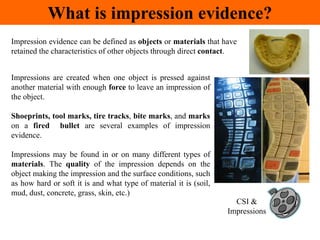
Impression evidence can be defined as objects or materials that have
retained the characteristics of other objects through direct contact.
Impressions are created when one object is pressed against
another material with enough force to leave an impression of
the object.
Shoeprints, tool marks, tire tracks, bite marks, and marks
on a fired bullet are several examples of impression
evidence.
Impressions may be found in or on many different types of
materials. The quality of the impression depends on the
object making the impression and the surface conditions, such
as how hard or soft it is and what type of material it is (soil,
mud, dust, concrete, grass, skin, etc.)
CSI &
Impressions
What is impression evidence?
Collection Methods
Investigators analyze the impression evidence to find unique
characteristics to link shoes, tires, tools, and other objects found
in a suspect’s possession to evidence at a crime scene.
Collection of impression evidence can be accomplished using
several methods:
2-D: This type of impression is documented using photography.
Some impressions may be dusted with fingerprint powder to be
photographed or lifted with tape. They may also be collected
using an electrostatic dust lifting process.
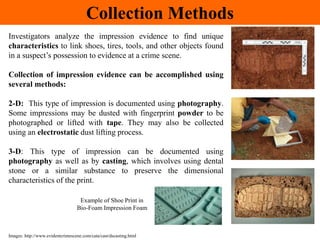
3-D: This type of impression can be documented using
photography as well as by casting, which involves using dental
stone or a similar substance to preserve the dimensional
characteristics of the print.
Images: http://www.evidentcrimescene.com/cata/cast/dscasting.html
Example of Shoe Print in
Bio-Foam Impression Foam
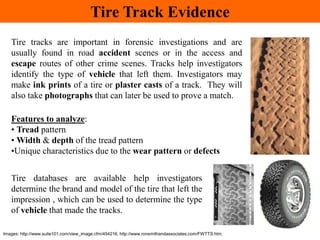
Tire tracks are important in forensic investigations and are
usually found in road accident scenes or in the access and
escape routes of other crime scenes. Tracks help investigators
identify the type of vehicle that left them. Investigators may
make ink prints of a tire or plaster casts of a track. They will
also take photographs that can later be used to prove a match.
Features to analyze:
• Tread pattern
• Width & depth of the tread pattern
•Unique characteristics due to the wear pattern or defects
Images: http://www.suite101.com/view_image.cfm/454216, http://www.ronsmithandassociates.com/FWTTS.htm.
Tire Track Evidence
Tire databases are available help investigators
determine the brand and model of the tire that left the
impression , which can be used to determine the type
of vehicle that made the tracks.
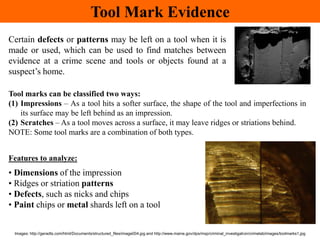
Certain defects or patterns may be left on a tool when it is
made or used, which can be used to find matches between
evidence at a crime scene and tools or objects found at a
suspect’s home.
Images: http://geradts.com/html/Documents/structured_files/image004.jpg and http://www.maine.gov/dps/msp/criminal_investigation/crimelab/images/toolmarks1.jpg
Features to analyze:
• Dimensions of the impression
• Ridges or striation patterns
• Defects, such as nicks and chips
• Paint chips or metal shards left on a tool
Tool marks can be classified two ways:
(1) Impressions – As a tool hits a softer surface, the shape of the tool and imperfections in
its surface may be left behind as an impression.
(2) Scratches – As a tool moves across a surface, it may leave ridges or striations behind.
NOTE: Some tool marks are a combination of both types.
Tool Mark Evidence
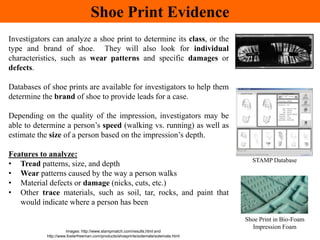
Investigators can analyze a shoe print to determine its class, or the
type and brand of shoe. They will also look for individual
characteristics, such as wear patterns and specific damages or
defects.
Databases of shoe prints are available for investigators to help them
determine the brand of shoe to provide leads for a case.
Depending on the quality of the impression, investigators may be
able to determine a person’s speed (walking vs. running) as well as
estimate the size of a person based on the impression’s depth.
Features to analyze:
• Tread patterns, size, and depth
• Wear patterns caused by the way a person walks
• Material defects or damage (nicks, cuts, etc.)
• Other trace materials, such as soil, tar, rocks, and paint that
would indicate where a person has been
Images: http://www.stampmatch.com/results.html and
http://www.fosterfreeman.com/products/shoeprints/solemate/solemate.html
Shoe Print Evidence
Shoe Print in Bio-Foam
Impression Foam
STAMP Database
Did you know?
The most famous incident where bite mark evidence led to a conviction, was in the case of
the notorious serial killer, Ted Bundy. He was responsible for an undetermined number of
murders between 1973 and 1978 and was finally tied to the murder of Lisa Levy through
bites that he had inflicted on her body.
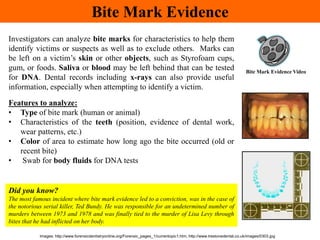
Investigators can analyze bite marks for characteristics to help them
identify victims or suspects as well as to exclude others. Marks can
be left on a victim’s skin or other objects, such as Styrofoam cups,
gum, or foods. Saliva or blood may be left behind that can be tested
for DNA. Dental records including x-rays can also provide useful
information, especially when attempting to identify a victim.
Features to analyze:
• Type of bite mark (human or animal)
• Characteristics of the teeth (position, evidence of dental work,
wear patterns, etc.)
• Color of area to estimate how long ago the bite occurred (old or
recent bite)
• Swab for body fluids for DNA tests
Images: http://www.forensicdentistryonline.org/Forensic_pages_1/currentopic1.htm, http://www.trestonedental.co.uk/images/0303.jpg
Bite Mark Evidence
Bite Mark Evidence Video
Image: http://www.sxc.hu/photo/442696
It’s time to
investigate
some
“impressive”
evidence!

FRS 310 Bite mark evidence.ppt

  • 1.
    Presentation developed byT. Trimpe 2007 http://sciencespot.net
  • 2.
    Impression evidence canbe defined as objects or materials that have retained the characteristics of other objects through direct contact. Impressions are created when one object is pressed against another material with enough force to leave an impression of the object. Shoeprints, tool marks, tire tracks, bite marks, and marks on a fired bullet are several examples of impression evidence. Impressions may be found in or on many different types of materials. The quality of the impression depends on the object making the impression and the surface conditions, such as how hard or soft it is and what type of material it is (soil, mud, dust, concrete, grass, skin, etc.) CSI & Impressions What is impression evidence?
  • 3.
    Collection Methods Investigators analyzethe impression evidence to find unique characteristics to link shoes, tires, tools, and other objects found in a suspect’s possession to evidence at a crime scene. Collection of impression evidence can be accomplished using several methods: 2-D: This type of impression is documented using photography. Some impressions may be dusted with fingerprint powder to be photographed or lifted with tape. They may also be collected using an electrostatic dust lifting process. 3-D: This type of impression can be documented using photography as well as by casting, which involves using dental stone or a similar substance to preserve the dimensional characteristics of the print. Images: http://www.evidentcrimescene.com/cata/cast/dscasting.html Example of Shoe Print in Bio-Foam Impression Foam
  • 4.
    Tire tracks areimportant in forensic investigations and are usually found in road accident scenes or in the access and escape routes of other crime scenes. Tracks help investigators identify the type of vehicle that left them. Investigators may make ink prints of a tire or plaster casts of a track. They will also take photographs that can later be used to prove a match. Features to analyze: • Tread pattern • Width & depth of the tread pattern •Unique characteristics due to the wear pattern or defects Images: http://www.suite101.com/view_image.cfm/454216, http://www.ronsmithandassociates.com/FWTTS.htm. Tire Track Evidence Tire databases are available help investigators determine the brand and model of the tire that left the impression , which can be used to determine the type of vehicle that made the tracks.
  • 5.
    Certain defects orpatterns may be left on a tool when it is made or used, which can be used to find matches between evidence at a crime scene and tools or objects found at a suspect’s home. Images: http://geradts.com/html/Documents/structured_files/image004.jpg and http://www.maine.gov/dps/msp/criminal_investigation/crimelab/images/toolmarks1.jpg Features to analyze: • Dimensions of the impression • Ridges or striation patterns • Defects, such as nicks and chips • Paint chips or metal shards left on a tool Tool marks can be classified two ways: (1) Impressions – As a tool hits a softer surface, the shape of the tool and imperfections in its surface may be left behind as an impression. (2) Scratches – As a tool moves across a surface, it may leave ridges or striations behind. NOTE: Some tool marks are a combination of both types. Tool Mark Evidence
  • 6.
    Investigators can analyzea shoe print to determine its class, or the type and brand of shoe. They will also look for individual characteristics, such as wear patterns and specific damages or defects. Databases of shoe prints are available for investigators to help them determine the brand of shoe to provide leads for a case. Depending on the quality of the impression, investigators may be able to determine a person’s speed (walking vs. running) as well as estimate the size of a person based on the impression’s depth. Features to analyze: • Tread patterns, size, and depth • Wear patterns caused by the way a person walks • Material defects or damage (nicks, cuts, etc.) • Other trace materials, such as soil, tar, rocks, and paint that would indicate where a person has been Images: http://www.stampmatch.com/results.html and http://www.fosterfreeman.com/products/shoeprints/solemate/solemate.html Shoe Print Evidence Shoe Print in Bio-Foam Impression Foam STAMP Database
  • 7.
    Did you know? Themost famous incident where bite mark evidence led to a conviction, was in the case of the notorious serial killer, Ted Bundy. He was responsible for an undetermined number of murders between 1973 and 1978 and was finally tied to the murder of Lisa Levy through bites that he had inflicted on her body. Investigators can analyze bite marks for characteristics to help them identify victims or suspects as well as to exclude others. Marks can be left on a victim’s skin or other objects, such as Styrofoam cups, gum, or foods. Saliva or blood may be left behind that can be tested for DNA. Dental records including x-rays can also provide useful information, especially when attempting to identify a victim. Features to analyze: • Type of bite mark (human or animal) • Characteristics of the teeth (position, evidence of dental work, wear patterns, etc.) • Color of area to estimate how long ago the bite occurred (old or recent bite) • Swab for body fluids for DNA tests Images: http://www.forensicdentistryonline.org/Forensic_pages_1/currentopic1.htm, http://www.trestonedental.co.uk/images/0303.jpg Bite Mark Evidence Bite Mark Evidence Video
  • 8.
    Image: http://www.sxc.hu/photo/442696 It’s timeto investigate some “impressive” evidence!