From Weather Dwarfs to Kilometre-Scale
Earth System Simulations
Nils P. Wedi, Peter Bauer, ECMWF colleagues, ESCAPE project partners
European Centre for Medium-Range Weather Forecasts (ECMWF)
PASC2018, Basel
EUROPEAN CENTRE FOR MEDIUM-RANGE WEATHER FORECASTS October 29, 2014
Outline
•  Numerical weather prediction & climate, a brief (HPC) history
•  Ensemble-based assimilation and forecasts of Weather & Climate
•  Earth-System complexity and the notion to resolve rather than parametrise
•  An intermediate goal: globally uniform weather & climate modelling at 1 km horizontal resolution
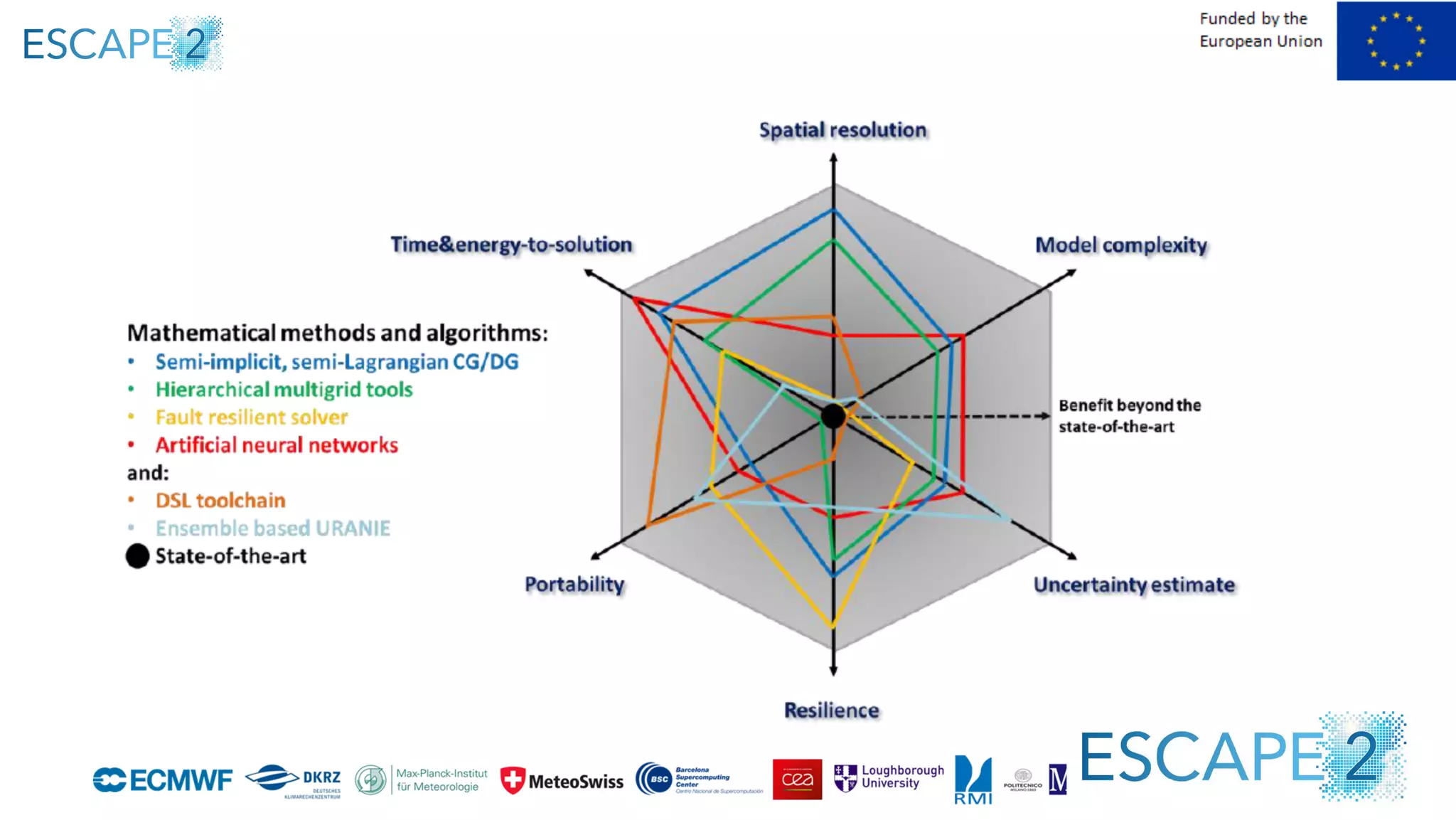
–  Defining and encapsulating the fundamental algorithmic building blocks ("Weather and Climate Dwarfs")
–  Pioneering algorithm development with hardware adaptation using DSL toolchains
–  Reviewing the need for precision
–  A HPCW benchmark and cross-disciplinary Verification, Validation, and Uncertainty Quantification (VVUQ)
2
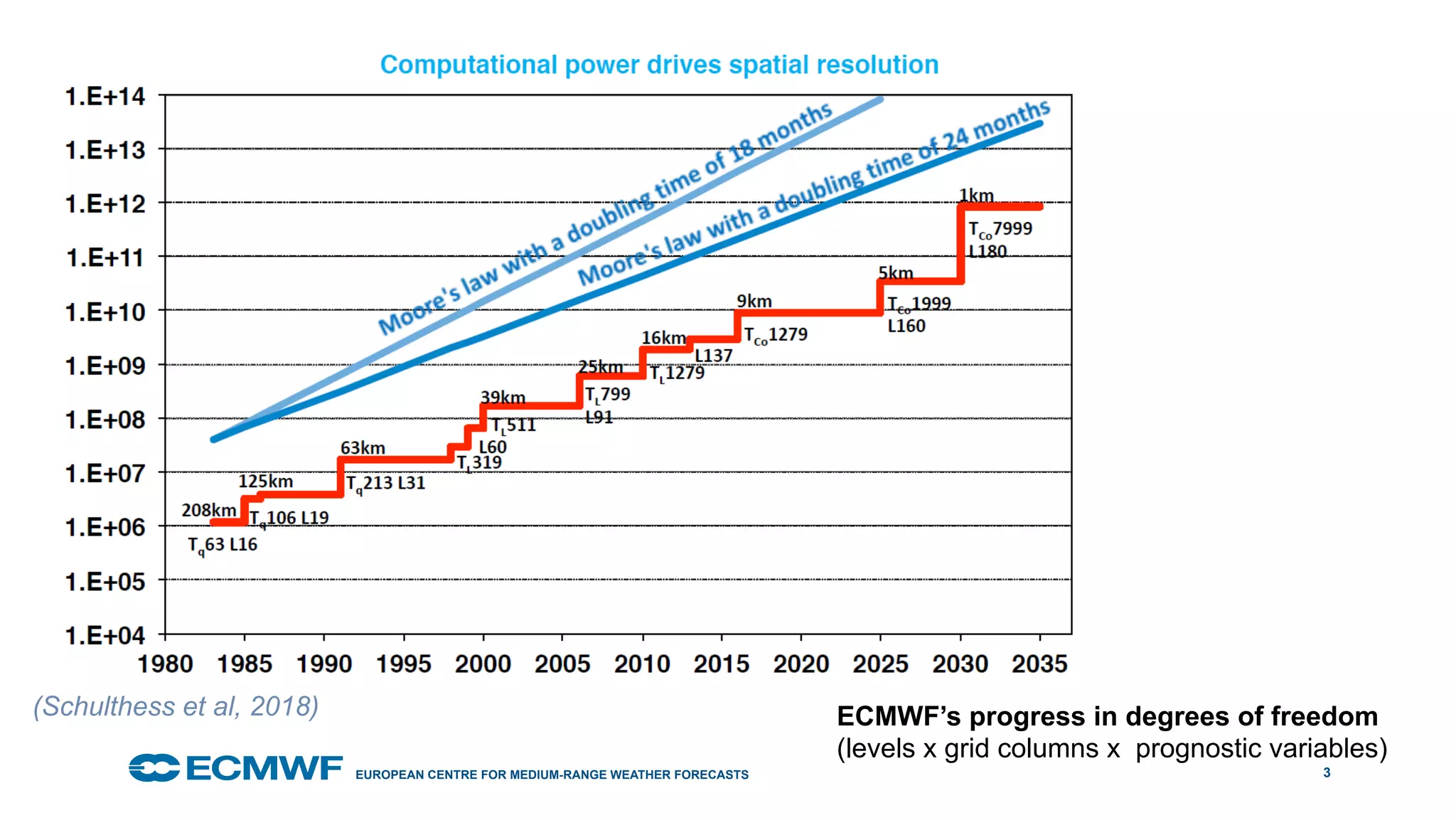
EUROPEAN CENTRE FOR MEDIUM-RANGE WEATHER FORECASTS October 29, 2014 3
ECMWF’s progress in degrees of freedom
(levels x grid columns x prognostic variables)
(Schulthess et al, 2018)
EUROPEAN CENTRE FOR MEDIUM-RANGE WEATHER FORECASTS October 29, 2014
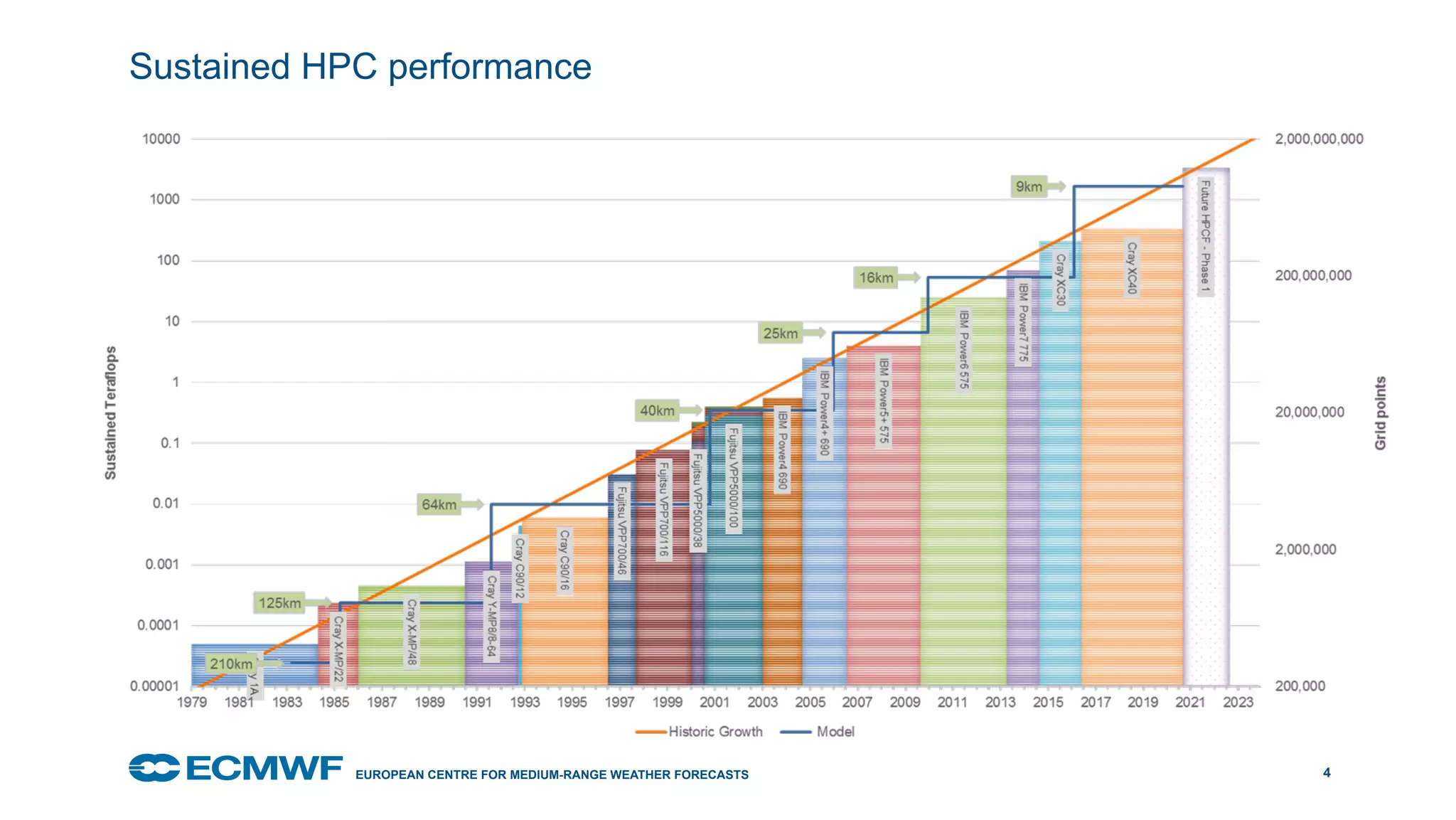
Sustained HPC performance
4
October 29, 2014
I/O - Impact of NVRAM on Data Access
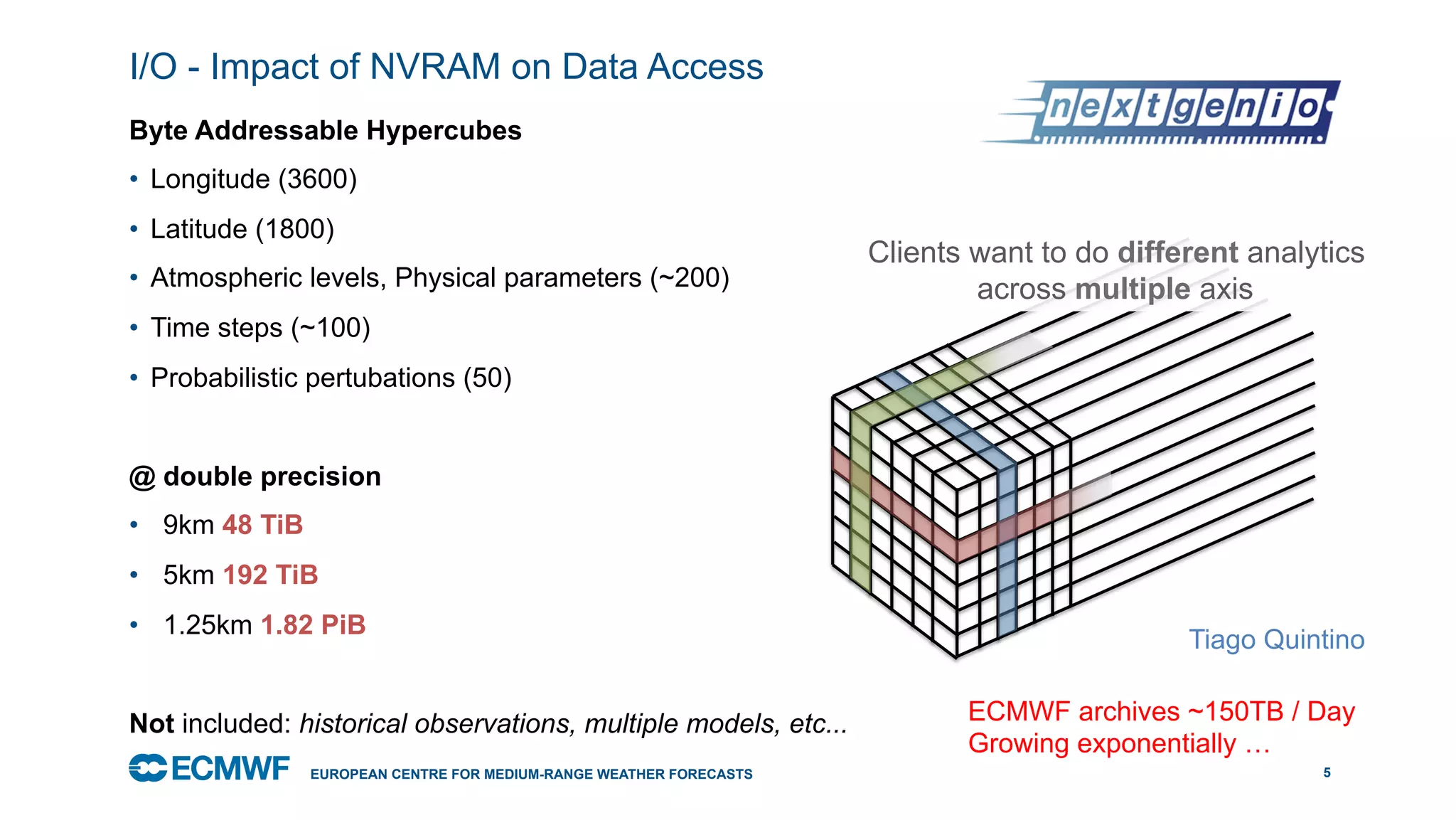
Byte Addressable Hypercubes
•  Longitude (3600)
•  Latitude (1800)
•  Atmospheric levels, Physical parameters (~200)
•  Time steps (~100)
•  Probabilistic pertubations (50)
@ double precision
•  9km 48 TiB
•  5km 192 TiB
•  1.25km 1.82 PiB
Not included: historical observations, multiple models, etc...
5EUROPEAN CENTRE FOR MEDIUM-RANGE WEATHER FORECASTS
Clients want to do different analytics
across multiple axis
Tiago Quintino
ECMWF archives ~150TB / Day
Growing exponentially …
EUROPEAN CENTRE FOR MEDIUM-RANGE WEATHER FORECASTS October 29, 2014
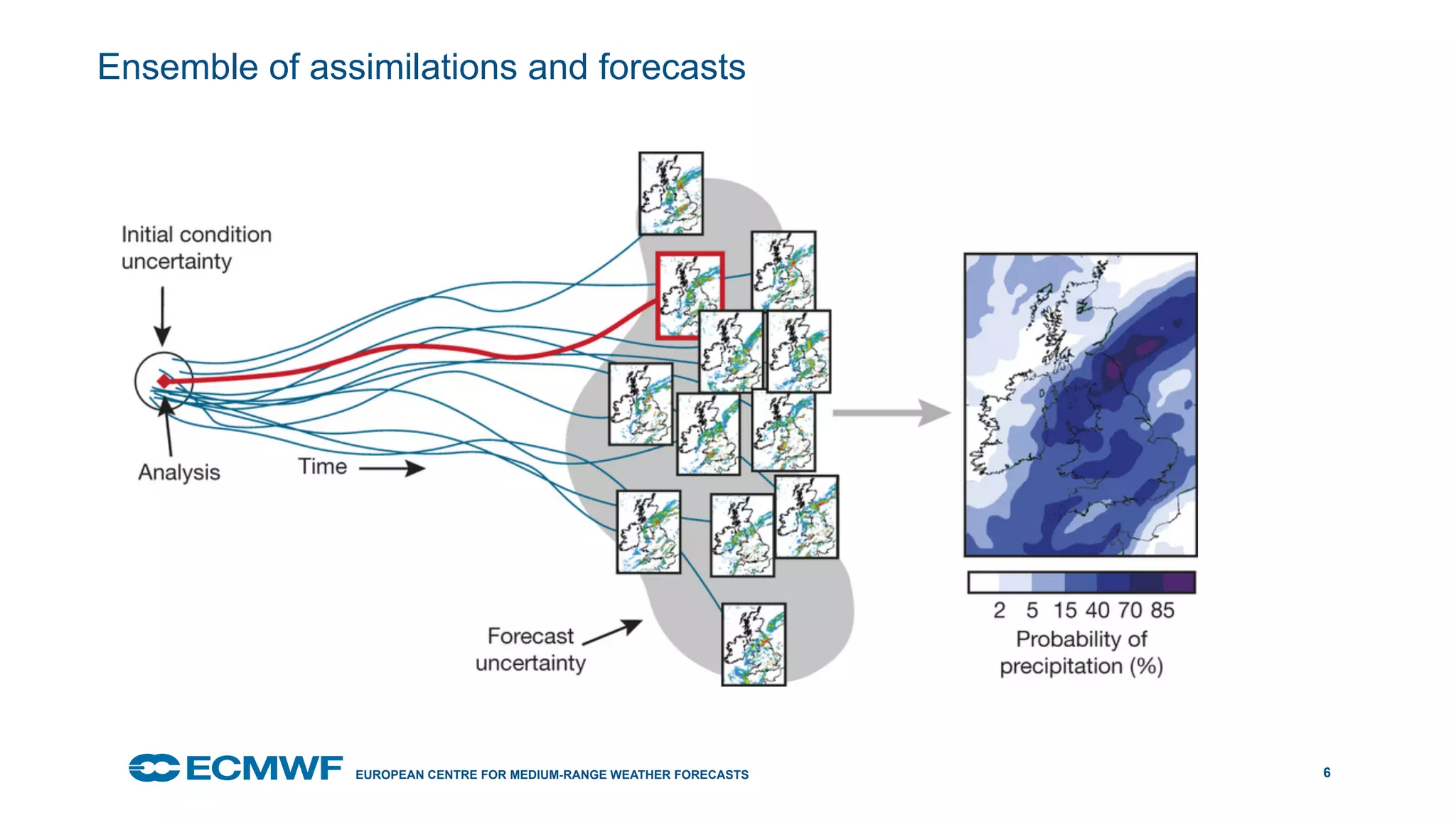
Ensemble of assimilations and forecasts
6
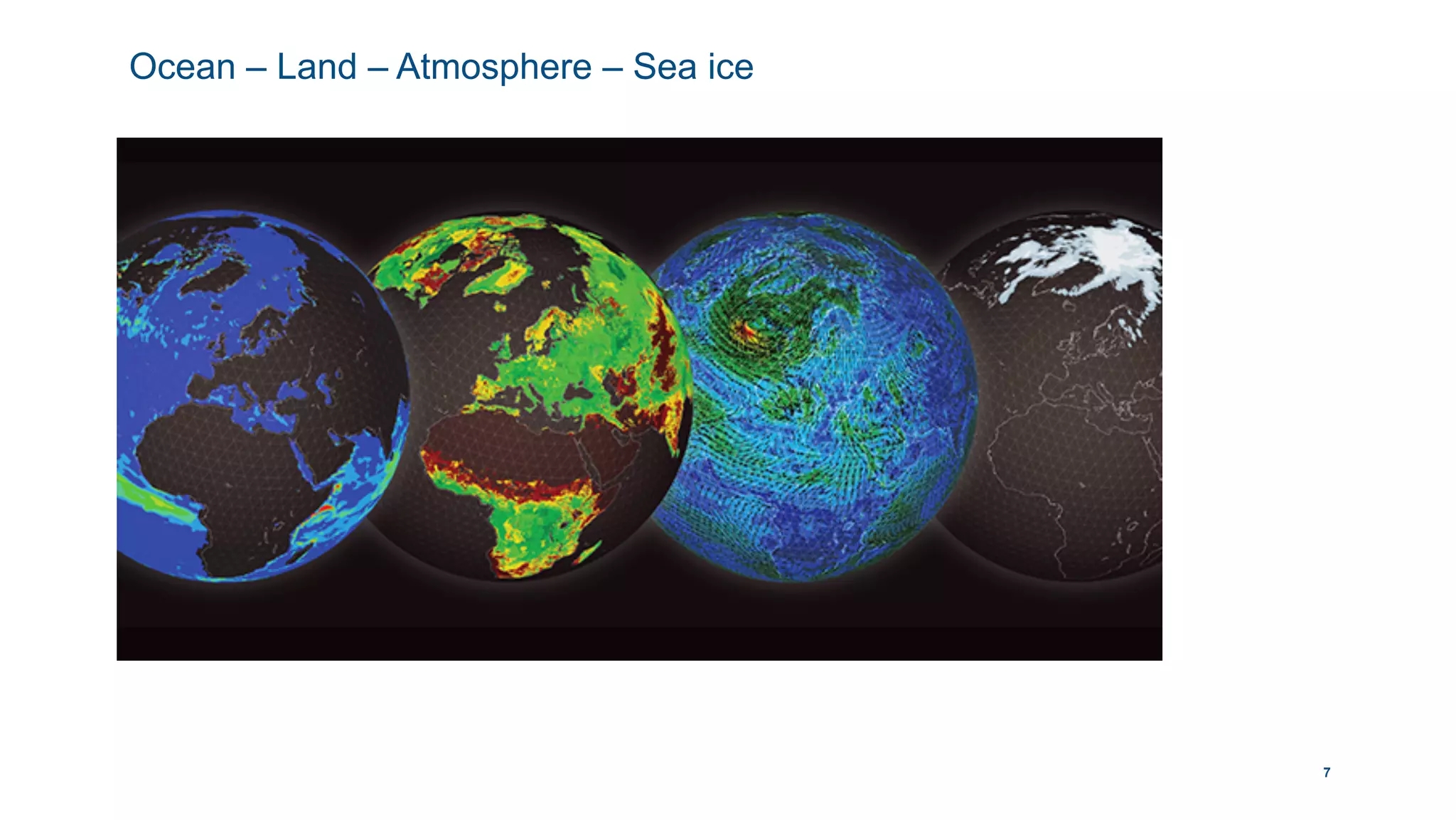
Ocean – Land – Atmosphere – Sea ice
7
EUROPEAN CENTRE FOR MEDIUM-RANGE WEATHER FORECASTS October 29, 2014 8
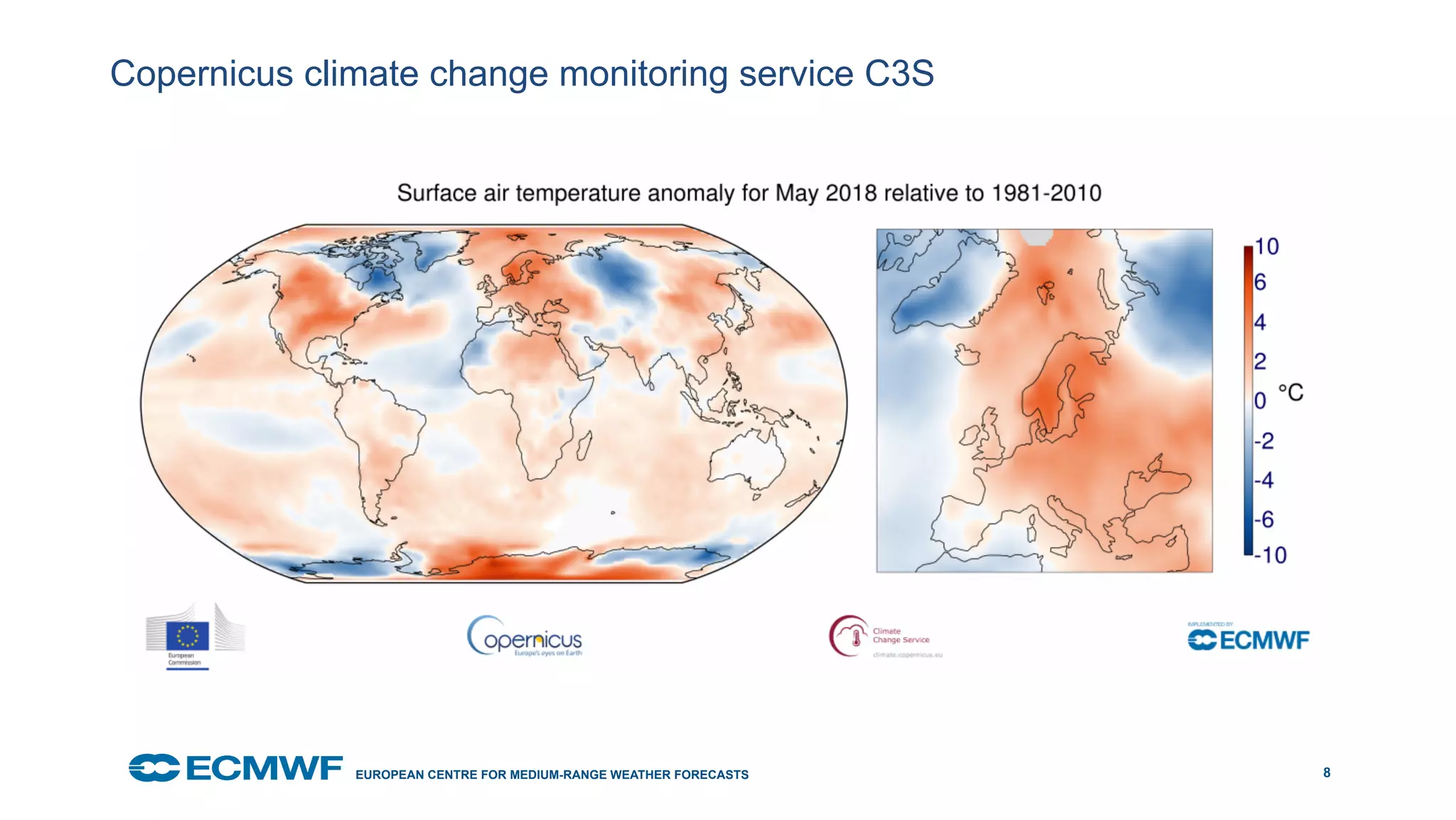
Copernicus climate change monitoring service C3S
EUROPEAN CENTRE FOR MEDIUM-RANGE WEATHER FORECASTS October 29, 2014 9
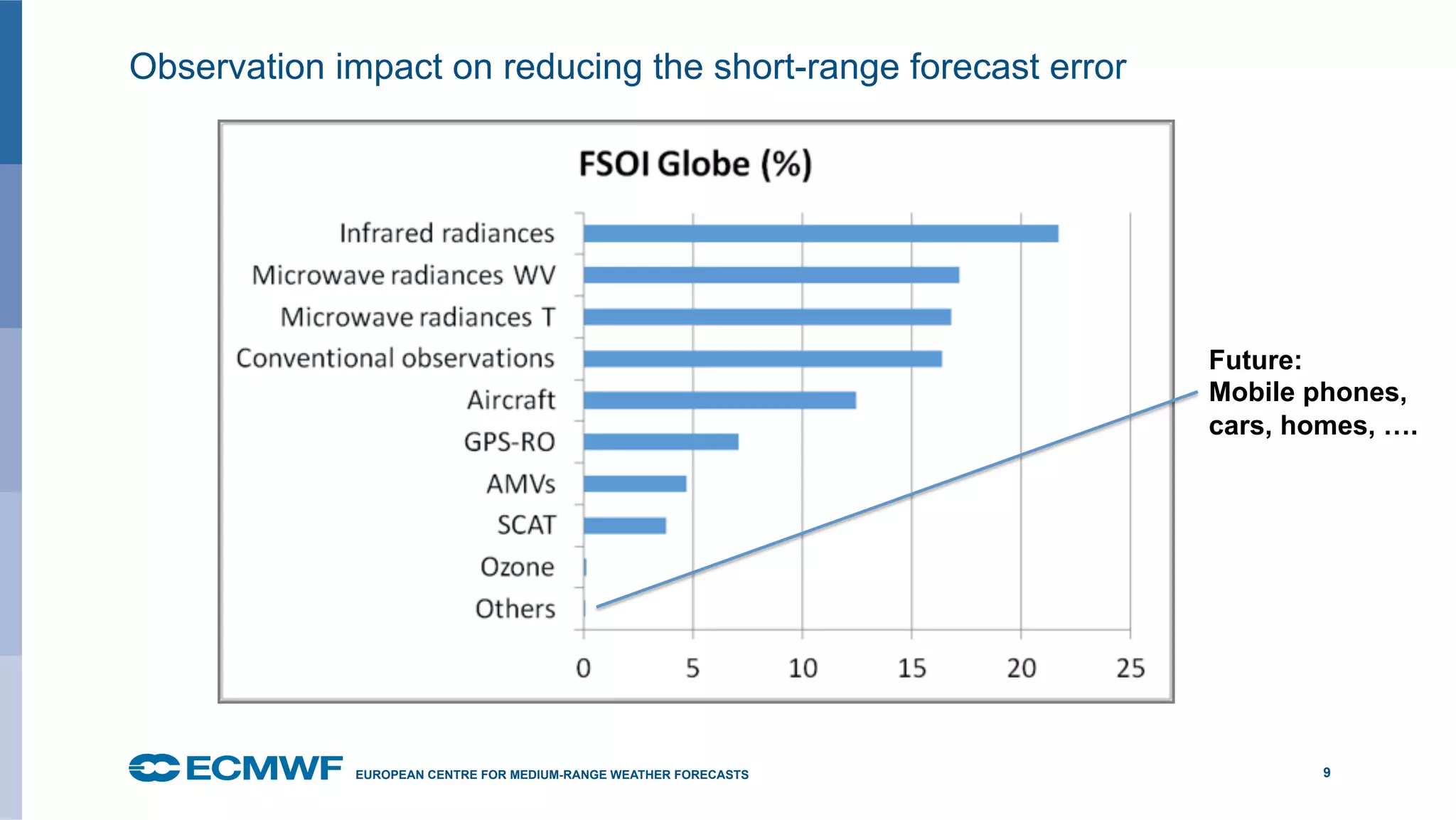
Observation impact on reducing the short-range forecast error
Future:
Mobile phones,
cars, homes, ….
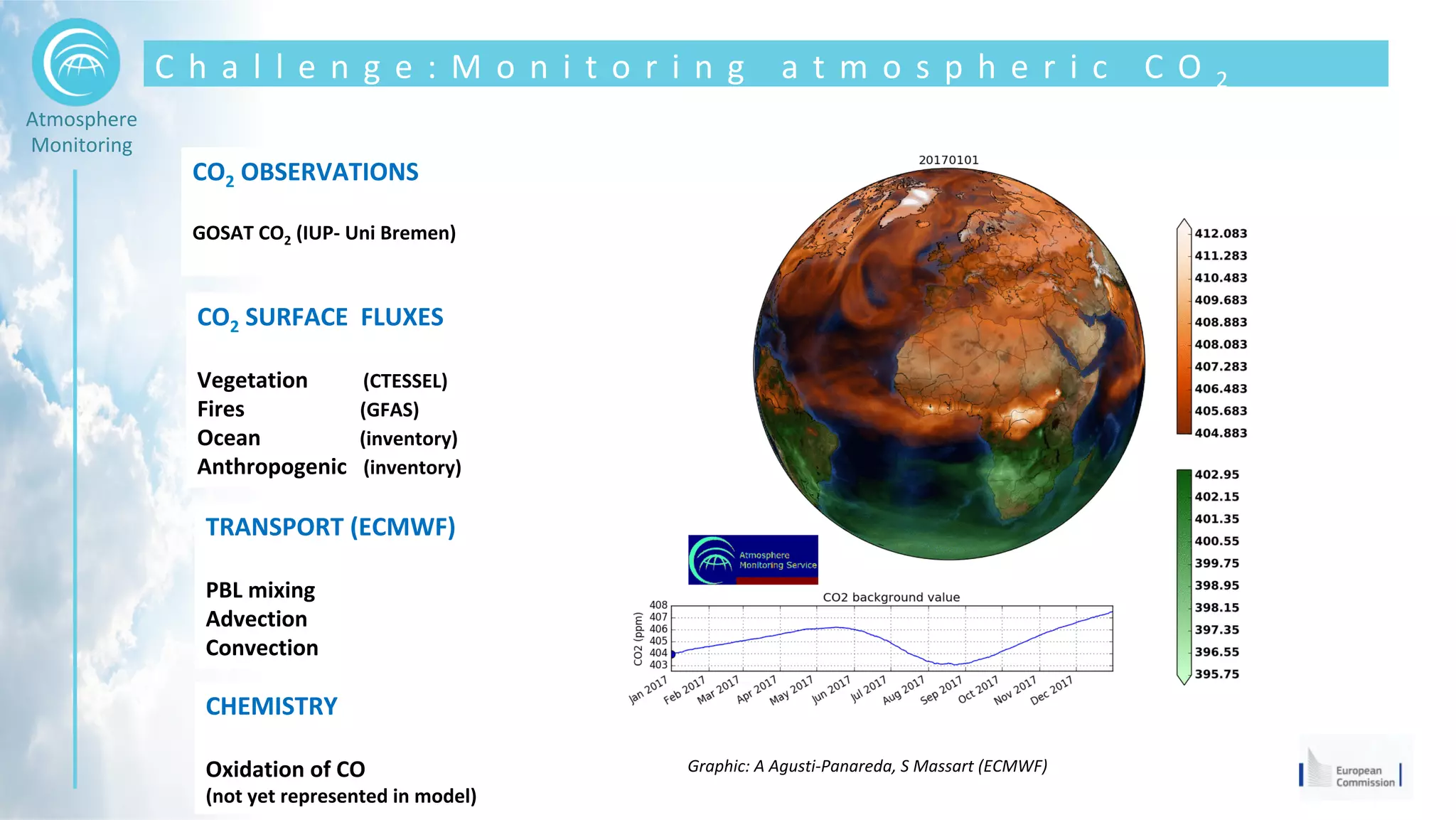
Atmosphere	
Monitoring	
CO2	SURFACE		FLUXES	
	
Vegetation										(CTESSEL)	
Fires																					(GFAS)	
Ocean																		(inventory)	
Anthropogenic			(inventory)	
TRANSPORT	(ECMWF)	
	
PBL	mixing		
Advection	
Convection	
CHEMISTRY	
	
Oxidation	of	CO		
(not	yet	represented	in	model)	
CO2	OBSERVATIONS	
	
GOSAT	CO2	(IUP-	Uni	Bremen)	
	
Graphic:	A	Agusti-Panareda,	S	Massart	(ECMWF)	
C h a l l e n g e : M o n i t o r i n g 	 a t m o s p h e r i c 	 C O 2
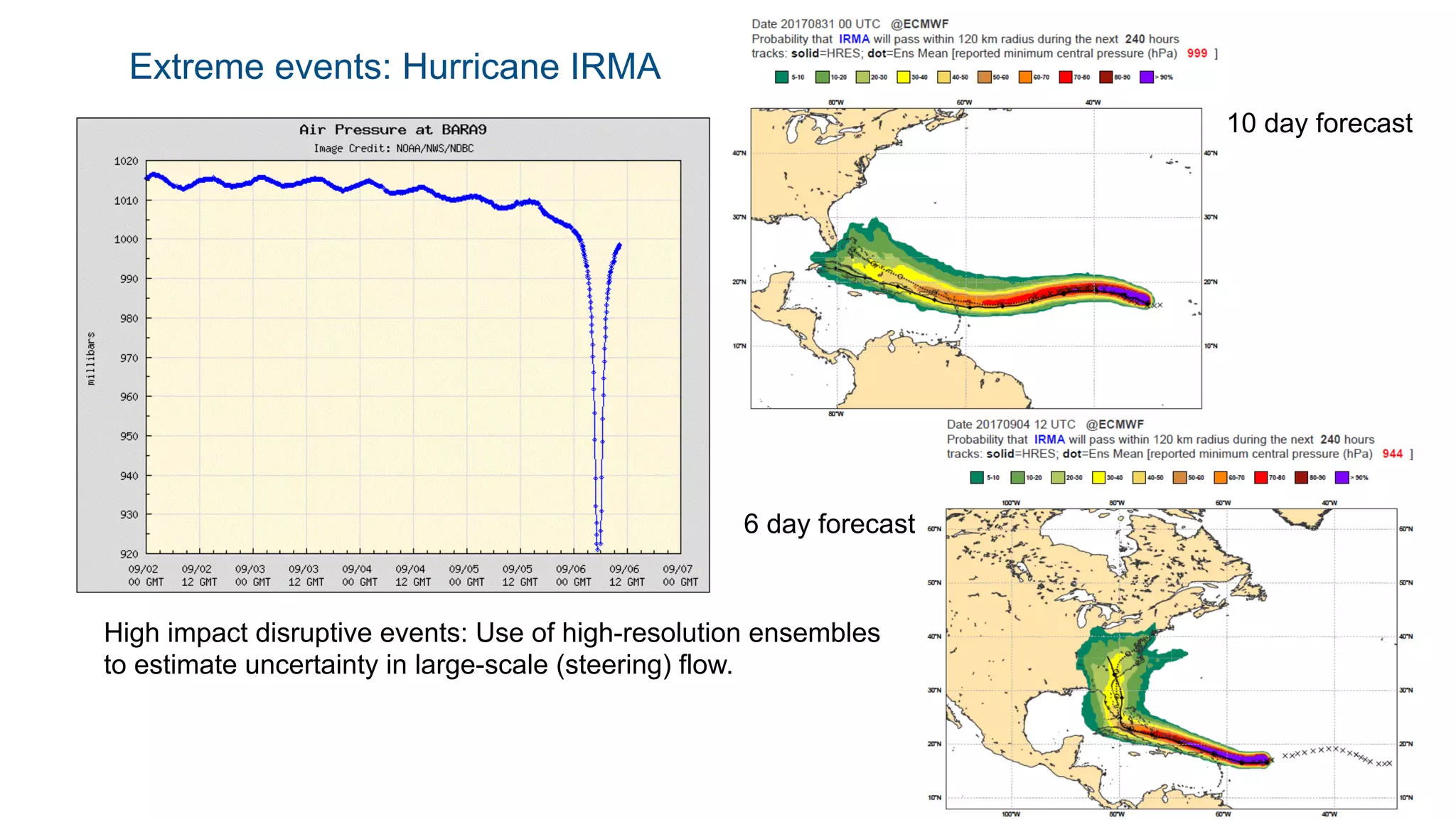
Extreme events: Hurricane IRMA
11
NASA GOES-16
10 day forecast
6 day forecast
High impact disruptive events: Use of high-resolution ensembles
to estimate uncertainty in large-scale (steering) flow.
EUROPEAN CENTRE FOR MEDIUM-RANGE WEATHER FORECASTS October 29, 2014
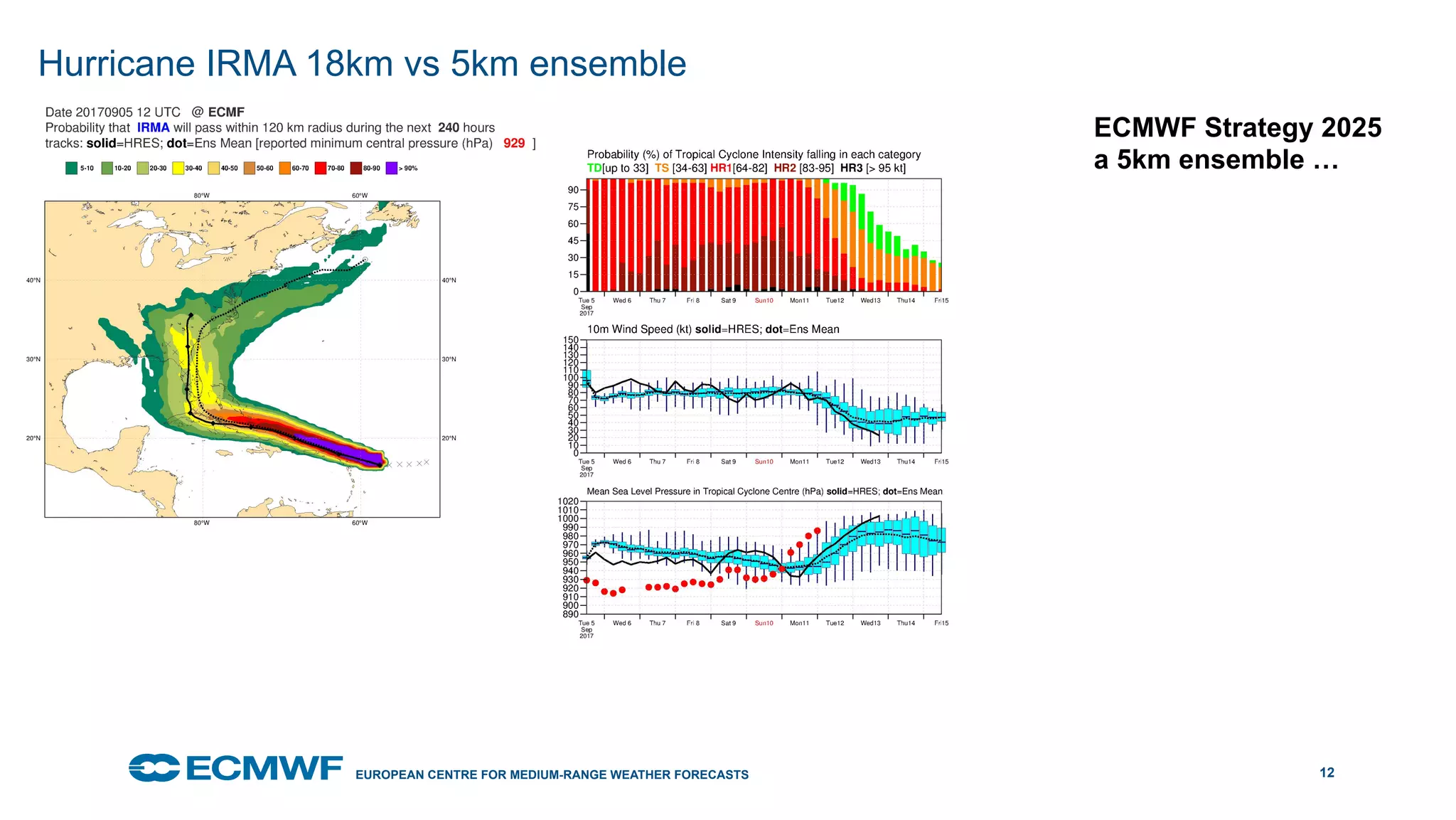
Hurricane IRMA 18km vs 5km ensemble
12
ECMWF Strategy 2025
a 5km ensemble …
October	29,	2014	
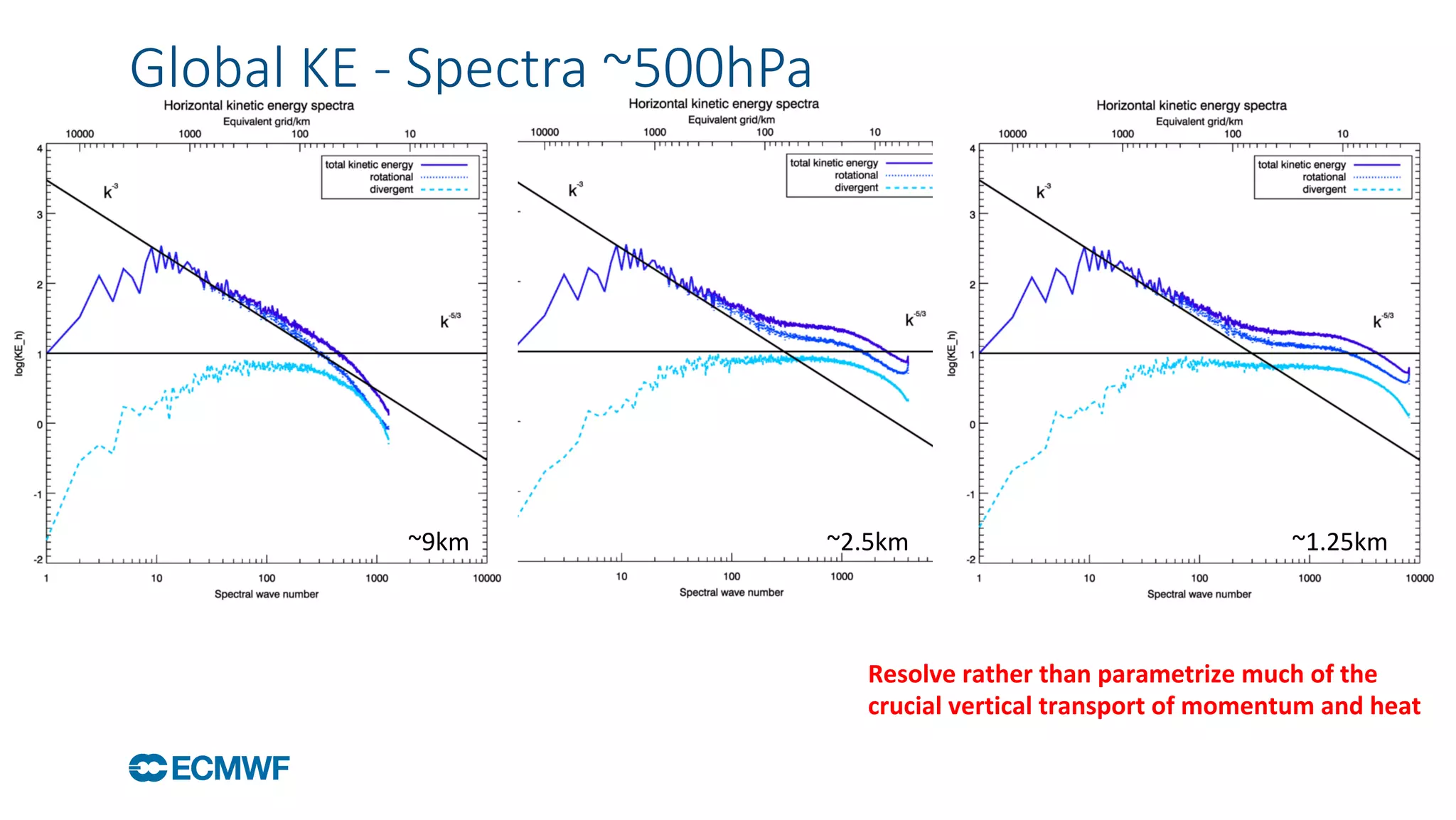
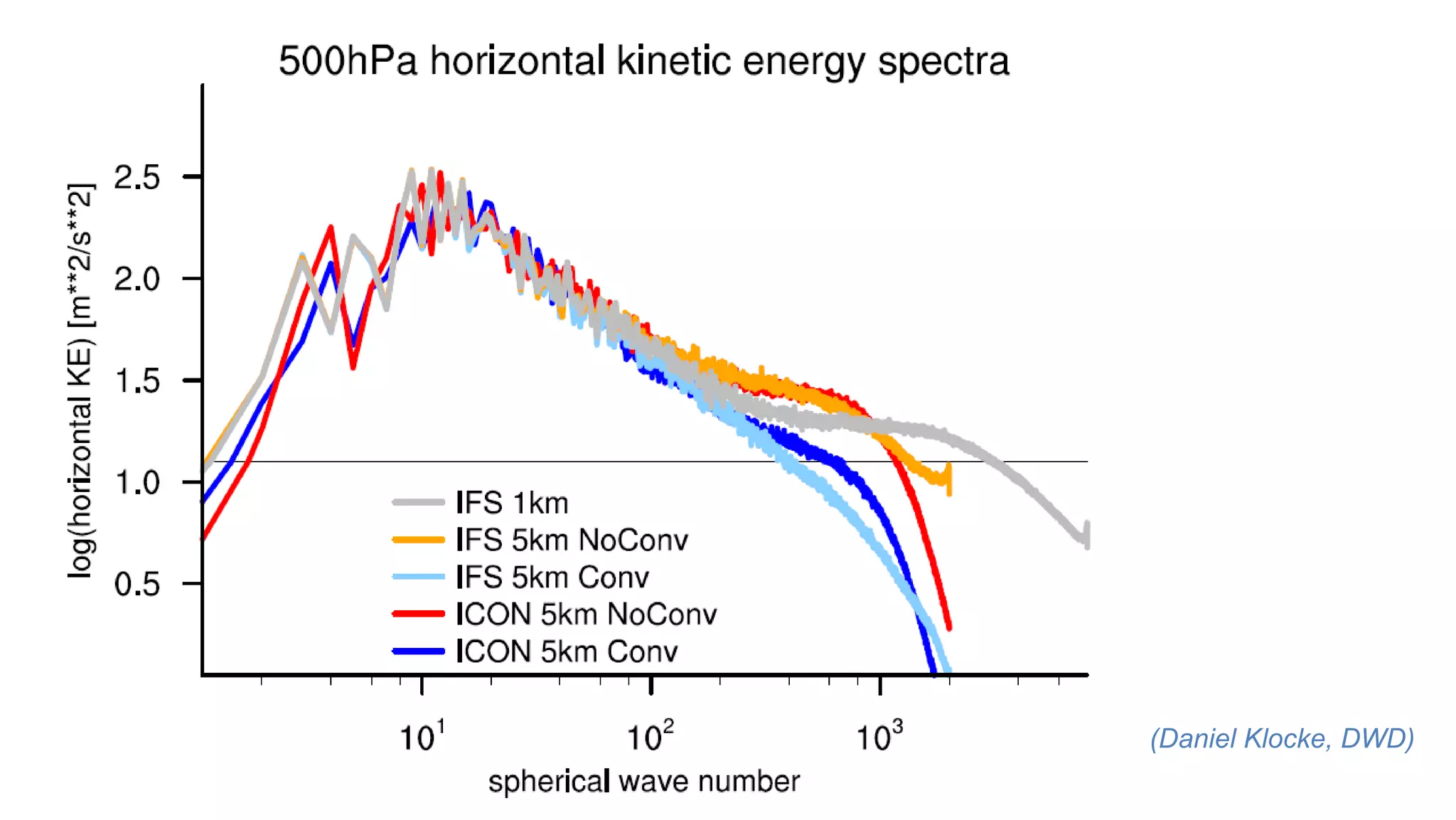
Global KE - Spectra ~500hPa
~9km	 ~2.5km	 ~1.25km	
Resolve	rather	than	parametrize	much	of	the	
crucial	vertical	transport	of	momentum	and	heat
EUROPEAN CENTRE FOR MEDIUM-RANGE WEATHER FORECASTS October 29, 2014
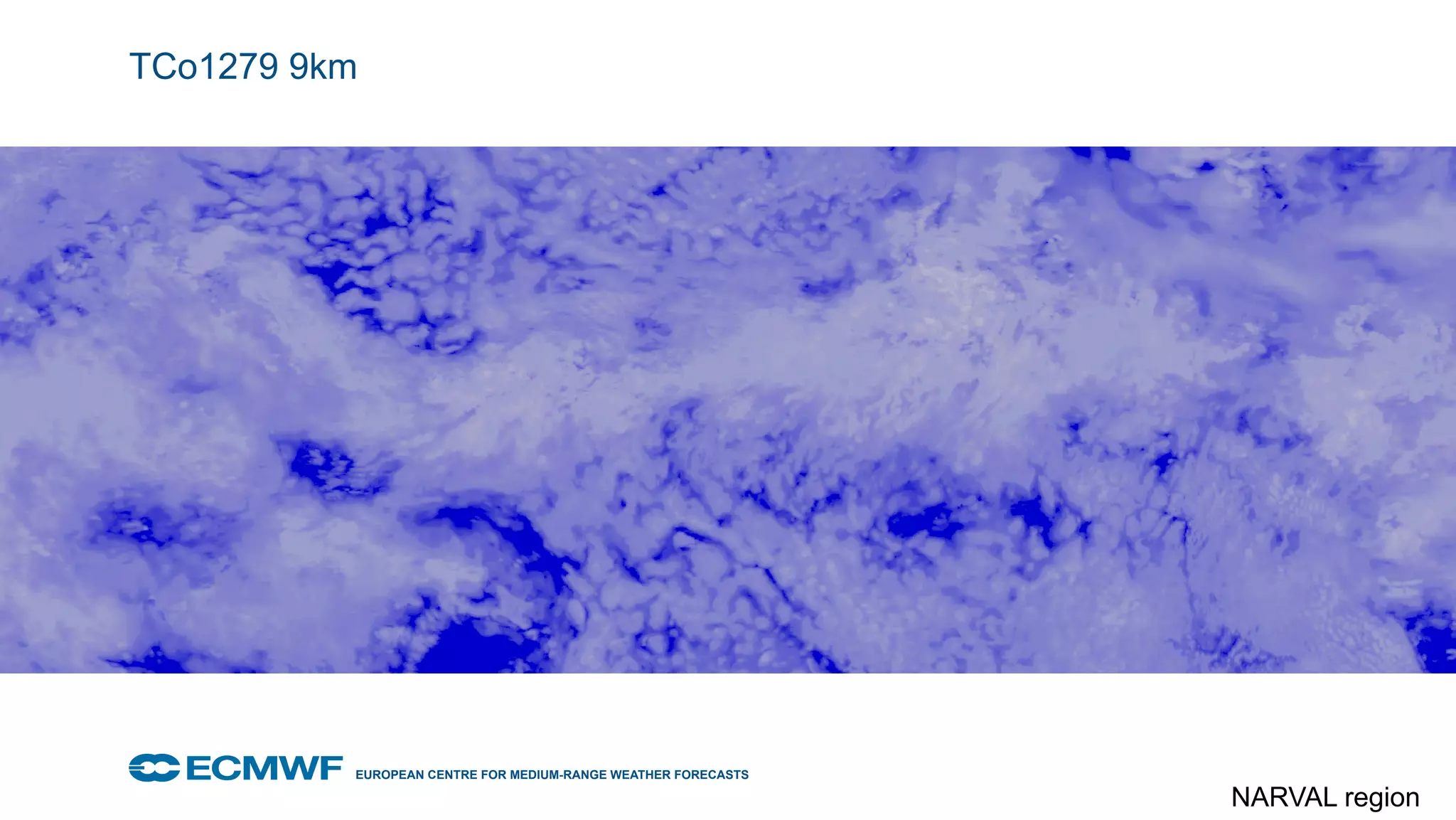
TCo1279 9km
NARVAL region
EUROPEAN CENTRE FOR MEDIUM-RANGE WEATHER FORECASTS October 29, 2014
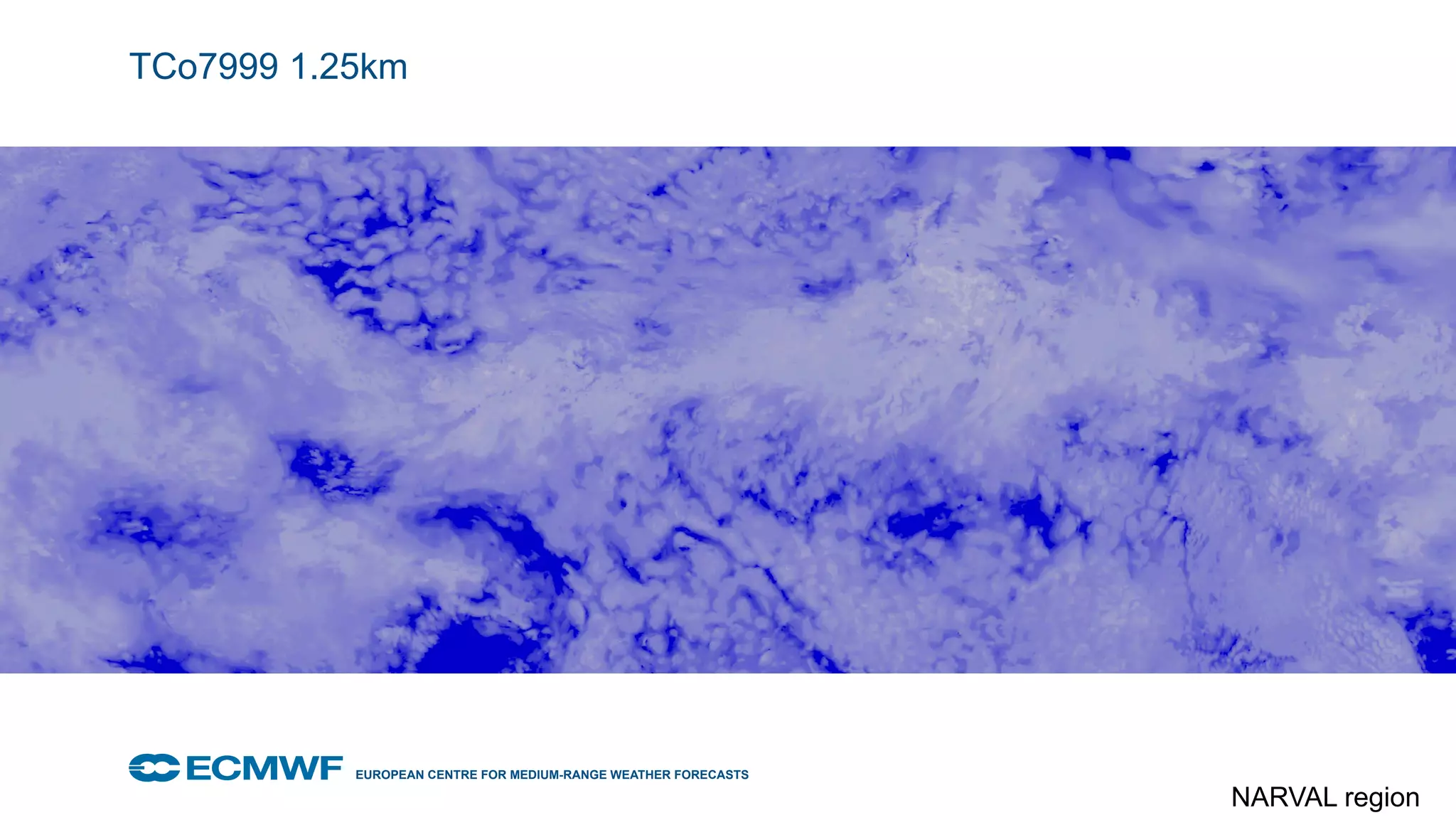
TCo7999 1.25km
NARVAL region
16
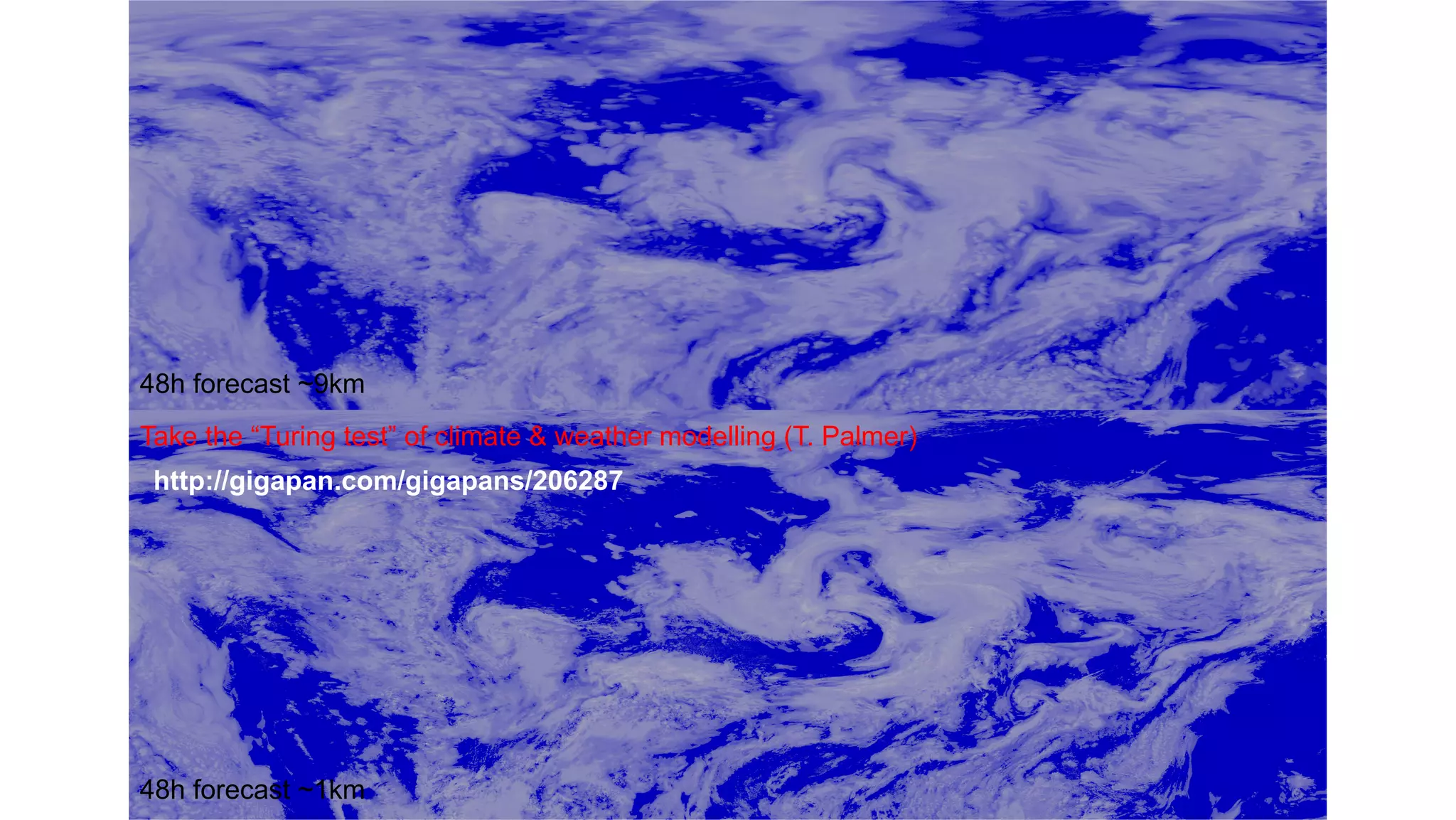
48h forecast ~9km
48h forecast ~1km
http://gigapan.com/gigapans/206287
Take the “Turing test” of climate & weather modelling (T. Palmer)
EUROPEAN CENTRE FOR MEDIUM-RANGE WEATHER FORECASTS October 29, 2014
(Daniel Klocke, DWD)
October	29,	2014	 PETER	BAUER	2018	
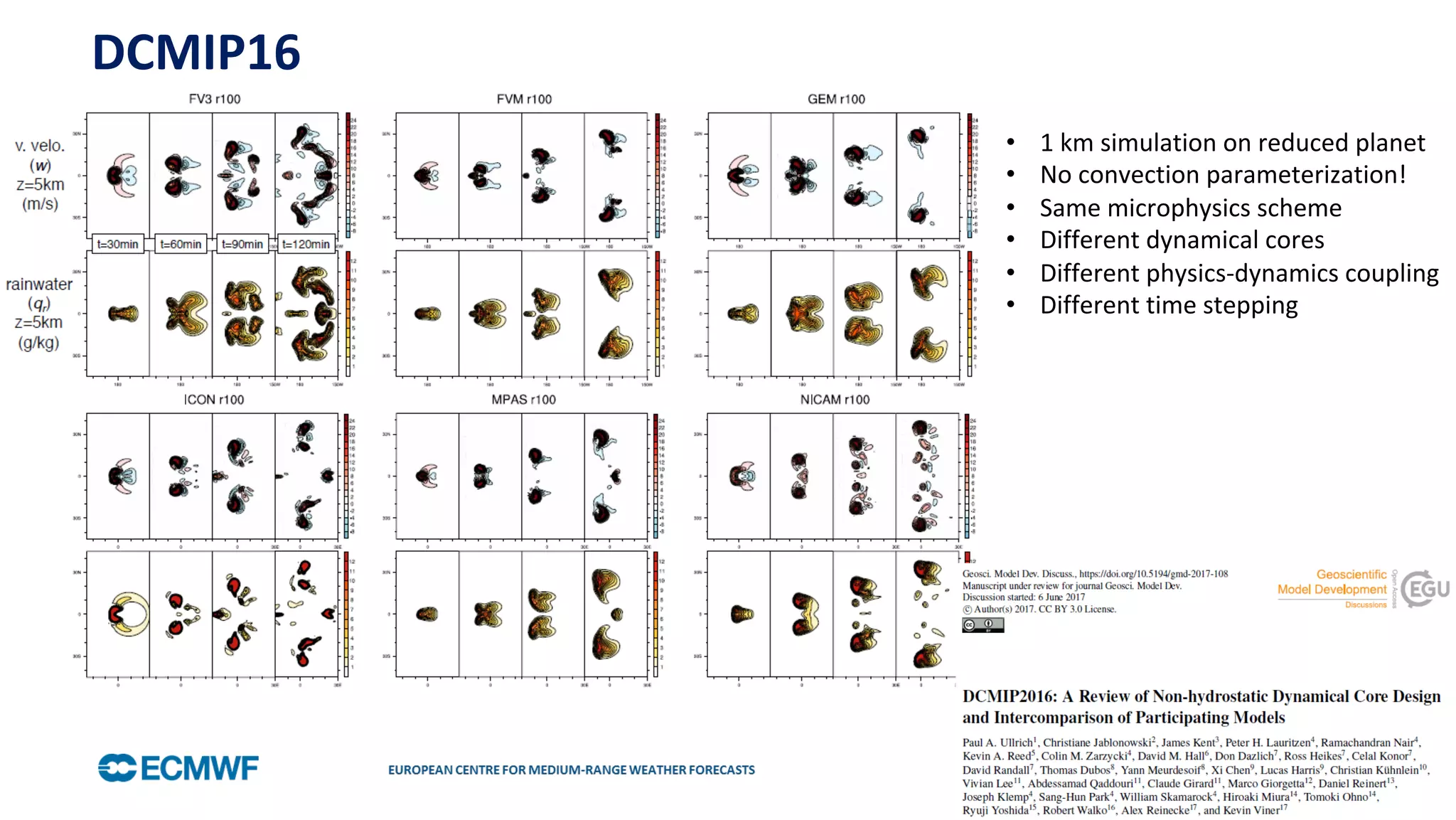
•  1	km	simulation	on	reduced	planet	
•  No	convection	parameterization!	
•  Same	microphysics	scheme	
•  Different	dynamical	cores	
•  Different	physics-dynamics	coupling	
•  Different	time	stepping	
DCMIP16
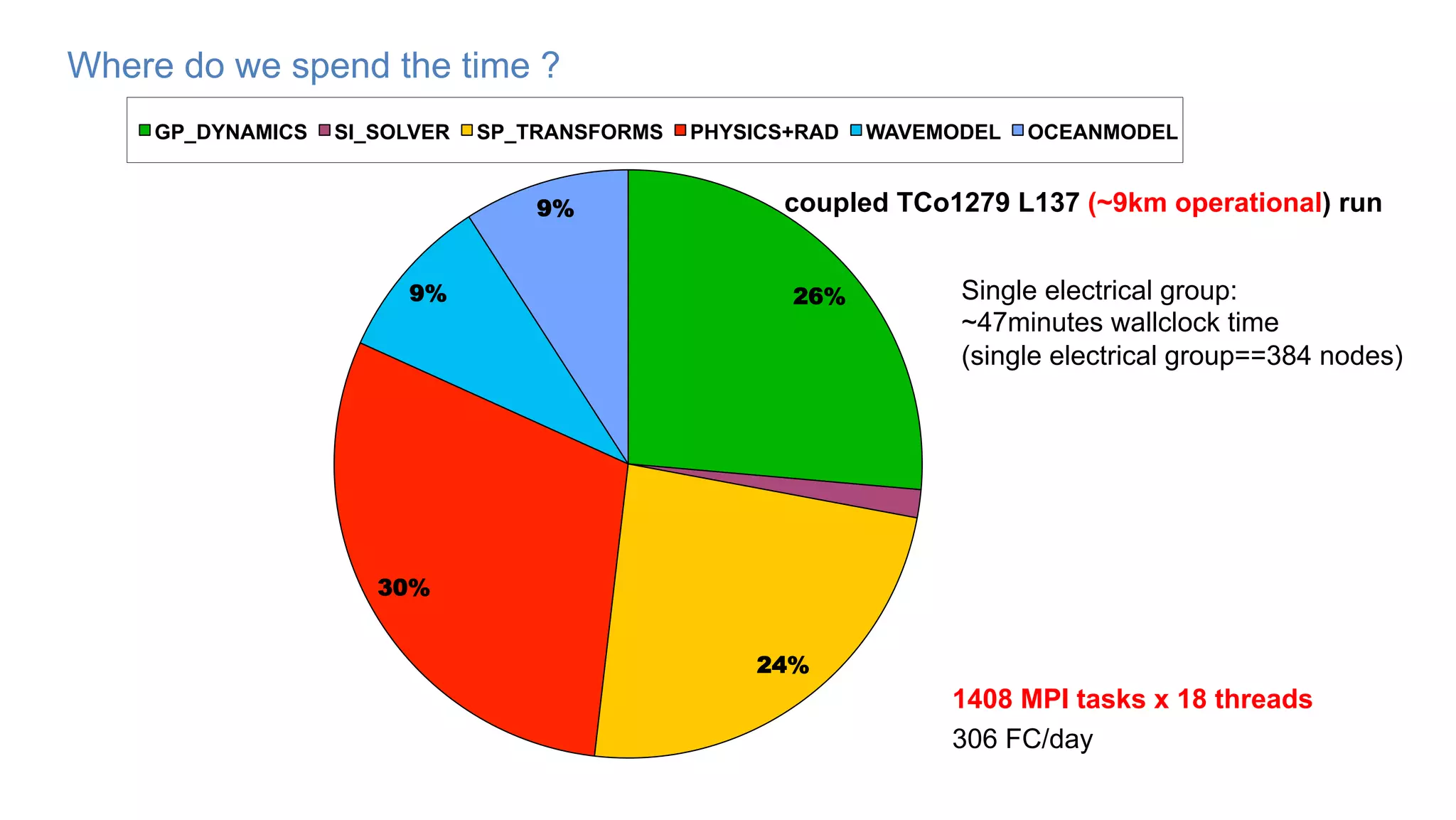
26%
24%
30%
9%
9%
GP_DYNAMICS SI_SOLVER SP_TRANSFORMS PHYSICS+RAD WAVEMODEL OCEANMODEL
coupled TCo1279 L137 (~9km operational) run
Where do we spent the time ?
Where do we spend the time ?
Single electrical group:
~47minutes wallclock time
(single electrical group==384 nodes)
1408 MPI tasks x 18 threads
306 FC/day
October 29, 2014
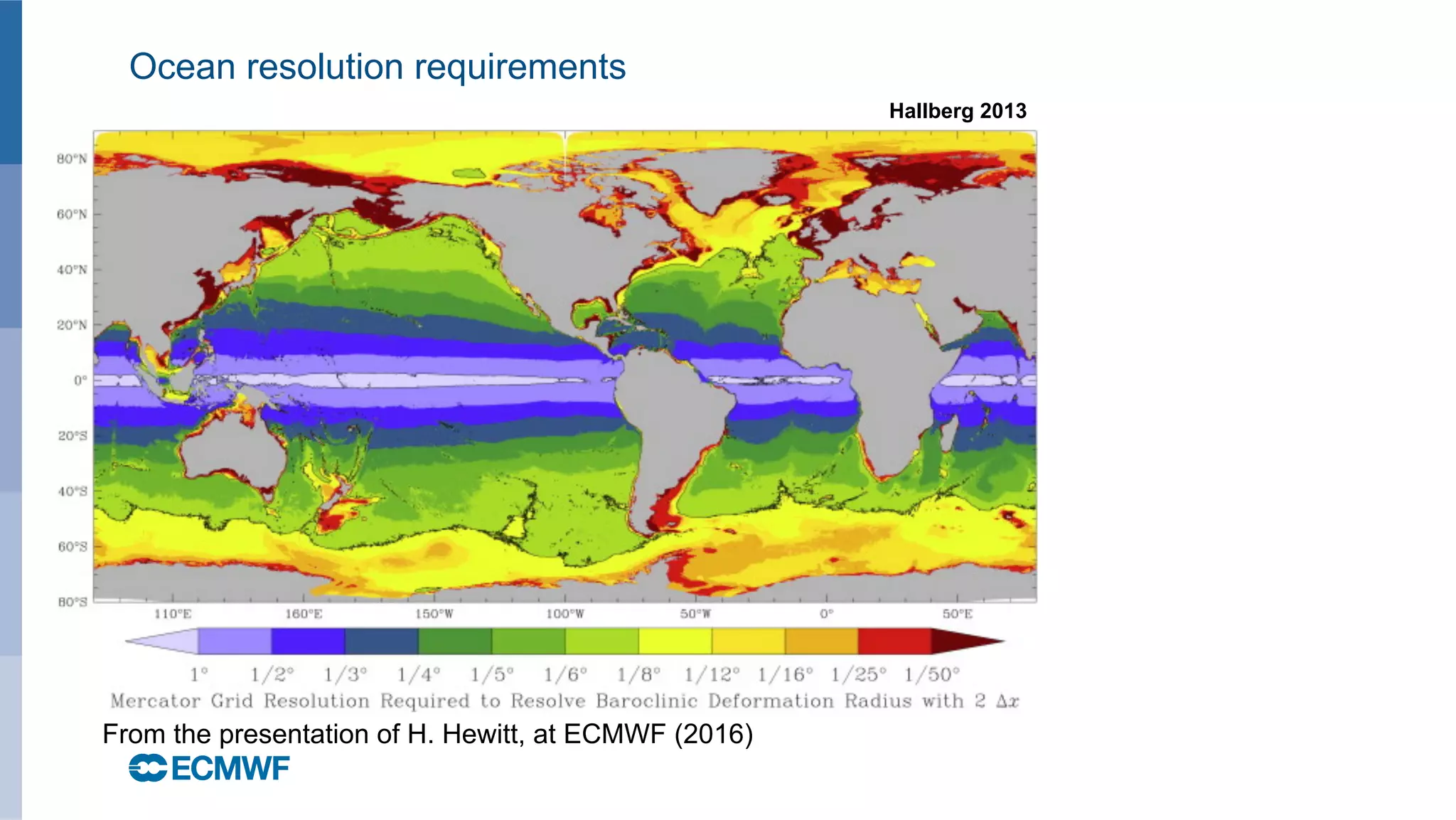
Ocean resolution requirements
Hallberg 2013
From the presentation of H. Hewitt, at ECMWF (2016)
21EUROPEAN CENTRE FOR MEDIUM-RANGE WEATHER FORECASTS
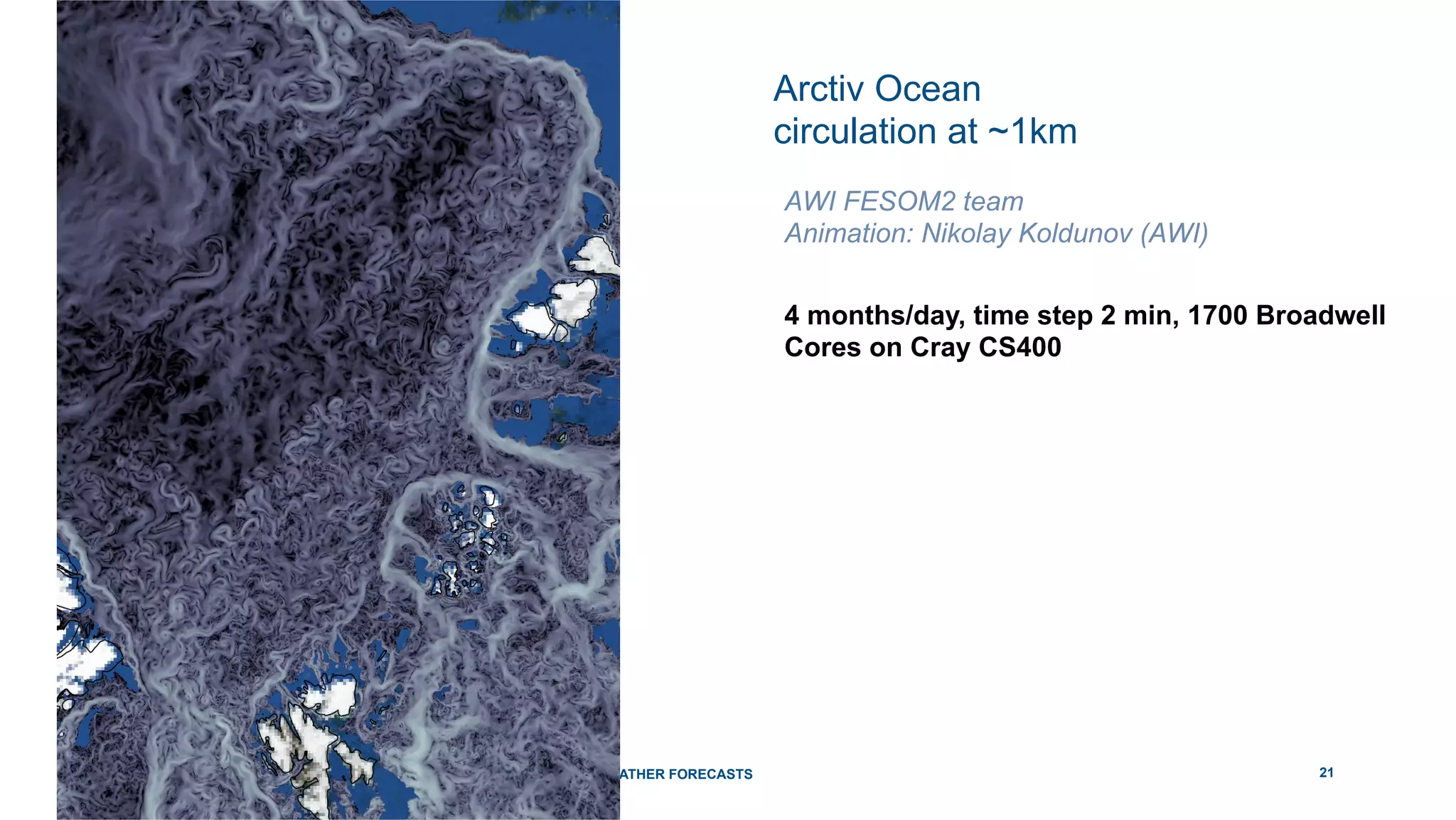
AWI FESOM2 team
Animation: Nikolay Koldunov (AWI)
Arctiv Ocean
circulation at ~1km
4 months/day, time step 2 min, 1700 Broadwell
Cores on Cray CS400
October 29, 2014 22EUROPEAN CENTRE FOR MEDIUM-RANGE WEATHER FORECASTS
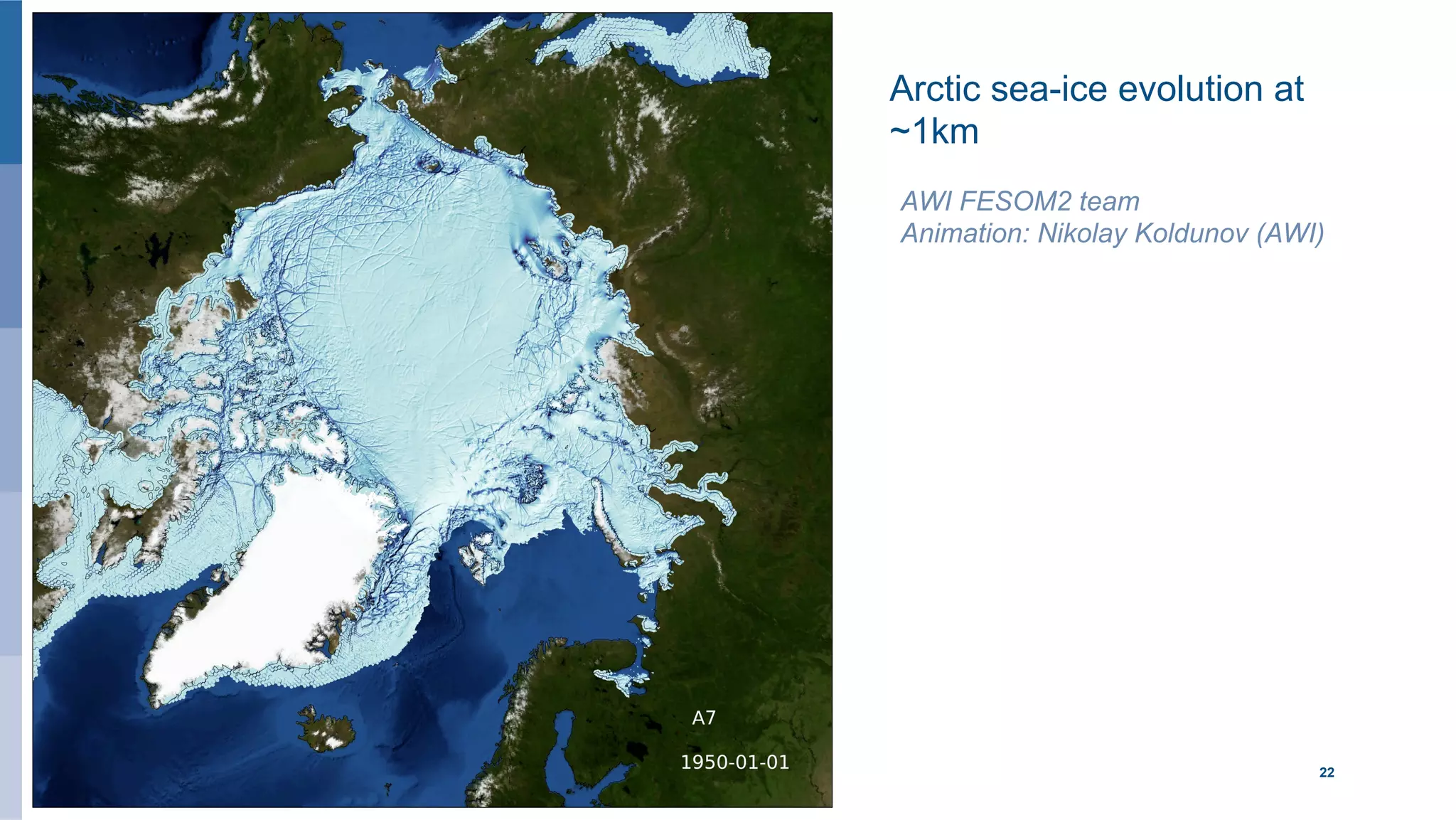
AWI FESOM2 team
Animation: Nikolay Koldunov (AWI)
Arctic sea-ice evolution at
~1km
EUROPEAN CENTRE FOR MEDIUM-RANGE WEATHER FORECASTS October 29, 2014
Cut-off	where	power	is	50%	of	k-5/3	
IFS	KE	spectra	compared	to	altimeter	observations	
Resolved	1	km	scales	need	at	least	x6	more	resolution	and	x10000s		
in	compute	=>	intermediate	goal	1	km	grid	
[Courtesy	S.	Abdalla]
October 29, 2014
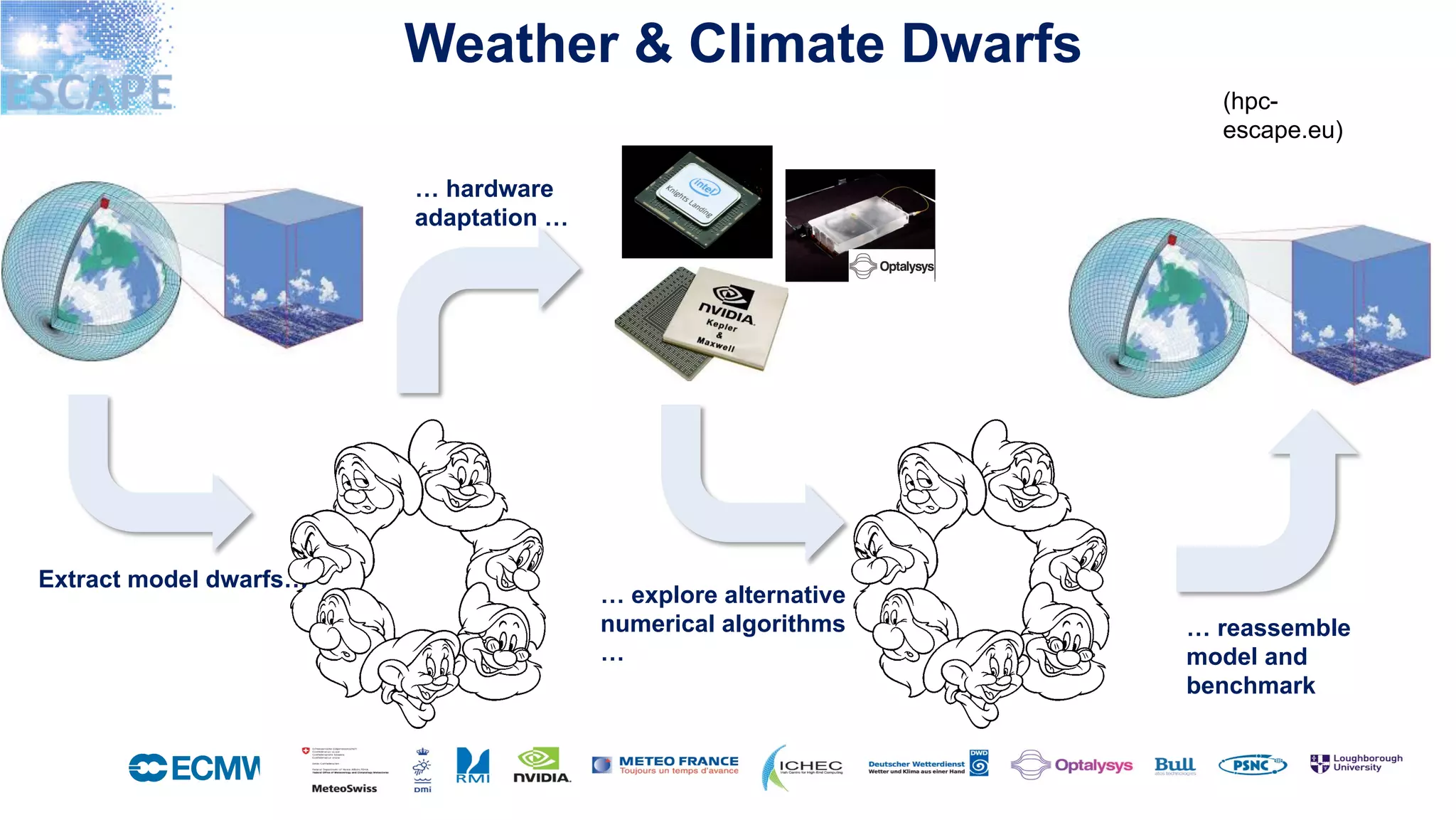
(hpc-
escape.eu)
Weather & Climate Dwarfs
Extract model dwarfs…
… explore alternative
numerical algorithms
…
… hardware
adaptation …
… reassemble
model and
benchmark
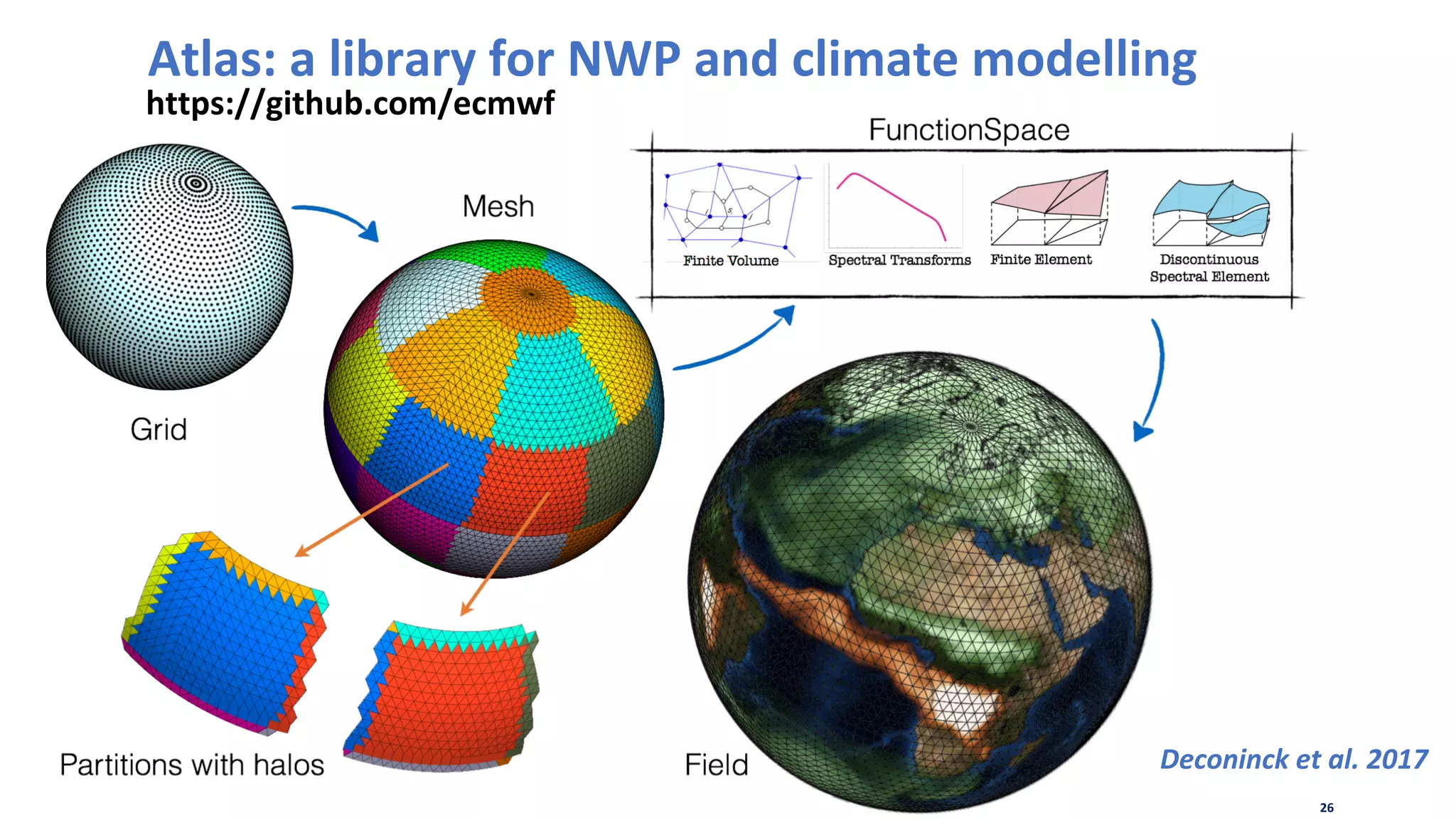
Atlas:	a	library	for	NWP	and	climate	modelling	
26	
Deconinck	et	al.	2017	
https://github.com/ecmwf
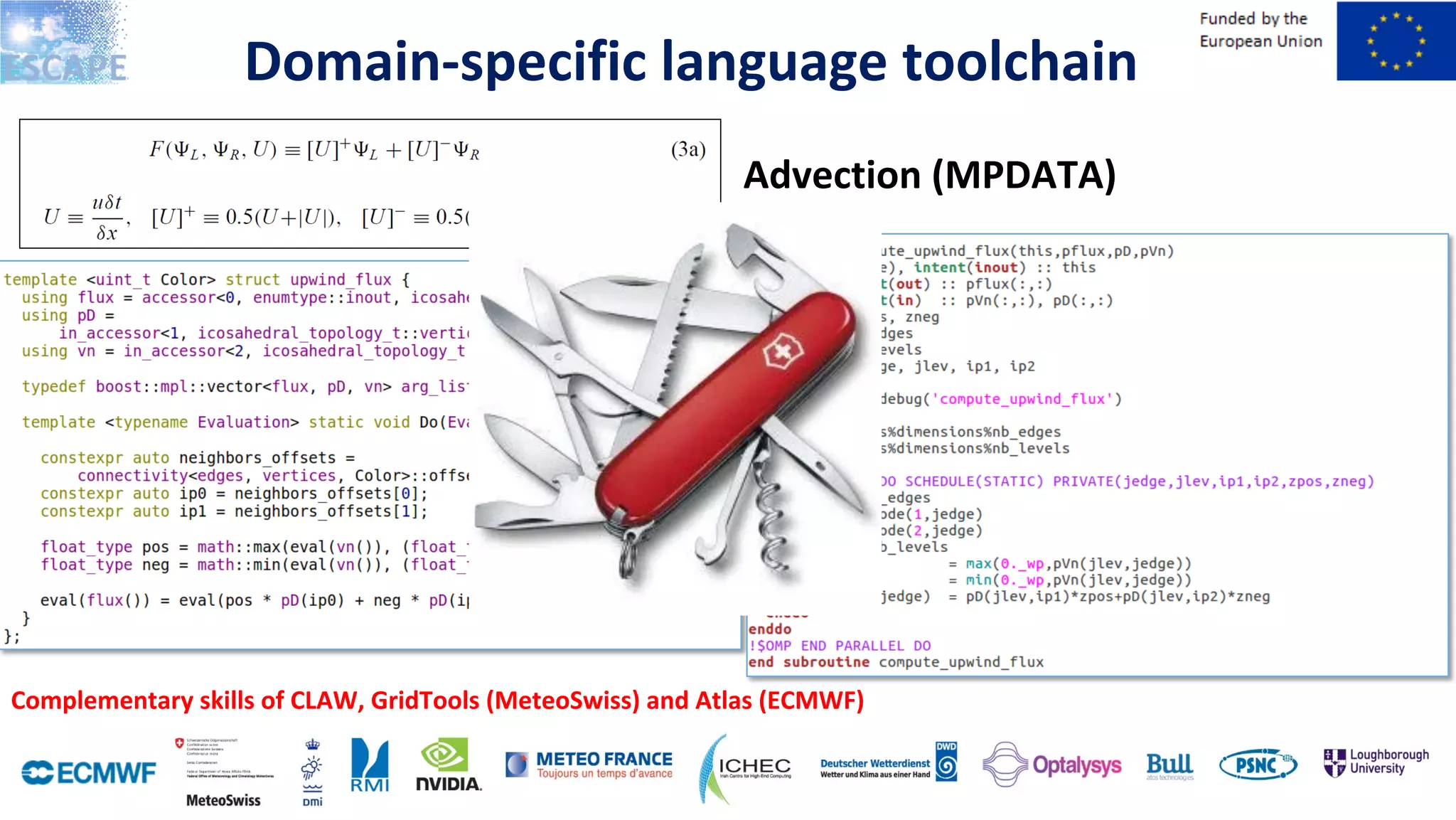
Domain-specific	language	toolchain
Advection	(MPDATA)	
Complementary	skills	of	CLAW,	GridTools	(MeteoSwiss)	and	Atlas	(ECMWF)
October	29,	2014	
28	
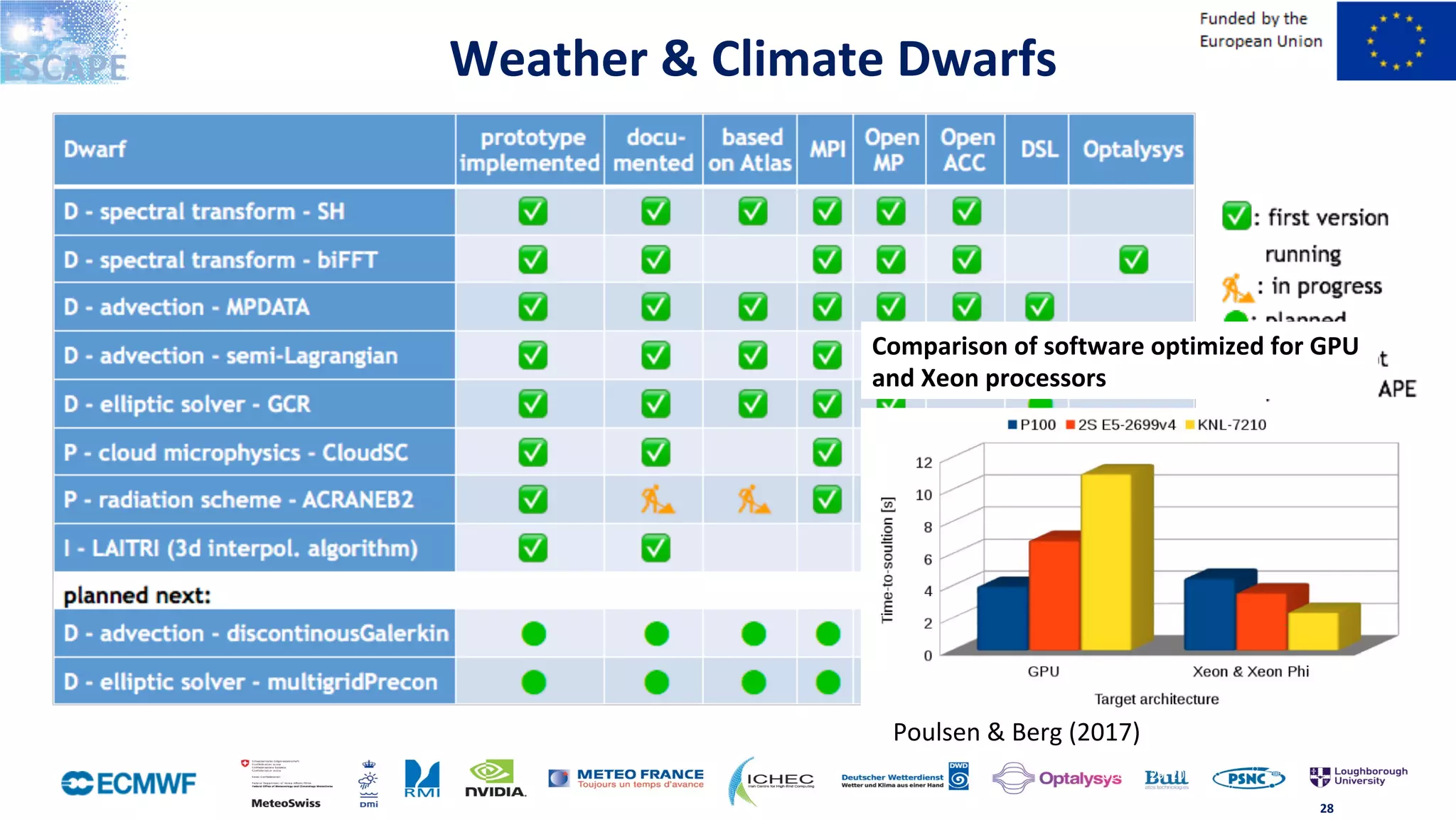
Weather	&	Climate	Dwarfs	
Comparison	of	software	optimized	for	GPU	
and	Xeon	processors	
Poulsen	&	Berg	(2017)
October	29,	2014	
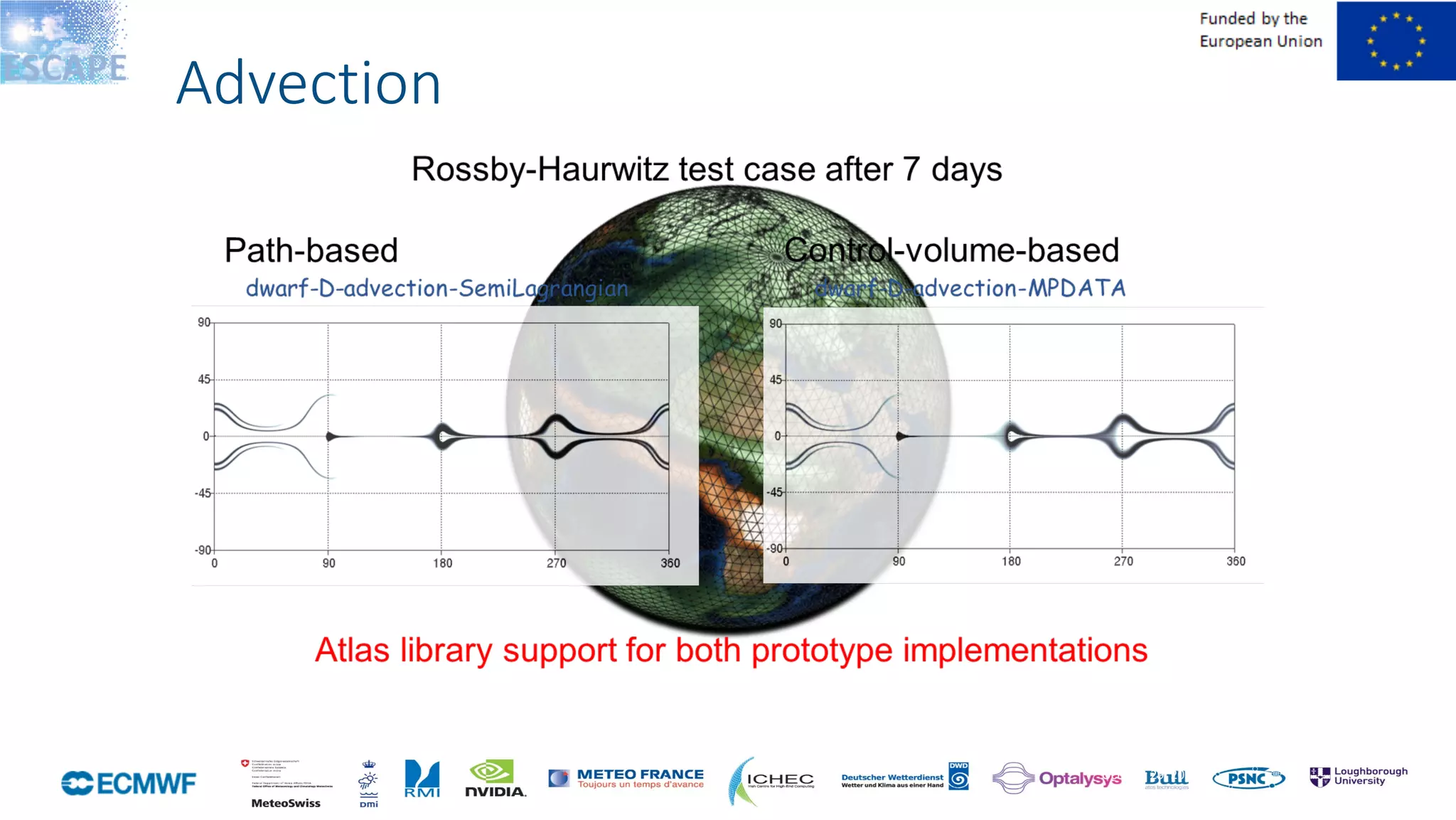
Advection
30
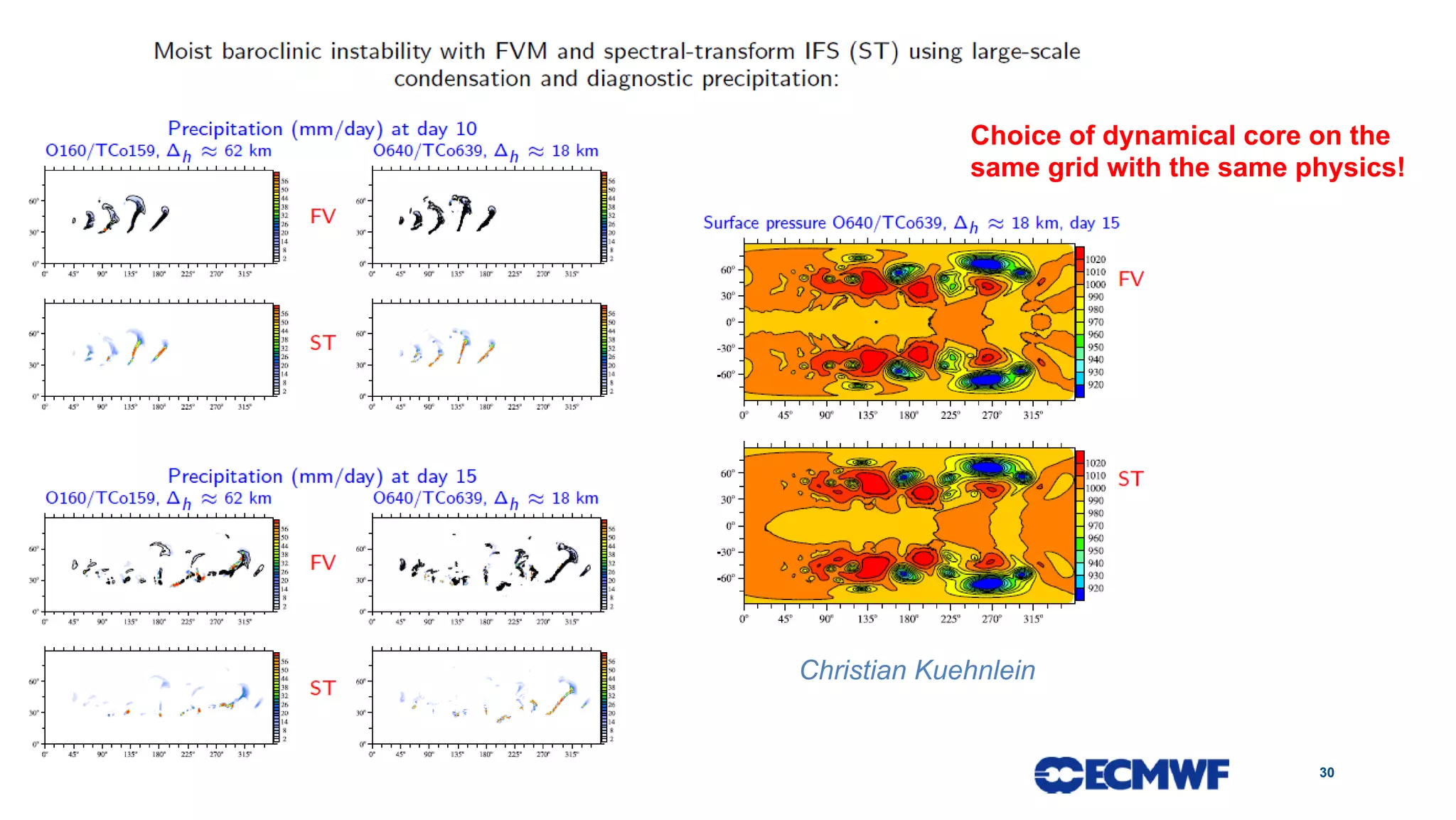
Christian Kuehnlein
Choice of dynamical core on the
same grid with the same physics!
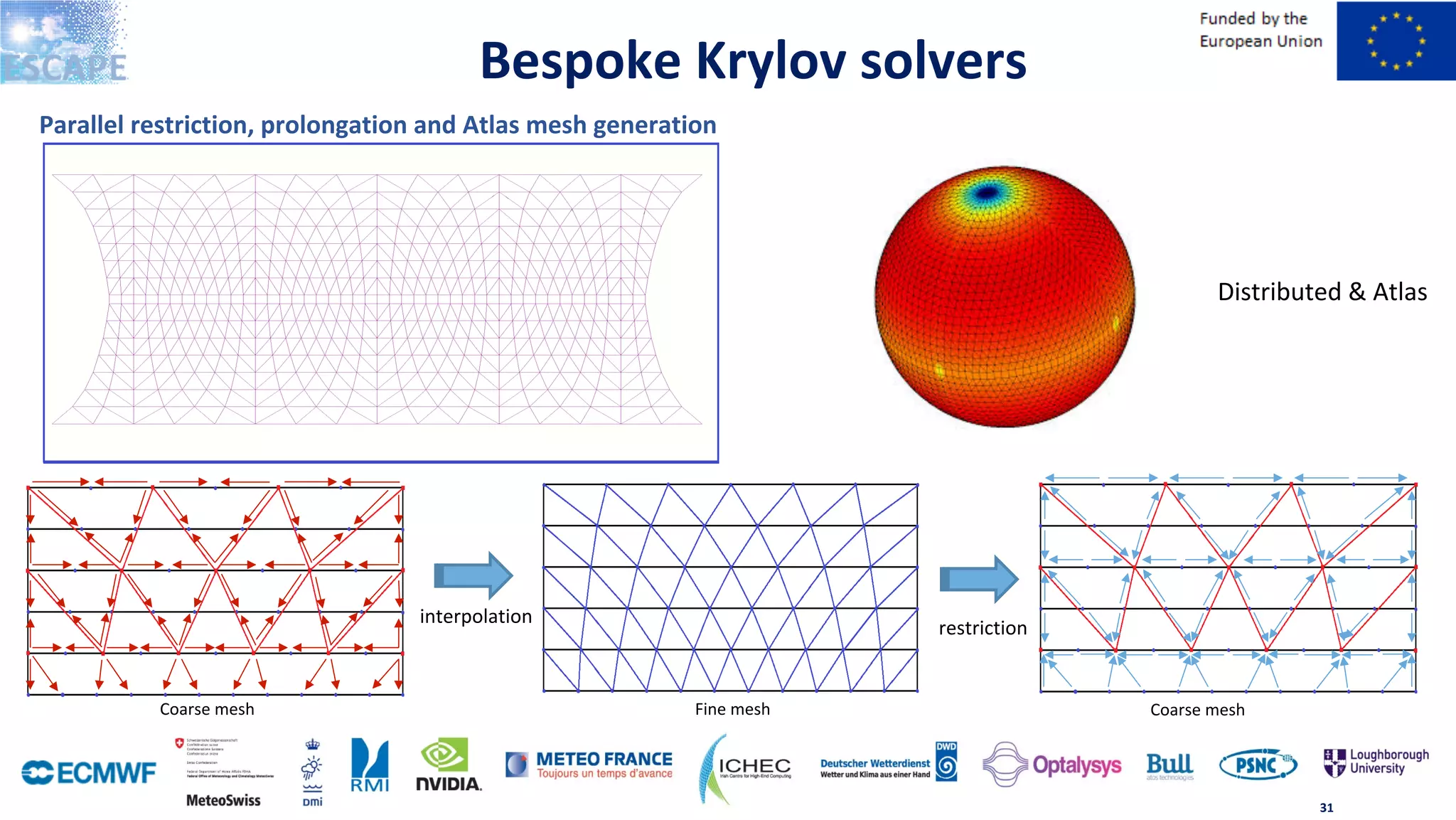
Bespoke	Krylov	solvers	
31	
Parallel	restriction,	prolongation	and	Atlas	mesh	generation	
interpolation	
restriction	
Coarse	mesh	Coarse	mesh	 Fine	mesh	
Distributed	&	Atlas
October 29, 2014
0
20
40
60
80
100
120
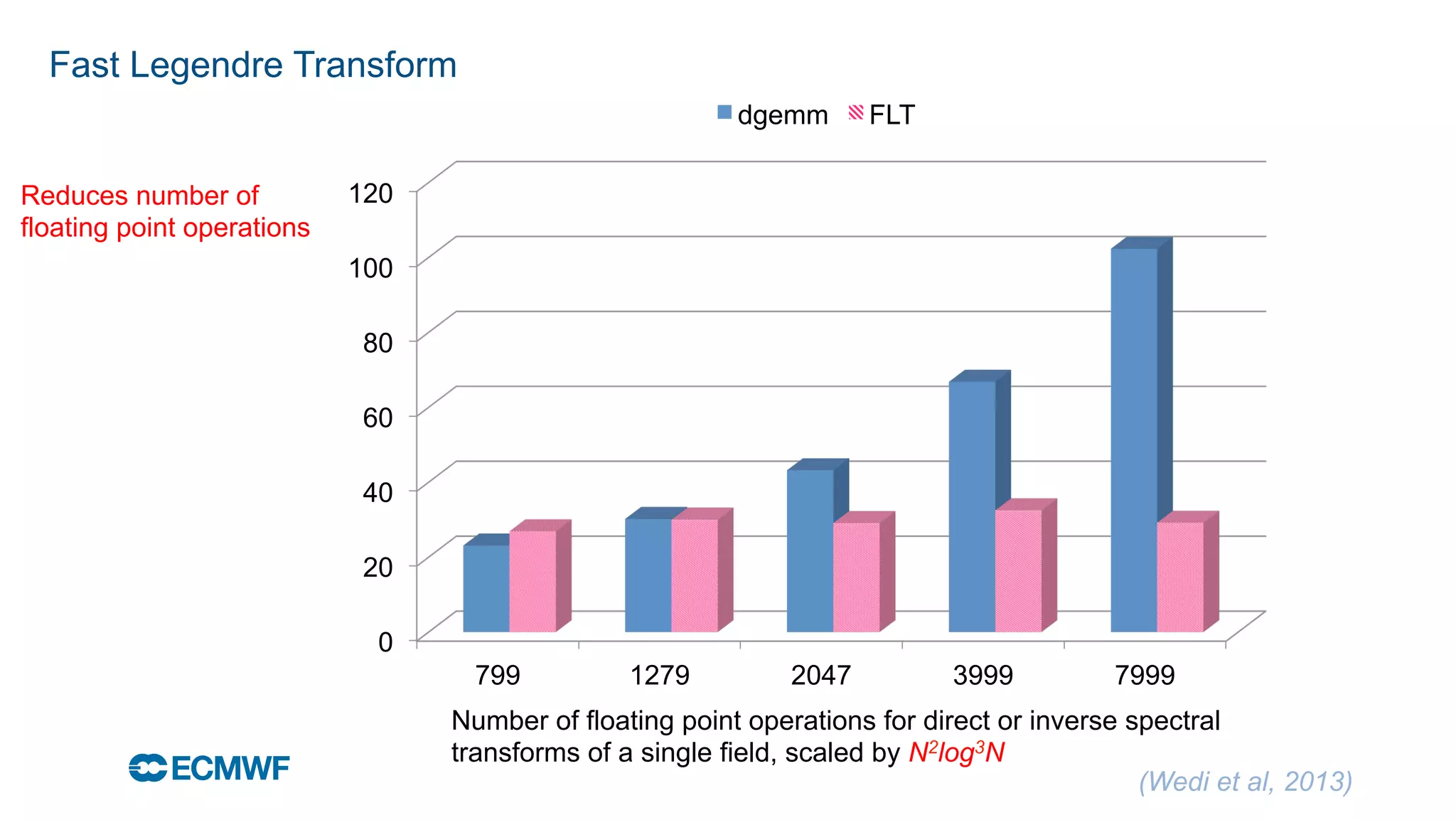
799 1279 2047 3999 7999
dgemm FLT
Number of floating point operations for direct or inverse spectral
transforms of a single field, scaled by N2log3N
(Wedi et al, 2013)
Fast Legendre Transform
Reduces number of
floating point operations
October	29,	2014	
33	
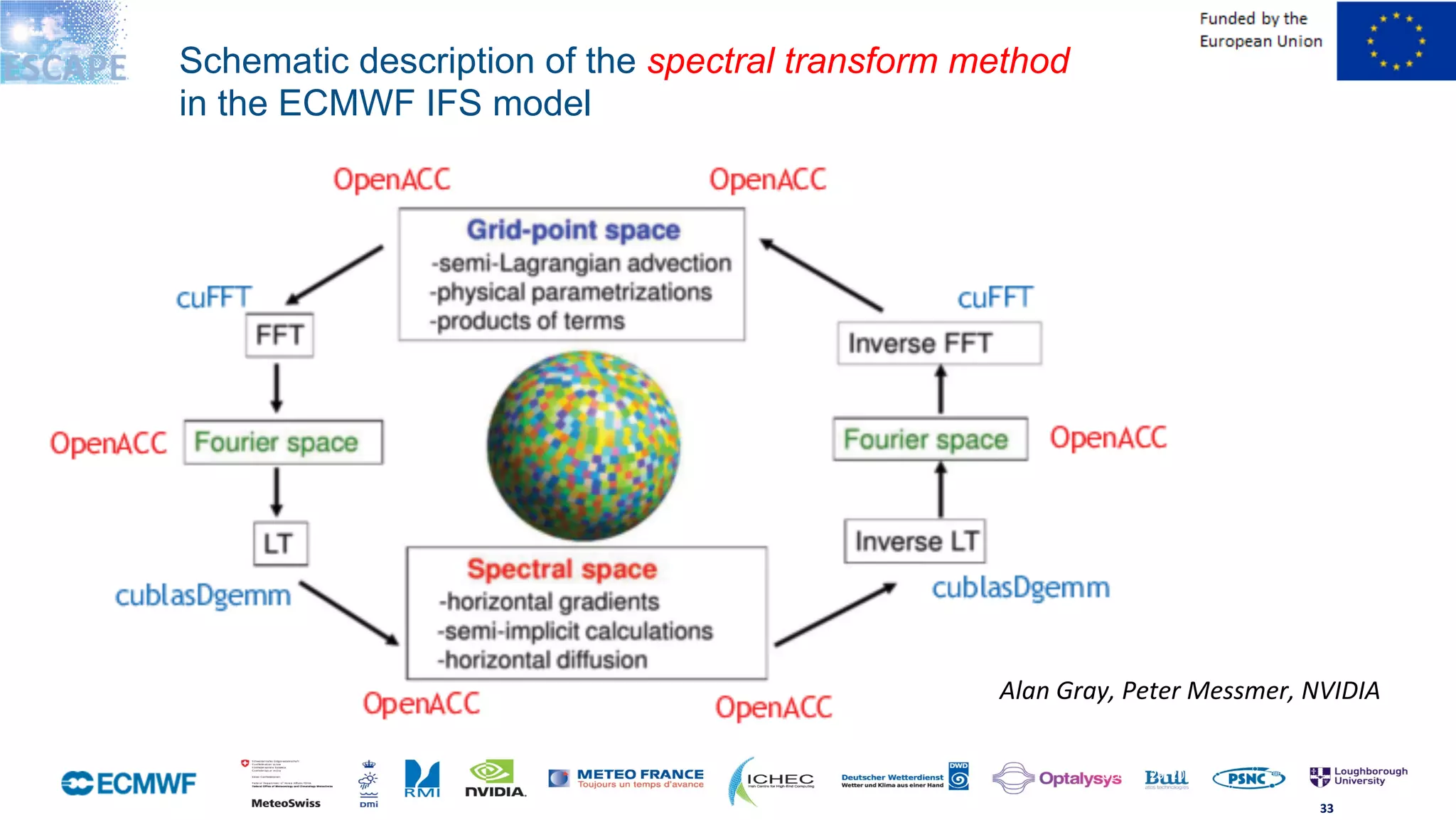
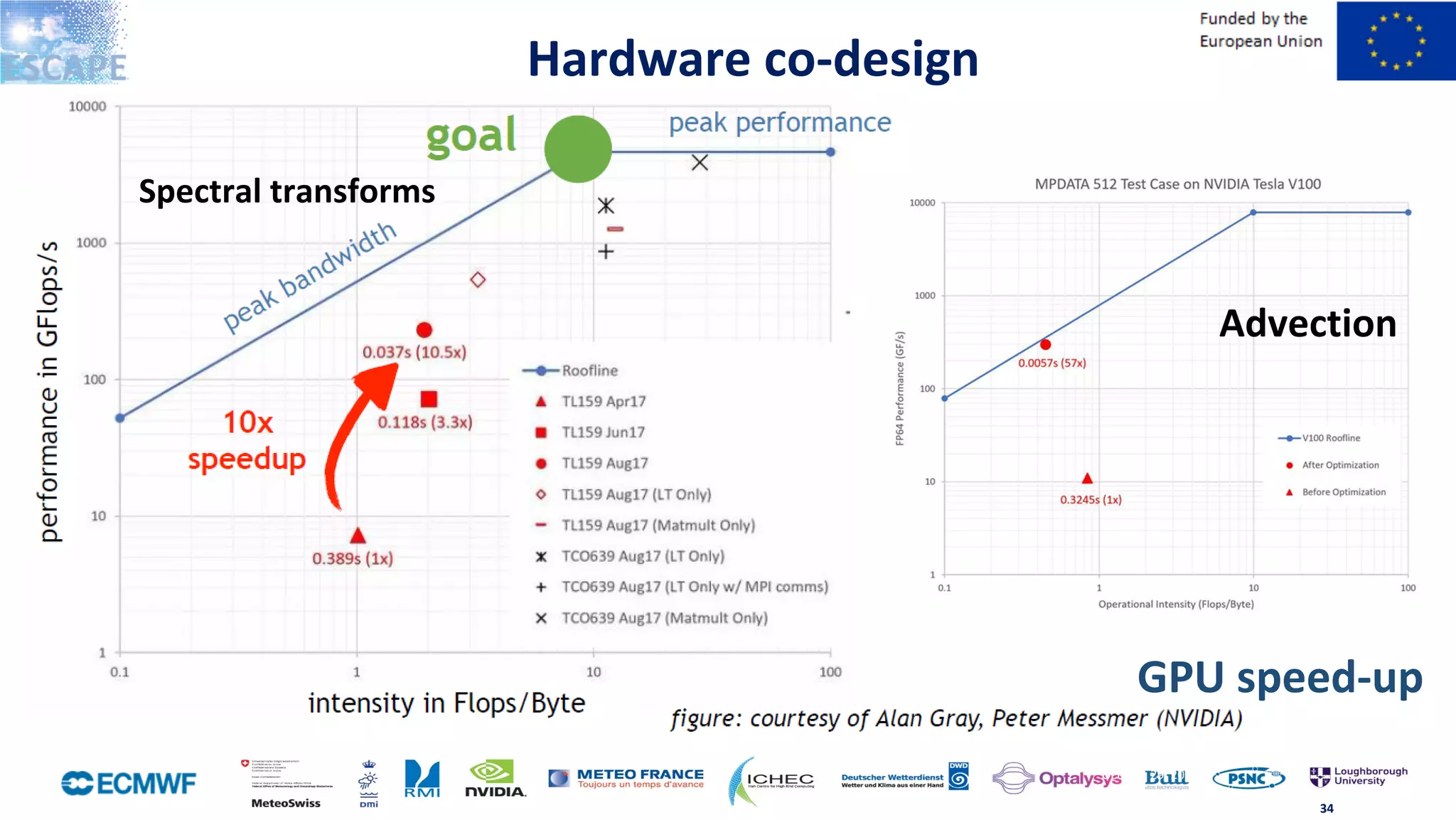
Alan	Gray,	Peter	Messmer,	NVIDIA	
Schematic description of the spectral transform method
in the ECMWF IFS model
October	29,	2014	
34	
Hardware	co-design	
GPU	speed-up	
Advection	
Spectral	transforms
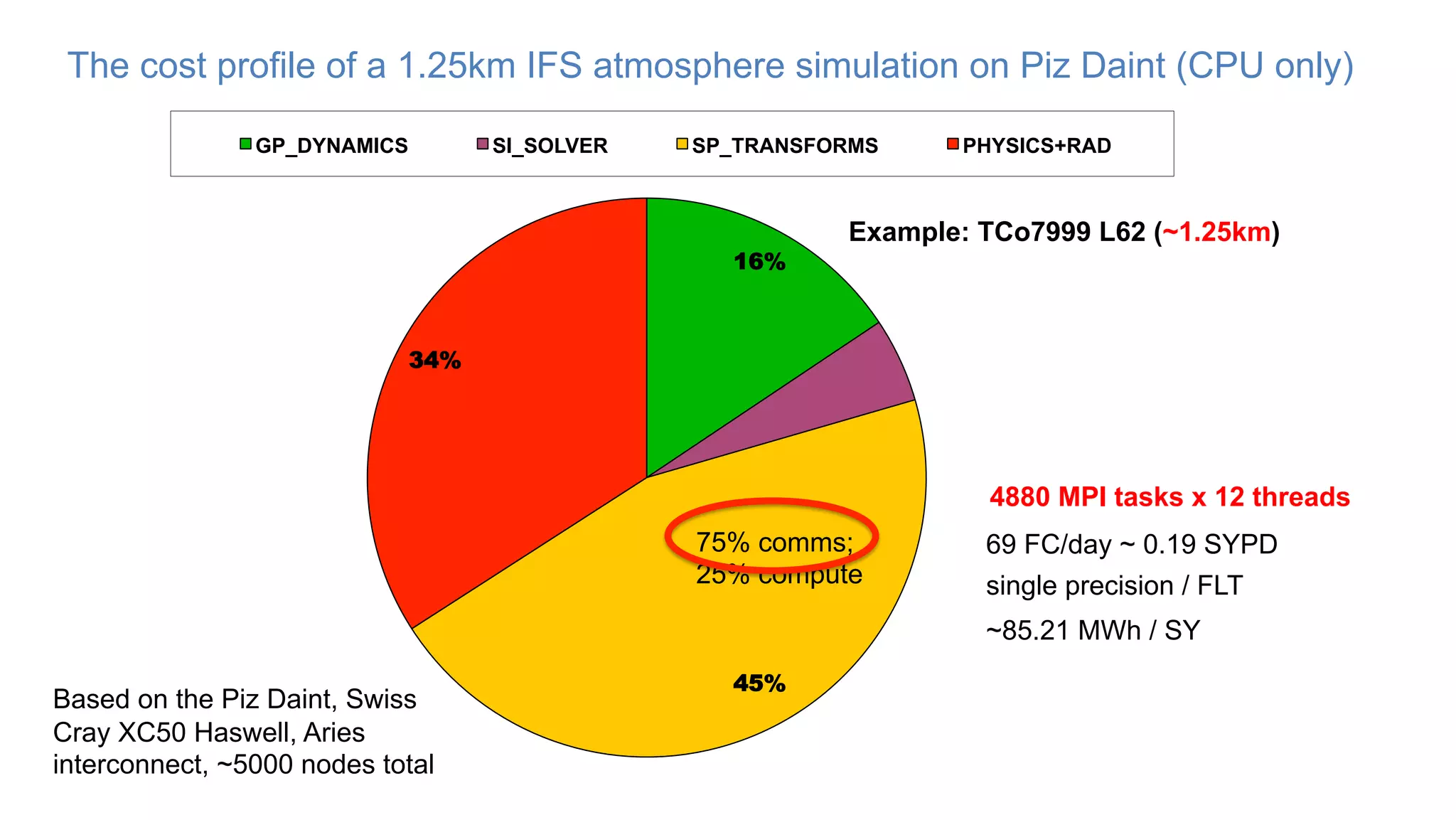
16%
45%
34%
GP_DYNAMICS SI_SOLVER SP_TRANSFORMS PHYSICS+RAD
Example: TCo7999 L62 (~1.25km)
Where do we spent the time ?
The cost profile of a 1.25km IFS atmosphere simulation on Piz Daint (CPU only)
4880 MPI tasks x 12 threads
69 FC/day ~ 0.19 SYPD
single precision / FLT
75% comms;
25% compute
~85.21 MWh / SY
Based on the Piz Daint, Swiss
Cray XC50 Haswell, Aries
interconnect, ~5000 nodes total
October	29,	2014	October	29,	2014	
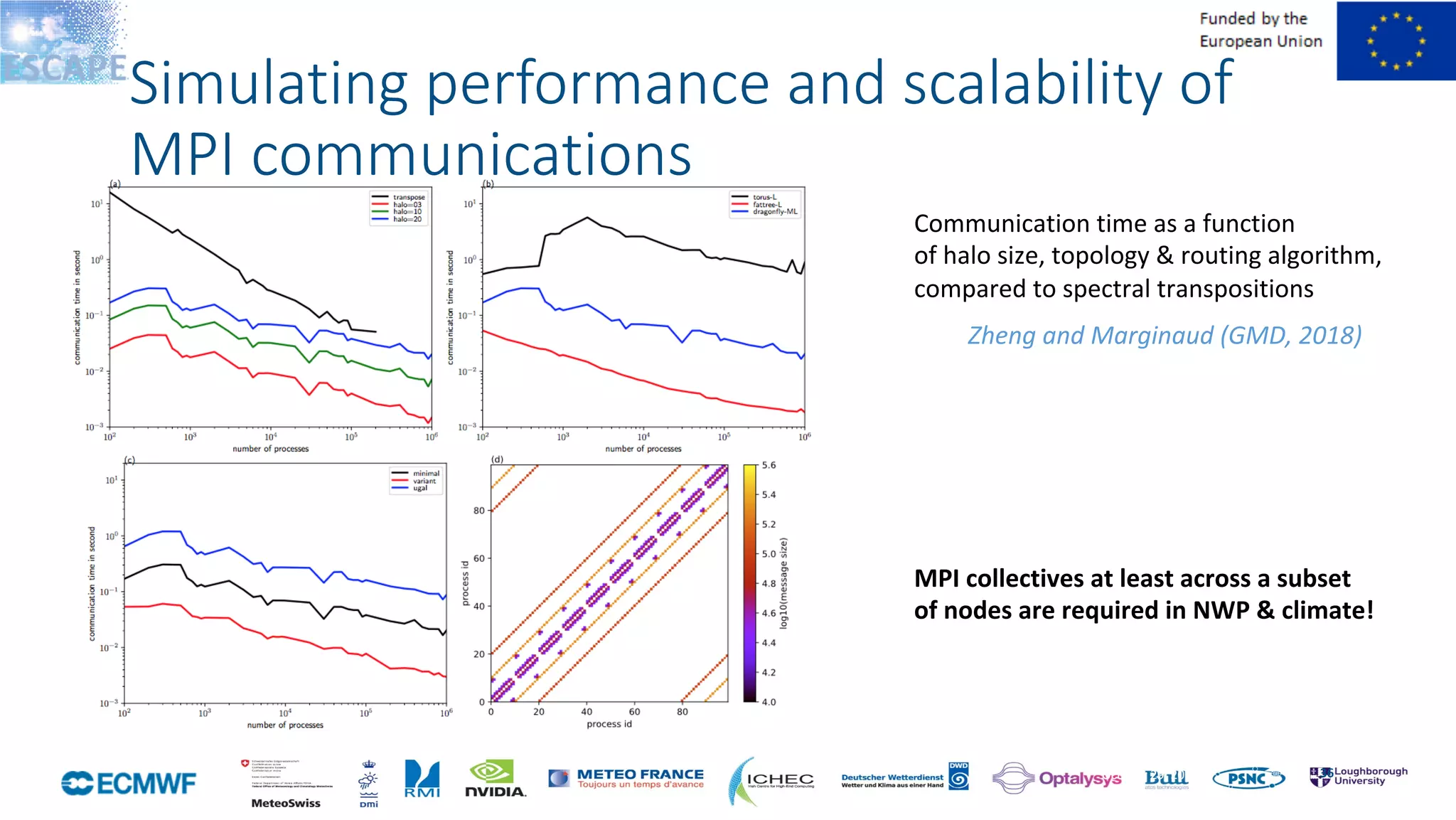
Simulating performance and scalability of
MPI communications
36	
Zheng	and	Marginaud	(GMD,	2018)	
Communication	time	as	a	function		
of	halo	size,	topology	&	routing	algorithm,		
compared	to	spectral	transpositions		
MPI	collectives	at	least	across	a	subset	
of	nodes	are	required	in	NWP	&	climate!
EUROPEAN CENTRE FOR MEDIUM-RANGE WEATHER FORECASTS October 29, 2014
Communication	is	bad	–	small	time	steps	are	worse		
Same	time	to	solution!	
Energy	efficiency?	
Spectral	element	model	
Time	step	=	4s	
Spectral	transform	model	
Time	step	=	240s	
Spectral	element	model	
Time	step	=	4s	
Data	movement	x100	(x1000)	
more	expensive	than	
computations	in	time	(energy)!	
[Shalf	et	al.	2011]
October	29,	2014	
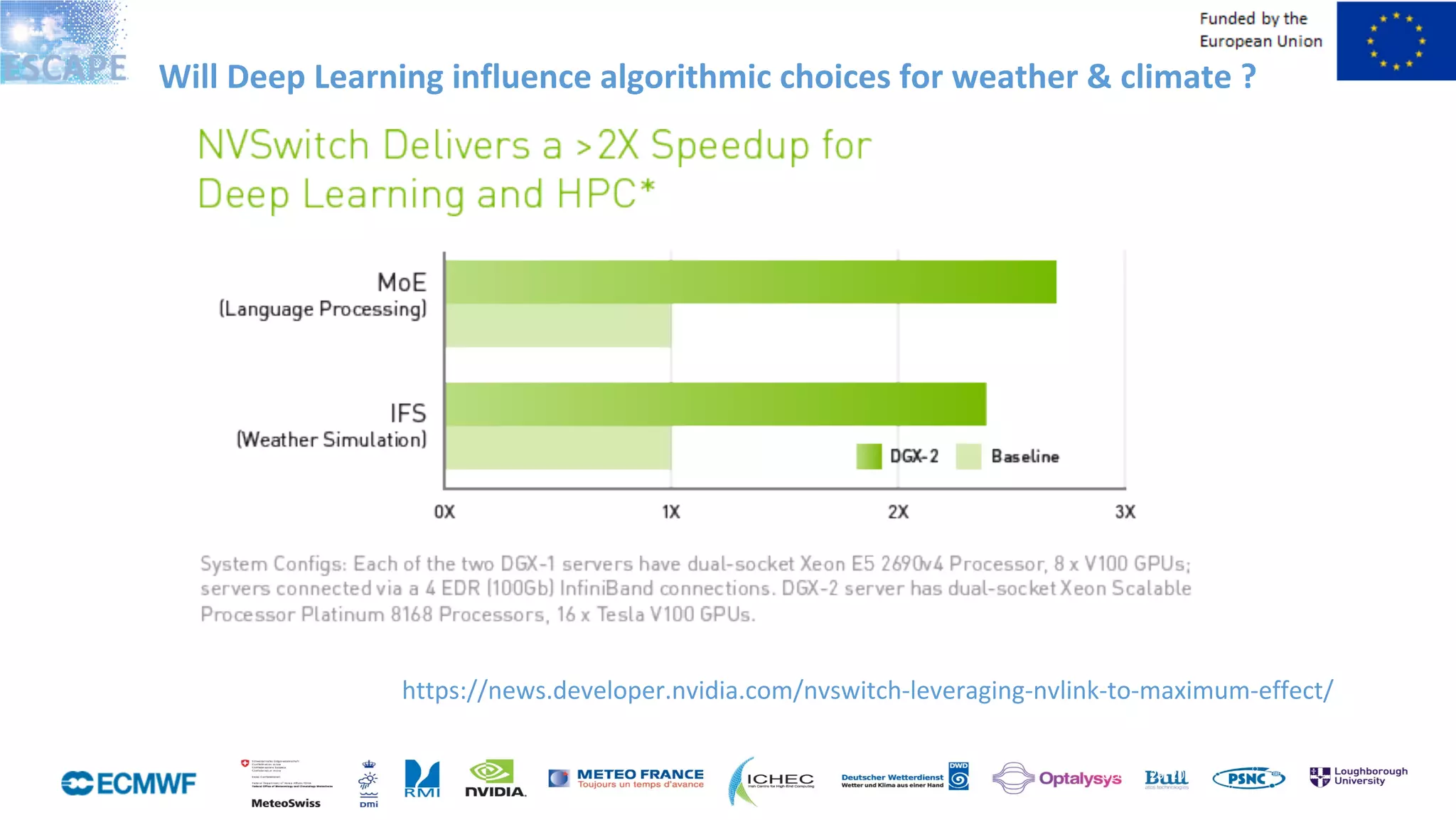
Will	Deep	Learning	influence	algorithmic	choices	for	weather	&	climate	?	
	
https://news.developer.nvidia.com/nvswitch-leveraging-nvlink-to-maximum-effect/
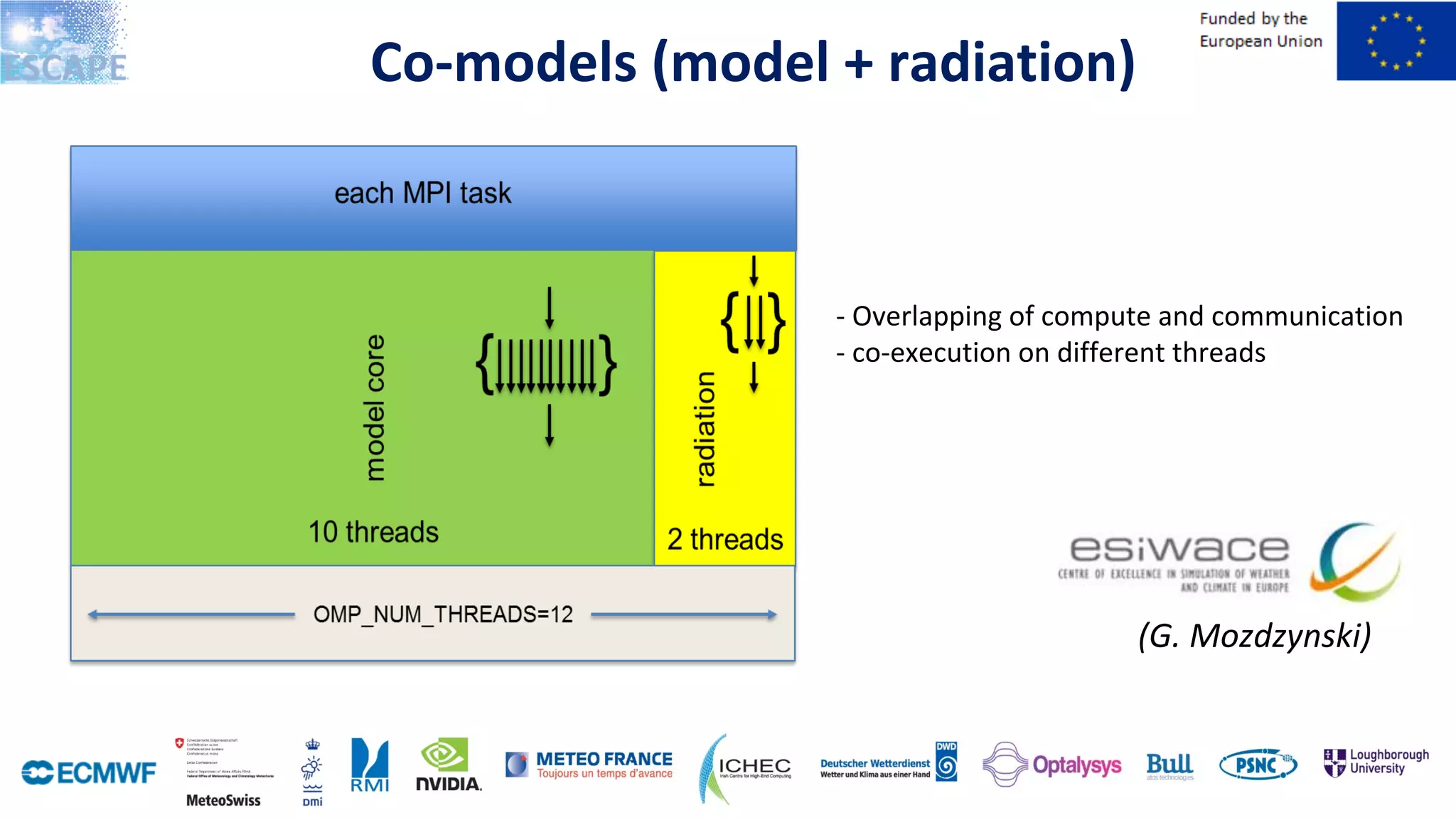
Co-models	(model	+	radiation)			
-	Overlapping	of	compute	and	communication	
-	co-execution	on	different	threads		
(G.	Mozdzynski)
52
96
154
197
70
133
239
380
295
536
10
21
170
323
0
100
200
300
400
500
600
120 240 480 960 1920
FORECASTDAYS/DAY
XC-40 NODES (X36 == CORES)
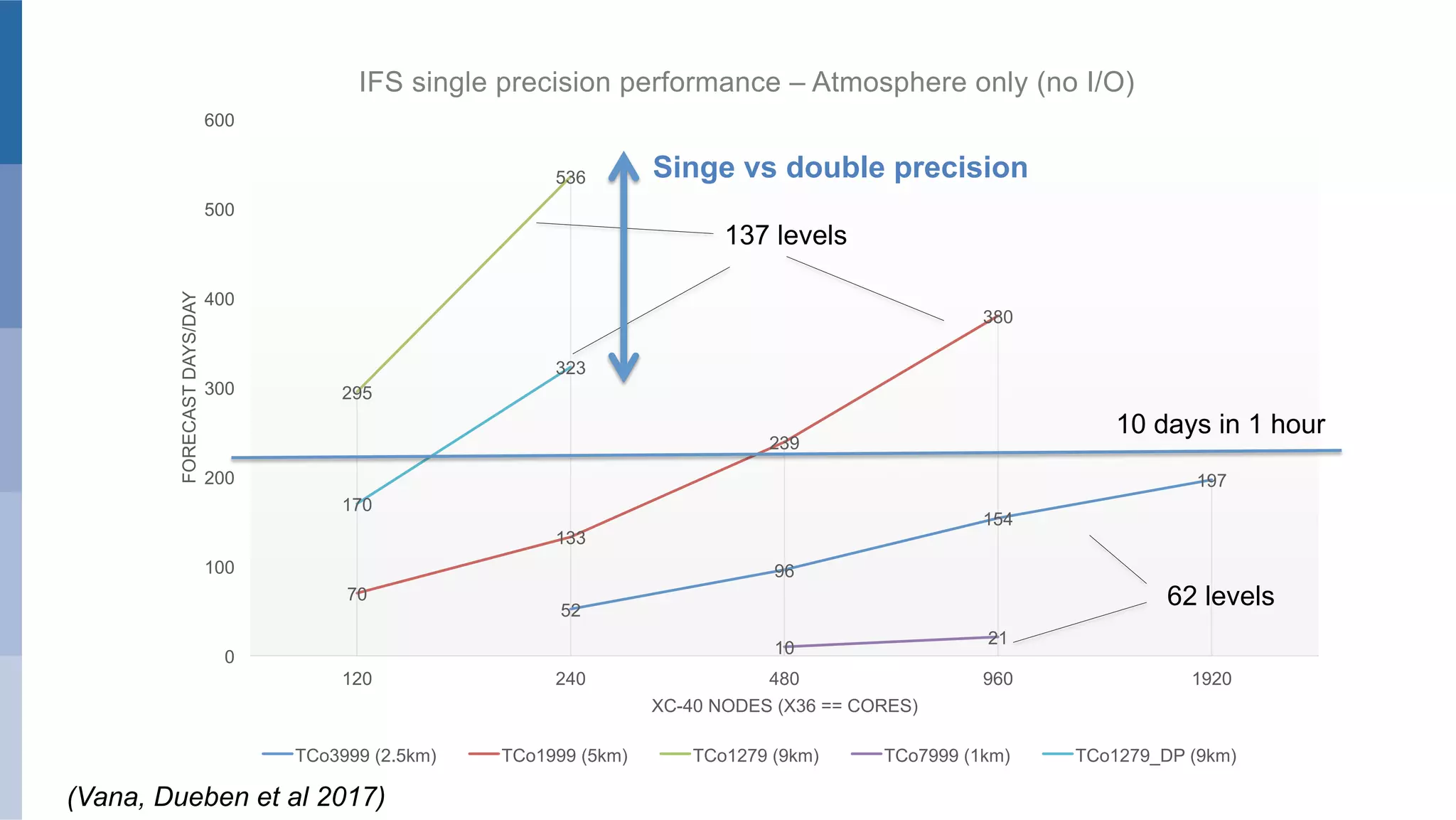
IFS single precision performance – Atmosphere only (no I/O)
TCo3999 (2.5km) TCo1999 (5km) TCo1279 (9km) TCo7999 (1km) TCo1279_DP (9km)
Singe vs double precision
10 days in 1 hour
137 levels
62 levels
(Vana, Dueben et al 2017)
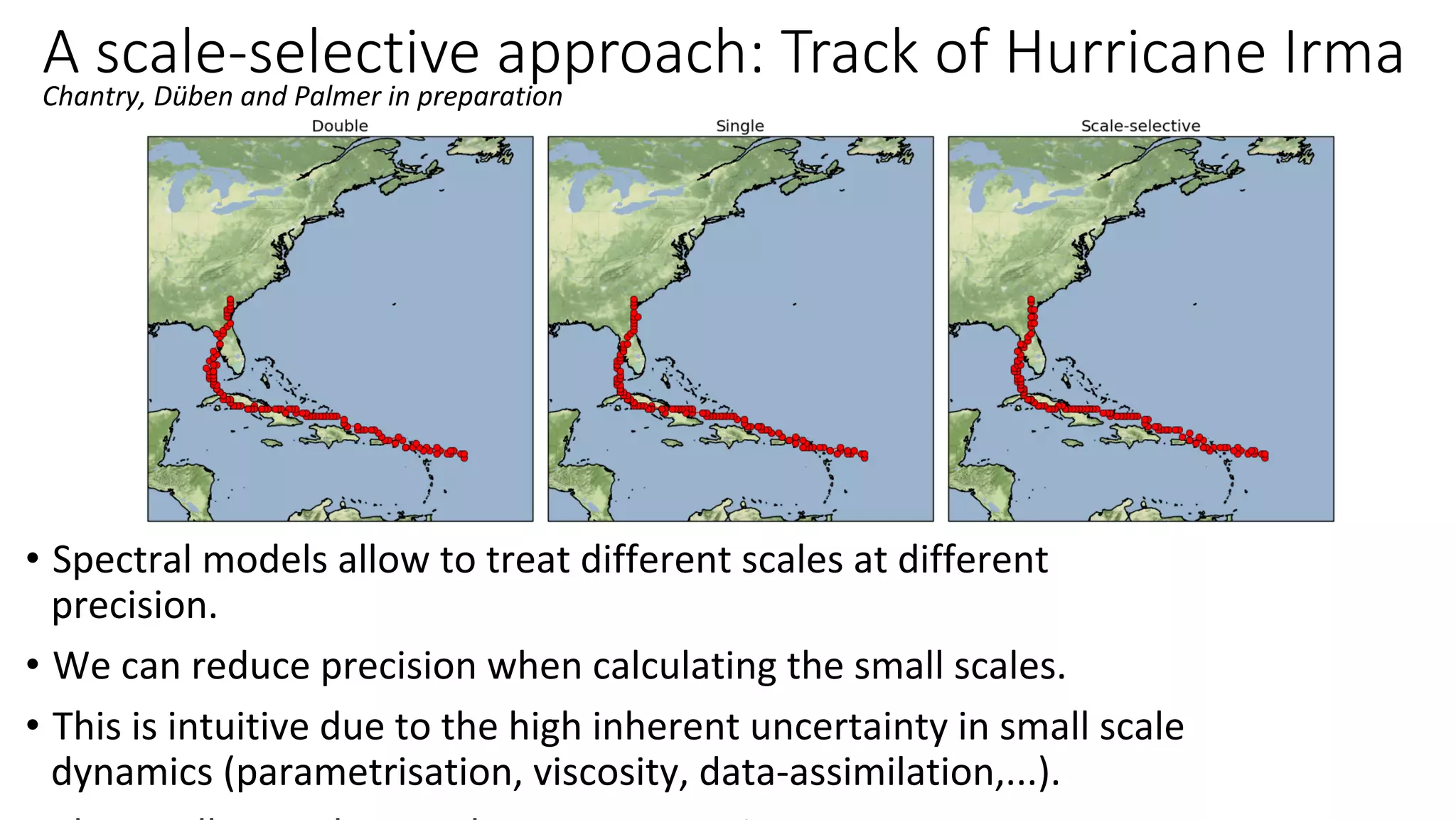
A scale-selective approach: Track of Hurricane Irma
•  Spectral	models	allow	to	treat	different	scales	at	different	
precision.	
•  We	can	reduce	precision	when	calculating	the	small	scales.	
•  This	is	intuitive	due	to	the	high	inherent	uncertainty	in	small	scale	
dynamics	(parametrisation,	viscosity,	data-assimilation,...).	
Chantry,	Düben	and	Palmer	in	preparation
EUROPEAN CENTRE FOR MEDIUM-RANGE WEATHER FORECASTS October 29, 2014
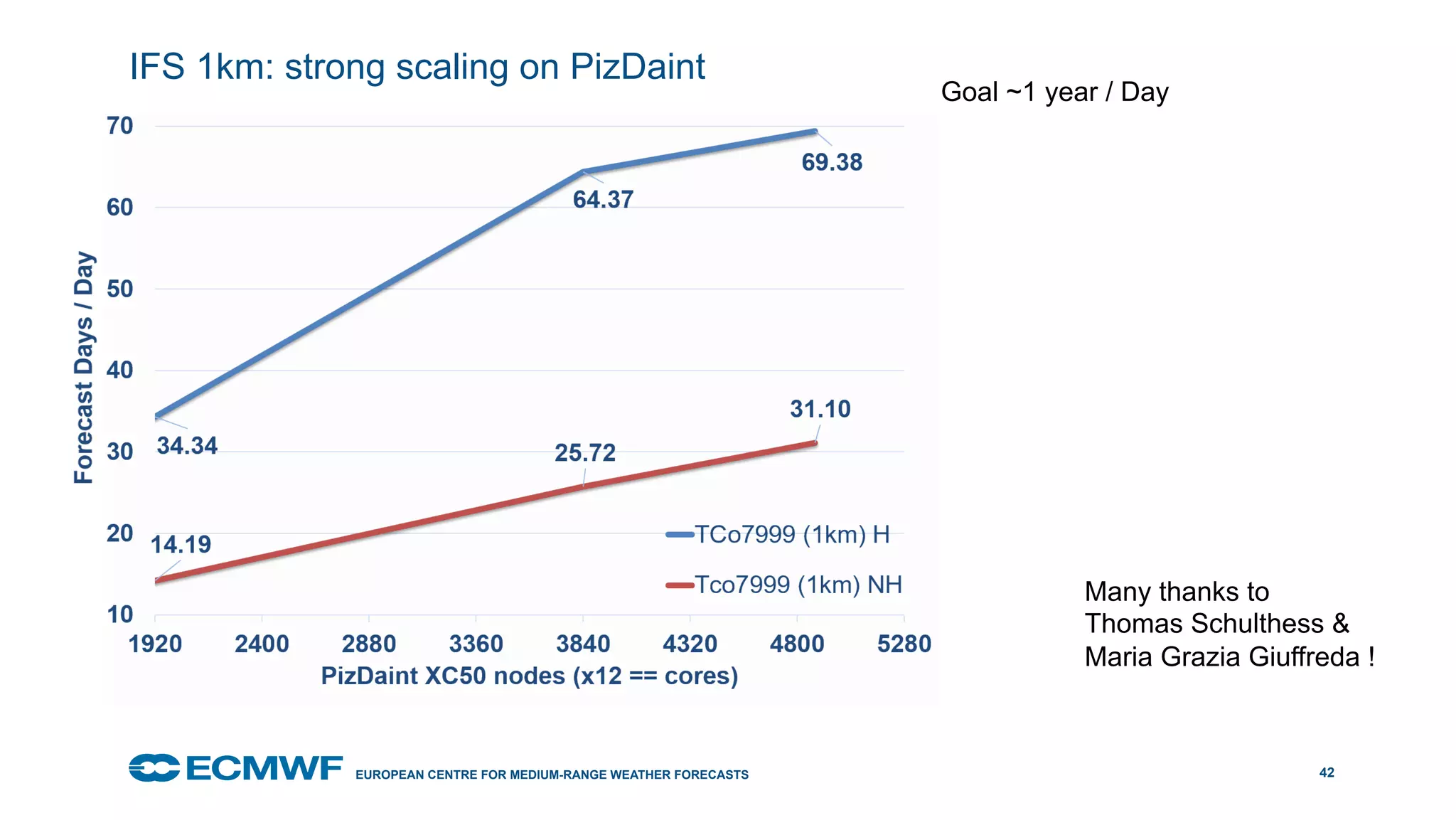
IFS 1km: strong scaling on PizDaint
42
Goal ~1 year / Day
Many thanks to
Thomas Schulthess &
Maria Grazia Giuffreda !
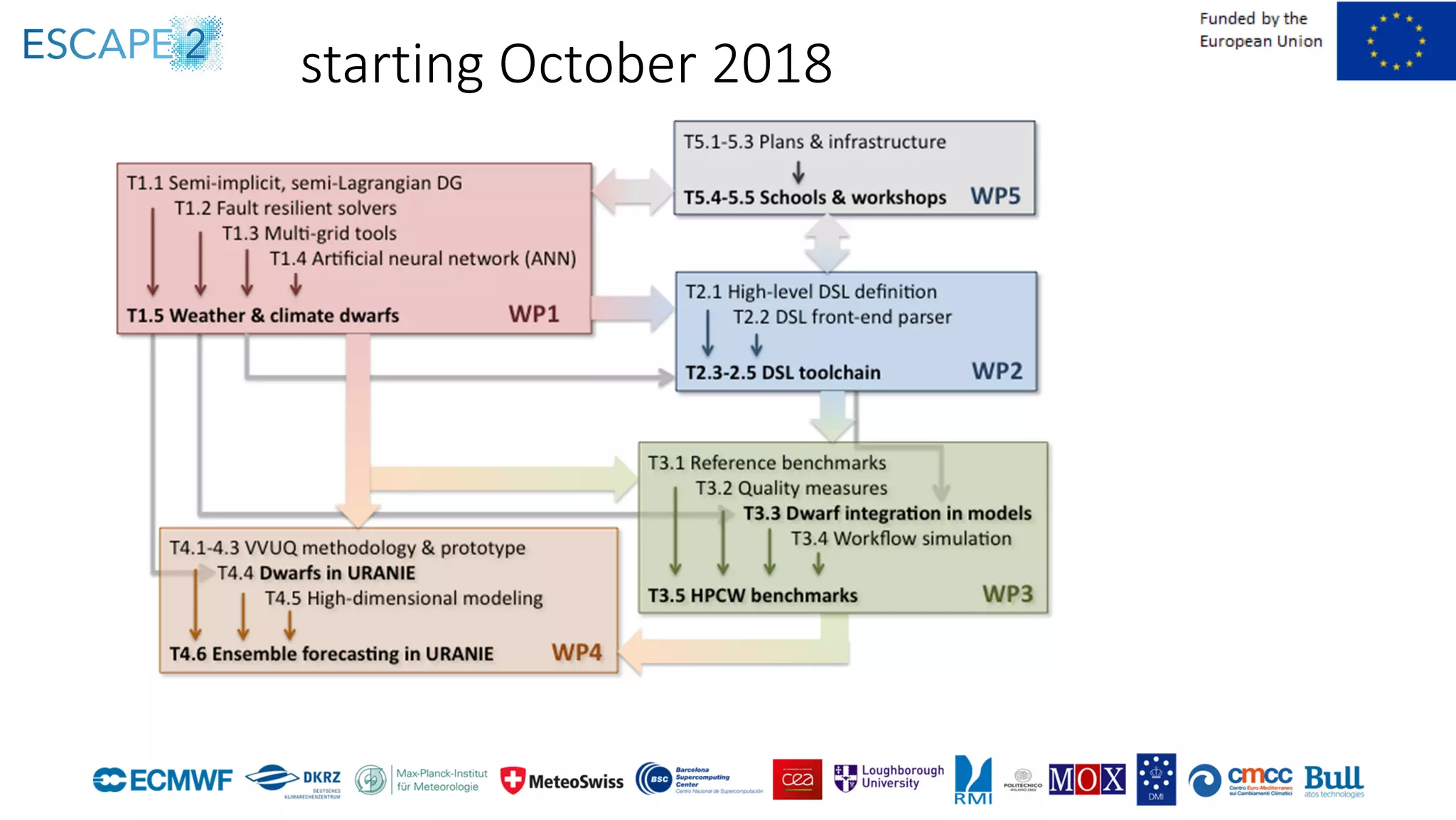
starting October 2018
October	29,	2014	 PETER	BAUER	2018	
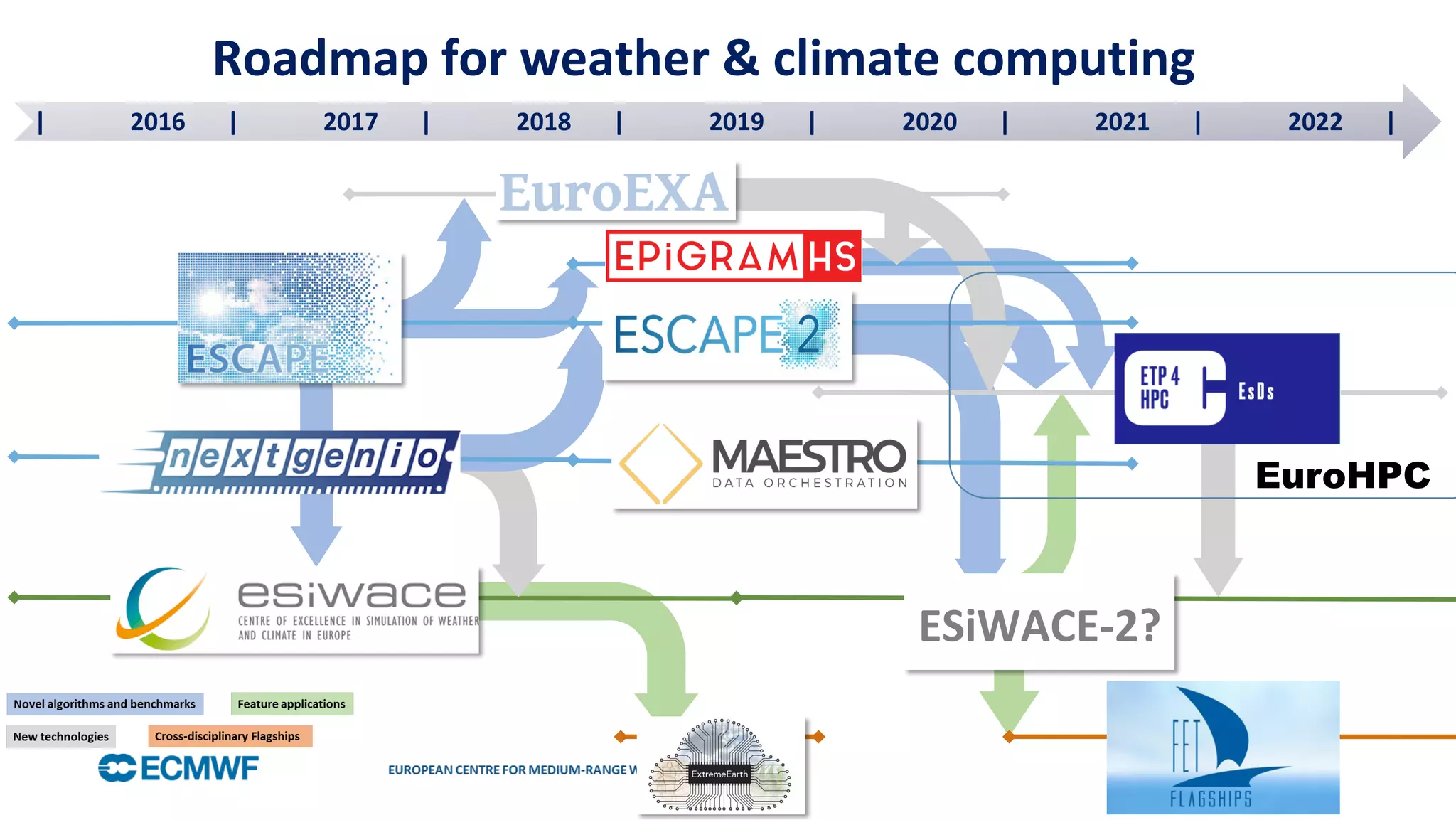
| 	2016 	| 	2017 	| 	2018 	|	 	2019 	| 	2020 	| 	2021 	| 	2022 	|	
ESiWACE-2?	
EuroHPC
Roadmap	for	weather	&	climate	computing
ExtremeEarth
October 29, 2014
ECMWF’s mission strategy
•  In collaboration with its member and associated states
–  Address the challenges in sustainable computing and data handling
–  Move towards Earth-System complexity with rigorous quantification of forecast uncertainty
•  High-resolution global ensemble of assimilation and forecasts coupling the ocean, sea-ice, land and
atmosphere
–  Supporting Copernicus Services
•  Climate monitoring services for the atmosphere, hydrological and carbon cycle
•  European Reanalysis (currently producing ERA-5)
•  Atmospheric composition monitoring
•  Emergency alert system (Floods, Fires, …)
48EUROPEAN CENTRE FOR MEDIUM-RANGE WEATHER FORECASTS
Additional slides
FETFLAG-01-2018:		‘Energy,	Environment	and	Climate	change’:		
“Earth,	Climate	Change	and	Natural	Resources:	New	technologies	and	ambitious	approaches	for	high-
precision	modelling	and	simulation,	including	the	necessary	data	integration,	that	enable	an	in-depth	
understanding	of	the	earth	and	climate	change,	helping	in	the	long	run	to	manage	natural	resources	in	
a	sustainable	way,	ensure	food	security	and	sustainable	farming,	and	protect	natural	ecosystems
In	2016,	the	European	Commission	(EC)	issued	a	call	for	ideas	for	future	Flagships,	to	be	funded	by	the	
Future	and	Emerging	Technology	(FET)	programme.		
	
FET	Flagships	are:	
	“…	science-	and	technology-driven,	large-scale,	multidisciplinary	research	initiatives	built	around	a	
visionary	unifying	goal	...	tackle	grand	science	and	technology	challenges	… strong	and	broad	basis	for	
future	innovation	and	economic	exploitation	… novel	benefits	for	society	of	a	potential	high	impact	…	
long-term	and	sustained	effort.”		
European	Commission	Flagships
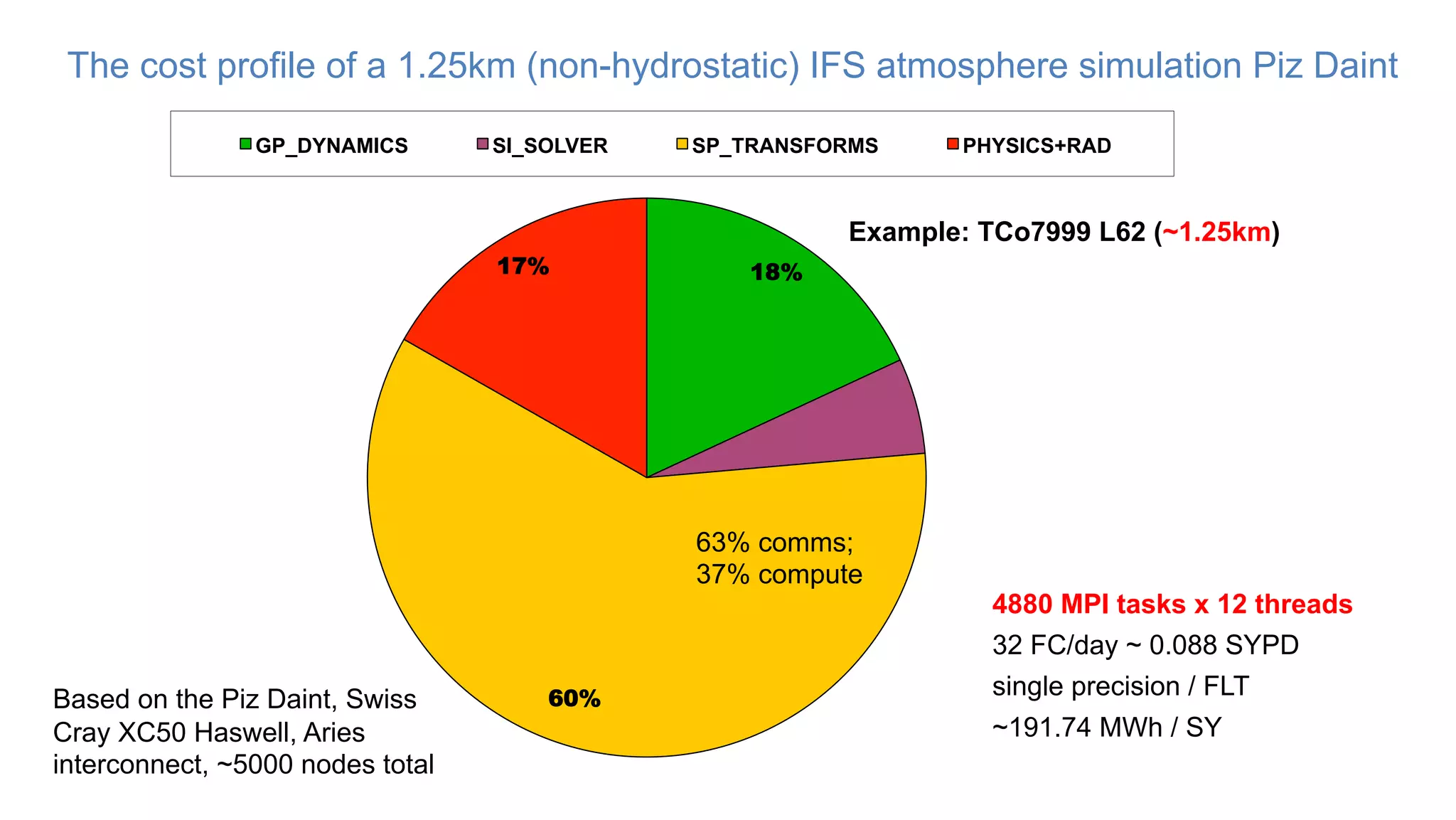
18%
60%
17%
GP_DYNAMICS SI_SOLVER SP_TRANSFORMS PHYSICS+RAD
Example: TCo7999 L62 (~1.25km)
Where do we spent the time ?
The cost profile of a 1.25km (non-hydrostatic) IFS atmosphere simulation Piz Daint
4880 MPI tasks x 12 threads
32 FC/day ~ 0.088 SYPD
single precision / FLT
63% comms;
37% compute
Based on the Piz Daint, Swiss
Cray XC50 Haswell, Aries
interconnect, ~5000 nodes total
~191.74 MWh / SY
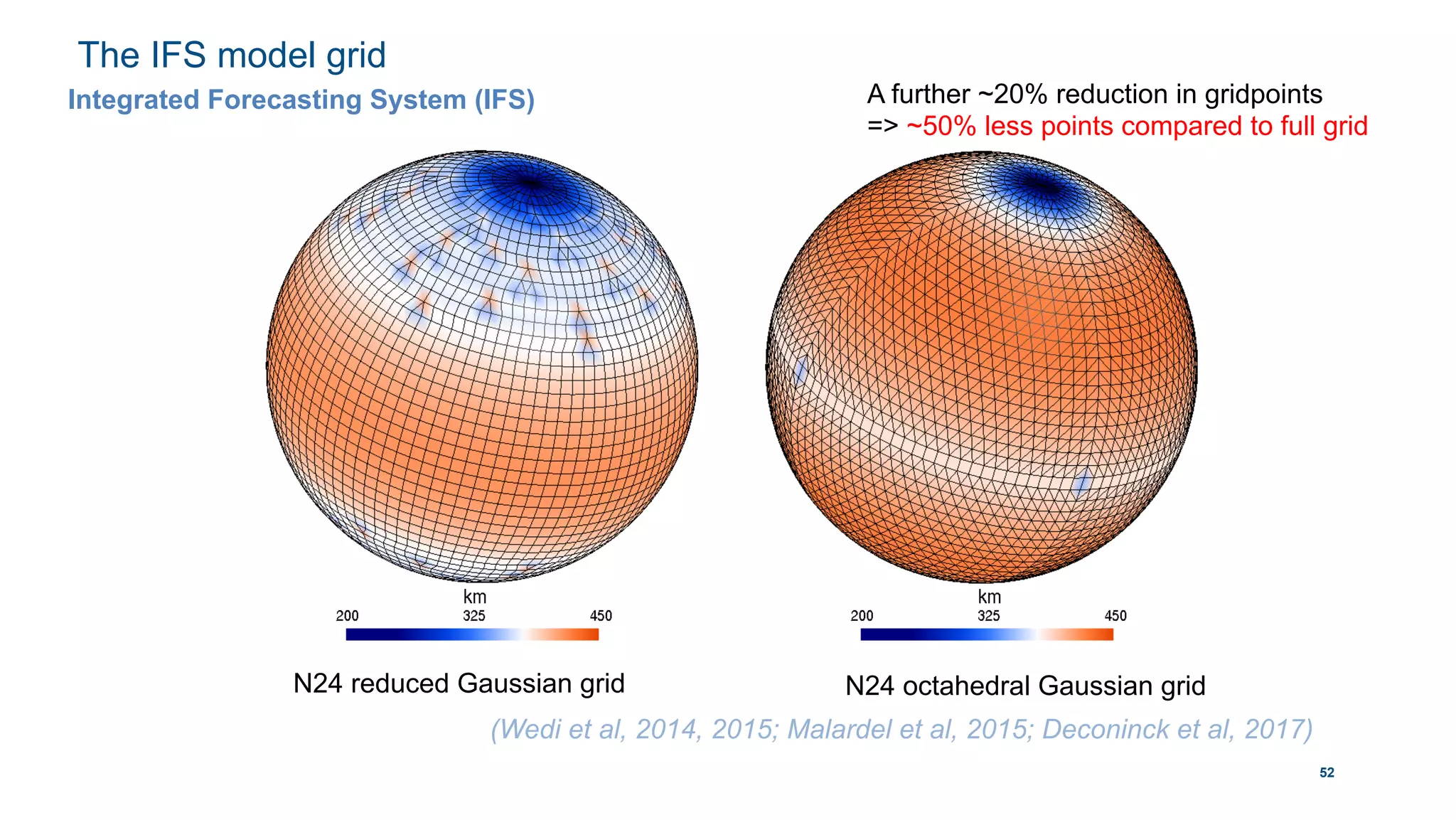
The IFS model grid
52
N24 reduced Gaussian grid N24 octahedral Gaussian grid
A further ~20% reduction in gridpoints
=> ~50% less points compared to full grid
(Wedi et al, 2014, 2015; Malardel et al, 2015; Deconinck et al, 2017)
Integrated Forecasting System (IFS)

From Weather Dwarfs to Kilometre-Scale Earth System Simulations