David WalkerCalifornia State UniversityFrom metasearch to metaservices
IntroductionPart philosophyWhat are we trying to do w/ metasearch?Where are the problems?How might we do it better?Part practicalWaxing philosophical is not enough!What can we do now with the tech we have?
Rethinking metasearch?We’ve been at it long enough nowGoogle ScholarNewer systemsNext-generation catalogs? Enterprise search? Discovery layers?
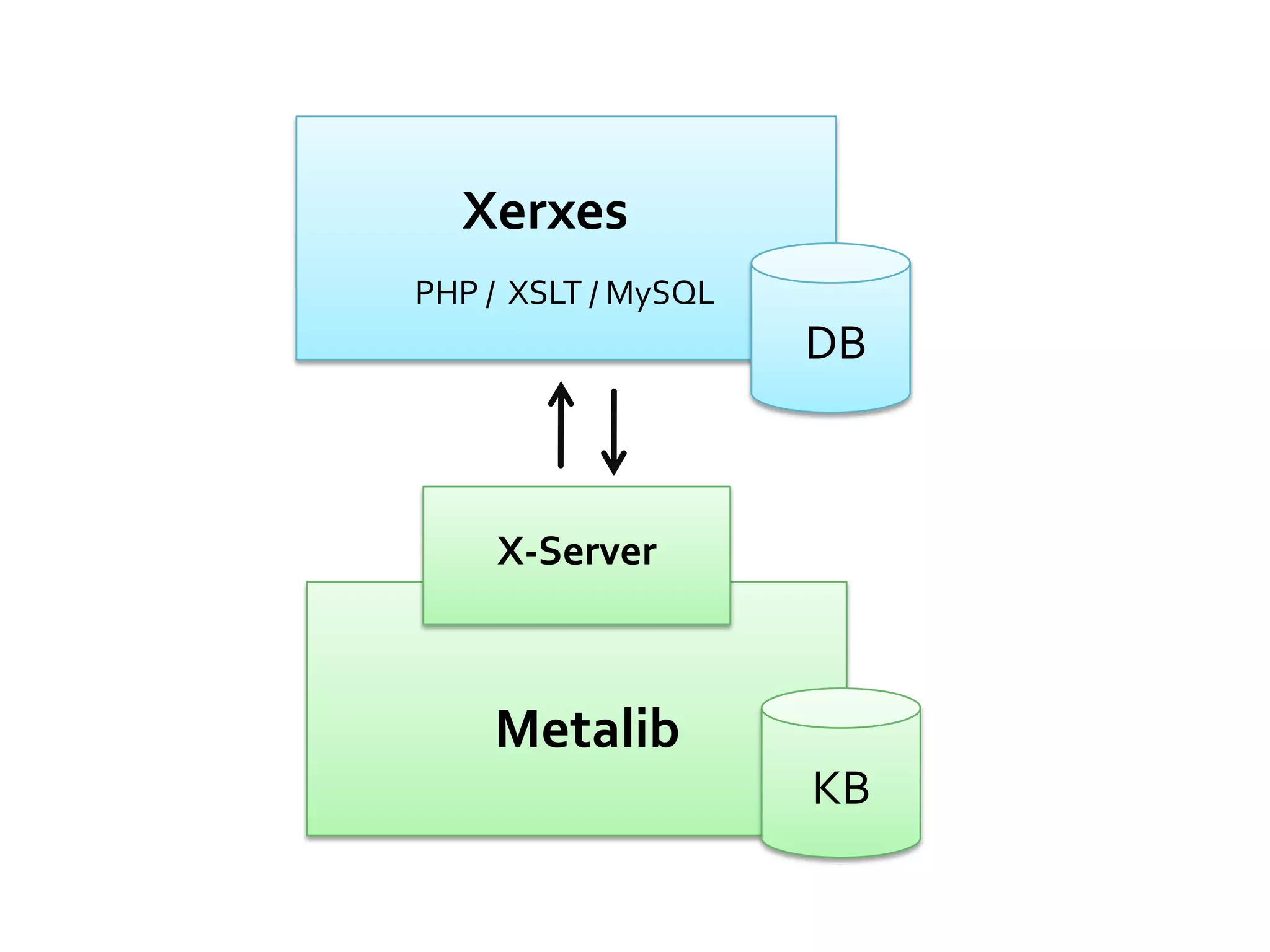
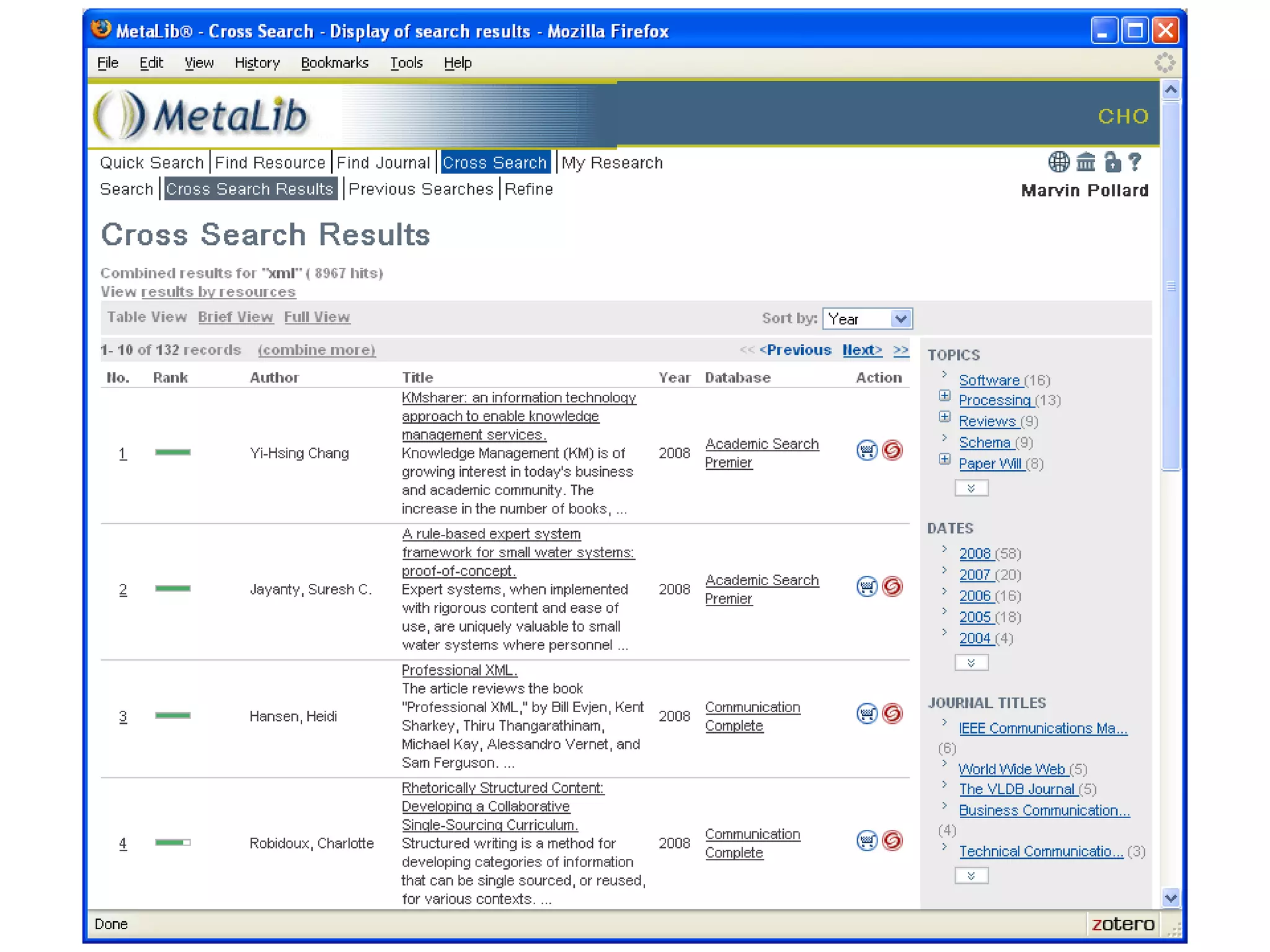
New metasearch modelsMetalib X-ServerDesign your own interfaceIncorporate other systems and dataExperiment!Xerxes ProjectDeveloped by CSU and John HopkinsImplemented at 20+ universities
XerxesPHP /  XSLT / MySQLDBX-ServerMetalibKB
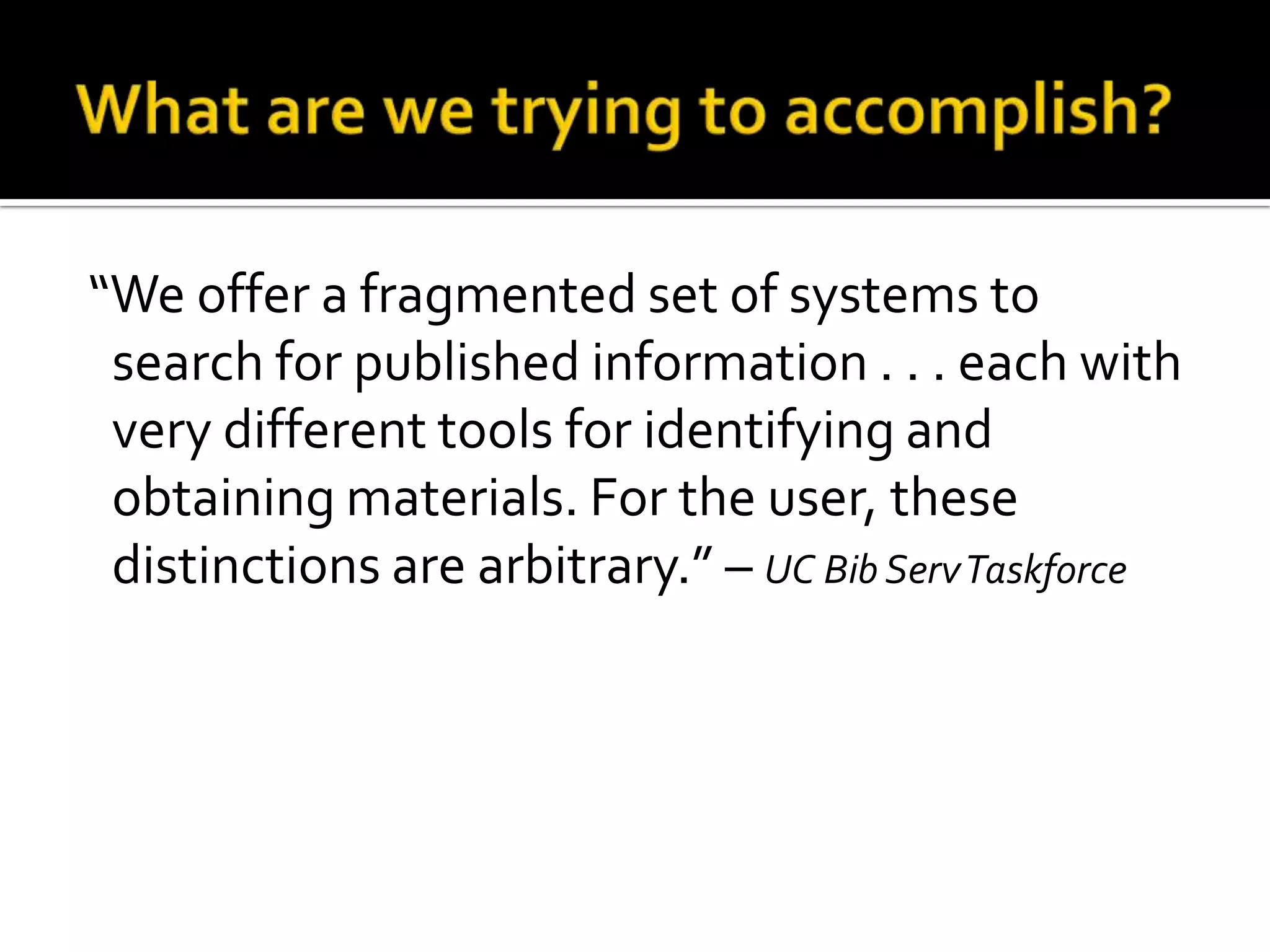
What are we trying to accomplish?“We offer a fragmented set of systems to search for published information . . . each with very different tools for identifying and obtaining materials. For the user, these distinctions are arbitrary.” – UC Bib Serv Taskforce
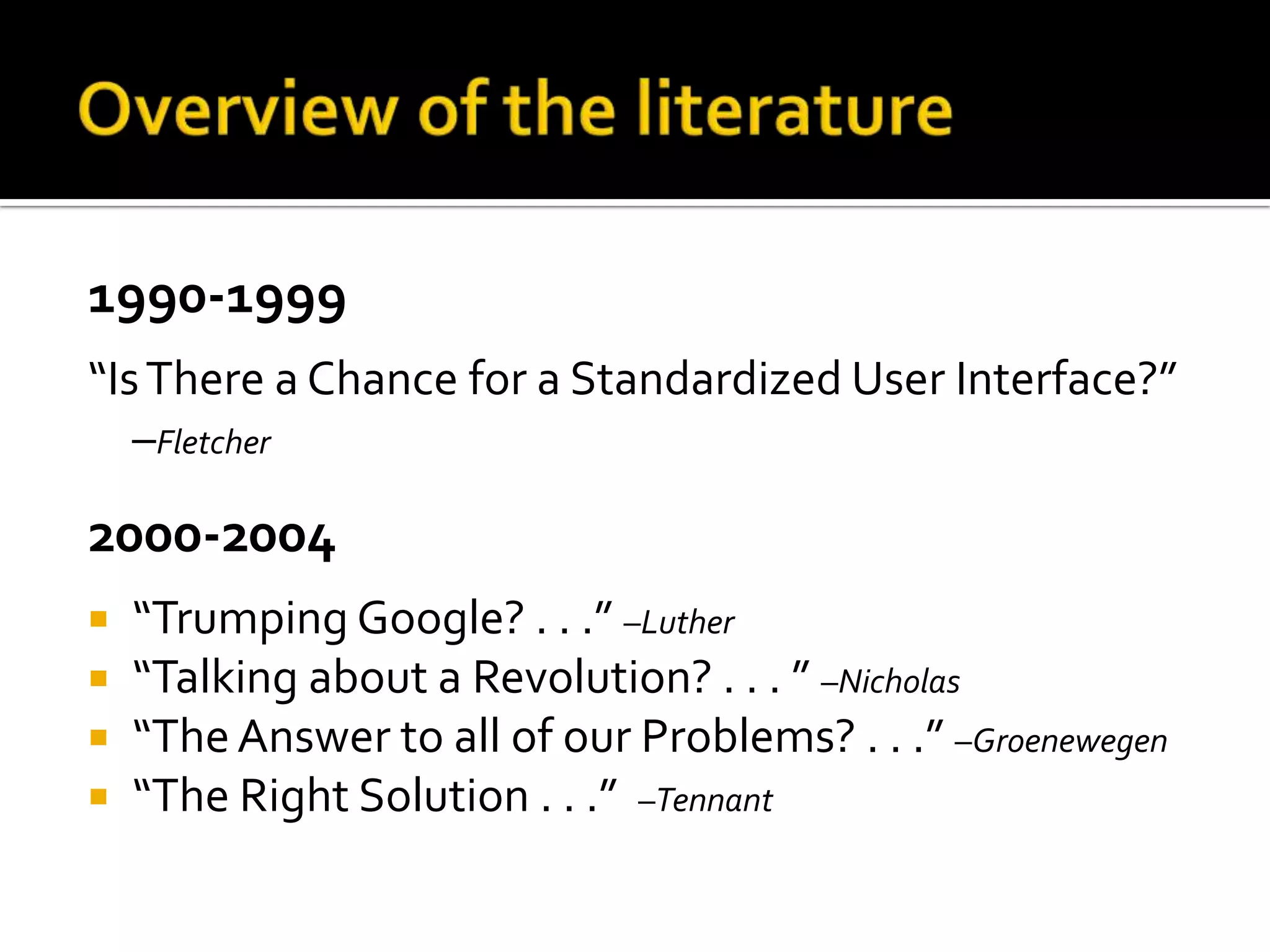
Overview of the literature1990-1999“Is There a Chance for a Standardized User Interface?” –Fletcher2000-2004“Trumping Google? . . .” –Luther“Talking about a Revolution? . . . ” –Nicholas“The Answer to all of our Problems? . . .” –Groenewegen“The Right Solution . . .”  –Tennant
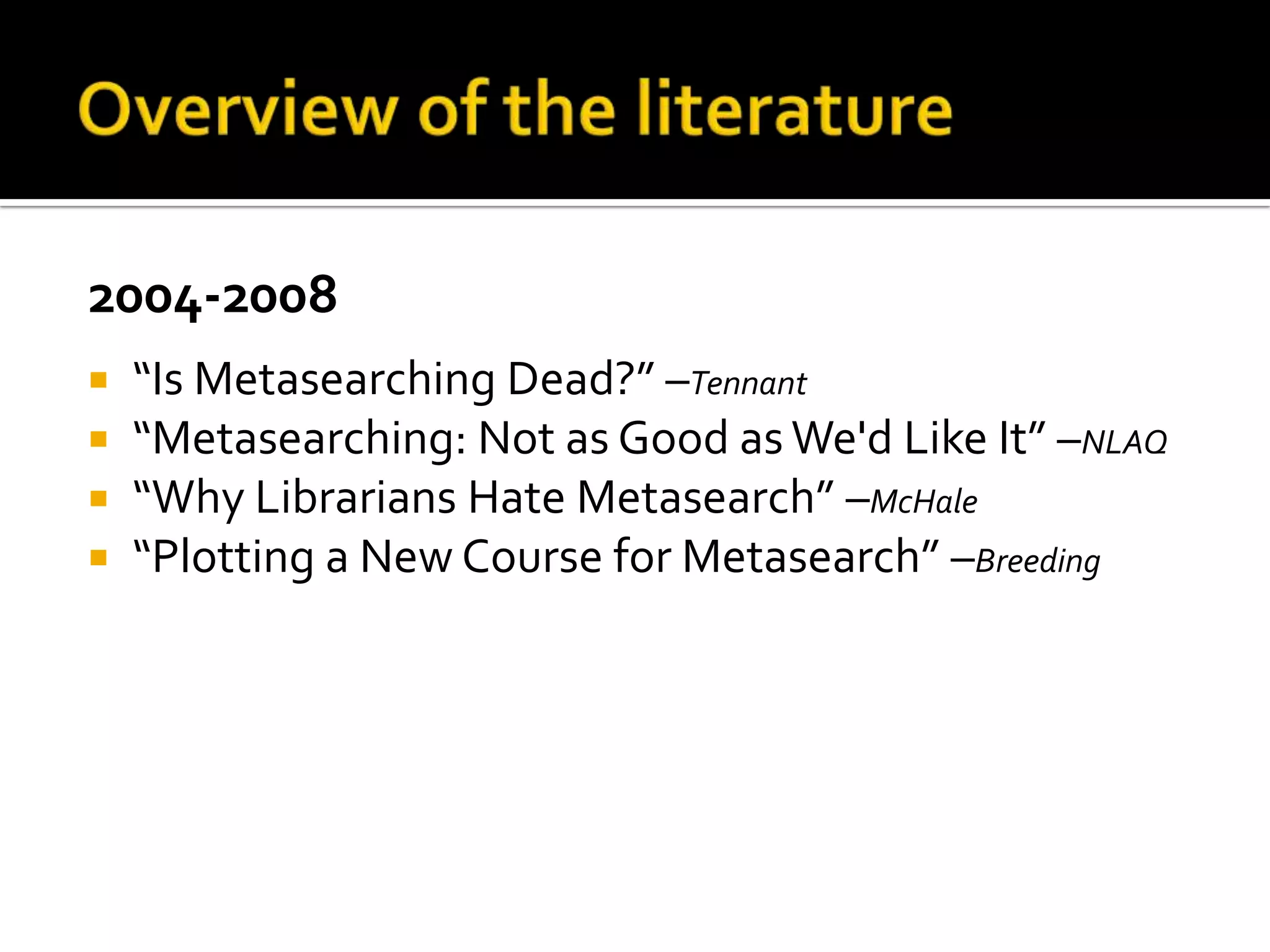
Overview of the literature2004-2008“Is Metasearching Dead?” –Tennant“Metasearching: Not as Good as We'd Like It” –NLAQ“Why Librarians Hate Metasearch” –McHale“Plotting a New Course for Metasearch” –Breeding
Arguing about metasearch“[C]ross-database search tools . . . are the correct solution for unifying access to a variety of information resources.” –Roy Tennant“Metasearching, then, is a step backward, a way of avoiding the learning process.” – William Frost“[M]etasearch … cannot stand up to search systems based on centralized indexes” –Marshall Breeding“Part of me keeps hoping [metasearch] will go away, but nope, it's still there.” – Andrew Pace
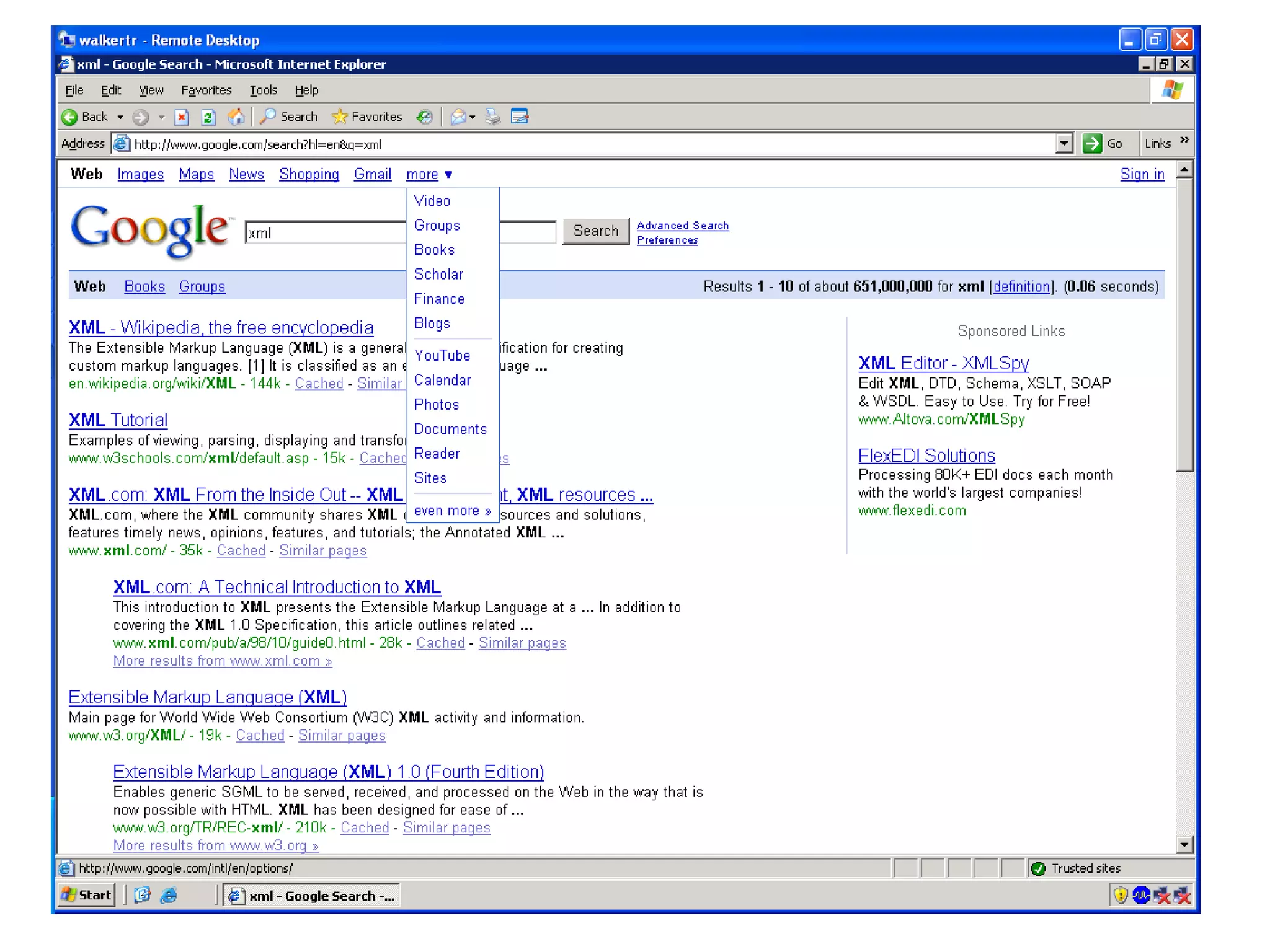
Arguing about metasearchBroadcast argument (pro)“You can search multiple databases simultaneously!”Nativist argument (anti)“The search is not advanced enough!”Immature technology argument (anti)“The search is too slow!”“Google Scholar is faster!”
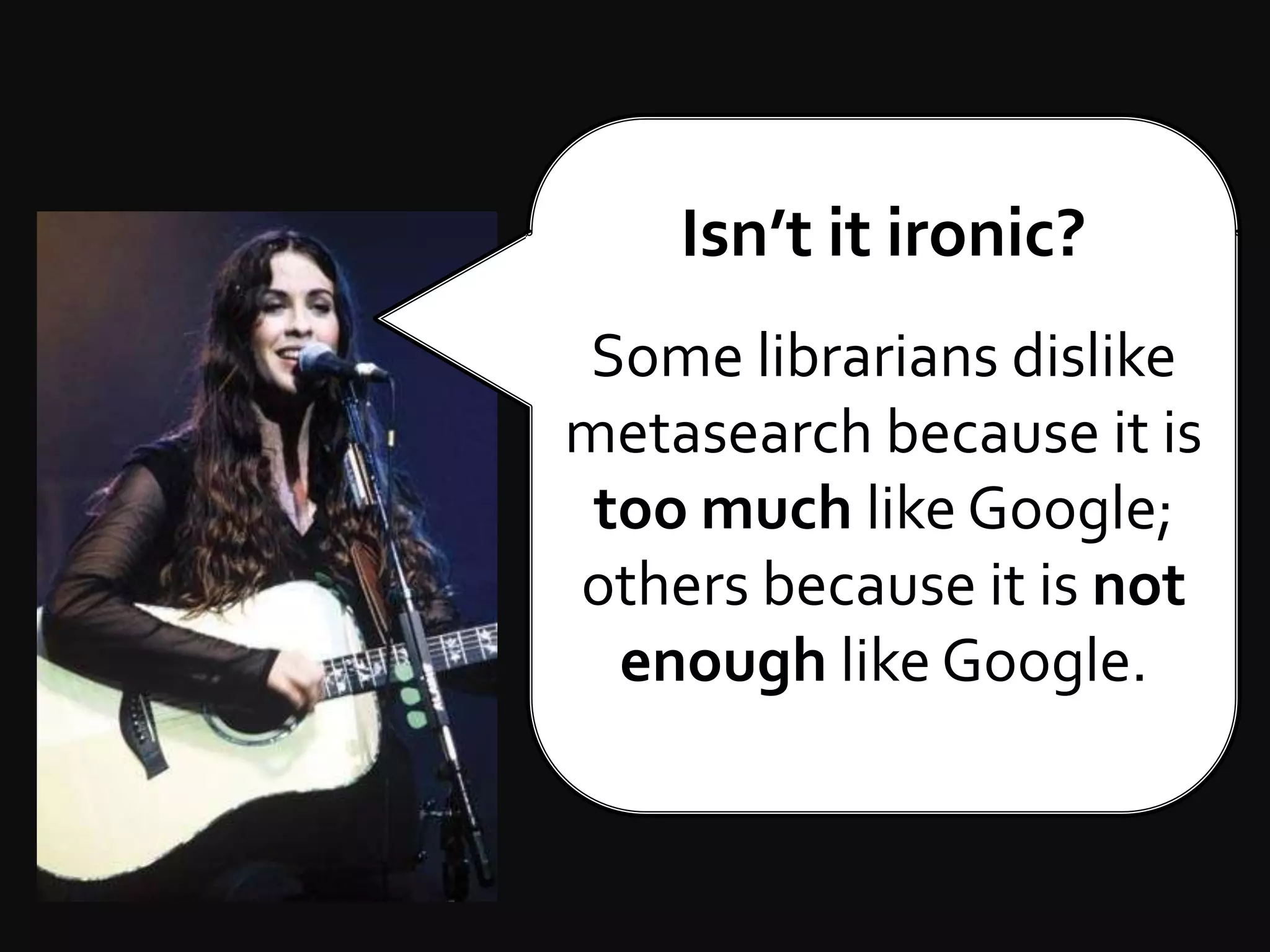
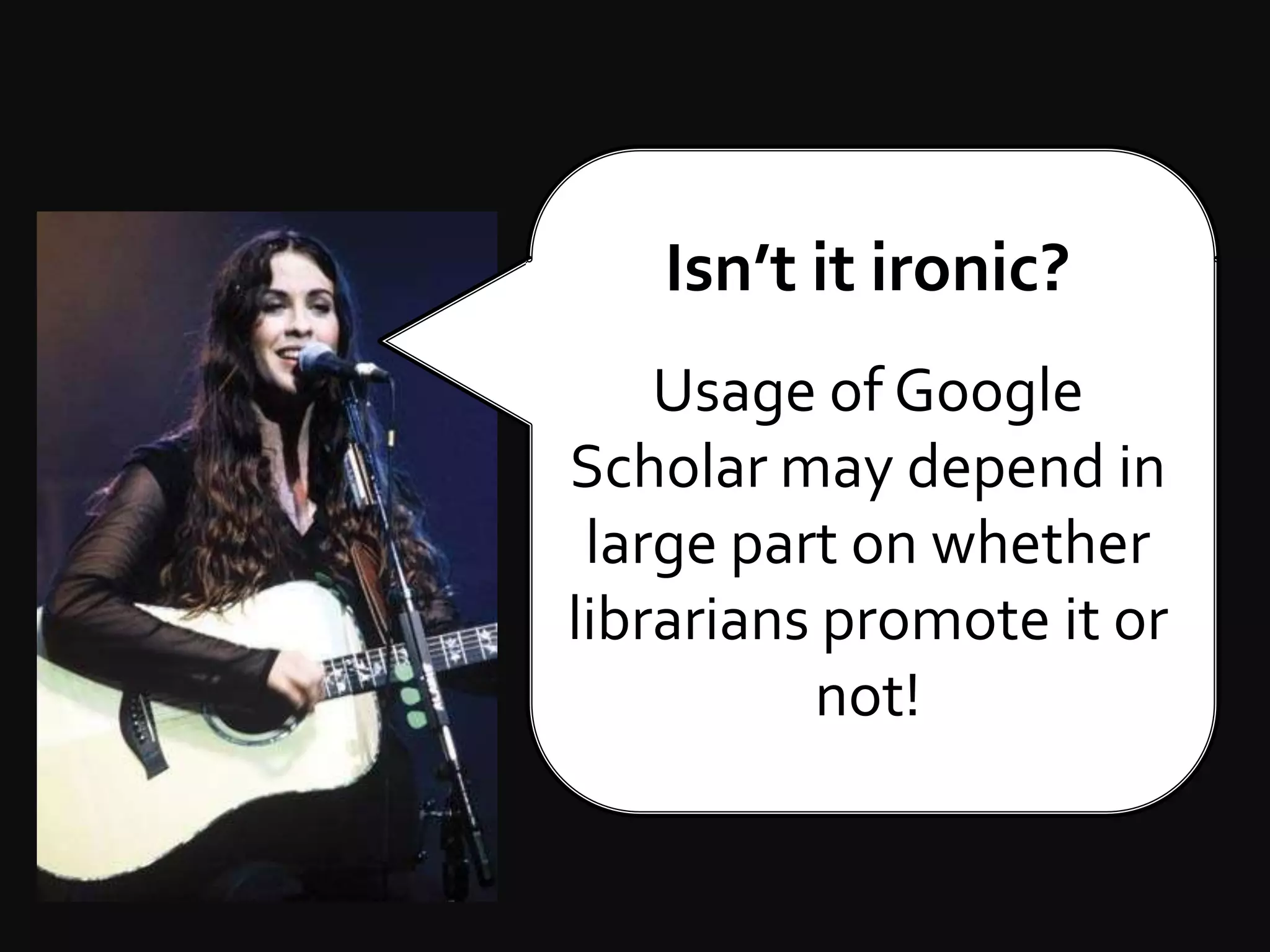
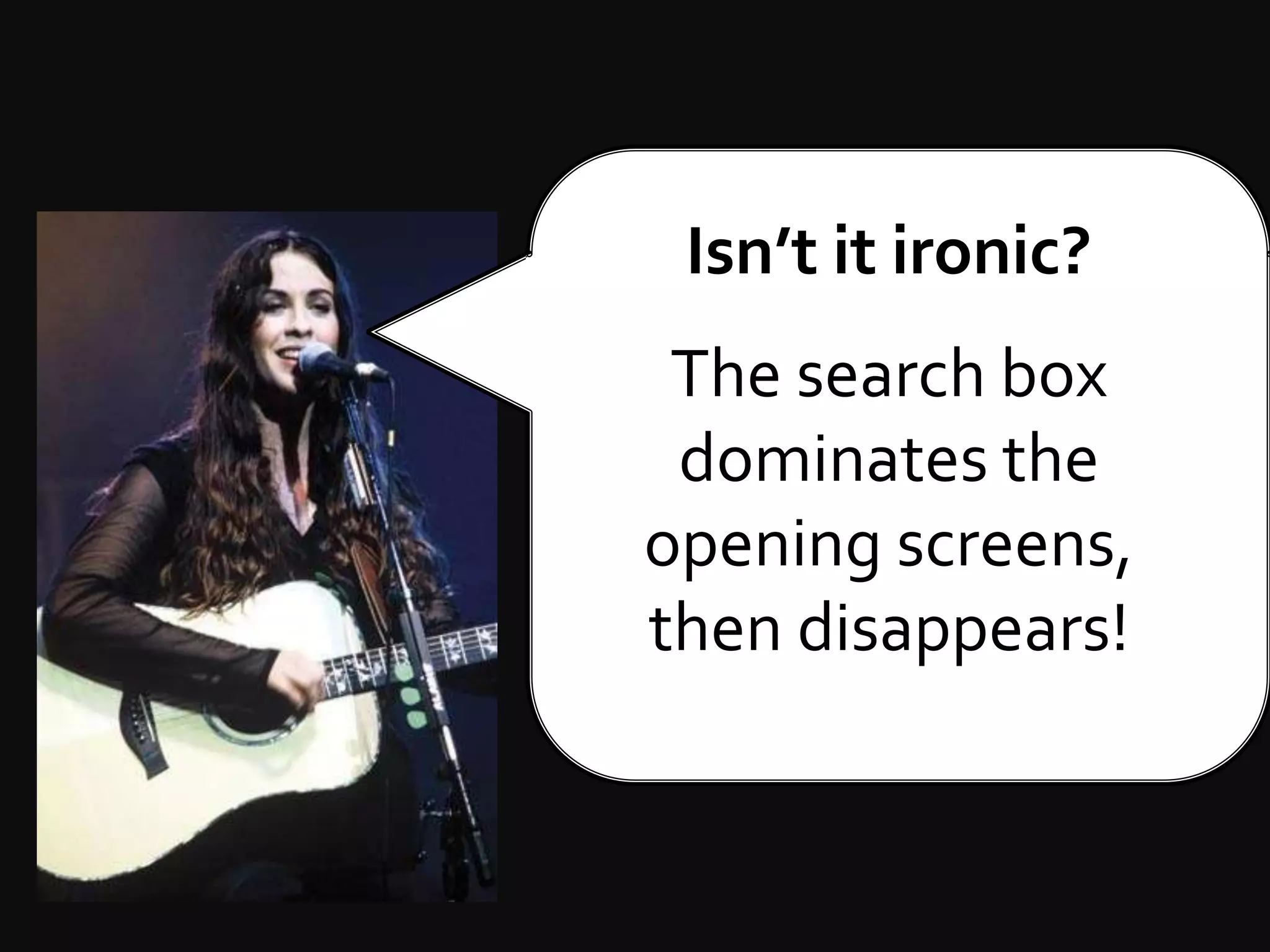
Isn’t it ironic?Some librarians dislike metasearch because it is too much like Google; othersbecause it is not enough like Google.
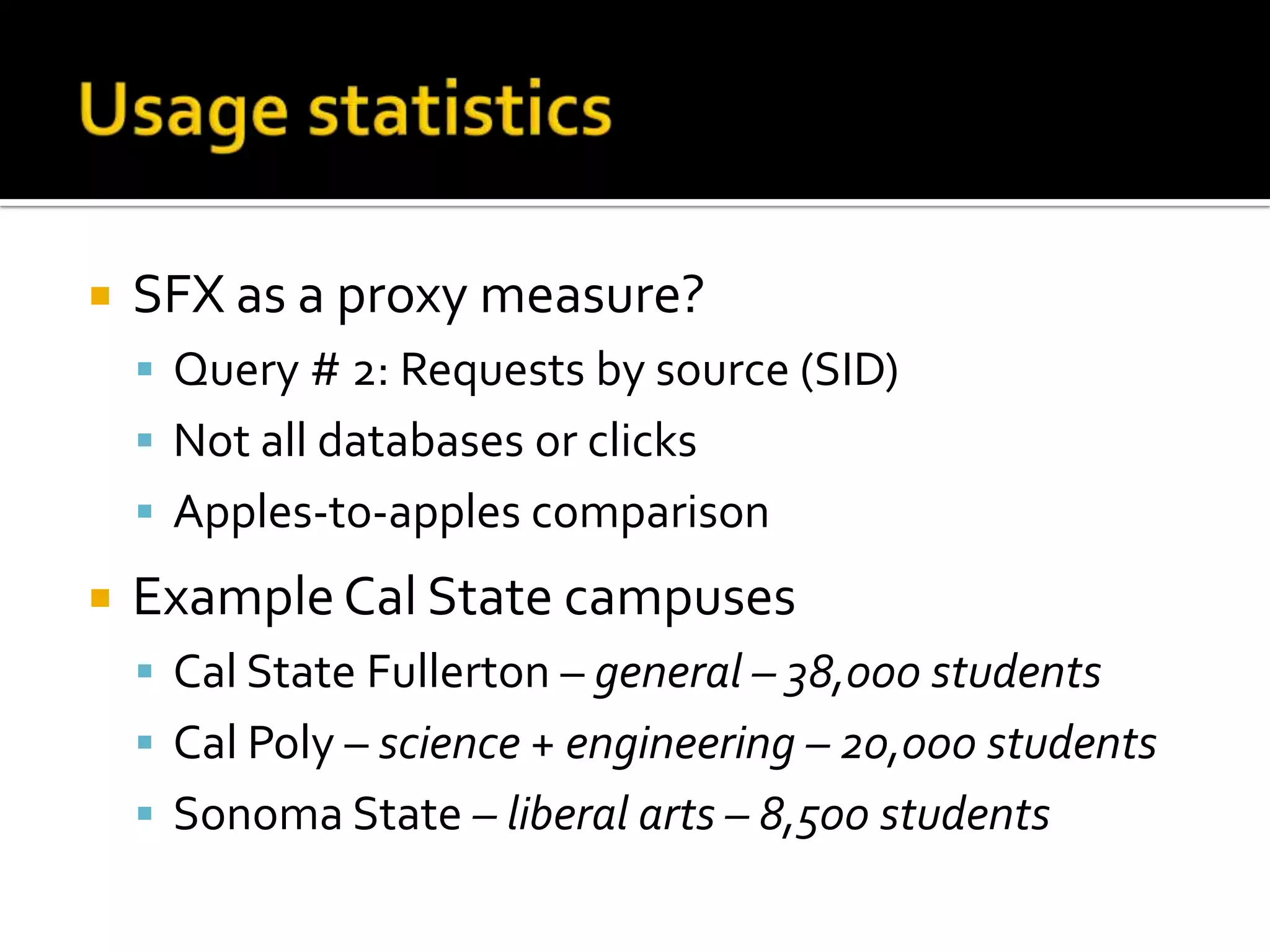
Usage statisticsSFX as a proxy measure?Query # 2: Requests by source (SID)Not all databases or clicksApples-to-apples comparisonExample Cal State campusesCal State Fullerton – general – 38,000 studentsCal Poly – science + engineering – 20,000 studentsSonoma State – liberal arts – 8,500 students
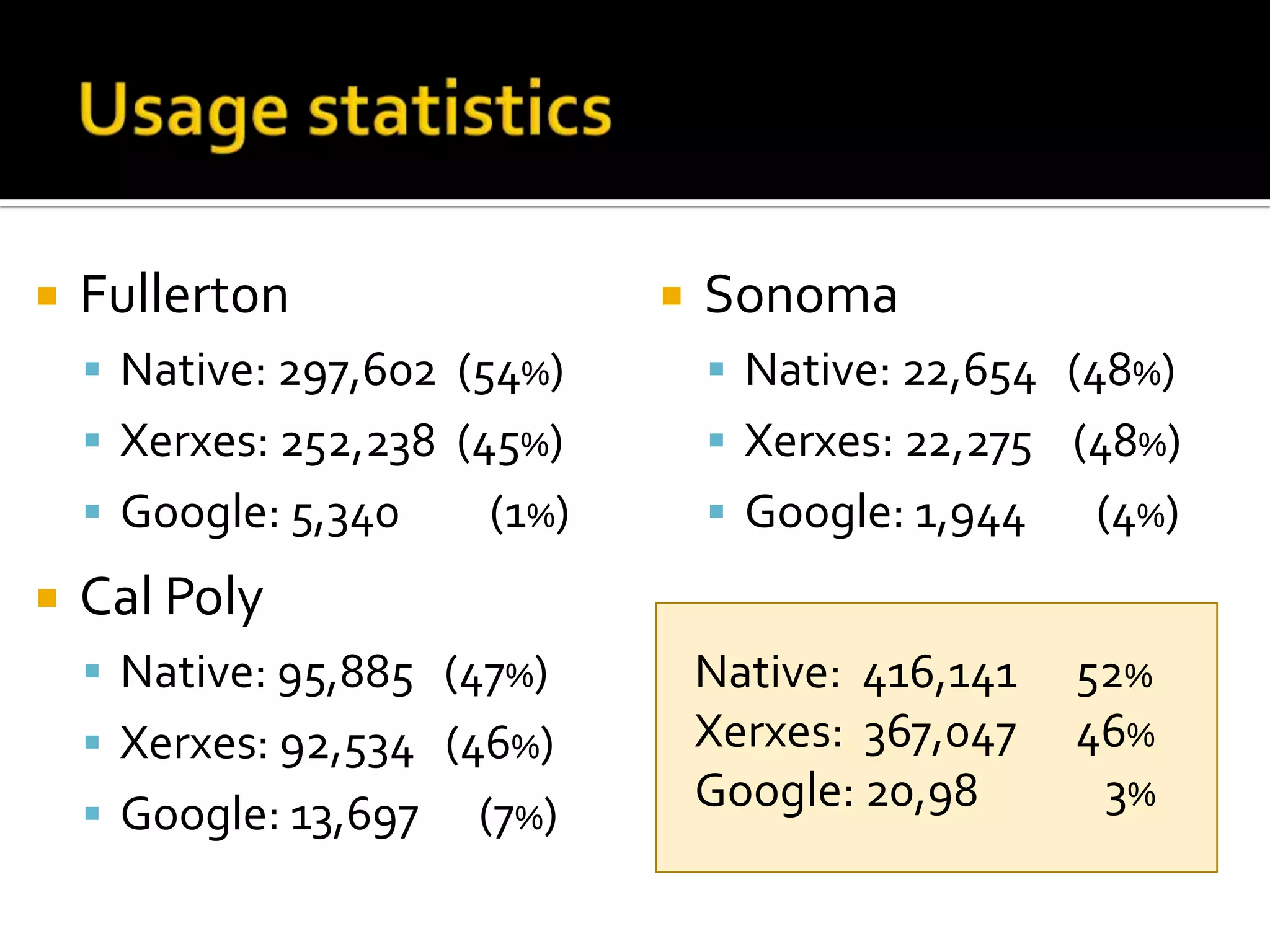
Usage statisticsFullertonNative: 297,602  (54%)Xerxes: 252,238  (45%)Google: 5,340         (1%)Cal PolyNative: 95,885   (47%)Xerxes: 92,534   (46%)Google: 13,697      (7%)Sonoma
Native: 22,654   (48%)
Xerxes: 22,275    (48%)
Google: 1,944       (4%)Native:  416,141 	52%Xerxes:  367,047 	46%Google: 20,98	   3%
Isn’t it ironic?Usage of Google Scholar may depend in large part on whether librarians promote it or not!
Usability studiesUniversitiesBoston College –BYU – Carnegie Mellon – Maryland – Mississippi – Northwestern – Oregon  State – Rochester – Texas A & M –Colorado, Denver –California, Santa CruzSystemsMetalib – Encompass – Serials Solutions – Webfeat – LibraryFind
Usability studies70% of the students in BYU study preferred metasearch over native interfaces“[B]oth [metasearch and searching native interfaces individually] produce citation sets of similar quality” – BYU “Graduate students and faculty . . . all located citations they had not previously found” 						–Texas A&M
On search times“Eight [out of 18] students measured the speed of the search processing as reasonable and only five found the system too slow.” –Maryland“Users are willing to wait as long as they think that they will get useful results. Their perceptions of time depend on this belief.”  –Santa Cruz“When people accomplish what they set out to do on a site, they perceive that site to be fast . . . If people can't find what they want on a site, they will regard the site as a waste of time (and slow).” – Perfetti, Landesman
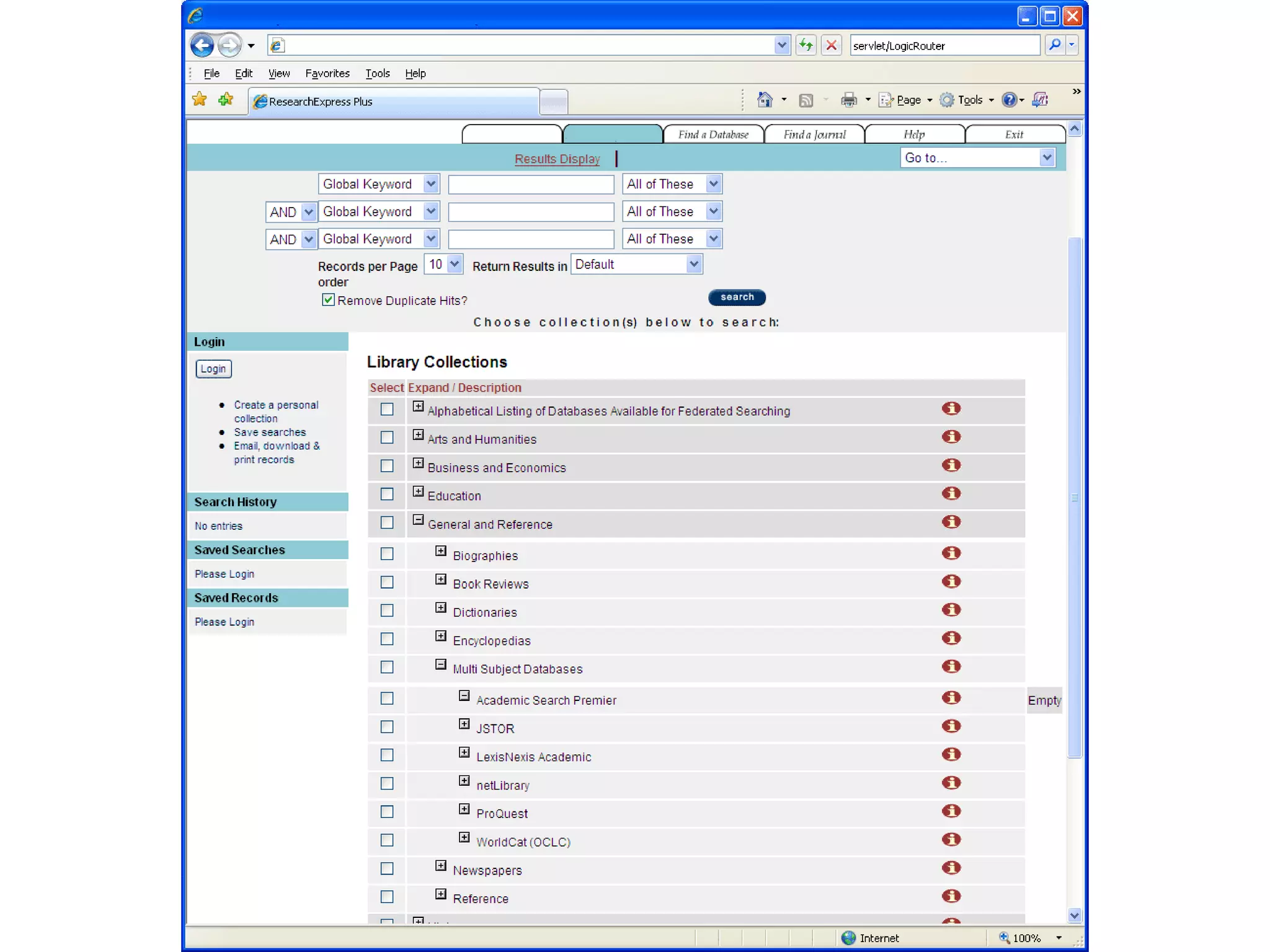
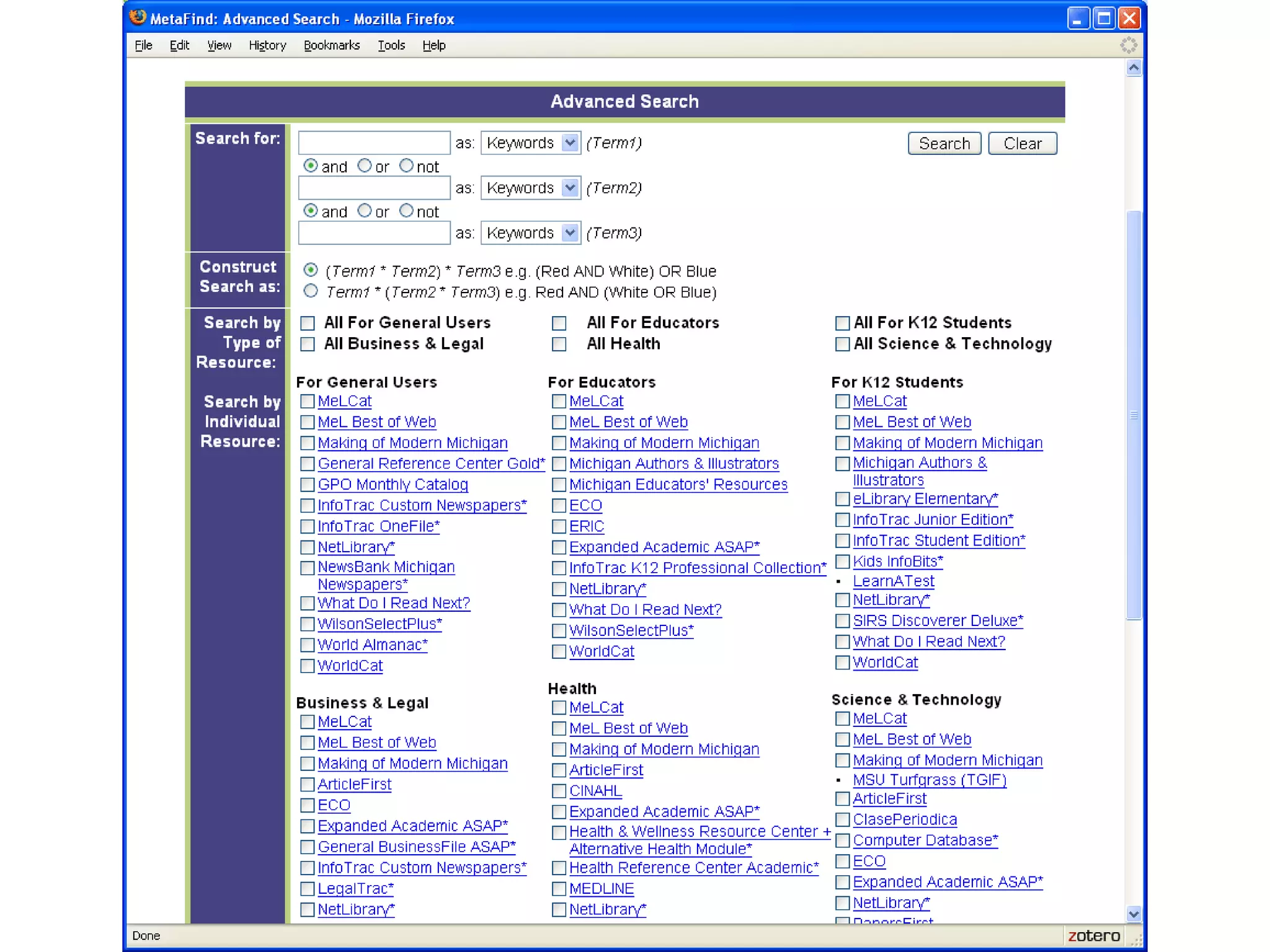
On the interface“I found that both were not very user friendly.” – BYU  Student“[Non-federated search] lent itself to more abstracts . . . With [federated search] I was relying more on the title which can sometimes be misleading.” –BYU Student“I would have to search through every single one of these to find which one is a scholarly article and which one is just a newspaper article.” – Maryland Student
Broadening our goals“[T]he point of federated searching is to make searching as simple as possible” –CervoneIs it all about search?What happens before you search?What happens after you search?Re-search is more than just searching
Selecting the right resources“Nothing slows the user's scanning momentum more than encountering results that are irrelevant . . . many users view it as a digital equivalent of Tourette's Syndrome, where the system just spits out random items, unrelated to their search.”							– Jared Spool
Selecting the right resourcesWhy not search everything?Impractical technicallyImpractical presentationallyWhat you don’t search is equally as important as what you do searchWhy metasearch systems get this wrong(Overly-) focused on the search boxDefining is not the same as limiting
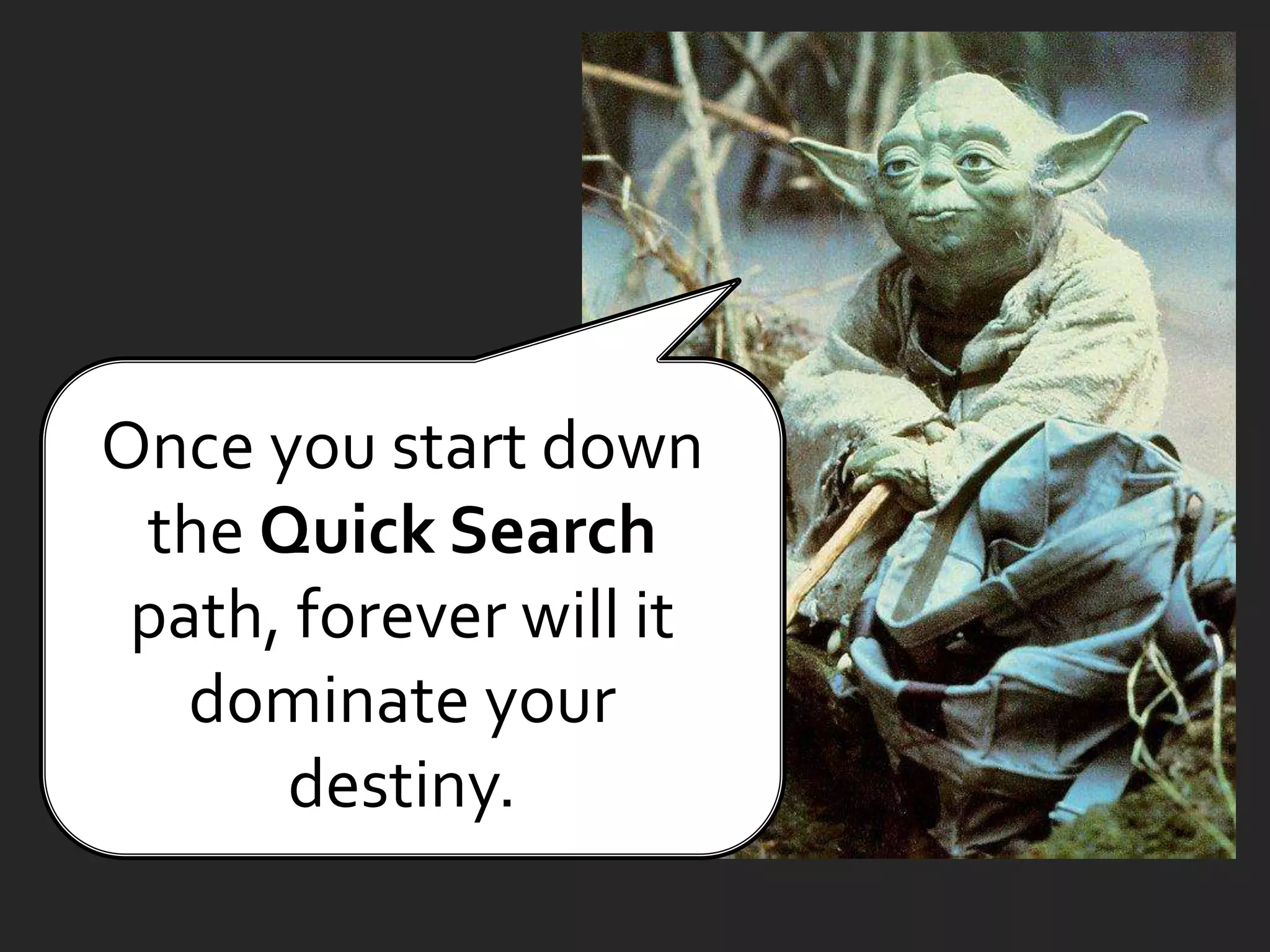
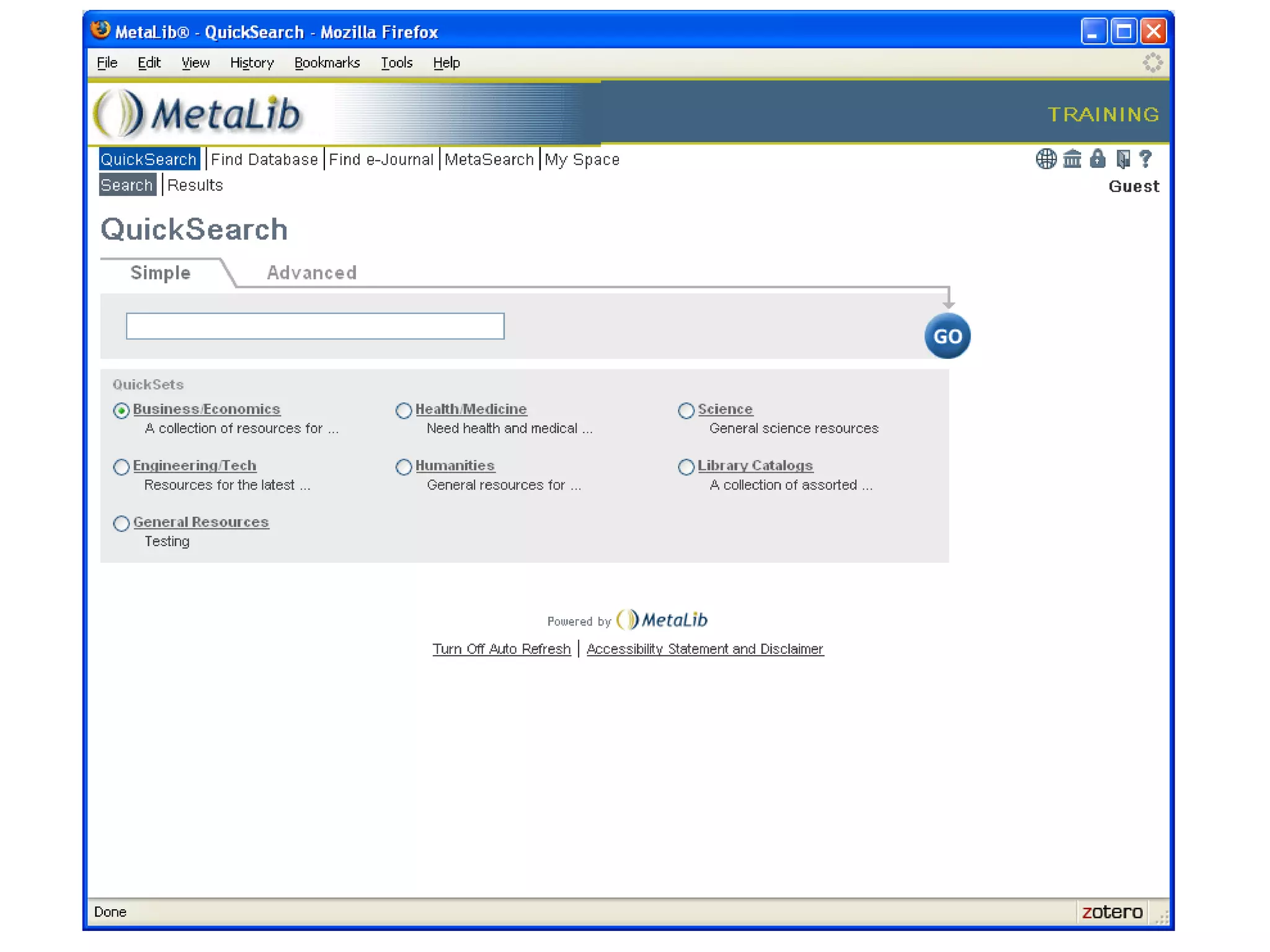
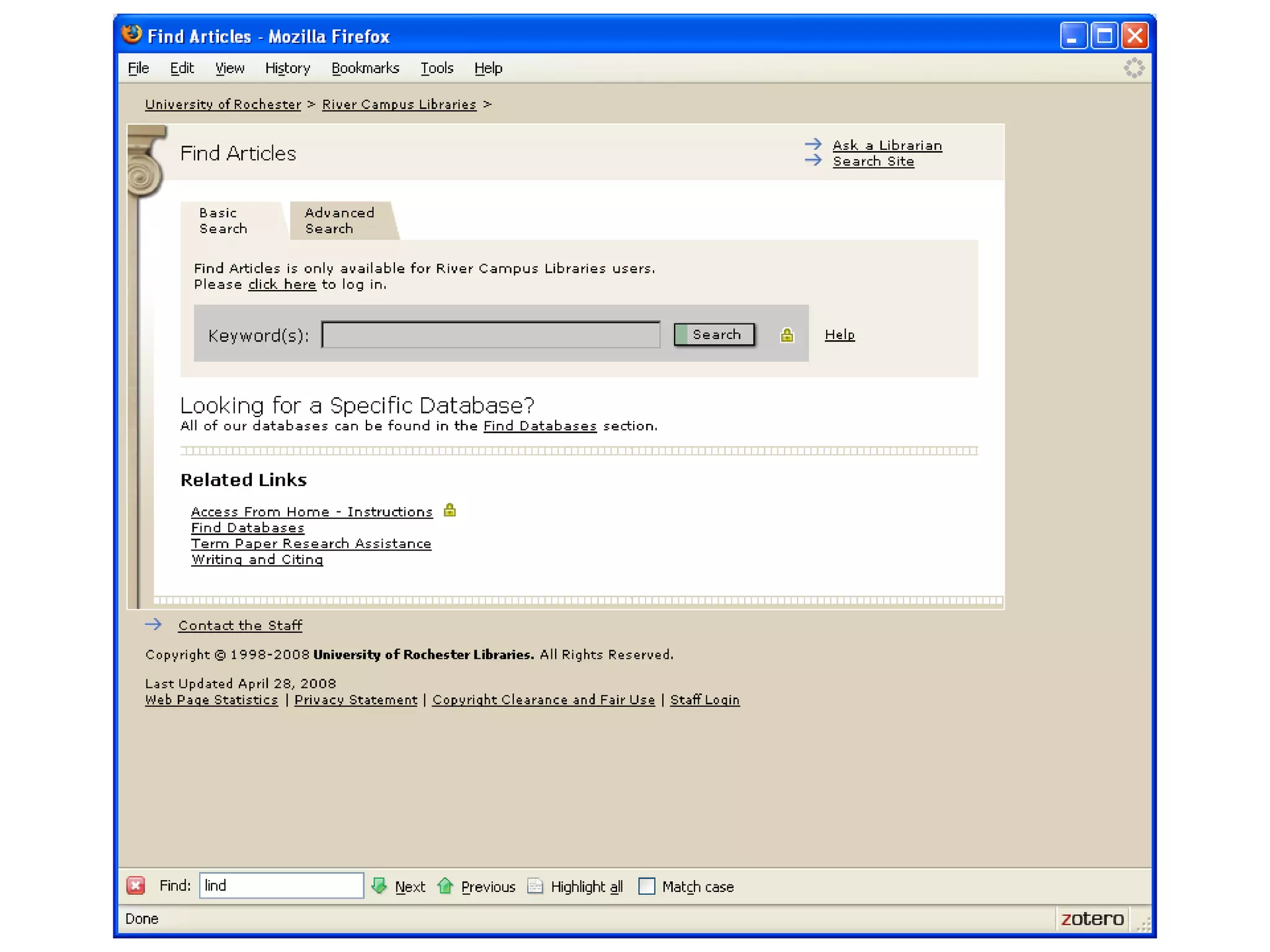
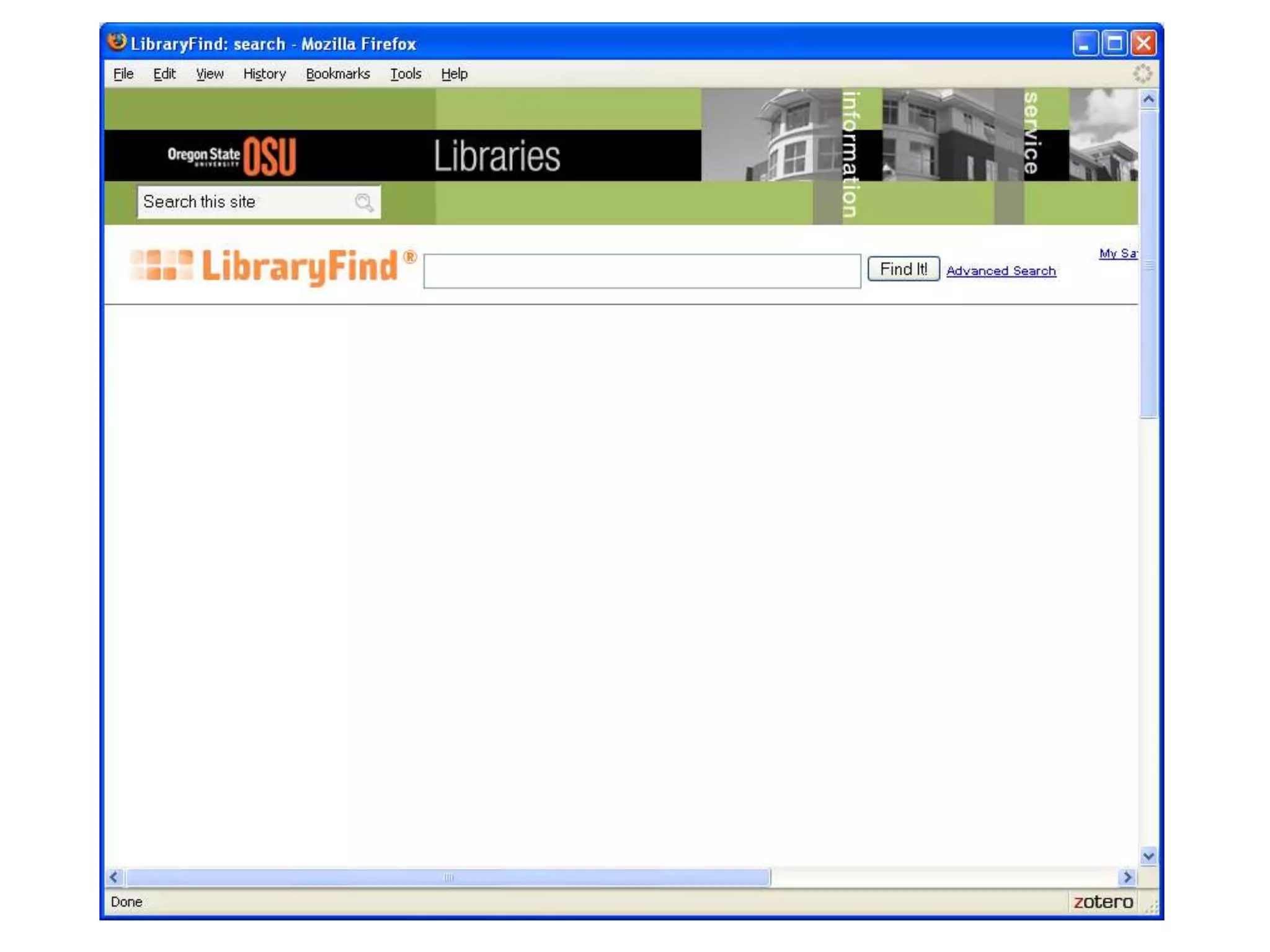
Once you start down the Quick Search path, forever will it dominate your destiny.
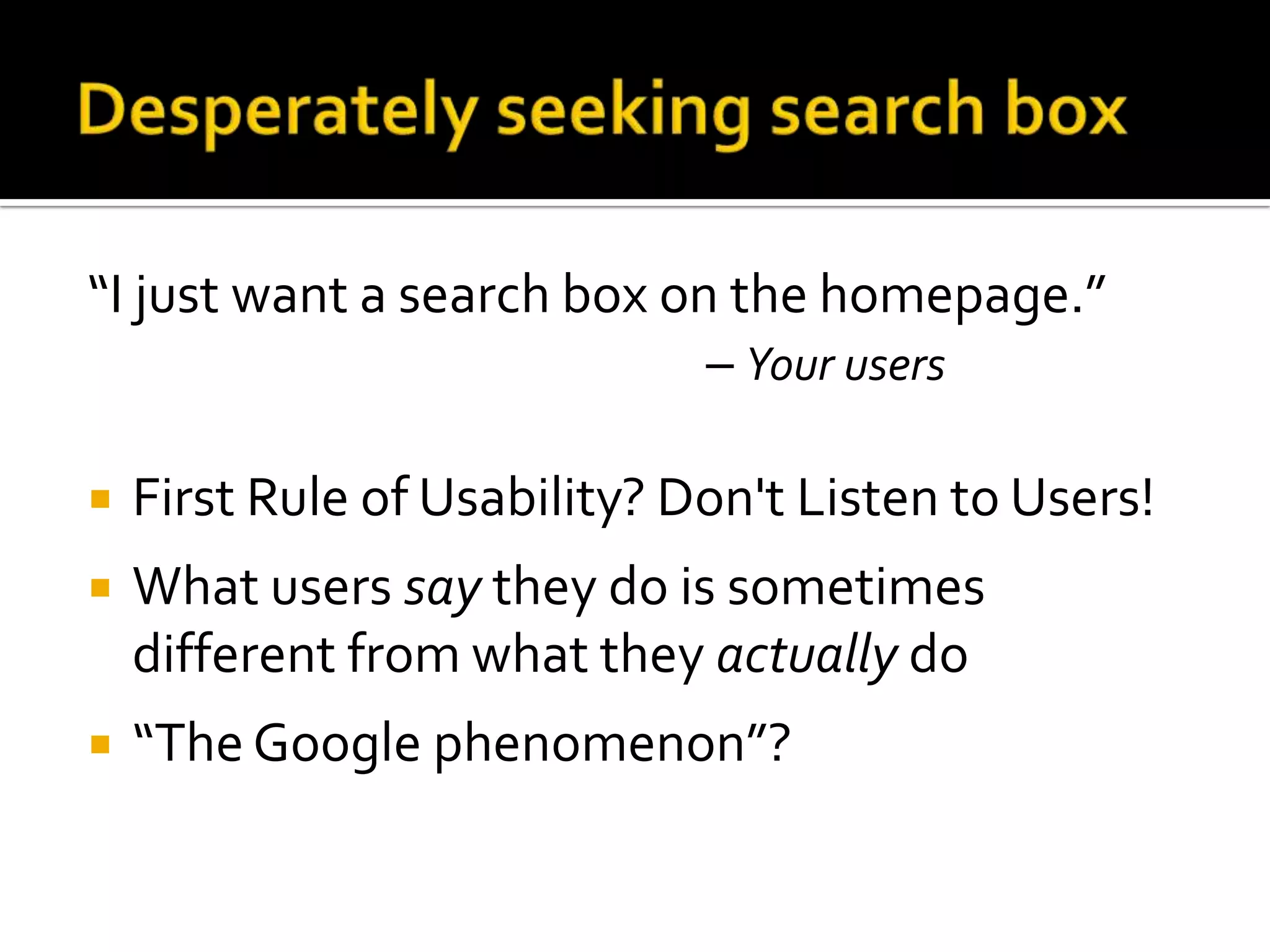
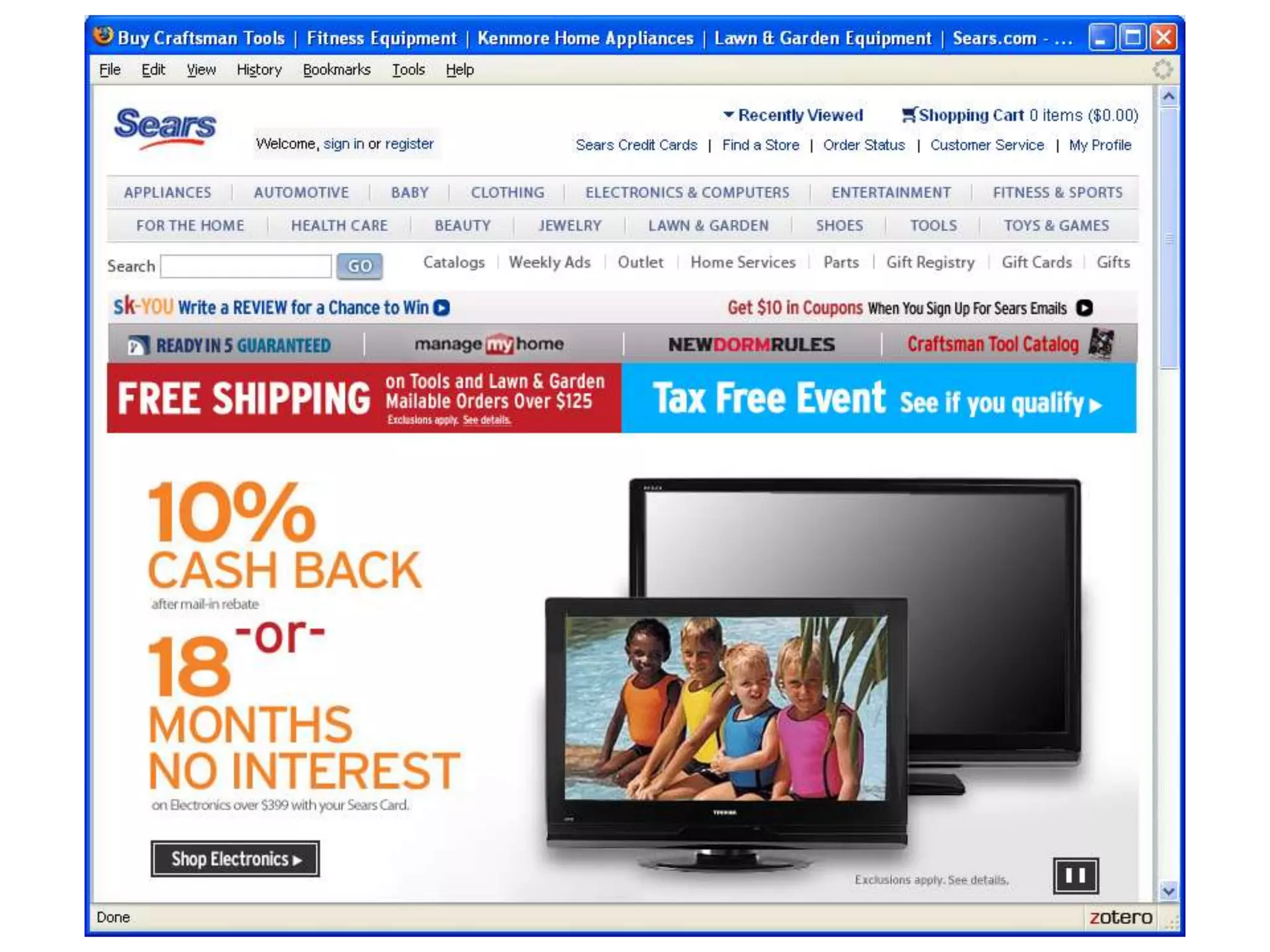
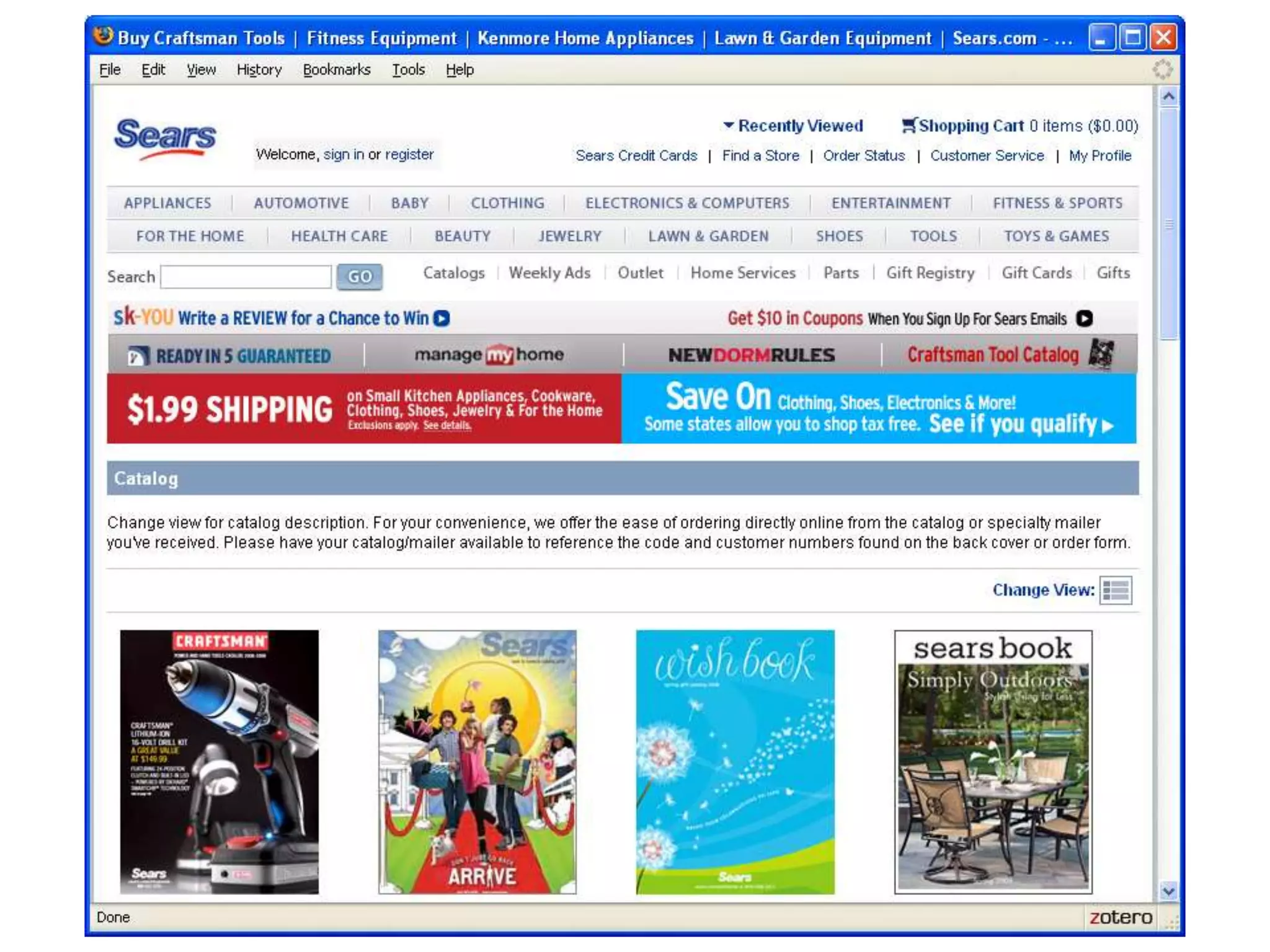
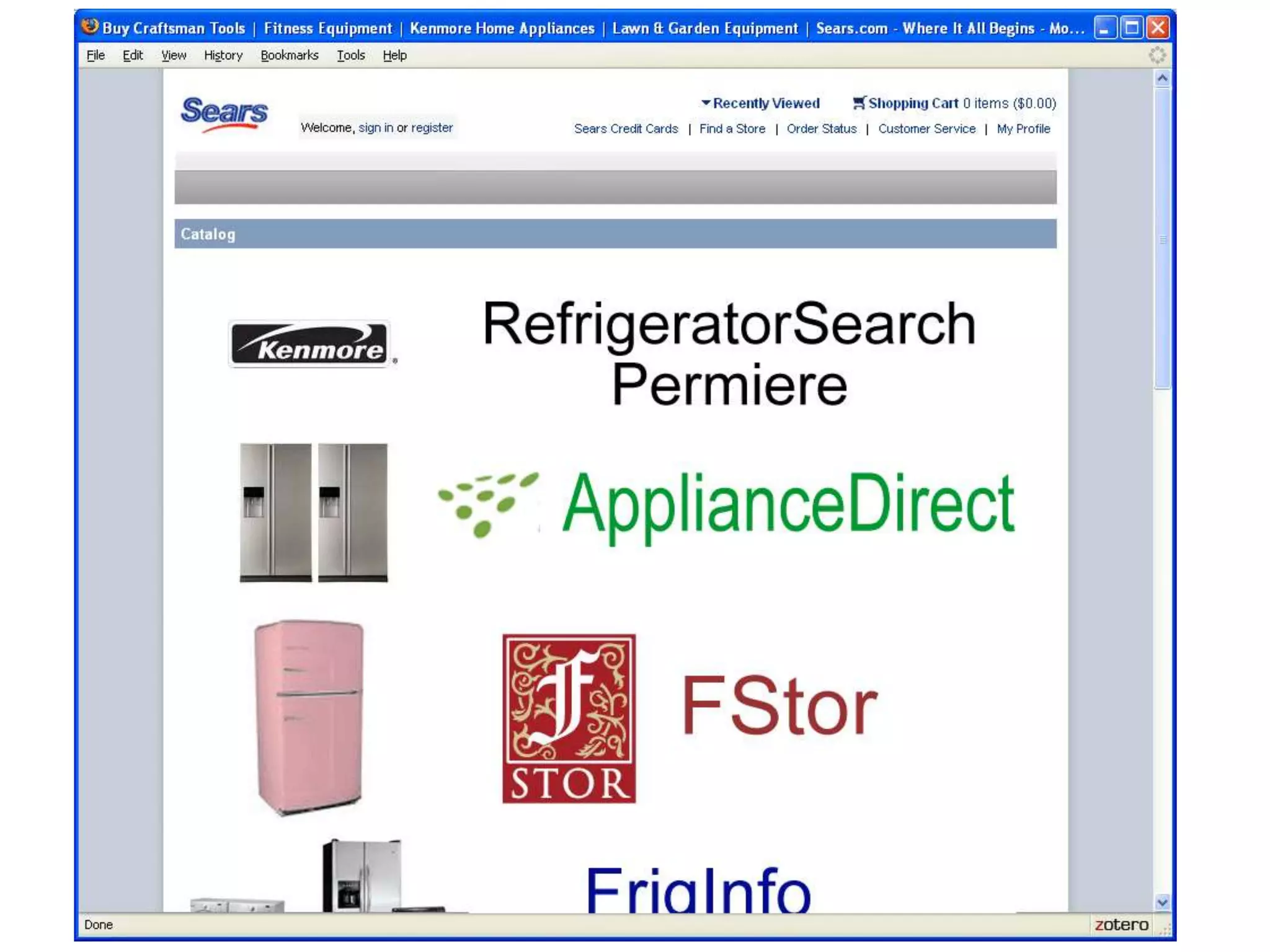
Desperately seeking search box“I just want a search box on the homepage.” 					– Your usersFirst Rule of Usability? Don't Listen to Users!What users say they do is sometimes different from what they actually do“The Google phenomenon”?
Desperately seeking search box“[T]here is something inherent in the site's design that causes users to choose the search engine or the links, not a hard-and-fast preference of the user” “[U]sers often gravitated to the search engine when the links on the page didn't satisfy them in some way.”							 – Jared Spool
Isn’t it ironic?The search box dominates the opening screens, then disappears!
Changing queries“Nearly all students repeated their searches, changing terms or subject categories, so the interface needs to make this easy.”– Maryland “Each new piece of information [users] encounter gives them new ideas and directions to follow and, consequently, a new conception of the query …  [T]he query itself (as well as the search terms used) is continually shifting, in part or whole.” –Bates
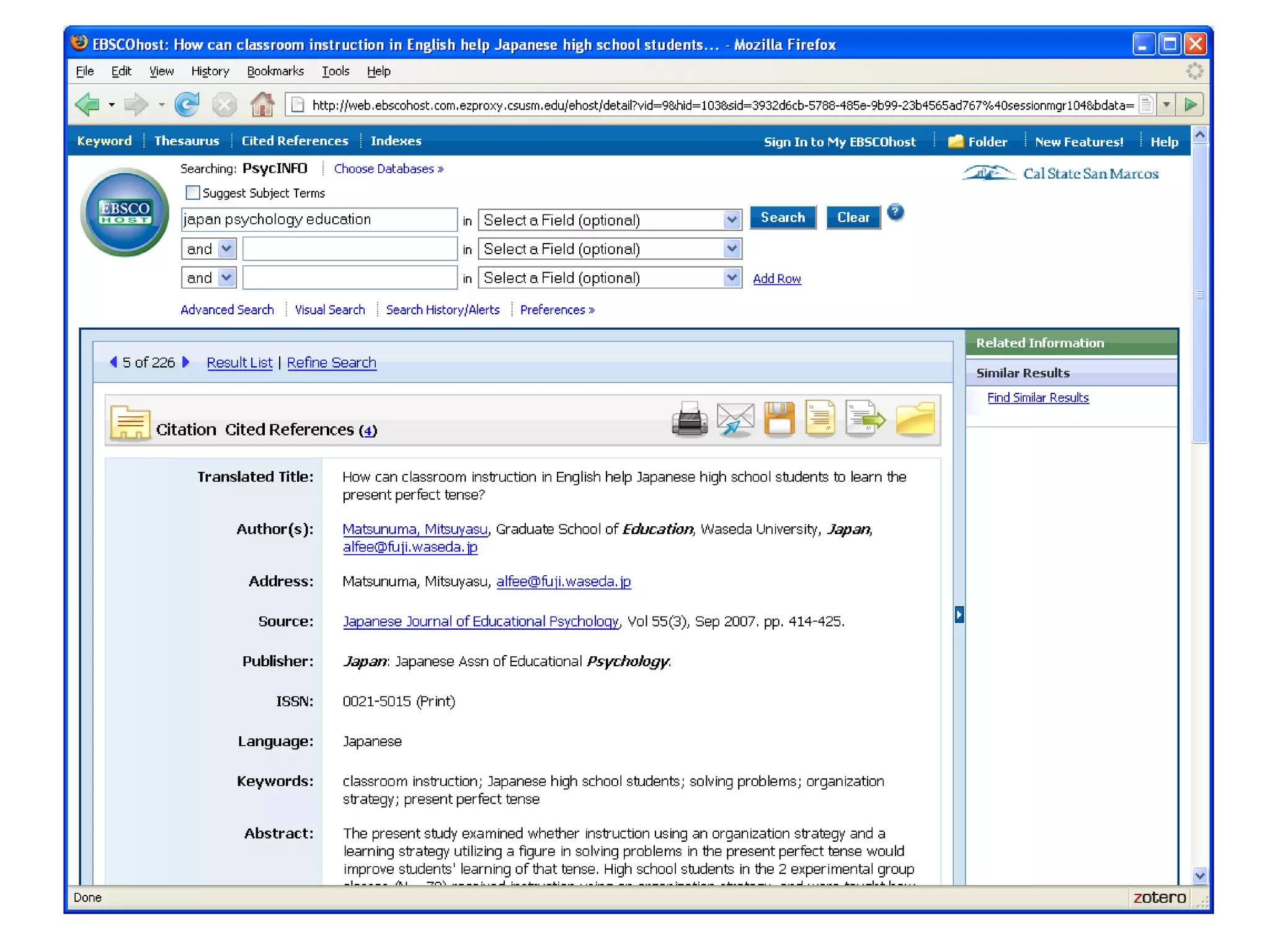
Services for resultsSpell checkPeer reviewed flagFull-text look-upFull-text linkingFormatForeign language
Avoid pogosticking“66% of purchases on [e-commerce] sites happened without any pogosticking . . . the more [users] pogosticked, the less likely the session would result in a purchase.”“The best search results pages will prevent pogosticking by providing the relevant content before the user chooses a specific result.” 							– Jared Spool
Services with resultsSave and exportCitation formattingTagging, editing, and sharingExpert research help
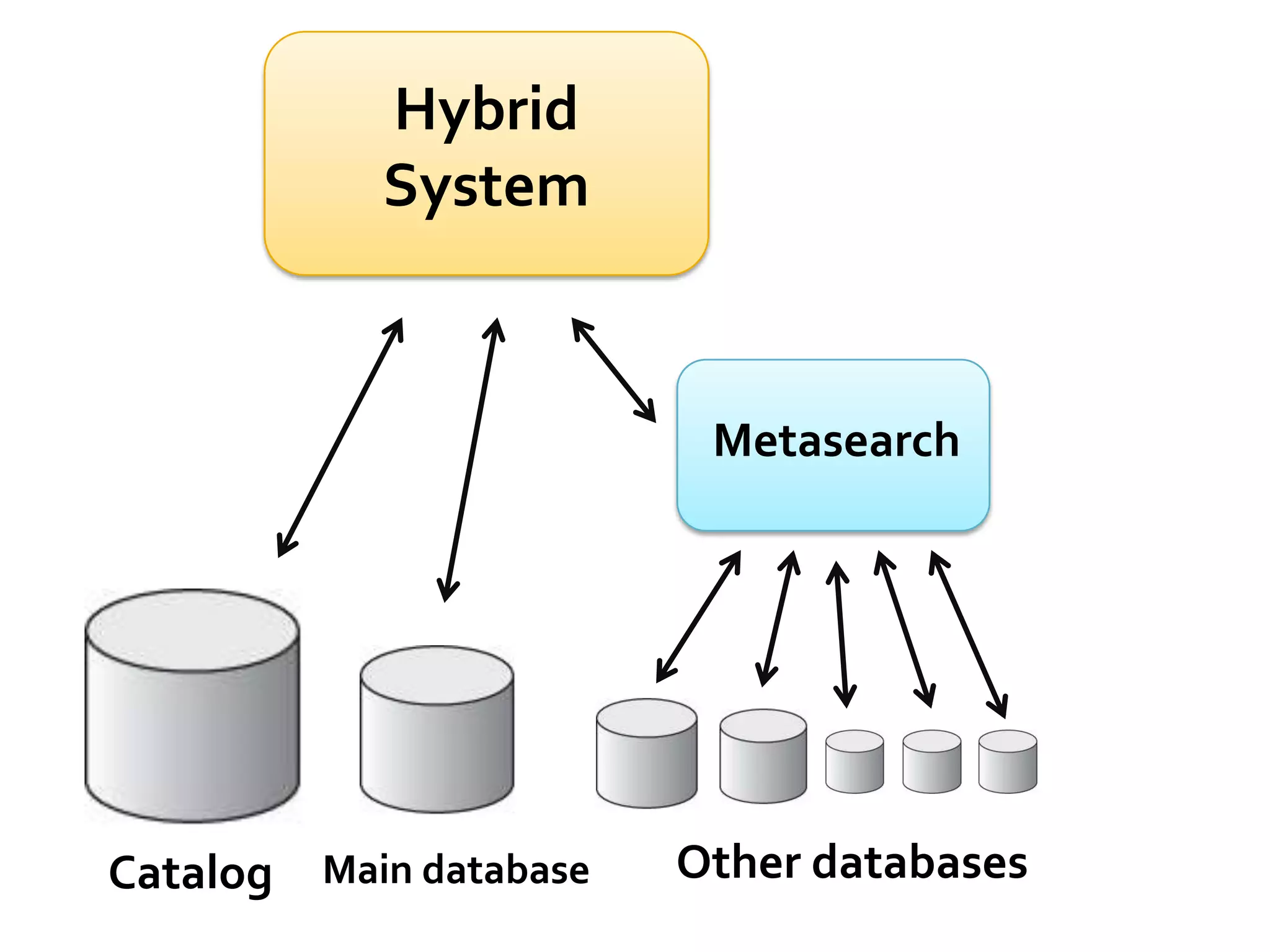
Going back to searchProblems with broadcast searchingSlow, dropped connectionsLowest-common denominator searchingProblems with central indexingNot easyRequires software, hardware, money, hagglingA middle ground?
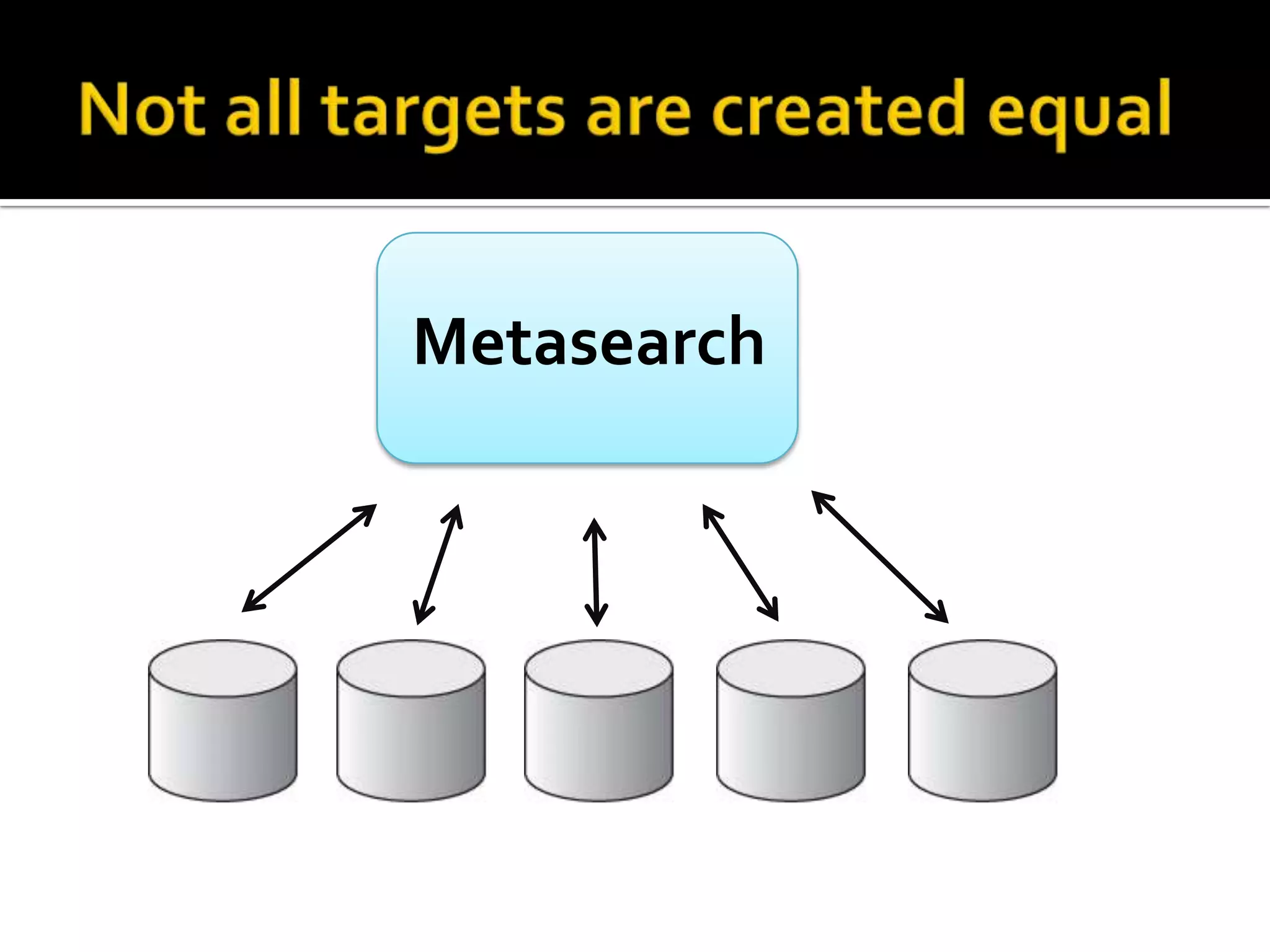
MetasearchNot all targets are created equal
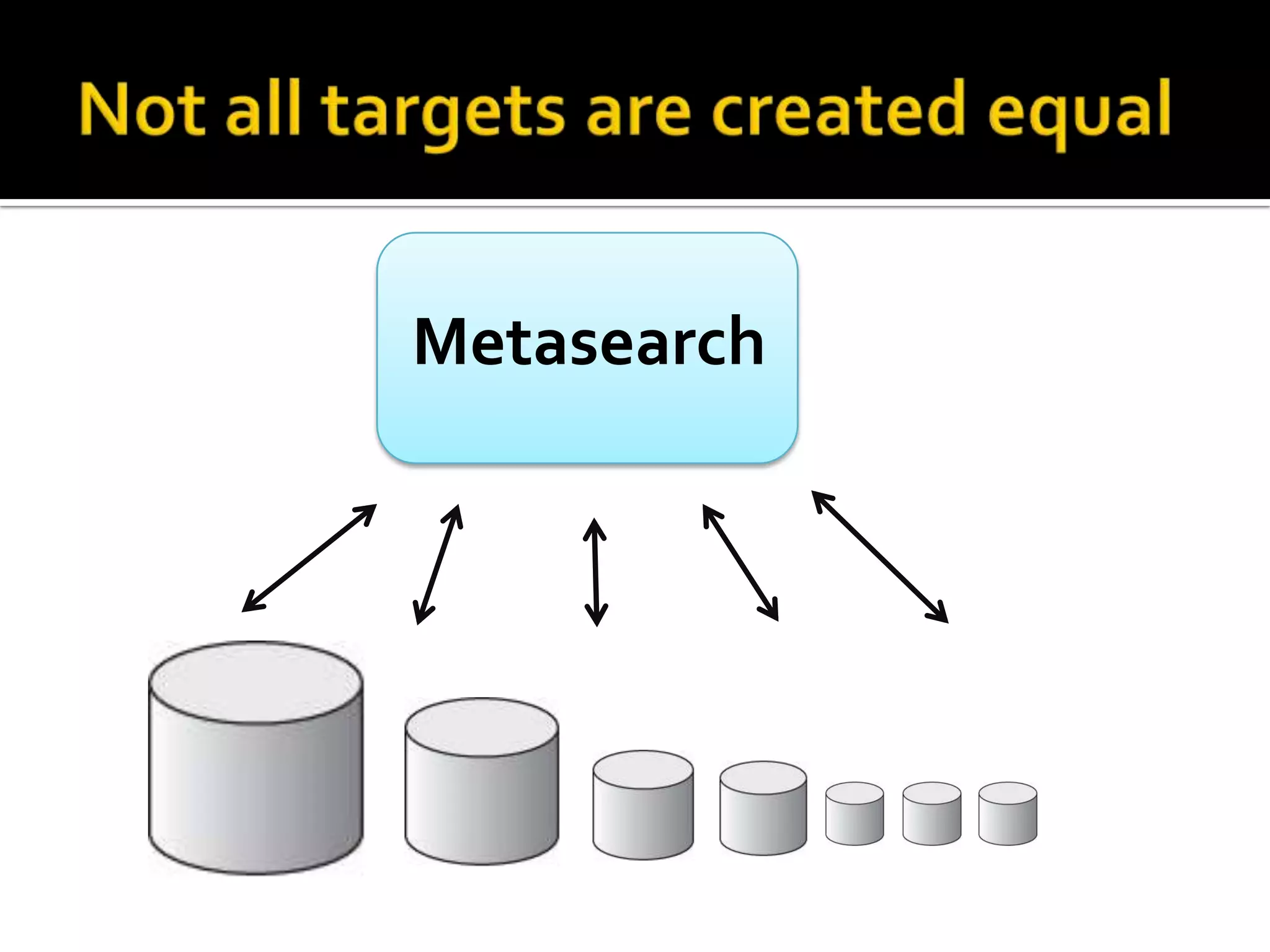
Not all targets are created equalMetasearch
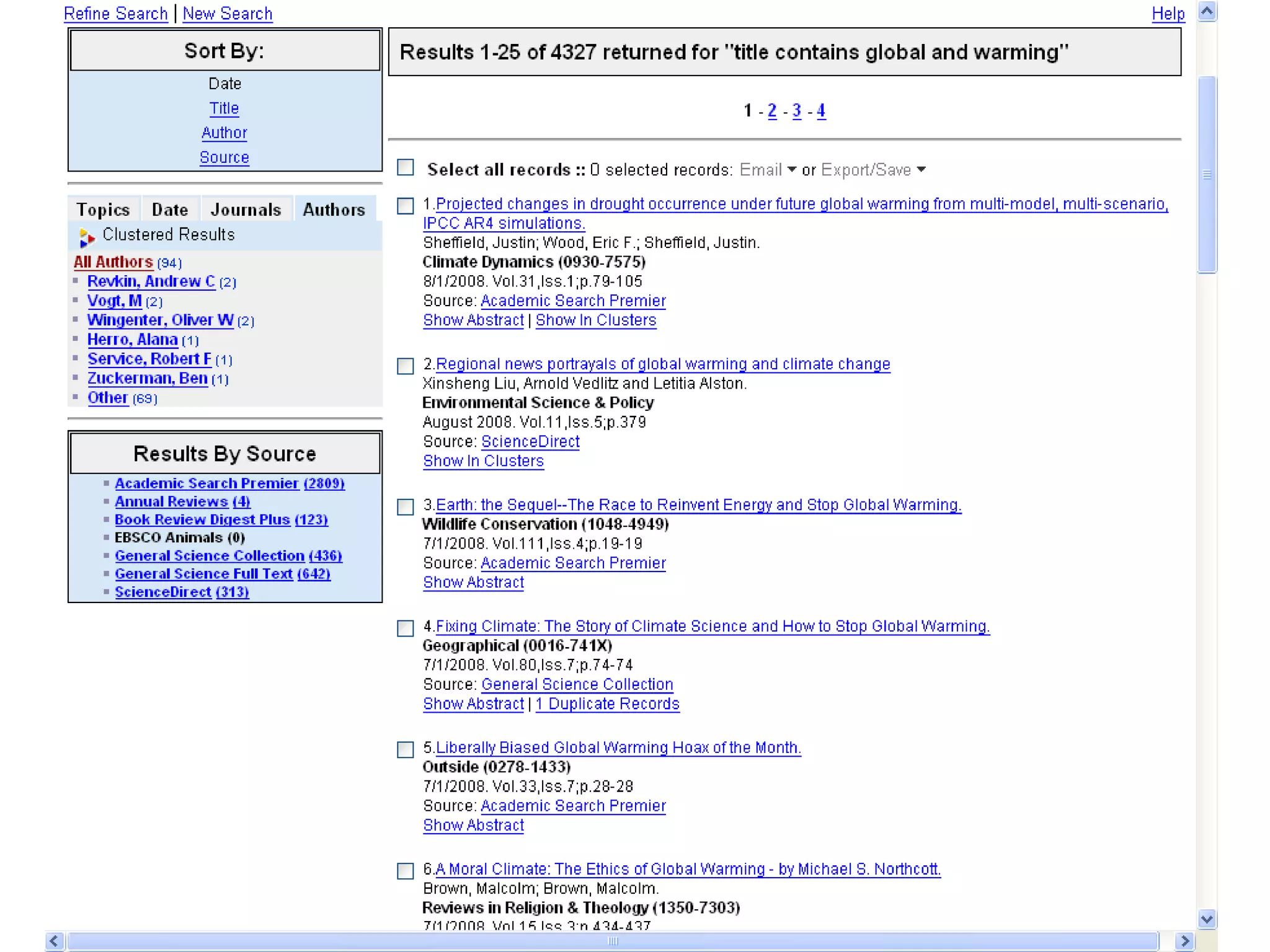
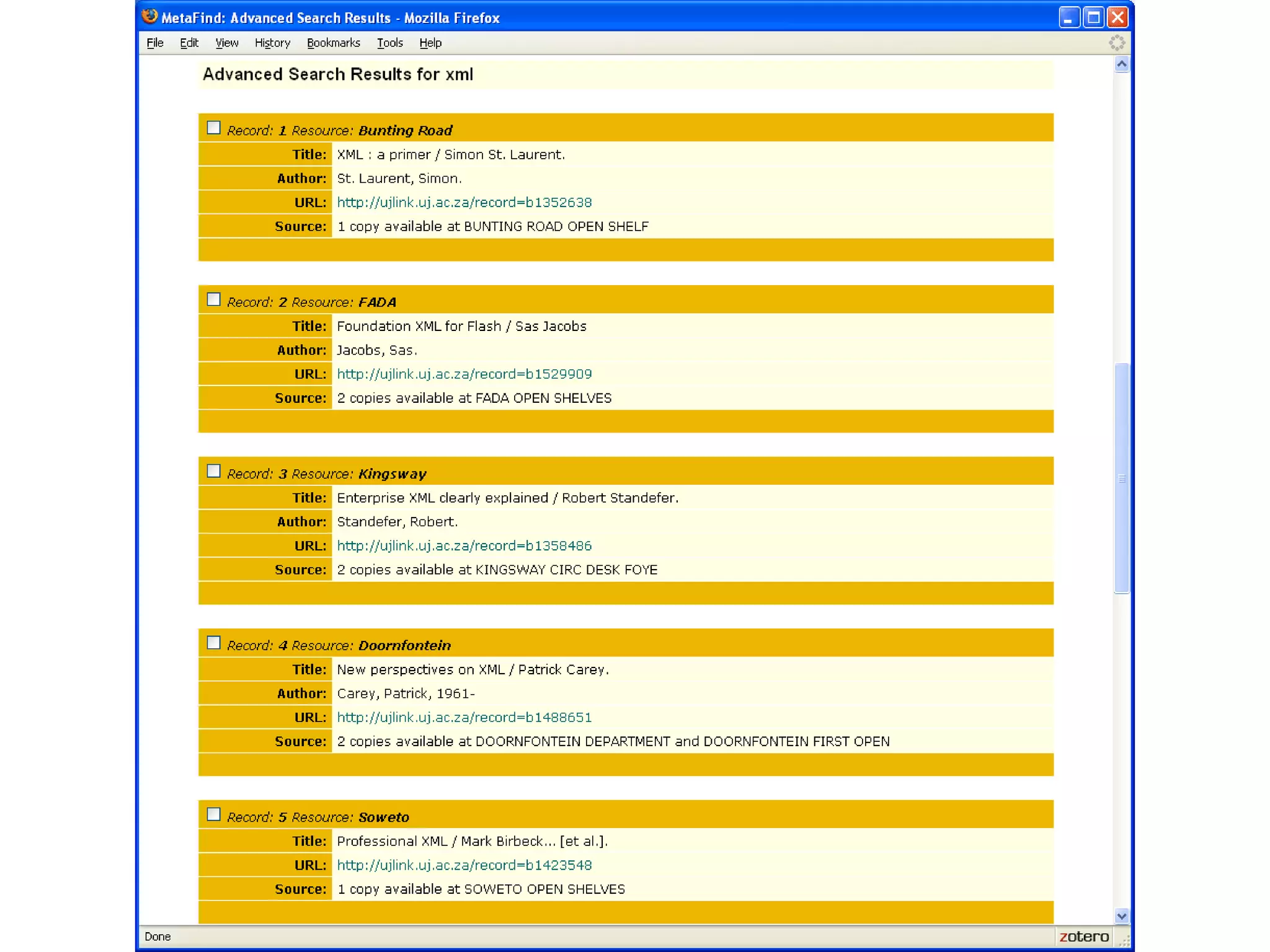
Problems searching the catalogZ39.50 searching not greatLimited search optionsBrowse searching not inherent in MetalibInnovative ILSHit counts are wrongKeyword results return results in bib id orderNot getting fixed any time soon.
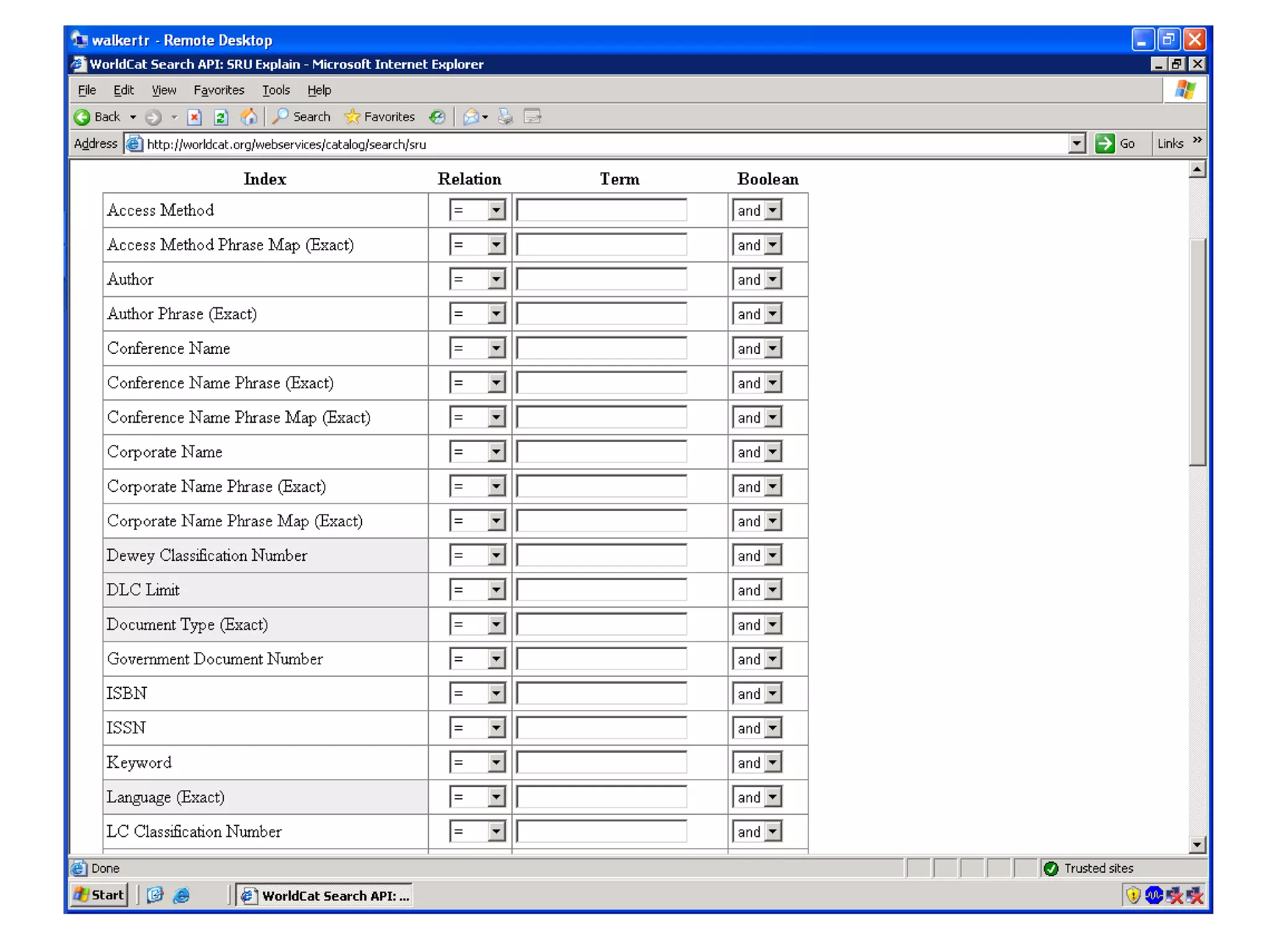
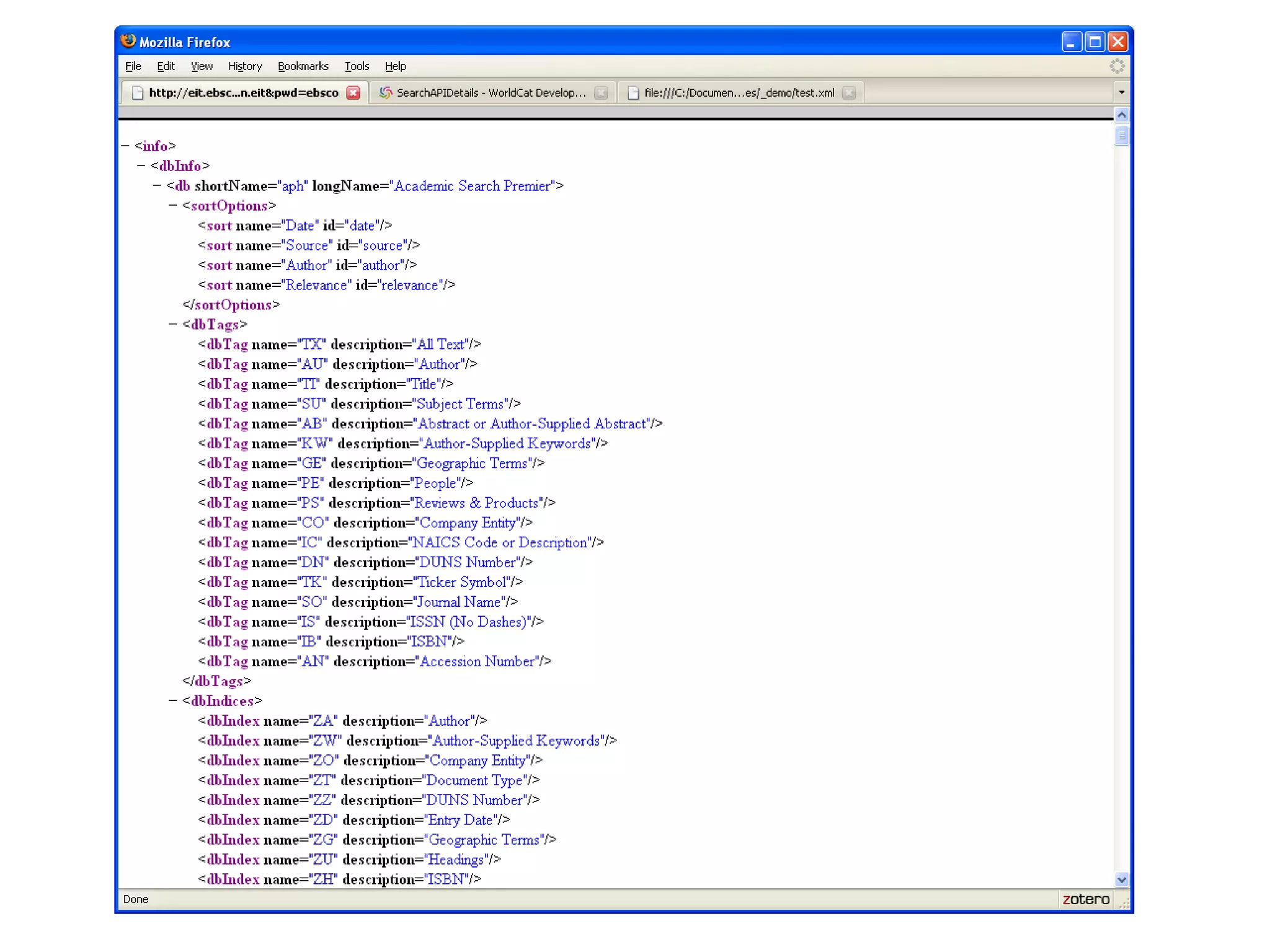
WorldCat and Ebsco APIsWorldCat APIFree (to OCLC members) web service to WorldCatJust ended pilot phaseEbsco Integration ToolkitFree (to Ebsco customers) web service to all Ebsco databasesAvailable now
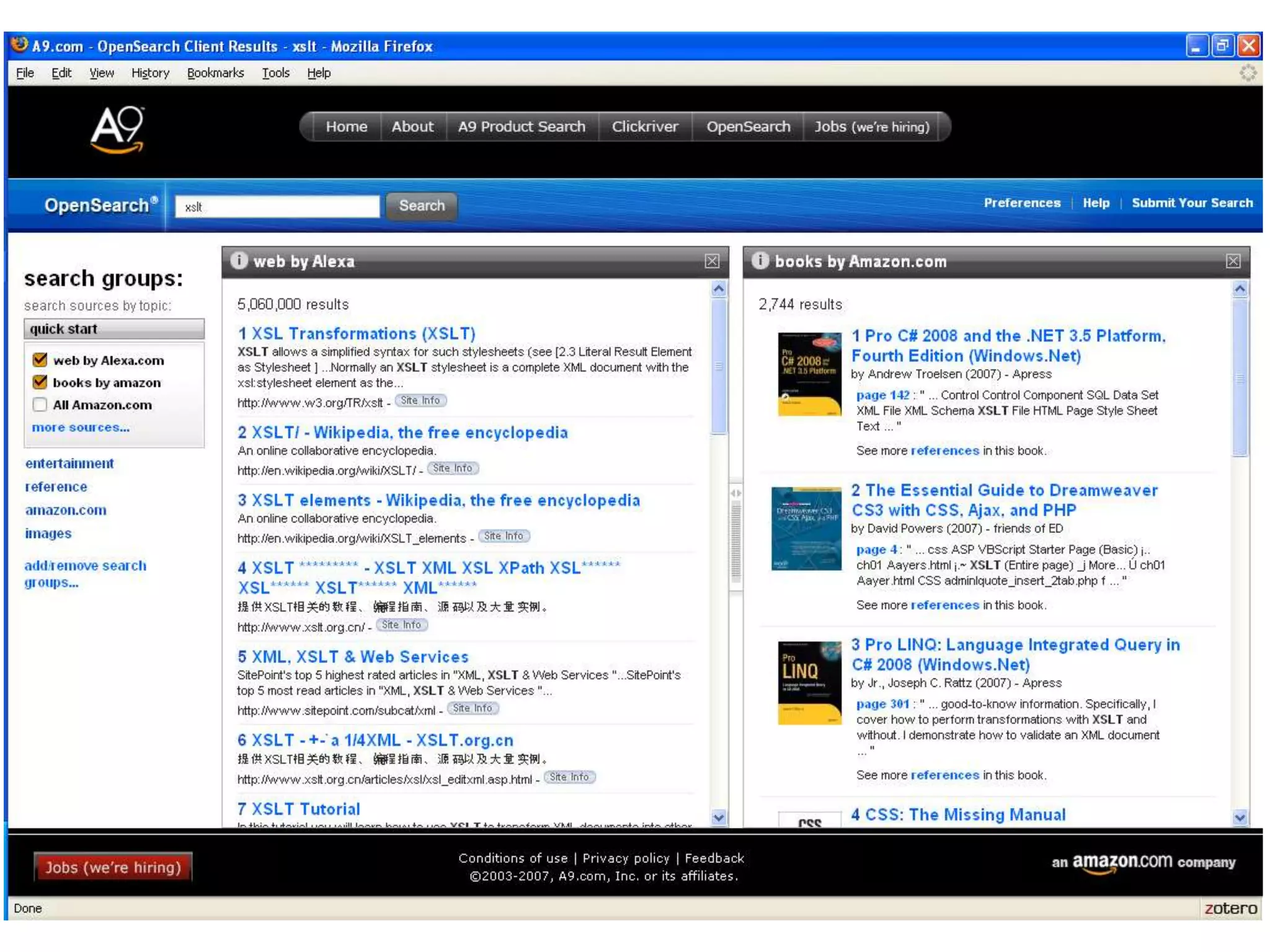
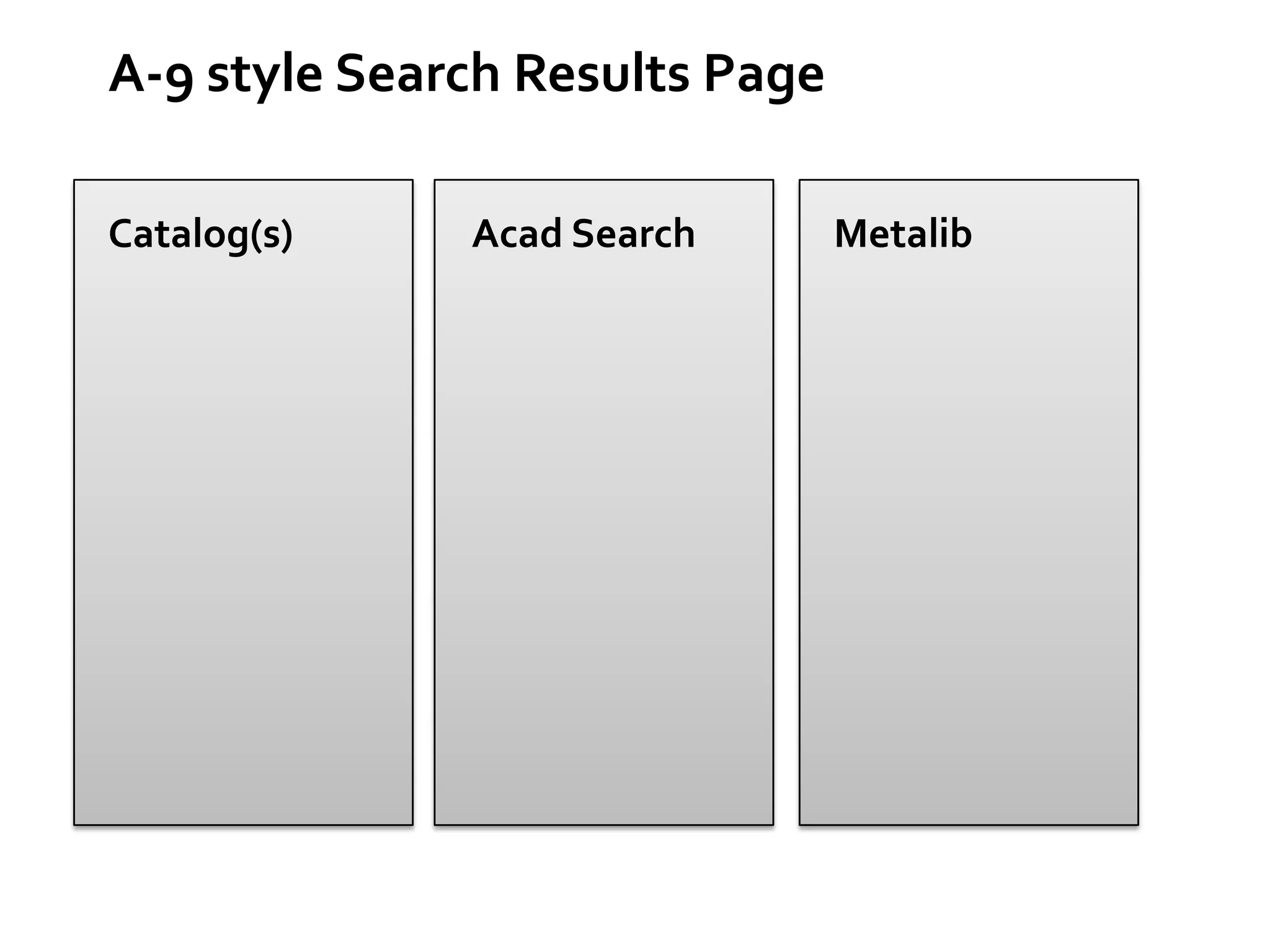
A-9 style Search Results PageCatalog(s)Acad SearchMetalib
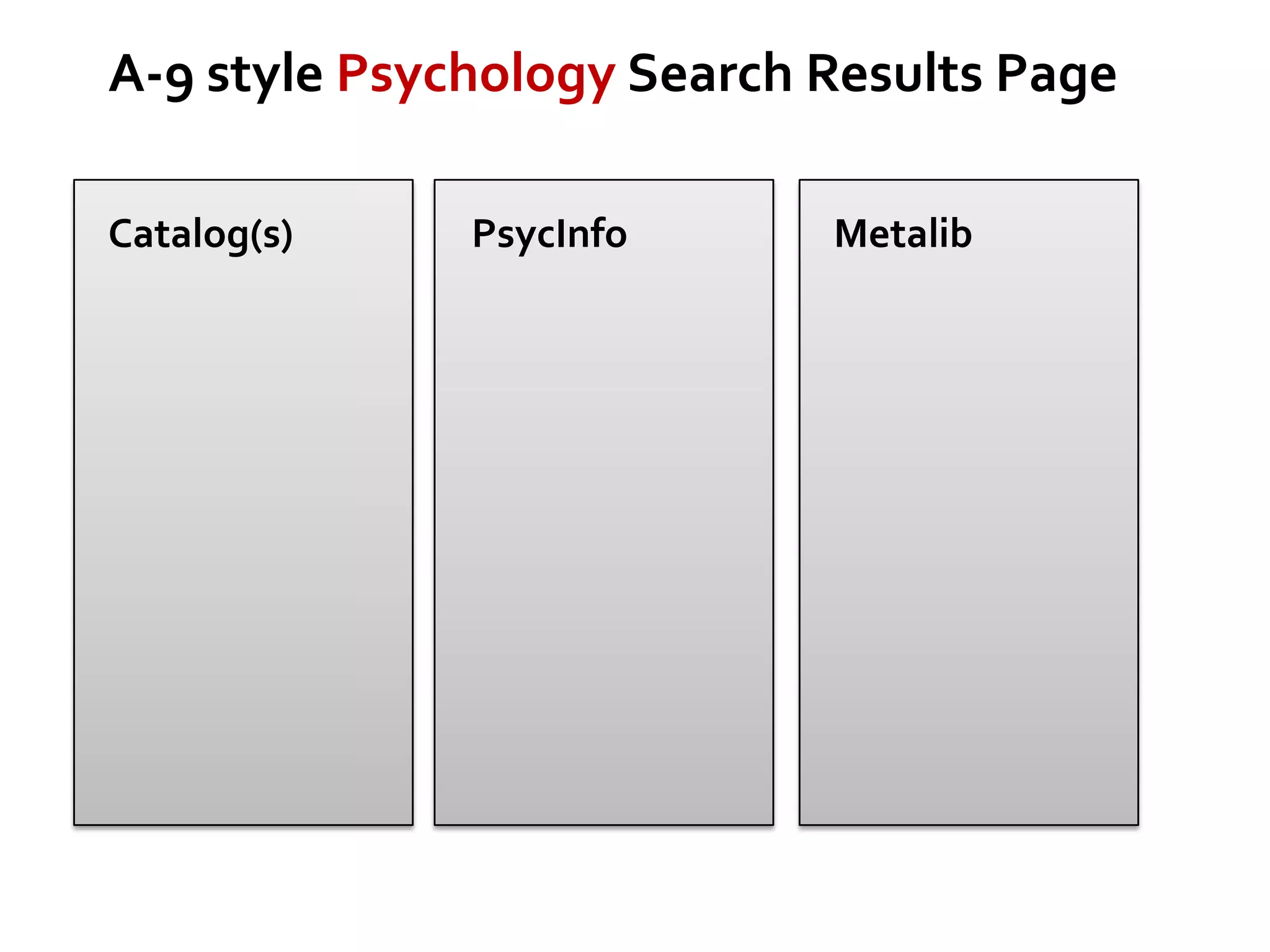
A-9 style Psychology Search Results PageCatalog(s)PsycInfoMetalib
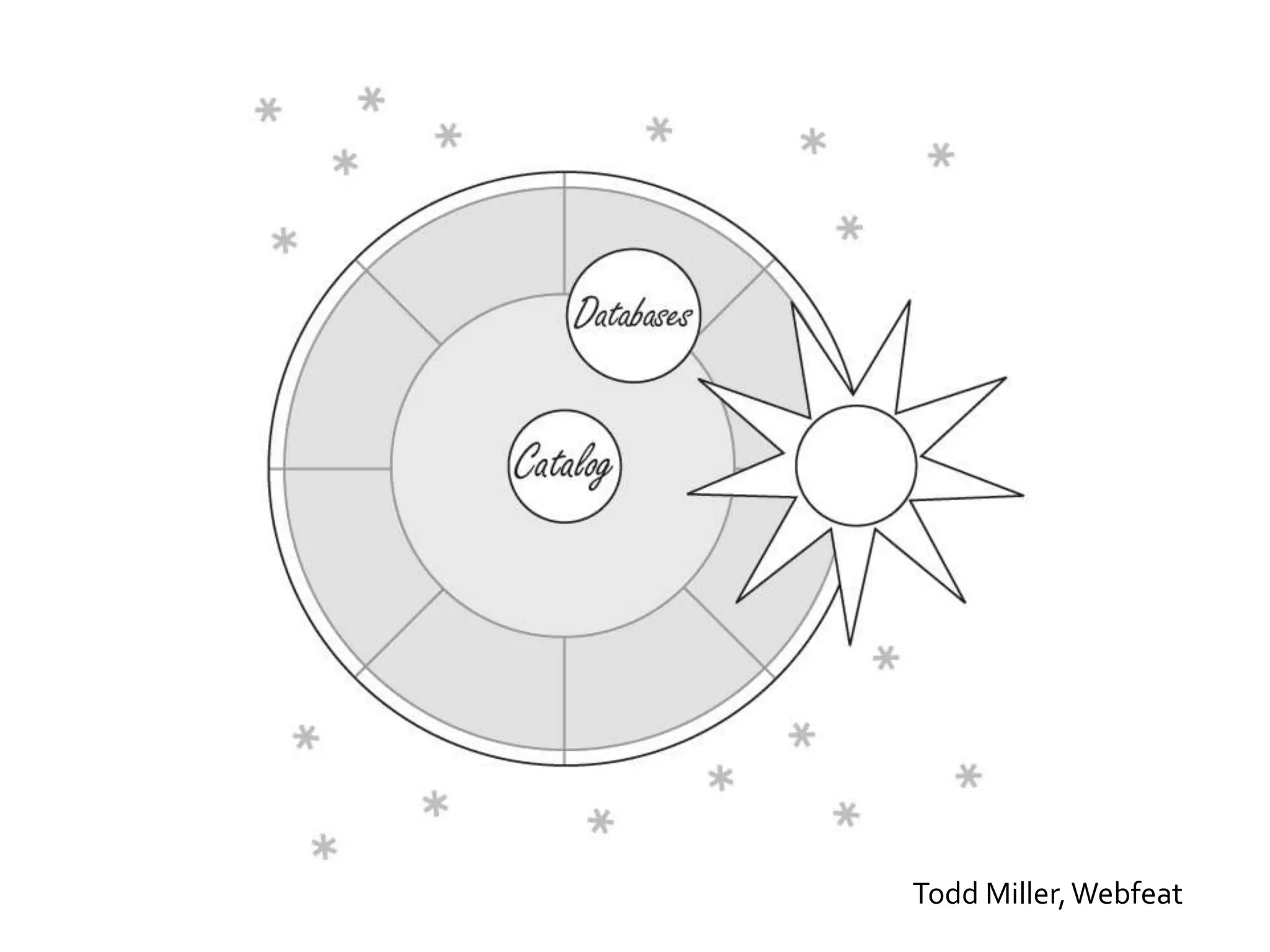
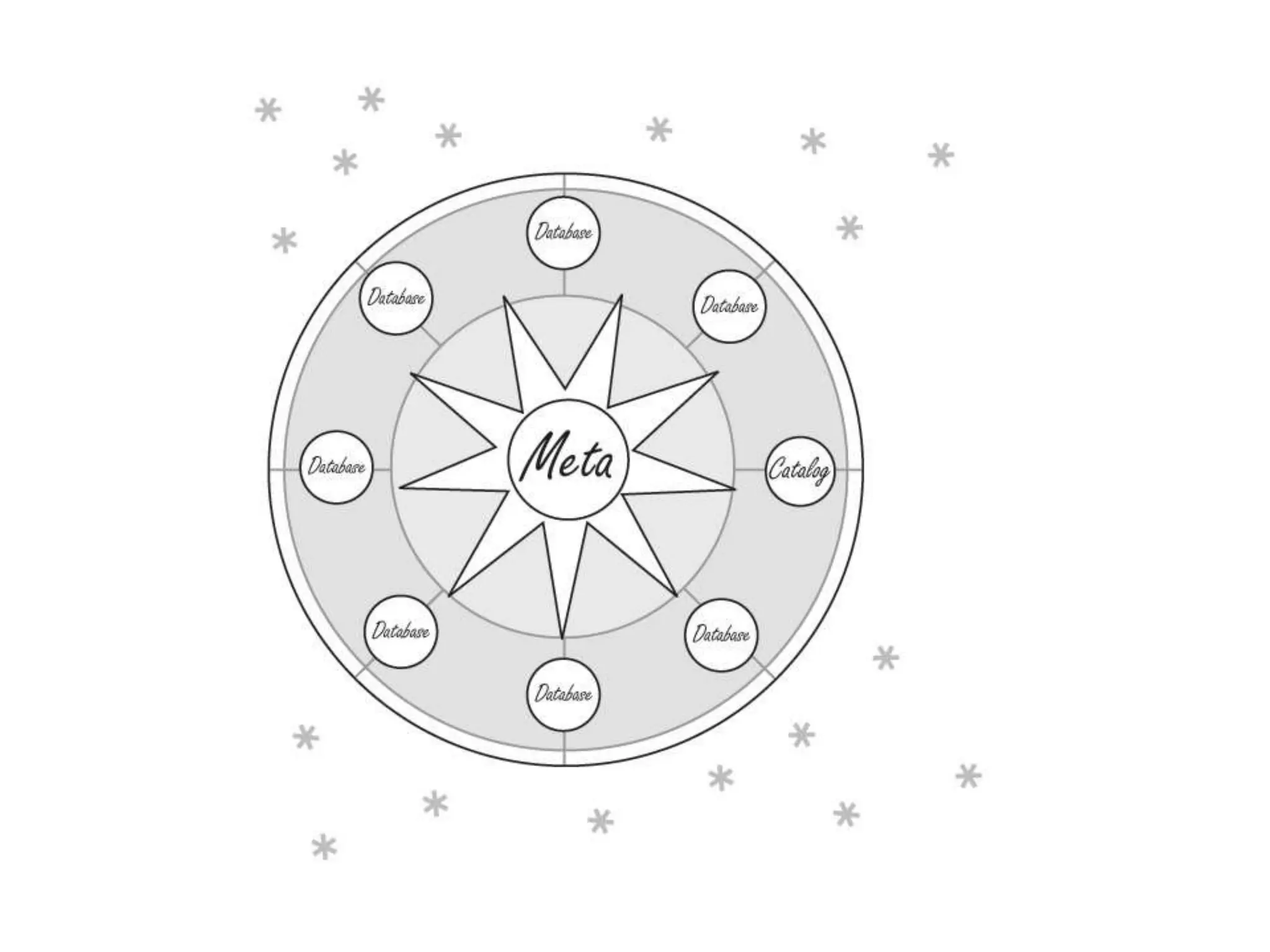
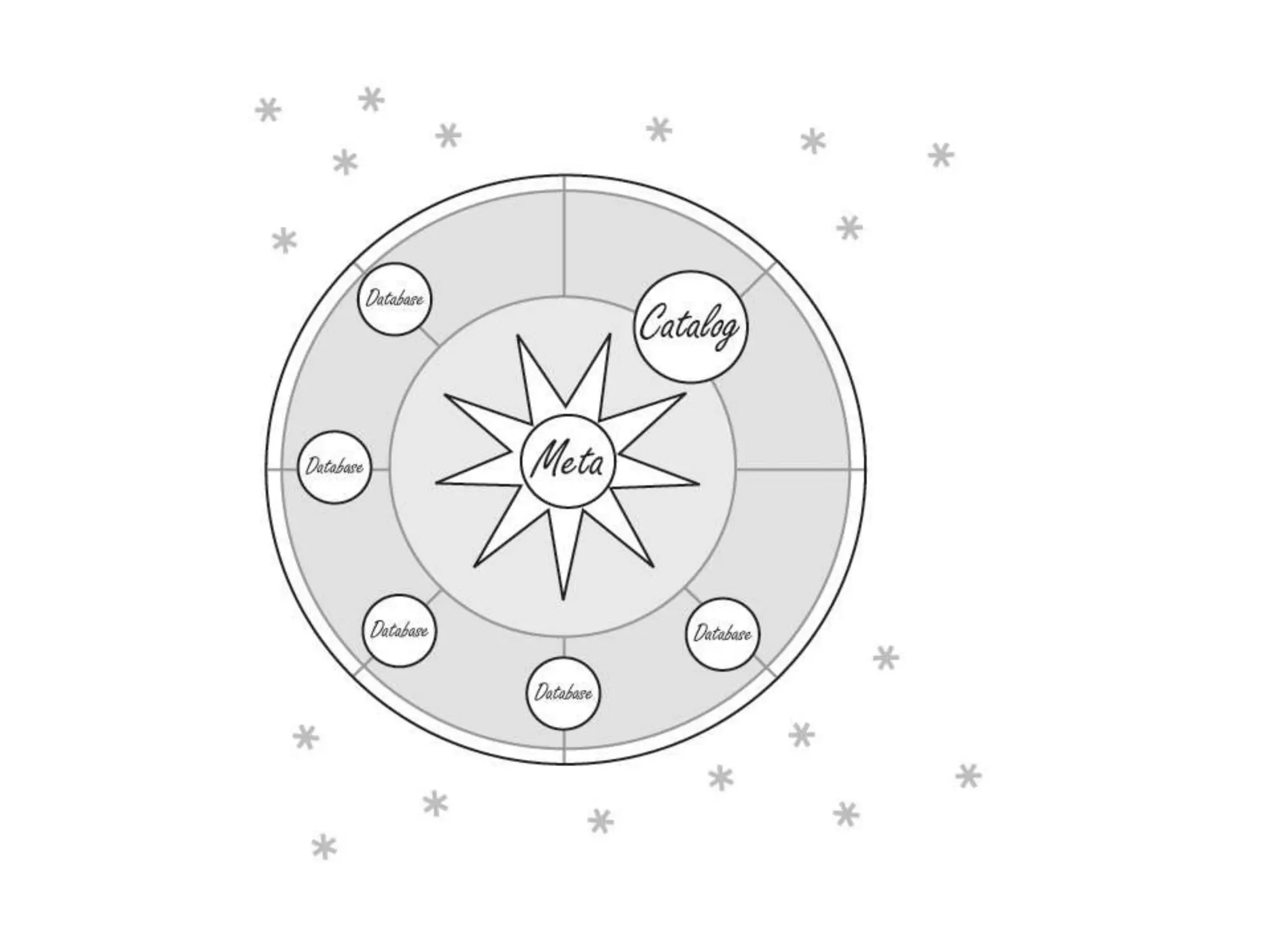
HybridSystemMetasearchOther databasesCatalogMain database
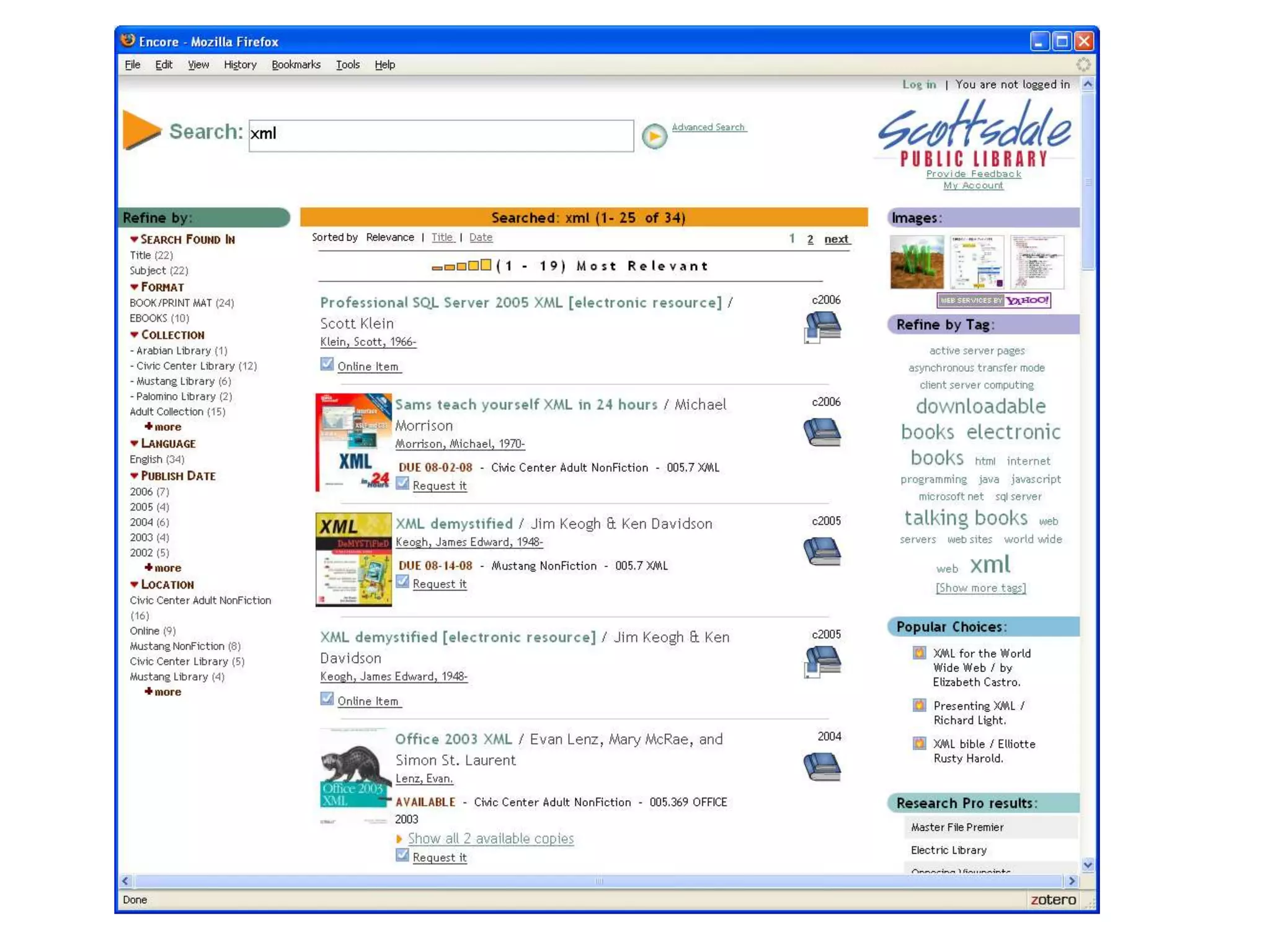
From the catalog out?EndeccaVUFindPrimoEncoreWorldCat Local
Todd Miller, Webfeat
Library portal?Metalib not flexible enoughInterfaceAdding functionalityIntegrating with other systemsXerxes should beEverything is XML-basedOpen source

From metasearch to metaservices

  • 1.
    David WalkerCalifornia StateUniversityFrom metasearch to metaservices
  • 2.
    IntroductionPart philosophyWhat arewe trying to do w/ metasearch?Where are the problems?How might we do it better?Part practicalWaxing philosophical is not enough!What can we do now with the tech we have?
  • 3.
    Rethinking metasearch?We’ve beenat it long enough nowGoogle ScholarNewer systemsNext-generation catalogs? Enterprise search? Discovery layers?
  • 4.
    New metasearch modelsMetalibX-ServerDesign your own interfaceIncorporate other systems and dataExperiment!Xerxes ProjectDeveloped by CSU and John HopkinsImplemented at 20+ universities
  • 5.
    XerxesPHP / XSLT / MySQLDBX-ServerMetalibKB
  • 6.
    What are wetrying to accomplish?“We offer a fragmented set of systems to search for published information . . . each with very different tools for identifying and obtaining materials. For the user, these distinctions are arbitrary.” – UC Bib Serv Taskforce
  • 7.
    Overview of theliterature1990-1999“Is There a Chance for a Standardized User Interface?” –Fletcher2000-2004“Trumping Google? . . .” –Luther“Talking about a Revolution? . . . ” –Nicholas“The Answer to all of our Problems? . . .” –Groenewegen“The Right Solution . . .” –Tennant
  • 8.
    Overview of theliterature2004-2008“Is Metasearching Dead?” –Tennant“Metasearching: Not as Good as We'd Like It” –NLAQ“Why Librarians Hate Metasearch” –McHale“Plotting a New Course for Metasearch” –Breeding
  • 9.
    Arguing about metasearch“[C]ross-databasesearch tools . . . are the correct solution for unifying access to a variety of information resources.” –Roy Tennant“Metasearching, then, is a step backward, a way of avoiding the learning process.” – William Frost“[M]etasearch … cannot stand up to search systems based on centralized indexes” –Marshall Breeding“Part of me keeps hoping [metasearch] will go away, but nope, it's still there.” – Andrew Pace
  • 10.
    Arguing about metasearchBroadcastargument (pro)“You can search multiple databases simultaneously!”Nativist argument (anti)“The search is not advanced enough!”Immature technology argument (anti)“The search is too slow!”“Google Scholar is faster!”
  • 11.
    Isn’t it ironic?Somelibrarians dislike metasearch because it is too much like Google; othersbecause it is not enough like Google.
  • 12.
    Usage statisticsSFX asa proxy measure?Query # 2: Requests by source (SID)Not all databases or clicksApples-to-apples comparisonExample Cal State campusesCal State Fullerton – general – 38,000 studentsCal Poly – science + engineering – 20,000 studentsSonoma State – liberal arts – 8,500 students
  • 13.
    Usage statisticsFullertonNative: 297,602 (54%)Xerxes: 252,238 (45%)Google: 5,340 (1%)Cal PolyNative: 95,885 (47%)Xerxes: 92,534 (46%)Google: 13,697 (7%)Sonoma
  • 14.
  • 15.
  • 16.
    Google: 1,944 (4%)Native: 416,141 52%Xerxes: 367,047 46%Google: 20,98 3%
  • 17.
    Isn’t it ironic?Usageof Google Scholar may depend in large part on whether librarians promote it or not!
  • 18.
    Usability studiesUniversitiesBoston College–BYU – Carnegie Mellon – Maryland – Mississippi – Northwestern – Oregon State – Rochester – Texas A & M –Colorado, Denver –California, Santa CruzSystemsMetalib – Encompass – Serials Solutions – Webfeat – LibraryFind
  • 19.
    Usability studies70% ofthe students in BYU study preferred metasearch over native interfaces“[B]oth [metasearch and searching native interfaces individually] produce citation sets of similar quality” – BYU “Graduate students and faculty . . . all located citations they had not previously found” –Texas A&M
  • 20.
    On search times“Eight[out of 18] students measured the speed of the search processing as reasonable and only five found the system too slow.” –Maryland“Users are willing to wait as long as they think that they will get useful results. Their perceptions of time depend on this belief.” –Santa Cruz“When people accomplish what they set out to do on a site, they perceive that site to be fast . . . If people can't find what they want on a site, they will regard the site as a waste of time (and slow).” – Perfetti, Landesman
  • 21.
    On the interface“Ifound that both were not very user friendly.” – BYU Student“[Non-federated search] lent itself to more abstracts . . . With [federated search] I was relying more on the title which can sometimes be misleading.” –BYU Student“I would have to search through every single one of these to find which one is a scholarly article and which one is just a newspaper article.” – Maryland Student
  • 22.
    Broadening our goals“[T]hepoint of federated searching is to make searching as simple as possible” –CervoneIs it all about search?What happens before you search?What happens after you search?Re-search is more than just searching
  • 23.
    Selecting the rightresources“Nothing slows the user's scanning momentum more than encountering results that are irrelevant . . . many users view it as a digital equivalent of Tourette's Syndrome, where the system just spits out random items, unrelated to their search.” – Jared Spool
  • 24.
    Selecting the rightresourcesWhy not search everything?Impractical technicallyImpractical presentationallyWhat you don’t search is equally as important as what you do searchWhy metasearch systems get this wrong(Overly-) focused on the search boxDefining is not the same as limiting
  • 28.
    Once you startdown the Quick Search path, forever will it dominate your destiny.
  • 32.
    Desperately seeking searchbox“I just want a search box on the homepage.” – Your usersFirst Rule of Usability? Don't Listen to Users!What users say they do is sometimes different from what they actually do“The Google phenomenon”?
  • 36.
    Desperately seeking searchbox“[T]here is something inherent in the site's design that causes users to choose the search engine or the links, not a hard-and-fast preference of the user” “[U]sers often gravitated to the search engine when the links on the page didn't satisfy them in some way.” – Jared Spool
  • 37.
    Isn’t it ironic?Thesearch box dominates the opening screens, then disappears!
  • 42.
    Changing queries“Nearly allstudents repeated their searches, changing terms or subject categories, so the interface needs to make this easy.”– Maryland “Each new piece of information [users] encounter gives them new ideas and directions to follow and, consequently, a new conception of the query …  [T]he query itself (as well as the search terms used) is continually shifting, in part or whole.” –Bates
  • 43.
    Services for resultsSpellcheckPeer reviewed flagFull-text look-upFull-text linkingFormatForeign language
  • 44.
    Avoid pogosticking“66% ofpurchases on [e-commerce] sites happened without any pogosticking . . . the more [users] pogosticked, the less likely the session would result in a purchase.”“The best search results pages will prevent pogosticking by providing the relevant content before the user chooses a specific result.” – Jared Spool
  • 47.
    Services with resultsSaveand exportCitation formattingTagging, editing, and sharingExpert research help
  • 48.
    Going back tosearchProblems with broadcast searchingSlow, dropped connectionsLowest-common denominator searchingProblems with central indexingNot easyRequires software, hardware, money, hagglingA middle ground?
  • 49.
    MetasearchNot all targetsare created equal
  • 50.
    Not all targetsare created equalMetasearch
  • 52.
    Problems searching thecatalogZ39.50 searching not greatLimited search optionsBrowse searching not inherent in MetalibInnovative ILSHit counts are wrongKeyword results return results in bib id orderNot getting fixed any time soon.
  • 53.
    WorldCat and EbscoAPIsWorldCat APIFree (to OCLC members) web service to WorldCatJust ended pilot phaseEbsco Integration ToolkitFree (to Ebsco customers) web service to all Ebsco databasesAvailable now
  • 55.
    A-9 style SearchResults PageCatalog(s)Acad SearchMetalib
  • 56.
    A-9 style PsychologySearch Results PageCatalog(s)PsycInfoMetalib
  • 57.
  • 60.
    From the catalogout?EndeccaVUFindPrimoEncoreWorldCat Local
  • 61.
  • 68.
    Library portal?Metalib notflexible enoughInterfaceAdding functionalityIntegrating with other systemsXerxes should beEverything is XML-basedOpen source
  • 69.
    Toward a serviceslayerAdding value beyond the native interfaceConsolidation before distributionCome to the RSS presentation on FridaySaving, tagging, sharingThe interface is the systemMetasearch, centrally indexed, hybrid . . .Still need a good interface
  • 70.
    Conclusion“You can searchmultiple databases at the same time” is not a compelling enough argumentWe need to focus on the whole research process , not just searchAdd value and layer functionality on top of the results
  • 71.
    ConclusionWe need anexperimental platform to try new things, and an open source community to allow that to happenxerxes.calstate.edu