french revolution class 9
french society during late eighteenth
century
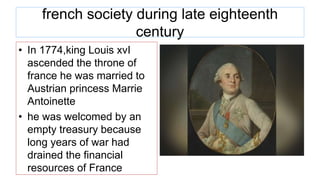
• In 1774,king Louis xvI
ascended the throne of
france he was married to
Austrian princess Marrie
Antoinette
• he was welcomed by an
empty treasury because
long years of war had
drained the financial
resources of France
• France was under
tremendous debt of 2
billion livres and lenders
were charging high
interest rates
• for meeting the expenses
of palace,army,offices and
repay the loans the state
was forced to increase tax
• now a question arise
“means everyone was
paying huge taxes?”
• not everybody was paying
taxes as the society was
divided between different
estates
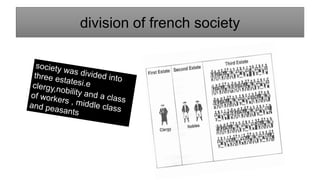
division of french society
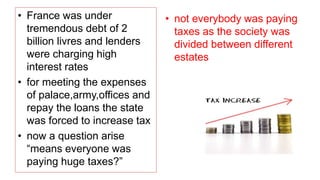
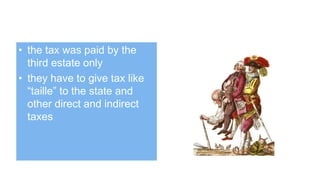
• the tax was paid by the
third estate only
• they have to give tax like
“taille” to the state and
other direct and indirect
taxes
the struggle to survive
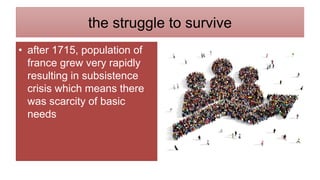
• after 1715, population of
france grew very rapidly
resulting in subsistence
crisis which means there
was scarcity of basic
needs
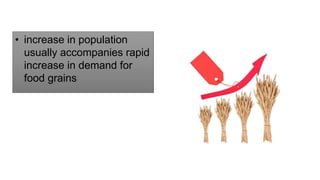
• increase in population
usually accompanies rapid
increase in demand for
food grains
• but the demand was not
fulfilled as the production
of grains was low
• as a result, the price of
bread rose rapidly
• owners of the workshops
fixed the wages of
labourers
• but the wages did not keep
pace with rise in price and
the gap between the poor
and the rich widened
• continous drought also led
to the bad harvest and
people died of either
hunger or food riots and
the situation became
worse
a growing middle class envisages an end
to privileges
• it all started when louis 16 ascended the throne in 1774
• the financial condition of france was very bad
• to overcome this situation the taxes were increased
• this decision made middle class people unhappy as they
had to pay high taxes
• they began to protest against the decision
• but they lacked means and programs to carry out this
protest on a large scale
• so, they fight was left to those groups of third estate who
were educated and prosperous
q. so, the middle class was
properous at that time???
ans: not all, but some people of the middle class were
prosperous and had access to education
• some of them earned their wealth through overseas trade
and manufacture of goods
• in addition to merchants, the middle class also included
lawyers or administrative officials
• all of them believed that no group in society should be
privileged by birth
• philosophers also played a very important role in
elinghteing society to challenge the powers of the
monarch
role of philosophers
• philosophers like john locke and jean jacques
rousseau put forwars the ideas based on equality
and liberty
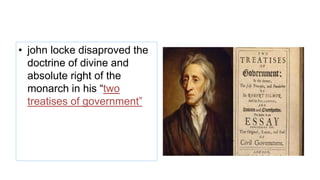
• john locke disaproved the
doctrine of divine and
absolute right of the
monarch in his “two
treatises of government”
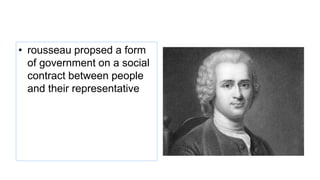
• rousseau propsed a form
of government on a social
contract between people
and their representative
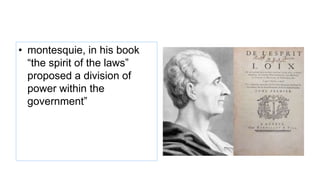
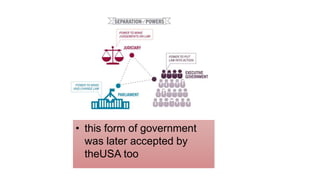
• montesquie, in his book
“the spirit of the laws”
proposed a division of
power within the
government”
• this form of government
was later accepted by
theUSA too
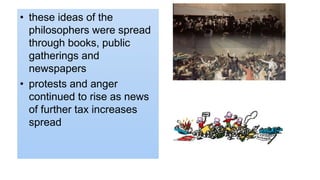
• these ideas of the
philosophers were spread
through books, public
gatherings and
newspapers
• protests and anger
continued to rise as news
of further tax increases
spread
outbreak of the french revolution
financial crisis and imposition of taxes
• during king louis 16
reign, the french society
faced severe financial
crisis
• to meet more expenses,
he planned to increase
the taxes
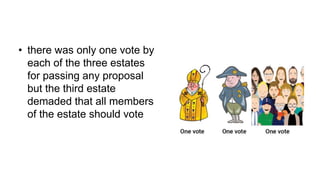
• there was only one vote by
each of the three estates
for passing any proposal
but the third estate
demaded that all members
of the estate should vote
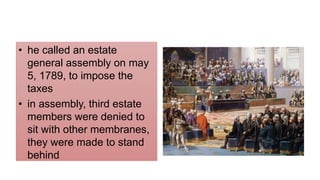
• he called an estate
general assembly on may
5, 1789, to impose the
taxes
• in assembly, third estate
members were denied to
sit with other membranes,
they were made to stand
behind
• the king rejected this
proposal and all the third
estate members walked
out of the estate in protest
q. what happened then? were they
able to get over this exploitation?
ans : that is where the french revolution started
rise of the third estate and storming of the
basetille
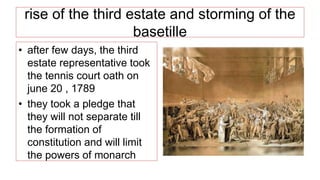
• after few days, the third
estate representative took
the tennis court oath on
june 20 , 1789
• they took a pledge that
they will not separate till
the formation of
constitution and will limit
the powers of monarch
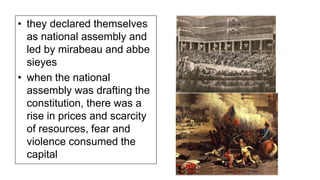
• they declared themselves
as national assembly and
led by mirabeau and abbe
sieyes
• when the national
assembly was drafting the
constitution, there was a
rise in prices and scarcity
of resources, fear and
violence consumed the
capital
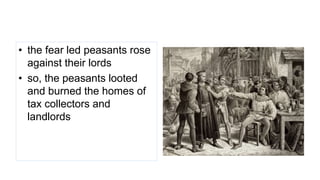
• the fear led peasants rose
against their lords
• so, the peasants looted
and burned the homes of
tax collectors and
landlords
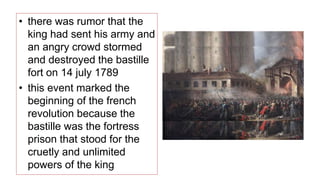
• there was rumor that the
king had sent his army and
an angry crowd stormed
and destroyed the bastille
fort on 14 july 1789
• this event marked the
beginning of the french
revolution because the
bastille was the fortress
prison that stood for the
cruetly and unlimited
powers of the king
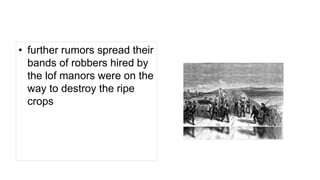
• further rumors spread their
bands of robbers hired by
the lof manors were on the
way to destroy the ripe
crops
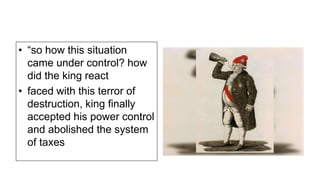
• “so how this situation
came under control? how
did the king react
• faced with this terror of
destruction, king finally
accepted his power control
and abolished the system
of taxes
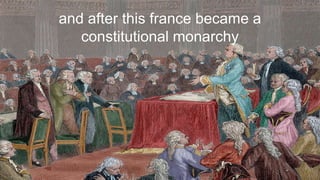
and after this france became a
constitutional monarchy
thank you:)
part 2 coming
soon

french revolution class 9

  • 1.
  • 2.
    french society duringlate eighteenth century • In 1774,king Louis xvI ascended the throne of france he was married to Austrian princess Marrie Antoinette • he was welcomed by an empty treasury because long years of war had drained the financial resources of France
  • 3.
    • France wasunder tremendous debt of 2 billion livres and lenders were charging high interest rates • for meeting the expenses of palace,army,offices and repay the loans the state was forced to increase tax • now a question arise “means everyone was paying huge taxes?” • not everybody was paying taxes as the society was divided between different estates
  • 4.
  • 9.
    • the taxwas paid by the third estate only • they have to give tax like “taille” to the state and other direct and indirect taxes
  • 10.
    the struggle tosurvive • after 1715, population of france grew very rapidly resulting in subsistence crisis which means there was scarcity of basic needs
  • 11.
    • increase inpopulation usually accompanies rapid increase in demand for food grains
  • 12.
    • but thedemand was not fulfilled as the production of grains was low • as a result, the price of bread rose rapidly • owners of the workshops fixed the wages of labourers
  • 13.
    • but thewages did not keep pace with rise in price and the gap between the poor and the rich widened
  • 14.
    • continous droughtalso led to the bad harvest and people died of either hunger or food riots and the situation became worse
  • 15.
    a growing middleclass envisages an end to privileges • it all started when louis 16 ascended the throne in 1774 • the financial condition of france was very bad • to overcome this situation the taxes were increased • this decision made middle class people unhappy as they had to pay high taxes • they began to protest against the decision • but they lacked means and programs to carry out this protest on a large scale • so, they fight was left to those groups of third estate who were educated and prosperous
  • 16.
    q. so, themiddle class was properous at that time??? ans: not all, but some people of the middle class were prosperous and had access to education
  • 17.
    • some ofthem earned their wealth through overseas trade and manufacture of goods • in addition to merchants, the middle class also included lawyers or administrative officials • all of them believed that no group in society should be privileged by birth • philosophers also played a very important role in elinghteing society to challenge the powers of the monarch
  • 18.
    role of philosophers •philosophers like john locke and jean jacques rousseau put forwars the ideas based on equality and liberty
  • 19.
    • john lockedisaproved the doctrine of divine and absolute right of the monarch in his “two treatises of government”
  • 20.
    • rousseau propseda form of government on a social contract between people and their representative
  • 21.
    • montesquie, inhis book “the spirit of the laws” proposed a division of power within the government”
  • 22.
    • this formof government was later accepted by theUSA too
  • 23.
    • these ideasof the philosophers were spread through books, public gatherings and newspapers • protests and anger continued to rise as news of further tax increases spread
  • 24.
    outbreak of thefrench revolution financial crisis and imposition of taxes • during king louis 16 reign, the french society faced severe financial crisis • to meet more expenses, he planned to increase the taxes
  • 25.
    • there wasonly one vote by each of the three estates for passing any proposal but the third estate demaded that all members of the estate should vote
  • 26.
    • he calledan estate general assembly on may 5, 1789, to impose the taxes • in assembly, third estate members were denied to sit with other membranes, they were made to stand behind
  • 27.
    • the kingrejected this proposal and all the third estate members walked out of the estate in protest
  • 28.
    q. what happenedthen? were they able to get over this exploitation? ans : that is where the french revolution started
  • 29.
    rise of thethird estate and storming of the basetille • after few days, the third estate representative took the tennis court oath on june 20 , 1789 • they took a pledge that they will not separate till the formation of constitution and will limit the powers of monarch
  • 30.
    • they declaredthemselves as national assembly and led by mirabeau and abbe sieyes • when the national assembly was drafting the constitution, there was a rise in prices and scarcity of resources, fear and violence consumed the capital
  • 31.
    • the fearled peasants rose against their lords • so, the peasants looted and burned the homes of tax collectors and landlords
  • 32.
    • there wasrumor that the king had sent his army and an angry crowd stormed and destroyed the bastille fort on 14 july 1789 • this event marked the beginning of the french revolution because the bastille was the fortress prison that stood for the cruetly and unlimited powers of the king
  • 33.
    • further rumorsspread their bands of robbers hired by the lof manors were on the way to destroy the ripe crops
  • 34.
    • “so howthis situation came under control? how did the king react • faced with this terror of destruction, king finally accepted his power control and abolished the system of taxes
  • 35.
    and after thisfrance became a constitutional monarchy
  • 36.
    thank you:) part 2coming soon