Freemium Business Model
Agenda
• Introduction to business model.
• Building blocks of freemium business model.
• Types of freemium models.
• Industries and companies using freemium business model.
• Business implications
• Critical analysis.
What is a
business model?
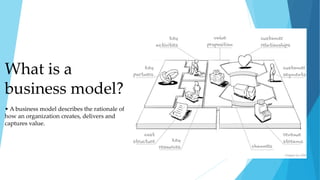
• A business model describes the rationale of
how an organization creates, delivers and
captures value.
Freemium Business model and Its
building blocks
 Def - Business model that works by offering basic Web services, or a basic downloadable digital product, for
free, while charging a premium for advanced or special features.
 Customer segments: Which is your target customer segment? Eg: Linkedin: Students, professionals, businesses.
 Value propositions: Solving customer problems or satisfying needs. Eg: MailChimp: solving marketing
campaign problem.
 Channels: Delivery of value to customers through communication, distribution and sales. Eg: Ibotta
 Customer relationships: How organization maintains relationships with customers.
 Revenue streams: Value proposition successfully delivered to customers. Eg: Premium features subscription,
Advertisements.
 Key resources: Assets required to offer all the above mentioned elements. Eg: HR, product etc.
 Key activities: Activities performed to implement all these elements
 Key partnerships: External/outsourced resources that these activities require. Eg: Social media integration.
 Cost structure: How much all the above costs
Freemium Lifecyle
• Introduction
• Growth – early adopters
• Maturity - peak
• Decline – late adopters – price sensitive
• New Feature introduction
Types of freemium business model
6
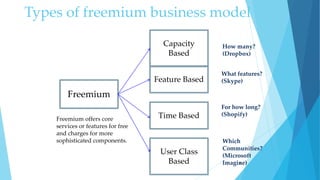
Freemium
User Class
Based
Time Based
Feature Based
Capacity
Based
Freemium offers core
services or features for free
and charges for more
sophisticated components.
How many?
(Dropbox)
What features?
(Skype)
For how long?
(Shopify)
Which
Communities?
(Microsoft
Imagine)
Industries and examples
• 15% of active users
• paying to use the service without
ads
• advertising placements to third
parties
• Last revenue - $2.15 Billion of
which $1.92 Billion are from 40
million subscribers
• 25% of revenue is the
prize pool for TI
• Game free – hero
outfits purchases
• 20 million unique
users
• TI’18 prize pool
expected to cross $30
million
2011 2012 2013 2014 2015 2016 2017
1600000
1600000
2874381
10931103
18323766
20770460
24687919
-5000000
0
5000000
10000000
15000000
20000000
25000000
30000000
1 2 3 4 5 6 7
Dota prize pool
Year Total Linear (Total)
Industries and examples
• Selling subscriptions to recruiters
and sales people who are
particularly heavy users of the site
• People pay to get contact info of the
person for recruiting
• Pay to be listed at the top in
recruiters search list
• Records and saves your notes and
everything else you might want to
remember
• A service whose value increases over
time
• If you have three weeks of recorded
notes and memories, and someone
offered you $50 bucks to delete
them, you might say yes. If you have
three years of recorded memories,
that might be worth as much to you
as your house
Industries and examples
• Referral program that gives users free
space for inviting space
• Run out of free space-you're not
going to move it all out - going to pay
up
• Cloud based – lower costs to store –
greater the user base
• Helps people manage and send out
newsletters
• One year after going freemium,
paying customers increased over
150% and profit increased over 650%
Industries and examples
• 600 million users who make calls for
free over the internet
• Small percentage of those pay to
make calls to landlines - percentage
is enough for a billion in revenue
• It was started, the goal was to out-
Facebook by building a social
network of social networks
• People preferred a generic social
network, and most people don't
want to join a niche social network
• If your idea is smaller than you
thought it would be, premium
might be better than freemium.
How to know that freemium is right
model for you or not?
 Deciding Factors
1) How big do I want my company to be?
2) What is the value of the free users?
3) What is the cost to serve free users?
4) How big is my market?
5) Is there value to one customer from other customers using the product?
 Inherent value
 Added Value
 No Value
What’s done wrong?
1)Picking The Wrong Market
 Existing market
 Gap
2)Offering No Compelling Reason to Upgrade to Your Paid Product or Service
 Anyone get some value
 Exceptional services to paying customers.
3)Tracking The Wrong Metrics (Or None At All)
 What is the total cost required to create this free content, or to offer this service for free to X number of users?
 For how long will the free content keep driving in new customers? (Five years? Ten?)
 How often does the content need to be updated, and what are the all-in costs of updating it?
 What is the expected return on investment in offering this free content?
4)Not Guiding Prospects Down The Path
• “Here’s a free sample… now sign up for the paid version to get even more!”
Take away:
 Cultural Difference (e.g)
 Content evaluation
 Strategic conversion of free to premium
Right Market  Right Content Right Approach
References
 https://www.forbes.com/sites/brettnelson/2013/07/23/the-freemium-model-top-flaws-and-potent-
fixes/#e1fc9a430221
 http://productlifecyclestages.com/
 https://techcrunch.com/2011/09/04/complete-guide-freemium/
 http://www.businessinsider.com/what-is-the-freemium-business-model-2011-4
 http://sixteenventures.com/seven-types-of-freemium
 https://hbr.org/2014/05/making-freemium-work
 http://www.businessinsider.com/freemiums-explained-and-how-you-company-can-implement-
them-2010-12
Thank You!

Freemium Business Model

  • 1.
  • 2.
    Agenda • Introduction tobusiness model. • Building blocks of freemium business model. • Types of freemium models. • Industries and companies using freemium business model. • Business implications • Critical analysis.
  • 3.
    What is a businessmodel? • A business model describes the rationale of how an organization creates, delivers and captures value.
  • 4.
    Freemium Business modeland Its building blocks  Def - Business model that works by offering basic Web services, or a basic downloadable digital product, for free, while charging a premium for advanced or special features.  Customer segments: Which is your target customer segment? Eg: Linkedin: Students, professionals, businesses.  Value propositions: Solving customer problems or satisfying needs. Eg: MailChimp: solving marketing campaign problem.  Channels: Delivery of value to customers through communication, distribution and sales. Eg: Ibotta  Customer relationships: How organization maintains relationships with customers.  Revenue streams: Value proposition successfully delivered to customers. Eg: Premium features subscription, Advertisements.  Key resources: Assets required to offer all the above mentioned elements. Eg: HR, product etc.  Key activities: Activities performed to implement all these elements  Key partnerships: External/outsourced resources that these activities require. Eg: Social media integration.  Cost structure: How much all the above costs
  • 5.
    Freemium Lifecyle • Introduction •Growth – early adopters • Maturity - peak • Decline – late adopters – price sensitive • New Feature introduction
  • 6.
    Types of freemiumbusiness model 6 Freemium User Class Based Time Based Feature Based Capacity Based Freemium offers core services or features for free and charges for more sophisticated components. How many? (Dropbox) What features? (Skype) For how long? (Shopify) Which Communities? (Microsoft Imagine)
  • 7.
    Industries and examples •15% of active users • paying to use the service without ads • advertising placements to third parties • Last revenue - $2.15 Billion of which $1.92 Billion are from 40 million subscribers • 25% of revenue is the prize pool for TI • Game free – hero outfits purchases • 20 million unique users • TI’18 prize pool expected to cross $30 million 2011 2012 2013 2014 2015 2016 2017 1600000 1600000 2874381 10931103 18323766 20770460 24687919 -5000000 0 5000000 10000000 15000000 20000000 25000000 30000000 1 2 3 4 5 6 7 Dota prize pool Year Total Linear (Total)
  • 8.
    Industries and examples •Selling subscriptions to recruiters and sales people who are particularly heavy users of the site • People pay to get contact info of the person for recruiting • Pay to be listed at the top in recruiters search list • Records and saves your notes and everything else you might want to remember • A service whose value increases over time • If you have three weeks of recorded notes and memories, and someone offered you $50 bucks to delete them, you might say yes. If you have three years of recorded memories, that might be worth as much to you as your house
  • 9.
    Industries and examples •Referral program that gives users free space for inviting space • Run out of free space-you're not going to move it all out - going to pay up • Cloud based – lower costs to store – greater the user base • Helps people manage and send out newsletters • One year after going freemium, paying customers increased over 150% and profit increased over 650%
  • 10.
    Industries and examples •600 million users who make calls for free over the internet • Small percentage of those pay to make calls to landlines - percentage is enough for a billion in revenue • It was started, the goal was to out- Facebook by building a social network of social networks • People preferred a generic social network, and most people don't want to join a niche social network • If your idea is smaller than you thought it would be, premium might be better than freemium.
  • 11.
    How to knowthat freemium is right model for you or not?  Deciding Factors 1) How big do I want my company to be? 2) What is the value of the free users? 3) What is the cost to serve free users? 4) How big is my market? 5) Is there value to one customer from other customers using the product?  Inherent value  Added Value  No Value
  • 12.
    What’s done wrong? 1)PickingThe Wrong Market  Existing market  Gap 2)Offering No Compelling Reason to Upgrade to Your Paid Product or Service  Anyone get some value  Exceptional services to paying customers. 3)Tracking The Wrong Metrics (Or None At All)  What is the total cost required to create this free content, or to offer this service for free to X number of users?  For how long will the free content keep driving in new customers? (Five years? Ten?)  How often does the content need to be updated, and what are the all-in costs of updating it?  What is the expected return on investment in offering this free content? 4)Not Guiding Prospects Down The Path • “Here’s a free sample… now sign up for the paid version to get even more!”
  • 13.
    Take away:  CulturalDifference (e.g)  Content evaluation  Strategic conversion of free to premium Right Market  Right Content Right Approach
  • 14.
    References  https://www.forbes.com/sites/brettnelson/2013/07/23/the-freemium-model-top-flaws-and-potent- fixes/#e1fc9a430221  http://productlifecyclestages.com/ https://techcrunch.com/2011/09/04/complete-guide-freemium/  http://www.businessinsider.com/what-is-the-freemium-business-model-2011-4  http://sixteenventures.com/seven-types-of-freemium  https://hbr.org/2014/05/making-freemium-work  http://www.businessinsider.com/freemiums-explained-and-how-you-company-can-implement- them-2010-12
  • 15.