Fraud, Internal Control, and Cash
A Creative Commons Licensed
Presentation
Created for Study Purposes
Overview
• - Understanding fraud in accounting
• - Components of internal control
• - Cash management and safeguards
• - The fraud triangle and prevention
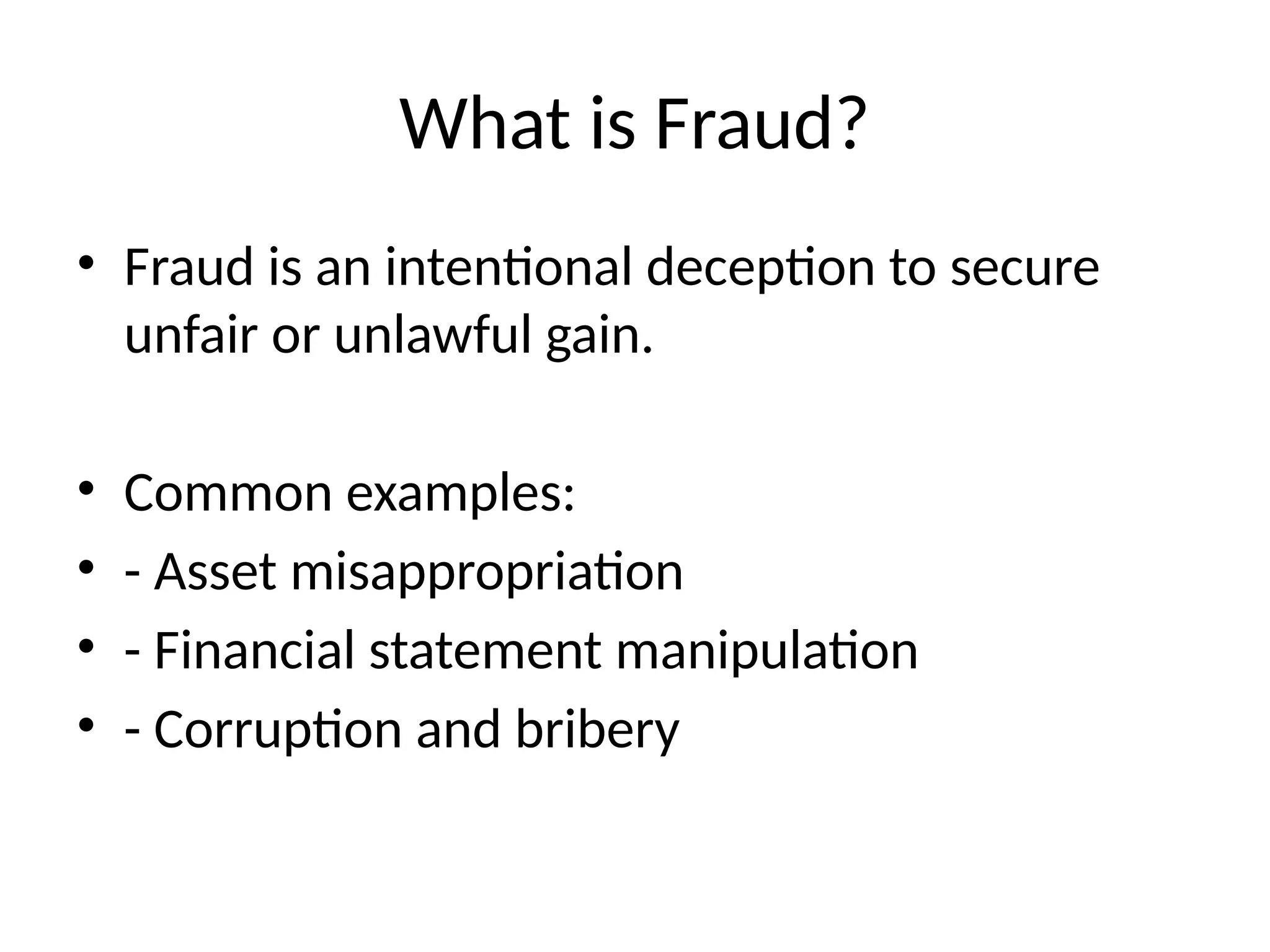
What is Fraud?
• Fraud is an intentional deception to secure
unfair or unlawful gain.
• Common examples:
• - Asset misappropriation
• - Financial statement manipulation
• - Corruption and bribery
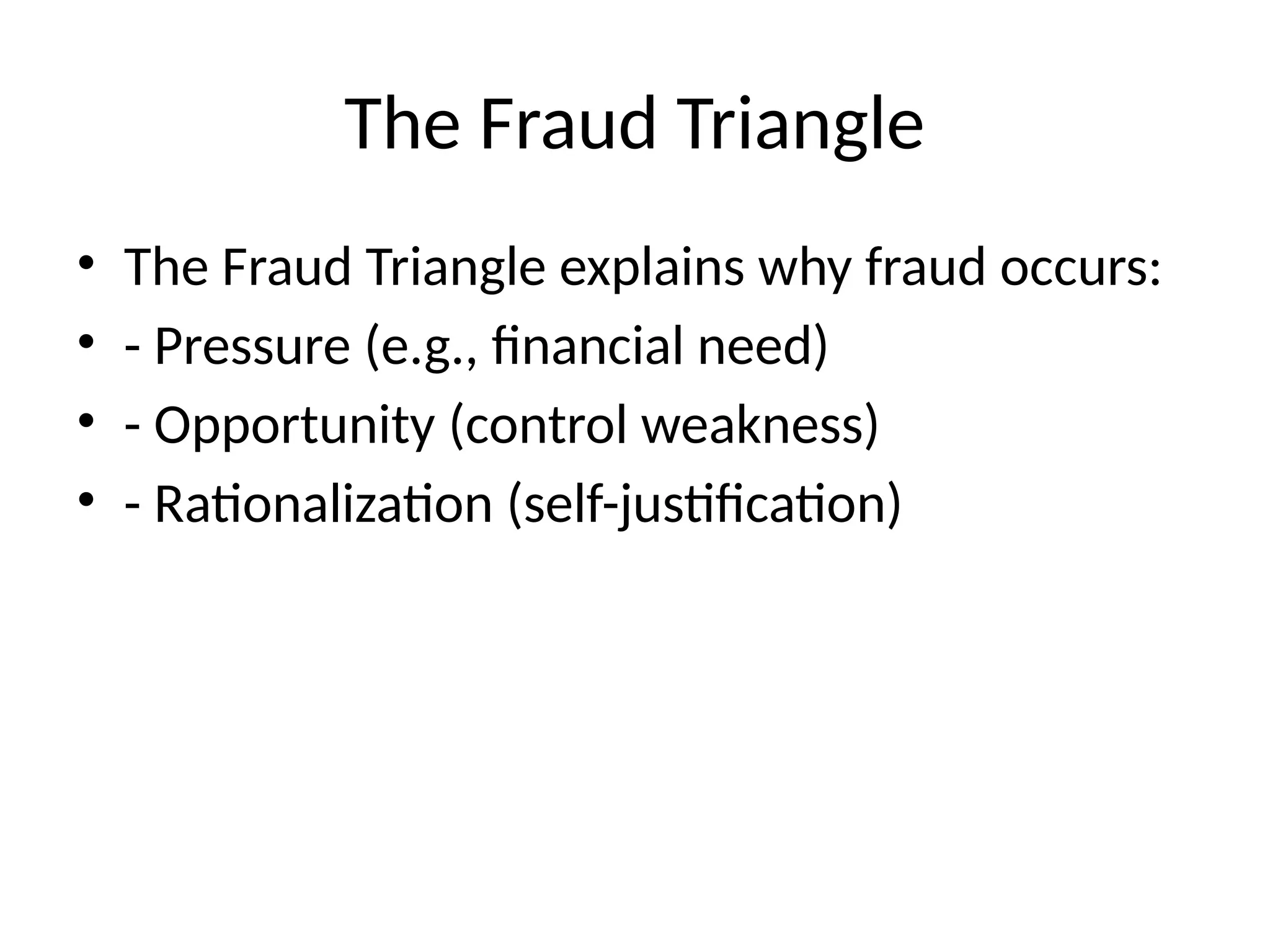
The Fraud Triangle
• The Fraud Triangle explains why fraud occurs:
• - Pressure (e.g., financial need)
• - Opportunity (control weakness)
• - Rationalization (self-justification)
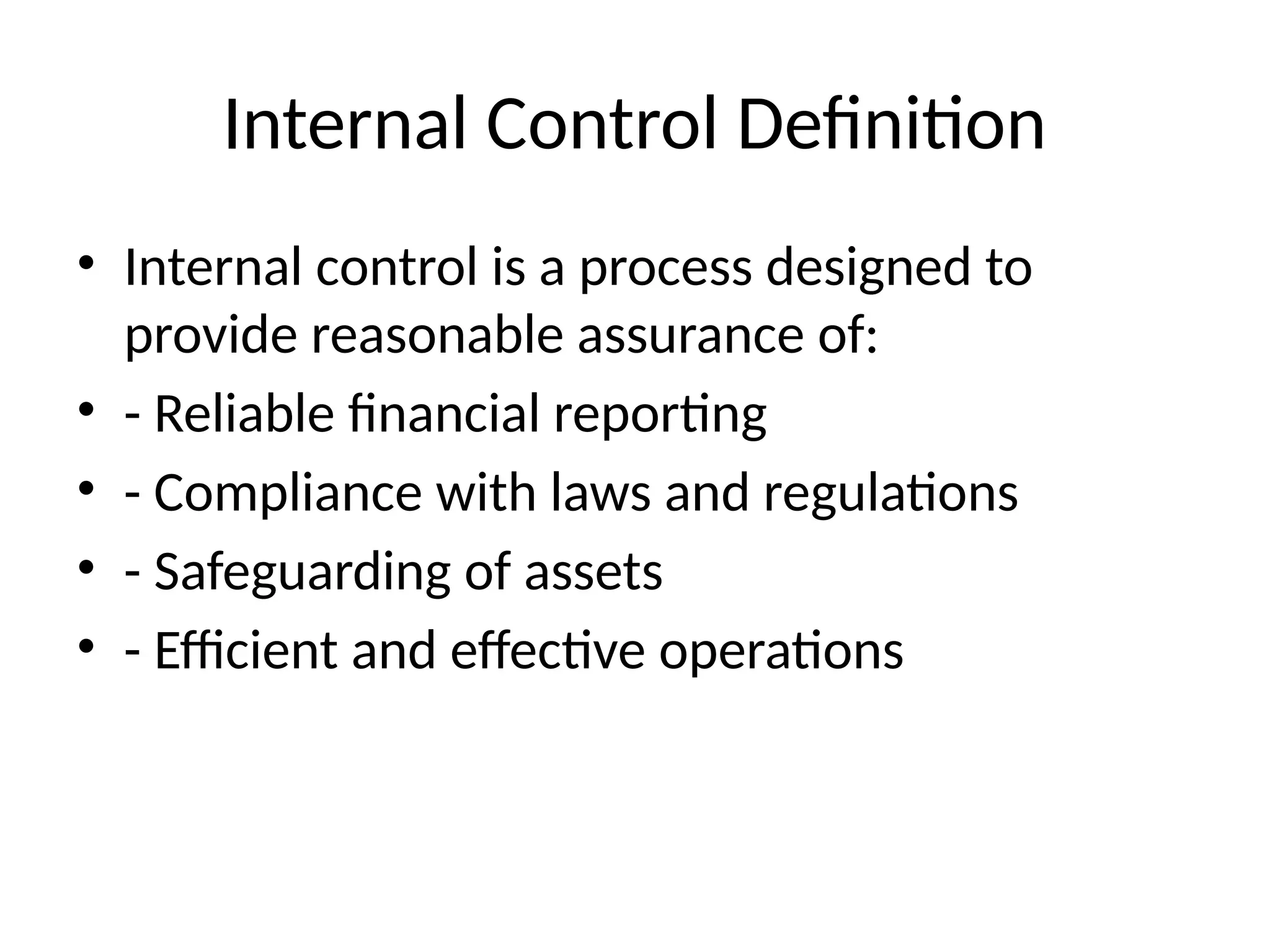
Internal Control Definition
• Internal control is a process designed to
provide reasonable assurance of:
• - Reliable financial reporting
• - Compliance with laws and regulations
• - Safeguarding of assets
• - Efficient and effective operations
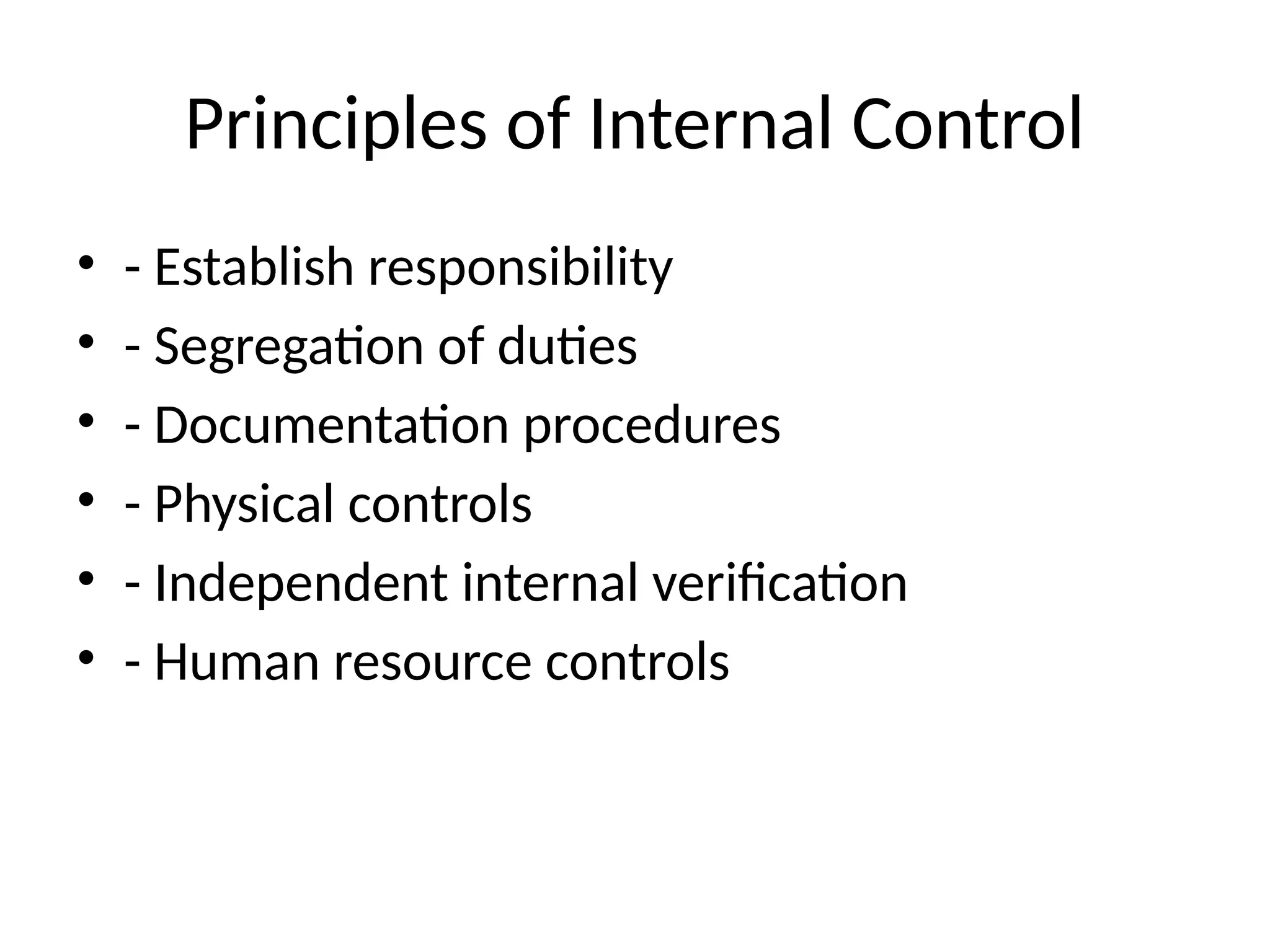
Principles of Internal Control
• - Establish responsibility
• - Segregation of duties
• - Documentation procedures
• - Physical controls
• - Independent internal verification
• - Human resource controls
Cash and Internal Controls
• Cash is highly vulnerable to theft and fraud.
• Effective internal controls include:
• - Daily deposits of receipts
• - Separation of cash handling and accounting
• - Surprise cash counts
• - Bank reconciliations
Conclusion
• Strong internal controls can significantly
reduce fraud risk.
• Understanding the fraud triangle helps
identify vulnerabilities.
• Cash handling must follow rigorous
procedures to protect assets.
Fraud_Internal_Control_and_Cash_Study_Presentation.pptx

  • 1.
    Fraud, Internal Control,and Cash A Creative Commons Licensed Presentation Created for Study Purposes
  • 2.
    Overview • - Understandingfraud in accounting • - Components of internal control • - Cash management and safeguards • - The fraud triangle and prevention
  • 3.
    What is Fraud? •Fraud is an intentional deception to secure unfair or unlawful gain. • Common examples: • - Asset misappropriation • - Financial statement manipulation • - Corruption and bribery
  • 4.
    The Fraud Triangle •The Fraud Triangle explains why fraud occurs: • - Pressure (e.g., financial need) • - Opportunity (control weakness) • - Rationalization (self-justification)
  • 5.
    Internal Control Definition •Internal control is a process designed to provide reasonable assurance of: • - Reliable financial reporting • - Compliance with laws and regulations • - Safeguarding of assets • - Efficient and effective operations
  • 6.
    Principles of InternalControl • - Establish responsibility • - Segregation of duties • - Documentation procedures • - Physical controls • - Independent internal verification • - Human resource controls
  • 7.
    Cash and InternalControls • Cash is highly vulnerable to theft and fraud. • Effective internal controls include: • - Daily deposits of receipts • - Separation of cash handling and accounting • - Surprise cash counts • - Bank reconciliations
  • 8.
    Conclusion • Strong internalcontrols can significantly reduce fraud risk. • Understanding the fraud triangle helps identify vulnerabilities. • Cash handling must follow rigorous procedures to protect assets.