FRACTURE HEALING
Dr. Akank Jha
Orthopedic resident
Deccan Multispeciality Hardikar Hospital, pune
INTRODUCTION
 Fracture is a break in the continuity of bone or
periosteum.
 The healing of fracture is in many ways similar to the
healing in soft tissue wounds except that the end
result is mineralised BONE.
 Fracture healing starts as soon as bone breaks and
continues modelling for many years.
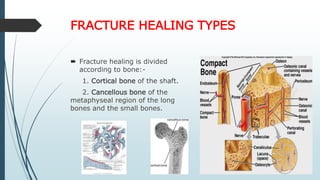
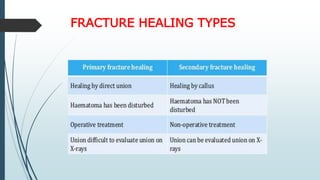
FRACTURE HEALING TYPES
 Fracture healing is divided
according to bone:-
1. Cortical bone of the shaft.
2. Cancellous bone of the
metaphyseal region of the long
bones and the small bones.
FRACTURE HEALING TYPES
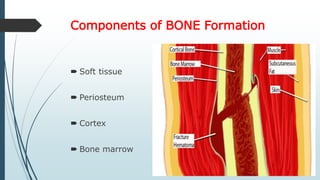
Components of BONE Formation
 Soft tissue
 Periosteum
 Cortex
 Bone marrow
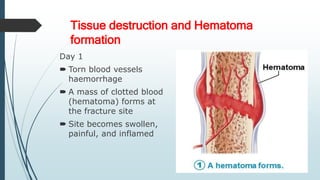
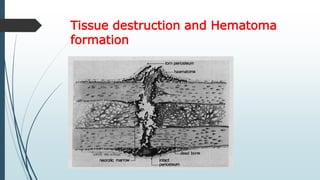
Tissue destruction and Hematoma
formation
Day 1
 Torn blood vessels
haemorrhage
 A mass of clotted blood
(hematoma) forms at
the fracture site
 Site becomes swollen,
painful, and inflamed
Tissue destruction and Hematoma
formation
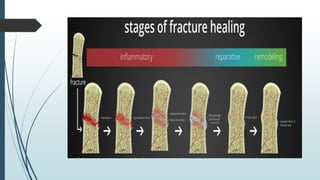
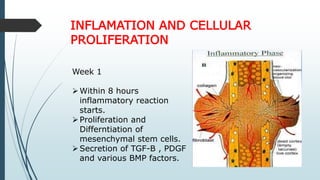
INFLAMATION AND CELLULAR
PROLIFERATION
Week 1
Within 8 hours
inflammatory reaction
starts.
Proliferation and
Differntiation of
mesenchymal stem cells.
Secretion of TGF-B , PDGF
and various BMP factors.
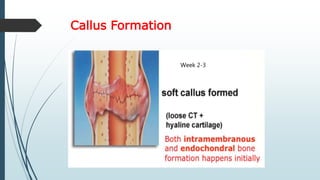
Callus Formation
Week 2-3
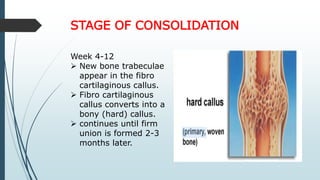
STAGE OF CONSOLIDATION
Week 4-12
 New bone trabeculae
appear in the fibro
cartilaginous callus.
 Fibro cartilaginous
callus converts into a
bony (hard) callus.
 continues until firm
union is formed 2-3
months later.
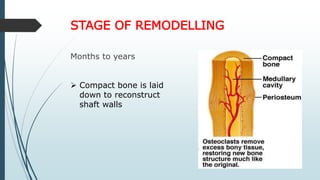
STAGE OF REMODELLING
Months to years
 Compact bone is laid
down to reconstruct
shaft walls
Type of BONE formed
 ENDOCHONDRAL OSSIFICATION
 INTRAMEMBERANOUS OSSIFICATION
 OPPOSITIONAL NEW BONE FORMATION
FACTORS EFFECTING
The TYPE , AMOUNT and LOCATION of bone formed
depends upon:
 FRACTURE TYPE
 GAP CONDITION
 FIXATION RIGIDITY
 LOADING
 BIOLOGICAL ENVIRONMENT
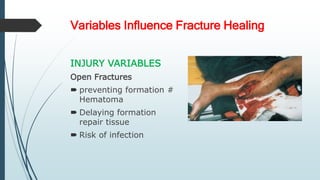
Variables Influence Fracture Healing
INJURY VARIABLES
Open Fractures
 preventing formation #
Hematoma
 Delaying formation
repair tissue
 Risk of infection
INJURY VARIABLES
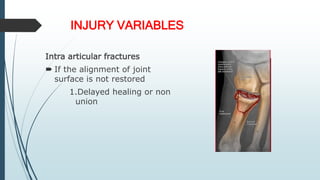
Intra articular fractures
 If the alignment of joint
surface is not restored
1.Delayed healing or non
union
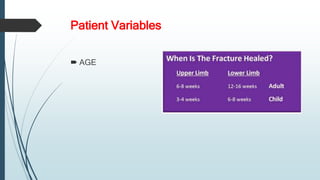
Patient Variables
 AGE
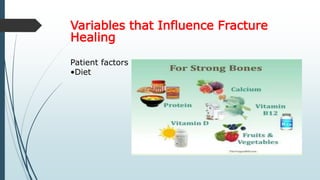
Variables that Influence Fracture
Healing
Patient factors
•Diet
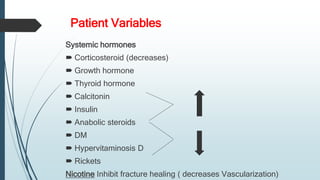
Patient Variables
Systemic hormones
 Corticosteroid (decreases)
 Growth hormone
 Thyroid hormone
 Calcitonin
 Insulin
 Anabolic steroids
 DM
 Hypervitaminosis D
 Rickets
Nicotine Inhibit fracture healing ( decreases Vascularization)
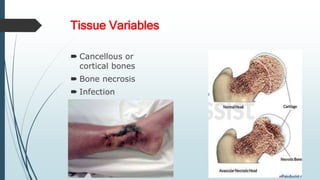
Tissue Variables
 Cancellous or
cortical bones
 Bone necrosis
 Infection
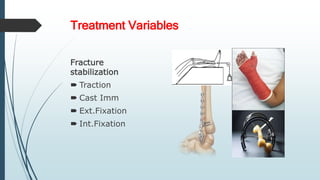
Treatment Variables
Fracture
stabilization
 Traction
 Cast Imm
 Ext.Fixation
 Int.Fixation
Variables that Influence Fracture
Healing
 Internal variables
1. Blood supply (most important)
2. Mechanical factors
•bony soft tissue attachments
•mechanical stability/strain
•location of injury
•degree of bone loss
Variables that Influence Fracture
Healing
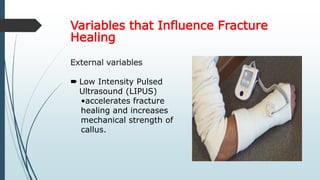
External variables
 Low Intensity Pulsed
Ultrasound (LIPUS)
•accelerates fracture
healing and increases
mechanical strength of
callus.
Variables that Influence Fracture
Healing
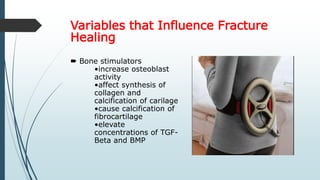
 Bone stimulators
•increase osteoblast
activity
•affect synthesis of
collagen and
calcification of carilage
•cause calcification of
fibrocartilage
•elevate
concentrations of TGF-
Beta and BMP
Variables that Influence Fracture
Healing
 COX-2
•promotes fracture healing by causing mesenchymal
stem cells to differentiate into osteoblasts
 HIV
higher prevalence of fragility fractures with
associated delayed healing
Variables that Influence Fracture
Healing
medications affecting healing
 Bisphosphonates are recognized as a cause of
osteoporotic fractures with long term usage
 Systemic Corticosteroids
higher rate of intertrochanteric fracture non unions
 Quinolones
toxic to chondrocytes and diminishes fracture repair
COMPLICATIONS OF
FRACTURE HEALING
 MALUNION
 DELAYED UNION
 NONUNION
Thank you

Fracture healing

  • 1.
    FRACTURE HEALING Dr. AkankJha Orthopedic resident Deccan Multispeciality Hardikar Hospital, pune
  • 2.
    INTRODUCTION  Fracture isa break in the continuity of bone or periosteum.  The healing of fracture is in many ways similar to the healing in soft tissue wounds except that the end result is mineralised BONE.  Fracture healing starts as soon as bone breaks and continues modelling for many years.
  • 3.
    FRACTURE HEALING TYPES Fracture healing is divided according to bone:- 1. Cortical bone of the shaft. 2. Cancellous bone of the metaphyseal region of the long bones and the small bones.
  • 4.
  • 5.
    Components of BONEFormation  Soft tissue  Periosteum  Cortex  Bone marrow
  • 7.
    Tissue destruction andHematoma formation Day 1  Torn blood vessels haemorrhage  A mass of clotted blood (hematoma) forms at the fracture site  Site becomes swollen, painful, and inflamed
  • 8.
    Tissue destruction andHematoma formation
  • 9.
    INFLAMATION AND CELLULAR PROLIFERATION Week1 Within 8 hours inflammatory reaction starts. Proliferation and Differntiation of mesenchymal stem cells. Secretion of TGF-B , PDGF and various BMP factors.
  • 10.
  • 11.
    STAGE OF CONSOLIDATION Week4-12  New bone trabeculae appear in the fibro cartilaginous callus.  Fibro cartilaginous callus converts into a bony (hard) callus.  continues until firm union is formed 2-3 months later.
  • 12.
    STAGE OF REMODELLING Monthsto years  Compact bone is laid down to reconstruct shaft walls
  • 13.
    Type of BONEformed  ENDOCHONDRAL OSSIFICATION  INTRAMEMBERANOUS OSSIFICATION  OPPOSITIONAL NEW BONE FORMATION
  • 14.
    FACTORS EFFECTING The TYPE, AMOUNT and LOCATION of bone formed depends upon:  FRACTURE TYPE  GAP CONDITION  FIXATION RIGIDITY  LOADING  BIOLOGICAL ENVIRONMENT
  • 15.
    Variables Influence FractureHealing INJURY VARIABLES Open Fractures  preventing formation # Hematoma  Delaying formation repair tissue  Risk of infection
  • 16.
    INJURY VARIABLES Intra articularfractures  If the alignment of joint surface is not restored 1.Delayed healing or non union
  • 17.
  • 18.
    Variables that InfluenceFracture Healing Patient factors •Diet
  • 19.
    Patient Variables Systemic hormones Corticosteroid (decreases)  Growth hormone  Thyroid hormone  Calcitonin  Insulin  Anabolic steroids  DM  Hypervitaminosis D  Rickets Nicotine Inhibit fracture healing ( decreases Vascularization)
  • 20.
    Tissue Variables  Cancellousor cortical bones  Bone necrosis  Infection
  • 21.
    Treatment Variables Fracture stabilization  Traction Cast Imm  Ext.Fixation  Int.Fixation
  • 22.
    Variables that InfluenceFracture Healing  Internal variables 1. Blood supply (most important) 2. Mechanical factors •bony soft tissue attachments •mechanical stability/strain •location of injury •degree of bone loss
  • 23.
    Variables that InfluenceFracture Healing External variables  Low Intensity Pulsed Ultrasound (LIPUS) •accelerates fracture healing and increases mechanical strength of callus.
  • 24.
    Variables that InfluenceFracture Healing  Bone stimulators •increase osteoblast activity •affect synthesis of collagen and calcification of carilage •cause calcification of fibrocartilage •elevate concentrations of TGF- Beta and BMP
  • 25.
    Variables that InfluenceFracture Healing  COX-2 •promotes fracture healing by causing mesenchymal stem cells to differentiate into osteoblasts
  • 26.
     HIV higher prevalenceof fragility fractures with associated delayed healing
  • 27.
    Variables that InfluenceFracture Healing medications affecting healing  Bisphosphonates are recognized as a cause of osteoporotic fractures with long term usage  Systemic Corticosteroids higher rate of intertrochanteric fracture non unions  Quinolones toxic to chondrocytes and diminishes fracture repair
  • 28.
    COMPLICATIONS OF FRACTURE HEALING MALUNION  DELAYED UNION  NONUNION
  • 29.

Editor's Notes

  • #10 Type 2 collagen, released from platelets attracts inflamattory cels to fracture site, insulin like growth factor- type 1 collagen, bmp- mesencells to oteoblast
  • #28 Atypical ftactures