Downloaded 127 times
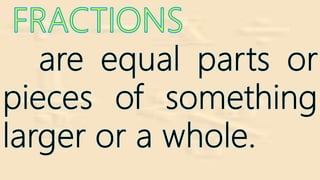
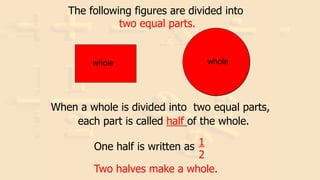
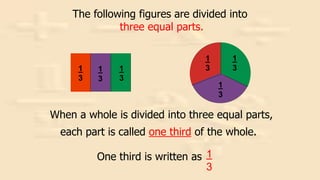
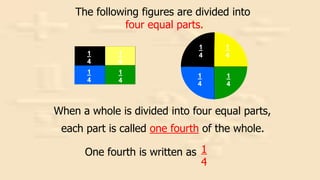
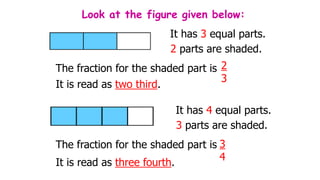
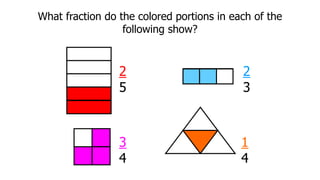
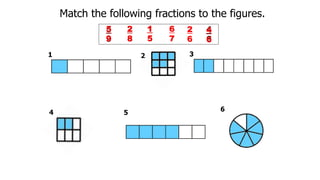
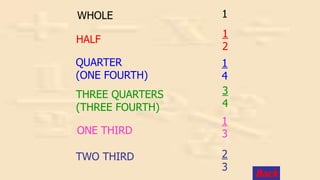
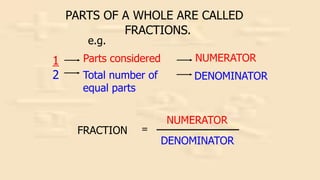
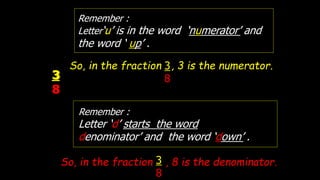
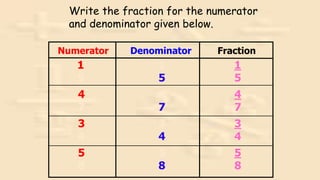
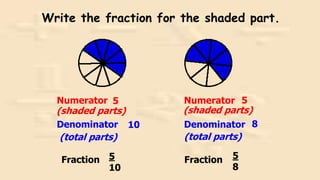

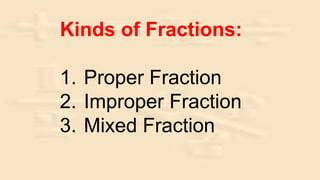
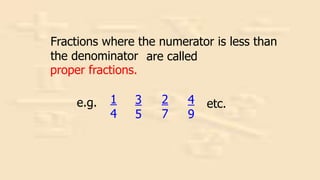
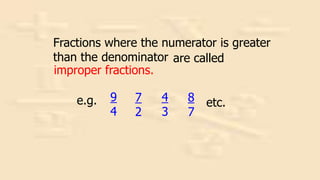
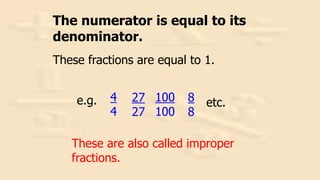
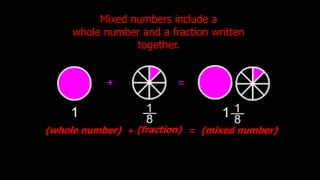

Fractions represent parts of a whole. The document defines fractions such as halves, thirds, and fourths by showing examples of wholes divided into equal parts. It explains that the numerator represents the number of parts being considered and the denominator represents the total number of equal parts the whole was divided into. Different types of fractions are also defined, including proper fractions where the numerator is less than the denominator, improper fractions where the numerator is greater than the denominator, and mixed numbers that combine a whole number and a fraction.


![Fractions - [Autosaved].pptx](https://cdn.slidesharecdn.com/ss_thumbnails/fractions-autosaved-231111072728-c3236698-thumbnail.jpg?width=640&height=640&fit=bounds)


