IMPROPER FRACTIONS
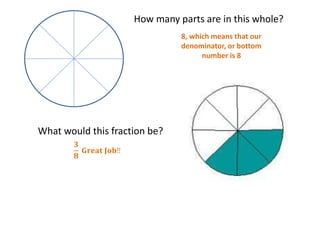
How many parts are in this whole?
8, which means that our
denominator, or bottom
number is 8
What would this fraction be?
𝟑
𝟖
𝐆𝐫𝐞𝐚𝐭 𝐉𝐨𝐛‼
6
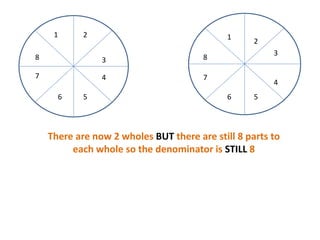
There are now 2 wholes BUT there are still 8 parts to
each whole so the denominator is STILL 8
1 2
3
4
56
7
8
1
2
3
4
56
7
8
Let me show you how this works!!
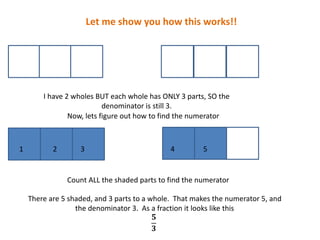
I have 2 wholes BUT each whole has ONLY 3 parts, SO the
denominator is still 3.
Now, lets figure out how to find the numerator
Count ALL the shaded parts to find the numerator
1 2 3 4 5
There are 5 shaded, and 3 parts to a whole. That makes the numerator 5, and
the denominator 3. As a fraction it looks like this
𝟓
𝟑
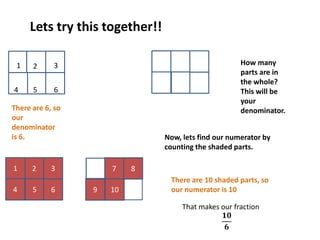
Lets try this together!!
How many
parts are in
the whole?
This will be
your
denominator.
1 2 3
4 5 6
There are 6, so
our
denominator
is 6.
4
2
5
3
6 9
7
10
81
Now, lets find our numerator by
counting the shaded parts.
There are 10 shaded parts, so
our numerator is 10
That makes our fraction
𝟏𝟎
𝟔
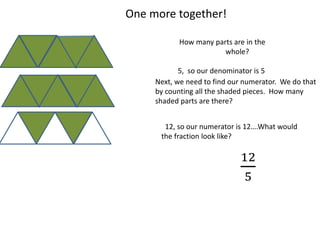
One more together!
How many parts are in the
whole?
5, so our denominator is 5
Next, we need to find our numerator. We do that
by counting all the shaded pieces. How many
shaded parts are there?
12, so our numerator is 12….What would
the fraction look like?
12
5
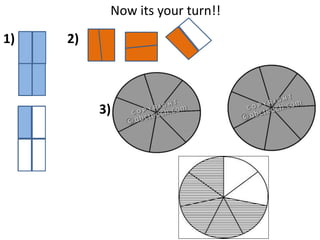
Now its your turn!!
1) 2)
3)
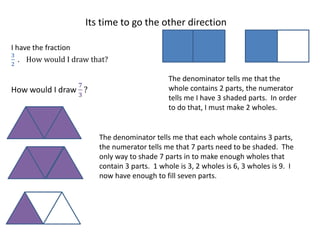
Its time to go the other direction
I have the fraction
𝟑
𝟐
. How would I draw that?
The denominator tells me that the
whole contains 2 parts, the numerator
tells me I have 3 shaded parts. In order
to do that, I must make 2 wholes.
How would I draw
𝟕
𝟑
?
The denominator tells me that each whole contains 3 parts,
the numerator tells me that 7 parts need to be shaded. The
only way to shade 7 parts in to make enough wholes that
contain 3 parts. 1 whole is 3, 2 wholes is 6, 3 wholes is 9. I
now have enough to fill seven parts.
Show me how its done
1)
4
3
2)
7
5

Improper fraction

  • 1.
  • 2.
    How many partsare in this whole? 8, which means that our denominator, or bottom number is 8 What would this fraction be? 𝟑 𝟖 𝐆𝐫𝐞𝐚𝐭 𝐉𝐨𝐛‼
  • 3.
    6 There are now2 wholes BUT there are still 8 parts to each whole so the denominator is STILL 8 1 2 3 4 56 7 8 1 2 3 4 56 7 8
  • 4.
    Let me showyou how this works!! I have 2 wholes BUT each whole has ONLY 3 parts, SO the denominator is still 3. Now, lets figure out how to find the numerator Count ALL the shaded parts to find the numerator 1 2 3 4 5 There are 5 shaded, and 3 parts to a whole. That makes the numerator 5, and the denominator 3. As a fraction it looks like this 𝟓 𝟑
  • 5.
    Lets try thistogether!! How many parts are in the whole? This will be your denominator. 1 2 3 4 5 6 There are 6, so our denominator is 6. 4 2 5 3 6 9 7 10 81 Now, lets find our numerator by counting the shaded parts. There are 10 shaded parts, so our numerator is 10 That makes our fraction 𝟏𝟎 𝟔
  • 6.
    One more together! Howmany parts are in the whole? 5, so our denominator is 5 Next, we need to find our numerator. We do that by counting all the shaded pieces. How many shaded parts are there? 12, so our numerator is 12….What would the fraction look like? 12 5
  • 7.
    Now its yourturn!! 1) 2) 3)
  • 8.
    Its time togo the other direction I have the fraction 𝟑 𝟐 . How would I draw that? The denominator tells me that the whole contains 2 parts, the numerator tells me I have 3 shaded parts. In order to do that, I must make 2 wholes. How would I draw 𝟕 𝟑 ? The denominator tells me that each whole contains 3 parts, the numerator tells me that 7 parts need to be shaded. The only way to shade 7 parts in to make enough wholes that contain 3 parts. 1 whole is 3, 2 wholes is 6, 3 wholes is 9. I now have enough to fill seven parts.
  • 9.
    Show me howits done 1) 4 3 2) 7 5