An introduction to fractions for
students in year 3
So, what are fractions?
When we divide something into
equal parts, we create fractions.
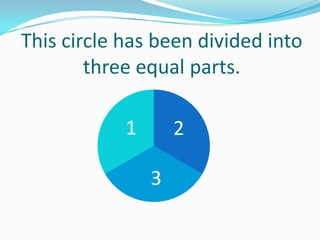
This circle has been divided into
three equal parts.

1

2

3
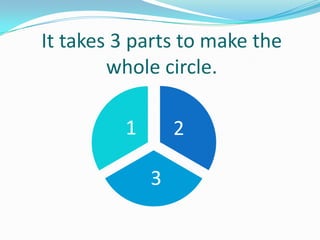
It takes 3 parts to make the
whole circle.

1

2

3
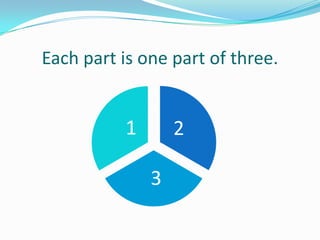
Each part is one part of three.

1

2

3
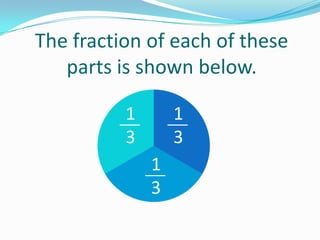
The fraction of each of these
parts is shown below.
1
3

1
3

1
3
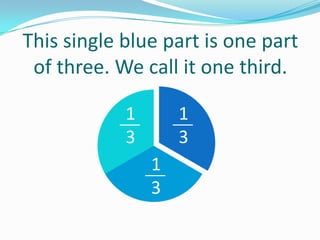
This single blue part is one part
of three. We call it one third.
1
3

1
3

1
3
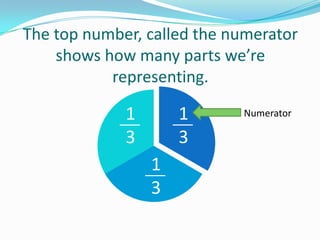
The top number, called the numerator
shows how many parts we’re
representing.

1
3

1
3

1
3

Numerator
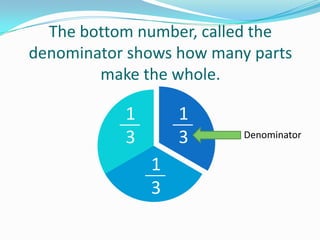
The bottom number, called the
denominator shows how many parts
make the whole.

1
3

1
3

1
3

Denominator
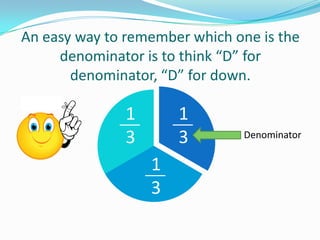
An easy way to remember which one is the
denominator is to think “D” for
denominator, “D” for down.

1
3

1
3

1
3

Denominator
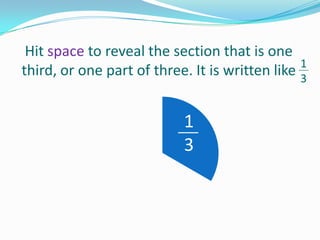
Hit space to reveal the section that is one
1
third, or one part of three. It is written like 3

1
3

1
3
1
3
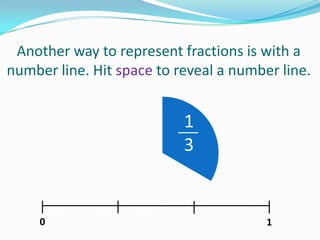
Another way to represent fractions is with a
number line. Hit space to reveal a number line.

1
3

1
3
1
3
0

1
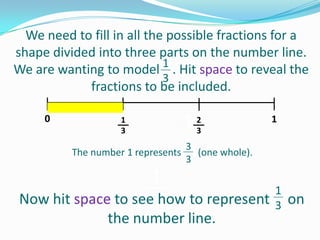
We need to fill in all the possible fractions for a
shape divided into three parts on the number line.
1
We are wanting to model . Hit space to reveal the
3
fractions to be included.
0

12
3
3
The number 1 represents 3 (one whole).
1
3

1

3

1
1
Now hit space to see3
how to represent 3 on
the number line.
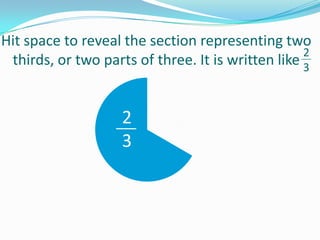
Hit space to reveal the section representing two
2
thirds, or two parts of three. It is written like 3

2
3

1
3
2
3

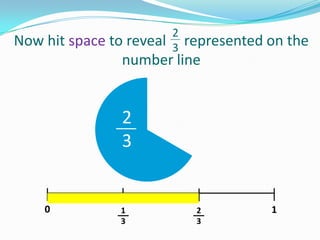
Now hit space to reveal represented on the
number line

2
3

0

1
3

1
3

2
3

1
Let’s have a look at another shape.
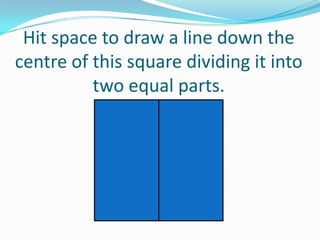
Hit space to draw a line down the
centre of this square dividing it into
two equal parts.
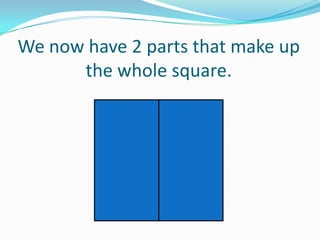
We now have 2 parts that make up
the whole square.
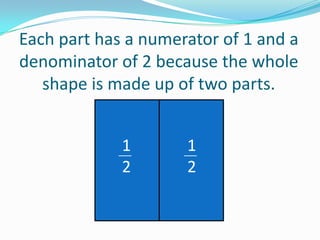
Each part has a numerator of 1 and a
denominator of 2 because the whole
shape is made up of two parts.
1
2

1
2
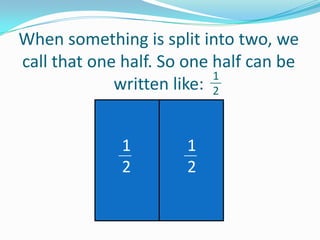
When something is split into two, we
call that one half. So one half can be
1
written like: 2
1
2

1
2
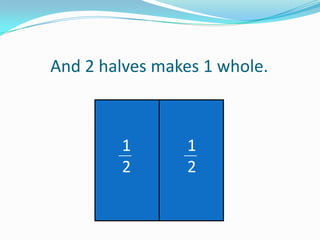
And 2 halves makes 1 whole.

1
2

1
2
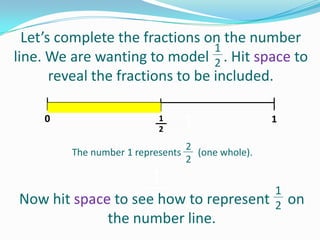
Let’s complete the fractions on the number
1
line. We are wanting to model 2 . Hit space to
reveal the fractions to be included.
0

1
2
The number 1 represents 3 (one whole).
1
2

1

2

1
1
Now hit space to see3
how to represent 2 on
the number line.
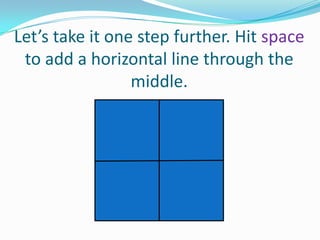
Let’s take it one step further. Hit space
to add a horizontal line through the
middle.
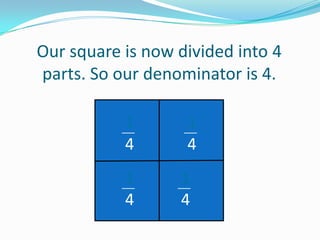
Our square is now divided into 4
parts. So our denominator is 4.
1
4
1
4

1
4
1
4
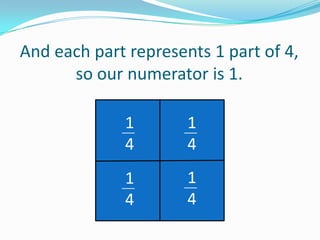
And each part represents 1 part of 4,
so our numerator is 1.
1
4

1
4

1
4

1
4
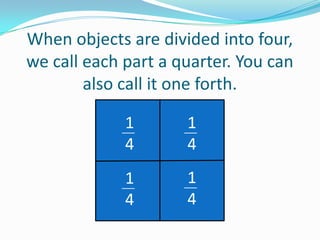
When objects are divided into four,
we call each part a quarter. You can
also call it one forth.
1
4

1
4

1
4

1
4
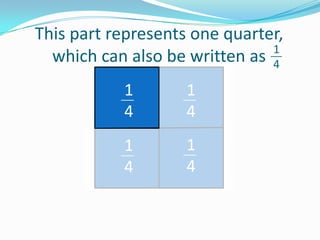
This part represents one quarter,
1
which can also be written as 4
1
4

1
4

1
4

1
4
1
4

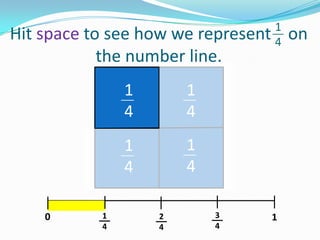
Hit space to see how we represent on
the number line.
1
4
1
4
0

1
4

1
4
1
4
2
4

3
4

1
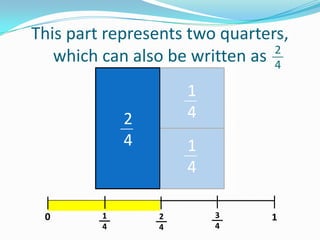
This part represents two quarters,
2
which can also be written as 4
1
4

2
4

0

1
4

1
4
2
4

3
4

1
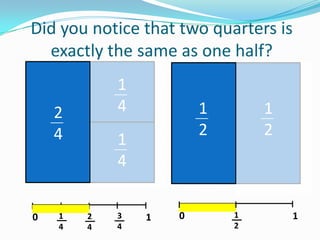
Did you notice that two quarters is
exactly the same as one half?
1
4

2
4

0

1
4

1
2

1
4
2
4

3
4

1

0

1
2

1
2

1
When you have a bit more practice
with fractions, you will begin to add
and subtract them. To do this, it is
often easier and usually required to
break the fractions down.
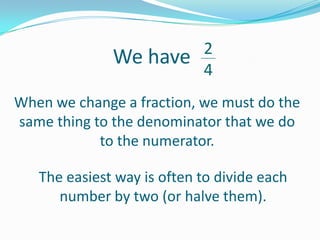
We have

2
4

When we change a fraction, we must do the
same thing to the denominator that we do
to the numerator.
The easiest way is often to divide each
number by two (or halve them).
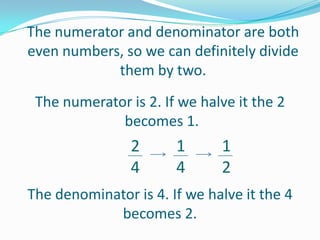
The numerator and denominator are both
even numbers, so we can definitely divide
them by two.
The numerator is 2. If we halve it the 2
becomes 1.

2
4

1
4

1
2

The denominator is 4. If we halve it the 4
becomes 2.
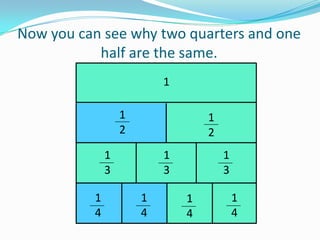
Now you can see why two quarters and one
half are the same.
1
1
2

1
2

1
3
1
4

1
3
1
4

1
3

1
4

1
4
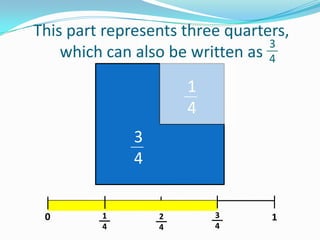
This part represents three quarters,
3
which can also be written as 4
1
4

3
4
0

1
4

2
4

3
4

1
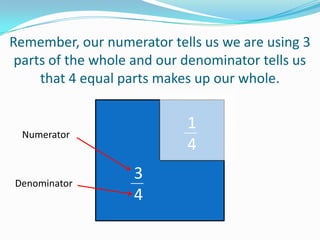
Remember, our numerator tells us we are using 3
parts of the whole and our denominator tells us
that 4 equal parts makes up our whole.

1
4

Numerator

Denominator

3
4
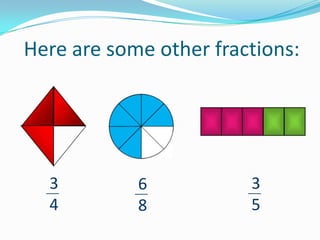
Here are some other fractions:

3
4

6
8

3
5
So, now you know what fractions are,
but when do people use fractions in
life?
Have you ever helped to bake
a cake?
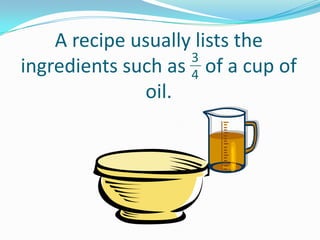
A recipe usually lists the
3
ingredients such as 4 of a cup of
oil.
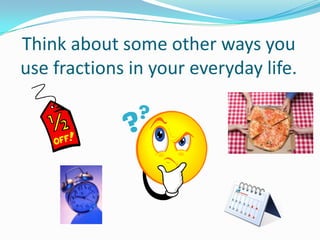
Think about some other ways you
use fractions in your everyday life.
Now you can return to the Padlet
and explore some of the other
activities on fractions.

Fractions for year 3

  • 1.
    An introduction tofractions for students in year 3
  • 2.
    So, what arefractions?
  • 3.
    When we dividesomething into equal parts, we create fractions.
  • 4.
    This circle hasbeen divided into three equal parts. 1 2 3
  • 5.
    It takes 3parts to make the whole circle. 1 2 3
  • 6.
    Each part isone part of three. 1 2 3
  • 7.
    The fraction ofeach of these parts is shown below. 1 3 1 3 1 3
  • 8.
    This single bluepart is one part of three. We call it one third. 1 3 1 3 1 3
  • 9.
    The top number,called the numerator shows how many parts we’re representing. 1 3 1 3 1 3 Numerator
  • 10.
    The bottom number,called the denominator shows how many parts make the whole. 1 3 1 3 1 3 Denominator
  • 11.
    An easy wayto remember which one is the denominator is to think “D” for denominator, “D” for down. 1 3 1 3 1 3 Denominator
  • 12.
    Hit space toreveal the section that is one 1 third, or one part of three. It is written like 3 1 3 1 3 1 3
  • 13.
    Another way torepresent fractions is with a number line. Hit space to reveal a number line. 1 3 1 3 1 3 0 1
  • 14.
    We need tofill in all the possible fractions for a shape divided into three parts on the number line. 1 We are wanting to model . Hit space to reveal the 3 fractions to be included. 0 12 3 3 The number 1 represents 3 (one whole). 1 3 1 3 1 1 Now hit space to see3 how to represent 3 on the number line.
  • 15.
    Hit space toreveal the section representing two 2 thirds, or two parts of three. It is written like 3 2 3 1 3
  • 16.
    2 3 Now hit spaceto reveal represented on the number line 2 3 0 1 3 1 3 2 3 1
  • 17.
    Let’s have alook at another shape.
  • 18.
    Hit space todraw a line down the centre of this square dividing it into two equal parts.
  • 19.
    We now have2 parts that make up the whole square.
  • 20.
    Each part hasa numerator of 1 and a denominator of 2 because the whole shape is made up of two parts. 1 2 1 2
  • 21.
    When something issplit into two, we call that one half. So one half can be 1 written like: 2 1 2 1 2
  • 22.
    And 2 halvesmakes 1 whole. 1 2 1 2
  • 23.
    Let’s complete thefractions on the number 1 line. We are wanting to model 2 . Hit space to reveal the fractions to be included. 0 1 2 The number 1 represents 3 (one whole). 1 2 1 2 1 1 Now hit space to see3 how to represent 2 on the number line.
  • 24.
    Let’s take itone step further. Hit space to add a horizontal line through the middle.
  • 25.
    Our square isnow divided into 4 parts. So our denominator is 4. 1 4 1 4 1 4 1 4
  • 26.
    And each partrepresents 1 part of 4, so our numerator is 1. 1 4 1 4 1 4 1 4
  • 27.
    When objects aredivided into four, we call each part a quarter. You can also call it one forth. 1 4 1 4 1 4 1 4
  • 28.
    This part representsone quarter, 1 which can also be written as 4 1 4 1 4 1 4 1 4
  • 29.
    1 4 Hit space tosee how we represent on the number line. 1 4 1 4 0 1 4 1 4 1 4 2 4 3 4 1
  • 30.
    This part representstwo quarters, 2 which can also be written as 4 1 4 2 4 0 1 4 1 4 2 4 3 4 1
  • 31.
    Did you noticethat two quarters is exactly the same as one half? 1 4 2 4 0 1 4 1 2 1 4 2 4 3 4 1 0 1 2 1 2 1
  • 32.
    When you havea bit more practice with fractions, you will begin to add and subtract them. To do this, it is often easier and usually required to break the fractions down.
  • 33.
    We have 2 4 When wechange a fraction, we must do the same thing to the denominator that we do to the numerator. The easiest way is often to divide each number by two (or halve them).
  • 34.
    The numerator anddenominator are both even numbers, so we can definitely divide them by two. The numerator is 2. If we halve it the 2 becomes 1. 2 4 1 4 1 2 The denominator is 4. If we halve it the 4 becomes 2.
  • 35.
    Now you cansee why two quarters and one half are the same. 1 1 2 1 2 1 3 1 4 1 3 1 4 1 3 1 4 1 4
  • 36.
    This part representsthree quarters, 3 which can also be written as 4 1 4 3 4 0 1 4 2 4 3 4 1
  • 37.
    Remember, our numeratortells us we are using 3 parts of the whole and our denominator tells us that 4 equal parts makes up our whole. 1 4 Numerator Denominator 3 4
  • 38.
    Here are someother fractions: 3 4 6 8 3 5
  • 39.
    So, now youknow what fractions are, but when do people use fractions in life?
  • 40.
    Have you everhelped to bake a cake?
  • 41.
    A recipe usuallylists the 3 ingredients such as 4 of a cup of oil.
  • 42.
    Think about someother ways you use fractions in your everyday life.
  • 43.
    Now you canreturn to the Padlet and explore some of the other activities on fractions.