Neonatal resuscitation and care
By Tadesse t
March 172008
neonate
• Definition
• Early
• Late
Neonatal resuscitation
• Transition from intrauterine life to extra
uterine life
• Before delivery the fetus depends on the
placenta for gas and nutrient
• The fetus should make rapid physiologic
changes
• Changes
• 1-alveolar fluid clearance
• a labor
• b initial birth
• c thoracic squeeze
• 2-Circulatory change
• a dectus arteriosus
• bdecreased pulmonary vascular pressure
• 3-Lung expansion
• 90% transition is smooth
• 10 % need some support
• 1% need extensive support
risks
• Maternal conditions
 Advanced maternal age,
maternal diabetes mellitus
 hypertension,
maternal substance abuse,
 previous history of stillbirth, fetal loss or
early neonatal death
• Fetal conditions
 Prematurity,
 postmaturity,
 congenital anomalies,
 multiple gestation
Antepartum complications —
 Placental anomalies (eg, placenta previa)
 oligohydramnios or polyhydramnios
• Delivery complications —
 Transverse lie or breech presentation
 chorioamnionitis
 foul-smelling or meconium-stained amniotic fluid
 antenatal asphyxia with abnormal fetal heart
rate pattern
 maternal administration of a narcotic within four
hours of birth,
 delivery that requires instrumentation
Neonatal difficulties at birth include
the following
• Lack of respiratory effort
• Blockage of the airways
• Impaired lung function
• Persistent increased pulmonary vascular
resistance ( persistent fetal circulation)
• Abnormal cardiac structure and/or function
• Upon delivery of the head suck the
oropharynex if there is meconium
• Delivery the shoulder
• Asses the APGAR score
• Decide whether neonate is in need of
resuscitation
• Apgar scores are not used to guide resuscitation
but are useful as a measure of the newborn's
overall status and response to resuscitation
• When the 5-minute Apgar score is less than 7,
additional scores should be assigned every five
minutes for up to 20 minutes
• Apgar scores are not good predictors of
outcome.
Preparation
• Advance
• Immediate
Neutral Thermal Environmental
• Overhead Warmer
• Heat Lamps
• Incubator
• Warm Towels & Blankets
• Warm Water Filled Gloves
Resuscitation Priorities
• Oxygen
• Indications: Dusky, Poor Tone, Breathing Spont.
• Route
• Blow By or Mask if Breathing Spontaneously
Resuscitation Equipment
• Organized
• Readily Accessible
• Easy to Assemble
Universal Precautions
• Gloves
• Goggles
• Gown
Universal Precautions
• Gloves
• Goggles
• Gown
Bag-Valve-Mask Ventilation
Indications:
• Apnea or Gasping Respiration
• Heart Rate <100 bpm
• Persistent Cyanosis Despite O2 Therapy
Bag-Valve-Mask Ventilation
Technique
• Neutral Position of Head
• Tight Mask Seal
• Avoid Pressure on Trachea
Ventilation of the Newborn
Assisted rate= 40 to 60 bpm
Signs of Adequate Ventilation:
• Bilateral Chest Expansion
• Bilateral Breath Sounds
• Adequate Heart Rate & Color
Indications for Intubation
• BVM Ventilation Not Effective
• Thick Meconium
• Prolonged Postive Press. Vent.
Chest Compression
Indications:
Despite Adequate Stimulation & Effective
Ventilation With 100% O2
• Heart Rate <60 bpm
OR
• Heart Rate 60 to 80 but not Increasing
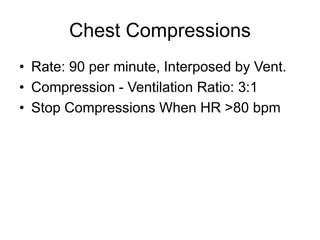
Chest Compressions
• Rate: 90 per minute, Interposed by Vent.
• Compression - Ventilation Ratio: 3:1
• Stop Compressions When HR >80 bpm
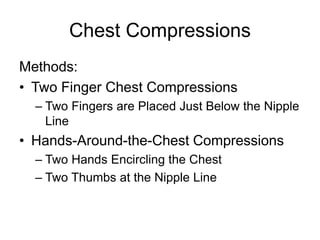
Chest Compressions
Methods:
• Two Finger Chest Compressions
– Two Fingers are Placed Just Below the Nipple
Line
• Hands-Around-the-Chest Compressions
– Two Hands Encircling the Chest
– Two Thumbs at the Nipple Line
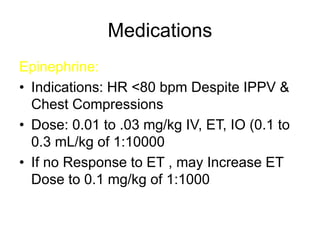
Medications
Epinephrine:
• Indications: HR <80 bpm Despite IPPV &
Chest Compressions
• Dose: 0.01 to .03 mg/kg IV, ET, IO (0.1 to
0.3 mL/kg of 1:10000
• If no Response to ET , may Increase ET
Dose to 0.1 mg/kg of 1:1000
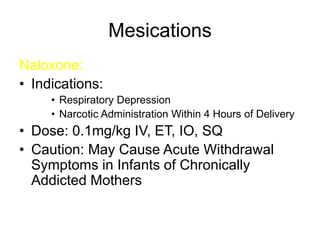
Mesications
Naloxone:
• Indications:
• Respiratory Depression
• Narcotic Administration Within 4 Hours of Delivery
• Dose: 0.1mg/kg IV, ET, IO, SQ
• Caution: May Cause Acute Withdrawal
Symptoms in Infants of Chronically
Addicted Mothers
Common Post-Resuscitation
Airway Complications
• Displaced ET Tube
• Obstructed ET Tube
• Pneumothorax
• Equipment Failure
– Inadequate Ventilatory Support
– Gastric Distension
• The components of initial routine care are:
 Screening for disease
Physical assessment
Prophylaxis for serious disorders
 Encouraging early maternal-infant
interaction
Routine care
• Prevention of heat loss
• Eye care
• Vitamin K
• Nutrition
• immunization
• Protecting infants against excessive heat
loss improves their chances for survival,
reduces their bodies’ need to perform
heat-producing metabolic work, and
eliminates the problems associated with
rewarming of cold infants

Found_399085e00-c200.ppt

  • 1.
    Neonatal resuscitation andcare By Tadesse t March 172008
  • 2.
  • 3.
    Neonatal resuscitation • Transitionfrom intrauterine life to extra uterine life • Before delivery the fetus depends on the placenta for gas and nutrient • The fetus should make rapid physiologic changes
  • 4.
    • Changes • 1-alveolarfluid clearance • a labor • b initial birth • c thoracic squeeze • 2-Circulatory change • a dectus arteriosus • bdecreased pulmonary vascular pressure • 3-Lung expansion
  • 5.
    • 90% transitionis smooth • 10 % need some support • 1% need extensive support
  • 6.
    risks • Maternal conditions Advanced maternal age, maternal diabetes mellitus  hypertension, maternal substance abuse,  previous history of stillbirth, fetal loss or early neonatal death
  • 7.
    • Fetal conditions Prematurity,  postmaturity,  congenital anomalies,  multiple gestation Antepartum complications —  Placental anomalies (eg, placenta previa)  oligohydramnios or polyhydramnios
  • 8.
    • Delivery complications—  Transverse lie or breech presentation  chorioamnionitis  foul-smelling or meconium-stained amniotic fluid  antenatal asphyxia with abnormal fetal heart rate pattern  maternal administration of a narcotic within four hours of birth,  delivery that requires instrumentation
  • 9.
    Neonatal difficulties atbirth include the following • Lack of respiratory effort • Blockage of the airways • Impaired lung function • Persistent increased pulmonary vascular resistance ( persistent fetal circulation) • Abnormal cardiac structure and/or function
  • 10.
    • Upon deliveryof the head suck the oropharynex if there is meconium • Delivery the shoulder • Asses the APGAR score • Decide whether neonate is in need of resuscitation
  • 11.
    • Apgar scoresare not used to guide resuscitation but are useful as a measure of the newborn's overall status and response to resuscitation • When the 5-minute Apgar score is less than 7, additional scores should be assigned every five minutes for up to 20 minutes • Apgar scores are not good predictors of outcome.
  • 12.
  • 13.
    Neutral Thermal Environmental •Overhead Warmer • Heat Lamps • Incubator • Warm Towels & Blankets • Warm Water Filled Gloves
  • 14.
    Resuscitation Priorities • Oxygen •Indications: Dusky, Poor Tone, Breathing Spont. • Route • Blow By or Mask if Breathing Spontaneously
  • 15.
    Resuscitation Equipment • Organized •Readily Accessible • Easy to Assemble
  • 17.
  • 19.
  • 21.
    Bag-Valve-Mask Ventilation Indications: • Apneaor Gasping Respiration • Heart Rate <100 bpm • Persistent Cyanosis Despite O2 Therapy
  • 22.
    Bag-Valve-Mask Ventilation Technique • NeutralPosition of Head • Tight Mask Seal • Avoid Pressure on Trachea
  • 23.
    Ventilation of theNewborn Assisted rate= 40 to 60 bpm Signs of Adequate Ventilation: • Bilateral Chest Expansion • Bilateral Breath Sounds • Adequate Heart Rate & Color
  • 24.
    Indications for Intubation •BVM Ventilation Not Effective • Thick Meconium • Prolonged Postive Press. Vent.
  • 25.
    Chest Compression Indications: Despite AdequateStimulation & Effective Ventilation With 100% O2 • Heart Rate <60 bpm OR • Heart Rate 60 to 80 but not Increasing
  • 26.
    Chest Compressions • Rate:90 per minute, Interposed by Vent. • Compression - Ventilation Ratio: 3:1 • Stop Compressions When HR >80 bpm
  • 27.
    Chest Compressions Methods: • TwoFinger Chest Compressions – Two Fingers are Placed Just Below the Nipple Line • Hands-Around-the-Chest Compressions – Two Hands Encircling the Chest – Two Thumbs at the Nipple Line
  • 28.
    Medications Epinephrine: • Indications: HR<80 bpm Despite IPPV & Chest Compressions • Dose: 0.01 to .03 mg/kg IV, ET, IO (0.1 to 0.3 mL/kg of 1:10000 • If no Response to ET , may Increase ET Dose to 0.1 mg/kg of 1:1000
  • 29.
    Mesications Naloxone: • Indications: • RespiratoryDepression • Narcotic Administration Within 4 Hours of Delivery • Dose: 0.1mg/kg IV, ET, IO, SQ • Caution: May Cause Acute Withdrawal Symptoms in Infants of Chronically Addicted Mothers
  • 30.
    Common Post-Resuscitation Airway Complications •Displaced ET Tube • Obstructed ET Tube • Pneumothorax • Equipment Failure – Inadequate Ventilatory Support – Gastric Distension
  • 31.
    • The componentsof initial routine care are:  Screening for disease Physical assessment Prophylaxis for serious disorders  Encouraging early maternal-infant interaction
  • 32.
    Routine care • Preventionof heat loss • Eye care • Vitamin K • Nutrition • immunization
  • 33.
    • Protecting infantsagainst excessive heat loss improves their chances for survival, reduces their bodies’ need to perform heat-producing metabolic work, and eliminates the problems associated with rewarming of cold infants