Fortify + DevOps
for MBFS
March 17, 2016
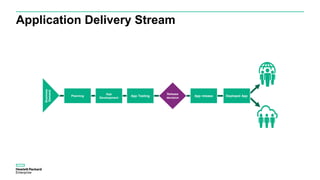
Application Delivery Stream
Planning
App
Development
App Testing App release
Release
decision
Business
Demand
Deployed App
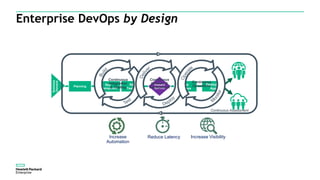
Planning
App
Development
App
Testing
App
release
Release
decision
Business
Demand
Deployed
App
Continuous
Integration
& Testing
Continuous
Delivery &
Deployment
Continuous
Operations
Continuous Assessment
Increase
Automation
Reduce Latency Increase Visibility
Enterprise DevOps by Design
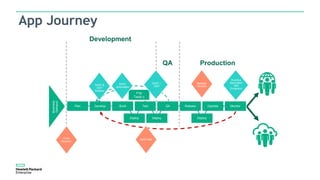
App
Testing
Develop
Development
QA Production
Business
Demand
Plan Build Test QA Release MonitorOperate
Deploy Deploy Deploy
Fund
Decision
Release
Decision
Build Gate
Runtime
Application
Self
Protection
SAST &
IAST
Desktop
App Journey
SAST
Automated
DAST /
IAST
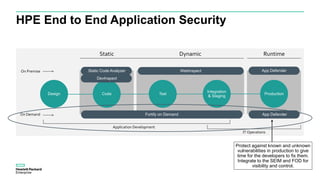
HPE End to End Application Security
Dynamic RuntimeStatic
Production
Fortify on Demand App Defender
On Premise App Defender
Application Development
TestCodeDesign
Integration
& Staging
IT Operations
On Demand
WebInspectStatic Code Analyzer
DevInspect
Protect against known and unknown
vulnerabilities in production to give
time for the developers to fix them.
Integrate to the SEIM and FOD for
visibility and control.
© Copyright 2016 Hewlett-Packard Enterprise. The information contained herein is subject to change without notice. HPE CONFIDENTIAL
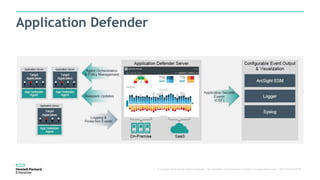
Application Defender
© Copyright 2016 Hewlett-Packard Enterprise. The information contained herein is subject to change without notice. HPE CONFIDENTIAL
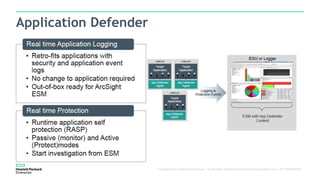
Application Defender
© Copyright 2016 Hewlett-Packard Enterprise. The information contained herein is subject to change without notice. HPE CONFIDENTIAL
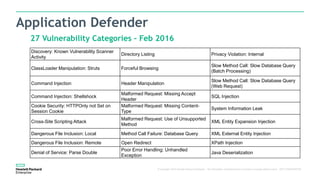
27 Vulnerability Categories – Feb 2016
Discovery: Known Vulnerability Scanner
Activity
Directory Listing Privacy Violation: Internal
ClassLoader Manipulation: Struts Forceful Browsing
Slow Method Call: Slow Database Query
(Batch Processing)
Command Injection Header Manipulation
Slow Method Call: Slow Database Query
(Web Request)
Command Injection: Shellshock
Malformed Request: Missing Accept
Header
SQL Injection
Cookie Security: HTTPOnly not Set on
Session Cookie
Malformed Request: Missing Content-
Type
System Information Leak
Cross-Site Scripting Attack
Malformed Request: Use of Unsupported
Method
XML Entity Expansion Injection
Dangerous File Inclusion: Local Method Call Failure: Database Query XML External Entity Injection
Dangerous File Inclusion: Remote Open Redirect XPath Injection
Denial of Service: Parse Double
Poor Error Handling: Unhandled
Exception
Java Deserialization
Application Defender
© Copyright 2016 Hewlett-Packard Enterprise. The information contained herein is subject to change without notice. HPE CONFIDENTIAL
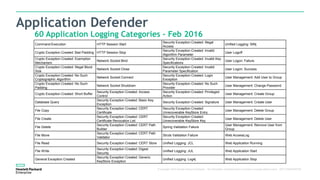
60 Application Logging Categories – Feb 2016
Command Execution HTTP Session Start
Security Exception Created: Illegal
Access
Unified Logging: Slf4j
Crypto Exception Created: Bad Padding HTTP Session Stop
Security Exception Created: Invalid
Algorithm Parameter
User Logoff
Crypto Exception Created: Exemption
Mechanism
Network Socket Bind
Security Exception Created: Invalid Key
Specifications
User Logon: Failure
Crypto Exception Created: Illegal Block
Size
Network Socket Close
Security Exception Created: Invalid
Parameter Specification
User Logon: Success
Crypto Exception Created: No Such
Cryptographic Algorithm
Network Socket Connect
Security Exception Created: Login
Exception
User Management: Add User to Group
Crypto Exception Created: No Such
Padding
Network Socket Shutdown
Security Exception Created: No Such
Provider
User Management: Change Password
Crypto Exception Created: Short Buffer
Security Exception Created: Access
Control
Security Exception Created: Privileged
Action
User Management: Create Group
Database Query
Security Exception Created: Basic Key
Exception
Security Exception Created: Signature User Management: Create User
File Copy
Security Exception Created: CERT
Certificate
Security Exception Created:
Unrecoverable KeyStore Entry
User Management: Delete Group
File Create
Security Exception Created: CERT
Certificate Revocation List
Security Exception Created:
Unrecoverable KeyStore Key
User Management: Delete User
File Delete
Security Exception Created: CERT Path
Builder
Spring Validation Failure
User Management: Remove User from
Group
File Move
Security Exception Created: CERT Path
Validator
Struts Validation Failure Web AccessLog
File Read Security Exception Created: CERT Store Unified Logging: JCL Web Application Running
File Write
Security Exception Created: Digest
Security
Unified Logging: JUL Web Application Start
General Exception Created
Security Exception Created: Generic
KeyStore Exception
Unified Logging: Log4j Web Application Stop
Application Defender
© Copyright 2016 Hewlett-Packard Enterprise. The information contained herein is subject to change without notice. HPE CONFIDENTIAL
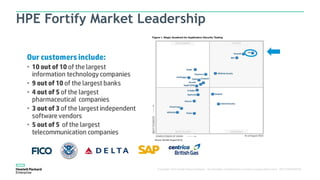
HPE Fortify Market Leadership
Questions ?
Thank You!
Mike Coleman
HP ESP - Enterprise Security Products
FORTIFY Strategic Account Executive, North East
(301) 602-8228
coleman@hpe.com
Thomas Ryan
HP ESP - Enterprise Security Products
Solutions Architect, Security SME
(408) 757-6118
tom.ryan@hpe.com

Fortify dev ops (002)

  • 1.
    Fortify + DevOps forMBFS March 17, 2016
  • 2.
    Application Delivery Stream Planning App Development AppTesting App release Release decision Business Demand Deployed App
  • 3.
  • 4.
    App Testing Develop Development QA Production Business Demand Plan BuildTest QA Release MonitorOperate Deploy Deploy Deploy Fund Decision Release Decision Build Gate Runtime Application Self Protection SAST & IAST Desktop App Journey SAST Automated DAST / IAST
  • 5.
    HPE End toEnd Application Security Dynamic RuntimeStatic Production Fortify on Demand App Defender On Premise App Defender Application Development TestCodeDesign Integration & Staging IT Operations On Demand WebInspectStatic Code Analyzer DevInspect Protect against known and unknown vulnerabilities in production to give time for the developers to fix them. Integrate to the SEIM and FOD for visibility and control.
  • 6.
    © Copyright 2016Hewlett-Packard Enterprise. The information contained herein is subject to change without notice. HPE CONFIDENTIAL Application Defender
  • 7.
    © Copyright 2016Hewlett-Packard Enterprise. The information contained herein is subject to change without notice. HPE CONFIDENTIAL Application Defender
  • 8.
    © Copyright 2016Hewlett-Packard Enterprise. The information contained herein is subject to change without notice. HPE CONFIDENTIAL 27 Vulnerability Categories – Feb 2016 Discovery: Known Vulnerability Scanner Activity Directory Listing Privacy Violation: Internal ClassLoader Manipulation: Struts Forceful Browsing Slow Method Call: Slow Database Query (Batch Processing) Command Injection Header Manipulation Slow Method Call: Slow Database Query (Web Request) Command Injection: Shellshock Malformed Request: Missing Accept Header SQL Injection Cookie Security: HTTPOnly not Set on Session Cookie Malformed Request: Missing Content- Type System Information Leak Cross-Site Scripting Attack Malformed Request: Use of Unsupported Method XML Entity Expansion Injection Dangerous File Inclusion: Local Method Call Failure: Database Query XML External Entity Injection Dangerous File Inclusion: Remote Open Redirect XPath Injection Denial of Service: Parse Double Poor Error Handling: Unhandled Exception Java Deserialization Application Defender
  • 9.
    © Copyright 2016Hewlett-Packard Enterprise. The information contained herein is subject to change without notice. HPE CONFIDENTIAL 60 Application Logging Categories – Feb 2016 Command Execution HTTP Session Start Security Exception Created: Illegal Access Unified Logging: Slf4j Crypto Exception Created: Bad Padding HTTP Session Stop Security Exception Created: Invalid Algorithm Parameter User Logoff Crypto Exception Created: Exemption Mechanism Network Socket Bind Security Exception Created: Invalid Key Specifications User Logon: Failure Crypto Exception Created: Illegal Block Size Network Socket Close Security Exception Created: Invalid Parameter Specification User Logon: Success Crypto Exception Created: No Such Cryptographic Algorithm Network Socket Connect Security Exception Created: Login Exception User Management: Add User to Group Crypto Exception Created: No Such Padding Network Socket Shutdown Security Exception Created: No Such Provider User Management: Change Password Crypto Exception Created: Short Buffer Security Exception Created: Access Control Security Exception Created: Privileged Action User Management: Create Group Database Query Security Exception Created: Basic Key Exception Security Exception Created: Signature User Management: Create User File Copy Security Exception Created: CERT Certificate Security Exception Created: Unrecoverable KeyStore Entry User Management: Delete Group File Create Security Exception Created: CERT Certificate Revocation List Security Exception Created: Unrecoverable KeyStore Key User Management: Delete User File Delete Security Exception Created: CERT Path Builder Spring Validation Failure User Management: Remove User from Group File Move Security Exception Created: CERT Path Validator Struts Validation Failure Web AccessLog File Read Security Exception Created: CERT Store Unified Logging: JCL Web Application Running File Write Security Exception Created: Digest Security Unified Logging: JUL Web Application Start General Exception Created Security Exception Created: Generic KeyStore Exception Unified Logging: Log4j Web Application Stop Application Defender
  • 10.
    © Copyright 2016Hewlett-Packard Enterprise. The information contained herein is subject to change without notice. HPE CONFIDENTIAL HPE Fortify Market Leadership
  • 11.
  • 12.
    Thank You! Mike Coleman HPESP - Enterprise Security Products FORTIFY Strategic Account Executive, North East (301) 602-8228 coleman@hpe.com Thomas Ryan HP ESP - Enterprise Security Products Solutions Architect, Security SME (408) 757-6118 tom.ryan@hpe.com

Editor's Notes

  • #6 Only AppSec provider to cover SAST, DAST, IAST and RASP
  • #11 HP Fortify SCA / Continuous Integration and Testing Environment They key to integrating static analysis into any continuous integration process is efficiency and accuracy. In the Use Case Above: Automate Fortify SCA scans with a supported build tool (Ant, Maven, Make, MSBuild, etc via script or custom target / goal. Jobs can be easily cloned in all continuous Integration servers (Jenkins, etc) and the appropriate Fortify SCA command for translation added. We recommend only performing the translation on the build server in CI environments to avoid memory / processor / time intensive static analysis scans from occurring on the build server. Once the translation has completed, we can move the translated files to a dedicated scan server where the static analysis scan can be completed. This will ensure an accurate and timely completion of the scan. The scan server will then upload the artifact to the appropriate Project & Version in Software Security Center. The baseline scan Fortify Project Report will merge with the new scan file. All previously triaged issues (audit tags / comments / etc) will be applied. Rules will alert auditors to any new issues that have been previously un-triaged. The auditors will audit any new issue and assign them to a user for remediation / inspection. The developer will download the Fortify Project Report into his / her IDE to see what issues have been assigned. There is a “My Issues” checkbox to see only assigned issues. The developer can respond to each assigned issue with either a comment or they can accept the issue needs to be remediated. Comments are sent to the server for the auditor to review, secure code is placed in the SCM system.
  • #12 Lets start by understanding the security challenge in more detail