Formulating
Research Problem
Irving John Seduco, SGF
Instructor 1
University of Antique – Hamtic Campus
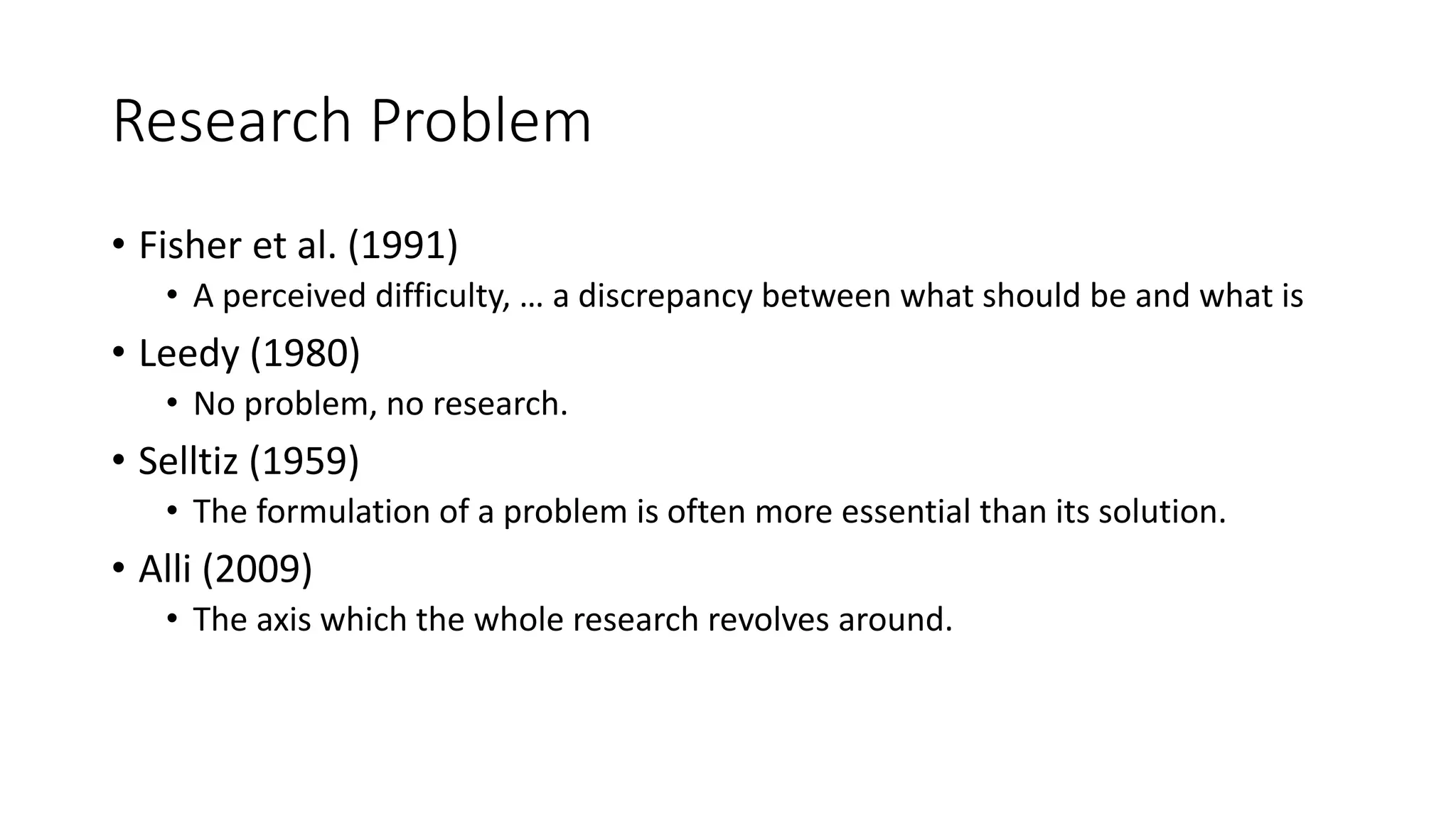
Research Problem
• Fisher et al. (1991)
• A perceived difficulty, … a discrepancy between what should be and what is
• Leedy (1980)
• No problem, no research.
• Selltiz (1959)
• The formulation of a problem is often more essential than its solution.
• Alli (2009)
• The axis which the whole research revolves around.
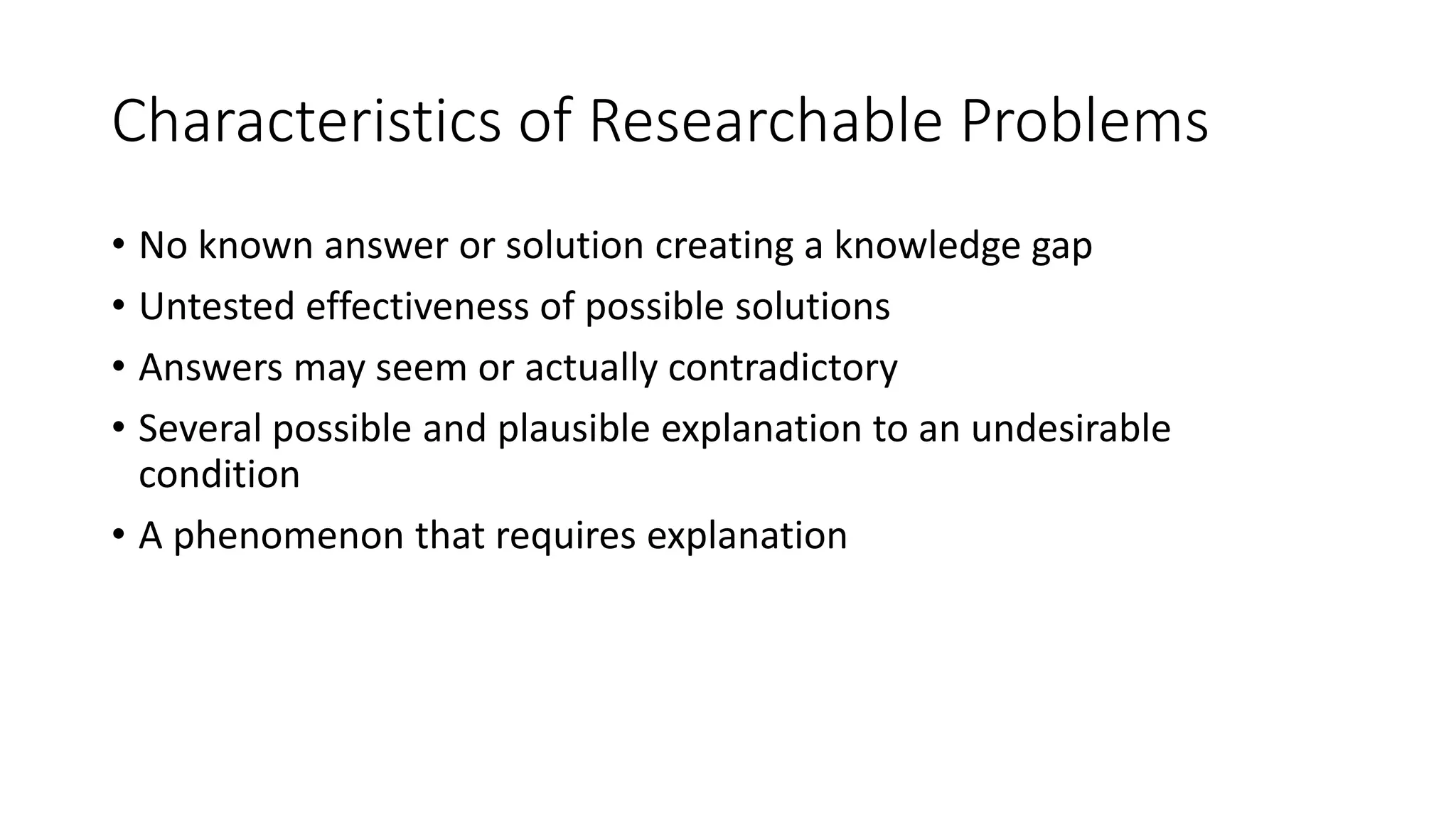
Characteristics of Researchable Problems
• No known answer or solution creating a knowledge gap
• Untested effectiveness of possible solutions
• Answers may seem or actually contradictory
• Several possible and plausible explanation to an undesirable
condition
• A phenomenon that requires explanation
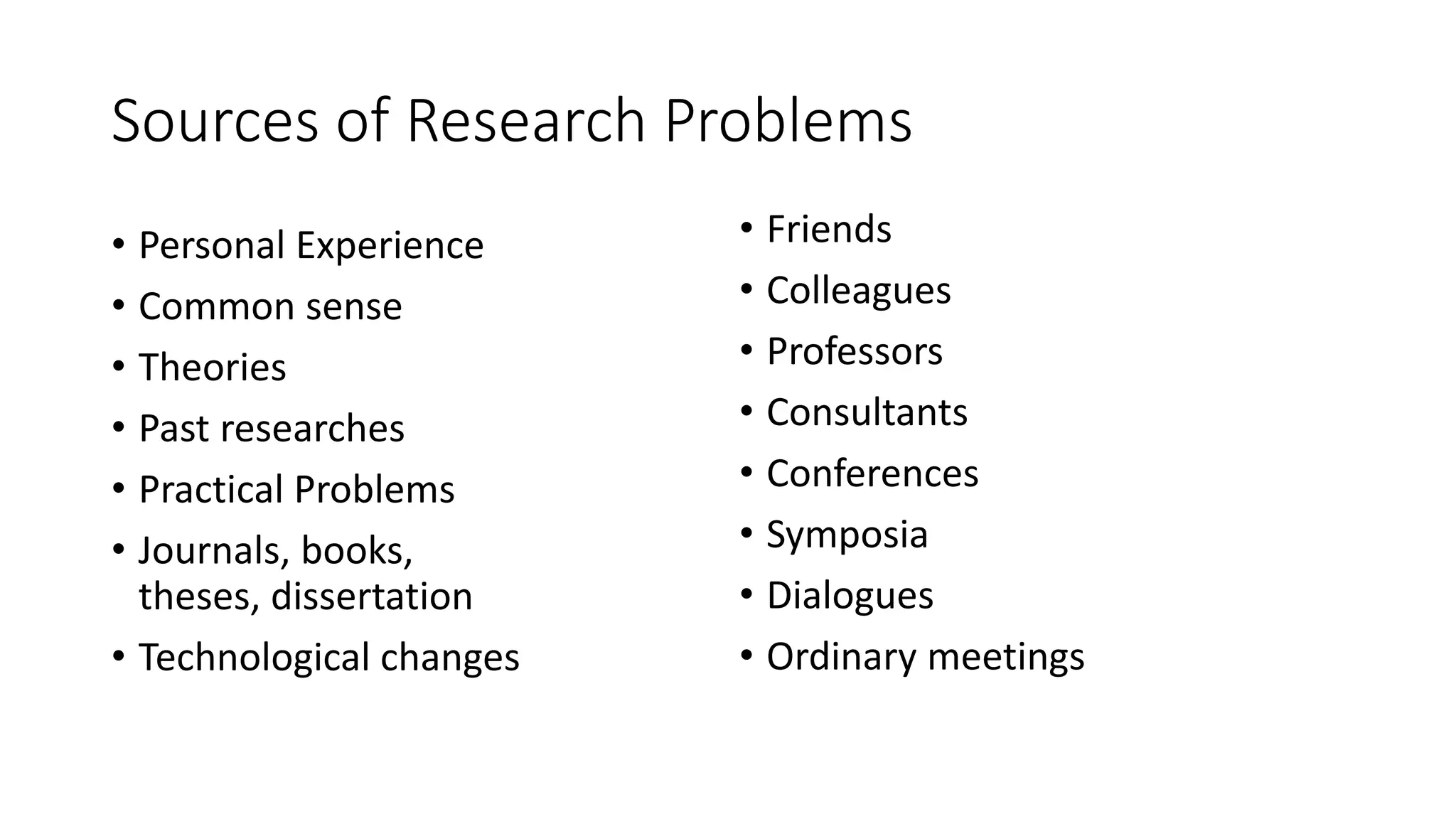
Sources of Research Problems
• Personal Experience
• Common sense
• Theories
• Past researches
• Practical Problems
• Journals, books,
theses, dissertation
• Technological changes
• Friends
• Colleagues
• Professors
• Consultants
• Conferences
• Symposia
• Dialogues
• Ordinary meetings
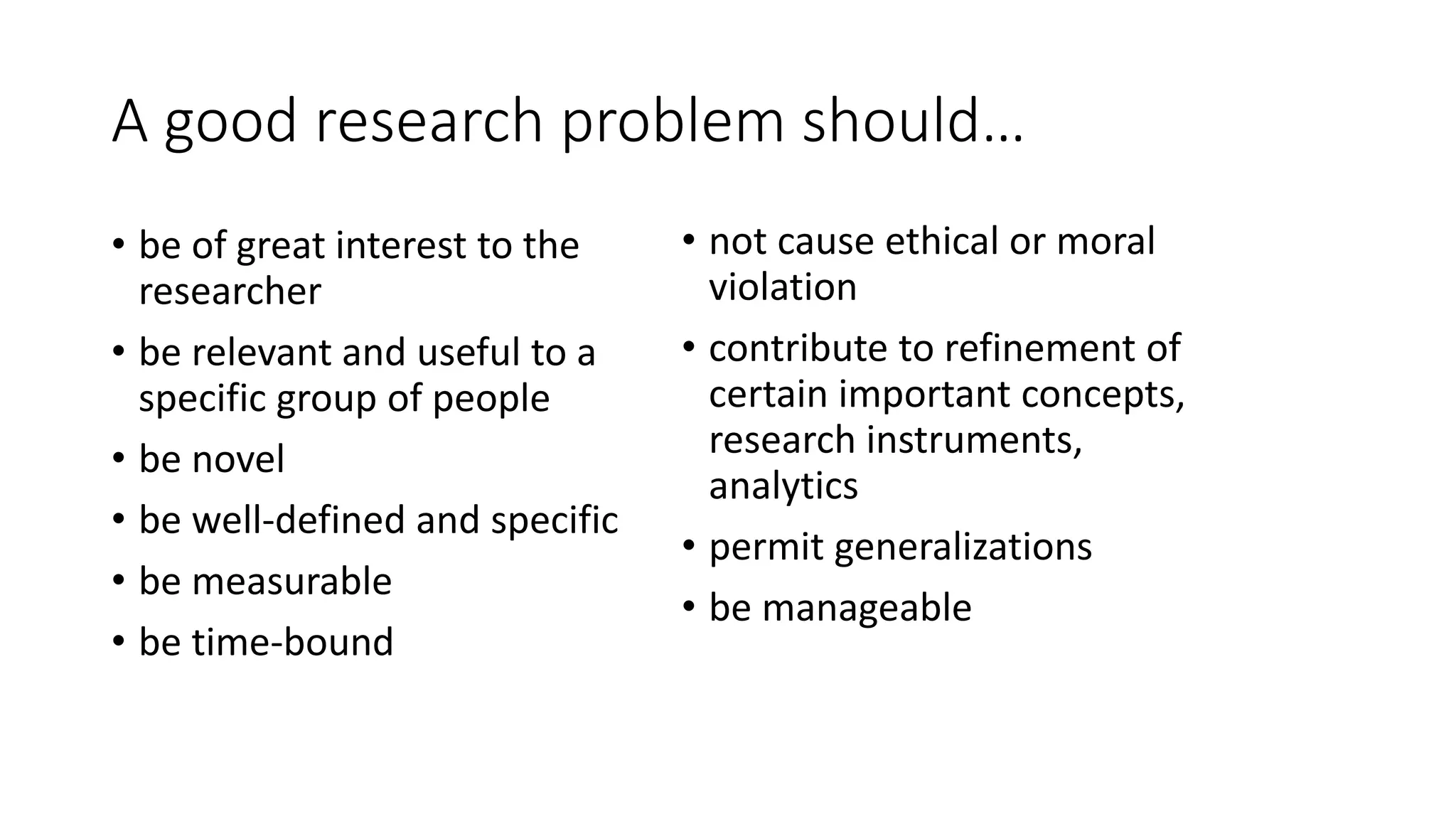
A good research problem should…
• be of great interest to the
researcher
• be relevant and useful to a
specific group of people
• be novel
• be well-defined and specific
• be measurable
• be time-bound
• not cause ethical or moral
violation
• contribute to refinement of
certain important concepts,
research instruments,
analytics
• permit generalizations
• be manageable
Checklist for feasibility of research problem
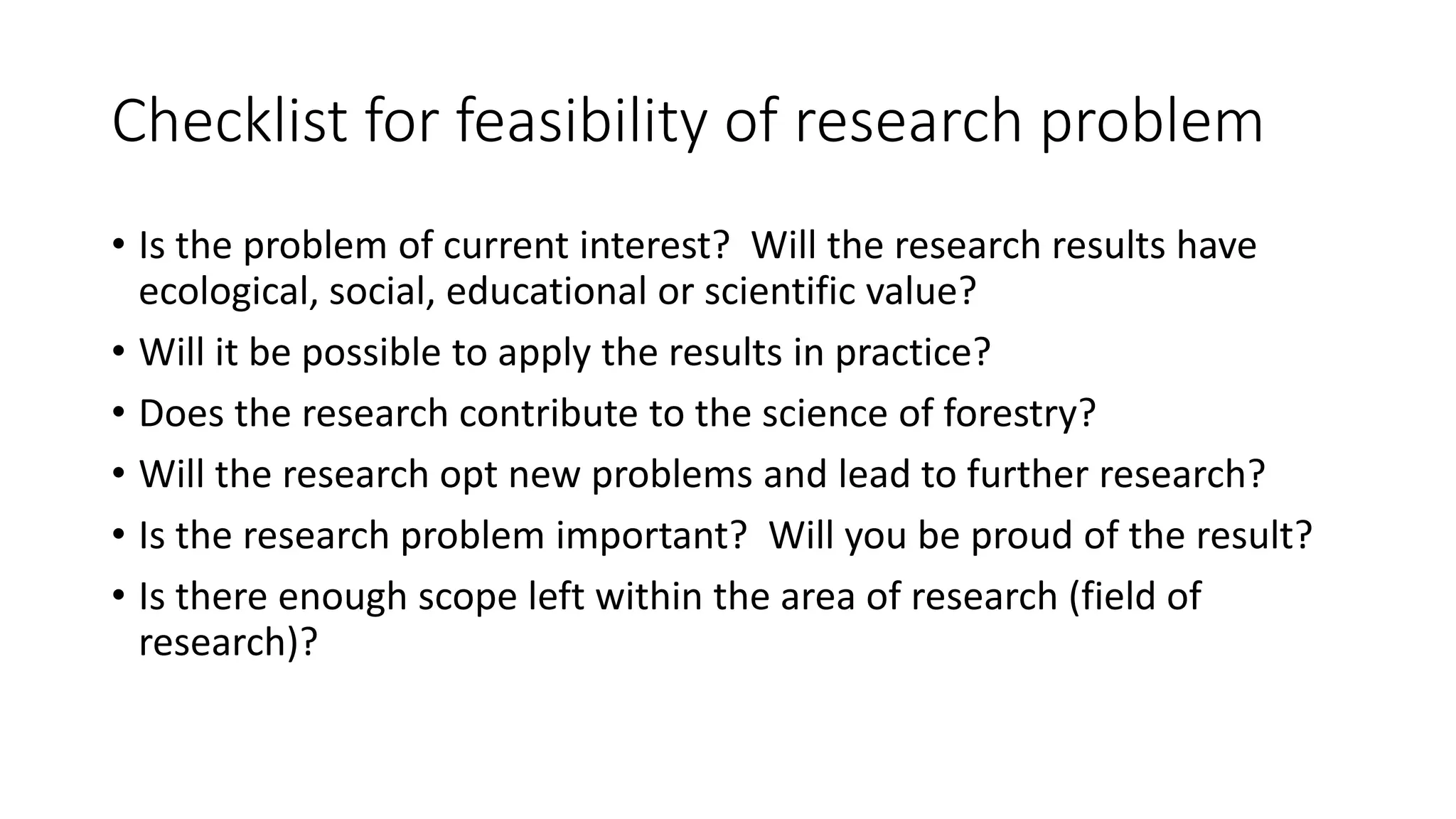
• Is the problem of current interest? Will the research results have
ecological, social, educational or scientific value?
• Will it be possible to apply the results in practice?
• Does the research contribute to the science of forestry?
• Will the research opt new problems and lead to further research?
• Is the research problem important? Will you be proud of the result?
• Is there enough scope left within the area of research (field of
research)?
Checklist for feasibility of research problem
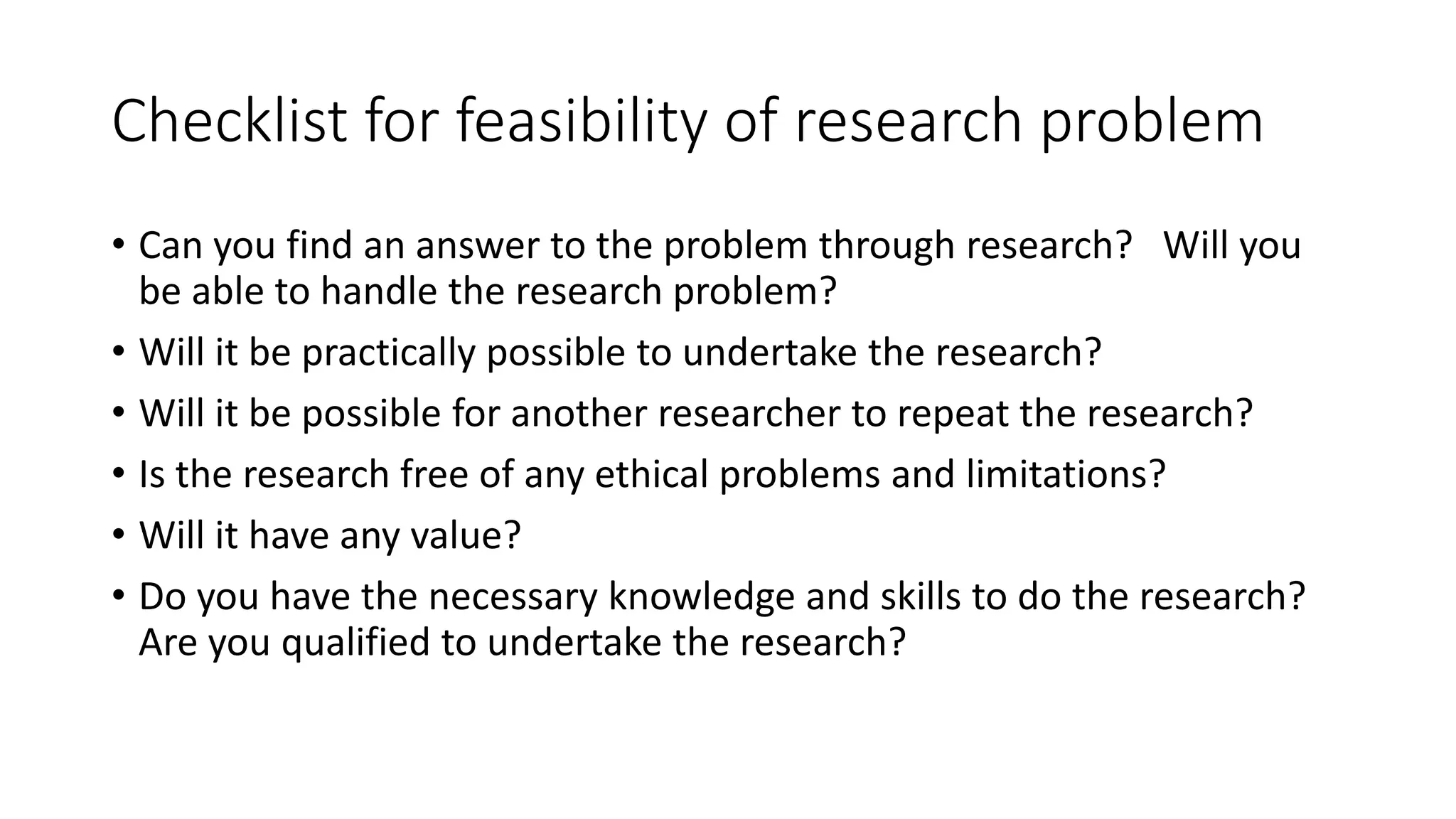
• Can you find an answer to the problem through research? Will you
be able to handle the research problem?
• Will it be practically possible to undertake the research?
• Will it be possible for another researcher to repeat the research?
• Is the research free of any ethical problems and limitations?
• Will it have any value?
• Do you have the necessary knowledge and skills to do the research?
Are you qualified to undertake the research?
Checklist for feasibility of research problem
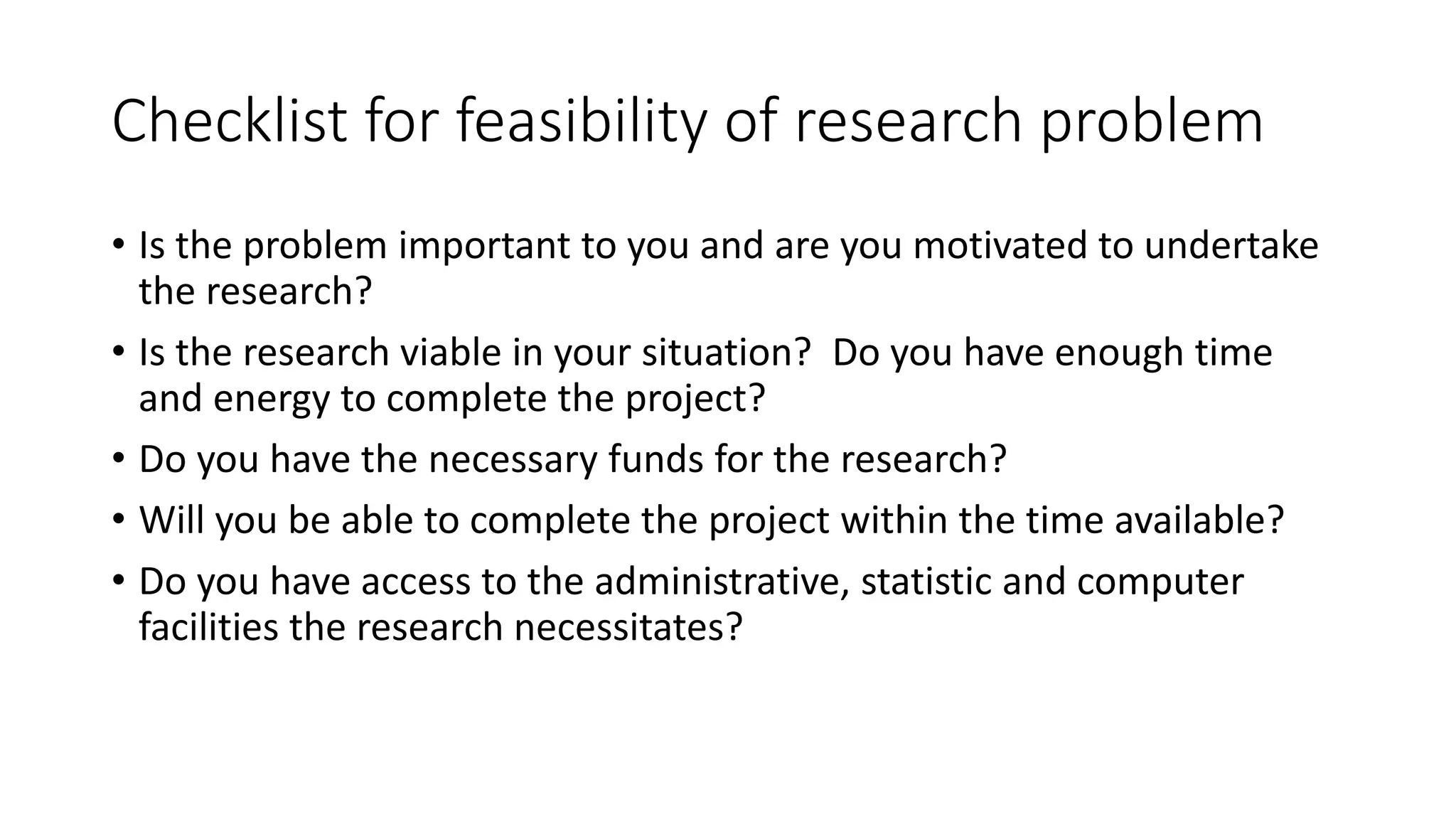
• Is the problem important to you and are you motivated to undertake
the research?
• Is the research viable in your situation? Do you have enough time
and energy to complete the project?
• Do you have the necessary funds for the research?
• Will you be able to complete the project within the time available?
• Do you have access to the administrative, statistic and computer
facilities the research necessitates?

Formulating Research Problem.pptx

  • 1.
    Formulating Research Problem Irving JohnSeduco, SGF Instructor 1 University of Antique – Hamtic Campus
  • 2.
    Research Problem • Fisheret al. (1991) • A perceived difficulty, … a discrepancy between what should be and what is • Leedy (1980) • No problem, no research. • Selltiz (1959) • The formulation of a problem is often more essential than its solution. • Alli (2009) • The axis which the whole research revolves around.
  • 3.
    Characteristics of ResearchableProblems • No known answer or solution creating a knowledge gap • Untested effectiveness of possible solutions • Answers may seem or actually contradictory • Several possible and plausible explanation to an undesirable condition • A phenomenon that requires explanation
  • 4.
    Sources of ResearchProblems • Personal Experience • Common sense • Theories • Past researches • Practical Problems • Journals, books, theses, dissertation • Technological changes • Friends • Colleagues • Professors • Consultants • Conferences • Symposia • Dialogues • Ordinary meetings
  • 5.
    A good researchproblem should… • be of great interest to the researcher • be relevant and useful to a specific group of people • be novel • be well-defined and specific • be measurable • be time-bound • not cause ethical or moral violation • contribute to refinement of certain important concepts, research instruments, analytics • permit generalizations • be manageable
  • 6.
    Checklist for feasibilityof research problem • Is the problem of current interest? Will the research results have ecological, social, educational or scientific value? • Will it be possible to apply the results in practice? • Does the research contribute to the science of forestry? • Will the research opt new problems and lead to further research? • Is the research problem important? Will you be proud of the result? • Is there enough scope left within the area of research (field of research)?
  • 7.
    Checklist for feasibilityof research problem • Can you find an answer to the problem through research? Will you be able to handle the research problem? • Will it be practically possible to undertake the research? • Will it be possible for another researcher to repeat the research? • Is the research free of any ethical problems and limitations? • Will it have any value? • Do you have the necessary knowledge and skills to do the research? Are you qualified to undertake the research?
  • 8.
    Checklist for feasibilityof research problem • Is the problem important to you and are you motivated to undertake the research? • Is the research viable in your situation? Do you have enough time and energy to complete the project? • Do you have the necessary funds for the research? • Will you be able to complete the project within the time available? • Do you have access to the administrative, statistic and computer facilities the research necessitates?