Presented By:
Tanmoy Sarkar
Student ID: 181130
4th Year, 2nd Term
Pharmacy Discipline
Khulna University
Khulna
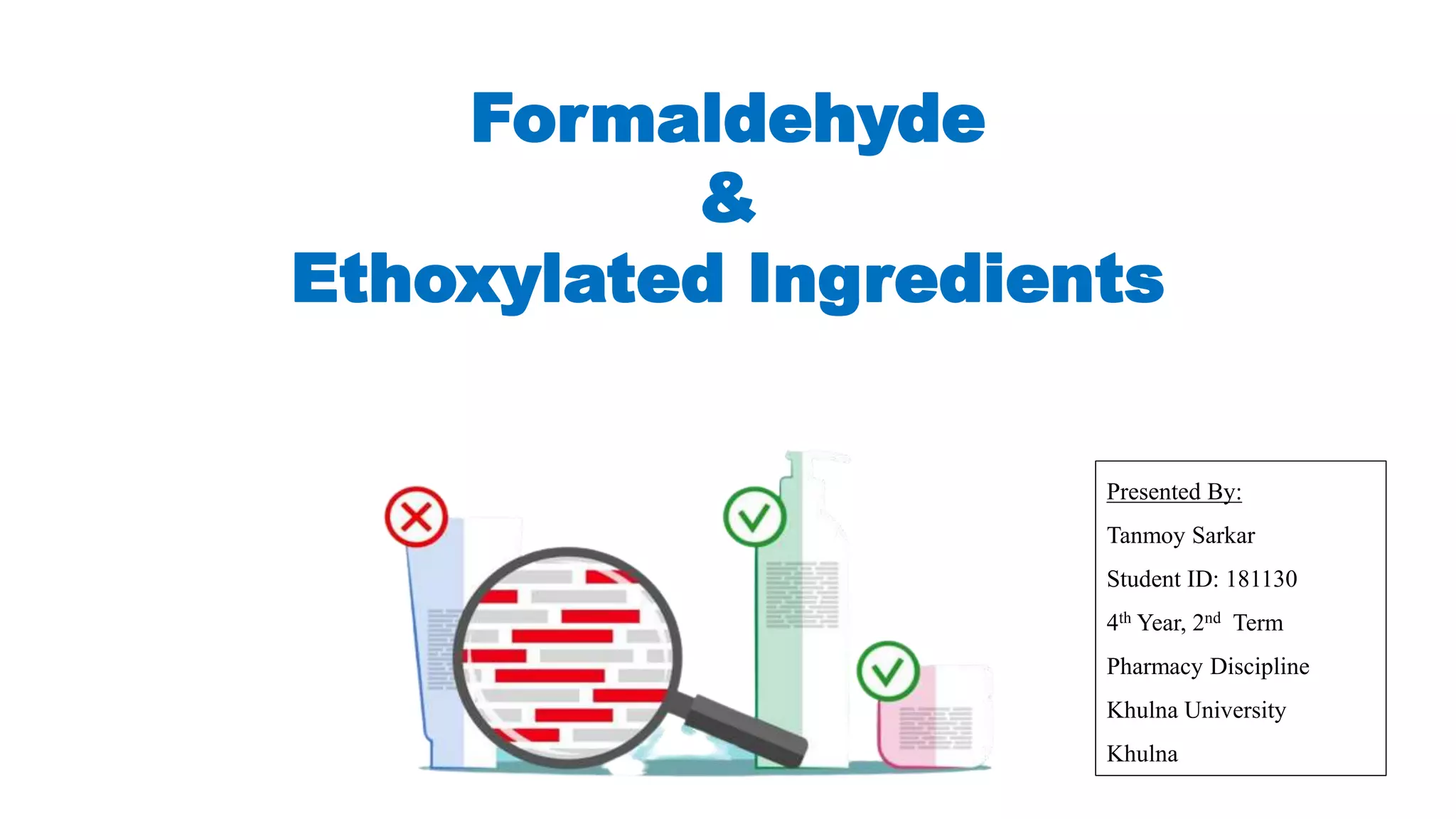
Formaldehyde
&
Ethoxylated Ingredients
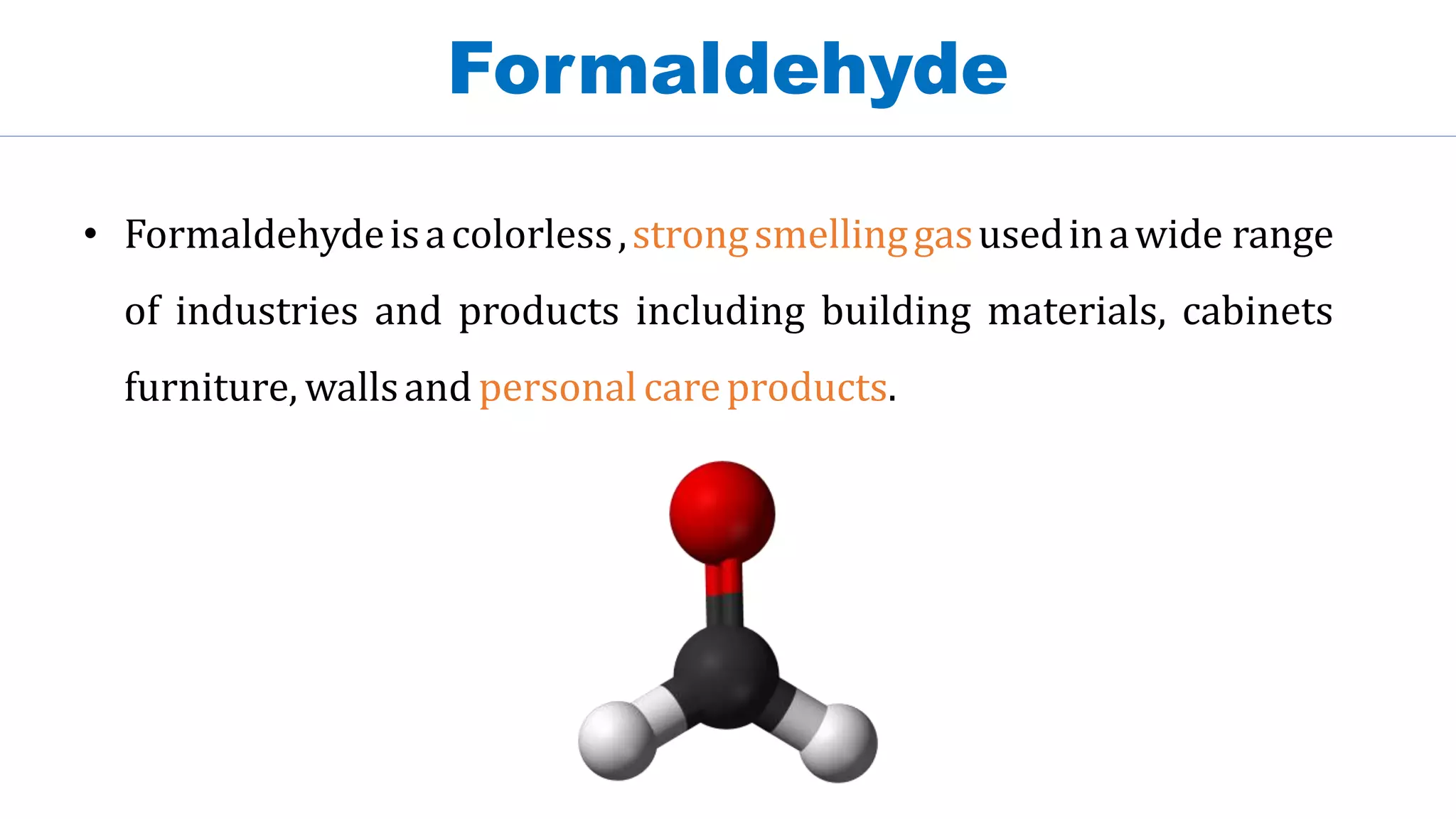
• Formaldehydeisacolorless,strongsmellinggasusedinawide range
of industries and products including building materials, cabinets
furniture, wallsand personal careproducts.
Formaldehyde
Nail
polish
Nail glue
Eyelash
glue
Hair gel
Hair-
smoothing
products
Baby
shampoo
Body
soap
Body
wash
Color
cosmetics
Formaldehyde
Found In
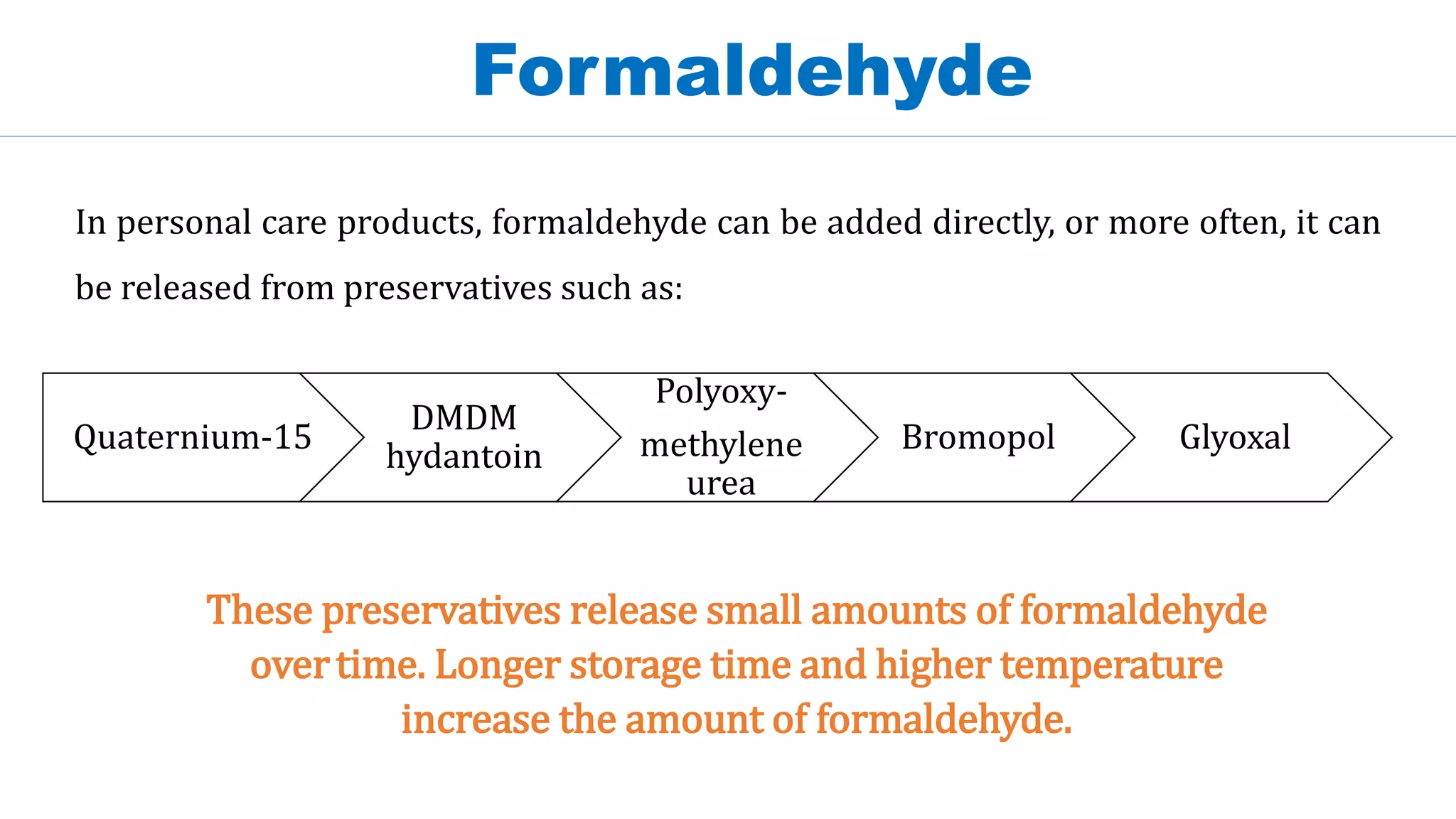
In personal care products, formaldehyde can be added directly, or more often, it can
be released from preservatives such as:
Formaldehyde
These preservatives release small amounts of formaldehyde
overtime. Longer storage time and higher temperature
increase the amount of formaldehyde.
Quaternium-15
DMDM
hydantoin
Polyoxy-
methylene
urea
Bromopol Glyoxal
Skin
irritation
Corrosion
of GIT
Ulceration
of the
mouth &
esophagus
Menstrual
disorders
Cancer
Side Effects of Formaldehyde
Skin irritation Skin Cancer
Allergy
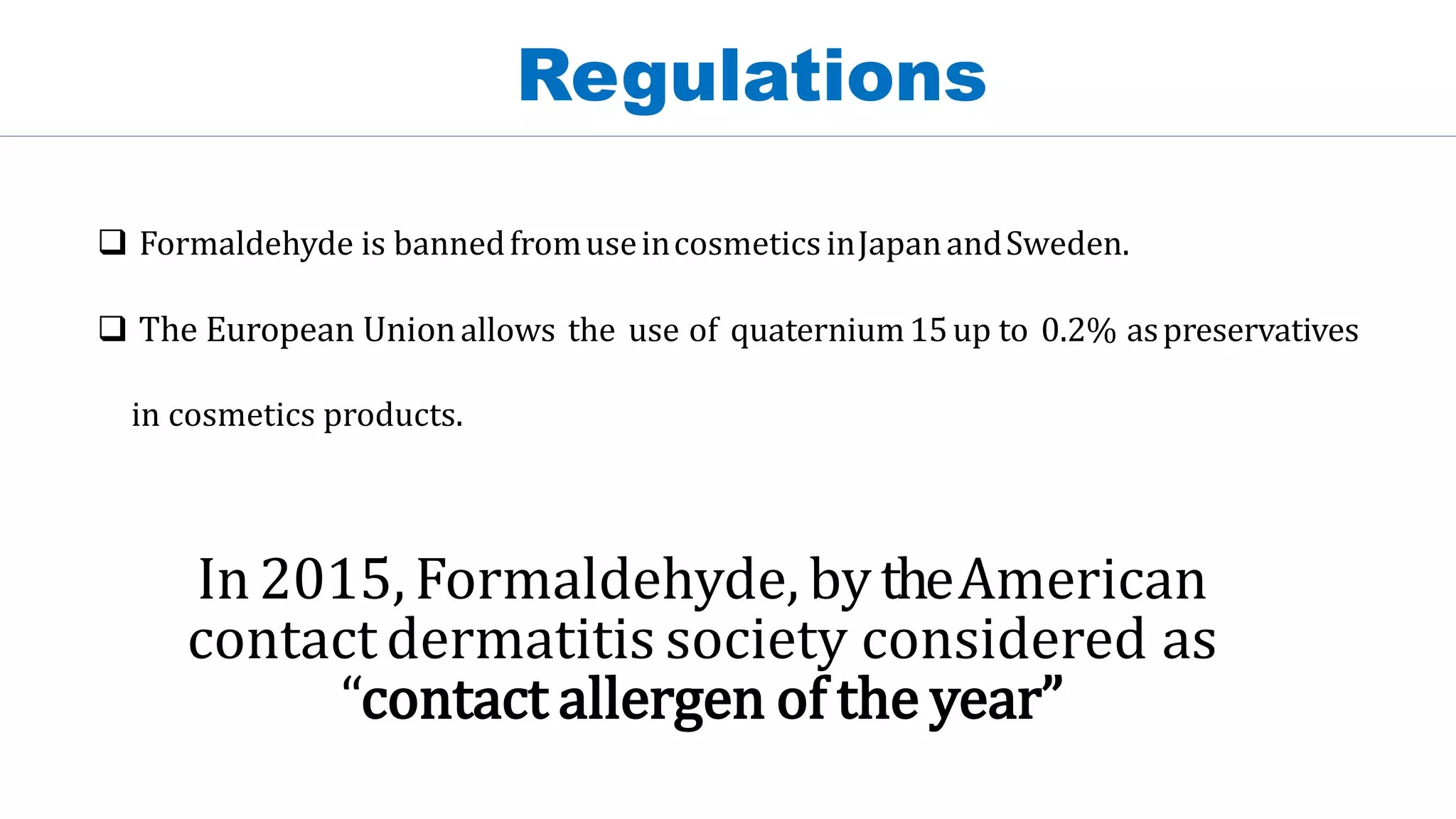
In2015, Formaldehyde, bytheAmerican
contactdermatitis society considered as
“contact allergen of the year”
 Formaldehyde is bannedfromuseincosmetics inJapanandSweden.
 The European Unionallows the use of quaternium15up to 0.2% aspreservatives
in cosmetics products.
Regulations
• Choosing the personal care products that are labelled as
formaldehyde free.
• Avoiding the use of expired and stored cosmetic products in the
sun because this can cause more formaldehyde release.
How to Avoid?
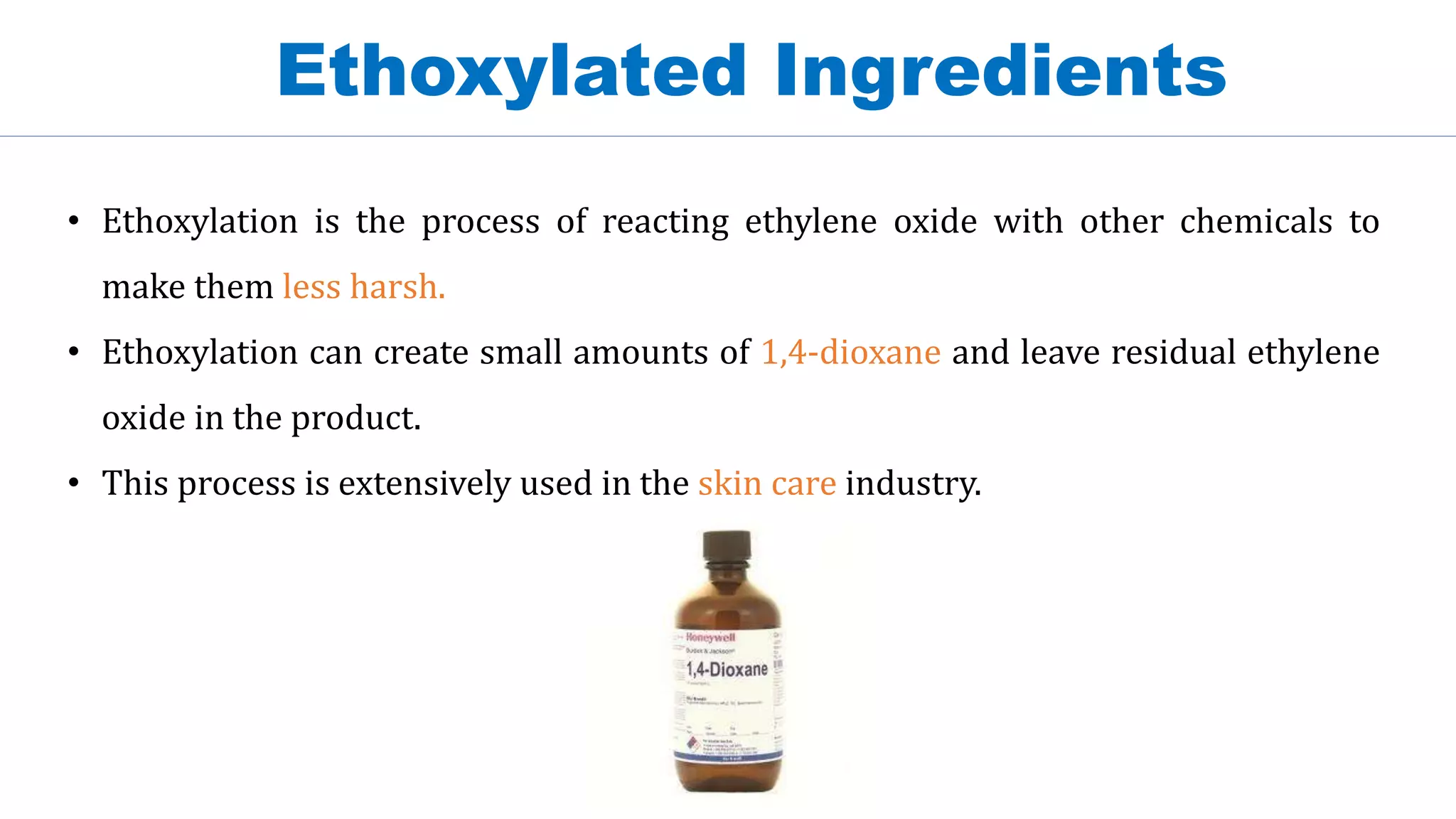
• Ethoxylation is the process of reacting ethylene oxide with other chemicals to
make them less harsh.
• Ethoxylation can create small amounts of 1,4-dioxane and leave residual ethylene
oxide in the product.
• This process is extensively used in the skin care industry.
Ethoxylated Ingredients
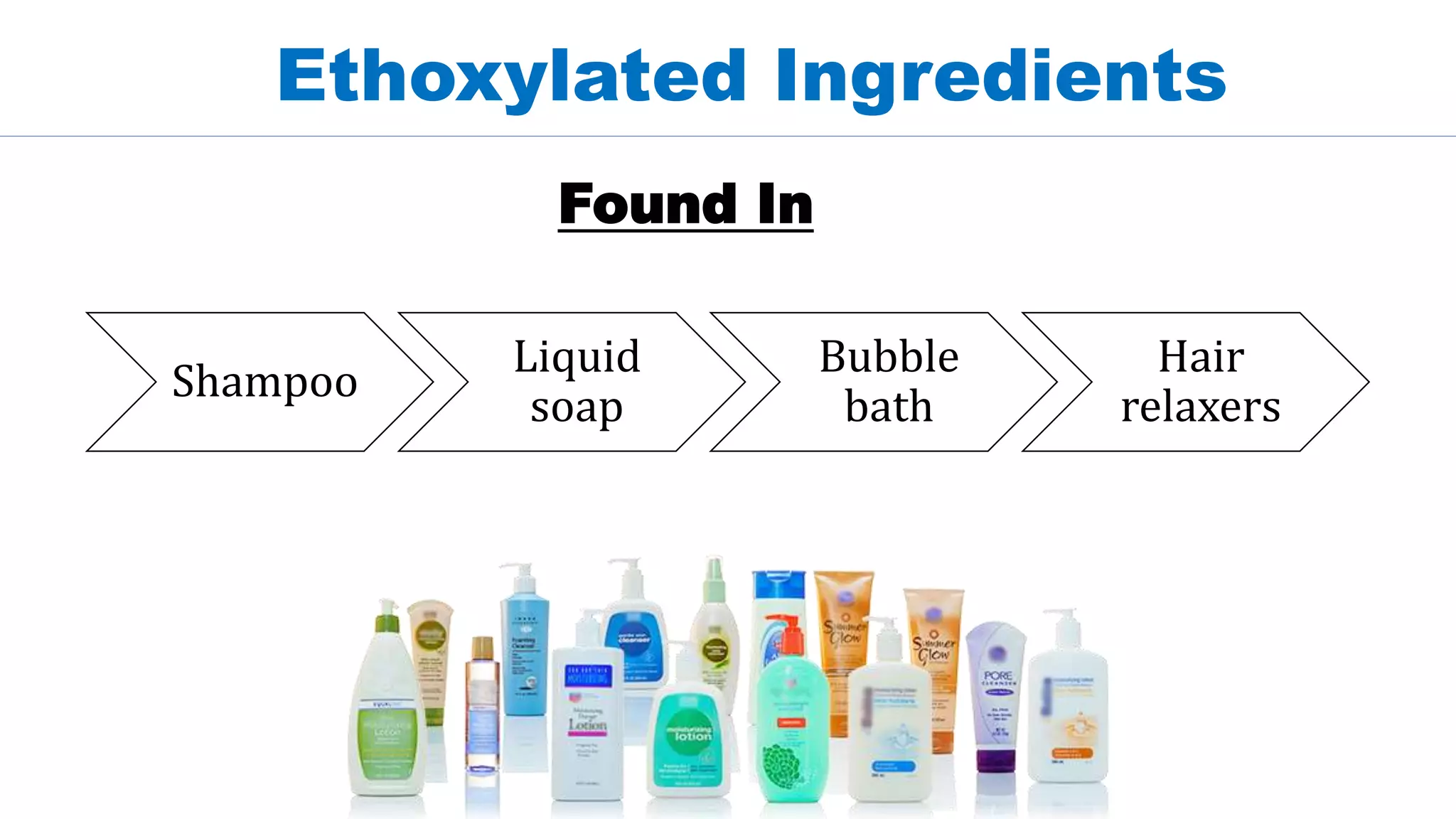
Found In
Shampoo
Liquid
soap
Bubble
bath
Hair
relaxers
Ethoxylated Ingredients
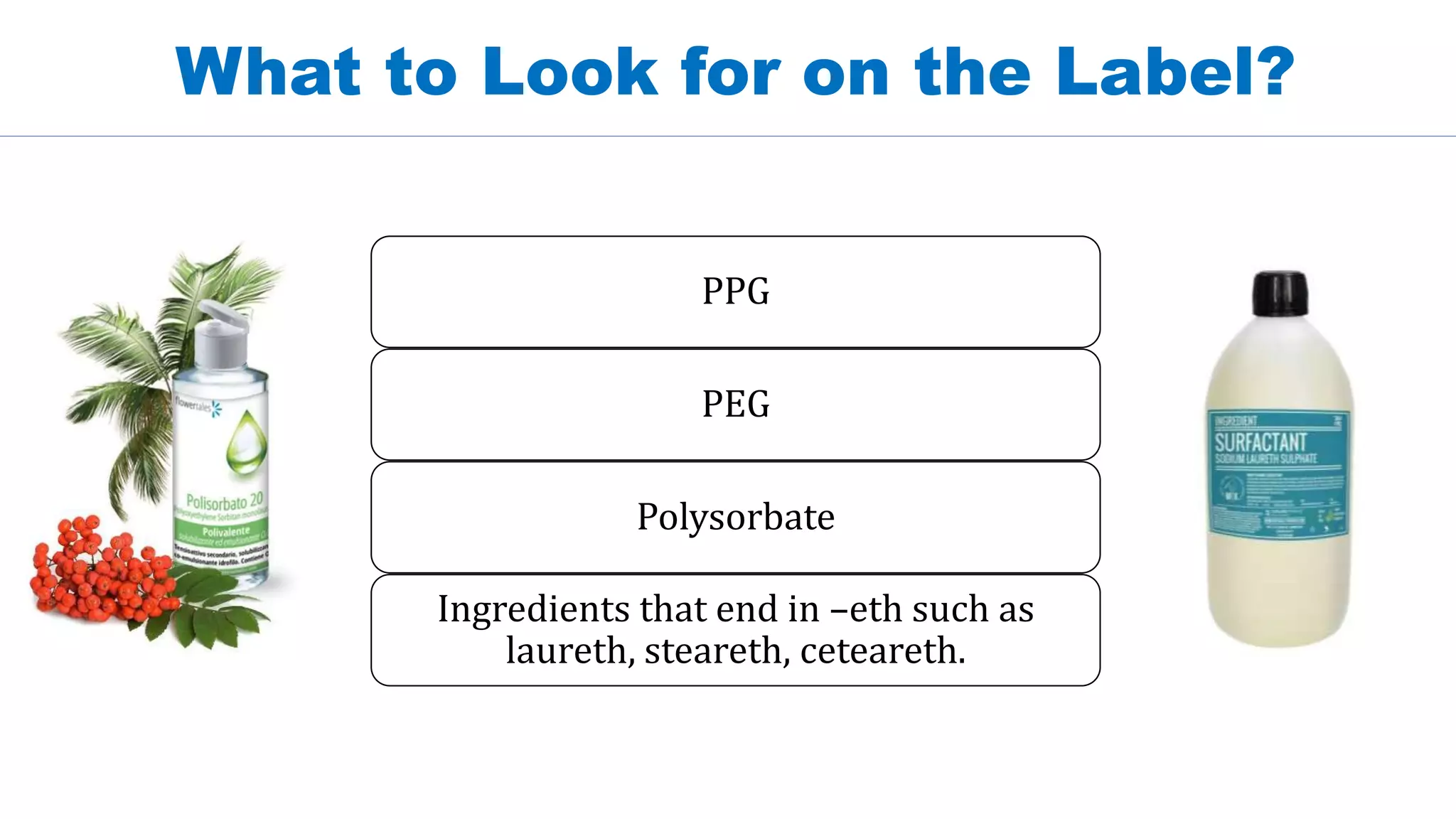
PPG
PEG
Polysorbate
Ingredients that end in –eth such as
laureth, steareth, ceteareth.
What to Look for on the Label?
Side Effects
Short-term exposure
• Nausea
• Drowsiness
• Headache
• Irritation of the eyes & nose
Long-term exposure
• Dermatitis
• Liver and kidney damage
• Cancer
• Reproductive toxicity
 Ethoxylated Ingredients are prohibited for use in cosmetics products in Canada.
 The European Union has also prohibited use of ethylene oxide in cosmetic products.
Regulations
• Choosing products that are free from these ingredients.
• Alternative processes of ethoxylation can be used.
• Vacuum stripping can remove contaminants from an ethoxylated
product.
How to Avoid?
• https://ceway.eu/the-use-of-formaldehyde-in-cosmetics/
• https://www.beauty-heroes.com/blog/common-ethoxylated-
ingredients-skincare/
• https://ynatural.com.au/what-is-y/ingredients-to-avoid/
• https://en.wikipedia.org/wiki/Formaldehyde
• https://www.safecosmetics.org/chemicals/formaldehyde/#:~:te
xt=Formaldehyde%20in%20cosmetics%20is%20widely,in%20p
eople%20with%20formaldehyde%20sensitivities.
References
Formaldehyde  &  Ethoxylated Ingredients

Formaldehyde & Ethoxylated Ingredients