




FORENSIC
NANOTECHNOLOGY
•
•
•
•
•
APPLICATIONS OF FORENSIC
NANOTECHNOLOGY
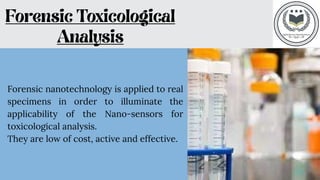
Forensic nanotechnology is applied to real
specimens in order to illuminate the
applicability of the Nano-sensors for
toxicological analysis.
They are low of cost, active and effective.
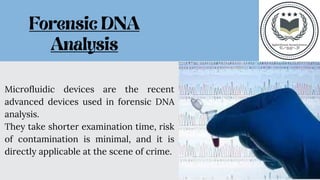
Microfluidic devices are the recent
advanced devices used in forensic DNA
analysis.
They take shorter examination time, risk
of contamination is minimal, and it is
directly applicable at the scene of crime.
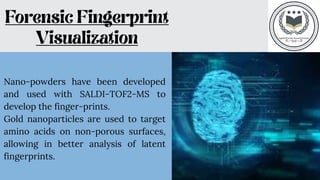
Nano-powders have been developed
and used with SALDI-TOF2-MS to
develop the finger-prints.
Gold nanoparticles are used to target
amino acids on non-porous surfaces,
allowing in better analysis of latent
fingerprints.
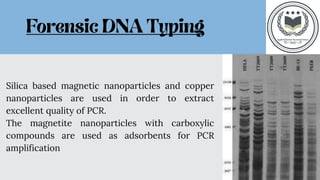
Silica based magnetic nanoparticles and copper
nanoparticles are used in order to extract
excellent quality of PCR.
The magnetite nanoparticles with carboxylic
compounds are used as adsorbents for PCR
amplification
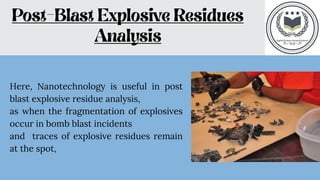
Here, Nanotechnology is useful in post
blast explosive residue analysis,
as when the fragmentation of explosives
occur in bomb blast incidents
and traces of explosive residues remain
at the spot,
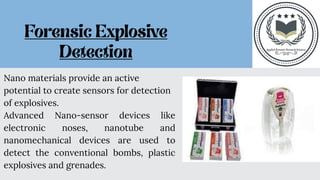
Nano materials provide an active
potential to create sensors for detection
of explosives.
Advanced Nano-sensor devices like
electronic noses, nanotube and
nanomechanical devices are used to
detect the conventional bombs, plastic
explosives and grenades.
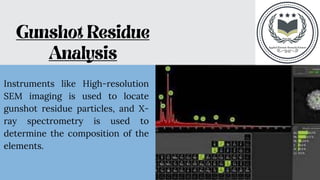
Instruments like High-resolution
SEM imaging is used to locate
gunshot residue particles, and X-
ray spectrometry is used to
determine the composition of the
elements.
INSTRUMENTS
USED
Forensic nanotechnology

Forensic nanotechnology

  • 4.
  • 5.
  • 6.
    Forensic nanotechnology isapplied to real specimens in order to illuminate the applicability of the Nano-sensors for toxicological analysis. They are low of cost, active and effective.
  • 7.
    Microfluidic devices arethe recent advanced devices used in forensic DNA analysis. They take shorter examination time, risk of contamination is minimal, and it is directly applicable at the scene of crime.
  • 8.
    Nano-powders have beendeveloped and used with SALDI-TOF2-MS to develop the finger-prints. Gold nanoparticles are used to target amino acids on non-porous surfaces, allowing in better analysis of latent fingerprints.
  • 9.
    Silica based magneticnanoparticles and copper nanoparticles are used in order to extract excellent quality of PCR. The magnetite nanoparticles with carboxylic compounds are used as adsorbents for PCR amplification
  • 10.
    Here, Nanotechnology isuseful in post blast explosive residue analysis, as when the fragmentation of explosives occur in bomb blast incidents and traces of explosive residues remain at the spot,
  • 11.
    Nano materials providean active potential to create sensors for detection of explosives. Advanced Nano-sensor devices like electronic noses, nanotube and nanomechanical devices are used to detect the conventional bombs, plastic explosives and grenades.
  • 12.
    Instruments like High-resolution SEMimaging is used to locate gunshot residue particles, and X- ray spectrometry is used to determine the composition of the elements.
  • 13.