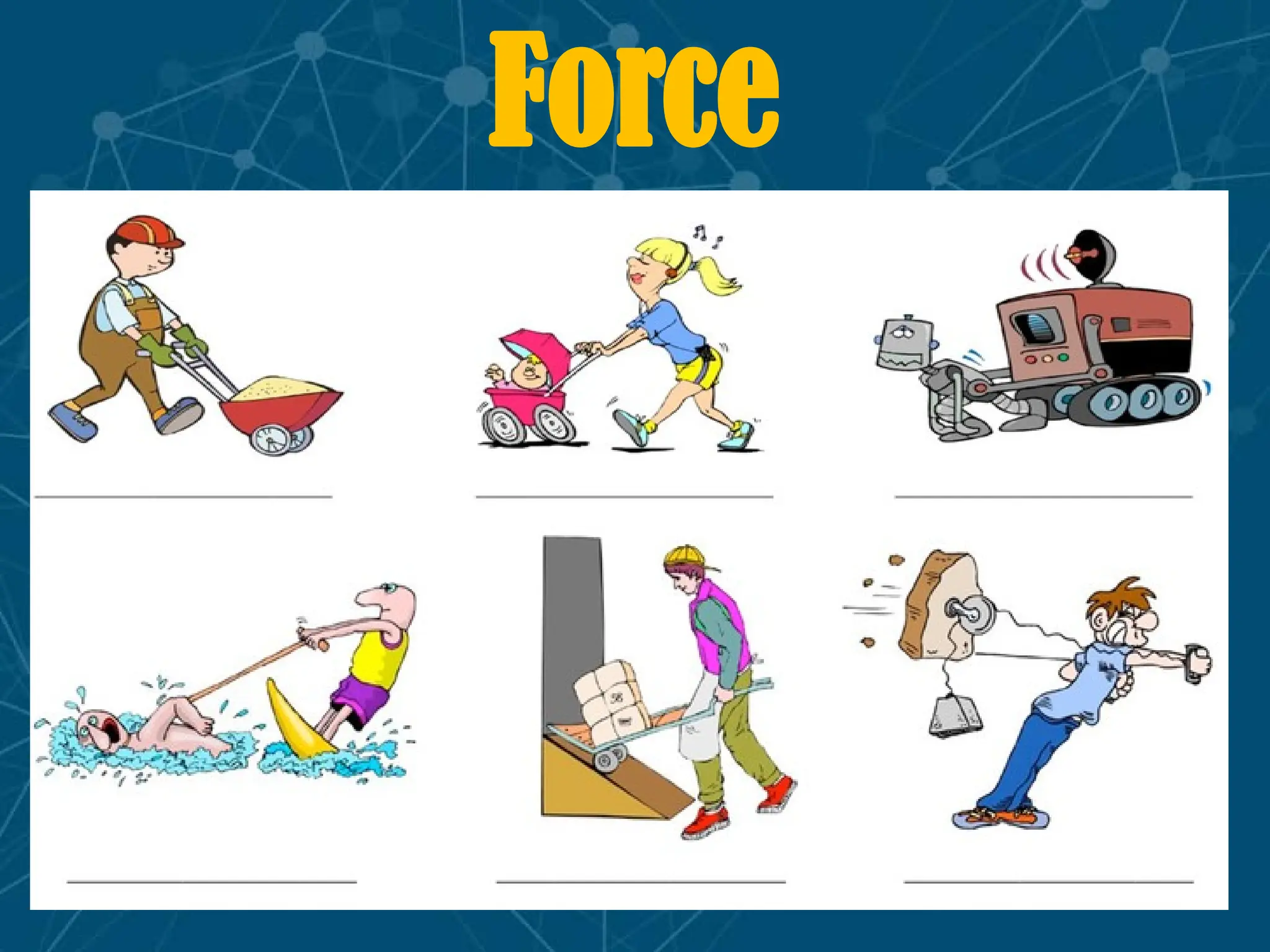
Force
Force
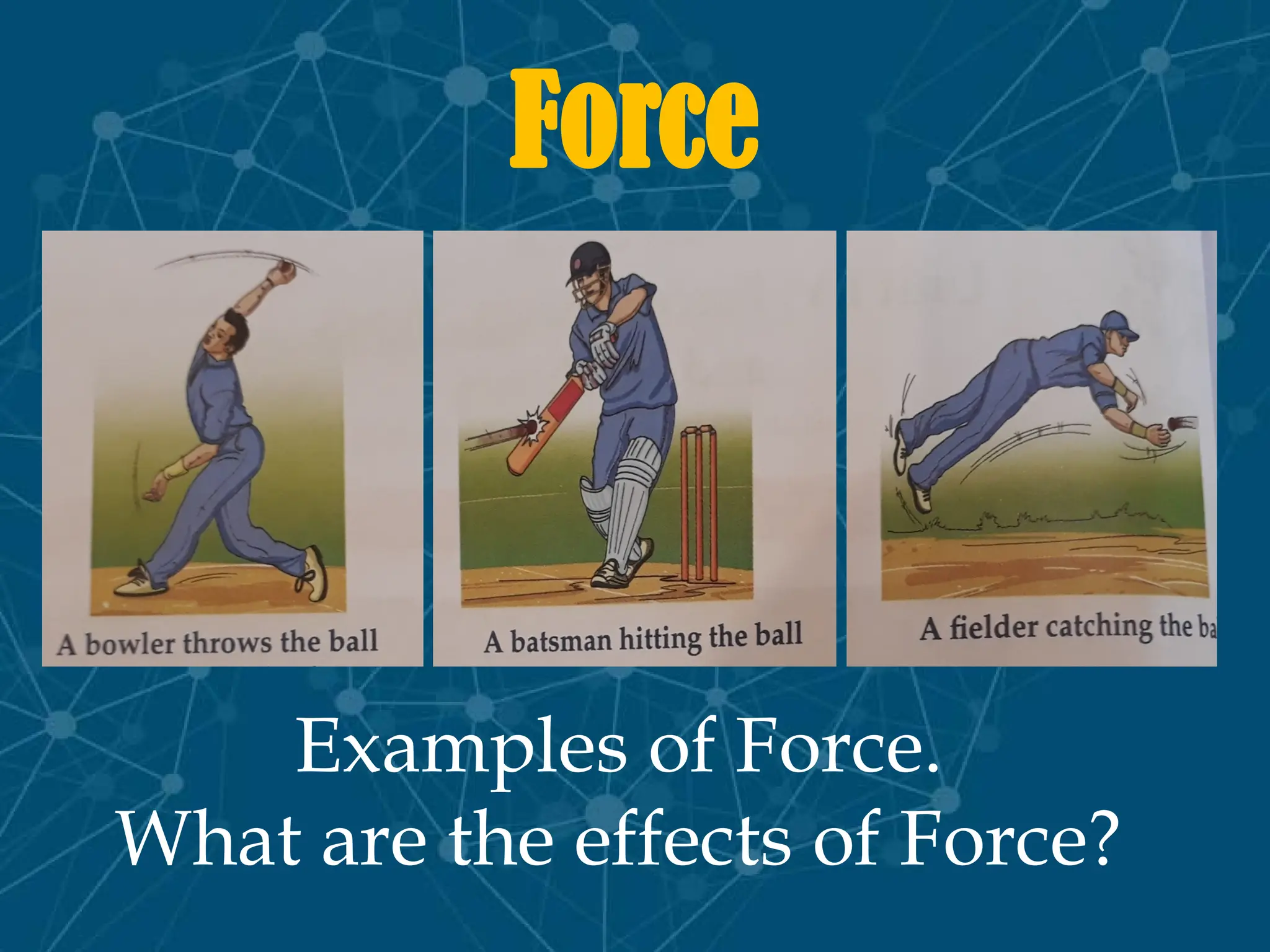
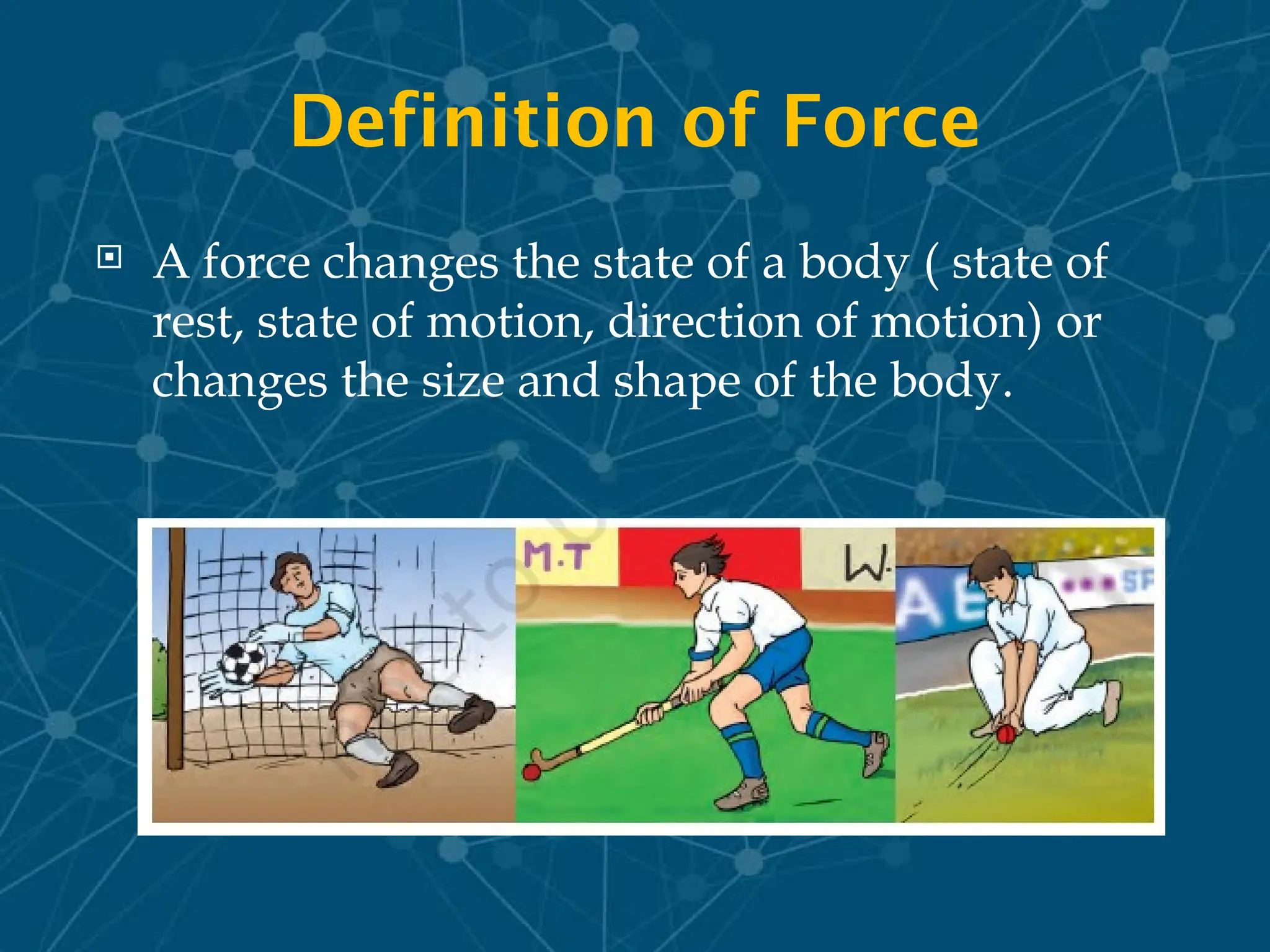
Examples of Force.
What are the effects of Force?
Effects of Force
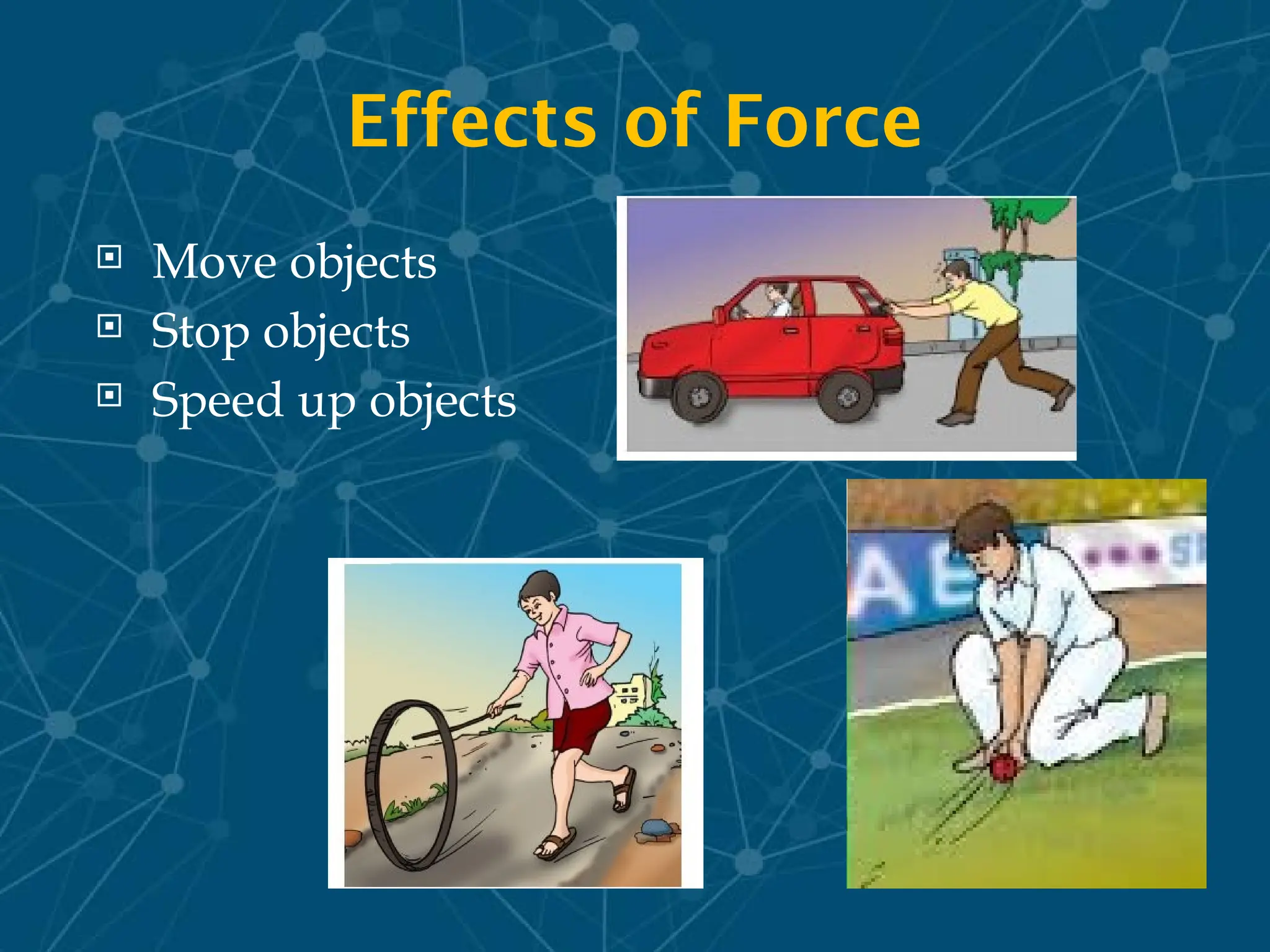
 Move objects
 Stop objects
 Speed up objects
Effects of Force
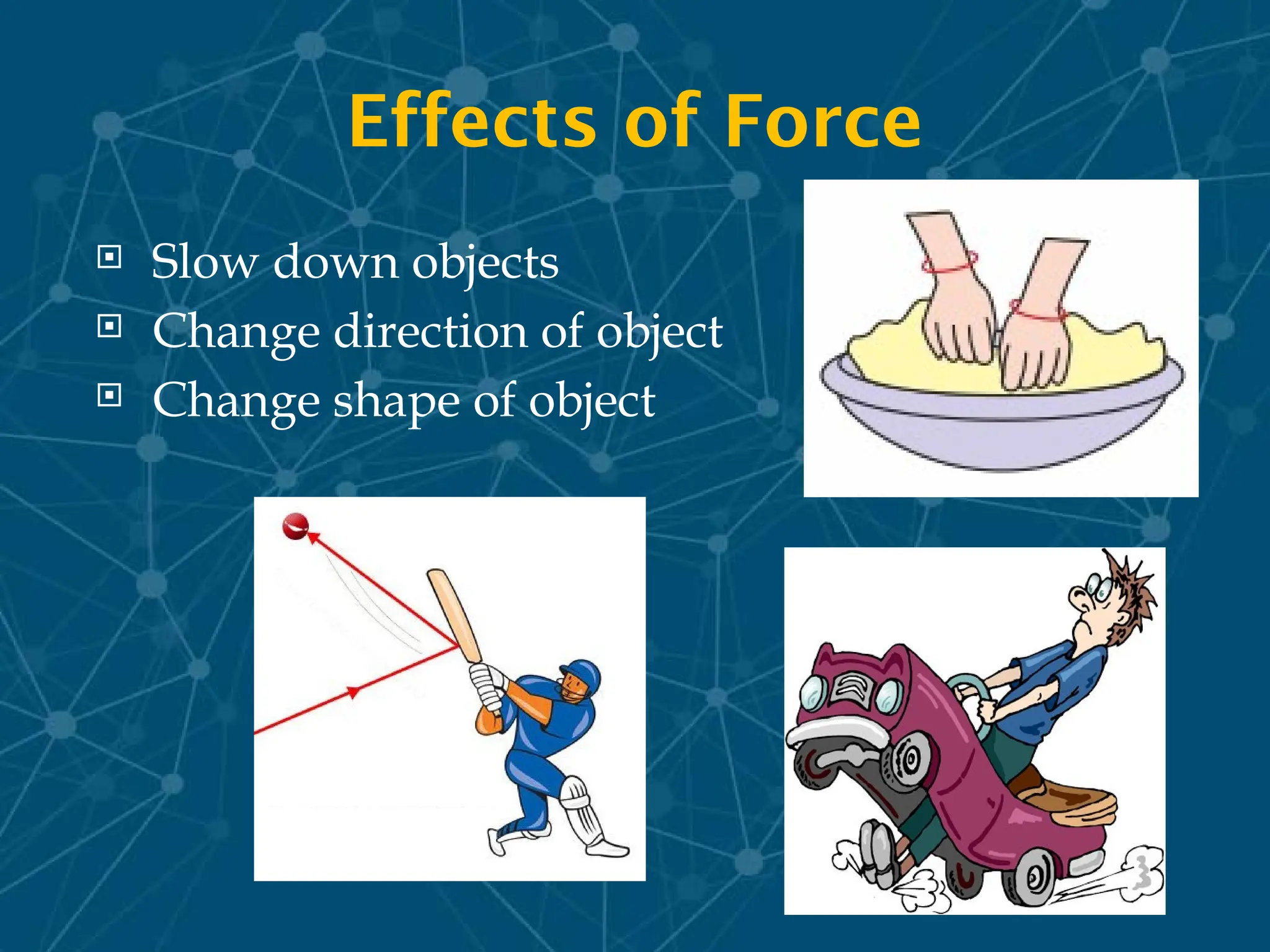
 Slow down objects
 Change direction of object
 Change shape of object
Definition of Force
 A force changes the state of a body ( state of
rest, state of motion, direction of motion) or
changes the size and shape of the body.
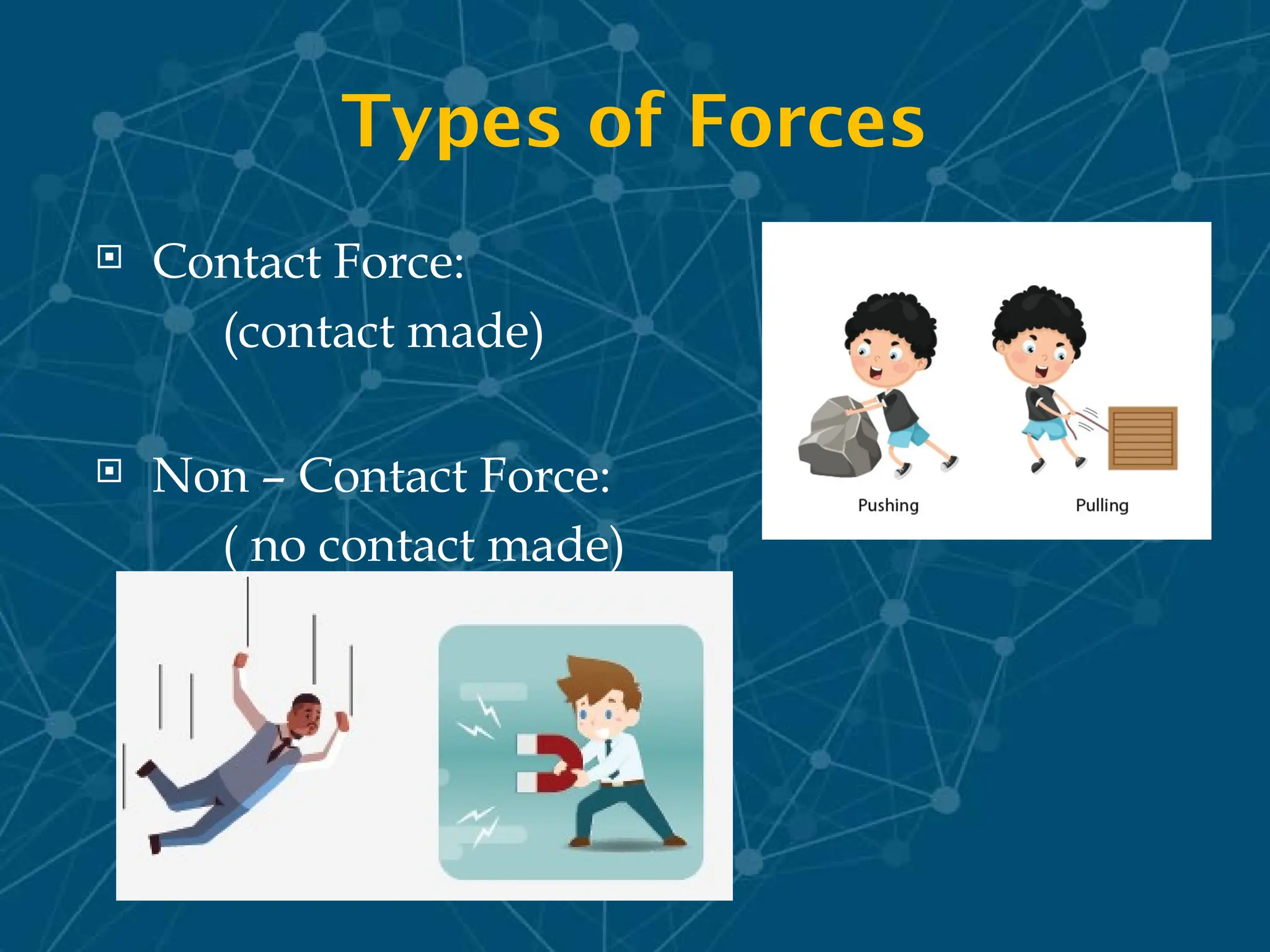
Types of Forces
 Contact Force:
(contact made)
 Non – Contact Force:
( no contact made)
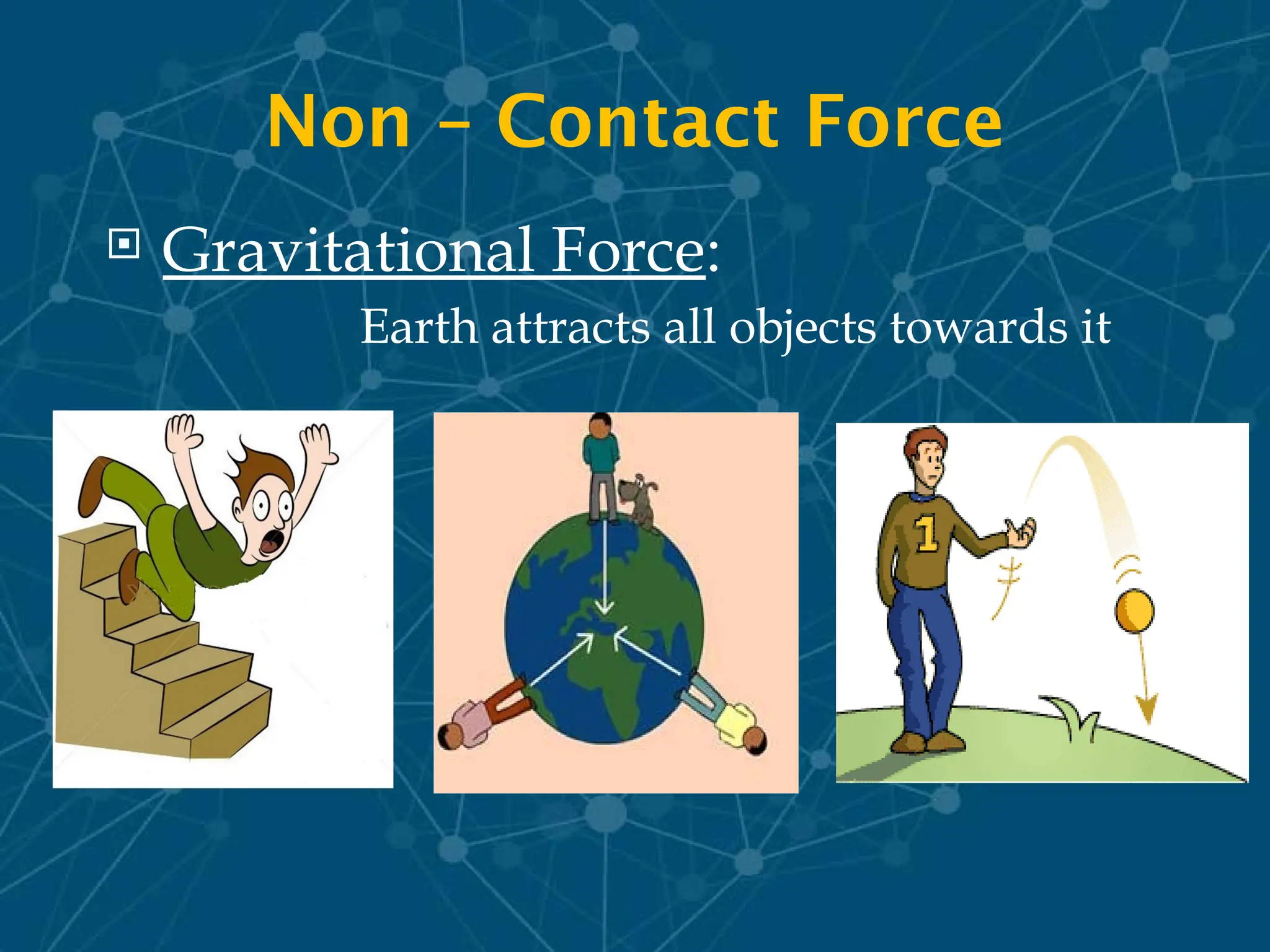
Non – Contact Force
 Gravitational Force:
Earth attracts all objects towards it
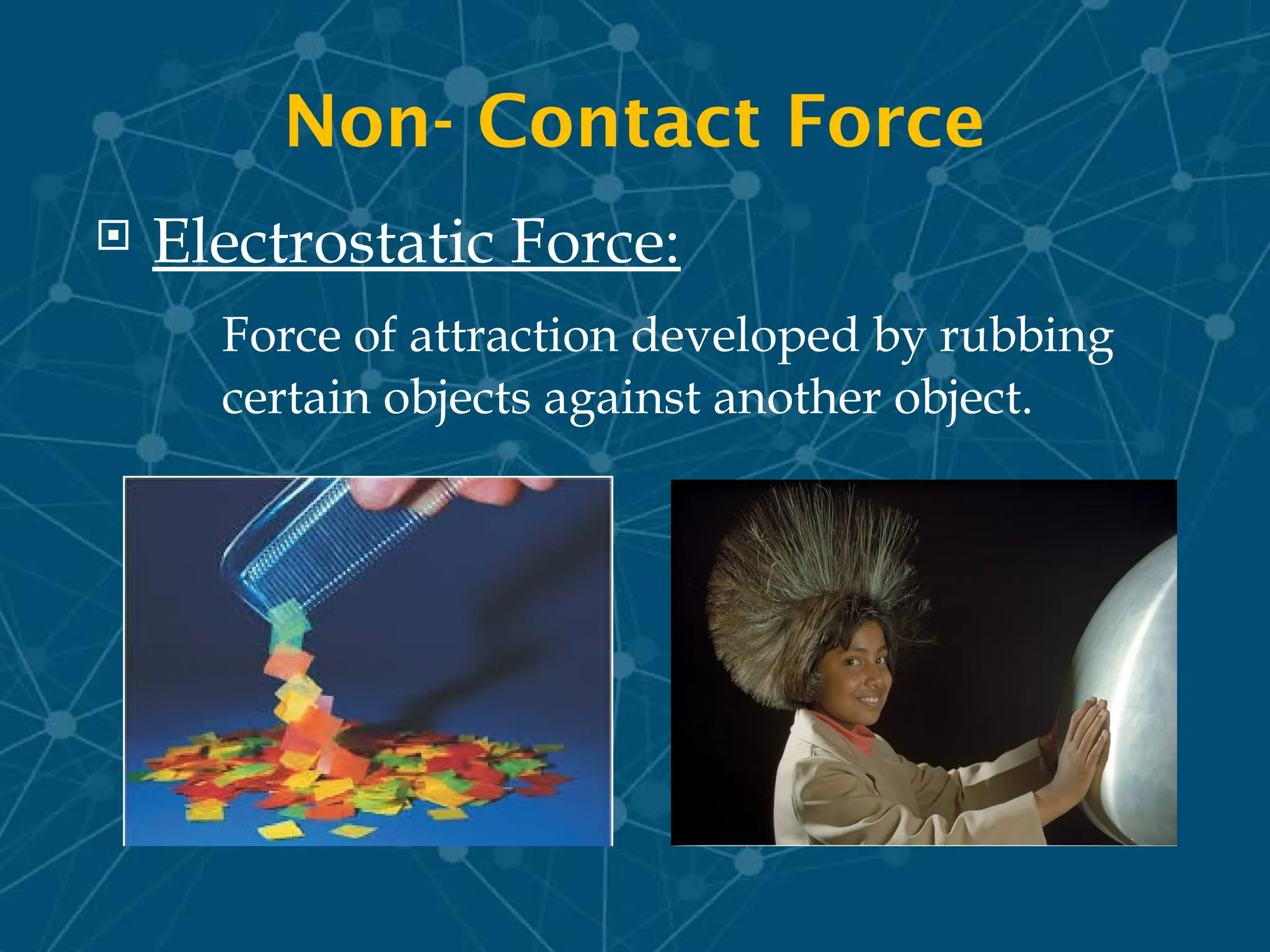
Non- Contact Force
 Electrostatic Force:
Force of attraction developed by rubbing
certain objects against another object.
Non – Contact Force
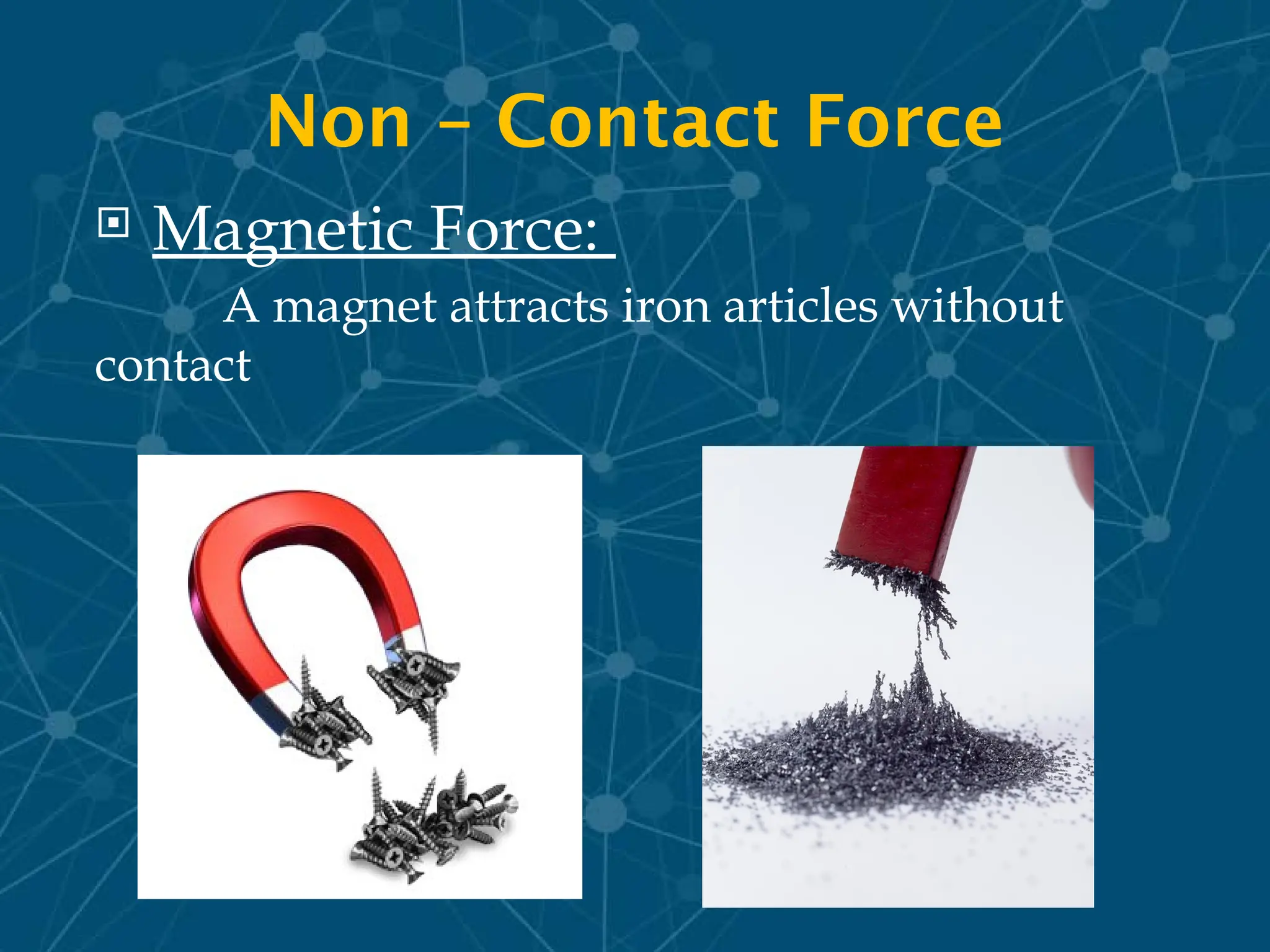
 Magnetic Force:
A magnet attracts iron articles without
contact
Contact Force
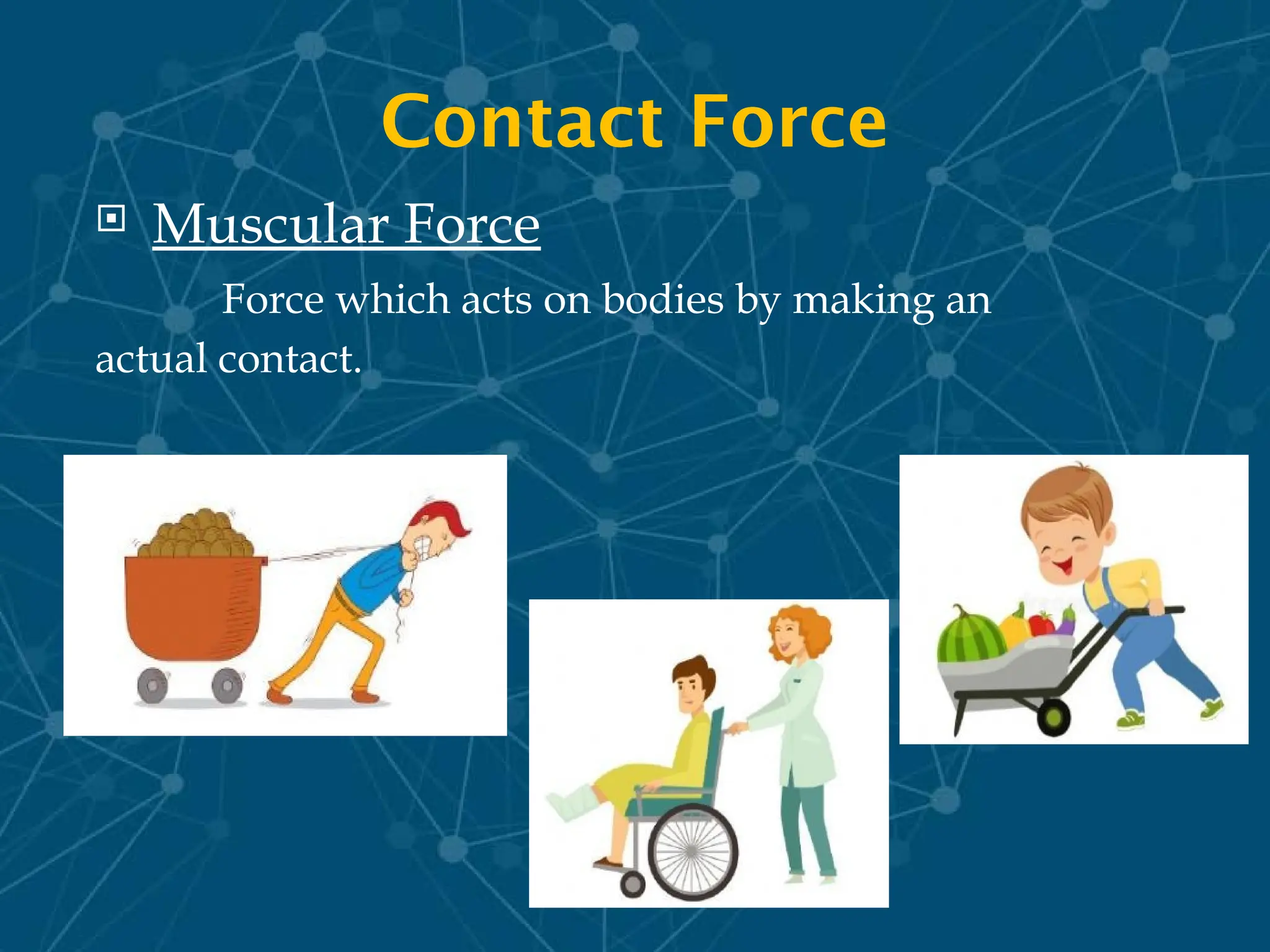
 Muscular Force
Force which acts on bodies by making an
actual contact.
Contact Force (Tension)
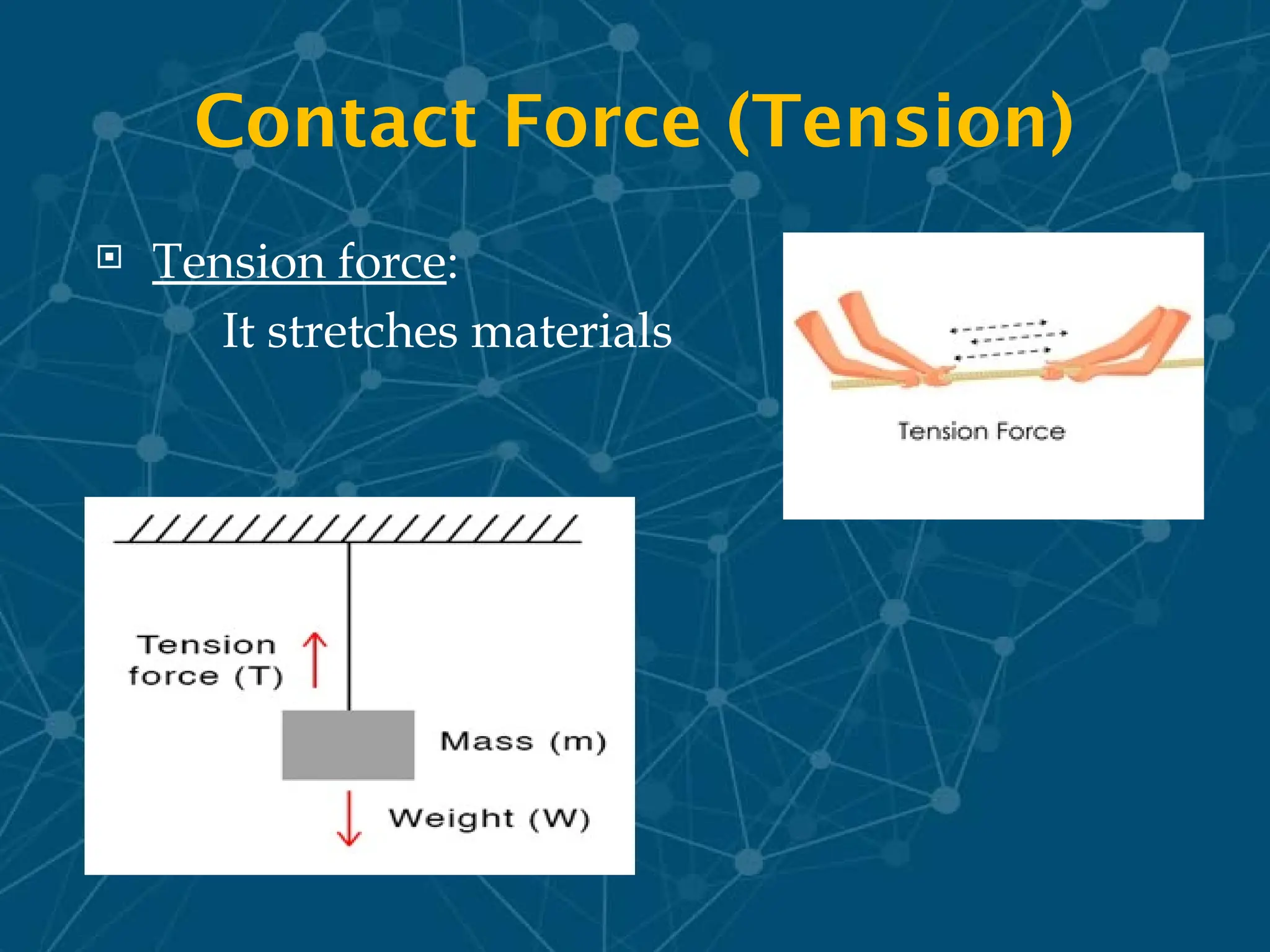
 Tension force:
It stretches materials
Contact Force (Force of Reaction)
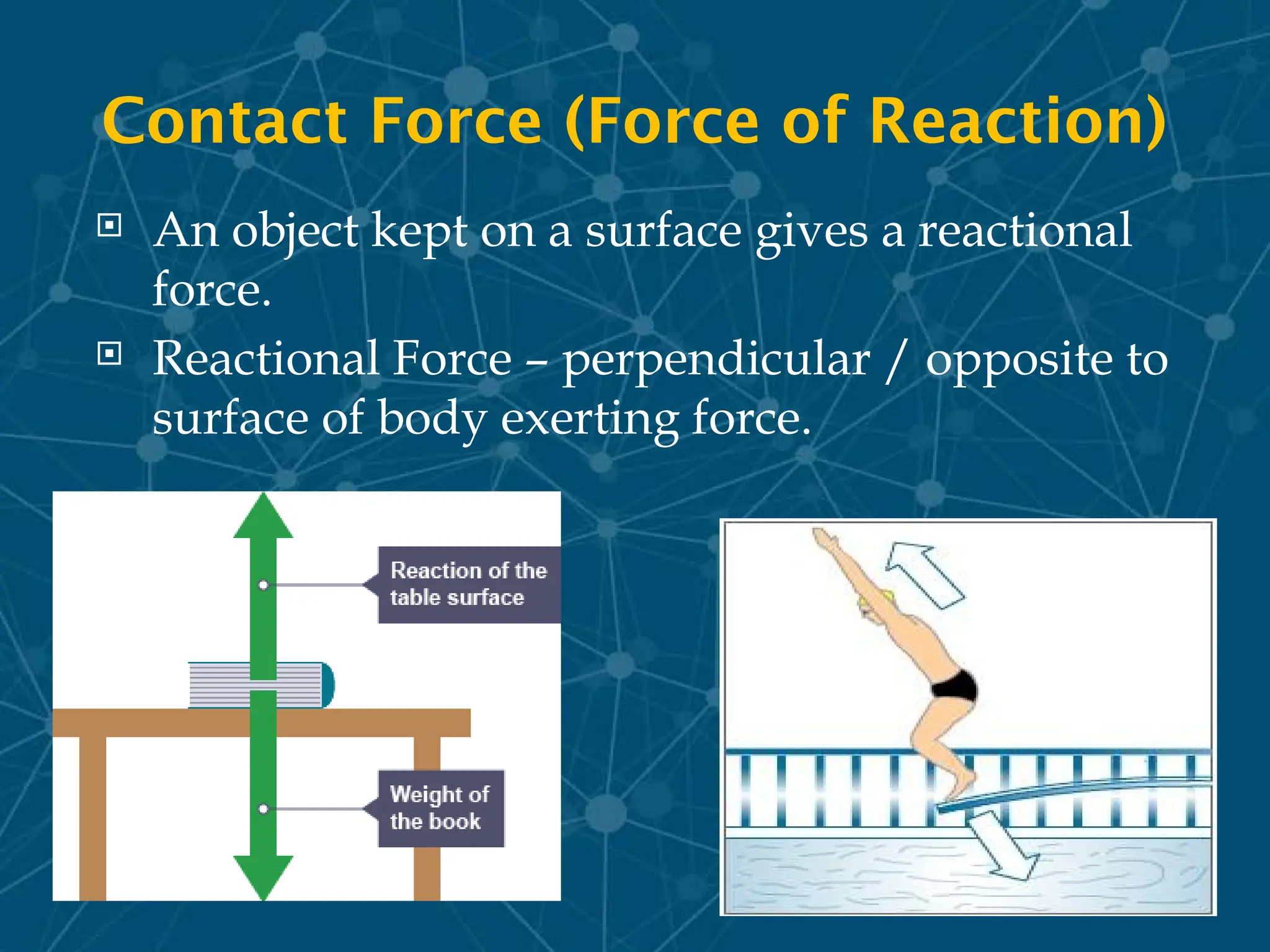
 An object kept on a surface gives a reactional
force.
 Reactional Force – perpendicular / opposite to
surface of body exerting force.
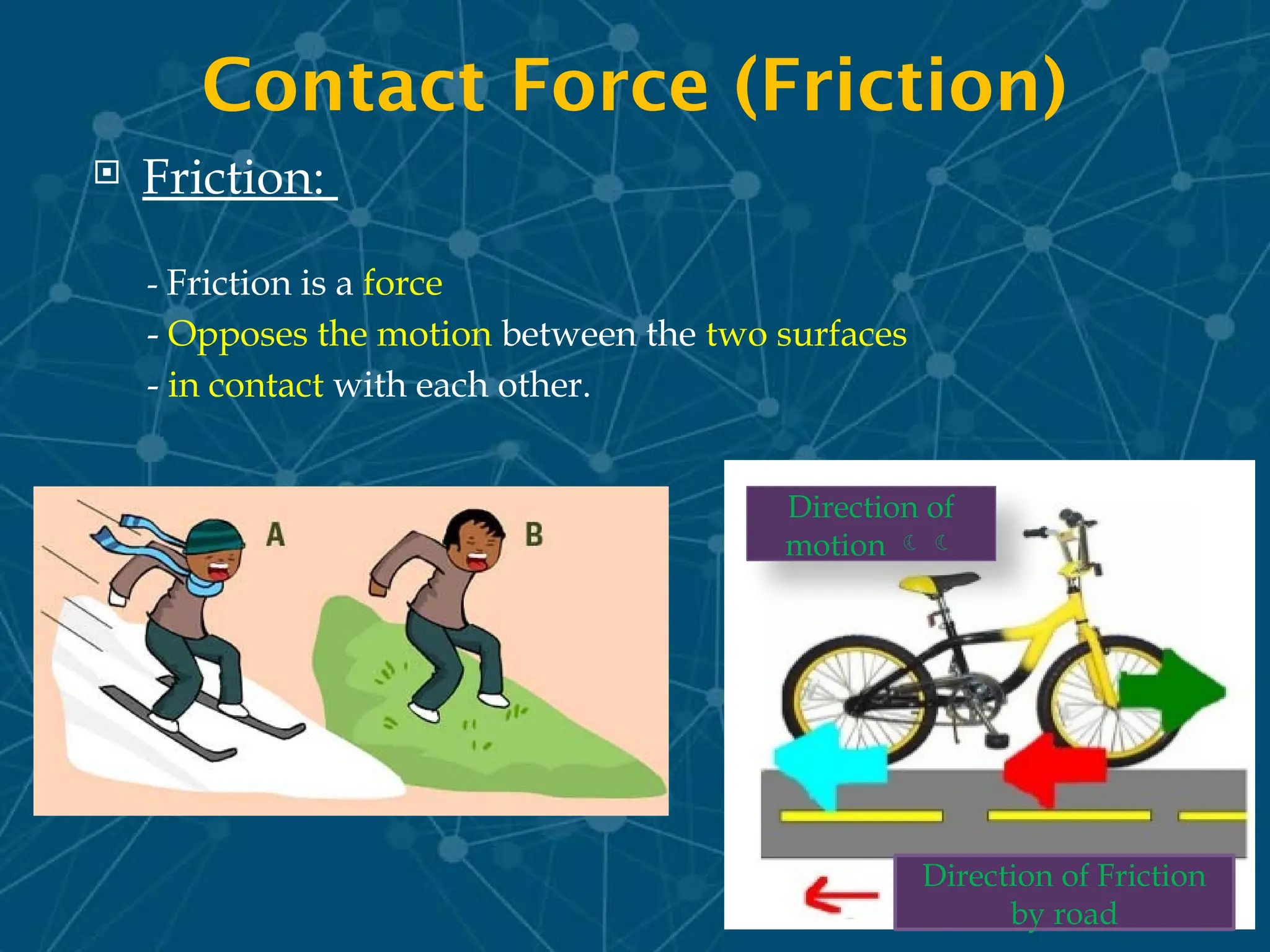
Contact Force (Friction)
 Friction:
- Friction is a force
- Opposes the motion between the two surfaces
- in contact with each other.
Direction of
motion 
Direction of Friction
by road
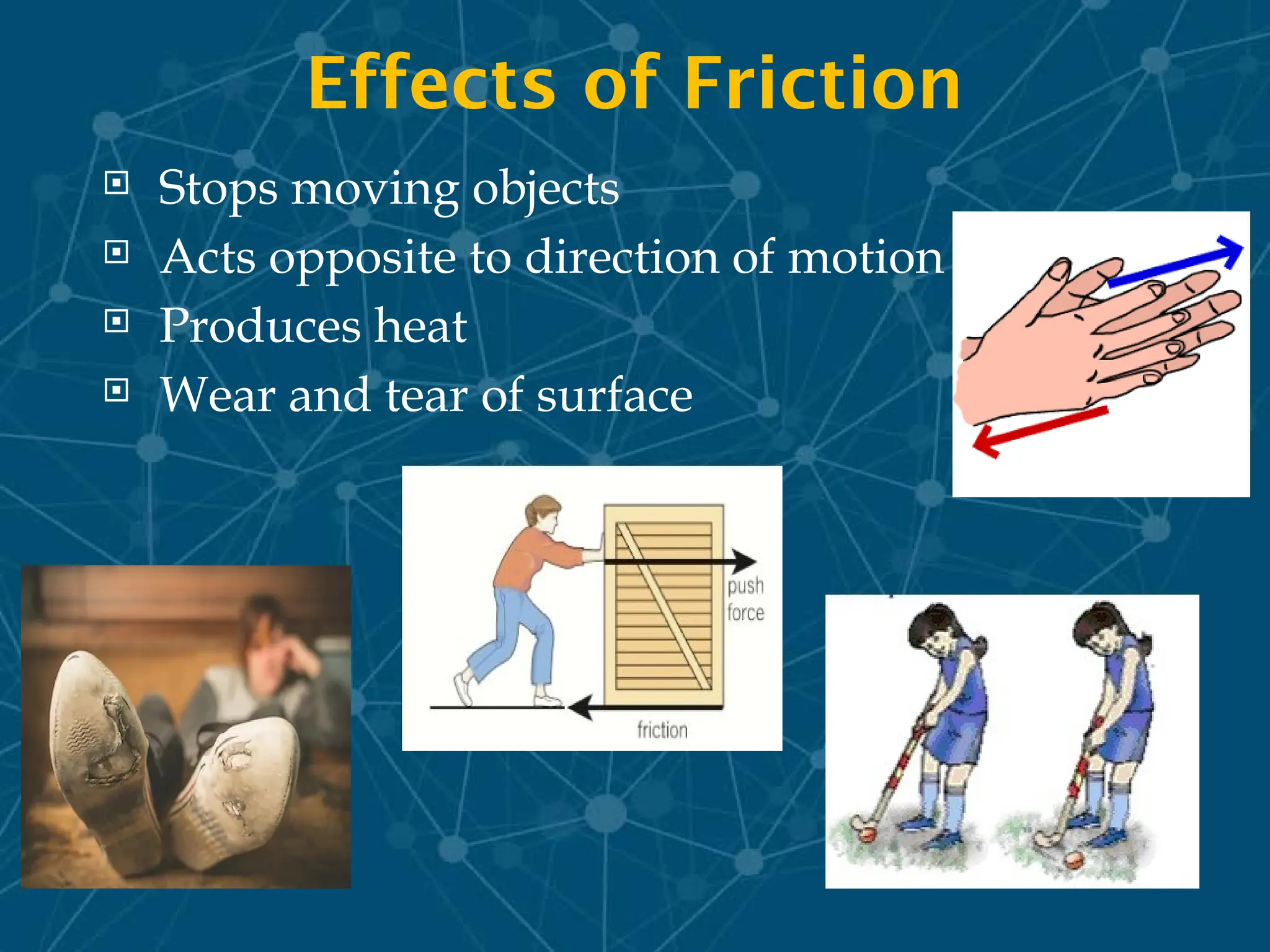
Effects of Friction
 Stops moving objects
 Acts opposite to direction of motion
 Produces heat
 Wear and tear of surface
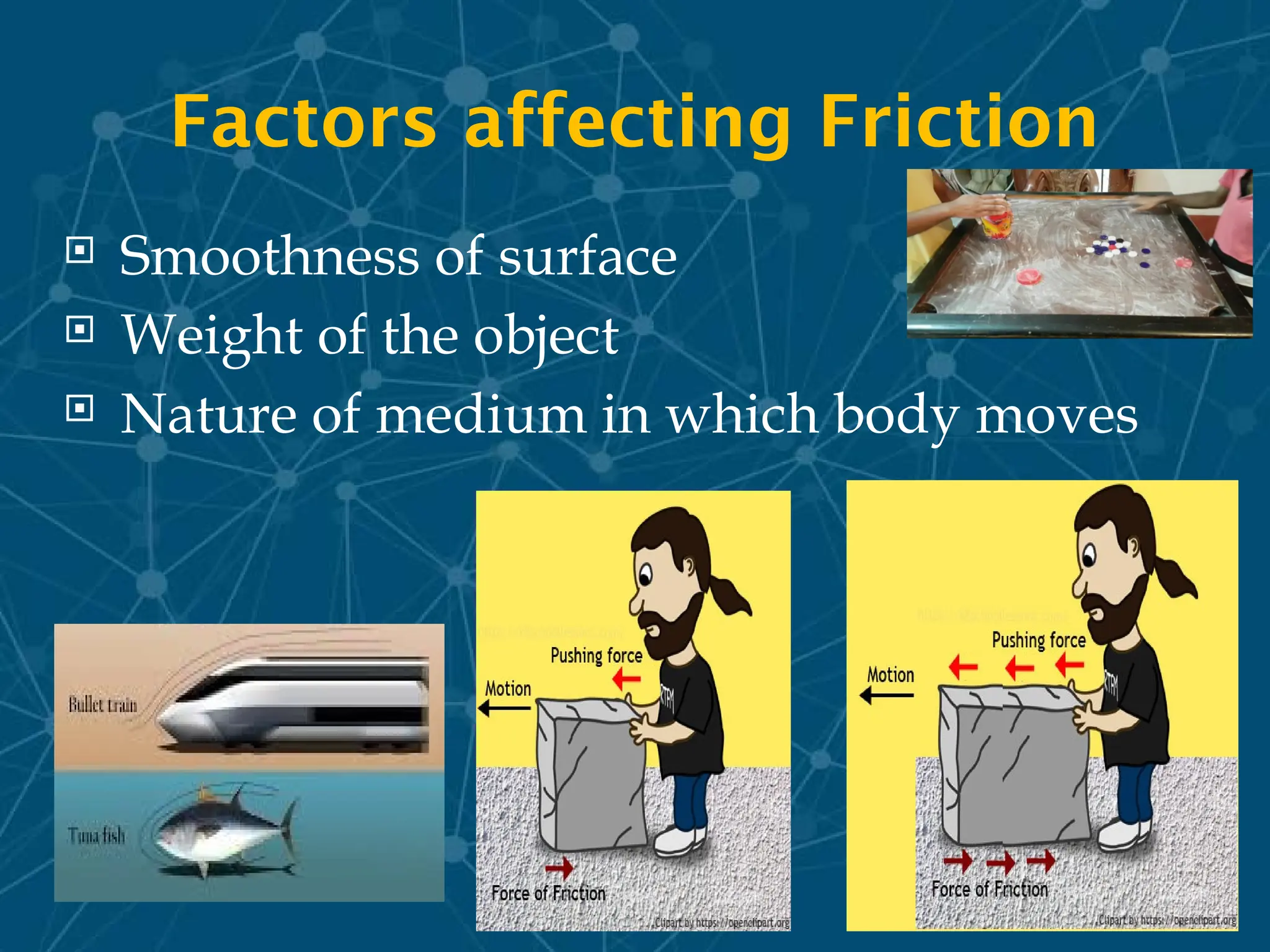
Factors affecting Friction
 Smoothness of surface
 Weight of the object
 Nature of medium in which body moves
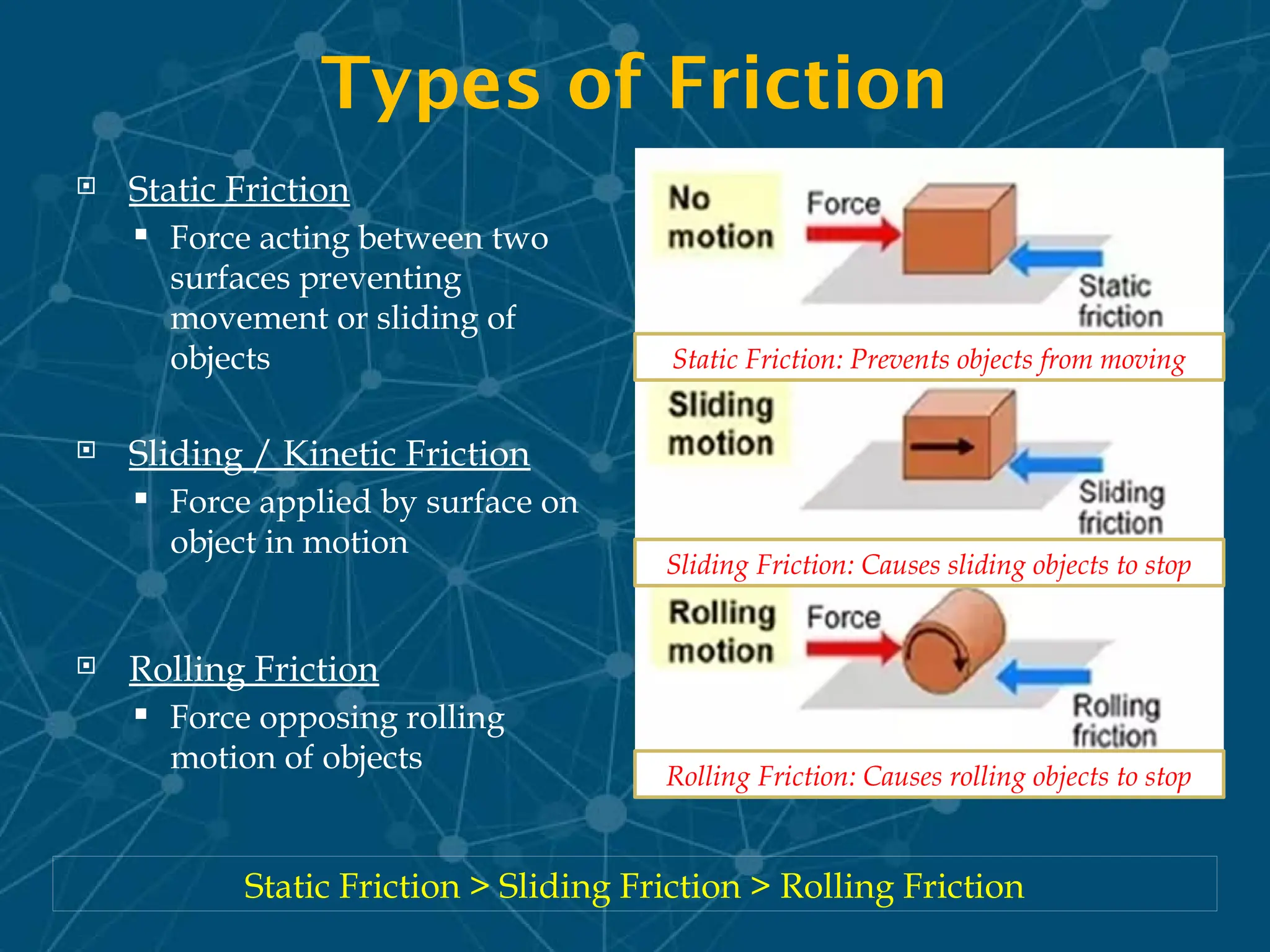
Types of Friction
 Static Friction
 Force acting between two
surfaces preventing
movement or sliding of
objects
 Sliding / Kinetic Friction
 Force applied by surface on
object in motion
 Rolling Friction
 Force opposing rolling
motion of objects
Static Friction > Sliding Friction > Rolling Friction
Static Friction: Prevents objects from moving
Sliding Friction: Causes sliding objects to stop
Rolling Friction: Causes rolling objects to stop
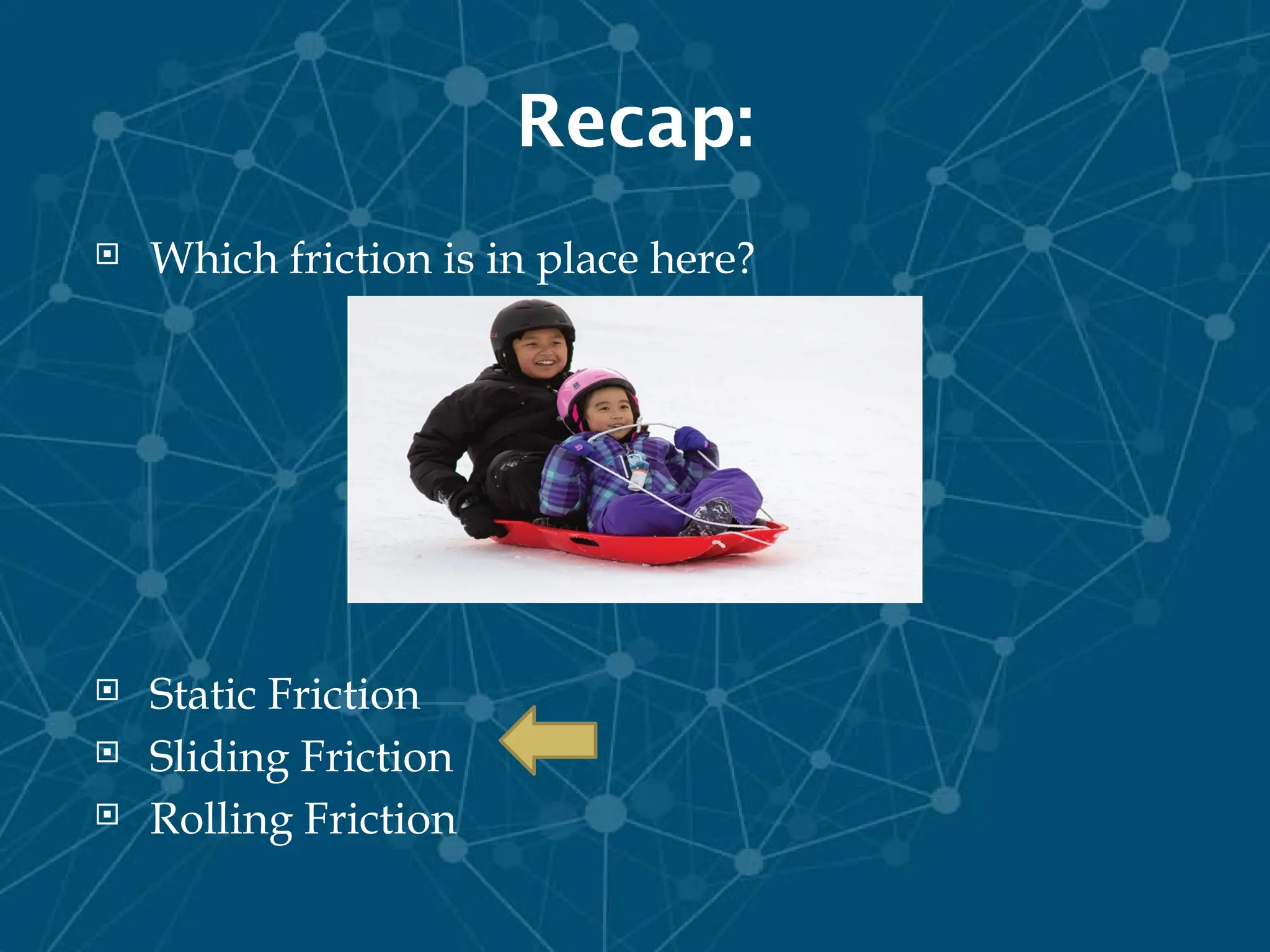
Recap:
 Which friction is in place here?
 Static Friction
 Sliding Friction
 Rolling Friction
What is the correct order ?
 Static Friction > Sliding Friction > Rolling Friction
 Rolling Friction > Sliding Friction > Static Friction
 Sliding Friction > Static Friction > Rolling Friction
 Static Friction > Rolling Friction > Sliding Friction
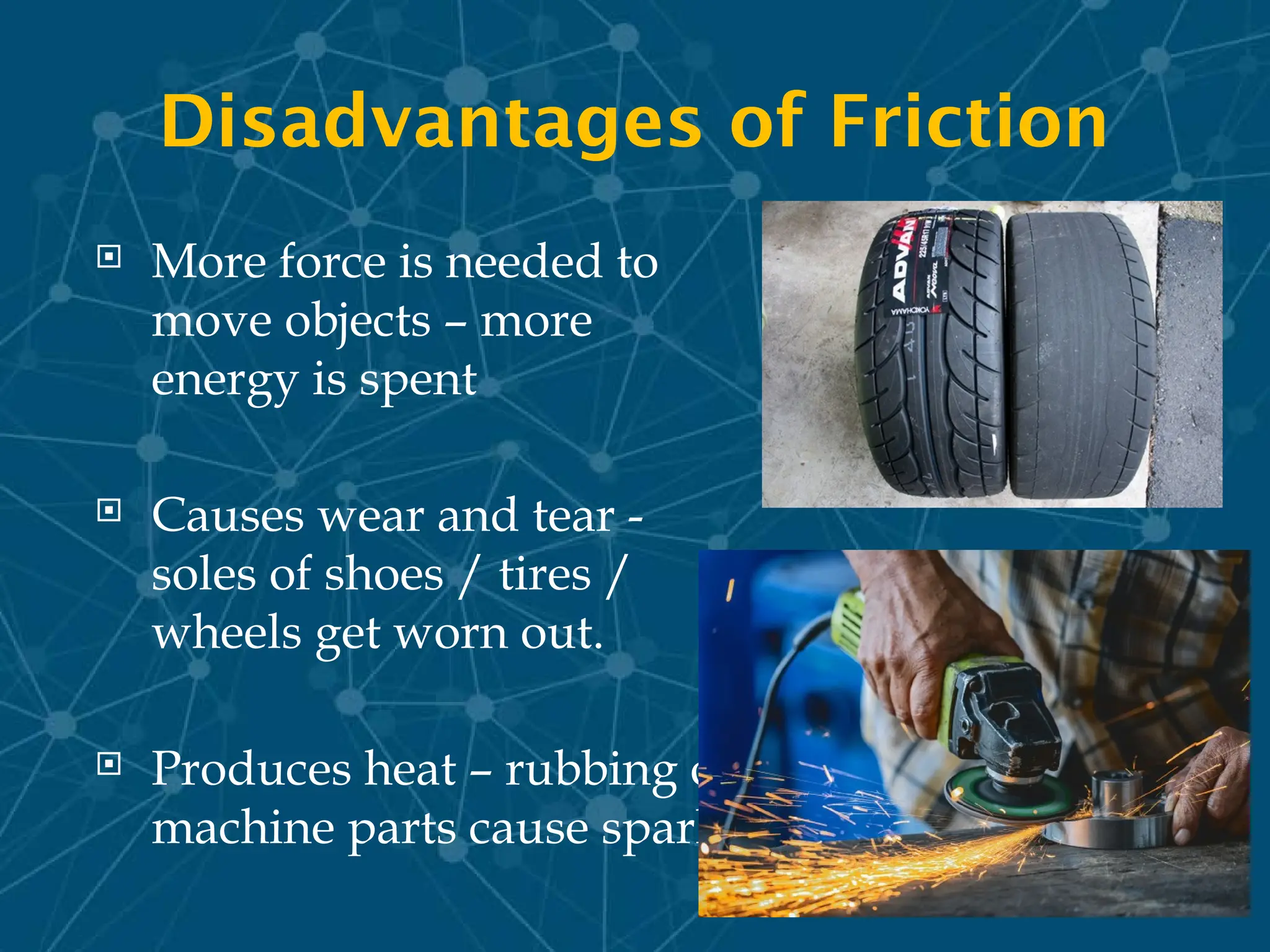
Disadvantages of Friction
 More force is needed to
move objects – more
energy is spent
 Causes wear and tear -
soles of shoes / tires /
wheels get worn out.
 Produces heat – rubbing of
machine parts cause sparks
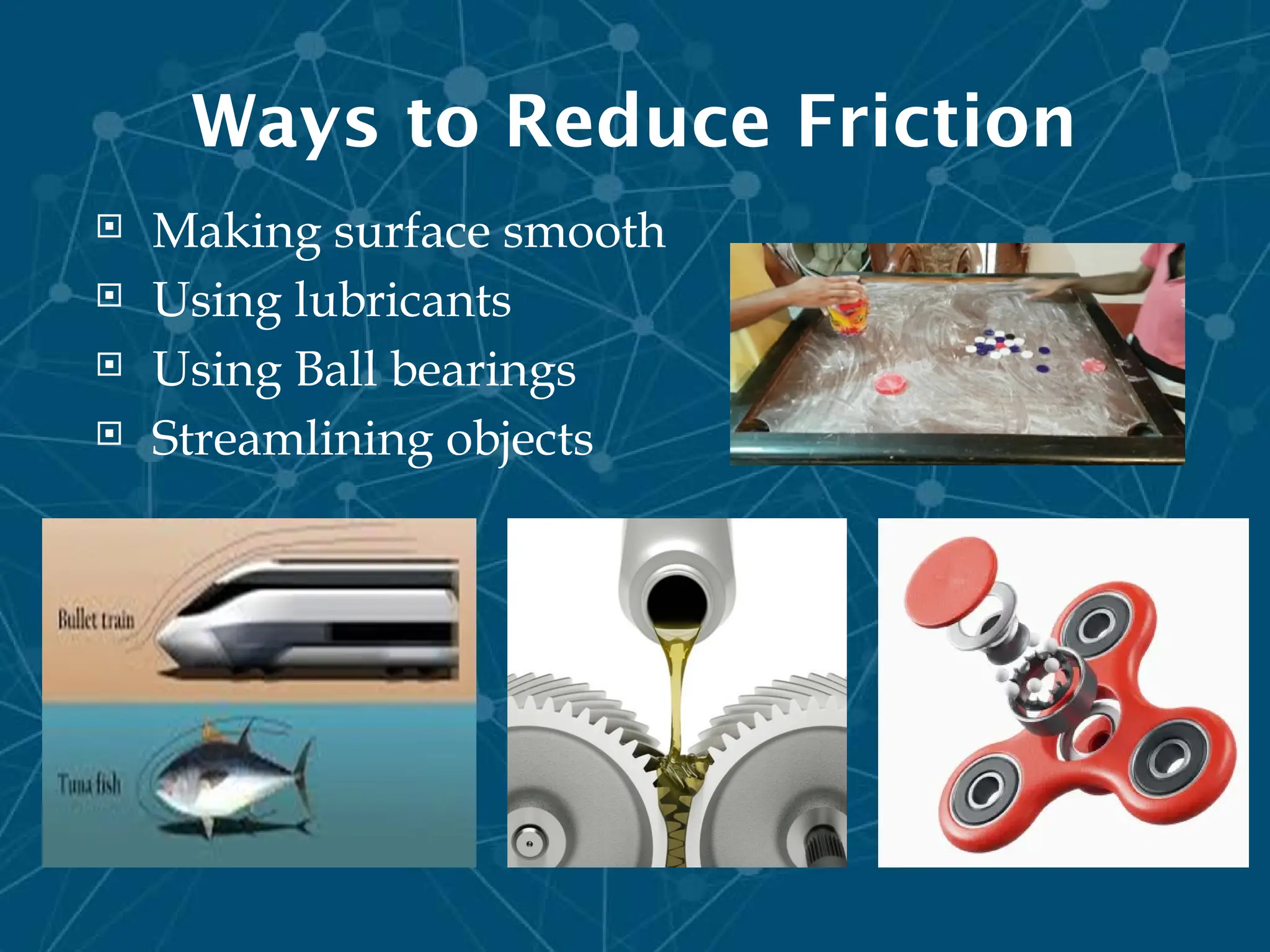
Ways to Reduce Friction
 Making surface smooth
 Using lubricants
 Using Ball bearings
 Streamlining objects
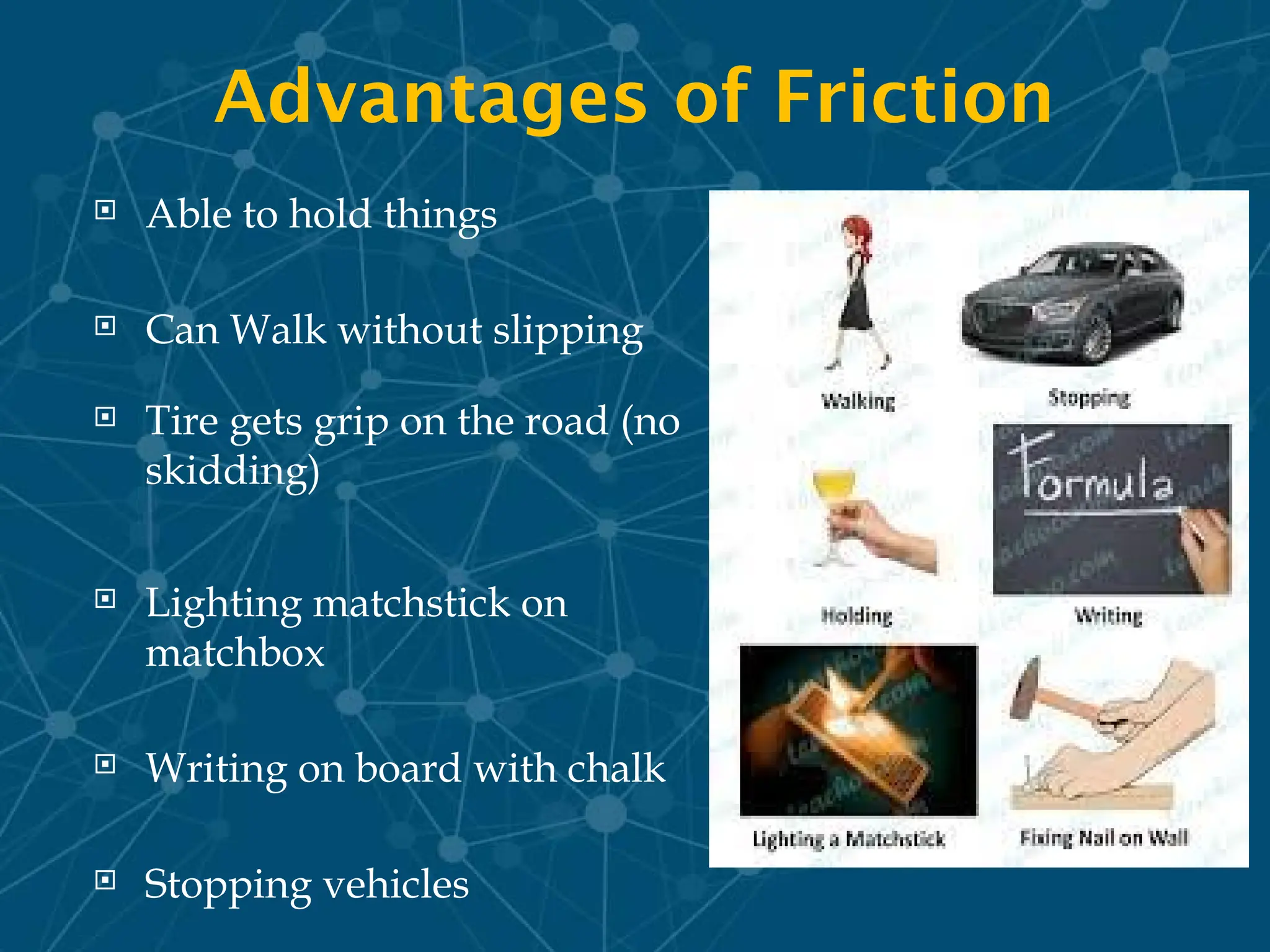
Advantages of Friction
 Able to hold things
 Can Walk without slipping
 Tire gets grip on the road (no
skidding)
 Lighting matchstick on
matchbox
 Writing on board with chalk
 Stopping vehicles
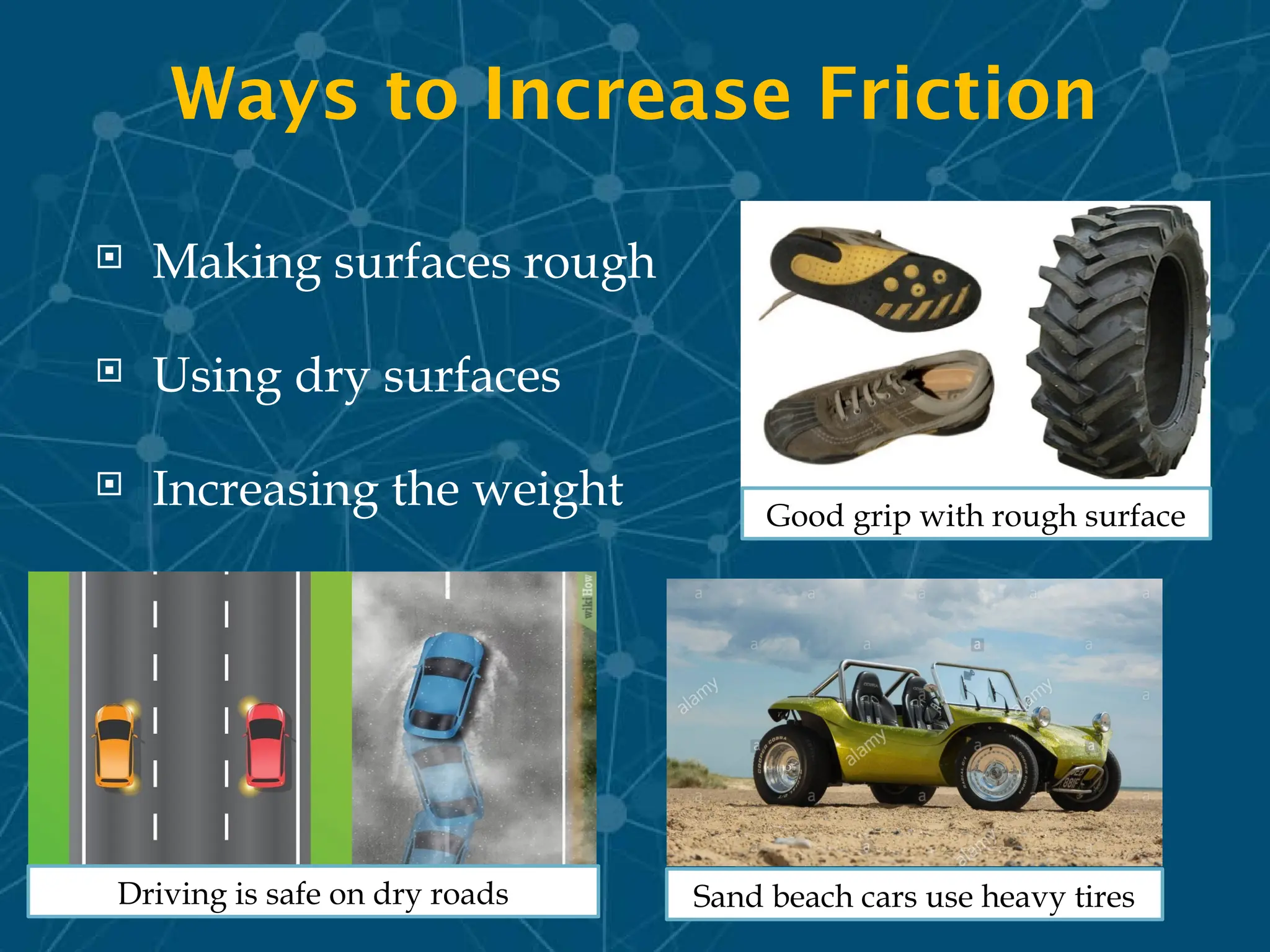
 Making surfaces rough
 Using dry surfaces
 Increasing the weight
Ways to Increase Friction
Good grip with rough surface
Driving is safe on dry roads Sand beach cars use heavy tires

Force & its Types, Friction- Types & use

  • 1.
  • 2.
    Force Examples of Force. Whatare the effects of Force?
  • 3.
    Effects of Force Move objects  Stop objects  Speed up objects
  • 4.
    Effects of Force Slow down objects  Change direction of object  Change shape of object
  • 5.
    Definition of Force A force changes the state of a body ( state of rest, state of motion, direction of motion) or changes the size and shape of the body.
  • 6.
    Types of Forces Contact Force: (contact made)  Non – Contact Force: ( no contact made)
  • 7.
    Non – ContactForce  Gravitational Force: Earth attracts all objects towards it
  • 8.
    Non- Contact Force Electrostatic Force: Force of attraction developed by rubbing certain objects against another object.
  • 9.
    Non – ContactForce  Magnetic Force: A magnet attracts iron articles without contact
  • 10.
    Contact Force  MuscularForce Force which acts on bodies by making an actual contact.
  • 11.
    Contact Force (Tension) Tension force: It stretches materials
  • 12.
    Contact Force (Forceof Reaction)  An object kept on a surface gives a reactional force.  Reactional Force – perpendicular / opposite to surface of body exerting force.
  • 13.
    Contact Force (Friction) Friction: - Friction is a force - Opposes the motion between the two surfaces - in contact with each other. Direction of motion  Direction of Friction by road
  • 14.
    Effects of Friction Stops moving objects  Acts opposite to direction of motion  Produces heat  Wear and tear of surface
  • 15.
    Factors affecting Friction Smoothness of surface  Weight of the object  Nature of medium in which body moves
  • 16.
    Types of Friction Static Friction  Force acting between two surfaces preventing movement or sliding of objects  Sliding / Kinetic Friction  Force applied by surface on object in motion  Rolling Friction  Force opposing rolling motion of objects Static Friction > Sliding Friction > Rolling Friction Static Friction: Prevents objects from moving Sliding Friction: Causes sliding objects to stop Rolling Friction: Causes rolling objects to stop
  • 17.
    Recap:  Which frictionis in place here?  Static Friction  Sliding Friction  Rolling Friction
  • 18.
    What is thecorrect order ?  Static Friction > Sliding Friction > Rolling Friction  Rolling Friction > Sliding Friction > Static Friction  Sliding Friction > Static Friction > Rolling Friction  Static Friction > Rolling Friction > Sliding Friction
  • 19.
    Disadvantages of Friction More force is needed to move objects – more energy is spent  Causes wear and tear - soles of shoes / tires / wheels get worn out.  Produces heat – rubbing of machine parts cause sparks
  • 20.
    Ways to ReduceFriction  Making surface smooth  Using lubricants  Using Ball bearings  Streamlining objects
  • 21.
    Advantages of Friction Able to hold things  Can Walk without slipping  Tire gets grip on the road (no skidding)  Lighting matchstick on matchbox  Writing on board with chalk  Stopping vehicles
  • 22.
     Making surfacesrough  Using dry surfaces  Increasing the weight Ways to Increase Friction Good grip with rough surface Driving is safe on dry roads Sand beach cars use heavy tires

Editor's Notes

  • #8 https://www.youtube.com/watch?v=wkEqgp-ADkw
  • #13 https://www.youtube.com/watch?v=wwO2KQ7uZxY
  • #14 https://www.youtube.com/watch?v=VrOev-eUVfs#action=share
  • #15 Smooth vs rough surface: https://www.youtube.com/watch?v=ybpFEB6Mt88 Medium of Friction: https://www.youtube.com/watch?v=DwqutxlKmrA Activity: https://www.youtube.com/watch?v=_oJ_Kg30ULU
  • #16 Experiment on Types of Friction: https://youtu.be/RMf0QYq1MNg