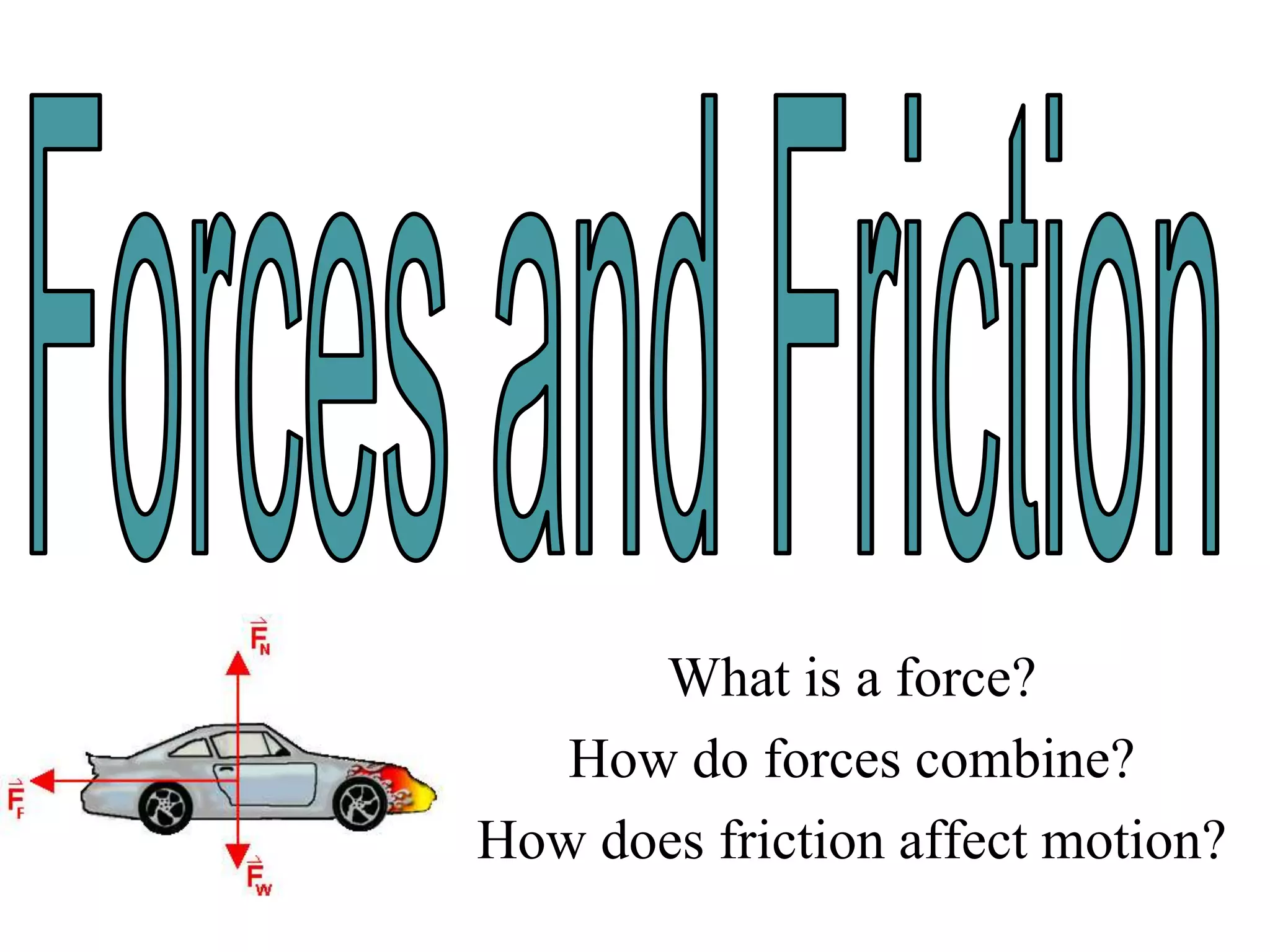
What is a force?
How do forces combine?
How does friction affect motion?
What is a Force?
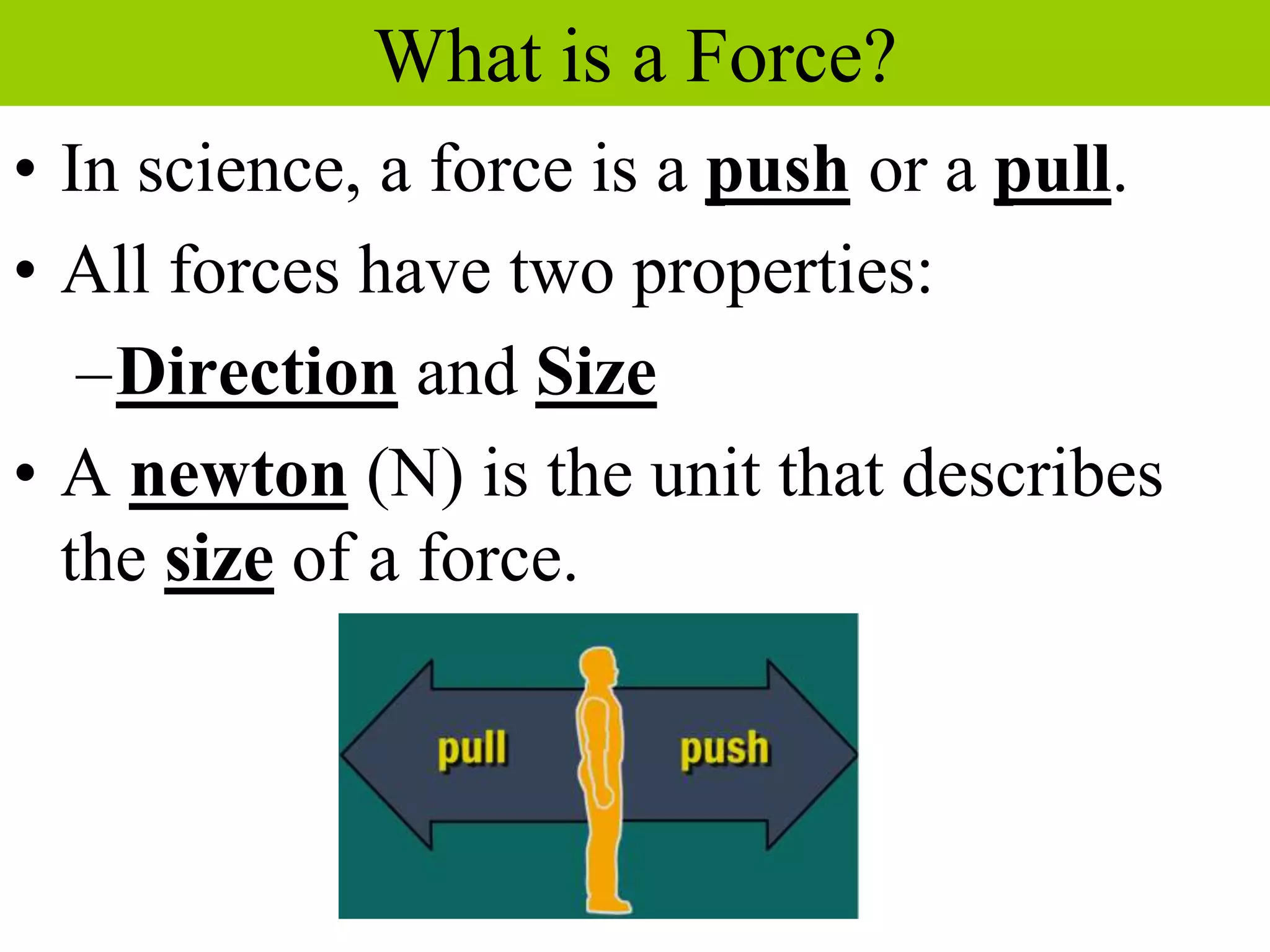
• In science, a force is a push or a pull.
• All forces have two properties:
–Direction and Size
• A newton (N) is the unit that describes
the size of a force.
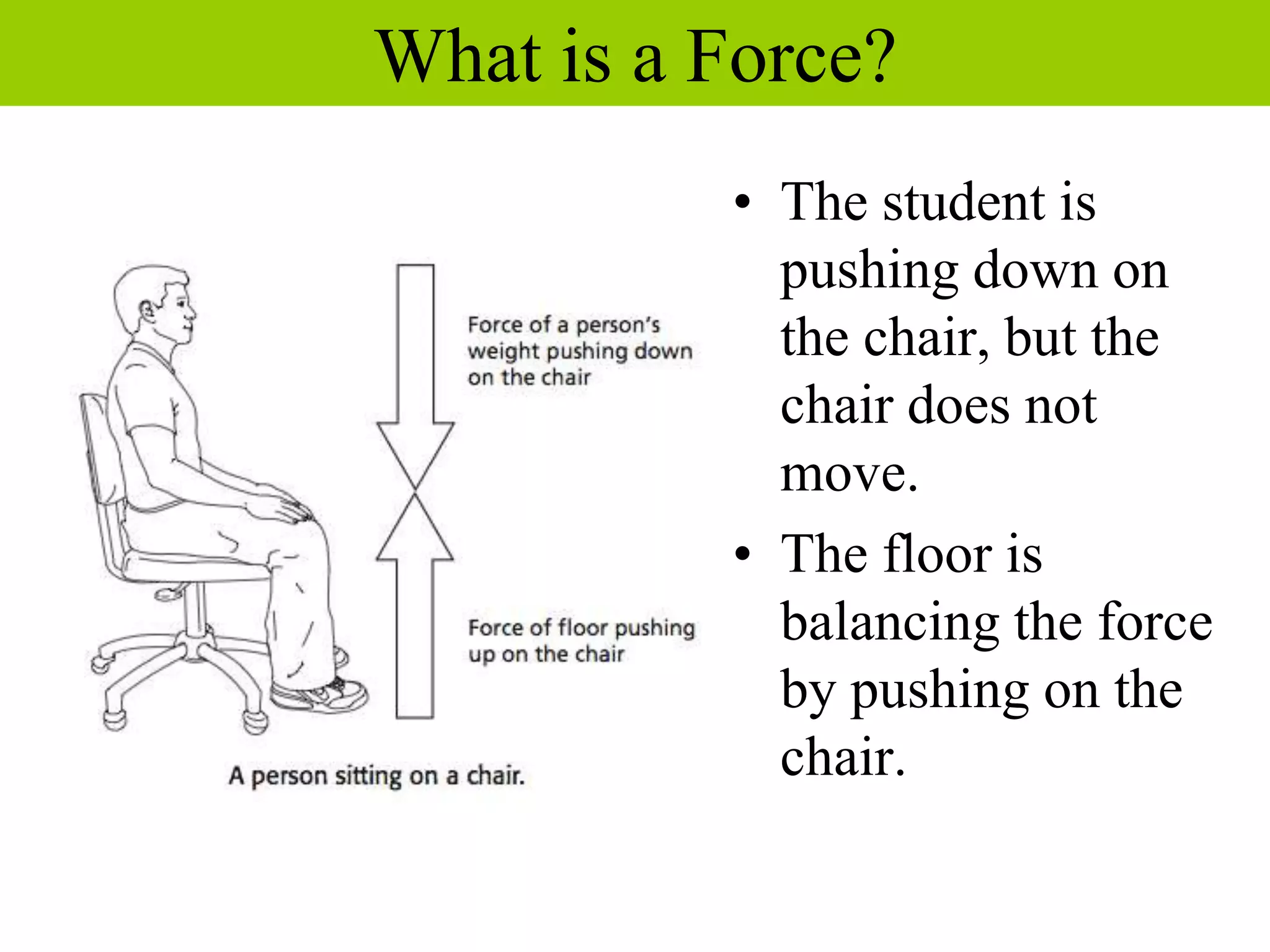
• The student is
pushing down on
the chair, but the
chair does not
move.
• The floor is
balancing the force
by pushing on the
chair.
What is a Force?
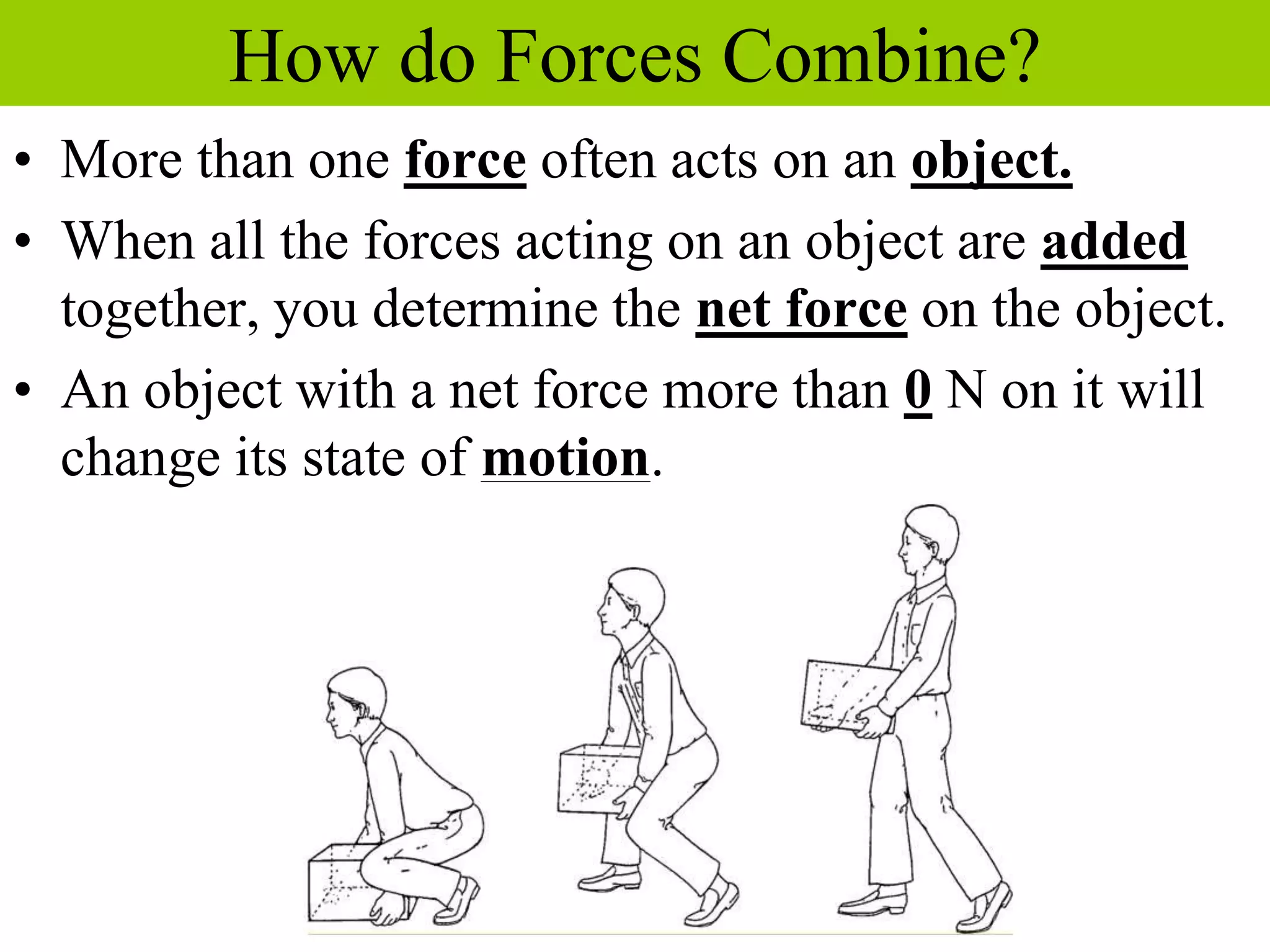
• More than one force often acts on an object.
• When all the forces acting on an object are added
together, you determine the net force on the object.
• An object with a net force more than 0 N on it will
change its state of motion.
How do Forces Combine?
Forces in the Same Direction
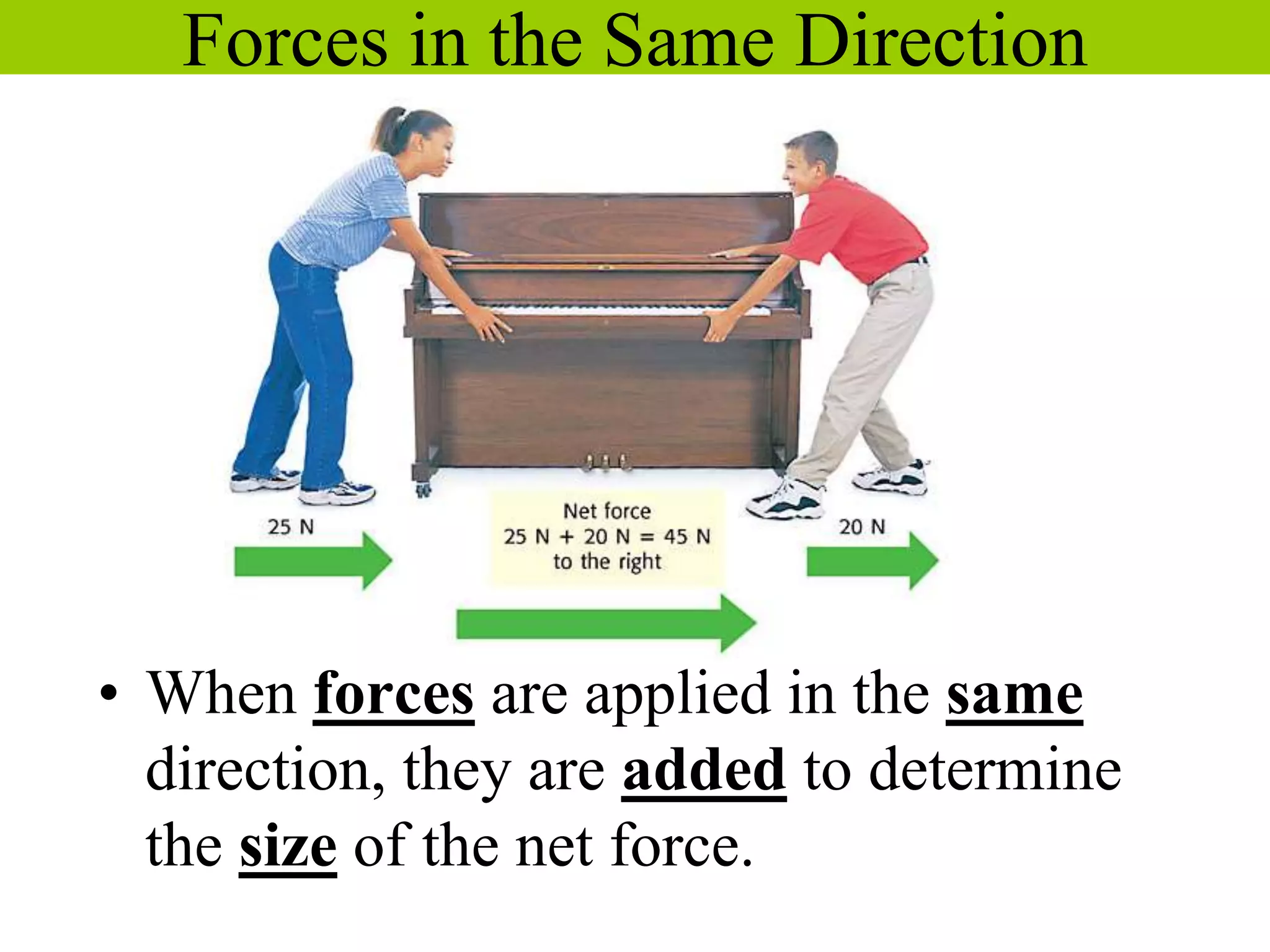
• When forces are applied in the same
direction, they are added to determine
the size of the net force.
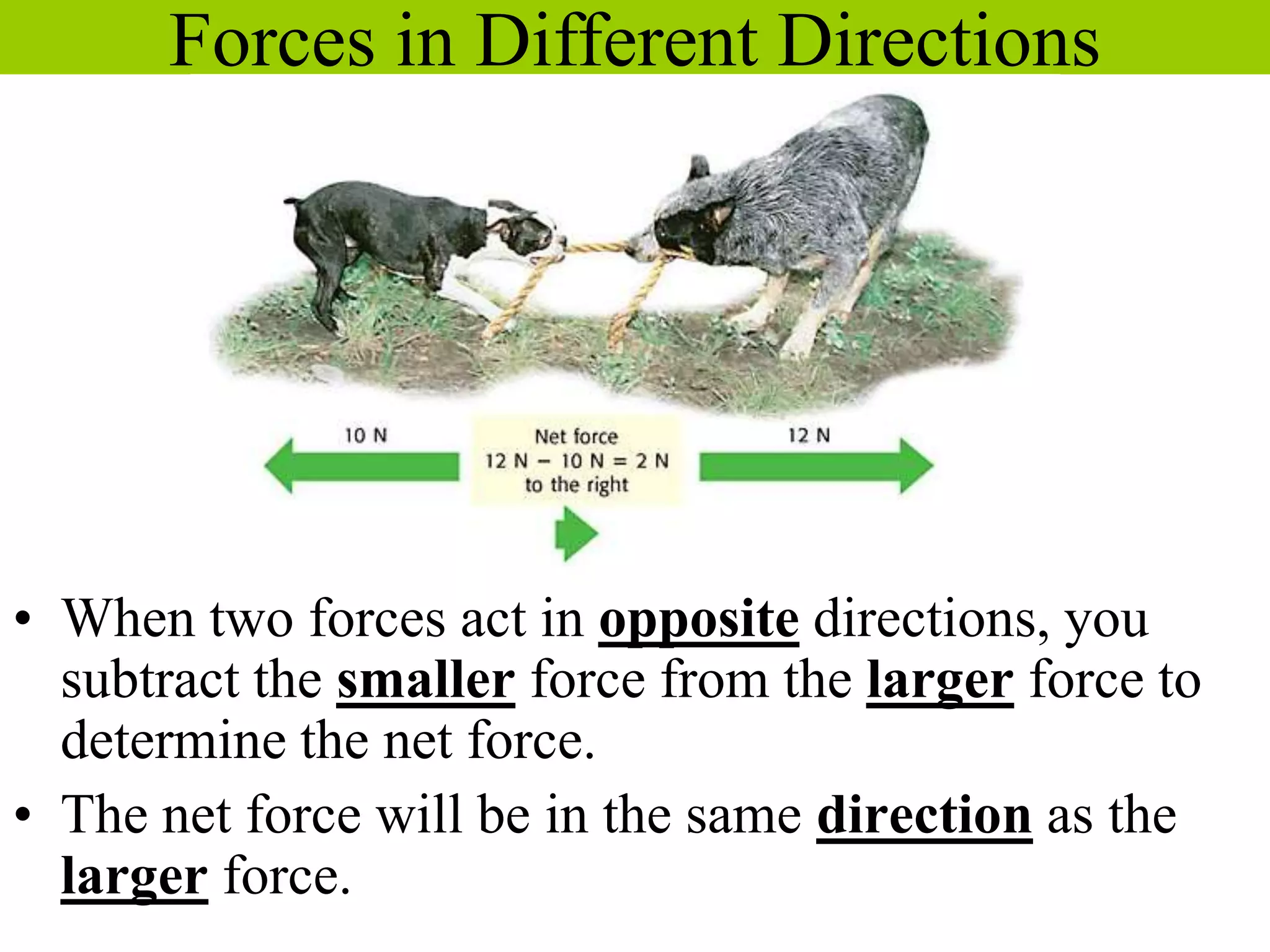
• When two forces act in opposite directions, you
subtract the smaller force from the larger force to
determine the net force.
• The net force will be in the same direction as the
larger force.
Forces in Different Directions
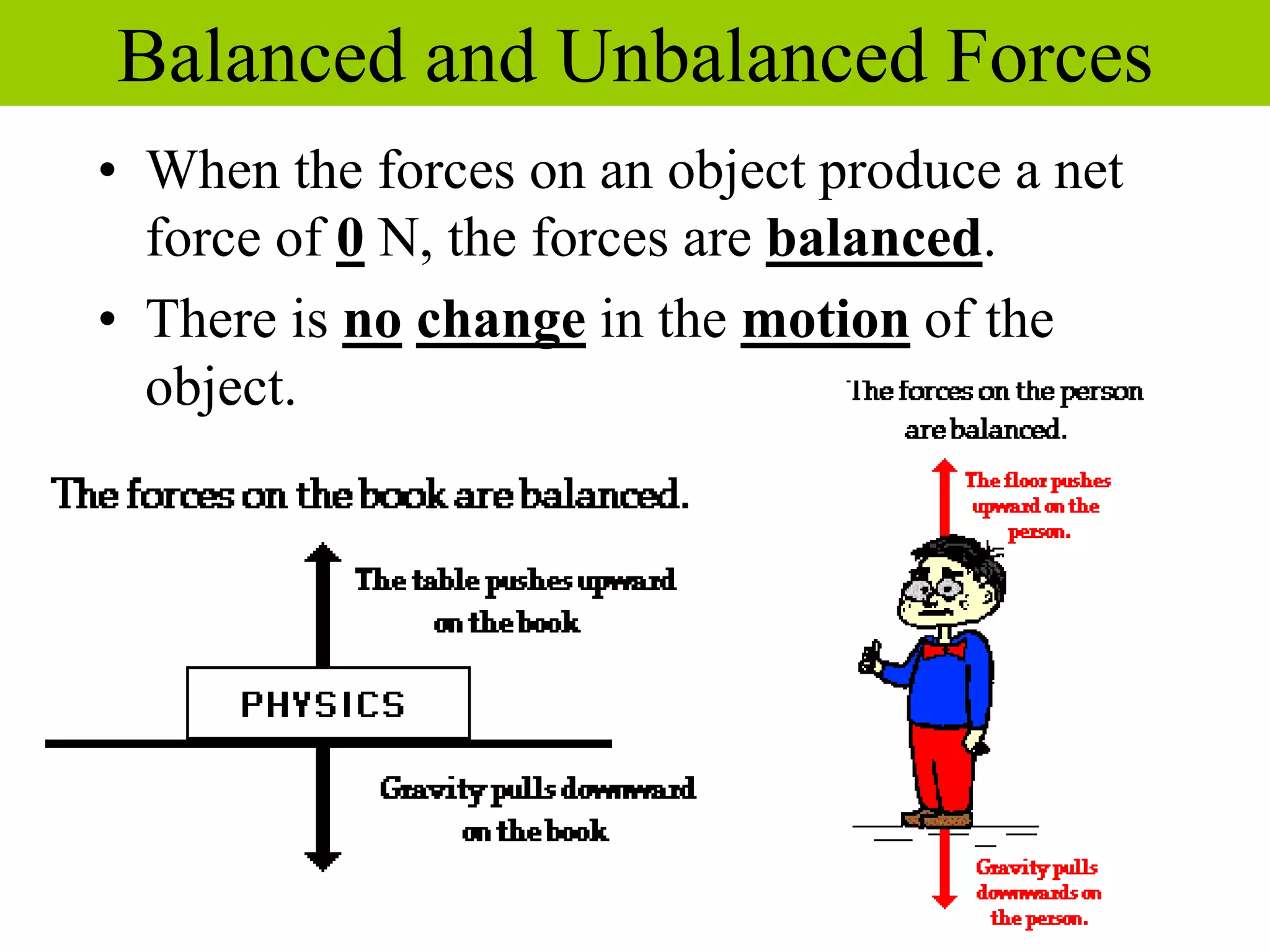
• When the forces on an object produce a net
force of 0 N, the forces are balanced.
• There is no change in the motion of the
object.
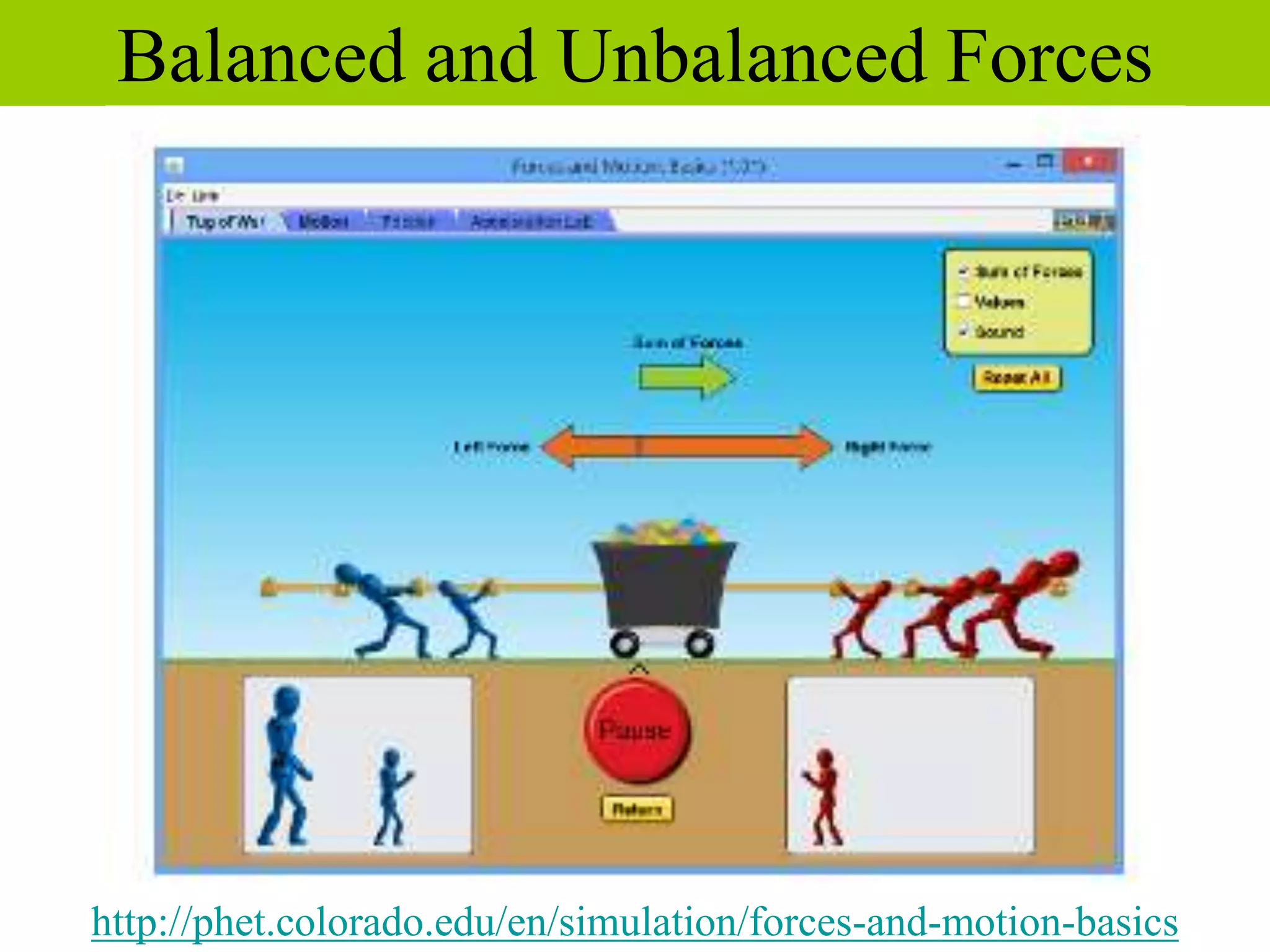
Balanced and Unbalanced Forces
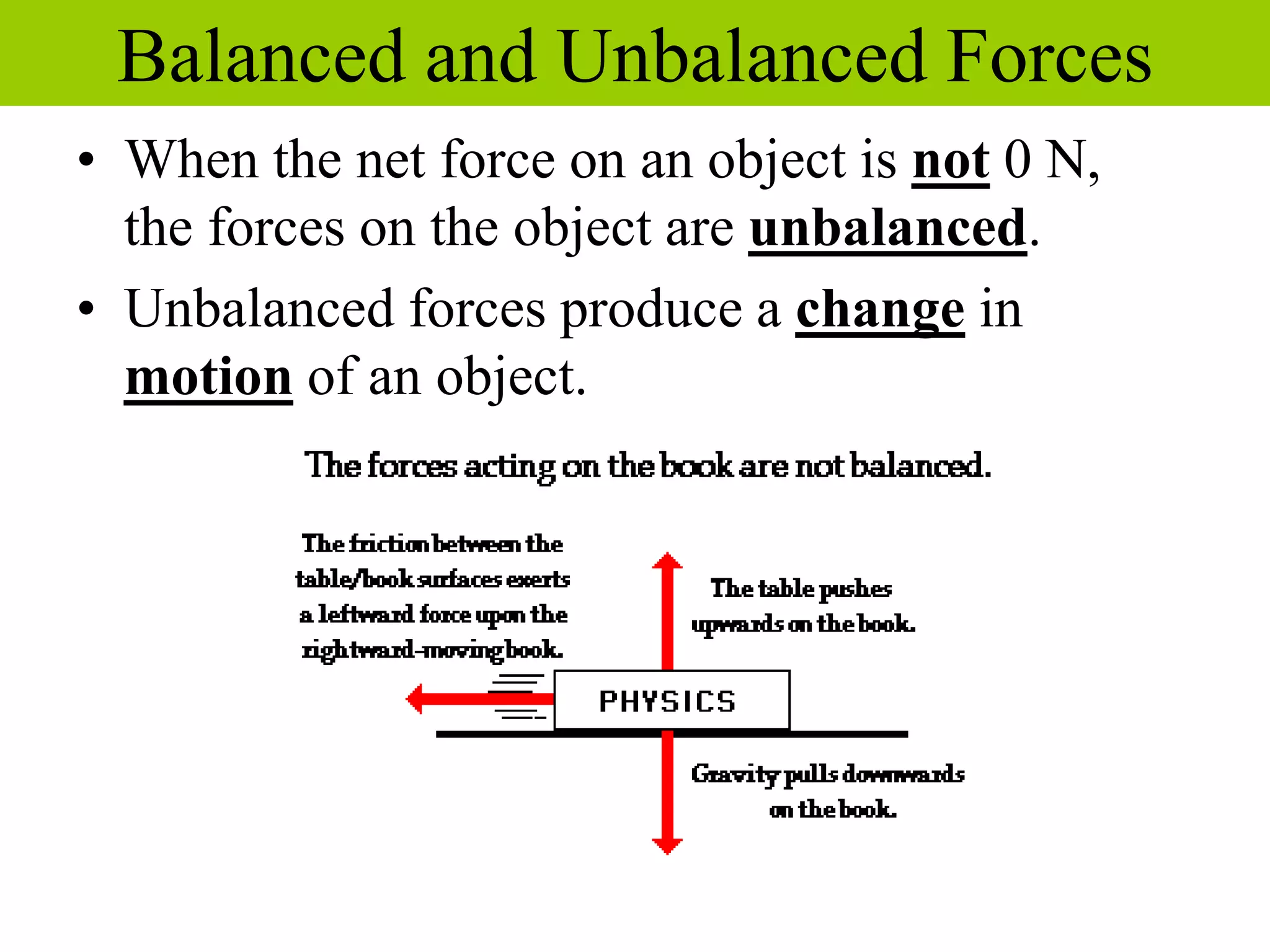
• When the net force on an object is not 0 N,
the forces on the object are unbalanced.
• Unbalanced forces produce a change in
motion of an object.
Balanced and Unbalanced Forces
http://phet.colorado.edu/en/simulation/forces-and-motion-basics
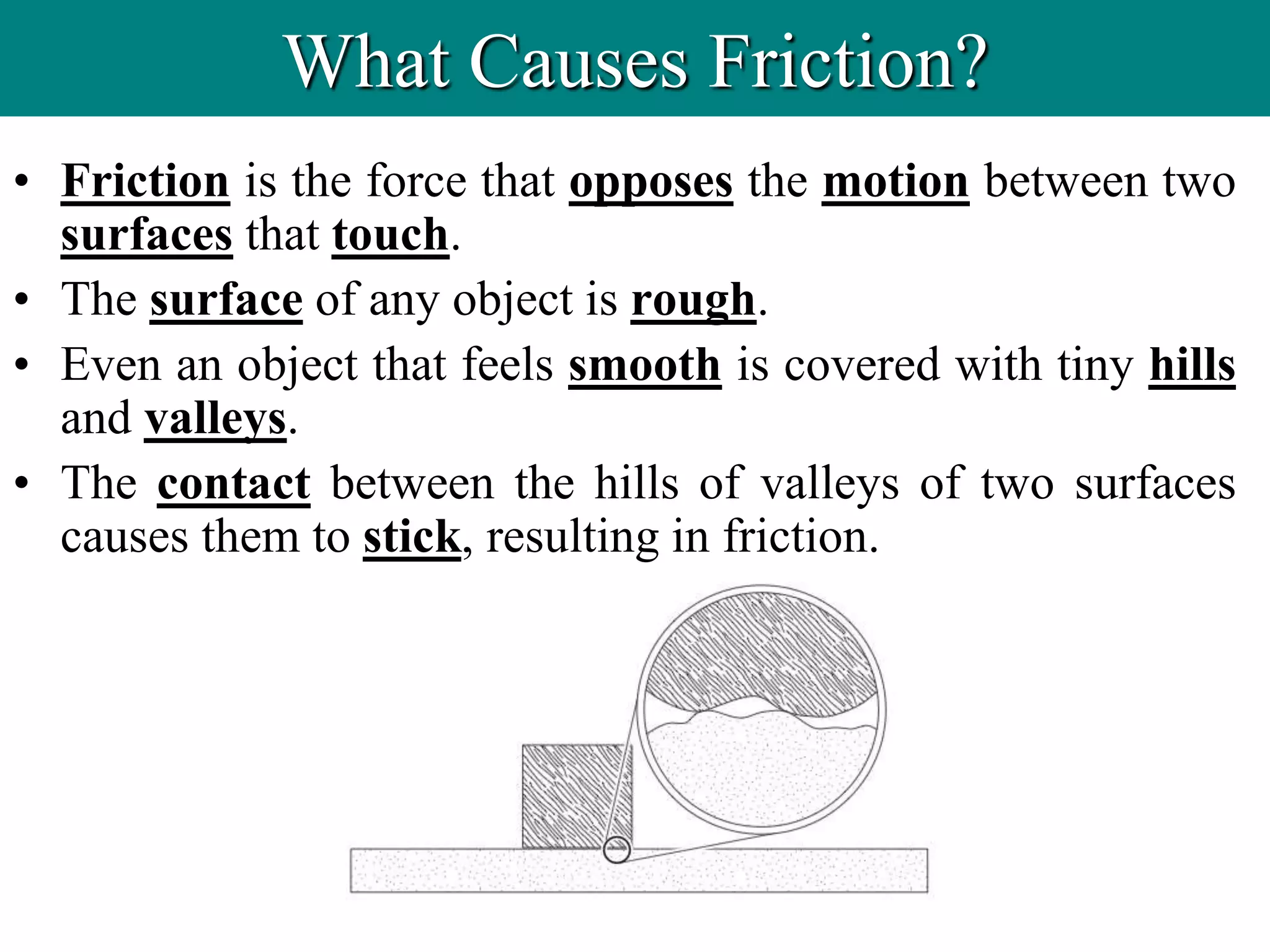
What Causes Friction?
• Friction is the force that opposes the motion between two
surfaces that touch.
• The surface of any object is rough.
• Even an object that feels smooth is covered with tiny hills
and valleys.
• The contact between the hills of valleys of two surfaces
causes them to stick, resulting in friction.
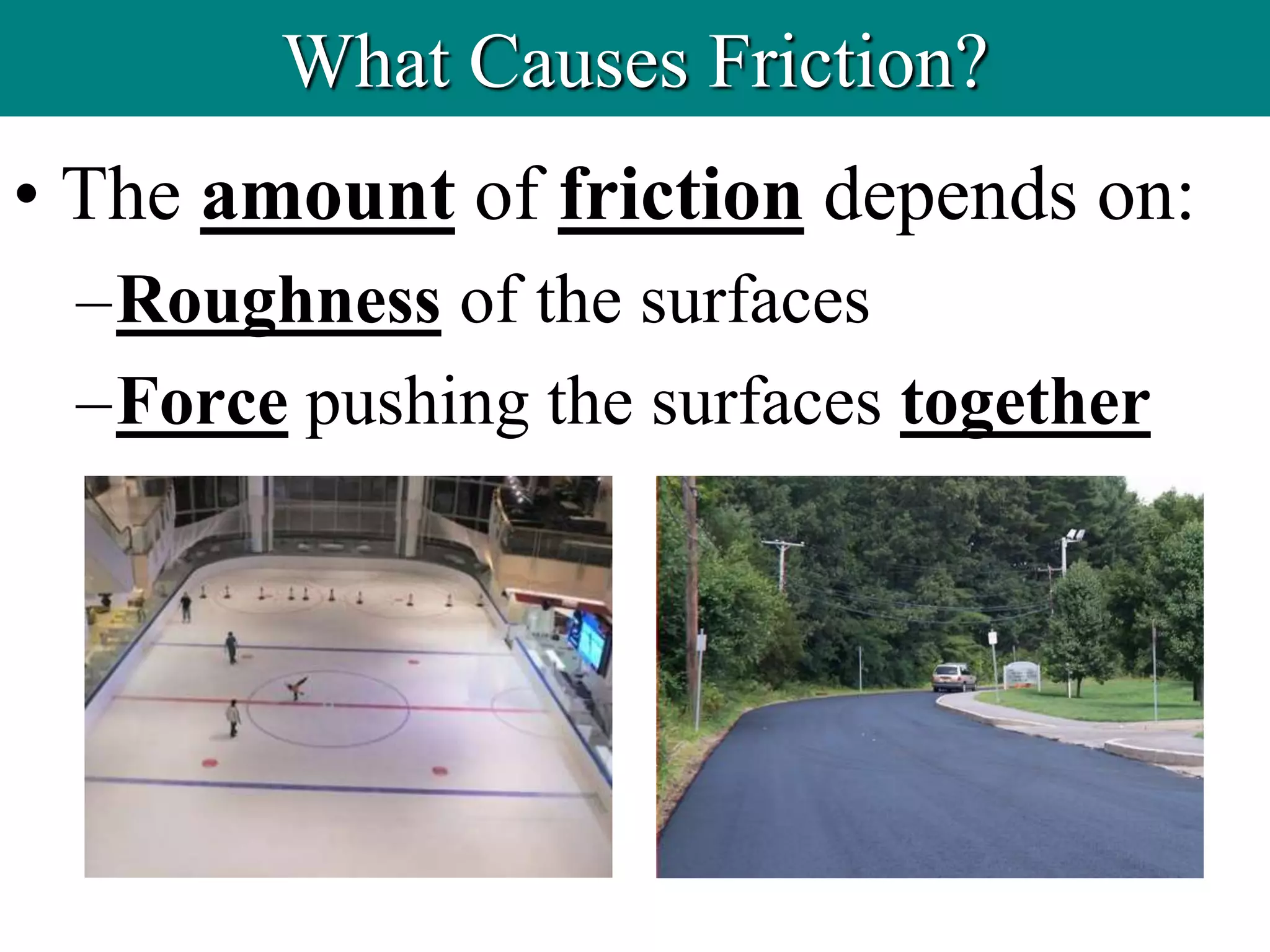
• The amount of friction depends on:
–Roughness of the surfaces
–Force pushing the surfaces together
What Causes Friction?
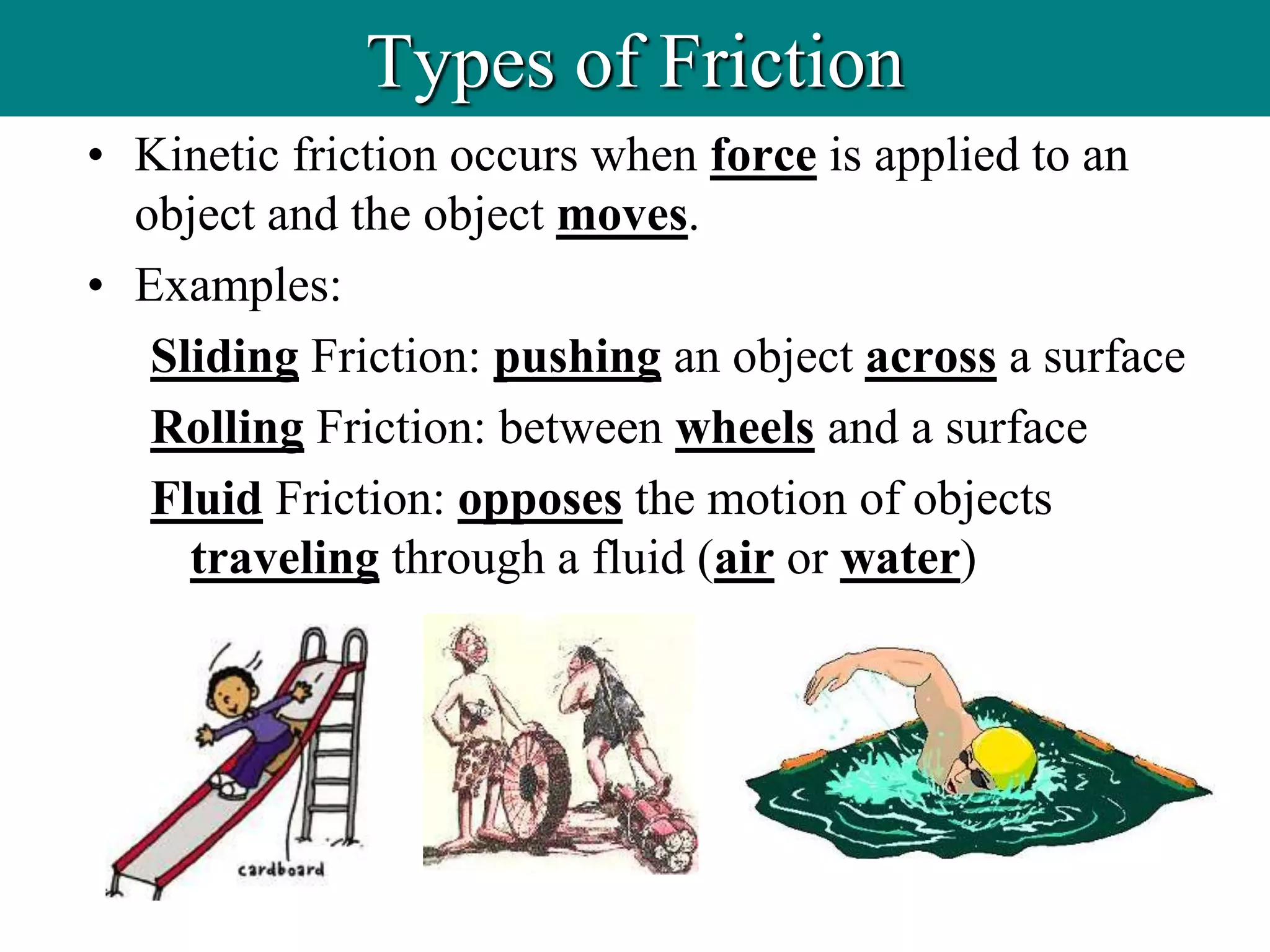
• Kinetic friction occurs when force is applied to an
object and the object moves.
• Examples:
Sliding Friction: pushing an object across a surface
Rolling Friction: between wheels and a surface
Fluid Friction: opposes the motion of objects
traveling through a fluid (air or water)
Types of Friction
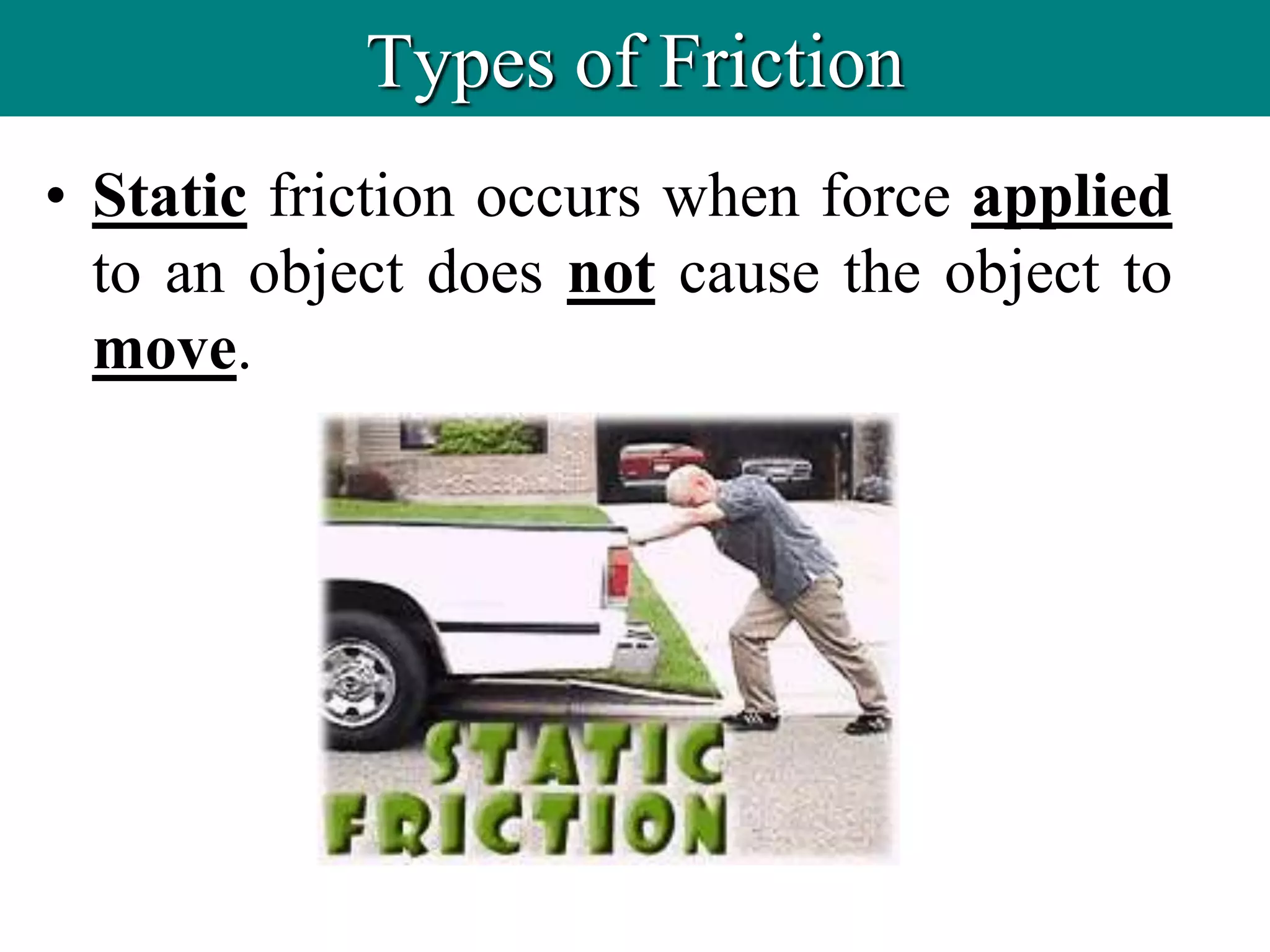
• Static friction occurs when force applied
to an object does not cause the object to
move.
Types of Friction
Helpful and Harmful Friction
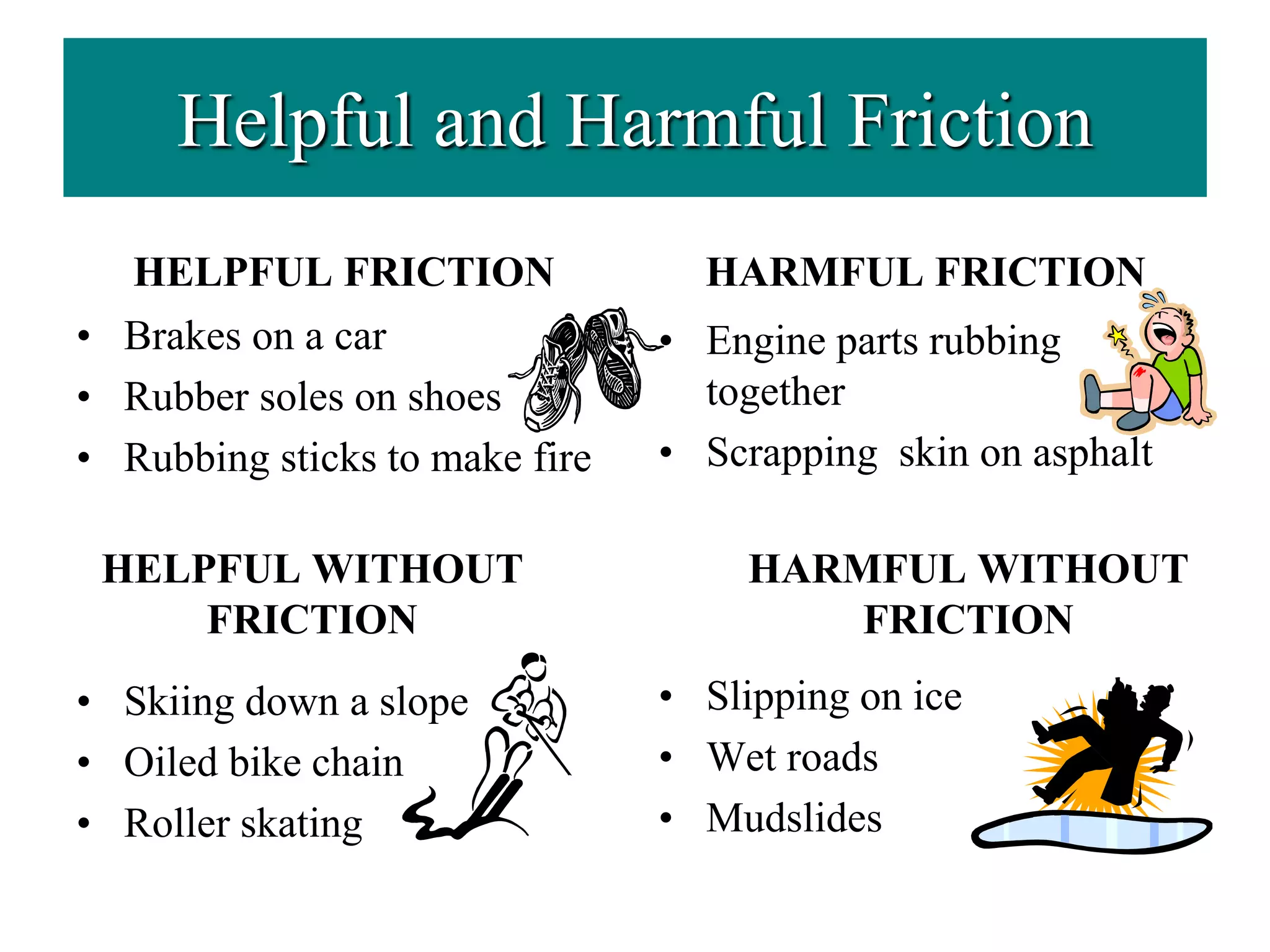
HELPFUL FRICTION
• Brakes on a car
• Rubber soles on shoes
• Rubbing sticks to make fire
• Skiing down a slope
• Oiled bike chain
• Roller skating
HARMFUL FRICTION
• Engine parts rubbing
together
• Scrapping skin on asphalt
• Slipping on ice
• Wet roads
• Mudslides
HELPFUL WITHOUT
FRICTION
HARMFUL WITHOUT
FRICTION
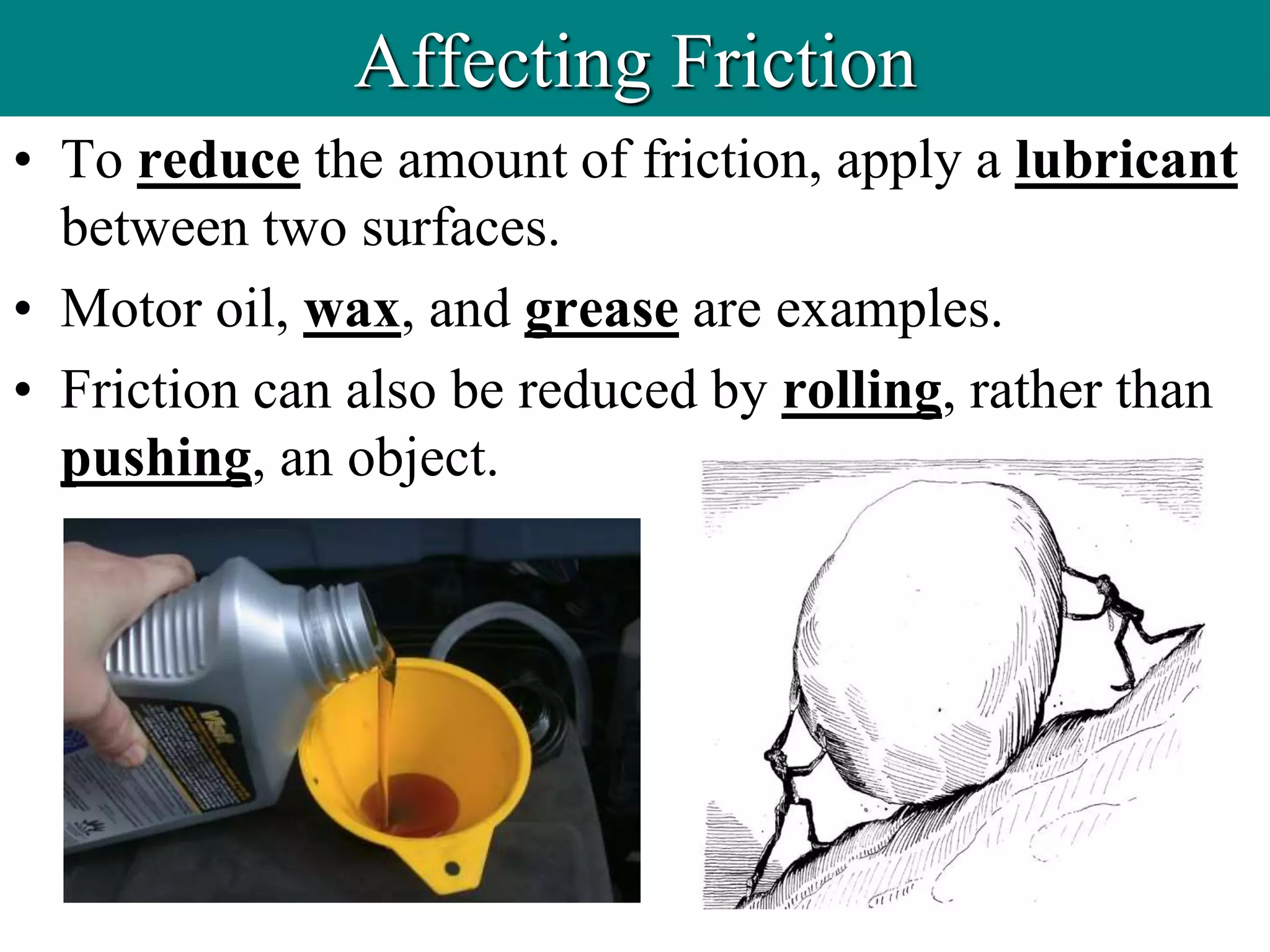
• To reduce the amount of friction, apply a lubricant
between two surfaces.
• Motor oil, wax, and grease are examples.
• Friction can also be reduced by rolling, rather than
pushing, an object.
Affecting Friction
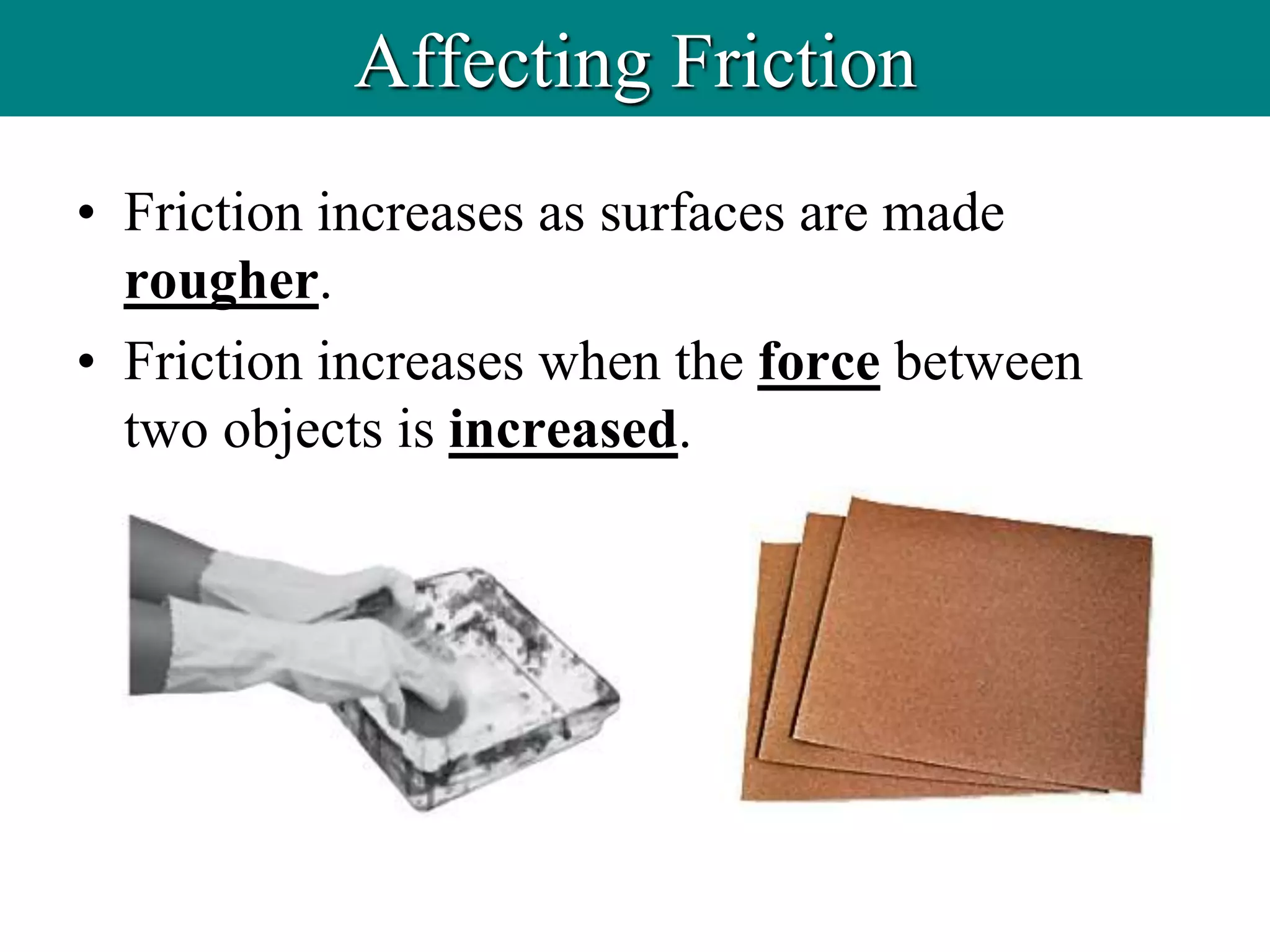
• Friction increases as surfaces are made
rougher.
• Friction increases when the force between
two objects is increased.
Affecting Friction

Forces_and_Friction.ppt

  • 1.
    What is aforce? How do forces combine? How does friction affect motion?
  • 2.
    What is aForce? • In science, a force is a push or a pull. • All forces have two properties: –Direction and Size • A newton (N) is the unit that describes the size of a force.
  • 3.
    • The studentis pushing down on the chair, but the chair does not move. • The floor is balancing the force by pushing on the chair. What is a Force?
  • 4.
    • More thanone force often acts on an object. • When all the forces acting on an object are added together, you determine the net force on the object. • An object with a net force more than 0 N on it will change its state of motion. How do Forces Combine?
  • 5.
    Forces in theSame Direction • When forces are applied in the same direction, they are added to determine the size of the net force.
  • 6.
    • When twoforces act in opposite directions, you subtract the smaller force from the larger force to determine the net force. • The net force will be in the same direction as the larger force. Forces in Different Directions
  • 7.
    • When theforces on an object produce a net force of 0 N, the forces are balanced. • There is no change in the motion of the object. Balanced and Unbalanced Forces
  • 8.
    • When thenet force on an object is not 0 N, the forces on the object are unbalanced. • Unbalanced forces produce a change in motion of an object. Balanced and Unbalanced Forces
  • 9.
    Balanced and UnbalancedForces http://phet.colorado.edu/en/simulation/forces-and-motion-basics
  • 10.
    What Causes Friction? •Friction is the force that opposes the motion between two surfaces that touch. • The surface of any object is rough. • Even an object that feels smooth is covered with tiny hills and valleys. • The contact between the hills of valleys of two surfaces causes them to stick, resulting in friction.
  • 11.
    • The amountof friction depends on: –Roughness of the surfaces –Force pushing the surfaces together What Causes Friction?
  • 12.
    • Kinetic frictionoccurs when force is applied to an object and the object moves. • Examples: Sliding Friction: pushing an object across a surface Rolling Friction: between wheels and a surface Fluid Friction: opposes the motion of objects traveling through a fluid (air or water) Types of Friction
  • 13.
    • Static frictionoccurs when force applied to an object does not cause the object to move. Types of Friction
  • 14.
    Helpful and HarmfulFriction HELPFUL FRICTION • Brakes on a car • Rubber soles on shoes • Rubbing sticks to make fire • Skiing down a slope • Oiled bike chain • Roller skating HARMFUL FRICTION • Engine parts rubbing together • Scrapping skin on asphalt • Slipping on ice • Wet roads • Mudslides HELPFUL WITHOUT FRICTION HARMFUL WITHOUT FRICTION
  • 15.
    • To reducethe amount of friction, apply a lubricant between two surfaces. • Motor oil, wax, and grease are examples. • Friction can also be reduced by rolling, rather than pushing, an object. Affecting Friction
  • 16.
    • Friction increasesas surfaces are made rougher. • Friction increases when the force between two objects is increased. Affecting Friction