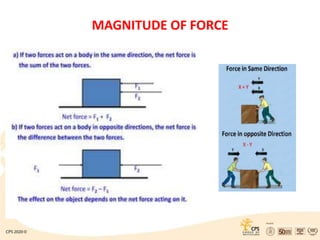
MAGNITUDE OF FORCE
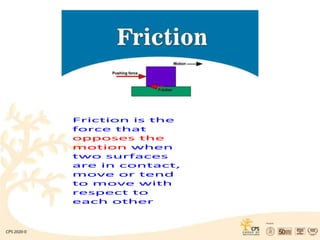
Friction is the
force that
opposes the
motion when
two surfaces
are in contact,
move or tend
to move with
respect to
each other
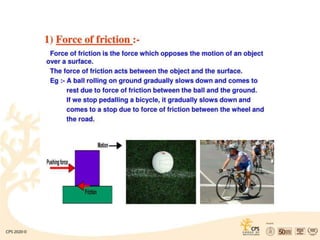
of an object
n
se
se
t
WEIGHT OF AN OBJECT
• Friction increases with increase in weight
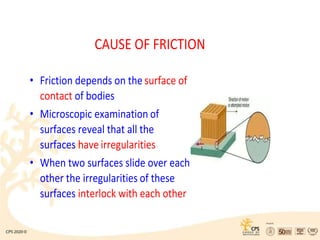
CAUSE OF FRICTION
• Friction depends on the surface of
contact of bodies
• Microscopic examination of
surfaces reveal that all the
surfaces have irregularities
• When two surfaces slide over each
other the irregularities of these
surfaces interlock with each other
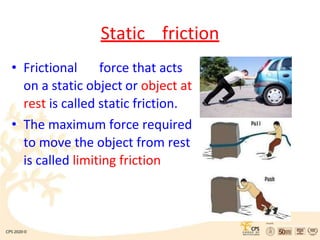
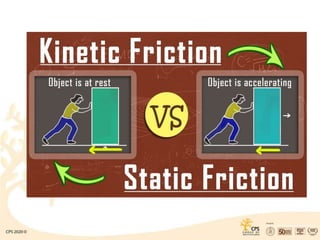
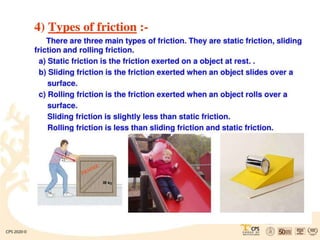
Static friction
• Frictional force that acts
on a static object or object at
rest is called static friction.
• The maximum force required
to move the object from rest
is called limiting friction
KINETIC FRICTION
• The force of friction that slows down an
already moving object and eventually brings
to a stop
Sliding friction
• The frictional force
that acts on sliding
objects
• When an object
slides the
irregularities do
not get enough
time to interlock
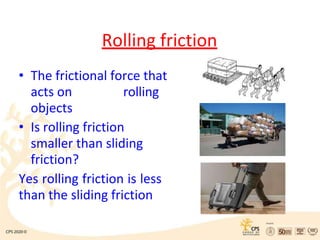
Rolling friction
• The frictional force that
acts on rolling
objects
• Is rolling friction
smaller than sliding
friction?
Yes rolling friction is less
than the sliding friction
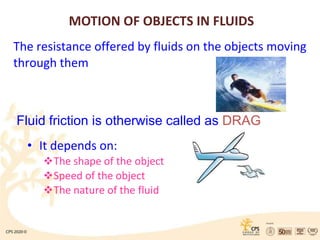
The resistance offered by fluids on the objects moving
through them
Fluid friction is otherwise called as DRAG
• It depends on:
The shape of the object
Speed of the object
The nature of the fluid
MOTION OF OBJECTS IN FLUIDS
Drag due to water and air
• The body that moves
through fluids are made
streamlined so that they
experience minimum
amount of friction
• Body of Ships, Planes, Birds
are all streamlined so that
the fluids offers least possible
friction
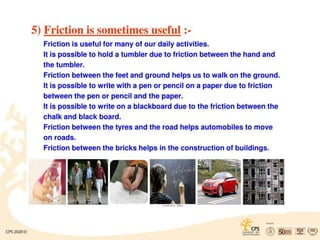
Advantages of friction
• Help us to walk
• The vehicles to move
• Help us to stop ourselves or
any moving object
• To write
• To light a match stick
• To hammer a nail
Disadvantagesoffriction
• Wastageofenergy
• Increaseinfuel
consumption
• Wearandtear
• Productionofunwantedheat
• Productionofunnecessarynoise
Increasing friction
• Deep groves( treads) on tyres of
vehicles
• Applying sand or powder to increase grip
before lifting heavy objects
• Grinding stone used in kitchen
• Handles of cricket bats
• Screw for nails
• Designs on tiles used in bathrooms
FORCE AND FRICTIONforce vector quantity  .pptx

FORCE AND FRICTIONforce vector quantity .pptx

  • 4.
  • 13.
    Friction is the forcethat opposes the motion when two surfaces are in contact, move or tend to move with respect to each other
  • 17.
    of an object n se se t WEIGHTOF AN OBJECT • Friction increases with increase in weight
  • 18.
    CAUSE OF FRICTION •Friction depends on the surface of contact of bodies • Microscopic examination of surfaces reveal that all the surfaces have irregularities • When two surfaces slide over each other the irregularities of these surfaces interlock with each other
  • 20.
    Static friction • Frictionalforce that acts on a static object or object at rest is called static friction. • The maximum force required to move the object from rest is called limiting friction
  • 21.
    KINETIC FRICTION • Theforce of friction that slows down an already moving object and eventually brings to a stop
  • 23.
    Sliding friction • Thefrictional force that acts on sliding objects • When an object slides the irregularities do not get enough time to interlock
  • 24.
    Rolling friction • Thefrictional force that acts on rolling objects • Is rolling friction smaller than sliding friction? Yes rolling friction is less than the sliding friction
  • 26.
    The resistance offeredby fluids on the objects moving through them Fluid friction is otherwise called as DRAG • It depends on: The shape of the object Speed of the object The nature of the fluid MOTION OF OBJECTS IN FLUIDS
  • 27.
    Drag due towater and air • The body that moves through fluids are made streamlined so that they experience minimum amount of friction • Body of Ships, Planes, Birds are all streamlined so that the fluids offers least possible friction
  • 28.
    Advantages of friction •Help us to walk • The vehicles to move • Help us to stop ourselves or any moving object • To write • To light a match stick • To hammer a nail
  • 29.
    Disadvantagesoffriction • Wastageofenergy • Increaseinfuel consumption •Wearandtear • Productionofunwantedheat • Productionofunnecessarynoise
  • 31.
    Increasing friction • Deepgroves( treads) on tyres of vehicles • Applying sand or powder to increase grip before lifting heavy objects • Grinding stone used in kitchen • Handles of cricket bats • Screw for nails • Designs on tiles used in bathrooms