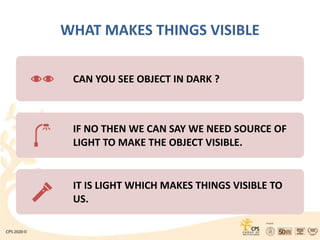
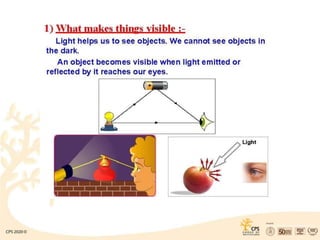
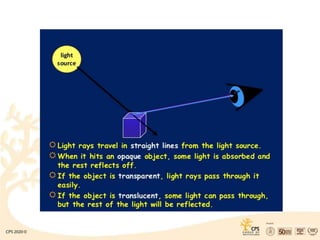
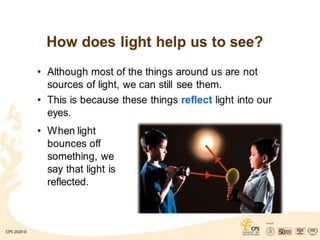
WHAT MAKES THINGS VISIBLE
CAN YOU SEE OBJECT IN DARK ?
IF NO THEN WE CAN SAY WE NEED SOURCE OF
LIGHT TO MAKE THE OBJECT VISIBLE.
IT IS LIGHT WHICH MAKES THINGS VISIBLE TO
US.
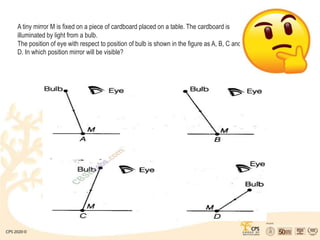
A tiny mirror M is fixed on a piece of cardboard placed on a table. The cardboard is
illuminated by light from a bulb.
The position of eye with respect to position of bulb is shown in the figure as A, B, C and
D. In which position mirror will be visible?
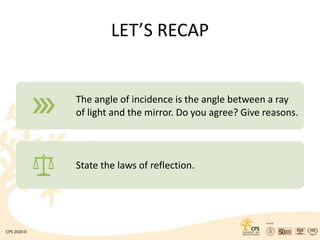
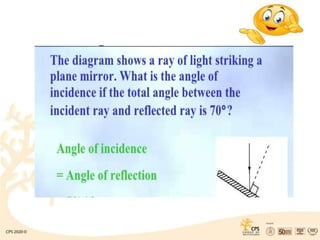
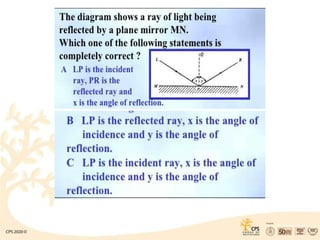
LET’S RECAP
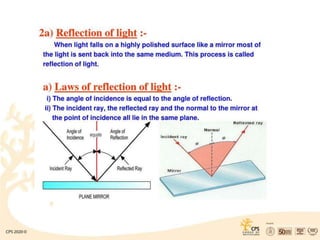
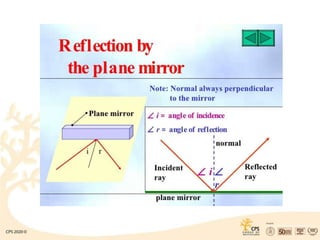
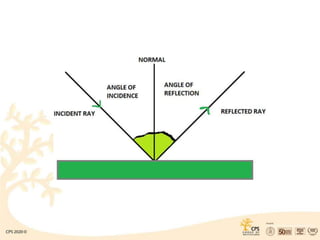
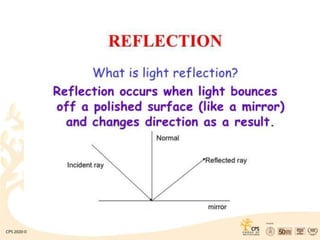
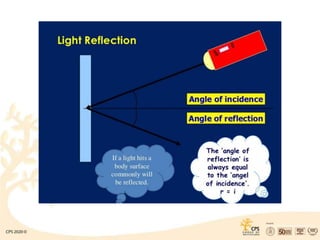
The angle of incidence is the angle between a ray
of light and the mirror. Do you agree? Give reasons.
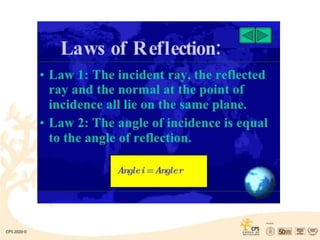
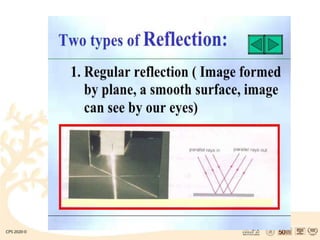
State the laws of reflection.
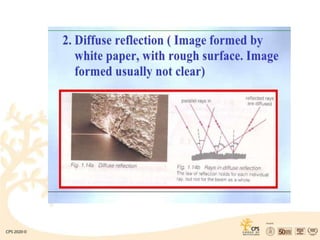
Mention against each of the following whether regular or diffused reflection will take
place when a beam of light strikes. Justify your answer in each case.
Polished wooden table
Chalk powder
Cardboard surface
Marble floor with water spread over it
Mirror
Piece of paper
MULTIPLE REFLECTIONS
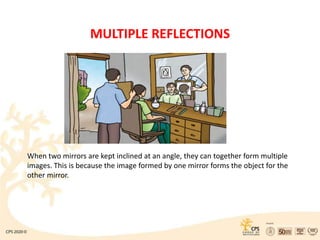
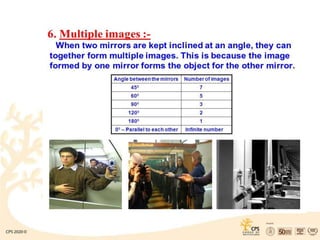
When two mirrors are kept inclined at an angle, they can together form multiple
images. This is because the image formed by one mirror forms the object for the
other mirror.
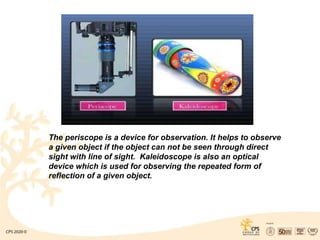
The periscope is a device for observation. It helps to observe
a given object if the object can not be seen through direct
sight with line of sight. Kaleidoscope is also an optical
device which is used for observing the repeated form of
reflection of a given object.
TRACK YOUR PROGRESS
A beam of light falls on a smooth wall. What type
of reflection will you observe ?
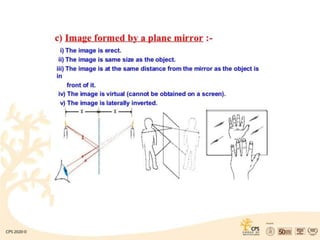
State the characteristics of image formed in a
plane mirror.
Draw the image of the letter “B “ as formed by a
plane mirror placed on the right side of “B”.
LET’S RECAP
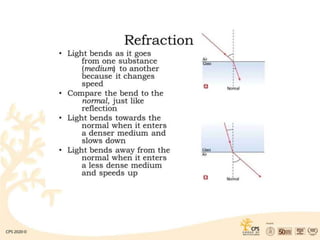
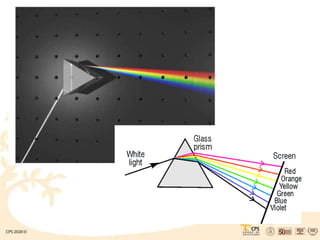
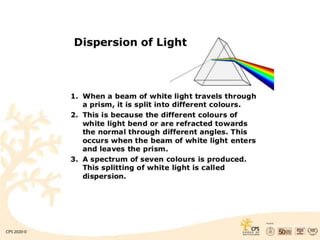
How many colours are
there in a spectrum of
white light?
What happens to light
when it gets dispersed?
Give an example.
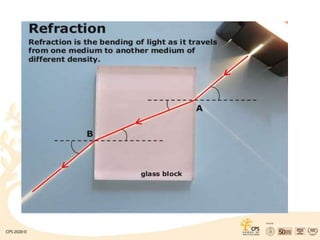
Light bends as it passes
from one medium to
another. What is this
phenomenon called?
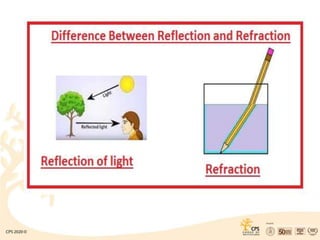
A pencil dipped obliquely
in water appears bent at
the surface due to
dispersion. True or false?
Why does refraction
occur?
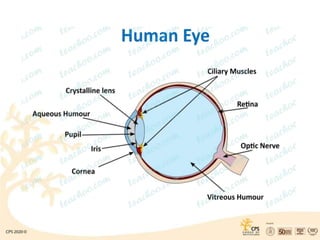
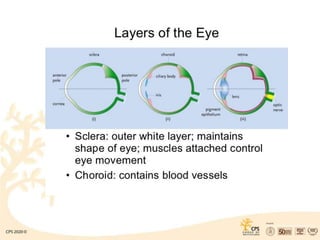
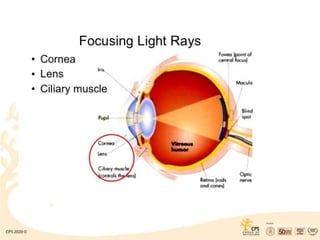
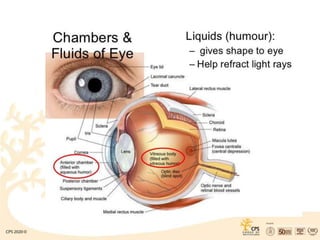
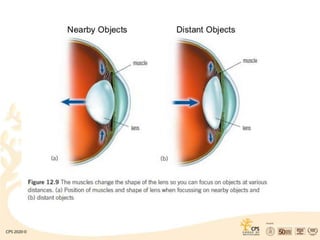
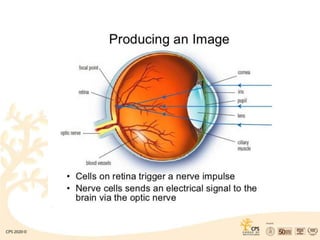
The ciliary body produces the fluid in the eye called aqueous humor. It also
contains the ciliary muscle, which changes the shape of the lens when
your eyes focus on a near object. This process is called accommodation.
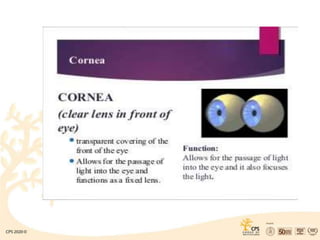
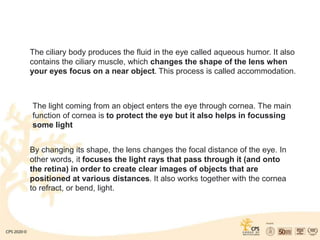
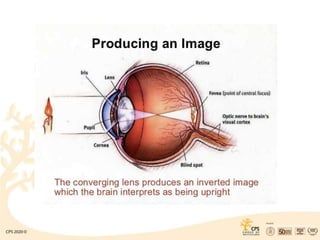
The light coming from an object enters the eye through cornea. The main
function of cornea is to protect the eye but it also helps in focussing
some light
By changing its shape, the lens changes the focal distance of the eye. In
other words, it focuses the light rays that pass through it (and onto
the retina) in order to create clear images of objects that are
positioned at various distances. It also works together with the cornea
to refract, or bend, light.
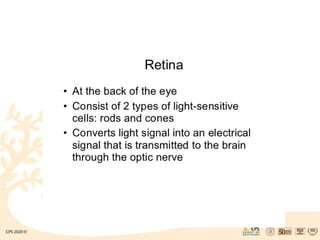
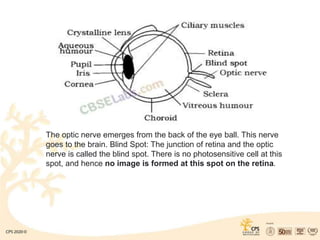
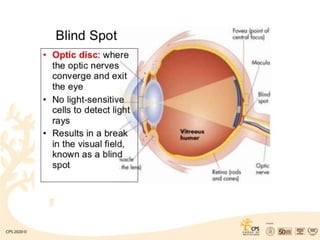
The optic nerve emerges from the back of the eye ball. This nerve
goes to the brain. Blind Spot: The junction of retina and the optic
nerve is called the blind spot. There is no photosensitive cell at this
spot, and hence no image is formed at this spot on the retina.
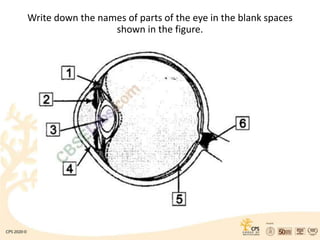
Write down the names of parts of the eye in the blank spaces
shown in the figure.
Give one word answers:
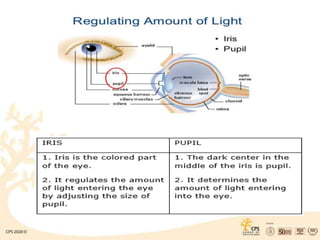
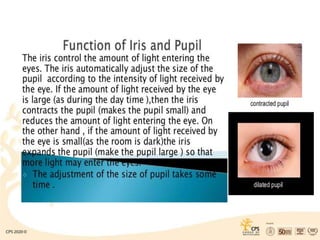
Part of the eye which controls the entering of light is called
Name the spot inside the human eye where the image is not visible.
Name the liquid found between the cornea and lens.
Where is the image of an object formed in human eye?
Which part of the eye carries images to the brain?
Light enters into the eyes through the
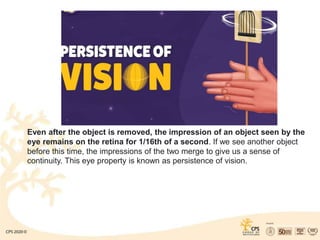
Even after the object is removed, the impression of an object seen by the
eye remains on the retina for 1/16th of a second. If we see another object
before this time, the impressions of the two merge to give us a sense of
continuity. This eye property is known as persistence of vision.
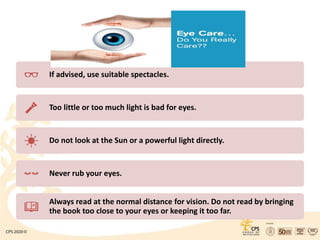
If advised, use suitable spectacles.
Too little or too much light is bad for eyes.
Do not look at the Sun or a powerful light directly.
Never rub your eyes.
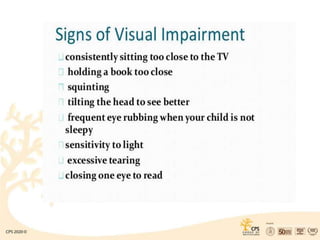
Always read at the normal distance for vision. Do not read by bringing
the book too close to your eyes or keeping it too far.
LET’S RECAP
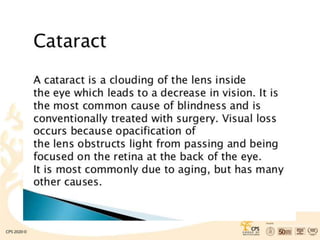
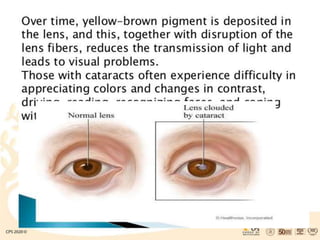
Which part of the eye gets affected if someone is suffering from ‘
cataract? How is it treated?
Boojho while waving his hand very fast in front of his eyes, observes
that his fingers appear blurred. What could be the reason for it?
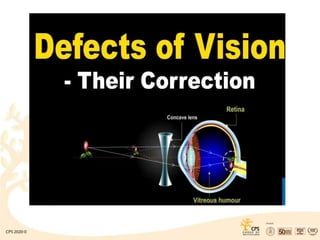
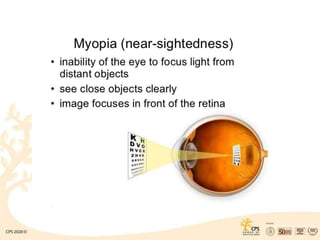
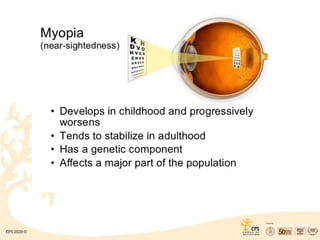
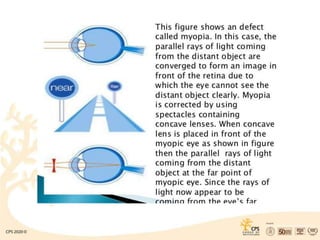
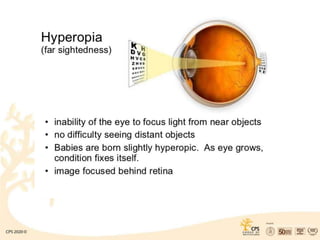
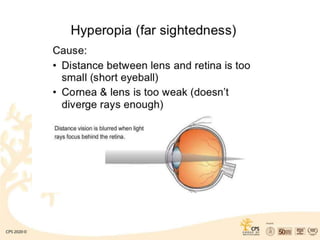
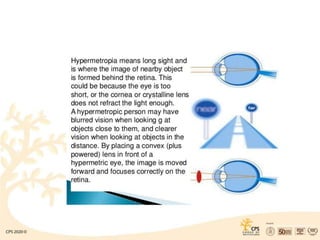
Distinguish between myopia and hypermetropia.
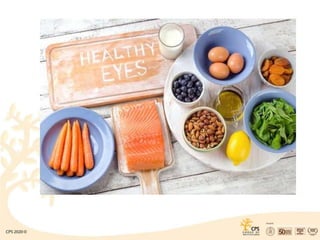
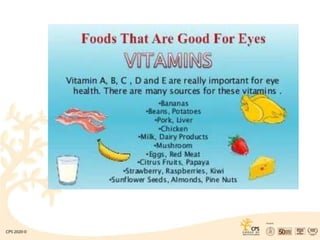
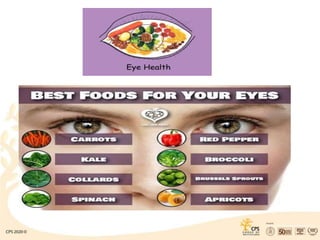
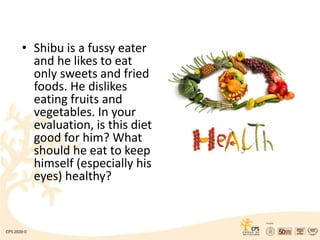
• Shibu is a fussy eater
and he likes to eat
only sweets and fried
foods. He dislikes
eating fruits and
vegetables. In your
evaluation, is this diet
good for him? What
should he eat to keep
himself (especially his
eyes) healthy?

CH15 LIGHT reflection refraction light energy.pptx

  • 2.
    WHAT MAKES THINGSVISIBLE CAN YOU SEE OBJECT IN DARK ? IF NO THEN WE CAN SAY WE NEED SOURCE OF LIGHT TO MAKE THE OBJECT VISIBLE. IT IS LIGHT WHICH MAKES THINGS VISIBLE TO US.
  • 19.
    A tiny mirrorM is fixed on a piece of cardboard placed on a table. The cardboard is illuminated by light from a bulb. The position of eye with respect to position of bulb is shown in the figure as A, B, C and D. In which position mirror will be visible?
  • 20.
    LET’S RECAP The angleof incidence is the angle between a ray of light and the mirror. Do you agree? Give reasons. State the laws of reflection.
  • 30.
    Mention against eachof the following whether regular or diffused reflection will take place when a beam of light strikes. Justify your answer in each case. Polished wooden table Chalk powder Cardboard surface Marble floor with water spread over it Mirror Piece of paper
  • 31.
    MULTIPLE REFLECTIONS When twomirrors are kept inclined at an angle, they can together form multiple images. This is because the image formed by one mirror forms the object for the other mirror.
  • 33.
    The periscope isa device for observation. It helps to observe a given object if the object can not be seen through direct sight with line of sight. Kaleidoscope is also an optical device which is used for observing the repeated form of reflection of a given object.
  • 34.
    TRACK YOUR PROGRESS Abeam of light falls on a smooth wall. What type of reflection will you observe ? State the characteristics of image formed in a plane mirror. Draw the image of the letter “B “ as formed by a plane mirror placed on the right side of “B”.
  • 40.
    LET’S RECAP How manycolours are there in a spectrum of white light? What happens to light when it gets dispersed? Give an example. Light bends as it passes from one medium to another. What is this phenomenon called? A pencil dipped obliquely in water appears bent at the surface due to dispersion. True or false? Why does refraction occur?
  • 50.
    The ciliary bodyproduces the fluid in the eye called aqueous humor. It also contains the ciliary muscle, which changes the shape of the lens when your eyes focus on a near object. This process is called accommodation. The light coming from an object enters the eye through cornea. The main function of cornea is to protect the eye but it also helps in focussing some light By changing its shape, the lens changes the focal distance of the eye. In other words, it focuses the light rays that pass through it (and onto the retina) in order to create clear images of objects that are positioned at various distances. It also works together with the cornea to refract, or bend, light.
  • 52.
    The optic nerveemerges from the back of the eye ball. This nerve goes to the brain. Blind Spot: The junction of retina and the optic nerve is called the blind spot. There is no photosensitive cell at this spot, and hence no image is formed at this spot on the retina.
  • 54.
    Write down thenames of parts of the eye in the blank spaces shown in the figure.
  • 55.
    Give one wordanswers: Part of the eye which controls the entering of light is called Name the spot inside the human eye where the image is not visible. Name the liquid found between the cornea and lens. Where is the image of an object formed in human eye? Which part of the eye carries images to the brain? Light enters into the eyes through the
  • 56.
    Even after theobject is removed, the impression of an object seen by the eye remains on the retina for 1/16th of a second. If we see another object before this time, the impressions of the two merge to give us a sense of continuity. This eye property is known as persistence of vision.
  • 69.
    If advised, usesuitable spectacles. Too little or too much light is bad for eyes. Do not look at the Sun or a powerful light directly. Never rub your eyes. Always read at the normal distance for vision. Do not read by bringing the book too close to your eyes or keeping it too far.
  • 70.
    LET’S RECAP Which partof the eye gets affected if someone is suffering from ‘ cataract? How is it treated? Boojho while waving his hand very fast in front of his eyes, observes that his fingers appear blurred. What could be the reason for it? Distinguish between myopia and hypermetropia.
  • 82.
    • Shibu isa fussy eater and he likes to eat only sweets and fried foods. He dislikes eating fruits and vegetables. In your evaluation, is this diet good for him? What should he eat to keep himself (especially his eyes) healthy?