How to Identify Multi Directional
Deficits in Athletes?
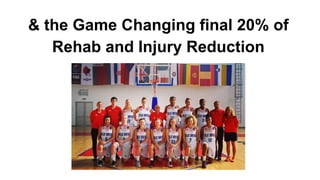
(& the Game Changing final 20% of Rehab and Injury Reduction)
Darren Finnegan (British Basketball)
Football Innovation Summit 2017
(& the Game Changing final 20% of
Rehab and Injury Reduction)
& the Game Changing final 20% of
Rehab and Injury Reduction
How to Identify Multi Directional Deficits in
Athletes?
• My Story
• 360 Degrees of Movement
• Interactive Component
• Assessment/Treatment
• Case Presentation
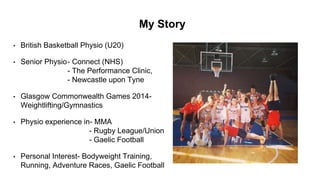
My Story
• British Basketball Physio (U20)
• Senior Physio- Connect (NHS)
- The Performance Clinic,
- Newcastle upon Tyne
• Glasgow Commonwealth Games 2014-
Weightlifting/Gymnastics
• Physio experience in- MMA
- Rugby League/Union
- Gaelic Football
• Personal Interest- Bodyweight Training,
Running, Adventure Races, Gaelic Football
Where do we go from here?
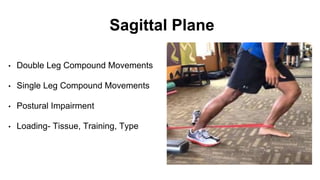
Sagittal Plane
• Double Leg Compound Movements
• Single Leg Compound Movements
• Postural Impairment
• Loading- Tissue, Training, Type
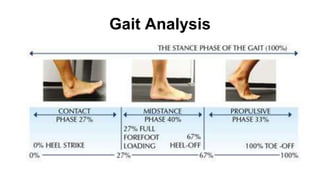
Gait Analysis
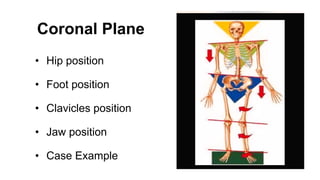
Coronal Plane
• Hip position
• Foot position
• Clavicles position
• Jaw position
• Case Example
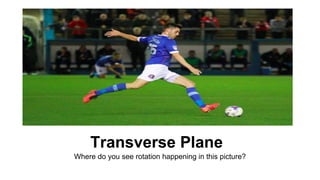
Transverse Plane
Where do you see rotation happening in this picture?
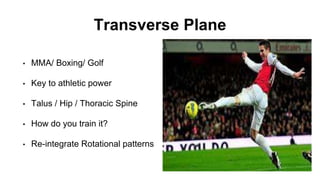
Transverse Plane
• MMA/ Boxing/ Golf
• Key to athletic power
• Talus / Hip / Thoracic Spine
• How do you train it?
• Re-integrate Rotational patterns
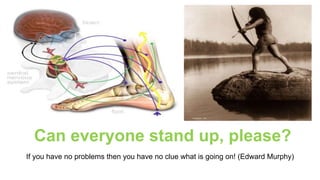
Can everyone stand up, please?
If you have no problems then you have no clue what is going on! (Edward Murphy)
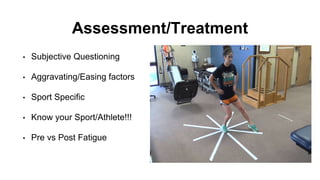
Assessment/Treatment
• Subjective Questioning
• Aggravating/Easing factors
• Sport Specific
• Know your Sport/Athlete!!!
• Pre vs Post Fatigue
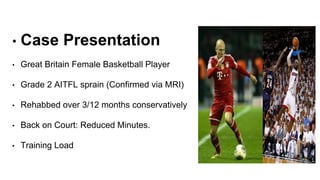
• Case Presentation
• Great Britain Female Basketball Player
• Grade 2 AITFL sprain (Confirmed via MRI)
• Rehabbed over 3/12 months conservatively
• Back on Court: Reduced Minutes.
• Training Load
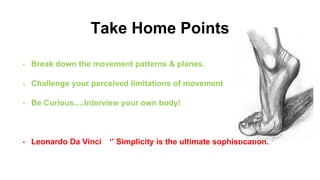
Take Home Points
• Break down the movement patterns & planes.
• Challenge your perceived limitations of movement
• Be Curious….Interview your own body!
• Leonardo Da Vinci ‘’ Simplicity is the ultimate sophistication. ‘’
Darren Finnegan
Instagram: 3D Physio
Twitter: DarrenFinnegan2
Email:
physiofinnegan@gmail.com
Phone: 075-17218722
Before you
kick me
out….
Thank you!

Football Innovation Summit Presentation 2017

  • 1.
    How to IdentifyMulti Directional Deficits in Athletes? (& the Game Changing final 20% of Rehab and Injury Reduction) Darren Finnegan (British Basketball) Football Innovation Summit 2017 (& the Game Changing final 20% of Rehab and Injury Reduction)
  • 2.
    & the GameChanging final 20% of Rehab and Injury Reduction
  • 3.
    How to IdentifyMulti Directional Deficits in Athletes? • My Story • 360 Degrees of Movement • Interactive Component • Assessment/Treatment • Case Presentation
  • 4.
    My Story • BritishBasketball Physio (U20) • Senior Physio- Connect (NHS) - The Performance Clinic, - Newcastle upon Tyne • Glasgow Commonwealth Games 2014- Weightlifting/Gymnastics • Physio experience in- MMA - Rugby League/Union - Gaelic Football • Personal Interest- Bodyweight Training, Running, Adventure Races, Gaelic Football
  • 5.
    Where do wego from here?
  • 6.
    Sagittal Plane • DoubleLeg Compound Movements • Single Leg Compound Movements • Postural Impairment • Loading- Tissue, Training, Type
  • 7.
  • 8.
    Coronal Plane • Hipposition • Foot position • Clavicles position • Jaw position • Case Example
  • 9.
    Transverse Plane Where doyou see rotation happening in this picture?
  • 10.
    Transverse Plane • MMA/Boxing/ Golf • Key to athletic power • Talus / Hip / Thoracic Spine • How do you train it? • Re-integrate Rotational patterns
  • 11.
    Can everyone standup, please? If you have no problems then you have no clue what is going on! (Edward Murphy)
  • 12.
    Assessment/Treatment • Subjective Questioning •Aggravating/Easing factors • Sport Specific • Know your Sport/Athlete!!! • Pre vs Post Fatigue
  • 14.
    • Case Presentation •Great Britain Female Basketball Player • Grade 2 AITFL sprain (Confirmed via MRI) • Rehabbed over 3/12 months conservatively • Back on Court: Reduced Minutes. • Training Load
  • 16.
    Take Home Points •Break down the movement patterns & planes. • Challenge your perceived limitations of movement • Be Curious….Interview your own body! • Leonardo Da Vinci ‘’ Simplicity is the ultimate sophistication. ‘’
  • 17.
    Darren Finnegan Instagram: 3DPhysio Twitter: DarrenFinnegan2 Email: physiofinnegan@gmail.com Phone: 075-17218722
  • 18.

Editor's Notes

  • #2 Green for paddys day last week
  • #4 Hopes and aspirations for the day. Open minded and approach the workshop more like a conversation. I want you to have tools to use next week at work. I am not saying my techniques are 100% evidence based but logical!
  • #6 Practice spiel Oepning spiel Take home message repeat x3 over course of talk Keep football focused Analyze a movement pattern Studies- include to back up thoughts Interactive component- Rx of person at the conference- James moore- practice of talk- streamlined and organised with appropriate talks and pauses, studies etc. Look over his hamstring presentations.
  • #7 Do the basics extraordinarily well Patterns of movement- flexion vs extension pattern – Sympathetic vs parasympathetic nervous system driven Double leg screening- squat, heel raise, lunge ,deadlift- hip hinge- if having bilateral problems _More than likely a central origin to issue- ie spine Single Leg- SLS, SLS squat, Heel raise, RDL single leg- bulgarian split squat- front foot elevated squat
  • #8 Is gait pattern a soley sagittal plane movement? Hotly debated about rehab and can we change someones gait pattern? Dark spaces example Forefoot rehab and strengthening= New zealand rugby team training example- How often do we train players in the gym on their forefoot? Yet most of sport is played on our forefoot
  • #9 Closed chain, slider, open chain to loading to dynamic to evironmental to reactive to reactive + game specific Megan lewis – adductor magnus strain- relationship to ankle fracture as a child- hence positioned her CoG away from that R foot- postural impairment- link with hip dominant control balance strategy post ankle fracture- never had been restored or rehabbed to address this- given squat- unable to squat without heel raise- toe gripping, jaw issues-, braces..Parents spliting – Scoliosis example and Usain Bolt
  • #10 Sweets for person who spotted some of the patterns? Buy some. Aka Rob Tyer strategy at IST Post oblique sling, rot at ankle hip-thorax and shoulder- L ankle as it lands supinates- Look at anterior oblique sling L Foot- Supinates as follows through kicking the ball L Femur moves from a internally rotated pxn into a external rotated position Thoracic spine is L rotating L shoulder is externally rotating Cervical spine is R rotating on a moving base R hip is externally rotated into a internally rotated position Where do you start?
  • #11 Robin van persie volley technique Does Ronaldo train movement patterns like this in the gym? How do you train it? Rolling patterns as athletes can cheat with most other rotational tests. Wood chop- example. Bent knee fall out- push up position- single leg lift ? Pelvis rotation, high knee Master the rotational plane, master movement.
  • #12 Interactive Component Mobility is granted by the nervous system when it is deemed safe to do so. No point being equipped with tools if we don’t know how we move our own mass? Foot awareness and posture Hip flexor stretch- Hamstring stretch- add planes of motion to normal stretch. Static stretching is like watching fat kid do sits ups expecting a six pack.
  • #13 The quality of our life is judged by the quality of our questions? History of Presenting Condition- How would your brain process that threat at that time? Any other stress factors going on at that time influencing that player. trauma of situation – ie stretchered off pitch etc Contract negotiations etc Family issues Players Position, Age, Stage of Season, Pitch condition, Agg Eases- not just asking about pain – record function and issues they feel sporting wise they struggle with. This could relate to speed, power, explosiveness, CoD, tactical- ie Danni Neilan example and squat- Use an injury as an opportunity – Jocko Wilink Principle- Good…. I am injured- this will make me mentally stronger- Good I am out for 6 weeks- this gives me an opportunity to work on the technical side of my game.
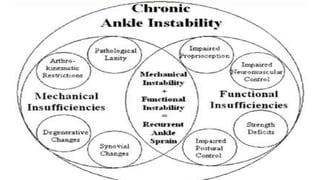
  • #14 Recurrent sprains- We need to look at arthrogenic firstly. Obviously the ligamentous laixty is something we need to address if it has occurred. Strength is priorty then look at neuromuscular control- dissertation explained re kids have neuromuslcular growth spurt 1-13 years of age- Manchester Utd parkour & Newcastle United- circus skills- at this youth agegroup
  • #15 Savannah- Pre championship- had done all her rehab- excellent compliance and attitude to rehab - Training load coming into camp was good but after 3 days broke down with tibilais posterior pain which is not uncommon in first few days of camp. Left ANKLE Pulled from certain drills in training- ½ court only drills Objective measure- non weight bearing – perfect symmetry Standing nil issues Foot posture- pronated ++ Resupination- poor Gluts 5/5 strength NAD with this- Step down ecc control gluts- noticed IR femur +++ Obliques counter rotation to this movement of internal rotation- Mapped up with her inability to resupinate her foot. Woodchop braces self and holds breath with resisted testing - squat jump multi directional= double leg NAD Single leg rotational- nil power – 90deg anti clockwise Rehab started- breathing re ed- woodchops- tranverse plane dominant rehab= Treated the Tibialis posterior tedninopathy as normal but looked for the root cause instead. Why have we adopted mckensie style approach with backs but not will other joints?
  • #17 Explore the dark spaces of movement and where you are restricted firstly- before you can teach someone. Have you ever tried to teach an exercise that you cannot do yourself to someone? Difficult If your brain does not have the neuroplasiticity to understand a movement pattern it is v.difficult to teach it. Interview the body to see where it likes to go and doesn’t. Encourage athletes to explore and interview their own restrictions, blockages or injured areas. What type of athletes gets better faster? Those who avoid the provacative area or those whom come in and know exact painful movements. Work into these spicy areas. Is the movement pattern coronal- is if deficient in a flexed or extended coronal plane of motion. If you add in rotation does this change.