FOOD SAFETY
FAIZA REHMAN
Food Safety
 It is a scientific discipline describing handling,
preparation, and storage of food in ways that
prevent food borne illness.
 This includes a number of routines that should
be followed to avoid potentially severe health
hazards.
 Food can transmit disease from person to
person as well as serve as a growth medium for
bacteria that can cause food poisoning.
FAIZA REHMAN
What is food borne
illness?
 Foodborne illness is a disease that is carried or
transmitted to human beings by food.
 Foodborne illness may be caused by
microorganisms, which are tiny, single-celled
organisms, such as bacteria.
FAIZA REHMAN
How do bacteria grow on food?
 Under the proper conditions,
bacteria can grow, divide,
and multiply enough to
make people sick
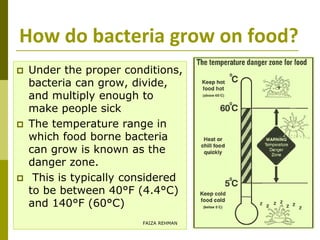
 The temperature range in
which food borne bacteria
can grow is known as the
danger zone.
 This is typically considered
to be between 40°F (4.4°C)
and 140°F (60°C)
FAIZA REHMAN
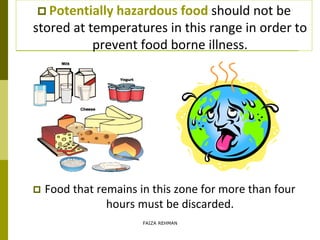
 Potentially hazardous food should not be
stored at temperatures in this range in order to
prevent food borne illness.
 Food that remains in this zone for more than four
hours must be discarded.
FAIZA REHMAN
Potentially hazardous food
 Moist, high protein foods on which
bacteria can grow most easily are
classified as Potentially Hazardous Foods
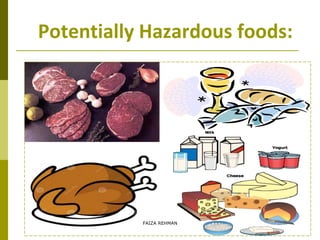
 The four categories of potentially
hazardous foods are:
1. Fresh meat, such as beef or mutton
2. Poultry, such as chicken
3. Seafood or fish
4. Dairy products, such as milk and
cheese
FAIZA REHMAN
Potentially Hazardous foods:
FAIZA REHMAN
How to Protect
Yourself?
The best defense against
foodborne viruses is to use
good personal hygiene
FAIZA REHMAN
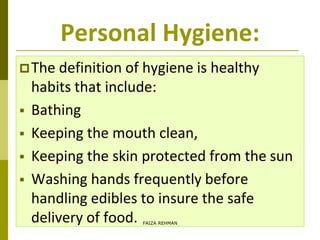
Personal Hygiene:
The definition of hygiene is healthy
habits that include:
 Bathing
 Keeping the mouth clean,
 Keeping the skin protected from the sun
 Washing hands frequently before
handling edibles to insure the safe
delivery of food. FAIZA REHMAN
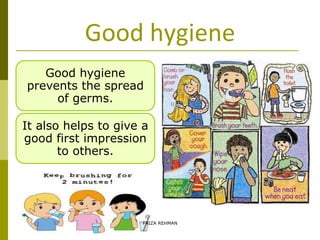
Good hygiene
Good hygiene
prevents the spread
of germs.
It also helps to give a
good first impression
to others.
FAIZA REHMAN
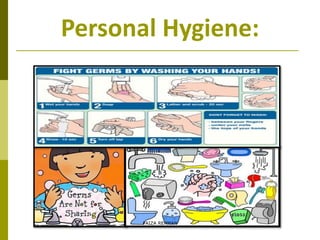
Personal Hygiene:
FAIZA REHMAN
Hands and Skins
(Food handlers must wash their hands especially)
 1. After visiting the toilet
 2. On entering the food room, after a break and before
handling any food.
 3. After putting on or changing a dressing
 4. After dealing with an ill customer or a baby’s nappy
 5. After handling raw food Including eggs, and before
handling ready – to eat food.
FAIZA REHMAN
 6. After cleaning up animal faces or handling boxes
contaminated by bird dropping.
 7. After combing or touching the hair, face, nose,
mouth or ears
 8. After handling waste food.
 9. After cleaning , or handling dirty cloths, crockery
.etc.
 10. After handling external packaging, flowers or
money.
Hand Washing
FAIZA REHMAN
Foods to Avoid
 Bacteria in your mouth grow on sugar
 candy, chocolate, and other sweets
 Try to eat as little “junk food” as possible
 Avoid drinking soda and sweet tea
If you do eat these things, you must brush
immediately afterwards.
FAIZA REHMAN
THANKS FOR YOUR
PATIENCE
ANY QUESTIONS?

Food Safety

  • 1.
  • 2.
    Food Safety  Itis a scientific discipline describing handling, preparation, and storage of food in ways that prevent food borne illness.  This includes a number of routines that should be followed to avoid potentially severe health hazards.  Food can transmit disease from person to person as well as serve as a growth medium for bacteria that can cause food poisoning. FAIZA REHMAN
  • 3.
    What is foodborne illness?  Foodborne illness is a disease that is carried or transmitted to human beings by food.  Foodborne illness may be caused by microorganisms, which are tiny, single-celled organisms, such as bacteria. FAIZA REHMAN
  • 4.
    How do bacteriagrow on food?  Under the proper conditions, bacteria can grow, divide, and multiply enough to make people sick  The temperature range in which food borne bacteria can grow is known as the danger zone.  This is typically considered to be between 40°F (4.4°C) and 140°F (60°C) FAIZA REHMAN
  • 5.
     Potentially hazardousfood should not be stored at temperatures in this range in order to prevent food borne illness.  Food that remains in this zone for more than four hours must be discarded. FAIZA REHMAN
  • 6.
    Potentially hazardous food Moist, high protein foods on which bacteria can grow most easily are classified as Potentially Hazardous Foods  The four categories of potentially hazardous foods are: 1. Fresh meat, such as beef or mutton 2. Poultry, such as chicken 3. Seafood or fish 4. Dairy products, such as milk and cheese FAIZA REHMAN
  • 7.
  • 8.
    How to Protect Yourself? Thebest defense against foodborne viruses is to use good personal hygiene FAIZA REHMAN
  • 9.
    Personal Hygiene: The definitionof hygiene is healthy habits that include:  Bathing  Keeping the mouth clean,  Keeping the skin protected from the sun  Washing hands frequently before handling edibles to insure the safe delivery of food. FAIZA REHMAN
  • 10.
    Good hygiene Good hygiene preventsthe spread of germs. It also helps to give a good first impression to others. FAIZA REHMAN
  • 11.
  • 12.
    Hands and Skins (Foodhandlers must wash their hands especially)  1. After visiting the toilet  2. On entering the food room, after a break and before handling any food.  3. After putting on or changing a dressing  4. After dealing with an ill customer or a baby’s nappy  5. After handling raw food Including eggs, and before handling ready – to eat food. FAIZA REHMAN
  • 13.
     6. Aftercleaning up animal faces or handling boxes contaminated by bird dropping.  7. After combing or touching the hair, face, nose, mouth or ears  8. After handling waste food.  9. After cleaning , or handling dirty cloths, crockery .etc.  10. After handling external packaging, flowers or money. Hand Washing FAIZA REHMAN
  • 14.
    Foods to Avoid Bacteria in your mouth grow on sugar  candy, chocolate, and other sweets  Try to eat as little “junk food” as possible  Avoid drinking soda and sweet tea If you do eat these things, you must brush immediately afterwards. FAIZA REHMAN
  • 15.