the
 FOOD
Pyramid
 Steps to a healthier you
Eating Right Every Day
 Briefly describe the point of this lesson, which is that the
  class will be learning about the relationship between
  good nutrition and health.
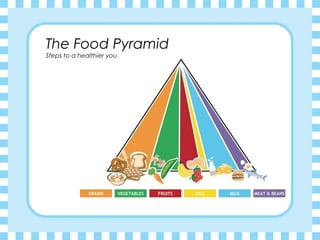
The Food Pyramid
Steps to a healthier you


              GRAINS       VEGETABLES   FRUITS   OILS   MILK   MEAT & BEANS
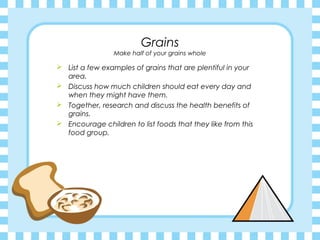
Grains
                 Make half of your grains whole

 List a few examples of grains that are plentiful in your
  area.
 Discuss how much children should eat every day and
  when they might have them.
 Together, research and discuss the health benefits of
  grains.
 Encourage children to list foods that they like from this
  food group.
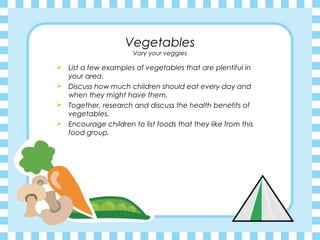
Vegetables
                      Vary your veggies

 List a few examples of vegetables that are plentiful in
  your area.
 Discuss how much children should eat every day and
  when they might have them.
 Together, research and discuss the health benefits of
  vegetables.
 Encourage children to list foods that they like from this
  food group.
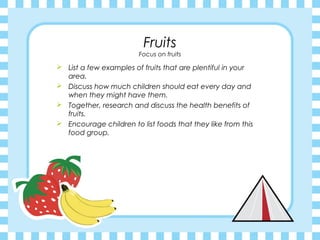
Fruits
                        Focus on fruits

 List a few examples of fruits that are plentiful in your
  area.
 Discuss how much children should eat every day and
  when they might have them.
 Together, research and discuss the health benefits of
  fruits.
 Encourage children to list foods that they like from this
  food group.
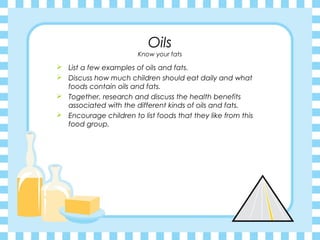
Oils
                        Know your fats

 List a few examples of oils and fats.
 Discuss how much children should eat daily and what
  foods contain oils and fats.
 Together, research and discuss the health benefits
  associated with the different kinds of oils and fats.
 Encourage children to list foods that they like from this
  food group.
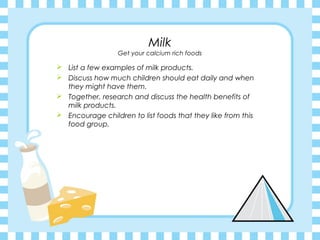
Milk
                  Get your calcium rich foods

 List a few examples of milk products.
 Discuss how much children should eat daily and when
  they might have them.
 Together, research and discuss the health benefits of
  milk products.
 Encourage children to list foods that they like from this
  food group.
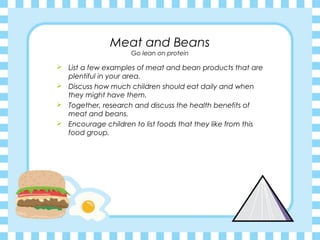
Meat and Beans
                     Go lean on protein

 List a few examples of meat and bean products that are
  plentiful in your area.
 Discuss how much children should eat daily and when
  they might have them.
 Together, research and discuss the health benefits of
  meat and beans.
 Encourage children to list foods that they like from this
  food group.
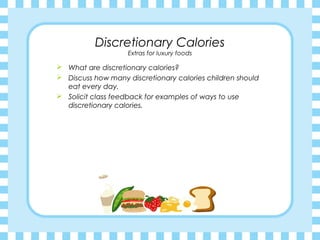
Discretionary Calories
                    Extras for luxury foods

 What are discretionary calories?
 Discuss how many discretionary calories children should
  eat every day.
 Solicit class feedback for examples of ways to use
  discretionary calories.
Physical Activity
             Strive for 60 minutes or more per day

 What is physical activity?
 Discuss moderate vs. vigorous activity.
 Solicit class feedback for examples of moderate and
  vigorous activities.
Eat Well and Stay Healthy!
 Encourage children to use the MyPyramid Worksheet, for
  a week, and to eat their favorite foods in each group to
  meet their daily requirements.
 Download the worksheet here: MyPyramid Worksheet.
 Discuss their findings at the end of the week.
 How might each child eat more healthfully?
Conclusion
 Summarize the health benefits of each food group.
 Encourage children to do research on any new finding
  about food and health.
 Encourage children to continue keeping a food diary.
 Encourage children to strive for 60 minutes or more of
  physical activity every day.
 Ask your school nurse or doctor to visit the class to share
  facts about food and health on an ongoing basis.

Food pyramid

  • 1.
    the FOOD Pyramid Stepsto a healthier you
  • 2.
    Eating Right EveryDay  Briefly describe the point of this lesson, which is that the class will be learning about the relationship between good nutrition and health.
  • 3.
    The Food Pyramid Stepsto a healthier you GRAINS VEGETABLES FRUITS OILS MILK MEAT & BEANS
  • 4.
    Grains Make half of your grains whole  List a few examples of grains that are plentiful in your area.  Discuss how much children should eat every day and when they might have them.  Together, research and discuss the health benefits of grains.  Encourage children to list foods that they like from this food group.
  • 5.
    Vegetables Vary your veggies  List a few examples of vegetables that are plentiful in your area.  Discuss how much children should eat every day and when they might have them.  Together, research and discuss the health benefits of vegetables.  Encourage children to list foods that they like from this food group.
  • 6.
    Fruits Focus on fruits  List a few examples of fruits that are plentiful in your area.  Discuss how much children should eat every day and when they might have them.  Together, research and discuss the health benefits of fruits.  Encourage children to list foods that they like from this food group.
  • 7.
    Oils Know your fats  List a few examples of oils and fats.  Discuss how much children should eat daily and what foods contain oils and fats.  Together, research and discuss the health benefits associated with the different kinds of oils and fats.  Encourage children to list foods that they like from this food group.
  • 8.
    Milk Get your calcium rich foods  List a few examples of milk products.  Discuss how much children should eat daily and when they might have them.  Together, research and discuss the health benefits of milk products.  Encourage children to list foods that they like from this food group.
  • 9.
    Meat and Beans Go lean on protein  List a few examples of meat and bean products that are plentiful in your area.  Discuss how much children should eat daily and when they might have them.  Together, research and discuss the health benefits of meat and beans.  Encourage children to list foods that they like from this food group.
  • 10.
    Discretionary Calories Extras for luxury foods  What are discretionary calories?  Discuss how many discretionary calories children should eat every day.  Solicit class feedback for examples of ways to use discretionary calories.
  • 11.
    Physical Activity Strive for 60 minutes or more per day  What is physical activity?  Discuss moderate vs. vigorous activity.  Solicit class feedback for examples of moderate and vigorous activities.
  • 12.
    Eat Well andStay Healthy!  Encourage children to use the MyPyramid Worksheet, for a week, and to eat their favorite foods in each group to meet their daily requirements.  Download the worksheet here: MyPyramid Worksheet.  Discuss their findings at the end of the week.  How might each child eat more healthfully?
  • 13.
    Conclusion  Summarize thehealth benefits of each food group.  Encourage children to do research on any new finding about food and health.  Encourage children to continue keeping a food diary.  Encourage children to strive for 60 minutes or more of physical activity every day.  Ask your school nurse or doctor to visit the class to share facts about food and health on an ongoing basis.