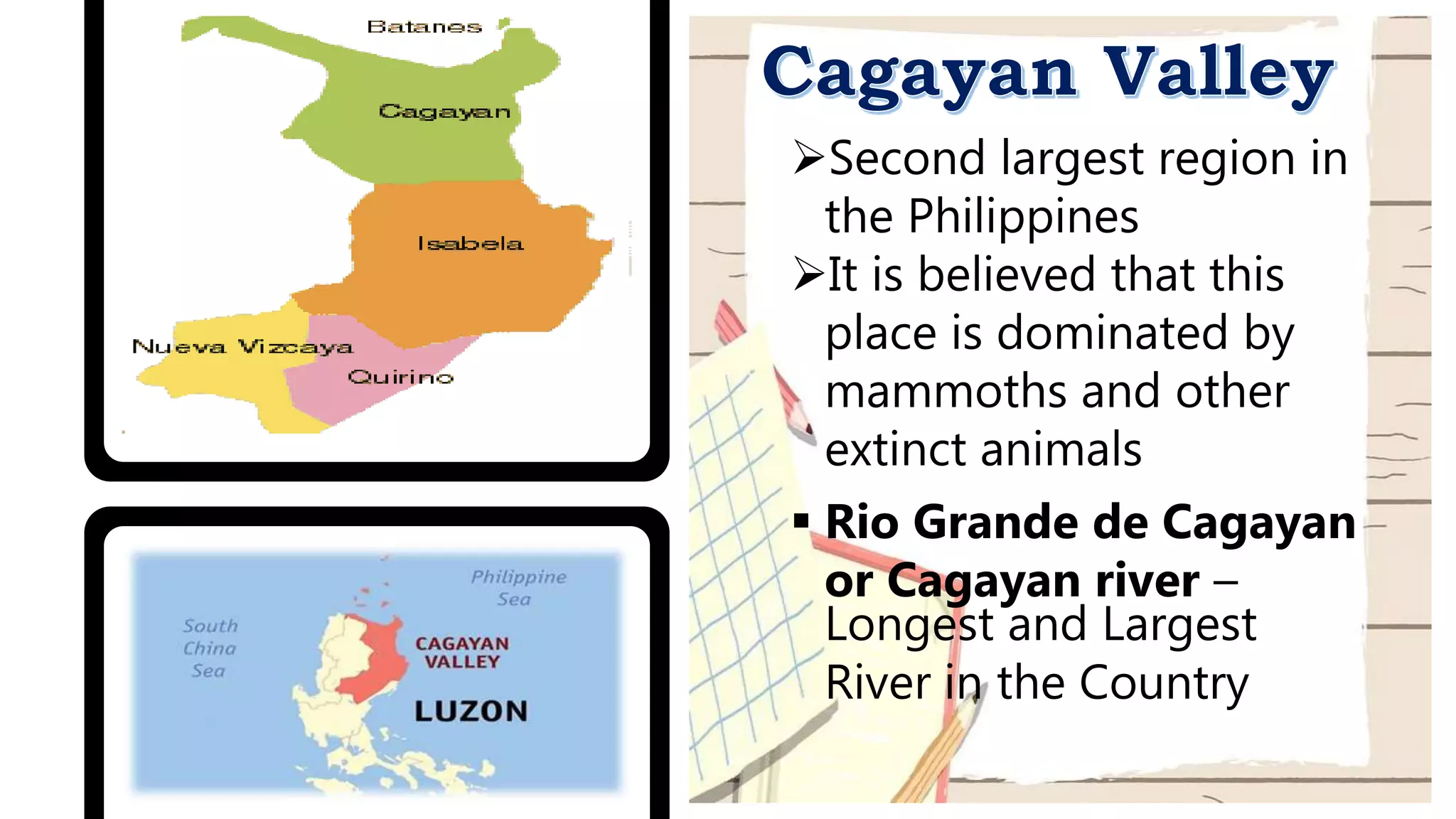
Second largest region in
the Philippines
It is believed that this
place is dominated by
mammoths and other
extinct animals
 Rio Grande de Cagayan
or Cagayan river –
Longest and Largest
River in the Country
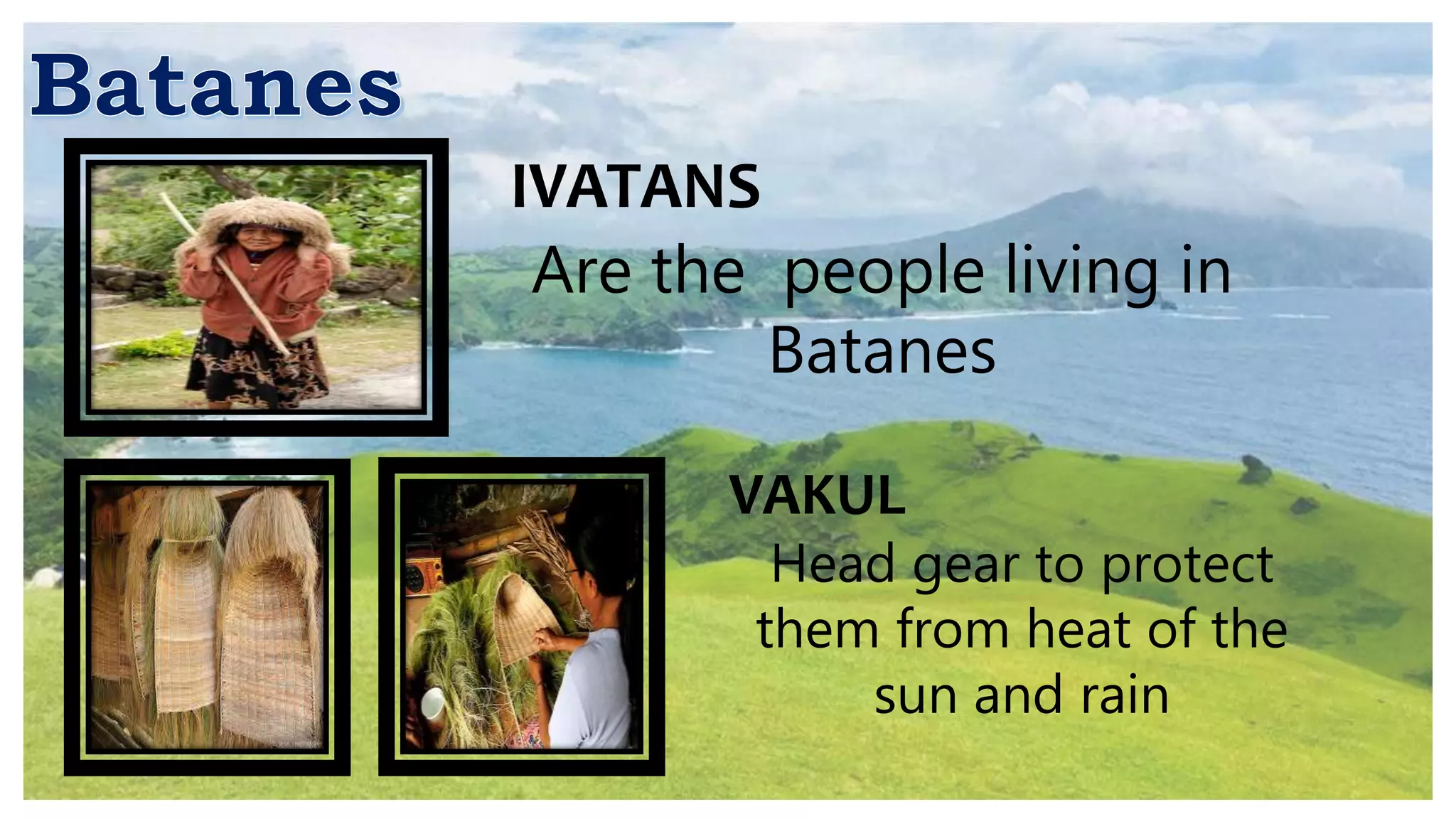
IVATANS
Are the people living in
Batanes
VAKUL
Head gear to protect
them from heat of the
sun and rain
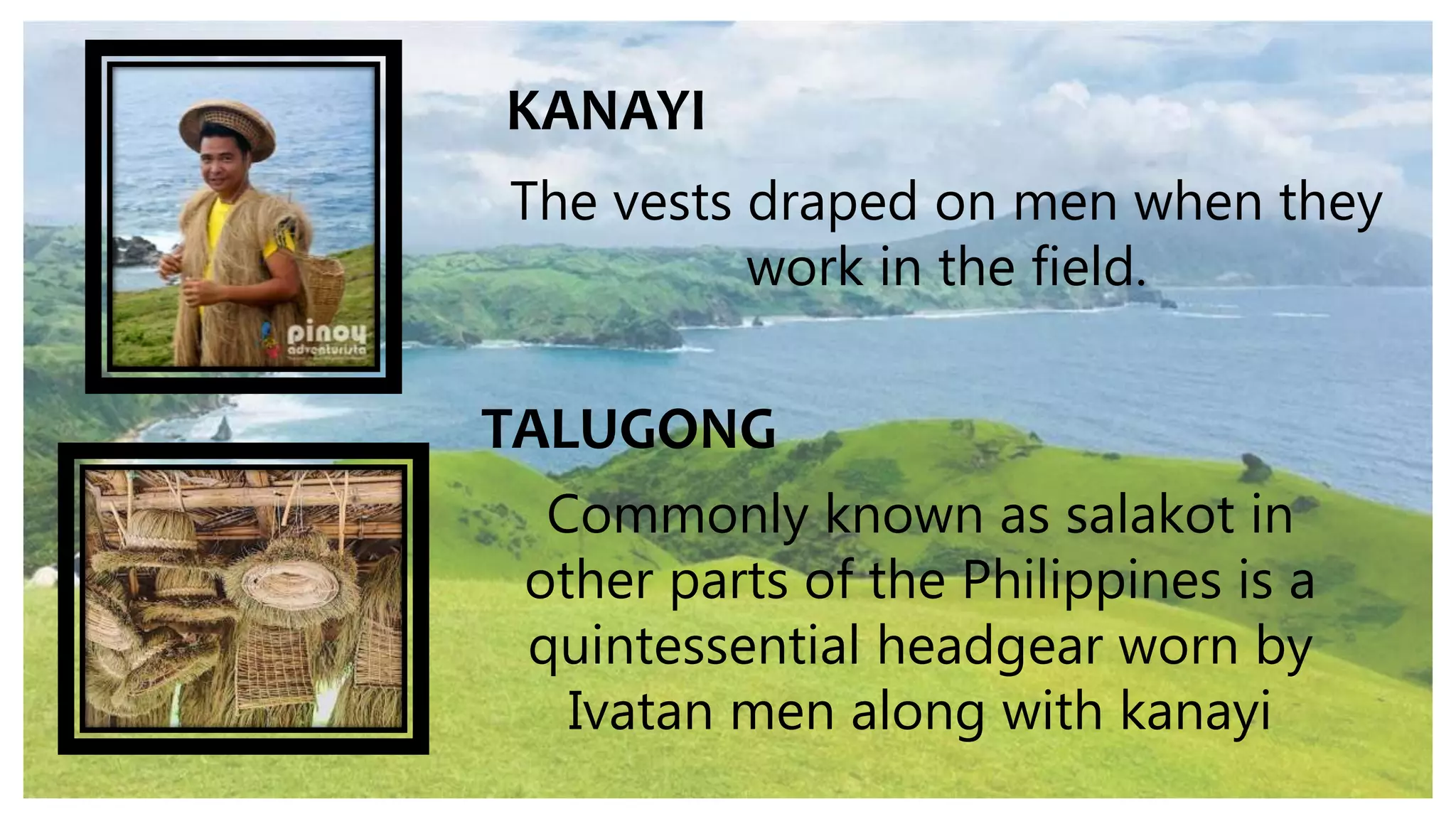
KANAYI
The vests draped on men when they
work in the field.
TALUGONG
Commonly known as salakot in
other parts of the Philippines is a
quintessential headgear worn by
Ivatan men along with kanayi
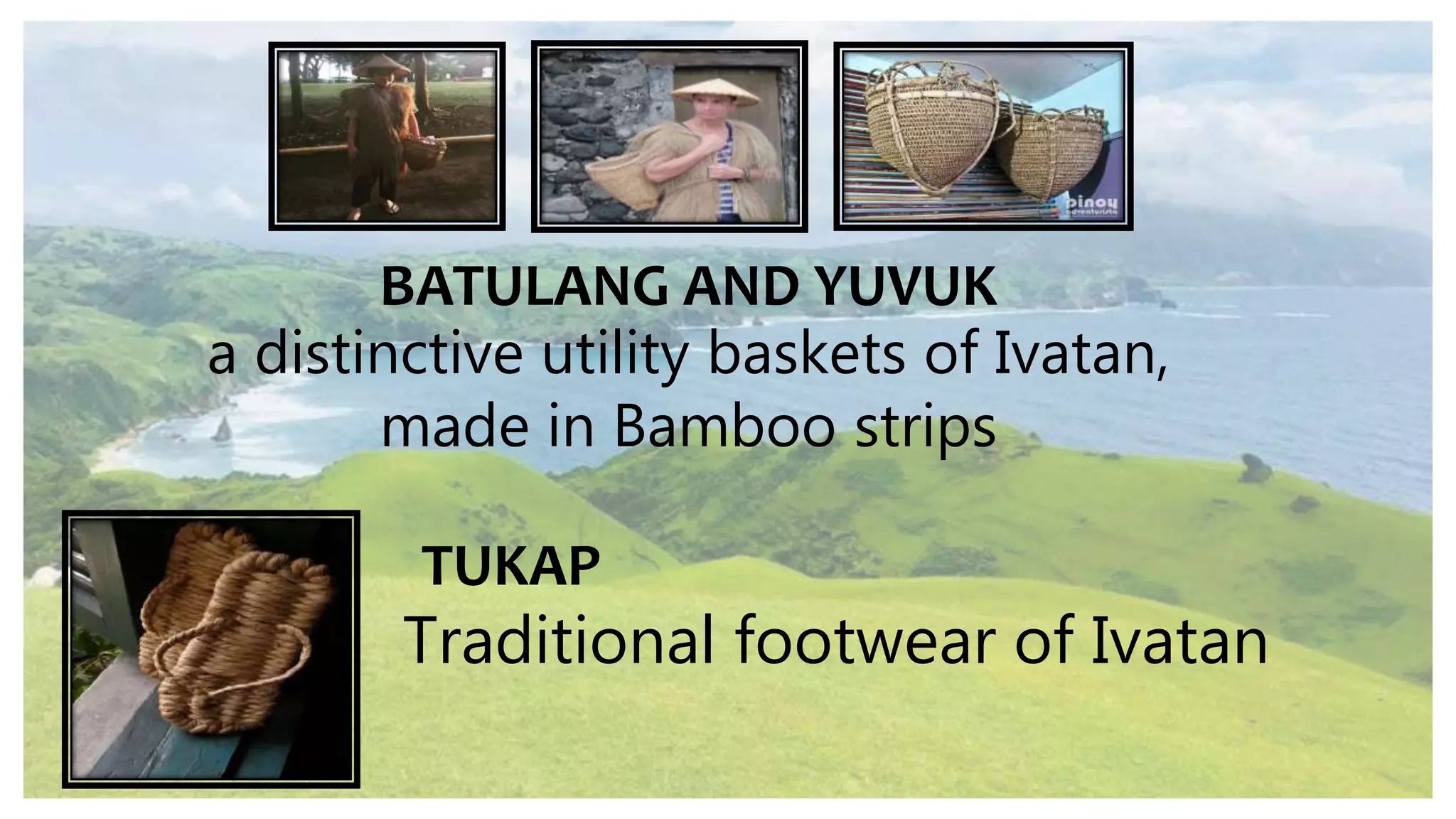
a distinctive utility baskets of Ivatan,
made in Bamboo strips
Traditional footwear of Ivatan
BATULANG AND YUVUK
TUKAP
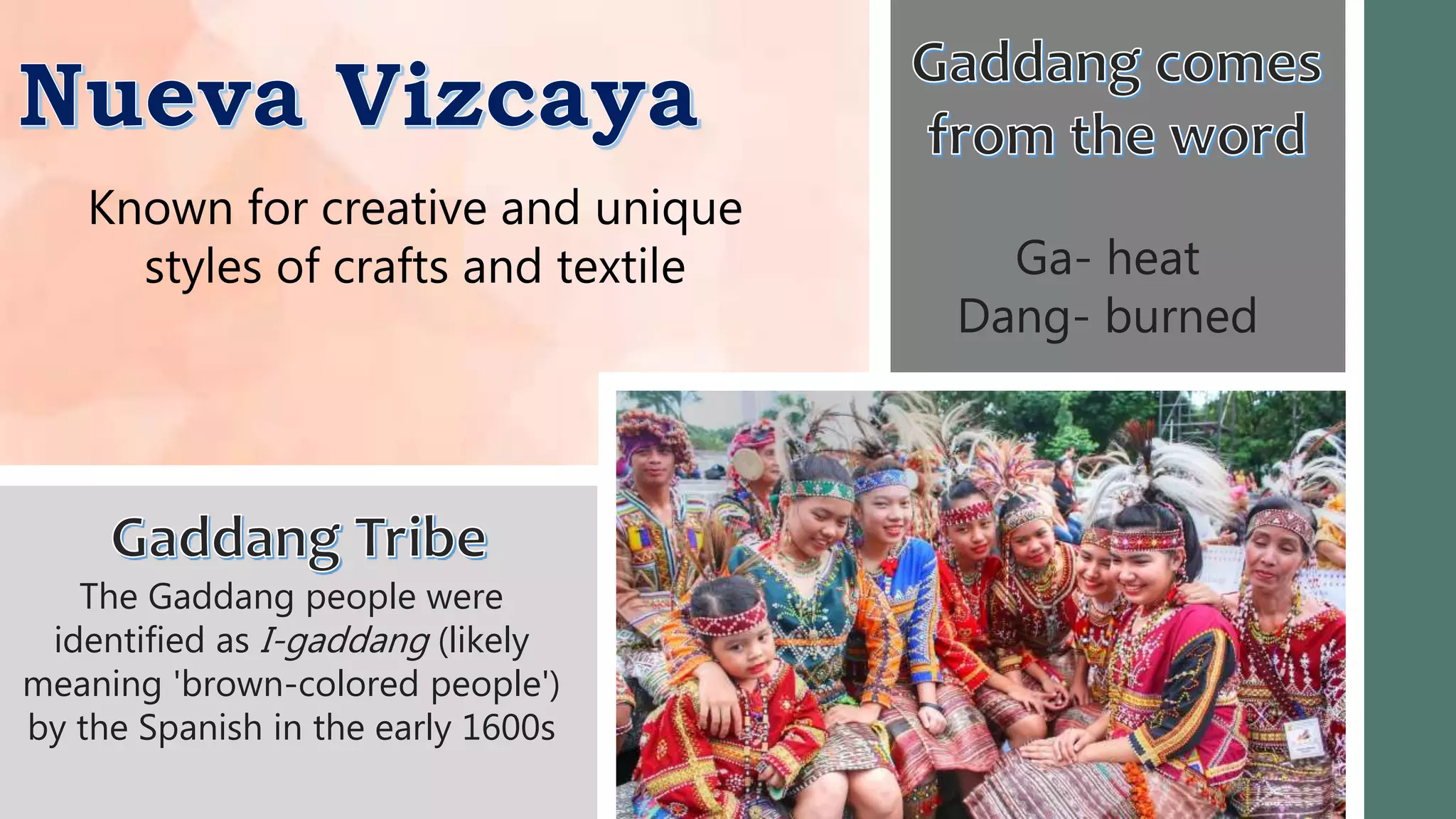
Known for creative and unique
styles of crafts and textile
The Gaddang people were
identified as I-gaddang (likely
meaning 'brown-colored people')
by the Spanish in the early 1600s
Ga- heat
Dang- burned
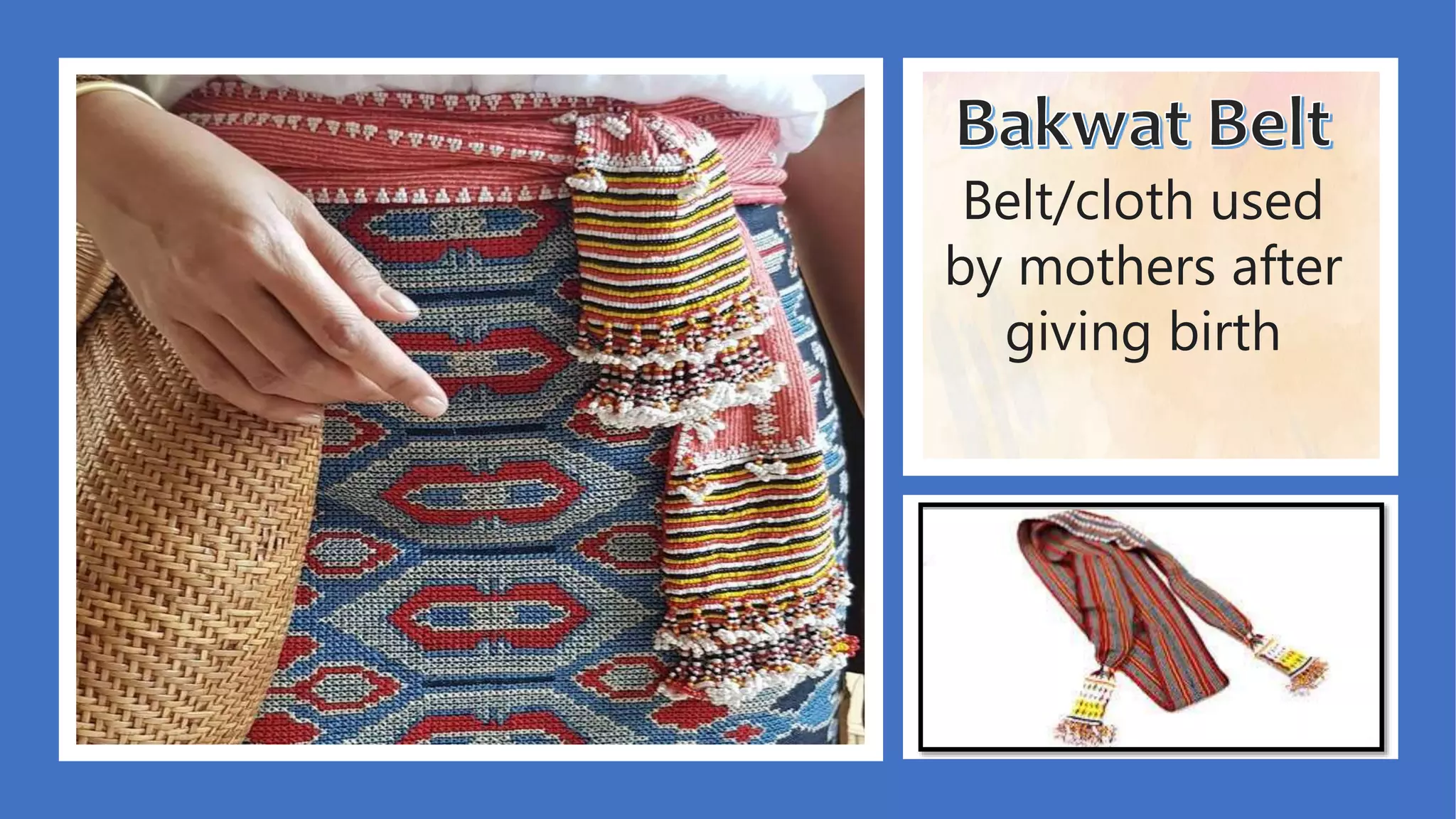
Belt/cloth used
by mothers after
giving birth
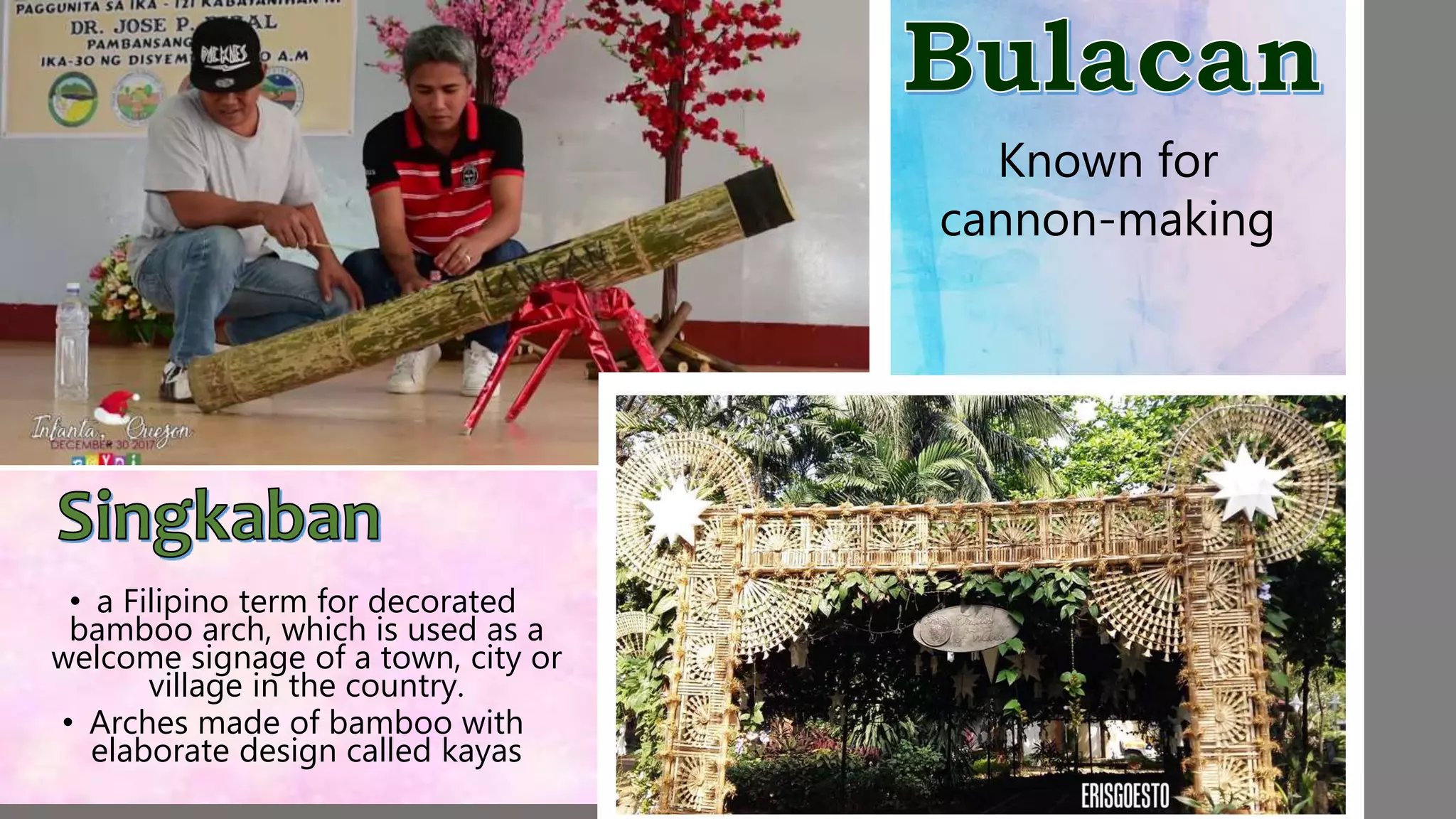
Known for
cannon-making
• a Filipino term for decorated
bamboo arch, which is used as a
welcome signage of a town, city or
village in the country.
• Arches made of bamboo with
elaborate design called kayas
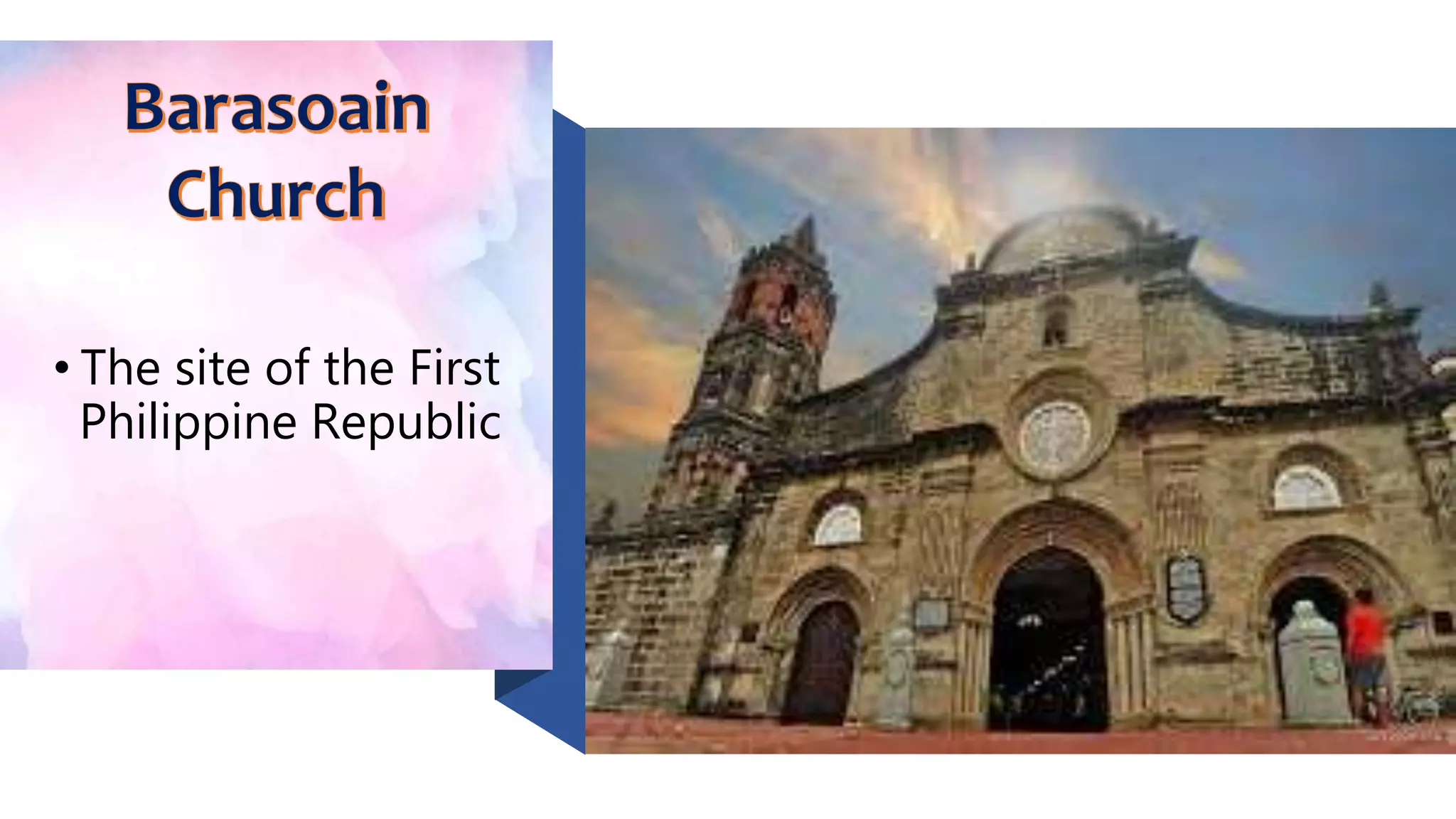
• The site of the First
Philippine Republic
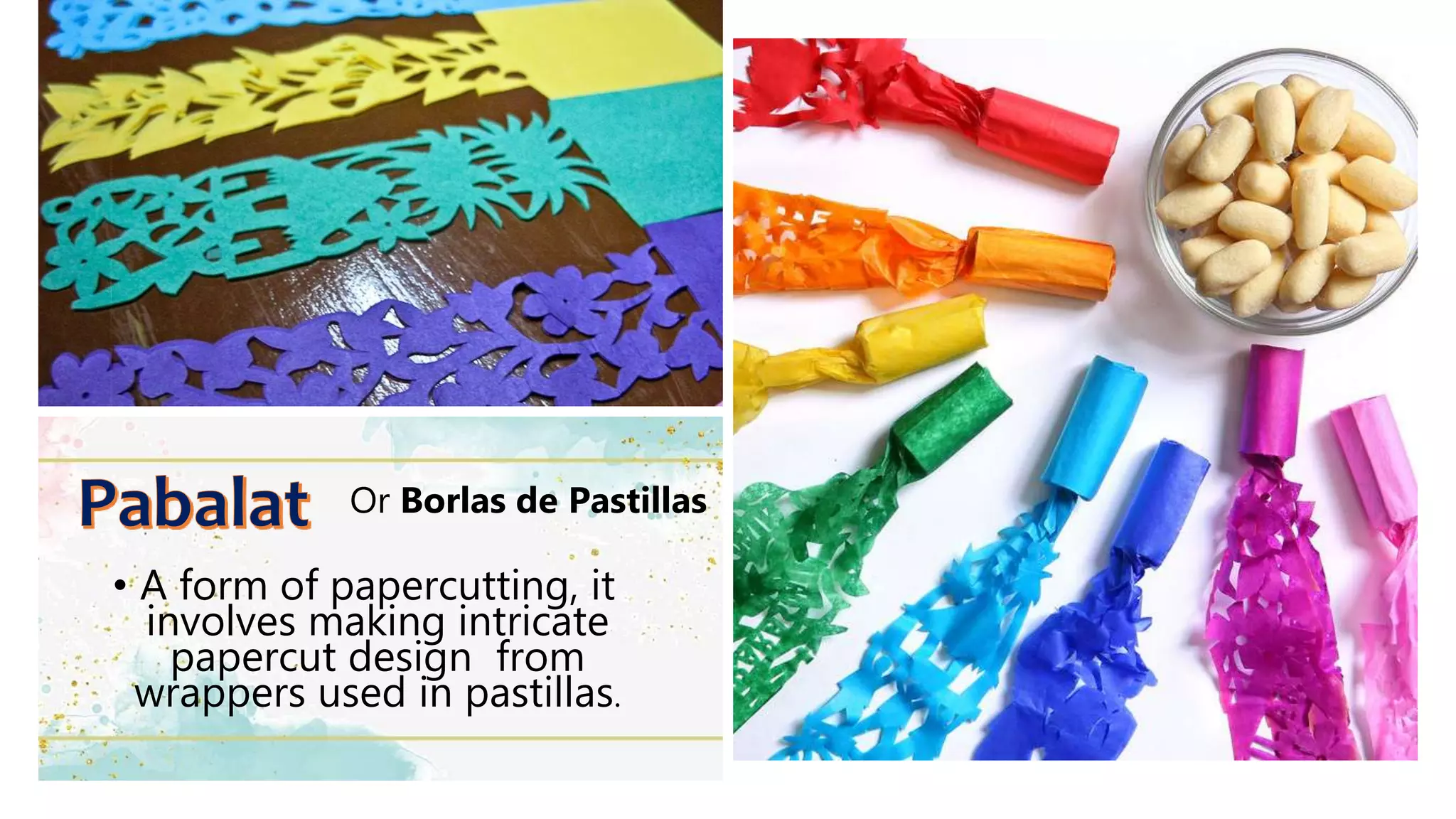
• A form of papercutting, it
involves making intricate
papercut design from
wrappers used in pastillas.
Or Borlas de Pastillas
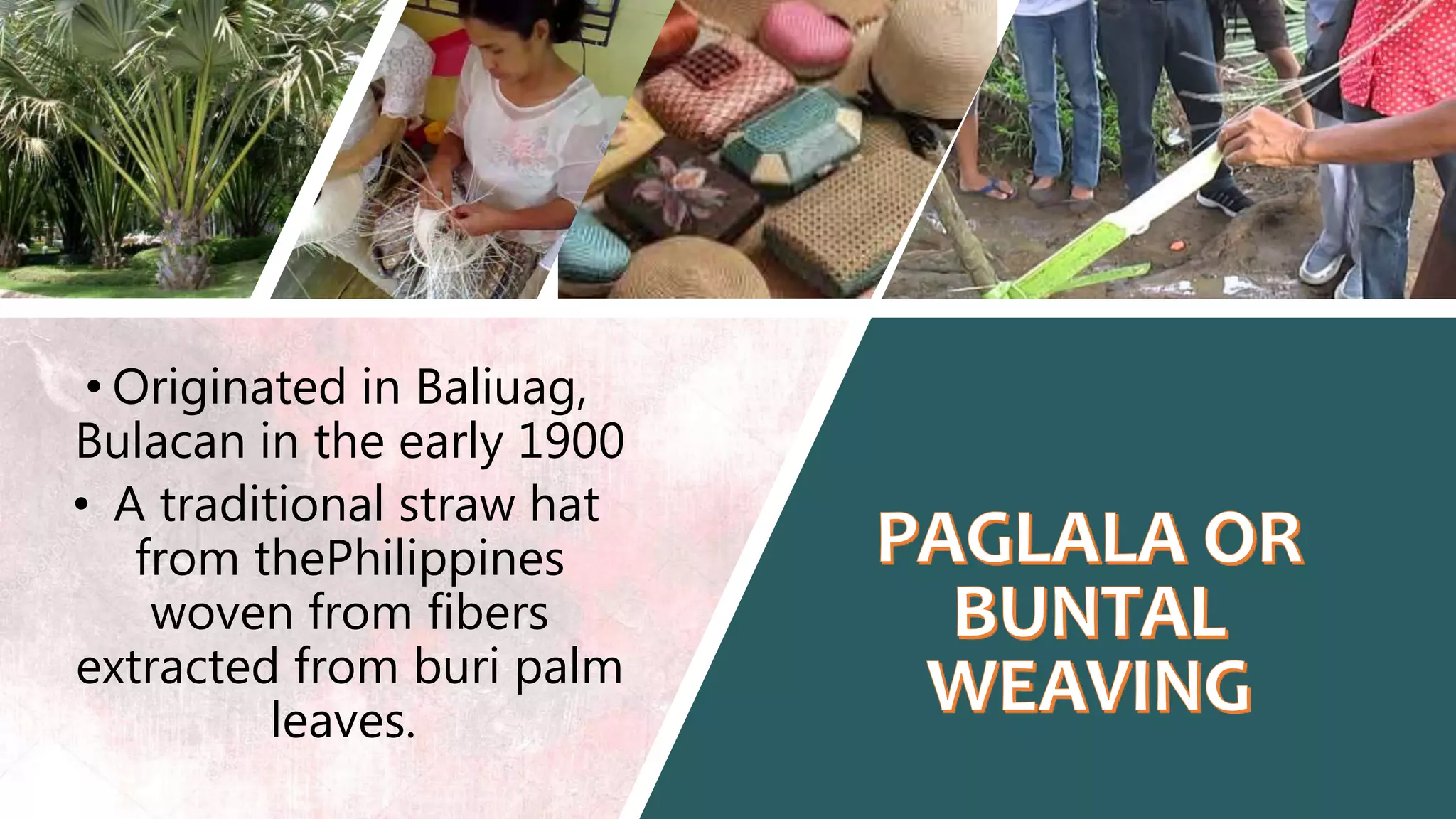
• Originated in Baliuag,
Bulacan in the early 1900
• A traditional straw hat
from thePhilippines
woven from fibers
extracted from buri palm
leaves.
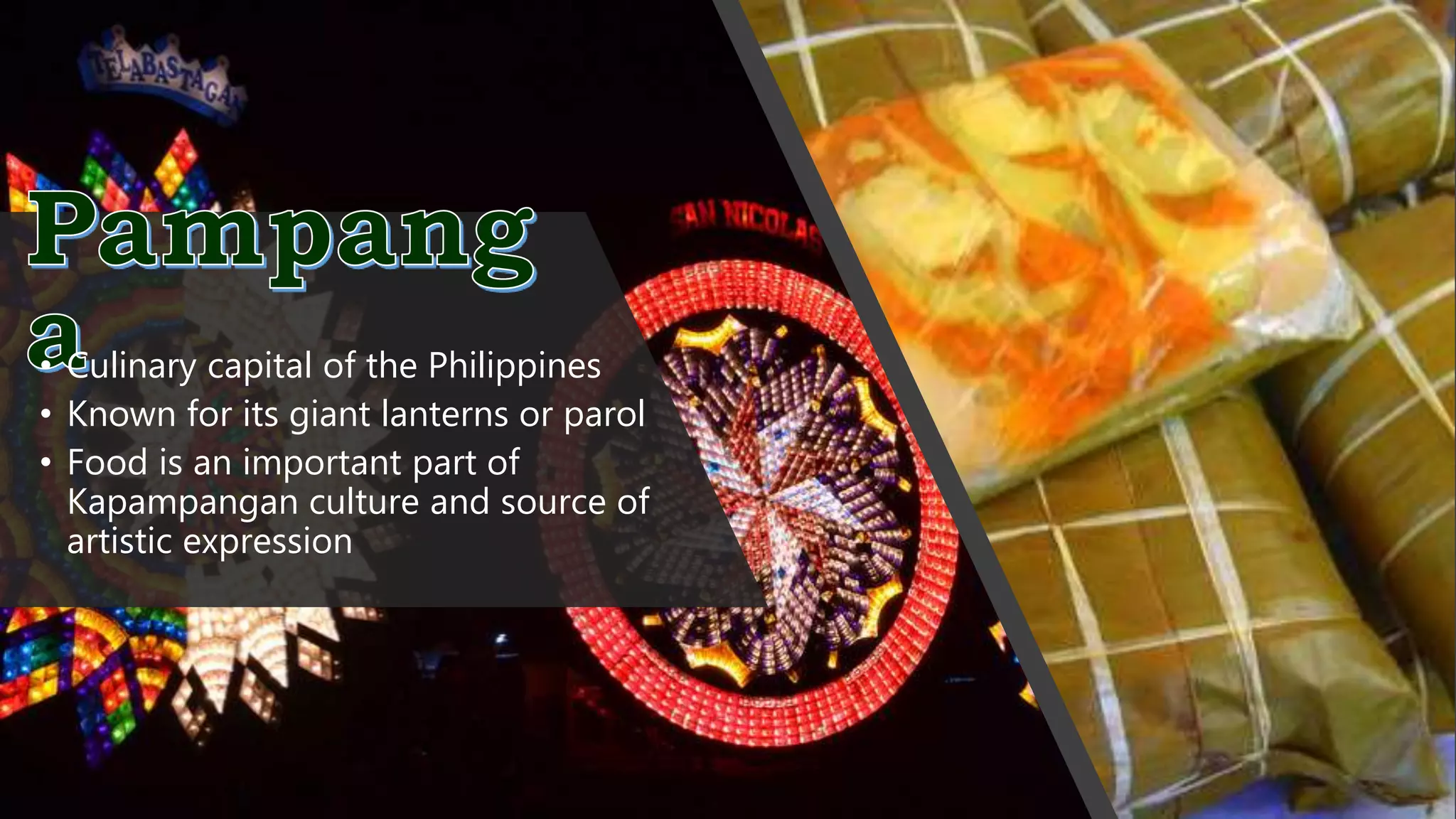
• Culinary capital of the Philippines
• Known for its giant lanterns or parol
• Food is an important part of
Kapampangan culture and source of
artistic expression
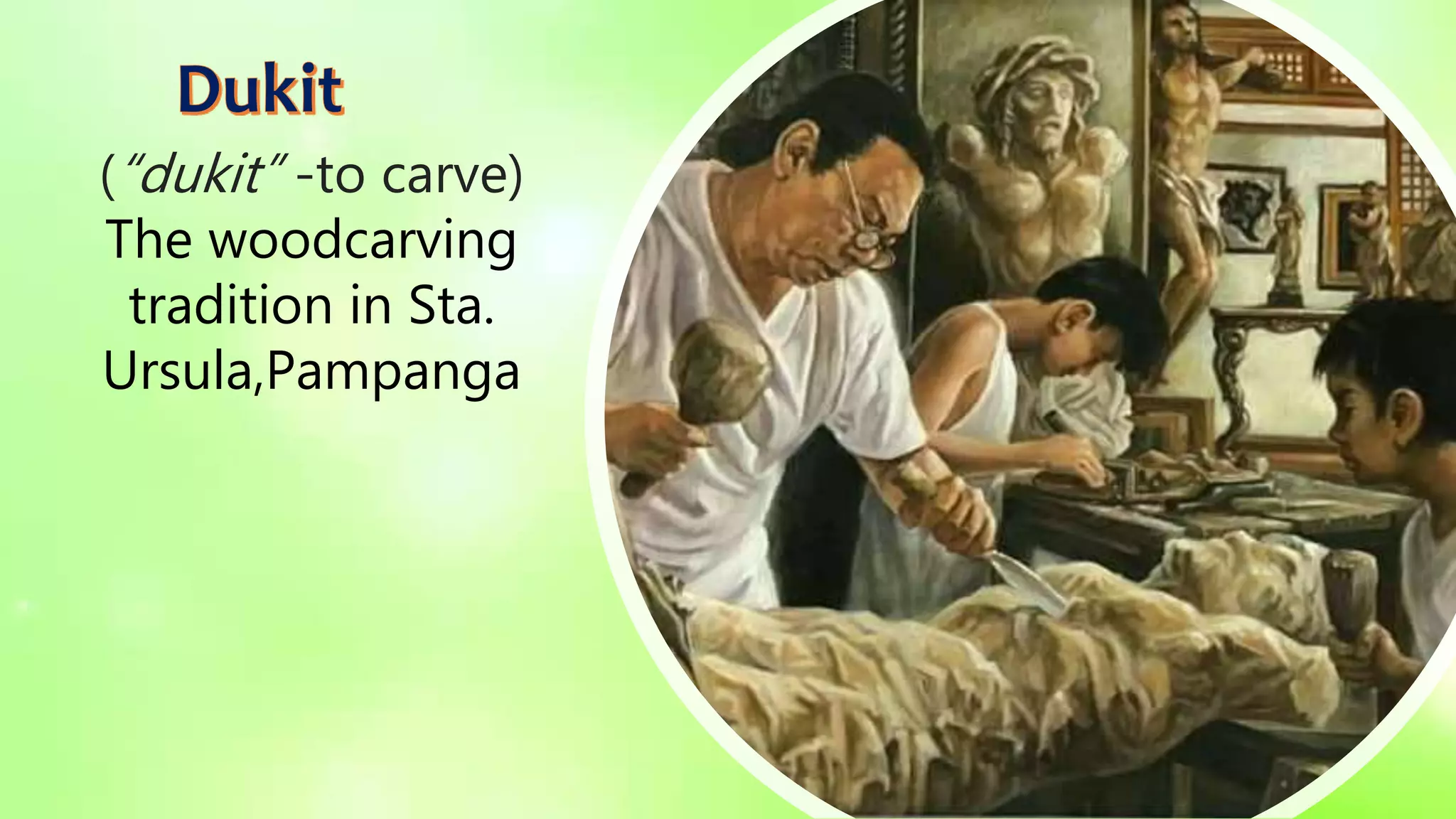
(“dukit” -to carve)
The woodcarving
tradition in Sta.
Ursula,Pampanga
Folk Arts and Crafts of Cagayan Valley and Central Luzon

Folk Arts and Crafts of Cagayan Valley and Central Luzon

  • 2.
    Second largest regionin the Philippines It is believed that this place is dominated by mammoths and other extinct animals  Rio Grande de Cagayan or Cagayan river – Longest and Largest River in the Country
  • 3.
    IVATANS Are the peopleliving in Batanes VAKUL Head gear to protect them from heat of the sun and rain
  • 4.
    KANAYI The vests drapedon men when they work in the field. TALUGONG Commonly known as salakot in other parts of the Philippines is a quintessential headgear worn by Ivatan men along with kanayi
  • 5.
    a distinctive utilitybaskets of Ivatan, made in Bamboo strips Traditional footwear of Ivatan BATULANG AND YUVUK TUKAP
  • 6.
    Known for creativeand unique styles of crafts and textile The Gaddang people were identified as I-gaddang (likely meaning 'brown-colored people') by the Spanish in the early 1600s Ga- heat Dang- burned
  • 7.
    Belt/cloth used by mothersafter giving birth
  • 9.
    Known for cannon-making • aFilipino term for decorated bamboo arch, which is used as a welcome signage of a town, city or village in the country. • Arches made of bamboo with elaborate design called kayas
  • 10.
    • The siteof the First Philippine Republic
  • 11.
    • A formof papercutting, it involves making intricate papercut design from wrappers used in pastillas. Or Borlas de Pastillas
  • 12.
    • Originated inBaliuag, Bulacan in the early 1900 • A traditional straw hat from thePhilippines woven from fibers extracted from buri palm leaves.
  • 13.
    • Culinary capitalof the Philippines • Known for its giant lanterns or parol • Food is an important part of Kapampangan culture and source of artistic expression
  • 14.
    (“dukit” -to carve) Thewoodcarving tradition in Sta. Ursula,Pampanga