Barnett Therapy Services
Barnett Therapy
Services
Billy Barnett MS, LMHC
www.barnetttherapy.com
www.billythecounselor.com
Focus is about:
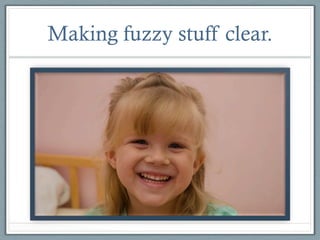
Making fuzzy stuff clear.
Huh?
Running away in your own mind from whatever is
going on around you.
Letting your internal dialogue take you somewhere else
in your mind, while life keeps on going.
Choosing to pay attention to something you prefer,
because what you are thinking about is much more
interesting than what you don’t prefer.
Barriers to Focusing
•  Language Disorder (Speech Therapist)
•  Processing Disorder (Audio/Visual) (Psych/
Educational testing, Occupational Therapist)
•  Developmental Disorder (Autism-Asperger’s etc.)
(Psychologist)
•  Executive Function Disorder
Focus or ADHD?
•  All kids with ADD/ADHD struggle with focusing,
but only 3-5% of the population fits an attention
disorder diagnosis.
•  What’s the presenting problem?
•  Ex) Attention, processing, compliance?
Ask yourself these things.
•  What is your structure?
•  What are your boundaries?
•  What are you doing currently?
•  What works, and what doesn’t?
Structure Example

•  Ten rules for your home.

• 

http://www.billythecounselor.com/2012/02/ten-rules-for-your-home.html
Treatment
•  Define the problem.
•  Lack of focus-wandering off is subconscious.
•  Identify the child’s strengths and weaknesses.
•  Develop a plan and interventions around cause and
effect.
Goal
•  The goal should be to increase frequency and
duration of positive behaviors, not to decrease
negative behaviors.
•  Identify a structure for increasing those behaviors. (If
you _____ then _______ will happen.)
Objectives
•  Ten rules for home vs. classroom rules (Structure
Level)
•  Verbal reinforcement of appropriate behavior.
•  Be consistent and sincere with praise.
•  Selectively ignore harmless inappropriate behavior.
•  Allow “escape valve outlets.”
Objectives Continued
•  Proximity cues: Move to the child’s area and speak
on their level. (Ex. Don’t embarrass an auditory
learner by making an example of them from the
front of the room. They may become overwhelmed
by internal dialogue and may continue to “run
away.”)
•  Token economy system
•  Music, furniture, time outside.
Cognitive Learning Styles
Ways we process information.
•  Auditory

•  Visual

•  Kinesthetic
Auditory
• 

This is a learning style that prefers to process information through
hearing.

• 

May prefer to listen vs. write things down.

• 

The person may repeat information verbally or internally to commit
the information to memory.
Visual
• 

This is a learning style that prefers to process information through
what they see.

• 

They may prefer to write notes to remember important information in
the classroom.

• 

They may remember pictures on a page to recall other details of the
information.

• 

Important details may be recalled through remembering a photo in a
textbook. (A picture of Columbus sailing may remind them of the
important date of the voyage.)
Kinesthetic
• 

This is a learning style that prefers to process information through
visual and tactile interaction with the material.

• 

Two subtypes (movement and tactile)

• 

Movement- May prefer to get up and move more often than others.

• 

Tactile- May need to touch an item (pencils, flashcards, keyboards
etc.) in order to stay engaged with the information.
The problem!
•  We sometimes assume the Kinesthetic learners just
can’t pay attention.
•  They seem to be wandering off or fidgeting.
•  They seem over stimulated.
•  They just won’t listen or watch what they need to
watch.
Driving a car example
•  Ever listen to a song on the stereo while driving your
car?
•  Why don’t you worry about the ditch and the other
cars?
•  How did you successfully get through two green
lights, and then stop at that red light before you
realized you were not paying attention to driving for
the last five minutes?
Flow
•  What is flow?
•  Clarity of goals, and immediate feedback on
progress.
•  Complete concentration on a task, with no room for
other information.
•  Losing awareness of self-consciousness.
•  Sense of control over the activity
•  Transformation of time.
•  Task is intrinsically rewarding.
Ironic Huh?
•  ADHD students can do what they want to do all day
without having any attention problems.
•  Video games, particular sports, musical instruments
etc.
•  They can organize their thoughts, and activities
within the game, due to immediate feedback and
reward.
Specifics
•  Reduce sensory overload. (Auditory)
•  Keep chalkboards and worksheets clean. (Visual)
•  Develop consistent routine.
•  Plan transitions (as carefully as lessons).
•  Plan movement or breaks in between activities.
(Heads up seven up.)
•  Encourage active rather than passive learning.
•  http://www.nwlink.com/~donclark/hrd/styles/
vakt.html
•  http://www.ldonline.org/article/8797/

Focus training pdf

  • 1.
  • 2.
    Barnett Therapy Services Billy BarnettMS, LMHC www.barnetttherapy.com www.billythecounselor.com
  • 3.
  • 4.
  • 5.
    Huh? Running away inyour own mind from whatever is going on around you. Letting your internal dialogue take you somewhere else in your mind, while life keeps on going. Choosing to pay attention to something you prefer, because what you are thinking about is much more interesting than what you don’t prefer.
  • 6.
    Barriers to Focusing • Language Disorder (Speech Therapist) •  Processing Disorder (Audio/Visual) (Psych/ Educational testing, Occupational Therapist) •  Developmental Disorder (Autism-Asperger’s etc.) (Psychologist) •  Executive Function Disorder
  • 7.
    Focus or ADHD? • All kids with ADD/ADHD struggle with focusing, but only 3-5% of the population fits an attention disorder diagnosis. •  What’s the presenting problem? •  Ex) Attention, processing, compliance?
  • 8.
    Ask yourself thesethings. •  What is your structure? •  What are your boundaries? •  What are you doing currently? •  What works, and what doesn’t?
  • 9.
    Structure Example •  Tenrules for your home. •  http://www.billythecounselor.com/2012/02/ten-rules-for-your-home.html
  • 10.
    Treatment •  Define theproblem. •  Lack of focus-wandering off is subconscious. •  Identify the child’s strengths and weaknesses. •  Develop a plan and interventions around cause and effect.
  • 11.
    Goal •  The goalshould be to increase frequency and duration of positive behaviors, not to decrease negative behaviors. •  Identify a structure for increasing those behaviors. (If you _____ then _______ will happen.)
  • 12.
    Objectives •  Ten rulesfor home vs. classroom rules (Structure Level) •  Verbal reinforcement of appropriate behavior. •  Be consistent and sincere with praise. •  Selectively ignore harmless inappropriate behavior. •  Allow “escape valve outlets.”
  • 13.
    Objectives Continued •  Proximitycues: Move to the child’s area and speak on their level. (Ex. Don’t embarrass an auditory learner by making an example of them from the front of the room. They may become overwhelmed by internal dialogue and may continue to “run away.”) •  Token economy system •  Music, furniture, time outside.
  • 14.
    Cognitive Learning Styles Wayswe process information. •  Auditory •  Visual •  Kinesthetic
  • 15.
    Auditory •  This is alearning style that prefers to process information through hearing. •  May prefer to listen vs. write things down. •  The person may repeat information verbally or internally to commit the information to memory.
  • 16.
    Visual •  This is alearning style that prefers to process information through what they see. •  They may prefer to write notes to remember important information in the classroom. •  They may remember pictures on a page to recall other details of the information. •  Important details may be recalled through remembering a photo in a textbook. (A picture of Columbus sailing may remind them of the important date of the voyage.)
  • 17.
    Kinesthetic •  This is alearning style that prefers to process information through visual and tactile interaction with the material. •  Two subtypes (movement and tactile) •  Movement- May prefer to get up and move more often than others. •  Tactile- May need to touch an item (pencils, flashcards, keyboards etc.) in order to stay engaged with the information.
  • 18.
    The problem! •  Wesometimes assume the Kinesthetic learners just can’t pay attention. •  They seem to be wandering off or fidgeting. •  They seem over stimulated. •  They just won’t listen or watch what they need to watch.
  • 19.
    Driving a carexample •  Ever listen to a song on the stereo while driving your car? •  Why don’t you worry about the ditch and the other cars? •  How did you successfully get through two green lights, and then stop at that red light before you realized you were not paying attention to driving for the last five minutes?
  • 20.
    Flow •  What isflow? •  Clarity of goals, and immediate feedback on progress. •  Complete concentration on a task, with no room for other information. •  Losing awareness of self-consciousness. •  Sense of control over the activity •  Transformation of time. •  Task is intrinsically rewarding.
  • 21.
    Ironic Huh? •  ADHDstudents can do what they want to do all day without having any attention problems. •  Video games, particular sports, musical instruments etc. •  They can organize their thoughts, and activities within the game, due to immediate feedback and reward.
  • 22.
    Specifics •  Reduce sensoryoverload. (Auditory) •  Keep chalkboards and worksheets clean. (Visual) •  Develop consistent routine. •  Plan transitions (as carefully as lessons). •  Plan movement or breaks in between activities. (Heads up seven up.) •  Encourage active rather than passive learning.
  • 23.