Fluid and electrolyte imbalance
in hematology
Presenter: Dr Ankit Jitani
Basic concepts
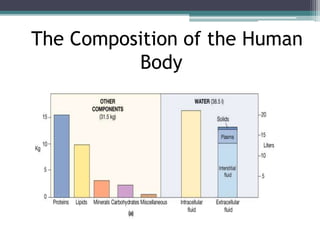
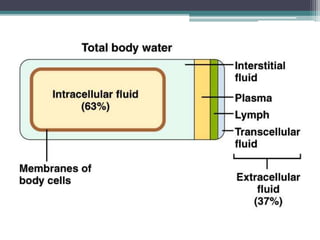
The Composition of the Human
Body
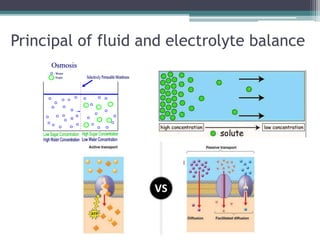
Principal of fluid and electrolyte balance
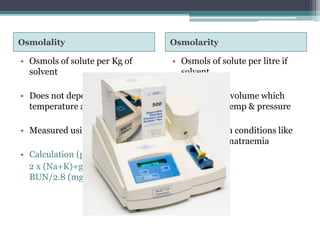
Osmolality Osmolarity
• Osmols of solute per Kg of
solvent
• Does not depend on
temperature and pressure
• Measured using Osmometer
• Calculation (plasma):
2 x (Na+K)+glucose/18+
BUN/2.8 (mg/dl)
• Osmols of solute per litre if
solvent
• Depends on volume which
varies with temp & pressure
• Unreliable in conditions like
pseudohyponatraemia
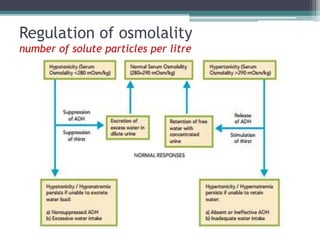
Regulation of osmolality
number of solute particles per litre
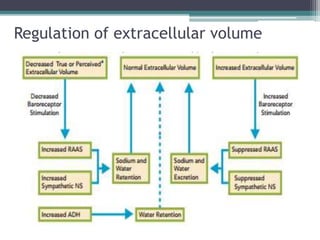
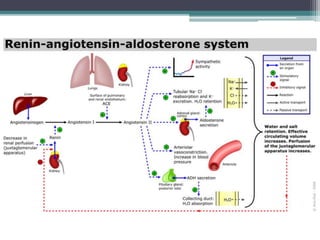
Regulation of extracellular volume
Case based approach to electrolyte abnormalities
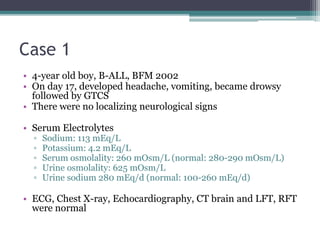
Case 1
• 4-year old boy, B-ALL, BFM 2002
• On day 17, developed headache, vomiting, became drowsy
followed by GTCS
• There were no localizing neurological signs
• Serum Electrolytes
â–« Sodium: 113 mEq/L
â–« Potassium: 4.2 mEq/L
â–« Serum osmolality: 260 mOsm/L (normal: 280-290 mOsm/L)
â–« Urine osmolality: 625 mOsm/L
â–« Urine sodium 280 mEq/d (normal: 100-260 mEq/d)
• ECG, Chest X-ray, Echocardiography, CT brain and LFT, RFT
were normal
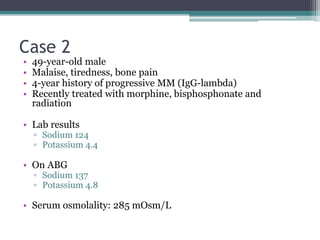
Case 2
• 49-year-old male
• Malaise, tiredness, bone pain
• 4-year history of progressive MM (IgG-lambda)
• Recently treated with morphine, bisphosphonate and
radiation
• Lab results
â–« Sodium 124
â–« Potassium 4.4
• On ABG
â–« Sodium 137
â–« Potassium 4.8
• Serum osmolality: 285 mOsm/L
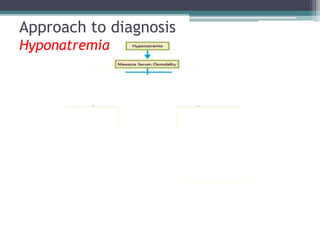
Approach to diagnosis
Hyponatremia
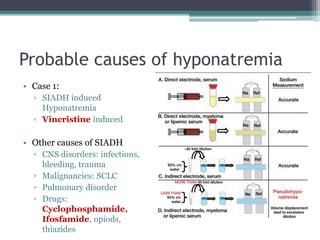
Probable causes of hyponatremia
• Case 1:
â–« SIADH induced
Hyponatremia
â–« Vincristine induced
• Other causes of SIADH
â–« CNS disorders: infections,
bleeding, trauma
â–« Malignancies: SCLC
â–« Pulmonary disorder
â–« Drugs:
Cyclophosphamide,
Ifosfamide, opiods,
thiazides
• Case 2
â–« Pseudohyponatremia
• Causes:
â–« Hyperproteinemia
â–« Hyperlipidemia
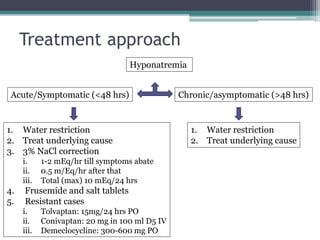
Treatment approach
Hyponatremia
Chronic/asymptomatic (>48 hrs)Acute/Symptomatic (<48 hrs)
1. Water restriction
2. Treat underlying cause
3. 3% NaCl correction
i. 1-2 mEq/hr till symptoms abate
ii. 0.5 m/Eq/hr after that
iii. Total (max) 10 mEq/24 hrs
4. Frusemide and salt tablets
5. Resistant cases
i. Tolvaptan: 15mg/24 hrs PO
ii. Conivaptan: 20 mg in 100 ml D5 IV
iii. Demeclocycline: 300-600 mg PO
1. Water restriction
2. Treat underlying cause
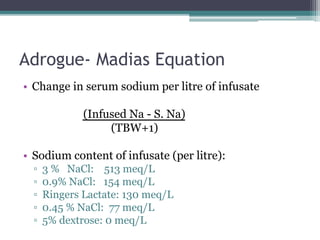
Adrogue- Madias Equation
• Change in serum sodium per litre of infusate
(Infused Na - S. Na)
(TBW+1)
• Sodium content of infusate (per litre):
â–« 3 % NaCl: 513 meq/L
â–« 0.9% NaCl: 154 meq/L
â–« Ringers Lactate: 130 meq/L
â–« 0.45 % NaCl: 77 meq/L
â–« 5% dextrose: 0 meq/L
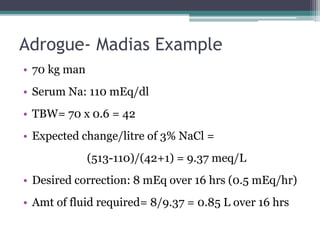
Adrogue- Madias Example
• 70 kg man
• Serum Na: 110 mEq/dl
• TBW= 70 x 0.6 = 42
• Expected change/litre of 3% NaCl =
(513-110)/(42+1) = 9.37 meq/L
• Desired correction: 8 mEq over 16 hrs (0.5 mEq/hr)
• Amt of fluid required= 8/9.37 = 0.85 L over 16 hrs
Central pontine myelinolysis
• Rapid correction of hyponatremia
• Mechanisms:
â–« Disrupted integrity of BBB -> entry of immune
mediator -> demyelination
â–« Delay in re-accumulation of osmotic osmolytes
• Oligodendrocytes
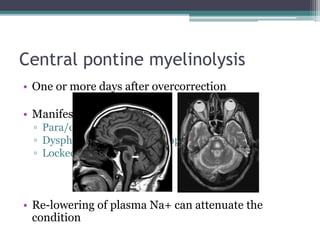
Central pontine myelinolysis
• One or more days after overcorrection
• Manifestations:
â–« Para/quadriparasis
â–« Dysphagia/dysarthria/diplopia
â–« Locked in syndrome
• Re-lowering of plasma Na+ can attenuate the
condition
Case 3
• A 15 year old girl with B-ALL
• On BFM-2002 induction
• Developed septicemia with fungal pneumonia on
day 29 of chemotherapy
• Transferred to ICU and was put on mechanical
ventilation
• Decreased urine output, diminished DTR
• Lab
â–« Serum Na+: 160 mEq/L
â–« Urine osmolality: 900 mOsm/L
Hypernatremia
• Contributing Factors
â–« Decreased water intake: sedated, intubated
â–« Corticosteroids
â–« Na containing IV fluids
â–« Insensible water loss
â–« Diabetes insipidus
â–« Hyperaldosteronism
â–« Uncontrolled diabetes: osmotic diuresis
â–« Increase in oral Na intake
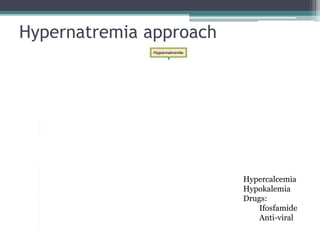
Hypernatremia approach
Hypercalcemia
Hypokalemia
Drugs:
Ifosfamide
Anti-viral
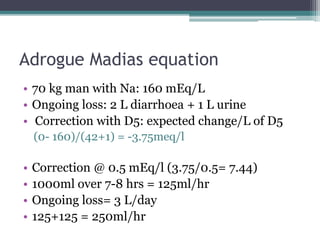
Adrogue Madias equation
• 70 kg man with Na: 160 mEq/L
• Ongoing loss: 2 L diarrhoea + 1 L urine
• Correction with D5: expected change/L of D5
(0- 160)/(42+1) = -3.75meq/l
• Correction @ 0.5 mEq/l (3.75/0.5= 7.44)
• 1000ml over 7-8 hrs = 125ml/hr
• Ongoing loss= 3 L/day
• 125+125 = 250ml/hr
Case 4
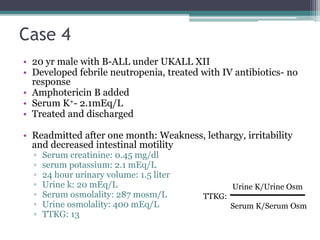
• 20 yr male with B-ALL under UKALL XII
• Developed febrile neutropenia, treated with IV antibiotics- no
response
• Amphotericin B added
• Serum K+- 2.1mEq/L
• Treated and discharged
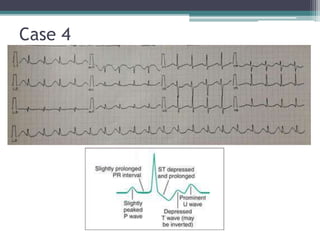
• Readmitted after one month: Weakness, lethargy, irritability
and decreased intestinal motility
â–« Serum creatinine: 0.45 mg/dl
â–« serum potassium: 2.1 mEq/L
â–« 24 hour urinary volume: 1.5 liter
â–« Urine k: 20 mEq/L
â–« Serum osmolality: 287 mosm/L
â–« Urine osmolality: 400 mEq/L
â–« TTKG: 13
Urine K/Urine Osm
TTKG:
Serum K/Serum Osm
Case 4
Hypokalemia workup
Treatment algorithm
Treatment
• Stop diuretics
• Correct Magnesium
• K+ replacement (IV or PO)
• (Body wt x Deficit x 0.4 [correction factor]) + body wt
• IV: ECG monitoring
• Encourage potassium-rich foods
â–« Normotensive: oral KCl
â–« Hypertensive: K+ sparing diuretics
• Treat underlying cause
Case 5
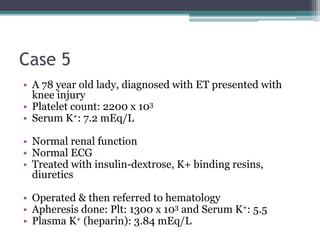
• A 78 year old lady, diagnosed with ET presented with
knee injury
• Platelet count: 2200 x 103
• Serum K+: 7.2 mEq/L
• Normal renal function
• Normal ECG
• Treated with insulin-dextrose, K+ binding resins,
diuretics
• Operated & then referred to hematology
• Apheresis done: Plt: 1300 x 103 and Serum K+: 5.5
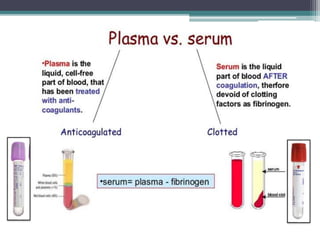
• Plasma K+ (heparin): 3.84 mEq/L
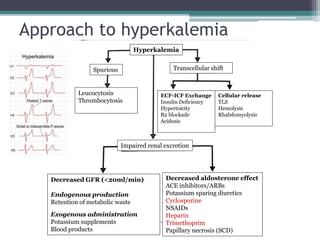
Approach to hyperkalemia
Hyperkalemia
Spurious Transcellular shift
Leucocytosis
Thrombocytosis
ECF-ICF Exchange
Insulin Deficiency
Hypertoicity
Î’2 blockade
Acidosis
Cellular release
TLS
Hemolysis
Rhabdomyolysis
Impaired renal excretion
Decreased GFR (<20ml/min)
Endogenous production
Retention of metabolic waste
Exogenous administration
Potassium supplements
Blood products
Decreased aldosterone effect
ACE inhibitors/ARBs
Potassium sparing diuretics
Cyclosporine
NSAIDs
Heparin
Trimethoprim
Papillary necrosis (SCD)
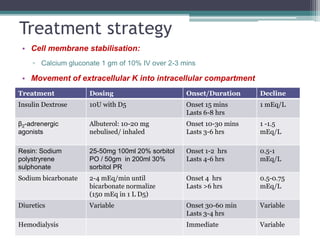
Treatment strategy
• Cell membrane stabilisation:
â–« Calcium gluconate 1 gm of 10% IV over 2-3 mins
• Movement of extracellular K into intracellular compartment
Treatment Dosing Onset/Duration Decline
Insulin Dextrose 10U with D5 Onset 15 mins
Lasts 6-8 hrs
1 mEq/L
β2-adrenergic
agonists
Albuterol: 10-20 mg
nebulised/ inhaled
Onset 10-30 mins
Lasts 3-6 hrs
1 -1.5
mEq/L
Resin: Sodium
polystryrene
sulphonate
25-50mg 100ml 20% sorbitol
PO / 50gm in 200ml 30%
sorbitol PR
Onset 1-2 hrs
Lasts 4-6 hrs
0.5-1
mEq/L
Sodium bicarbonate 2-4 mEq/min until
bicarbonate normalize
(150 mEq in 1 L D5)
Onset 4 hrs
Lasts >6 hrs
0.5-0.75
mEq/L
Diuretics Variable Onset 30-60 min
Lasts 3-4 hrs
Variable
Hemodialysis Immediate Variable
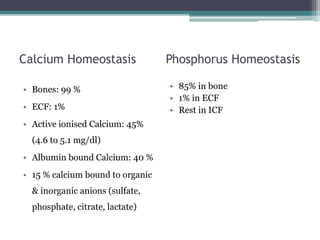
Calcium Homeostasis Phosphorus Homeostasis
• Bones: 99 %
• ECF: 1%
• Active ionised Calcium: 45%
(4.6 to 5.1 mg/dl)
• Albumin bound Calcium: 40 %
• 15 % calcium bound to organic
& inorganic anions (sulfate,
phosphate, citrate, lactate)
• 85% in bone
• 1% in ECF
• Rest in ICF
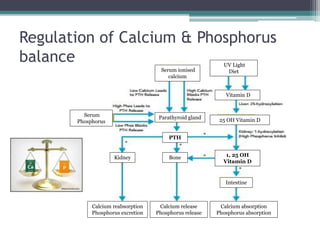
Regulation of Calcium & Phosphorus
balance
PTH
1, 25 OH
Vitamin D
BoneKidney
Calcium reabsorption
Phosphorus excretion
Calcium release
Phosphorus release
Calcium absorption
Phosphorus absorption
Parathyroid gland 25 OH Vitamin D
Vitamin D
UV Light
DietSerum ionised
calcium
Serum
Phosphorus
Intestine
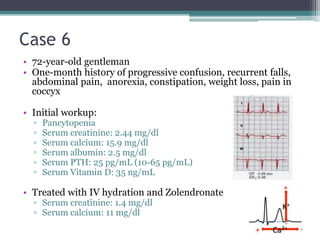
• 72-year-old gentleman
• One-month history of progressive confusion, recurrent falls,
abdominal pain, anorexia, constipation, weight loss, pain in
coccyx
• Initial workup:
â–« Pancytopenia
â–« Serum creatinine: 2.44 mg/dl
â–« Serum calcium: 15.9 mg/dl
â–« Serum albumin: 2.5 mg/dl
â–« Serum PTH: 25 pg/mL (10-65 pg/mL)
â–« Serum Vitamin D: 35 ng/mL
• Treated with IV hydration and Zolendronate
â–« Serum creatinine: 1.4 mg/dl
â–« Serum calcium: 11 mg/dl
Case 6
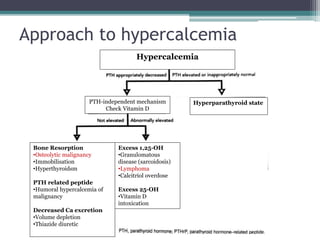
Approach to hypercalcemia
Hypercalcemia
PTH-independent mechanism
Check Vitamin D
Bone Resorption
•Osteolytic malignancy
•Immobilisation
•Hyperthyroidsm
PTH related peptide
•Humoral hypercalcemia of
malignancy
Decreased Ca excretion
•Volume depletion
•Thiazide diuretic
Excess 1,25-OH
•Granulomatous
disease (sarcoidosis)
•Lymphoma
•Calcitriol overdose
Excess 25-OH
•Vitamin D
intoxication
Hyperparathyroid state
Treatment
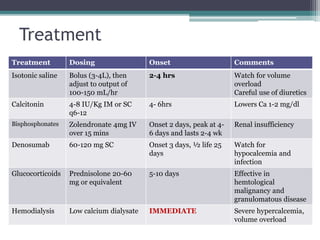
Treatment Dosing Onset Comments
Isotonic saline Bolus (3-4L), then
adjust to output of
100-150 mL/hr
2-4 hrs Watch for volume
overload
Careful use of diuretics
Calcitonin 4-8 IU/Kg IM or SC
q6-12
4- 6hrs Lowers Ca 1-2 mg/dl
Bisphosphonates Zolendronate 4mg IV
over 15 mins
Onset 2 days, peak at 4-
6 days and lasts 2-4 wk
Renal insufficiency
Denosumab 60-120 mg SC Onset 3 days, ½ life 25
days
Watch for
hypocalcemia and
infection
Glucocorticoids Prednisolone 20-60
mg or equivalent
5-10 days Effective in
hemtological
malignancy and
granulomatous disease
Hemodialysis Low calcium dialysate IMMEDIATE Severe hypercalcemia,
volume overload
Case 7
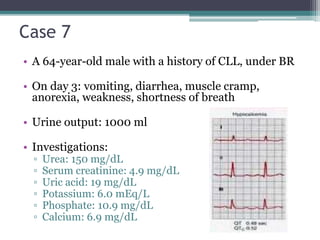
• A 64-year-old male with a history of CLL, under BR
• On day 3: vomiting, diarrhea, muscle cramp,
anorexia, weakness, shortness of breath
• Urine output: 1000 ml
• Investigations:
â–« Urea: 150 mg/dL
â–« Serum creatinine: 4.9 mg/dL
â–« Uric acid: 19 mg/dL
â–« Potassium: 6.0 mEq/L
â–« Phosphate: 10.9 mg/dL
â–« Calcium: 6.9 mg/dL
Case 7
Management
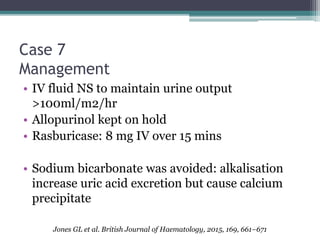
• IV fluid NS to maintain urine output
>100ml/m2/hr
• Allopurinol kept on hold
• Rasburicase: 8 mg IV over 15 mins
• Sodium bicarbonate was avoided: alkalisation
increase uric acid excretion but cause calcium
precipitate
Jones GL et al. British Journal of Haematology, 2015, 169, 661–671
Case 7
Management
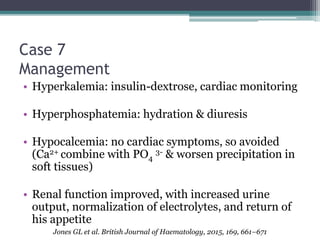
• Hyperkalemia: insulin-dextrose, cardiac monitoring
• Hyperphosphatemia: hydration & diuresis
• Hypocalcemia: no cardiac symptoms, so avoided
(Ca2+ combine with PO4
3- & worsen precipitation in
soft tissues)
• Renal function improved, with increased urine
output, normalization of electrolytes, and return of
his appetite
Jones GL et al. British Journal of Haematology, 2015, 169, 661–671
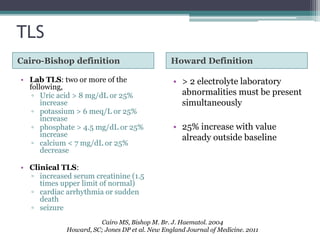
TLS
Cairo-Bishop definition Howard Definition
• Lab TLS: two or more of the
following,
â–« Uric acid > 8 mg/dL or 25%
increase
â–« potassium > 6 meq/L or 25%
increase
â–« phosphate > 4.5 mg/dL or 25%
increase
â–« calcium < 7 mg/dL or 25%
decrease
• Clinical TLS:
â–« increased serum creatinine (1.5
times upper limit of normal)
â–« cardiac arrhythmia or sudden
death
â–« seizure
• > 2 electrolyte laboratory
abnormalities must be present
simultaneously
• 25% increase with value
already outside baseline
Cairo MS, Bishop M. Br. J. Haematol. 2004
Howard, SC; Jones DP et al. New England Journal of Medicine. 2011
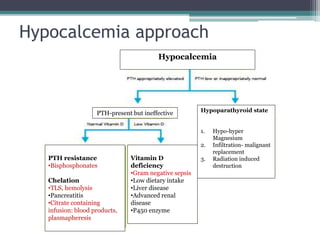
Hypocalcemia approach
Hypocalcemia
PTH-present but ineffective Hypoparathyroid state
1. Hypo-hyper
Magnesium
2. Infiltration- malignant
replacement
3. Radiation induced
destruction
PTH resistance
•Bisphosphonates
Chelation
•TLS, hemolysis
•Pancreatitis
•Citrate containing
infusion: blood products,
plasmapheresis
Vitamin D
deficiency
•Gram negative sepsis
•Low dietary intake
•Liver disease
•Advanced renal
disease
•P450 enzyme
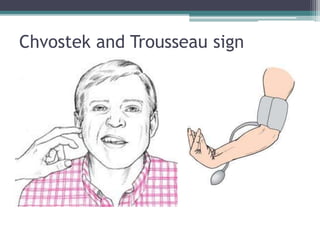
Chvostek and Trousseau sign
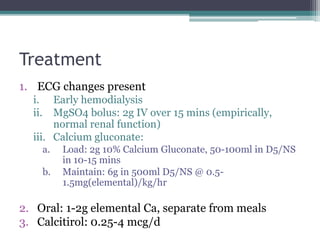
Treatment
1. ECG changes present
i. Early hemodialysis
ii. MgSO4 bolus: 2g IV over 15 mins (empirically,
normal renal function)
iii. Calcium gluconate:
a. Load: 2g 10% Calcium Gluconate, 50-100ml in D5/NS
in 10-15 mins
b. Maintain: 6g in 500ml D5/NS @ 0.5-
1.5mg(elemental)/kg/hr
2. Oral: 1-2g elemental Ca, separate from meals
3. Calcitirol: 0.25-4 mcg/d
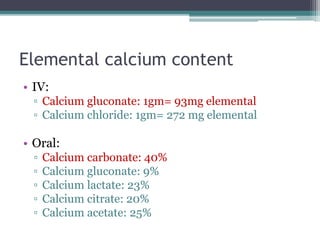
Elemental calcium content
• IV:
â–« Calcium gluconate: 1gm= 93mg elemental
â–« Calcium chloride: 1gm= 272 mg elemental
• Oral:
â–« Calcium carbonate: 40%
â–« Calcium gluconate: 9%
â–« Calcium lactate: 23%
â–« Calcium citrate: 20%
â–« Calcium acetate: 25%
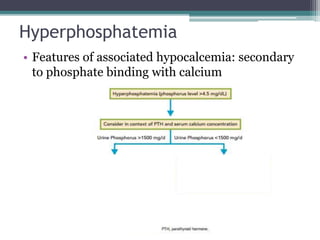
Hyperphosphatemia
• Features of associated hypocalcemia: secondary
to phosphate binding with calcium
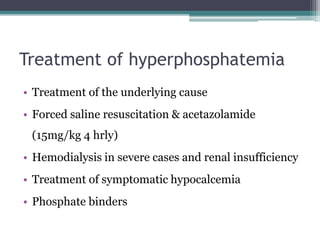
Treatment of hyperphosphatemia
• Treatment of the underlying cause
• Forced saline resuscitation & acetazolamide
(15mg/kg 4 hrly)
• Hemodialysis in severe cases and renal insufficiency
• Treatment of symptomatic hypocalcemia
• Phosphate binders
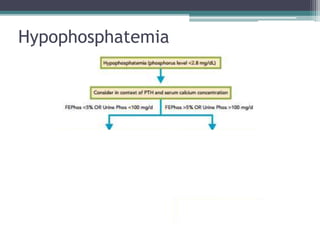
Hypophosphatemia
Management
Close monitoring of Ca level
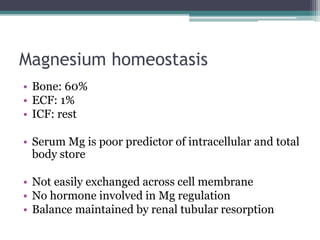
Magnesium homeostasis
• Bone: 60%
• ECF: 1%
• ICF: rest
• Serum Mg is poor predictor of intracellular and total
body store
• Not easily exchanged across cell membrane
• No hormone involved in Mg regulation
• Balance maintained by renal tubular resorption
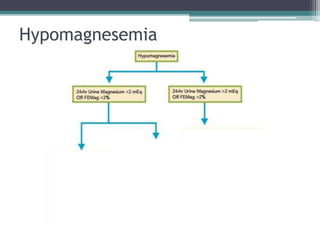
Hypomagnesemia
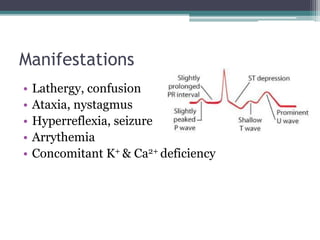
Manifestations
• Lathergy, confusion
• Ataxia, nystagmus
• Hyperreflexia, seizure
• Arrythemia
• Concomitant K+ & Ca2+ deficiency
Treatment
• ECG changes or symptomatic patients
â–« IV: 1-2 gm MgSO4 (1g=96 mg elemental Mg) over

15 mins
â–« 6gm MgSO4 in 1L IVF over 24 hrs
â–« May be needed for 3-7 days to replenish body
store
â–« Monitor DTR to detect hypermagnesemia
Magnesium sulfate solution 50% = 500 mg/ml (2 ml= 1 g= 96 mg elemental)
• Asymptomatic or no ECG changes
â–« Mild: 240mg elemental Mg2+/day in divided dose
â–« Severe: 720 mg elemental Mg2+
â–« Diarrhoea: 2-6gm IV @ 1g/hr
• Chronic hypomagnesemia from renal wasting:
amiloride
• Oral preparations:
â–« Milk of magnesia: 400mg/5ml
â–« Calcium/magnesium tabs: 75 mg
â–« Protein/ magnesium complex tabs: 133 mg
Treatment cont..
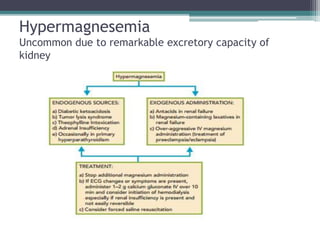
Hypermagnesemia
Uncommon due to remarkable excretory capacity of
kidney
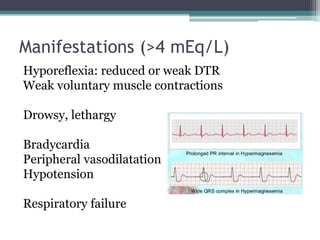
Manifestations (>4 mEq/L)
Hyporeflexia: reduced or weak DTR
Weak voluntary muscle contractions
Drowsy, lethargy
Bradycardia
Peripheral vasodilatation
Hypotension
Respiratory failure
Management
• Eliminate contributing drugs
• Administer diuretic
• Calcium gluconate: cardiac stabilisation
• Diet restrictions
Hypovolemia
• Common Causes
â–« Hemorrhage
â–« Vomiting
â–« Diarrhea
â–« Burns
â–« Diuretic therapy
â–« Fever
â–« Impaired thirst
Grades of Dehydration
• Mild (loss: 4% of body weight): decreased skin
turgor, sunken eyes, dry mucous membranes
• Moderate (loss: 5-8 % of body weight): + oliguria,
orthostatic hypotension, tachycardia
• Severe (loss: 8-10 % of body weight): + hypotension,
decreased level of consciousness, stupor
Clinical Fluid & electrolyte balance: Dr Symons, Rev,4/05
Treatment
Fluid Management
• Diet therapy– Mild to moderate dehydration. Correct
with oral fluid replacement
• IV therapy– Type of fluid ordered depends on the
type of dehydration and the clients cardiovascular
status
â–« Normo or hyponatremic: 0.9% NaCl
â–« Hypernatremic: D5 or hypotonic saline
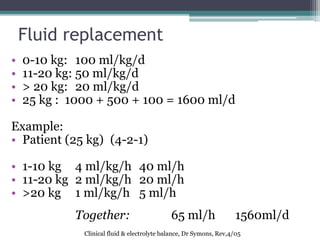
Fluid replacement
• 0-10 kg: 100 ml/kg/d
• 11-20 kg: 50 ml/kg/d
• > 20 kg: 20 ml/kg/d
• 25 kg : 1000 + 500 + 100 = 1600 ml/d
Example:
• Patient (25 kg) (4-2-1)
• 1-10 kg 4 ml/kg/h 40 ml/h
• 11-20 kg 2 ml/kg/h 20 ml/h
• >20 kg 1 ml/kg/h 5 ml/h
Together: 65 ml/h 1560ml/d
Clinical fluid & electrolyte balance, Dr Symons, Rev,4/05
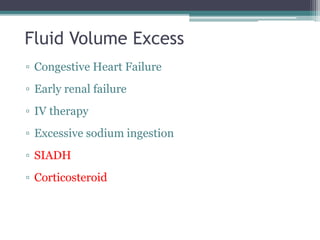
Fluid Volume Excess
â–« Congestive Heart Failure
â–« Early renal failure
â–« IV therapy
â–« Excessive sodium ingestion
â–« SIADH
â–« Corticosteroid
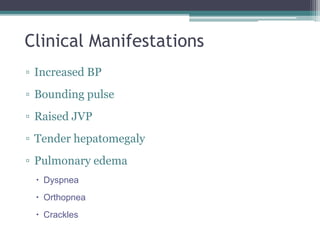
Clinical Manifestations
â–« Increased BP
â–« Bounding pulse
â–« Raised JVP
â–« Tender hepatomegaly
â–« Pulmonary edema
ď‚– Dyspnea
ď‚– Orthopnea
ď‚– Crackles
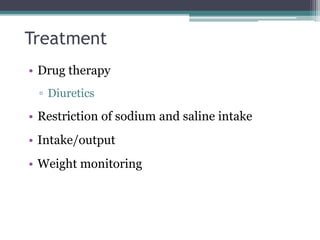
Treatment
• Drug therapy
â–« Diuretics
• Restriction of sodium and saline intake
• Intake/output
• Weight monitoring
Take home message
• Change in water is the major phenomena in
electrolyte disturbances
• Some electrolyte imbalance occurs
concomitantly
• Aggressive management & monitoring required
in critical care
Fluid electrolyte balance

Fluid electrolyte balance

  • 1.
    Fluid and electrolyteimbalance in hematology Presenter: Dr Ankit Jitani
  • 2.
  • 3.
    The Composition ofthe Human Body
  • 5.
    Principal of fluidand electrolyte balance
  • 7.
    Osmolality Osmolarity • Osmolsof solute per Kg of solvent • Does not depend on temperature and pressure • Measured using Osmometer • Calculation (plasma): 2 x (Na+K)+glucose/18+ BUN/2.8 (mg/dl) • Osmols of solute per litre if solvent • Depends on volume which varies with temp & pressure • Unreliable in conditions like pseudohyponatraemia
  • 8.
    Regulation of osmolality numberof solute particles per litre
  • 9.
    Regulation of extracellularvolume Regulation of extracellular volume
  • 11.
    Case based approachto electrolyte abnormalities
  • 12.
    Case 1 • 4-yearold boy, B-ALL, BFM 2002 • On day 17, developed headache, vomiting, became drowsy followed by GTCS • There were no localizing neurological signs • Serum Electrolytes ▫ Sodium: 113 mEq/L ▫ Potassium: 4.2 mEq/L ▫ Serum osmolality: 260 mOsm/L (normal: 280-290 mOsm/L) ▫ Urine osmolality: 625 mOsm/L ▫ Urine sodium 280 mEq/d (normal: 100-260 mEq/d) • ECG, Chest X-ray, Echocardiography, CT brain and LFT, RFT were normal
  • 13.
    Case 2 • 49-year-oldmale • Malaise, tiredness, bone pain • 4-year history of progressive MM (IgG-lambda) • Recently treated with morphine, bisphosphonate and radiation • Lab results ▫ Sodium 124 ▫ Potassium 4.4 • On ABG ▫ Sodium 137 ▫ Potassium 4.8 • Serum osmolality: 285 mOsm/L
  • 14.
  • 15.
    Probable causes ofhyponatremia • Case 1: ▫ SIADH induced Hyponatremia ▫ Vincristine induced • Other causes of SIADH ▫ CNS disorders: infections, bleeding, trauma ▫ Malignancies: SCLC ▫ Pulmonary disorder ▫ Drugs: Cyclophosphamide, Ifosfamide, opiods, thiazides • Case 2 ▫ Pseudohyponatremia • Causes: ▫ Hyperproteinemia ▫ Hyperlipidemia
  • 16.
    Treatment approach Hyponatremia Chronic/asymptomatic (>48hrs)Acute/Symptomatic (<48 hrs) 1. Water restriction 2. Treat underlying cause 3. 3% NaCl correction i. 1-2 mEq/hr till symptoms abate ii. 0.5 m/Eq/hr after that iii. Total (max) 10 mEq/24 hrs 4. Frusemide and salt tablets 5. Resistant cases i. Tolvaptan: 15mg/24 hrs PO ii. Conivaptan: 20 mg in 100 ml D5 IV iii. Demeclocycline: 300-600 mg PO 1. Water restriction 2. Treat underlying cause
  • 17.
    Adrogue- Madias Equation •Change in serum sodium per litre of infusate (Infused Na - S. Na) (TBW+1) • Sodium content of infusate (per litre): ▫ 3 % NaCl: 513 meq/L ▫ 0.9% NaCl: 154 meq/L ▫ Ringers Lactate: 130 meq/L ▫ 0.45 % NaCl: 77 meq/L ▫ 5% dextrose: 0 meq/L
  • 18.
    Adrogue- Madias Example •70 kg man • Serum Na: 110 mEq/dl • TBW= 70 x 0.6 = 42 • Expected change/litre of 3% NaCl = (513-110)/(42+1) = 9.37 meq/L • Desired correction: 8 mEq over 16 hrs (0.5 mEq/hr) • Amt of fluid required= 8/9.37 = 0.85 L over 16 hrs
  • 19.
    Central pontine myelinolysis •Rapid correction of hyponatremia • Mechanisms: ▫ Disrupted integrity of BBB -> entry of immune mediator -> demyelination ▫ Delay in re-accumulation of osmotic osmolytes • Oligodendrocytes
  • 20.
    Central pontine myelinolysis •One or more days after overcorrection • Manifestations: ▫ Para/quadriparasis ▫ Dysphagia/dysarthria/diplopia ▫ Locked in syndrome • Re-lowering of plasma Na+ can attenuate the condition
  • 21.
    Case 3 • A15 year old girl with B-ALL • On BFM-2002 induction • Developed septicemia with fungal pneumonia on day 29 of chemotherapy • Transferred to ICU and was put on mechanical ventilation • Decreased urine output, diminished DTR • Lab ▫ Serum Na+: 160 mEq/L ▫ Urine osmolality: 900 mOsm/L
  • 22.
    Hypernatremia • Contributing Factors ▫Decreased water intake: sedated, intubated ▫ Corticosteroids ▫ Na containing IV fluids ▫ Insensible water loss ▫ Diabetes insipidus ▫ Hyperaldosteronism ▫ Uncontrolled diabetes: osmotic diuresis ▫ Increase in oral Na intake
  • 23.
  • 24.
    Adrogue Madias equation •70 kg man with Na: 160 mEq/L • Ongoing loss: 2 L diarrhoea + 1 L urine • Correction with D5: expected change/L of D5 (0- 160)/(42+1) = -3.75meq/l • Correction @ 0.5 mEq/l (3.75/0.5= 7.44) • 1000ml over 7-8 hrs = 125ml/hr • Ongoing loss= 3 L/day • 125+125 = 250ml/hr
  • 25.
    Case 4 • 20yr male with B-ALL under UKALL XII • Developed febrile neutropenia, treated with IV antibiotics- no response • Amphotericin B added • Serum K+- 2.1mEq/L • Treated and discharged • Readmitted after one month: Weakness, lethargy, irritability and decreased intestinal motility ▫ Serum creatinine: 0.45 mg/dl ▫ serum potassium: 2.1 mEq/L ▫ 24 hour urinary volume: 1.5 liter ▫ Urine k: 20 mEq/L ▫ Serum osmolality: 287 mosm/L ▫ Urine osmolality: 400 mEq/L ▫ TTKG: 13 Urine K/Urine Osm TTKG: Serum K/Serum Osm
  • 26.
  • 27.
  • 28.
  • 29.
    Treatment • Stop diuretics •Correct Magnesium • K+ replacement (IV or PO) • (Body wt x Deficit x 0.4 [correction factor]) + body wt • IV: ECG monitoring • Encourage potassium-rich foods ▫ Normotensive: oral KCl ▫ Hypertensive: K+ sparing diuretics • Treat underlying cause
  • 30.
    Case 5 • A78 year old lady, diagnosed with ET presented with knee injury • Platelet count: 2200 x 103 • Serum K+: 7.2 mEq/L • Normal renal function • Normal ECG • Treated with insulin-dextrose, K+ binding resins, diuretics • Operated & then referred to hematology • Apheresis done: Plt: 1300 x 103 and Serum K+: 5.5 • Plasma K+ (heparin): 3.84 mEq/L
  • 32.
    Approach to hyperkalemia Hyperkalemia SpuriousTranscellular shift Leucocytosis Thrombocytosis ECF-ICF Exchange Insulin Deficiency Hypertoicity Î’2 blockade Acidosis Cellular release TLS Hemolysis Rhabdomyolysis Impaired renal excretion Decreased GFR (<20ml/min) Endogenous production Retention of metabolic waste Exogenous administration Potassium supplements Blood products Decreased aldosterone effect ACE inhibitors/ARBs Potassium sparing diuretics Cyclosporine NSAIDs Heparin Trimethoprim Papillary necrosis (SCD)
  • 33.
    Treatment strategy • Cellmembrane stabilisation: ▫ Calcium gluconate 1 gm of 10% IV over 2-3 mins • Movement of extracellular K into intracellular compartment Treatment Dosing Onset/Duration Decline Insulin Dextrose 10U with D5 Onset 15 mins Lasts 6-8 hrs 1 mEq/L β2-adrenergic agonists Albuterol: 10-20 mg nebulised/ inhaled Onset 10-30 mins Lasts 3-6 hrs 1 -1.5 mEq/L Resin: Sodium polystryrene sulphonate 25-50mg 100ml 20% sorbitol PO / 50gm in 200ml 30% sorbitol PR Onset 1-2 hrs Lasts 4-6 hrs 0.5-1 mEq/L Sodium bicarbonate 2-4 mEq/min until bicarbonate normalize (150 mEq in 1 L D5) Onset 4 hrs Lasts >6 hrs 0.5-0.75 mEq/L Diuretics Variable Onset 30-60 min Lasts 3-4 hrs Variable Hemodialysis Immediate Variable
  • 34.
    Calcium Homeostasis PhosphorusHomeostasis • Bones: 99 % • ECF: 1% • Active ionised Calcium: 45% (4.6 to 5.1 mg/dl) • Albumin bound Calcium: 40 % • 15 % calcium bound to organic & inorganic anions (sulfate, phosphate, citrate, lactate) • 85% in bone • 1% in ECF • Rest in ICF
  • 35.
    Regulation of Calcium& Phosphorus balance PTH 1, 25 OH Vitamin D BoneKidney Calcium reabsorption Phosphorus excretion Calcium release Phosphorus release Calcium absorption Phosphorus absorption Parathyroid gland 25 OH Vitamin D Vitamin D UV Light DietSerum ionised calcium Serum Phosphorus Intestine
  • 36.
    • 72-year-old gentleman •One-month history of progressive confusion, recurrent falls, abdominal pain, anorexia, constipation, weight loss, pain in coccyx • Initial workup: ▫ Pancytopenia ▫ Serum creatinine: 2.44 mg/dl ▫ Serum calcium: 15.9 mg/dl ▫ Serum albumin: 2.5 mg/dl ▫ Serum PTH: 25 pg/mL (10-65 pg/mL) ▫ Serum Vitamin D: 35 ng/mL • Treated with IV hydration and Zolendronate ▫ Serum creatinine: 1.4 mg/dl ▫ Serum calcium: 11 mg/dl Case 6
  • 37.
    Approach to hypercalcemia Hypercalcemia PTH-independentmechanism Check Vitamin D Bone Resorption •Osteolytic malignancy •Immobilisation •Hyperthyroidsm PTH related peptide •Humoral hypercalcemia of malignancy Decreased Ca excretion •Volume depletion •Thiazide diuretic Excess 1,25-OH •Granulomatous disease (sarcoidosis) •Lymphoma •Calcitriol overdose Excess 25-OH •Vitamin D intoxication Hyperparathyroid state
  • 38.
    Treatment Treatment Dosing OnsetComments Isotonic saline Bolus (3-4L), then adjust to output of 100-150 mL/hr 2-4 hrs Watch for volume overload Careful use of diuretics Calcitonin 4-8 IU/Kg IM or SC q6-12 4- 6hrs Lowers Ca 1-2 mg/dl Bisphosphonates Zolendronate 4mg IV over 15 mins Onset 2 days, peak at 4- 6 days and lasts 2-4 wk Renal insufficiency Denosumab 60-120 mg SC Onset 3 days, ½ life 25 days Watch for hypocalcemia and infection Glucocorticoids Prednisolone 20-60 mg or equivalent 5-10 days Effective in hemtological malignancy and granulomatous disease Hemodialysis Low calcium dialysate IMMEDIATE Severe hypercalcemia, volume overload
  • 39.
    Case 7 • A64-year-old male with a history of CLL, under BR • On day 3: vomiting, diarrhea, muscle cramp, anorexia, weakness, shortness of breath • Urine output: 1000 ml • Investigations: ▫ Urea: 150 mg/dL ▫ Serum creatinine: 4.9 mg/dL ▫ Uric acid: 19 mg/dL ▫ Potassium: 6.0 mEq/L ▫ Phosphate: 10.9 mg/dL ▫ Calcium: 6.9 mg/dL
  • 40.
    Case 7 Management • IVfluid NS to maintain urine output >100ml/m2/hr • Allopurinol kept on hold • Rasburicase: 8 mg IV over 15 mins • Sodium bicarbonate was avoided: alkalisation increase uric acid excretion but cause calcium precipitate Jones GL et al. British Journal of Haematology, 2015, 169, 661–671
  • 41.
    Case 7 Management • Hyperkalemia:insulin-dextrose, cardiac monitoring • Hyperphosphatemia: hydration & diuresis • Hypocalcemia: no cardiac symptoms, so avoided (Ca2+ combine with PO4 3- & worsen precipitation in soft tissues) • Renal function improved, with increased urine output, normalization of electrolytes, and return of his appetite Jones GL et al. British Journal of Haematology, 2015, 169, 661–671
  • 42.
    TLS Cairo-Bishop definition HowardDefinition • Lab TLS: two or more of the following, ▫ Uric acid > 8 mg/dL or 25% increase ▫ potassium > 6 meq/L or 25% increase ▫ phosphate > 4.5 mg/dL or 25% increase ▫ calcium < 7 mg/dL or 25% decrease • Clinical TLS: ▫ increased serum creatinine (1.5 times upper limit of normal) ▫ cardiac arrhythmia or sudden death ▫ seizure • > 2 electrolyte laboratory abnormalities must be present simultaneously • 25% increase with value already outside baseline Cairo MS, Bishop M. Br. J. Haematol. 2004 Howard, SC; Jones DP et al. New England Journal of Medicine. 2011
  • 43.
    Hypocalcemia approach Hypocalcemia PTH-present butineffective Hypoparathyroid state 1. Hypo-hyper Magnesium 2. Infiltration- malignant replacement 3. Radiation induced destruction PTH resistance •Bisphosphonates Chelation •TLS, hemolysis •Pancreatitis •Citrate containing infusion: blood products, plasmapheresis Vitamin D deficiency •Gram negative sepsis •Low dietary intake •Liver disease •Advanced renal disease •P450 enzyme
  • 44.
  • 45.
    Treatment 1. ECG changespresent i. Early hemodialysis ii. MgSO4 bolus: 2g IV over 15 mins (empirically, normal renal function) iii. Calcium gluconate: a. Load: 2g 10% Calcium Gluconate, 50-100ml in D5/NS in 10-15 mins b. Maintain: 6g in 500ml D5/NS @ 0.5- 1.5mg(elemental)/kg/hr 2. Oral: 1-2g elemental Ca, separate from meals 3. Calcitirol: 0.25-4 mcg/d
  • 46.
    Elemental calcium content •IV: ▫ Calcium gluconate: 1gm= 93mg elemental ▫ Calcium chloride: 1gm= 272 mg elemental • Oral: ▫ Calcium carbonate: 40% ▫ Calcium gluconate: 9% ▫ Calcium lactate: 23% ▫ Calcium citrate: 20% ▫ Calcium acetate: 25%
  • 47.
    Hyperphosphatemia • Features ofassociated hypocalcemia: secondary to phosphate binding with calcium
  • 48.
    Treatment of hyperphosphatemia •Treatment of the underlying cause • Forced saline resuscitation & acetazolamide (15mg/kg 4 hrly) • Hemodialysis in severe cases and renal insufficiency • Treatment of symptomatic hypocalcemia • Phosphate binders
  • 49.
  • 50.
  • 51.
    Magnesium homeostasis • Bone:60% • ECF: 1% • ICF: rest • Serum Mg is poor predictor of intracellular and total body store • Not easily exchanged across cell membrane • No hormone involved in Mg regulation • Balance maintained by renal tubular resorption
  • 52.
  • 53.
    Manifestations • Lathergy, confusion •Ataxia, nystagmus • Hyperreflexia, seizure • Arrythemia • Concomitant K+ & Ca2+ deficiency
  • 54.
    Treatment • ECG changesor symptomatic patients ▫ IV: 1-2 gm MgSO4 (1g=96 mg elemental Mg) over 15 mins ▫ 6gm MgSO4 in 1L IVF over 24 hrs ▫ May be needed for 3-7 days to replenish body store ▫ Monitor DTR to detect hypermagnesemia Magnesium sulfate solution 50% = 500 mg/ml (2 ml= 1 g= 96 mg elemental)
  • 55.
    • Asymptomatic orno ECG changes ▫ Mild: 240mg elemental Mg2+/day in divided dose ▫ Severe: 720 mg elemental Mg2+ ▫ Diarrhoea: 2-6gm IV @ 1g/hr • Chronic hypomagnesemia from renal wasting: amiloride • Oral preparations: ▫ Milk of magnesia: 400mg/5ml ▫ Calcium/magnesium tabs: 75 mg ▫ Protein/ magnesium complex tabs: 133 mg Treatment cont..
  • 56.
    Hypermagnesemia Uncommon due toremarkable excretory capacity of kidney
  • 57.
    Manifestations (>4 mEq/L) Hyporeflexia:reduced or weak DTR Weak voluntary muscle contractions Drowsy, lethargy Bradycardia Peripheral vasodilatation Hypotension Respiratory failure
  • 58.
    Management • Eliminate contributingdrugs • Administer diuretic • Calcium gluconate: cardiac stabilisation • Diet restrictions
  • 59.
    Hypovolemia • Common Causes ▫Hemorrhage ▫ Vomiting ▫ Diarrhea ▫ Burns ▫ Diuretic therapy ▫ Fever ▫ Impaired thirst
  • 60.
    Grades of Dehydration •Mild (loss: 4% of body weight): decreased skin turgor, sunken eyes, dry mucous membranes • Moderate (loss: 5-8 % of body weight): + oliguria, orthostatic hypotension, tachycardia • Severe (loss: 8-10 % of body weight): + hypotension, decreased level of consciousness, stupor Clinical Fluid & electrolyte balance: Dr Symons, Rev,4/05
  • 61.
    Treatment Fluid Management • Diettherapy– Mild to moderate dehydration. Correct with oral fluid replacement • IV therapy– Type of fluid ordered depends on the type of dehydration and the clients cardiovascular status ▫ Normo or hyponatremic: 0.9% NaCl ▫ Hypernatremic: D5 or hypotonic saline
  • 62.
    Fluid replacement • 0-10kg: 100 ml/kg/d • 11-20 kg: 50 ml/kg/d • > 20 kg: 20 ml/kg/d • 25 kg : 1000 + 500 + 100 = 1600 ml/d Example: • Patient (25 kg) (4-2-1) • 1-10 kg 4 ml/kg/h 40 ml/h • 11-20 kg 2 ml/kg/h 20 ml/h • >20 kg 1 ml/kg/h 5 ml/h Together: 65 ml/h 1560ml/d Clinical fluid & electrolyte balance, Dr Symons, Rev,4/05
  • 63.
    Fluid Volume Excess â–«Congestive Heart Failure â–« Early renal failure â–« IV therapy â–« Excessive sodium ingestion â–« SIADH â–« Corticosteroid
  • 64.
    Clinical Manifestations â–« IncreasedBP â–« Bounding pulse â–« Raised JVP â–« Tender hepatomegaly â–« Pulmonary edema ď‚– Dyspnea ď‚– Orthopnea ď‚– Crackles
  • 65.
    Treatment • Drug therapy ▫Diuretics • Restriction of sodium and saline intake • Intake/output • Weight monitoring
  • 66.
    Take home message •Change in water is the major phenomena in electrolyte disturbances • Some electrolyte imbalance occurs concomitantly • Aggressive management & monitoring required in critical care

Editor's Notes

  • #8 Osmol is 1 mole of any non dissociable substance Osmolality is measured by clinical laboratories using an osmometer - either a freezing point depression osmometer or a vapour pressure depression osmometer. 
  • #9 ADH syntresized ih hypothalamus meganoneuron the distal axon of which in in post pituitary
  • #14 indirect ion-specific electrode (ISE) method were repeated using an alternate method/instrument (direct potentiometry/blood gas analyzer)
  • #15 in acutely ill patients, estimated TBW does not reliably reflect fat-free mass due to disturbances of ICW caused by protein malnutrition, changes in TBW, and changes in the ratio of ICW and ECW due to injury and inflammation Plasma Na falls by 2.4 mEq/L for 100 mg/dl rise in plasma glucose
  • #16 The typical water content of plasma is approximately 93% and indirect electrode methods for quantifying electrolyte concentrations assume that this proportion is constant. When plasma contains large concentrations of lipid or paraprotein, these extra components occupy volume and displace water, so that plasma contains less water per unit volume and less electrolytes per unit volume
  • #17 Frusemide and salt tabs in hypervol hypornatre Demeclocycline inhibits principal cells, however dec GFR Vaptans (vesopressin antagonists): inc free water clearence
  • #20 Intracerebral osmolytes: creatine, betaine, taurine, glutamate, myoinositol
  • #24 Intubated patients have decreased free water intake. Even at Max ADH sec, there is hypernatremia as they are not able to request free water Ca downregulates Na K & Cl transport thru TALH, Hypokalemia reduces renal response to vesopressin and downregulates aquaporin 2 channels NDI: hypercalcemia (downregulates Na cl transport IN TALH, hypokalemia inhibits renal response to vesmopressin, drugs: ifosfamide Gestational DI: placental protease with vesopressinase activity
  • #26 AmB's mechanism of action is to alter fungal cell wall permeability by binding to ergosterol in the lipid bilayer of the cell.[1] While this binding preferentially occurs in fungal cell walls, the drug can also attach to cholesterol in mammalian cells. The binding of AmB to renal tubular collecting duct cells causes the development of pores which leads to the leakage of potassium with resultant hypokalemia.[1] This adverse effect can occur without a profound reduction in GFR.
  • #28 Alkalosis- persistent kaluresis due to secondary hyperaldosteronism and bicarbonateuria Inc renal loss- penicillins, magnesium def due to ROMK channels In high ambient temp there is inc cellular uptake of potassium in vitro, spurious hypokalemia
  • #29 Hypercalciuria in loop diuretic inhibits ENaC and dec potassium loss Thiazide causes hypocalciuria and inc potassium loss It is also critical to monitor serum magnesium levels in the patient receiving AmB therapy. Hypomagnesemia complicates the ability to maintain potassium homeostasis. In the distal tubule and collecting duct cells, maxi-K channels are responsible for potassium secretion. Magnesium has the ability to modulate this secretion. A deficiency of magnesium allows excessive secretion of potassium through these channels, thus exacerbating hypokalemia
  • #30 Sympathetic overactivity: propranolol 3mg/kg
  • #33 In low temperature, K+ leaks outside cells is accentuated
  • #34 Cation exchange resin and calcuim based resin replace K+ for Na+ in GIT: side effect- fatal intestinal necrosis
  • #39 Denosumab monoclonal antibody is a RANKL inhibitor
  • #41 Jones GL et al. British Journal of Haematology, 2015, 169, 661–671
  • #44 Panceatitis-, burns- hypoalbuminimia, hyperphosphatemia, tissue deposition of Ca, impaired PTH sec Gram negative sepsis have elevated procalcitonin
  • #50 Rep alkalosis causes inc glycolysis and phoshorylation of intermediates causes hypophosphatemia. Marked anabolism in aburpt reversal of malnutrition shifts PO$ intracellularly Osmotic diuresis in DKA
  • #53 Amiloride is also useful for the treatment of hypomagnesemia because of the increases in magnesium reabsorption in the cortical collecting duct. It is particularly useful in treating Gitelman's or Bartter's syndrome, as well as in combating the renal Mg wasting associated with cisplatin [6].
  • #56 Amiloride is also useful for the treatment of hypomagnesemia because of the increases in magnesium reabsorption in the cortical collecting duct. It is particularly useful in treating Gitelman's or Bartter's syndrome, as well as in combating the renal Mg wasting associated with cisplatin [6].