Fluid and Electrolytes
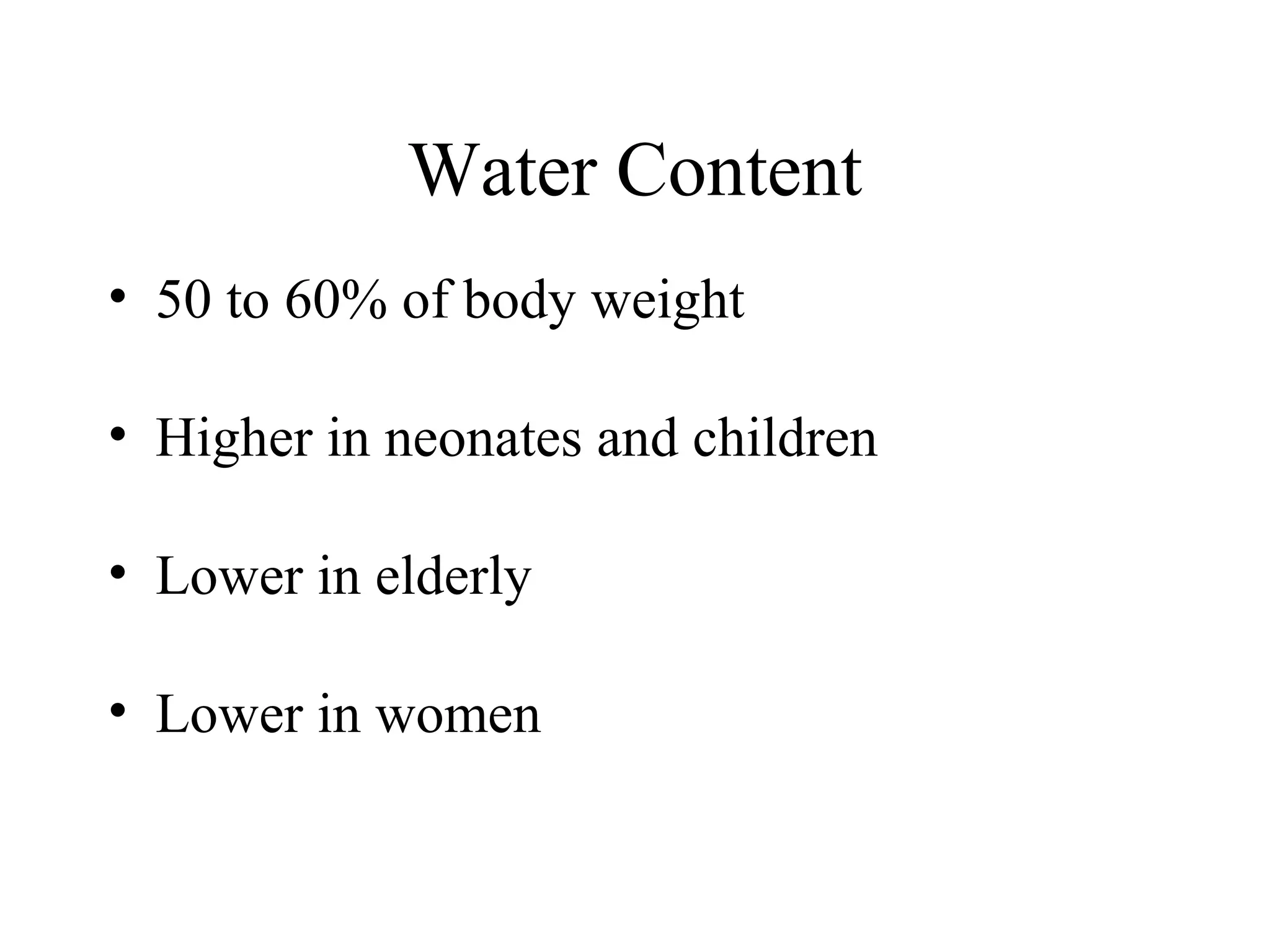
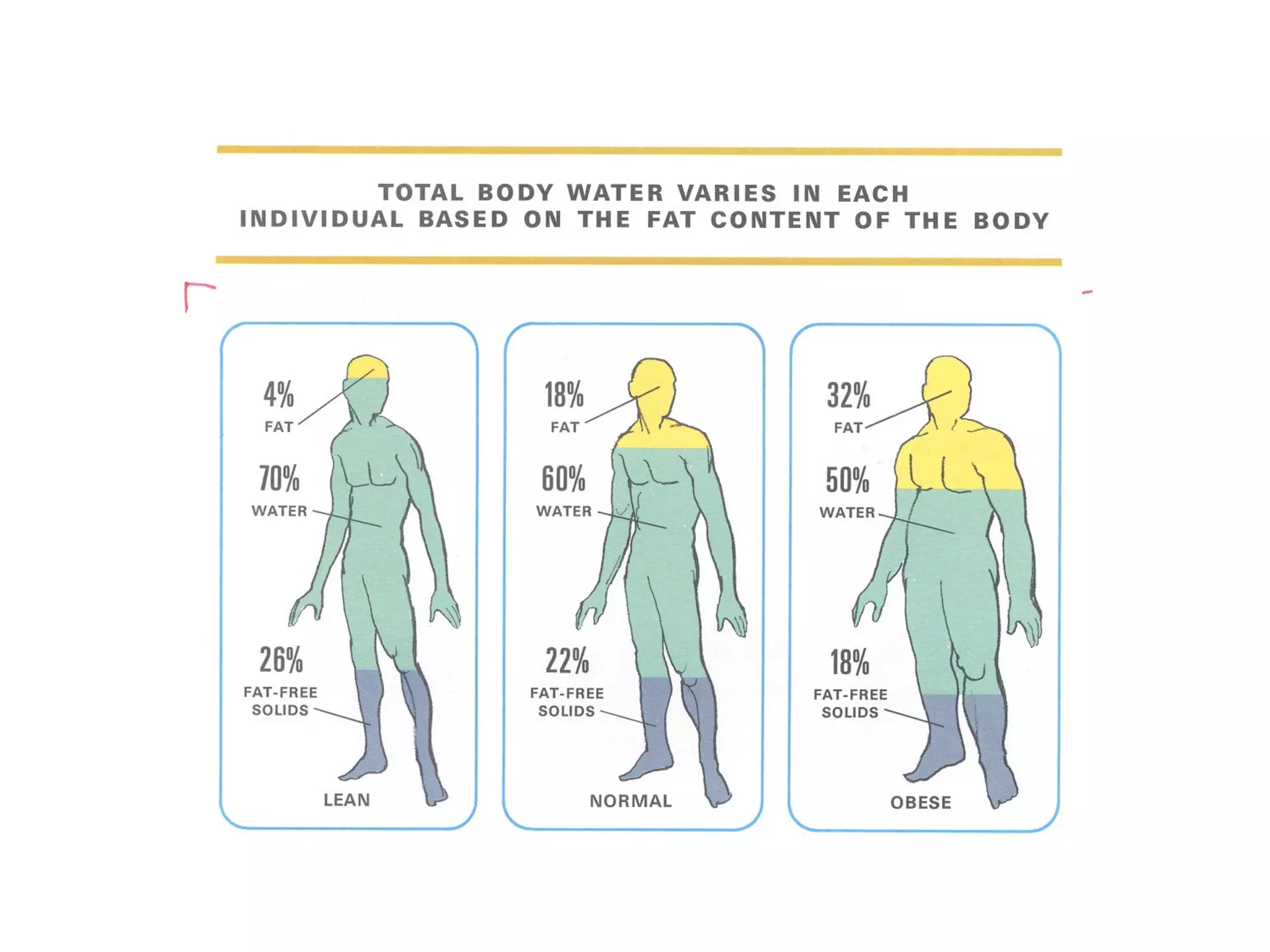
Water Content
• 50 to 60% of body weight
• Higher in neonates and children
• Lower in elderly
• Lower in women
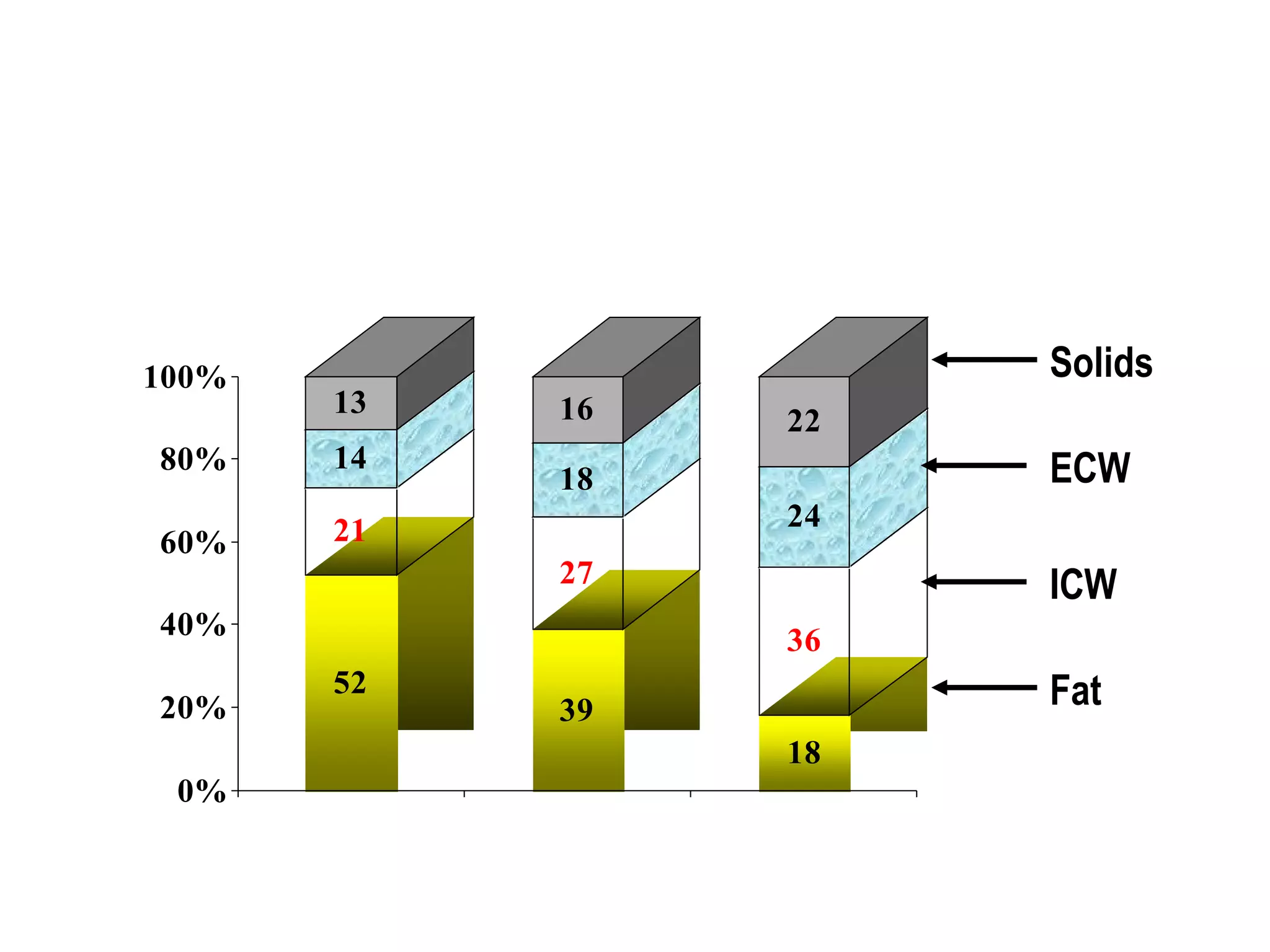
52
21
14
13
39
27
18
16
18
36
24
22
0%
20%
40%
60%
80%
100% Solids
ECW
ICW
Fat
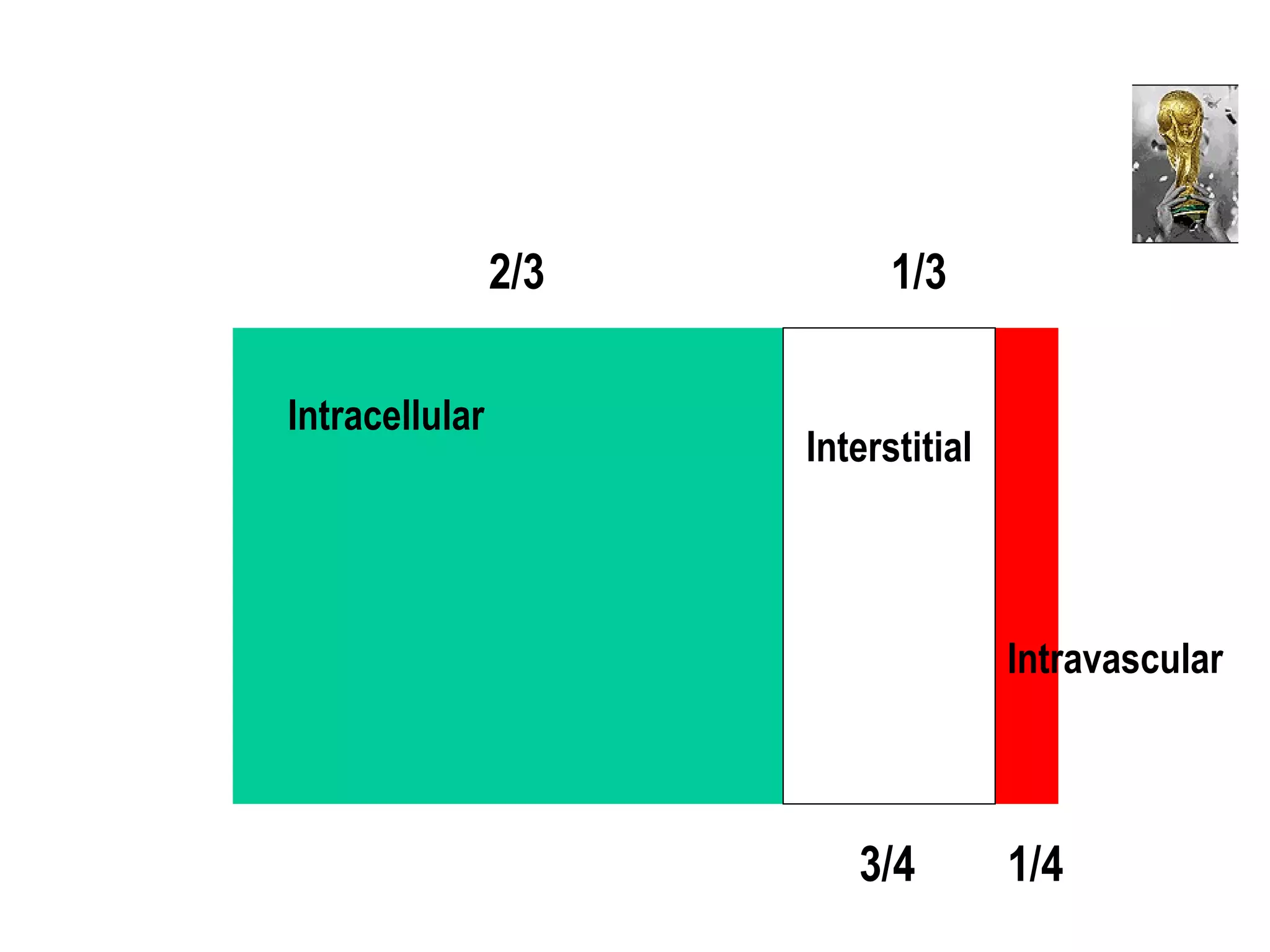
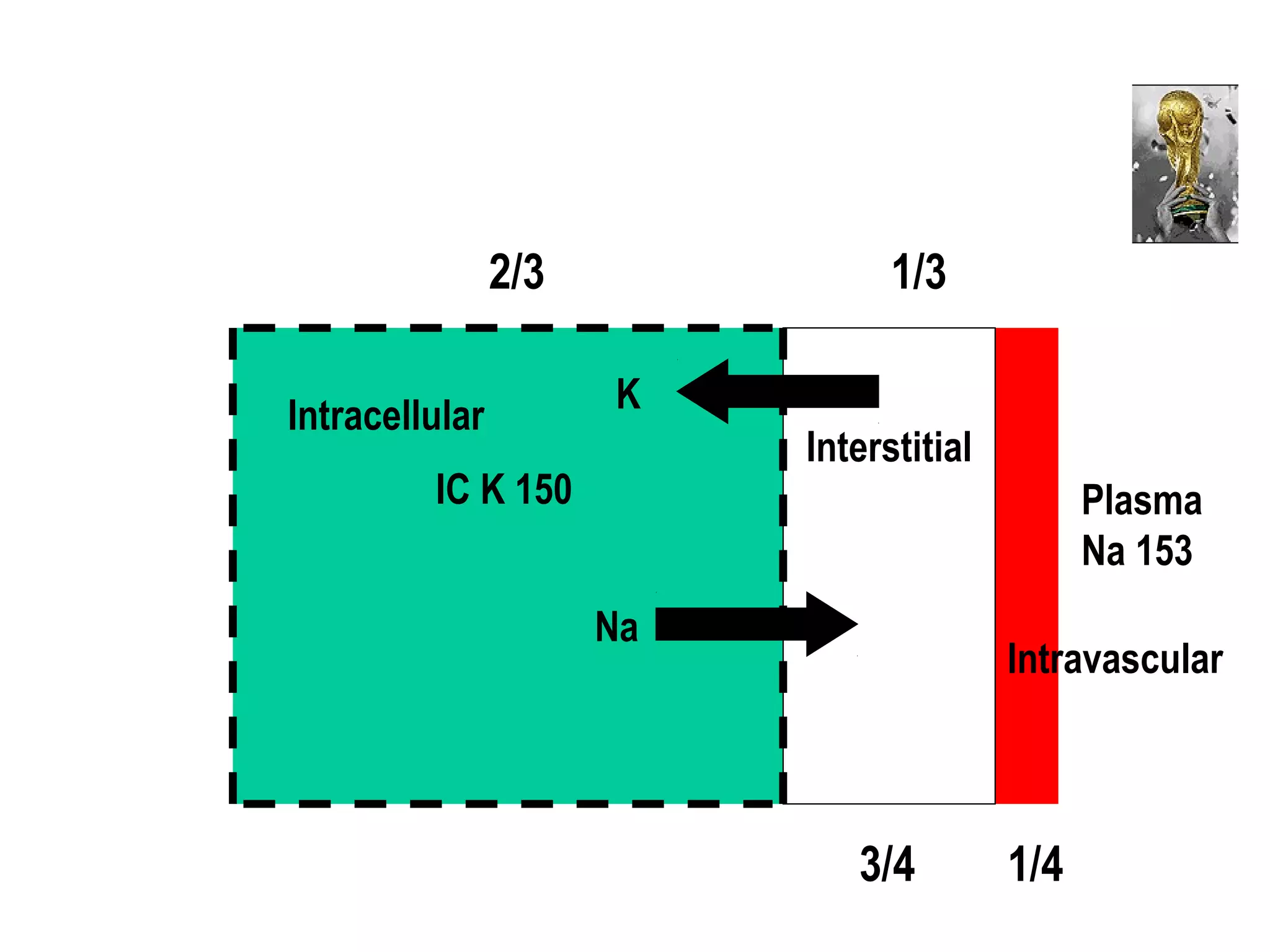
Intracellular
Interstitial
Intravascular
2/3 1/3
3/4 1/4
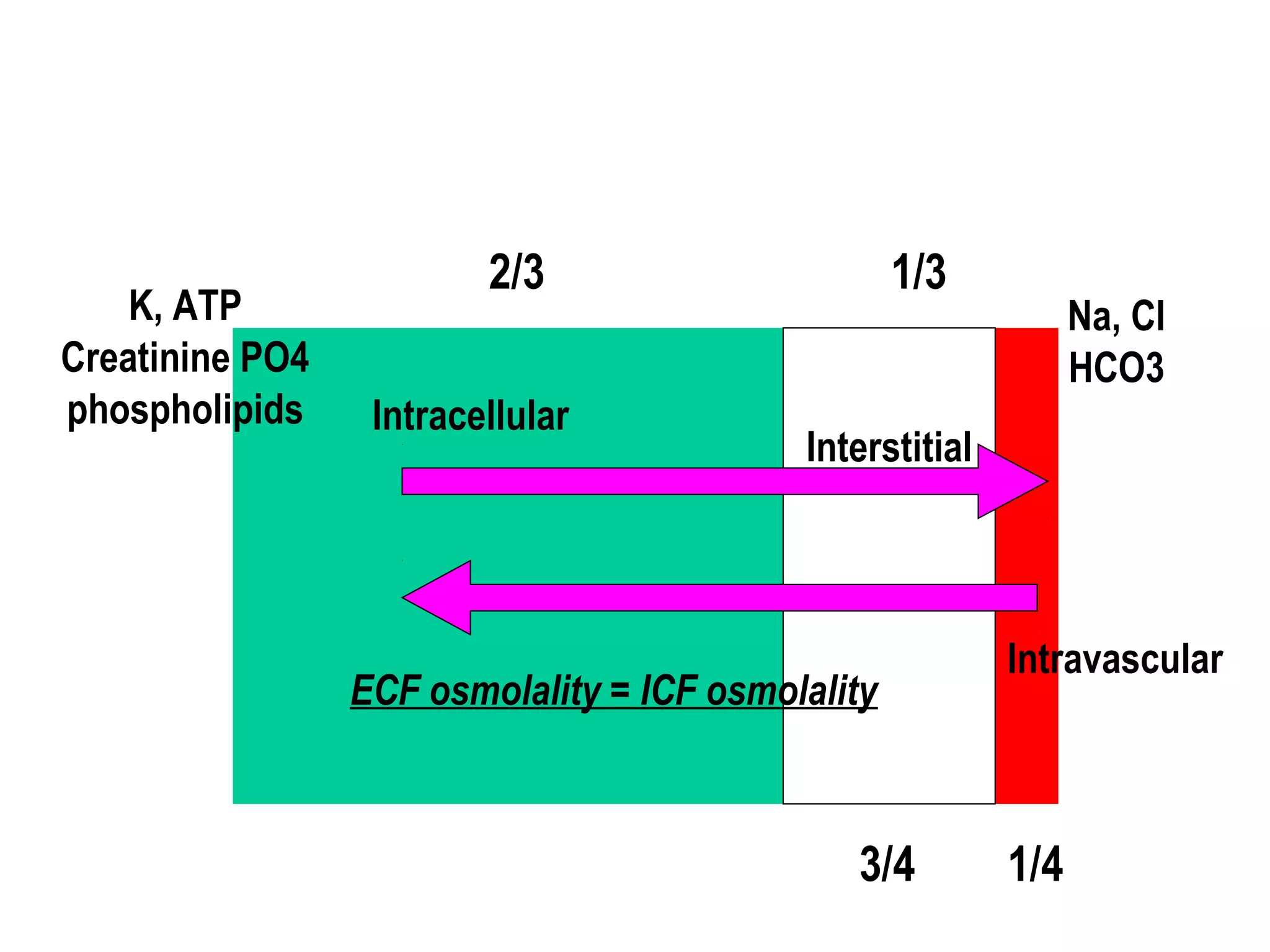
Intracellular
Interstitial
Intravascular
2/3 1/3
3/4 1/4
ECF osmolality = ICF osmolality
K, ATP
Creatinine PO4
phospholipids
Na, Cl
HCO3
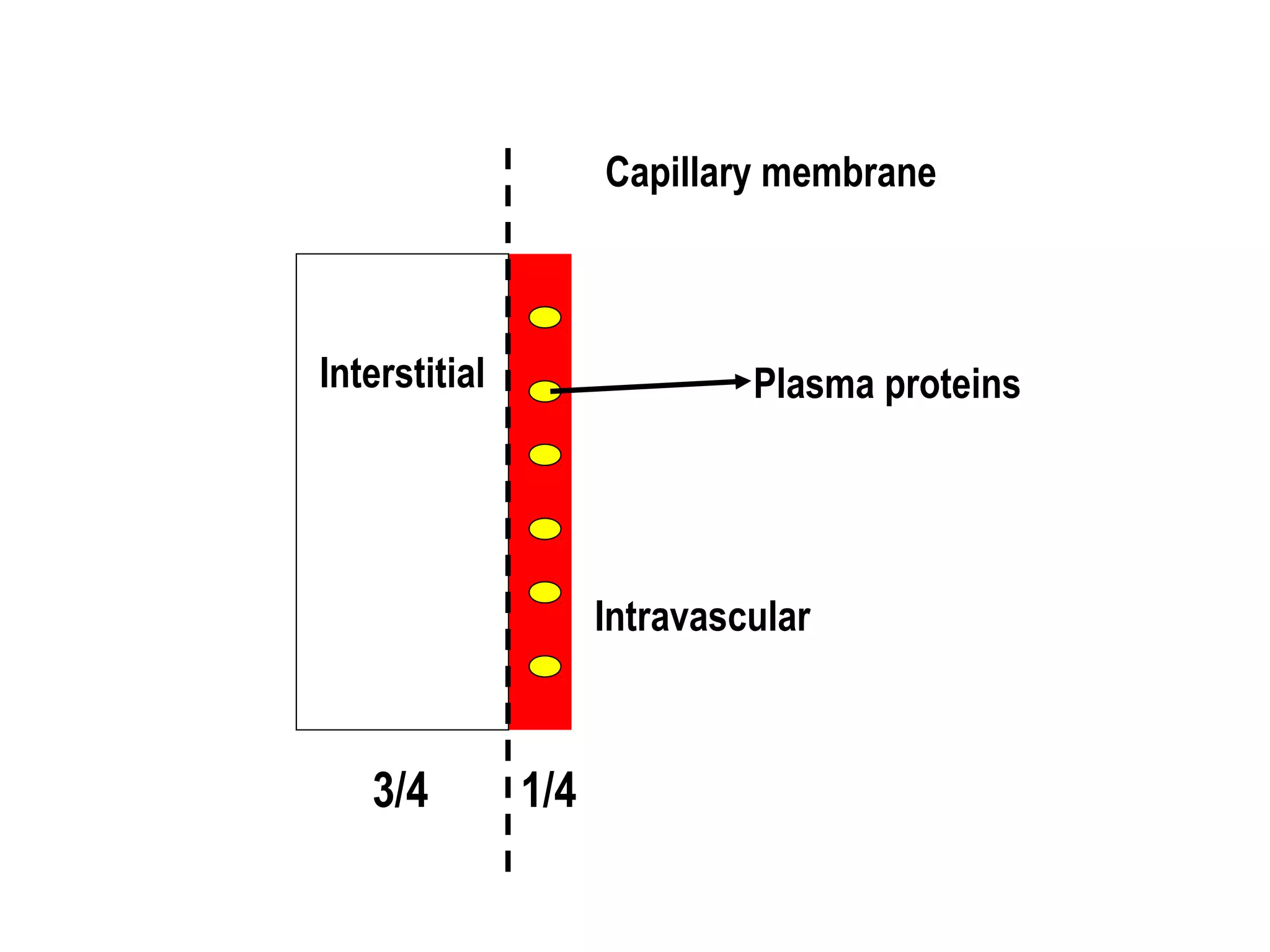
Intravascular
Interstitial
3/4 1/4
Capillary membrane
Plasma proteins
Intracellular
Interstitial
Intravascular
2/3 1/3
3/4 1/4
Na
K
Plasma
Na 153
IC K 150
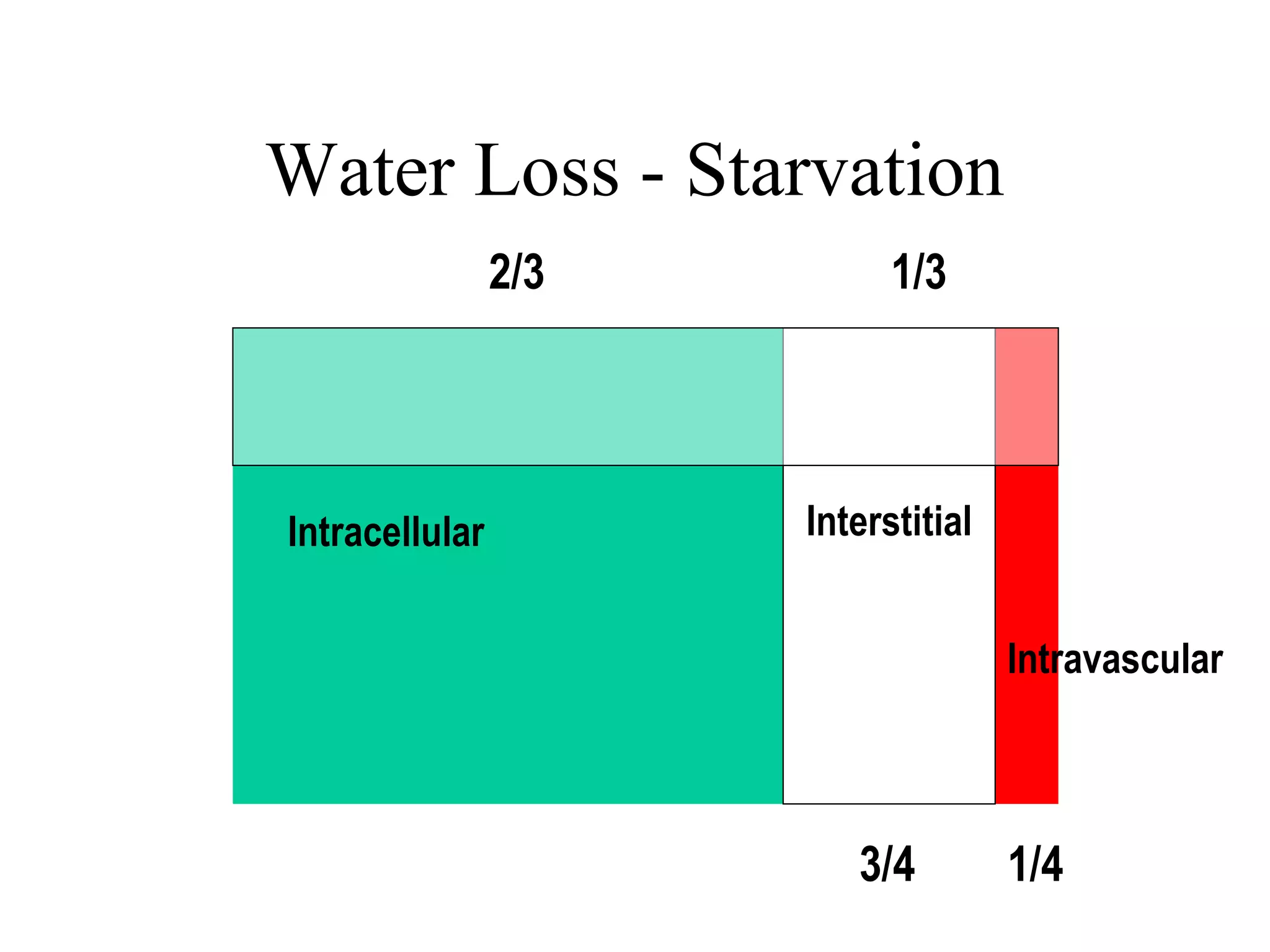
Water Loss - Starvation
Intracellular Interstitial
Intravascular
2/3 1/3
3/4 1/4
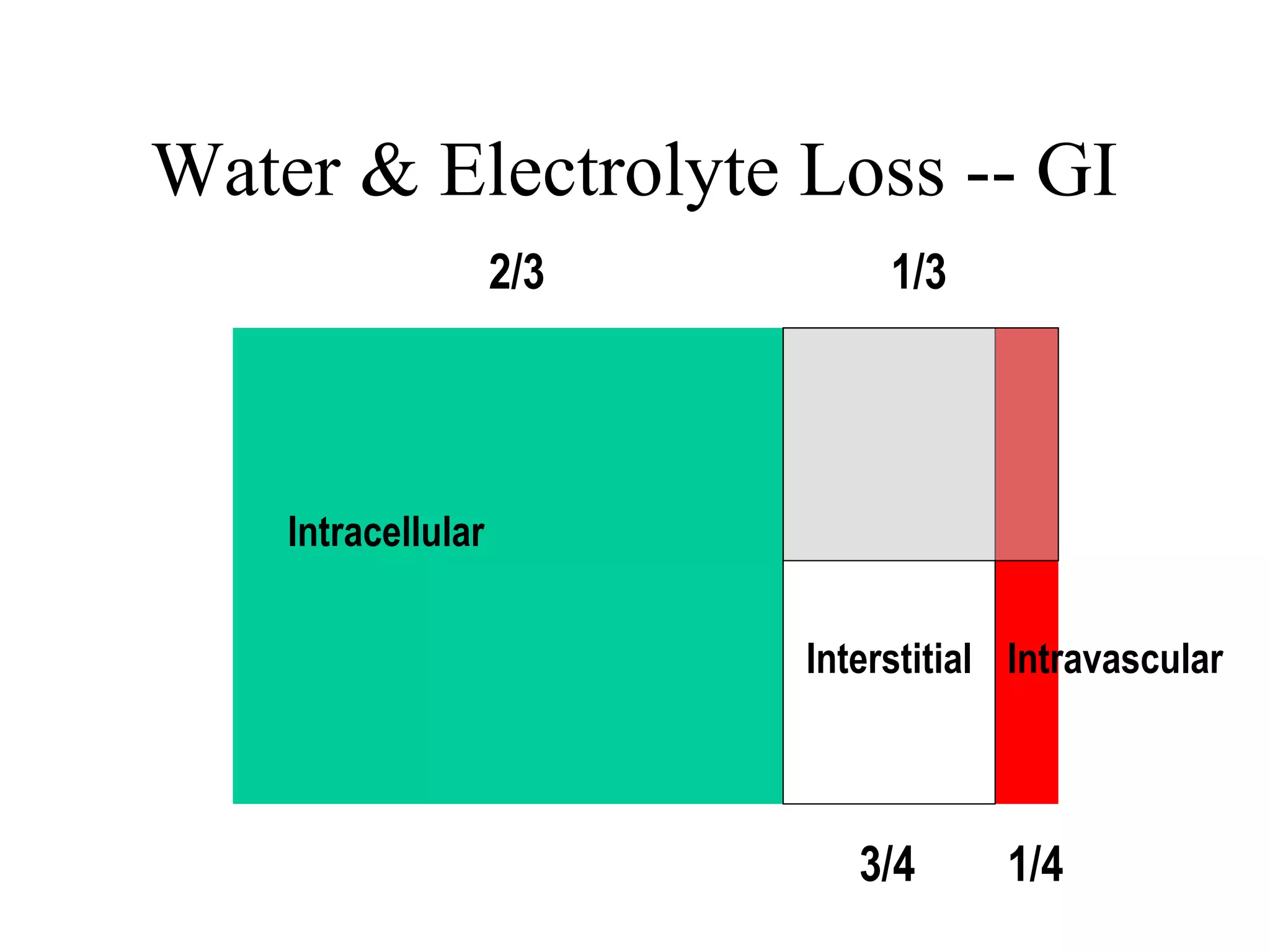
Water & Electrolyte Loss -- GI
Intracellular
Interstitial Intravascular
2/3 1/3
3/4 1/4
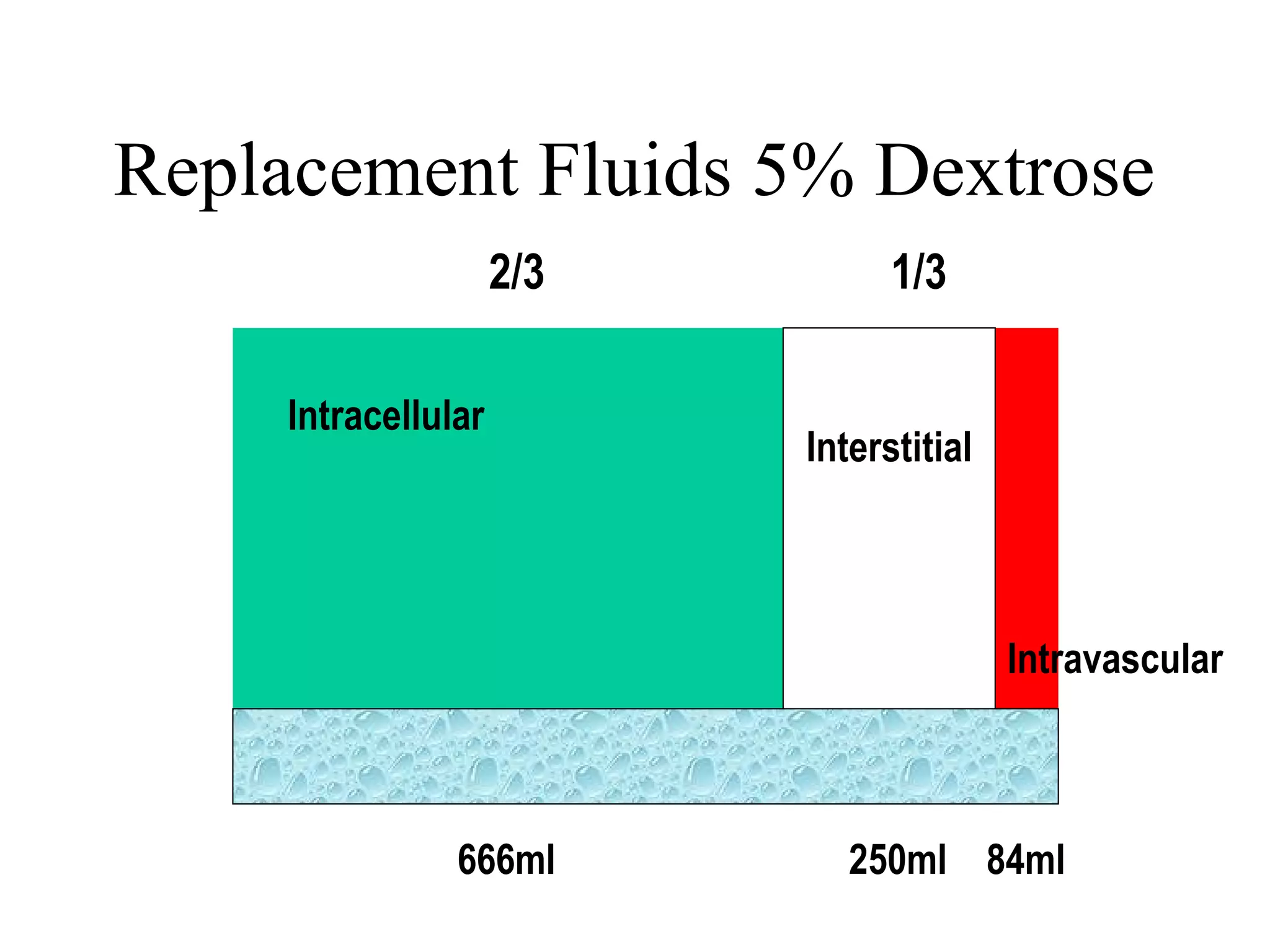
Replacement Fluids 5% Dextrose
Intracellular
Interstitial
Intravascular
2/3 1/3
666ml 250ml 84ml
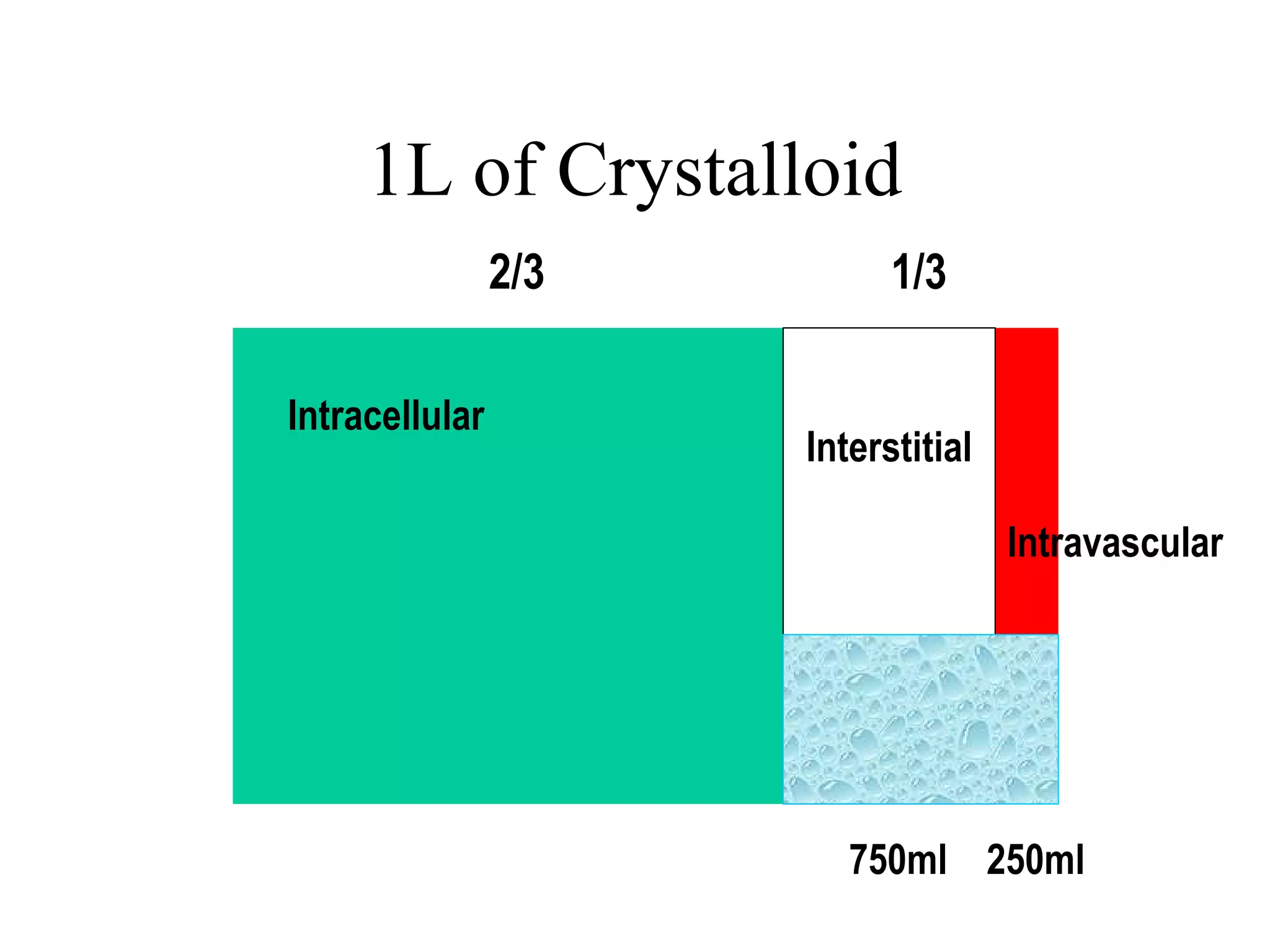
1L of Crystalloid
Intracellular
Interstitial
Intravascular
2/3 1/3
750ml 250ml
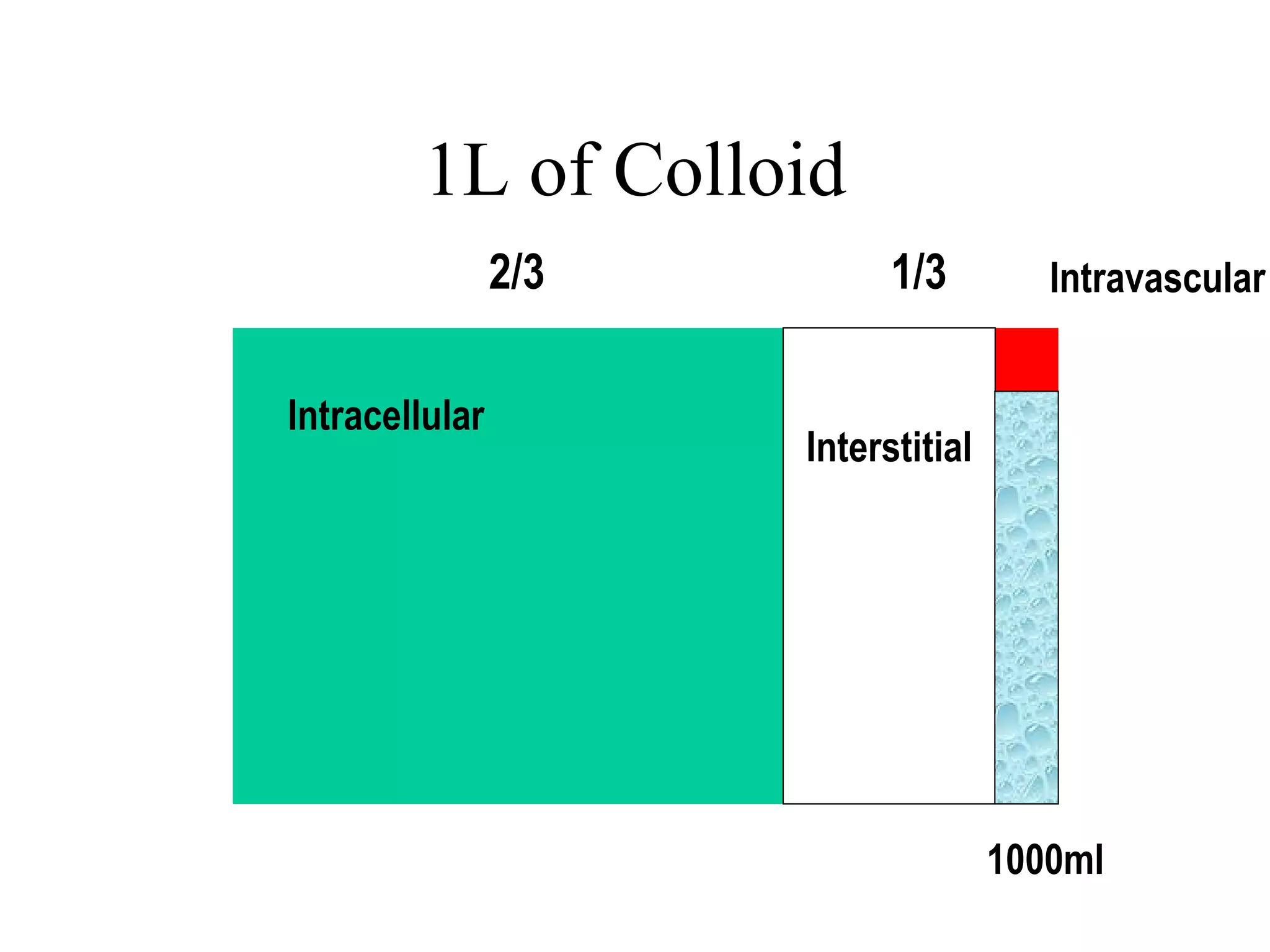
1L of Colloid
Intracellular
Interstitial
Intravascular2/3 1/3
1000ml
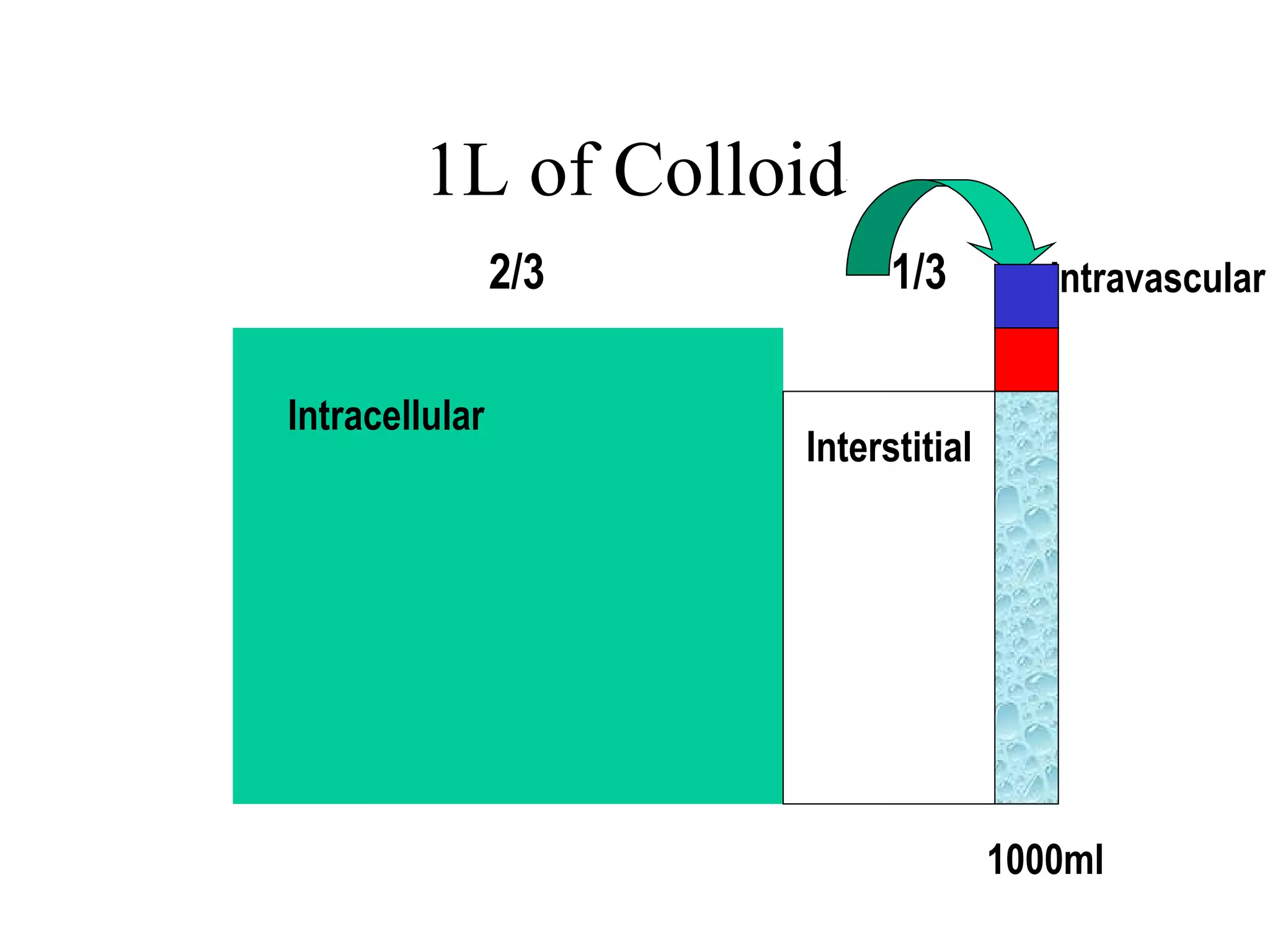
1L of Colloid
Intracellular
Interstitial
Intravascular2/3 1/3
1000ml
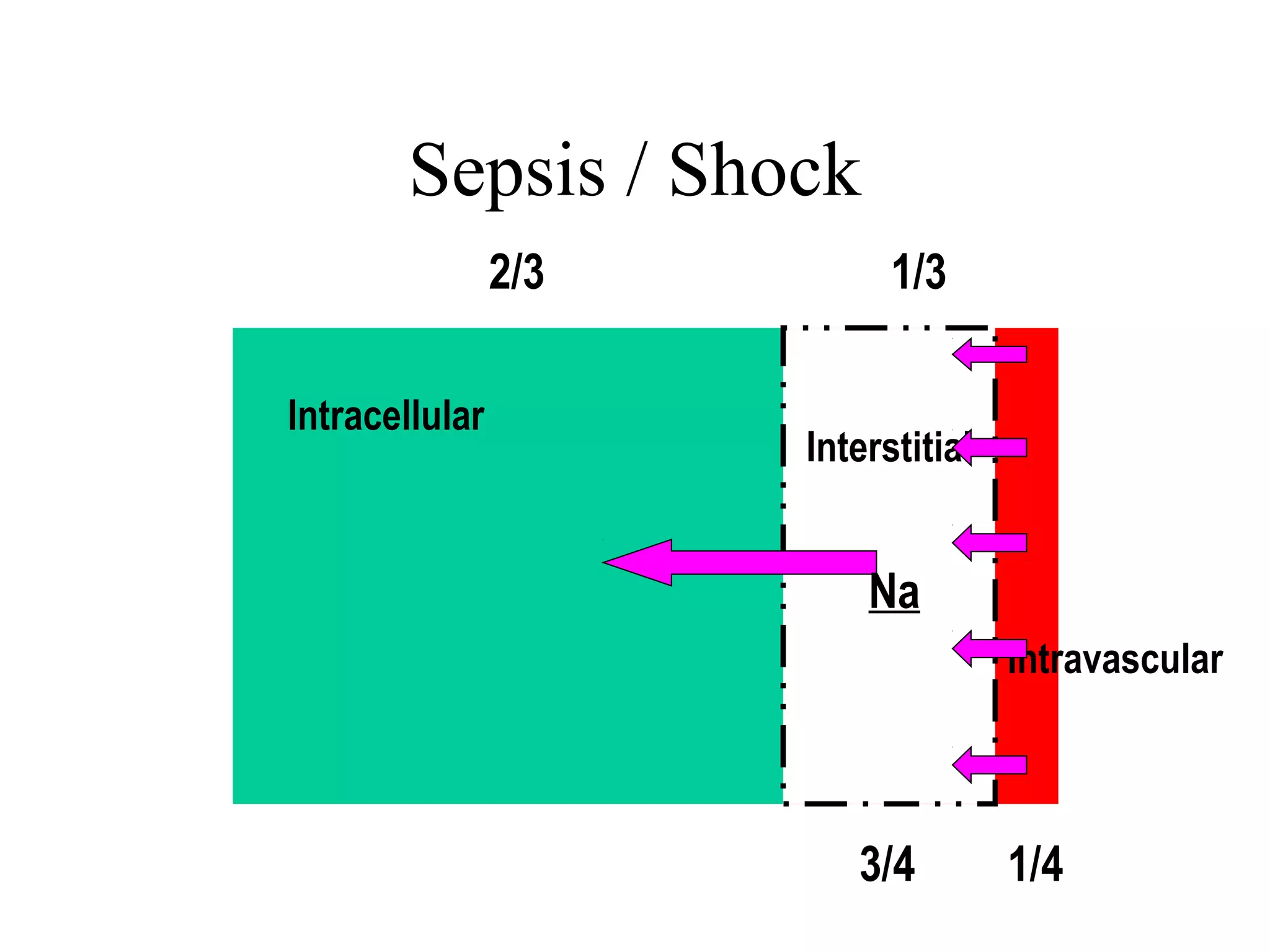
Sepsis / Shock
Intracellular
Interstitial
Intravascular
2/3 1/3
3/4 1/4
Na
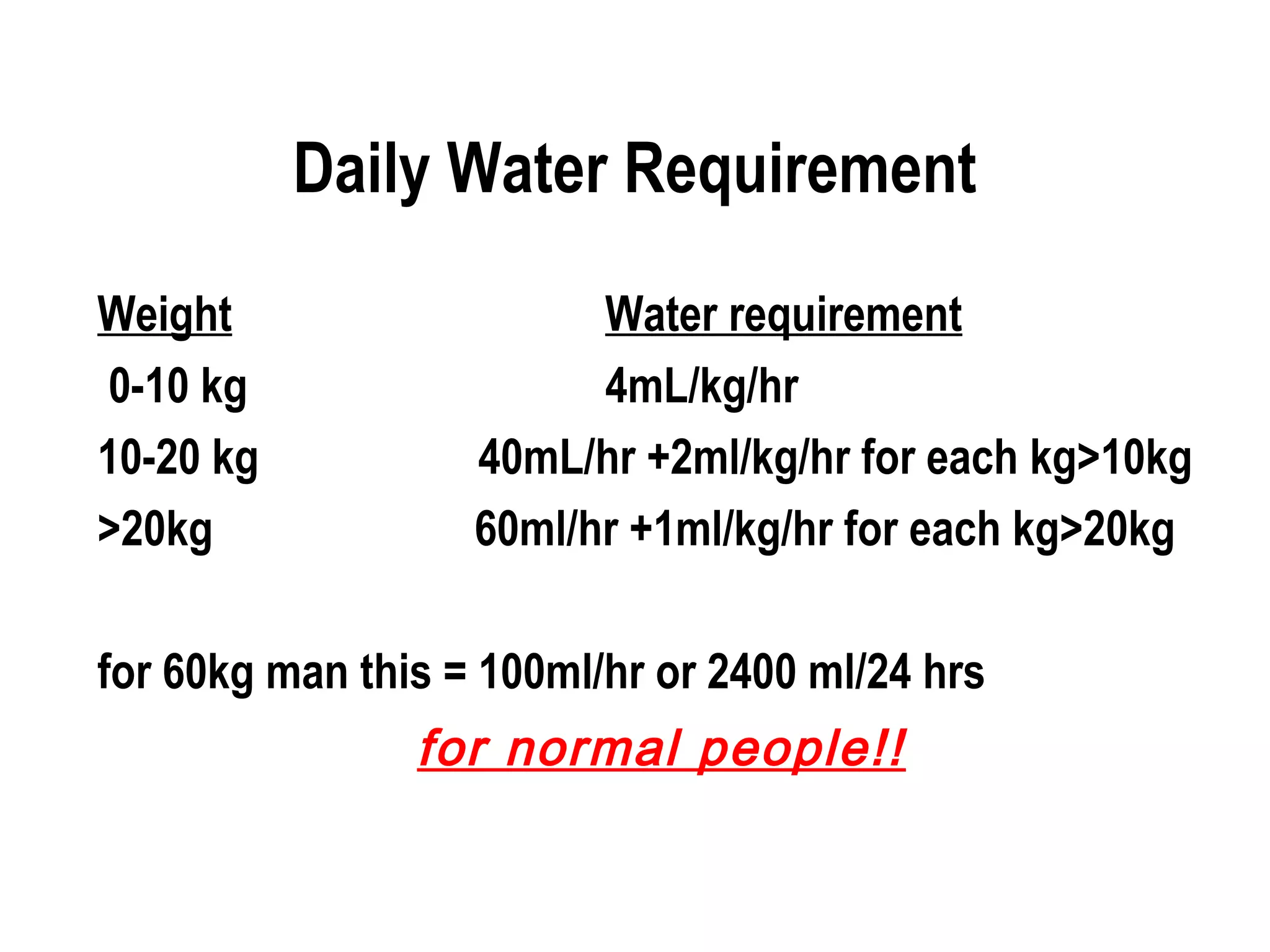
Daily Water Requirement
Weight Water requirement
0-10 kg 4mL/kg/hr
10-20 kg 40mL/hr +2ml/kg/hr for each kg>10kg
>20kg 60ml/hr +1ml/kg/hr for each kg>20kg
for 60kg man this = 100ml/hr or 2400 ml/24 hrs
for normal people!!
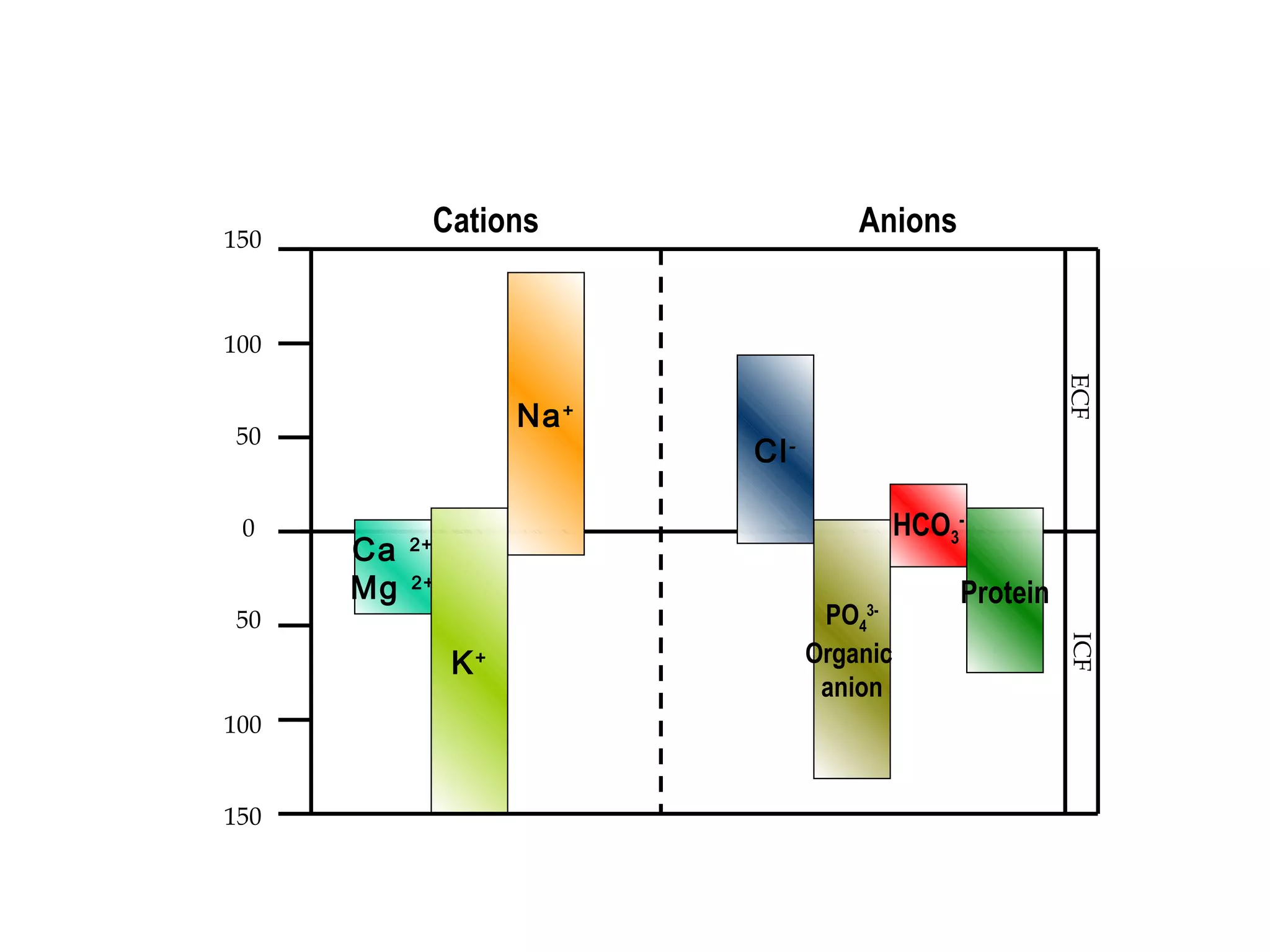
Ca 2+
Mg 2+
K+
Na+
Cl-
PO4
3-
Organic
anion
HCO3
-
Protein
0
50
50
100
150
100
150
Cations Anions
ECFICF
Solutions Volumes Na+
K+
Ca2+
Mg2+
Cl- HCO3
-
Dextrose mOsm/L
ECF 142 4 5 103 27 280-310
Lactated
Ringer’s
130 4 3 109 28 273
0.9% NaCl 154 154 308
0.45% NaCl 77 77 154
D5W 50 250
D5/0.45%
NaCl
77 77 50 406
3% NaCl 513 513 1026
6%
Hetastarch
500 154 154 310
5% Albumin 250,500
130-
160
<2.5
130-
160
330
25% Albumin 20,50,100
130-
160
<2.5
130-
160
330
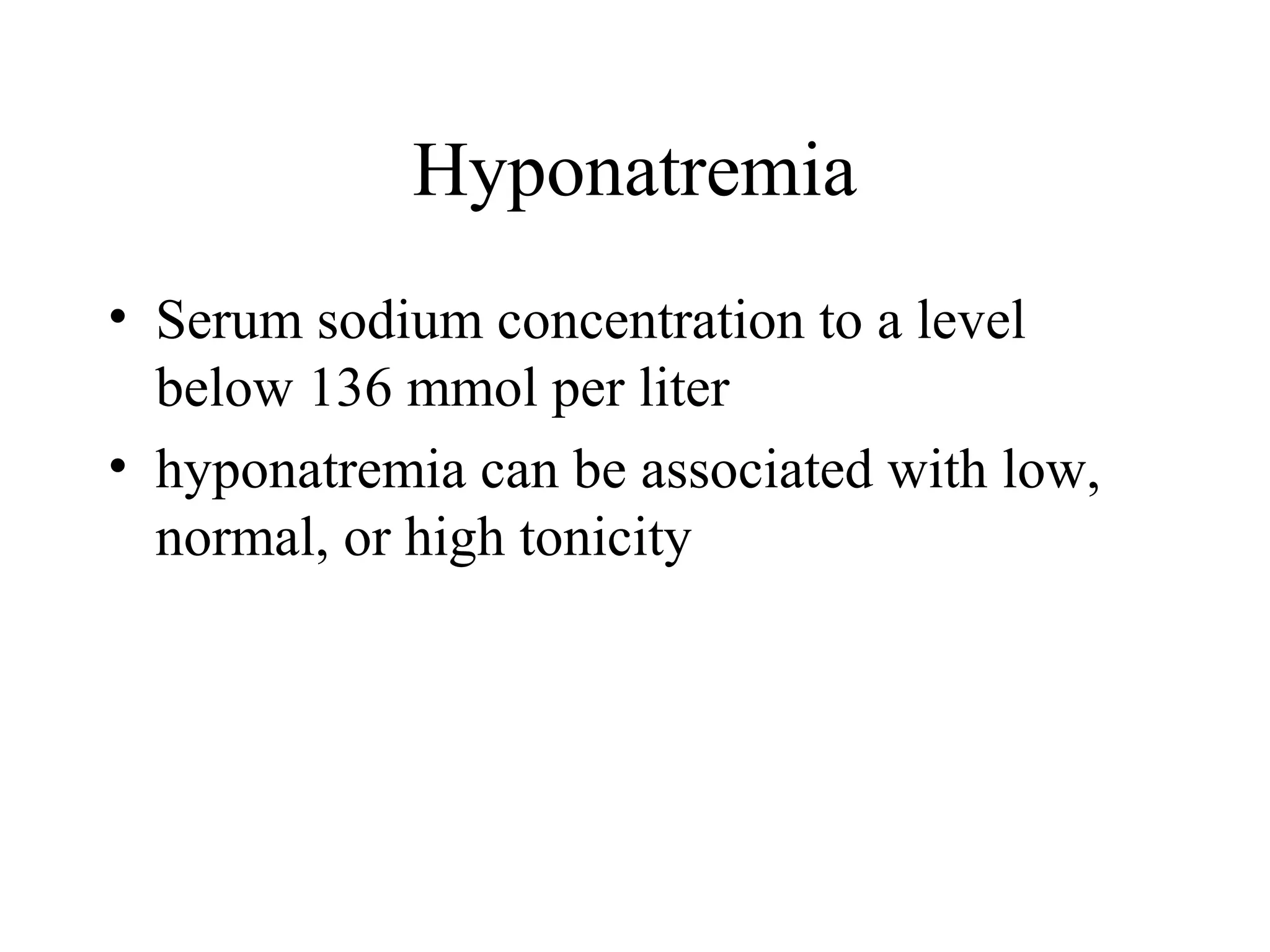
Hyponatremia
• Serum sodium concentration to a level
below 136 mmol per liter
• hyponatremia can be associated with low,
normal, or high tonicity
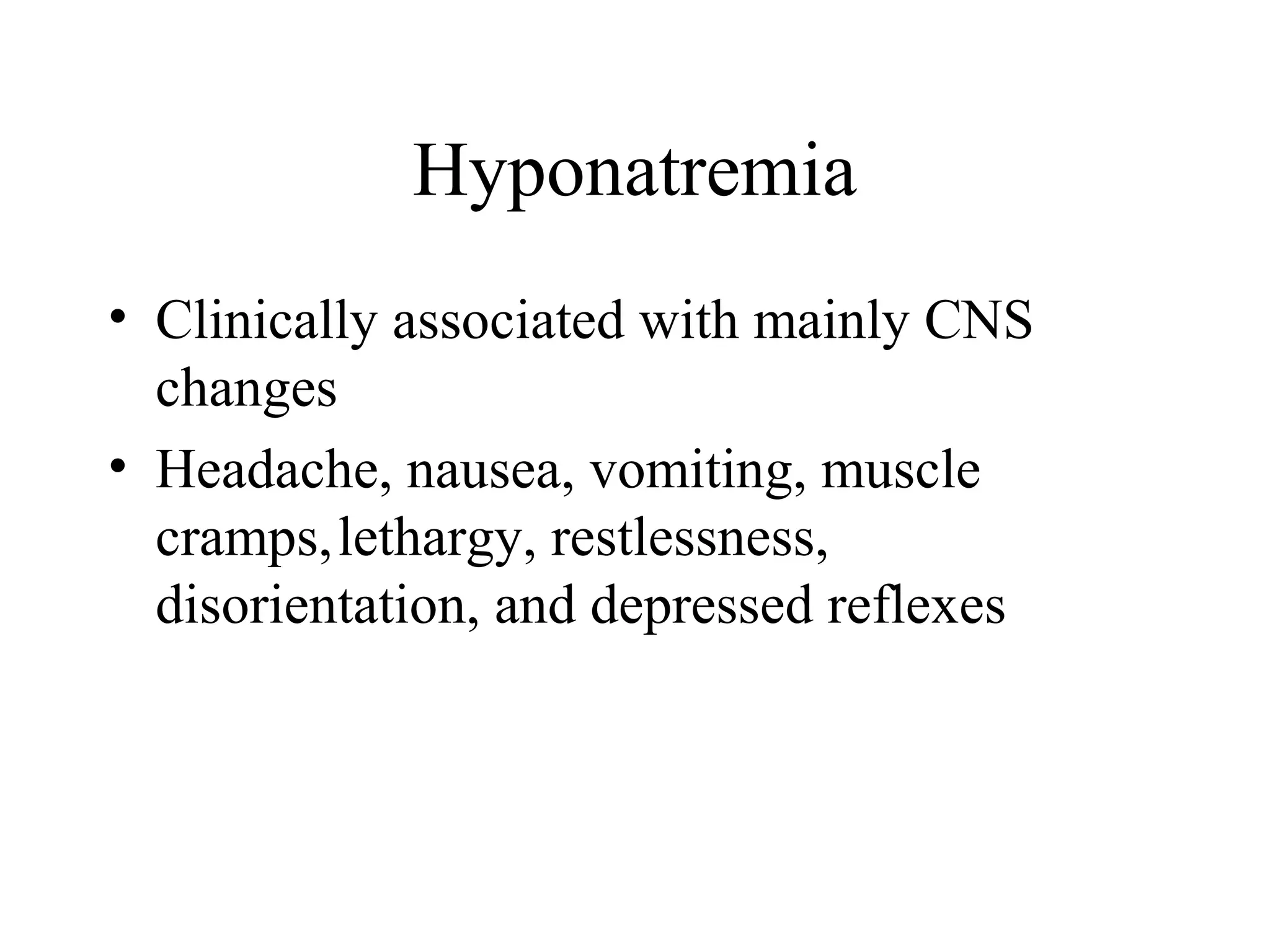
Hyponatremia
• Clinically associated with mainly CNS
changes
• Headache, nausea, vomiting, muscle
cramps,lethargy, restlessness,
disorientation, and depressed reflexes
Hyponatremia
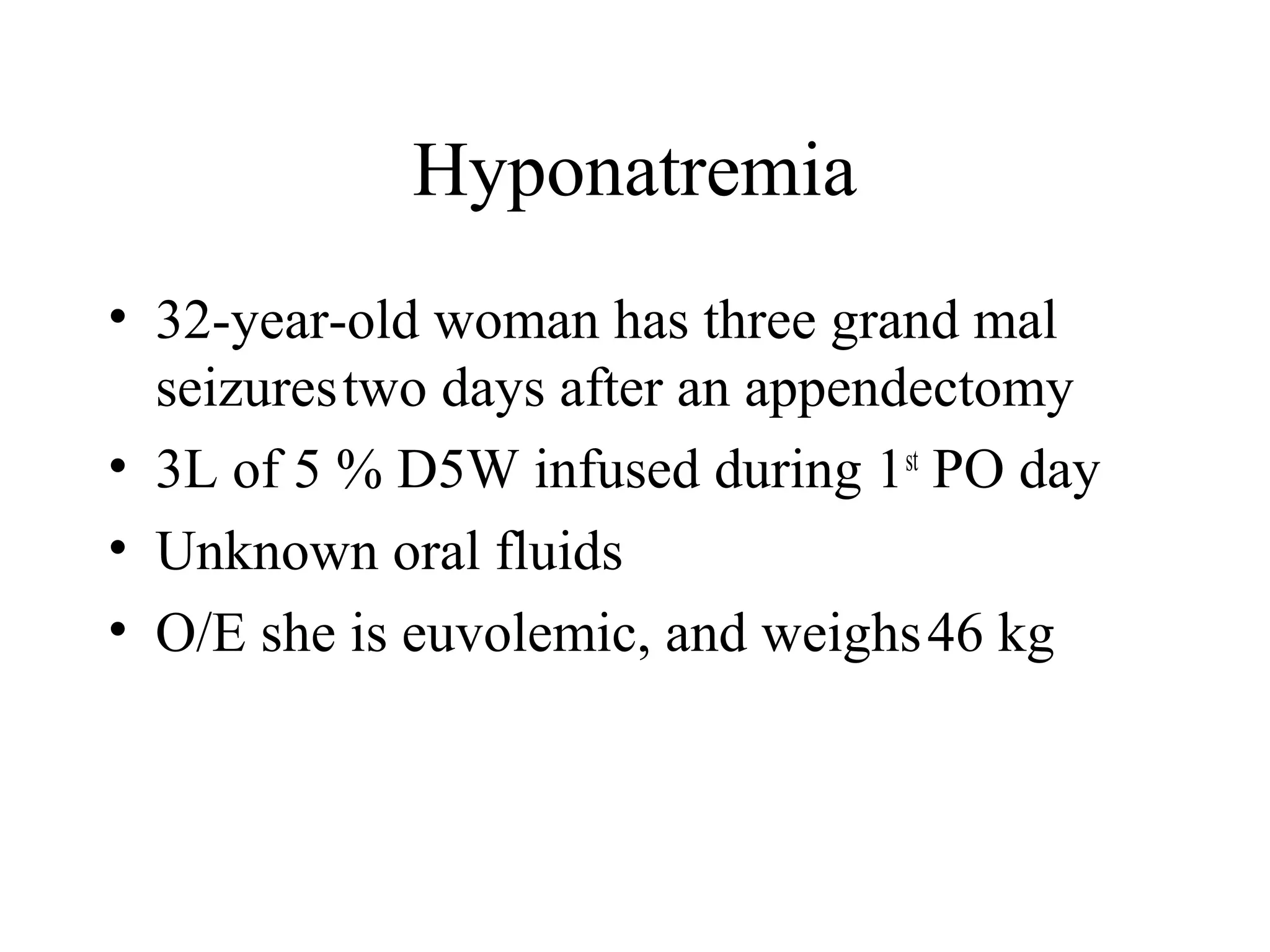
• 32-year-old woman has three grand mal
seizurestwo days after an appendectomy
• 3L of 5 % D5W infused during 1st
PO day
• Unknown oral fluids
• O/E she is euvolemic, and weighs46 kg
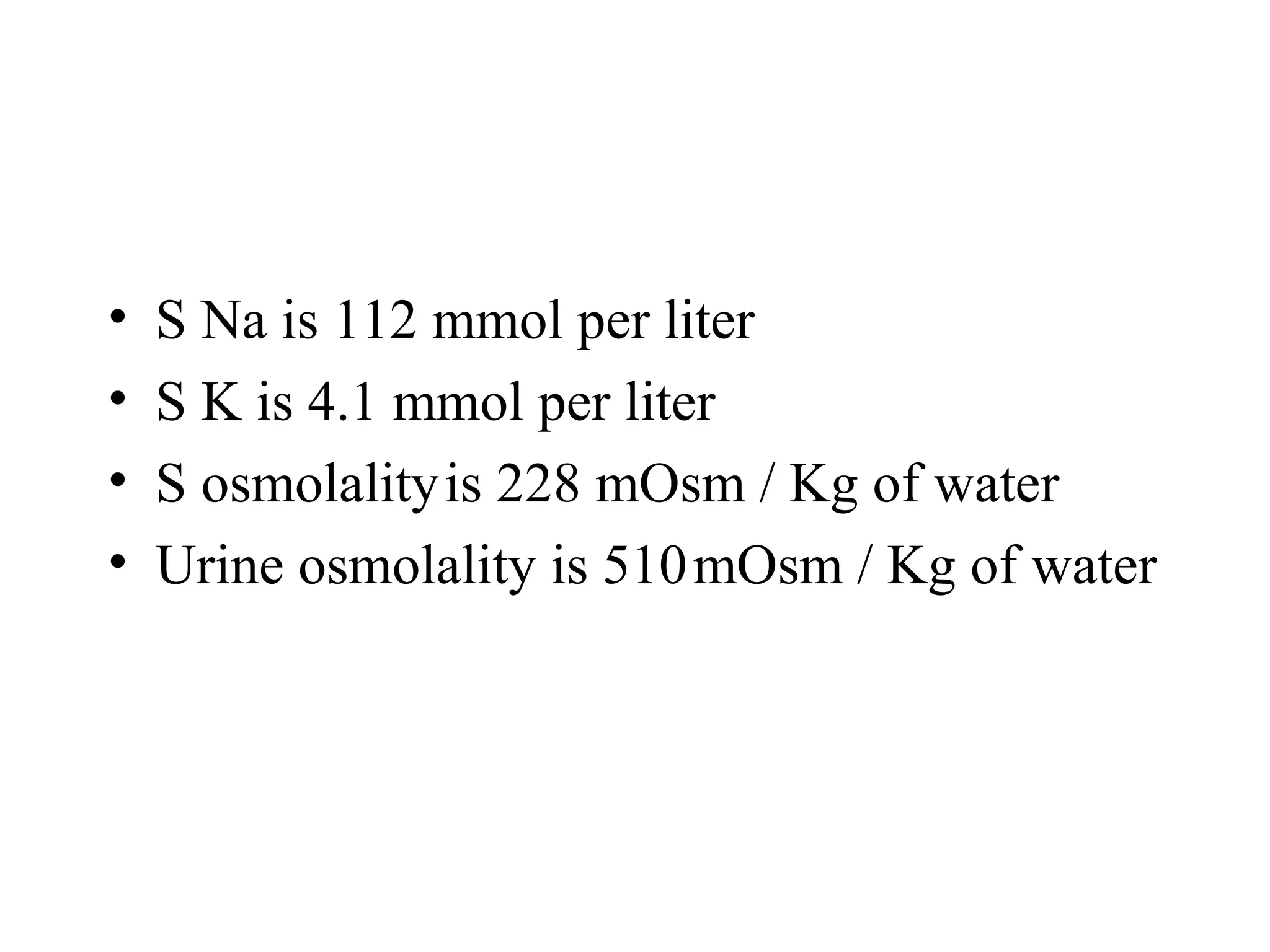
• S Na is 112 mmol per liter
• S K is 4.1 mmol per liter
• S osmolalityis 228 mOsm / Kg of water
• Urine osmolality is 510mOsm / Kg of water
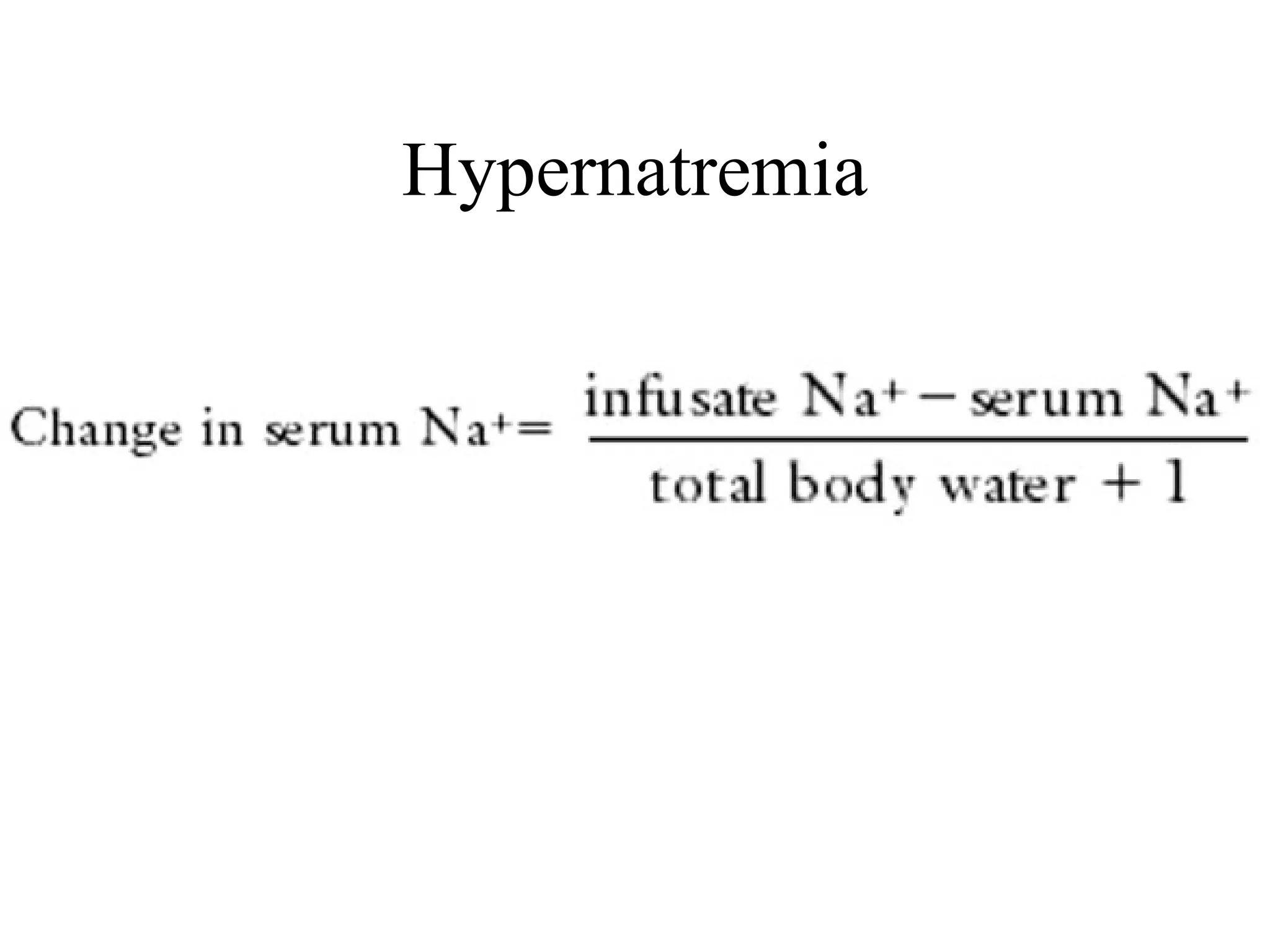
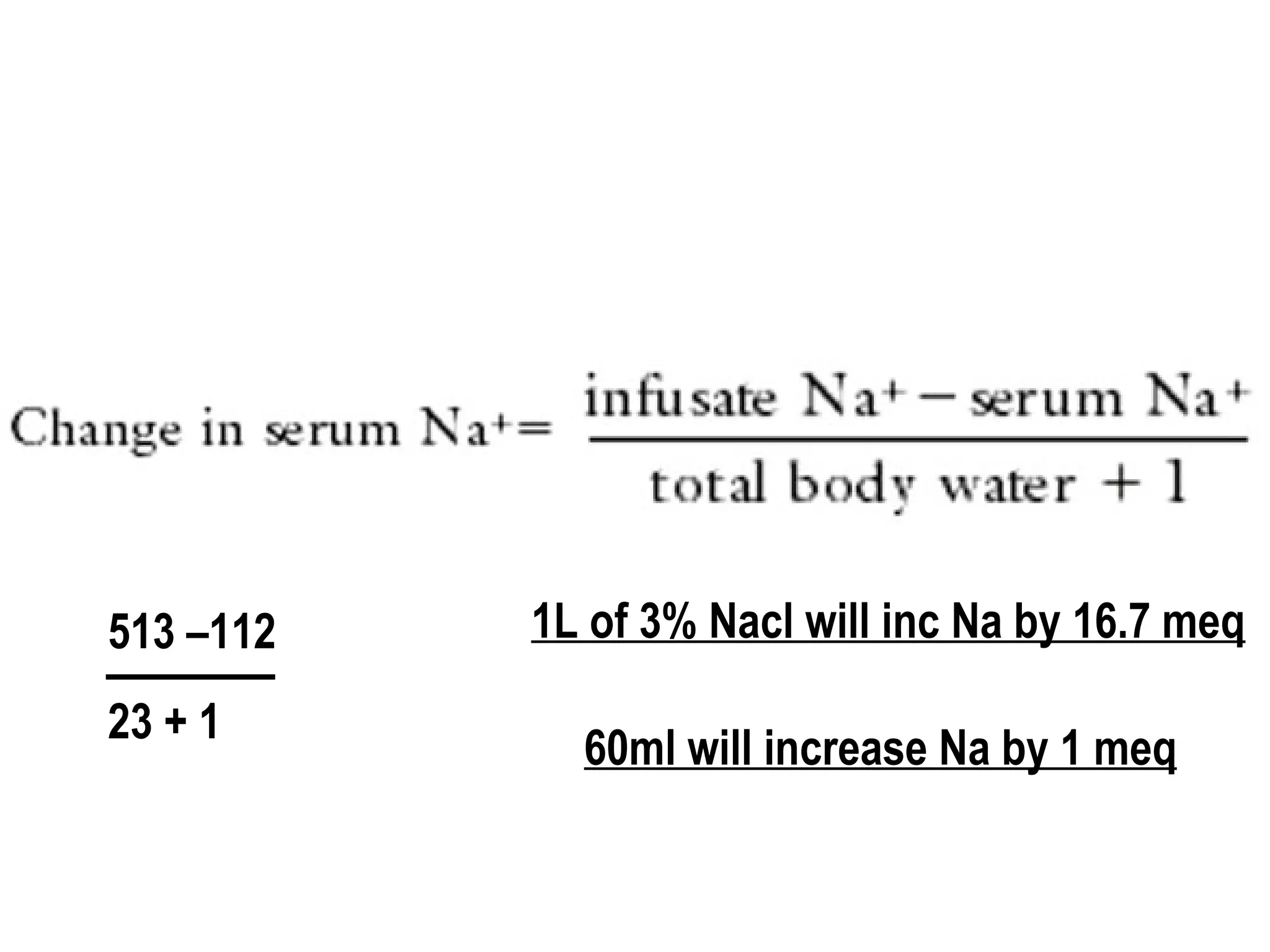
513 –112
23 + 1
1L of 3% Nacl will inc Na by 16.7 meq
60ml will increase Na by 1 meq
• EBWater 23 litres
Na now 112 x 23
If you give 1L of 3% saline
(513 x 1) + (112x 23)
New conc of Na = (513 x 1) + (112x 23)/24
diff of Na = [(513 x 1) + (112x 23)/24] – (112)
Rate of correction:
Can we exceed 1.5 mEq/L/hr?
Total Correction:
Should we limit it to less than 12mEq/L for the first 24 hrs?
What is the level to which we should correct the sodium?
Full correction?
Limit to 120-125 mEq/L?
Should we treat all hyponatremia? What if the patient is
asymptomatic ?
Outcome in severe symptomatic hyponatremia:
Age (extremes do well; infants and elderly)
Sex (women fare poorly)
Respiratory arrest always worsens outcome
Rate of correction is not a major factor as long as
the total correction in 24 hours is limited
Common causes:
Euvolemic: SIADH, Psychogenic polydipsia, hypothyroid
Overloaded: Renal, liver, heart failure
Dry: Diuretic abuse, GI losses, adrenal hypofunction
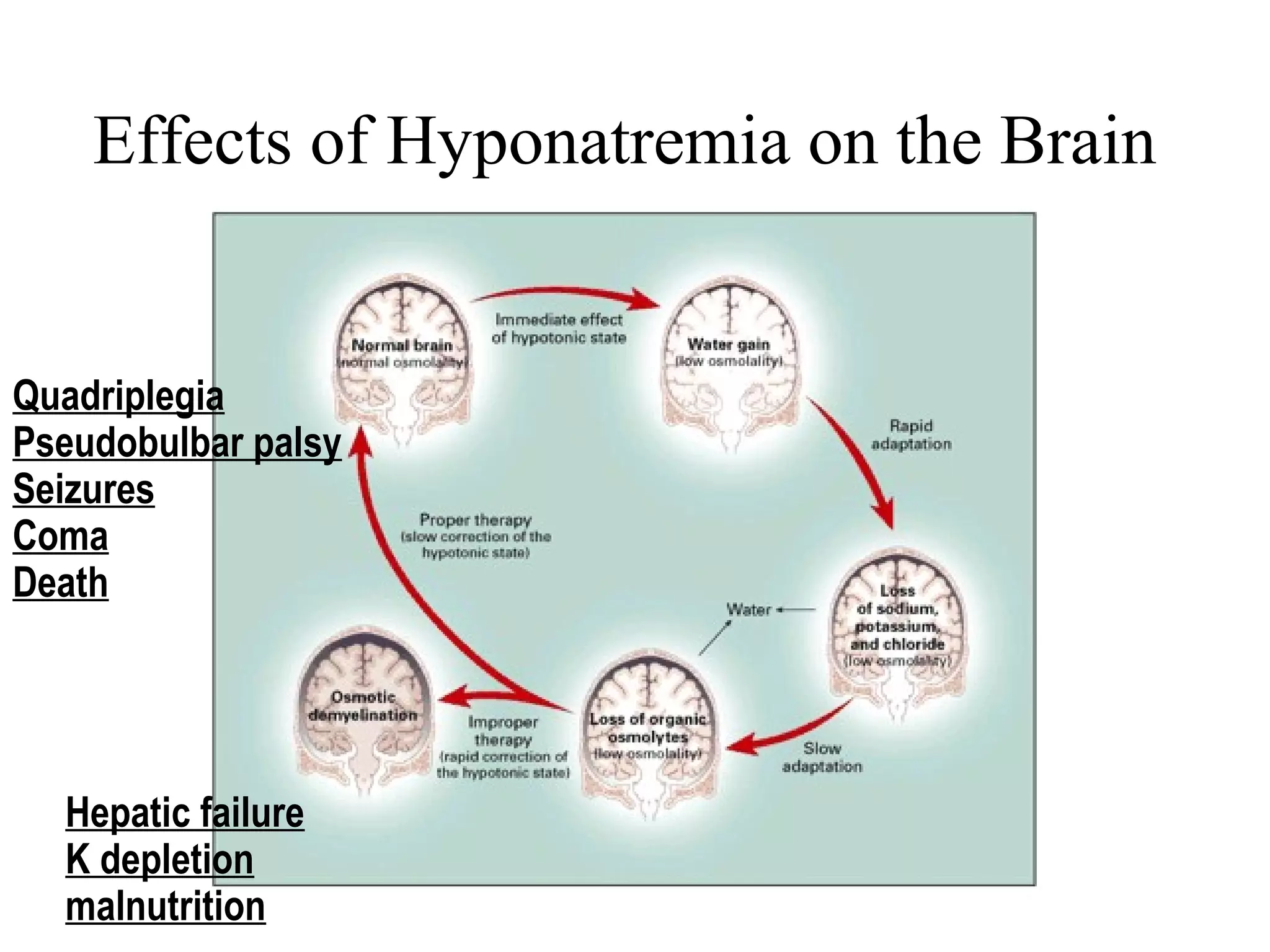
Effects of Hyponatremia on the Brain
Quadriplegia
Pseudobulbar palsy
Seizures
Coma
Death
Hepatic failure
K depletion
malnutrition
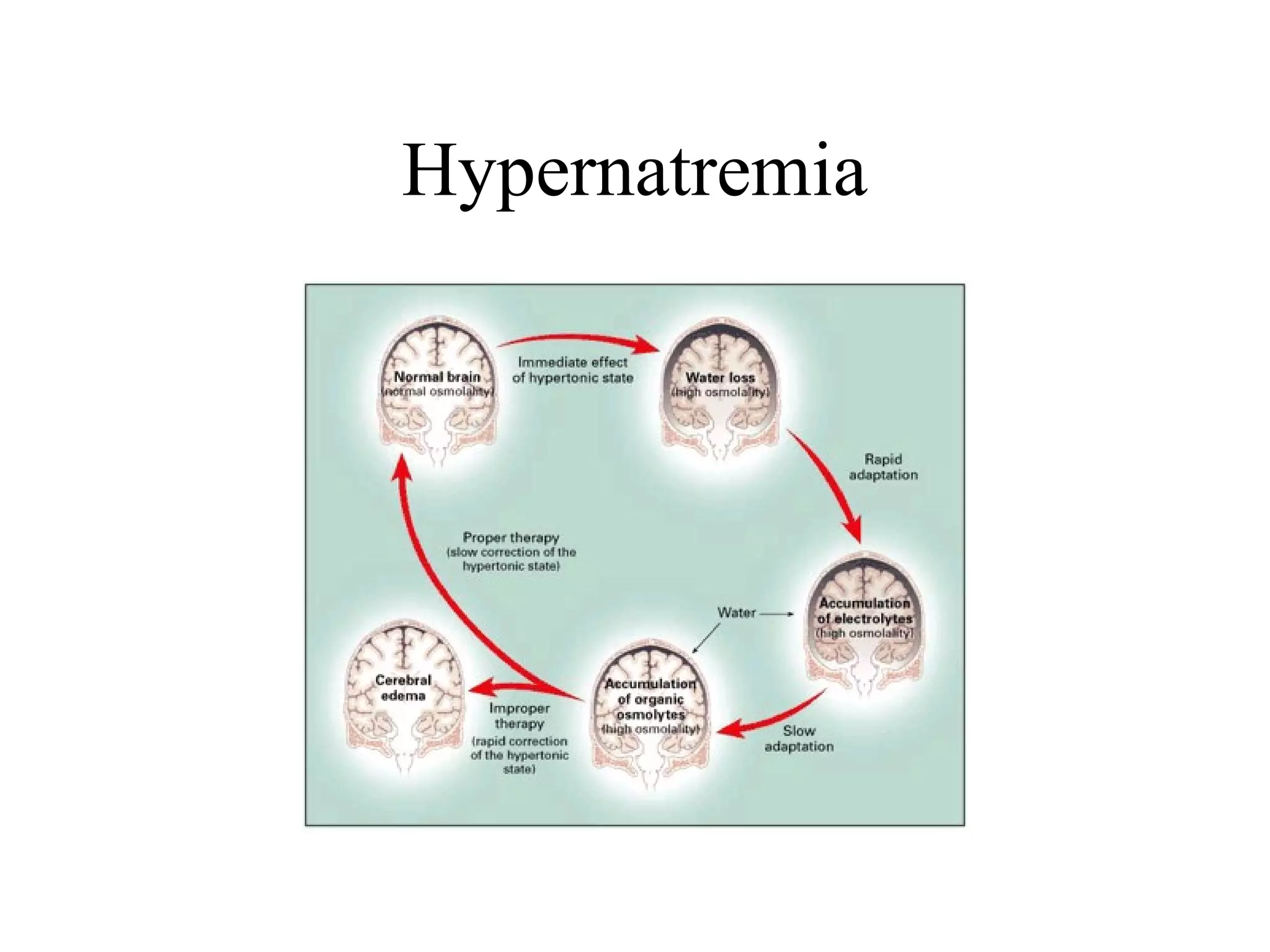
Hypernatremia
Na >145
Usually due to dehydration:
Water loss: GI losses, sweating, Diabetes Insipidus
Inadequate intake: Access to water impaired
Excessive salt intake is an unusual cause
Correct with NS if patient is hypotensive
Use hypotonic solutions otherwise
Hypernatremia
Hypernatremia
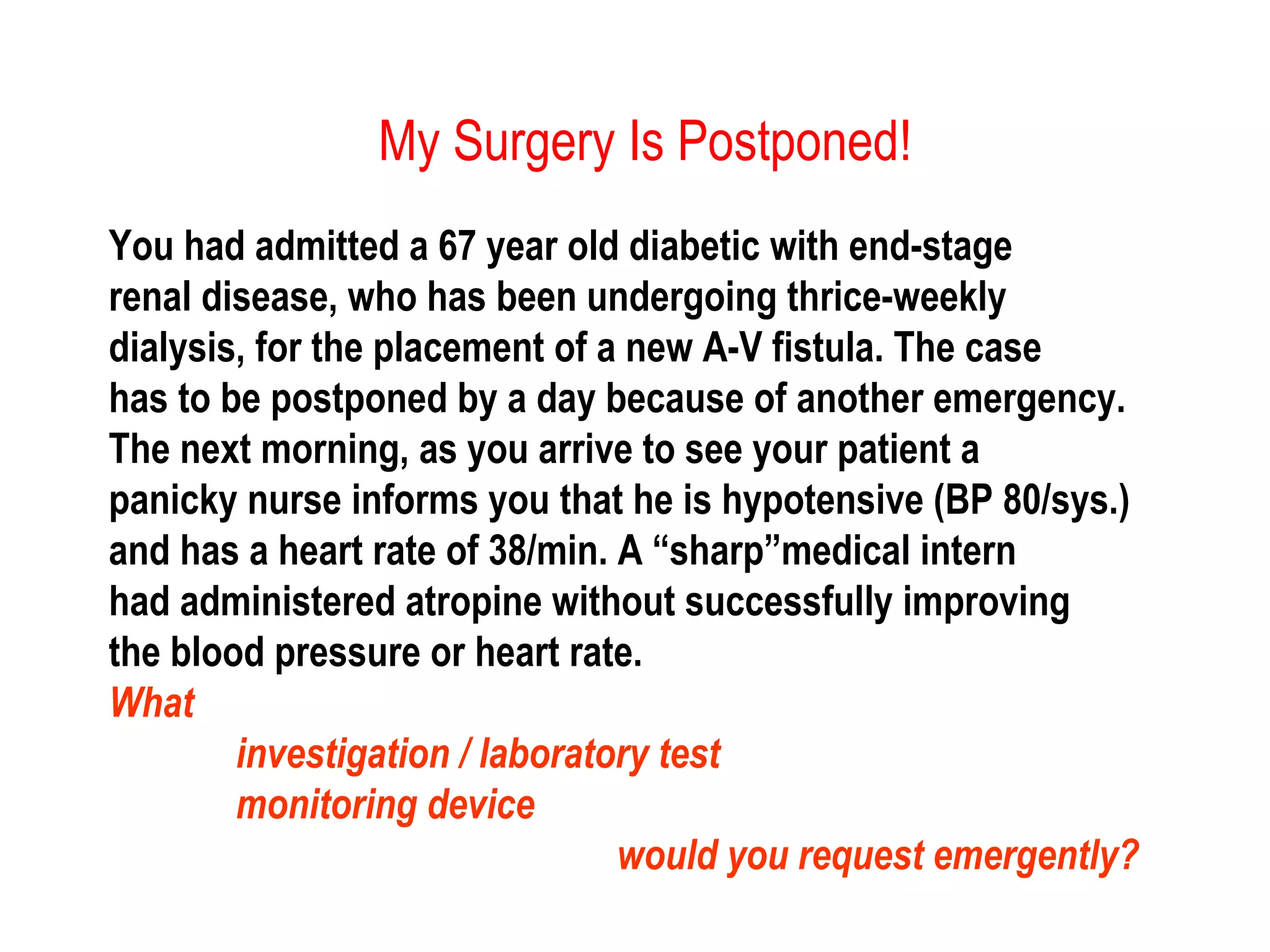
My Surgery Is Postponed!
You had admitted a 67 year old diabetic with end-stage
renal disease, who has been undergoing thrice-weekly
dialysis, for the placement of a new A-V fistula. The case
has to be postponed by a day because of another emergency.
The next morning, as you arrive to see your patient a
panicky nurse informs you that he is hypotensive (BP 80/sys.)
and has a heart rate of 38/min. A “sharp”medical intern
had administered atropine without successfully improving
the blood pressure or heart rate.
What
investigation / laboratory test
monitoring device
would you request emergently?
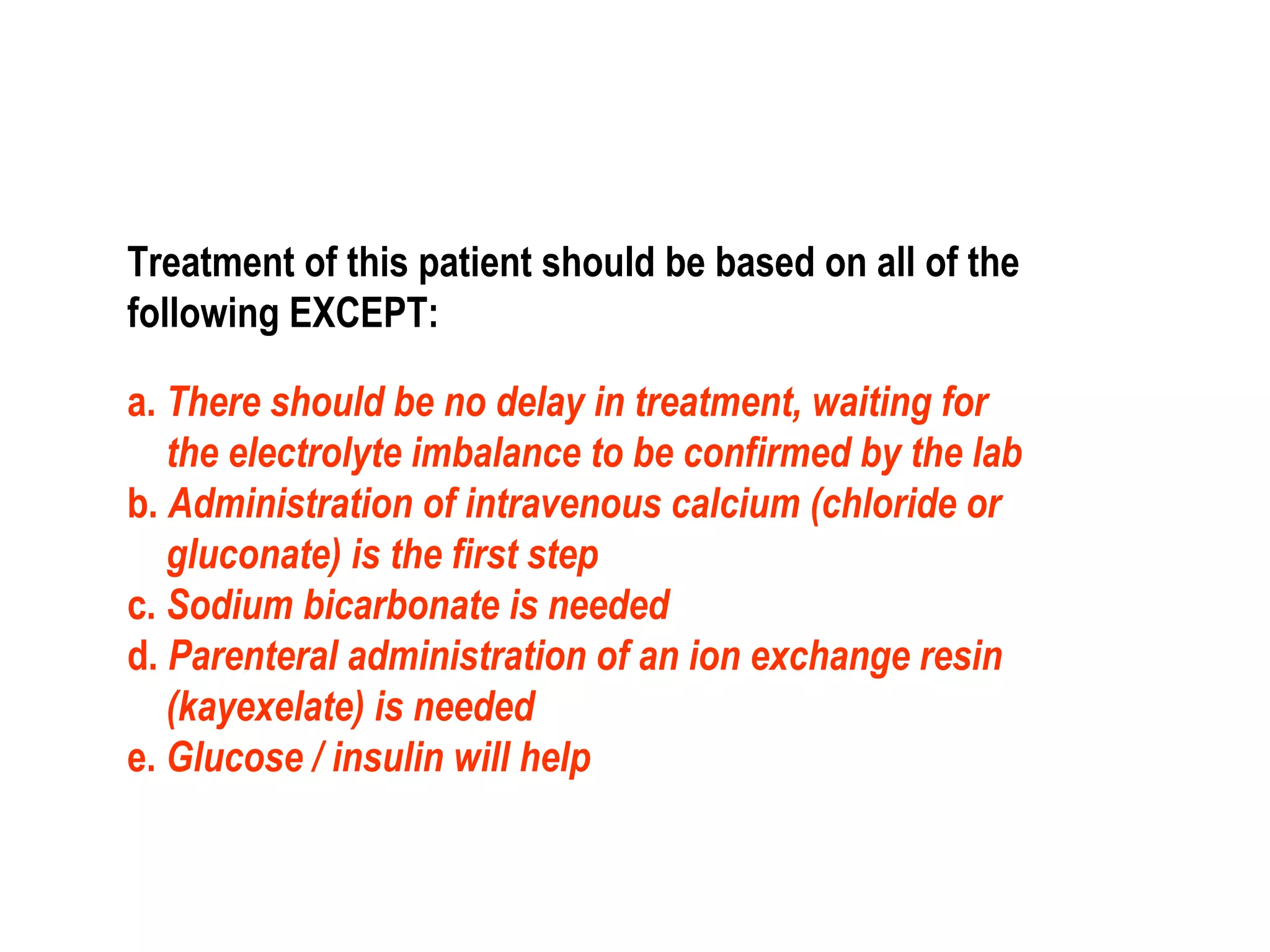
Treatment of this patient should be based on all of the
following EXCEPT:
a. There should be no delay in treatment, waiting for
the electrolyte imbalance to be confirmed by the lab
b. Administration of intravenous calcium (chloride or
gluconate) is the first step
c. Sodium bicarbonate is needed
d. Parenteral administration of an ion exchange resin
(kayexelate) is needed
e. Glucose / insulin will help
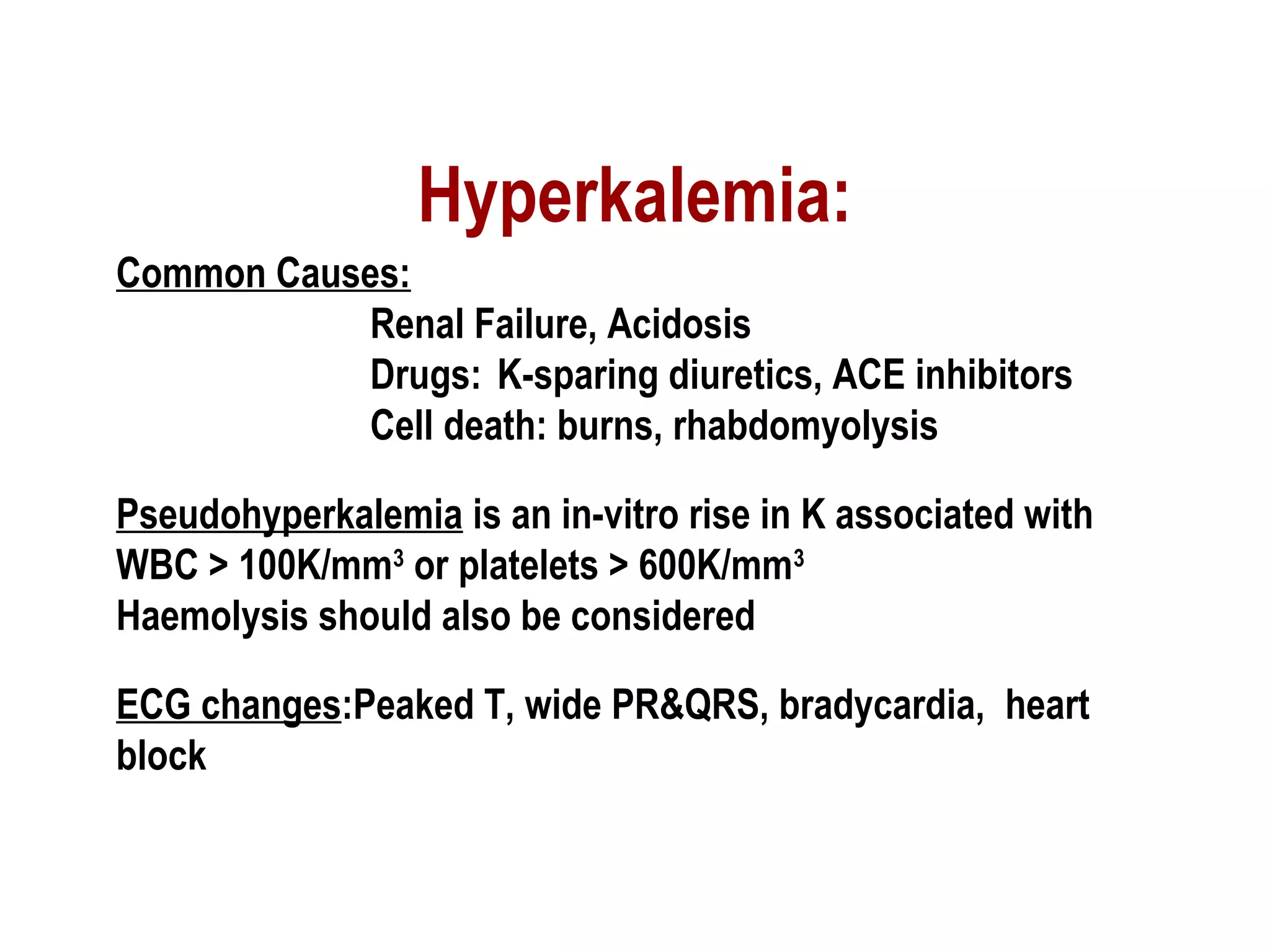
Hyperkalemia:
Common Causes:
Renal Failure, Acidosis
Drugs: K-sparing diuretics, ACE inhibitors
Cell death: burns, rhabdomyolysis
Pseudohyperkalemia is an in-vitro rise in K associated with
WBC > 100K/mm3
or platelets > 600K/mm3
Haemolysis should also be considered
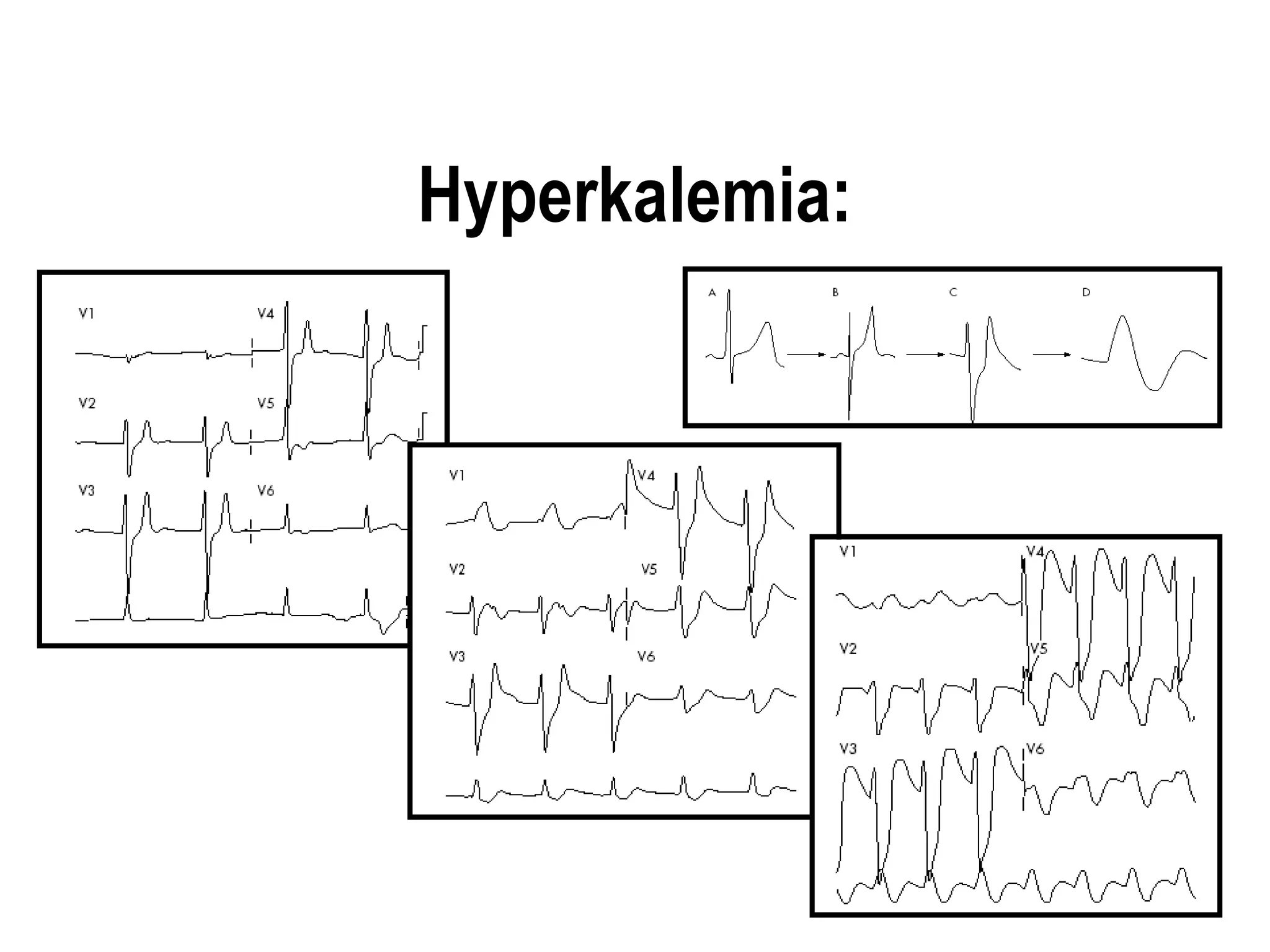
ECG changes:Peaked T, wide PR&QRS, bradycardia, heart
block
Hyperkalemia:
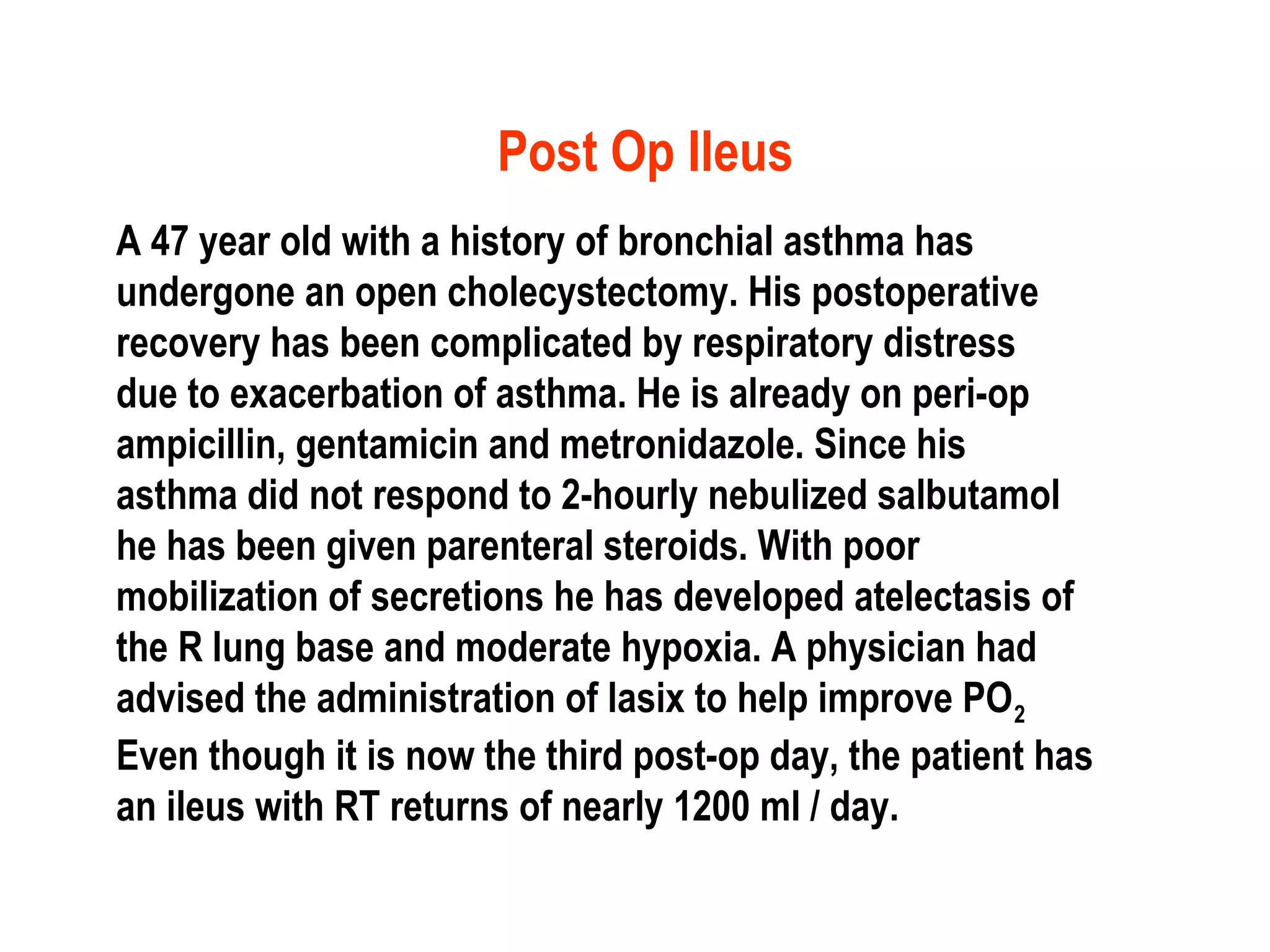
Post Op Ileus
A 47 year old with a history of bronchial asthma has
undergone an open cholecystectomy. His postoperative
recovery has been complicated by respiratory distress
due to exacerbation of asthma. He is already on peri-op
ampicillin, gentamicin and metronidazole. Since his
asthma did not respond to 2-hourly nebulized salbutamol
he has been given parenteral steroids. With poor
mobilization of secretions he has developed atelectasis of
the R lung base and moderate hypoxia. A physician had
advised the administration of lasix to help improve PO2
Even though it is now the third post-op day, the patient has
an ileus with RT returns of nearly 1200 ml / day.
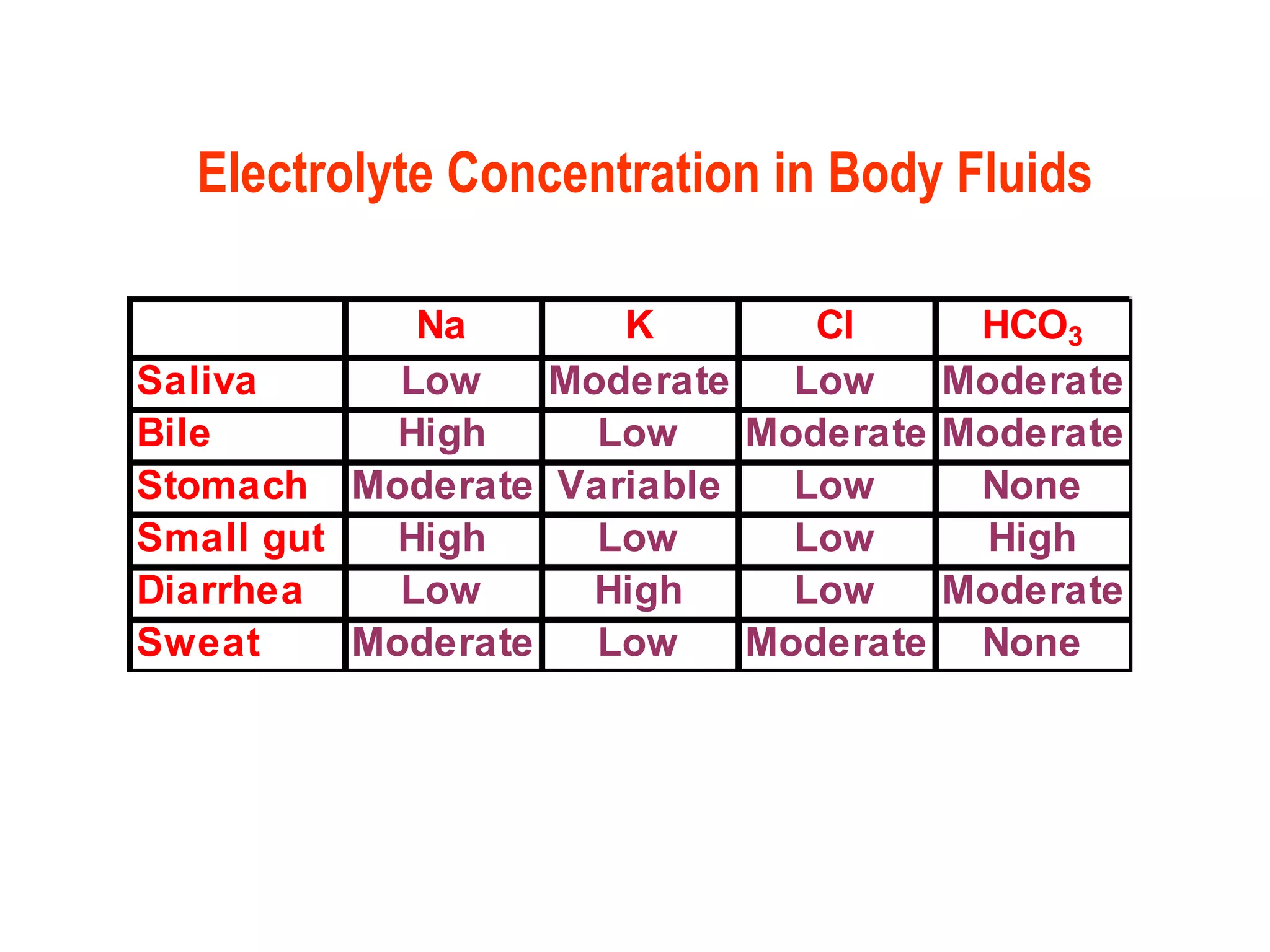
Electrolyte Concentration in Body Fluids
Na K Cl HCO3
Saliva Low Moderate Low Moderate
Bile High Low Moderate Moderate
Stomach Moderate Variable Low None
Small gut High Low Low High
Diarrhea Low High Low Moderate
Sweat Moderate Low Moderate None
Na and K
• Daily requirements
– Na 1 to 2 mEq / Kg / day
– K 1 mEq / Kg / day
Seizures Followed by Unresponsiveness
A52-year-old woman had undergone a mastectomy and
axillary node dissection about 11 years ago. She was node
positive and received combination chemotherapy. She
had otherwise been well till 2-3 days prior to admission, when
has been complaining of nausea, vomiting and anorexia. She
was noted to be irritable and then increasingly somnolent.
She was brought to your hospital after she had a single
generalized convulsion after which she has not awoken. The
family also notes that she has been voiding large quantities
of urine and has been bedwetting in the last two days.
A contrast CT scan of the brain shows no abnormality.
Which of the following would be logical explanations
for the patient’s symptoms (arrange in decreasing order
of likelihood):
A. Despite a negative CT scan, brain mets. and associated
diabetes insipidus should be considered. Hypernatremia
may be the cause of symptoms.
B. Mets. to other sites producing ectopic ADH may be
causing hyponatremia and an associated encephalopathy
C. Since metastaic breast cancer is a common cause
of hypercalcemia, we must consider this as the most likely
etiology.
What laboratory investigations would you ask for?
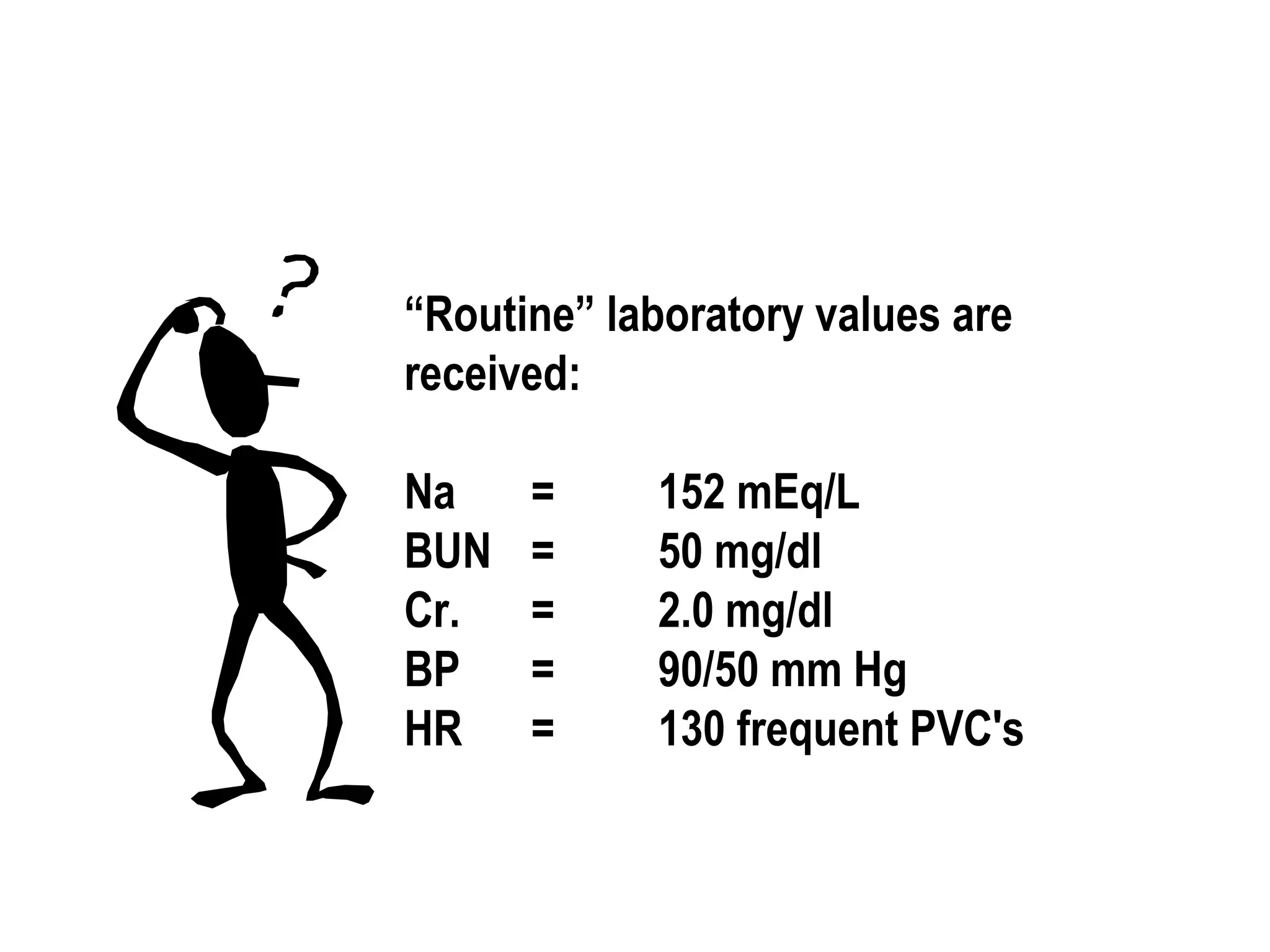
“Routine” laboratory values are
received:
Na = 152 mEq/L
BUN = 50 mg/dl
Cr. = 2.0 mg/dl
BP = 90/50 mm Hg
HR = 130 frequent PVC's
Ca = 16 mg/dl
Immediate management should include:
a. Disodium etidronate (biphosphonate) to lower Ca levels
b. Immediate hydration with NS; followed by 1/2NS to
provide 4-6litres/day + lasix or ethacrynic acid
c. Immediate hydration with 5%dextrose followed by fluid
to correct 1/2 the estimated free water deficit based on S. Na
d. Immediate dialysis with Ca free dialysate
e. Calcitonin + steroids
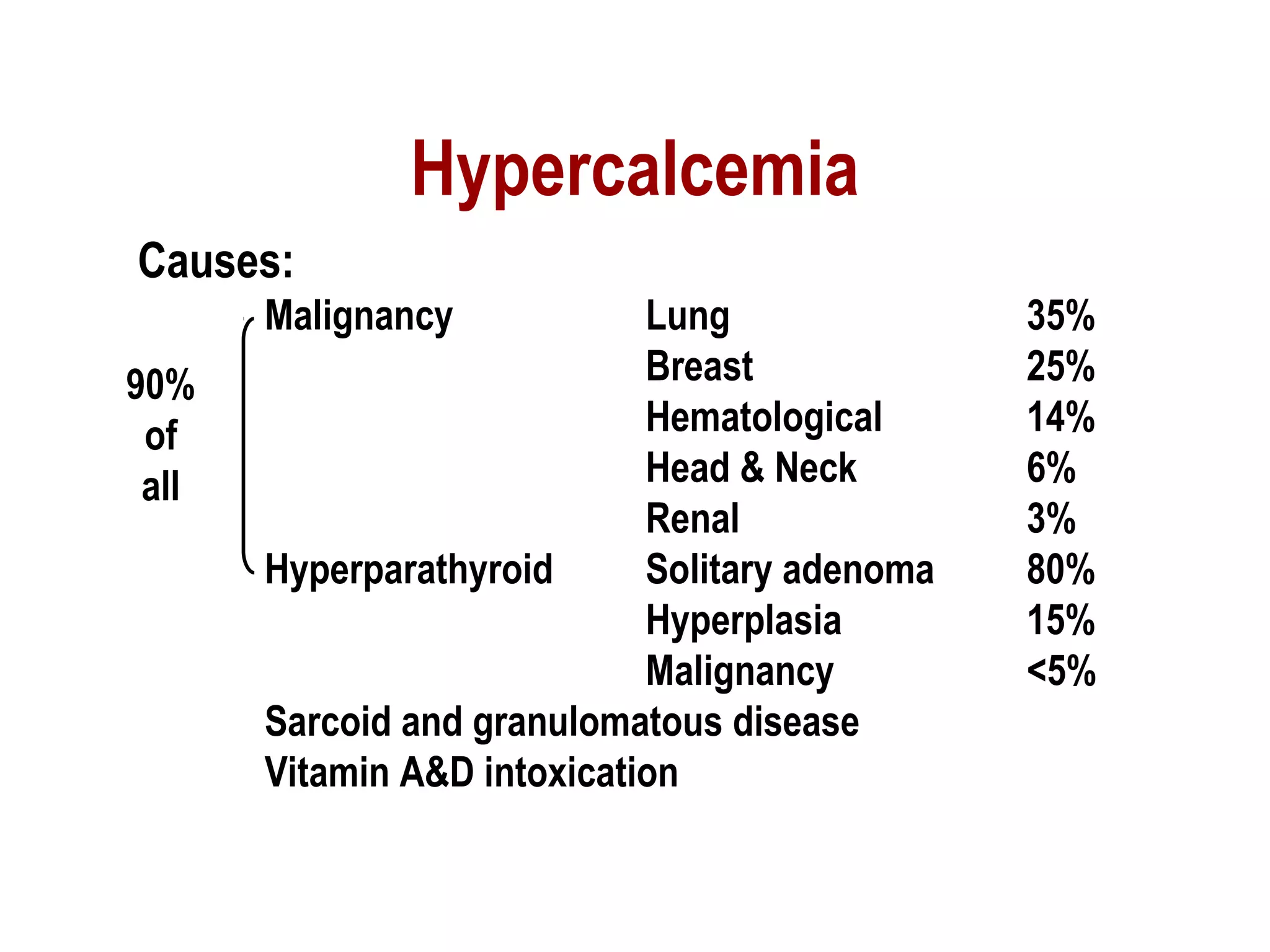
Hypercalcemia
Causes:
Malignancy Lung 35%
Breast 25%
Hematological 14%
Head & Neck 6%
Renal 3%
Hyperparathyroid Solitary adenoma 80%
Hyperplasia 15%
Malignancy <5%
Sarcoid and granulomatous disease
Vitamin A&D intoxication
90%
of
all
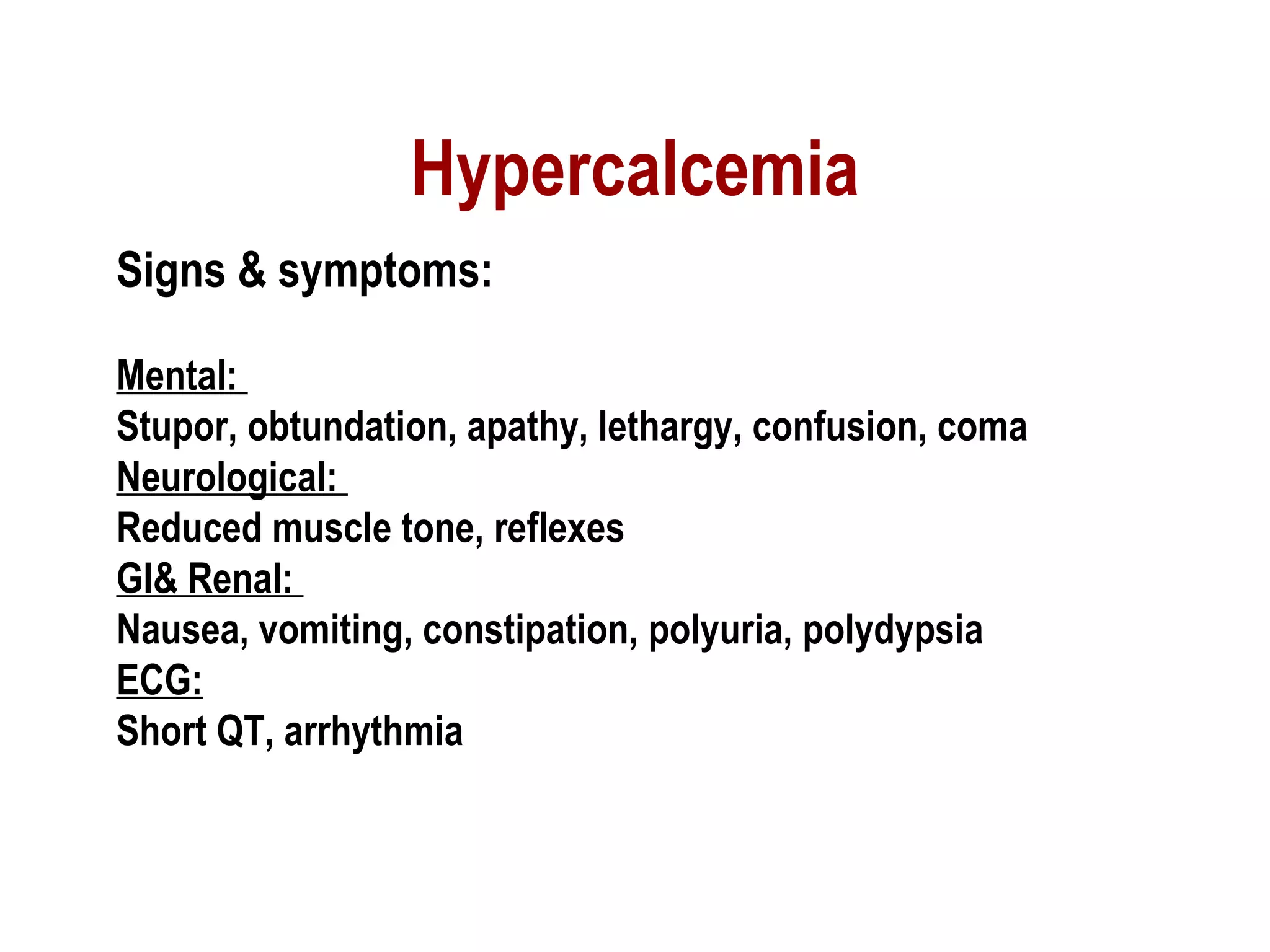
Hypercalcemia
Signs & symptoms:
Mental:
Stupor, obtundation, apathy, lethargy, confusion, coma
Neurological:
Reduced muscle tone, reflexes
GI& Renal:
Nausea, vomiting, constipation, polyuria, polydypsia
ECG:
Short QT, arrhythmia
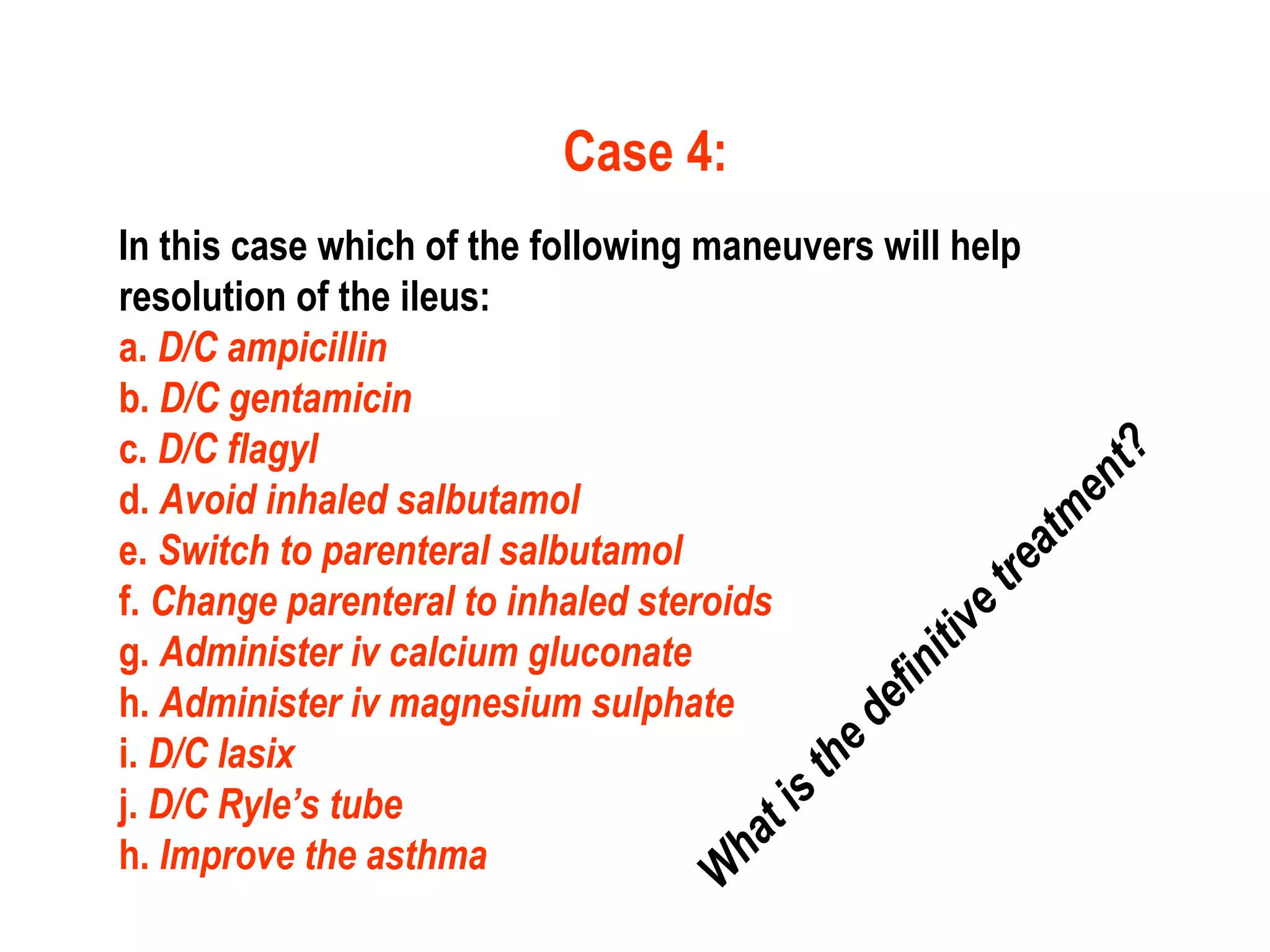
Case 4:
In this case which of the following maneuvers will help
resolution of the ileus:
a. D/C ampicillin
b. D/C gentamicin
c. D/C flagyl
d. Avoid inhaled salbutamol
e. Switch to parenteral salbutamol
f. Change parenteral to inhaled steroids
g. Administer iv calcium gluconate
h. Administer iv magnesium sulphate
i. D/C lasix
j. D/C Ryle’s tube
h. Improve the asthma
W
hatisthedefinitivetreatm
ent?
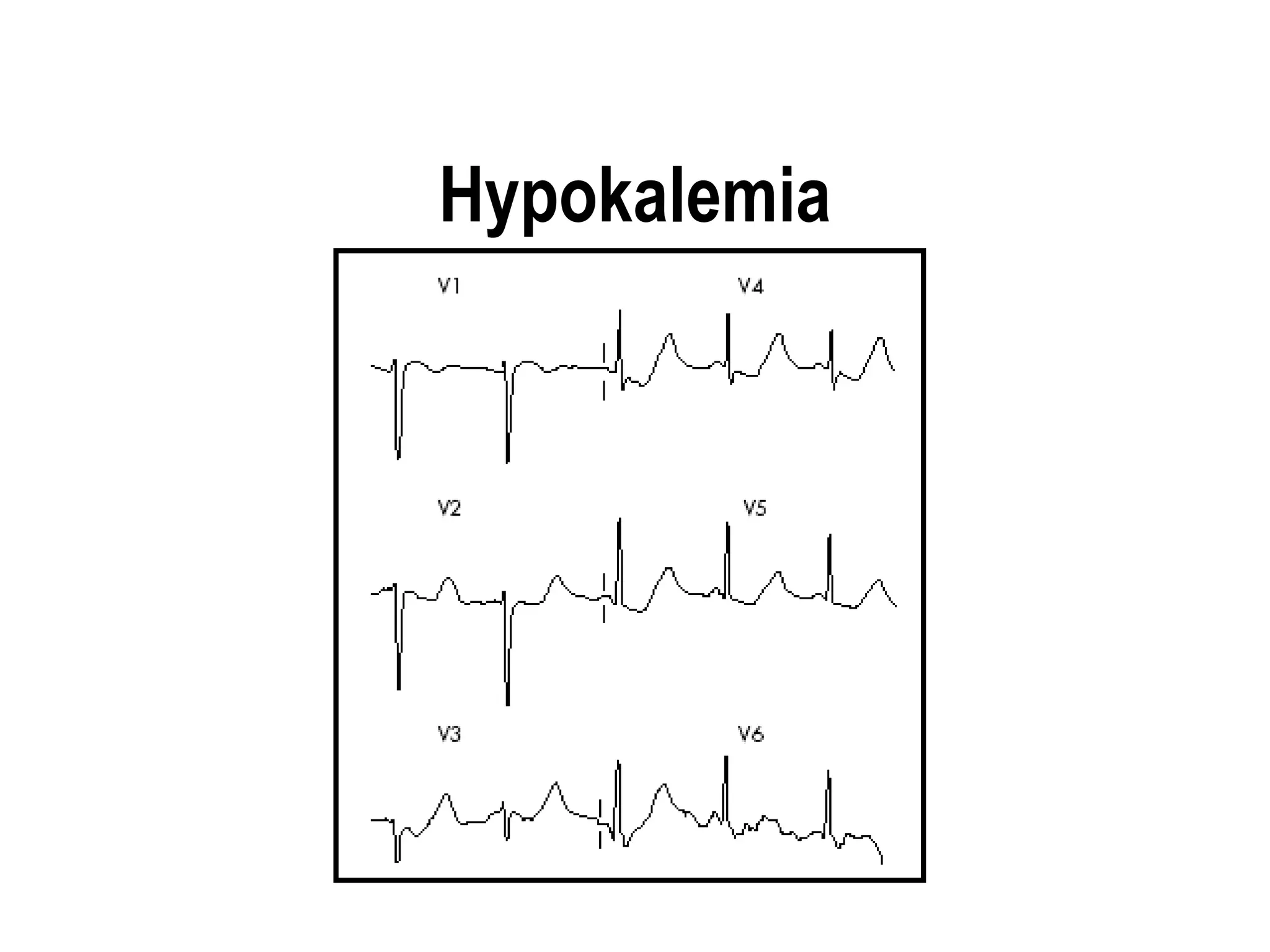
Hypokalemia
Case 5:
A 78 year old male with no known medical illness had
presented with septic shock due to a large bowel perforation,
which has been treated with a colostomy and antibiotic Rx.
He has needed ventilatory and haemodynamic support
but has stabilized. His weaning off the ventilator is compromised
by inadequate patient effort. He is receiving enteral feeding and is
tolerating about 100cc/hr (1800 Kcal/day). The only abnormal
laboratory values are:
S. Calcium (total) 6.2mg/dl,
S. Albumin 2.0 g/dl,
Case 5:
In this case, it would be absolutely imperative to:
a. Administer albumin to improve nutritional parameters
and enhance weaning from the ventilator
b. Administer 10 ml (1 amp) of calcium gluconate (~90 mg)
at once and follow-up with an infusion of 0.3-2 mg/kg/hr
c. Use calcium “chloride” instead of “gluconate” because
its actions are more rapid in onset.
d. Provide no treatment, though there is severe hypocalcemia,
as the patient is otherwise asymptomatic
e. Provide no specific treatment, as the clinical and lab
parameters are not of concern in the short run
Case 6:
A45 year-old has undergone repeat surgery for the Rx
of hyperparathyroidism. His prior surgery over a year ago
did not provide symptomatic or biochemical improvement.
There is no available documentation of the procedure
performed and amount of parathyroid tissue removed. By the
evening of the surgery the patient develops hyperreflexia,
carpopedal spasm and paresthesias. After initial treatment
with injectable calcium preparations he is placed on oral
doses of nearly 2.5 g of elemental calcium / day. About 10
days from the surgery he has persistent hyperreflexia
and has an ionized Ca of 1.0 mmol/L and PO4 is 5.9 mg/dl
Case 6:
Further treatment should include:
a. Lower the phosphate levels by antacids or sucralfate
b. Evaluation for and correction of magnesium deficits
c. Increase the oral calcium supplements
d. Addition of vitamin D supplements
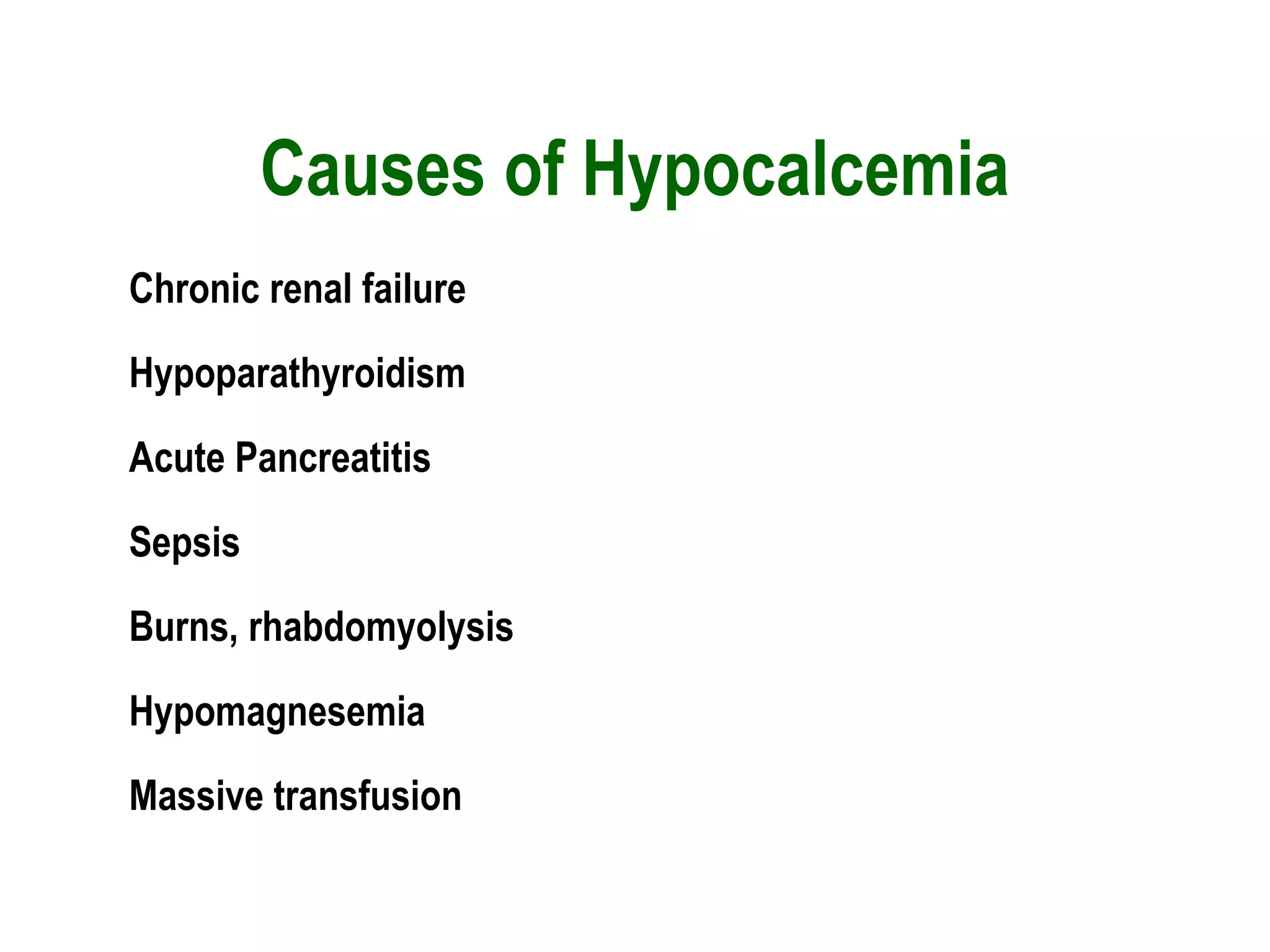
Causes of Hypocalcemia
Chronic renal failure
Hypoparathyroidism
Acute Pancreatitis
Sepsis
Burns, rhabdomyolysis
Hypomagnesemia
Massive transfusion

08. fluid and electrolytes

  • 1.
  • 2.
    Water Content • 50to 60% of body weight • Higher in neonates and children • Lower in elderly • Lower in women
  • 3.
  • 5.
  • 6.
    Intracellular Interstitial Intravascular 2/3 1/3 3/4 1/4 ECFosmolality = ICF osmolality K, ATP Creatinine PO4 phospholipids Na, Cl HCO3
  • 7.
  • 8.
  • 9.
    Water Loss -Starvation Intracellular Interstitial Intravascular 2/3 1/3 3/4 1/4
  • 10.
    Water & ElectrolyteLoss -- GI Intracellular Interstitial Intravascular 2/3 1/3 3/4 1/4
  • 11.
    Replacement Fluids 5%Dextrose Intracellular Interstitial Intravascular 2/3 1/3 666ml 250ml 84ml
  • 12.
  • 13.
  • 14.
  • 15.
  • 16.
    Daily Water Requirement WeightWater requirement 0-10 kg 4mL/kg/hr 10-20 kg 40mL/hr +2ml/kg/hr for each kg>10kg >20kg 60ml/hr +1ml/kg/hr for each kg>20kg for 60kg man this = 100ml/hr or 2400 ml/24 hrs for normal people!!
  • 17.
  • 18.
    Solutions Volumes Na+ K+ Ca2+ Mg2+ Cl-HCO3 - Dextrose mOsm/L ECF 142 4 5 103 27 280-310 Lactated Ringer’s 130 4 3 109 28 273 0.9% NaCl 154 154 308 0.45% NaCl 77 77 154 D5W 50 250 D5/0.45% NaCl 77 77 50 406 3% NaCl 513 513 1026 6% Hetastarch 500 154 154 310 5% Albumin 250,500 130- 160 <2.5 130- 160 330 25% Albumin 20,50,100 130- 160 <2.5 130- 160 330
  • 19.
    Hyponatremia • Serum sodiumconcentration to a level below 136 mmol per liter • hyponatremia can be associated with low, normal, or high tonicity
  • 20.
    Hyponatremia • Clinically associatedwith mainly CNS changes • Headache, nausea, vomiting, muscle cramps,lethargy, restlessness, disorientation, and depressed reflexes
  • 21.
    Hyponatremia • 32-year-old womanhas three grand mal seizurestwo days after an appendectomy • 3L of 5 % D5W infused during 1st PO day • Unknown oral fluids • O/E she is euvolemic, and weighs46 kg
  • 22.
    • S Nais 112 mmol per liter • S K is 4.1 mmol per liter • S osmolalityis 228 mOsm / Kg of water • Urine osmolality is 510mOsm / Kg of water
  • 23.
    513 –112 23 +1 1L of 3% Nacl will inc Na by 16.7 meq 60ml will increase Na by 1 meq
  • 24.
    • EBWater 23litres Na now 112 x 23 If you give 1L of 3% saline (513 x 1) + (112x 23) New conc of Na = (513 x 1) + (112x 23)/24 diff of Na = [(513 x 1) + (112x 23)/24] – (112)
  • 25.
    Rate of correction: Canwe exceed 1.5 mEq/L/hr? Total Correction: Should we limit it to less than 12mEq/L for the first 24 hrs? What is the level to which we should correct the sodium? Full correction? Limit to 120-125 mEq/L? Should we treat all hyponatremia? What if the patient is asymptomatic ?
  • 26.
    Outcome in severesymptomatic hyponatremia: Age (extremes do well; infants and elderly) Sex (women fare poorly) Respiratory arrest always worsens outcome Rate of correction is not a major factor as long as the total correction in 24 hours is limited Common causes: Euvolemic: SIADH, Psychogenic polydipsia, hypothyroid Overloaded: Renal, liver, heart failure Dry: Diuretic abuse, GI losses, adrenal hypofunction
  • 27.
    Effects of Hyponatremiaon the Brain Quadriplegia Pseudobulbar palsy Seizures Coma Death Hepatic failure K depletion malnutrition
  • 28.
    Hypernatremia Na >145 Usually dueto dehydration: Water loss: GI losses, sweating, Diabetes Insipidus Inadequate intake: Access to water impaired Excessive salt intake is an unusual cause Correct with NS if patient is hypotensive Use hypotonic solutions otherwise
  • 29.
  • 30.
  • 31.
    My Surgery IsPostponed! You had admitted a 67 year old diabetic with end-stage renal disease, who has been undergoing thrice-weekly dialysis, for the placement of a new A-V fistula. The case has to be postponed by a day because of another emergency. The next morning, as you arrive to see your patient a panicky nurse informs you that he is hypotensive (BP 80/sys.) and has a heart rate of 38/min. A “sharp”medical intern had administered atropine without successfully improving the blood pressure or heart rate. What investigation / laboratory test monitoring device would you request emergently?
  • 32.
    Treatment of thispatient should be based on all of the following EXCEPT: a. There should be no delay in treatment, waiting for the electrolyte imbalance to be confirmed by the lab b. Administration of intravenous calcium (chloride or gluconate) is the first step c. Sodium bicarbonate is needed d. Parenteral administration of an ion exchange resin (kayexelate) is needed e. Glucose / insulin will help
  • 33.
    Hyperkalemia: Common Causes: Renal Failure,Acidosis Drugs: K-sparing diuretics, ACE inhibitors Cell death: burns, rhabdomyolysis Pseudohyperkalemia is an in-vitro rise in K associated with WBC > 100K/mm3 or platelets > 600K/mm3 Haemolysis should also be considered ECG changes:Peaked T, wide PR&QRS, bradycardia, heart block
  • 34.
  • 35.
    Post Op Ileus A47 year old with a history of bronchial asthma has undergone an open cholecystectomy. His postoperative recovery has been complicated by respiratory distress due to exacerbation of asthma. He is already on peri-op ampicillin, gentamicin and metronidazole. Since his asthma did not respond to 2-hourly nebulized salbutamol he has been given parenteral steroids. With poor mobilization of secretions he has developed atelectasis of the R lung base and moderate hypoxia. A physician had advised the administration of lasix to help improve PO2 Even though it is now the third post-op day, the patient has an ileus with RT returns of nearly 1200 ml / day.
  • 36.
    Electrolyte Concentration inBody Fluids Na K Cl HCO3 Saliva Low Moderate Low Moderate Bile High Low Moderate Moderate Stomach Moderate Variable Low None Small gut High Low Low High Diarrhea Low High Low Moderate Sweat Moderate Low Moderate None
  • 37.
    Na and K •Daily requirements – Na 1 to 2 mEq / Kg / day – K 1 mEq / Kg / day
  • 38.
    Seizures Followed byUnresponsiveness A52-year-old woman had undergone a mastectomy and axillary node dissection about 11 years ago. She was node positive and received combination chemotherapy. She had otherwise been well till 2-3 days prior to admission, when has been complaining of nausea, vomiting and anorexia. She was noted to be irritable and then increasingly somnolent. She was brought to your hospital after she had a single generalized convulsion after which she has not awoken. The family also notes that she has been voiding large quantities of urine and has been bedwetting in the last two days. A contrast CT scan of the brain shows no abnormality.
  • 39.
    Which of thefollowing would be logical explanations for the patient’s symptoms (arrange in decreasing order of likelihood): A. Despite a negative CT scan, brain mets. and associated diabetes insipidus should be considered. Hypernatremia may be the cause of symptoms. B. Mets. to other sites producing ectopic ADH may be causing hyponatremia and an associated encephalopathy C. Since metastaic breast cancer is a common cause of hypercalcemia, we must consider this as the most likely etiology. What laboratory investigations would you ask for?
  • 40.
    “Routine” laboratory valuesare received: Na = 152 mEq/L BUN = 50 mg/dl Cr. = 2.0 mg/dl BP = 90/50 mm Hg HR = 130 frequent PVC's
  • 41.
    Ca = 16mg/dl Immediate management should include: a. Disodium etidronate (biphosphonate) to lower Ca levels b. Immediate hydration with NS; followed by 1/2NS to provide 4-6litres/day + lasix or ethacrynic acid c. Immediate hydration with 5%dextrose followed by fluid to correct 1/2 the estimated free water deficit based on S. Na d. Immediate dialysis with Ca free dialysate e. Calcitonin + steroids
  • 42.
    Hypercalcemia Causes: Malignancy Lung 35% Breast25% Hematological 14% Head & Neck 6% Renal 3% Hyperparathyroid Solitary adenoma 80% Hyperplasia 15% Malignancy <5% Sarcoid and granulomatous disease Vitamin A&D intoxication 90% of all
  • 43.
    Hypercalcemia Signs & symptoms: Mental: Stupor,obtundation, apathy, lethargy, confusion, coma Neurological: Reduced muscle tone, reflexes GI& Renal: Nausea, vomiting, constipation, polyuria, polydypsia ECG: Short QT, arrhythmia
  • 45.
    Case 4: In thiscase which of the following maneuvers will help resolution of the ileus: a. D/C ampicillin b. D/C gentamicin c. D/C flagyl d. Avoid inhaled salbutamol e. Switch to parenteral salbutamol f. Change parenteral to inhaled steroids g. Administer iv calcium gluconate h. Administer iv magnesium sulphate i. D/C lasix j. D/C Ryle’s tube h. Improve the asthma W hatisthedefinitivetreatm ent?
  • 46.
  • 47.
    Case 5: A 78year old male with no known medical illness had presented with septic shock due to a large bowel perforation, which has been treated with a colostomy and antibiotic Rx. He has needed ventilatory and haemodynamic support but has stabilized. His weaning off the ventilator is compromised by inadequate patient effort. He is receiving enteral feeding and is tolerating about 100cc/hr (1800 Kcal/day). The only abnormal laboratory values are: S. Calcium (total) 6.2mg/dl, S. Albumin 2.0 g/dl,
  • 48.
    Case 5: In thiscase, it would be absolutely imperative to: a. Administer albumin to improve nutritional parameters and enhance weaning from the ventilator b. Administer 10 ml (1 amp) of calcium gluconate (~90 mg) at once and follow-up with an infusion of 0.3-2 mg/kg/hr c. Use calcium “chloride” instead of “gluconate” because its actions are more rapid in onset. d. Provide no treatment, though there is severe hypocalcemia, as the patient is otherwise asymptomatic e. Provide no specific treatment, as the clinical and lab parameters are not of concern in the short run
  • 49.
    Case 6: A45 year-oldhas undergone repeat surgery for the Rx of hyperparathyroidism. His prior surgery over a year ago did not provide symptomatic or biochemical improvement. There is no available documentation of the procedure performed and amount of parathyroid tissue removed. By the evening of the surgery the patient develops hyperreflexia, carpopedal spasm and paresthesias. After initial treatment with injectable calcium preparations he is placed on oral doses of nearly 2.5 g of elemental calcium / day. About 10 days from the surgery he has persistent hyperreflexia and has an ionized Ca of 1.0 mmol/L and PO4 is 5.9 mg/dl
  • 50.
    Case 6: Further treatmentshould include: a. Lower the phosphate levels by antacids or sucralfate b. Evaluation for and correction of magnesium deficits c. Increase the oral calcium supplements d. Addition of vitamin D supplements
  • 51.
    Causes of Hypocalcemia Chronicrenal failure Hypoparathyroidism Acute Pancreatitis Sepsis Burns, rhabdomyolysis Hypomagnesemia Massive transfusion