Importance of Mobile Communication
 Mobile communication or mobile telecommunication is a wireless technology that , enables instant and
convenient communication regardless of location.
 Mobile networks use radio communication which requires the signals from the network and cell phones to
be in the form of radio waves (800 MHz to tens of GHz).
 Mobile communication employs a large number of cell towers throughout towns and cities to provide
nationwide cellular coverage so that our cell phones function correctly.
 Mobile communication has become an essential part of our lives by enabling easy communication.
Unlocking the
Wonders of First
Generation 1G Cellular
Network Technology
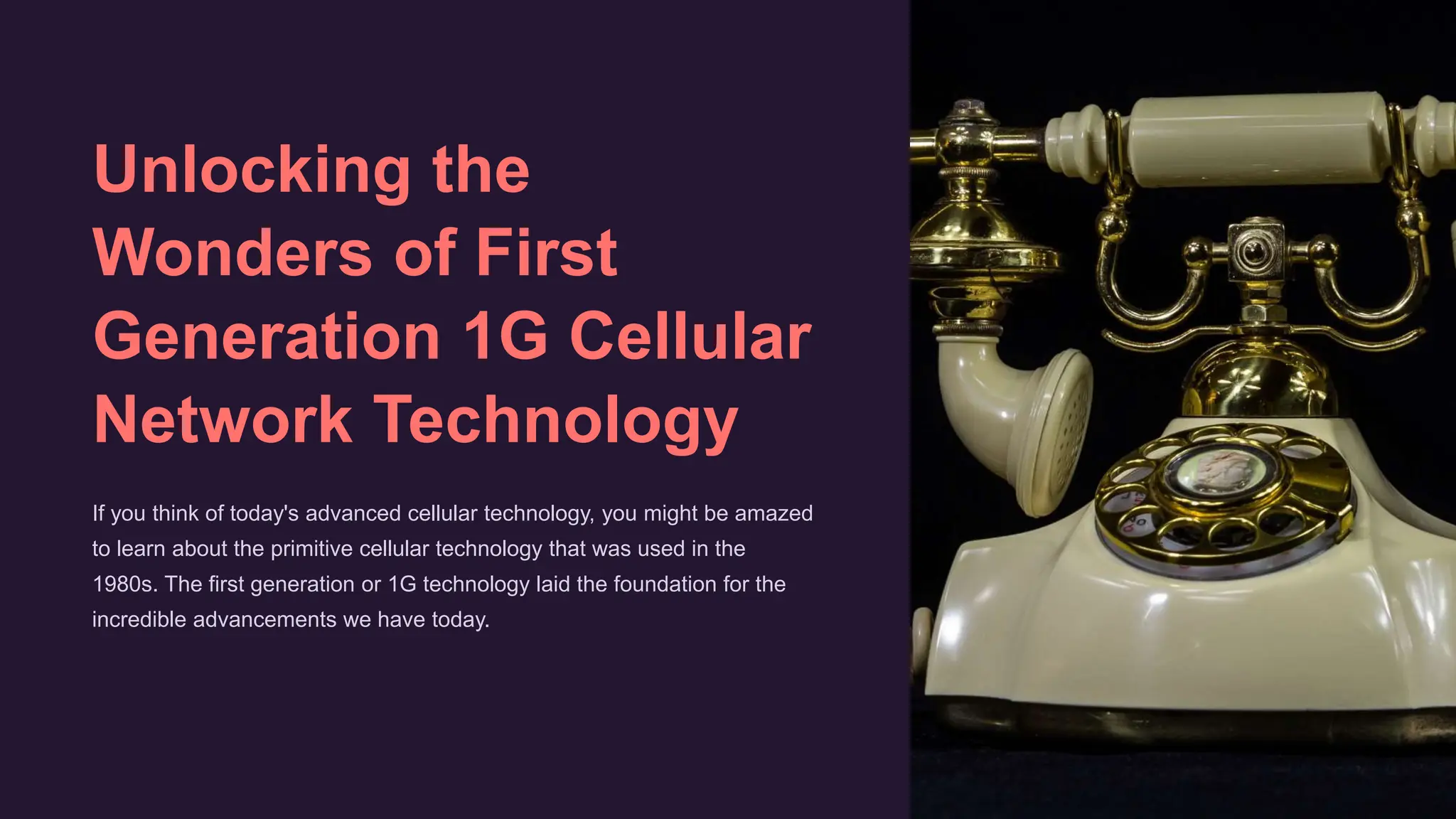
If you think of today's advanced cellular technology, you might be amazed
to learn about the primitive cellular technology that was used in the
1980s. The first generation or 1G technology laid the foundation for the
incredible advancements we have today.
Evolution of Communication
Technologies
1 Pre-1G Communication Technologies
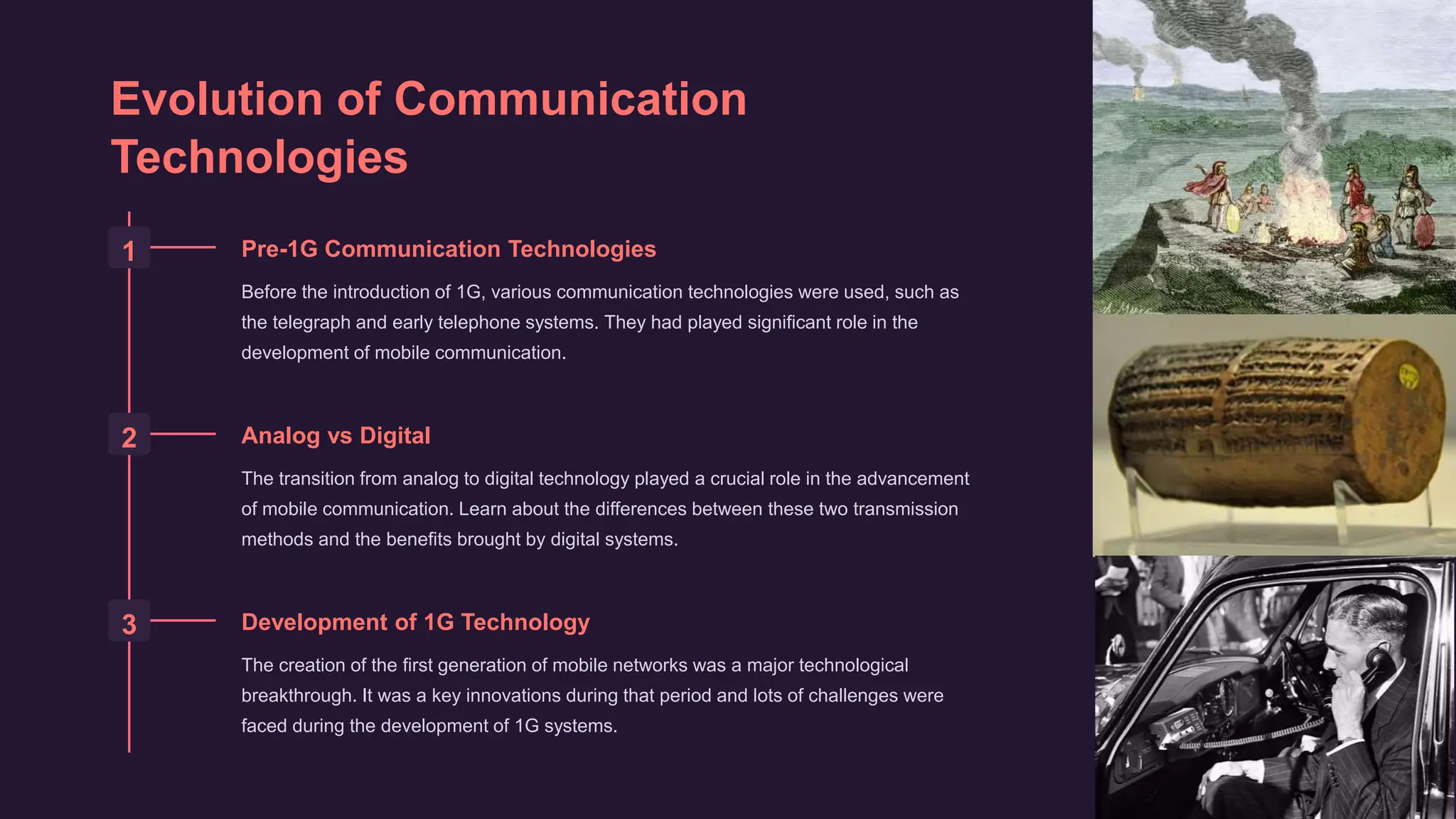
Before the introduction of 1G, various communication technologies were used, such as
the telegraph and early telephone systems. They had played significant role in the
development of mobile communication.
2 Analog vs Digital
The transition from analog to digital technology played a crucial role in the advancement
of mobile communication. Learn about the differences between these two transmission
methods and the benefits brought by digital systems.
3 Development of 1G Technology
The creation of the first generation of mobile networks was a major technological
breakthrough. It was a key innovations during that period and lots of challenges were
faced during the development of 1G systems.
First Generation (1G)
Cellular Network
Technology
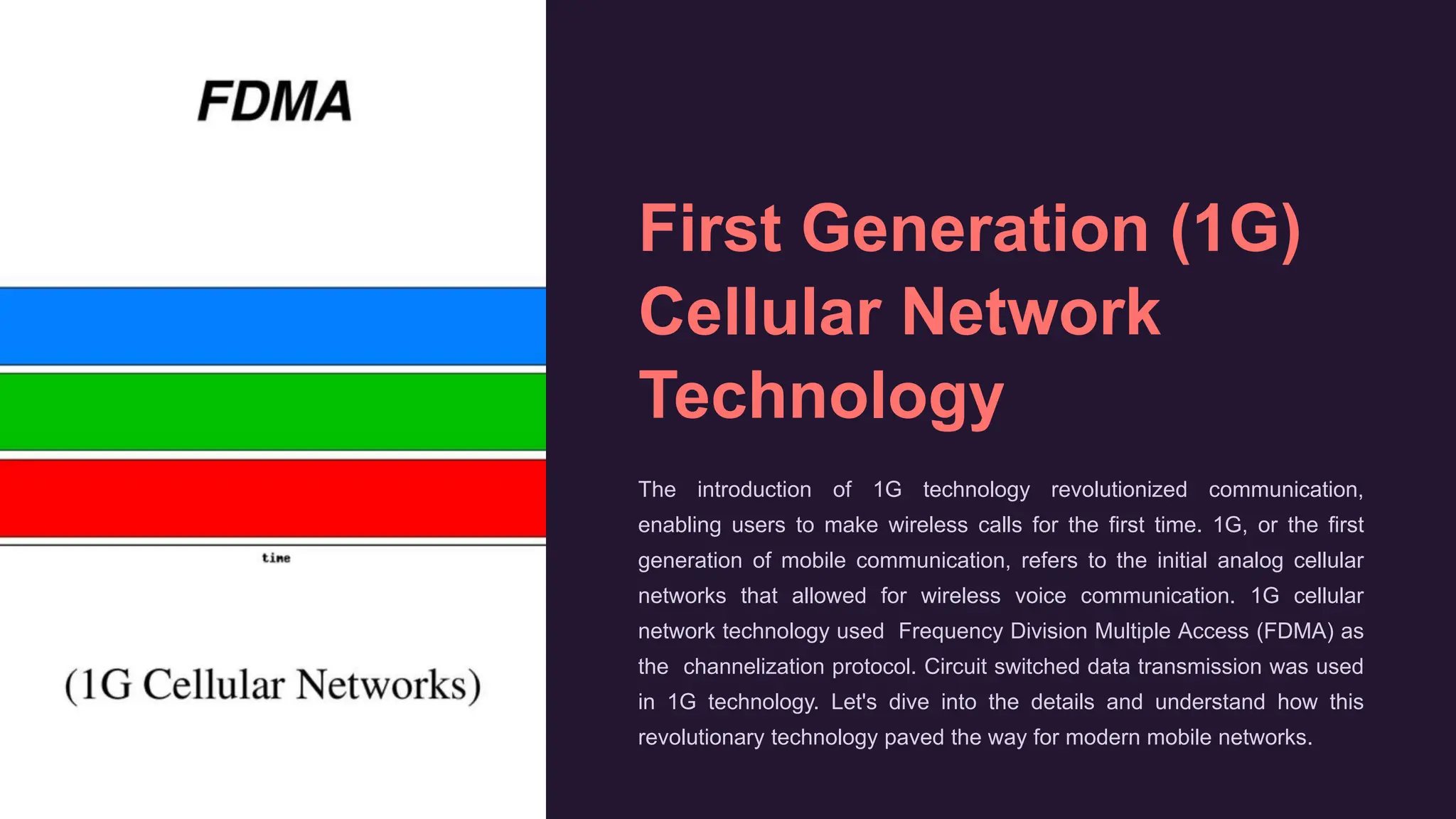
The introduction of 1G technology revolutionized communication,
enabling users to make wireless calls for the first time. 1G, or the first
generation of mobile communication, refers to the initial analog cellular
networks that allowed for wireless voice communication. 1G cellular
network technology used Frequency Division Multiple Access (FDMA) as
the channelization protocol. Circuit switched data transmission was used
in 1G technology. Let's dive into the details and understand how this
revolutionary technology paved the way for modern mobile networks.
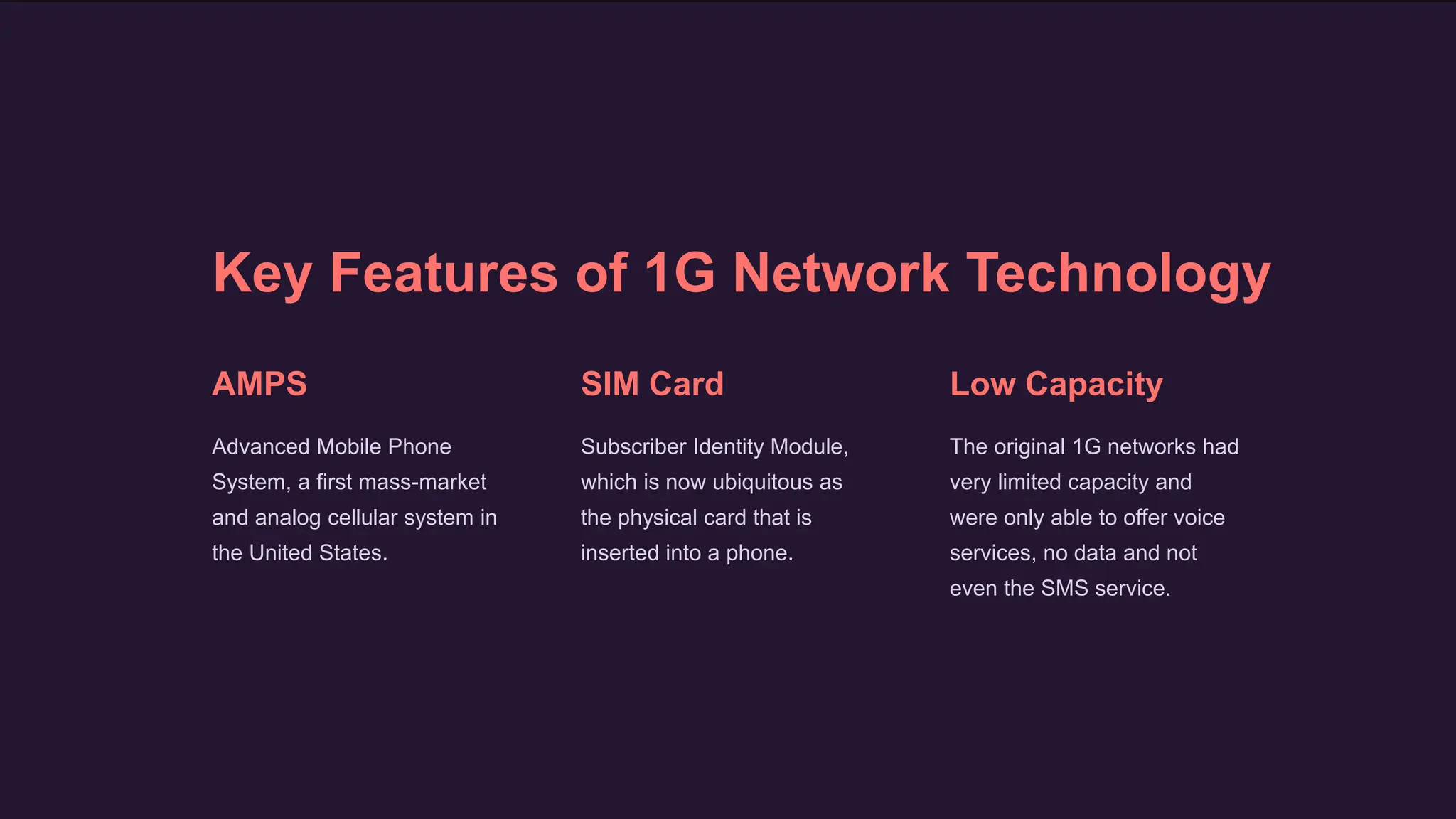
Key Features of 1G Network Technology
AMPS
Advanced Mobile Phone
System, a first mass-market
and analog cellular system in
the United States.
SIM Card
Subscriber Identity Module,
which is now ubiquitous as
the physical card that is
inserted into a phone.
Low Capacity
The original 1G networks had
very limited capacity and
were only able to offer voice
services, no data and not
even the SMS service.
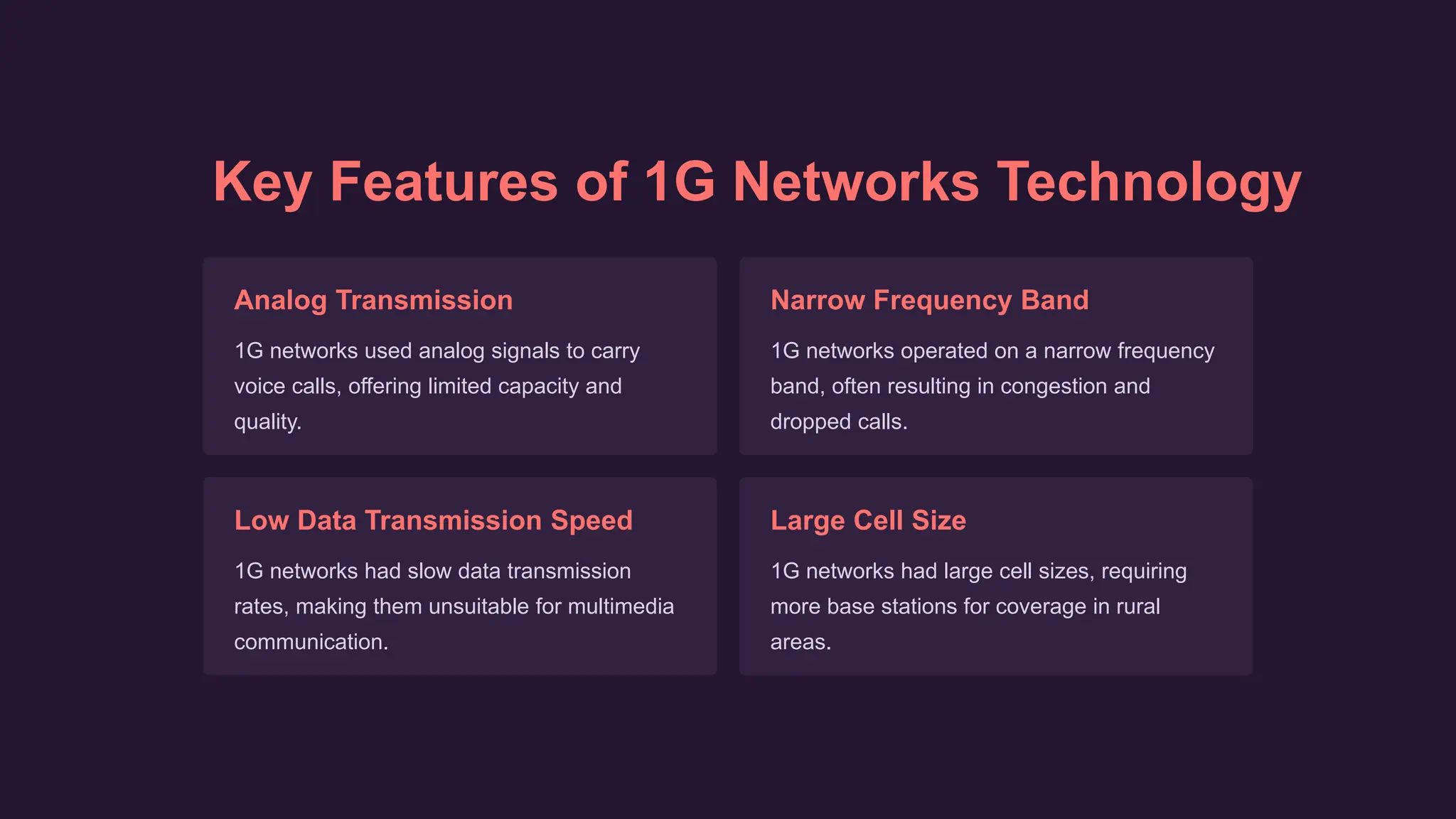
Key Features of 1G Networks Technology
Analog Transmission
1G networks used analog signals to carry
voice calls, offering limited capacity and
quality.
Narrow Frequency Band
1G networks operated on a narrow frequency
band, often resulting in congestion and
dropped calls.
Low Data Transmission Speed
1G networks had slow data transmission
rates, making them unsuitable for multimedia
communication.
Large Cell Size
1G networks had large cell sizes, requiring
more base stations for coverage in rural
areas.
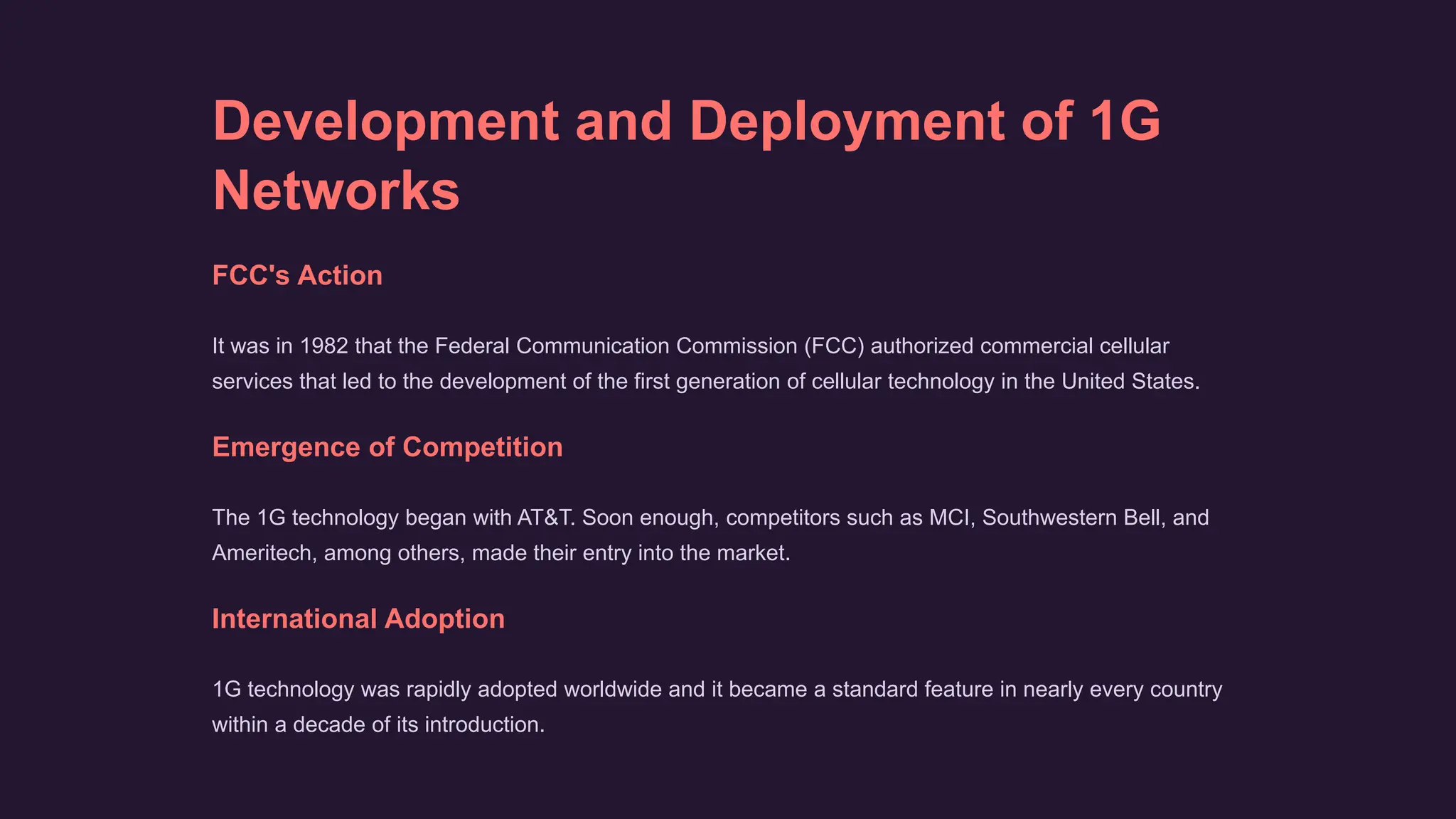
Development and Deployment of 1G
Networks
FCC's Action
It was in 1982 that the Federal Communication Commission (FCC) authorized commercial cellular
services that led to the development of the first generation of cellular technology in the United States.
Emergence of Competition
The 1G technology began with AT&T. Soon enough, competitors such as MCI, Southwestern Bell, and
Ameritech, among others, made their entry into the market.
International Adoption
1G technology was rapidly adopted worldwide and it became a standard feature in nearly every country
within a decade of its introduction.
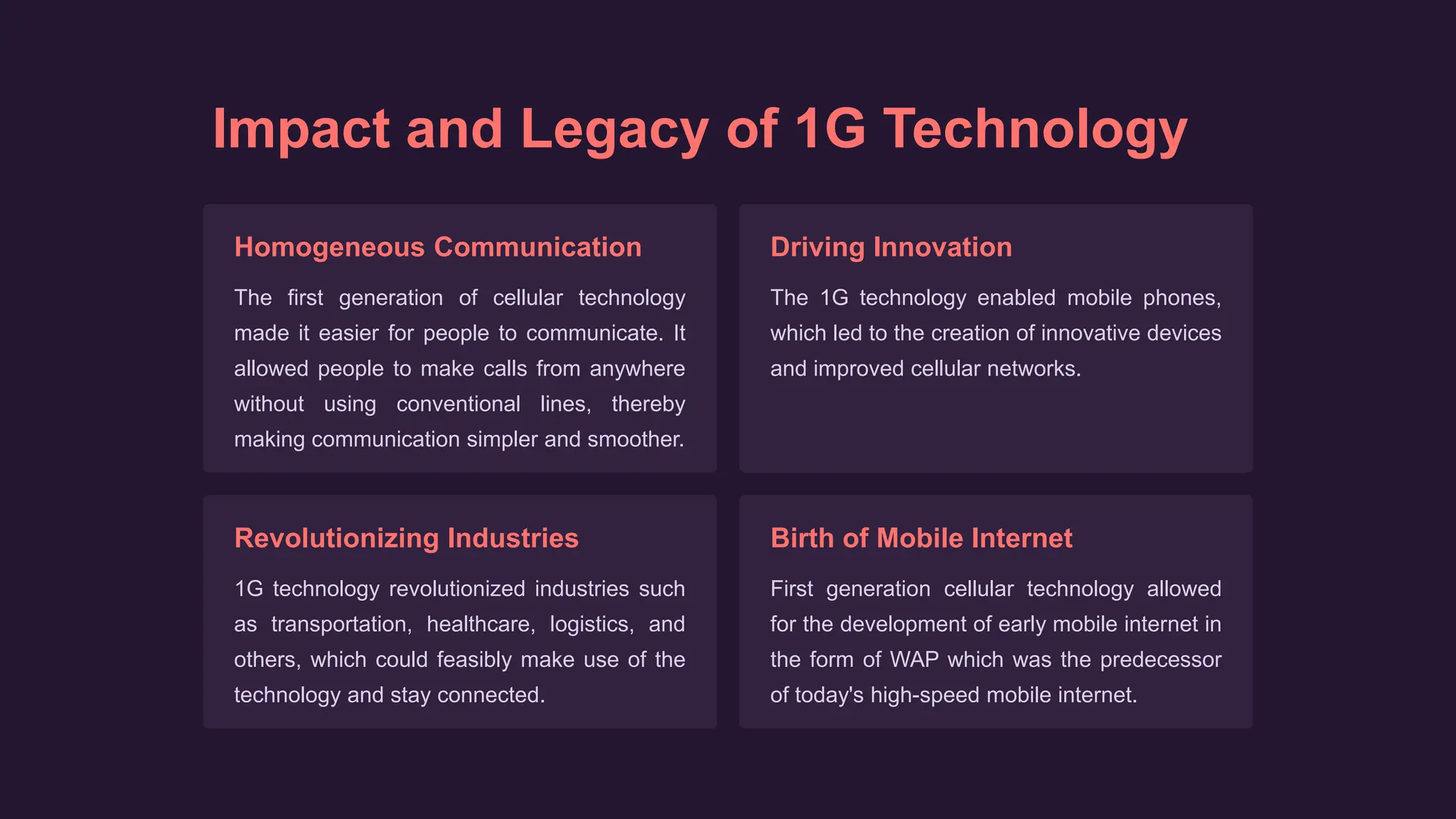
Impact and Legacy of 1G Technology
Homogeneous Communication
The first generation of cellular technology
made it easier for people to communicate. It
allowed people to make calls from anywhere
without using conventional lines, thereby
making communication simpler and smoother.
Driving Innovation
The 1G technology enabled mobile phones,
which led to the creation of innovative devices
and improved cellular networks.
Revolutionizing Industries
1G technology revolutionized industries such
as transportation, healthcare, logistics, and
others, which could feasibly make use of the
technology and stay connected.
Birth of Mobile Internet
First generation cellular technology allowed
for the development of early mobile internet in
the form of WAP which was the predecessor
of today's high-speed mobile internet.
Emergence of 2G Networks and the Shift
from Analog to Digital
1 Digital Advancements
2G networks introduced digital transmission,
improving call quality and enabling data services.
2
Global Standards
Standards like GSM and CDMA emerged,
enabling interoperability and global connectivity.
3 More Efficient Spectrum Use
Digital technology allowed for better spectrum utilization,
increasing network capacity and data speeds.
4
Size and Technology
Phone manufacturers started making smaller phones with better
features and batteries thanks to transitioning to digital technology.
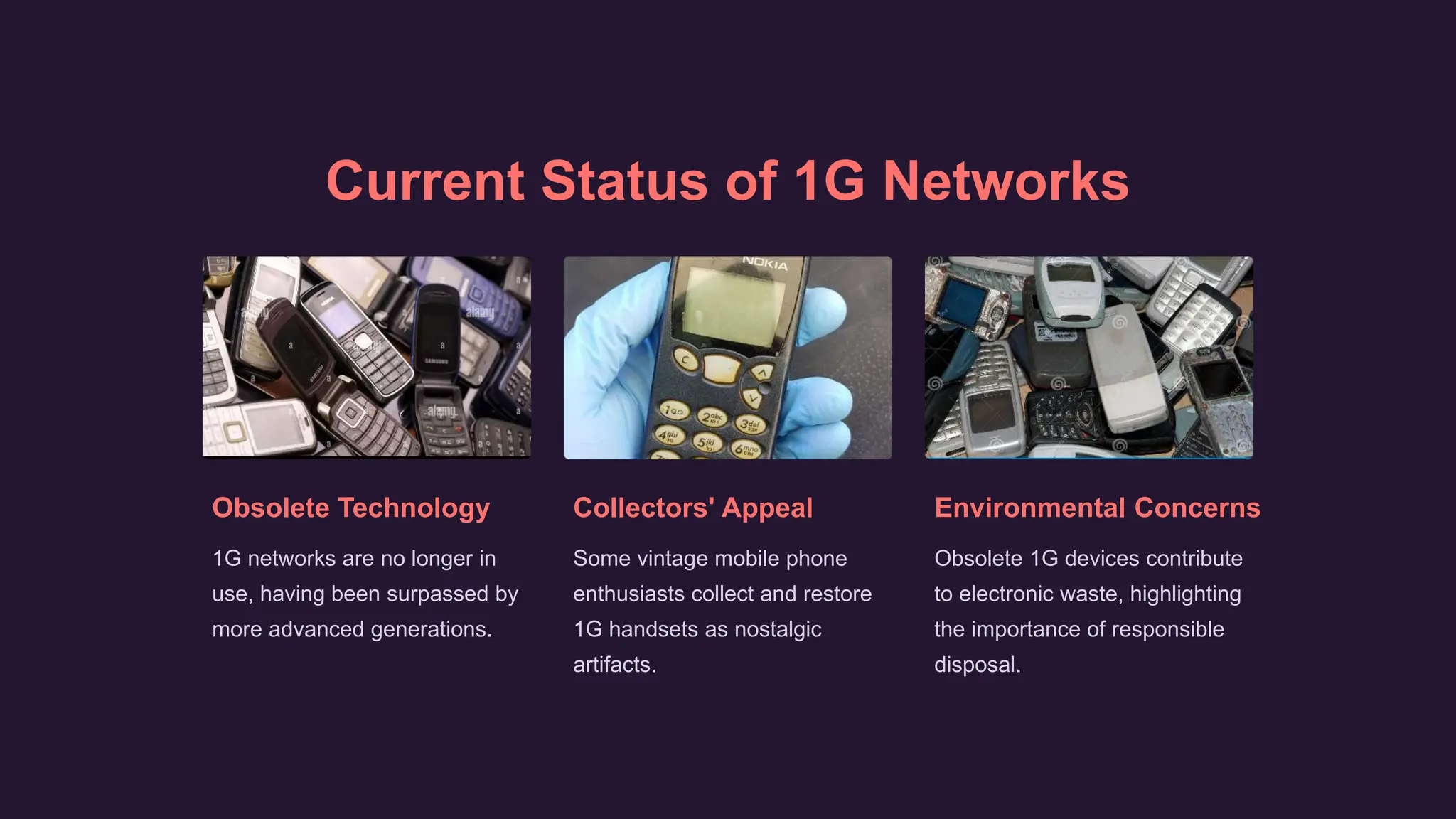
Current Status of 1G Networks
Obsolete Technology
1G networks are no longer in
use, having been surpassed by
more advanced generations.
Collectors' Appeal
Some vintage mobile phone
enthusiasts collect and restore
1G handsets as nostalgic
artifacts.
Environmental Concerns
Obsolete 1G devices contribute
to electronic waste, highlighting
the importance of responsible
disposal.
Limitations and Challenges of 1G
Technology
1 Technology
The cellular devices used Advanced Mobile Phone System (AMPS) as the primary
technology which was not only limited to voice calls but didn't have privacy or any
security features.
2 Low Capacity
1G networks had limited capacity, resulting in frequent network congestion and
dropped calls.
3 Security Vulnerabilities
1G networks were susceptible to eavesdropping and lacked the encryption protocols
used in later generations.
Limitations and Drawbacks of 1G
Technology
4 Poor Call Quality
Due to analog
transmission, call quality
often suffered from
background noise and
interference.
5 Availability
The first cellular networks
had coverage only in cities
or districts that had the
required infrastructure and
investment.
6 Expensive
1G technology had a high
cost of ownership, including
the price of the devices and
the service plan. It was not
very affordable for an
average person.
Conclusion and Future of Cellular Networks
1 1G's Pioneering
Role
Despite its limitations, 1G
technology revolutionized
communication and paved
the way for advancements
in subsequent generations.
2 Enduring Impact
The legacy of 1G can be
seen in the widespread
adoption of mobile
devices and the
evolution of wireless
communication.
3 Continuous
Innovation
The rapid evolution of
cellular networks
showcases the continual
drive for improved
connectivity and
technological progress.
Conclusion and Future of Cellular
Networks
4 Growth
Cellular networks have evolved exponentially since the introduction of 1G. They are now
an essential part of the everyday lives of billions of people around the world.
5 Innovation
From 2G to 5G and beyond, the evolution of cellular technology and network has
resulted in many breakthroughs such as the Internet of Things (IoT).
6 Accessibility
The advent of mobile phones allowed for ubiquitous communication, making it simpler for
businesses and people who are operating where traditional infrastructure is unavailable
or doesn’t exist.

First-Generation-1G-Cellular-Network-Technology.pptx

  • 1.
    Importance of MobileCommunication  Mobile communication or mobile telecommunication is a wireless technology that , enables instant and convenient communication regardless of location.  Mobile networks use radio communication which requires the signals from the network and cell phones to be in the form of radio waves (800 MHz to tens of GHz).  Mobile communication employs a large number of cell towers throughout towns and cities to provide nationwide cellular coverage so that our cell phones function correctly.  Mobile communication has become an essential part of our lives by enabling easy communication.
  • 2.
    Unlocking the Wonders ofFirst Generation 1G Cellular Network Technology If you think of today's advanced cellular technology, you might be amazed to learn about the primitive cellular technology that was used in the 1980s. The first generation or 1G technology laid the foundation for the incredible advancements we have today.
  • 3.
    Evolution of Communication Technologies 1Pre-1G Communication Technologies Before the introduction of 1G, various communication technologies were used, such as the telegraph and early telephone systems. They had played significant role in the development of mobile communication. 2 Analog vs Digital The transition from analog to digital technology played a crucial role in the advancement of mobile communication. Learn about the differences between these two transmission methods and the benefits brought by digital systems. 3 Development of 1G Technology The creation of the first generation of mobile networks was a major technological breakthrough. It was a key innovations during that period and lots of challenges were faced during the development of 1G systems.
  • 4.
    First Generation (1G) CellularNetwork Technology The introduction of 1G technology revolutionized communication, enabling users to make wireless calls for the first time. 1G, or the first generation of mobile communication, refers to the initial analog cellular networks that allowed for wireless voice communication. 1G cellular network technology used Frequency Division Multiple Access (FDMA) as the channelization protocol. Circuit switched data transmission was used in 1G technology. Let's dive into the details and understand how this revolutionary technology paved the way for modern mobile networks.
  • 5.
    Key Features of1G Network Technology AMPS Advanced Mobile Phone System, a first mass-market and analog cellular system in the United States. SIM Card Subscriber Identity Module, which is now ubiquitous as the physical card that is inserted into a phone. Low Capacity The original 1G networks had very limited capacity and were only able to offer voice services, no data and not even the SMS service.
  • 6.
    Key Features of1G Networks Technology Analog Transmission 1G networks used analog signals to carry voice calls, offering limited capacity and quality. Narrow Frequency Band 1G networks operated on a narrow frequency band, often resulting in congestion and dropped calls. Low Data Transmission Speed 1G networks had slow data transmission rates, making them unsuitable for multimedia communication. Large Cell Size 1G networks had large cell sizes, requiring more base stations for coverage in rural areas.
  • 7.
    Development and Deploymentof 1G Networks FCC's Action It was in 1982 that the Federal Communication Commission (FCC) authorized commercial cellular services that led to the development of the first generation of cellular technology in the United States. Emergence of Competition The 1G technology began with AT&T. Soon enough, competitors such as MCI, Southwestern Bell, and Ameritech, among others, made their entry into the market. International Adoption 1G technology was rapidly adopted worldwide and it became a standard feature in nearly every country within a decade of its introduction.
  • 8.
    Impact and Legacyof 1G Technology Homogeneous Communication The first generation of cellular technology made it easier for people to communicate. It allowed people to make calls from anywhere without using conventional lines, thereby making communication simpler and smoother. Driving Innovation The 1G technology enabled mobile phones, which led to the creation of innovative devices and improved cellular networks. Revolutionizing Industries 1G technology revolutionized industries such as transportation, healthcare, logistics, and others, which could feasibly make use of the technology and stay connected. Birth of Mobile Internet First generation cellular technology allowed for the development of early mobile internet in the form of WAP which was the predecessor of today's high-speed mobile internet.
  • 9.
    Emergence of 2GNetworks and the Shift from Analog to Digital 1 Digital Advancements 2G networks introduced digital transmission, improving call quality and enabling data services. 2 Global Standards Standards like GSM and CDMA emerged, enabling interoperability and global connectivity. 3 More Efficient Spectrum Use Digital technology allowed for better spectrum utilization, increasing network capacity and data speeds. 4 Size and Technology Phone manufacturers started making smaller phones with better features and batteries thanks to transitioning to digital technology.
  • 10.
    Current Status of1G Networks Obsolete Technology 1G networks are no longer in use, having been surpassed by more advanced generations. Collectors' Appeal Some vintage mobile phone enthusiasts collect and restore 1G handsets as nostalgic artifacts. Environmental Concerns Obsolete 1G devices contribute to electronic waste, highlighting the importance of responsible disposal.
  • 11.
    Limitations and Challengesof 1G Technology 1 Technology The cellular devices used Advanced Mobile Phone System (AMPS) as the primary technology which was not only limited to voice calls but didn't have privacy or any security features. 2 Low Capacity 1G networks had limited capacity, resulting in frequent network congestion and dropped calls. 3 Security Vulnerabilities 1G networks were susceptible to eavesdropping and lacked the encryption protocols used in later generations.
  • 12.
    Limitations and Drawbacksof 1G Technology 4 Poor Call Quality Due to analog transmission, call quality often suffered from background noise and interference. 5 Availability The first cellular networks had coverage only in cities or districts that had the required infrastructure and investment. 6 Expensive 1G technology had a high cost of ownership, including the price of the devices and the service plan. It was not very affordable for an average person.
  • 13.
    Conclusion and Futureof Cellular Networks 1 1G's Pioneering Role Despite its limitations, 1G technology revolutionized communication and paved the way for advancements in subsequent generations. 2 Enduring Impact The legacy of 1G can be seen in the widespread adoption of mobile devices and the evolution of wireless communication. 3 Continuous Innovation The rapid evolution of cellular networks showcases the continual drive for improved connectivity and technological progress.
  • 14.
    Conclusion and Futureof Cellular Networks 4 Growth Cellular networks have evolved exponentially since the introduction of 1G. They are now an essential part of the everyday lives of billions of people around the world. 5 Innovation From 2G to 5G and beyond, the evolution of cellular technology and network has resulted in many breakthroughs such as the Internet of Things (IoT). 6 Accessibility The advent of mobile phones allowed for ubiquitous communication, making it simpler for businesses and people who are operating where traditional infrastructure is unavailable or doesn’t exist.