Choosing Materials in FTC
Pros and Cons of Materials in all Situations
Presentation
purpose: Learn how
to effectively choose
materials in FTC for
any task or
mechanism
Why is the right material important?
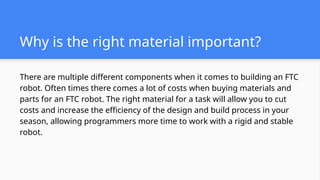
There are multiple different components when it comes to building an FTC
robot. Often times there comes a lot of costs when buying materials and
parts for an FTC robot. The right material for a task will allow you to cut
costs and increase the efficiency of the design and build process in your
season, allowing programmers more time to work with a rigid and stable
robot.
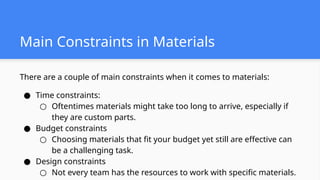
There are a couple of main constraints when it comes to materials:
● Time constraints:
○ Oftentimes materials might take too long to arrive, especially if
they are custom parts.
● Budget constraints
○ Choosing materials that fit your budget yet still are effective can
be a challenging task.
● Design constraints
○ Not every team has the resources to work with specific materials.
Main Constraints in Materials
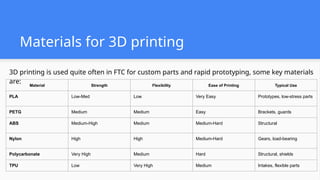
3D printing is used quite often in FTC for custom parts and rapid prototyping, some key materials
are:
Materials for 3D printing
Material Strength Flexibility Ease of Printing Typical Use
PLA Low-Med Low Very Easy Prototypes, low-stress parts
PETG Medium Medium Easy Brackets, guards
ABS Medium-High Medium Medium-Hard Structural
Nylon High High Medium-Hard Gears, load-bearing
Polycarbonate Very High Medium Hard Structural, shields
TPU Low Very High Medium Intakes, flexible parts
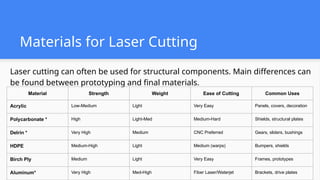
Materials for Laser Cutting
Laser cutting can often be used for structural components. Main differences can
be found between prototyping and final materials.
Material Strength Weight Ease of Cutting Common Uses
Acrylic Low-Medium Light Very Easy Panels, covers, decoration
Polycarbonate * High Light-Med Medium-Hard Shields, structural plates
Delrin * Very High Medium CNC Preferred Gears, sliders, bushings
HDPE Medium-High Light Medium (warps) Bumpers, shields
Birch Ply Medium Light Very Easy Frames, prototypes
Aluminum* Very High Med-High Fiber Laser/Waterjet Brackets, drive plates
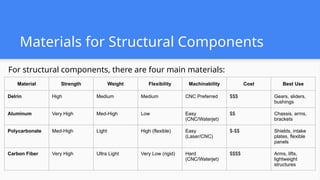
Materials for Structural Components
For structural components, there are four main materials:
Material Strength Weight Flexibility Machinability Cost Best Use
Delrin High Medium Medium CNC Preferred $$$ Gears, sliders,
bushings
Aluminum Very High Med-High Low Easy
(CNC/Waterjet)
$$ Chassis, arms,
brackets
Polycarbonate Med-High Light High (flexible) Easy
(Laser/CNC)
$-$$ Shields, intake
plates, flexible
panels
Carbon Fiber Very High Ultra Light Very Low (rigid) Hard
(CNC/Waterjet)
$$$$ Arms, lifts,
lightweight
structures
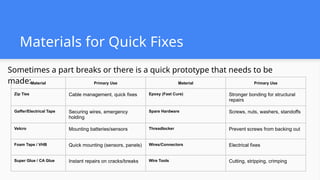
Materials for Quick Fixes
Sometimes a part breaks or there is a quick prototype that needs to be
made:Material Primary Use Material Primary Use
Zip Ties Cable management, quick fixes Epoxy (Fast Cure) Stronger bonding for structural
repairs
Gaffer/Electrical Tape Securing wires, emergency
holding
Spare Hardware Screws, nuts, washers, standoffs
Velcro Mounting batteries/sensors Threadlocker Prevent screws from backing out
Foam Tape / VHB Quick mounting (sensors, panels) Wires/Connectors Electrical fixes
Super Glue / CA Glue Instant repairs on cracks/breaks Wire Tools Cutting, stripping, crimping
Budgeting for Materials
Budgeting for Materials can be tricky to navigate, some things to keep in
mind are:
● Is there something more important that this money can go to?
● Is more money coming in through fundraising sources?
● Is this type of material necessary, can the same job be done with one
less expensive?
● Can we change how the part is made to use a different material that is
more affordable?
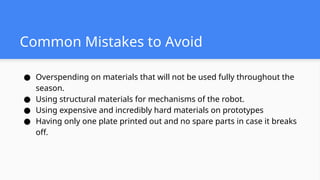
Common Mistakes to Avoid
● Overspending on materials that will not be used fully throughout the
season.
● Using structural materials for mechanisms of the robot.
● Using expensive and incredibly hard materials on prototypes
● Having only one plate printed out and no spare parts in case it breaks
off.
Now you know how to navigate through materials
in FTC,
Good luck!

FIRST Tech Challenge: Choosing Materials

  • 1.
    Choosing Materials inFTC Pros and Cons of Materials in all Situations
  • 2.
    Presentation purpose: Learn how toeffectively choose materials in FTC for any task or mechanism
  • 3.
    Why is theright material important? There are multiple different components when it comes to building an FTC robot. Often times there comes a lot of costs when buying materials and parts for an FTC robot. The right material for a task will allow you to cut costs and increase the efficiency of the design and build process in your season, allowing programmers more time to work with a rigid and stable robot.
  • 4.
    There are acouple of main constraints when it comes to materials: ● Time constraints: ○ Oftentimes materials might take too long to arrive, especially if they are custom parts. ● Budget constraints ○ Choosing materials that fit your budget yet still are effective can be a challenging task. ● Design constraints ○ Not every team has the resources to work with specific materials. Main Constraints in Materials
  • 5.
    3D printing isused quite often in FTC for custom parts and rapid prototyping, some key materials are: Materials for 3D printing Material Strength Flexibility Ease of Printing Typical Use PLA Low-Med Low Very Easy Prototypes, low-stress parts PETG Medium Medium Easy Brackets, guards ABS Medium-High Medium Medium-Hard Structural Nylon High High Medium-Hard Gears, load-bearing Polycarbonate Very High Medium Hard Structural, shields TPU Low Very High Medium Intakes, flexible parts
  • 6.
    Materials for LaserCutting Laser cutting can often be used for structural components. Main differences can be found between prototyping and final materials. Material Strength Weight Ease of Cutting Common Uses Acrylic Low-Medium Light Very Easy Panels, covers, decoration Polycarbonate * High Light-Med Medium-Hard Shields, structural plates Delrin * Very High Medium CNC Preferred Gears, sliders, bushings HDPE Medium-High Light Medium (warps) Bumpers, shields Birch Ply Medium Light Very Easy Frames, prototypes Aluminum* Very High Med-High Fiber Laser/Waterjet Brackets, drive plates
  • 7.
    Materials for StructuralComponents For structural components, there are four main materials: Material Strength Weight Flexibility Machinability Cost Best Use Delrin High Medium Medium CNC Preferred $$$ Gears, sliders, bushings Aluminum Very High Med-High Low Easy (CNC/Waterjet) $$ Chassis, arms, brackets Polycarbonate Med-High Light High (flexible) Easy (Laser/CNC) $-$$ Shields, intake plates, flexible panels Carbon Fiber Very High Ultra Light Very Low (rigid) Hard (CNC/Waterjet) $$$$ Arms, lifts, lightweight structures
  • 8.
    Materials for QuickFixes Sometimes a part breaks or there is a quick prototype that needs to be made:Material Primary Use Material Primary Use Zip Ties Cable management, quick fixes Epoxy (Fast Cure) Stronger bonding for structural repairs Gaffer/Electrical Tape Securing wires, emergency holding Spare Hardware Screws, nuts, washers, standoffs Velcro Mounting batteries/sensors Threadlocker Prevent screws from backing out Foam Tape / VHB Quick mounting (sensors, panels) Wires/Connectors Electrical fixes Super Glue / CA Glue Instant repairs on cracks/breaks Wire Tools Cutting, stripping, crimping
  • 9.
    Budgeting for Materials Budgetingfor Materials can be tricky to navigate, some things to keep in mind are: ● Is there something more important that this money can go to? ● Is more money coming in through fundraising sources? ● Is this type of material necessary, can the same job be done with one less expensive? ● Can we change how the part is made to use a different material that is more affordable?
  • 10.
    Common Mistakes toAvoid ● Overspending on materials that will not be used fully throughout the season. ● Using structural materials for mechanisms of the robot. ● Using expensive and incredibly hard materials on prototypes ● Having only one plate printed out and no spare parts in case it breaks off.
  • 11.
    Now you knowhow to navigate through materials in FTC, Good luck!