FIRE FIGHTING
Safety & Health
TRAINING
2
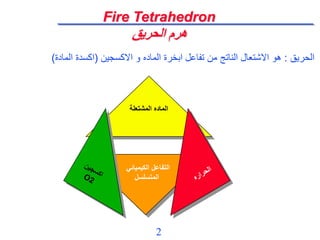
‫المشتعلة‬ ‫الماده‬
‫الكيميائي‬ ‫التفاعل‬
‫المتسلسل‬
Fire Tetrahedron
‫الحر‬ ‫هرم‬
‫يق‬
‫الحريق‬
:
‫االكسجين‬ ‫و‬ ‫الماده‬ ‫ابخرة‬ ‫تفاعل‬ ‫من‬ ‫الناتج‬ ‫االشتعال‬ ‫هو‬
(
‫المادة‬ ‫اكسدة‬
)
3
1
-
‫المشتعلة‬ ‫المادة‬
•
‫صلبة‬ ‫مواد‬ ‫شكل‬ ‫على‬ ‫لإلشتعال‬ ‫القابلة‬ ‫المواد‬ ‫توجد‬
،
‫غازية‬ ‫ومواد‬ ، ‫سائلة‬ ‫مواد‬
.
•
1
-
‫الصلبة‬ ‫المواد‬
:
، ‫األوراق‬ ، ‫الكرتون‬ ، ‫الخشب‬
‫المالبس‬
•
2
-
‫السائلة‬ ‫المواد‬
:
‫األسيتون‬ ، ‫السيارات‬ ‫بنزين‬
•
3
-
‫الغازية‬ ‫المواد‬
:
‫األسيتيلين‬ ، ‫البوتاجاز‬ ‫غاز‬
4
2
-
‫الهواء‬
(
‫األكسيجين‬
)
•
‫تش‬ ‫حتى‬ ‫لألكسيجين‬ ‫تحتاج‬ ‫لإلشتعال‬ ‫القابلة‬ ‫المواد‬ ‫جميع‬
‫وتستمر‬ ‫تعل‬
‫اإلشتعال‬ ‫فى‬
.
•
‫نسبته‬ ‫ما‬ ‫األكسيجين‬ ‫يشكل‬
21
%
‫الجوى‬ ‫الهواء‬ ‫من‬
.
•
‫خ‬ ‫نسبة‬ ‫وهما‬ ،‫لإلشتعال‬ ‫مدى‬ ‫وأعلى‬ ‫لإلشتعال‬ ‫مدى‬ ‫أدنى‬ ‫مادة‬ ‫لكل‬
‫لط‬
‫الهواء‬ ‫مع‬ ‫المادة‬ ‫أبخرة‬
.
•
‫بي‬ ‫الهواء‬ ‫مع‬ ‫ابخرتها‬ ‫خلط‬ ‫نسبة‬ ‫تكن‬ ‫لم‬ ‫ما‬ ‫مادة‬ ‫أية‬ ‫تشتعل‬ ‫لن‬
‫أدنى‬ ‫ن‬
‫مدى‬ ‫وأعلى‬ ‫مدى‬
.
•
‫لإلشتعال‬ ‫مدى‬ ‫وأعلى‬ ‫لإلشتعال‬ ‫مدى‬ ‫أدنى‬ ‫بين‬ ‫الفرق‬ ‫زاد‬ ‫كلما‬
‫زادت‬
‫المادة‬ ‫خطورة‬
.
•
‫السيارات‬ ‫بنزين‬
1.4
%
-
7
%
‫األسيتيلين‬ ،
1.5
%
-
82
%
5
3
-
‫اإلشتعال‬ ‫مصادر‬
•
‫الكهرباء‬
•
‫التدخين‬
•
‫والقطع‬ ‫اللحام‬ ‫أعمال‬
•
‫المباشر‬ ‫اللهب‬
•
‫الساخنة‬ ‫األسطح‬
•
‫الذاتى‬ ‫اإلشتعال‬
•
‫الساكنة‬ ‫الكهربائية‬
•
‫اإلحتكاك‬
6
4
-
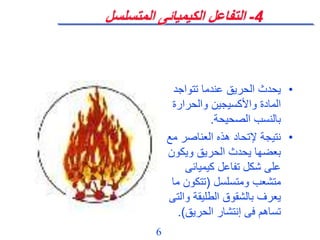
‫المتسلسل‬ ‫الكيميائى‬ ‫التفاعل‬
•
‫تتواج‬ ‫عندما‬ ‫الحريق‬ ‫يحدث‬
‫د‬
‫والحرارة‬ ‫واألكسيجين‬ ‫المادة‬
‫الصحيحة‬ ‫بالنسب‬
.
•
‫العناصر‬ ‫هذه‬ ‫إلتحاد‬ ‫نتيجة‬
‫مع‬
‫ويك‬ ‫الحريق‬ ‫يحدث‬ ‫بعضها‬
‫ون‬
‫كيميائى‬ ‫تفاعل‬ ‫شكل‬ ‫على‬
‫ومتسلسل‬ ‫متشعب‬
(
‫تتكو‬
‫ما‬ ‫ن‬
‫و‬ ‫الطليقة‬ ‫بالشقوق‬ ‫يعرف‬
‫التى‬
‫الحريق‬ ‫إنتشار‬ ‫فى‬ ‫تساهم‬
.)
7
Direct Burning
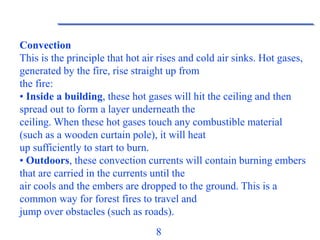
This is the simplest method of fire spread where a flame front
moves along or through the burning material.
For example, this happens when setting fire to the corner of a
piece of paper with a match – think of how the
flame front moves from the match and spreads across the
paper.
8
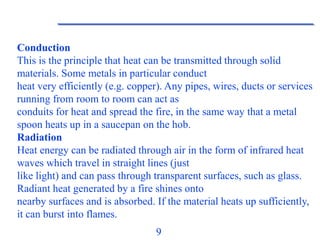
Convection
This is the principle that hot air rises and cold air sinks. Hot gases,
generated by the fire, rise straight up from
the fire:
• Inside a building, these hot gases will hit the ceiling and then
spread out to form a layer underneath the
ceiling. When these hot gases touch any combustible material
(such as a wooden curtain pole), it will heat
up sufficiently to start to burn.
• Outdoors, these convection currents will contain burning embers
that are carried in the currents until the
air cools and the embers are dropped to the ground. This is a
common way for forest fires to travel and
jump over obstacles (such as roads).
9
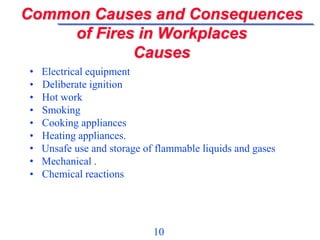
Conduction
This is the principle that heat can be transmitted through solid
materials. Some metals in particular conduct
heat very efficiently (e.g. copper). Any pipes, wires, ducts or services
running from room to room can act as
conduits for heat and spread the fire, in the same way that a metal
spoon heats up in a saucepan on the hob.
Radiation
Heat energy can be radiated through air in the form of infrared heat
waves which travel in straight lines (just
like light) and can pass through transparent surfaces, such as glass.
Radiant heat generated by a fire shines onto
nearby surfaces and is absorbed. If the material heats up sufficiently,
it can burst into flames.
10
Common Causes and Consequences
of Fires in Workplaces
Causes
• Electrical equipment
• Deliberate ignition
• Hot work
• Smoking
• Cooking appliances
• Heating appliances.
• Unsafe use and storage of flammable liquids and gases
• Mechanical .
• Chemical reactions
11
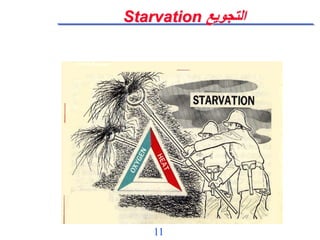
Starvation ‫التجويع‬
12
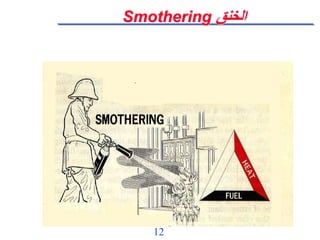
Smothering ‫الخنق‬
13
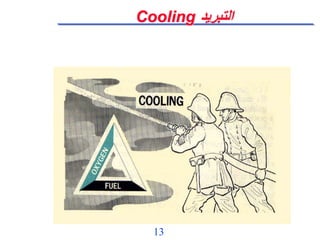
Cooling ‫التبريد‬
14
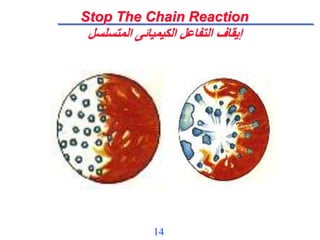
Stop The Chain Reaction
‫المتسلسل‬ ‫الكيميائى‬ ‫التفاعل‬ ‫إيقاف‬
15
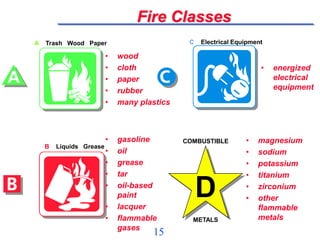
Fire Classes
A Trash Wood Paper C Electrical Equipment
B Liquids Grease
COMBUSTIBLE
METALS
D
• wood
• cloth
• paper
• rubber
• many plastics
• gasoline
• oil
• grease
• tar
• oil-based
paint
• lacquer
• flammable
gases
• energized
electrical
equipment
• magnesium
• sodium
• potassium
• titanium
• zirconium
• other
flammable
metals
16
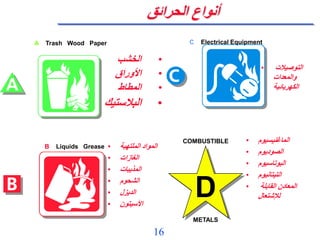
‫الحرائق‬ ‫أنواع‬
A Trash Wood Paper C Electrical Equipment
B Liquids Grease
COMBUSTIBLE
METALS
D
•
‫الخشب‬
•
‫األوراق‬
•
‫المطاط‬
•
‫البالستي‬
‫ك‬
• ‫الملتهبة‬ ‫المواد‬
• ‫الغازات‬
• ‫المذيبات‬
• ‫الشحوم‬
• ‫الديزل‬
• ‫األسيتون‬
• ‫التوصيالت‬
‫والمعدات‬
‫الكهربائية‬
• ‫الماغنيسيوم‬
• ‫الصوديوم‬
• ‫البوتاسيوم‬
• ‫التيتانيوم‬
• ‫القابلة‬ ‫المعادن‬
‫لإلشتعال‬
17
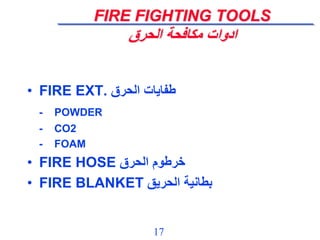
FIRE FIGHTING TOOLS
‫الحرق‬ ‫مكافحة‬ ‫ادوات‬
• FIRE EXT. ‫الحرق‬ ‫طفايات‬
- POWDER
- CO2
- FOAM
• FIRE HOSE ‫الحرق‬ ‫خرطوم‬
• FIRE BLANKET ‫الحريق‬ ‫بطانية‬
18
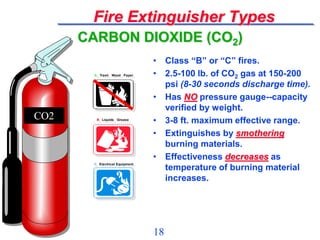
Fire Extinguisher Types
• Class “B” or “C” fires.
• 2.5-100 lb. of CO2 gas at 150-200
psi (8-30 seconds discharge time).
• Has NO pressure gauge--capacity
verified by weight.
• 3-8 ft. maximum effective range.
• Extinguishes by smothering
burning materials.
• Effectiveness decreases as
temperature of burning material
increases.
CARBON DIOXIDE (CO2)
A Trash Wood Paper
B Liquids Grease
C Electrical Equipment
A Trash Wood Paper
B Liquids Grease
C Electrical Equipment
CO2
19
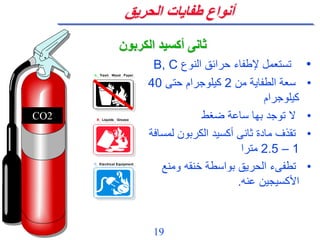
‫الحريق‬ ‫طفايات‬ ‫أنواع‬
•
‫النوع‬ ‫حرائق‬ ‫إلطفاء‬ ‫تستعمل‬
B, C
•
‫من‬ ‫الطفاية‬ ‫سعة‬
2
‫حتى‬ ‫كيلوجرام‬
40
‫كيلوجرام‬
•
‫ضغط‬ ‫ساعة‬ ‫بها‬ ‫توجد‬ ‫ال‬
•
‫لم‬ ‫الكربون‬ ‫أكسيد‬ ‫ثانى‬ ‫مادة‬ ‫تقذف‬
‫سافة‬
1
–
2.5
‫مترا‬
•
‫ومنع‬ ‫خنقه‬ ‫بواسطة‬ ‫الحريق‬ ‫تطفىء‬
‫عنه‬ ‫األكسيجين‬
.
‫الكربون‬ ‫أكسيد‬ ‫ثانى‬
A Trash Wood Paper
B Liquids Grease
C Electrical Equipment
A Trash Wood Paper
B Liquids Grease
C Electrical Equipment
CO2
20
CARBON DIOXIDE (CO2)
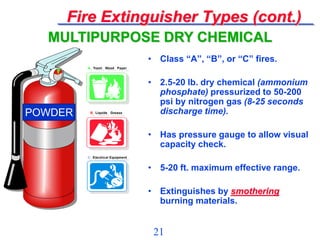
21
Fire Extinguisher Types (cont.)
• Class “A”, “B”, or “C” fires.
• 2.5-20 lb. dry chemical (ammonium
phosphate) pressurized to 50-200
psi by nitrogen gas (8-25 seconds
discharge time).
• Has pressure gauge to allow visual
capacity check.
• 5-20 ft. maximum effective range.
• Extinguishes by smothering
burning materials.
MULTIPURPOSE DRY CHEMICAL
A Trash Wood Paper
B Liquids Grease
C Electrical Equipment
A Trash Wood Paper
B Liquids Grease
C Electrical Equipment
POWDER
22
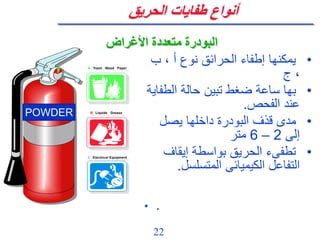
‫الحريق‬ ‫طفايات‬ ‫أنواع‬
•
‫ب‬ ، ‫أ‬ ‫نوع‬ ‫الحرائق‬ ‫إطفاء‬ ‫يمكنها‬
‫ج‬ ،
•
‫الطف‬ ‫حالة‬ ‫تبين‬ ‫ضغط‬ ‫ساعة‬ ‫بها‬
‫اية‬
‫الفحص‬ ‫عند‬
.
•
‫يصل‬ ‫داخلها‬ ‫البودرة‬ ‫قذف‬ ‫مدى‬
‫إلى‬
2
–
6
‫متر‬
•
‫إيقاف‬ ‫بواسطة‬ ‫الحريق‬ ‫تطفىء‬
‫المتسلسل‬ ‫الكيميائى‬ ‫التفاعل‬
.
• .
‫األغراض‬ ‫متعددة‬ ‫البودرة‬
A Trash Wood Paper
B Liquids Grease
C Electrical Equipment
A Trash Wood Paper
B Liquids Grease
C Electrical Equipment
POWDER
23
POWDER
24
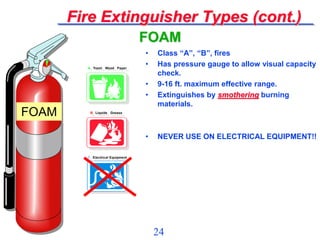
Fire Extinguisher Types (cont.)
• Class “A”, “B”, fires
• Has pressure gauge to allow visual capacity
check.
• 9-16 ft. maximum effective range.
• Extinguishes by smothering burning
materials.
• NEVER USE ON ELECTRICAL EQUIPMENT!!
FOAM
A Trash Wood Paper
B Liquids Grease
C Electrical Equipment
A Trash Wood Paper
B Liquids Grease
C Electrical Equipment
FOAM
25
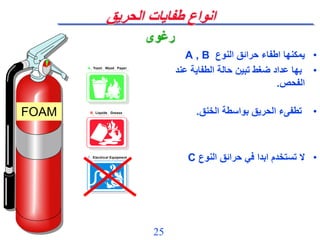
‫الحريق‬ ‫طفايات‬ ‫انواع‬
•
‫النوع‬ ‫حرائق‬ ‫اطفاء‬ ‫يمكنها‬
A , B
•
‫عند‬ ‫الطفاية‬ ‫حالة‬ ‫تبين‬ ‫ضغط‬ ‫عداد‬ ‫بها‬
‫الفحص‬
.
•
‫الخنق‬ ‫بواسطة‬ ‫الحريق‬ ‫تطفىء‬
.
•
‫النوع‬ ‫حرائق‬ ‫في‬ ‫ابدا‬ ‫تستخدم‬ ‫ال‬
C
‫رغوى‬
A Trash Wood Paper
B Liquids Grease
C Electrical Equipment
A Trash Wood Paper
B Liquids Grease
C Electrical Equipment
FOAM
26
27
28
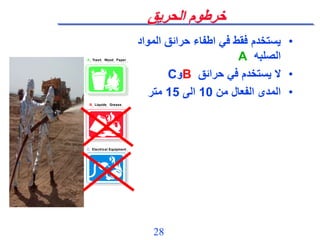
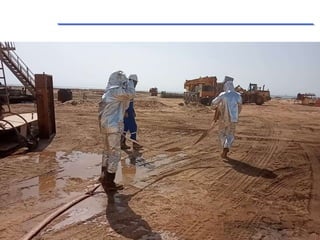
‫الحريق‬ ‫خرطوم‬
•
‫المو‬ ‫حرائق‬ ‫اطفاء‬ ‫في‬ ‫فقط‬ ‫يستخدم‬
‫اد‬
‫الصلبه‬
A
•
‫حرائق‬ ‫في‬ ‫يستخدم‬ ‫ال‬
B
‫و‬
C
•
‫من‬ ‫الفعال‬ ‫المدى‬
10
‫الى‬
15
‫متر‬
A Trash Wood Paper
B Liquids Grease
C Electrical Equipment
A Trash Wood Paper
B Liquids Grease
C Electrical Equipment
29
30
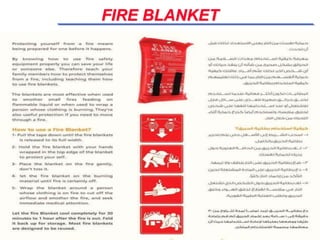
FIRE BLANKET
31
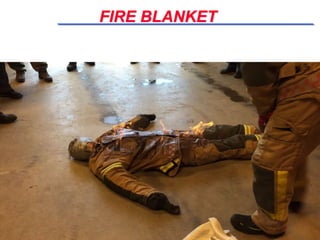
FIRE BLANKET
32
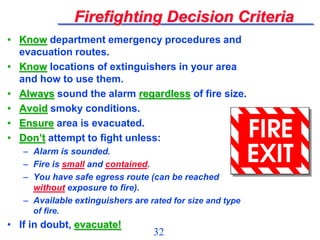
Firefighting Decision Criteria
• Know department emergency procedures and
evacuation routes.
• Know locations of extinguishers in your area
and how to use them.
• Always sound the alarm regardless of fire size.
• Avoid smoky conditions.
• Ensure area is evacuated.
• Don’t attempt to fight unless:
– Alarm is sounded.
– Fire is small and contained.
– You have safe egress route (can be reached
without exposure to fire).
– Available extinguishers are rated for size and type
of fire.
• If in doubt, evacuate!
33
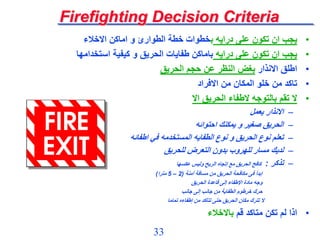
Firefighting Decision Criteria
•
‫درايه‬ ‫على‬ ‫تكون‬ ‫ان‬ ‫يجب‬
‫ب‬
‫االخالء‬ ‫اماكن‬ ‫و‬ ‫الطوارئ‬ ‫خطة‬ ‫خطوات‬
•
‫درايه‬ ‫على‬ ‫تكون‬ ‫ان‬ ‫يجب‬
‫استخدامها‬ ‫كيفية‬ ‫و‬ ‫الحريق‬ ‫طفايات‬ ‫باماكن‬
•
‫االنذار‬ ‫اطلق‬
‫الحريق‬ ‫حجم‬ ‫عن‬ ‫النظر‬ ‫بغض‬
•
‫االفراد‬ ‫من‬ ‫المكان‬ ‫خلو‬ ‫من‬ ‫تاكد‬
•
‫اال‬ ‫الحريق‬ ‫الطفاء‬ ‫بالتوجه‬ ‫تقم‬ ‫ال‬
–
‫يعمل‬ ‫االنذار‬
–
‫احتوائه‬ ‫يمكنك‬ ‫و‬ ‫صغير‬ ‫الحريق‬
–
‫في‬ ‫المستخدمه‬ ‫الطفايه‬ ‫نوع‬ ‫و‬ ‫الحريق‬ ‫نوع‬ ‫تعلم‬
‫اطفائه‬
–
‫للحريق‬ ‫التعرض‬ ‫بدون‬ ‫للهروب‬ ‫مسار‬ ‫لديك‬
–
‫تذكر‬
:
‫عكسها‬ ‫وليس‬ ‫الريح‬ ‫إتجاه‬ ‫مع‬ ‫الحريق‬ ‫كافح‬
‫آمنة‬ ‫مسافة‬ ‫من‬ ‫الحريق‬ ‫مكافحة‬ ‫فى‬ ‫إبدأ‬
(
2
–
5
‫مترا‬
)
‫الحريق‬ ‫قاعدة‬ ‫إلى‬ ‫اإلطفاء‬ ‫مادة‬ ‫وجه‬
‫جانب‬ ‫إلى‬ ‫جانب‬ ‫من‬ ‫الطفاية‬ ‫خرطوم‬ ‫حرك‬
‫تماما‬ ‫إطفاءه‬ ‫من‬ ‫تتأكد‬ ‫حتى‬ ‫الحريق‬ ‫مكان‬ ‫تترك‬ ‫ال‬
•
‫قم‬ ‫متاكد‬ ‫تكن‬ ‫لم‬ ‫اذا‬
‫باالخالء‬

Fire Fighting.ppt

  • 1.
    FIRE FIGHTING Safety &Health TRAINING
  • 2.
    2 ‫المشتعلة‬ ‫الماده‬ ‫الكيميائي‬ ‫التفاعل‬ ‫المتسلسل‬ FireTetrahedron ‫الحر‬ ‫هرم‬ ‫يق‬ ‫الحريق‬ : ‫االكسجين‬ ‫و‬ ‫الماده‬ ‫ابخرة‬ ‫تفاعل‬ ‫من‬ ‫الناتج‬ ‫االشتعال‬ ‫هو‬ ( ‫المادة‬ ‫اكسدة‬ )
  • 3.
    3 1 - ‫المشتعلة‬ ‫المادة‬ • ‫صلبة‬ ‫مواد‬‫شكل‬ ‫على‬ ‫لإلشتعال‬ ‫القابلة‬ ‫المواد‬ ‫توجد‬ ، ‫غازية‬ ‫ومواد‬ ، ‫سائلة‬ ‫مواد‬ . • 1 - ‫الصلبة‬ ‫المواد‬ : ، ‫األوراق‬ ، ‫الكرتون‬ ، ‫الخشب‬ ‫المالبس‬ • 2 - ‫السائلة‬ ‫المواد‬ : ‫األسيتون‬ ، ‫السيارات‬ ‫بنزين‬ • 3 - ‫الغازية‬ ‫المواد‬ : ‫األسيتيلين‬ ، ‫البوتاجاز‬ ‫غاز‬
  • 4.
    4 2 - ‫الهواء‬ ( ‫األكسيجين‬ ) • ‫تش‬ ‫حتى‬ ‫لألكسيجين‬‫تحتاج‬ ‫لإلشتعال‬ ‫القابلة‬ ‫المواد‬ ‫جميع‬ ‫وتستمر‬ ‫تعل‬ ‫اإلشتعال‬ ‫فى‬ . • ‫نسبته‬ ‫ما‬ ‫األكسيجين‬ ‫يشكل‬ 21 % ‫الجوى‬ ‫الهواء‬ ‫من‬ . • ‫خ‬ ‫نسبة‬ ‫وهما‬ ،‫لإلشتعال‬ ‫مدى‬ ‫وأعلى‬ ‫لإلشتعال‬ ‫مدى‬ ‫أدنى‬ ‫مادة‬ ‫لكل‬ ‫لط‬ ‫الهواء‬ ‫مع‬ ‫المادة‬ ‫أبخرة‬ . • ‫بي‬ ‫الهواء‬ ‫مع‬ ‫ابخرتها‬ ‫خلط‬ ‫نسبة‬ ‫تكن‬ ‫لم‬ ‫ما‬ ‫مادة‬ ‫أية‬ ‫تشتعل‬ ‫لن‬ ‫أدنى‬ ‫ن‬ ‫مدى‬ ‫وأعلى‬ ‫مدى‬ . • ‫لإلشتعال‬ ‫مدى‬ ‫وأعلى‬ ‫لإلشتعال‬ ‫مدى‬ ‫أدنى‬ ‫بين‬ ‫الفرق‬ ‫زاد‬ ‫كلما‬ ‫زادت‬ ‫المادة‬ ‫خطورة‬ . • ‫السيارات‬ ‫بنزين‬ 1.4 % - 7 % ‫األسيتيلين‬ ، 1.5 % - 82 %
  • 5.
    5 3 - ‫اإلشتعال‬ ‫مصادر‬ • ‫الكهرباء‬ • ‫التدخين‬ • ‫والقطع‬ ‫اللحام‬‫أعمال‬ • ‫المباشر‬ ‫اللهب‬ • ‫الساخنة‬ ‫األسطح‬ • ‫الذاتى‬ ‫اإلشتعال‬ • ‫الساكنة‬ ‫الكهربائية‬ • ‫اإلحتكاك‬
  • 6.
    6 4 - ‫المتسلسل‬ ‫الكيميائى‬ ‫التفاعل‬ • ‫تتواج‬‫عندما‬ ‫الحريق‬ ‫يحدث‬ ‫د‬ ‫والحرارة‬ ‫واألكسيجين‬ ‫المادة‬ ‫الصحيحة‬ ‫بالنسب‬ . • ‫العناصر‬ ‫هذه‬ ‫إلتحاد‬ ‫نتيجة‬ ‫مع‬ ‫ويك‬ ‫الحريق‬ ‫يحدث‬ ‫بعضها‬ ‫ون‬ ‫كيميائى‬ ‫تفاعل‬ ‫شكل‬ ‫على‬ ‫ومتسلسل‬ ‫متشعب‬ ( ‫تتكو‬ ‫ما‬ ‫ن‬ ‫و‬ ‫الطليقة‬ ‫بالشقوق‬ ‫يعرف‬ ‫التى‬ ‫الحريق‬ ‫إنتشار‬ ‫فى‬ ‫تساهم‬ .)
  • 7.
    7 Direct Burning This isthe simplest method of fire spread where a flame front moves along or through the burning material. For example, this happens when setting fire to the corner of a piece of paper with a match – think of how the flame front moves from the match and spreads across the paper.
  • 8.
    8 Convection This is theprinciple that hot air rises and cold air sinks. Hot gases, generated by the fire, rise straight up from the fire: • Inside a building, these hot gases will hit the ceiling and then spread out to form a layer underneath the ceiling. When these hot gases touch any combustible material (such as a wooden curtain pole), it will heat up sufficiently to start to burn. • Outdoors, these convection currents will contain burning embers that are carried in the currents until the air cools and the embers are dropped to the ground. This is a common way for forest fires to travel and jump over obstacles (such as roads).
  • 9.
    9 Conduction This is theprinciple that heat can be transmitted through solid materials. Some metals in particular conduct heat very efficiently (e.g. copper). Any pipes, wires, ducts or services running from room to room can act as conduits for heat and spread the fire, in the same way that a metal spoon heats up in a saucepan on the hob. Radiation Heat energy can be radiated through air in the form of infrared heat waves which travel in straight lines (just like light) and can pass through transparent surfaces, such as glass. Radiant heat generated by a fire shines onto nearby surfaces and is absorbed. If the material heats up sufficiently, it can burst into flames.
  • 10.
    10 Common Causes andConsequences of Fires in Workplaces Causes • Electrical equipment • Deliberate ignition • Hot work • Smoking • Cooking appliances • Heating appliances. • Unsafe use and storage of flammable liquids and gases • Mechanical . • Chemical reactions
  • 11.
  • 12.
  • 13.
  • 14.
    14 Stop The ChainReaction ‫المتسلسل‬ ‫الكيميائى‬ ‫التفاعل‬ ‫إيقاف‬
  • 15.
    15 Fire Classes A TrashWood Paper C Electrical Equipment B Liquids Grease COMBUSTIBLE METALS D • wood • cloth • paper • rubber • many plastics • gasoline • oil • grease • tar • oil-based paint • lacquer • flammable gases • energized electrical equipment • magnesium • sodium • potassium • titanium • zirconium • other flammable metals
  • 16.
    16 ‫الحرائق‬ ‫أنواع‬ A TrashWood Paper C Electrical Equipment B Liquids Grease COMBUSTIBLE METALS D • ‫الخشب‬ • ‫األوراق‬ • ‫المطاط‬ • ‫البالستي‬ ‫ك‬ • ‫الملتهبة‬ ‫المواد‬ • ‫الغازات‬ • ‫المذيبات‬ • ‫الشحوم‬ • ‫الديزل‬ • ‫األسيتون‬ • ‫التوصيالت‬ ‫والمعدات‬ ‫الكهربائية‬ • ‫الماغنيسيوم‬ • ‫الصوديوم‬ • ‫البوتاسيوم‬ • ‫التيتانيوم‬ • ‫القابلة‬ ‫المعادن‬ ‫لإلشتعال‬
  • 17.
    17 FIRE FIGHTING TOOLS ‫الحرق‬‫مكافحة‬ ‫ادوات‬ • FIRE EXT. ‫الحرق‬ ‫طفايات‬ - POWDER - CO2 - FOAM • FIRE HOSE ‫الحرق‬ ‫خرطوم‬ • FIRE BLANKET ‫الحريق‬ ‫بطانية‬
  • 18.
    18 Fire Extinguisher Types •Class “B” or “C” fires. • 2.5-100 lb. of CO2 gas at 150-200 psi (8-30 seconds discharge time). • Has NO pressure gauge--capacity verified by weight. • 3-8 ft. maximum effective range. • Extinguishes by smothering burning materials. • Effectiveness decreases as temperature of burning material increases. CARBON DIOXIDE (CO2) A Trash Wood Paper B Liquids Grease C Electrical Equipment A Trash Wood Paper B Liquids Grease C Electrical Equipment CO2
  • 19.
    19 ‫الحريق‬ ‫طفايات‬ ‫أنواع‬ • ‫النوع‬‫حرائق‬ ‫إلطفاء‬ ‫تستعمل‬ B, C • ‫من‬ ‫الطفاية‬ ‫سعة‬ 2 ‫حتى‬ ‫كيلوجرام‬ 40 ‫كيلوجرام‬ • ‫ضغط‬ ‫ساعة‬ ‫بها‬ ‫توجد‬ ‫ال‬ • ‫لم‬ ‫الكربون‬ ‫أكسيد‬ ‫ثانى‬ ‫مادة‬ ‫تقذف‬ ‫سافة‬ 1 – 2.5 ‫مترا‬ • ‫ومنع‬ ‫خنقه‬ ‫بواسطة‬ ‫الحريق‬ ‫تطفىء‬ ‫عنه‬ ‫األكسيجين‬ . ‫الكربون‬ ‫أكسيد‬ ‫ثانى‬ A Trash Wood Paper B Liquids Grease C Electrical Equipment A Trash Wood Paper B Liquids Grease C Electrical Equipment CO2
  • 20.
  • 21.
    21 Fire Extinguisher Types(cont.) • Class “A”, “B”, or “C” fires. • 2.5-20 lb. dry chemical (ammonium phosphate) pressurized to 50-200 psi by nitrogen gas (8-25 seconds discharge time). • Has pressure gauge to allow visual capacity check. • 5-20 ft. maximum effective range. • Extinguishes by smothering burning materials. MULTIPURPOSE DRY CHEMICAL A Trash Wood Paper B Liquids Grease C Electrical Equipment A Trash Wood Paper B Liquids Grease C Electrical Equipment POWDER
  • 22.
    22 ‫الحريق‬ ‫طفايات‬ ‫أنواع‬ • ‫ب‬، ‫أ‬ ‫نوع‬ ‫الحرائق‬ ‫إطفاء‬ ‫يمكنها‬ ‫ج‬ ، • ‫الطف‬ ‫حالة‬ ‫تبين‬ ‫ضغط‬ ‫ساعة‬ ‫بها‬ ‫اية‬ ‫الفحص‬ ‫عند‬ . • ‫يصل‬ ‫داخلها‬ ‫البودرة‬ ‫قذف‬ ‫مدى‬ ‫إلى‬ 2 – 6 ‫متر‬ • ‫إيقاف‬ ‫بواسطة‬ ‫الحريق‬ ‫تطفىء‬ ‫المتسلسل‬ ‫الكيميائى‬ ‫التفاعل‬ . • . ‫األغراض‬ ‫متعددة‬ ‫البودرة‬ A Trash Wood Paper B Liquids Grease C Electrical Equipment A Trash Wood Paper B Liquids Grease C Electrical Equipment POWDER
  • 23.
  • 24.
    24 Fire Extinguisher Types(cont.) • Class “A”, “B”, fires • Has pressure gauge to allow visual capacity check. • 9-16 ft. maximum effective range. • Extinguishes by smothering burning materials. • NEVER USE ON ELECTRICAL EQUIPMENT!! FOAM A Trash Wood Paper B Liquids Grease C Electrical Equipment A Trash Wood Paper B Liquids Grease C Electrical Equipment FOAM
  • 25.
    25 ‫الحريق‬ ‫طفايات‬ ‫انواع‬ • ‫النوع‬‫حرائق‬ ‫اطفاء‬ ‫يمكنها‬ A , B • ‫عند‬ ‫الطفاية‬ ‫حالة‬ ‫تبين‬ ‫ضغط‬ ‫عداد‬ ‫بها‬ ‫الفحص‬ . • ‫الخنق‬ ‫بواسطة‬ ‫الحريق‬ ‫تطفىء‬ . • ‫النوع‬ ‫حرائق‬ ‫في‬ ‫ابدا‬ ‫تستخدم‬ ‫ال‬ C ‫رغوى‬ A Trash Wood Paper B Liquids Grease C Electrical Equipment A Trash Wood Paper B Liquids Grease C Electrical Equipment FOAM
  • 26.
  • 27.
  • 28.
    28 ‫الحريق‬ ‫خرطوم‬ • ‫المو‬ ‫حرائق‬‫اطفاء‬ ‫في‬ ‫فقط‬ ‫يستخدم‬ ‫اد‬ ‫الصلبه‬ A • ‫حرائق‬ ‫في‬ ‫يستخدم‬ ‫ال‬ B ‫و‬ C • ‫من‬ ‫الفعال‬ ‫المدى‬ 10 ‫الى‬ 15 ‫متر‬ A Trash Wood Paper B Liquids Grease C Electrical Equipment A Trash Wood Paper B Liquids Grease C Electrical Equipment
  • 29.
  • 30.
  • 31.
  • 32.
    32 Firefighting Decision Criteria •Know department emergency procedures and evacuation routes. • Know locations of extinguishers in your area and how to use them. • Always sound the alarm regardless of fire size. • Avoid smoky conditions. • Ensure area is evacuated. • Don’t attempt to fight unless: – Alarm is sounded. – Fire is small and contained. – You have safe egress route (can be reached without exposure to fire). – Available extinguishers are rated for size and type of fire. • If in doubt, evacuate!
  • 33.
    33 Firefighting Decision Criteria • ‫درايه‬‫على‬ ‫تكون‬ ‫ان‬ ‫يجب‬ ‫ب‬ ‫االخالء‬ ‫اماكن‬ ‫و‬ ‫الطوارئ‬ ‫خطة‬ ‫خطوات‬ • ‫درايه‬ ‫على‬ ‫تكون‬ ‫ان‬ ‫يجب‬ ‫استخدامها‬ ‫كيفية‬ ‫و‬ ‫الحريق‬ ‫طفايات‬ ‫باماكن‬ • ‫االنذار‬ ‫اطلق‬ ‫الحريق‬ ‫حجم‬ ‫عن‬ ‫النظر‬ ‫بغض‬ • ‫االفراد‬ ‫من‬ ‫المكان‬ ‫خلو‬ ‫من‬ ‫تاكد‬ • ‫اال‬ ‫الحريق‬ ‫الطفاء‬ ‫بالتوجه‬ ‫تقم‬ ‫ال‬ – ‫يعمل‬ ‫االنذار‬ – ‫احتوائه‬ ‫يمكنك‬ ‫و‬ ‫صغير‬ ‫الحريق‬ – ‫في‬ ‫المستخدمه‬ ‫الطفايه‬ ‫نوع‬ ‫و‬ ‫الحريق‬ ‫نوع‬ ‫تعلم‬ ‫اطفائه‬ – ‫للحريق‬ ‫التعرض‬ ‫بدون‬ ‫للهروب‬ ‫مسار‬ ‫لديك‬ – ‫تذكر‬ : ‫عكسها‬ ‫وليس‬ ‫الريح‬ ‫إتجاه‬ ‫مع‬ ‫الحريق‬ ‫كافح‬ ‫آمنة‬ ‫مسافة‬ ‫من‬ ‫الحريق‬ ‫مكافحة‬ ‫فى‬ ‫إبدأ‬ ( 2 – 5 ‫مترا‬ ) ‫الحريق‬ ‫قاعدة‬ ‫إلى‬ ‫اإلطفاء‬ ‫مادة‬ ‫وجه‬ ‫جانب‬ ‫إلى‬ ‫جانب‬ ‫من‬ ‫الطفاية‬ ‫خرطوم‬ ‫حرك‬ ‫تماما‬ ‫إطفاءه‬ ‫من‬ ‫تتأكد‬ ‫حتى‬ ‫الحريق‬ ‫مكان‬ ‫تترك‬ ‫ال‬ • ‫قم‬ ‫متاكد‬ ‫تكن‬ ‫لم‬ ‫اذا‬ ‫باالخالء‬