

Global Financial Model
Changes proposed by Global Financial Model Meeting
9th – 14th November 2013, Rotterdam
Our vision

“Our Global Financial Model represents the entirety of all
entities and enables us to use our collective resources to
achieve peace and fulfilment of humankind’s potential.”
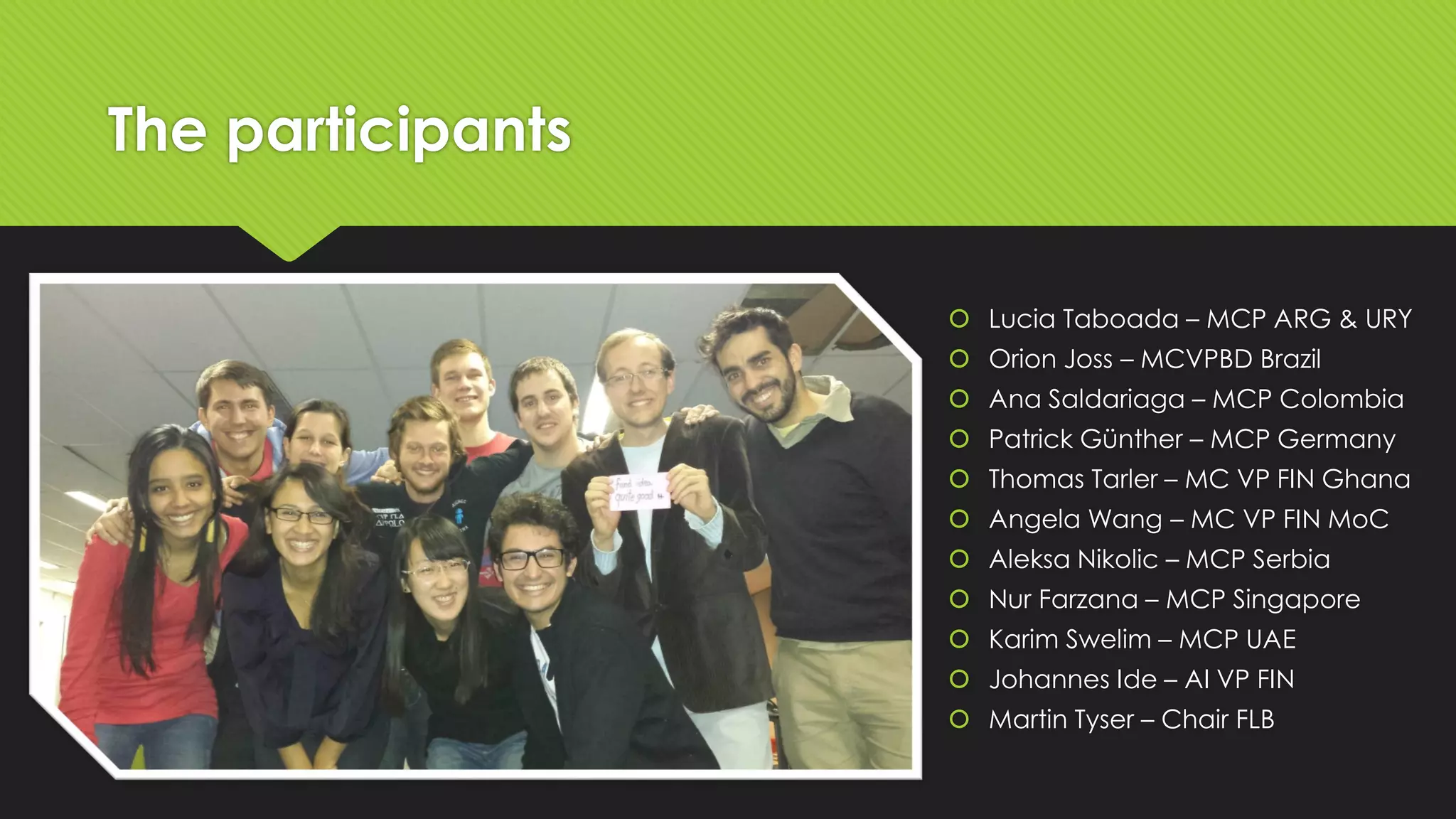
The participants
 Lucia Taboada – MCP ARG & URY
 Orion Joss – MCVPBD Brazil
 Ana Saldariaga – MCP Colombia
 Patrick Günther – MCP Germany

 Thomas Tarler – MC VP FIN Ghana
 Angela Wang – MC VP FIN MoC
 Aleksa Nikolic – MCP Serbia
 Nur Farzana – MCP Singapore
 Karim Swelim – MCP UAE
 Johannes Ide – AI VP FIN
 Martin Tyser – Chair FLB
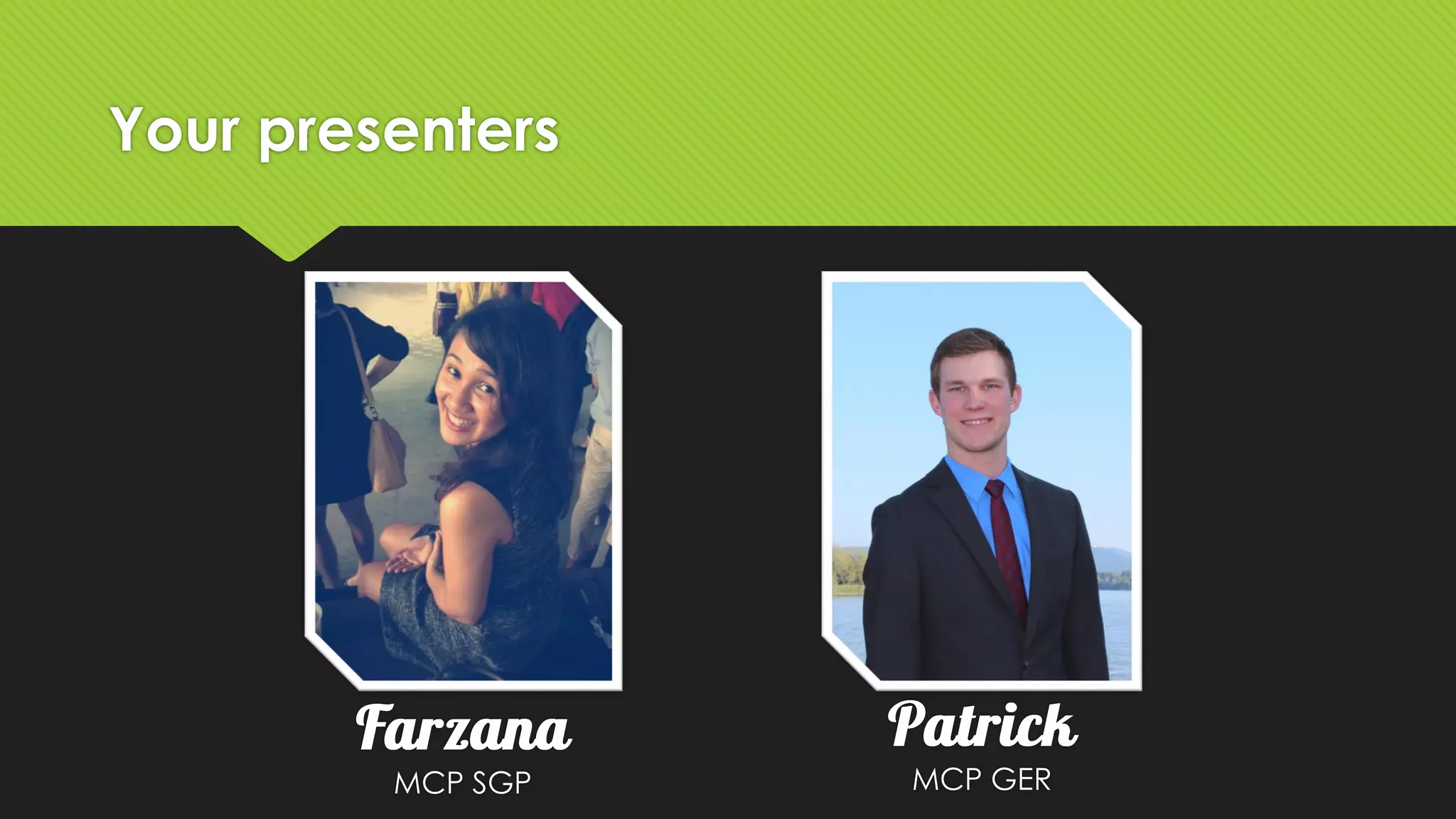
Your presenters

MCP SGP

MCP GER
The principles

Utilizing synergies between enitities in the head office

Sustainable use of collective ressources to develop
AIESEC in a strategic and flexible way
Remove limitations for revenue generation to support
short- and long-term needs
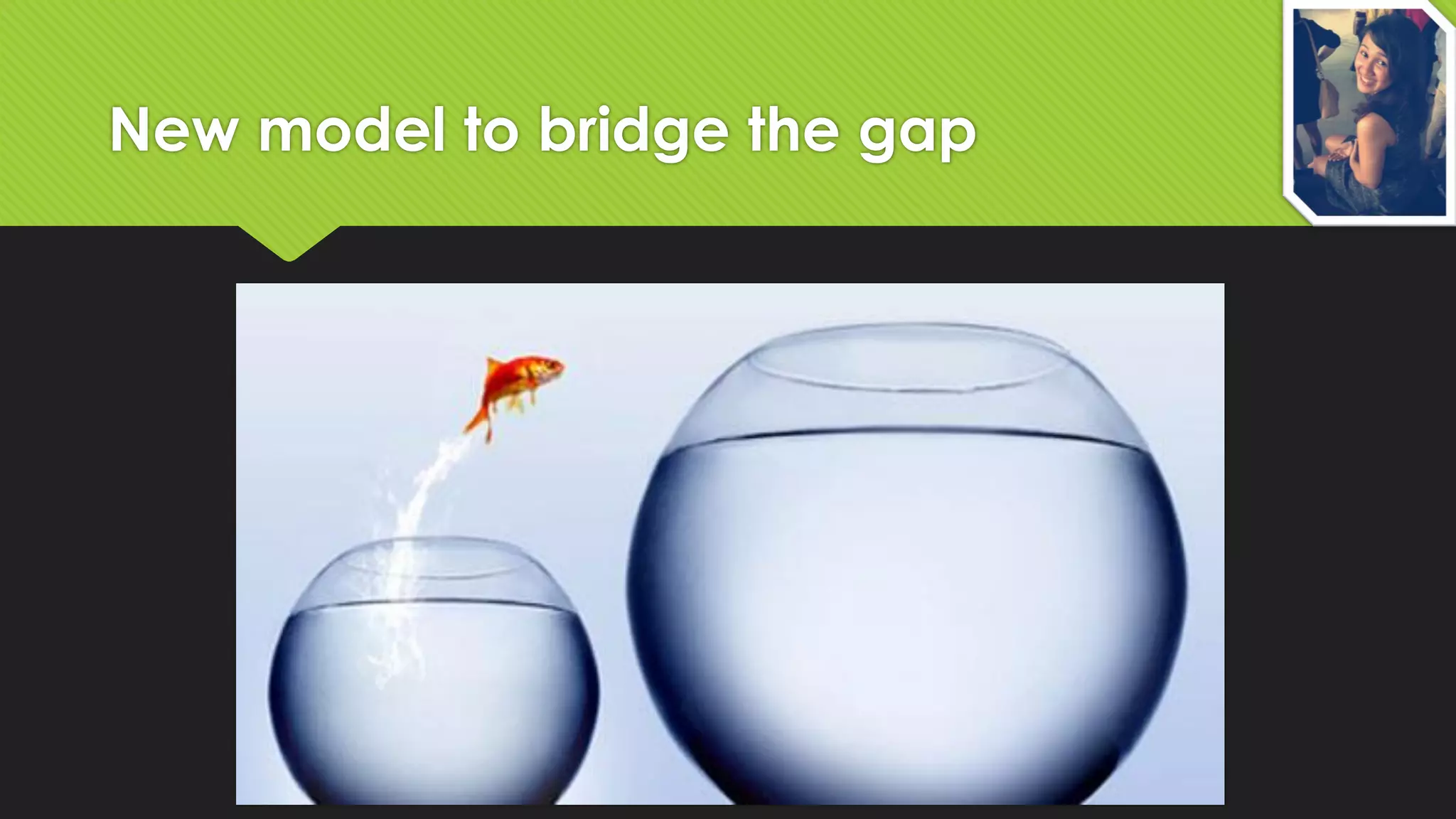
New model to bridge the gap
The AIESEC we want to be
The background

AIESEC 2015  New organization  New financial Model
 Evolution of AIs role needed
 Revision of AI services – LGSC & AI

 New size and diversity of network
 New financial distribution model – FSC & AI

 New way of financing global activities and services
 New financial model – FSC & AI
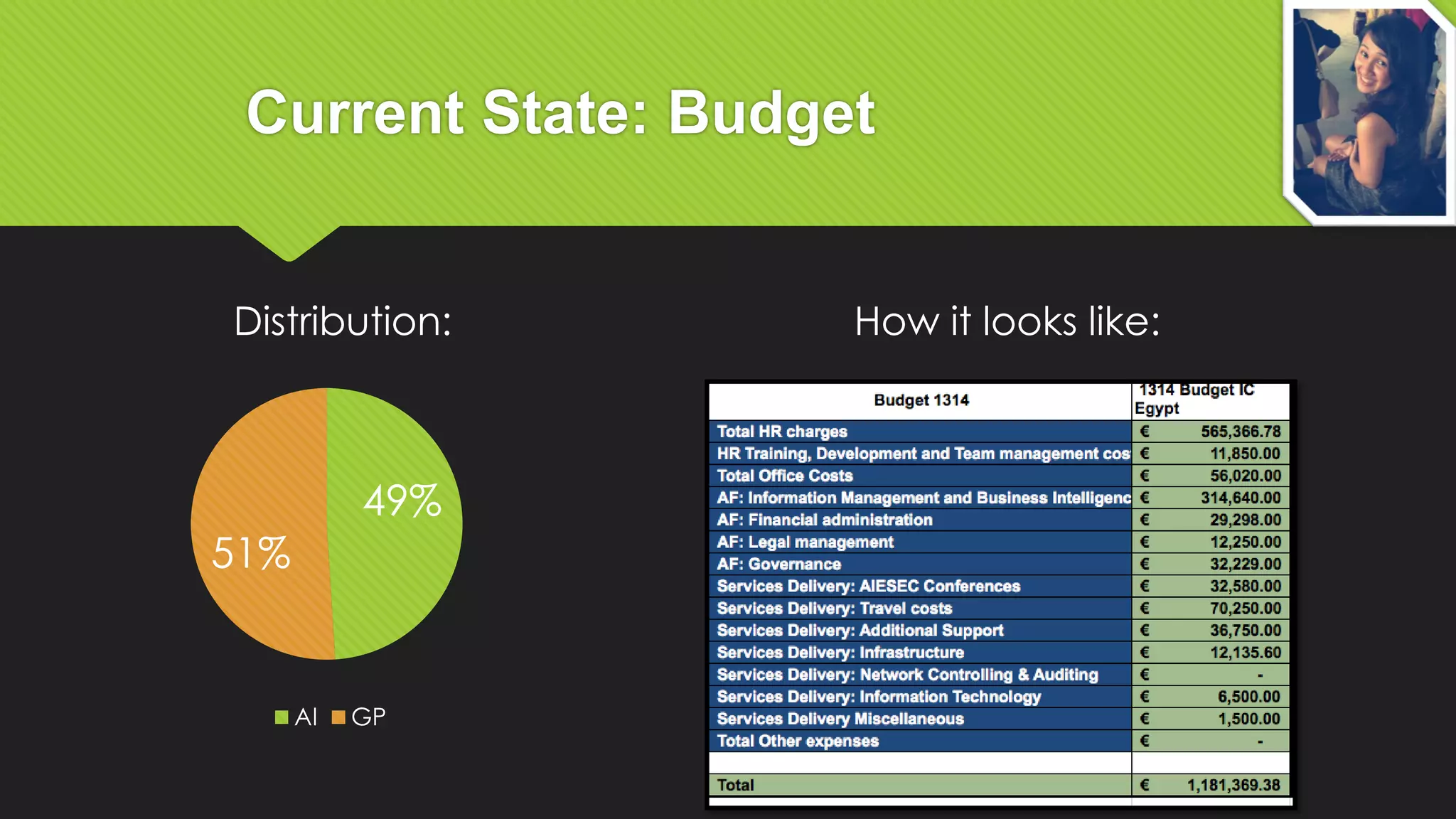
Current State: Budget
Distribution:

49%
51%

AI

GP

How it looks like:
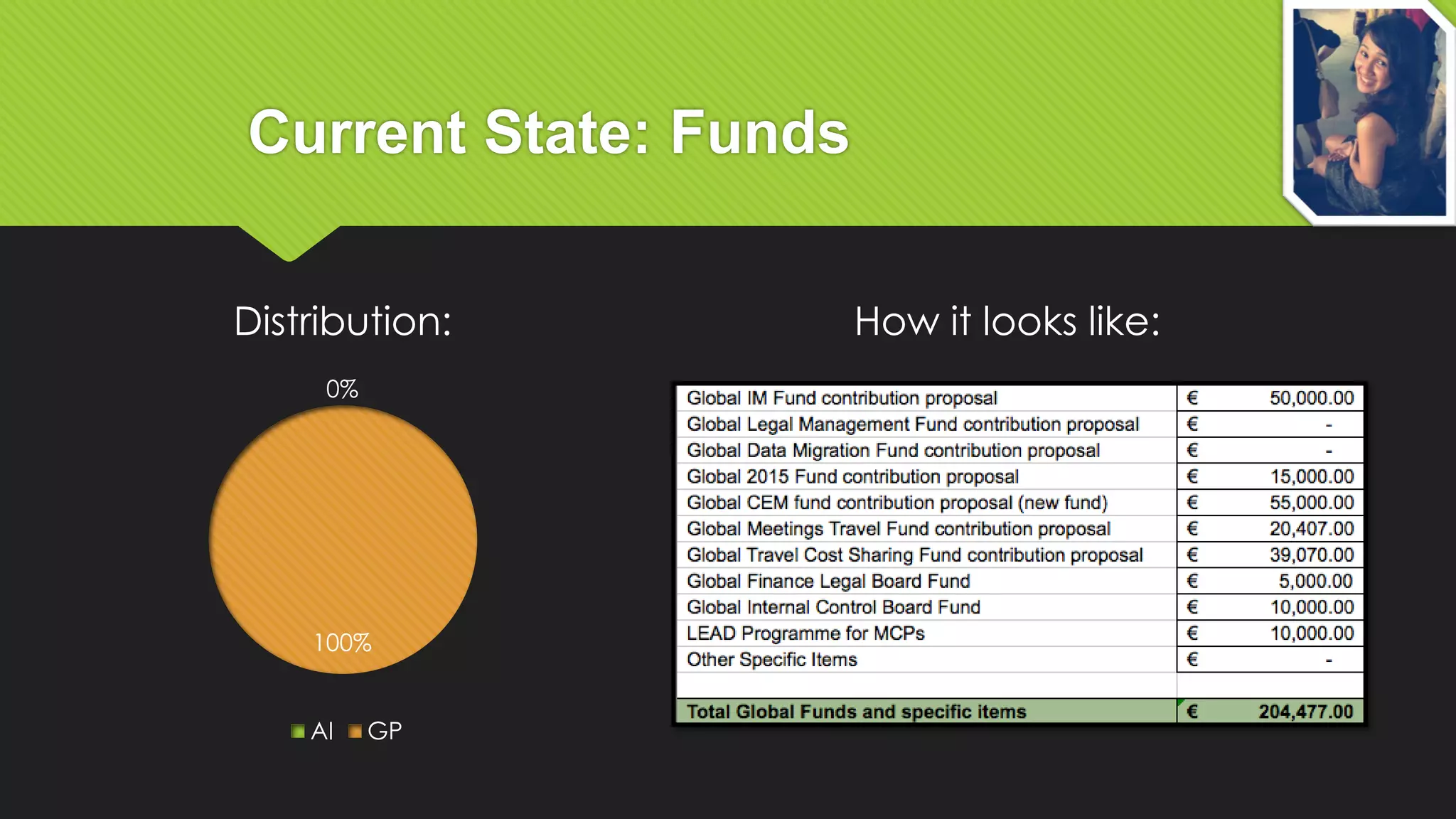
Current State: Funds
Distribution:
0%

100%
AI

GP

How it looks like:
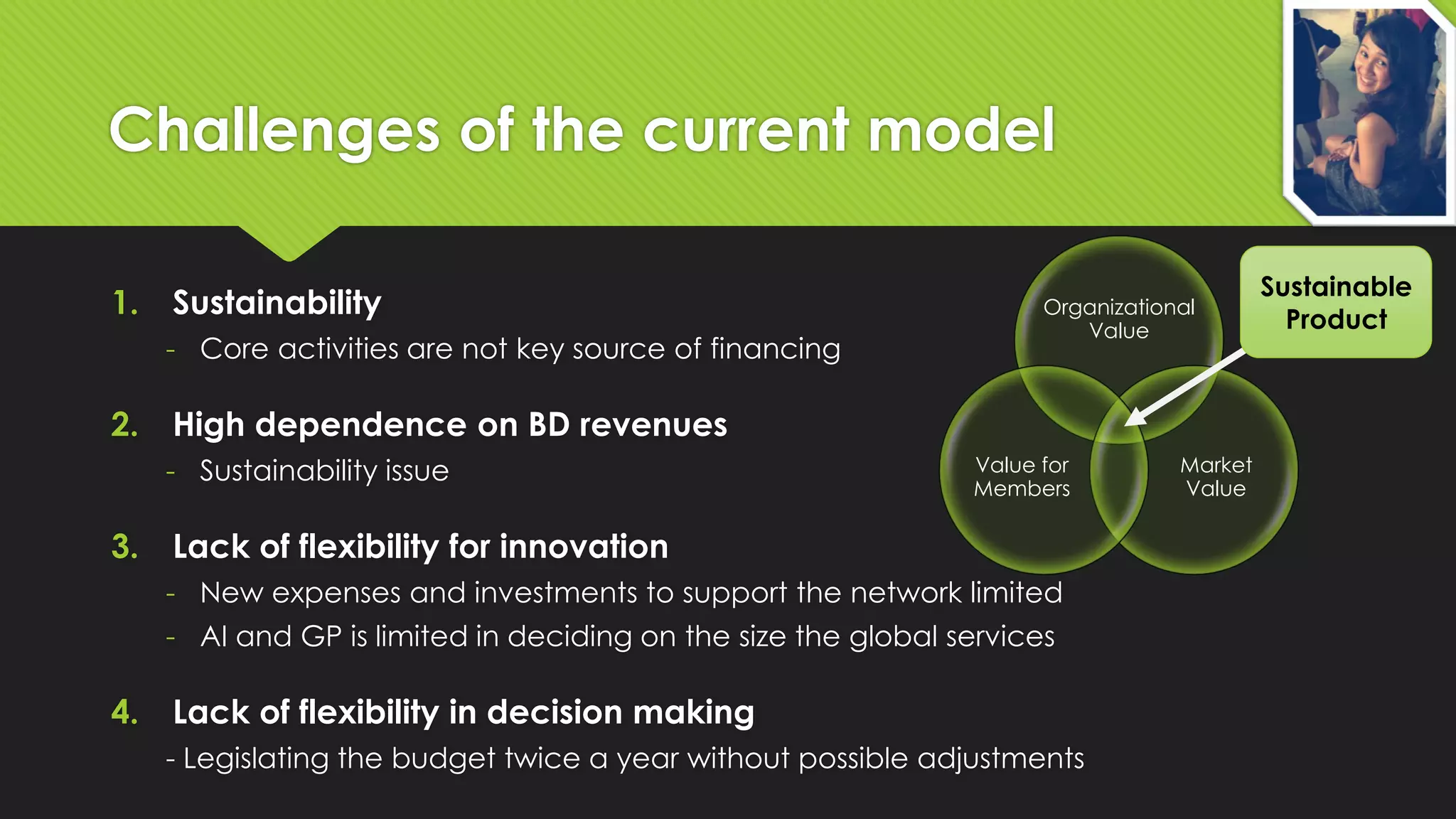
Challenges of the current model
1.

Sustainability
- Core activities are not key source of financing

2.

High dependence on BD revenues
- Sustainability issue

3.

Organizational
Value

Value for
Members

Lack of flexibility for innovation
- New expenses and investments to support the network limited
- AI and GP is limited in deciding on the size the global services

4.

Lack of flexibility in decision making
- Legislating the budget twice a year without possible adjustments

Market
Value

Sustainable
Product
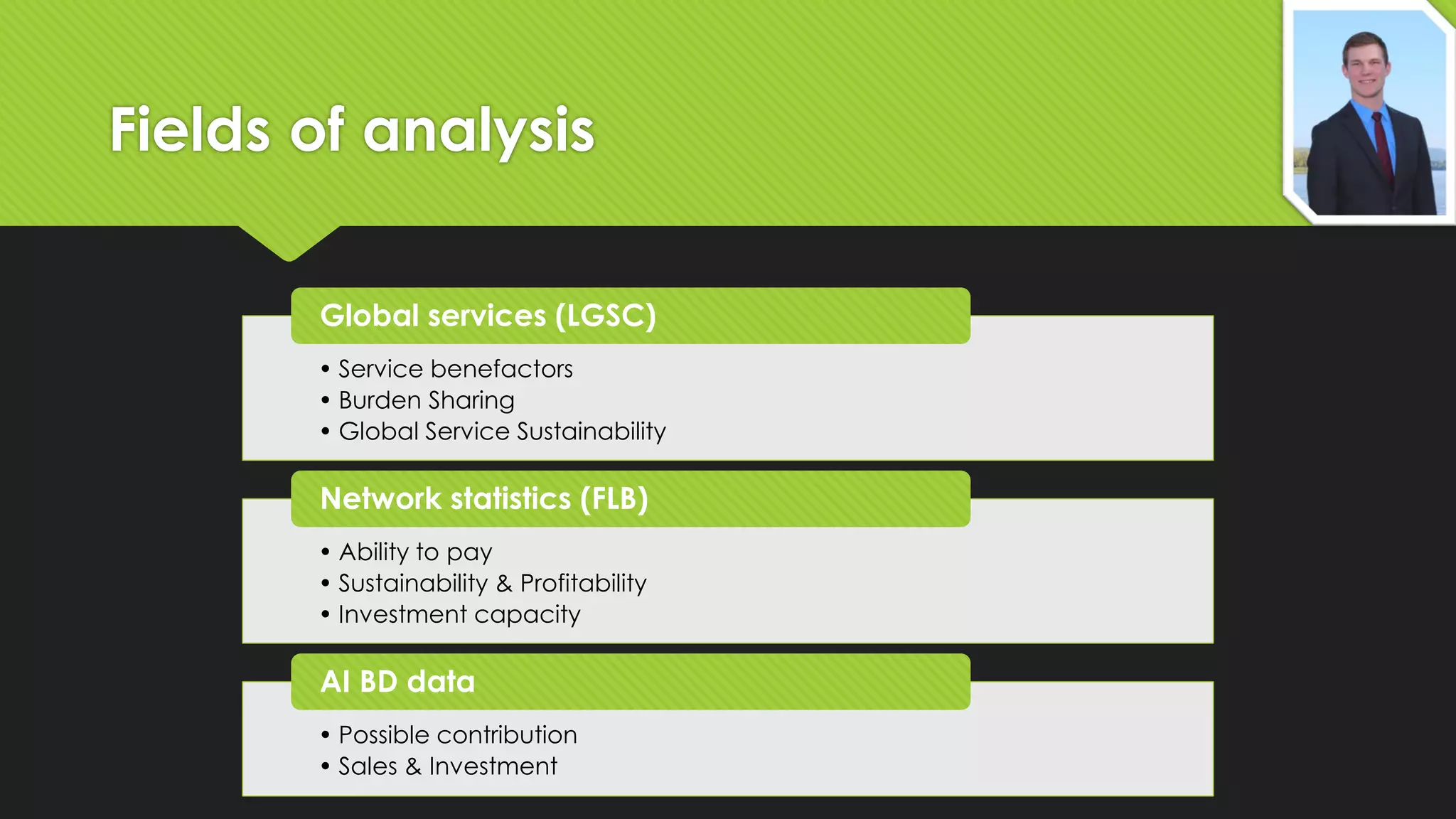
Fields of analysis
Global services (LGSC)
• Service benefactors
• Burden Sharing
• Global Service Sustainability

Network statistics (FLB)
• Ability to pay
• Sustainability & Profitability
• Investment capacity

AI BD data
• Possible contribution
• Sales & Investment
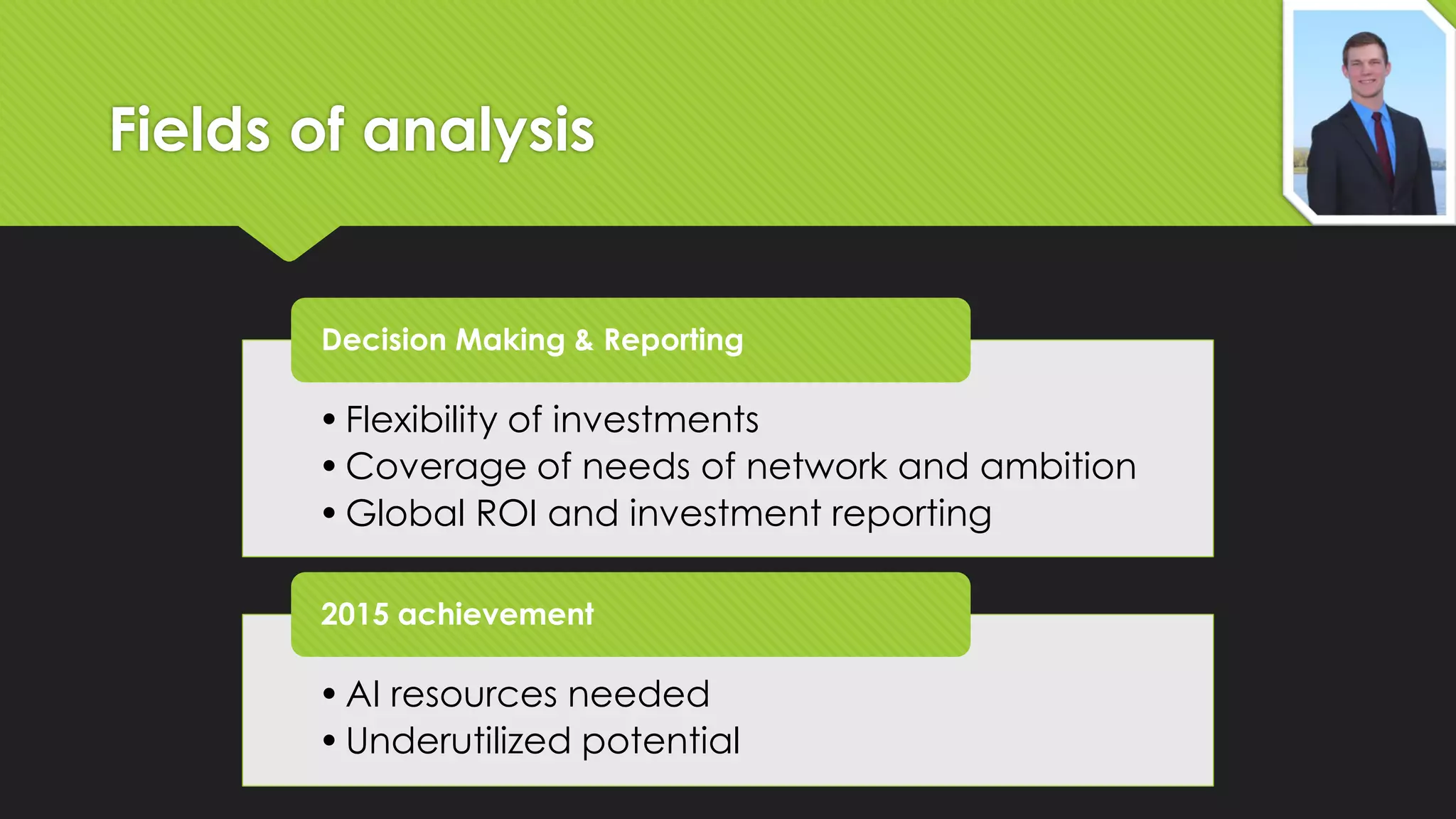
Fields of analysis

Decision Making & Reporting

• Flexibility of investments
• Coverage of needs of network and ambition
• Global ROI and investment reporting
2015 achievement

• AI resources needed
• Underutilized potential
Mindset of the new model

 The financial model needs to reflect AIESEC mindset of 2015

 AIESECs understanding as social enterprise makes us aim for a
entrepreneurial mindset, sustainability and growth
 Global expenses should be delivering value to the customer of the
service and be sustained by the ones benefitting from it
Clustering of services
New proposal for supporting document
„Y - AI Services“ by LGSC
Clear structure for budgeting
Allocation of HR costs possible
Easier to measure ROI
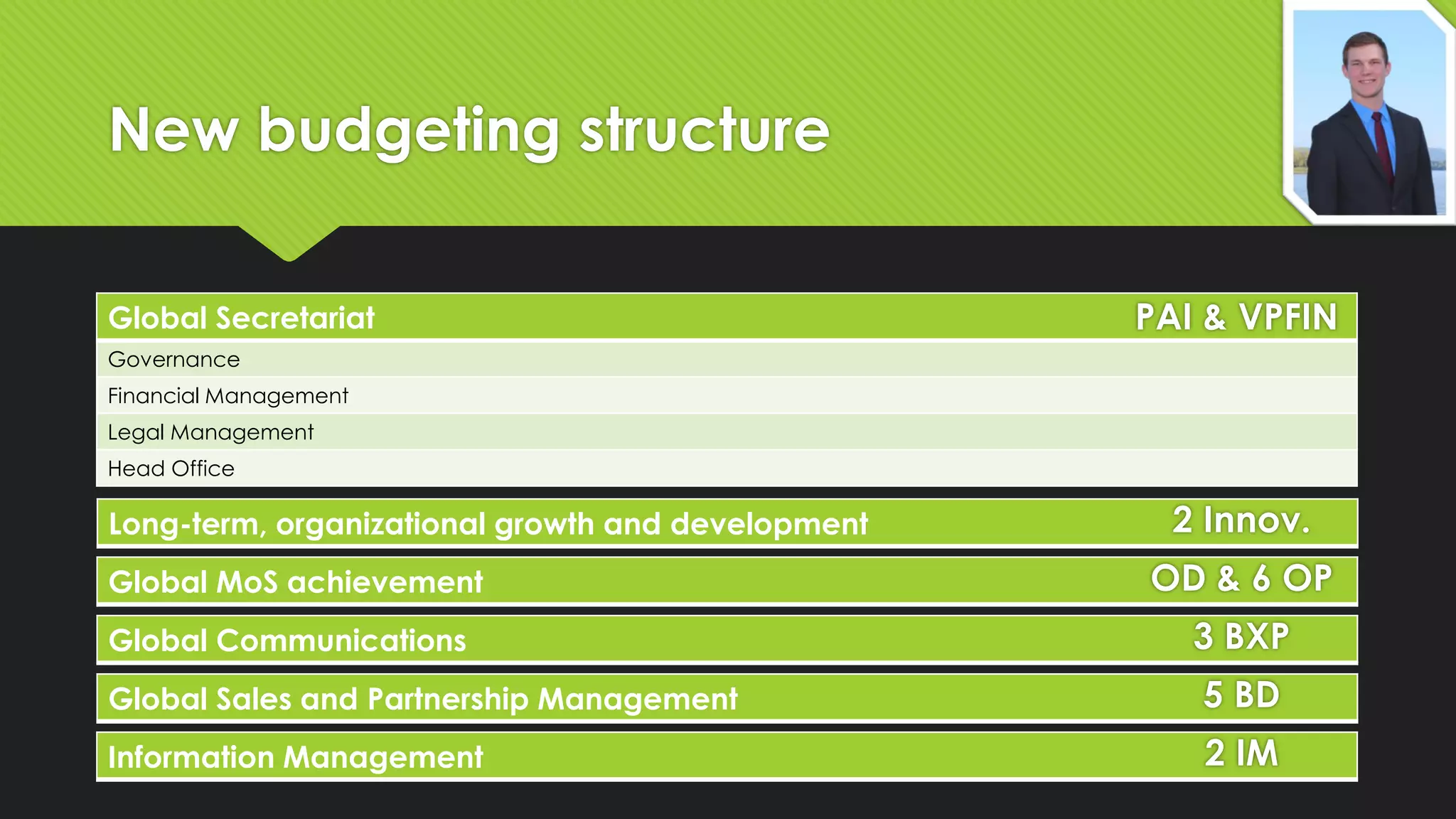
New budgeting structure
Global Secretariat

PAI & VPFIN

Governance
Financial Management
Legal Management

Head Office

Long-term, organizational growth and development

2 Innov.

Global MoS achievement

OD & 6 OP

Global Communications

3 BXP

Global Sales and Partnership Management

5 BD

Information Management

2 IM
Cost centers contribution
Cost center contribution
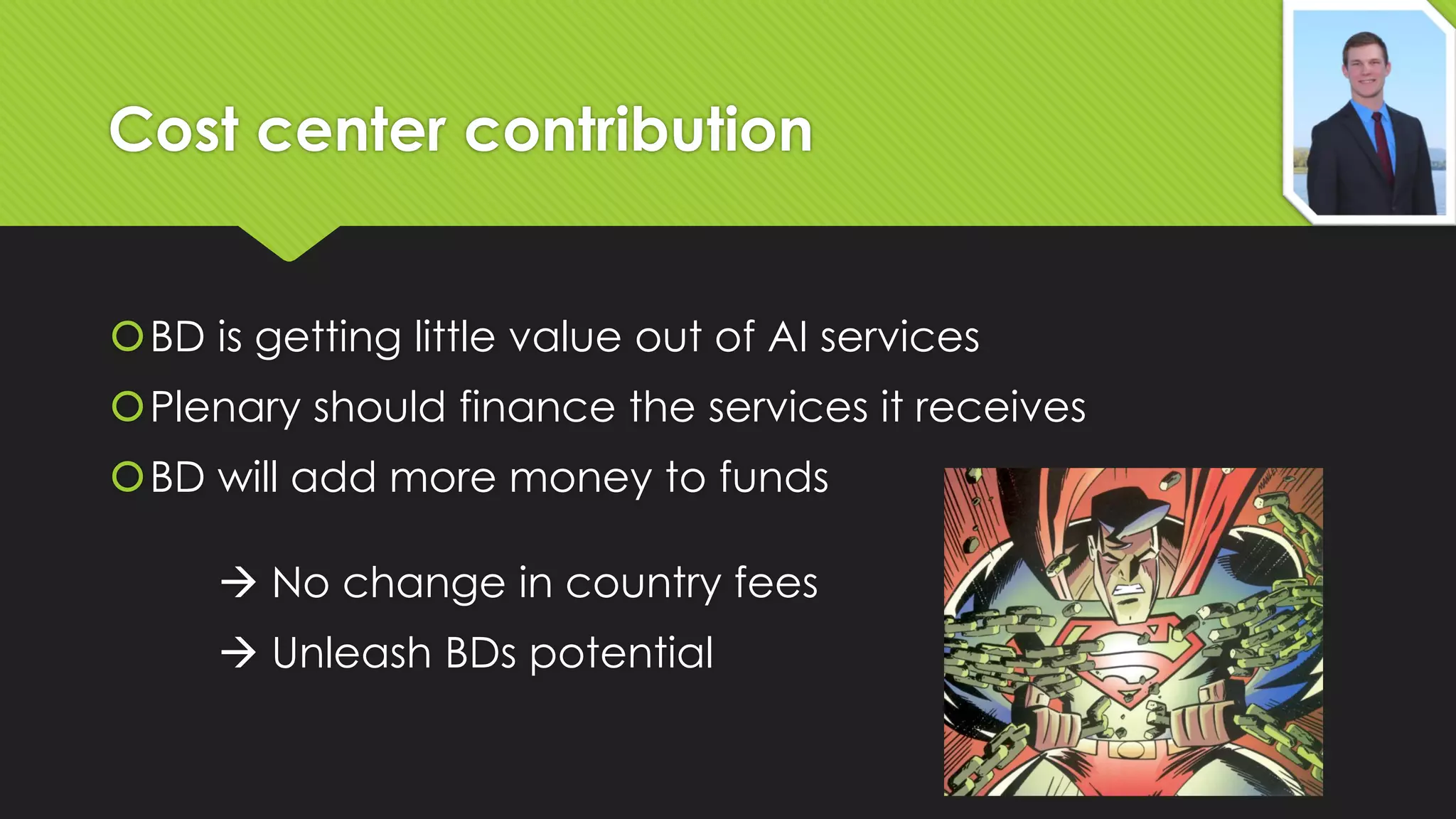
BD is getting little value out of AI services
Plenary should finance the services it receives

BD will add more money to funds
 No change in country fees
 Unleash BDs potential
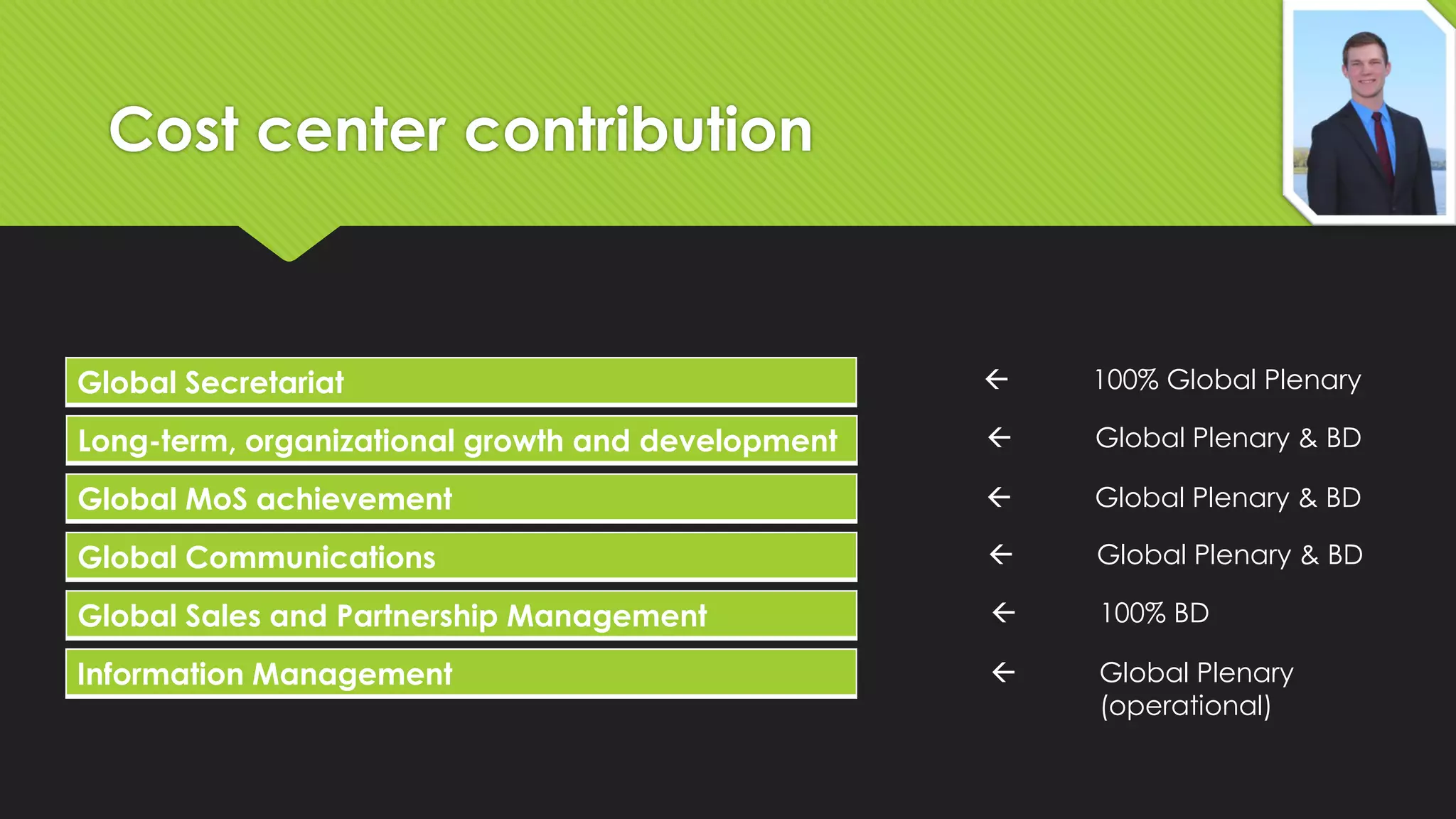
Cost center contribution

Global Secretariat



100% Global Plenary

Long-term, organizational growth and development



Global Plenary & BD

Global MoS achievement



Global Plenary & BD

Global Communications



Global Plenary & BD

Global Sales and Partnership Management



100% BD

Information Management



Global Plenary
(operational)
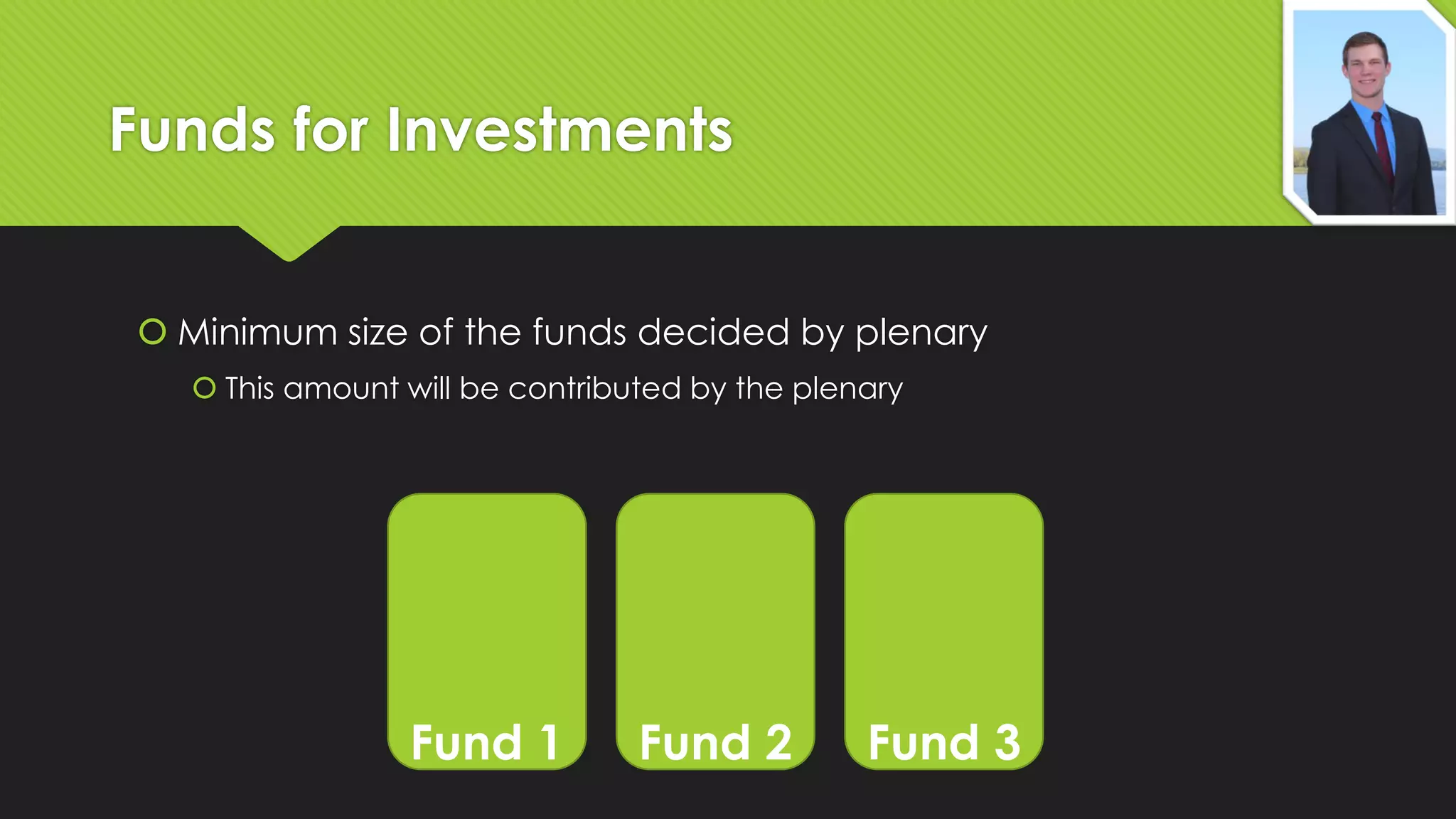
Funds for Investments
 Minimum size of the funds decided by plenary
 This amount will be contributed by the plenary

Fund 1

Fund 2

Fund 3
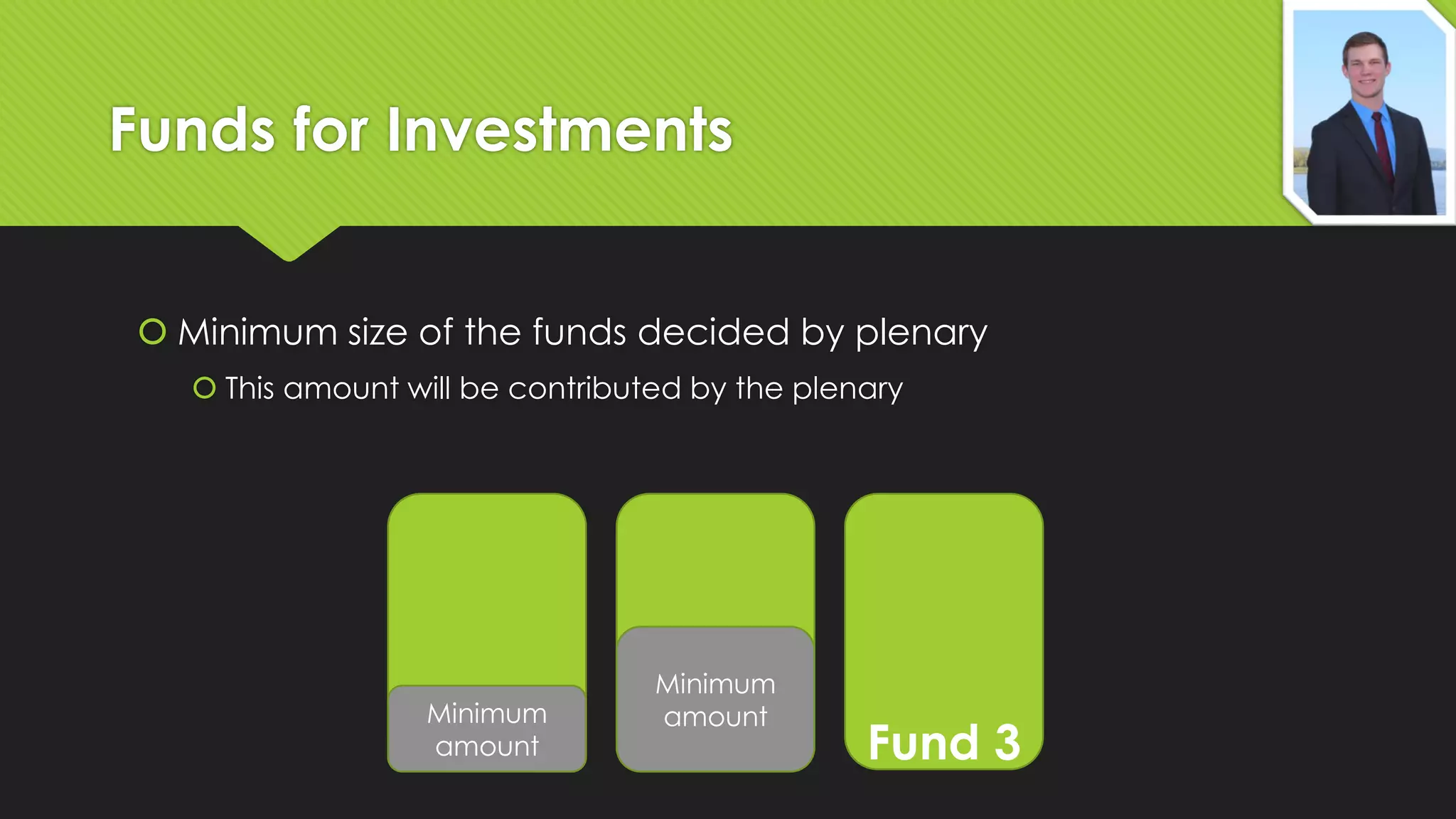
Funds for Investments
 Minimum size of the funds decided by plenary
 This amount will be contributed by the plenary

Minimum
amount

Fund 1

Minimum
amount

Fund 2

Fund 3
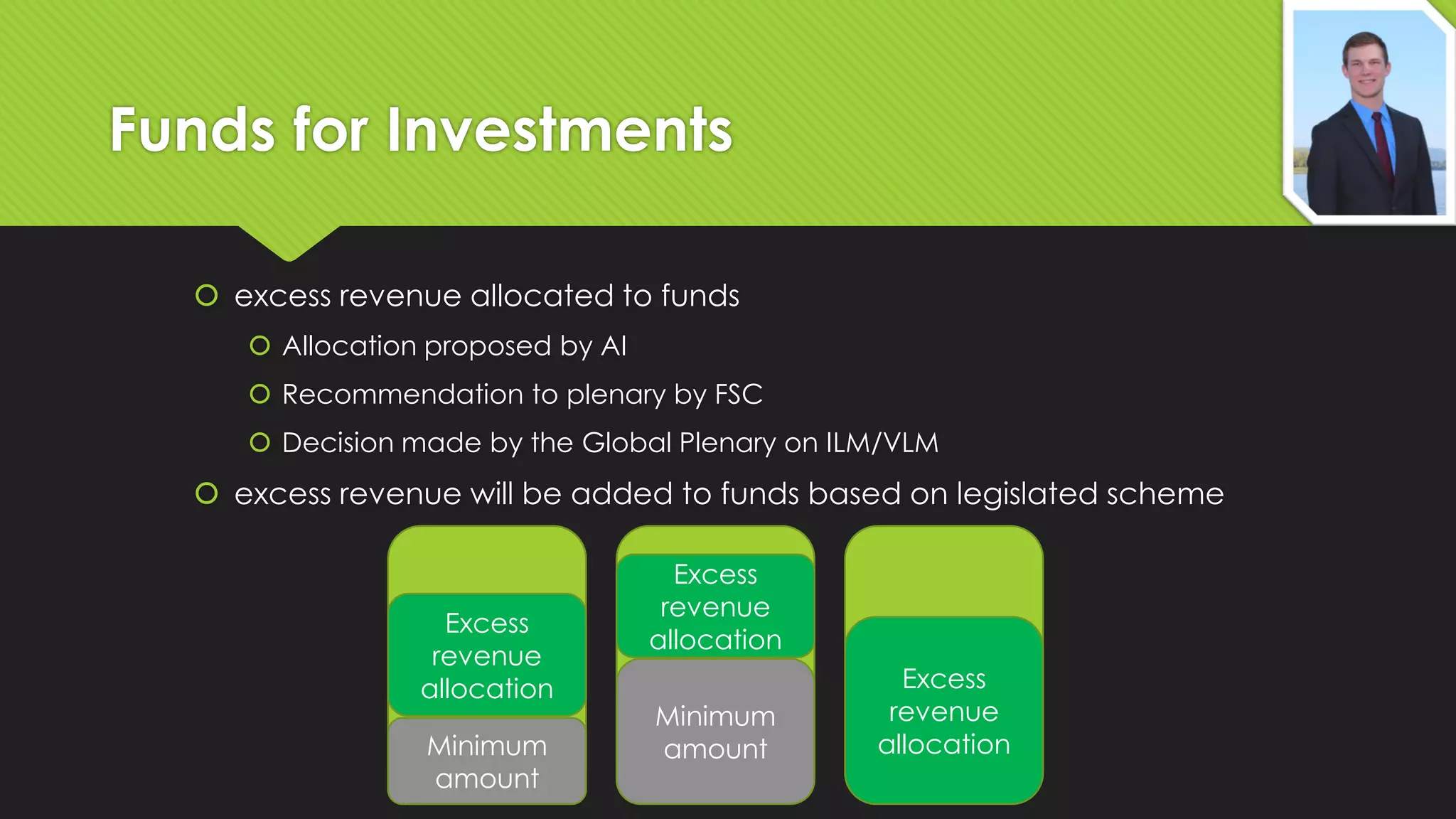
Funds for Investments
 excess revenue allocated to funds
 Allocation proposed by AI
 Recommendation to plenary by FSC
 Decision made by the Global Plenary on ILM/VLM

 excess revenue will be added to funds based on legislated scheme

Excess
revenue
allocation

Minimum
amount

Fund 1

Excess
revenue
allocation
Minimum
amount

Fund 2

Excess
revenue
allocation

Fund 3
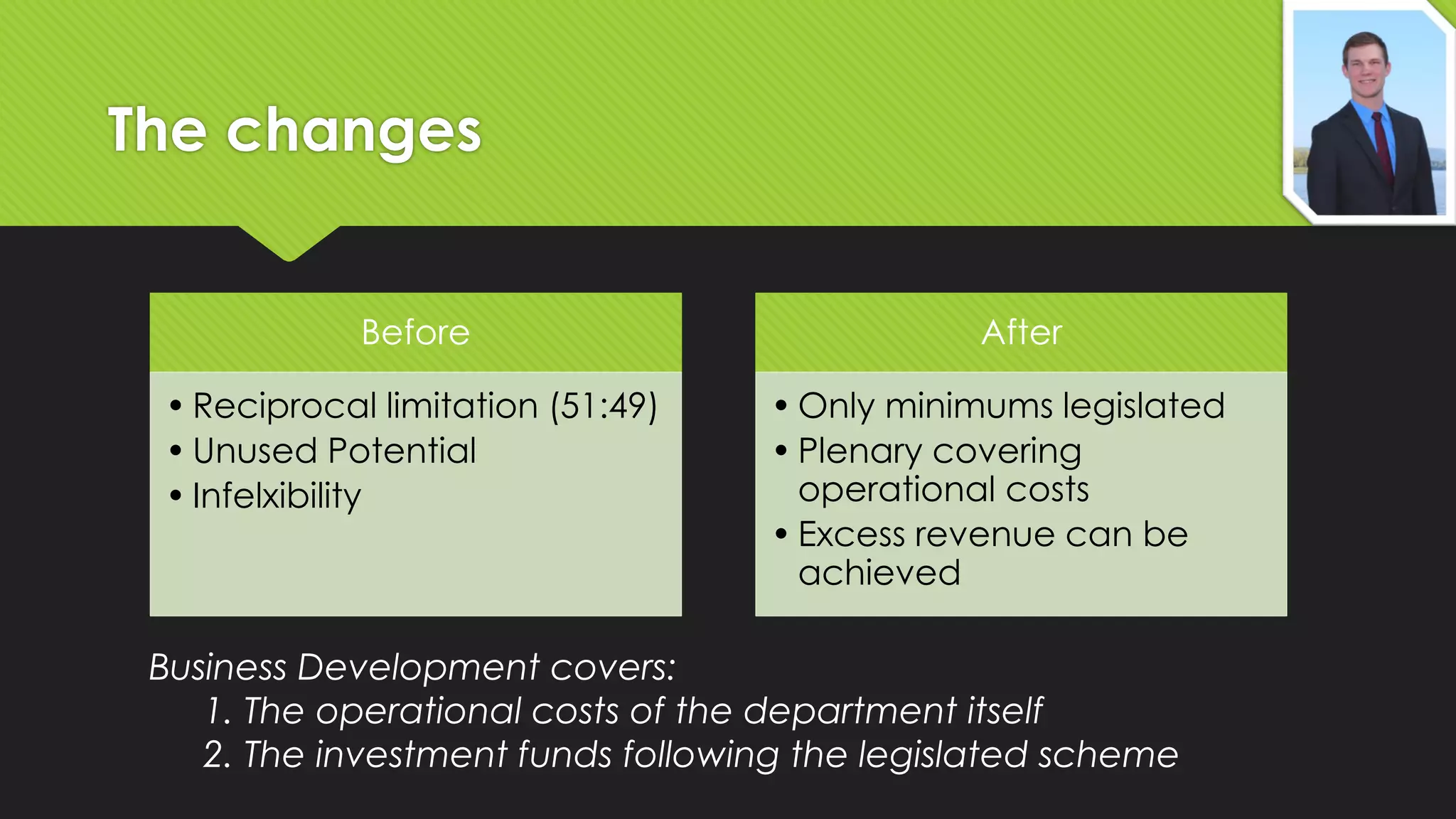
The changes
Before

• Reciprocal limitation (51:49)
• Unused Potential
• Infelxibility

After

• Only minimums legislated
• Plenary covering
operational costs
• Excess revenue can be
achieved

Business Development covers:
1. The operational costs of the department itself
2. The investment funds following the legislated scheme
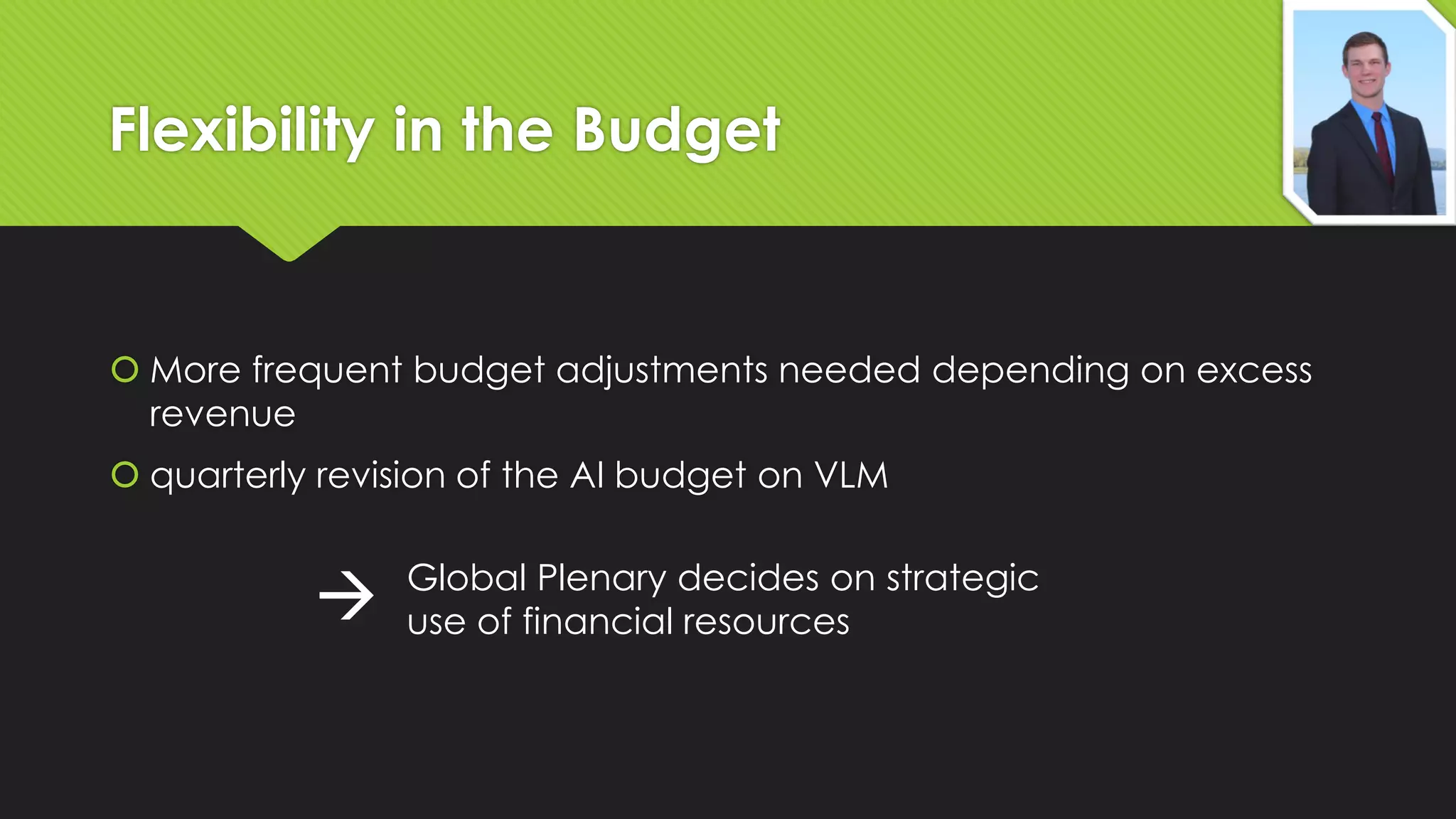
Flexibility in the Budget

 More frequent budget adjustments needed depending on excess
revenue
 quarterly revision of the AI budget on VLM



Global Plenary decides on strategic
use of financial resources
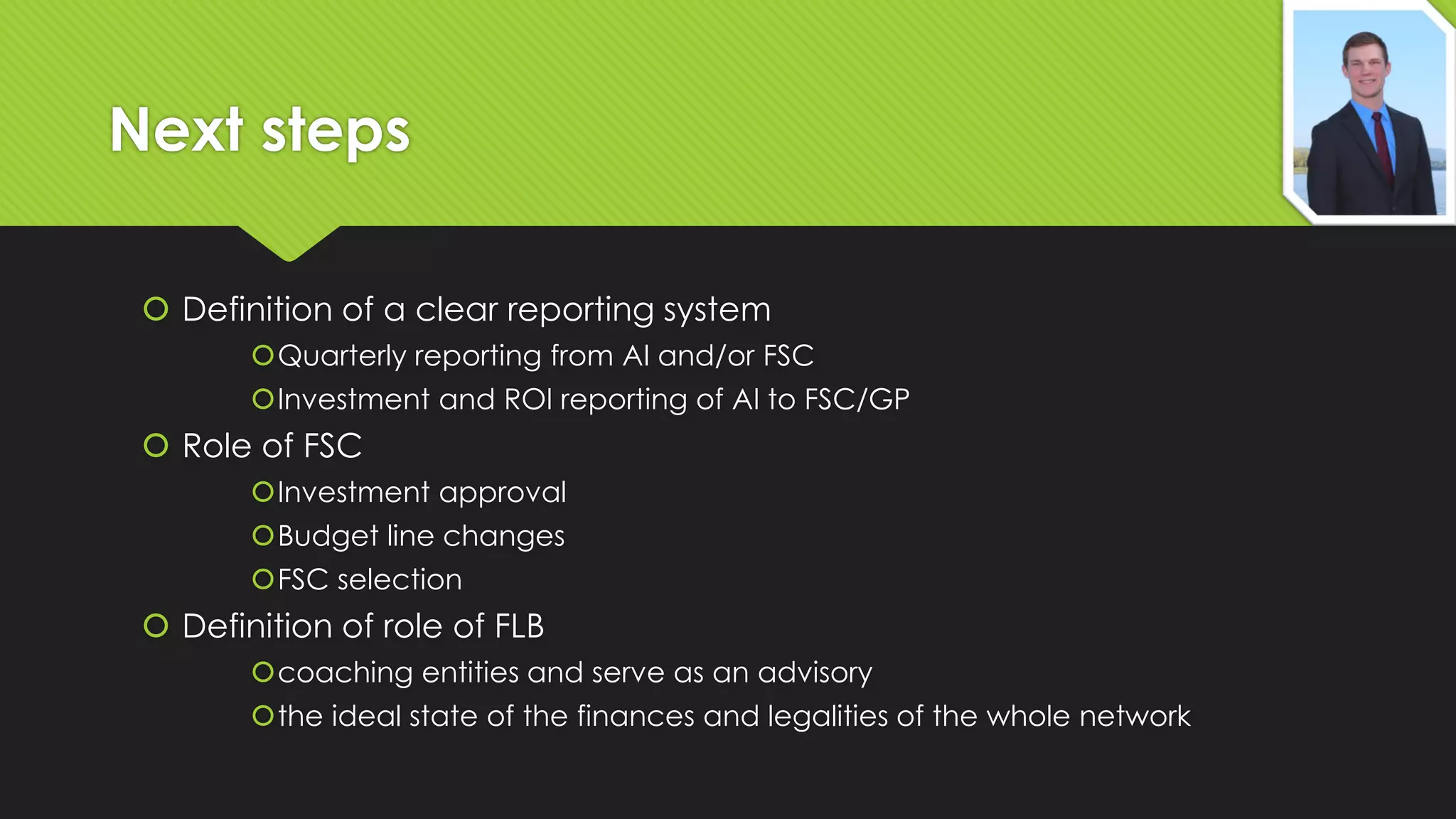
Next steps
 Definition of a clear reporting system
Quarterly reporting from AI and/or FSC
Investment and ROI reporting of AI to FSC/GP

 Role of FSC
Investment approval
Budget line changes
FSC selection

 Definition of role of FLB
coaching entities and serve as an advisory
the ideal state of the finances and legalities of the whole network

Financial Model Meeting Output

  • 1.
    Global Financial Model Changesproposed by Global Financial Model Meeting 9th – 14th November 2013, Rotterdam
  • 2.
    Our vision “Our GlobalFinancial Model represents the entirety of all entities and enables us to use our collective resources to achieve peace and fulfilment of humankind’s potential.”
  • 3.
    The participants  LuciaTaboada – MCP ARG & URY  Orion Joss – MCVPBD Brazil  Ana Saldariaga – MCP Colombia  Patrick Günther – MCP Germany  Thomas Tarler – MC VP FIN Ghana  Angela Wang – MC VP FIN MoC  Aleksa Nikolic – MCP Serbia  Nur Farzana – MCP Singapore  Karim Swelim – MCP UAE  Johannes Ide – AI VP FIN  Martin Tyser – Chair FLB
  • 4.
  • 5.
    The principles Utilizing synergiesbetween enitities in the head office Sustainable use of collective ressources to develop AIESEC in a strategic and flexible way Remove limitations for revenue generation to support short- and long-term needs
  • 6.
    New model tobridge the gap
  • 7.
    The AIESEC wewant to be
  • 8.
    The background AIESEC 2015 New organization  New financial Model  Evolution of AIs role needed  Revision of AI services – LGSC & AI  New size and diversity of network  New financial distribution model – FSC & AI  New way of financing global activities and services  New financial model – FSC & AI
  • 9.
  • 10.
  • 11.
    Challenges of thecurrent model 1. Sustainability - Core activities are not key source of financing 2. High dependence on BD revenues - Sustainability issue 3. Organizational Value Value for Members Lack of flexibility for innovation - New expenses and investments to support the network limited - AI and GP is limited in deciding on the size the global services 4. Lack of flexibility in decision making - Legislating the budget twice a year without possible adjustments Market Value Sustainable Product
  • 12.
    Fields of analysis Globalservices (LGSC) • Service benefactors • Burden Sharing • Global Service Sustainability Network statistics (FLB) • Ability to pay • Sustainability & Profitability • Investment capacity AI BD data • Possible contribution • Sales & Investment
  • 13.
    Fields of analysis DecisionMaking & Reporting • Flexibility of investments • Coverage of needs of network and ambition • Global ROI and investment reporting 2015 achievement • AI resources needed • Underutilized potential
  • 14.
    Mindset of thenew model  The financial model needs to reflect AIESEC mindset of 2015  AIESECs understanding as social enterprise makes us aim for a entrepreneurial mindset, sustainability and growth  Global expenses should be delivering value to the customer of the service and be sustained by the ones benefitting from it
  • 15.
    Clustering of services Newproposal for supporting document „Y - AI Services“ by LGSC Clear structure for budgeting Allocation of HR costs possible Easier to measure ROI
  • 16.
    New budgeting structure GlobalSecretariat PAI & VPFIN Governance Financial Management Legal Management Head Office Long-term, organizational growth and development 2 Innov. Global MoS achievement OD & 6 OP Global Communications 3 BXP Global Sales and Partnership Management 5 BD Information Management 2 IM
  • 17.
  • 18.
    Cost center contribution BDis getting little value out of AI services Plenary should finance the services it receives BD will add more money to funds  No change in country fees  Unleash BDs potential
  • 19.
    Cost center contribution GlobalSecretariat  100% Global Plenary Long-term, organizational growth and development  Global Plenary & BD Global MoS achievement  Global Plenary & BD Global Communications  Global Plenary & BD Global Sales and Partnership Management  100% BD Information Management  Global Plenary (operational)
  • 20.
    Funds for Investments Minimum size of the funds decided by plenary  This amount will be contributed by the plenary Fund 1 Fund 2 Fund 3
  • 21.
    Funds for Investments Minimum size of the funds decided by plenary  This amount will be contributed by the plenary Minimum amount Fund 1 Minimum amount Fund 2 Fund 3
  • 22.
    Funds for Investments excess revenue allocated to funds  Allocation proposed by AI  Recommendation to plenary by FSC  Decision made by the Global Plenary on ILM/VLM  excess revenue will be added to funds based on legislated scheme Excess revenue allocation Minimum amount Fund 1 Excess revenue allocation Minimum amount Fund 2 Excess revenue allocation Fund 3
  • 23.
    The changes Before • Reciprocallimitation (51:49) • Unused Potential • Infelxibility After • Only minimums legislated • Plenary covering operational costs • Excess revenue can be achieved Business Development covers: 1. The operational costs of the department itself 2. The investment funds following the legislated scheme
  • 24.
    Flexibility in theBudget  More frequent budget adjustments needed depending on excess revenue  quarterly revision of the AI budget on VLM  Global Plenary decides on strategic use of financial resources
  • 25.
    Next steps  Definitionof a clear reporting system Quarterly reporting from AI and/or FSC Investment and ROI reporting of AI to FSC/GP  Role of FSC Investment approval Budget line changes FSC selection  Definition of role of FLB coaching entities and serve as an advisory the ideal state of the finances and legalities of the whole network